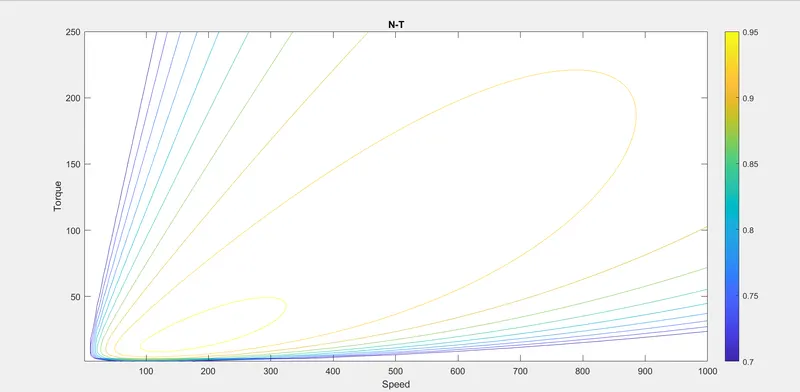
Week-11 Challenge: Braking
Ans 1:
Braking Power = 0.5*m*v^2/(t*1000)
where m--> total mass of the vehicle in kg
v-----------> Velocity in m/s
t-----------> time in sec
Assumed m=1000kg
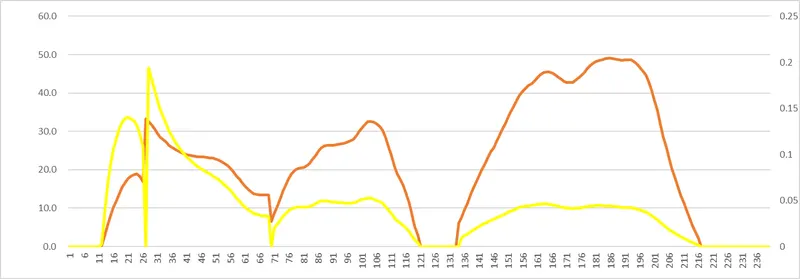
from the above graph, the yellow graph indicates the breaking power and the orange graph indicated the instantaneous speed. from the above drivecycle, based on the instantaneous speed, we can find out the required braking power based on the above graph.
Ans 2:
In Electric vehicle, either PMDC or PMSM or Induction motor can be used. even though the principle of operation varies, during the braking condition both the motors will undergone a same situation, by considering the speed - torque characteristics.
During braking, the speed - torque charcteristics of the motor tries to reach out the standstill condition by obtaining negative torque and it will come to the standstill condition.
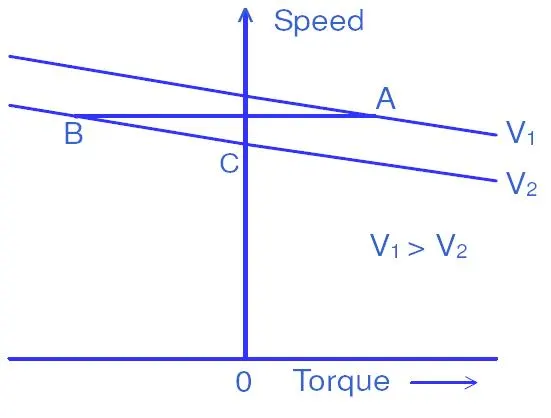
tries to reachout the B point from A during sudden deceleration, this may leads to high heat generation inside the motor.
So this kind of braking effect can be comprised by added the manual hyduralic braking.
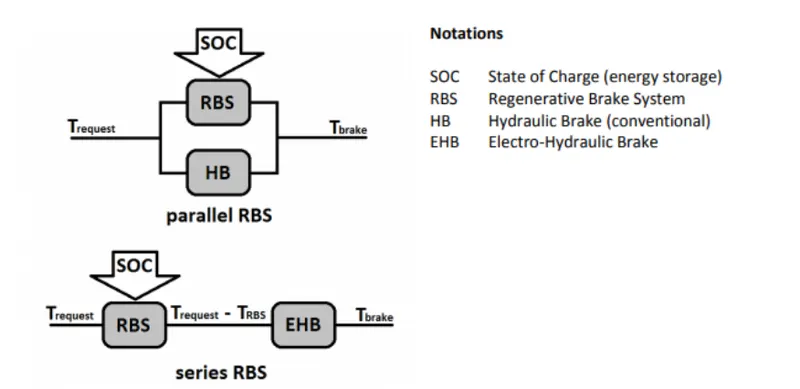
Types of braking:
Ans 3:
Script:
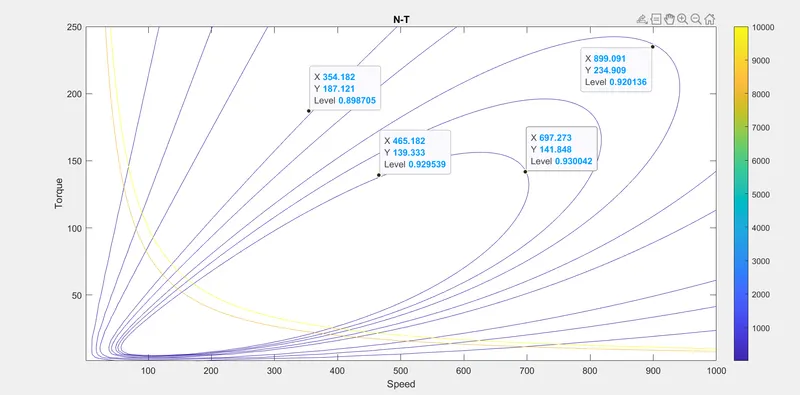
Efficiency Scale: