Week 11 Car Crash simulation
Aim: To perform Explicit dynamic Analysis on the car body collision using different values of thickness for the car body
Theory
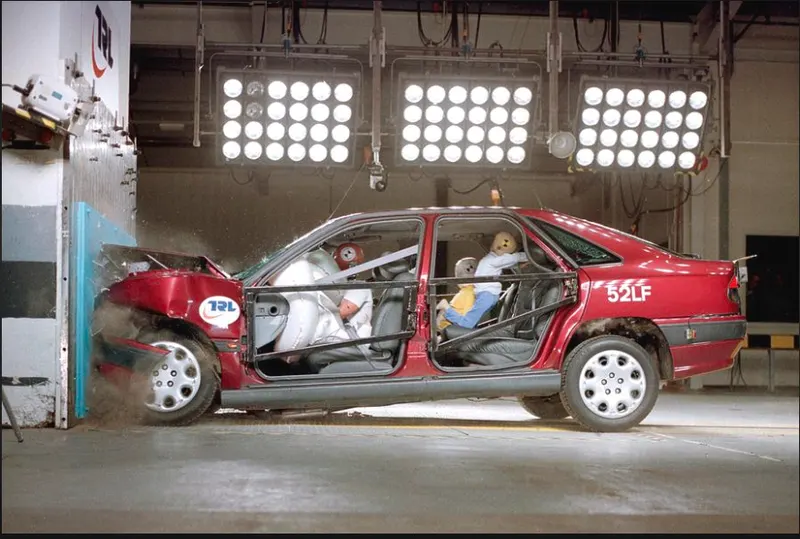
Crash stimulation, also known as crash testing or impact testing, is a method used to evaluate the safety performance of a product or structure in the event of a crash. This type of testing is commonly used in the automotive industry to test the safety of cars, but can also be used to test the safety of airplanes, trains, and other vehicles.
During crash testing, the product or structure being tested is subjected to controlled impacts that simulate different types of crashes, such as front, rear, or side impacts. The data collected during the crash test, such as the force and acceleration experienced by the test subject, is analyzed to assess the safety performance of the product or structure.
Crash stimulation is an important tool for manufacturers and regulators to ensure the safety of products and structures, and to improve their design and performance.
Procedure:
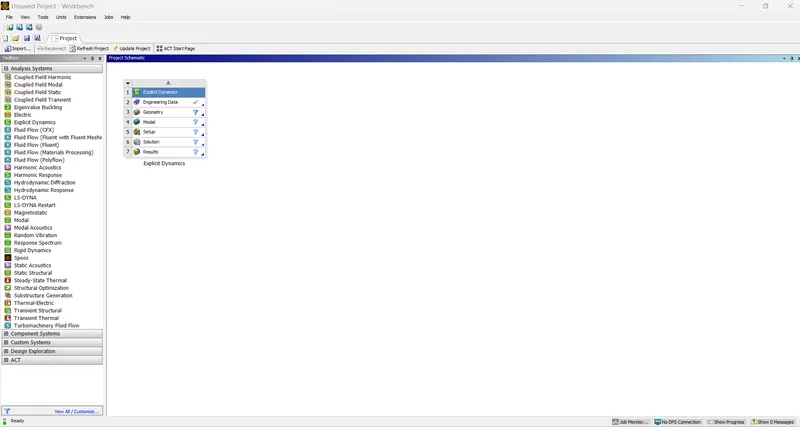
The analysis we are doing is an Explicit Dynamic Analysis, Select Explicit Dynamic from the ANSYS workbench
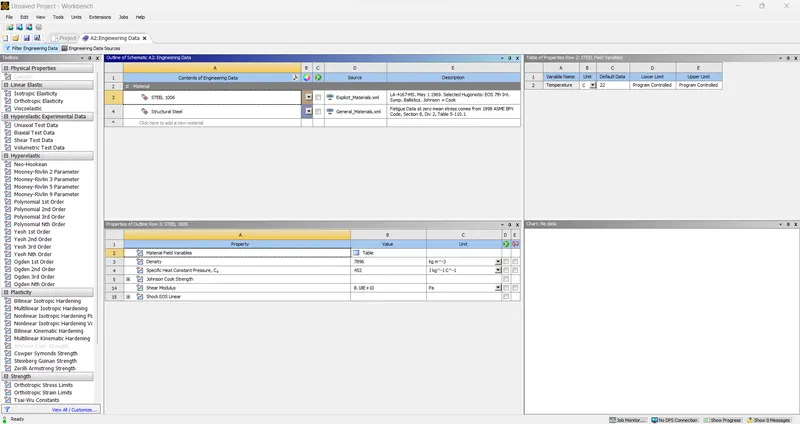
Open Engineering Data from the Engineering services and Select stainless steel NL and structural steel for the materials
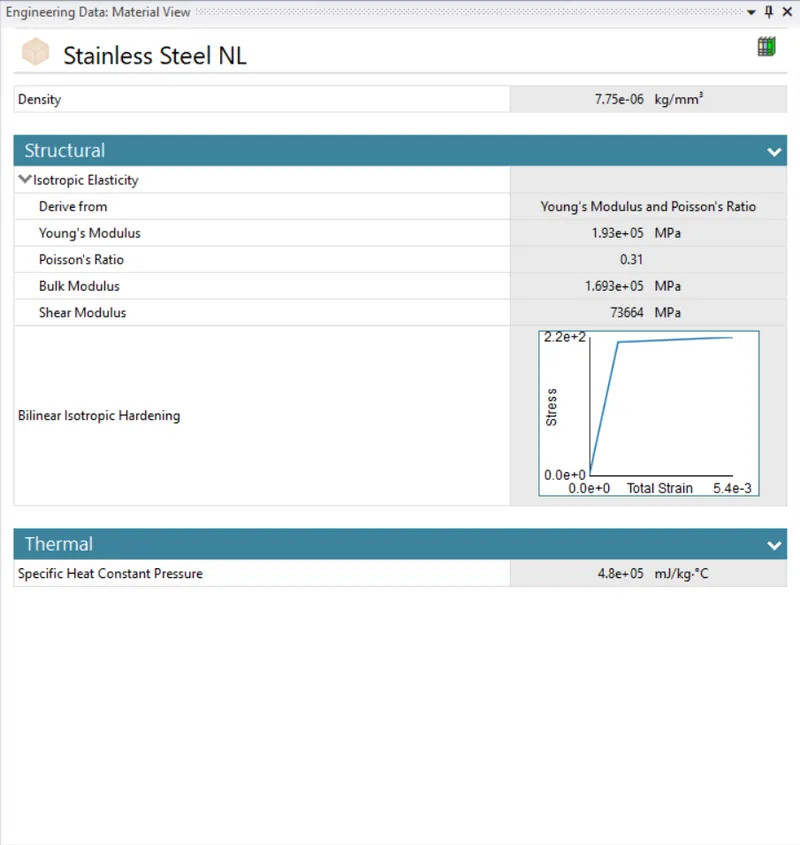
(Stainless Steel NL)
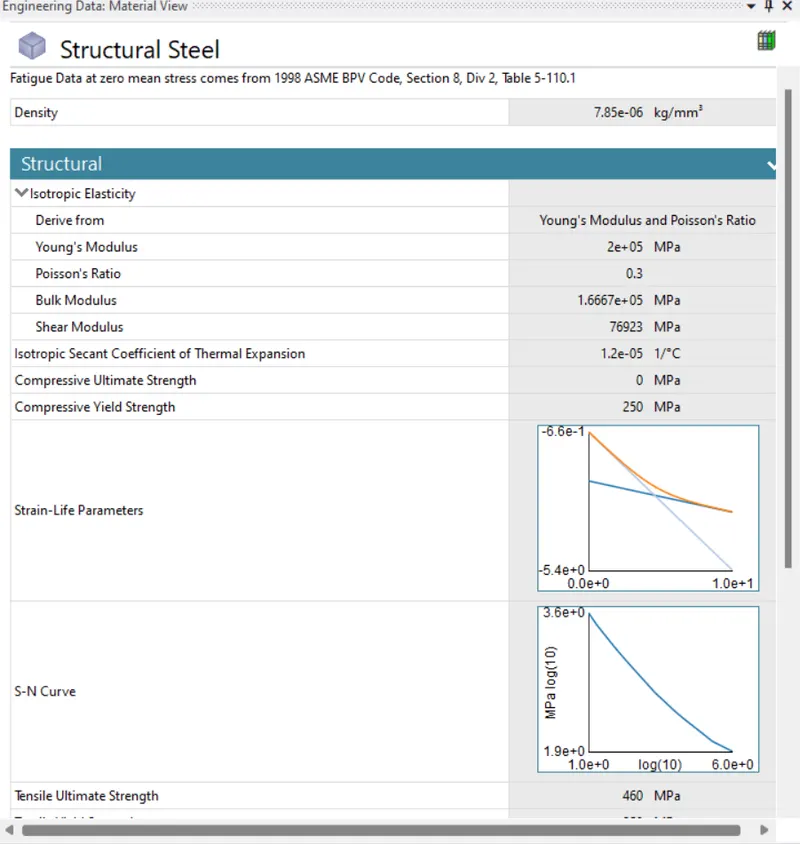
(Structural Steel)
Since the model is already provided we import the model in the geometry SpaceClaim, The model provided is shown below
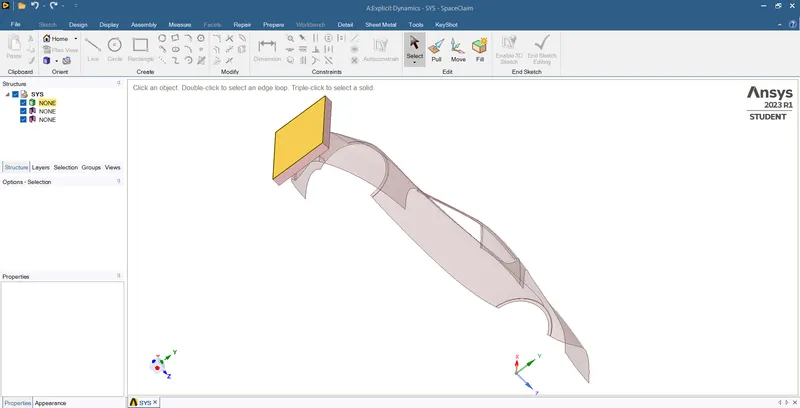
Once the Geometry is updated select the model option and click Edit
Create Symmetry for the model using the Symmetry option
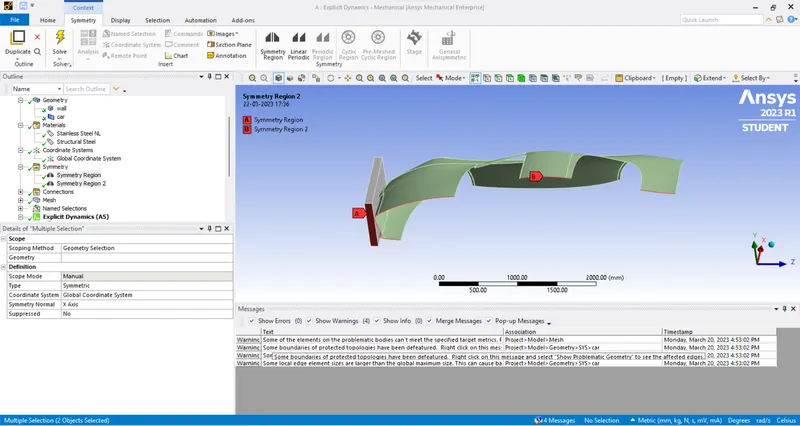
Delete the contacts as this is explicit dynamics analysis and mesh the component
Mesh both the car and wall component
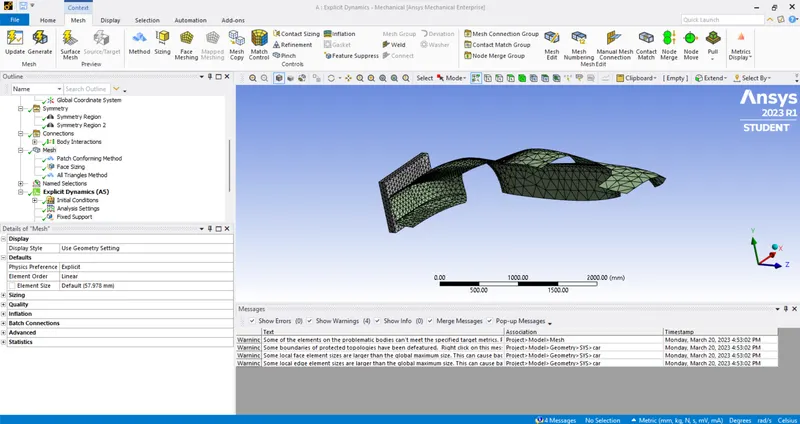
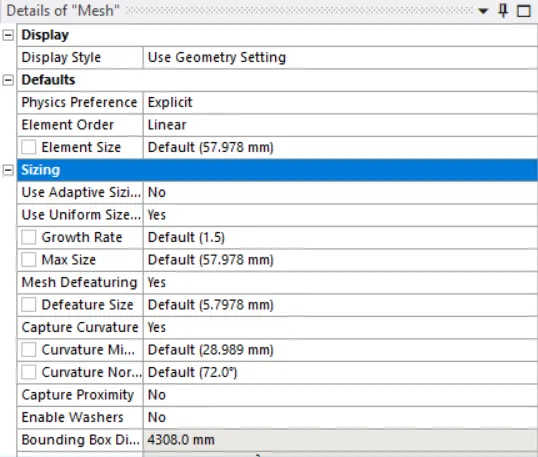
Mesh Size settings
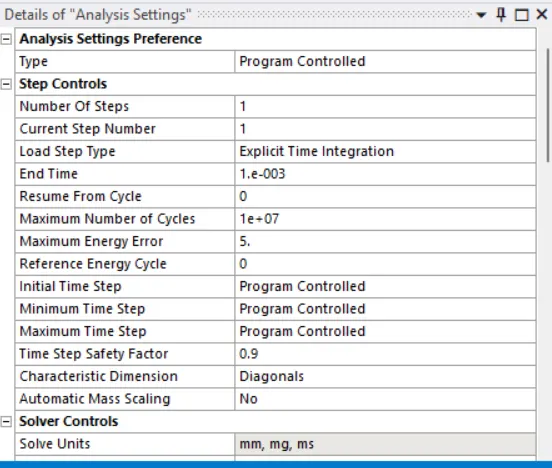
Analysis Settings
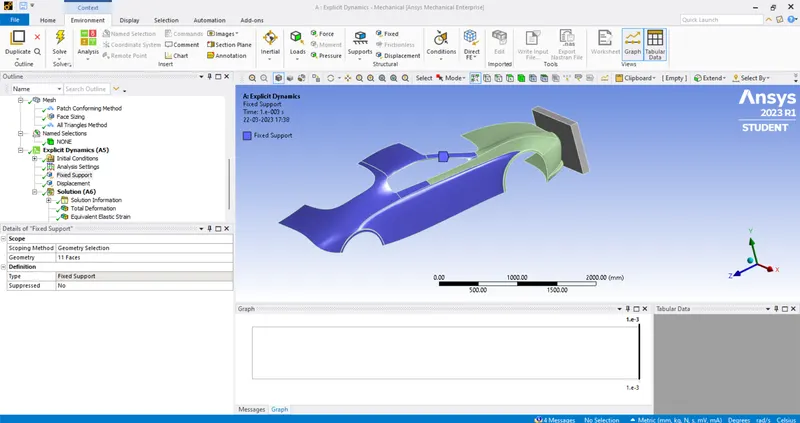
The Back side of the car is fixed since we have to provide displacement to the wall
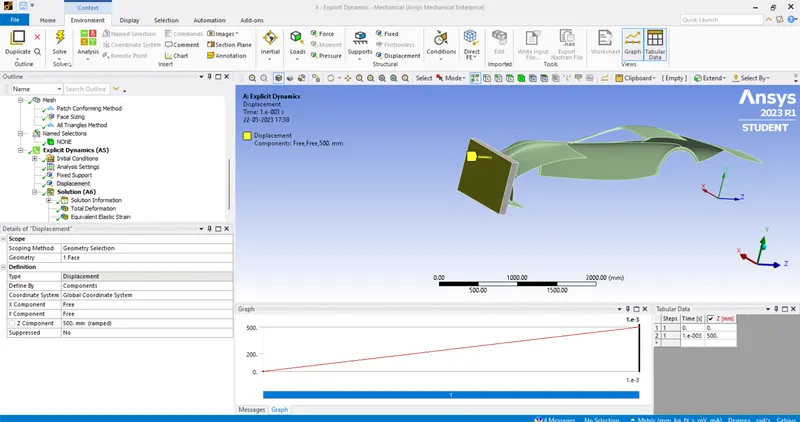
For the Displacement, the wall is selected with 500mm
Result
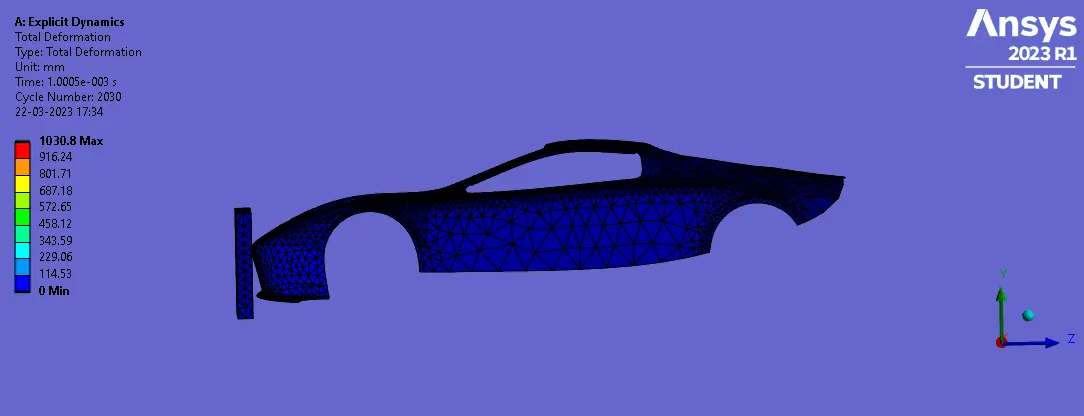
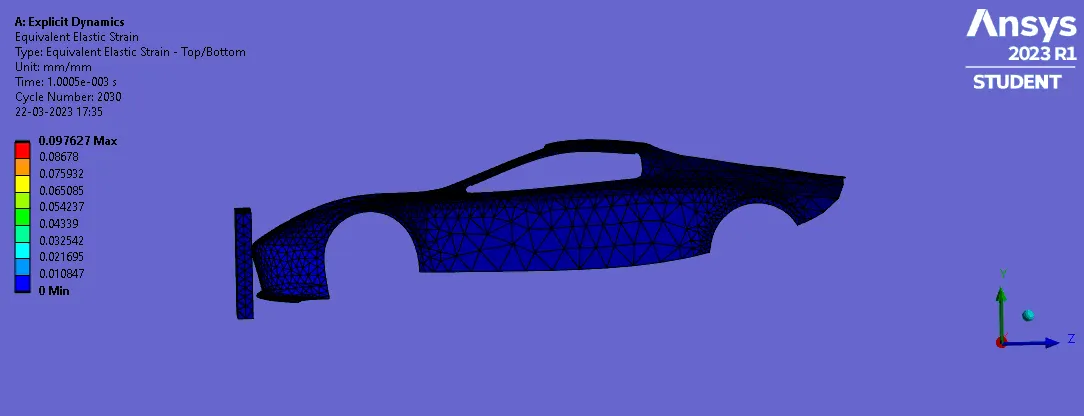
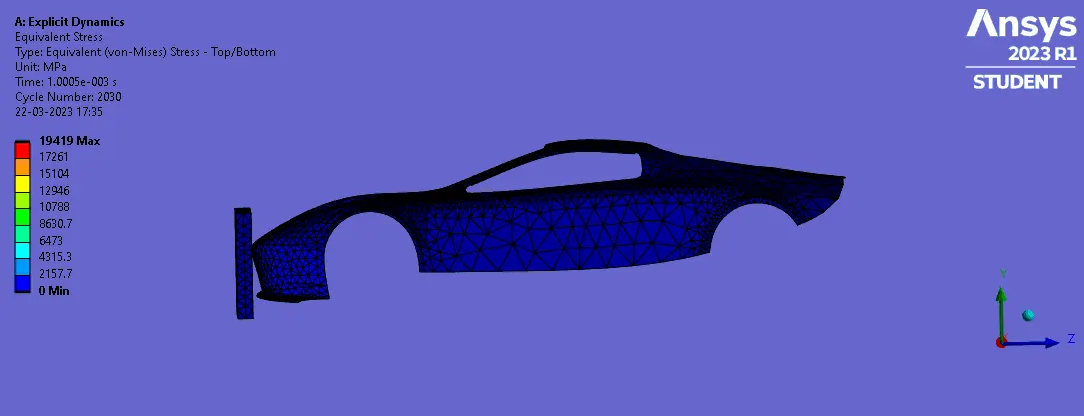
Case 1:Thickness 0.2
Total Deformation
Equivalent Strain
Equivalent Stress
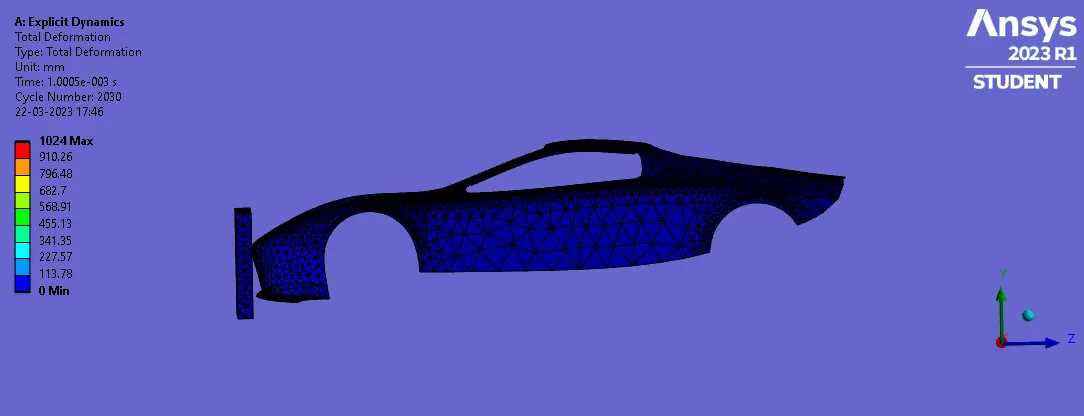
Case2:Thickness 0.5
Total Deformation
Equivalent Strain
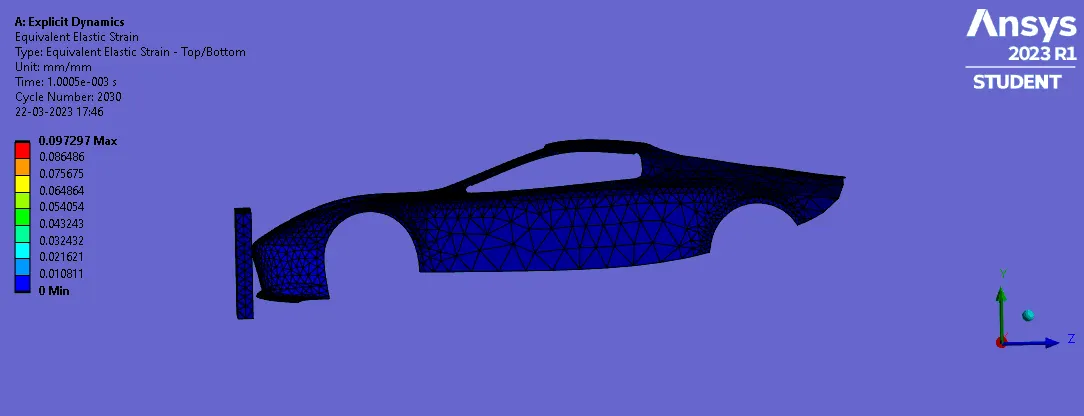
Equivalent Stress
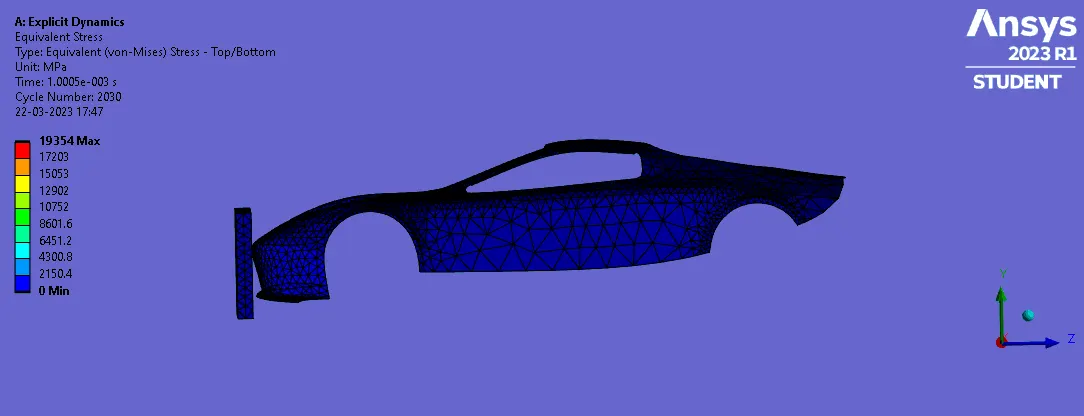
Case3:Thickness 0.9
Total Deformation
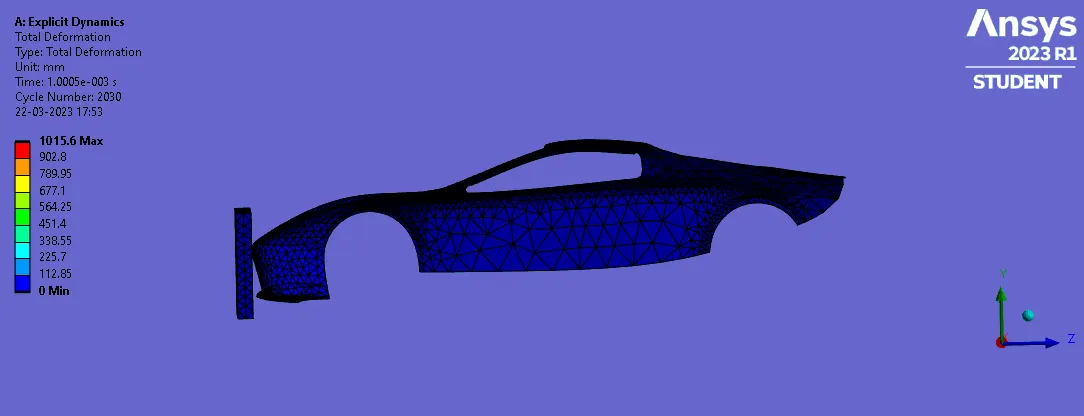
Equivalent Strain
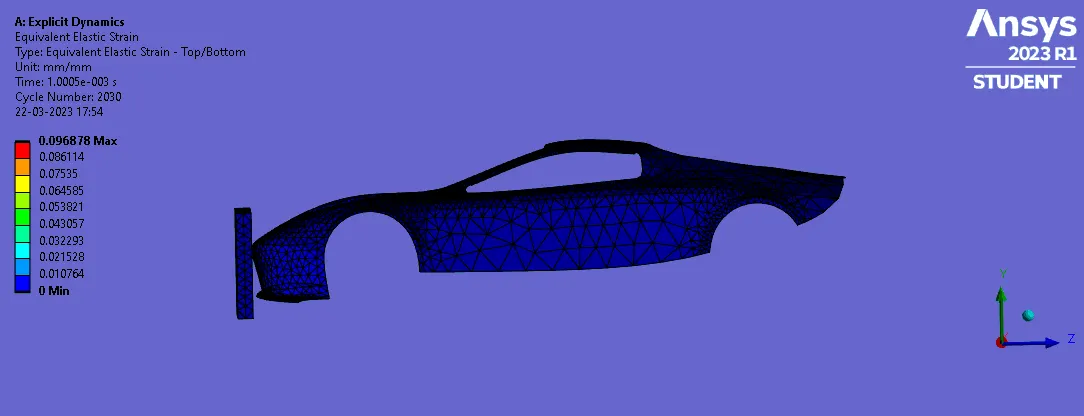
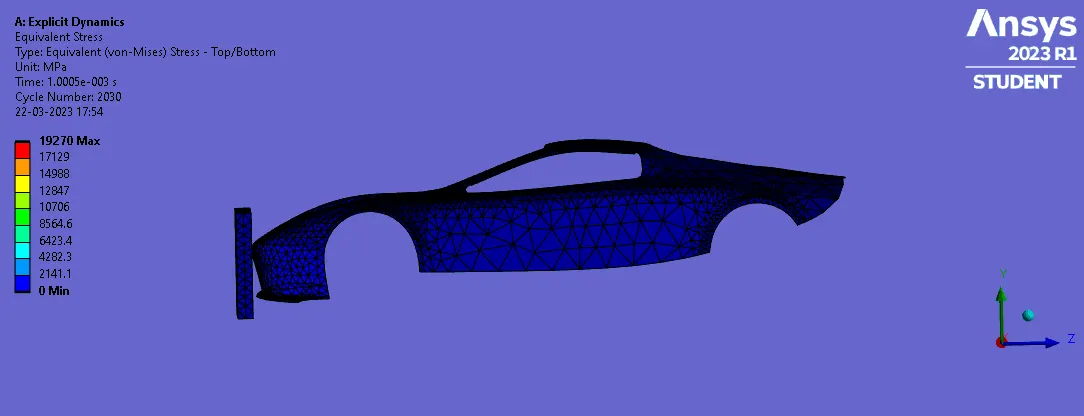
Equivelent Stress
| Thickness(mm) | Total Deformation(mm) | Equivalent Strain | Equivalent Stress(MPA) |
| 0.2 | 1030.8 | 0.097627 | 19419 |
| 0.5 | 1024 | 0.097297 | 19354 |
|
0.9 |
1015.6 | 0.096878 | 19270 |
Conclusion
As the thickness of the car body increases the Total Deformation exprienced by the body decreases since the body has more capacity to absorb the impact and also the strain and stress also decreases as the thickness of the body increases