Week 11- Broadband Noise modelling over Ahmed body
Introduction: Acoustics play a major role in fluid flow. As sound is just pressure difference travelling through space CFD is equipped to handle it with its broadband solving technique. As the sound waves scales are different from the trubulent scales it is at times not convinent. For example in Transient simulation the turbulent sclae are of `mus` magnitude where as the acoustic waves are of milli-second magnitude. Being a hyperbolic equation the pressure waves travel in all directions and propagate in the same way:
`c^2*(partial^2p)/(partialx^2) = (partial^2p)/(partialt^2)`
As the CFD codes are evaluating pressure fields it is easire to evaluate the pressure waves for acoustic analysis as well.
Eventhough, the CFD code can evaluate the acoustics the limitation is the domain in some cases. For example, to assess the effectes of a jet plane on the ground would be difficult as the descitysation of higher accuracy would be needed with equal efforts in the grid generation which will be computationally costly to say the least.
As this study is to understand the acoustics of an ahmed body the broadband method is employed.
Ahmed body:
The Ahmed body is a generic car body (a simplified vehicle model). The airflow around the Ahmed body captures the essential flow features around an automobile and was first defined and characterized in the experimental work of Ahmed. Although it has a very simple shape, Ahmed body allows us to capture characteristic features that are relevant to bodies in the automobile industry.
This model is also used to describe the turbulent flow field around a car-like geometry. Once the numerical model in validated, it is used to design new models of the car. As cars produce sounds besides the engine when they travel on a highway. This can be detrimental to the passengers as they might feel discomfort due to noise.
The study conducted was using a k-epsilon (Realizable) with enhanced wall function and Production limiter enabled.
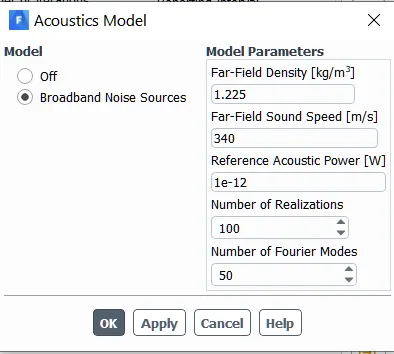
A coustic solver is kept on. The velocity inlet is initiated with 110 m/s and road is a translating wall with a velocity of 110m/s
Broadband Noise modelling:
ANSYS CFD tools offer a number of broadband sound models which only require steady RANS results to provide a useful quantification of the noise source levels, allowing designers and engineers to quickly rank their designs (by acoustics performance) and eliminate geometry that acts as large potential sources of noise.
 |
The results were as follows.
The plot of coefficient of lift and drag as they stabilized to a value.
| Coefficient of Drag | 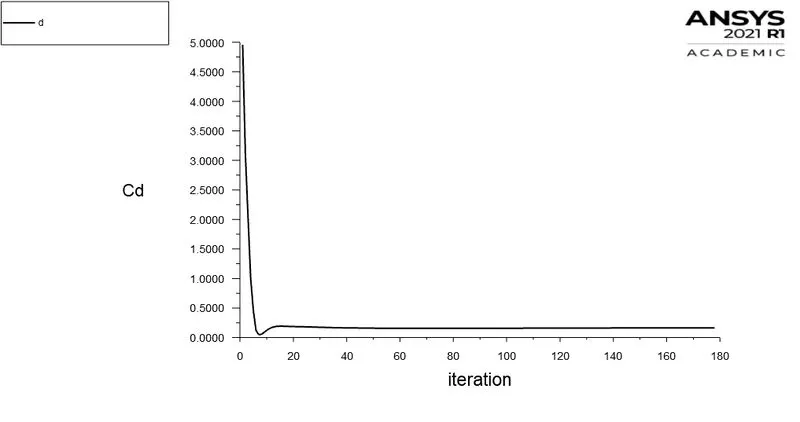 |
| Coefficient of Lift | 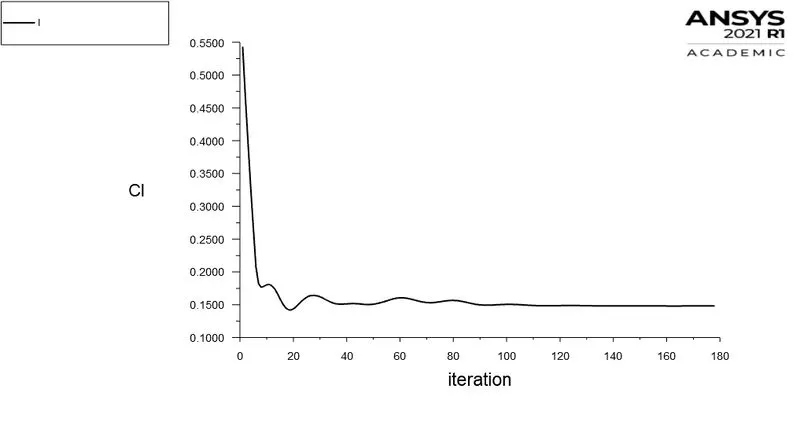 |
Contours:
| Static Pressure | 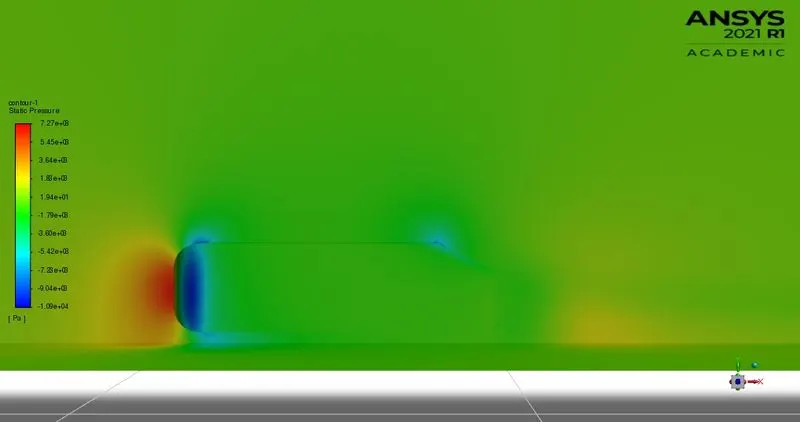 |
| Velocity Magnitude | 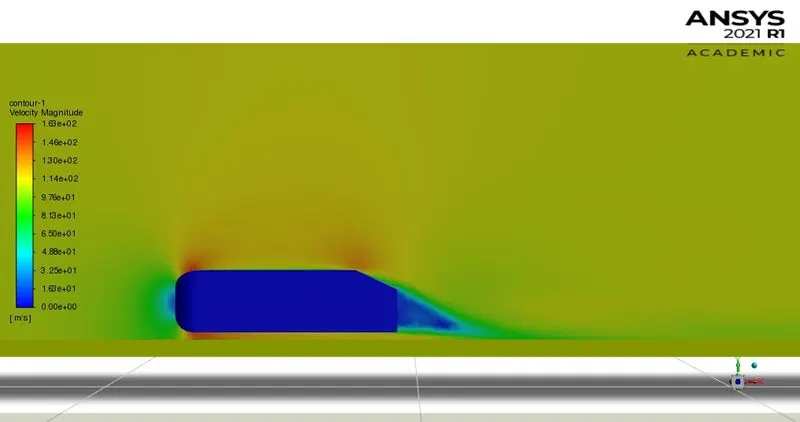 |
| Surface Acoustic Power | 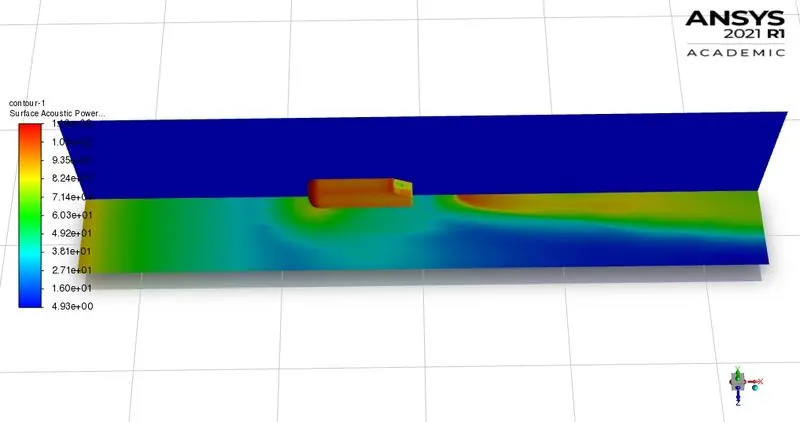 |
| Turbulent intensity | 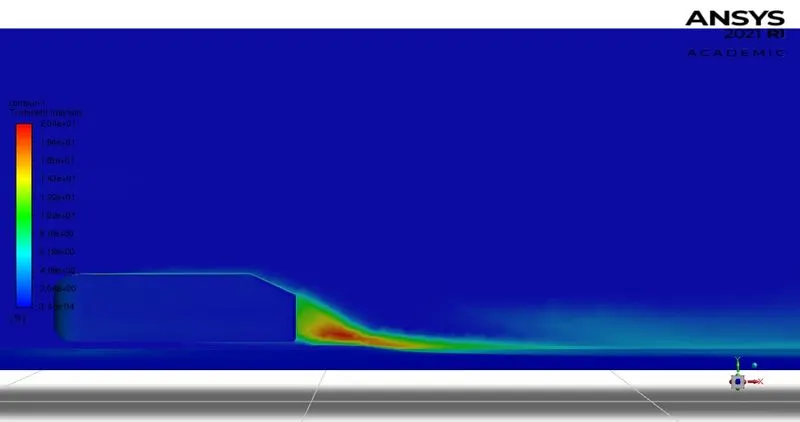 |
| Acoustic Power Level | 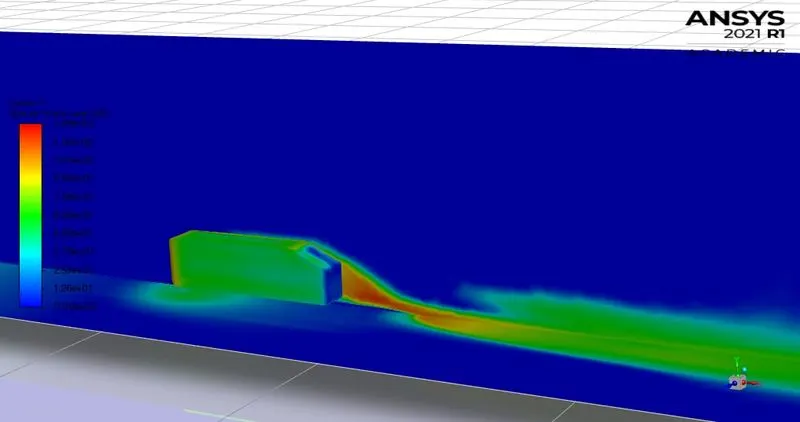 |
| Lilly's total noise | 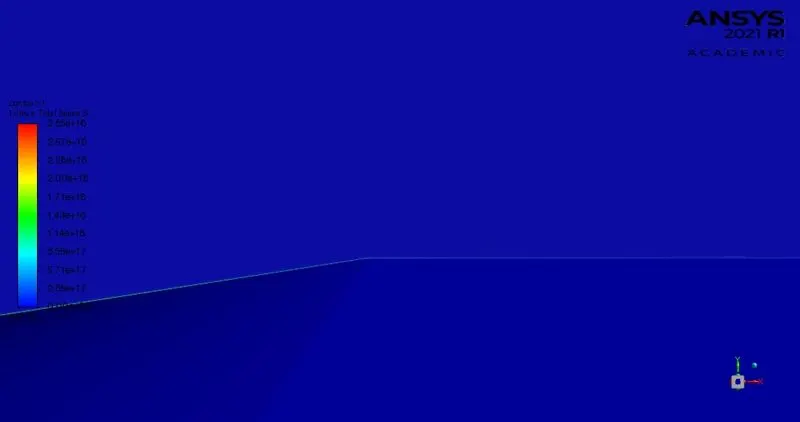 |
Concusion: This study shows us the ability of CFD to analyze the acoustic behavious of fluid and how it impacts based on the contours. This will be a good informaton for the design engineer to make changes to create a car that does not produce unnecessary sound that discomfort the passenger and passer-by. With this we can declare the simulation is successful and complete.