Week 10 - Simulating Combustion of Natural Gas.
Objective :
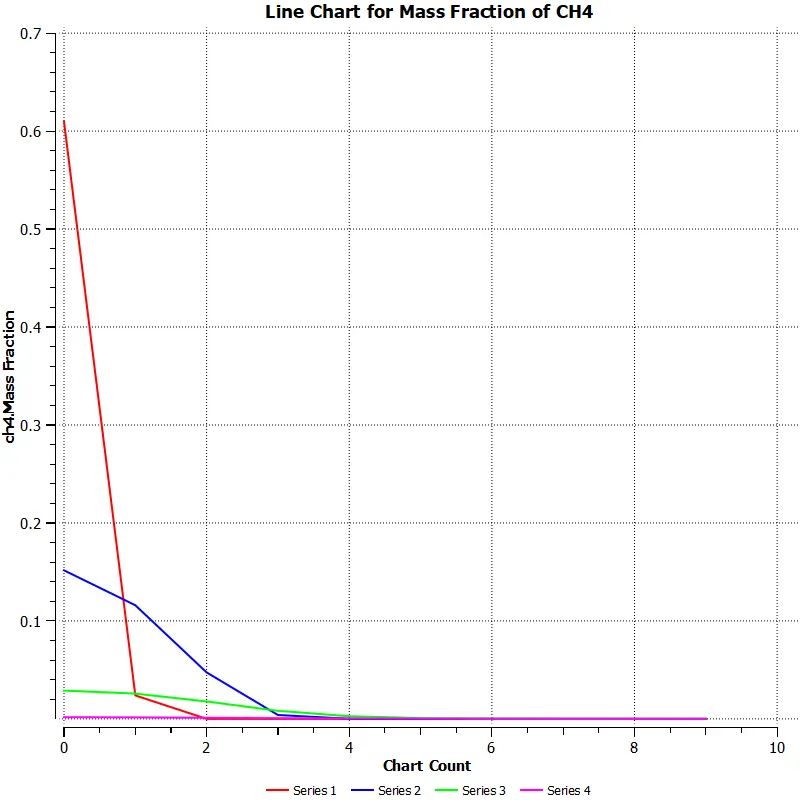
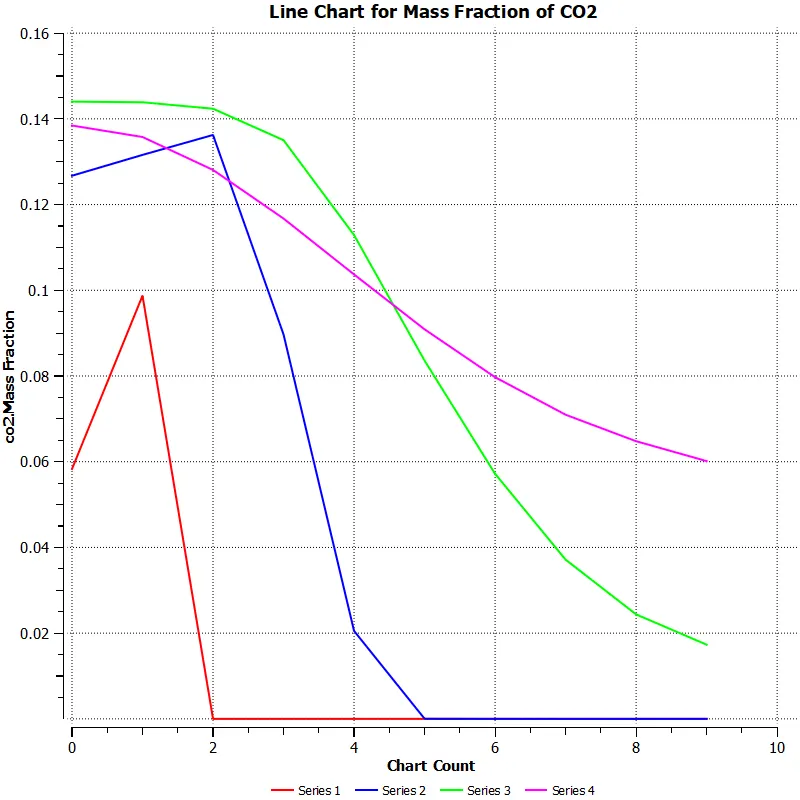
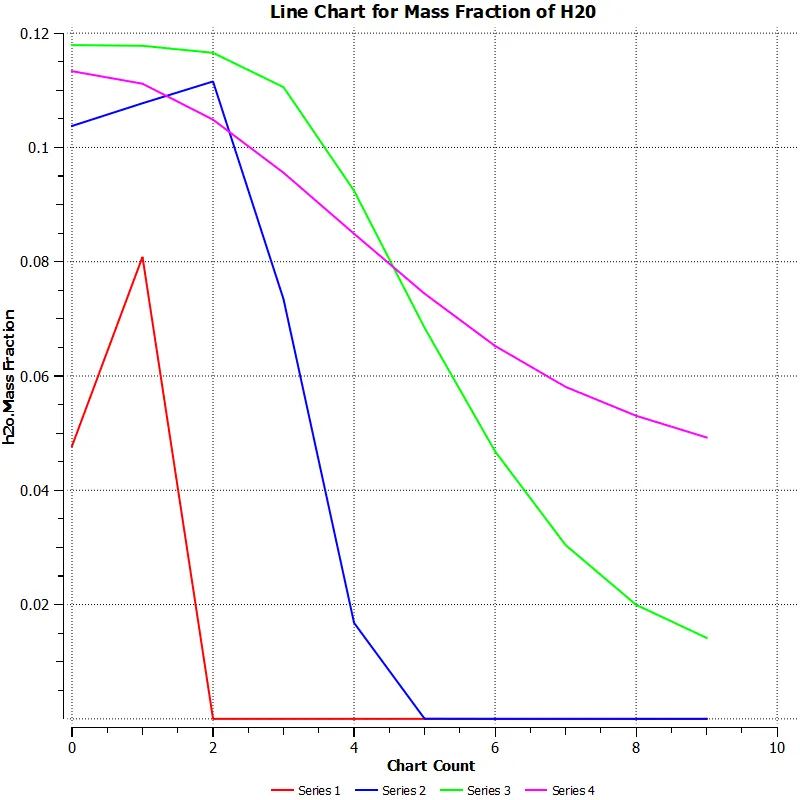
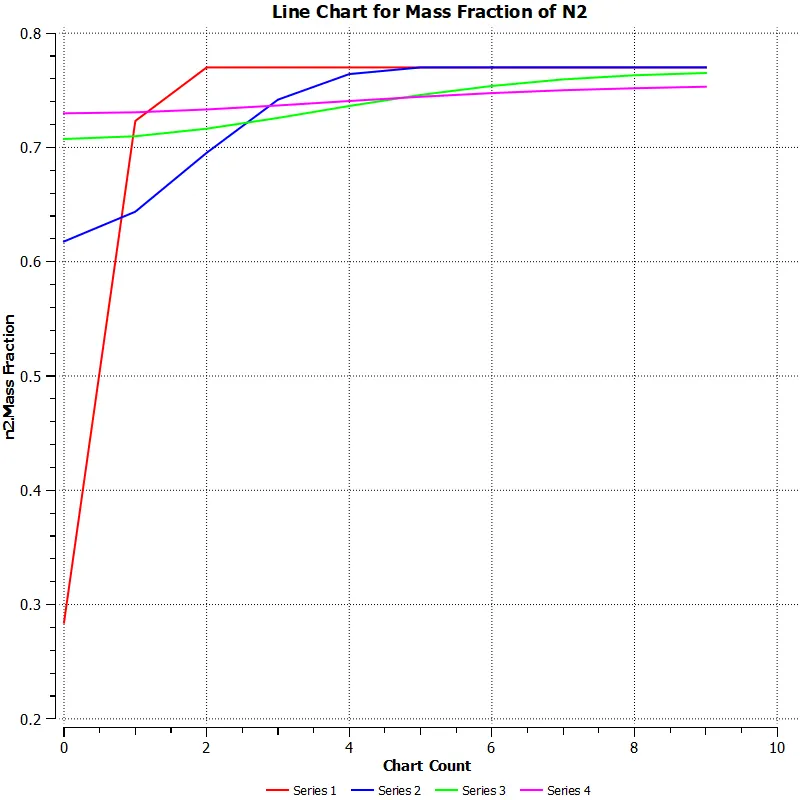
Part 1 : To Perform a combustion simulation on the combustor model and plot the variation of the mass fraction of the different species’ in the simulation using line probes at different locations of the combustor and plot for CO2, H2O, CH4, N2, O2, NOx emissions & Soot formation.
Part 2 : To add water content (5-30% by mole)to the above case and observe the difference in results of soot and NOx formation .
Theory :
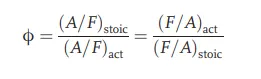
Combustion is defined as an energy-evolving (exothermic) chemical transformation [1]. While strictly involving time-dependent chemical reactions, the final yield of combustion, and how much energy can be extracted from a fuel/air mixture under a specified process, are restricted by the laws of thermodynamics. A stoichiometric mixture of fuel and air is defined as a mixture containing just enough oxygen to theoretically burn the hydrocarbon fuel to water and carbon dioxide.The equivalence ratio is commonly used to indicate quantitatively whether a fuel/oxidizer mixture is rich, lean, or stoichiometric
Procedure
Geometry :
The given model was imported to space claim . Since the given model is axisymmetric , we can reduce the model to 2D for ease of calculations .
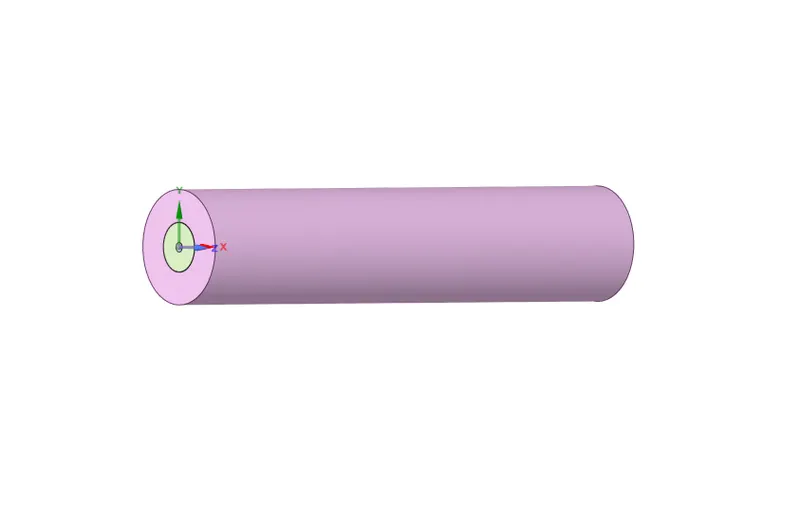
Plane tool was used to create 2 planes on xy and xz axes . Split by plane option was used to reduce the model to required geometry .
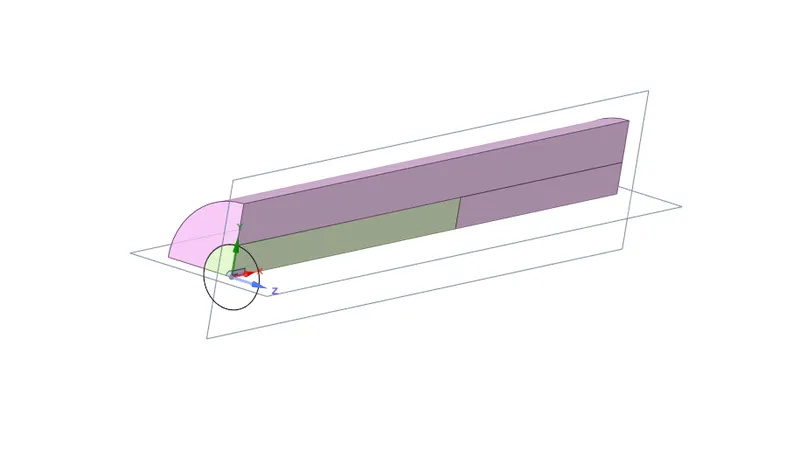
Pull tool was use to extract the required surfaces from the model . Merge faces option was used to join the various surfaces to create a single surface .
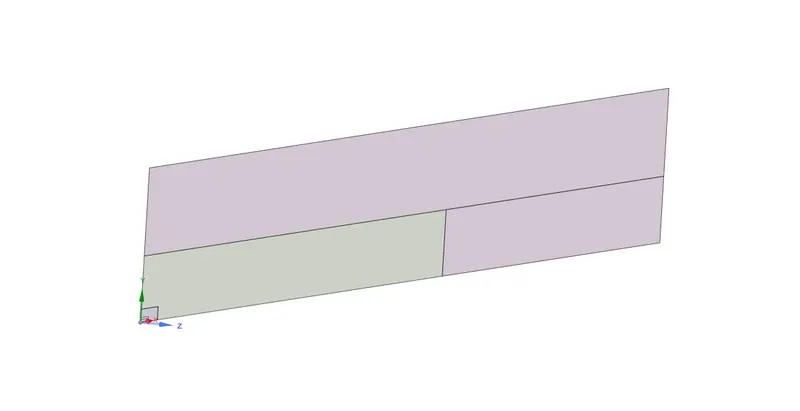
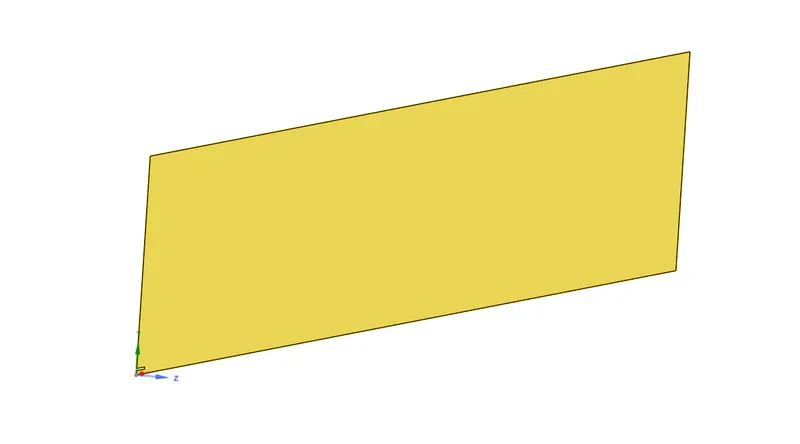
Geometry clean up was thus completed and meshing module was opened .
MESH :
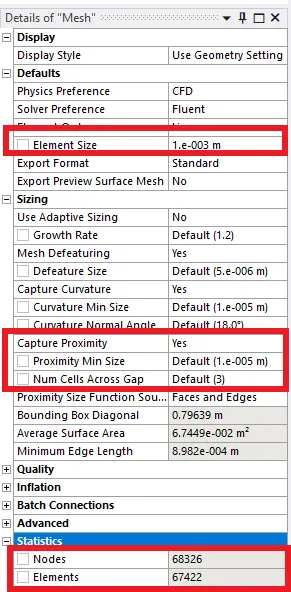
The element size was changed to 10mm . Capture proximity option was turned on in sizing .
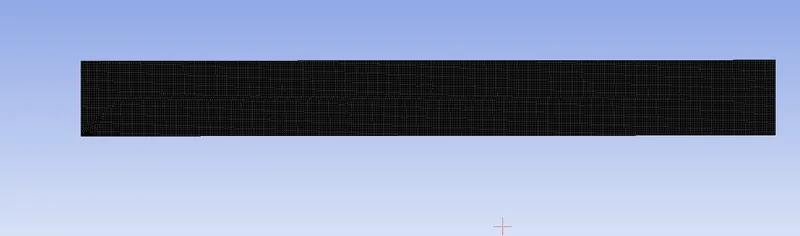
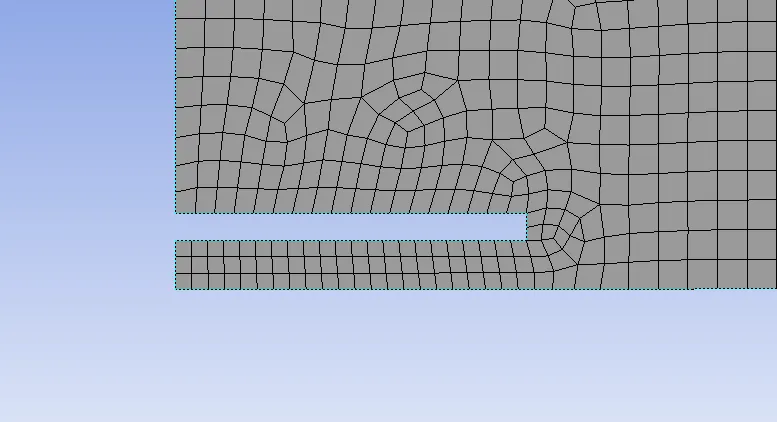
Named selections were assgined for each edges .
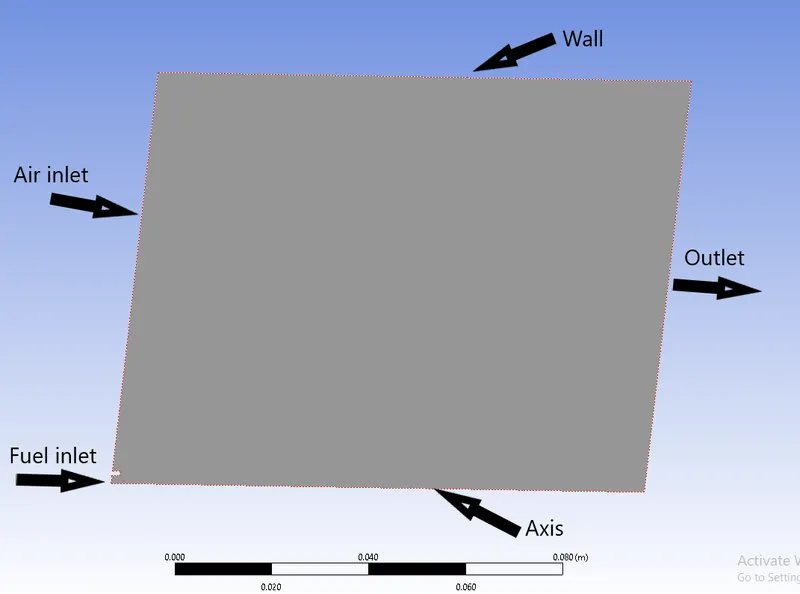
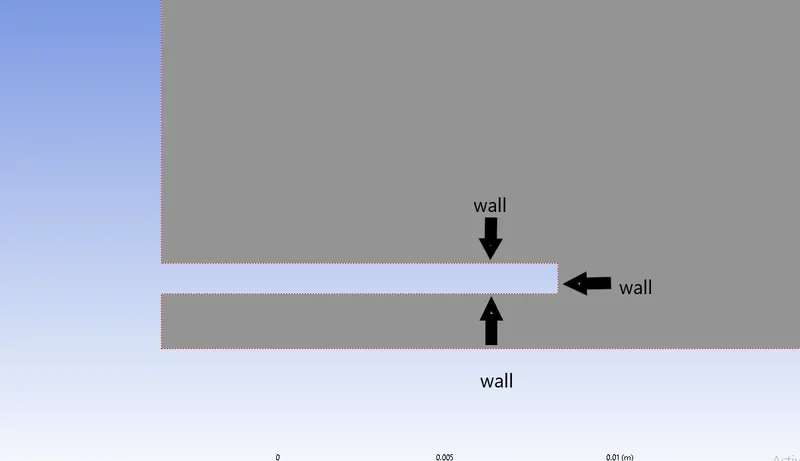
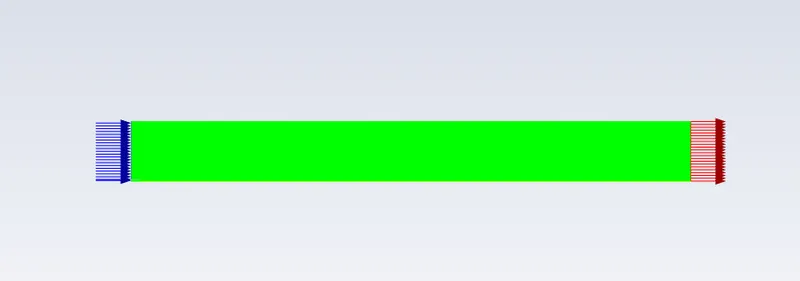
Meshing was thus completed and set up module was opened .
SETUP :
The set up module was opened with double precision and 4 processors option .
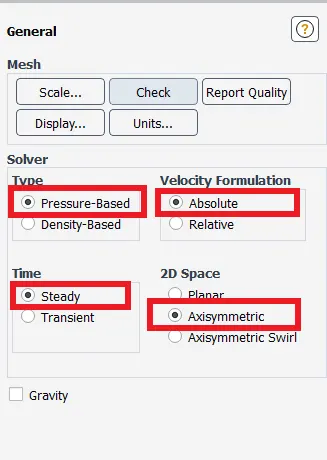
The general setting was set to pressure based solver with absolute velocity formulation . The simulation was run for steady state solution and axisymmetric option was turned on .
The energy option was turned on and viscous model was set to k-epsilon . Species transport option was turned on with voletric reactions and inlet diffussion option .
For turbulence chemistry , Eddy dissipation model was selected with methane air as mixture . NOX model and Soot model was turned on to obtain mass fraction values .
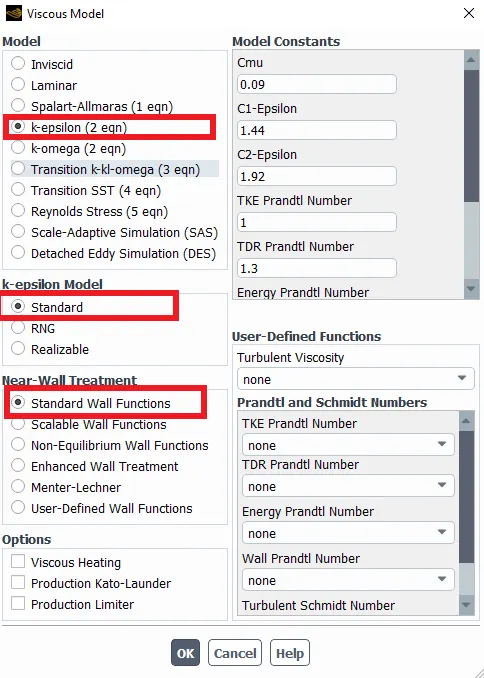
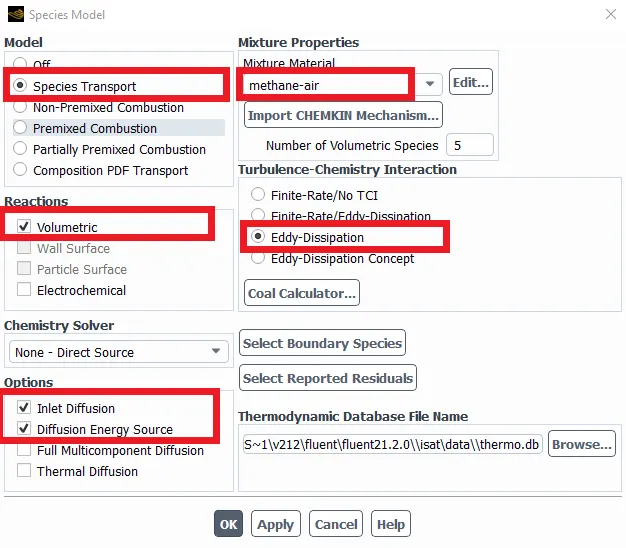
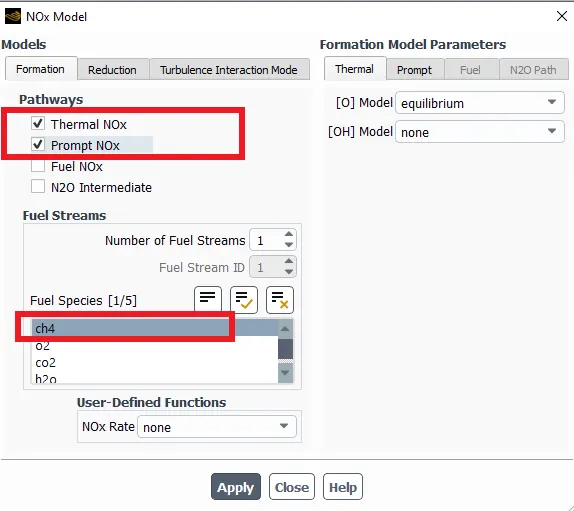
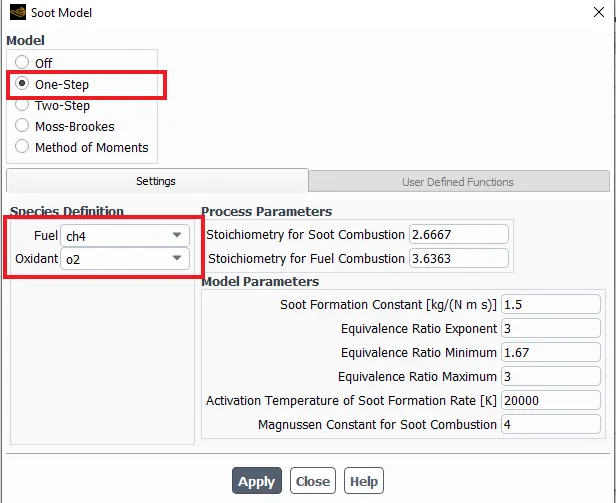
Boundary Conditons
Inlet air
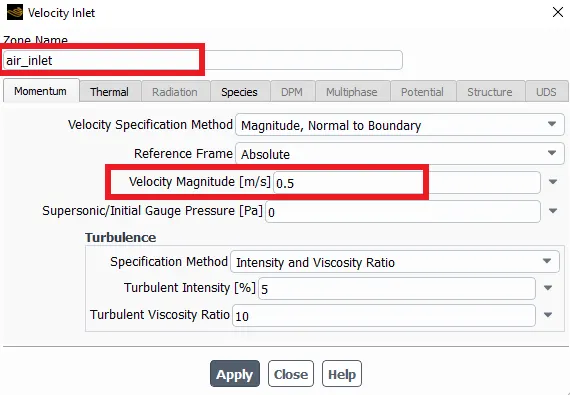
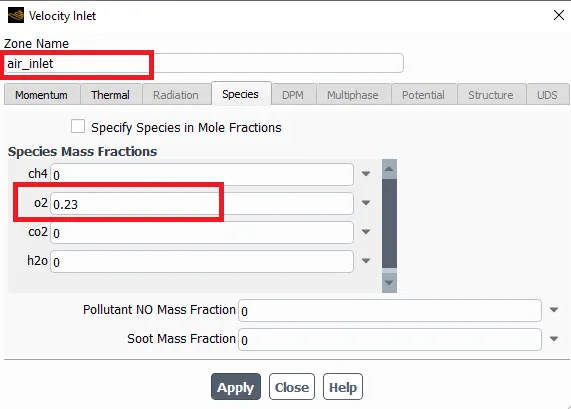
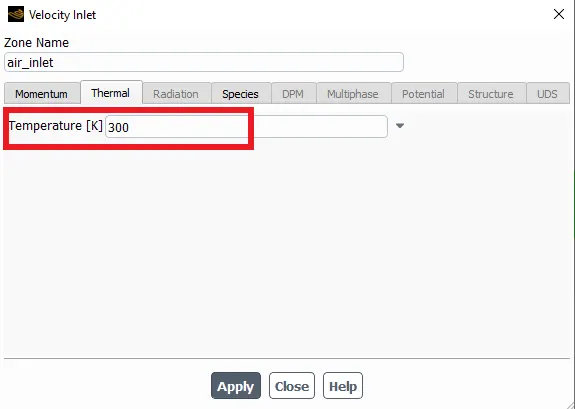
Inlet velocity was set to .5m/s and mass fraction of oxygen was set to 0.23 . Inlet air temperature was set to 300K .
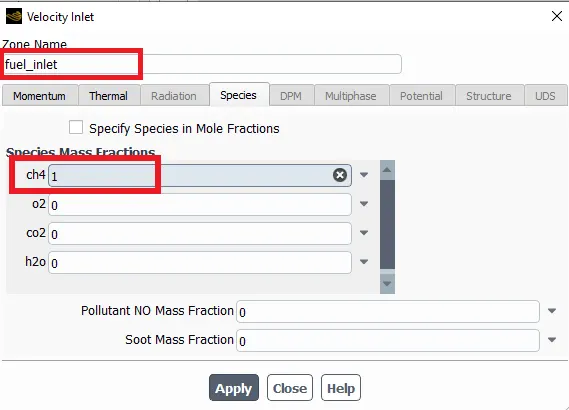
Fuel inlet
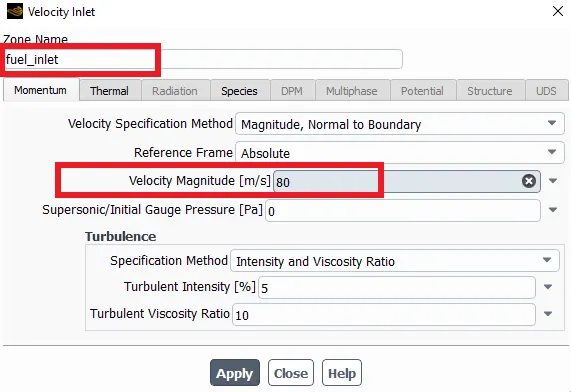
The inlet velocity was set to 80m/s . Inlet tempertaure was set o 300K . Mass fraction of methane was set to 1 .
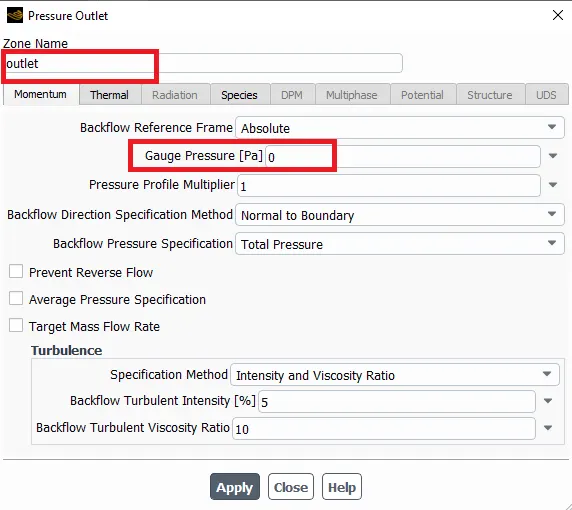
Outlet
The outlet pressure was set to 0 Pa .
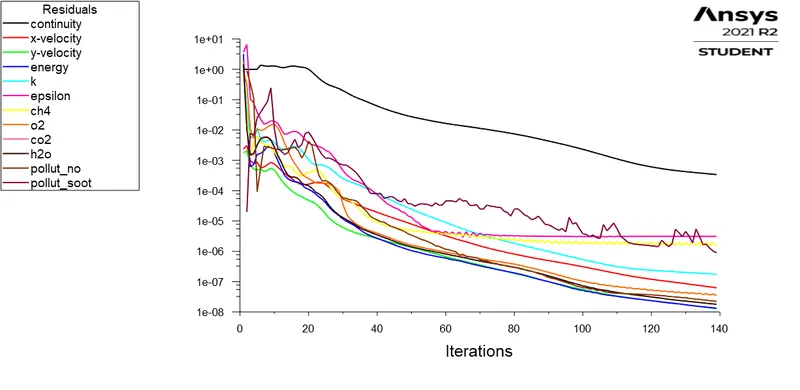
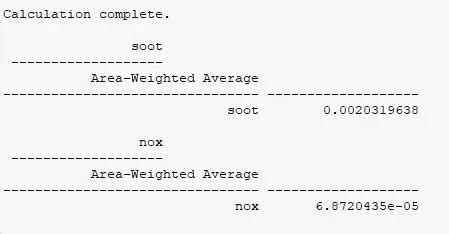
Report definitions were made for Mass fraction of NO and Soot . The simulation was run for 600 Iterations after Hybrid initialization.
Results :
Case 1
Scaled residuals
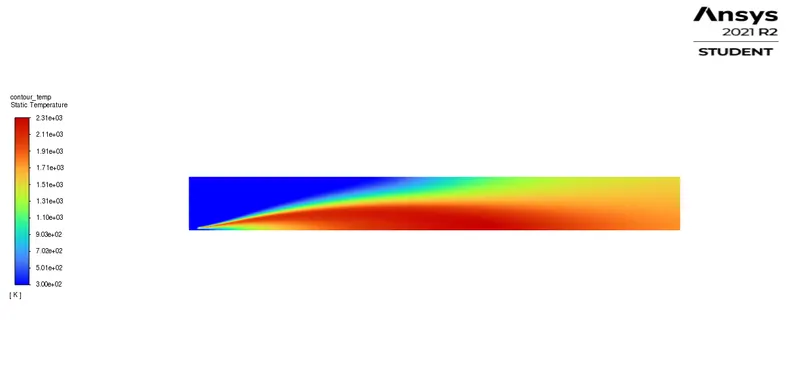
Temperature contour
Line plot for Mass fraction of CH4
Line plot for Mass fraction of CO2
Line plot for Mass fraction of H2O
Line plot for Mass fraction of N2
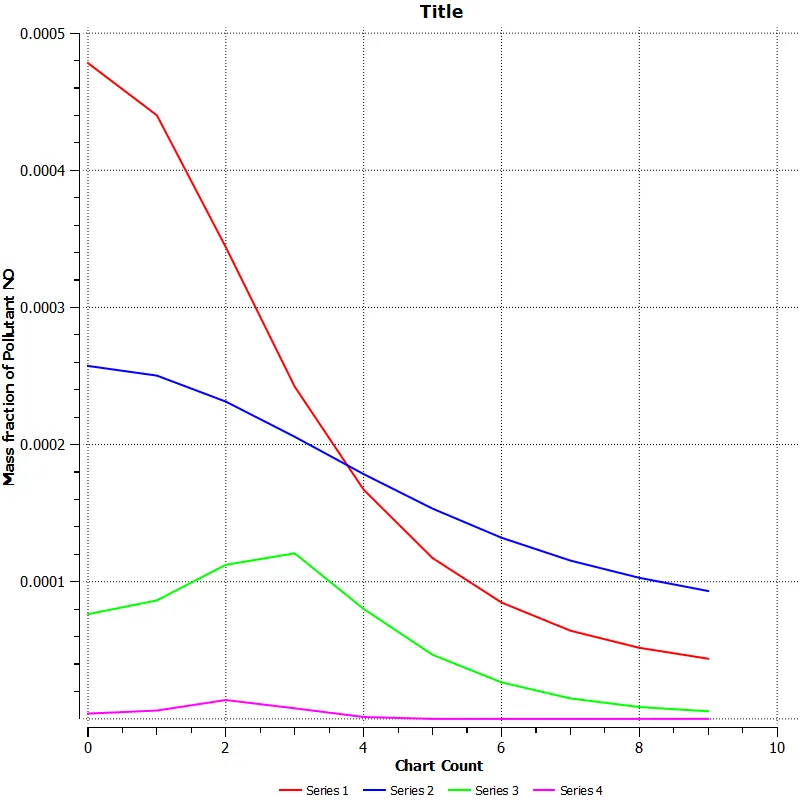
Line plot for Mass fraction of NO
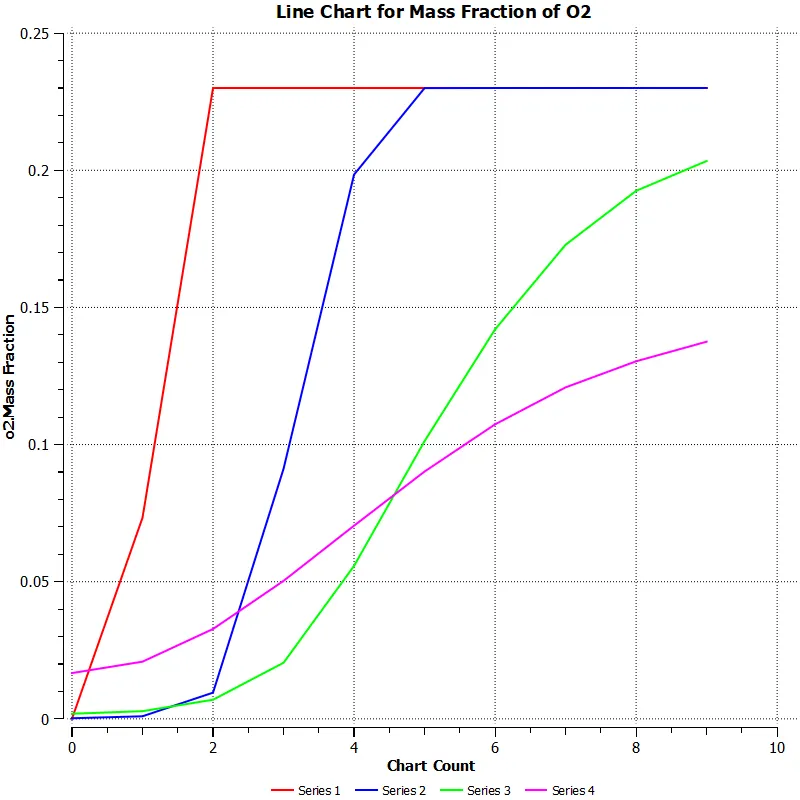
Line plot for Mass fraction of O2
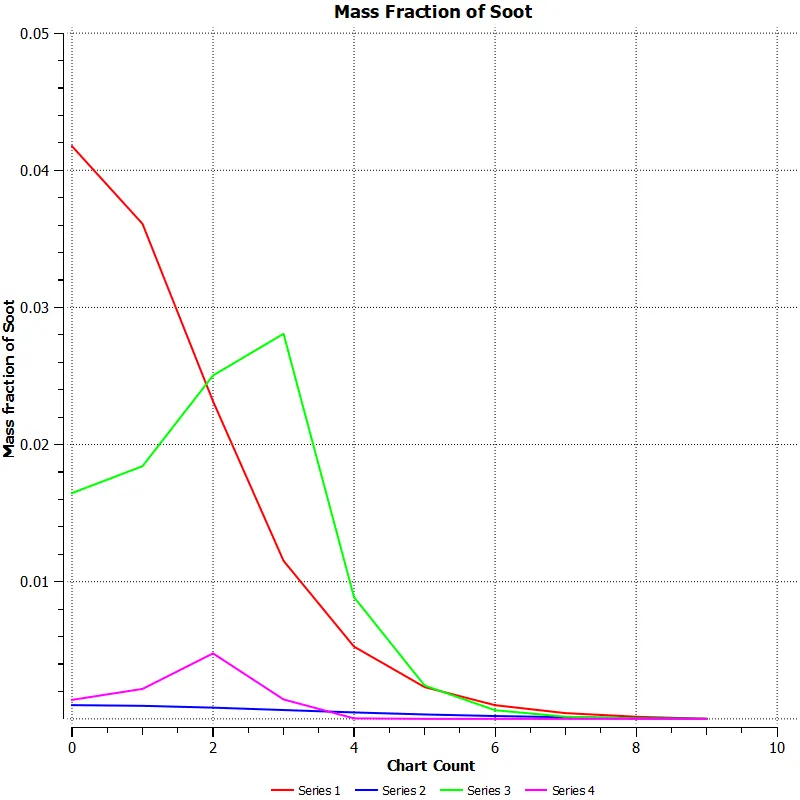
Line plot for Mass fraction of Soot
Area weighted average of Mass fractions of NO and Soot
Contours for NO and Soot mass fractions
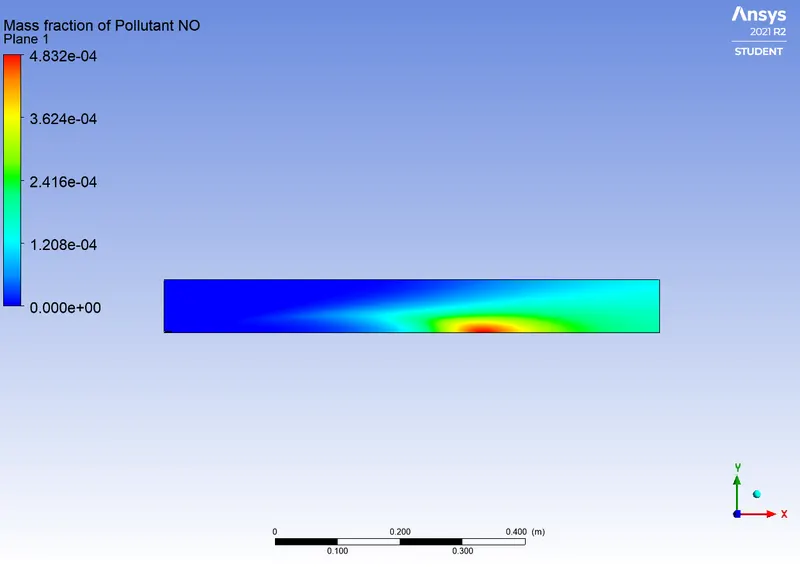
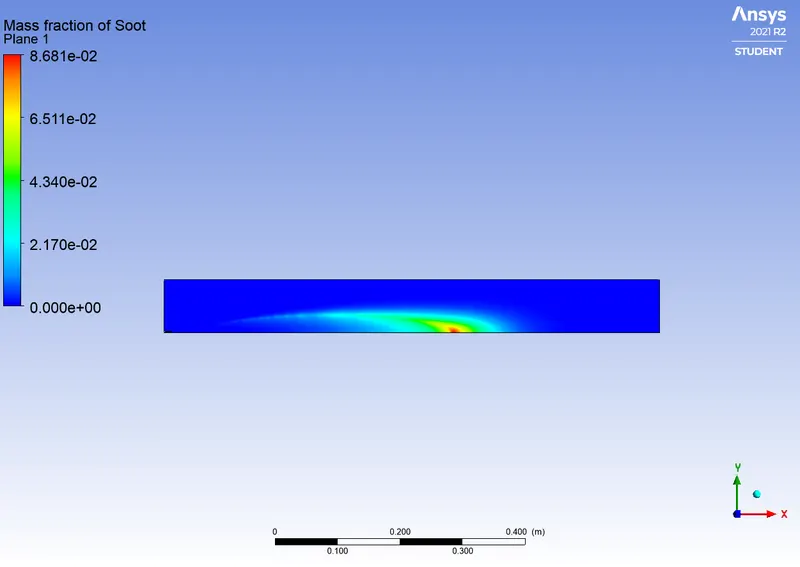
Case 2
In case 2 , water was added in quantities of 5,15 and 30 % to the methane air combustion process .
Species model setting had to be changed to methane air 2 step to include the addition of water .
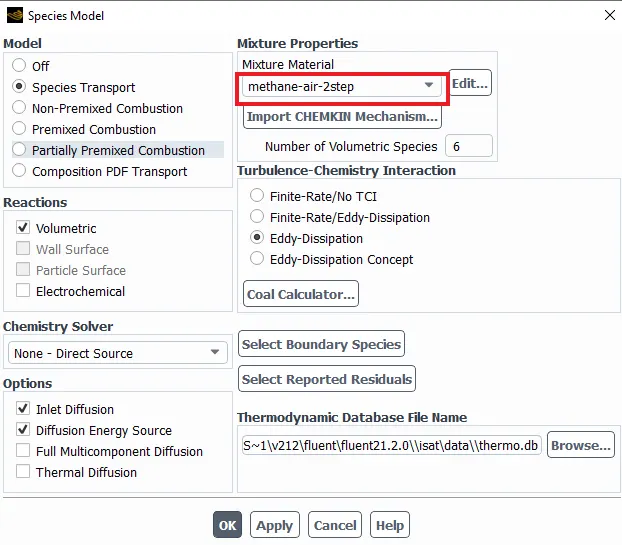
The quantities of water and methane were parametrized to obtain the solution for various ratios of both .
1) 95% methane 5% water
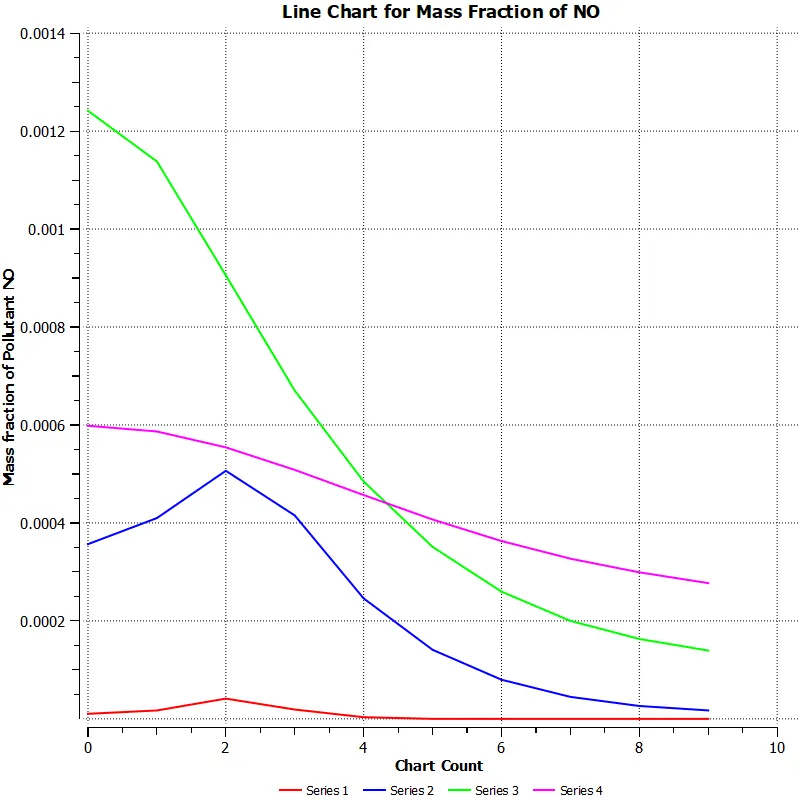
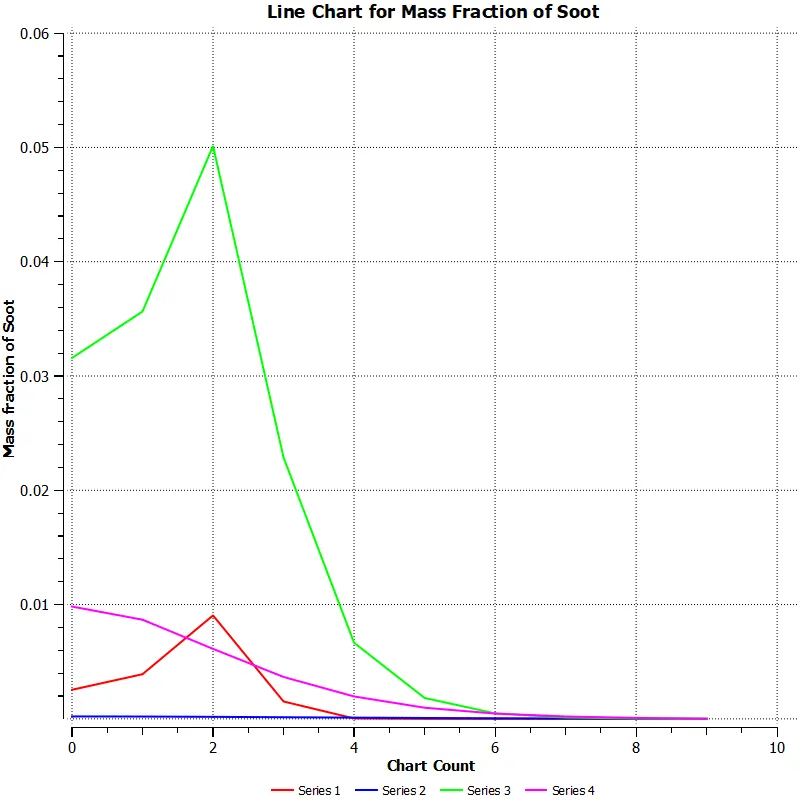
2) 85 % methane 15% water
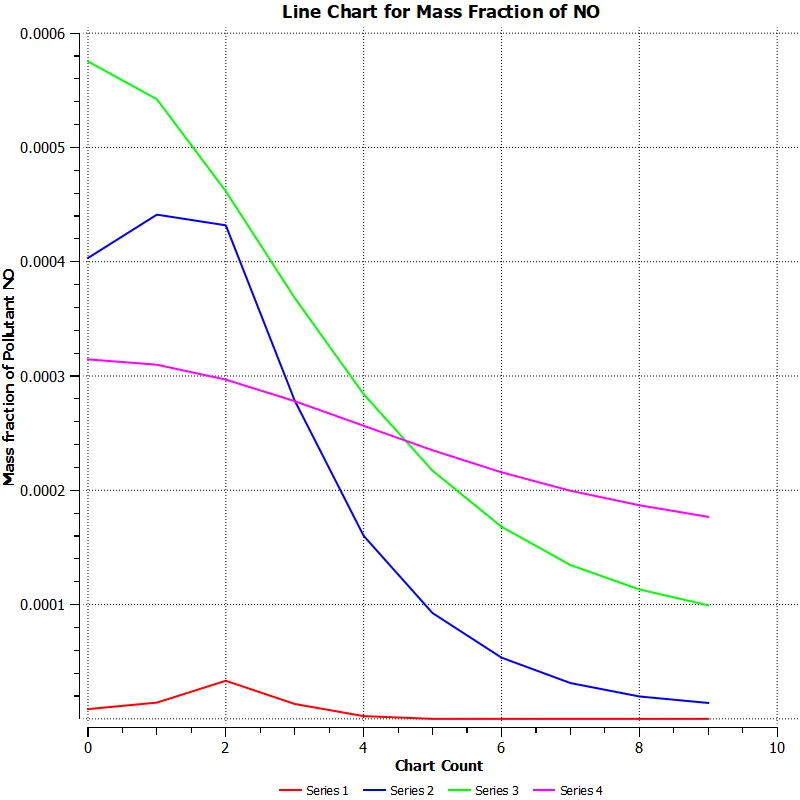
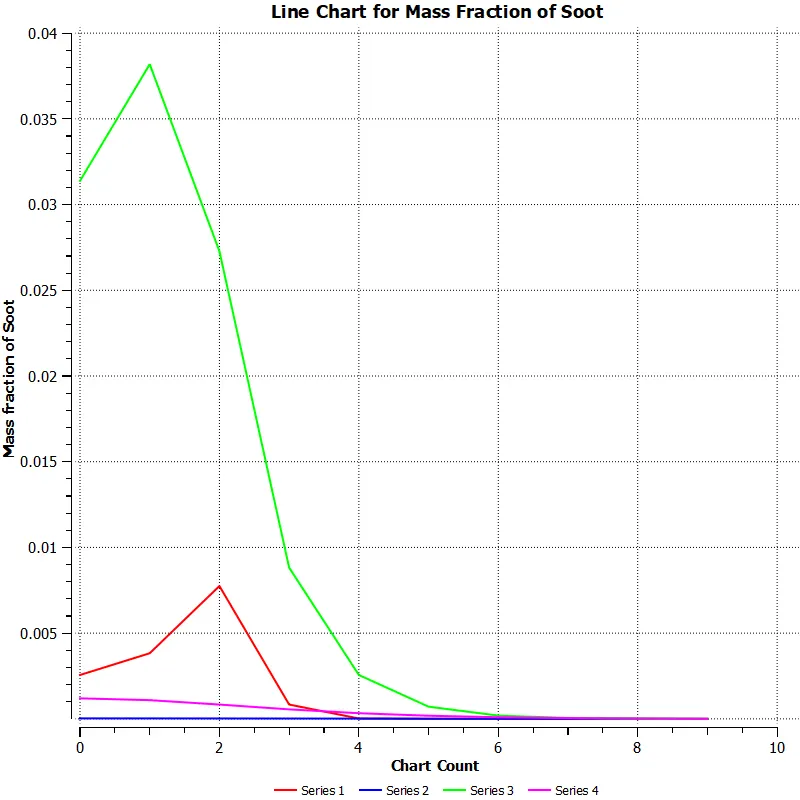
3) 70 % methane 30% water
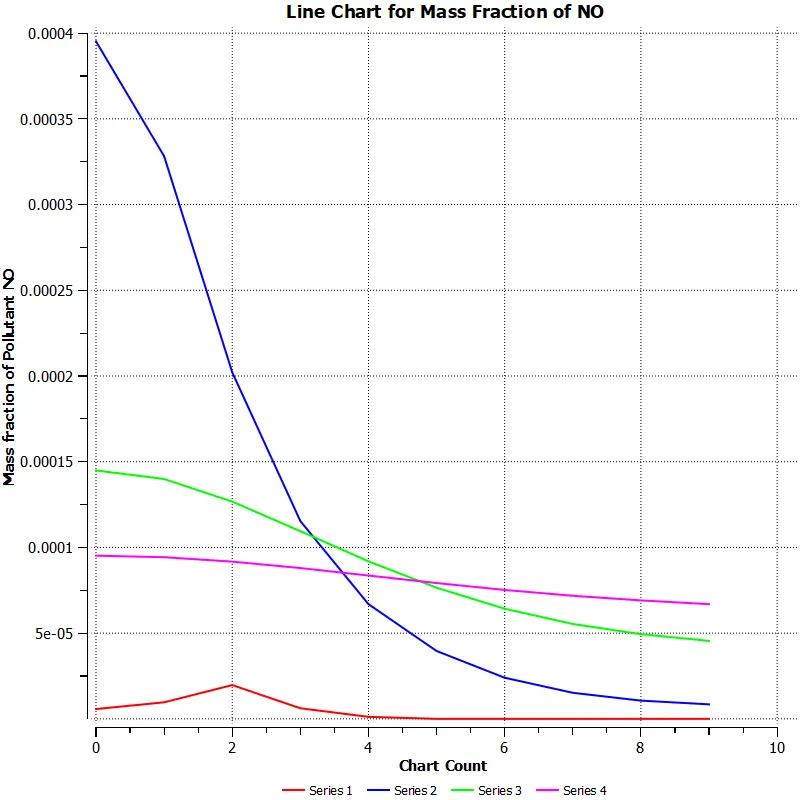
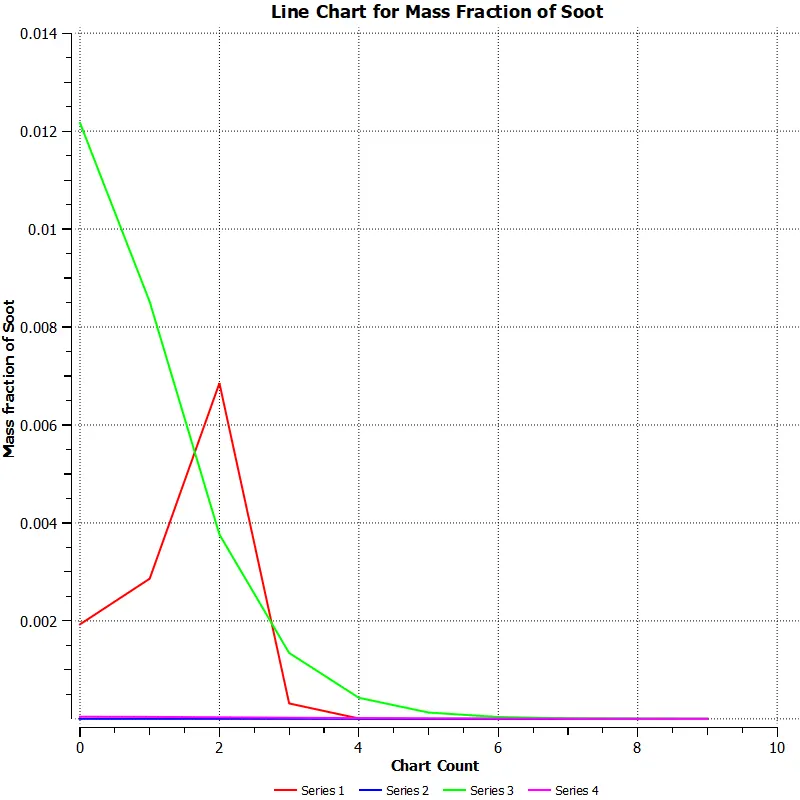
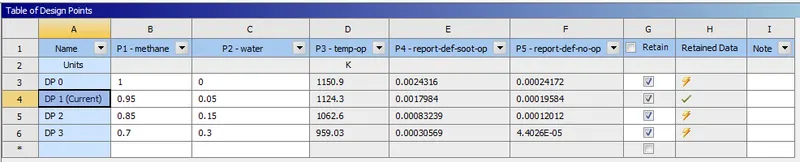
Table for mass fractions of NO and Soot produced for various ratios .
| SI no | Water % | Methane % | Temperature in K | Mass Fraction of NO | Mass Fraction of Soot |
| 1 | 0 | 100 | 1150.9 | 0.00024172 | .0024316 |
| 2 | 5 | 95 | 1124.3 | 0.00019584 | .0017984 |
| 3 | 15 | 85 | 1062.6 | 0.00012012 | 0.00083239 |
| 4 | 30 | 70 | 959.03 | .00004402 | 0.00030569 |
Inference :
1) The combustion process was successfully simulated and realistic results were obtained
2) The temperature reduces as the quantity of water is increased
3) The NO and Soot mass fraction reduces as the quantity of water is increased .