Week 10 - Simulating Combustion of Natural Gas.
Combustion
Combustion is a high-temperature exothermic redox chemical reaction between a fuel (the reductant) and an oxidant, usually, atmospheric oxygen, that produces oxidized, often gaseous products, in a mixture termed as smoke. Combustion doesn't always result in fire, but when it does, a flame is a characteristic indicator of the reaction. While the activation energy must be overcome to initiate combustion (e.g., using a lit match to light a fire), the heat from a flame may provide enough energy to make the reaction self-sustaining. Combustion is often a complicated sequence of elementary radical reactions. Solid fuels, such as wood and coal, first undergo endothermic pyrolysis to produce gaseous fuels whose combustion then supplies the heat required to produce more of them. Combustion is often hot enough that incandescent light in the form of either glowing or a flame is produced. A simple example can be seen in the combustion of hydrogen and oxygen into water vapor, a reaction commonly used to fuel rocket engines. This reaction releases 242 kJ/mol of heat and reduces the enthalpy accordingly (at constant temperature and pressure):
2H2(g) + O2(g) → 2H2O(g)
Combustion of an organic fuel in air is always exothermic because the double bond in O2 is much weaker than other double bonds or pairs of single bonds, and therefore the formation of the stronger bonds in the combustion products CO2 and H2O results in the release of energy. The bond energies in the fuel play only a minor role since they are similar to those in the combustion products; e.g., the sum of the bond energies of CH4 is nearly the same as that of CO2. The heat of combustion is approximately -418 kJ per mole of O2 used up in the combustion reaction and can be estimated from the elemental composition of the fuel.
Uncatalyzed combustion in air requires relatively high temperatures. Complete combustion is stoichiometric concerning the fuel, where there is no remaining fuel, and ideally, no residual oxidant. Thermodynamically, the chemical equilibrium of combustion in air is overwhelmingly on the side of the products. However, complete combustion is almost impossible to achieve, since the chemical equilibrium is not necessarily reached, or may contain unburnt products such as carbon monoxide, hydrogen and even carbon (soot or ash). Thus, the produced smoke is usually toxic and contains unburned or partially oxidized products. Any combustion at high temperatures in atmospheric air, which is 78 percent nitrogen, will also create small amounts of several nitrogen oxides, commonly referred to as NOx, since the combustion of nitrogen is thermodynamically favored at high, but not low temperatures. Since burning is rarely clean, flue gas cleaning or catalytic converters may be required by law.
Fires occur naturally, ignited by lightning strikes or by volcanic products. Combustion (fire) was the first controlled chemical reaction discovered by humans, in the form of campfires and bonfires, and continues to be the main method to produce energy for humanity. Usually, the fuel is carbon, hydrocarbons, or more complicated mixtures such as wood that contains partially oxidized hydrocarbons. The thermal energy produced from the combustion of either fossil fuels such as coal or oil, or from renewable fuels such as firewood, is harvested for diverse uses such as cooking, production of electricity, or industrial or domestic heating. Combustion is also currently the only reaction used to power rockets. Combustion is also used to destroy (incinerate) waste, both nonhazardous and hazardous.
Oxidants for combustion have high oxidation potential and include atmospheric or pure oxygen, chlorine, fluorine, chlorine trifluoride, nitrous oxide, and nitric acid. For instance, hydrogen burns in chlorine to form hydrogen chloride with the liberation of heat and light characteristic of combustion. Although usually not catalyzed, combustion can be catalyzed by platinum or vanadium, as in the contact process.
Complete and Incomplete Combustion
Complete Combustion
The combustion of methane, a hydrocarbon. In the complete combustion, the reactant burns in oxygen and produces a limited number of products. When a hydrocarbon burns in oxygen, the reaction will primarily yield carbon dioxide and water. When elements are burned, the products are primarily the most common oxides. Carbon will yield carbon dioxide, sulfur will yield sulfur dioxide, and iron will yield iron(III) oxide. Nitrogen is not considered to be a combustible substance when oxygen is the oxidant. Still, small amounts of various nitrogen oxides (commonly designated NOx species) form when the air is the oxidant.
Combustion is not necessarily favorable to the maximum degree of oxidation, and it can be temperature-dependent. For example, sulfur trioxide is not produced quantitatively by the combustion of sulfur. NOx species appear in significant amounts above about 2,800 °F (1,540 °C), and more is produced at higher temperatures. The amount of NOx is also a function of oxygen excess.
In most industrial applications and in fires, the air is the source of oxygen (O2). In the air, each mole of oxygen is mixed with approximately 3.71 mol of nitrogen. Nitrogen does not take part in combustion, but at high temperatures, some nitrogen will be converted to NOx (mostly NO, with much smaller amounts of NO2). On the other hand, when there is insufficient oxygen to combust the fuel completely, some fuel carbon is converted to carbon monoxide, and some of the hydrogens remain unreacted. A complete set of equations for the combustion of a hydrocarbon in the air, therefore, requires an additional calculation for the distribution of oxygen between the carbon and hydrogen in the fuel.
The amount of air required for complete combustion to take place is known as pure air[citation needed]. However, in practice, the air used is 2-3x that of pure air.
Incomplete combustion
Incomplete combustion will occur when there is not enough oxygen to allow the fuel to react completely to produce carbon dioxide and water. It also happens when the combustion is quenched by a heat sink, such as a solid surface or flame trap. As is the case with complete combustion, water is produced by incomplete combustion; however, carbon, carbon monoxide, and hydroxide are produced instead of carbon dioxide.
For most fuels, such as diesel oil, coal, or wood, pyrolysis occurs before combustion. In incomplete combustion, products of pyrolysis remain unburnt and contaminate the smoke with noxious particulate matter and gases. Partially oxidized compounds are also a concern; partial oxidation of ethanol can produce harmful acetaldehyde, and carbon can produce toxic carbon monoxide.
The designs of combustion devices can improve the quality of combustion, such as burners and internal combustion engines. Further improvements are achievable by catalytic after-burning devices (such as catalytic converters) or by the simple partial return of the exhaust gases into the combustion process. Such devices are required by environmental legislation for cars in most countries. They may be necessary to enable large combustion devices, such as thermal power stations, to reach legal emission standards.
The degree of combustion can be measured and analyzed with test equipment. HVAC contractors, firemen, and engineers use combustion analyzers to test the efficiency of a burner during the combustion process. Also, the efficiency of an internal combustion engine can be measured in this way, and some U.S. states and local municipalities use combustion analysis to define and rate the efficiency of vehicles on the road today.
Incomplete combustion produced carbon monoxide is one of the products from incomplete combustion. Carbon is released in the normal incomplete combustion reaction, forming soot and dust. Since carbon monoxide is considered as a poisonous gas, complete combustion is preferable, as carbon monoxide may also lead to respiratory troubles when breathed since it takes the place of oxygen and combines with hemoglobin.
Problems associated with incomplete combustion
Environmental problems:
These oxides combine with water and oxygen in the atmosphere, creating nitric acid and sulfuric acids, which return to Earth's surface as acid deposition, or "acid rain." Acid deposition harms aquatic organisms and kills trees. Due to its formation of certain nutrients that are less available to plants such as calcium and phosphorus, it reduces the productivity of the ecosystem and farms. An additional problem associated with nitrogen oxides is that they, along with hydrocarbon pollutants, contribute to the formation of tropospheric ozone, a major component of smog.
Human health problems:
Breathing carbon monoxide causes headaches, dizziness, vomiting, and nausea. If carbon monoxide levels are high enough, humans become unconscious or die. Exposure to moderate and high levels of carbon monoxide over long periods is positively correlated with the risk of heart disease. People who survive severe carbon monoxide poisoning may suffer long-term health problems. Carbon monoxide from the air is absorbed in the lungs which then binds with hemoglobin in human's red blood cells. This would reduce the capacity of red blood cells to carry oxygen throughout the body.
Importance in Practical Applications
Humans have been making practical use of combustion for millennia. Cooking food and heating homes have long been two major applications of the combustion reaction. With the development of the steam engine by Denis Papin, Thomas Savery, Thomas Newcomen, and others at the beginning of the eighteenth century, however, a new use for combustion was found: performing work. Those first engines employed the combustion of some material, usually coal, to produce heat that was used to boil water. The steam produced was then able to move pistons and drive machinery. That concept is essentially the same one used today to operate fossil-fueled electrical power plants.
Before long, inventors found ways to use steam engines in transportation, especially in railroad engines and steam ships. However, it was not until the discovery of a new type of fuel—gasoline and its chemical relatives—and a new type of engine—the internal combustion engine—that the modern face of transportation was achieved. Today, most forms of transportation depend on the combustion of a hydrocarbon fuel such as gasoline, kerosene, or diesel oil to produce the energy that drives pistons and moves the vehicles on which modern society depends.
When considering how fuels are burned during the combustion process, "stationary" and "explosive" flames are treated as two distinct types of combustion. In stationary combustion, as generally seen in gas or oil burners, the mixture of fuel and oxidizer flows toward the flame at a proper speed to maintain the position of the flame. The fuel can be either premixed with air or introduced separately into the combustion region. An explosive flame, on the other hand, occurs in a homogeneous mixture of fuel and air in which the flame moves rapidly through the combustible mixture. Burning in the cylinder of a gasoline engine belongs to this category. Overall, both chemical and physical processes are combined in combustion, and the dominant process depends on very diverse burning conditions.
Simulation of Combustion of Natural Gas
- Geometry
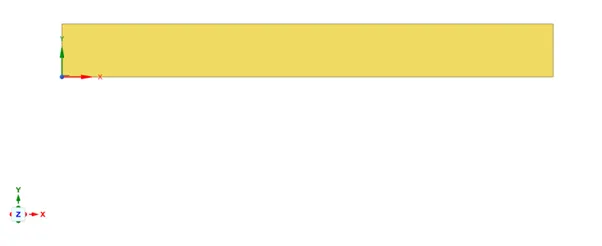
Initially the geometry was not one single solid part. for the ease of the simulation we comnine the parts to make it one solid part and take a 2d image in which we setup the simulation.
- Meshing
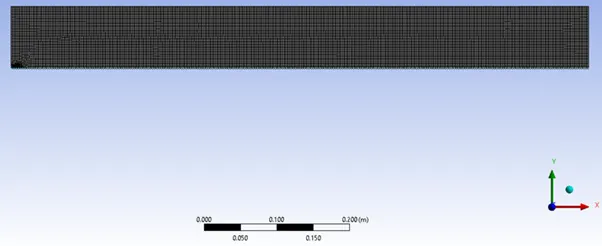
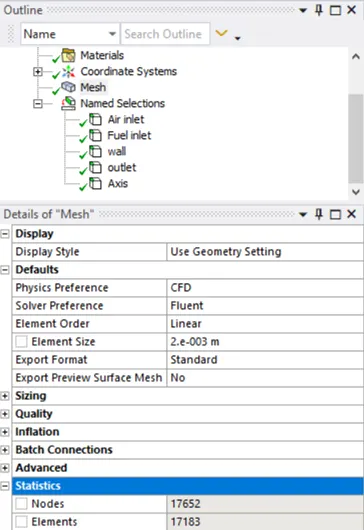
Here we have the mesh profile. With capture proximity on and element size 2mm.
Naming is also given
Air inlet
Fuel inlet
wall
axis
outlet
- Setup and Boundary conditions
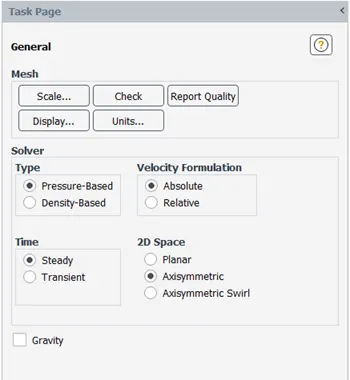
We run a steady state pressure based solver and as this is an axisymmetric simulation, we check the box.
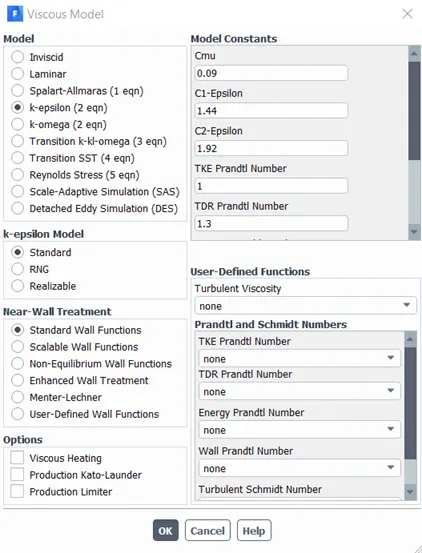
Here we are running a k-epsilon model with standard treatment.
Species will be turned on because we are simulating the mass fractions os eac species, We also require soot and nox models to capture the same.
Species transport-volumetric reactions.
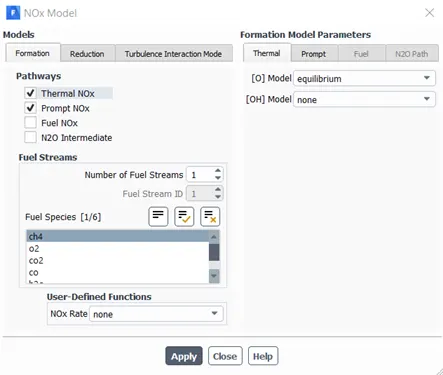
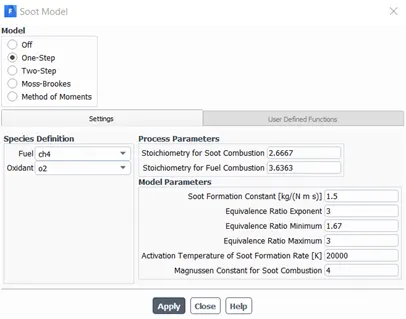
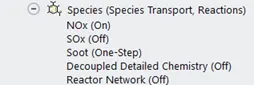
Coming to the Boundary conditions, we add water from 0 to 30%, and see how the species behave and their final mass fraction after addition of water.
Usually the amount of soot particles and/pollutants increase with the increase in water.
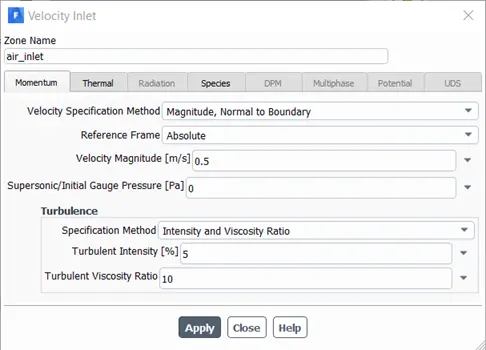
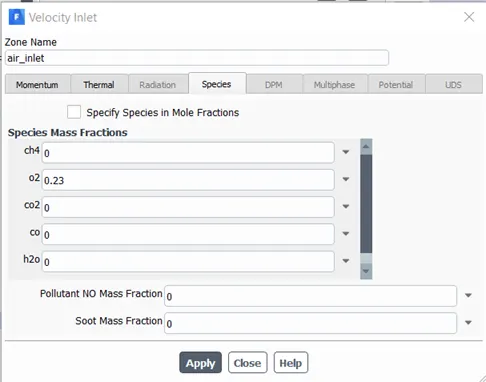
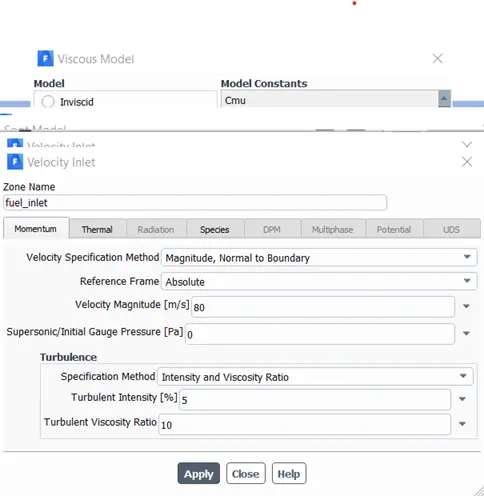
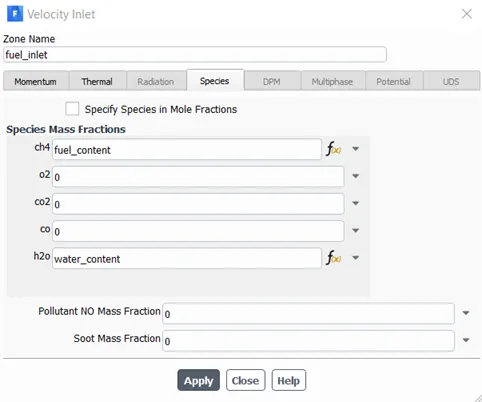
In the species tab of the fuel inlet, we parameterize the fuel and water mass fraction, In the above image you can see fuel content and water content, those are parameterized.
DP0 (design point zero) : has 0%water.
DP1 : 3% water
DP2 : 15% water
DP3 : 30% water
Note that we are changing the concentration of the fuel as well, this is to maintain the balance in the Reactions.
results and summary

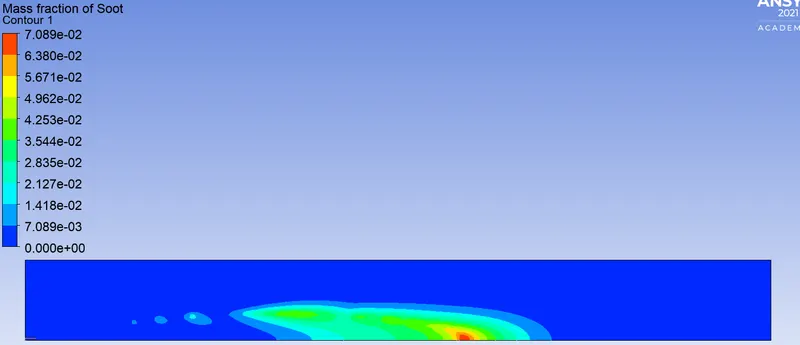
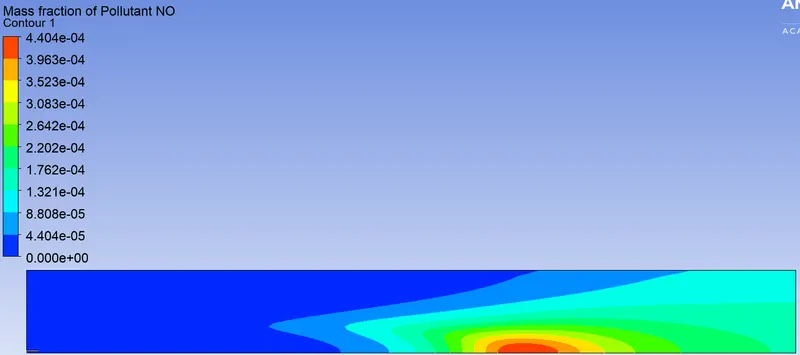
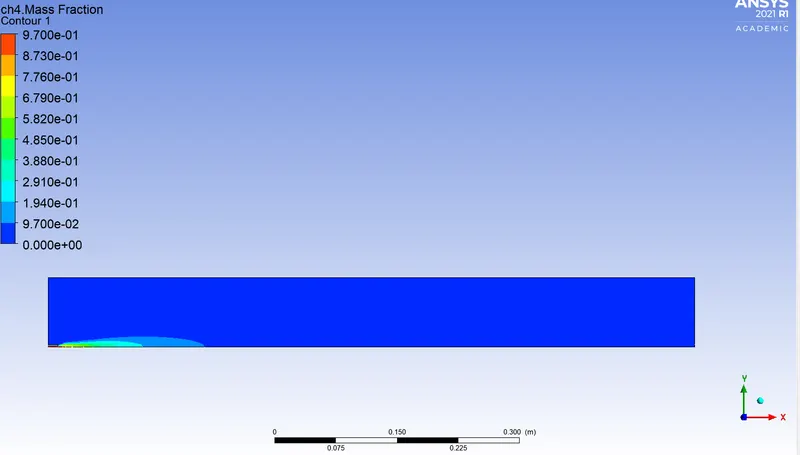
Above results show the parametric study with 4 design points.
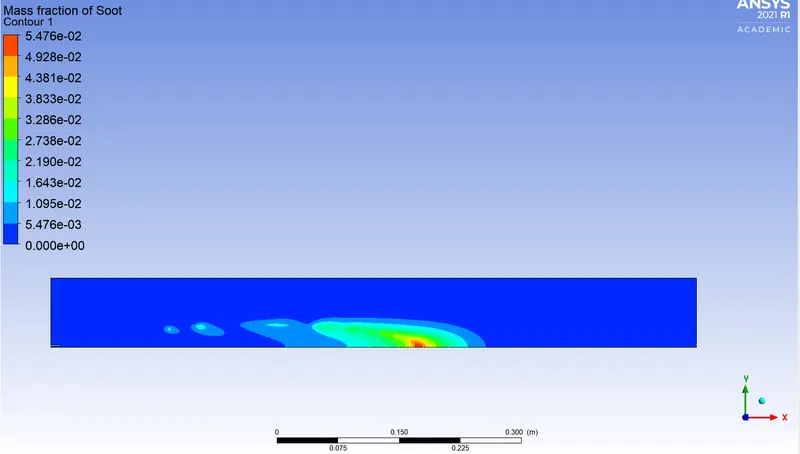
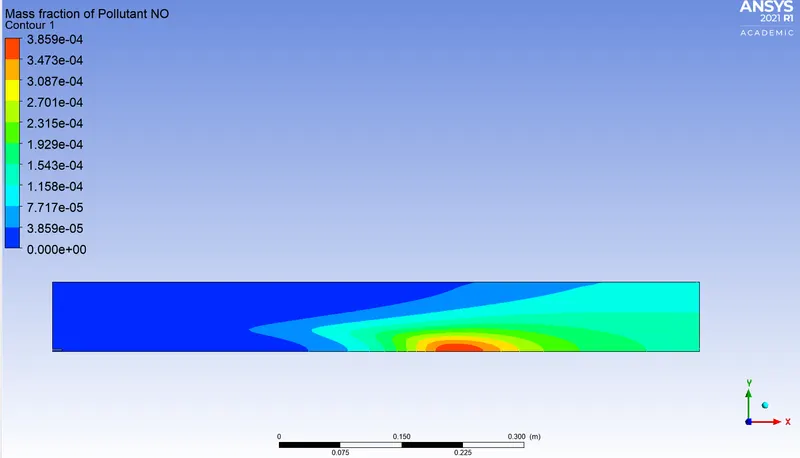
In thr above table you can see that the mass fraction of soot is decreasing with increase in the water content in the fuel.
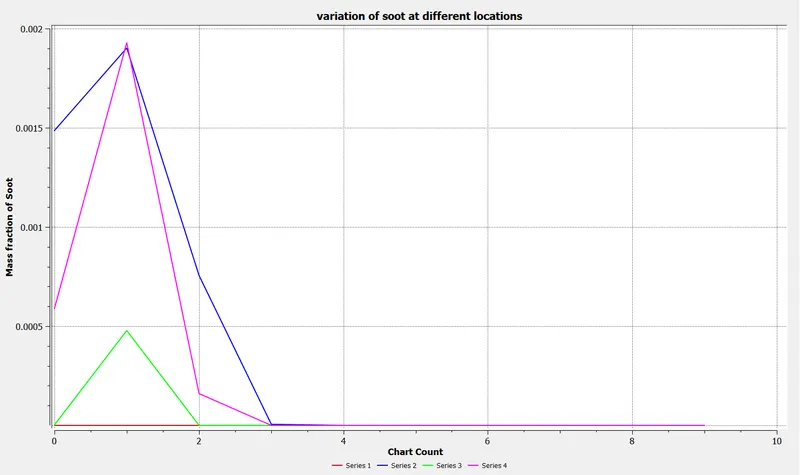
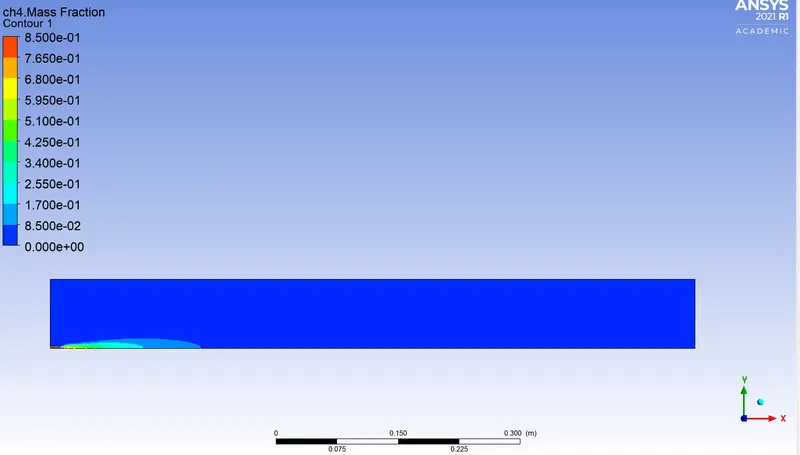
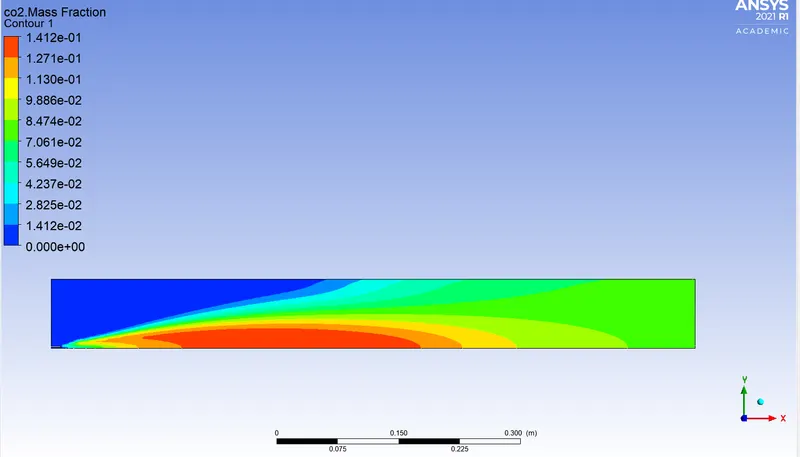
Line Probes were put to measure the species mass fraction at different locations. below you will find the line probe locations and image.
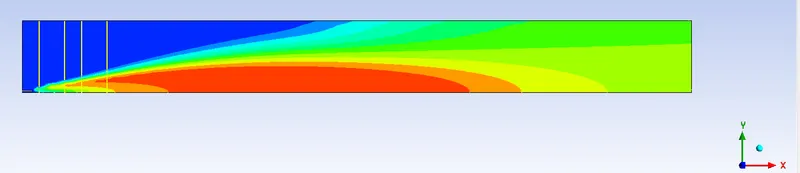
(lines are numbered to the right)
Line 1

Line 2

Line 3

Line 4

Case 1 (DP0)
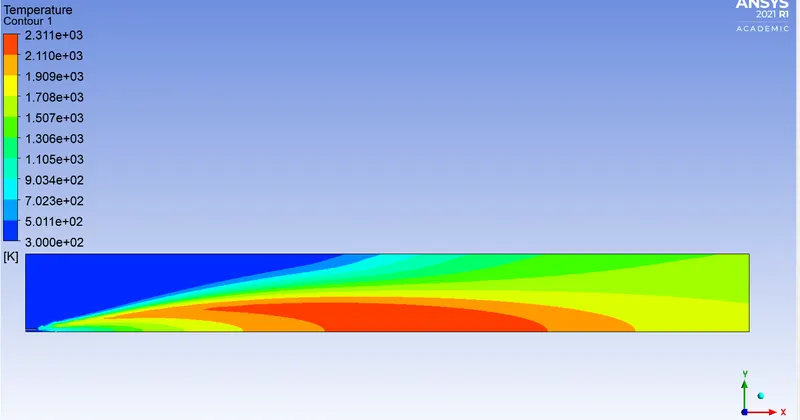
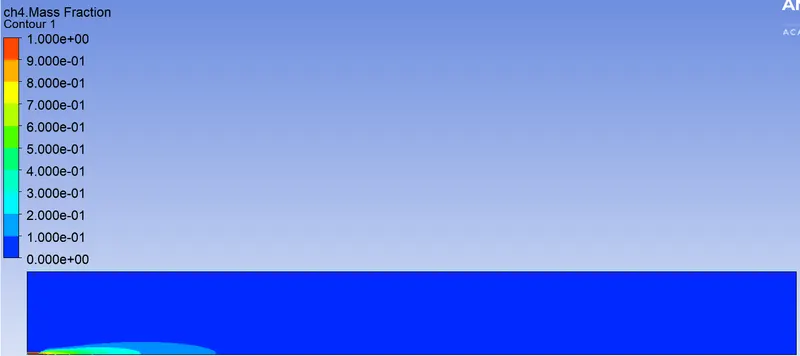
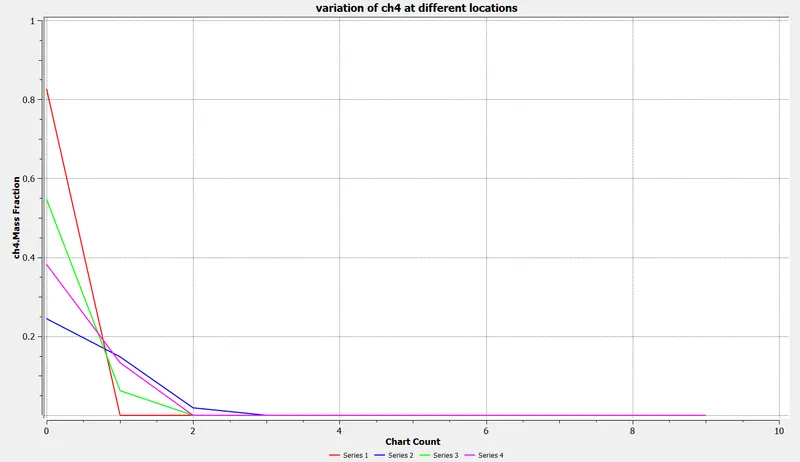
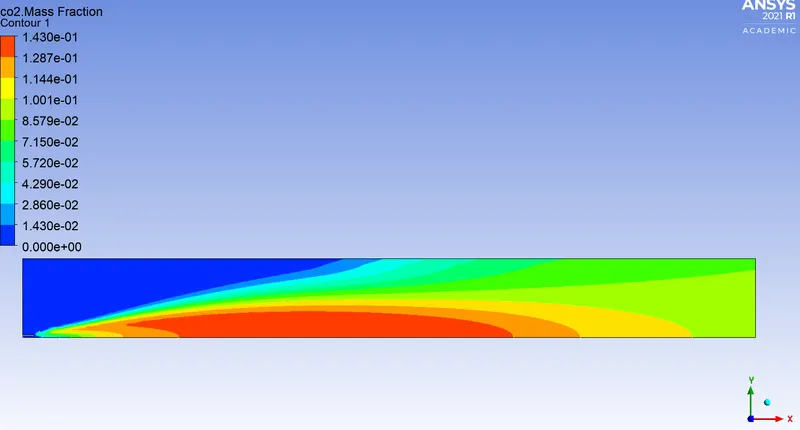
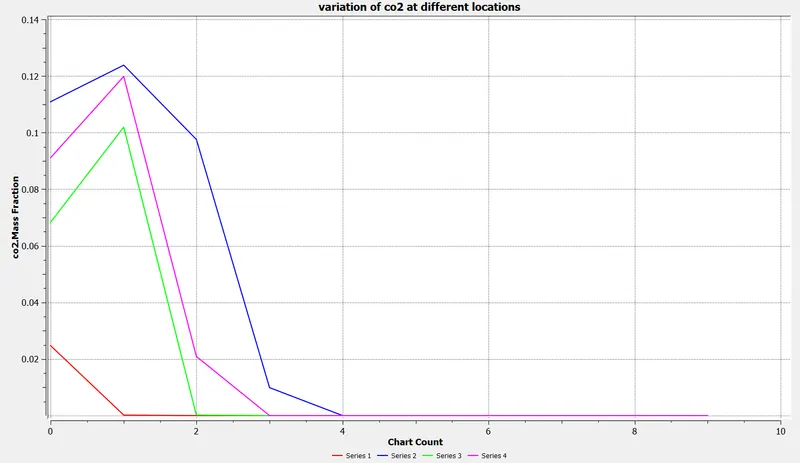
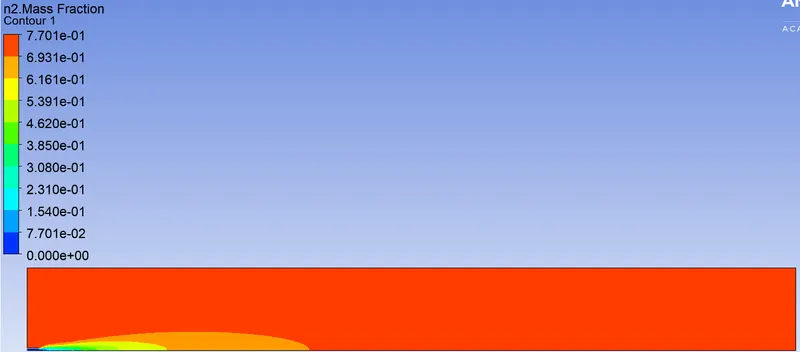
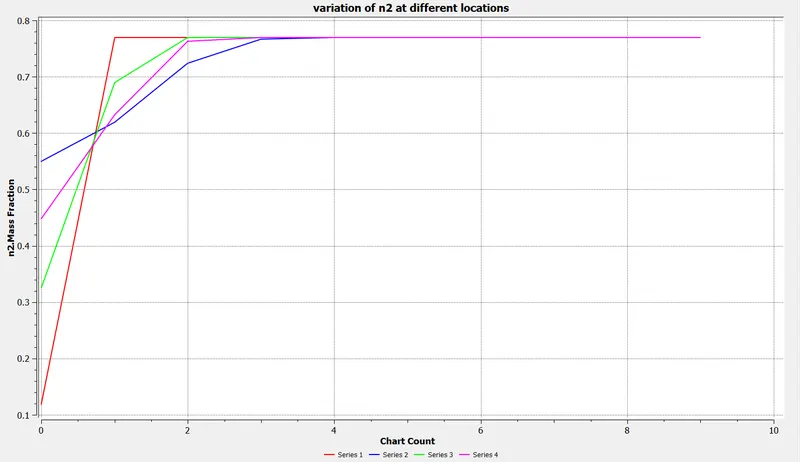
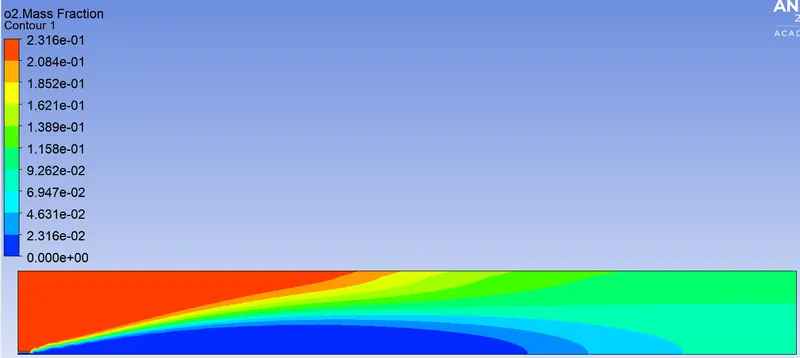
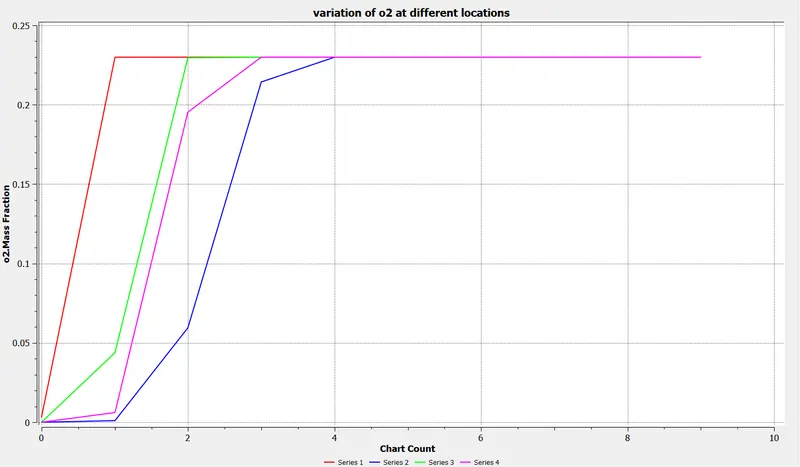
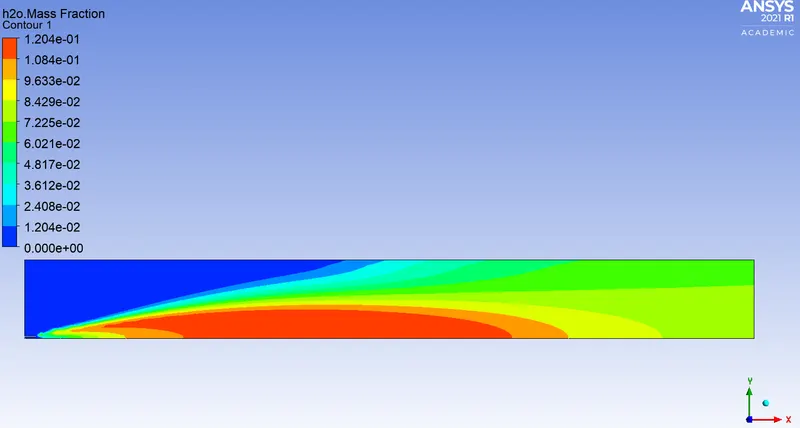
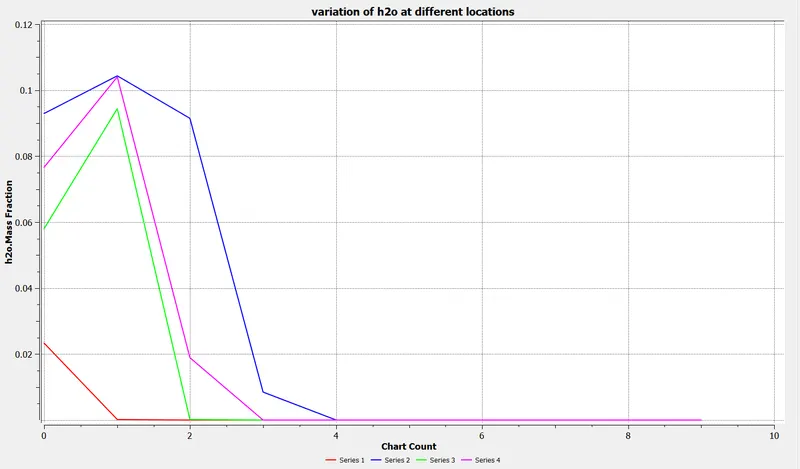
Case 2(DP1)
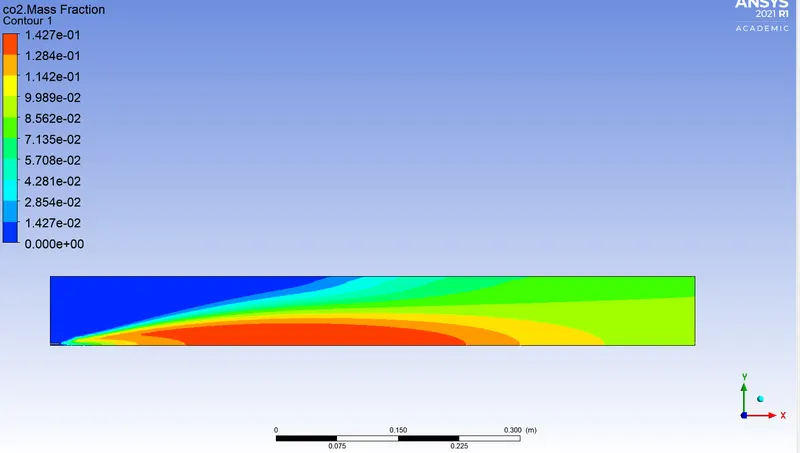
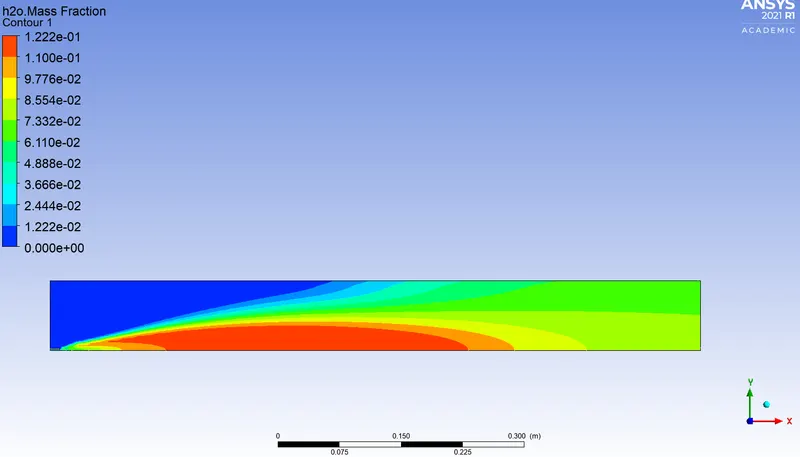
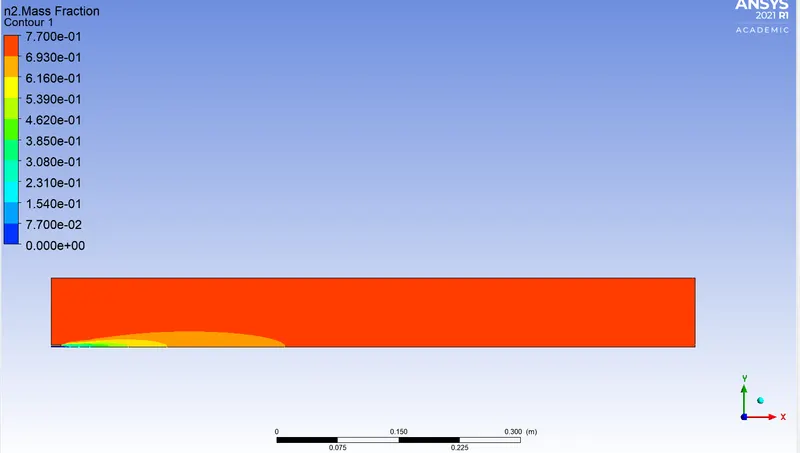
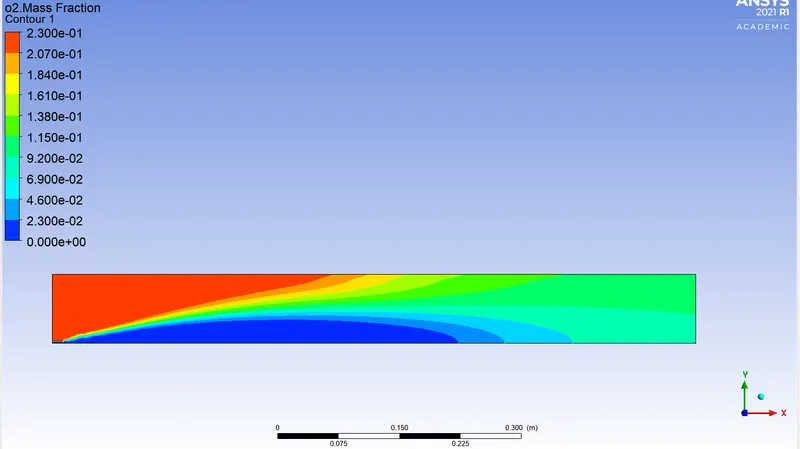
Case 3 (DP2)
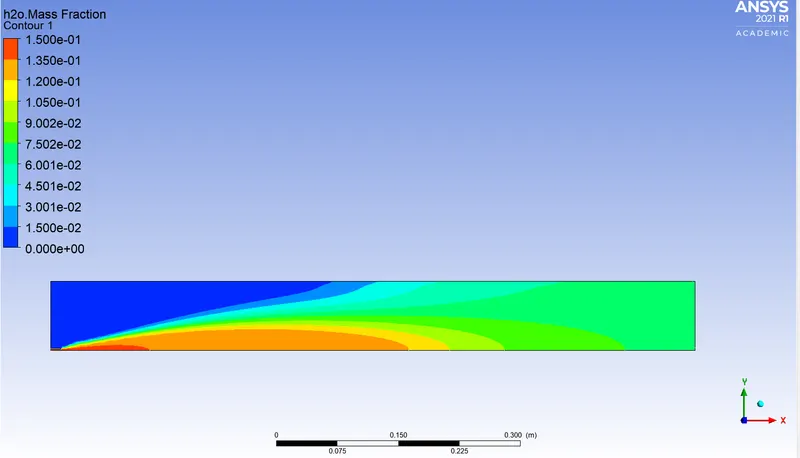
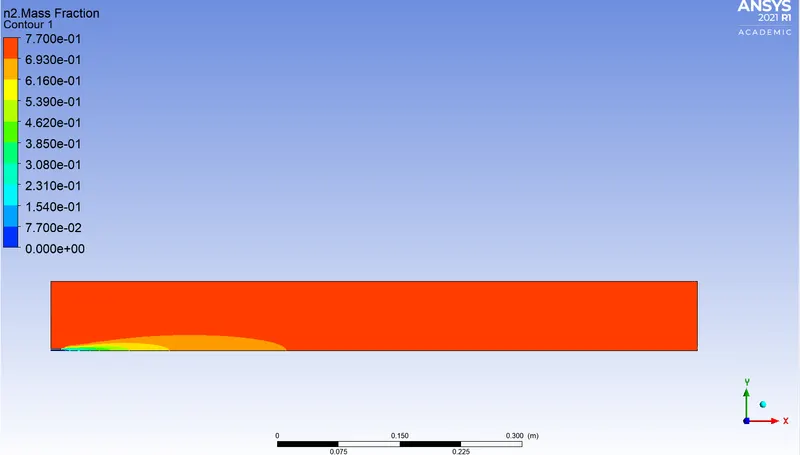
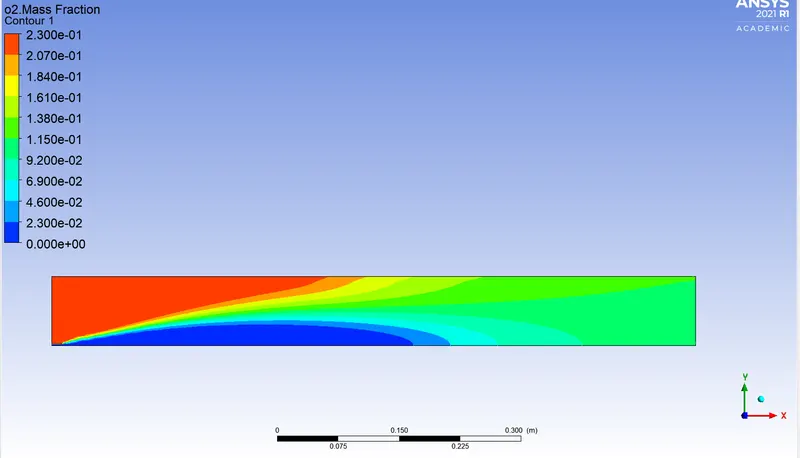
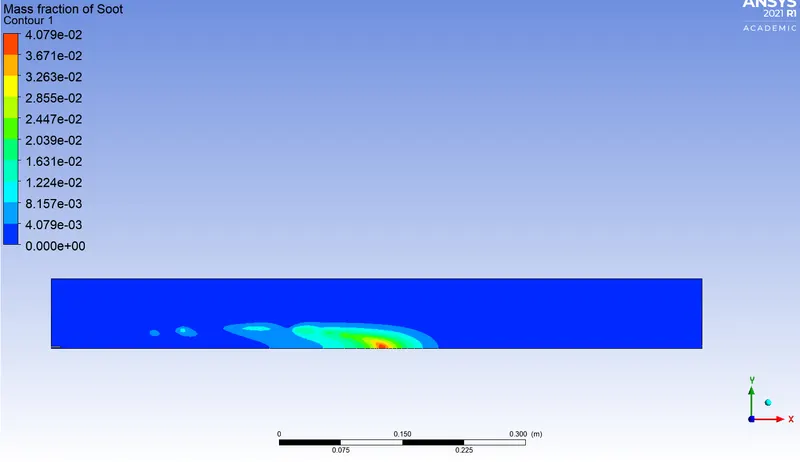
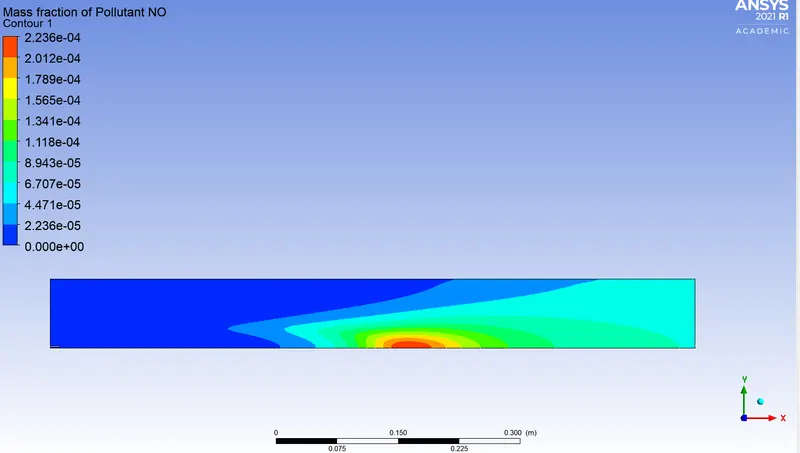
case 4 (DP3)
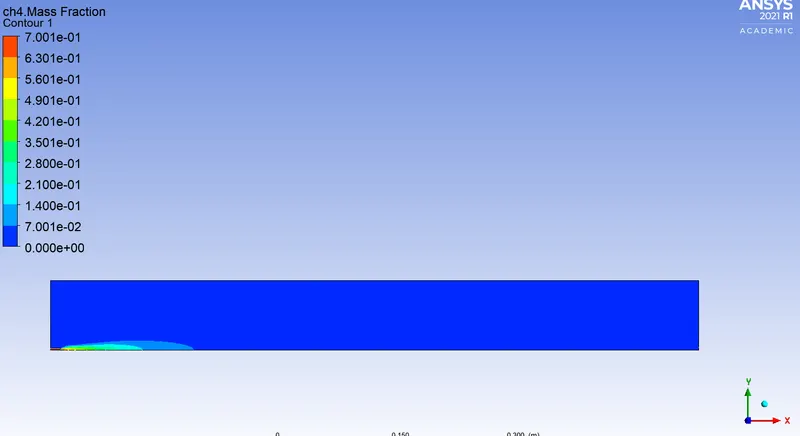
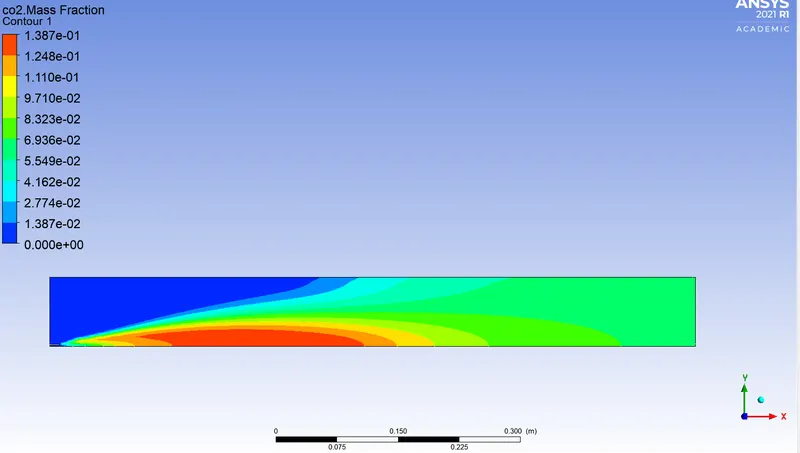
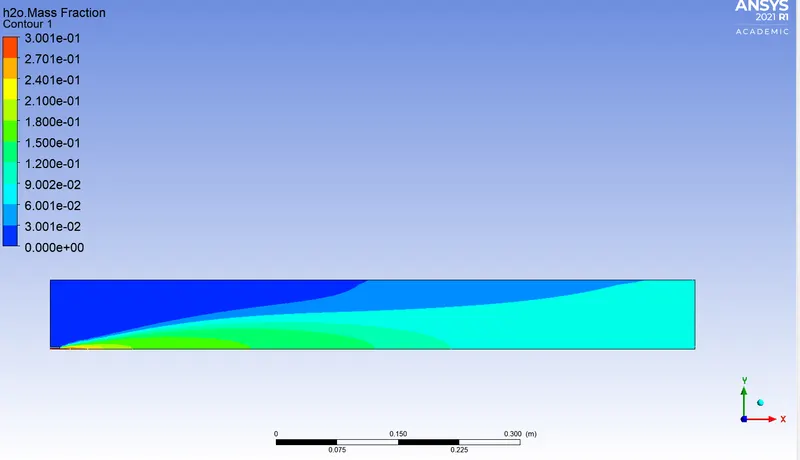
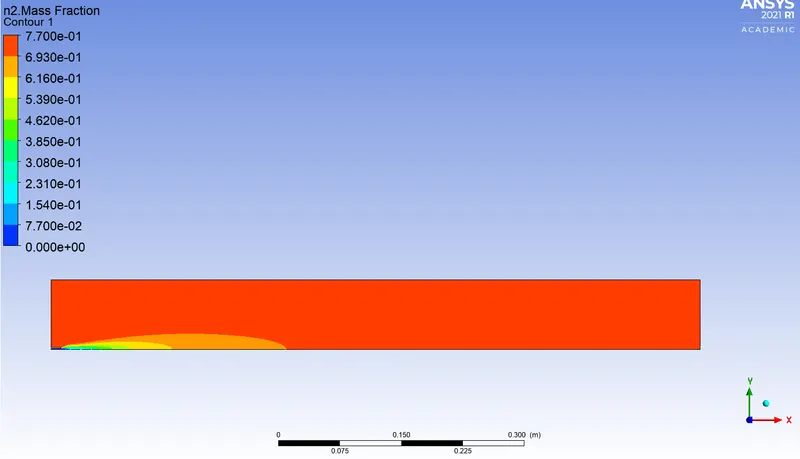
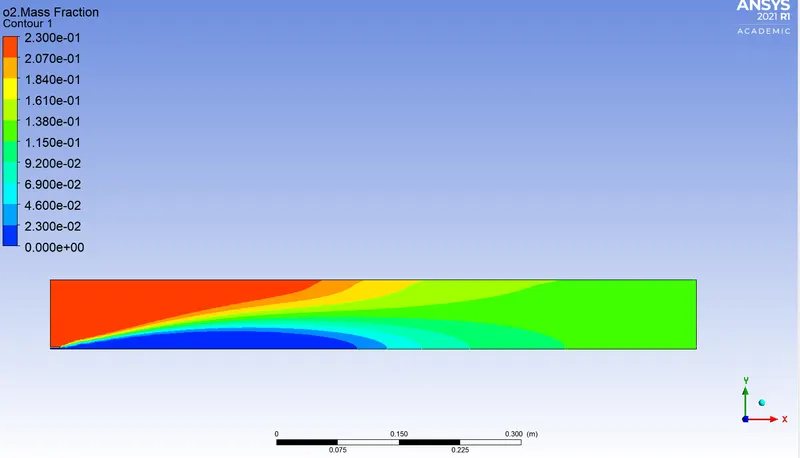
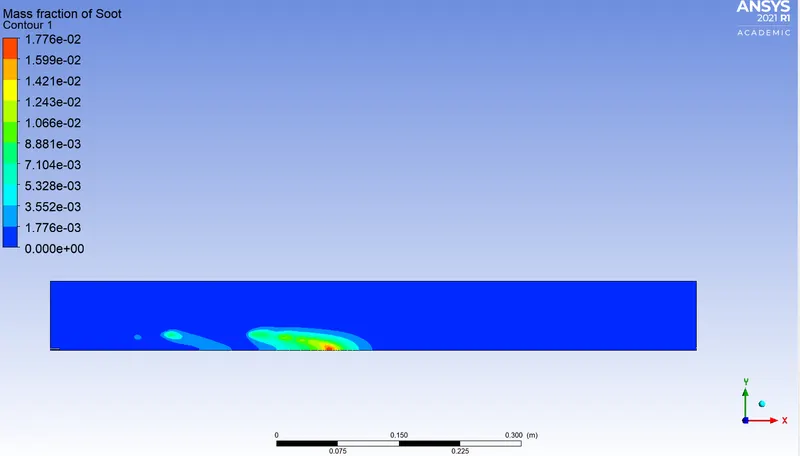
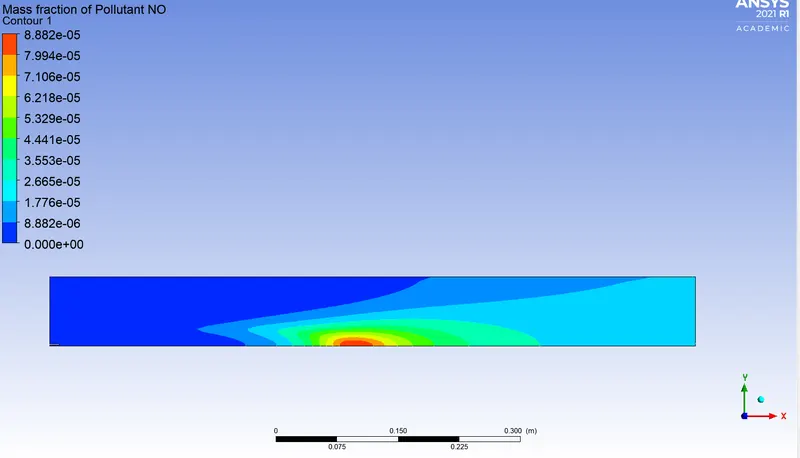
Summary
With both the parts of the simulation done, we can say that with the addition of water to the fuel, the amount of Soot follows a decreasing trend with the increase in concentration of water
Using a parametric study was helpful in completing the simulation faster than the manually entering the concentration of the species. With the outpuyt parameters kept as mass fraction of soot and CH4, we can see in the table above that the trend is correct. We can also see that there is significant change in the formation of NOX, where it decreases with the increase in water concentration in fuel. It is safe to say that addition of water to fuel(upto 30%) shows significant decrease in NoX and Soot formation.