Week 10 - Simulating Combustion of Natural Gas.
Aim --> Simulating Combustion of Natural Gas (CH4 methane-air) using Ansys fluent.
Introduction
Combustion or burning is a high-temperature exothermic redox chemical reaction between a fuel (the reductant) and an oxidant, usually, atmospheric oxygen, that produces oxidized, often gaseous products, in a mixture termed as smoke. A flame is simply a region where chemical reactions take place and is a characteristic indicator of the reaction. Combustion is often a complicated sequence of elementary radical reactions. Complete combustion is stoichiometric concerning the fuel, where there is no remaining fuel, and ideally, no residual oxidant. complete combustion is almost impossible to achieve, since the chemical equilibrium is not necessarily reached, or may contain unburnt products such as carbon monoxide, hydrogen and even carbon (soot or ash). Any combustion at high temperatures in atmospheric air, which is 78 percent nitrogen, will also create small amounts of several nitrogen oxides, commonly referred to as (NOx), since the combustion of nitrogen is thermodynamically favored at high, but not low temperatures. There are different types of combustion based on phase (solid,liquid,gas) of fuel used and air-fuel mixture used for combustion(Premixed, partially-premixed, Non-premixed).
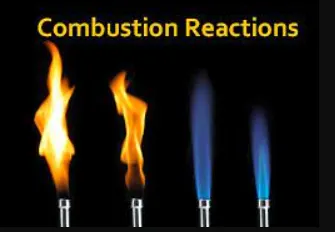
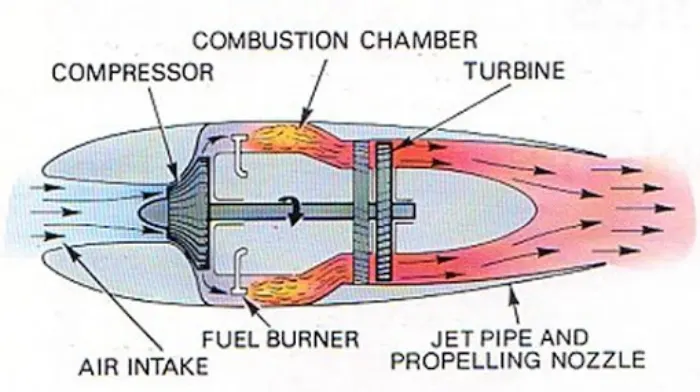
Following are the types of combustion models used in CFD -->
-
Eddy dissipation model (EDM)
-
The finite-rate chemistry (FRC) model
-
The flamelet model
-
Burning velocity model (BVM) and extended coherent flame model (ECFM)
Computational Geometry and Mesh
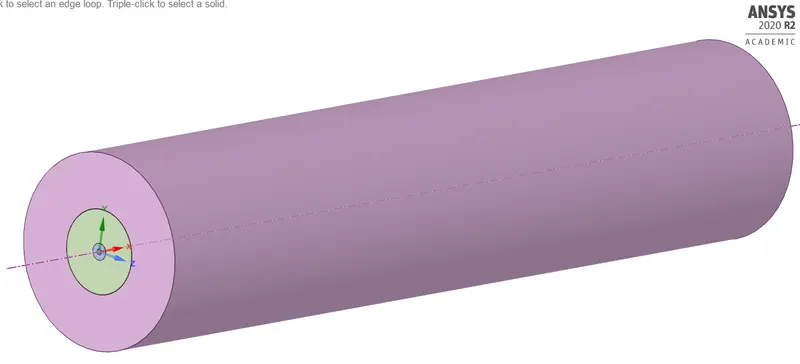
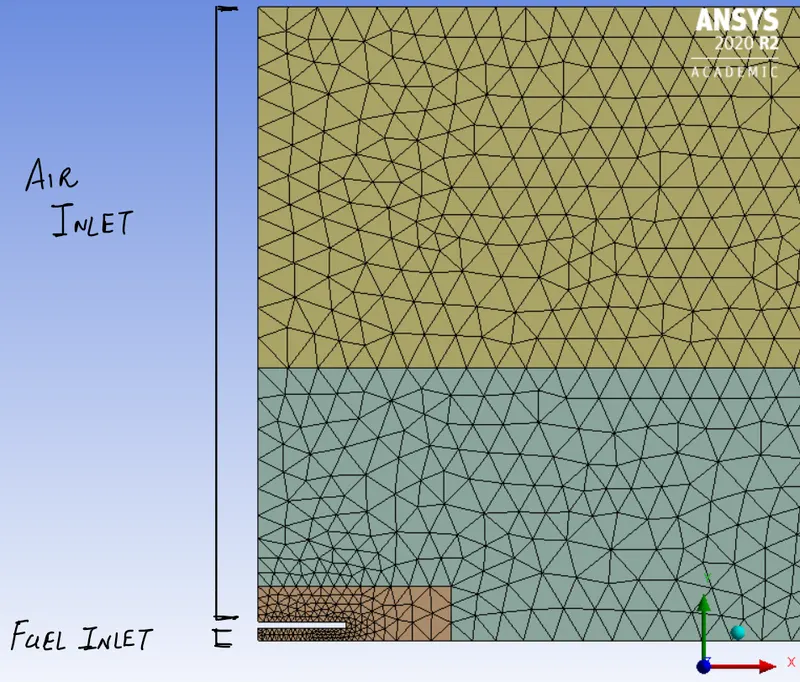
Followinf is the 3D model of the cylindrical combustion chamber, it has a small fuel inlet and a large inlet for air to flow in. We are assuming axisymmetric flow about the x-axis. This means flow does not vary in circumferential direction so that our 3D geometry can be approximated as a 2D geometry.
Following is the 2D geometry extracted from the above 3D geometry in Ansys SpaceClaim. We also need a conformal mesh so, share topology is enabled.

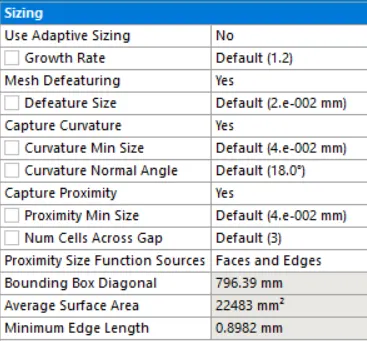
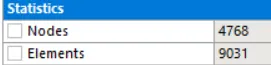
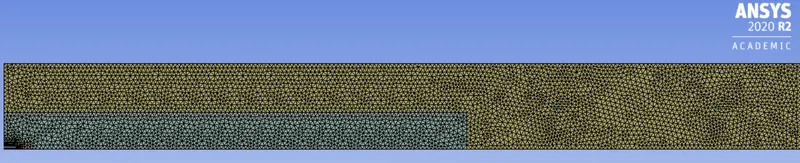
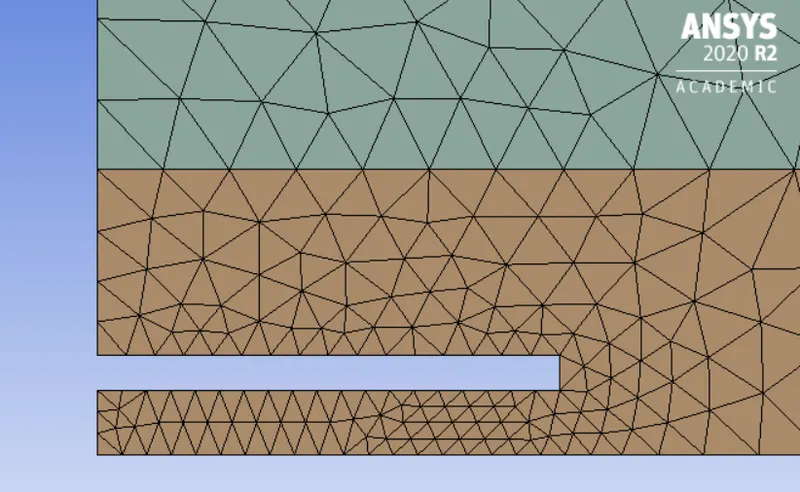
The geometry is meshed with triangular elements of element size 4 mm. Capture proximity is enabled and min. cells/elements across the gap is 3. X-axis is the axisymmetric axis. Top boundary is wall. Right boundary is outlet.
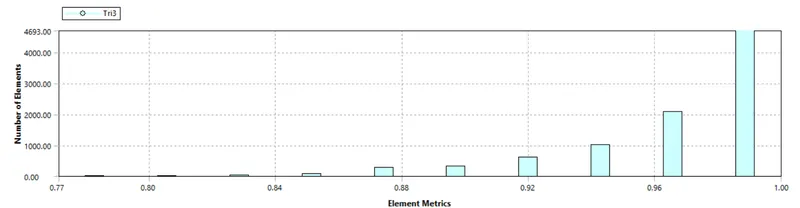
Mesh Quality
Setup of Flow Physics
We are setting up a 2D axisymmetric steady state combustion simulation. We are using energy equation. We also use k-e turbulence model. For modelling combustion we use Eddy-Dissipation rate model, for this model turbulence mixing is very important. The species transport equation along with Inlet diffusion and diffusion energy source is also enabled. Based on the stoichiometric mixture, O2 has 0.23 moles in air mixture. N2 in the chemical reaction behaves as inert it is excluded from calculations. following reaction is the global reaction describing the combustion of CH4 (methane).

Combustion Model
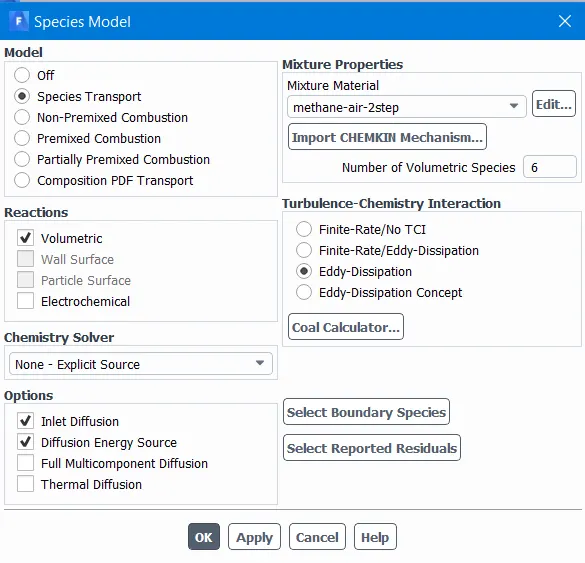
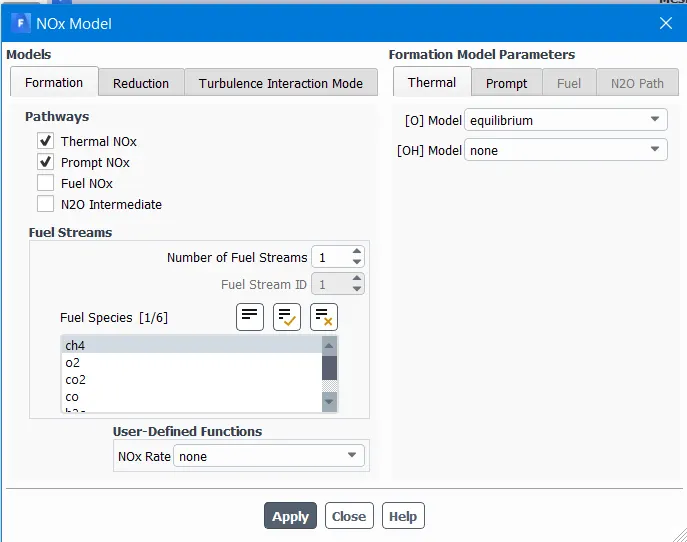
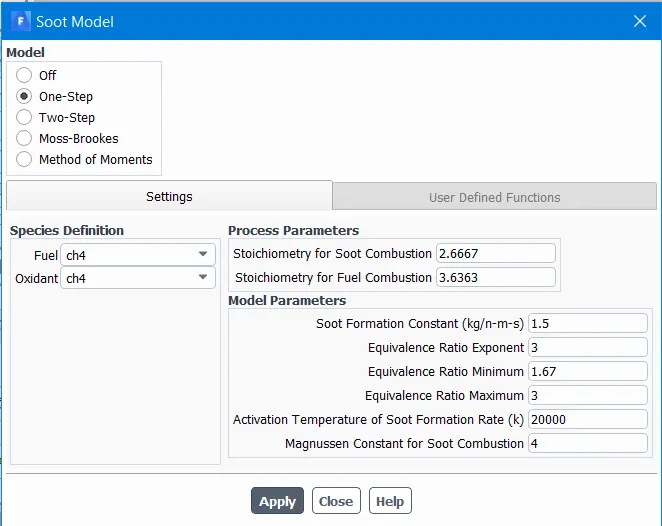
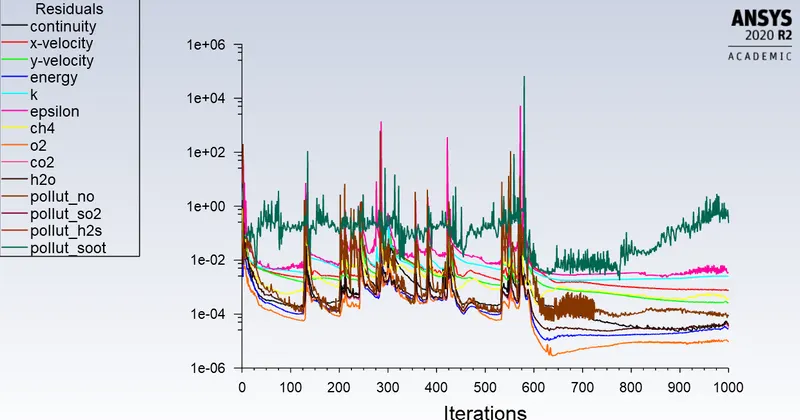
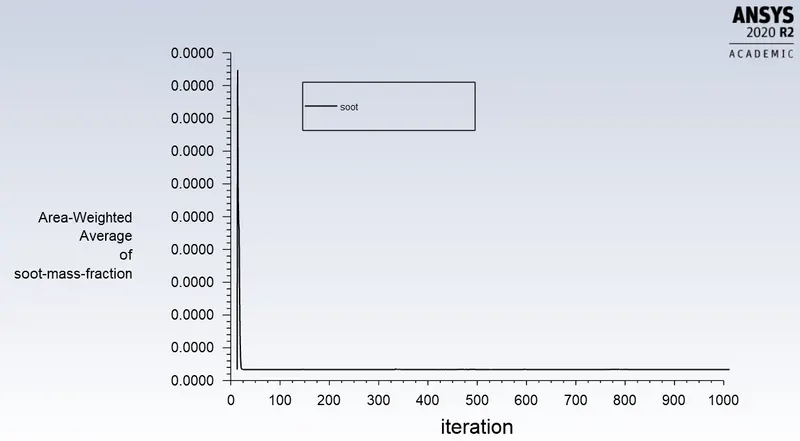
--> In this case we simulate the above combustion model and calculate the pollutants and soot formation. We use SIMPLE algorithm with hybrid initialization and run the case for 500 iterations.
NOx Model Soot Model
RESULTS
Case I --> [Initially 100% Fuel methane CH4]
Residual plot
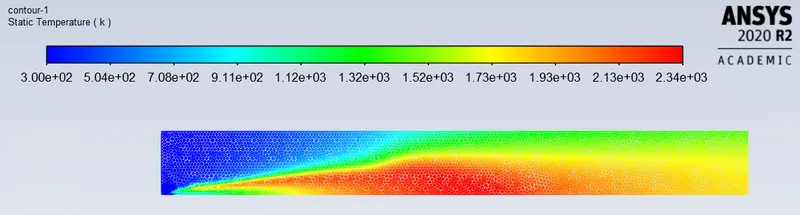
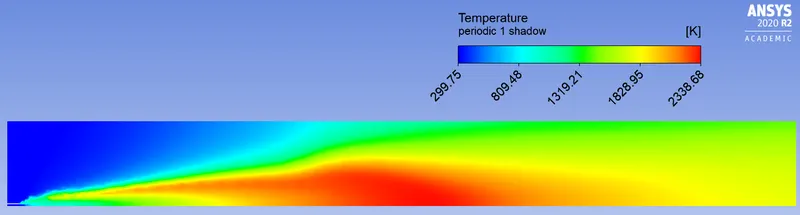
Temperature Contour
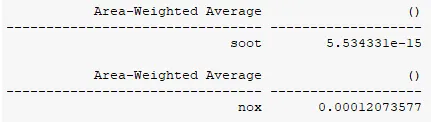
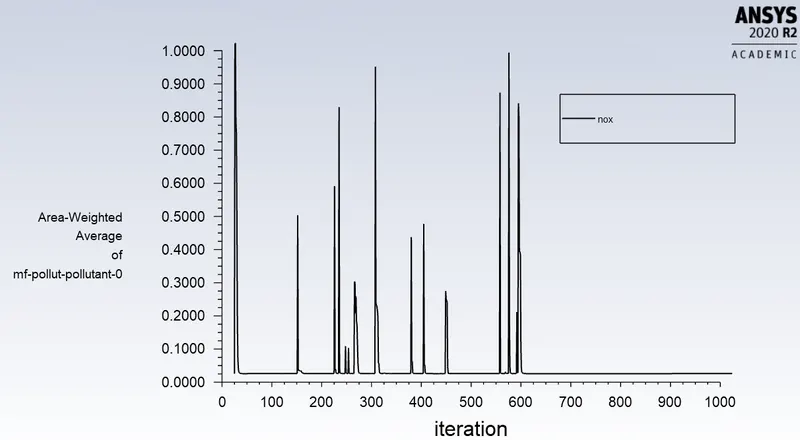
Nox
Soot
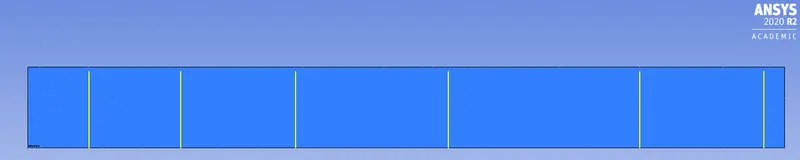
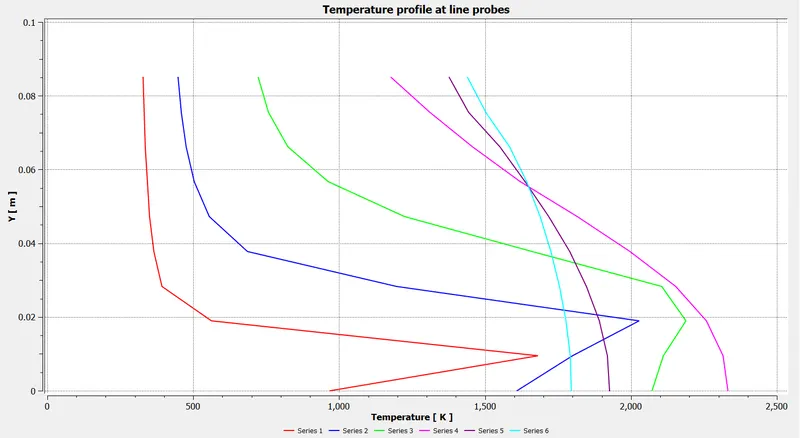
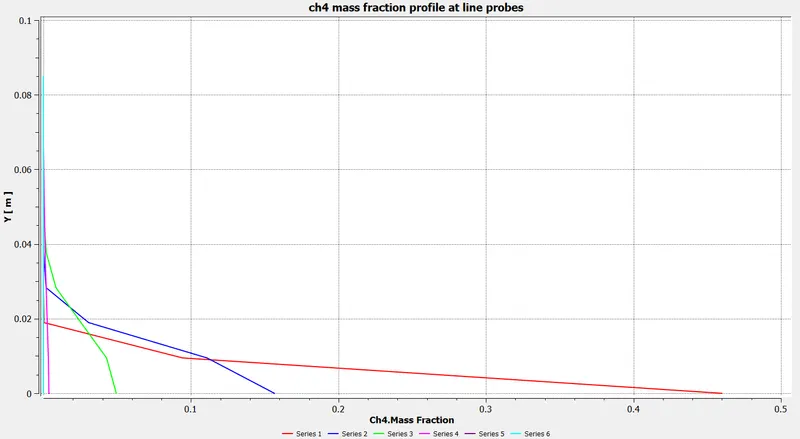
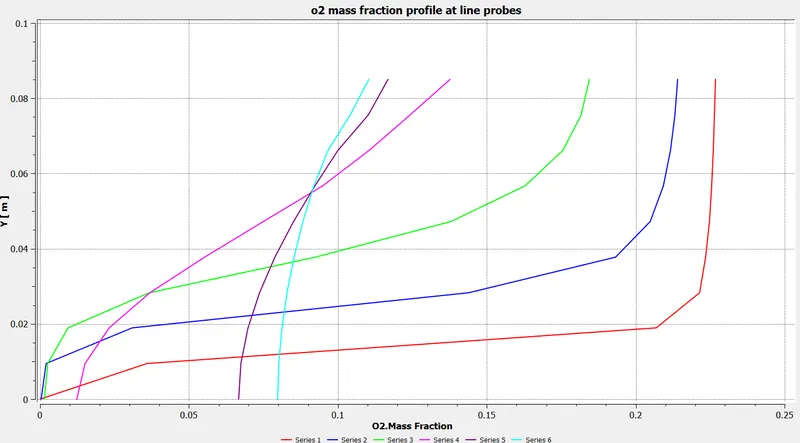
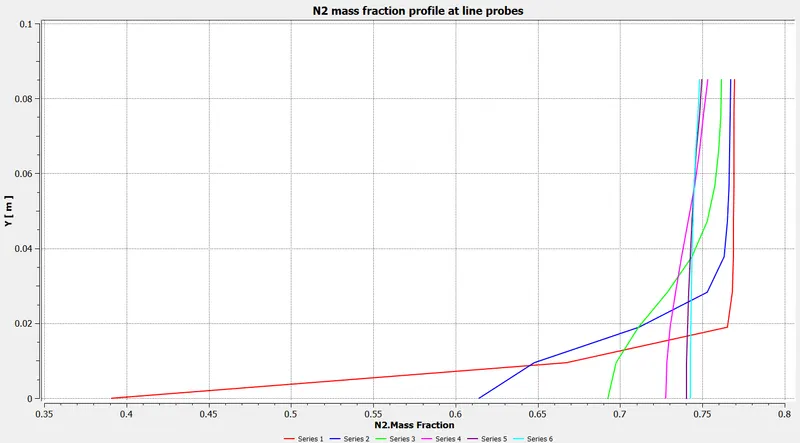
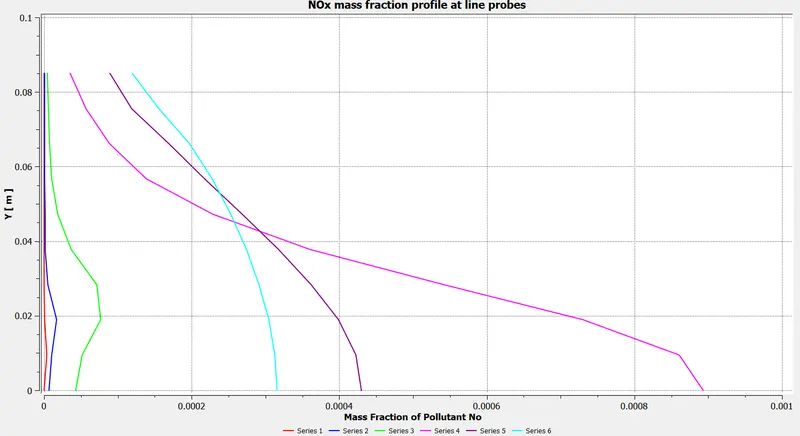
--> We create the line plots by creating line probes in the domain for post-processing.
Temperature
CO2 mass fraction
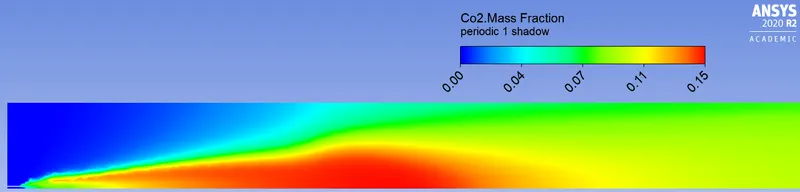
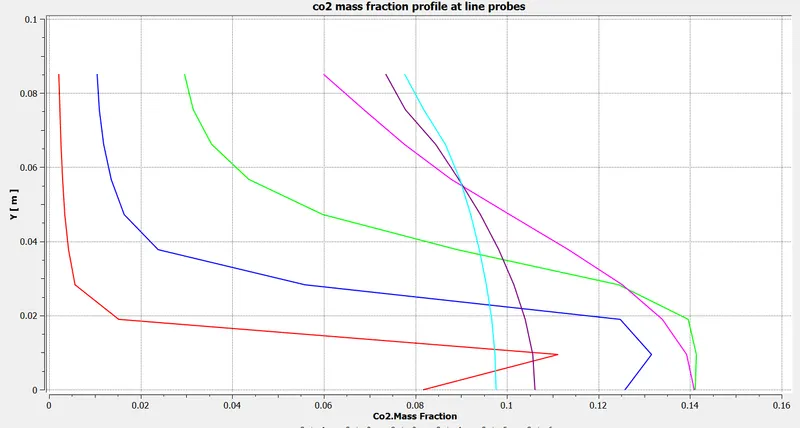
H2O mass fraction
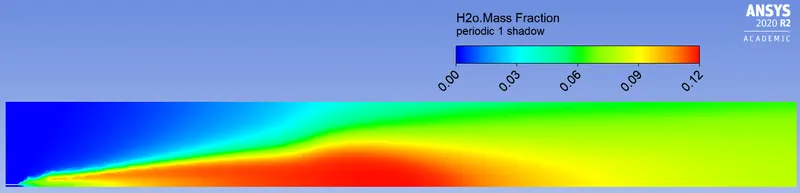
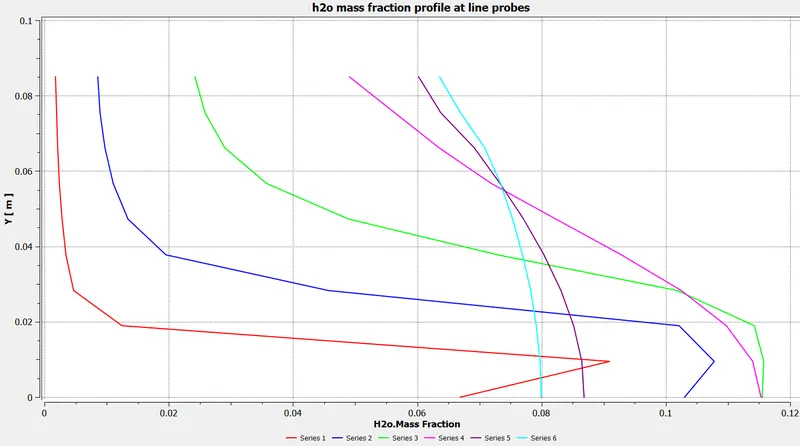
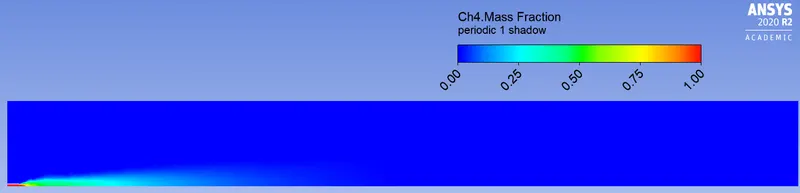
CH4 mass fraction
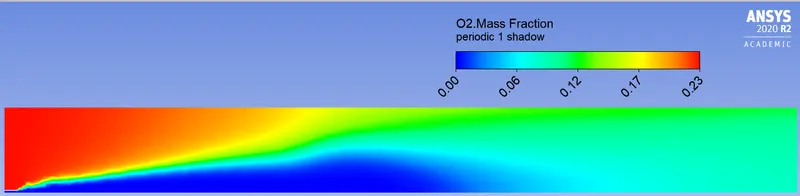
O2 mass fraction
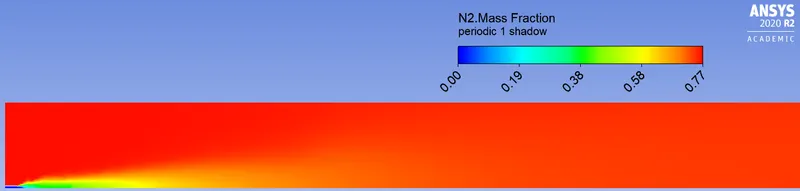
N2 mass fraction
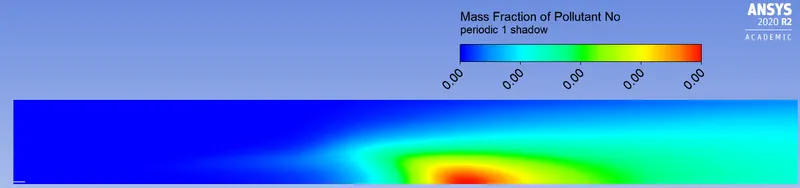
NOx mass fraction
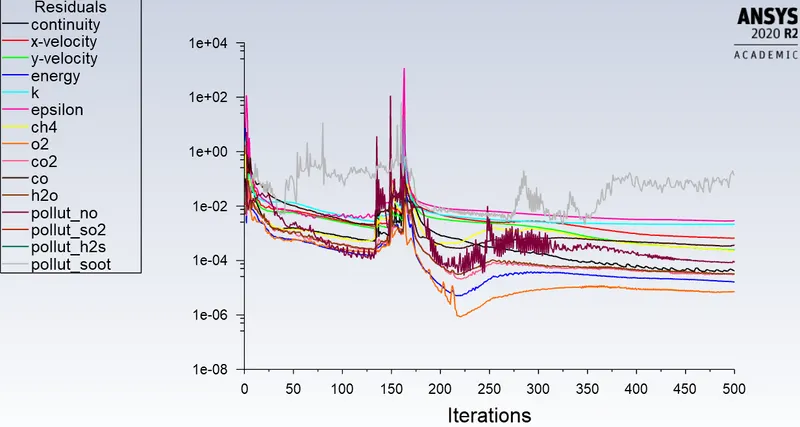
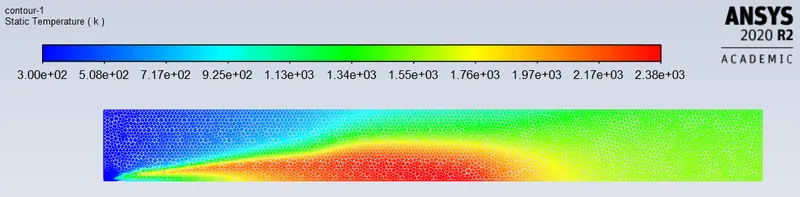
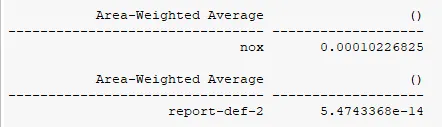
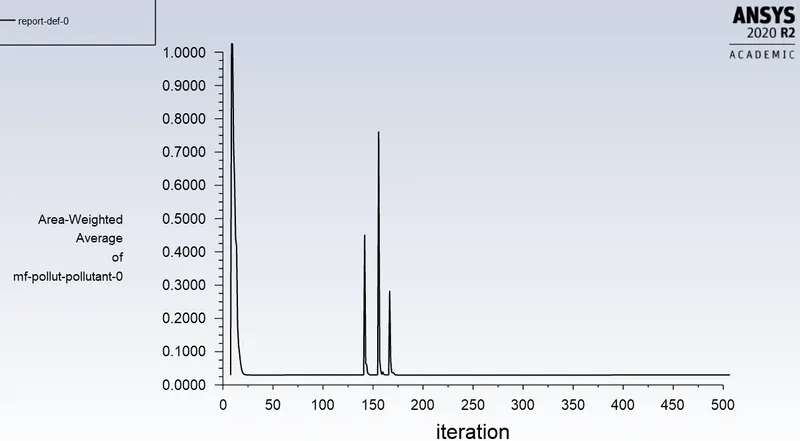
Case II --> [Initially Fuel = 90% methane (CH4) + 10 % water (H2O)]
Residual plot
Temperature Contour
Nox
Soot
Case III --> [Initially Fuel = 80% methane (CH4) + 20 % water (H2O)]
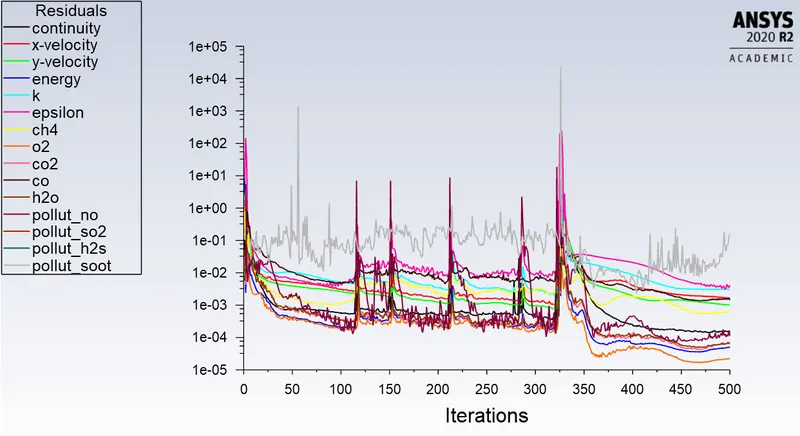
Residual plot
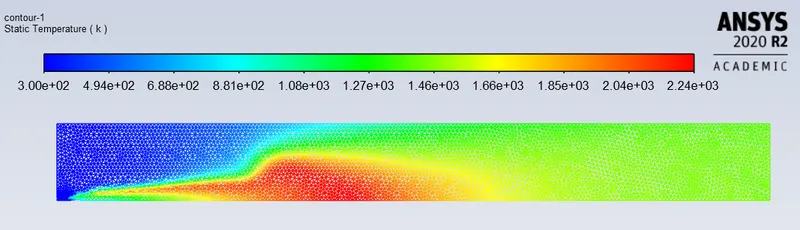
Temperature Contour
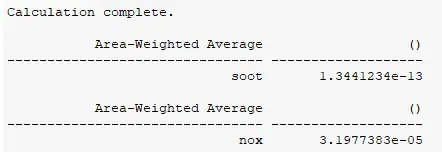
Nox
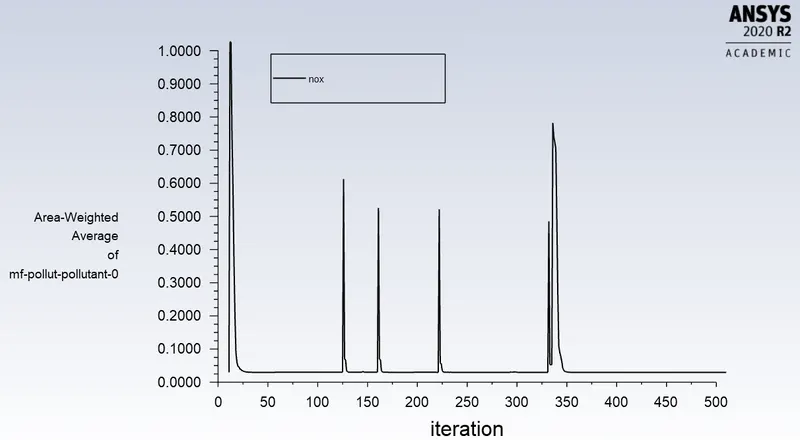
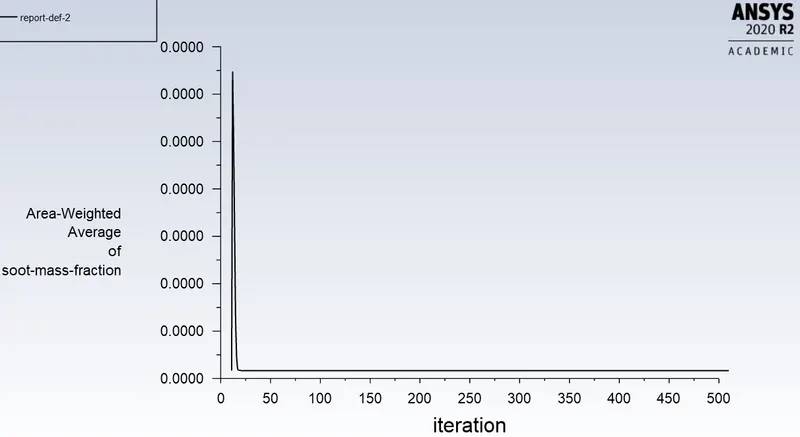
Soot
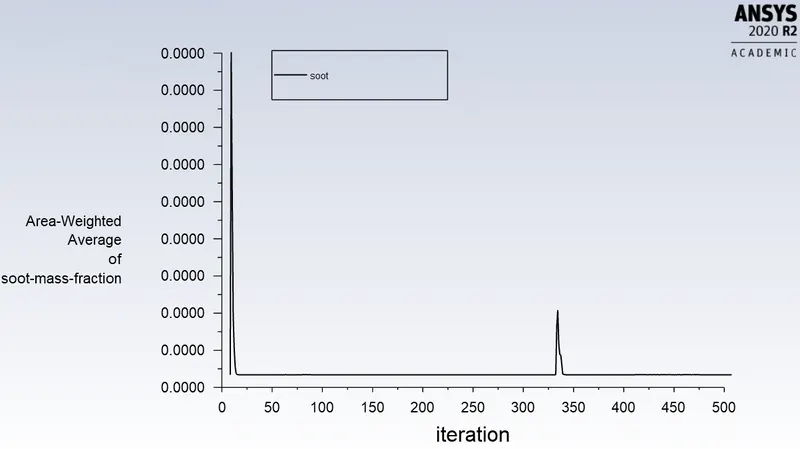
Case IV --> [Initially Fuel = 70% methane (CH4) + 30 % water (H2O)]
Residual plot
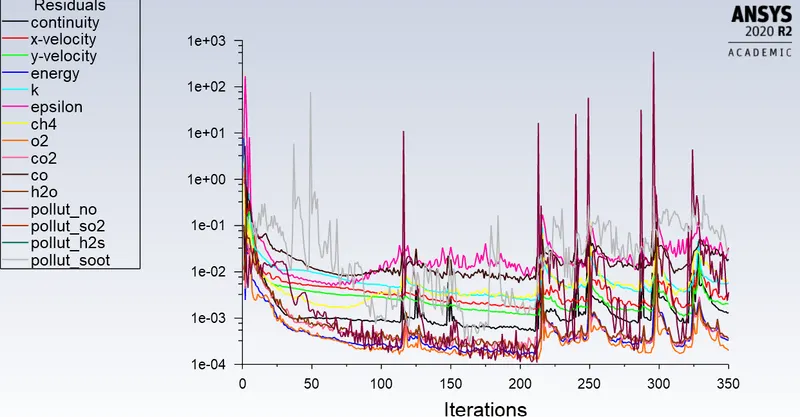
Temperature Contour
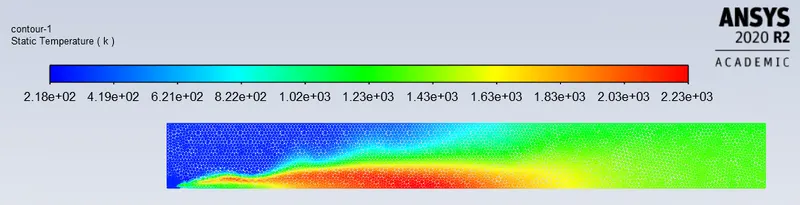
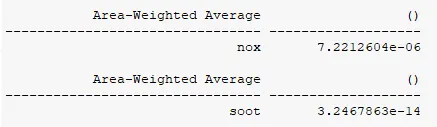
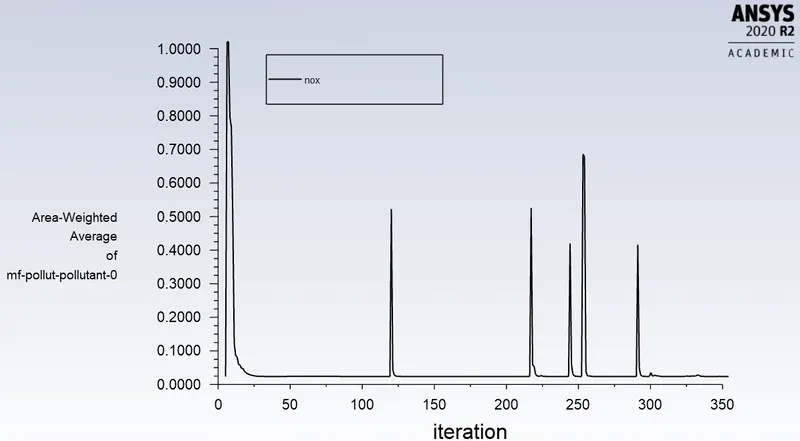
Nox
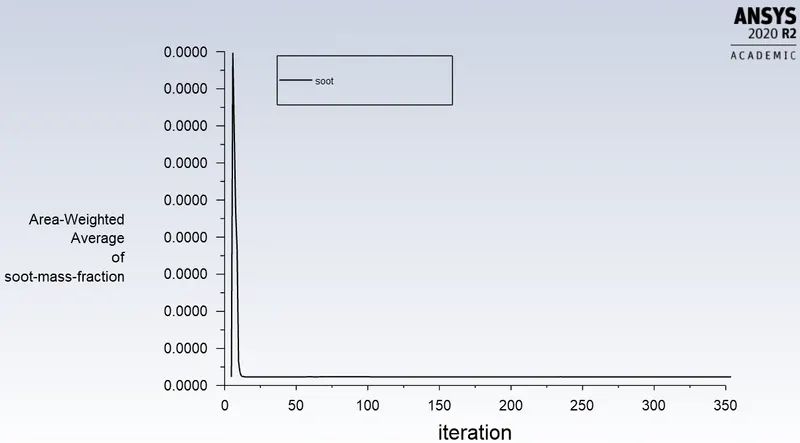
Soot
Conclusion
| NOx Pollutant formation | Soot Formation | |
| Case I [100% fuel methane CH4] | 0.000120 | 5.534e-15 |
| Case II [90% methane + 10% water] | 0.000102 | 5.474e-12 |
| Case III [80% methane + 20% water] | 3.197e-5 | 1.344e-13 |
| Case IV [70% methane + 30% water] | 7.221e-6 | 3.246e-14 |
--> Combustion simulation of natural gas is performed using eddy dissipation combustion model.
--> The above table compares the addition of water in the fuel with the average pollutant formation. We see that with more addition of water in fuel, Nox level reduces to a significant level. Max Temperature also reduces.