Week 10 - Simulating Combustion of Natural Gas.
CHALLENGE ON COMBUSTION
The following is a study based on combustion. A combustion model is set-up with methane-air as fuel and various observations are obtained.
THEORY
Combustion is a chemical process in which a substance reacts rapidly with oxygen and gives off heat. The original substance is called the fuel, and the source of oxygen is called the oxidizer. The fuel can be a solid, liquid, or gas.
During the combustion process, as the fuel and oxidizer are turned into exhaust products, heat is generated. Interestingly, some source of heat is also necessary to start combustion. Gasoline and air are both present in your automobile fuel tank; but combustion does not occur because there is no source of heat. Since heat is both required to start combustion and is itself a product of combustion, we can see why combustion takes place very rapidly. Also, once combustion gets started, we do not have to provide the heat source because the heat of combustion will keep things going. We do not have to keep lighting a campfire, it just keeps burning.
A simple example can be seen in the combustion of hydrogen and oxygen into water vapor, a reaction commonly used to fuel rocket engines. This reaction releases 242 kJ/mol of heat and reduces the enthalpy accordingly (at constant temperature and pressure):
2H2(g) + O2(g) → 2H2O(g)
CFD ANALYSIS
Geometry


The geometry is as shown above. This is obtained by using Split Body command. The original 3-D(cylinder) is converted into a 2-D model with X-axis as axis of symmetry. The original 3-D simulation is beyond the scope of most computers and is a lengthy process involving many mesh elements.
Mesh
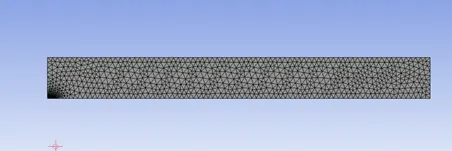
Mesh element size of 10mm is used. Capture proximity is turned on to refine the mesh near the fuel inlet. Triangle method is used.
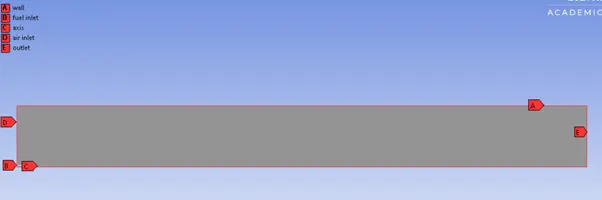
Names are assigned as shown above.
Setting up Physics
- Solver--> Steady State, pressure based, Axisymmetric.
- Model-->Turbulence Model-->K epsilon
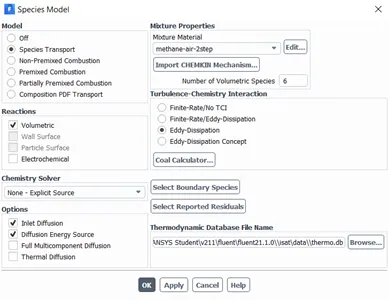
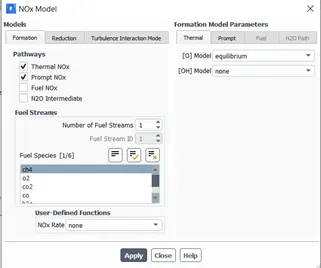
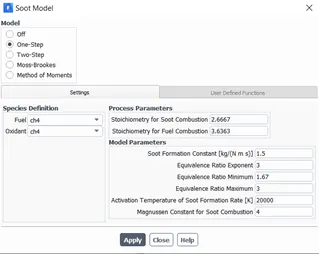
Boundary Conditions(Case 1)
Fuel inlet- 80m/s, temperature 300k, mass fraction of CH4=1
Air Inlet- 0.5m/s, temperature 300k, mass fraction of 02=0.23
For Cases 2,3,4 and 5 the mass fraction is varied by adding water from 5%-30%.
|
CH4 |
H20 |
|
|
CASE 1 |
1 |
0 |
|
CASE 2 |
0.95 |
0.05 |
|
CASE 3 |
0.9 |
0.1 |
|
CASE 4 |
0.8 |
0.2 |
|
CASE 5 |
0.7 |
0.3 |
RESULTS
Case 1
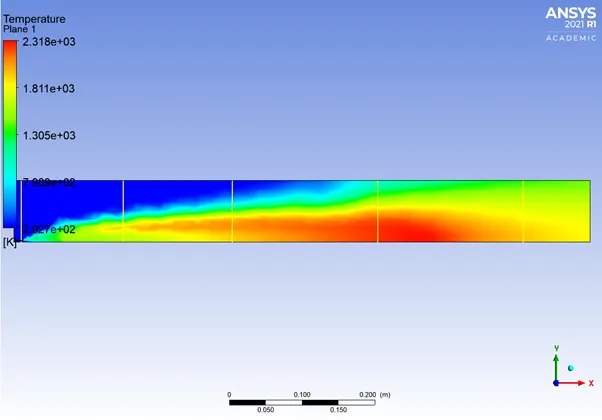
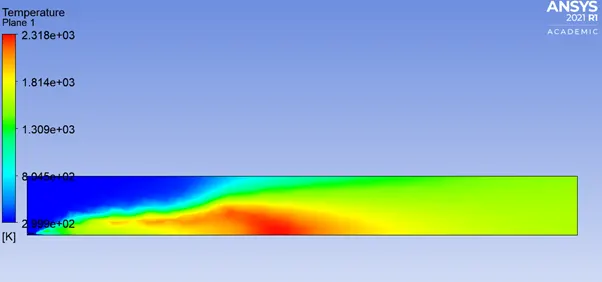
Temperature Contour
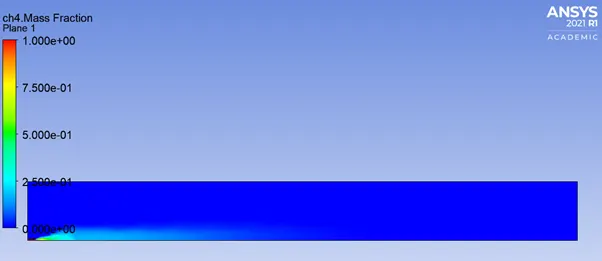
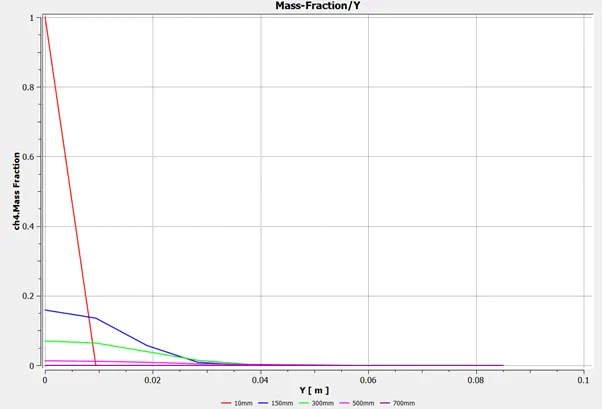
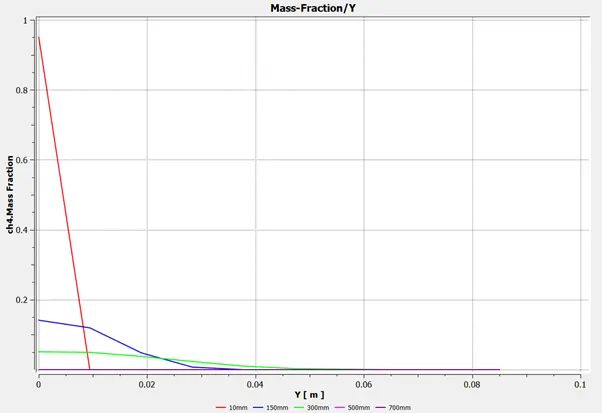
Mass Fraction of CH4
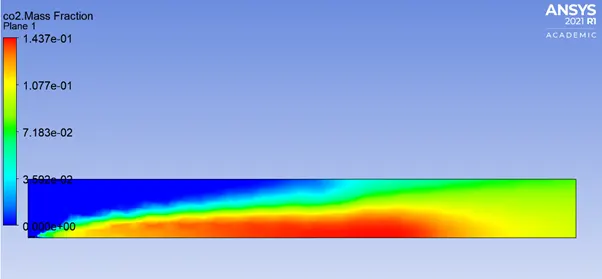
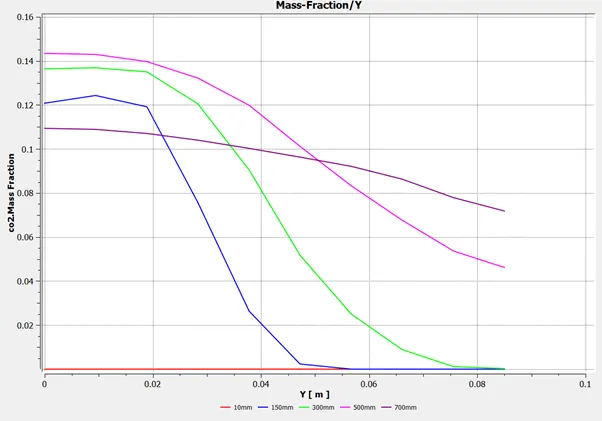
Mass fraction of C02
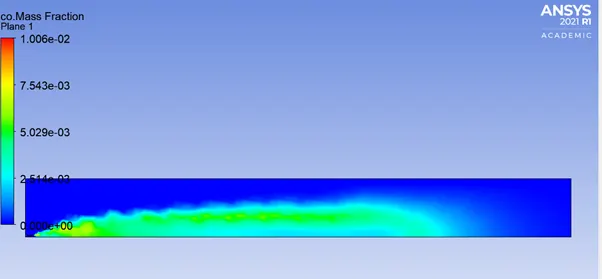
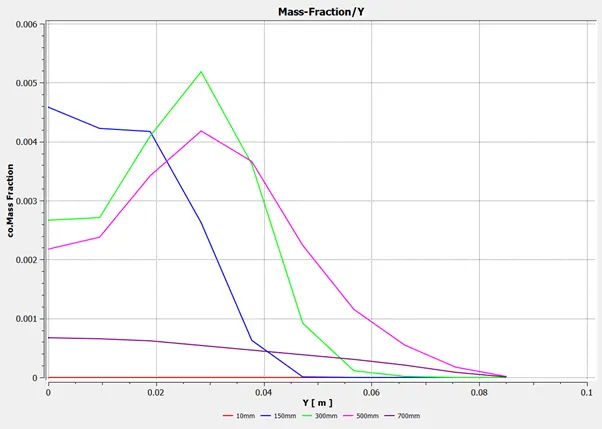
Mass fraction of CO
Mass fraction of H20
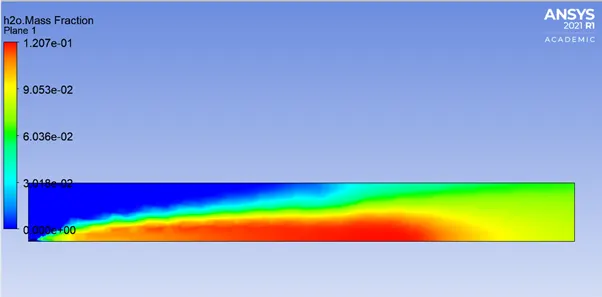
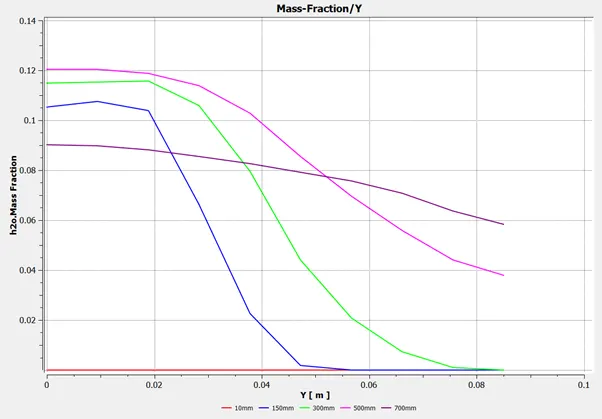
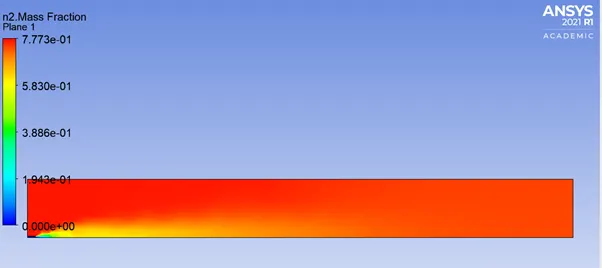
Mass fraction of N2
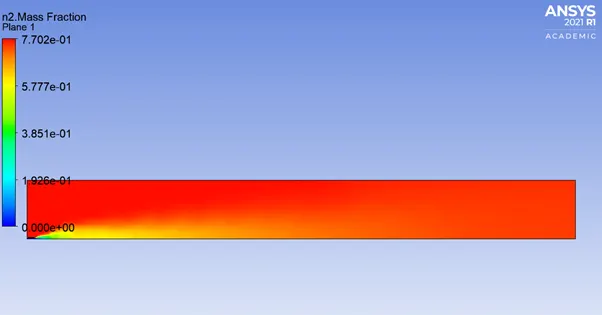
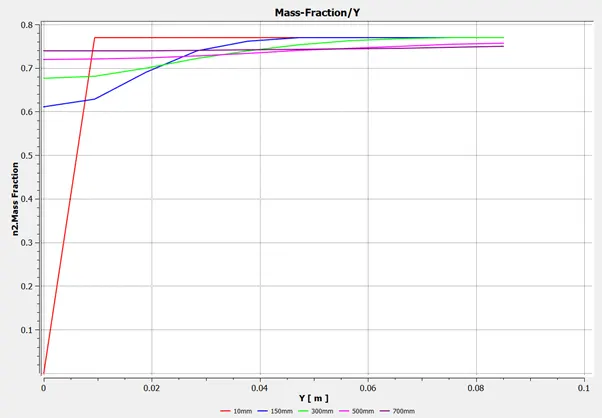
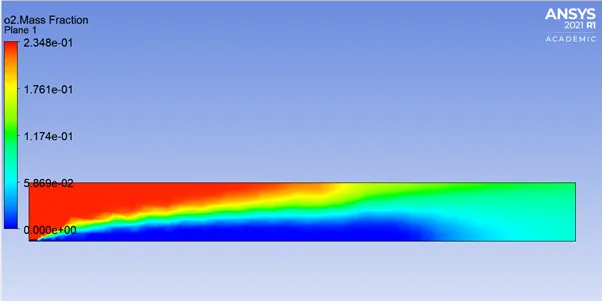
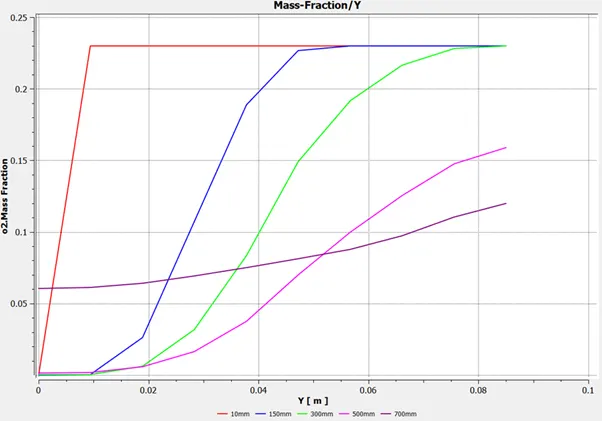
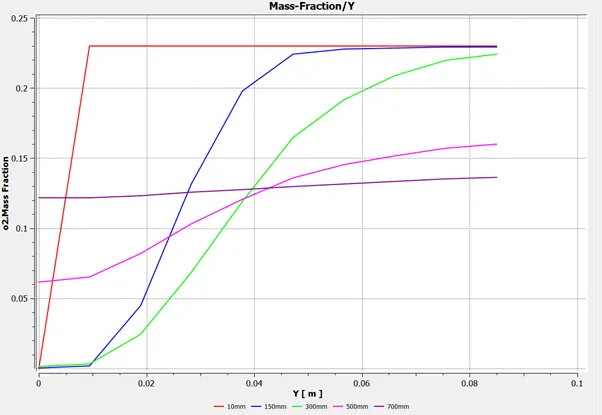
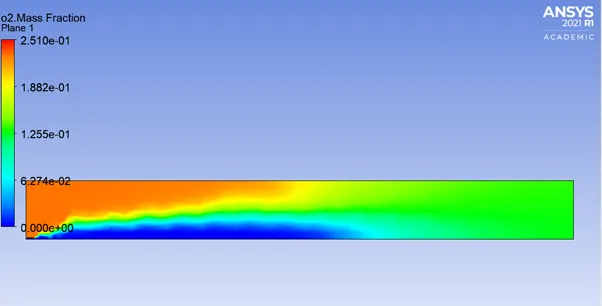
Mass fraction Of O2
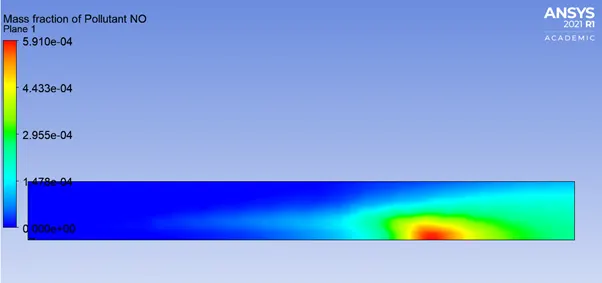
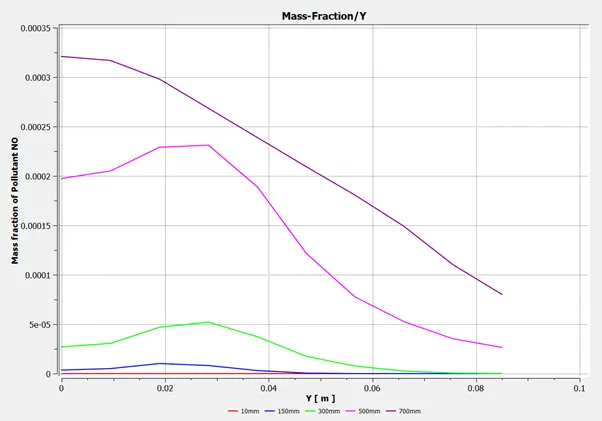
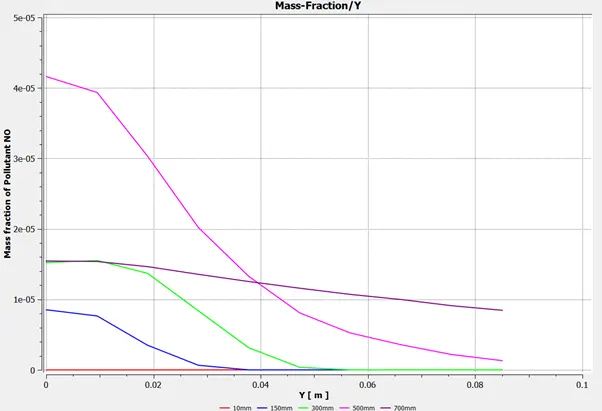
Mass fraction of NOx
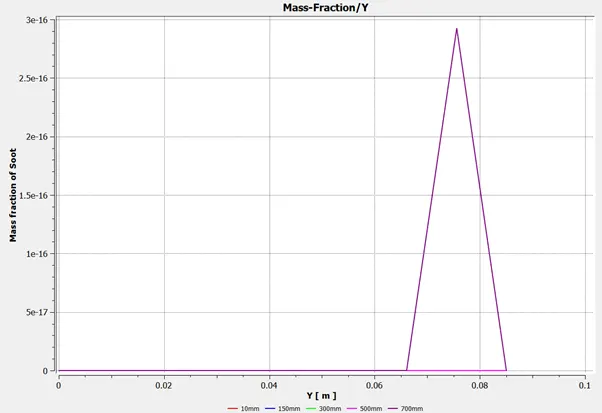
Mass fraction of soot
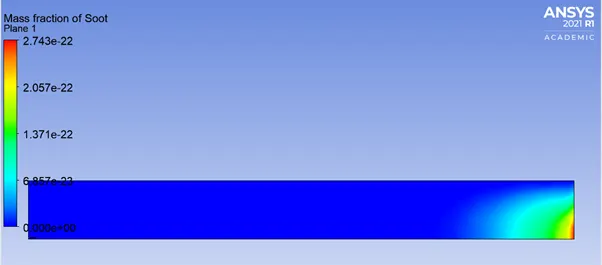
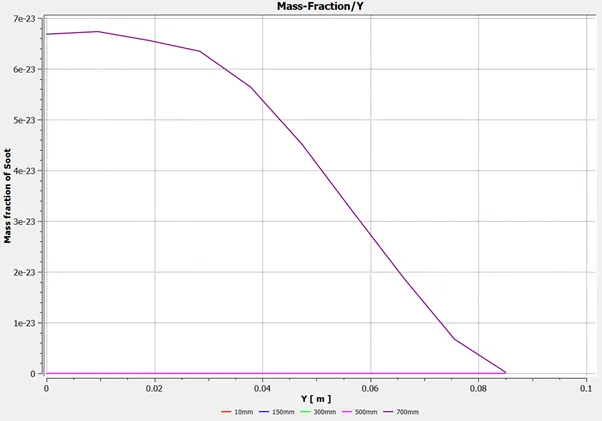
CASE 2
Temperature contour
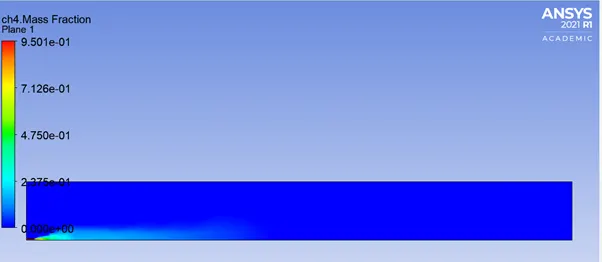
Mass fraction of CH4
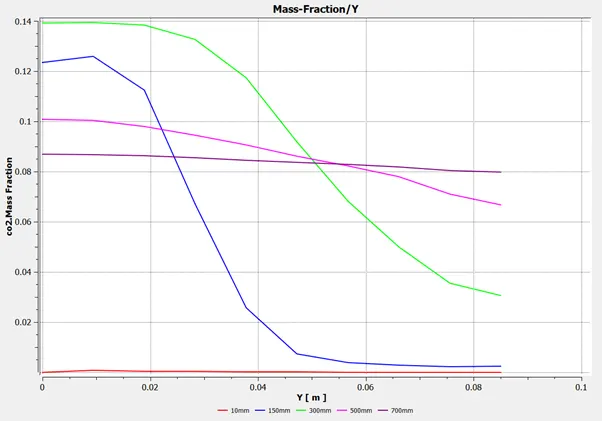
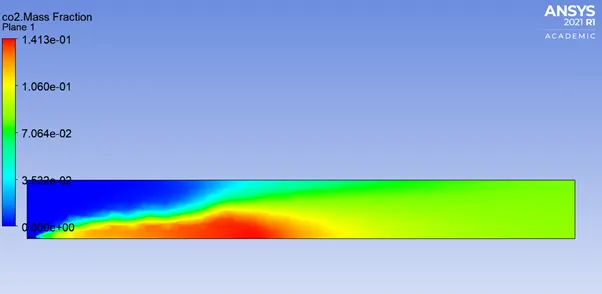
Mass fraction of CO2
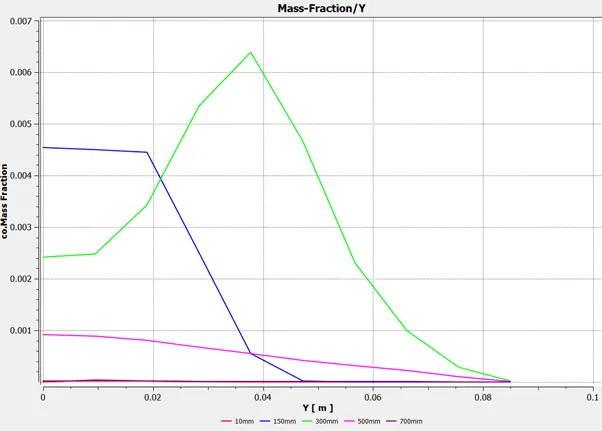
Mass fraction of CO
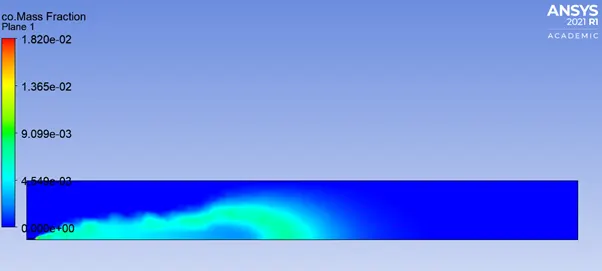
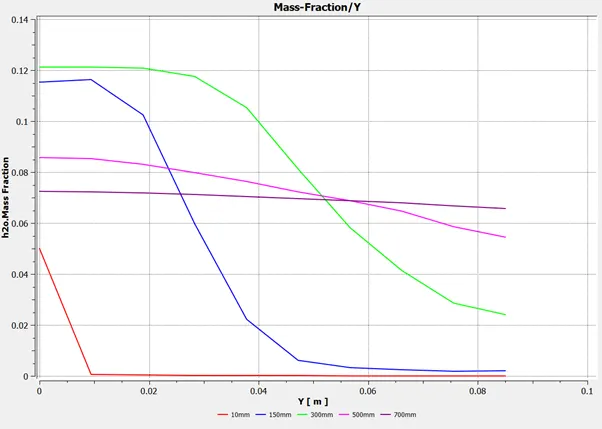
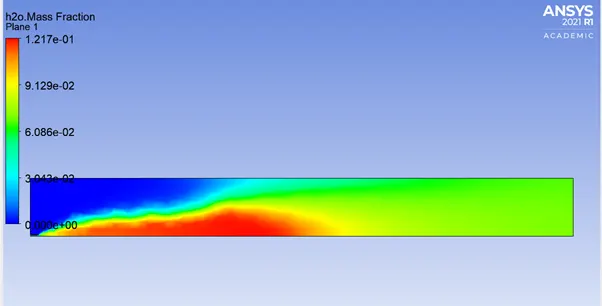
Mass fraction of H20
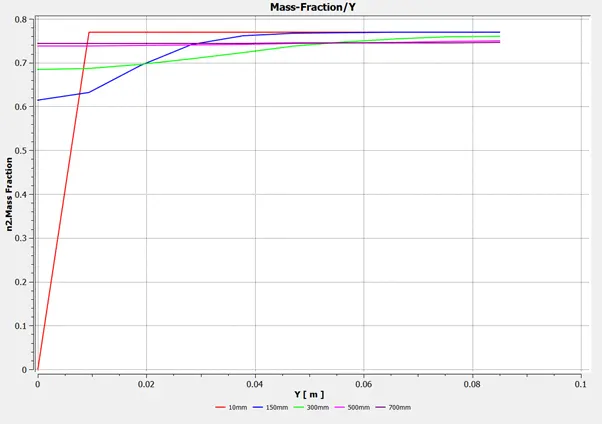
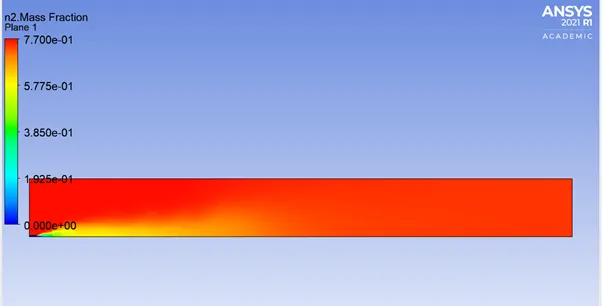
Mass fraction of N2
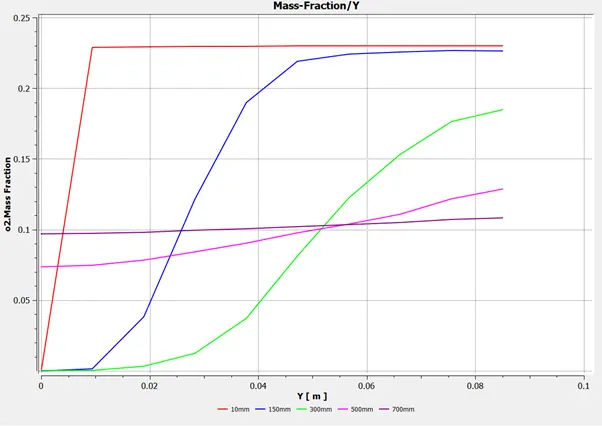
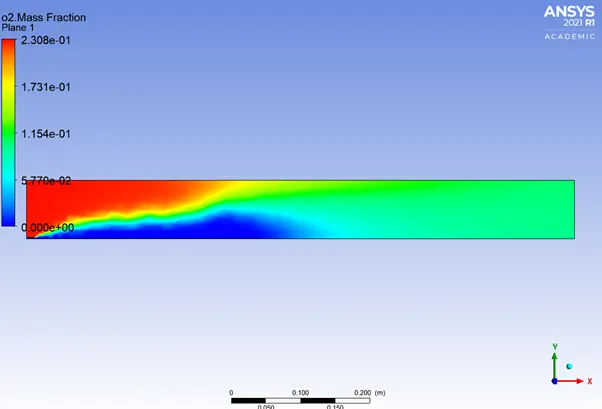
Mass fraction of O2
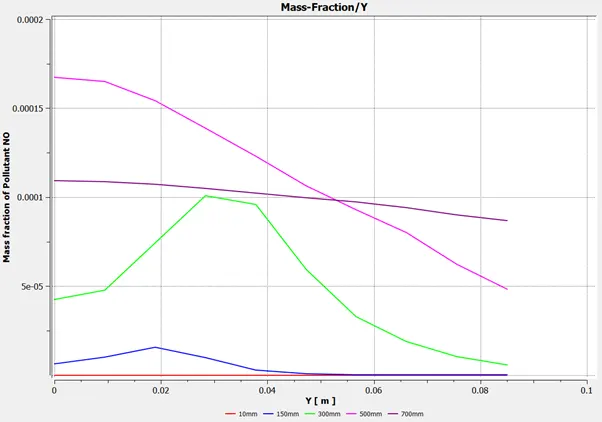
Mass fraction of NOx
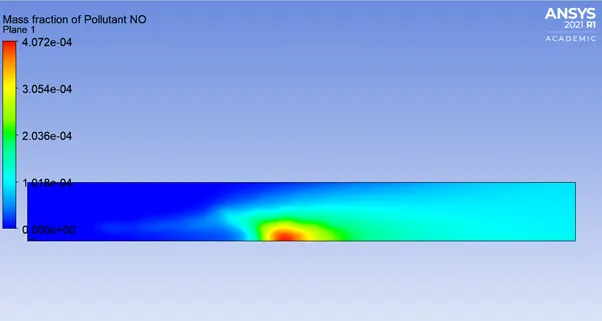
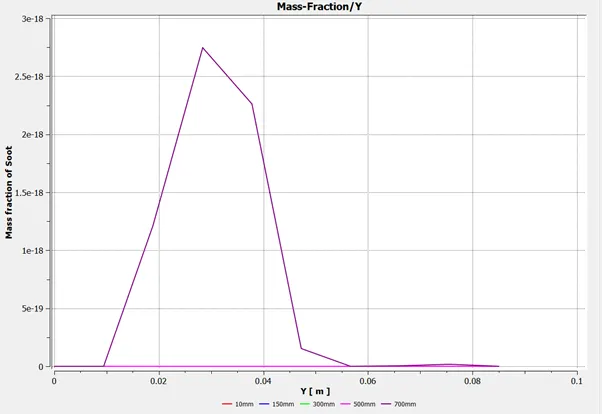
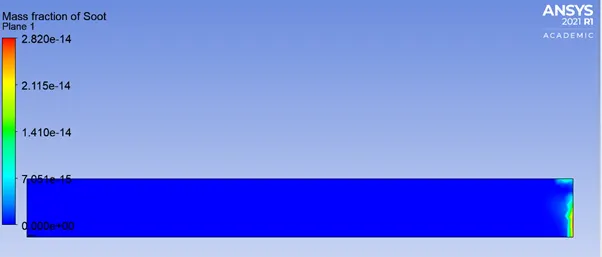
Mass fraction of soot
CASE 3
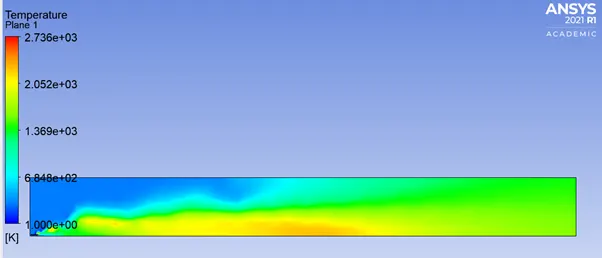
Temperature contour
Mass fraction of CH4
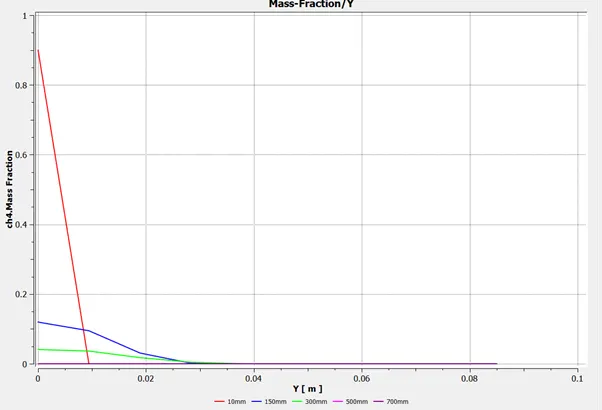
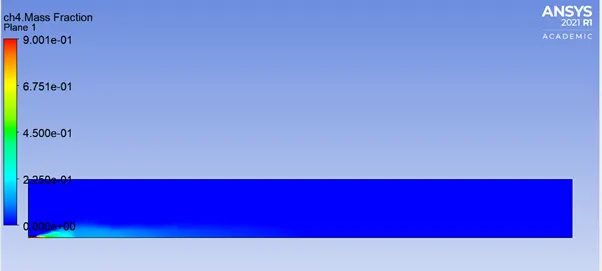
Mass fraction of CO2
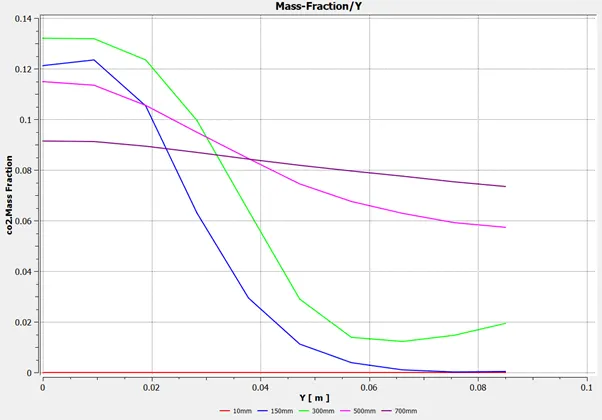
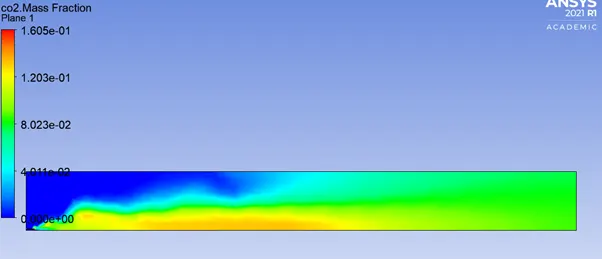
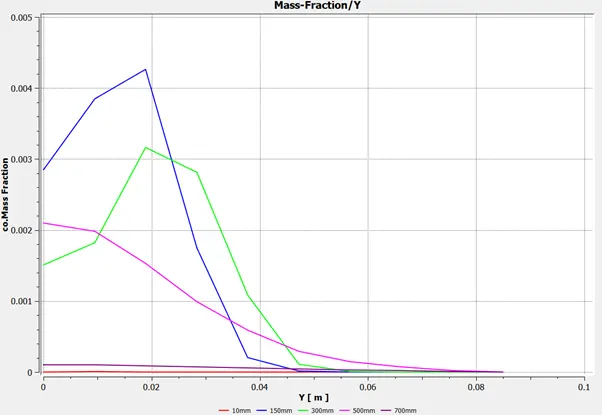
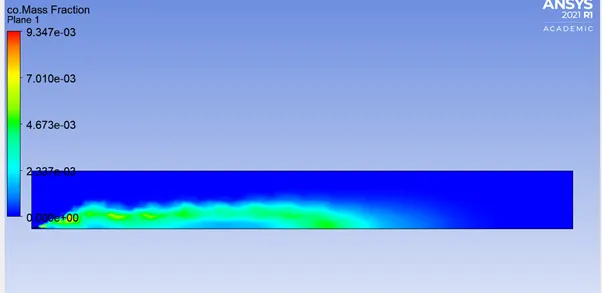
Mass fraction of CO
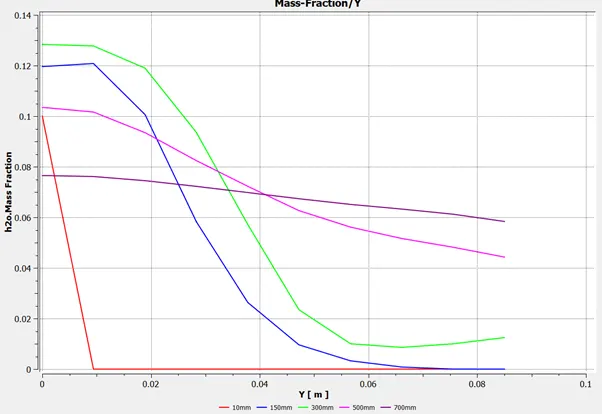
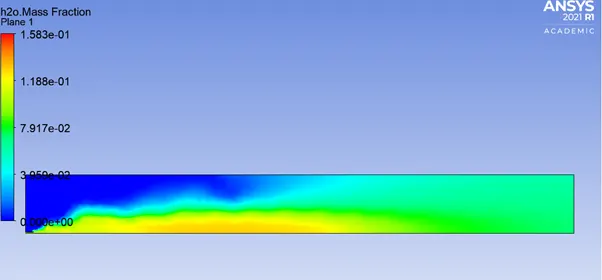
Mass fraction of H20
Mass fraction of N2
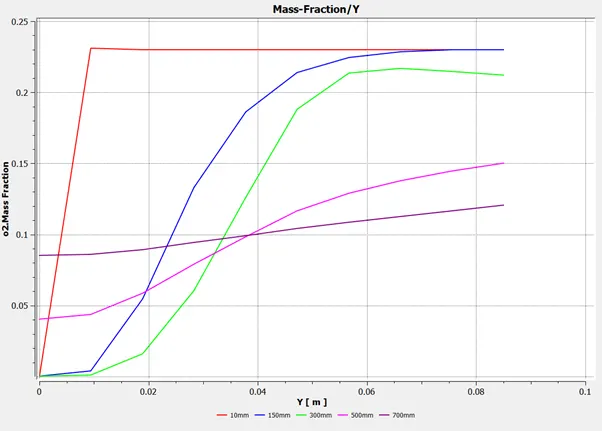
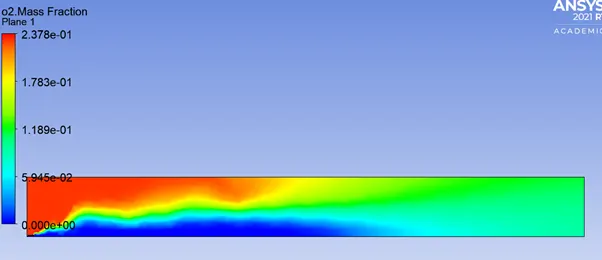
Mass fraction of O2
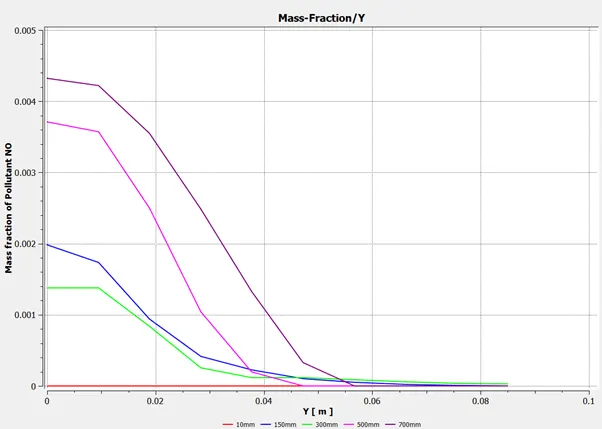
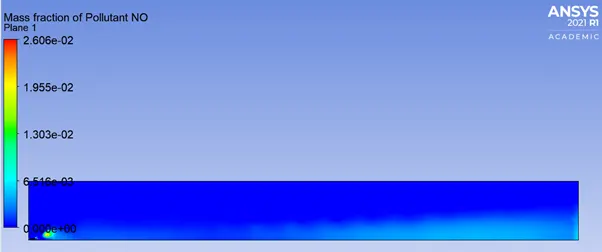
Mass fraction of NOx
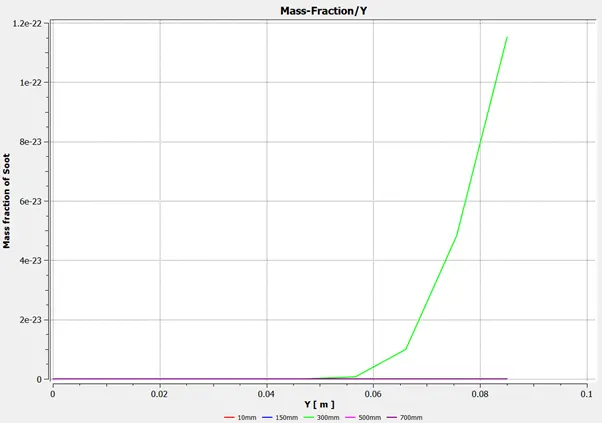
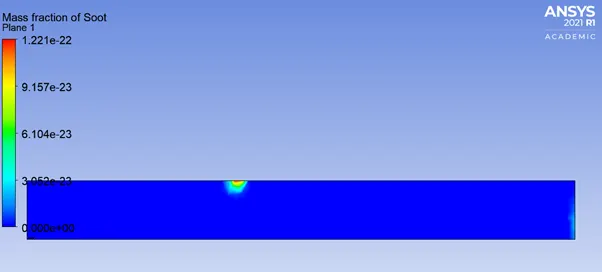
Mass fraction of Soot
CASE 4
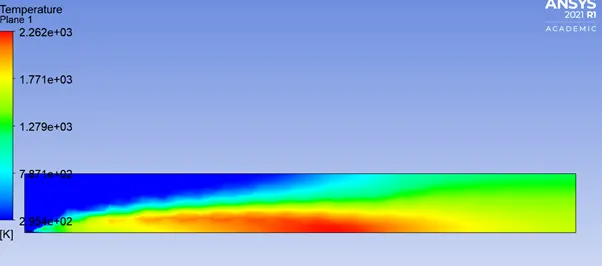
Temperature contour
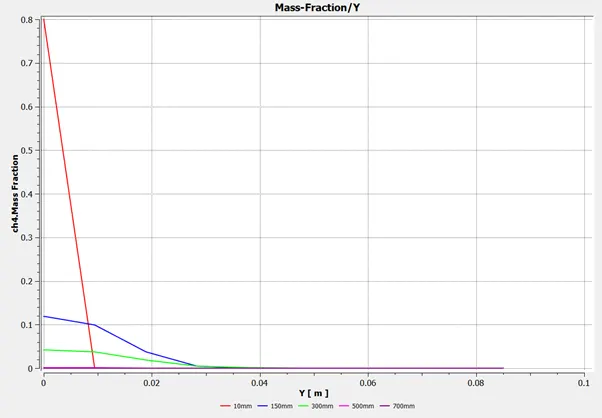
Mass fraction of CH4
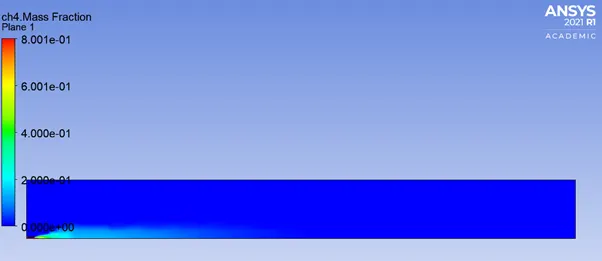
Mass fraction of CO2
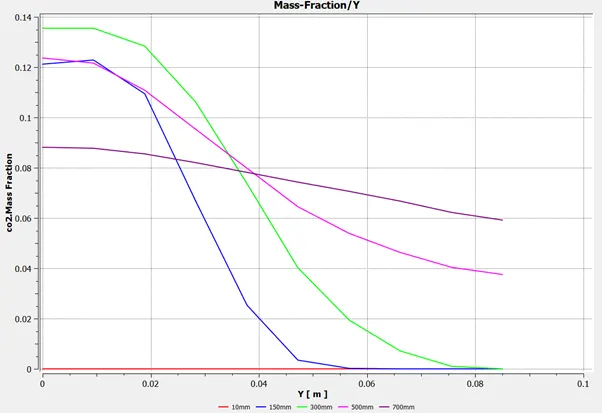
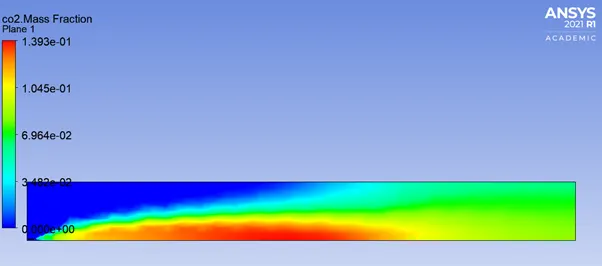
Mass fraction of CO2
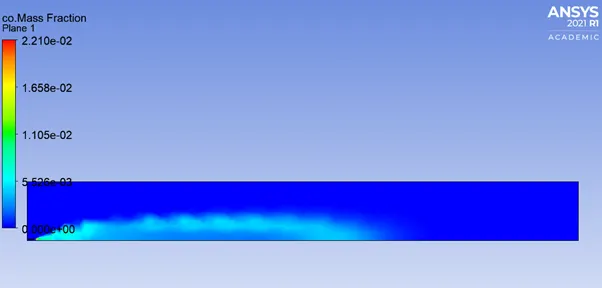
Mass fraction of CO
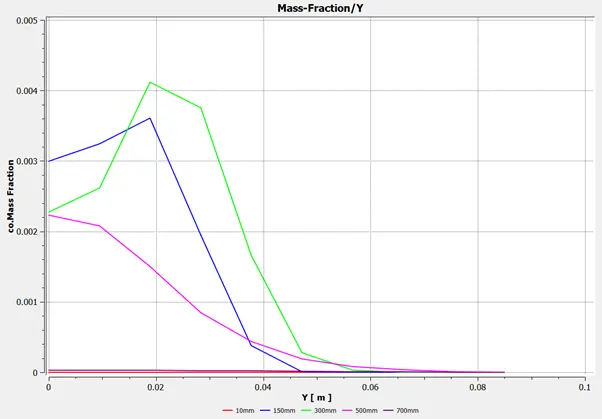
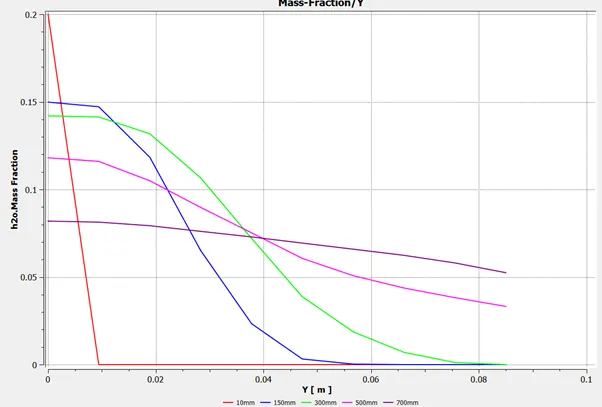
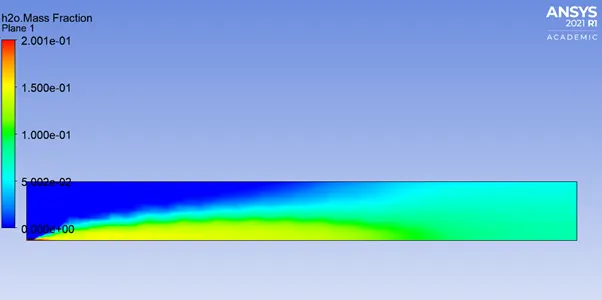
Mass fraction of H20
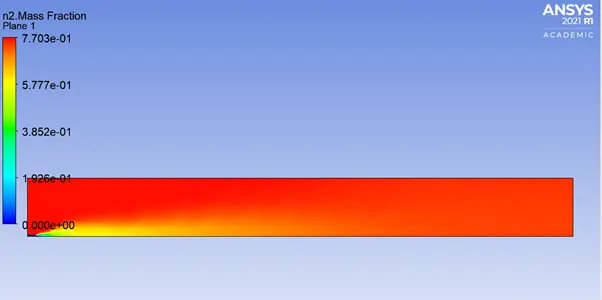
Mass fraction of N2
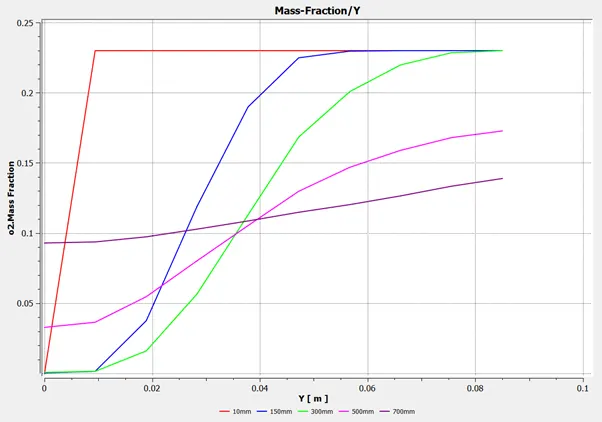
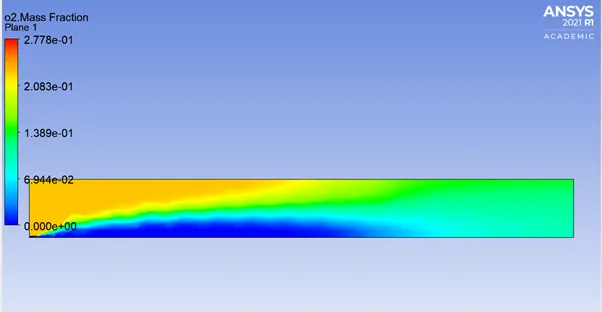
Mass fraction of O2
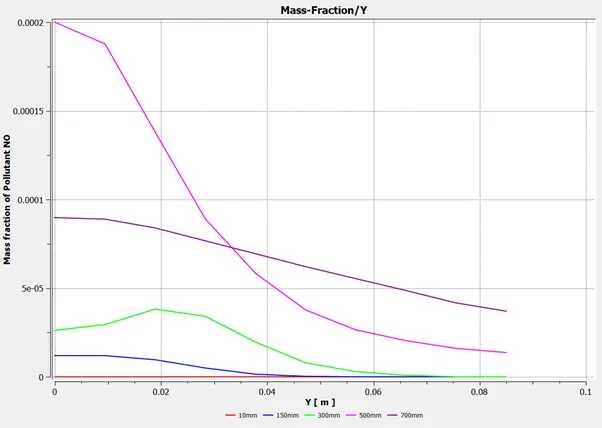
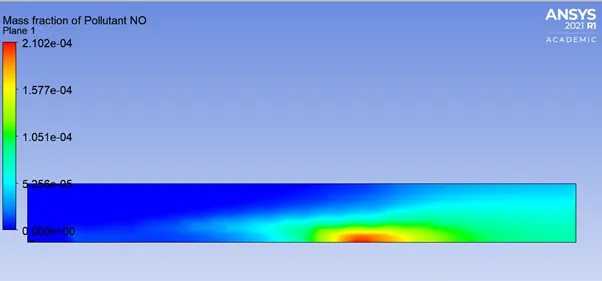
Mass fraction of NOx
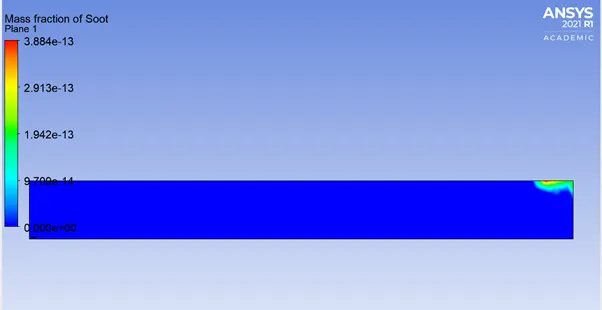
Mass fraction of Soot
CASE 5
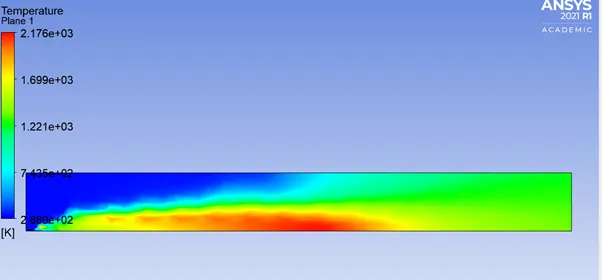
Temperature Contour
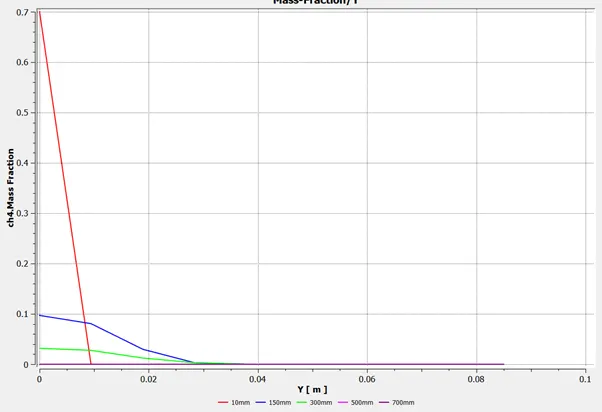
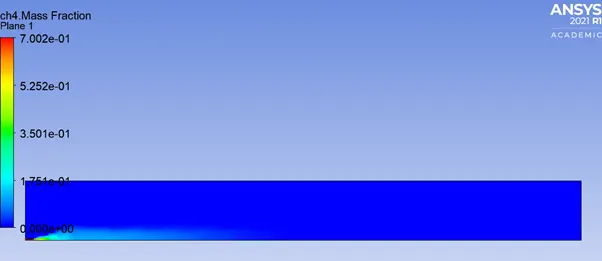
Mass fraction of CH4
Mass fraction of CO2
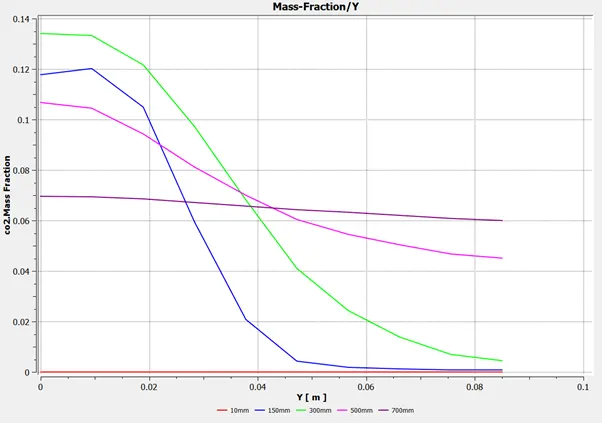
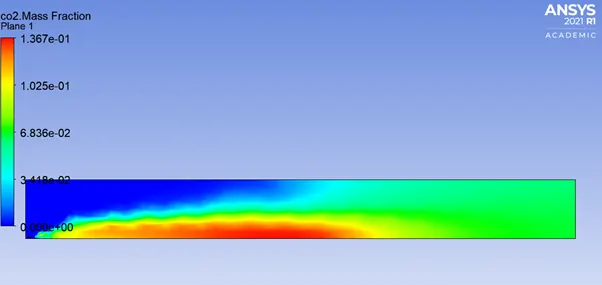
Mass fraction of CO2
Mass fraction of CO
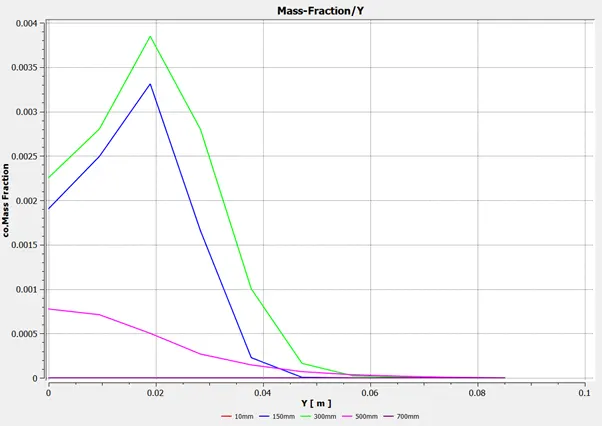
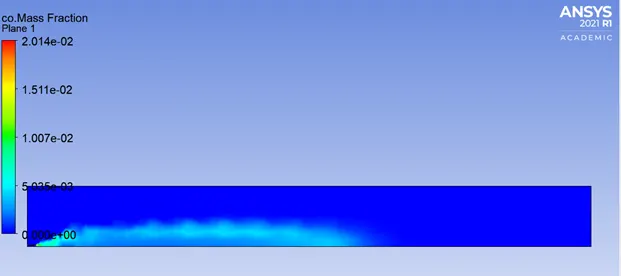
Mass fraction of H20
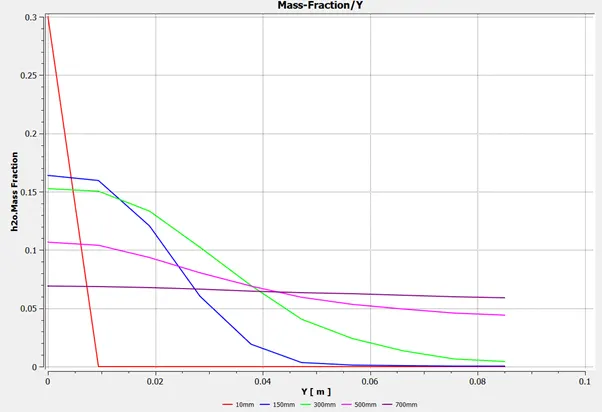
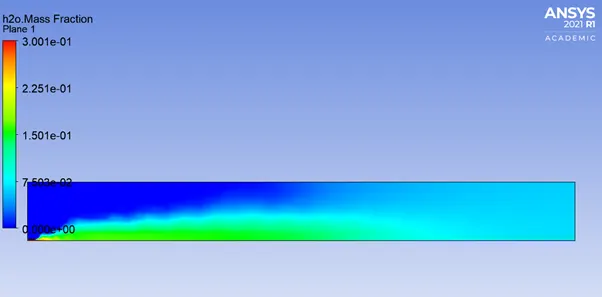
Mass fraction of N2
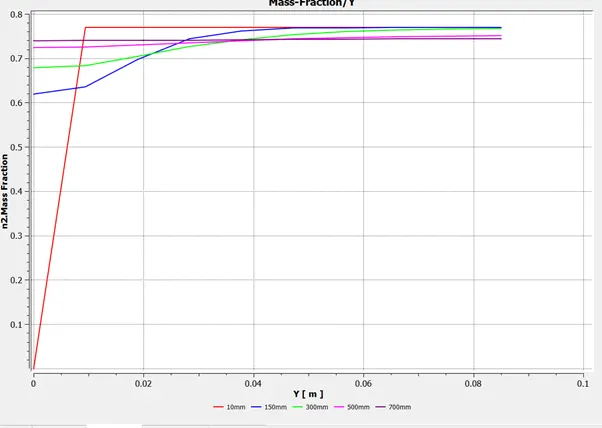
Mass fraction of O2
Mass fraction of NOx
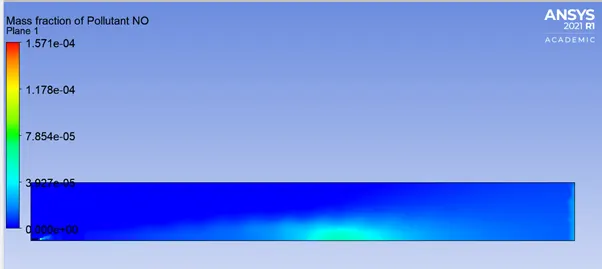
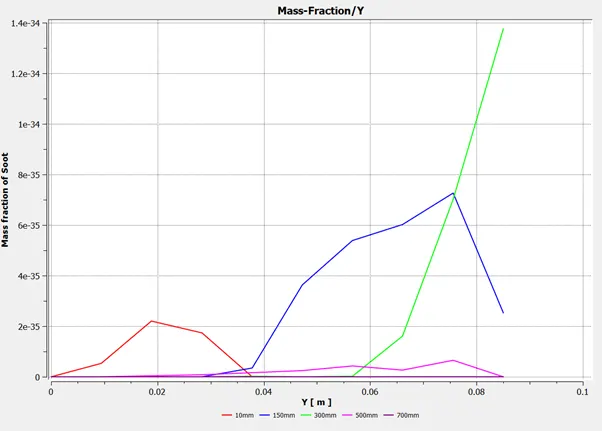
Mass fraction of Soot
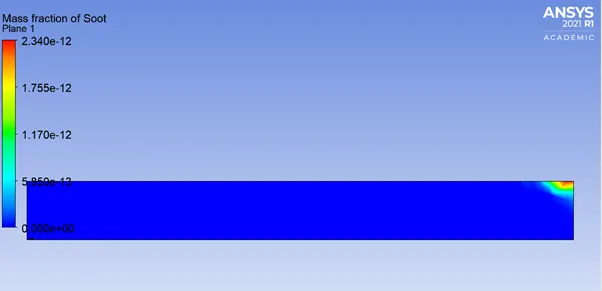
|
Temperature(K) |
CH4 |
C02 |
CO |
H20 |
N2 |
O2 |
NOx |
Soot |
|
|
CASE 1 |
2318 |
1 |
1.437 e-1 |
1.006e-2 |
1.207e-1 |
7.7e-1 |
0.23 |
4,459e-4 |
5.296e-34 |
|
CASE 2 |
2310 |
0.95 |
1.413 e-1 |
1.820e-2 |
1.217e-1 |
7.7e-1 |
0.23 |
4.072e-4 |
2.820e-34 |
|
CASE 3 |
2308 |
0.90 |
1.405 e-1 |
2.000e-2 |
1.583e-1 |
7.7e-1 |
0.23 |
2.262e-4 |
7.222e-23 |
|
CASE 4 |
2262 |
0.80 |
1.393 e-1 |
2.210e-2 |
2.001e-1 |
7.7e-1 |
0.23 |
2.102e-4 |
3.884e-13 |
|
CASE 5 |
2176 |
0.70 |
1.367 e-1 |
3.412e-2 |
3.001e-1 |
7.7e-1 |
0.23 |
1.571e-4 |
2.304e-12 |
CONCLUSIONS
- Temperature drops as water content increases.
- Mass fraction of CO increases as water content increases.
- Soot formation increases as water content increases.
- NOx mass fraction reduces as water content increases.