Mixing efficiency
Steady-state simulations to compare the mixing effectiveness of two different mixing tees
Mixing Tees are a simple, cost effective method of providing chemical diffusion to a system.
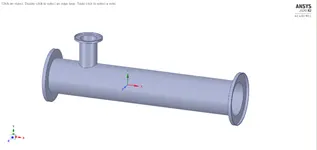
Momentum ratio is the ratio of velocity of cold air(inlet) to the velocity of hot air(inlet)

AIM
To set up steady-state simulations to compare the mixing effectiveness when hot inlet temperature is 36°C & the Cold inlet is at 19°C.
Case 1: Short Mixing Tee with Momentum ratio=2
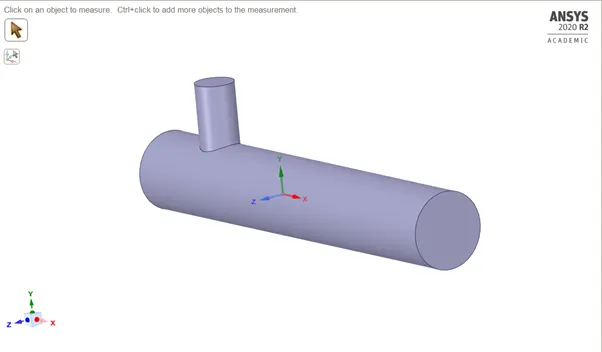
i)Dimensions
|
Diameter(mm) |
Length(mm) |
|
|
Pipe along X-axis |
33.876 |
192.376 |
|
Pipe along Y-axis |
16.962 |
ii)Mesh
|
Element Type |
Tetrahedral |
|
Element Size |
2.e-003 |
|
Cell Count |
105865 |
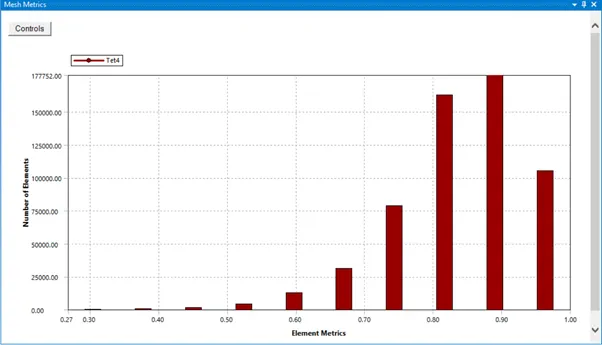
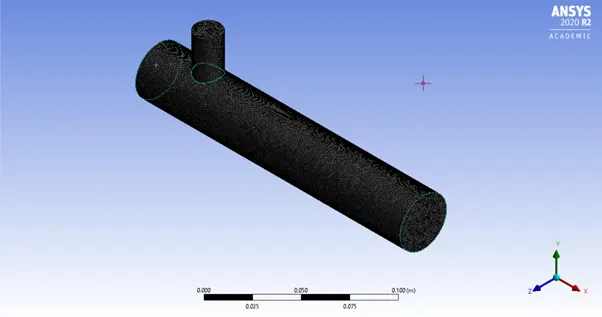
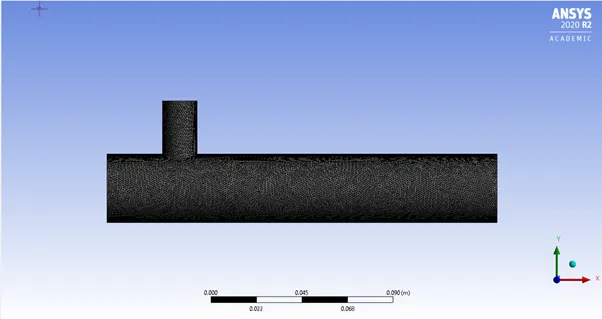
The Mesh quality is shown in the above fig. It is between 30% and 100% and few elements have quality below 70%, so this mesh is good and further procedures can be done
iii)Setup
The fluid used for simulations is air. The properties are as shown below
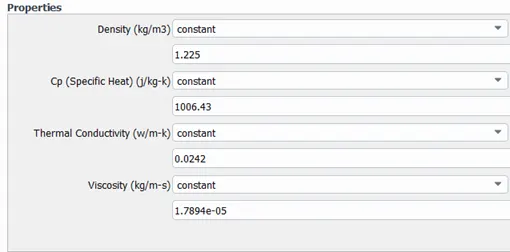
The equations solved are RANS and Energy equation. The Turbulence model selected is k-ε turbulence model because all the effects of turbulence are modelled, and it is the most used in Industrial applications
iv)Boundary Conditions
|
Boundary |
Conditions |
|
Hot Inlet |
Velocity= 3m/s Temperature=19°C |
|
Cold Inlet |
Velocity=6m/s Temperature=36°C |
|
Wall |
Gauge Pressure=0 bar |
|
Outlet |
Gauge Pressure=0 bar |
v)Results
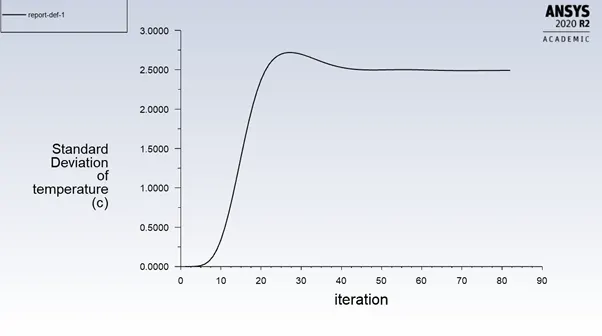
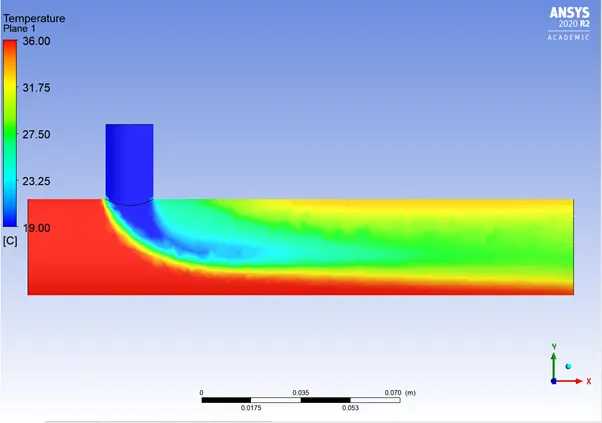
Temperature Line and Plane Contours
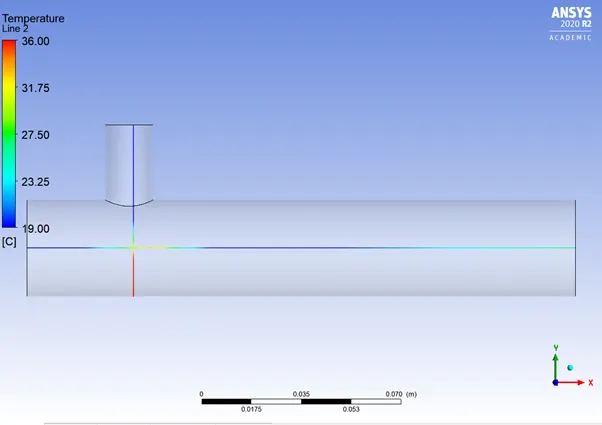
Velocity Line and Plane Contours
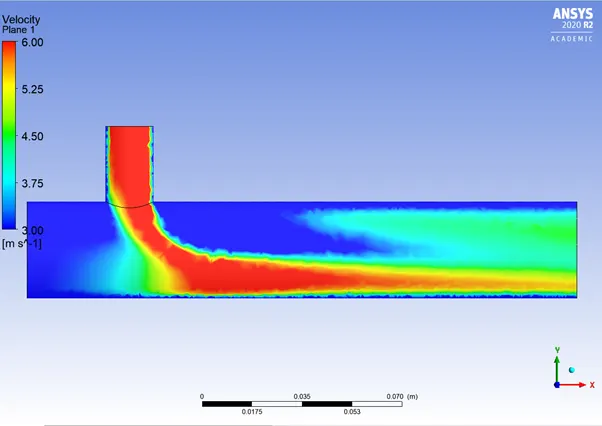
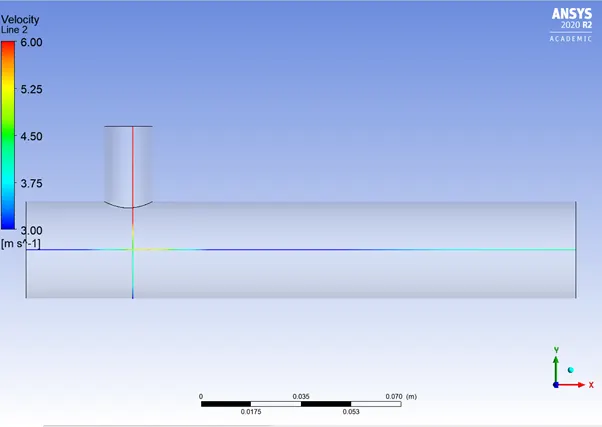
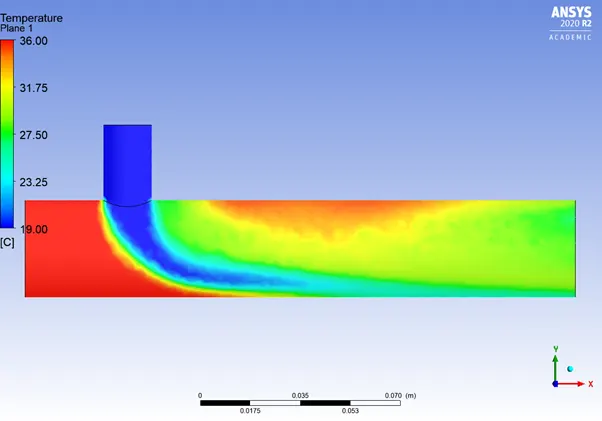
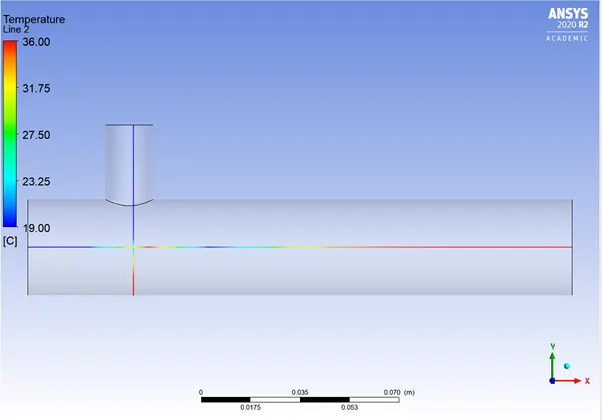
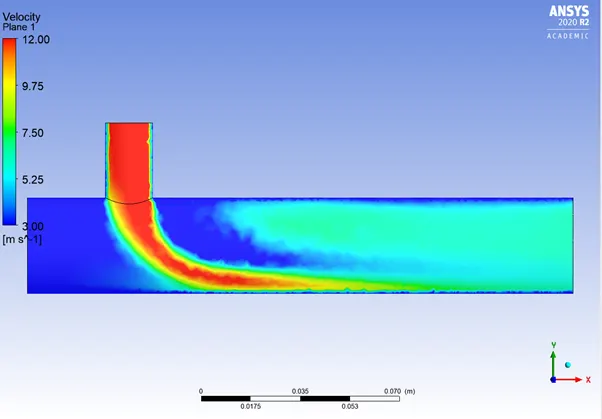
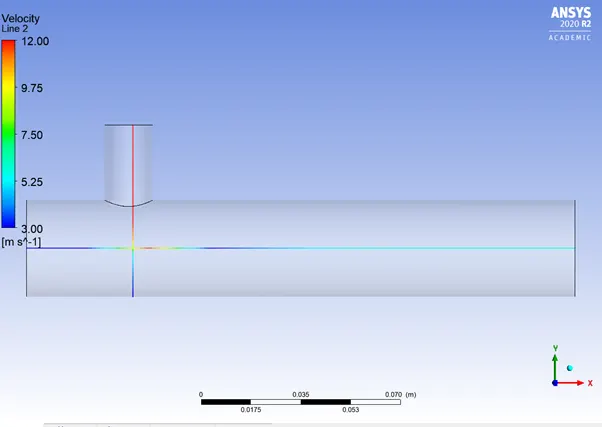
Case 2(Short Mixing Tee with Momentum ratio=4)
i)Dimensions
As shown in the above case
ii)Mesh
As shown in the above case
iii)Setup
The fluid used is air and details are shown above
The equations solved are RANS and energy equation.The Turbulence model selected is k-ε turbulence model because all the effects of turbulence are modelled, and it is the most used in Industrial applications.
iv)Boundary Conditions
|
Boundary |
Conditions |
|
Hot Inlet |
Velocity= 3m/s Temperature=19°C |
|
Cold Inlet |
Velocity=12m/s Temperature=36°C |
|
Wall |
Gauge Pressure=0 bar |
|
Outlet |
Gauge Pressure=0 bar |
v)Results
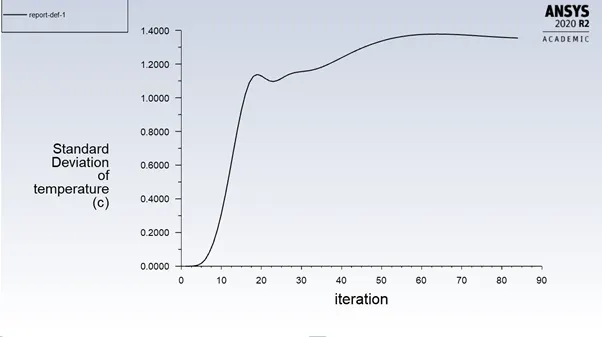
Temperature Line and Plane Contours
Velocity Line and Plane Contours
Case 3: Long Mixing Tee with MR=2
i)Dimensions
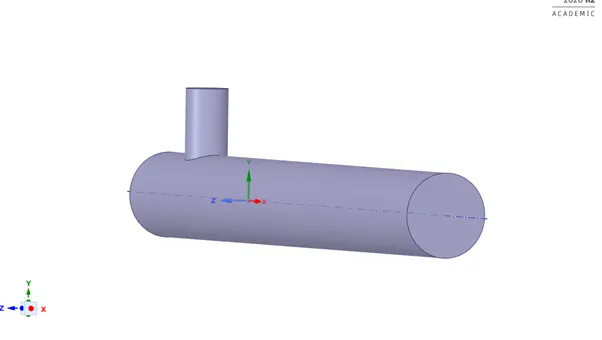
|
Diameter(mm) |
Length(mm) |
|
|
Pipe along X-axis |
33.876 |
268.328mm |
|
Pipe along Y-axis |
16.962 |
ii)Mesh
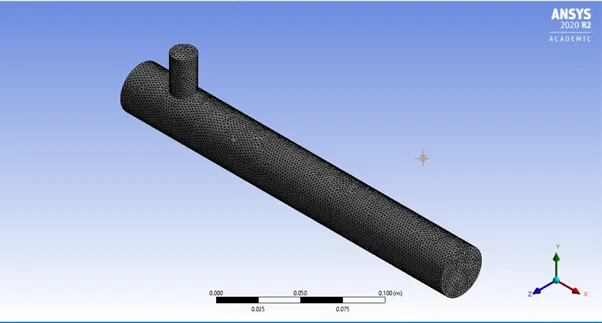
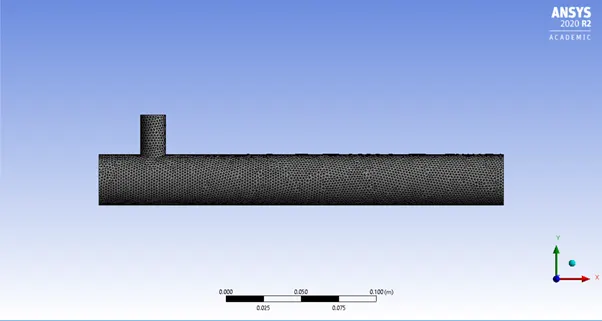
|
Element Type |
Tetrahedral |
|
Element Size |
2.e-003 |
|
Cell Count |
140525 |
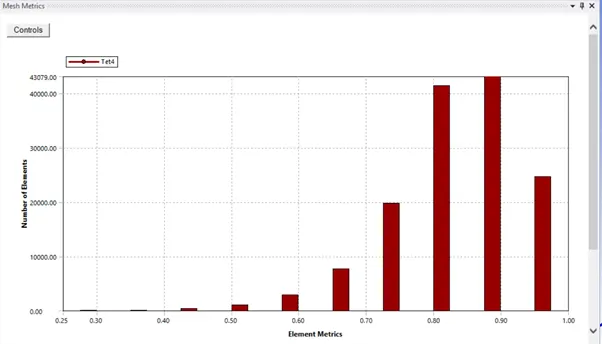
The Mesh quality is shown in the above fig. It is between 30% and 100% and few elements have quality below 70%, so this mesh is good and further procedures can be done.
iii)Setup
The fluid used in the above simulation is air. The details are shown in Case 1
The equations solved are RANS and energy equation. The Turbulence model used K-epsilon as it is observed by trial and error it takes lesser no of iterations.
iv)Boundary Conditions
|
Boundary |
Conditions |
|
Hot Inlet |
Velocity= 3m/s Temperature=19°C |
|
Cold Inlet |
Velocity=6m/s Temperature=36°C |
|
Wall |
Gauge Pressure=0 bar |
|
Outlet |
Gauge Pressure=0 bar |
v)Results
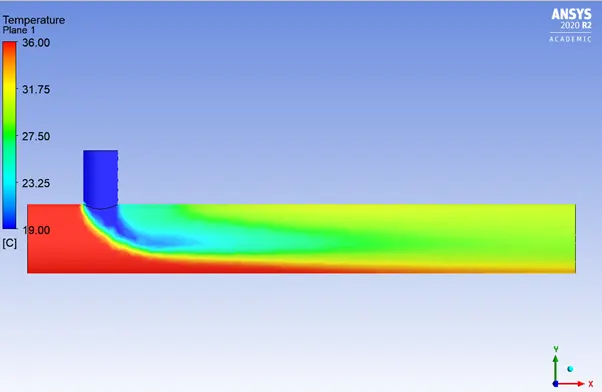
Temperature Line and Plane Contours
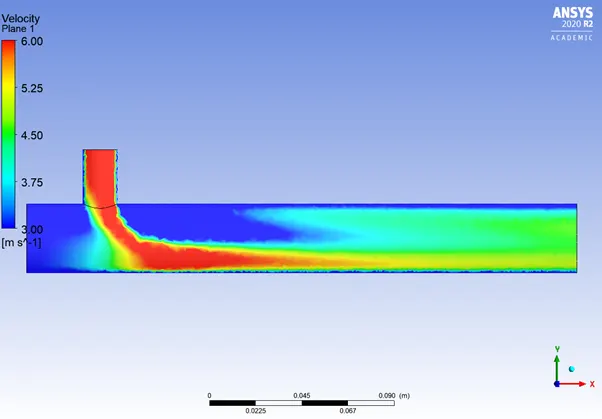
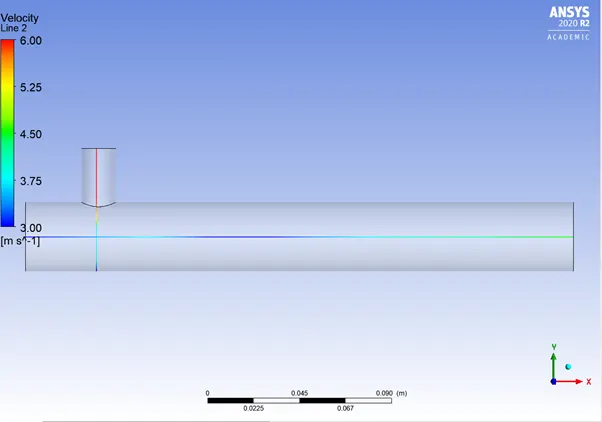
Velocity Line and Plane Contours
Case 4(Long Mixing Tee with Momentum Ratio=4)
i)Dimensions
As shown in the above case
ii)Mesh
As shown in the above case
iii)Setup
The fluid used is air and details are shown above
The equations solved are RANS and energy equation. The Turbulence model used K-epsilon as it is observed by trial and error it takes lesser no of iterations.
iv)Boundary Conditions
|
Boundary |
Conditions |
|
Hot Inlet |
Velocity= 3m/s Temperature=19°C |
|
Cold Inlet |
Velocity=12m/s Temperature=36°C |
|
Wall |
Gauge Pressure=0 bar |
|
Outlet |
Gauge Pressure=0 bar |
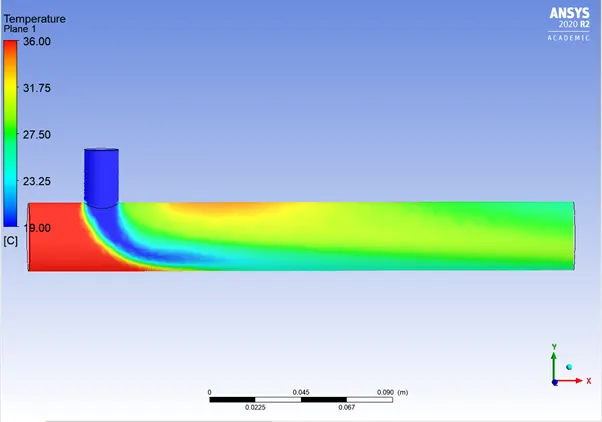
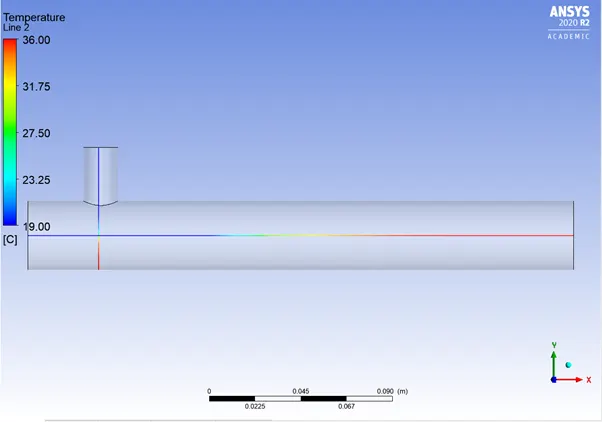
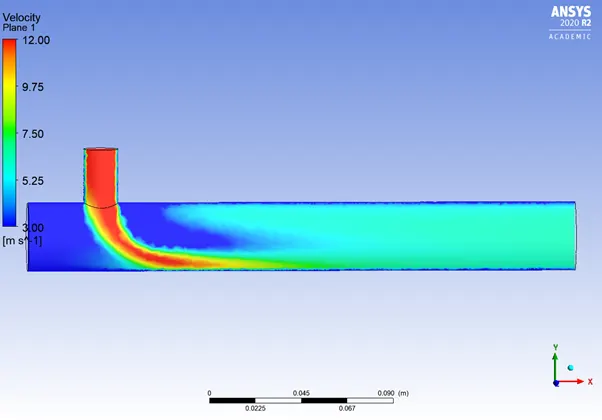
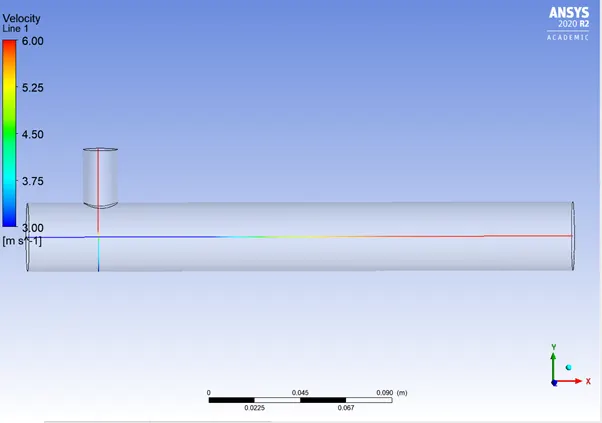
v)Results
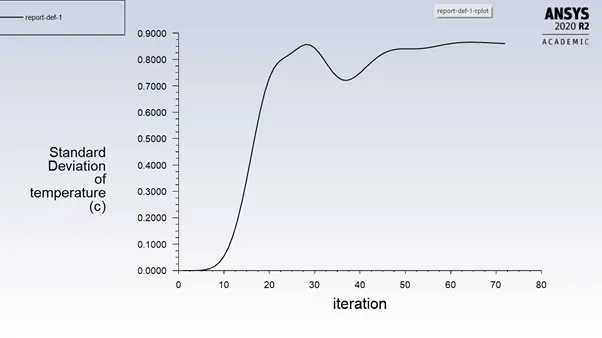
Temperature Line and Plane Contour
Velocity Line and Plane Contour
Results and Conclusions
|
|
Short Mixing Tee with MR=2 |
Short Mixing Tee with MR=4 |
Long Mixing Tee with MR=2 |
Long Mixing Tee with MR=4 |
|
Cell Count |
105865 |
105865 |
140525 |
140525 |
|
No of iterations for convergence |
65 |
70 |
64 |
72 |
|
Average outlet Temperature |
30.30367°C |
27.55295°C |
30.41893°C |
27.48428°C |
Conclusion
It is observed that changing the length keeping the momentum ratio does not have much effect on the outlet temperature. However, changing the momentum ratio keeping the length constant has significant effects.