Week 10 - Simulating Combustion of Natural Gas.
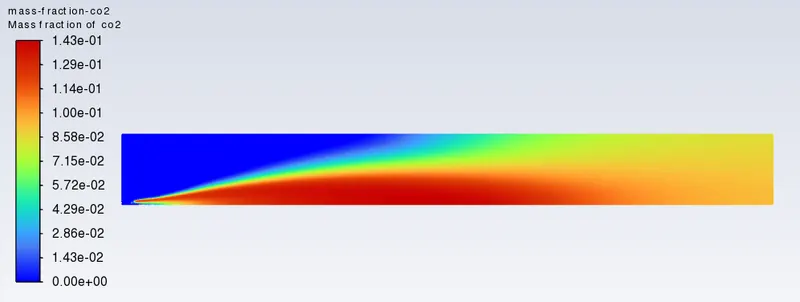
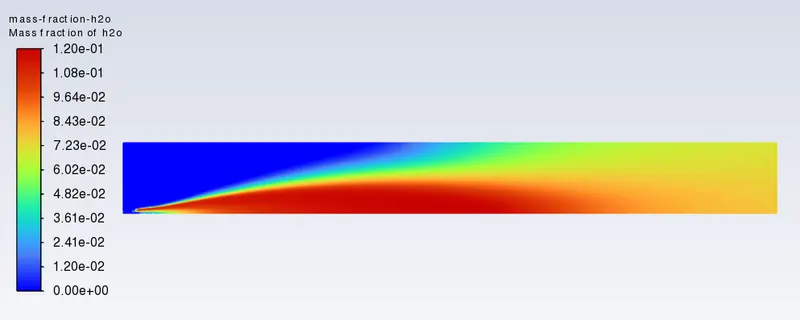
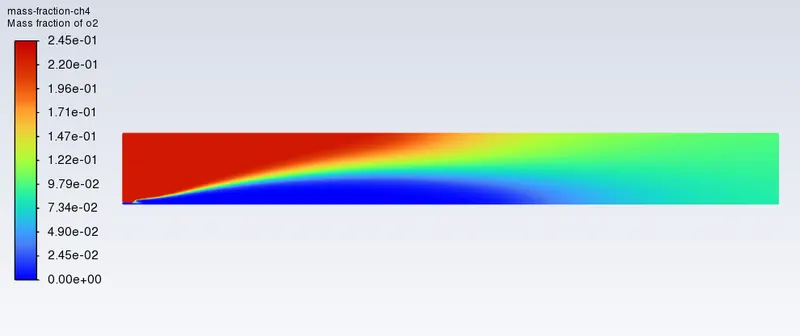
Aim :- To perform a combustion simulation on given combustor model and to observe the variation of mass fraction of different species in the simulation.
Objective :-
Part 1
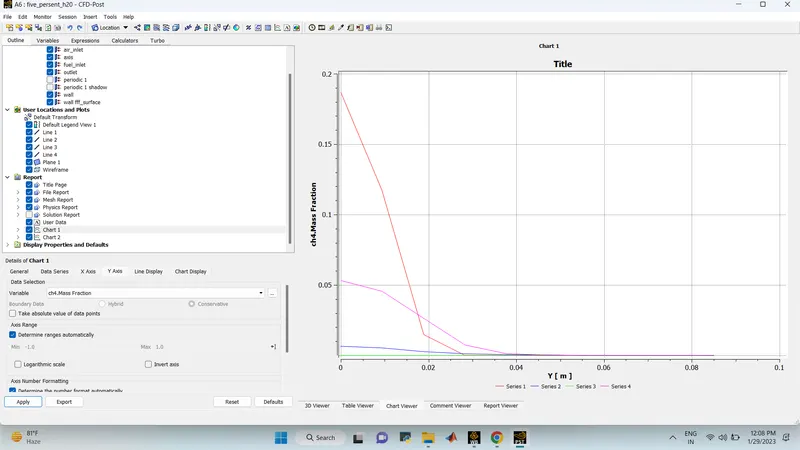
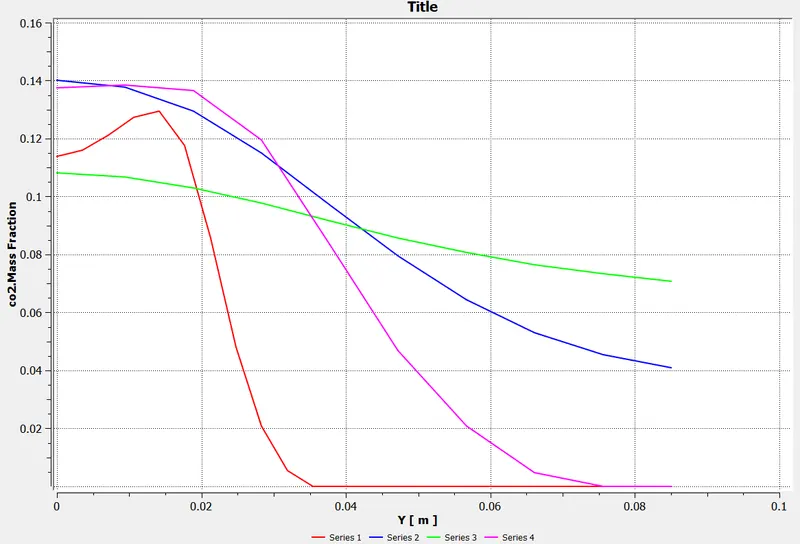
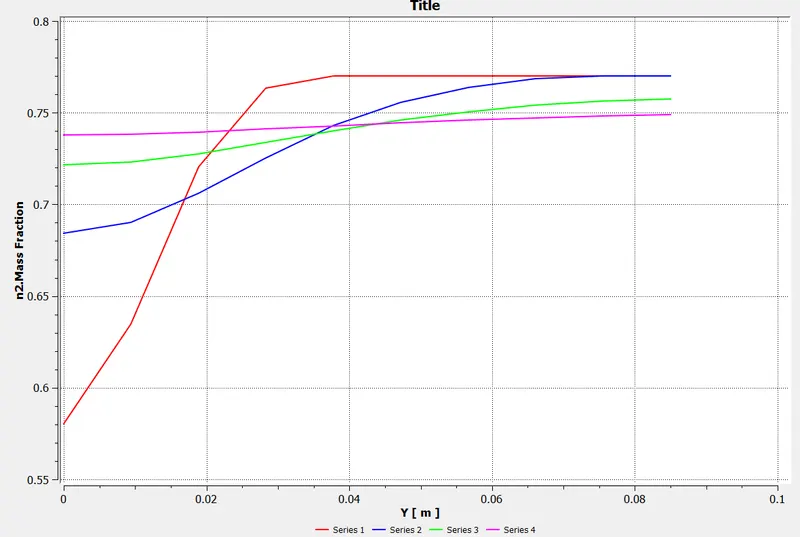
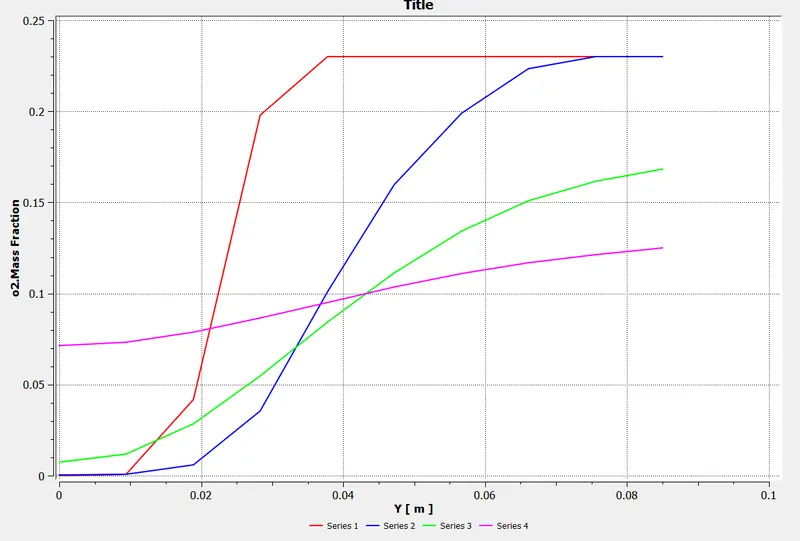
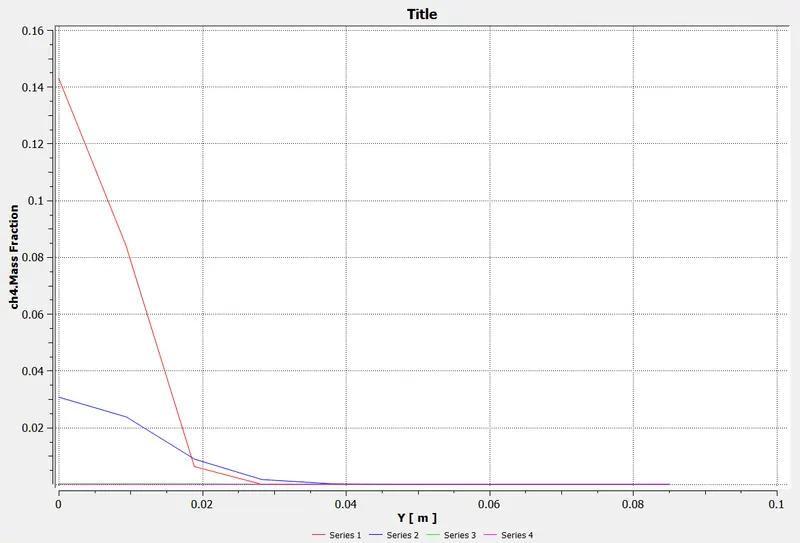
1) Perform a combustion simulation and plot the variation of mass fraction of different species in the simulation using line probe at different location.
2) Setup NOx and soot model to observe NOx emissions and soot formation.
Part 2
1) Add water content in the fuel from 5% to 30% by mole.
2) Provide necessary plots and contours from the CFD results.
Introduction :-
Combustion is a chemical process in which a substance reacts rapidly with oxygen and gives off heat. The original substance is called the fuel, and the source of oxygen is called the oxidizer. The fuel can be a solid, liquid, or gas, although for airplane propulsion the fuel is usually a liquid.
To summarize, for combustion to occur three things must be present: a fuel to be burned, a source of oxygen, and a source of heat. As a result of combustion, exhausts are created and heat is released. You can control or stop the combustion process by controlling the amount of the fuel available, the amount of oxygen available, or the source of heat.
Solver type = Pressure based
Solver time = steady state
Viscous model = k-epsilon
Energy equations = enabled
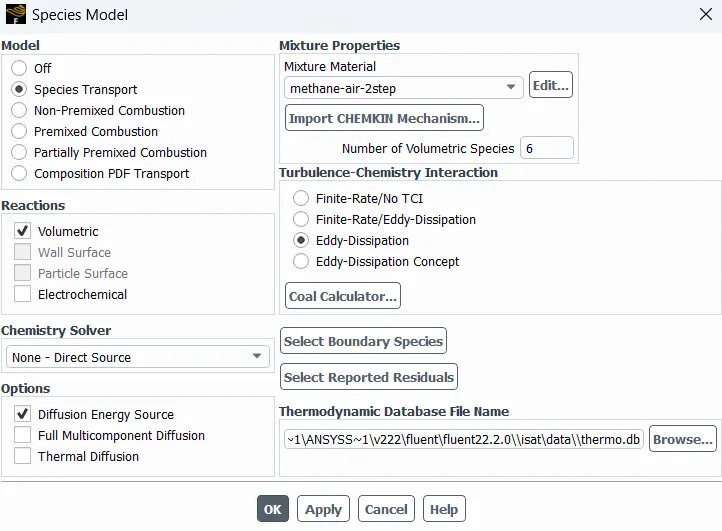
Species model
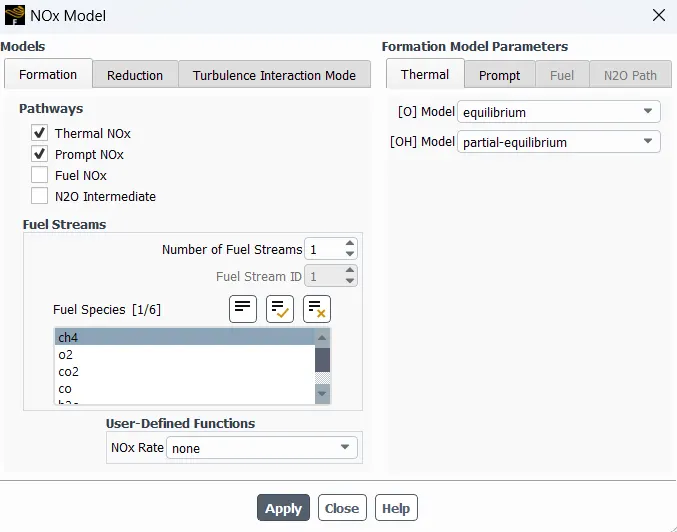
Nox model
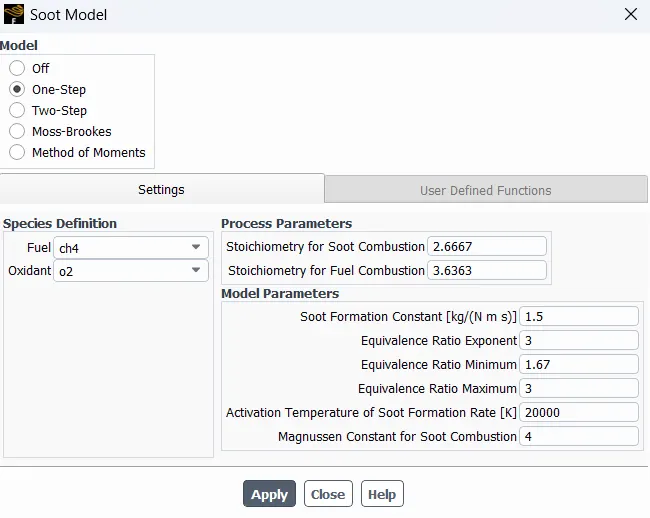
Soot model
Part 1
Boundary conditions
Air inlet
Velocity = 0.5 m/s
Temperature = 300 K
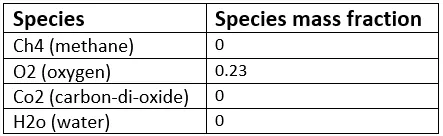
Species
Fuel inlet
Velocity = 80 m/s
Temperature = 300 K
Species
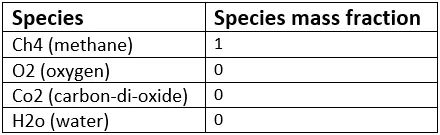
Run with hybrid intialization with 500 iterations-
Results:-
Residuals :-
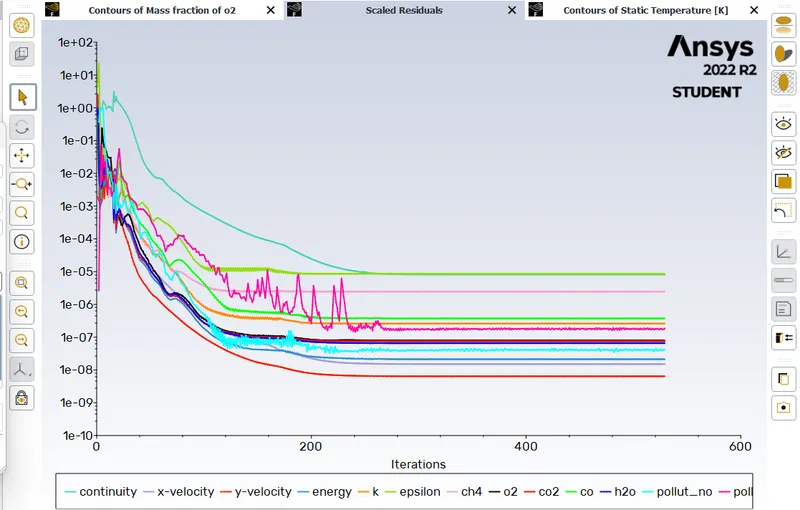
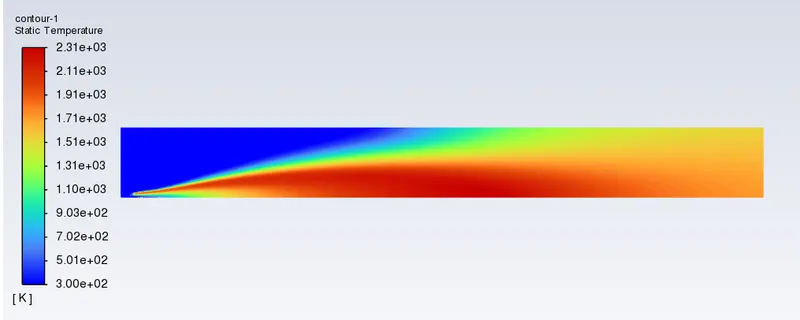
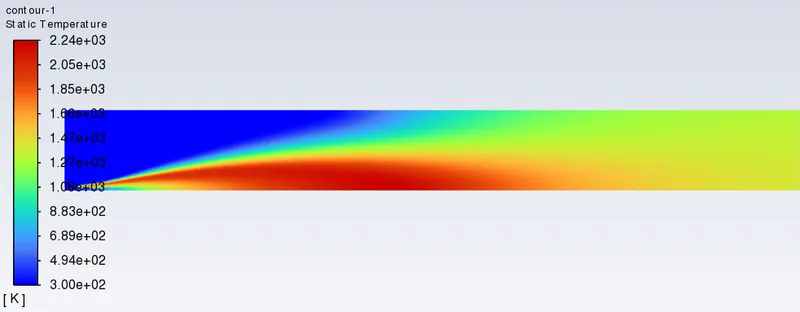
Temperature Contour :-
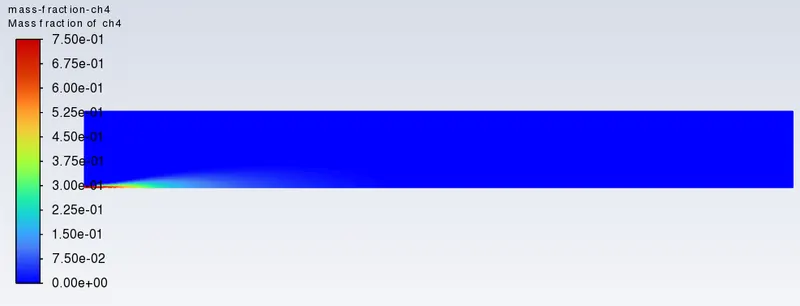
CH4 Mass Fraction :-
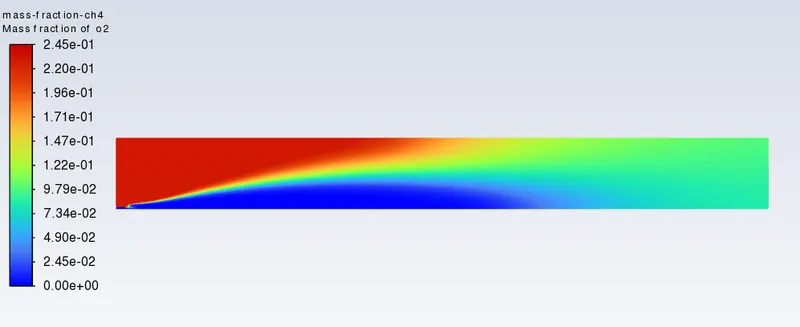
CO2 Mass Fraction :-
H2O Mass Fraction :-
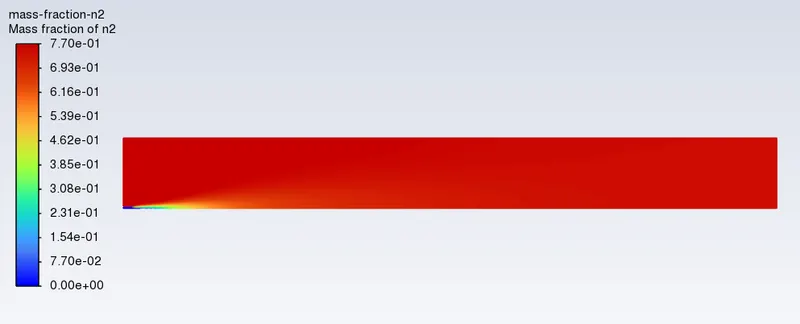
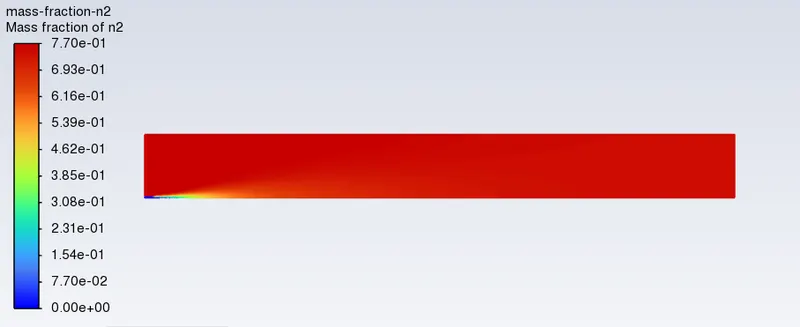
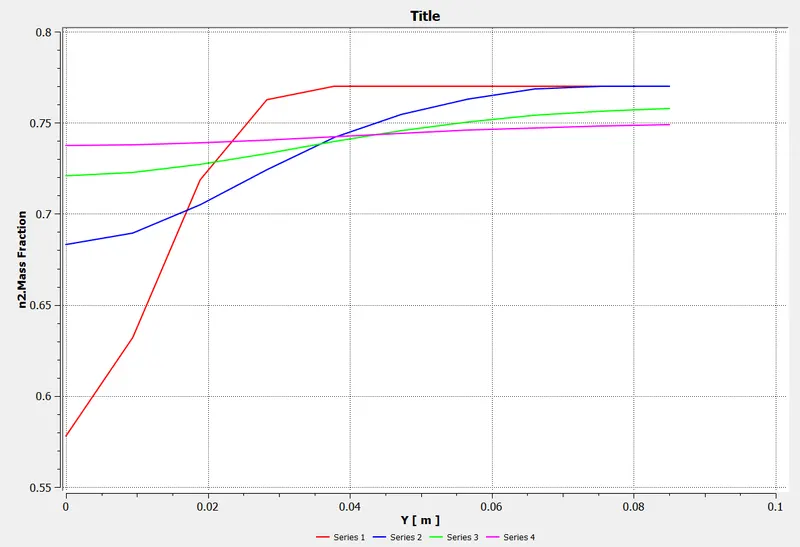
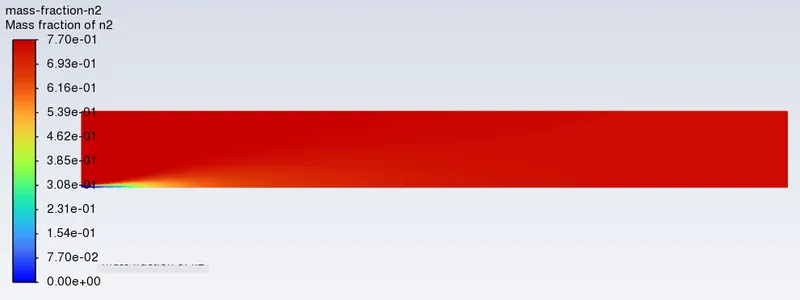
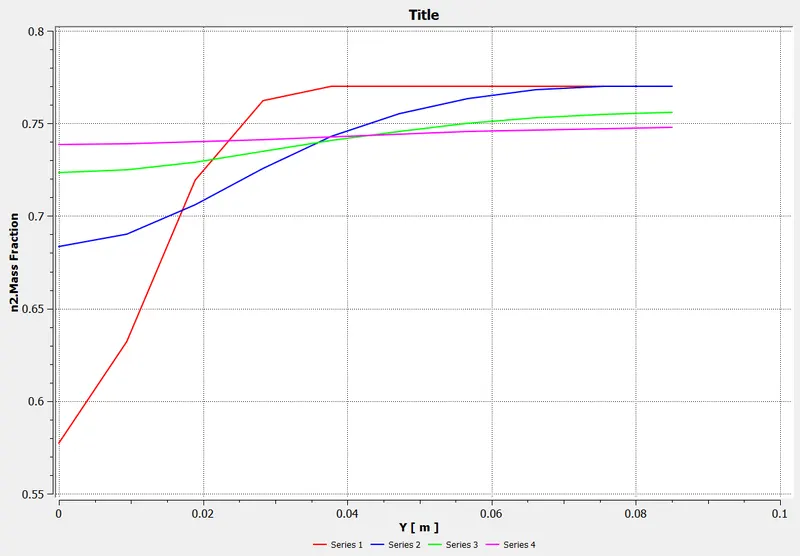
N2 Mass Fraction :-
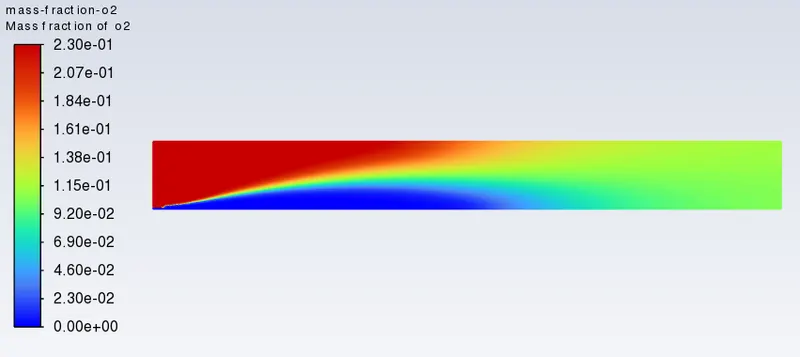
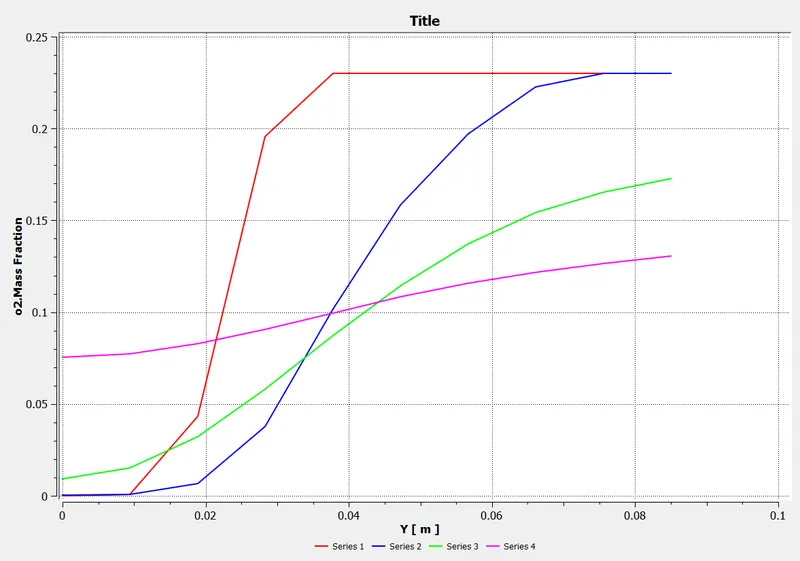
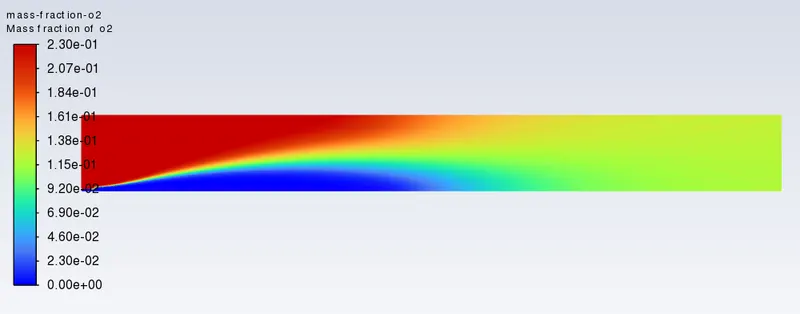
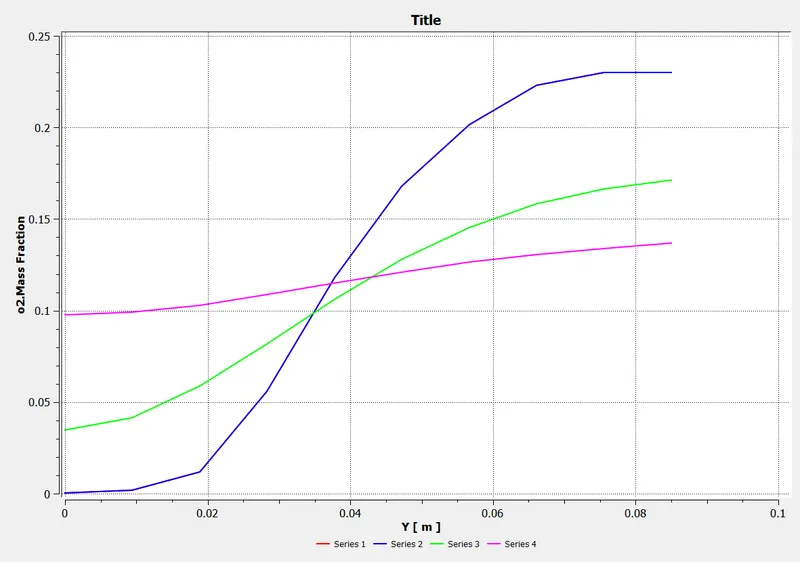
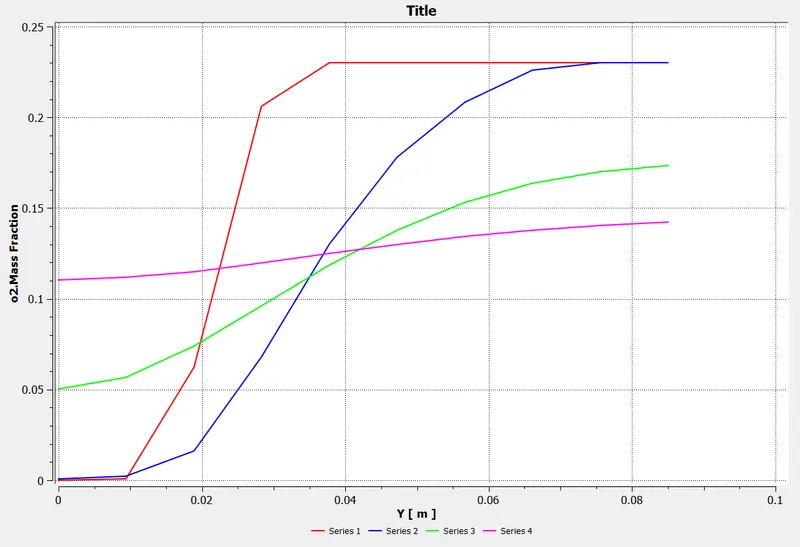
O2 Mass Fraction :-
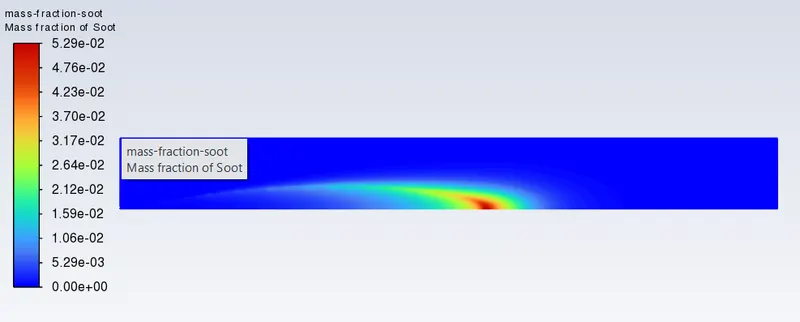
SOOT Mass Fraction :-
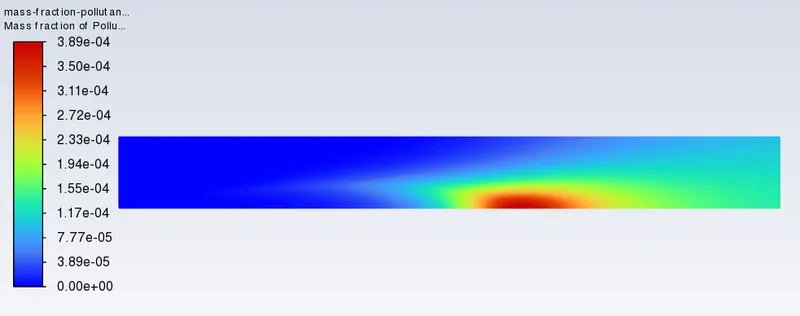
NOX Mass Fraction :-
Observations from part 1 simulation
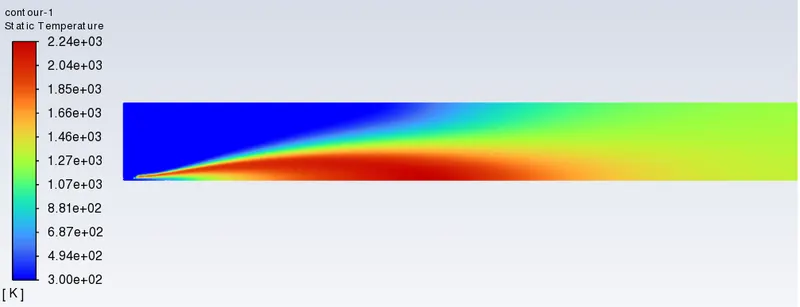
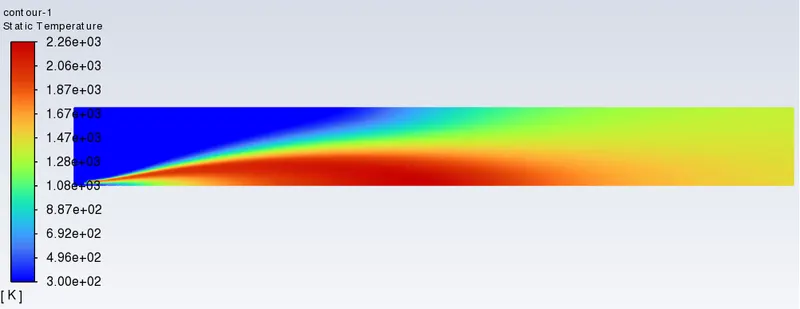
- In the temperature contour, it can be seen that the highest temperature is observed ahead of the inlet of combustor where the mixing of fuel-air mixtures takes place.
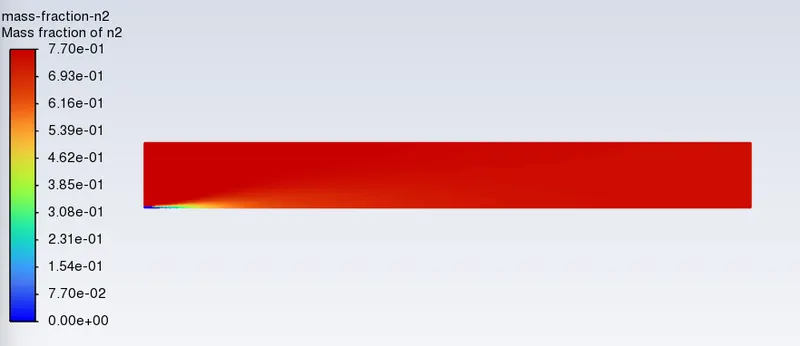
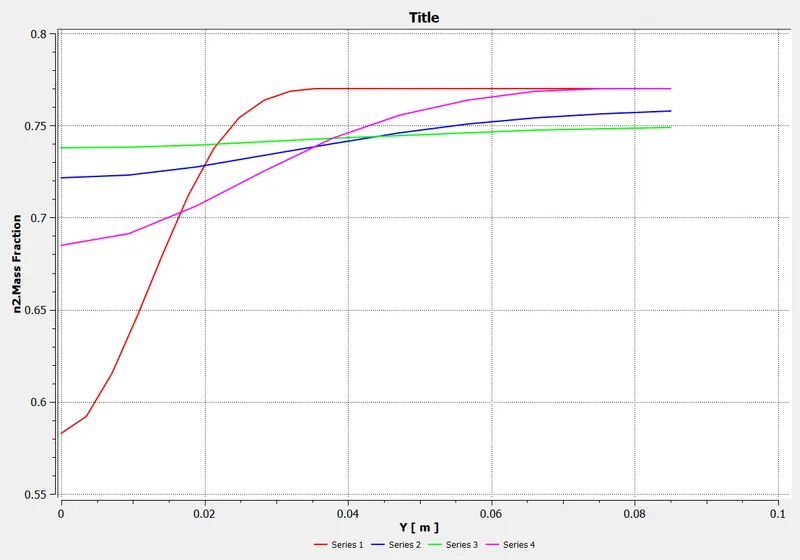
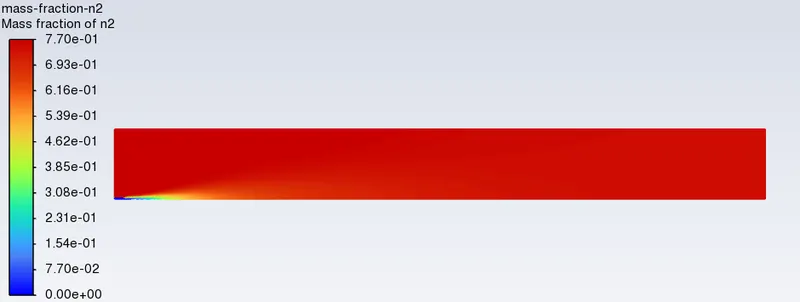
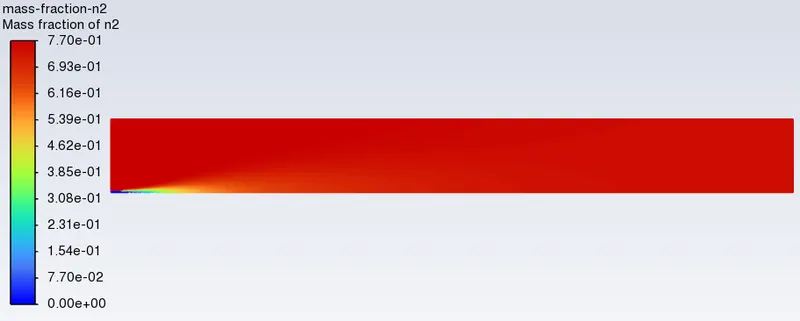
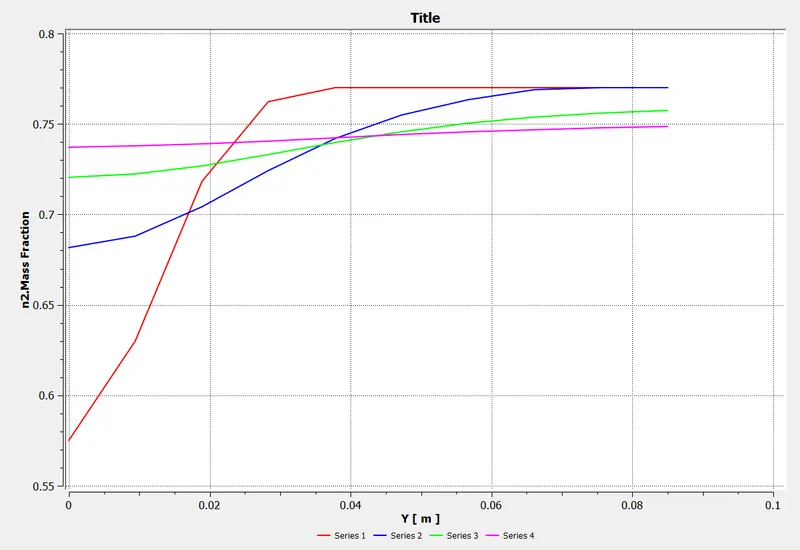
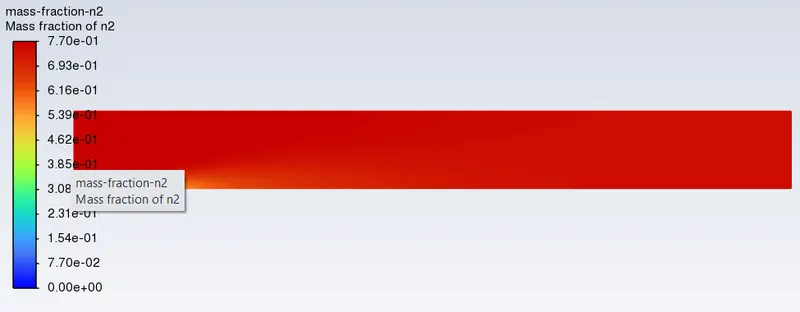
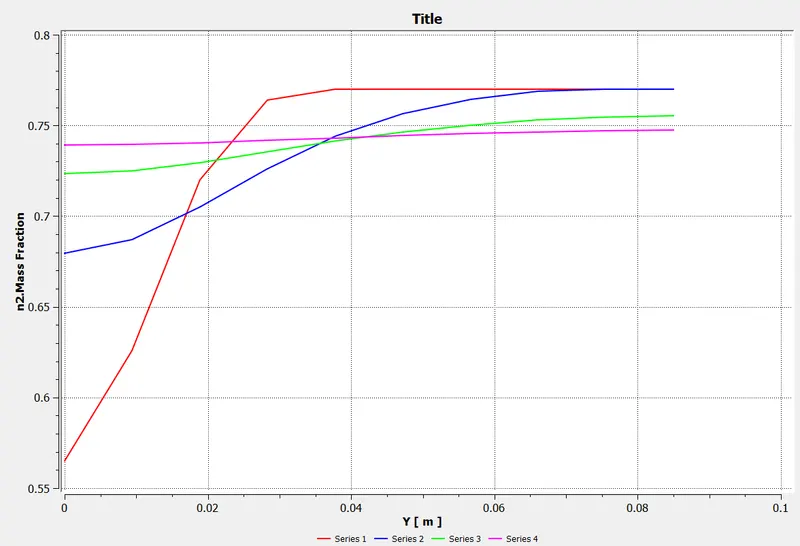
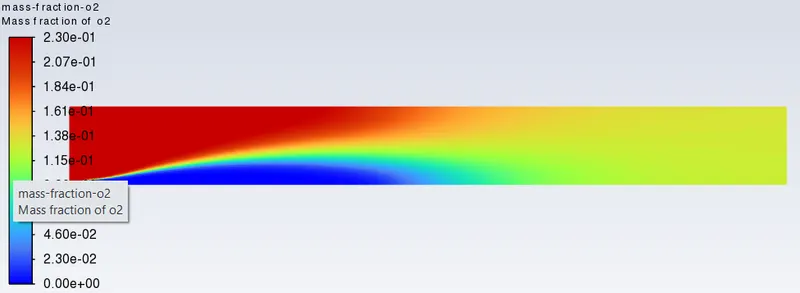
- From the N2 mass fraction contour, it can be seen that the N2 is almost distributed uniformly across the combustor.
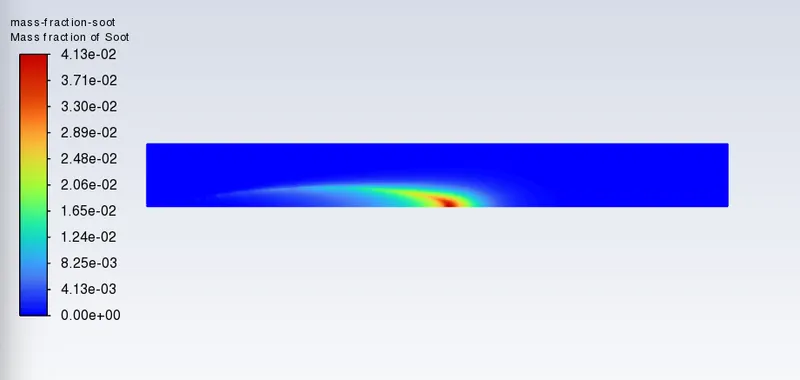
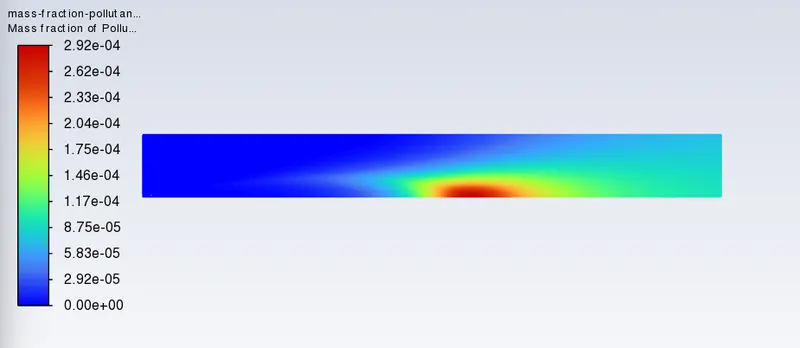
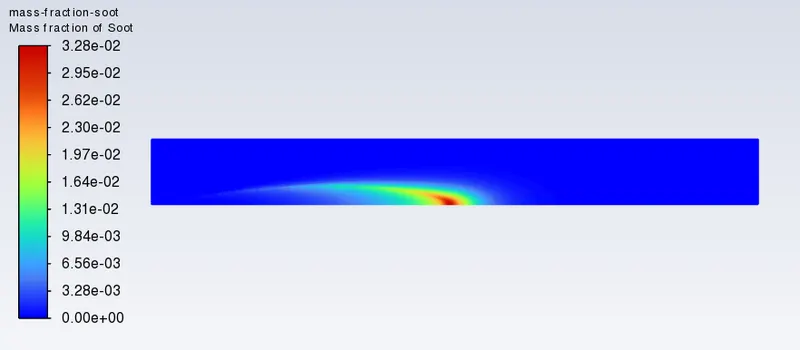
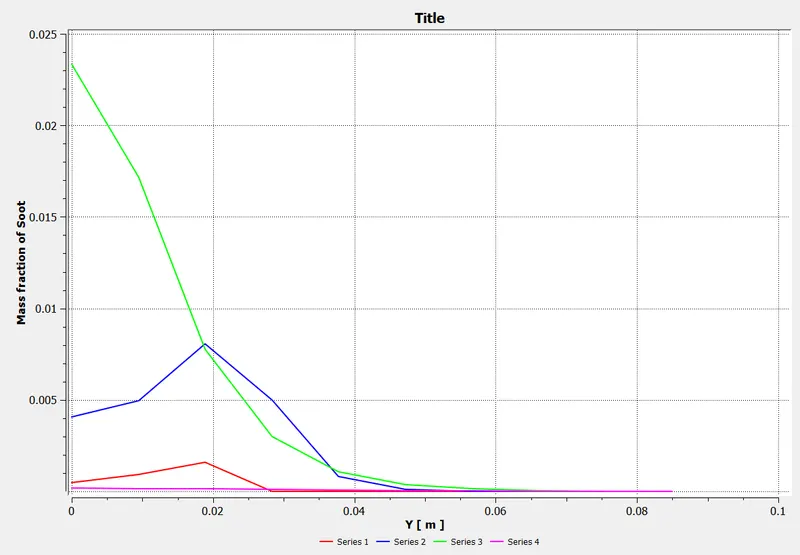
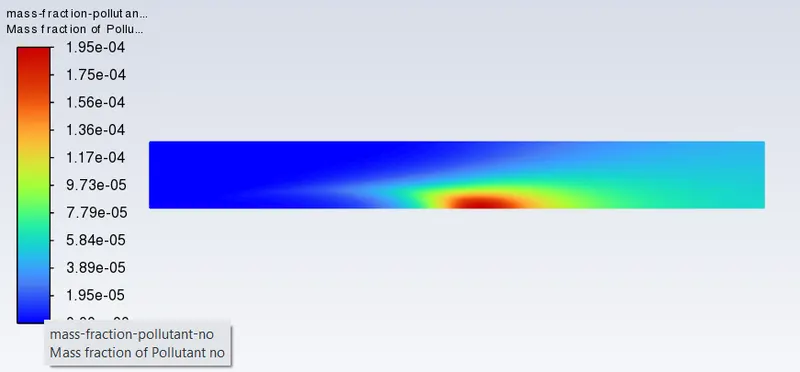
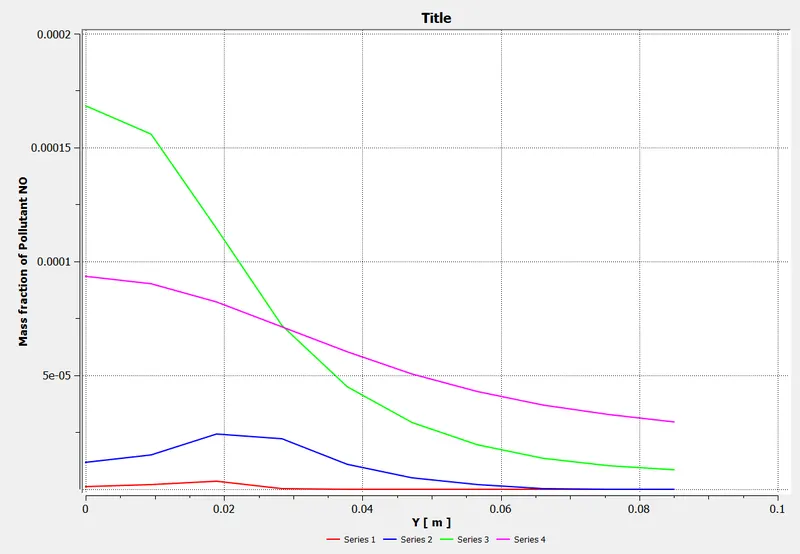
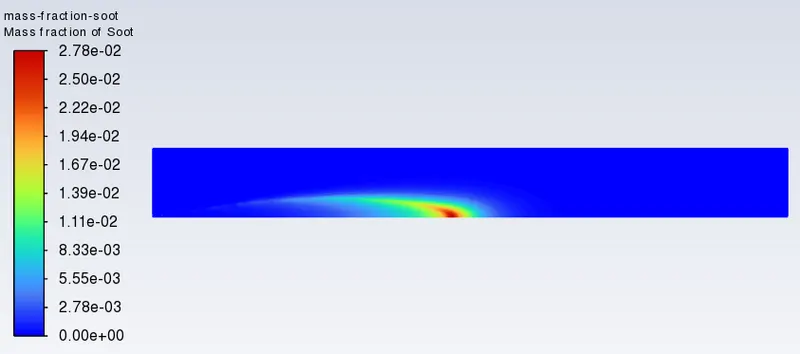
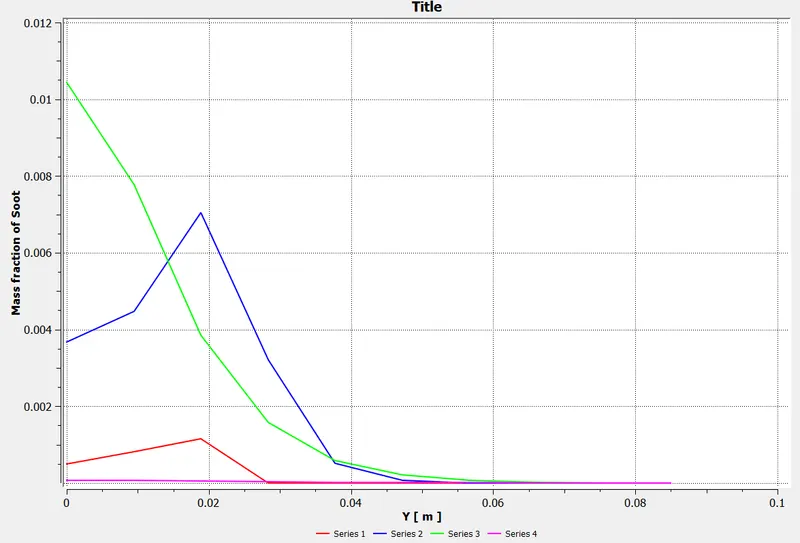
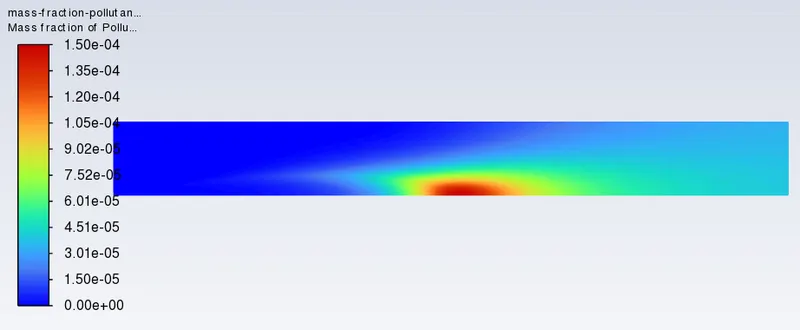
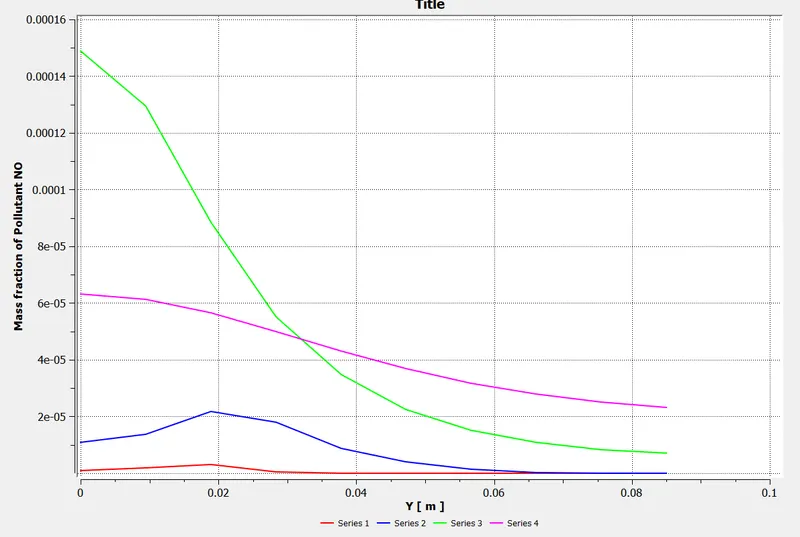
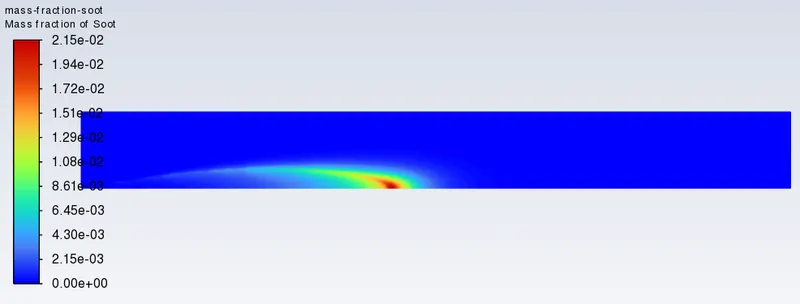
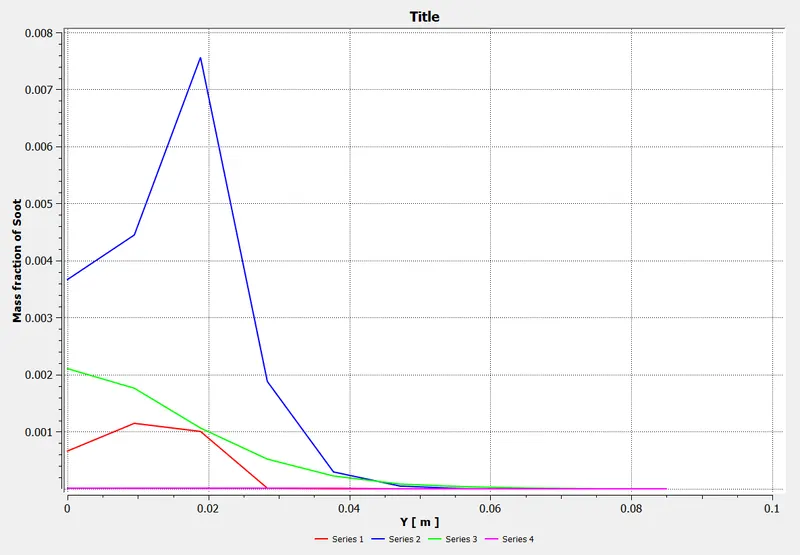
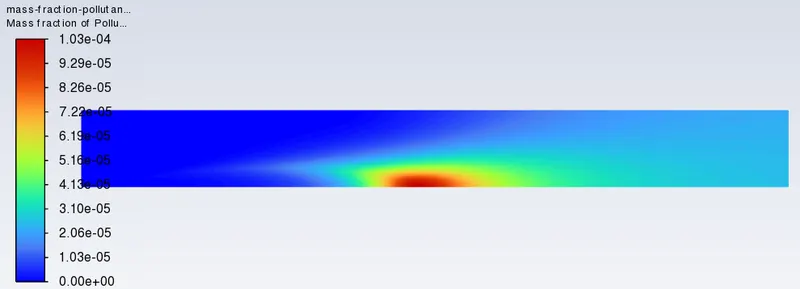
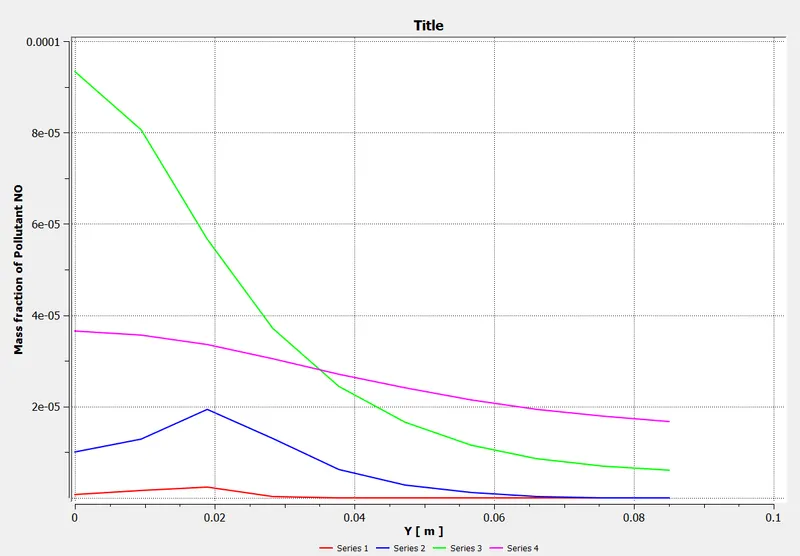
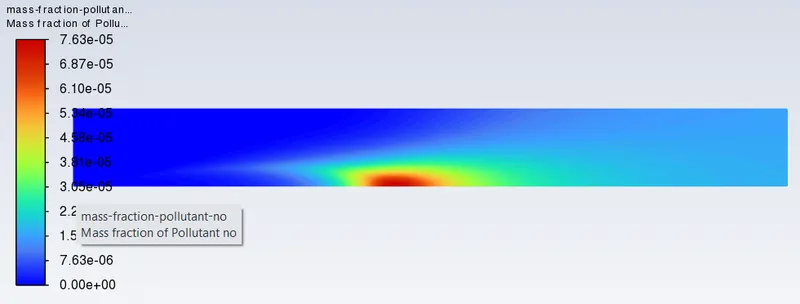
- The pollutant like Nox and soot mass fraction is more near the outlet of the combustor.
Part 2
In Addition of water into the methane by 5% to 30%, we are use species and reduce methane(CH4) by 5%,add 5% water (H2O).
After running simulation got results again we have to reduce CH4 by 10% and add water by 10%,this process will continue till 30% of adding water. All the boundry conditions remain same as pevious case.
Results :-
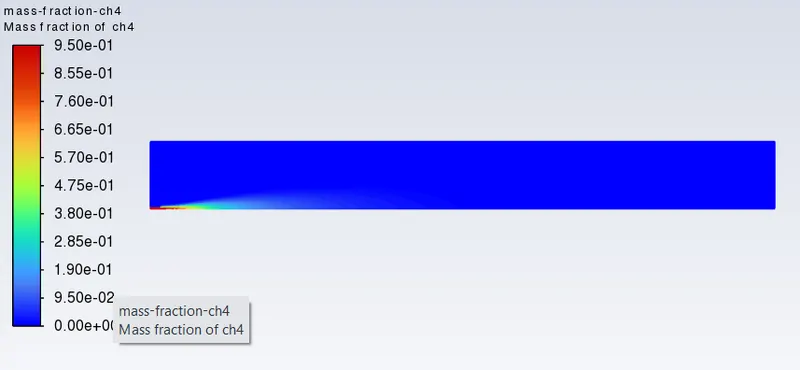
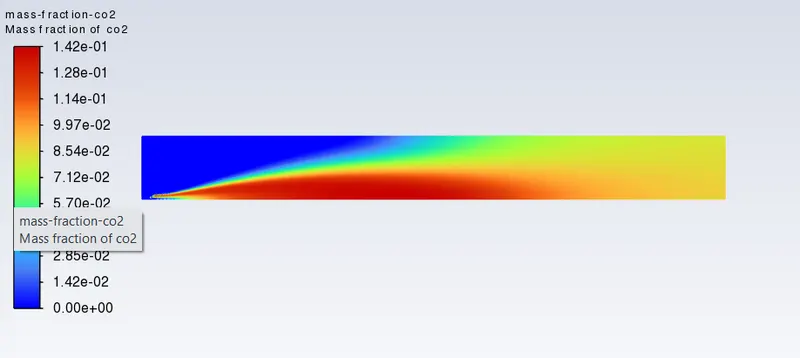
When add 5 % water in methane (use species ch4 =0.95,h2o = 0.05)
Residuals :-
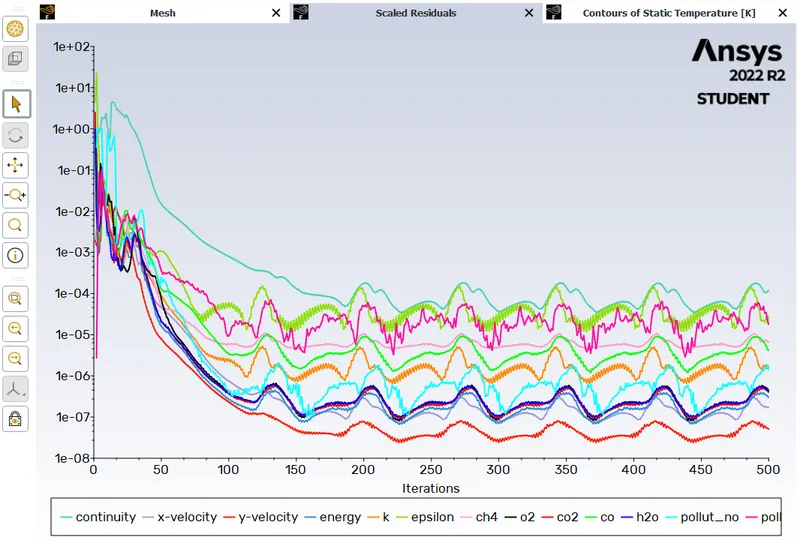
Temperature Contour :-
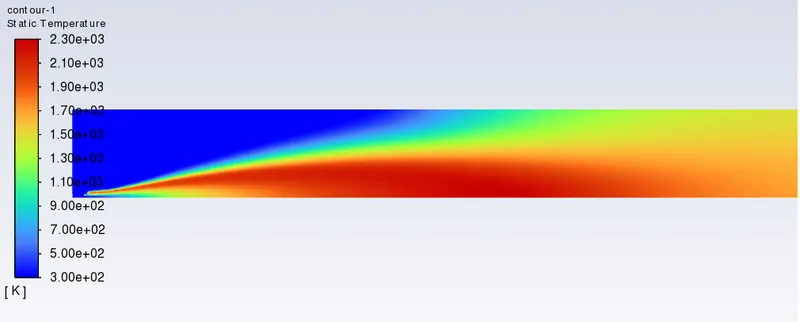
CH4 Mass Fraction :-
CO2 Mass Fraction :-
H2O Mass Fraction :-
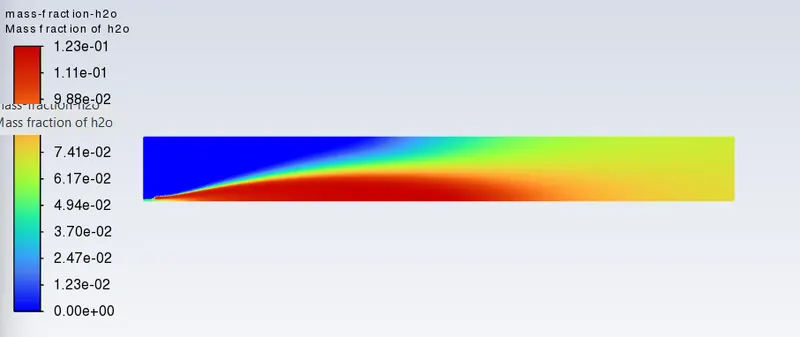
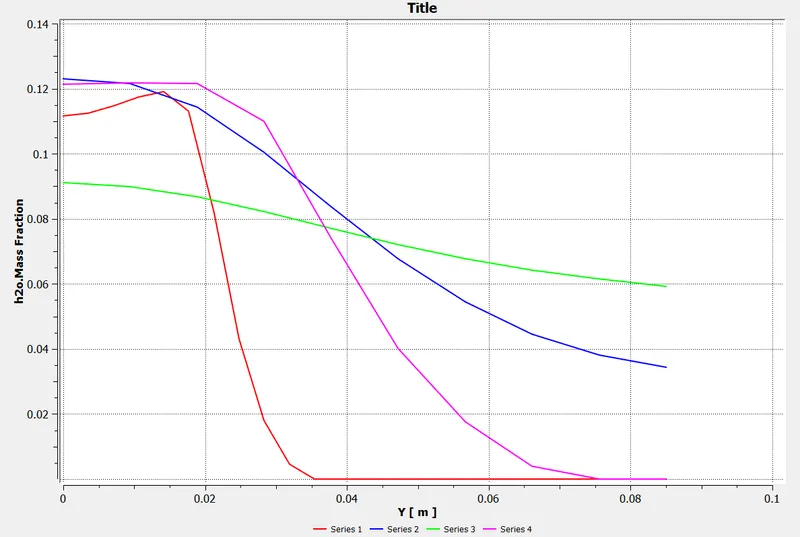
N2 Mass Fraction :-
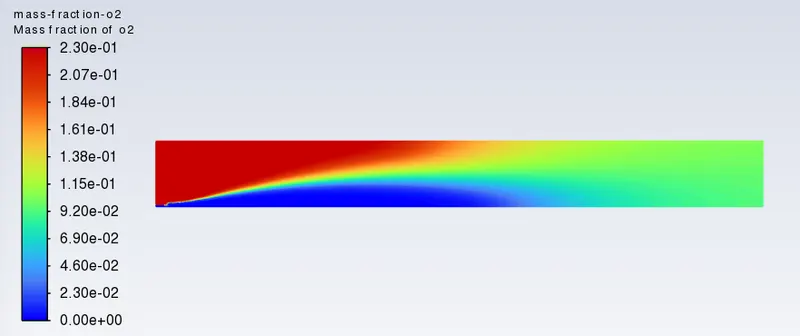
O2 Mass Fraction :-
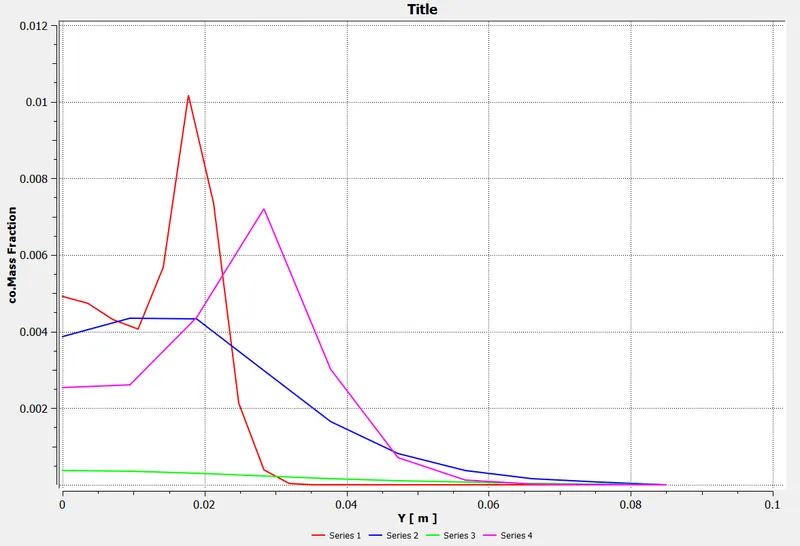
SOOT Mass Fraction :-
Pollutant NOx Mass Fraction :
When add 10% water in methane (use species ch4 =0.90,h2o = 0.10)
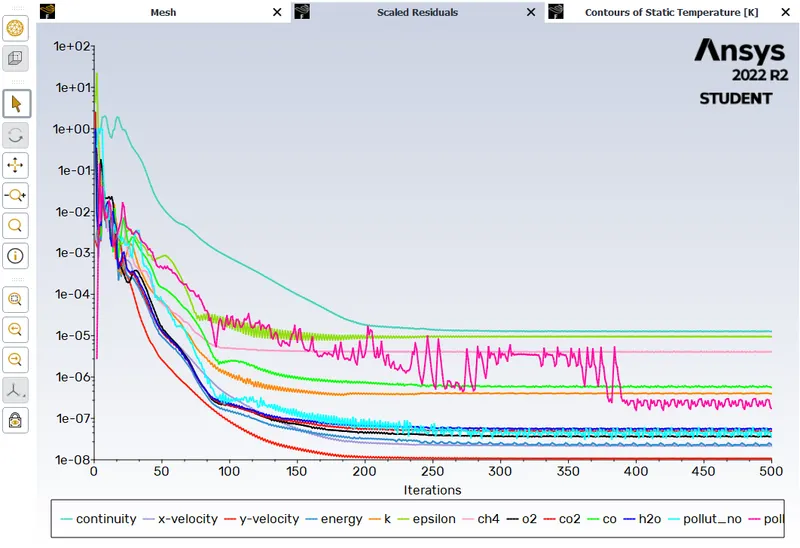
Residuals :-
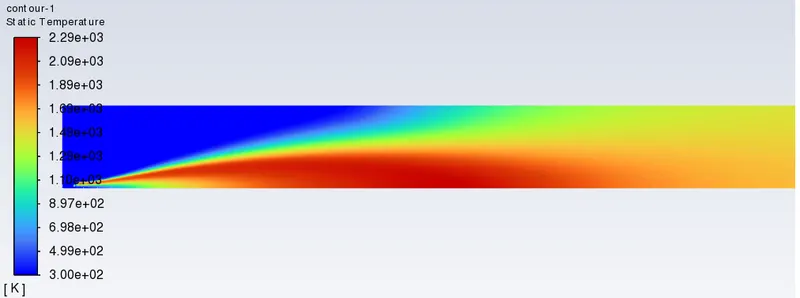
Temperature Contour :-
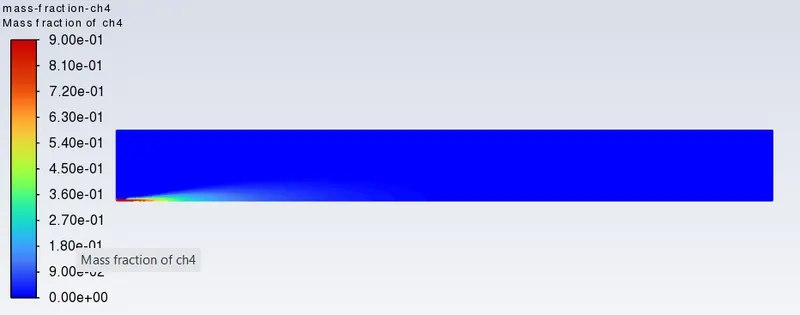
CH4 Mass Fraction :-
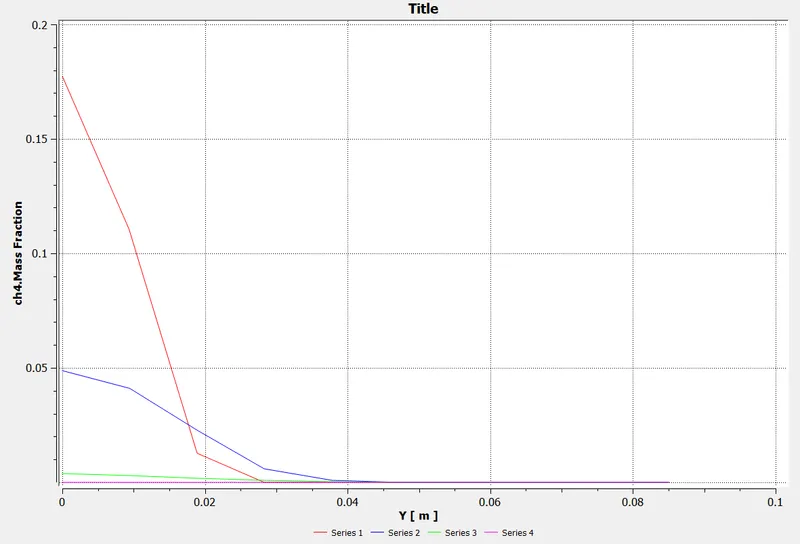
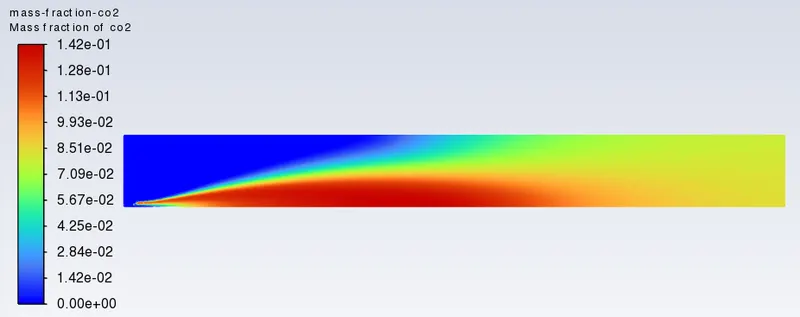
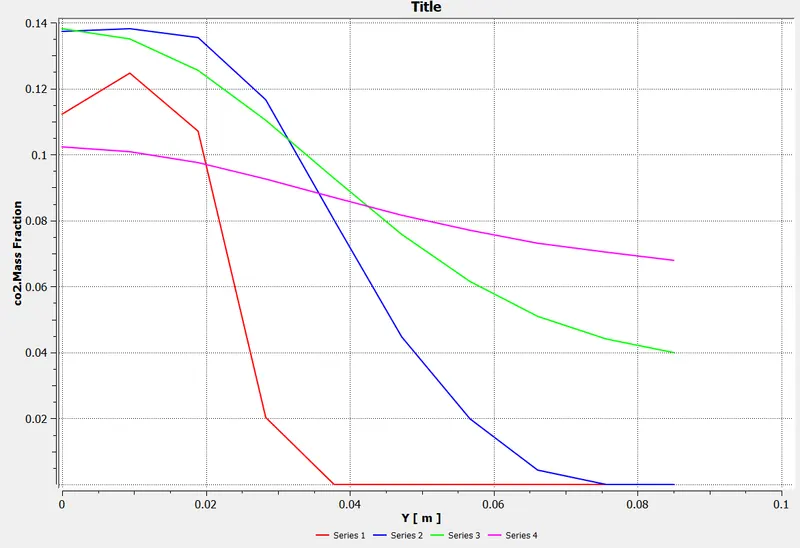
CO2 Mass Fraction :-
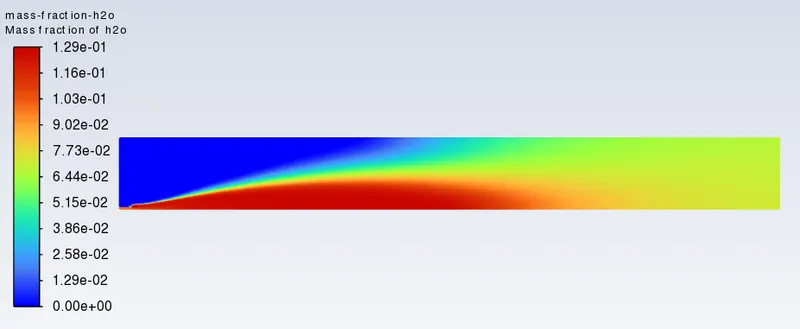
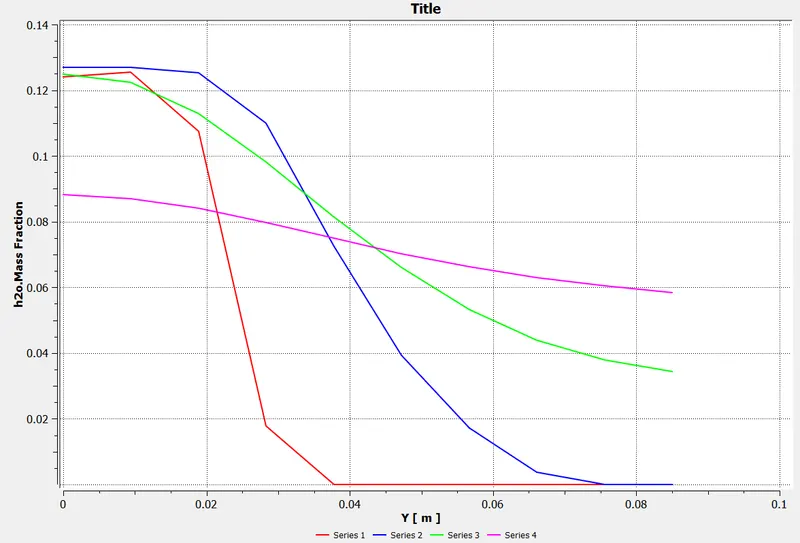
H2O Mass Fraction :-
N2 Mass Fraction :-
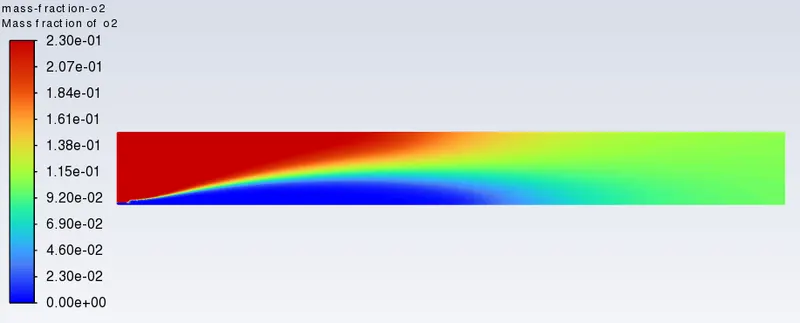
O2 Mass Fraction :-
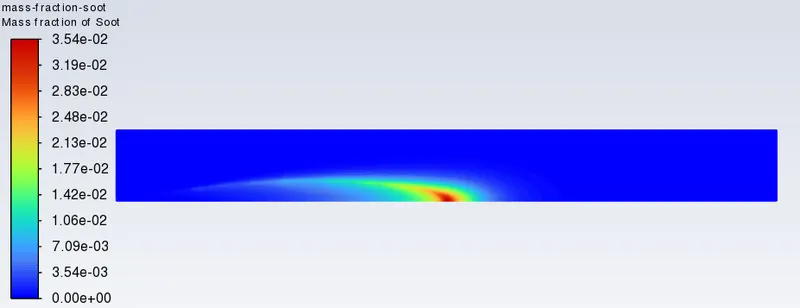
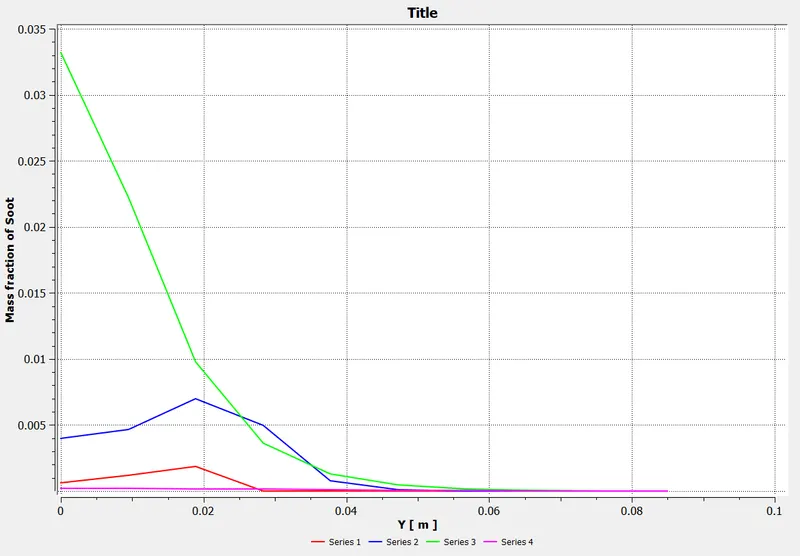
SOOT Mass Fraction :-
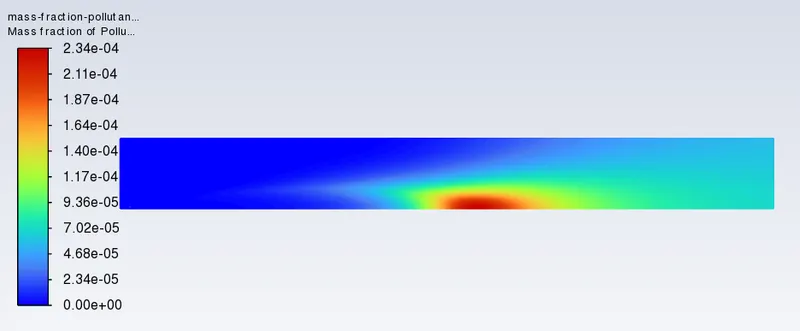
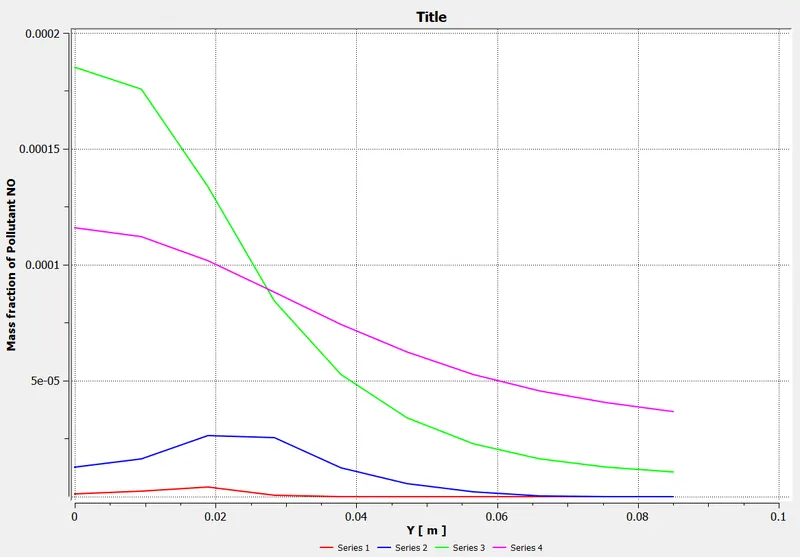
Pollutant NOx Mass Fraction :-
When add 15% water in methane (use species ch4 =0.85,h2o = 0.15)
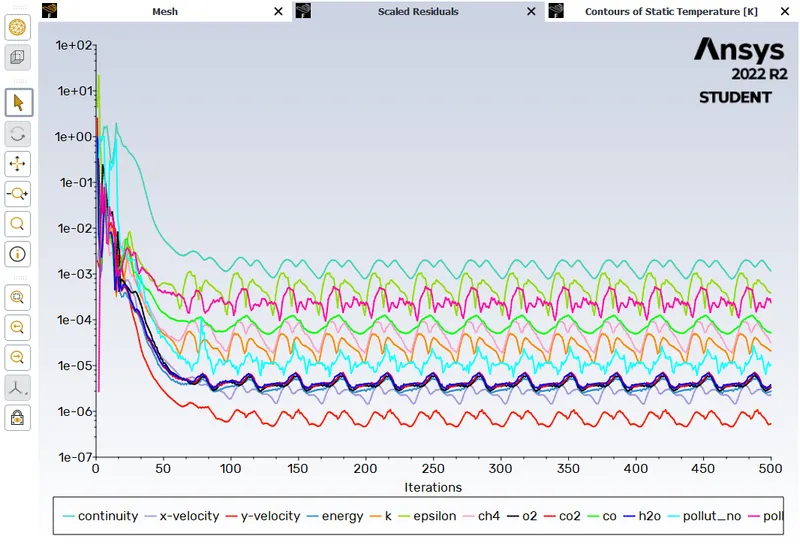
Residuals :-
Temperature Contour :-
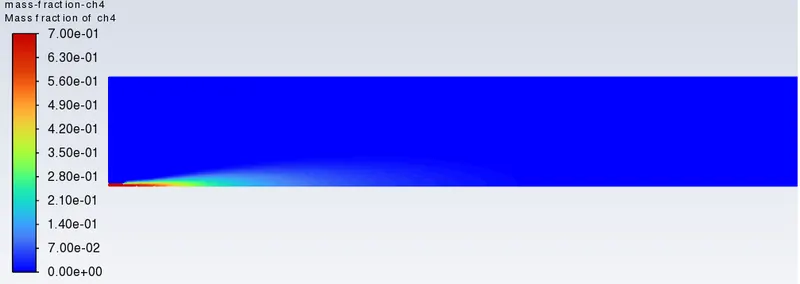
CH4 Mass Fraction :-
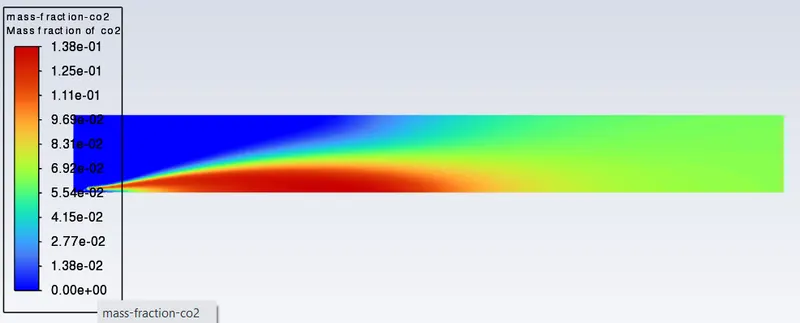
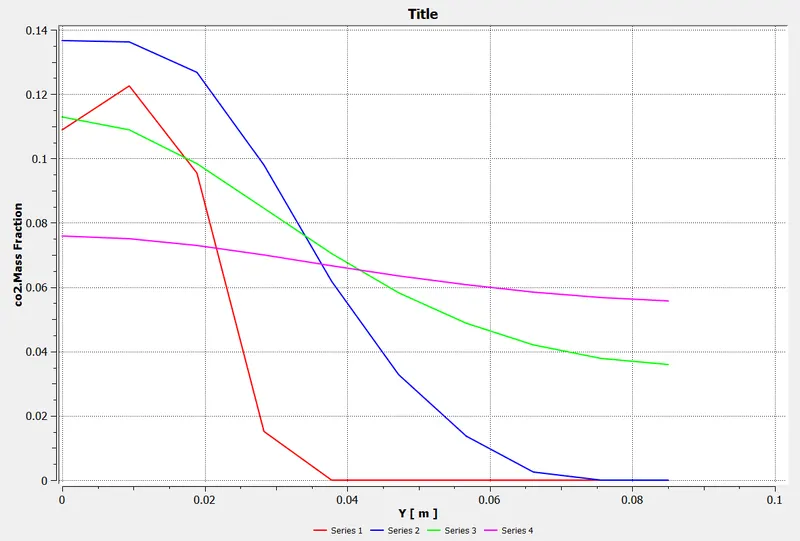
CO2 Mass Fraction :-
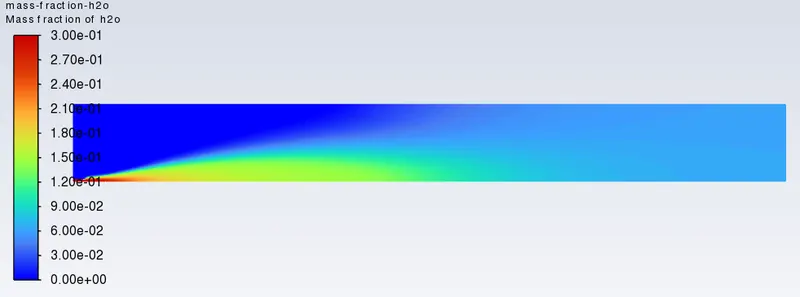
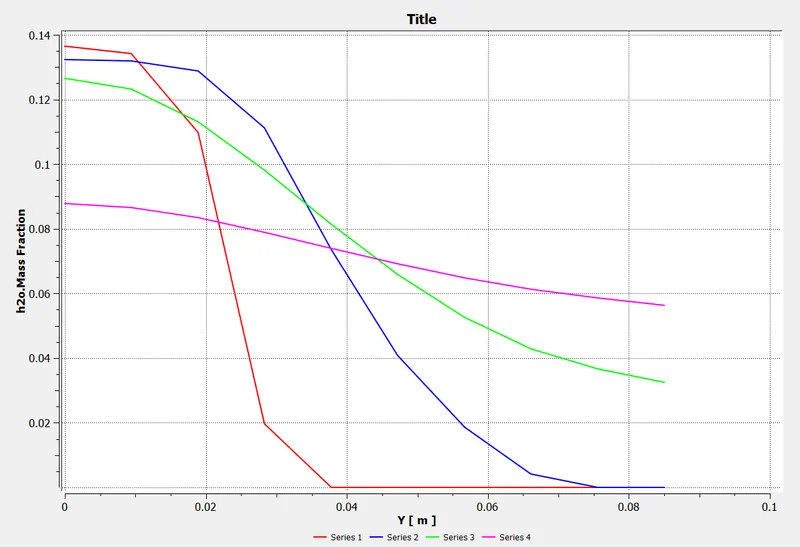
H2O Mass Fraction :-
N2 Mass Fraction :-
O2 Mass Fraction :-
SOOT Mass Fraction :-
Pollutant NOx Mass Fraction :-
When add 20% water in methane (use species ch4 =0.80,h2o = 0.20)
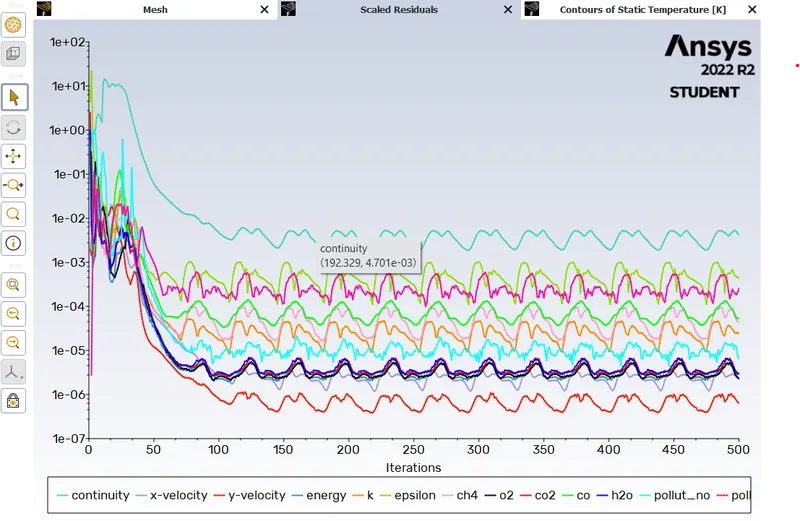
Residuals :-
Temperature Contour :-
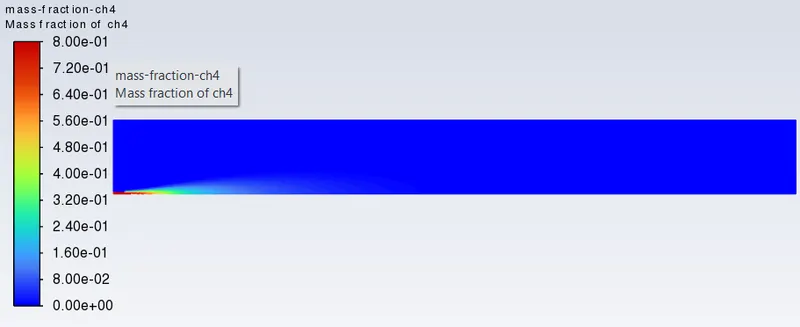
CH4 Mass fraction :-
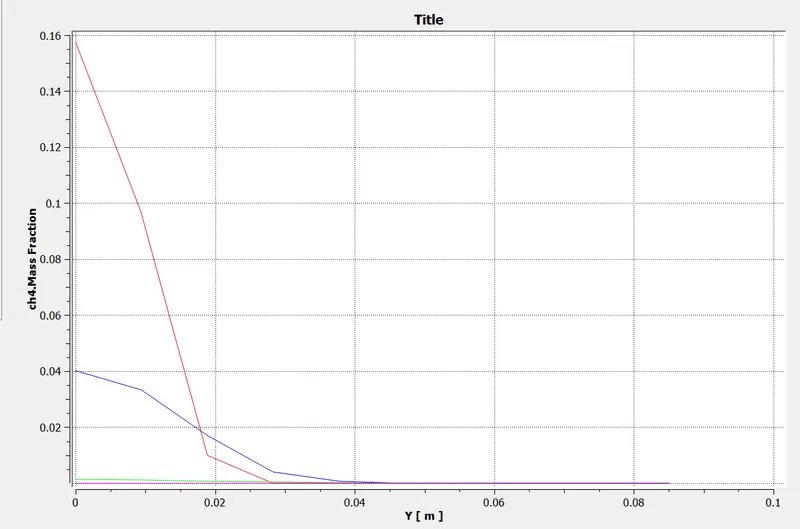
CO2 Mass fraction :-
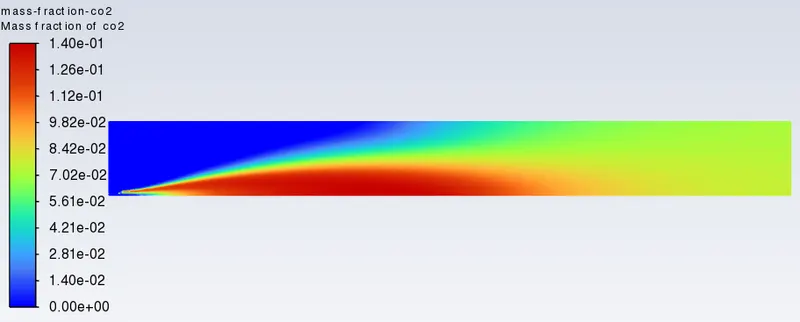
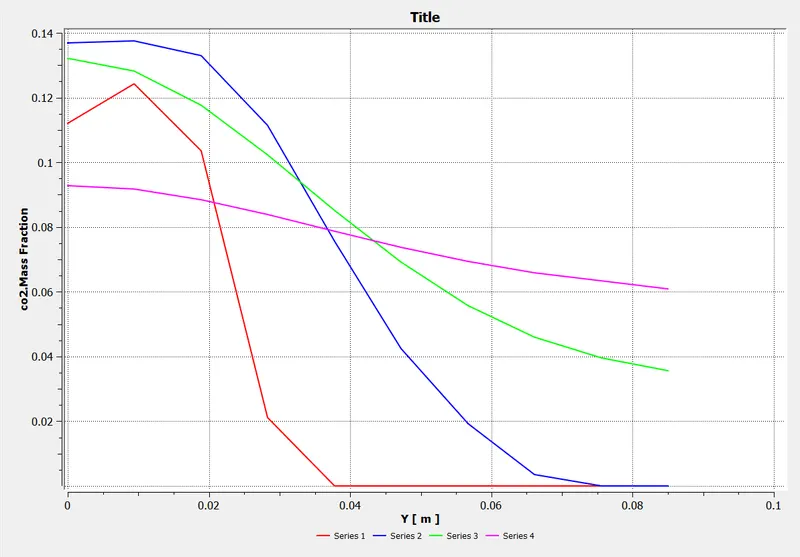
H2O Mass fraction :-
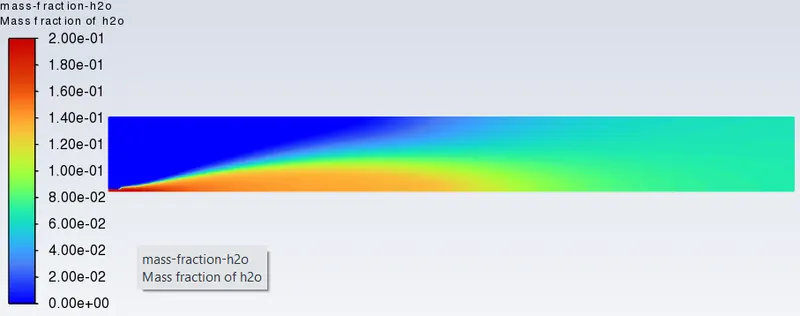
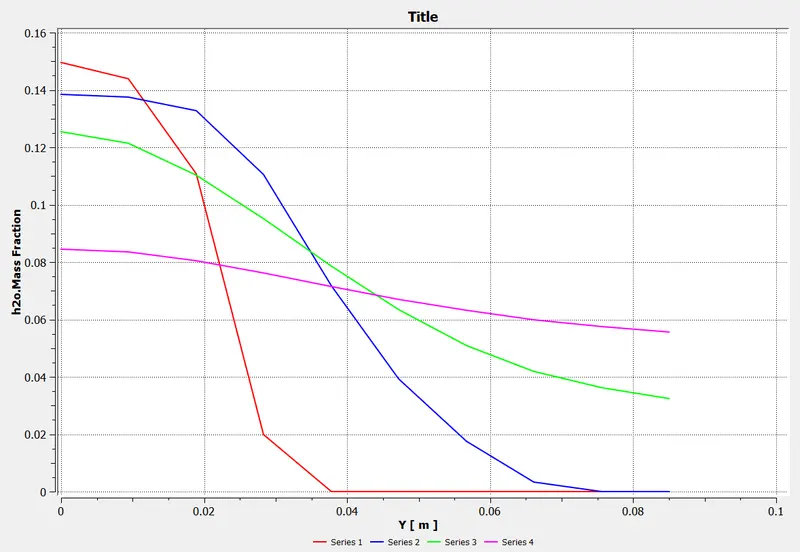
N2 Mass fraction :-
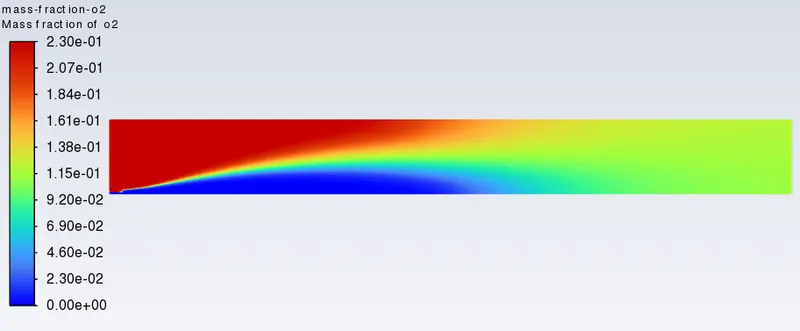
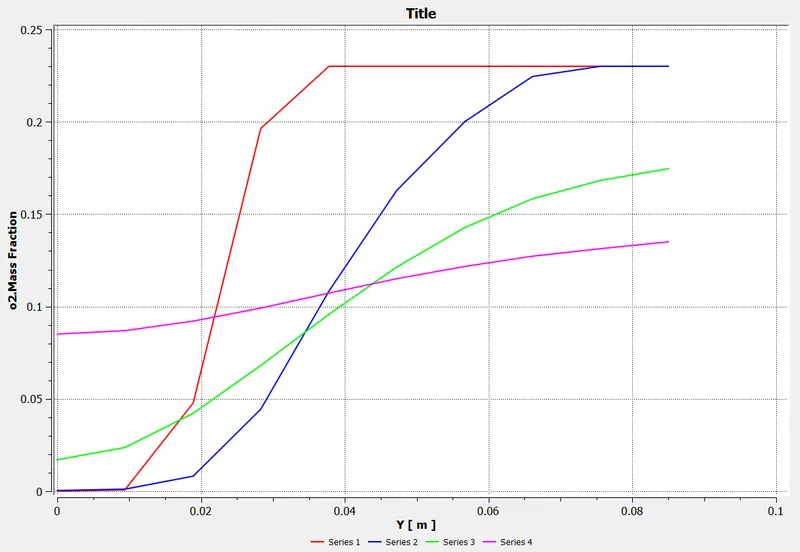
O2 Mass fraction :-
SOOT Mass fraction :-
Pollutant NOx Mass fraction :-
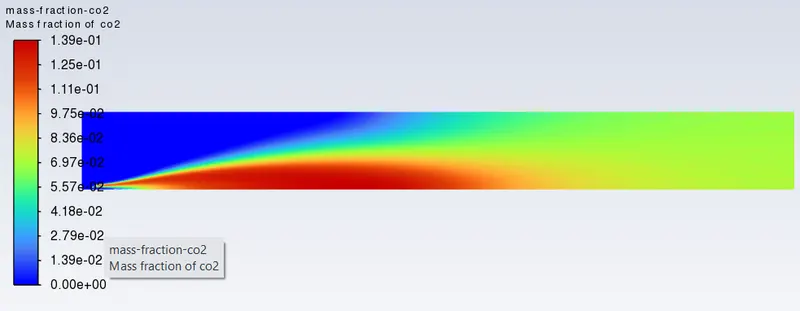
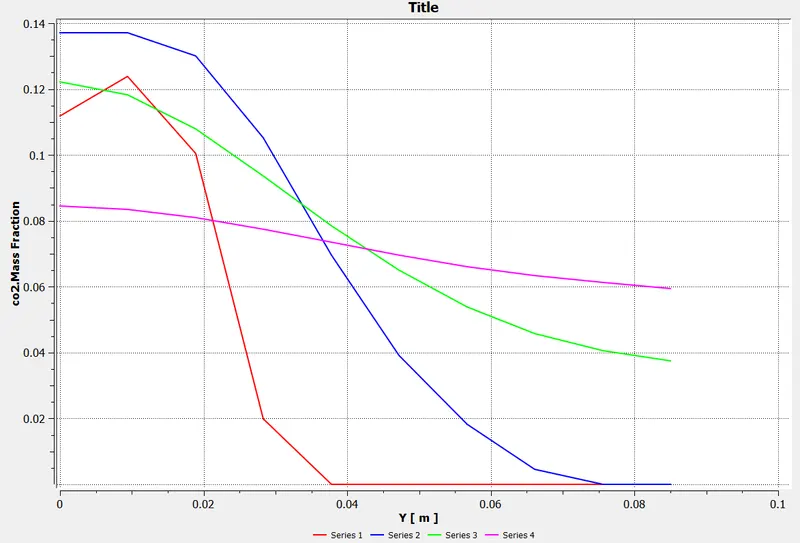
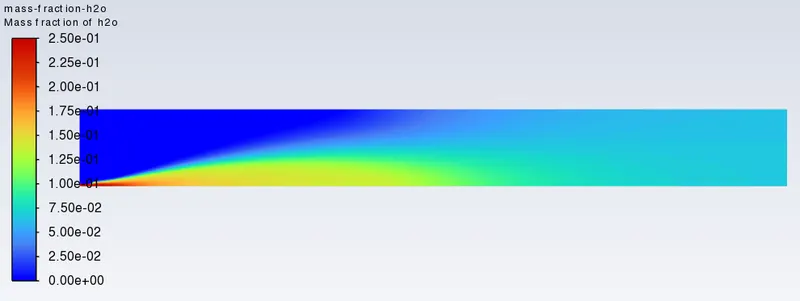
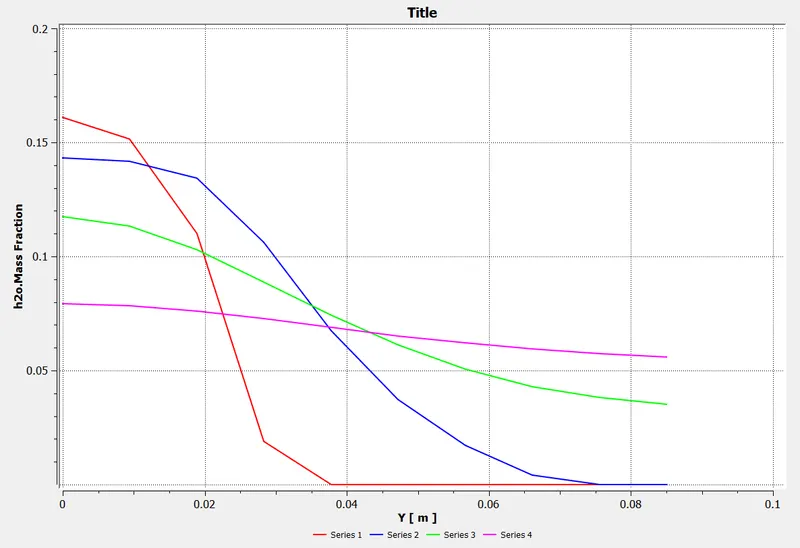
When add 25% water in methane (use species ch4 =0.85,h2o = 0.25)
Residuals :-
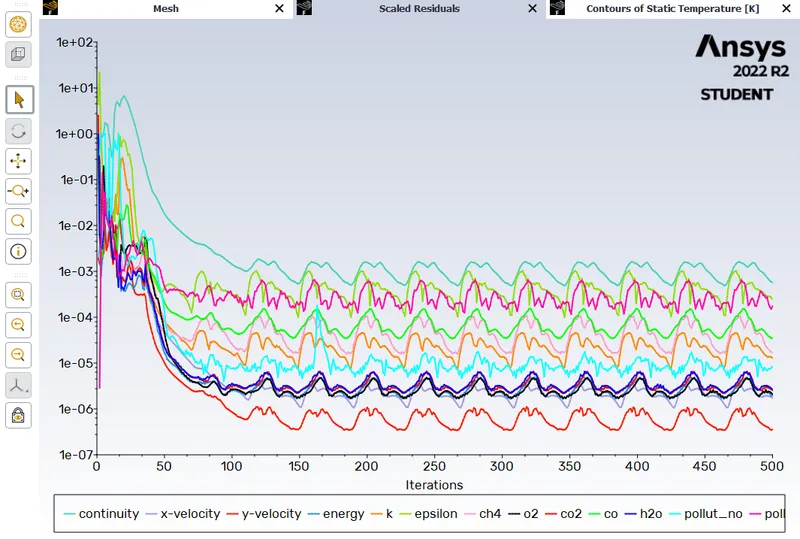
Temperature Contour :-
CH4 Mass fraction :-
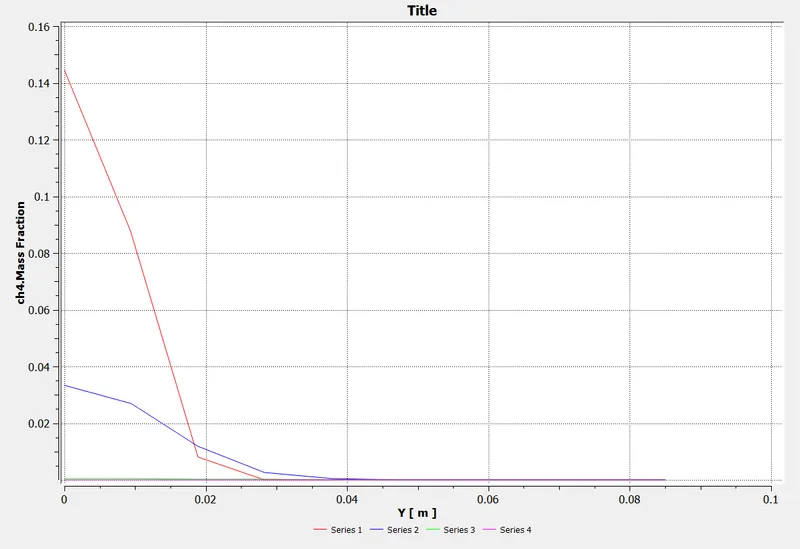
CO2 Mass fraction :-
H2O Mass fraction :-
N2 Mass fraction :-
O2 Mass fraction :-
SOOT Mass fraction :-
Pollutant NOx Mass fraction :-
When add 30% water in methane (use species ch4 =0.70,h2o = 0.30)
Residuals :-
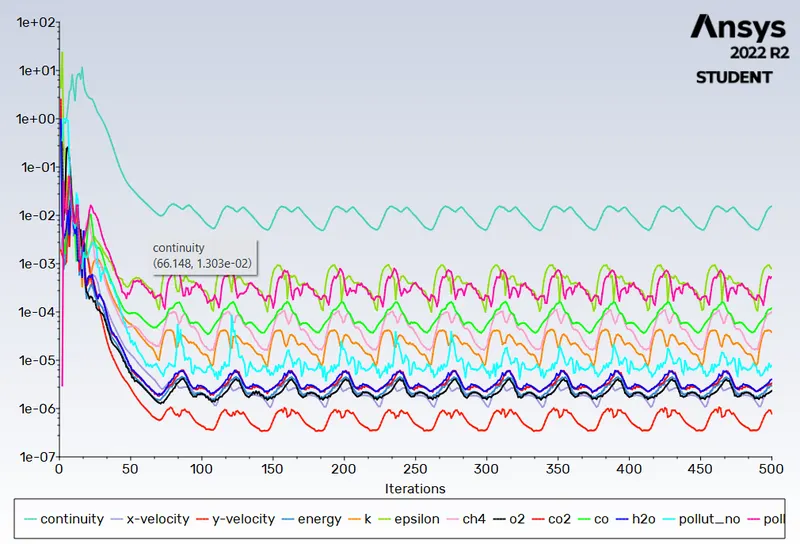
Temperature Contour :-
CH4 Mass fraction :-
CO2 Mass fraction :-
H2O Mass fraction :-
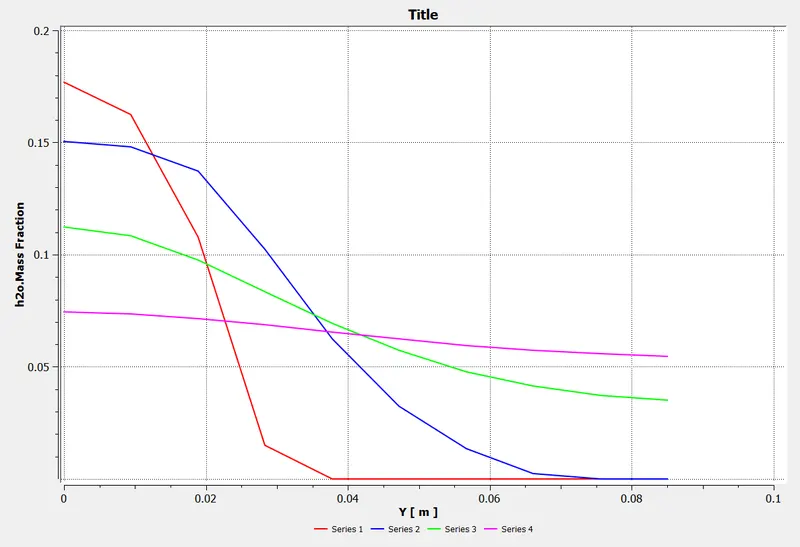
N2 Mass fraction :-
O2 Mass fraction :-
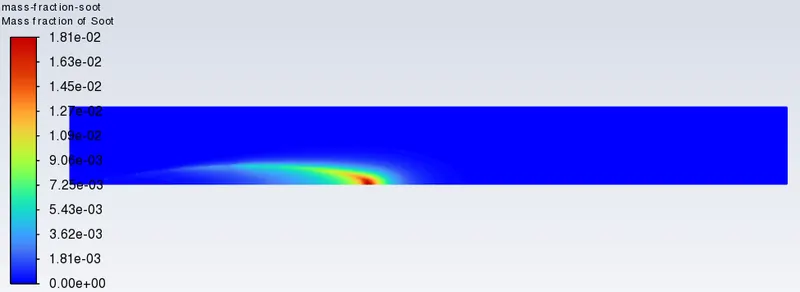
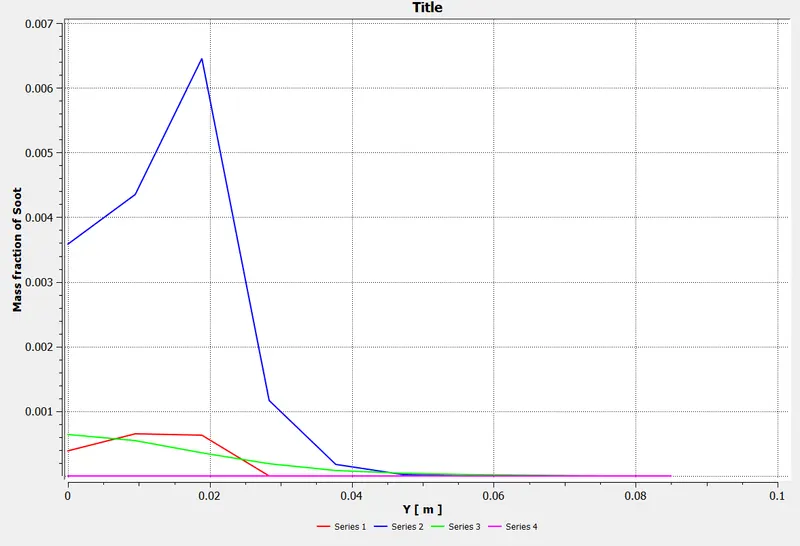
SOOT Mass fraction :-
Pollutant NOx Mass fraction :-
Observation from part 2 simulation
- The temperature drops as the water content is increased from 5% to 30% in the fuel.
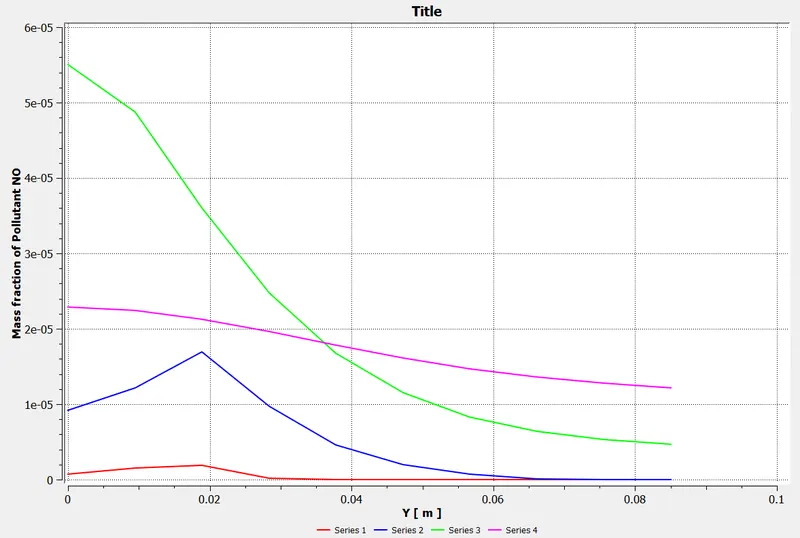
- The mass fraction of pollutants like NOx and soot decreases as the water content in the fuel is increased.
Conclusion
In this project, the mass fraction of pollutants from NOx emission and soot formation is predicted with the help of physical and mathematical models incorparated in the CFD software ANSYS fluent. The results obtained from the simulation shows that the addition of water into the fuel not only decreases the temperature of the combustor but also helps in reducing the mass fraction of pollutants like NOx and soot.