Week 10 - Simulating Combustion of Natural Gas.
Aim : Simulating the combustion of Non-premixed natural gas and analyzing the species reaction using the line probe in CFD-Post.
Objective : Part I
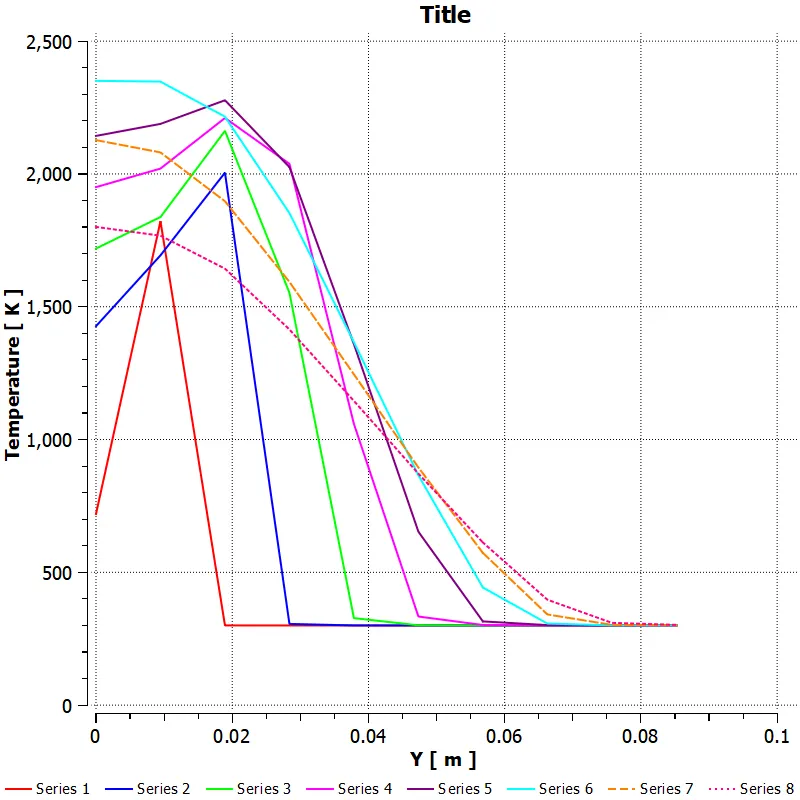
Perform a combustion simulation on the combustor model and plot the variation of the mass fraction of the different species’ in the simulation using line probes at different locations of the combustor as shown in Fig. You need to plot for CO2, H2O, CH4, N2, O2, NOx emissions & Soot formation.
Part II
To add the water content in the fuel from 5% to 30% by mole and observe the effect of it on the results.
Thoery : 1. Combustion :
Combustion is defined as chemical reaction in which a hydrocarbon reacts with an oxidant to form products, accompanied by the release of energy in the form of heat.In general terms, combustion is one of the most important of chemical reactions and may be considered a culminating step in the oxidation of certain kinds of substances.
2. Combustion Model for CFD Analysis :
CFD modelling of combustion calls upon the proper selection and implementation of model suitable to represent the physical and chemical phenomena associated with any combustion process.The model should be able to solve the transport equation for fluid flow and heat transfer as well as additional equation of combustion chemsistry and chemical kinetics incorporated into that as per the simulating desired enviorment.
3.Eddy dissipation model:
The eddy dissipation model, based on the work of Magnussen and Hjertager, is a turbulent-chemistry reaction model. Most fuels are fast burning and the overall rate of reaction is controlled by turbulence mixing. In the non-premixed flames, turbulence slowly mixes the fuel and oxidizer into the reaction zones where they burn quickly. In premixed flames, the turbulence slowly mixes cold reactants and hot products into the reaction zones where the reaction occurs rapidly. In such cases, the combustion is said to be mixing-limited, and the complex and often unknown chemical kinetics can be safely neglected. In this model, the chemical reaction is governed by large-eddy mixing time scale. Combustion initiates whenever there is turbulence present in the flow. It does not need an ignition source to initiate the combustion. This type of model is valid for the non-premixed combustion, but for the premixed flames the reactant is assumed to burn at the moment it enters the computation model, which is a shortcoming of this model as in practice the reactant needs some time to get to the ignition temperature to initiate the combustion.
4.Nitrogen Oxide (NOx) emissions:
Nitrogen dioxide is an irritant gas, which at high concentrations causes inflammation of the airways. When nitrogen is released during fuel combustion it combines with oxygen atoms to create nitric oxide (NO). This further combines with oxygen to create nitrogen dioxide (NO2). Nitric oxide is not considered to be hazardous to health at typical ambient concentrations, but nitrogen dioxide can be. Nitrogen dioxide and nitric oxide are referred to together as oxides of nitrogen (NOx).
NOx gases react to form smog and acid rain as well as being central to the formation of fine particles (PM) and ground-level ozone, both of which are associated with adverse health effects.
5. Soot formations:
Soot forms when hydrocarbon fuels such as oil, natural gas, and wood are burned. Soot particles form when gaseous molecules are heated to high temperatures, and they don't easily turn back into gaseous molecules the way water droplets do when they are heated. Soot as an airborne contaminant in the environment has many different sources, all of which are results of some form of pyrolysis. They include soot from coal-burning, internal-combustion engines, power-plant boilers, hog-fuel boilers, ship boilers, central steam-heat boilers, waste incineration, local field burning, house fires, forest fires, fireplaces, and furnaces. These exterior sources also contribute to the indoor environment sources such as smoking of plant matter, cooking, oil lamps, candles, quartz/halogen bulbs with settled dust, fireplaces, exhaust emissions from vehicles, and defective furnaces.
Procedure : 1 Spaceclaim :-The geometry given to us is 3-D but it will be difficult to work on the 3d model so we will update the geometry in 2d model.
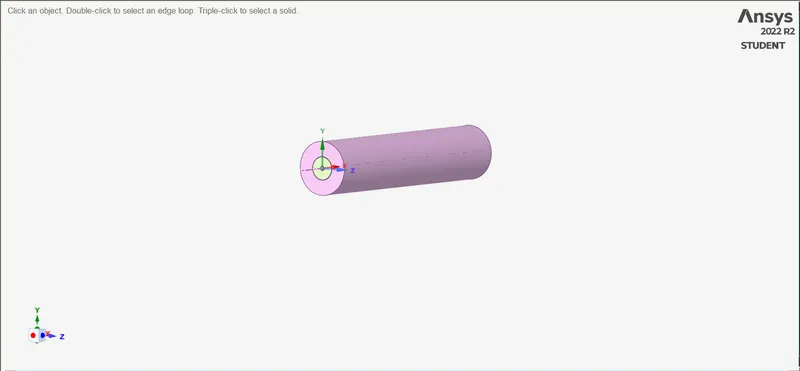
To convert the geometry to 2d we have to split the body first by using the Split Body option of the spaceclaim and splitting the body through XY plane (1 split).Then we will split the body through YZ plane (2 split).
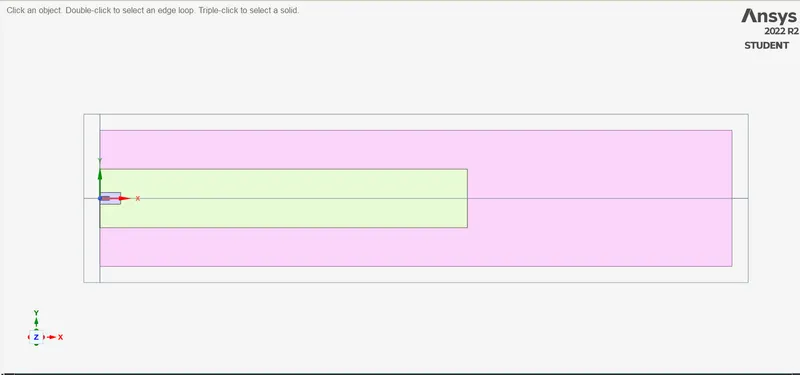
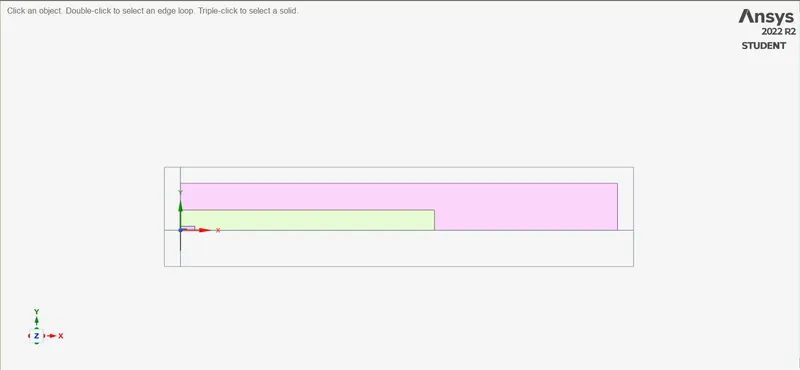
Copy all the faces appeared on the XY plane and paste it in the new design secttion of the spaceclaim.To avoid the different sections that appeared after splitting the body we have to use the Combine option in the prepare to that the air-inlet will become one single surface.To do that
- copy all the faces> click combine>OK
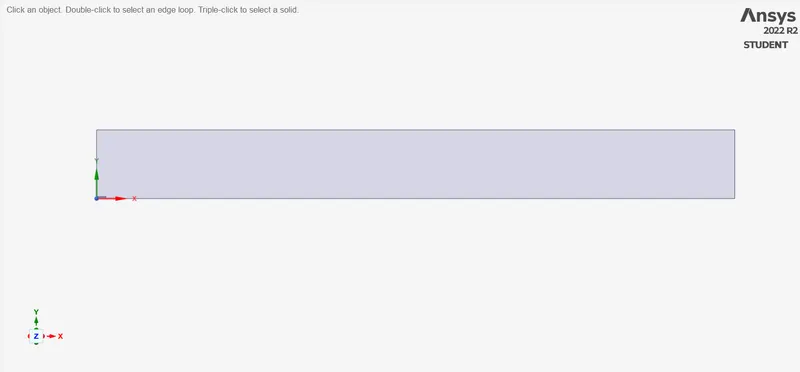
Now we will proceed with the Meshing.
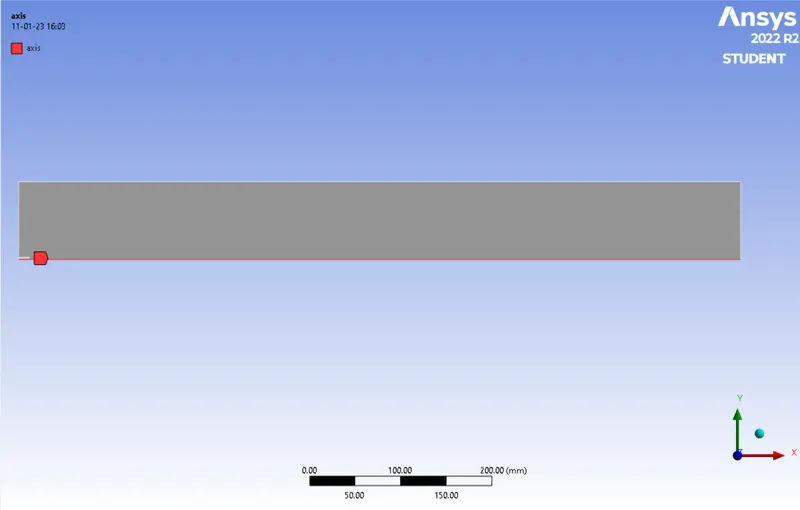
2. Meshing : Named Selection :-
- air inlet
- fuel inlet
- axis
- outlet
- wall
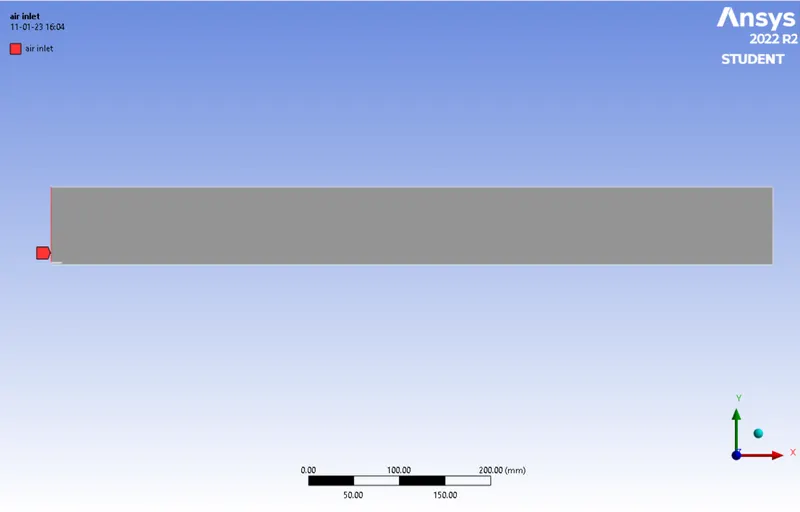
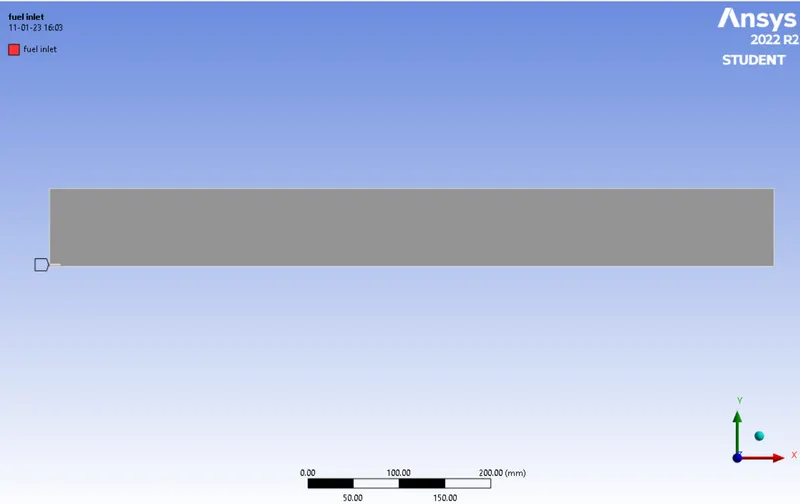
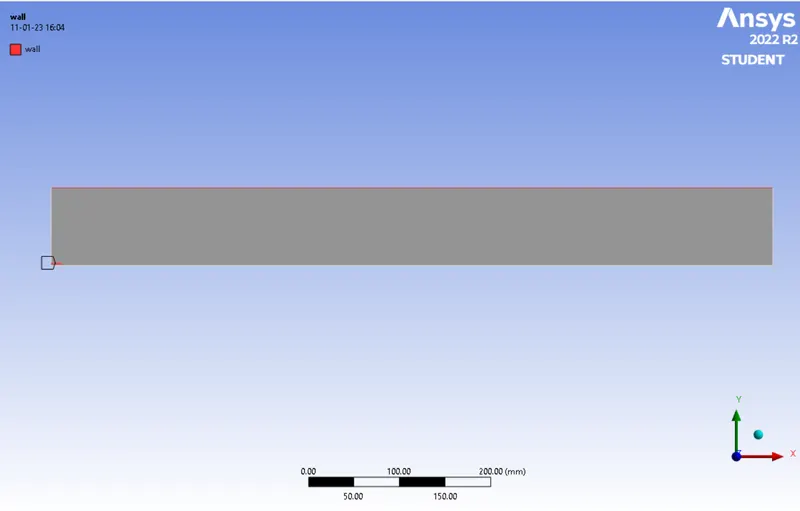
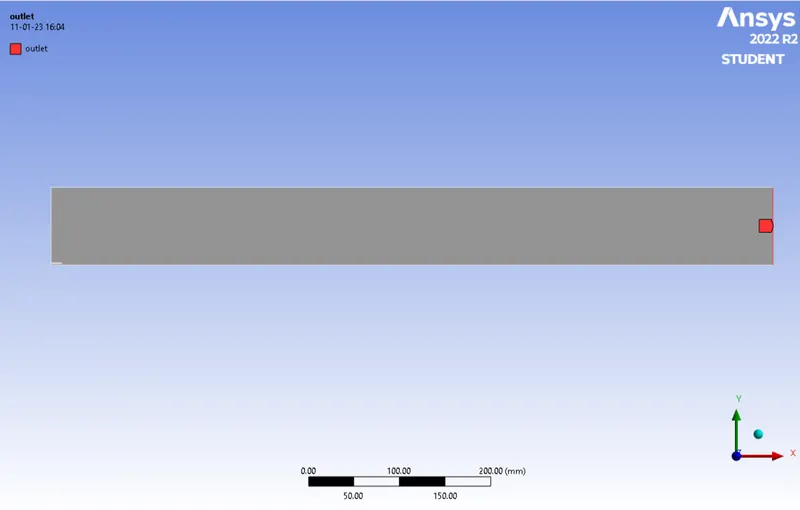
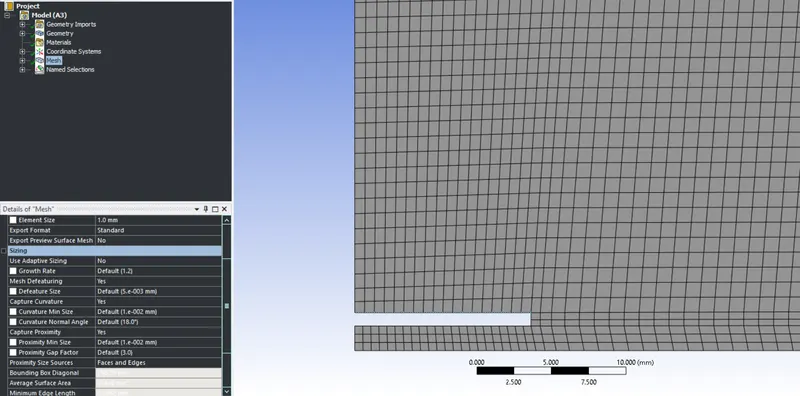
Element size : 1mm
Curvature Proximity : Yes
Proximity Gap Factor : Default 3.0
3. Fluent Setup :
- Steady-State
- Axissymmetry
- Energy: ON
- Turbulence Model : K-ε model,Realizable,Std Wall Functions (If not enabled we will not be able to select the Eddy Dissipation model for the species.)
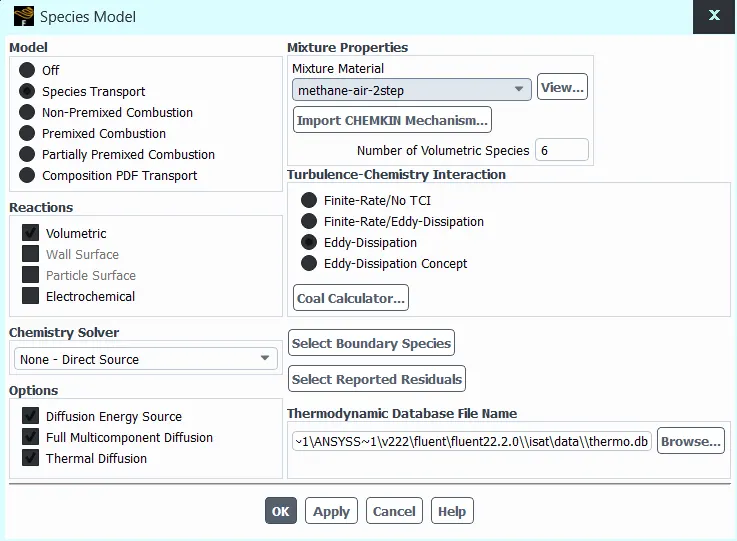
- Species Model : Species Transport> Reaction: Volumetric > Options : All three options enabled. > Mixture Material : Methane-air-2step (It allows to add water in the fuel or air)>TCI : Eddy-Dissipation.
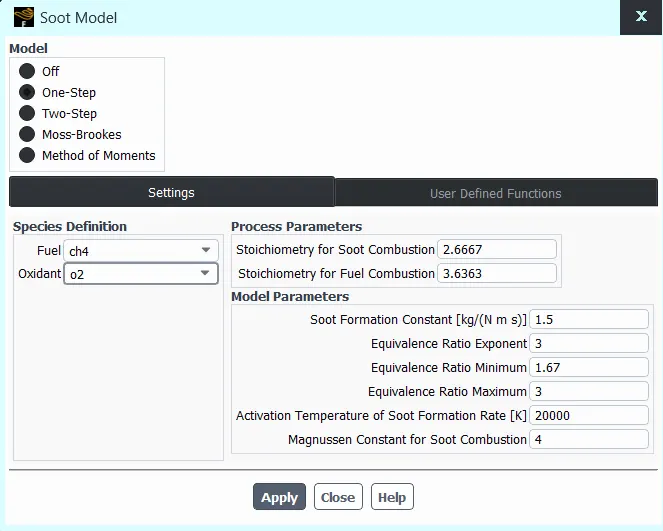
- Soot Model : Model : One-Step(to calculate the soot formation)>Species Definition: Fuel=CH4 and Oxidant = O2>Apply.
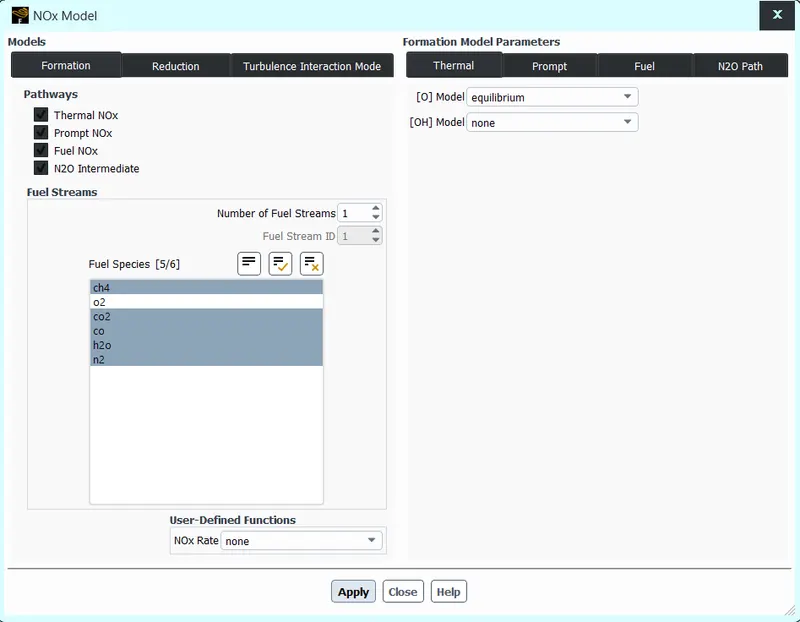
- NOx Model :
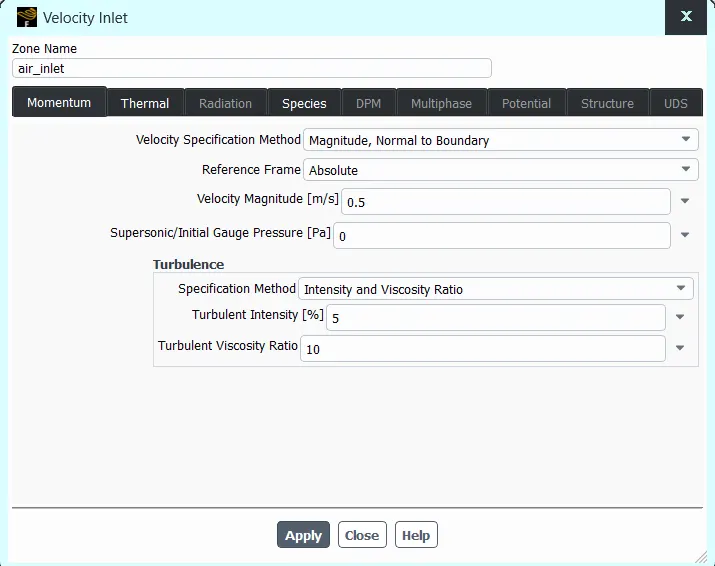
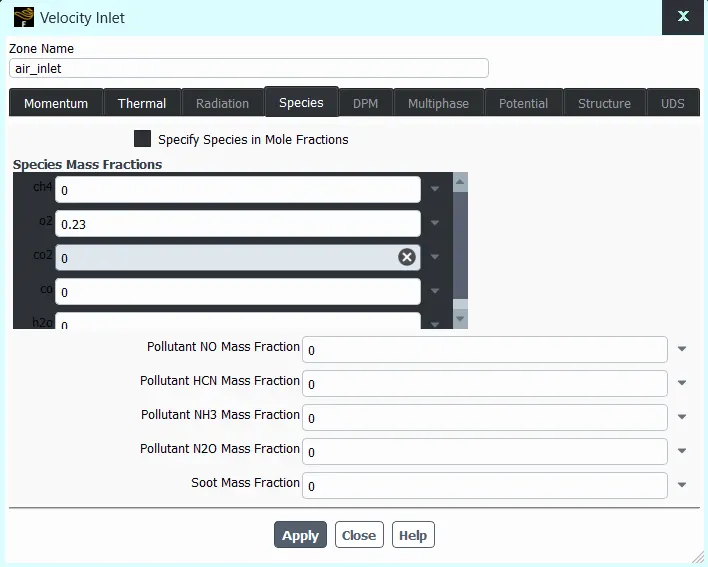
- Boundary Conditions : air inlet :- velocity = 0.5 m/s , species : O2 = 0.23
- fuel inlet : velocity = 18 m/s , species : CH4 = 1
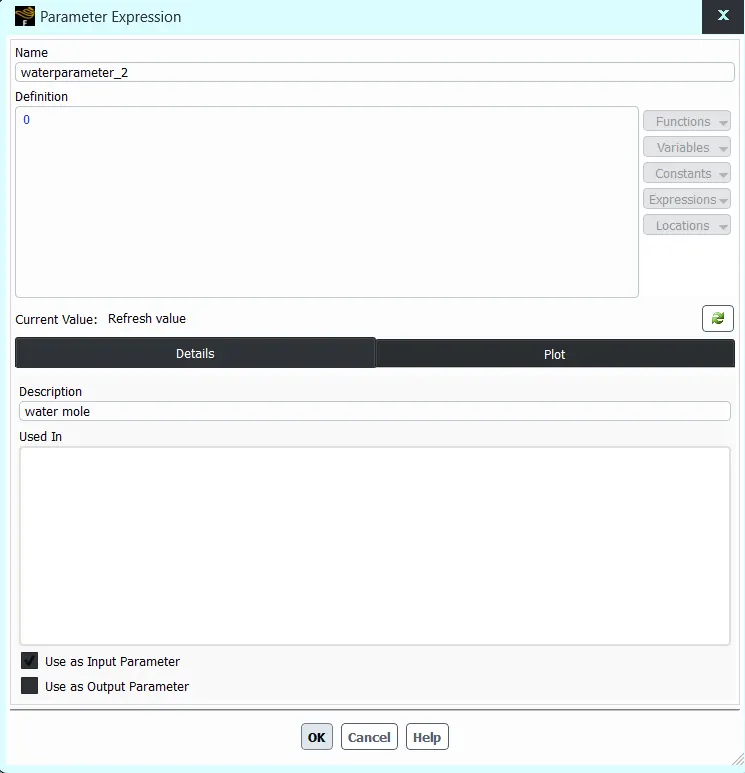
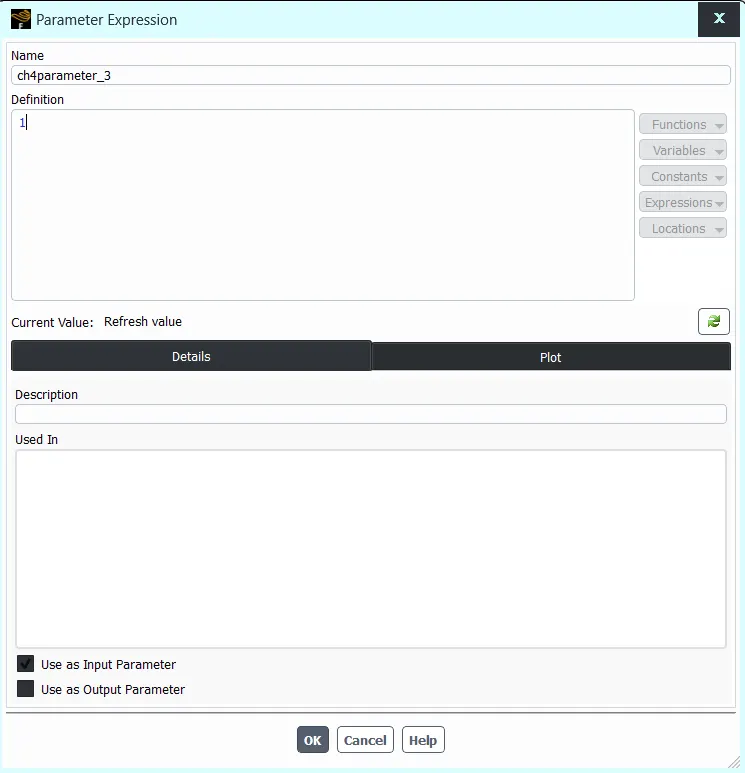
- For part 2 of the challange i parameterized the CH4 and H2O as input parameters and emission of the NOx and Soot as output parameters.
- Hybrid Initialization
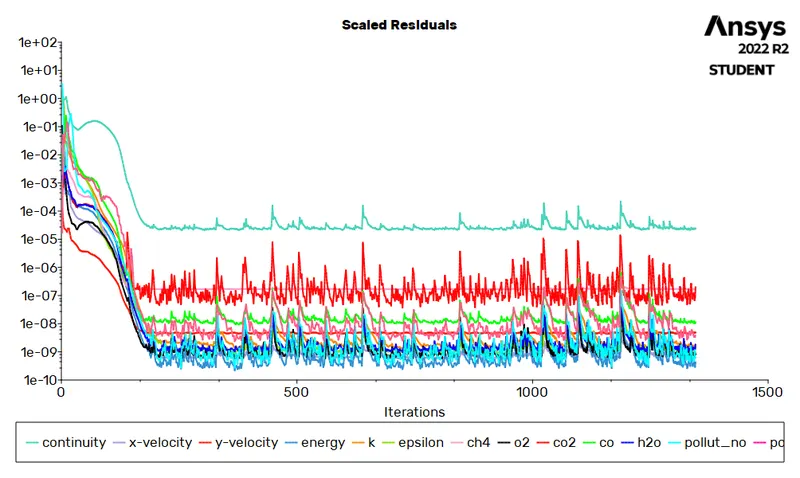
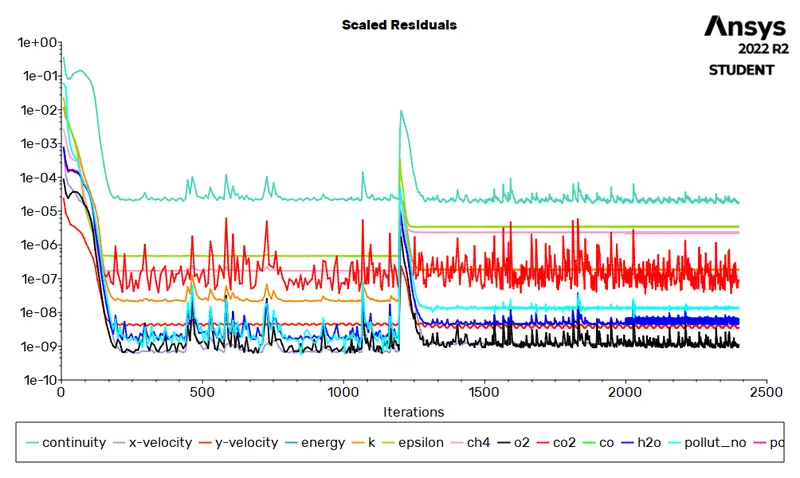
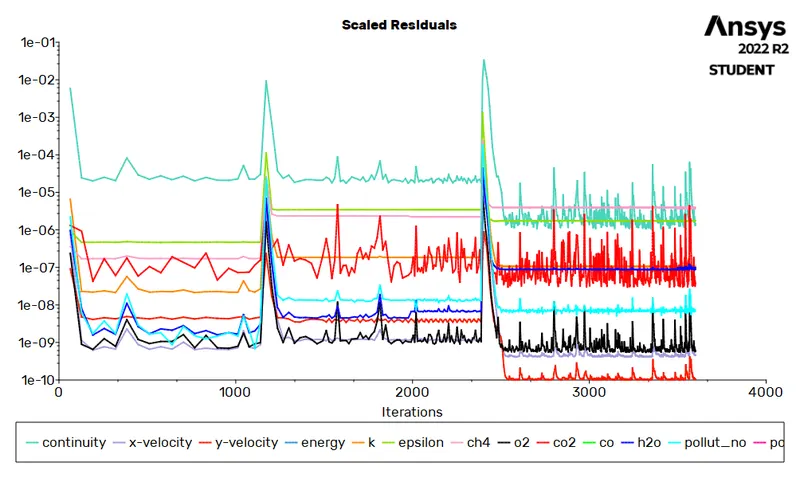
- Run for 1200 iterations.
- plot the reults for the part 1 and part 2 cases.
Results :
- Part 1: Mass Fractions of CH4,H20,CO2,O2,N2,Soot,NOx and line probe results.
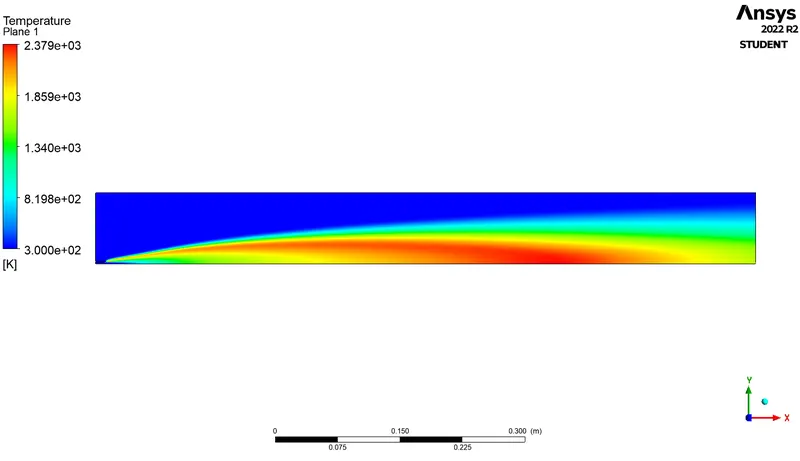
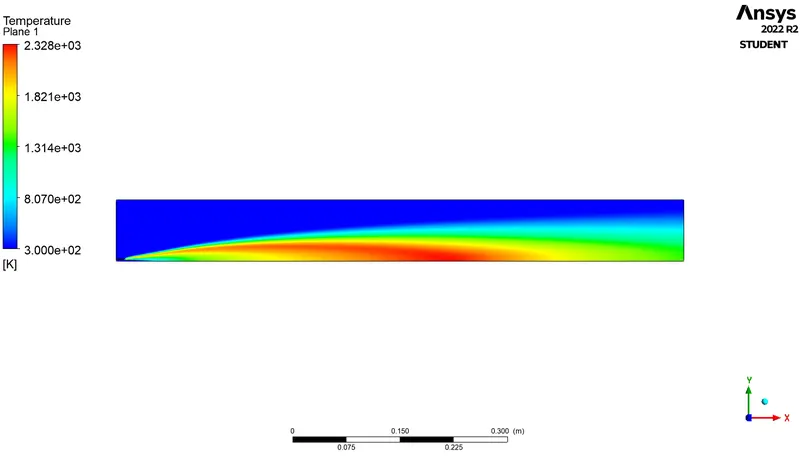
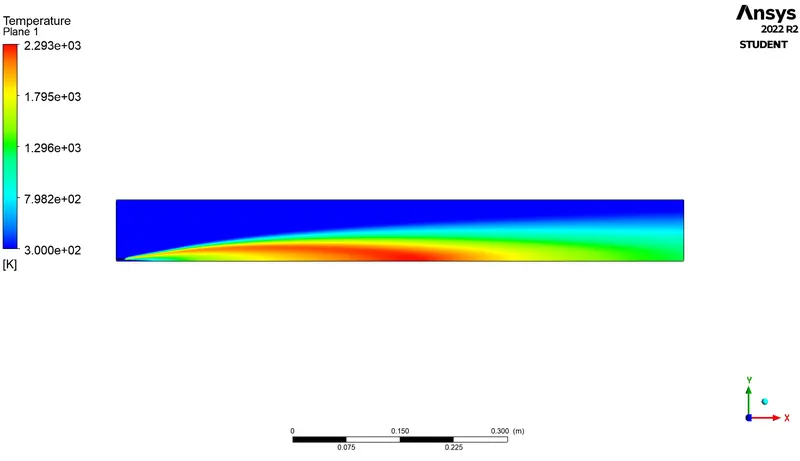
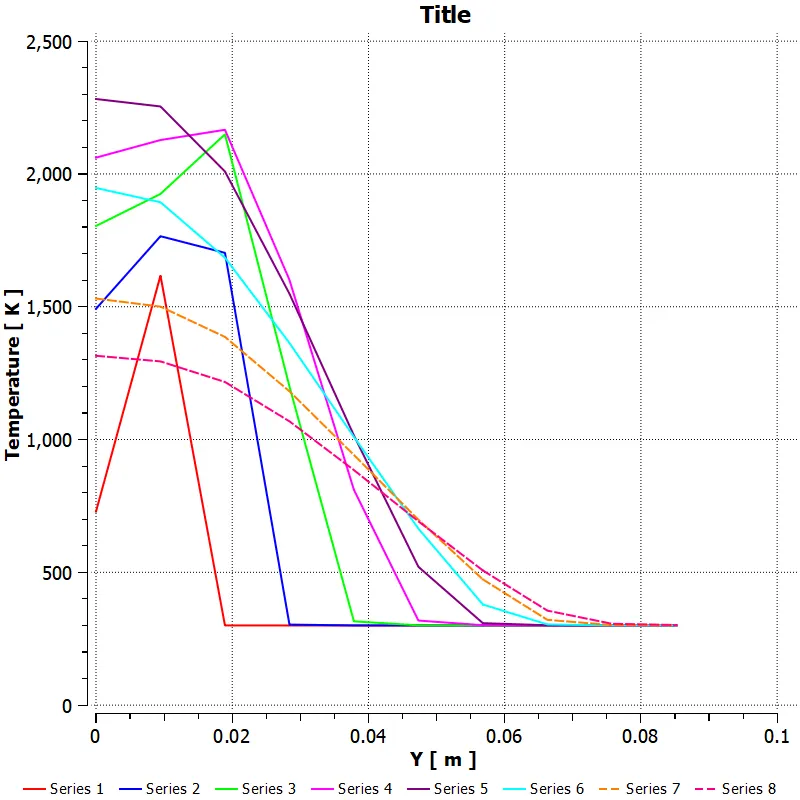
- Temperature contour and line probe
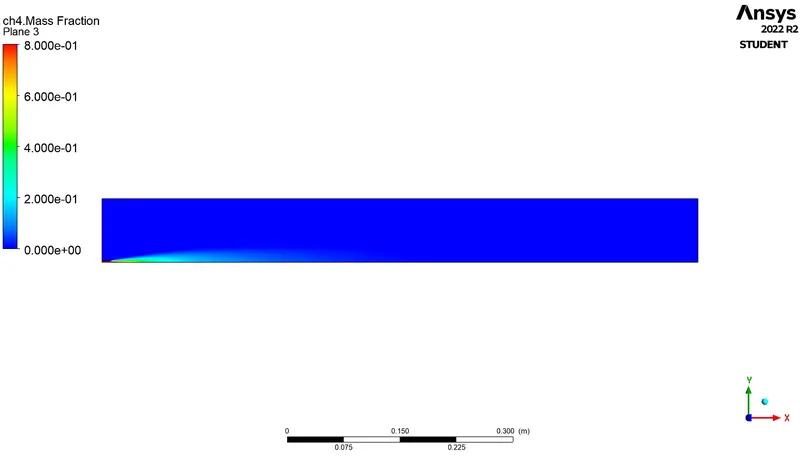
- CH4 contour and line probe graph.
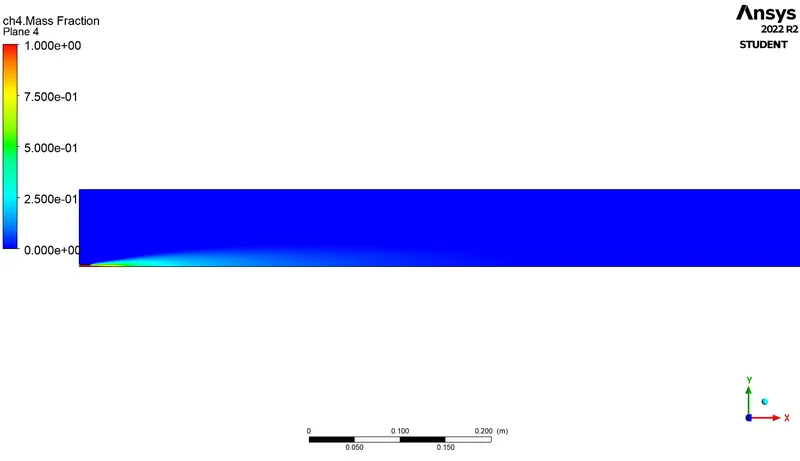
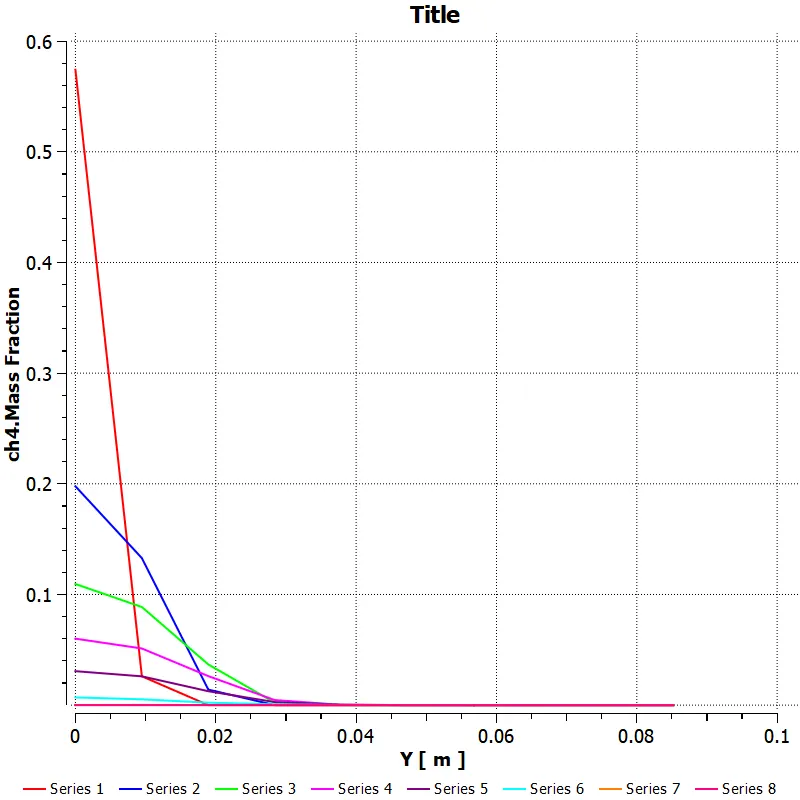
- CO2 contour and line probe graph
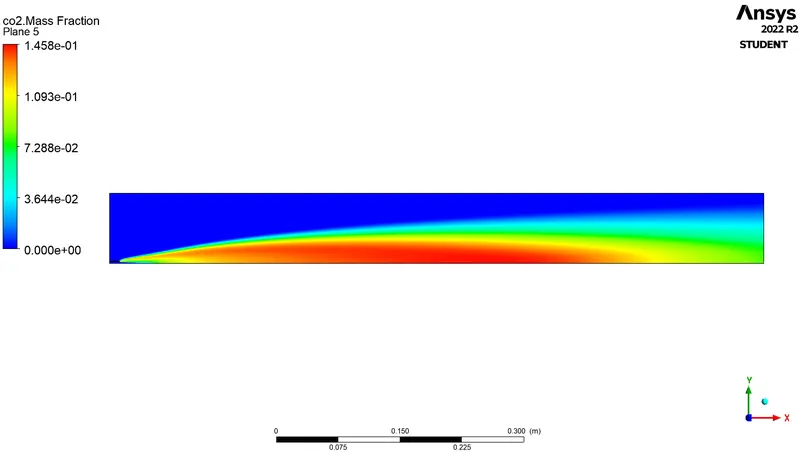
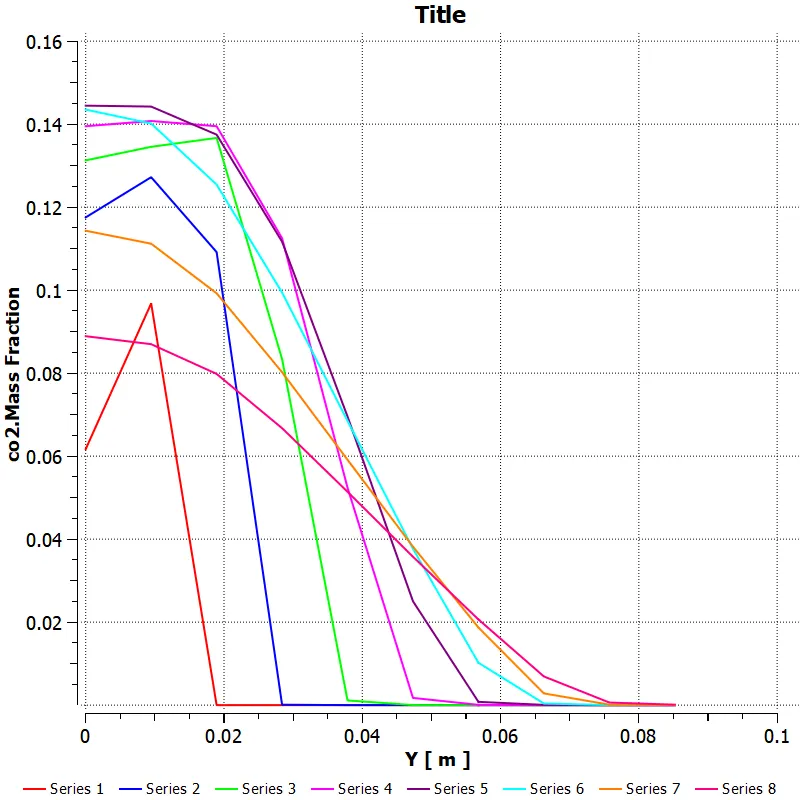
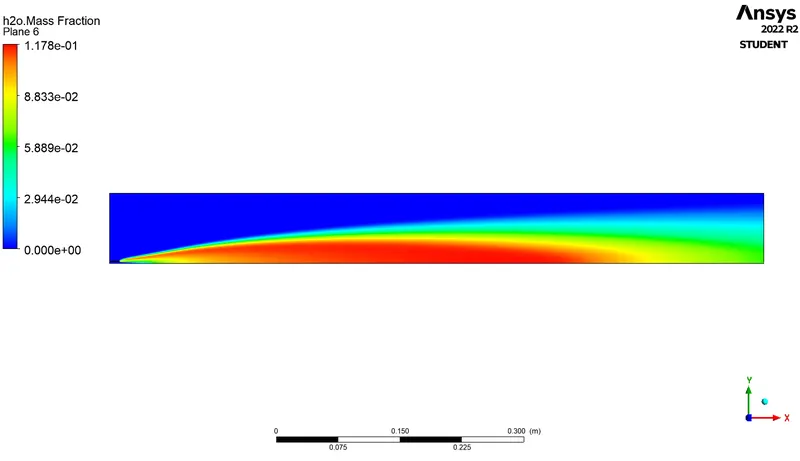
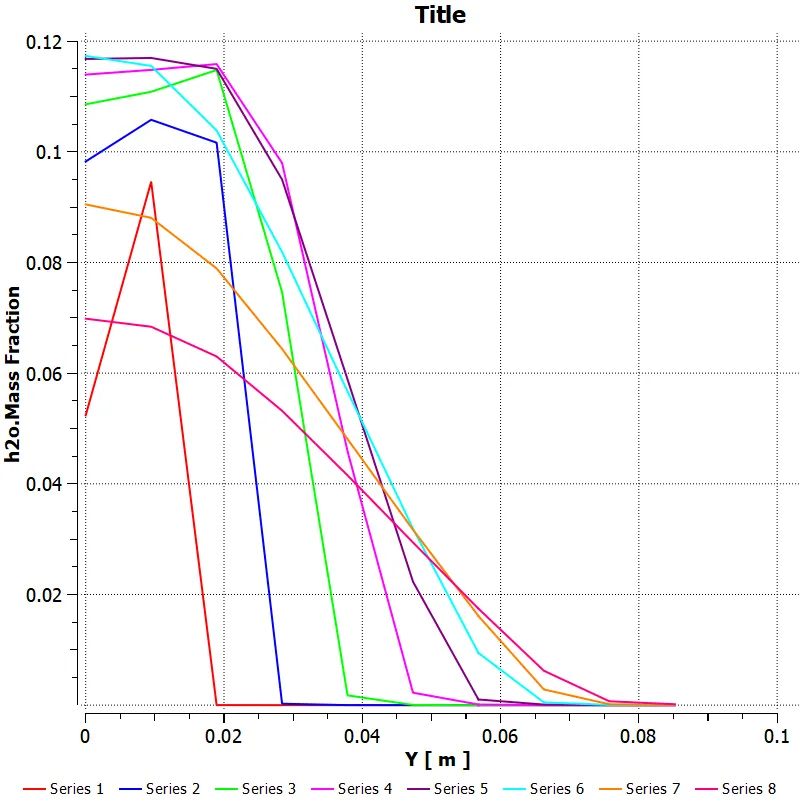
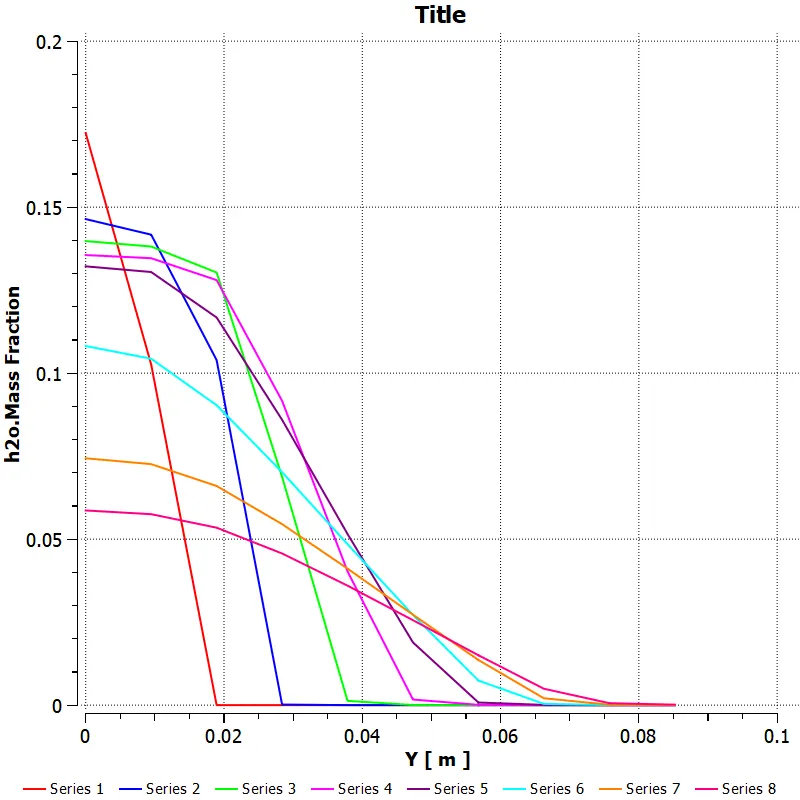
- H2O contour and line probe graph
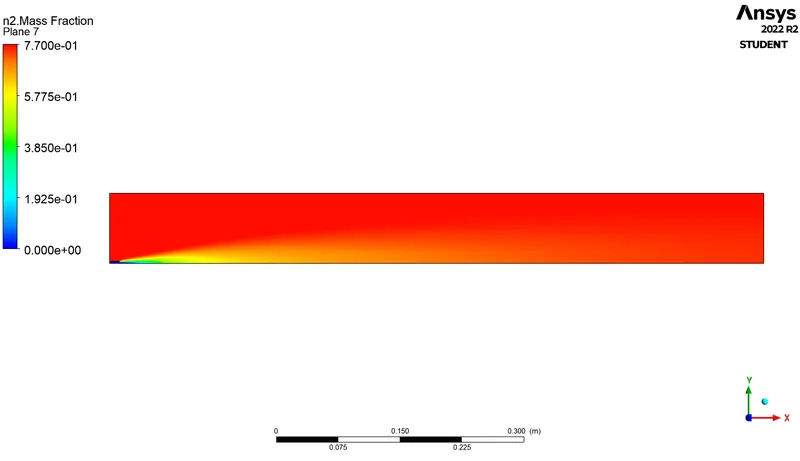
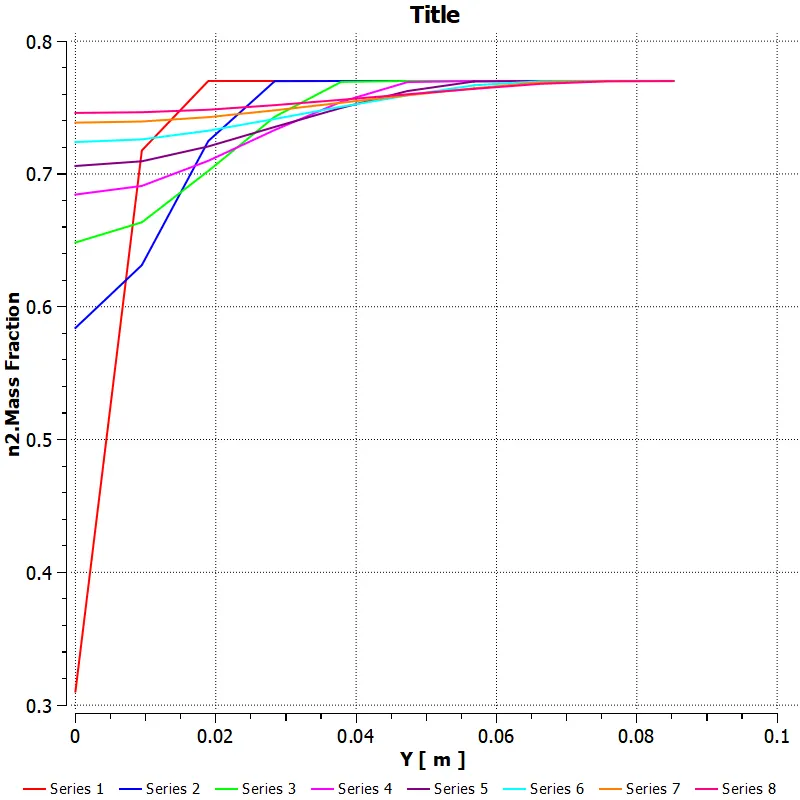
- N2 contour and line probe graph
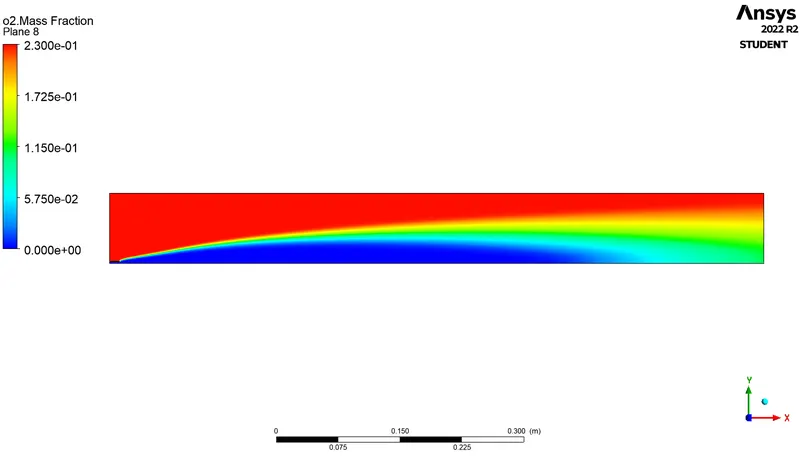
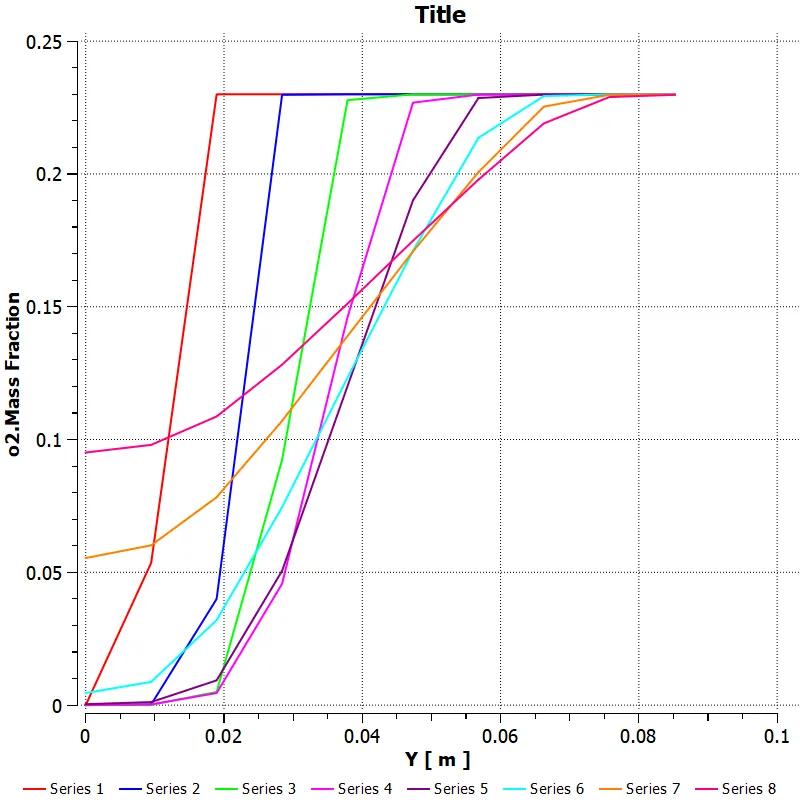
- O2 contour and line probe graph
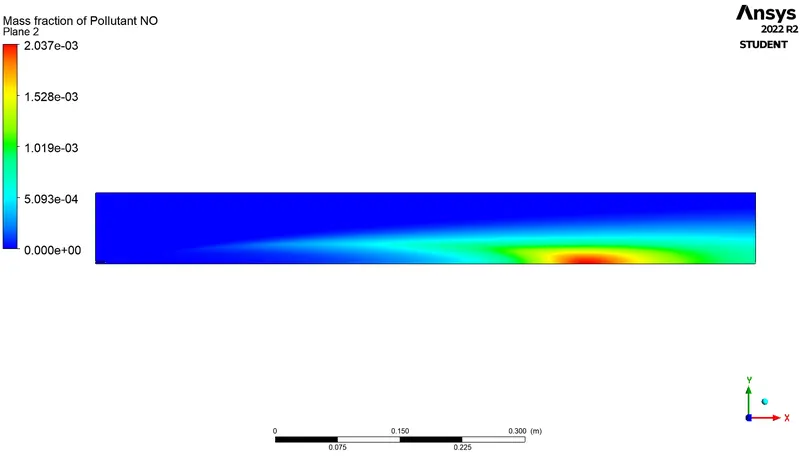
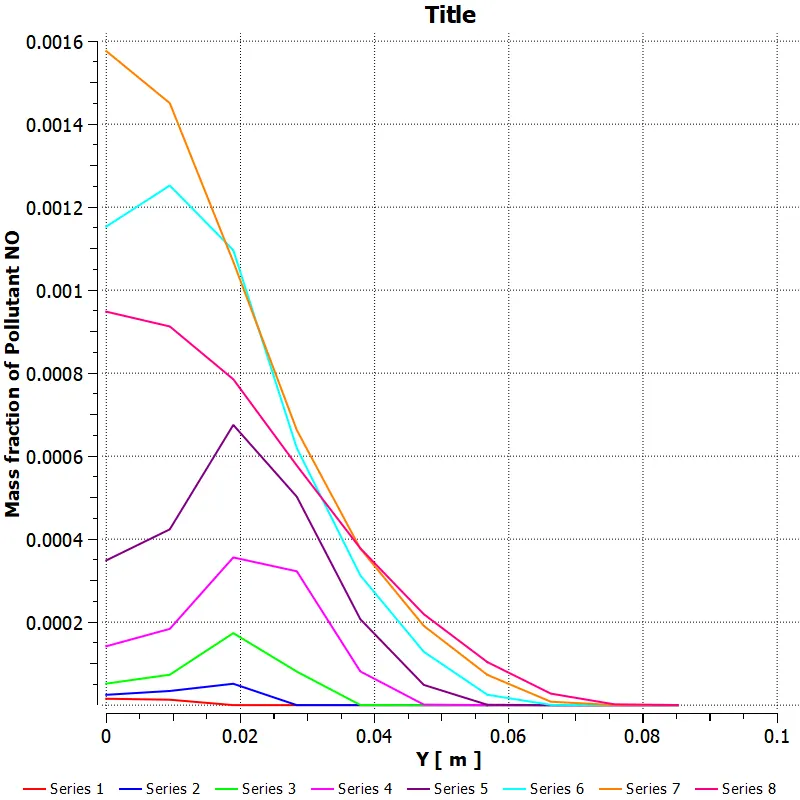
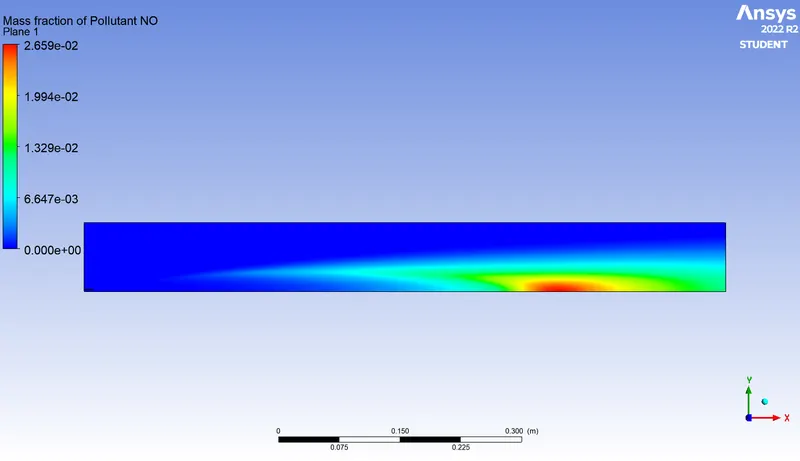
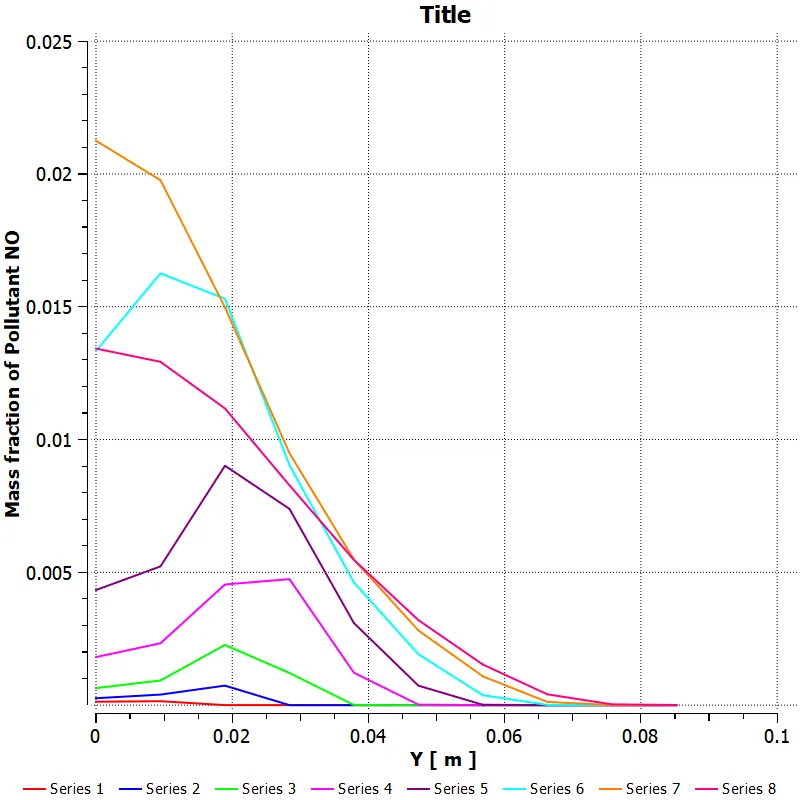
- NOx comtour and line probe graph
- Soot contours and line probe graph
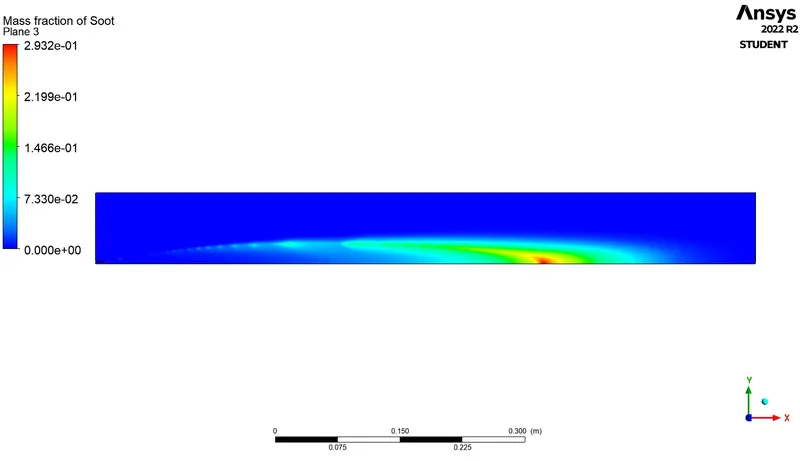
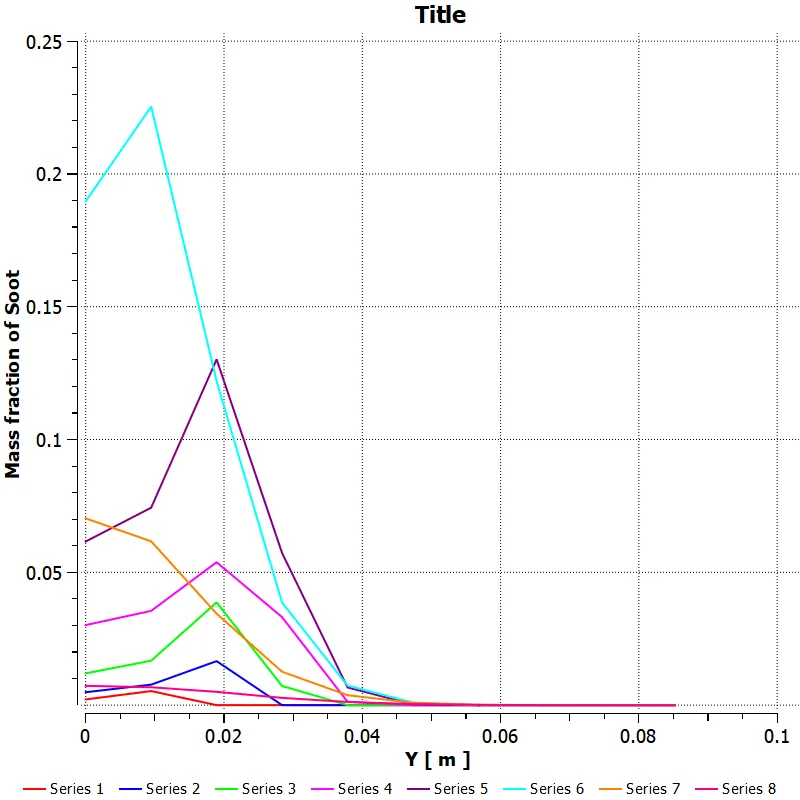
- Part 2 : Mixing of water from 5 to 30% in the fuel inlet and analyze the soot and NOx formation
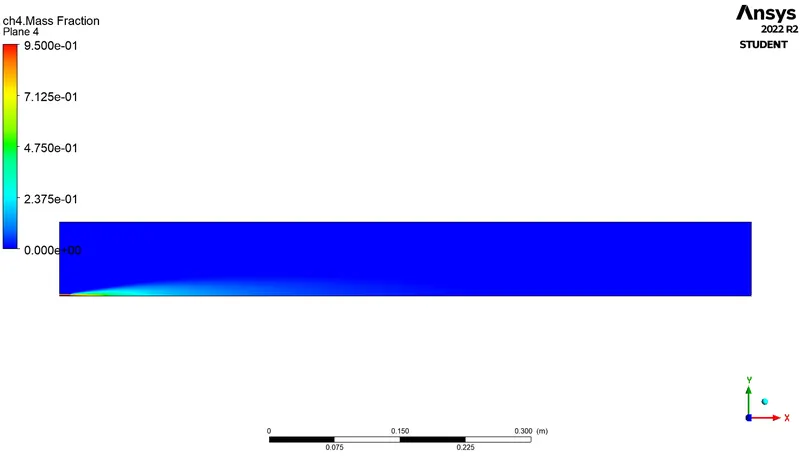
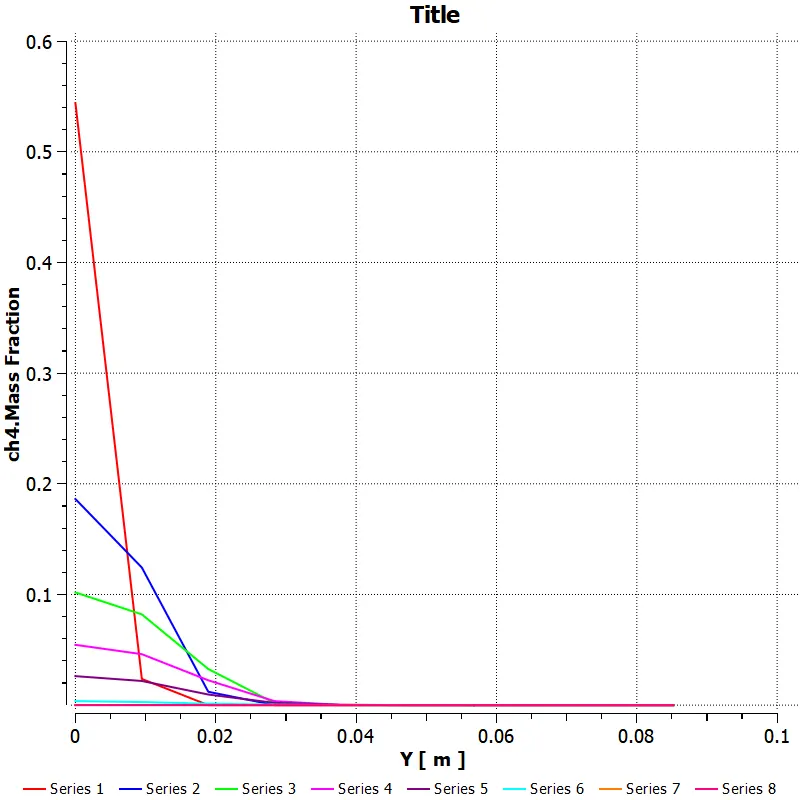
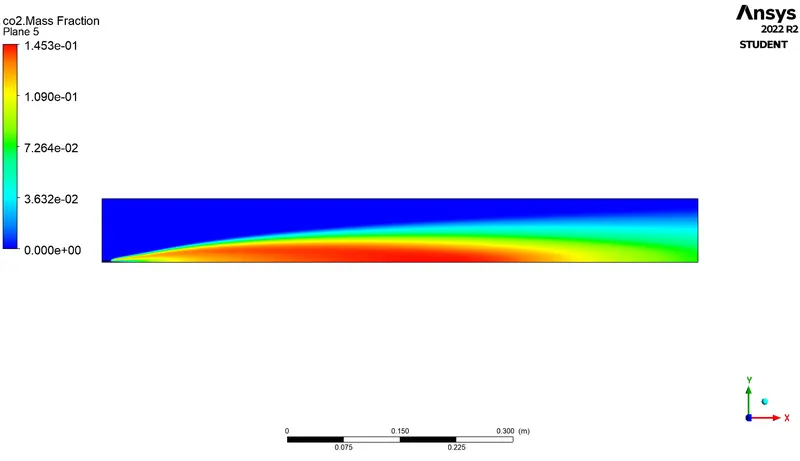
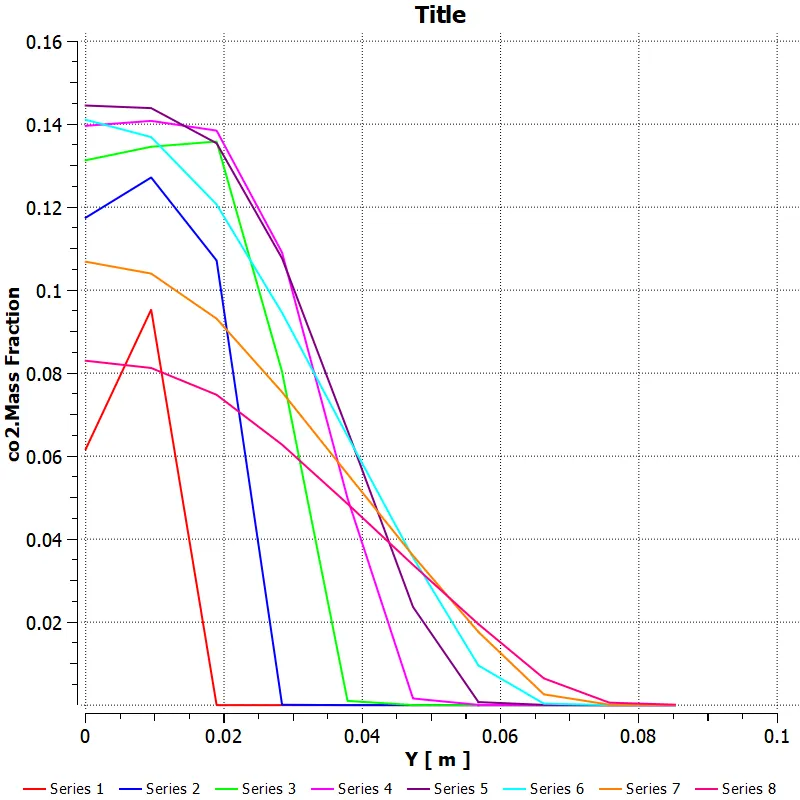
- Case 1 :(5% water) CH4 to Water Ratio = 0.95 : 0.05 respectively
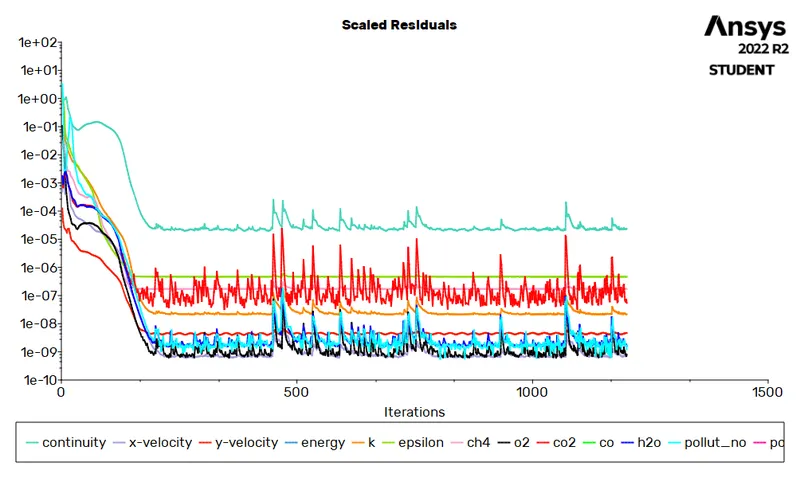
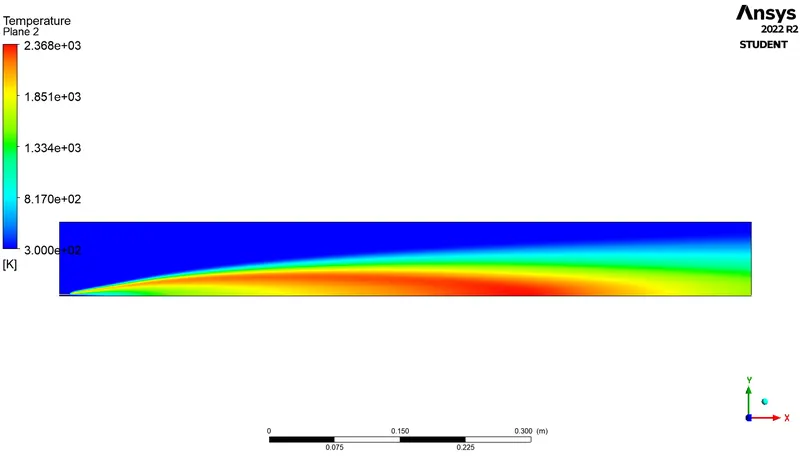
- CH4 contour and graph
- CO2 contour and graph
- H2O contour and graph
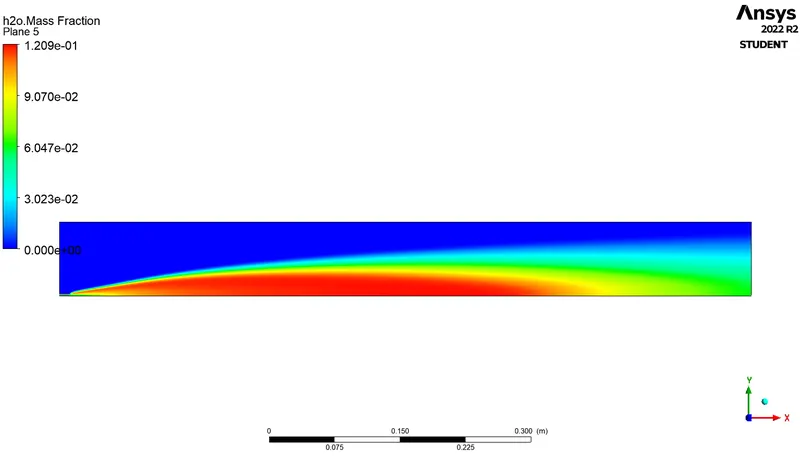
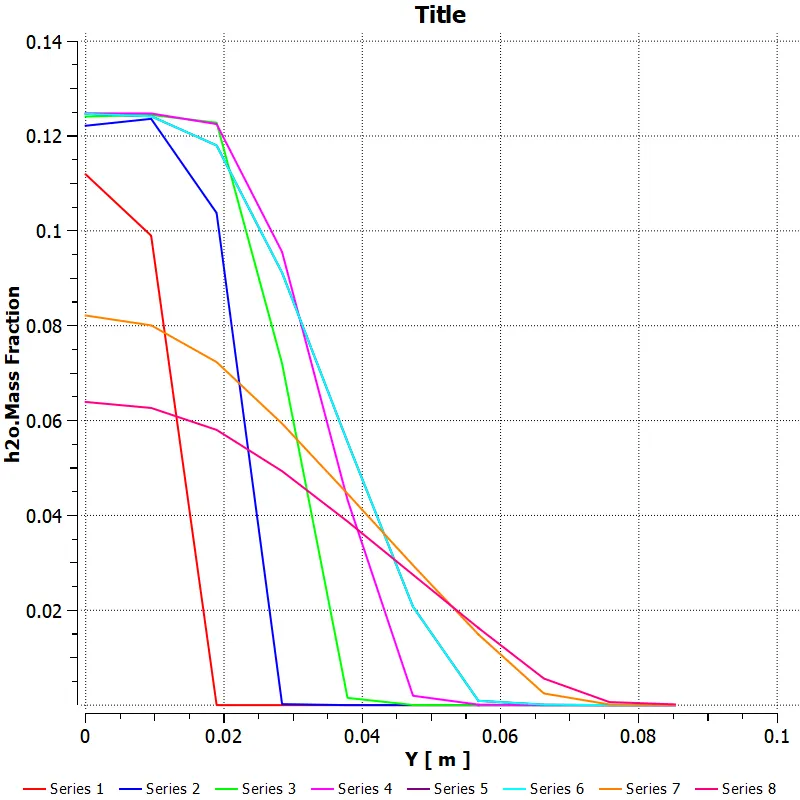
- O2 contour and graph
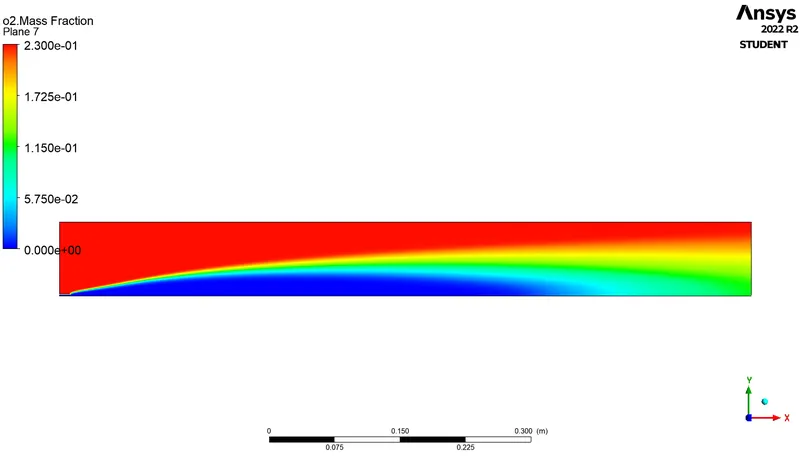
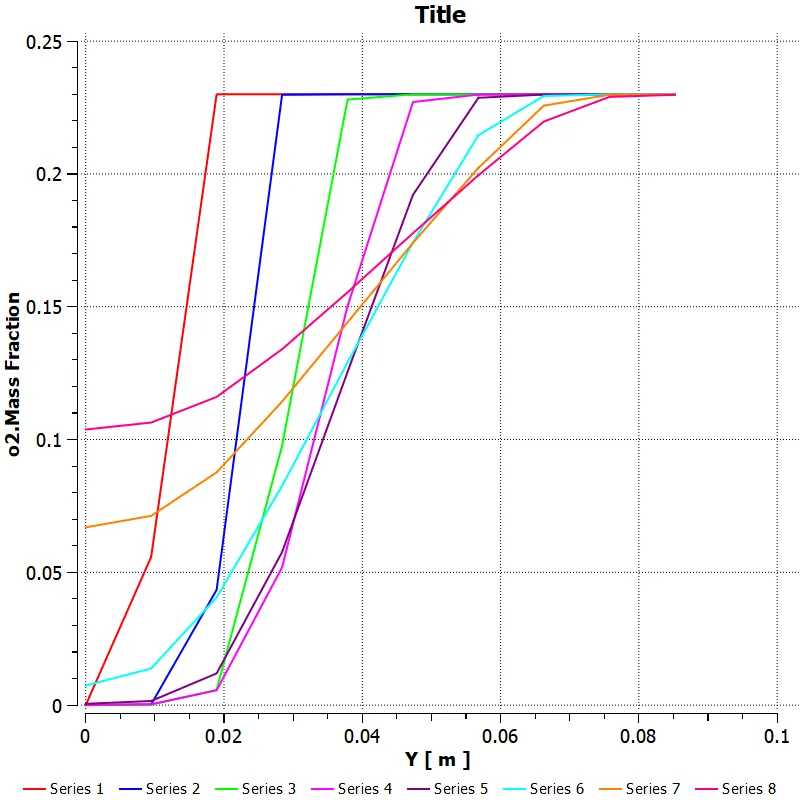
- N2 contour and graph
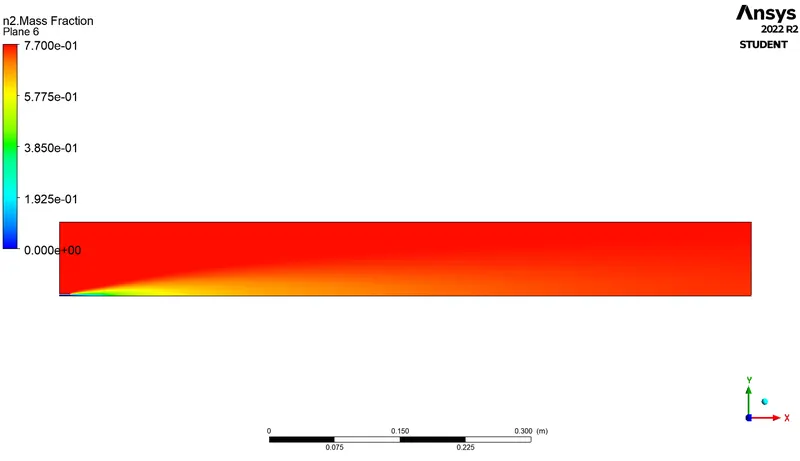
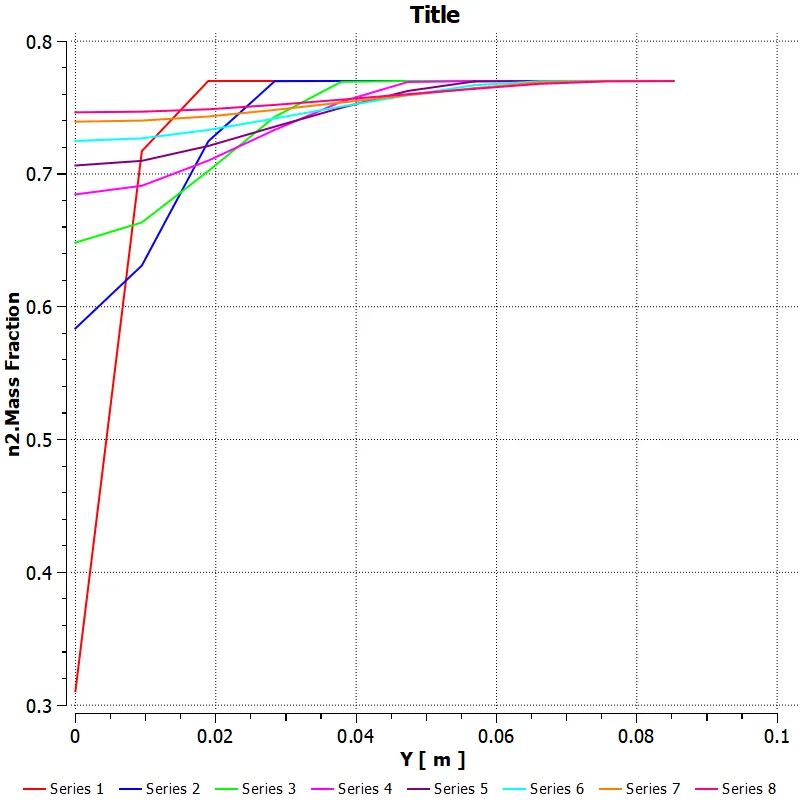
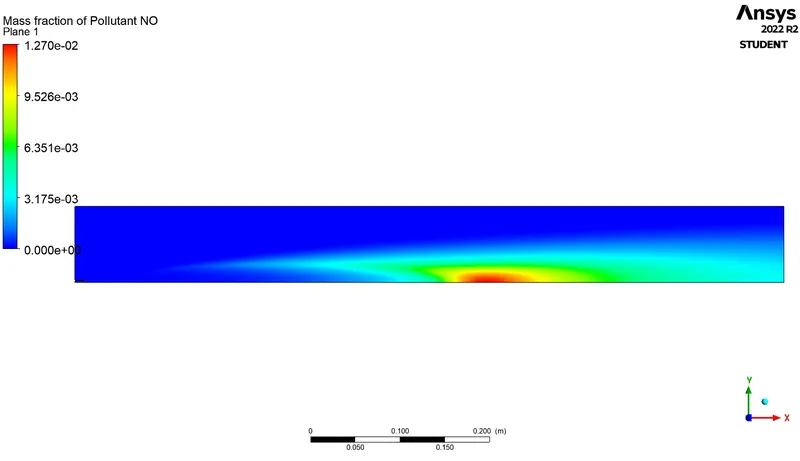
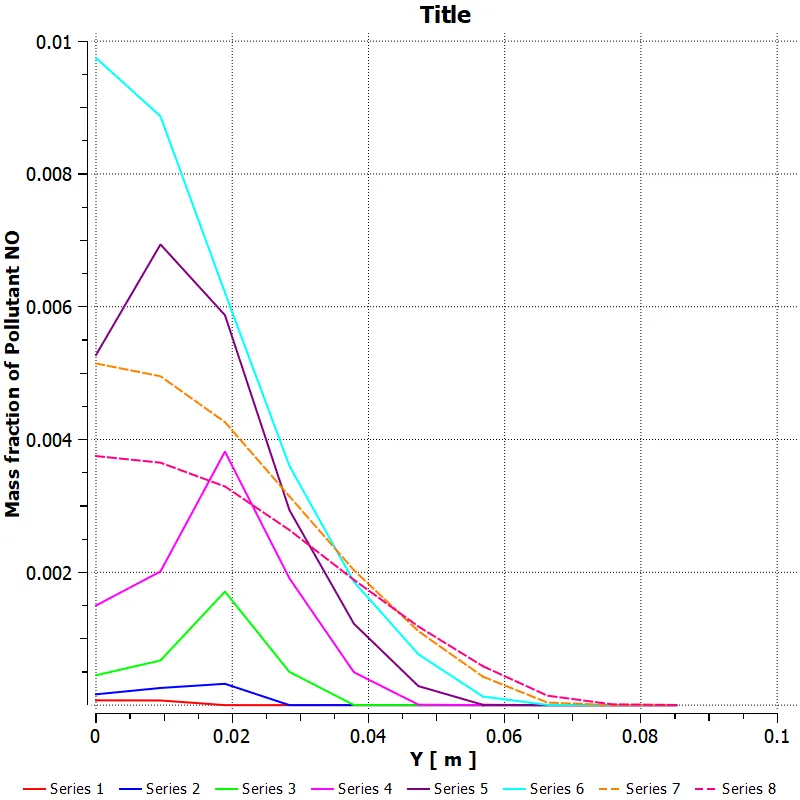
- NOx countour and graph
- Soot contour and graph
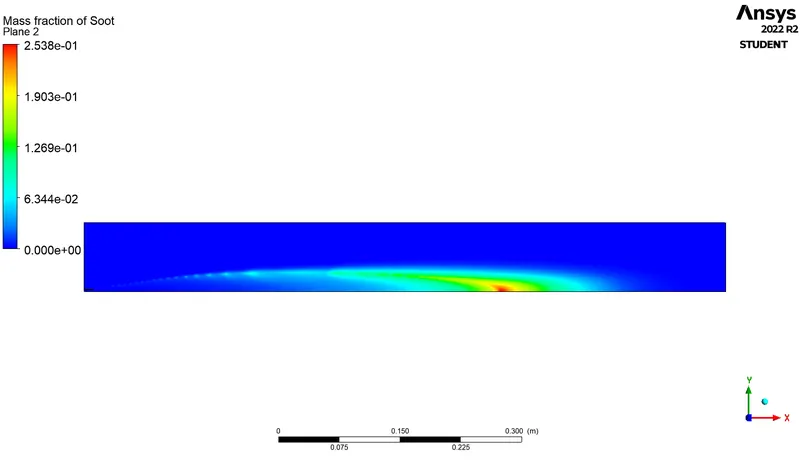
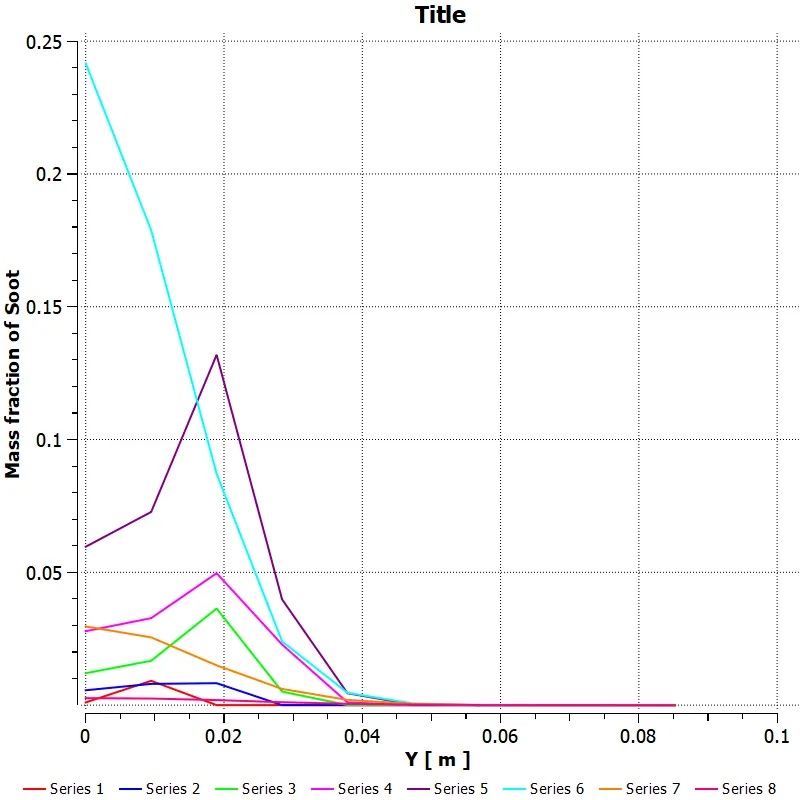
- Case 2 :(10% water) CH4 : H2O = 0.9 : 0.1
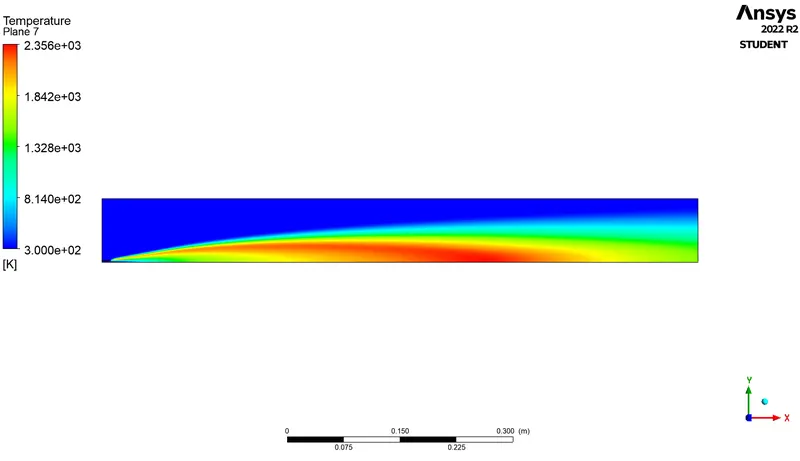
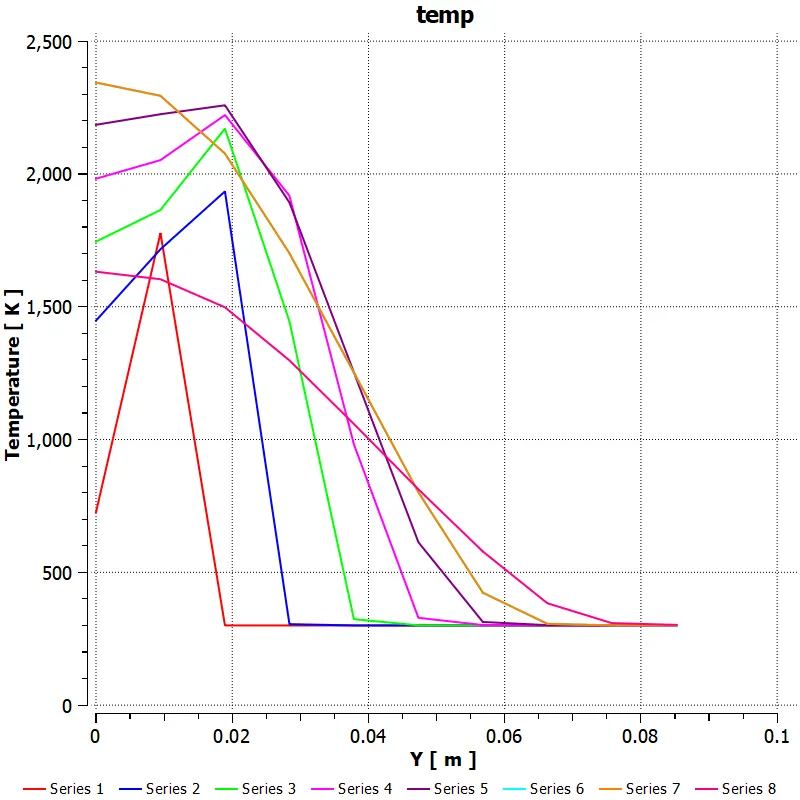
- CH4 contour and graph
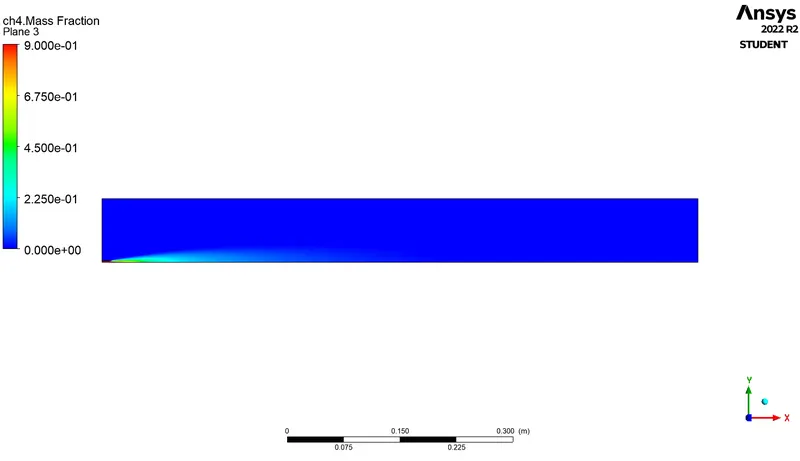
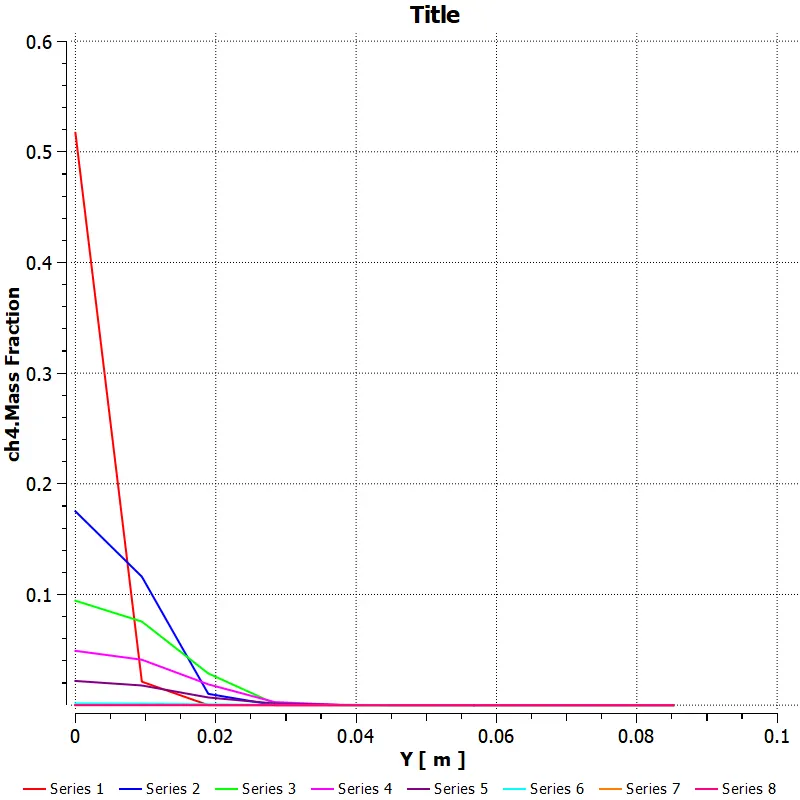
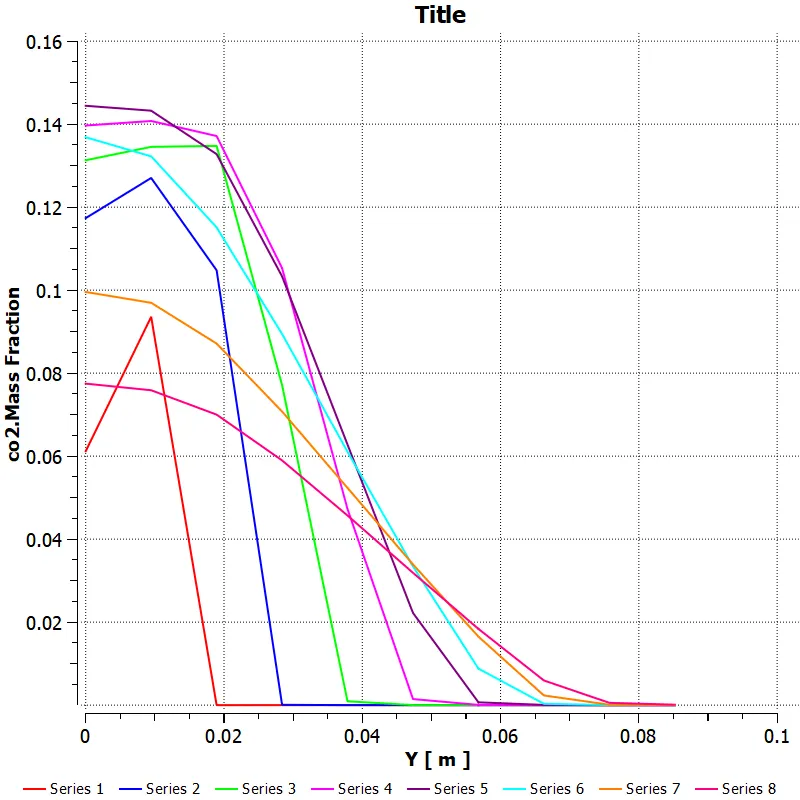
- CO2 contour and graph
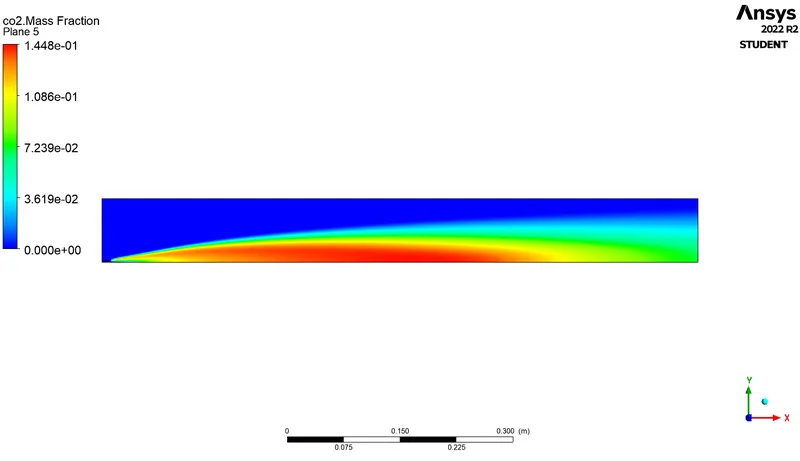
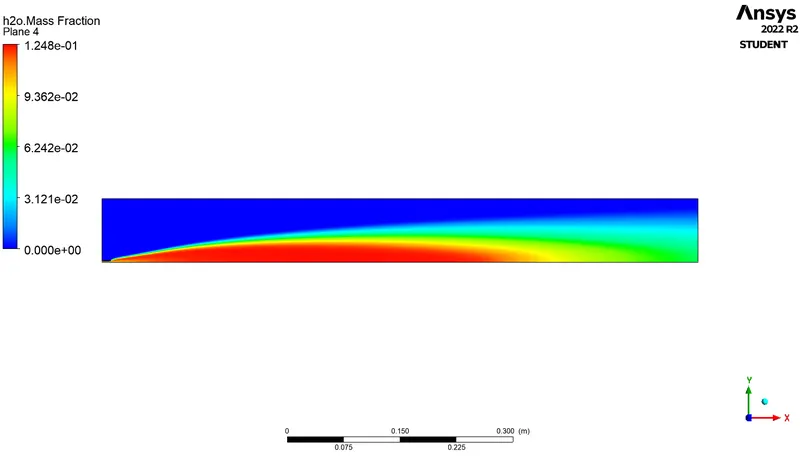
- H2O contour and graph
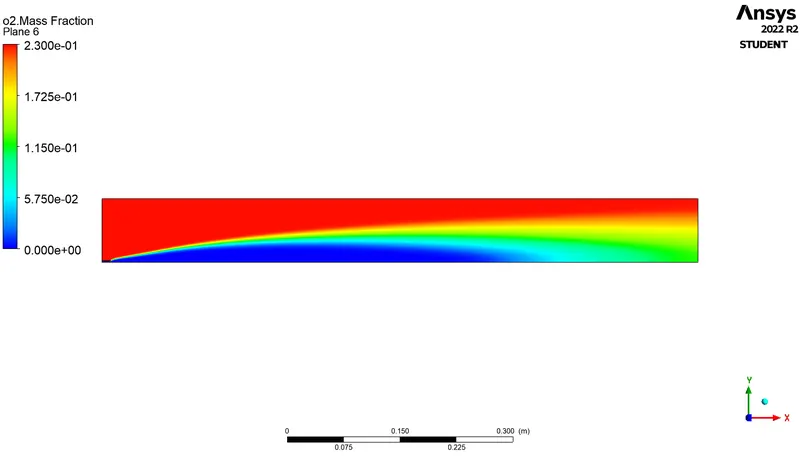
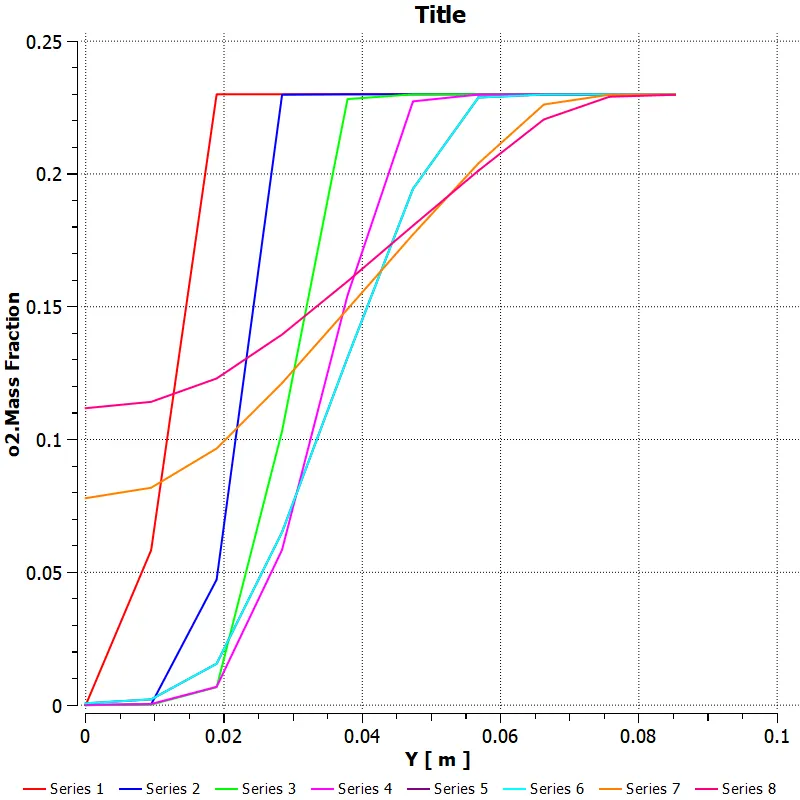
- O2 contour and graph
- N2 contour and graph
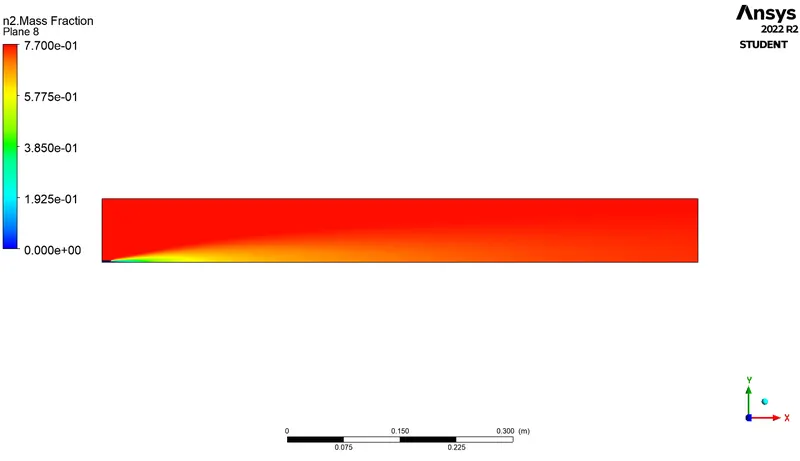
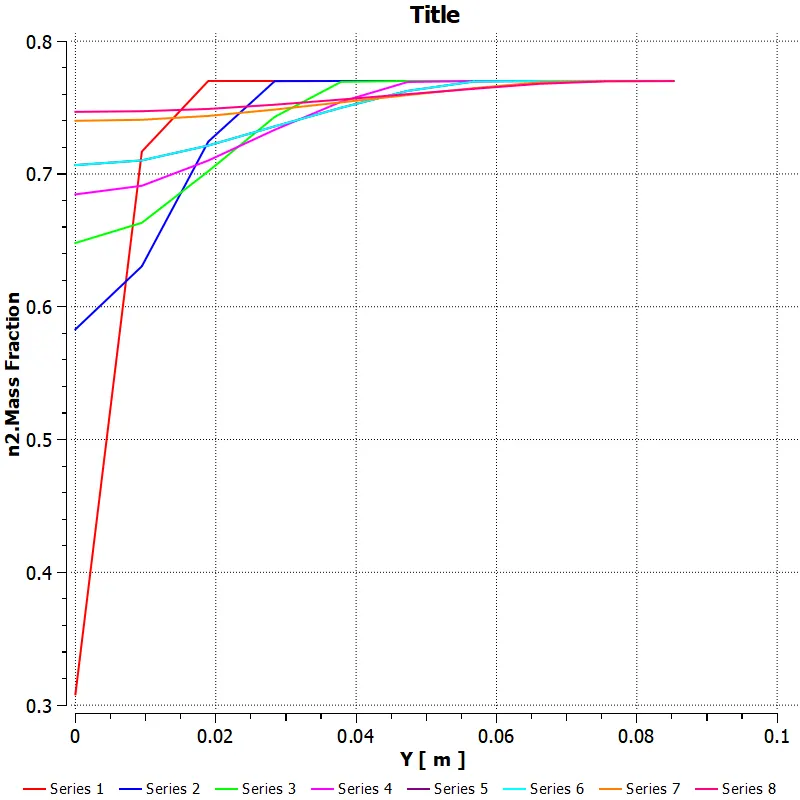
- NOx contour and graph
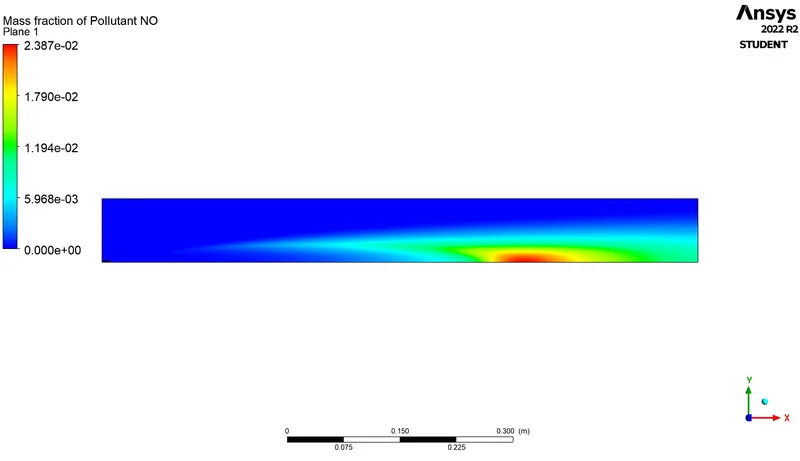
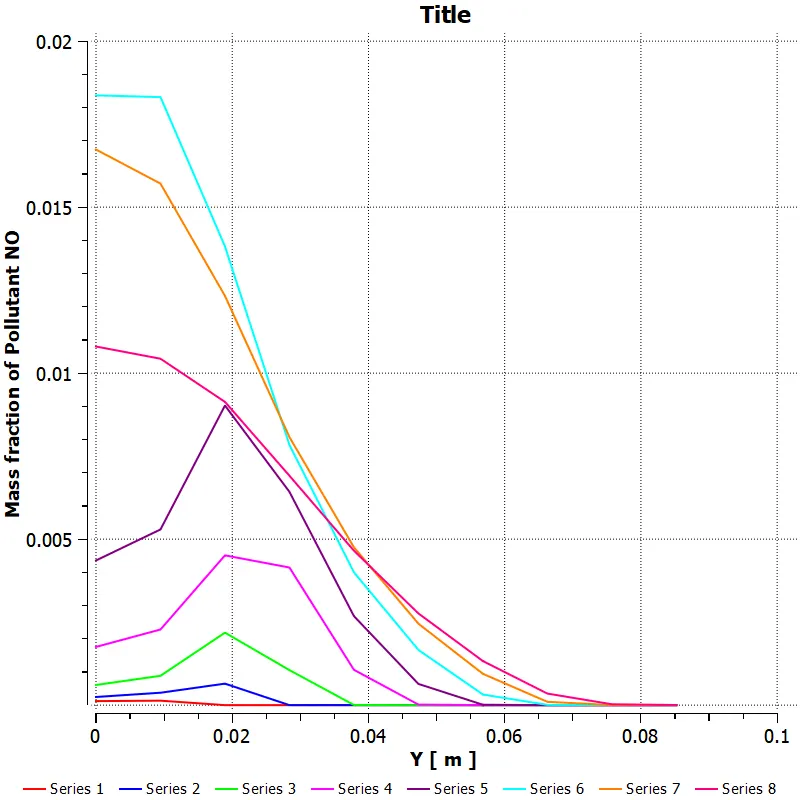
- Soot contour and graph
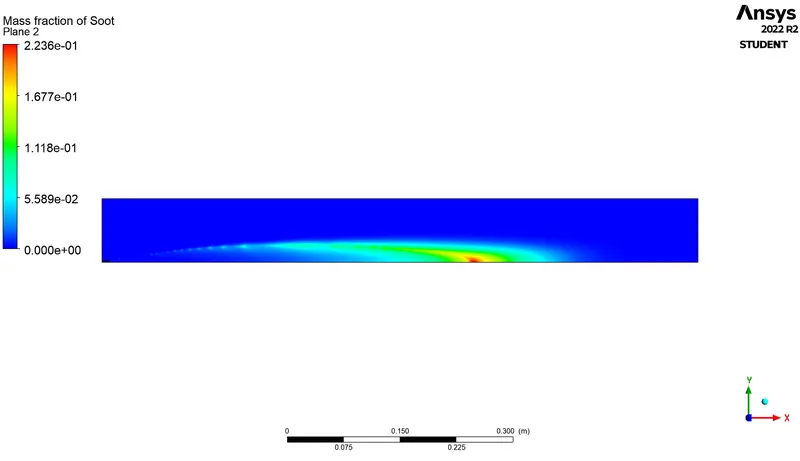
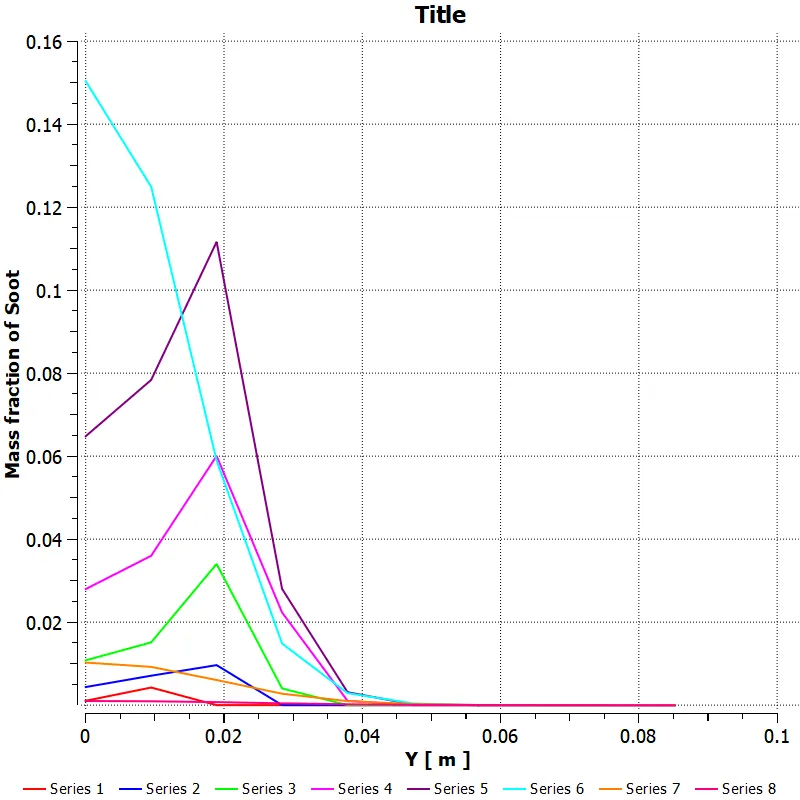
- Case 3 : (20% water) CH4 : H2O = 0.8 : 0.2
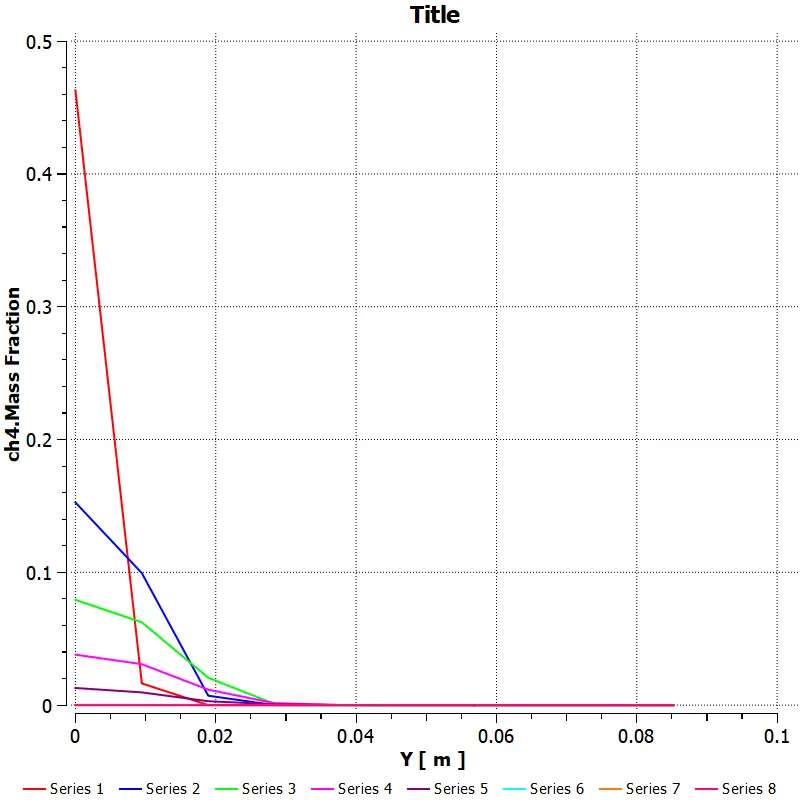
- CH4 contour and graph
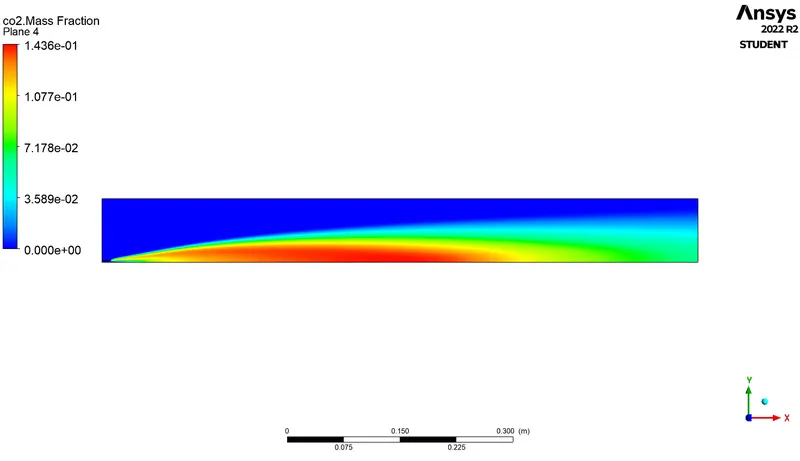
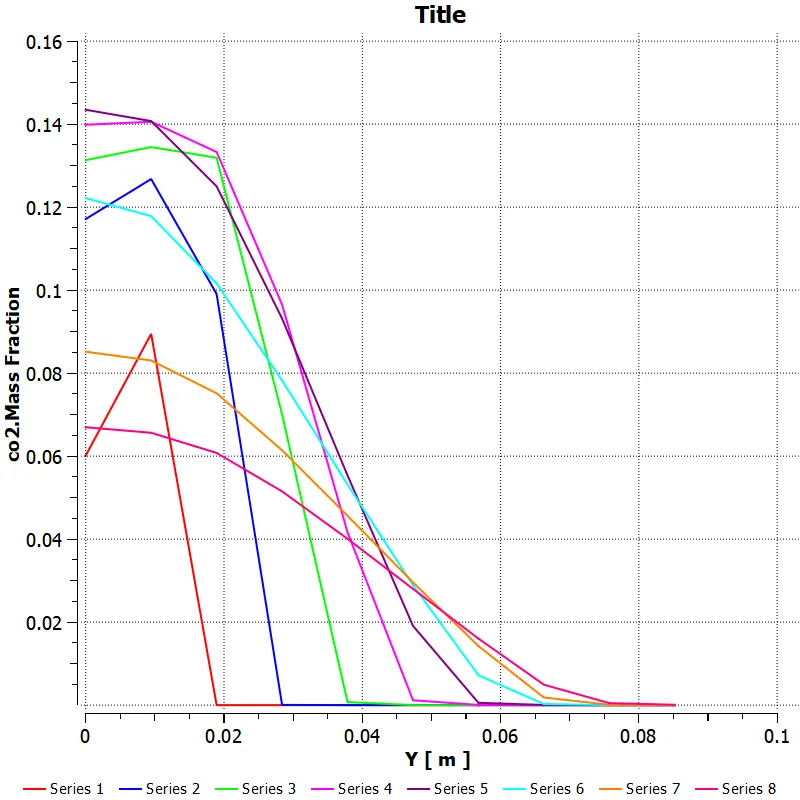
- CO2 contour and graph
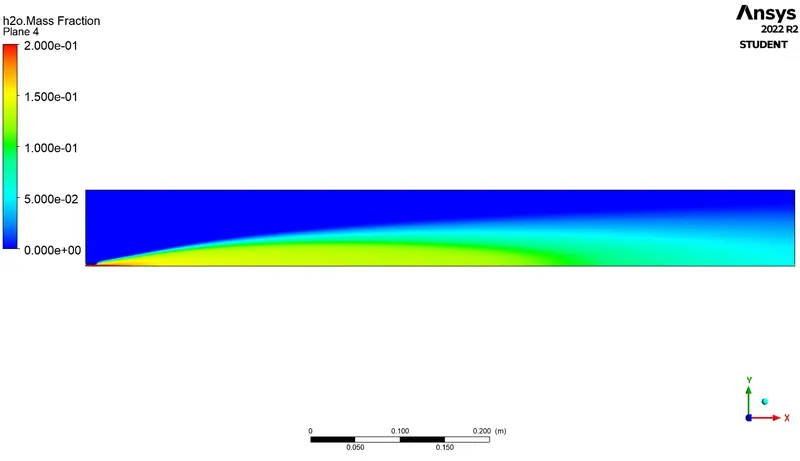
- H2O contour and graph
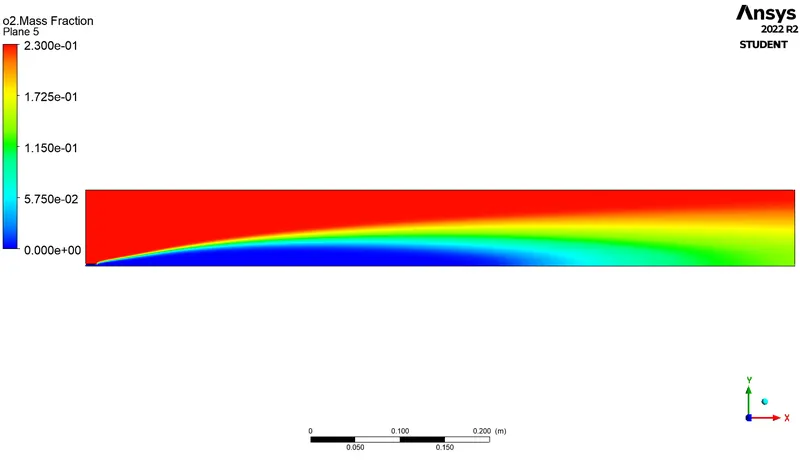
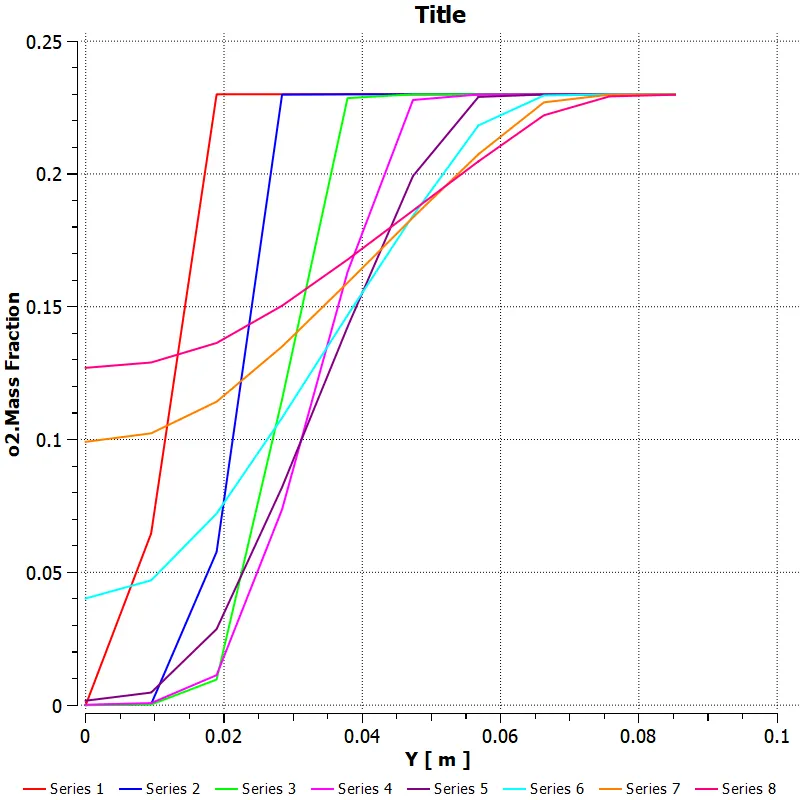
- O2 contour and graph
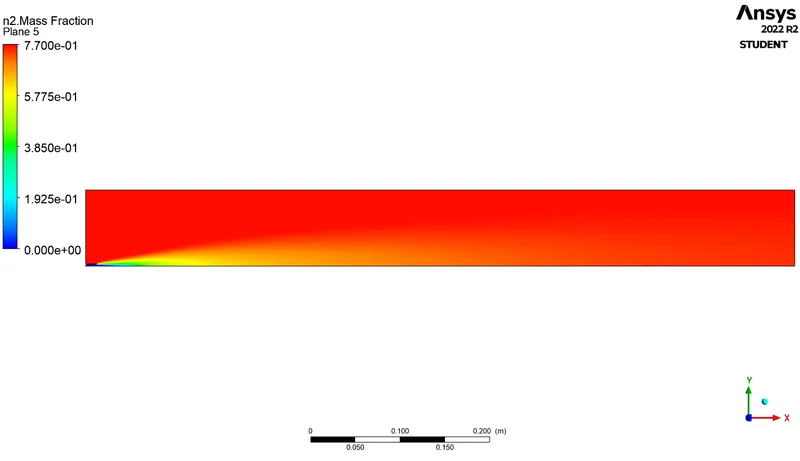
- N2 contour and graph
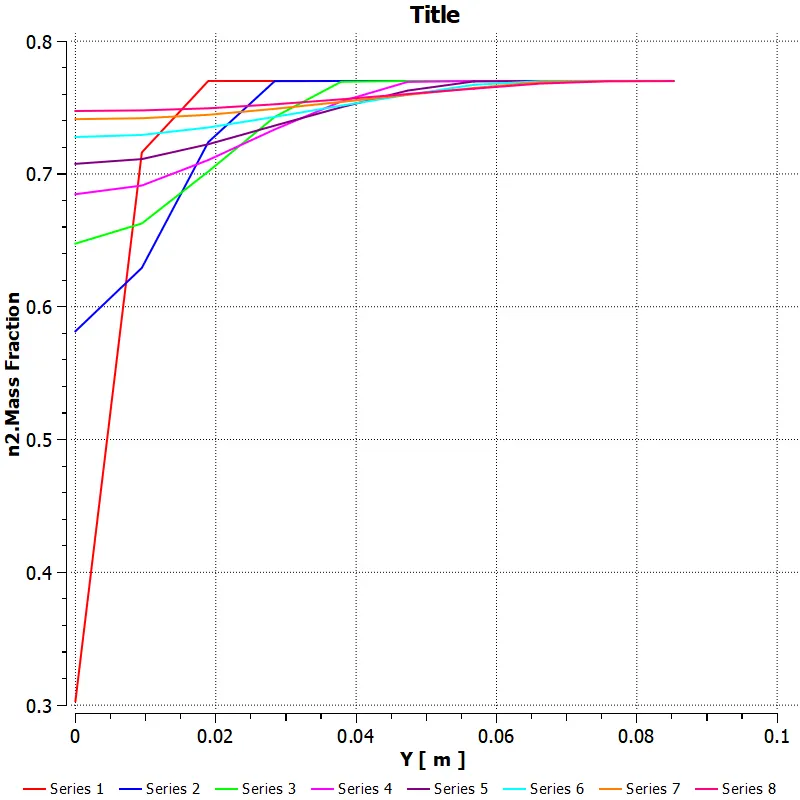
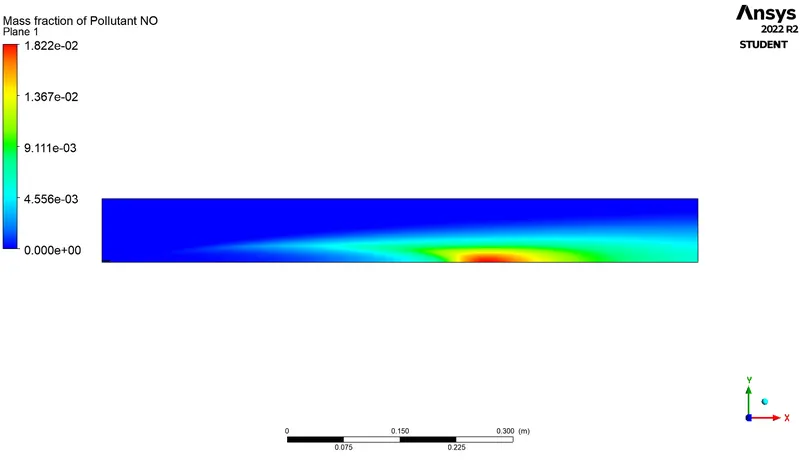
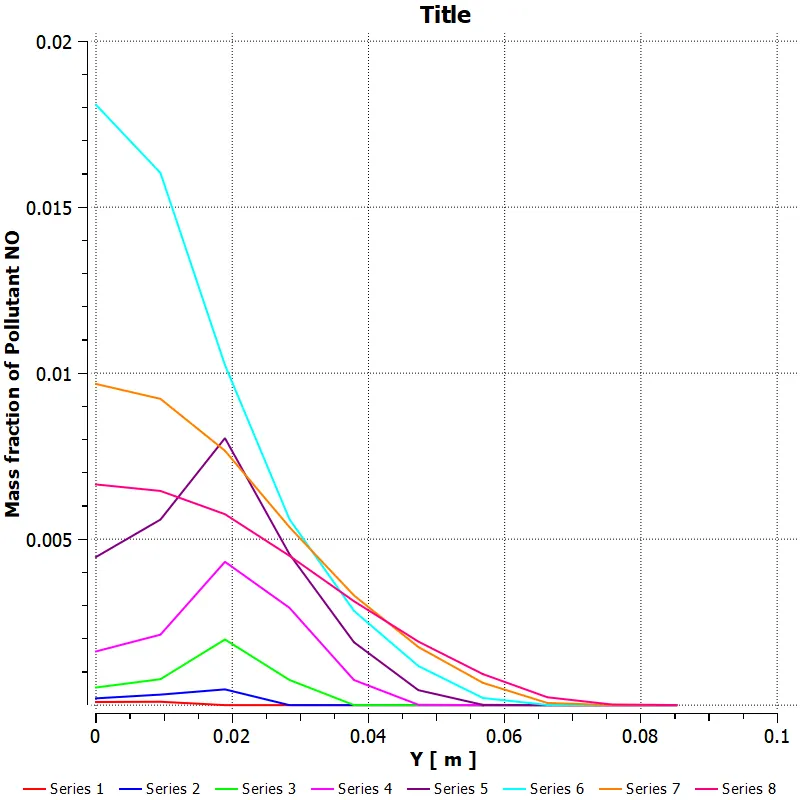
- Nox contour and graph
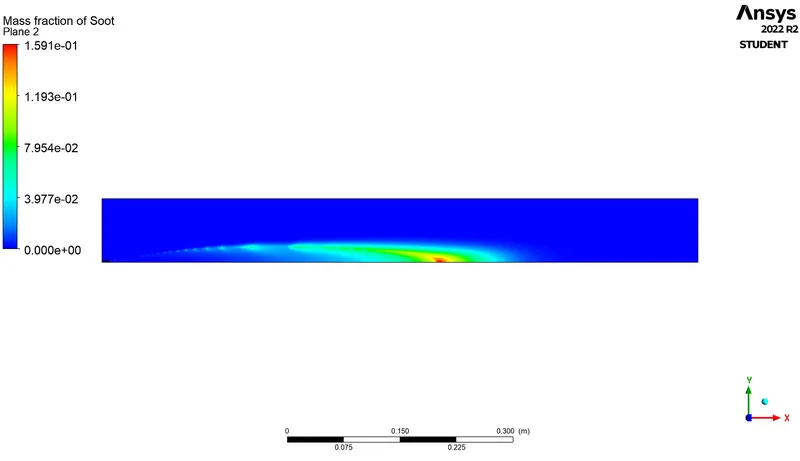
- Soot contour and graph
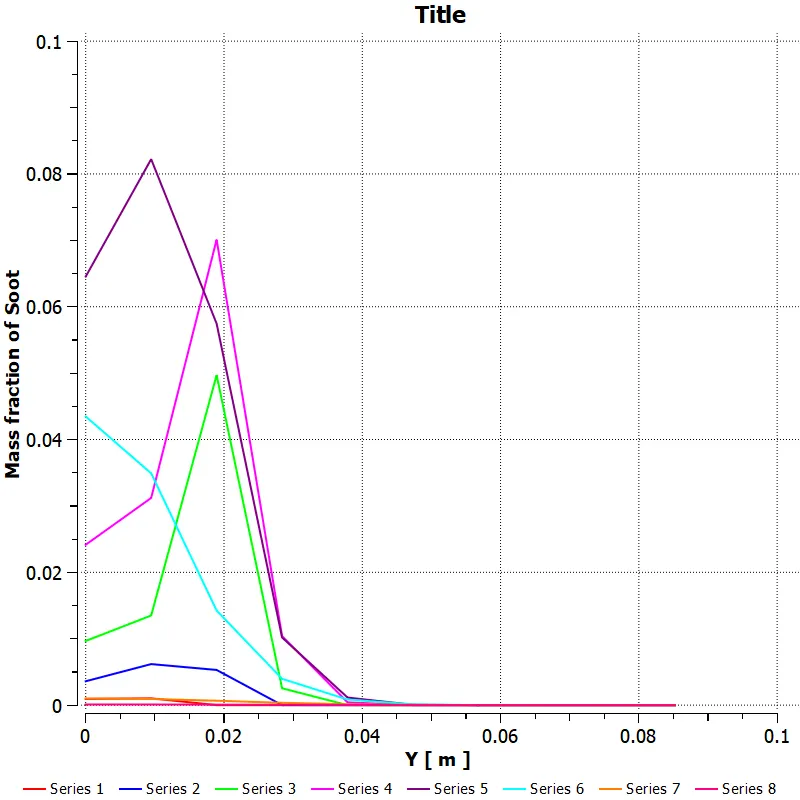
- Case 4 : (30% water) CH4 : H2O = 0.7 : 0.3
- CH4 contour and graph
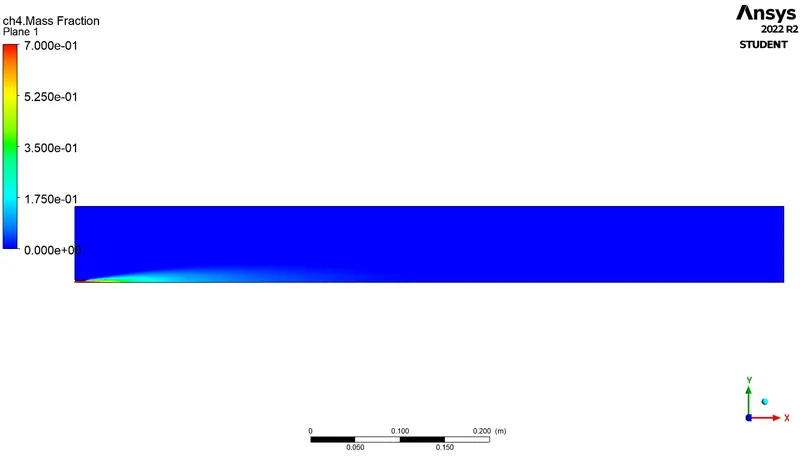
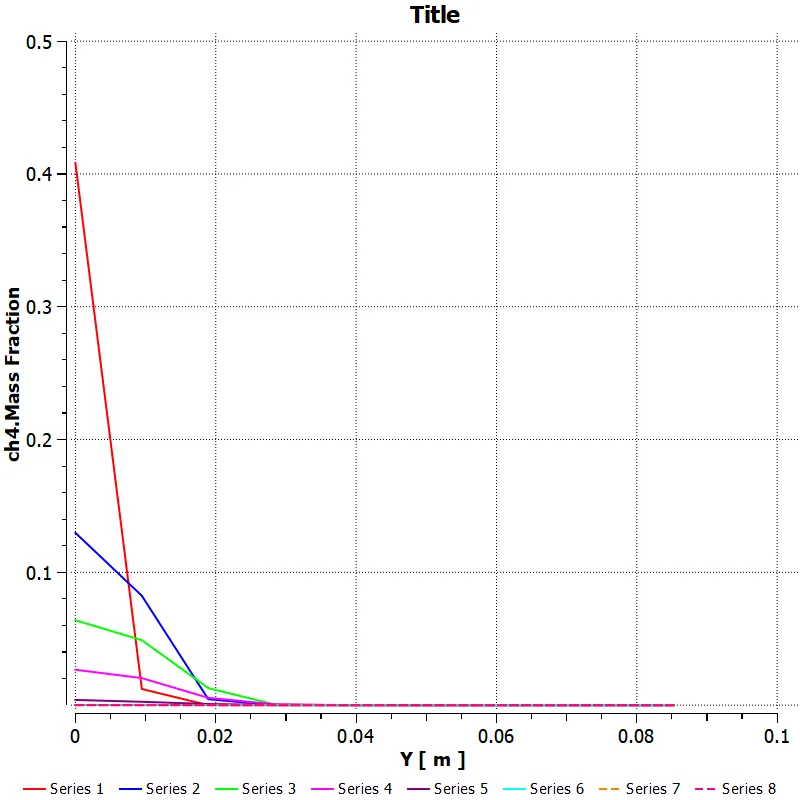
- CO2 contour and graph
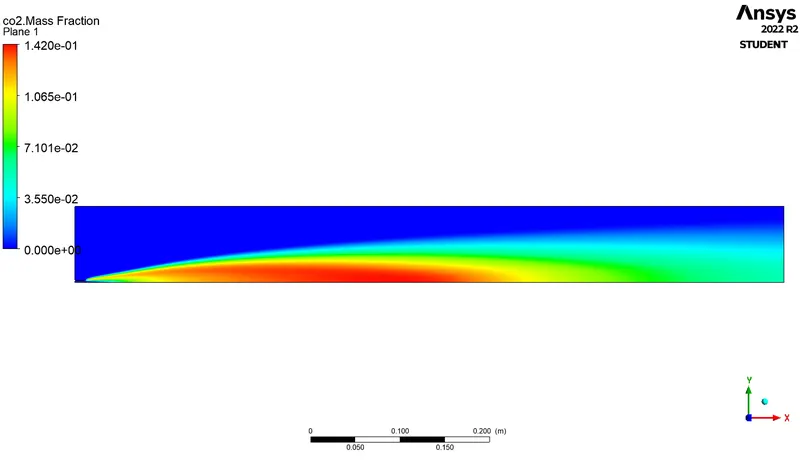
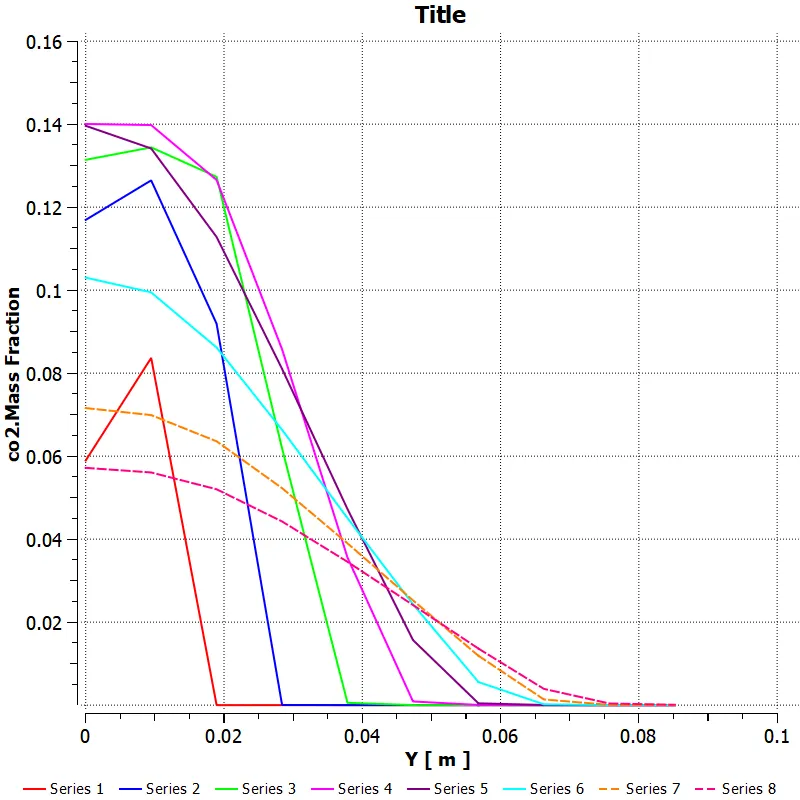
- H2O contour and graph
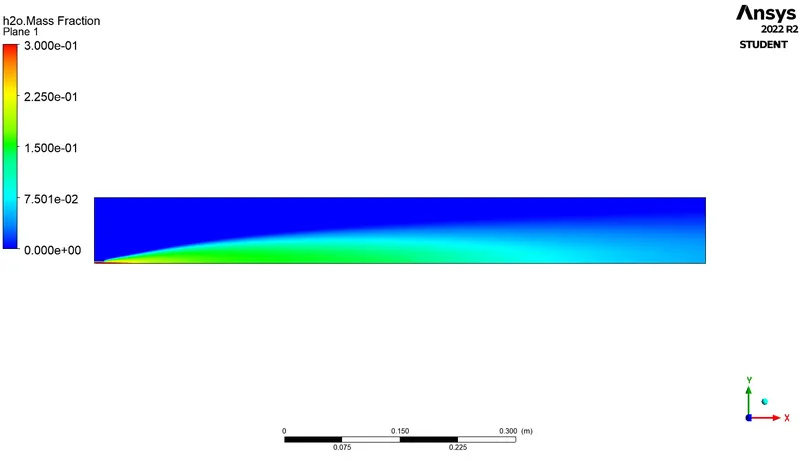
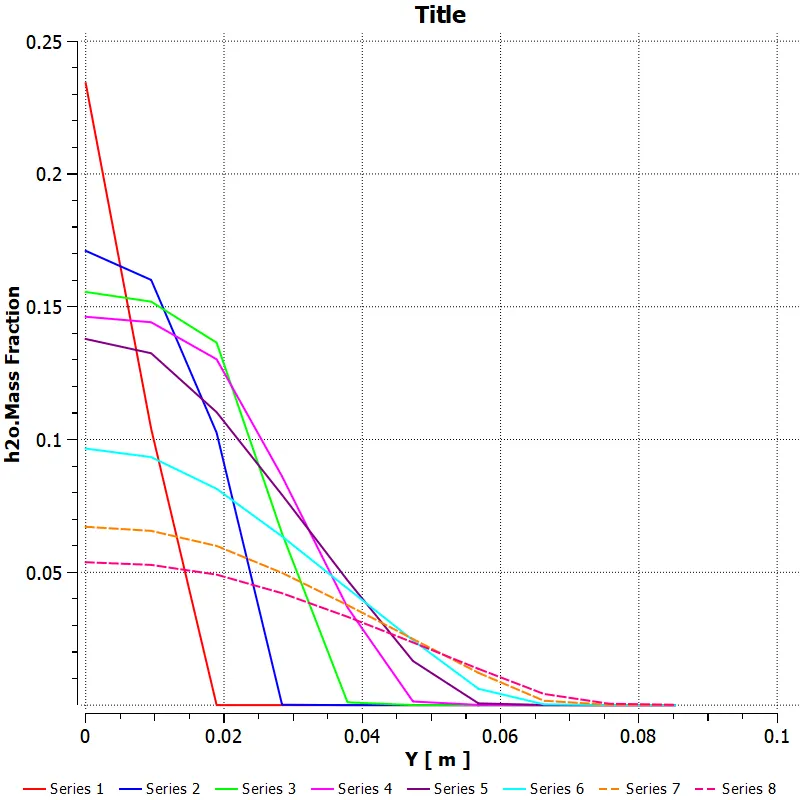
- O2 contour and graph
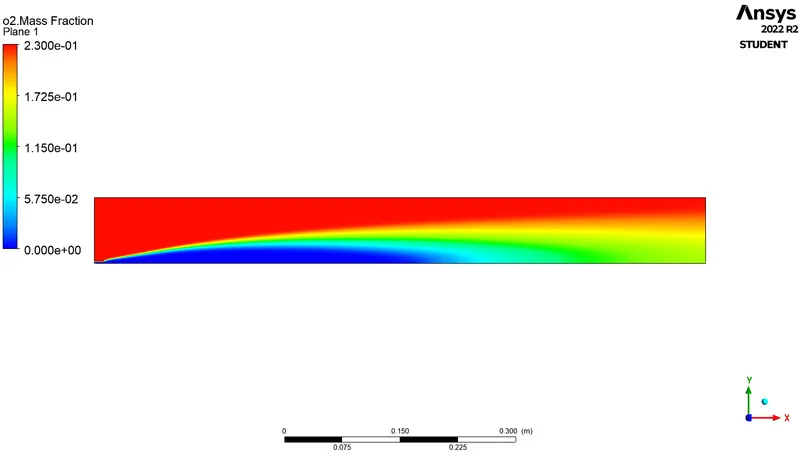
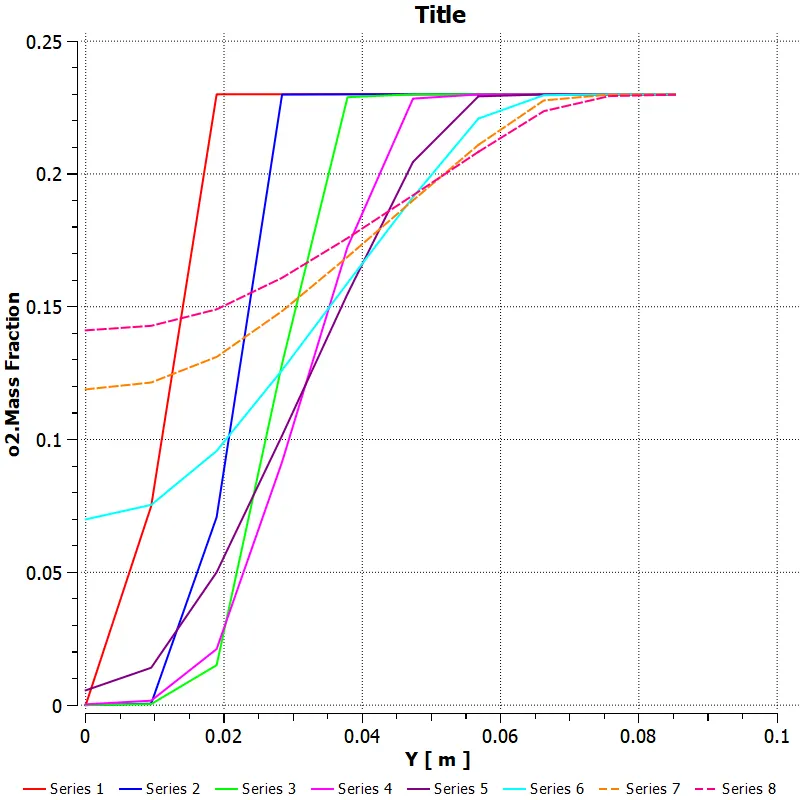
- N2 contour and graph
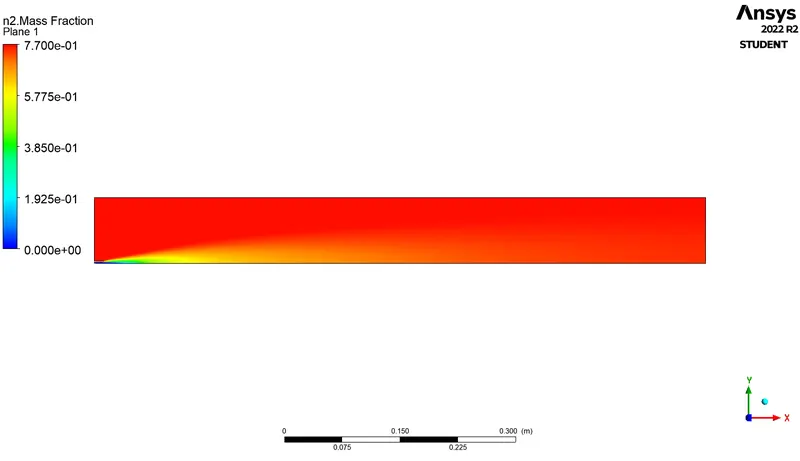
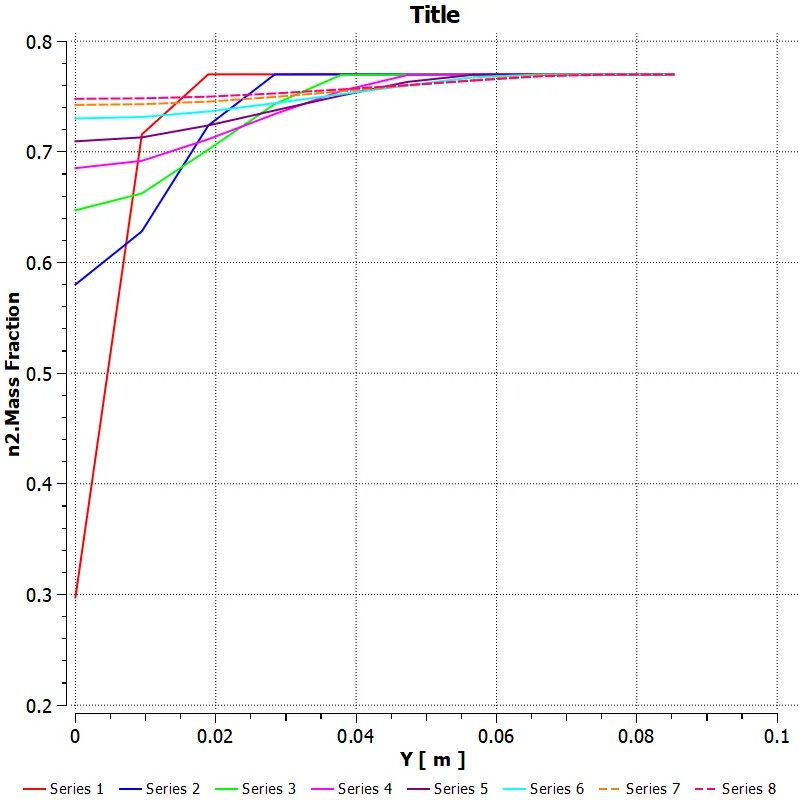
- NOx contour and graph
- Sootcontour and graph
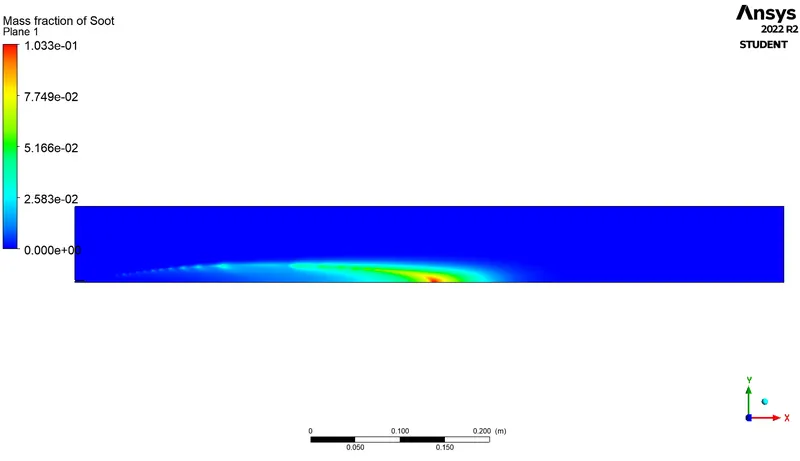
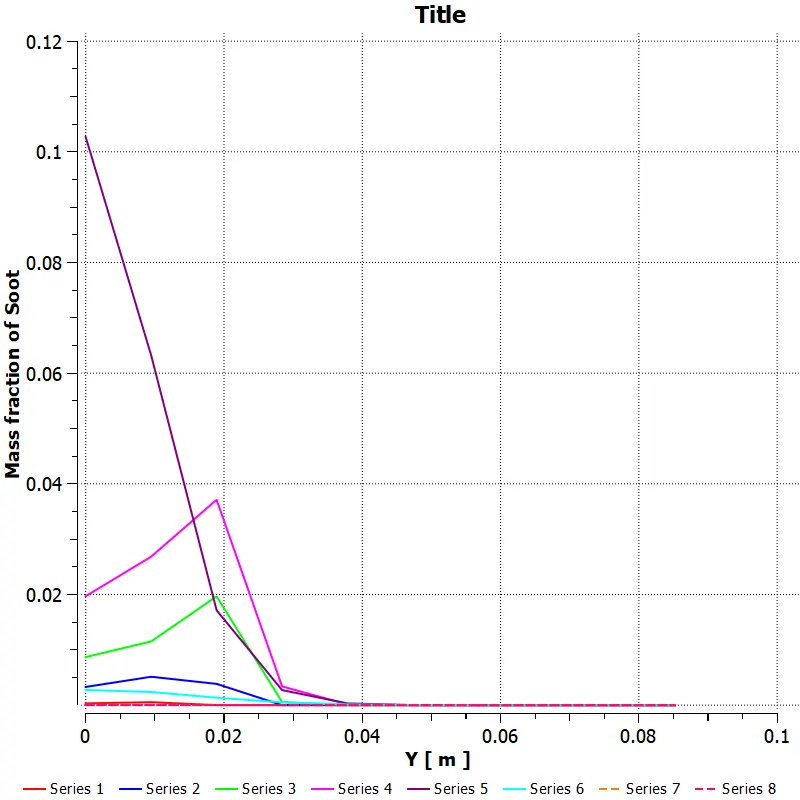
- Paramteric window image
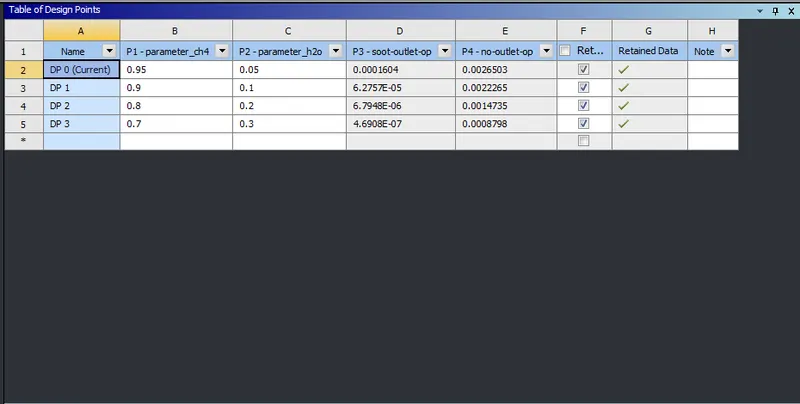 The table represents the CH4 and H2O mass fraction as inpout parameters and the emmission of soot adnd NOx at outlet as output parameters.
- DATA TABLE
Case No. CH4 : H2O Mass fraction of Mass fraction of Temperature
ratio Soot NOx K
- 0.95:0.05 0.0001604 0.0026503 676.87
- 0.9:0.1 0.00006275 0.0022265 656.07
- 0.8:0.2 6.794e-6 0.0014735 614.27
- 0.7:0.3 4.69e-7 0.0008798 572.24
Conclusion :
- Part 1 and Part 2 setup of combustion of natural gas is concluded.
- Combustion of natural gas produces NOx and Soot that are hazardous for human and enviormental health.To reduce the emission of NOx and Soot water in injected with the fuel to prevent huge emission of the pollutant
- To claim prove we have simualted the results by adding H2O with different percentage level from 5 to 30%. From above data table and the contours we can conclude that the addition of water reduces the emissions of pollutants
- H2O addition leads to increase in OH radicals that might have an impact in Soot oxidation and reduces the Soot formed in gas phase.
- Addition of water also reduces the heat generated by combustion that shows the reduction of the temperature with increase in water mass.