Week 10 - Simulating Combustion of Natural Gas.
Project - Air Cooling Battery Thermal Management System
Aim: Create a 4x2 Battery Cell model to Perform Simulation and analyze Air cooling technique on Heat generating Battery
Theory: The battery generates the heat during charging and discharging which causes Thermal run away(Fire exploation), For this, There several techniques were used to make precautions like Cold plate is by liquid cooling technique, Air flow channel layout using natural or forced convection method is by air cooling technique and Material composition of organic, inorganic and eutectic having transition phase which converts solid-liquid, solid-vapour and liquid-vapour is the Phase changing material technique etc., are the method to cool the Battery using Battery thermal management system.
In this challenge we creating a 4x2 battery cell having battery dimension 18mm dia and 65mm height of the cell and for that 4x2 battery cell model we make computational domain(enclosure). Then we will run the simulation by three cases that is air flow over the battery surface with different velocity of 3m/s, 5m/s and 10m/s
Below is the procedure to run steady state simulation
step1:- Right click on Geometry-> click on New space claim->Then creating a 4x2 battery cell-> Lastly do share topology
Image of created battery cell
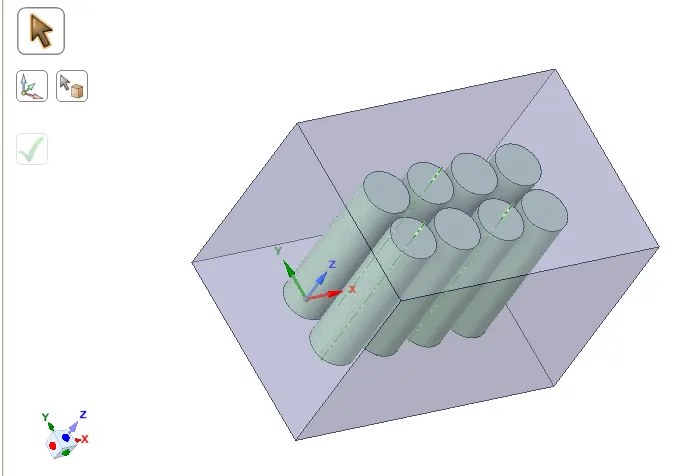
Step2:- Close new space claim window open mesh window->Give 5mm target length->Create inflation layer on battery by giving 0.3 as first layer thickness
Image of cut section meshed model
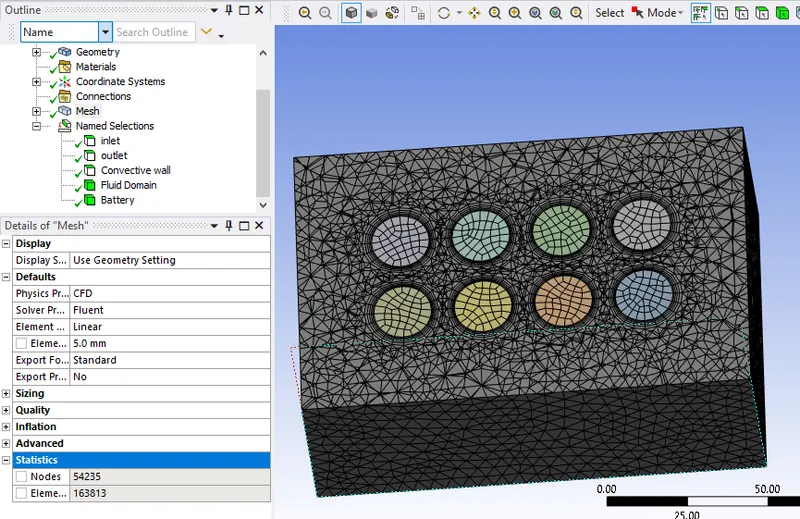
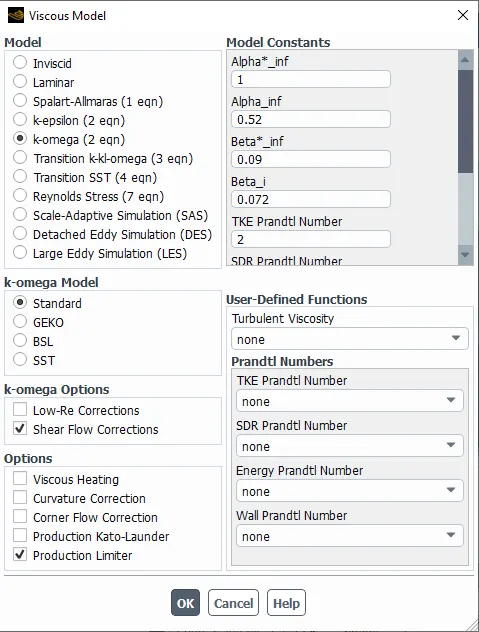
Step3:- Close mesh window open set up window-> Click on physics->Enable energy equation-> select viscous standard k-omega model-> Add lithium in Material->Set the cell zone condition where we choose battery material as lithium and giving heat generation value->Finally give boundary condition
Image of selecting standard k-omega viscous model->Image of Adding lithium in Material->Image of setting cell zone condition where we choose battery material as lithium and giving heat generation value->Finally give boundary condition
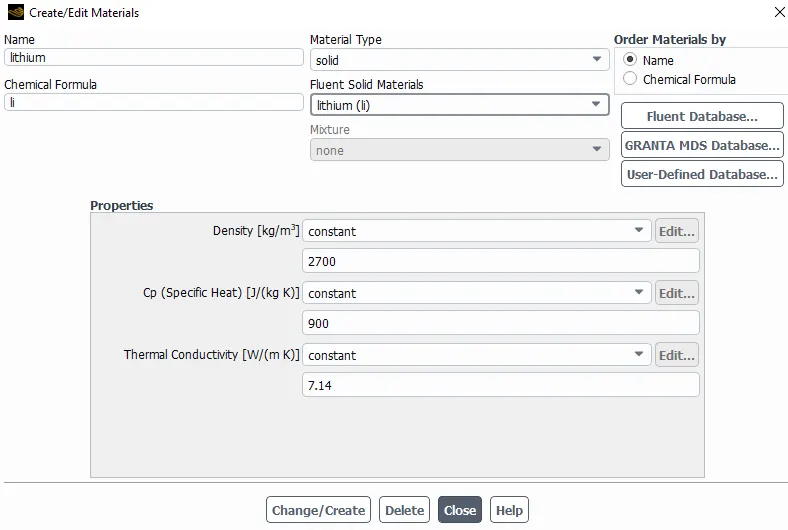
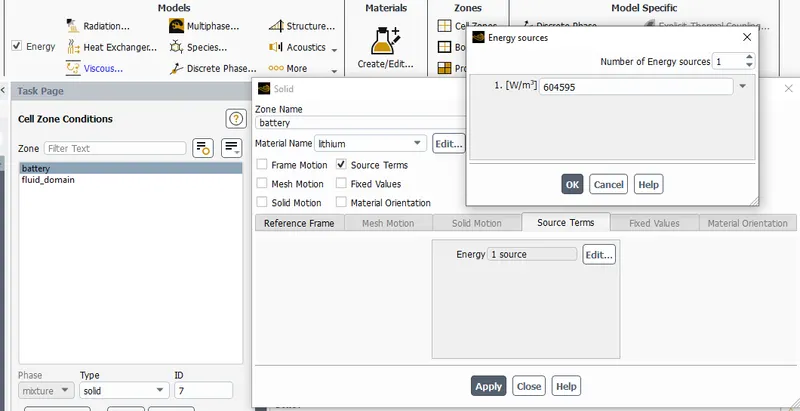
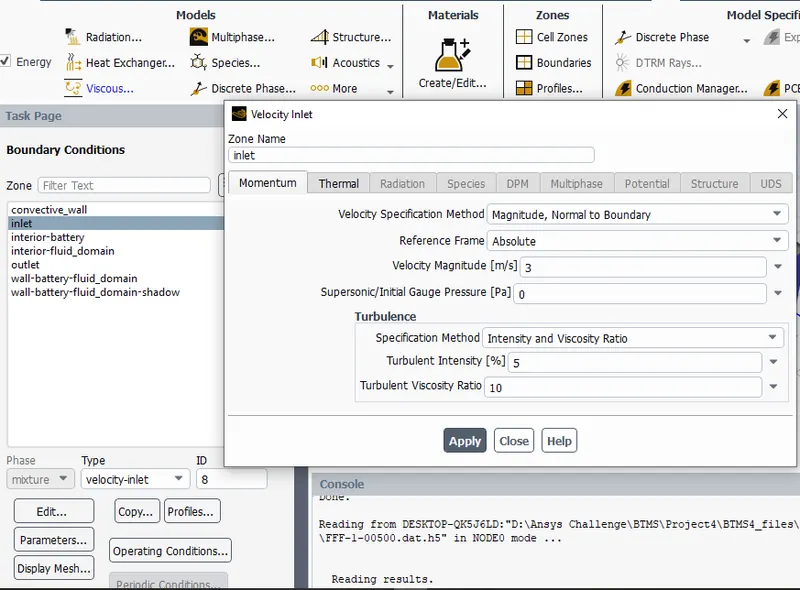
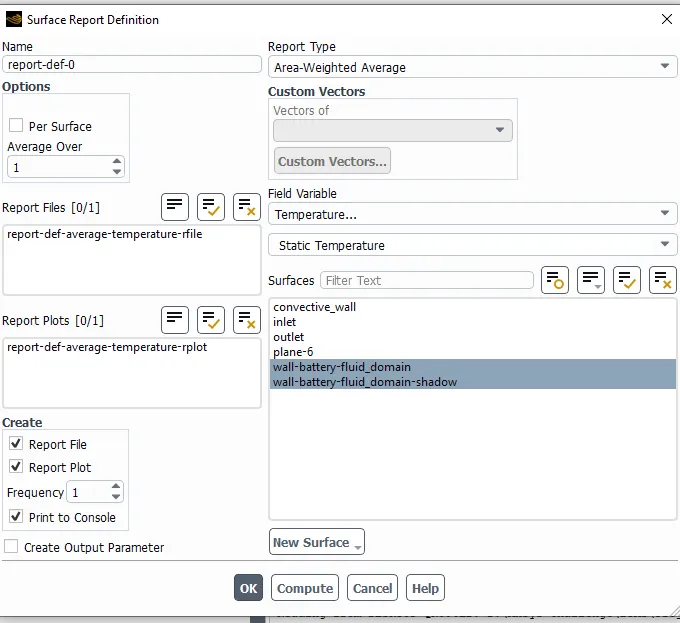
Step4:- Do Initialize->Report the area weightage average of temperature->Create temperature contour of battery->Create solution animation->Do auto save to preview animation in post process->Lastly run the calculation upto solution converts to converge
Image of creating area weightage average of temperature report
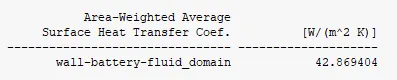
Step5:- After running the simulation we validate result in solution page, The results are area weightage average temperature of battery plot and its result on console, surface heat transfer coefficient result on console, Scaled residual plot
Image of computing area weightage average temperature of battery result on console
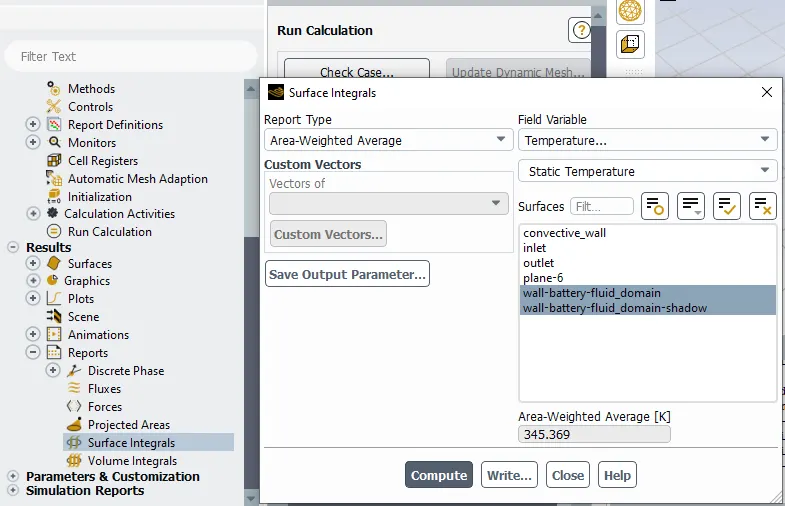
Image of computing area weightage average surface heat transfer coefficient of battery result on console
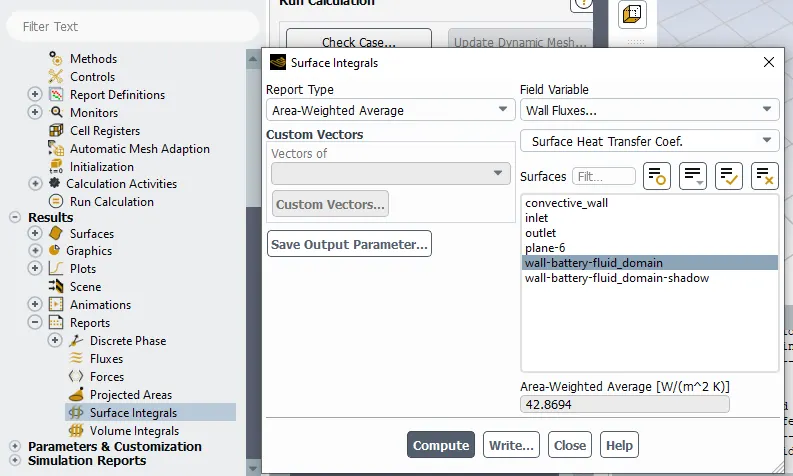
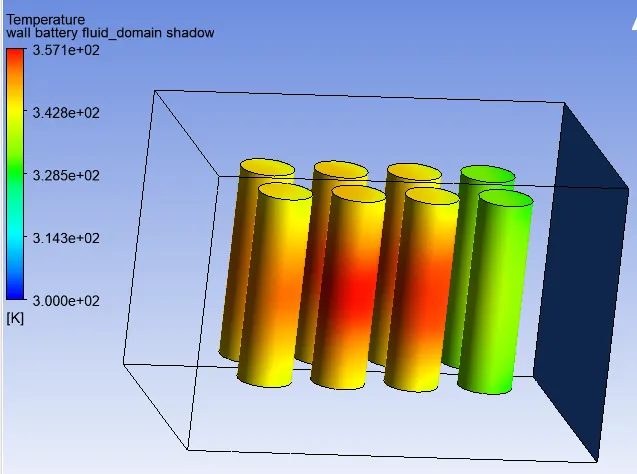
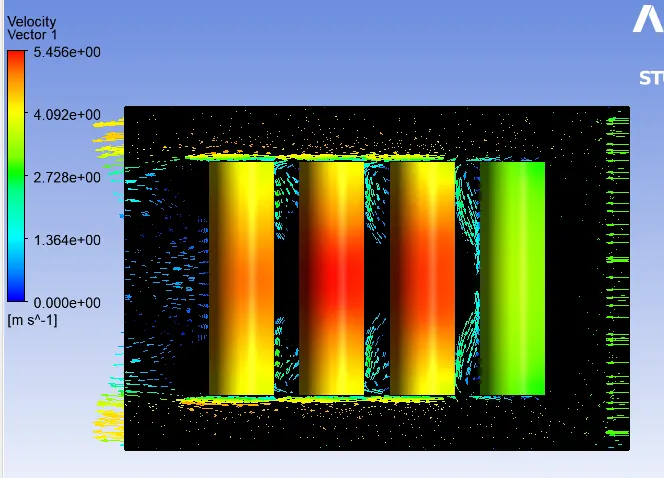
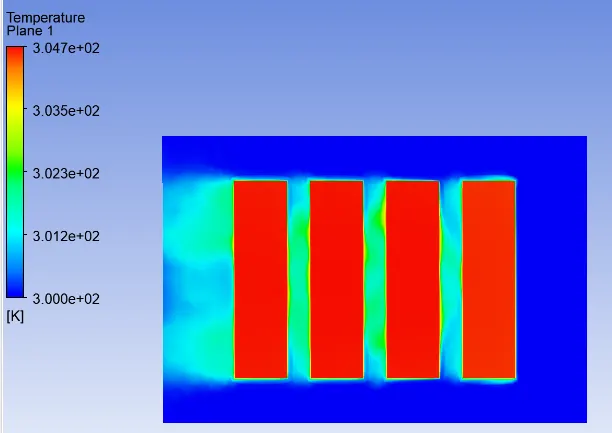
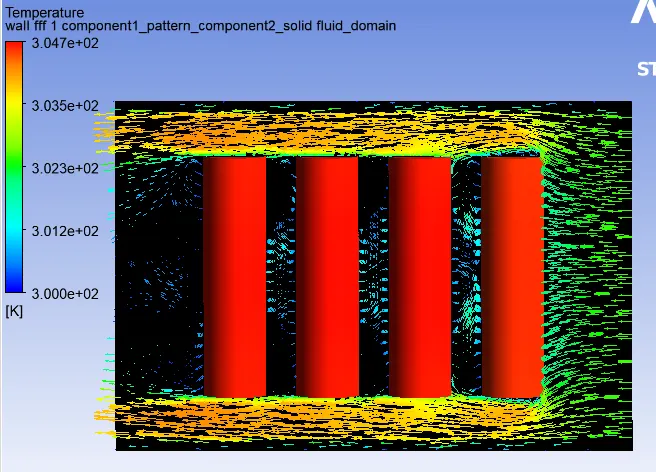
Step6:- Finally we validate the temperature contour plot, velocity vector plot, and creating the animation file in post processing by this we run the simulation sucessfully
The procedure to run unsteady state simulation:
The procedure to run transient state simulation is simillar as steady state but small difference is we disable the steady state condition and enabling the transient state condition and also while run the calculation we giving time step size and the number of time step value sometime to run with lower time stepsize to larger time step size we read the data file from Journal
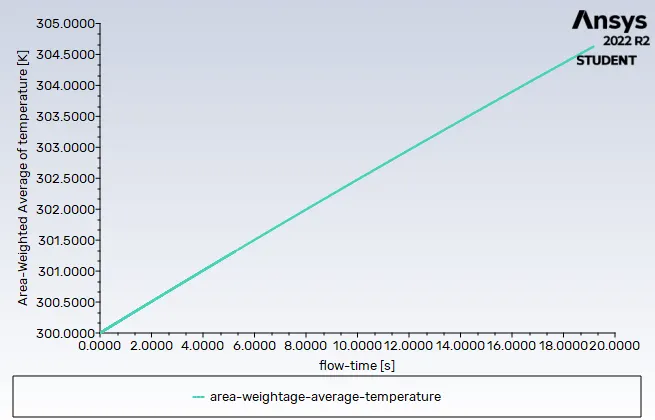
By this way we runs the simulation successfully and also we validate the end result which at 19sec the battery temperature reaches from 300k to 304k, and finally finds the animation result of battery which changing it's temperature with respect to each time step size
Below are the results of outcome from 4cases:
- Case1- 3m/s velocity of air flow over battery
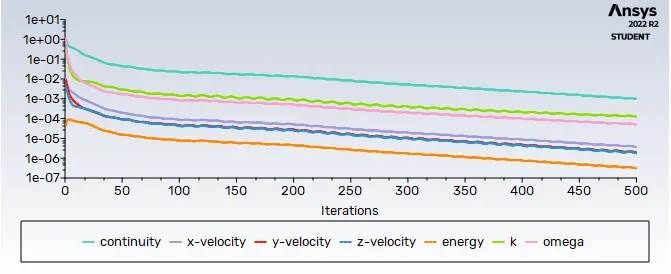
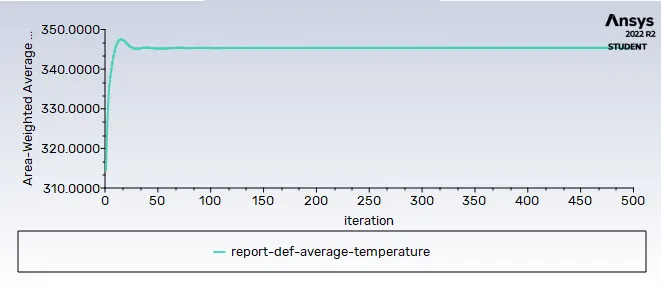


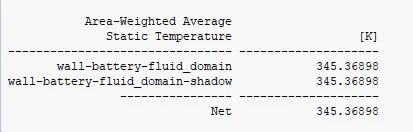
Animation of the result
- Case2- 5m/s velocity of air flow over battery
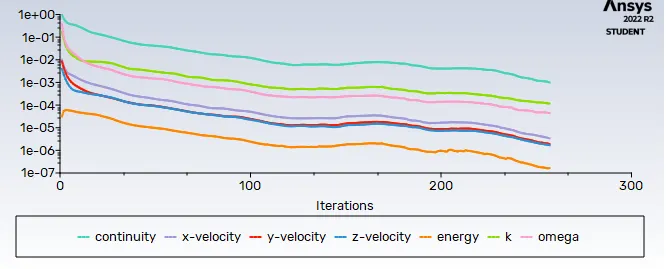
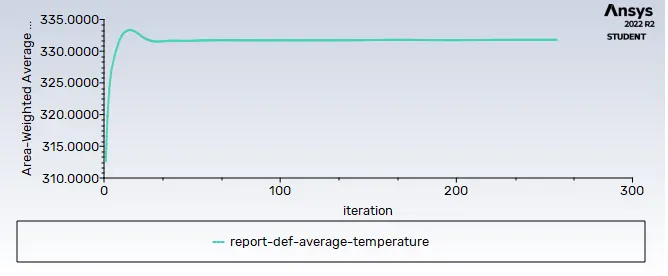

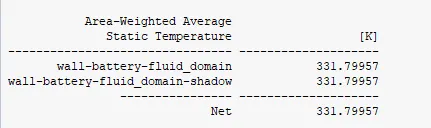
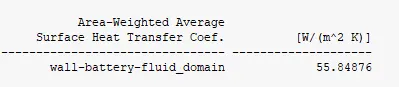
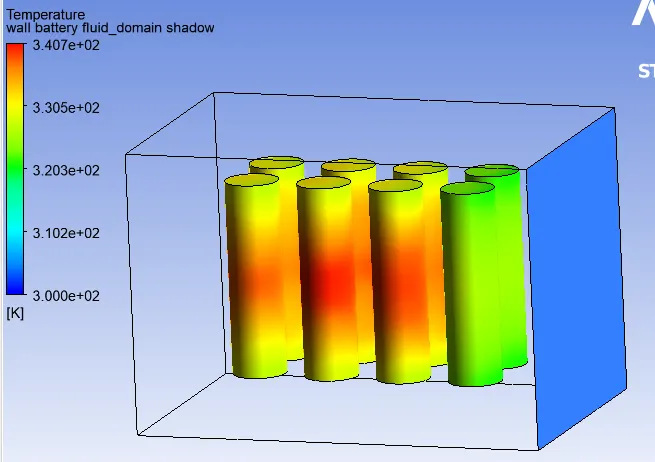
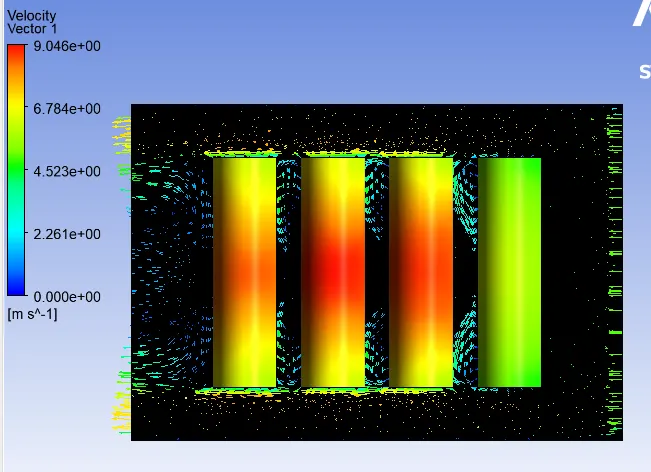
Animation of the result
- Case3- 10m/s velocity of air flow over battery
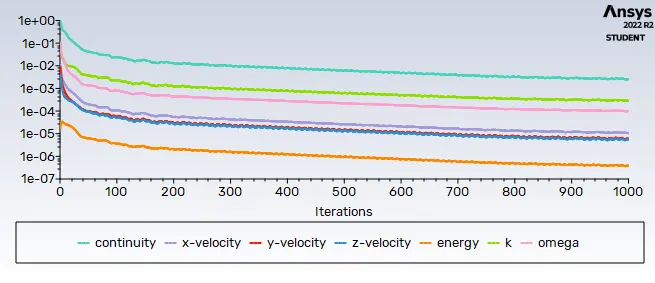
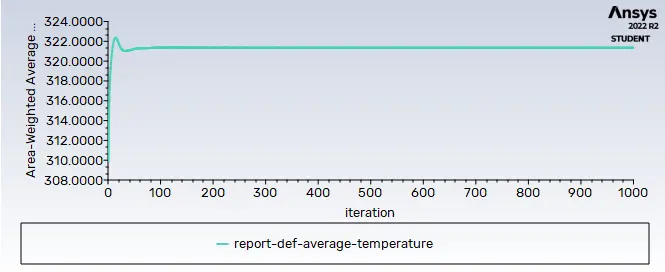

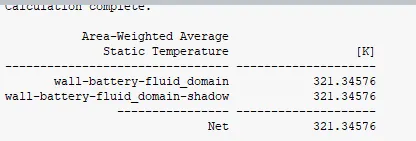
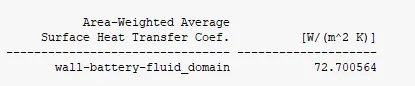
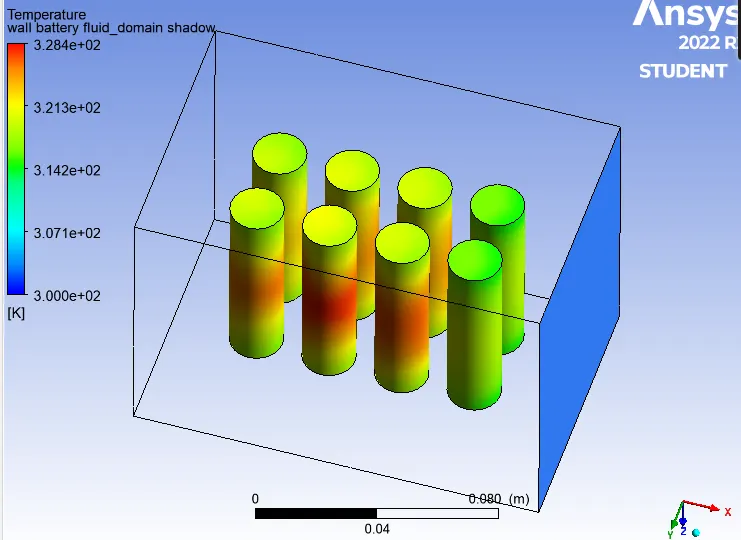
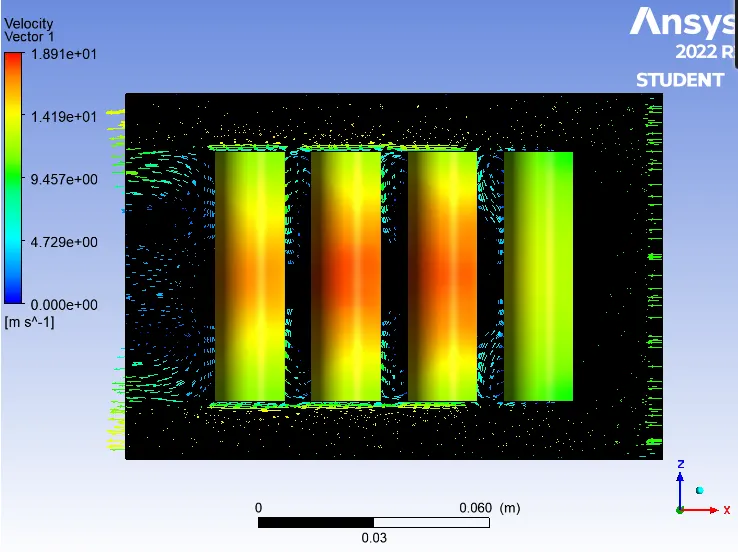
Animation of the result
- Case4- 5m/s velocity of air flow over battery with transient state condition
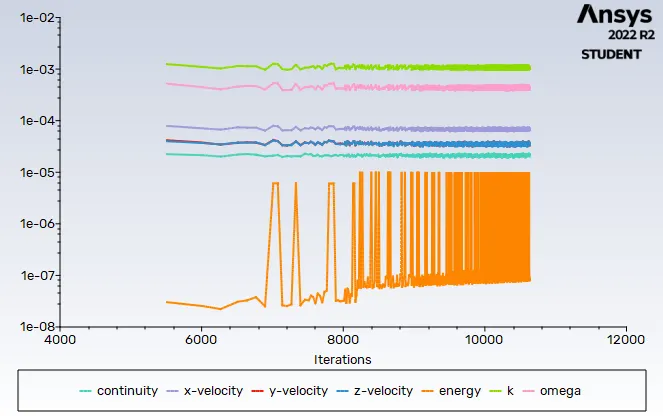




Animation of the result
Result on tabular column:-
| Velocity of air flow over battery | State of condition | Battery reching net temperature | Surface heat transfer coefficient of battery in w/mk |
| 3m/s | Steady | 345k | 43 |
| 5m/s | Steady | 331k | 55 |
| 10m/s | Steady | 321k | 72 |
| 5m/s | unSteady | 304.700k( at 19 sec) | 55 |
Final report definition: By Validating the above simulated result we conclude that velocity with 10m/s and giving gap 8mm between battery cell will give better cooloing effect
Conclusion: The air cooling Battery thermal Managment system by following above procedure Simulated successfully with proper result