Week 10 - Simulating Combustion of Natural Gas.
AIM:
1. To simulate the combustion of natural gas in a combustor.
2. To plot the mass fractions of different species (CH4, O2, N2, CO2, H2O, NOx, soot).
3. To add water to the fuel and analyze the formation of soot and NOx pollutants.
Introduction :
Combustion reactions:
All combustion reactions fall into the pattern: fuel + O2 → CO2 + H2O
The fuel can be almost anything including methane (CH4), propane (C3H8), butane (C4H10), octane (C8H18) or
sugar (C6H12O6).
CH4 + 2 O2 → CO2 + 2 H2O + energy
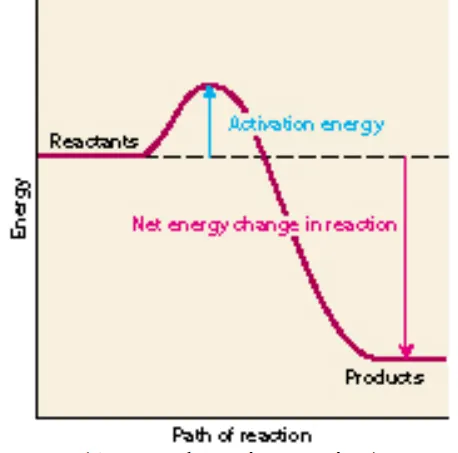
The combustion of methane is exothermic i.e, it releases energy. The energies of the products are lower than the energies of the reactants. The excess energy is released as heat and light.
If you mix methane and oxygen together, a reaction does not occur right away. There is a barrier to the reaction. This barrier is due to the fact that to make CO2 and H2O we have to break 4 carbon-hydrogen bonds and some oxygen-oxygen bonds. From this initial energy investment, however, we get a larger energy payoff when the carbon-oxygen and hydrogen-oxygen bonds are formed.

The energy barrier is called the activation energy. To overcome the initial energy barrier, an ignition source is used.
In this study, we oxidize the fuel with air which includes both O2 and N2.
`CH_4 + ar (O_2 + 3.76N_2) to aCO_2+bH_2 O+cN_2`
After balancing the reaction `CH_4+2(O_2+3.76N_2)to CO_2+2H_2O+7.52N_2 + NO_x + soot`
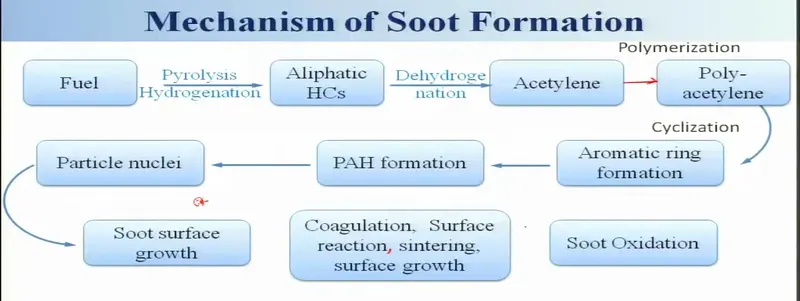
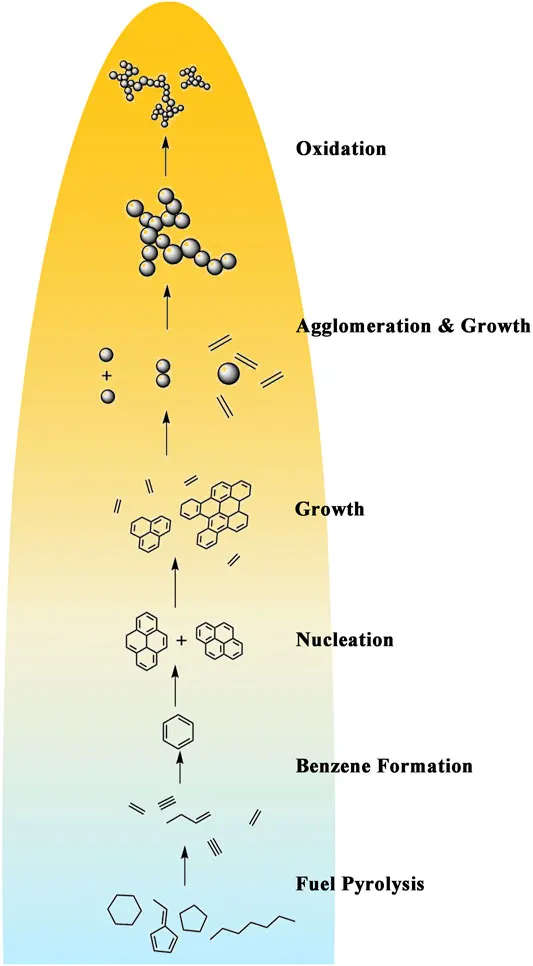
The NOx pollutants and soot will also be formed which is considered a side effect of the combustion process. The production of these carbon nanoparticles entails a reduction in combustion efficiency, as well as a detrimental effect on climate change and human health. The mechanism of soot formation takes place in different ways, depending on various factors like temperature, fuel type, etc, and is still under research. However, the general mechanism is described below:
In any CFD analysis, the workflow that is followed is
Setting up the geometry ----> Meshing ----> setting up the solver ---->solving ---->post-processing results
step-1 Setting up the geometry :
First, the pre-designed geometry of the combustion chamber is imported to the SpaceClaim module. The geometry consists of three cylinders with the same axis.
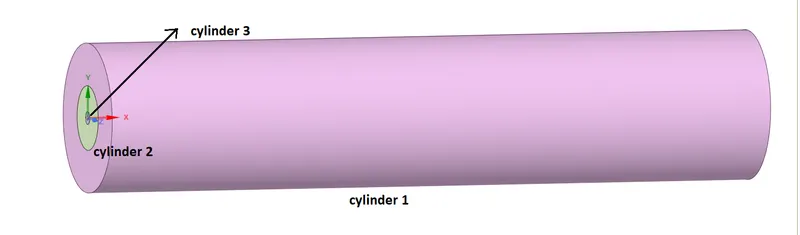
3D view of the combustion chamber
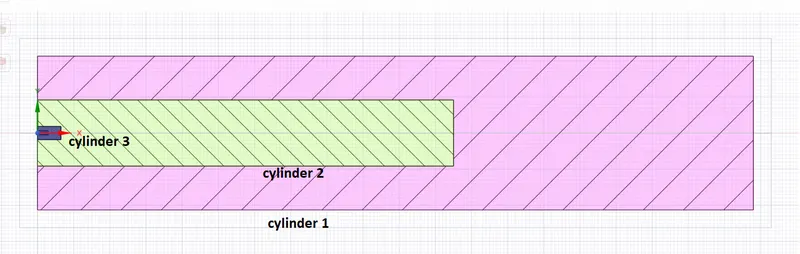
crossectional view of the combustion chamber
We are interested in conducting a 2D axisymmetric simulation, the three cylinders are merged into a single component using the combine feature.
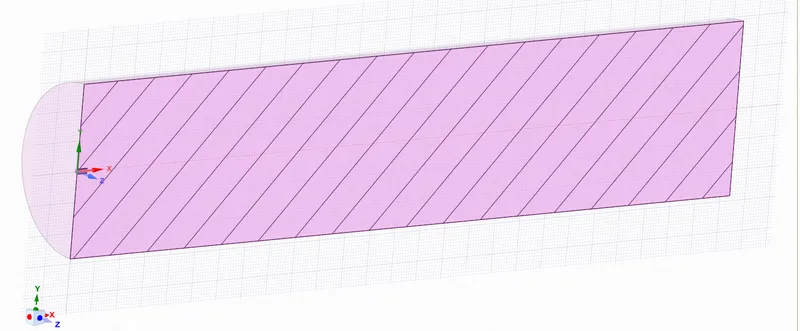
crossectional view of the combined geometry
Then, the combined geometry is split, using the split body feature across the z direction and y direction, to get a sector of the combustion chamber.
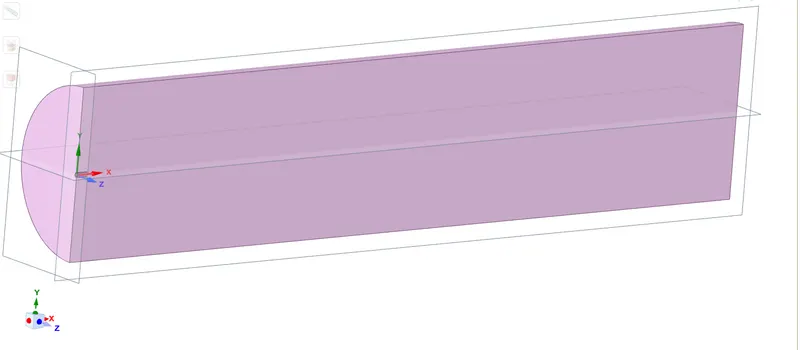
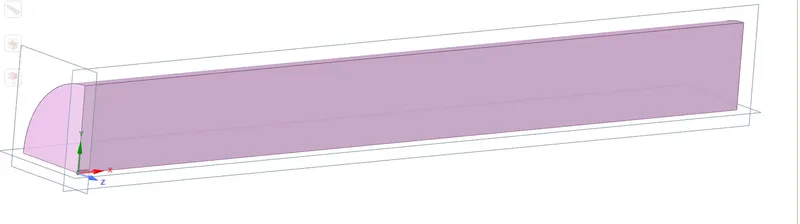
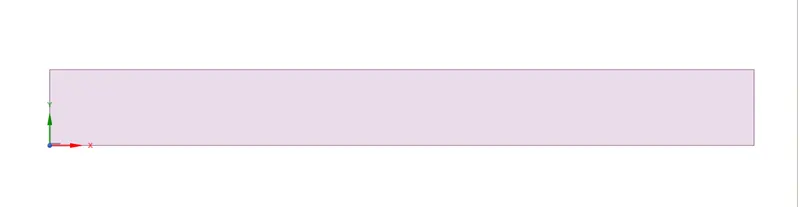
Final extracted 2D plane
step-2 Creating the mesh:
Meshing is the process of generating a grid i.e, dividing complex geometries into elements that can be used to discretize a domain. An automated mesh is generated with an element size of 5mm and proximity is captured with 3 layers near the gap.
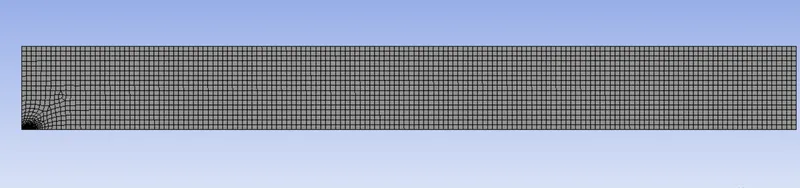
Then the appropriate edges are selected and named accordingly.
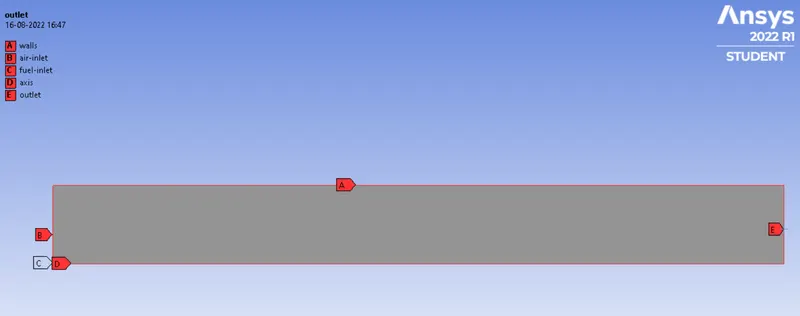
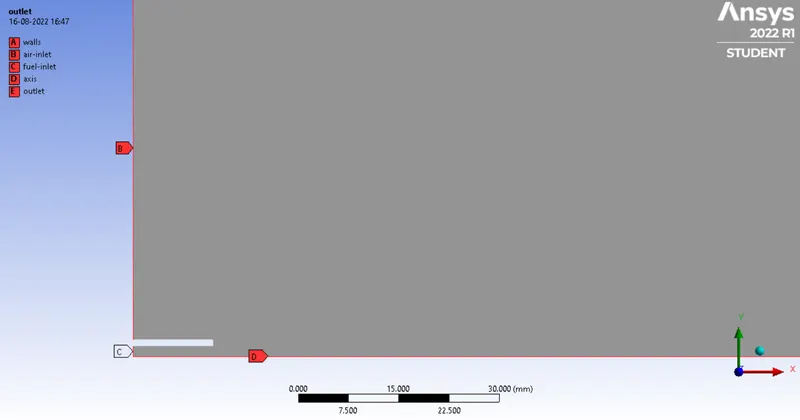
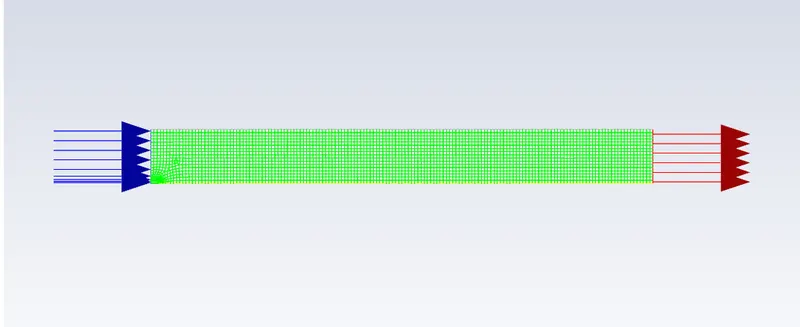
To get more accurate results, mesh refinement is done with an element size of 1mm and 5 layers for capturing the proximity near the gap.

refined case(67598 elements & 68522 nodes)
step-3 Setting up the solver in Ansys Fluent:
In this step, we define parameters like initial and boundary conditions, materials used, time steps(for transient), turbulence model, etc., which captures the physics to be simulated.
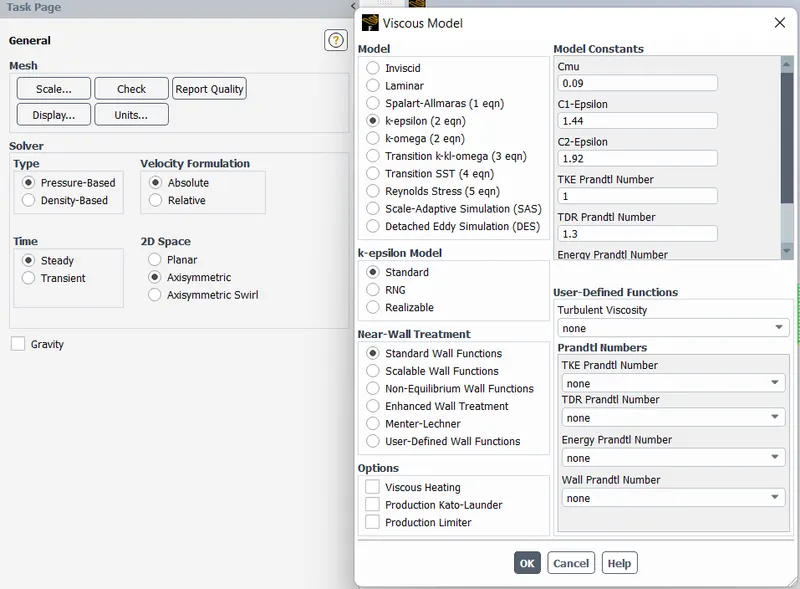
The axisymmetric option is checked in the general settings. Coming to turbulence modeling, the standard k-epsilon turbulence model is selected.
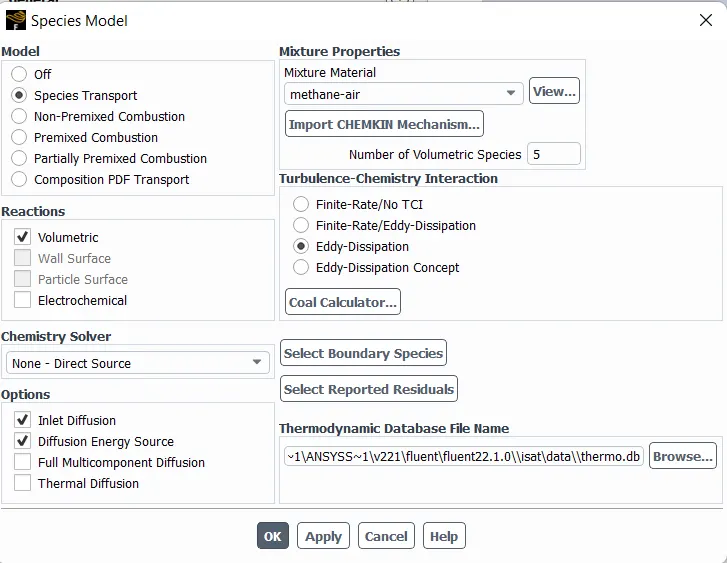
Species Transport and Reaction modeling:
ANSYS Fluent can model the mixing and transport of chemical species by solving conservation equations describing convection, diffusion, and reaction sources for each component species. Multiple simultaneous chemical reactions can be modeled, with reactions occurring in the bulk phase (volumetric reactions) and/or on wall or particle surfaces, and in the porous region.
species transport equation :

where Ri is the net rate of production of species by chemical reaction
Si is the rate of creation by addition from the dispersed phase plus any user-defined sources.
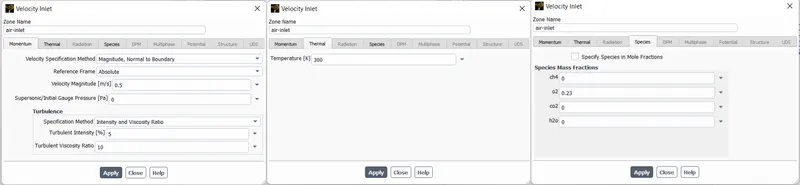
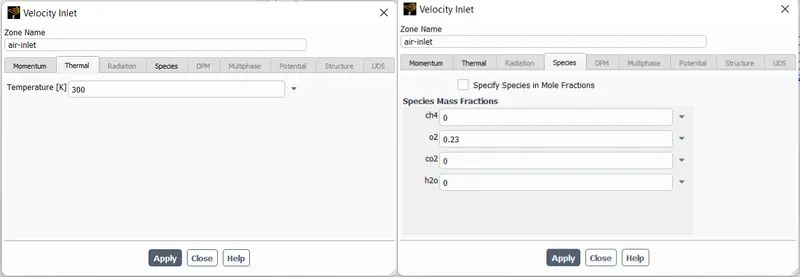
To include the diffusive component of the mixture at the inlet, the inlet diffusion term is checked.
Eddy dissipation model:
Most fuels are fast burning, and the overall rate of reaction is controlled by turbulent mixing. In nonpremixed flames, turbulence slowly convects/mixes fuel and oxidizer into the reaction zones where they burn quickly. The net production rate of any species i due to the reaction r is given by :
`R_(i,r)= v'_(i,r) M_(w,i) ABrho(epsi)/(k)[(sumpY_p)/(sumv''_(j,r)M_(j,r))]`
where v' - stoichiometric coefficients of the products
v'' - stoichiometric coefficients of the reactants
Yp - the mass fraction of any product species
Yr - the mass fraction of any reactant species
The chemical reaction rate is governed by the eddy-mixing time scale k/epsilon. Combustion
proceeds whenever turbulence is present (k/epsilon > 0), and an ignition source is not required to initiate
combustion.
After setting up the model for species transport, the NOx pollutant and soot models have to be selected.
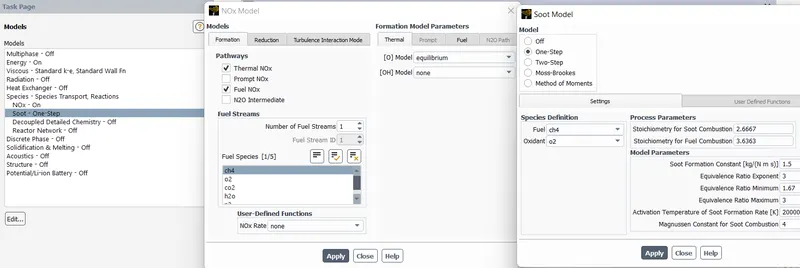
The governing equations for NOx transport :

YNo - mass fraction of NO species
D - diffusion coefficient
SNo - source term
The tracking of nitrogen-containing intermediate species is important. ANSYS Fluent solves a transport equation for the HCN, NH3, or NO2 species, whose governing equations are similar ( instead of the mass fraction of NO, HCN/NH3 will be solved).
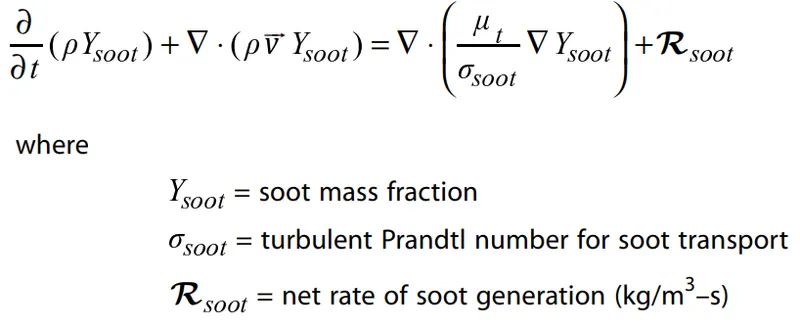
The governing equations for soot transport( one-step model):
Then the hybrid initialization is done and the solver is run.
Step-4: post-processing the results
PART-1
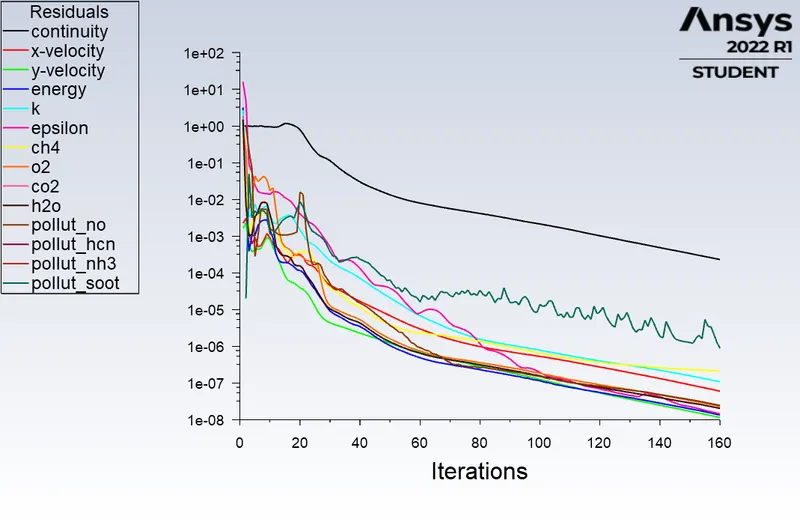
A. Residuals :
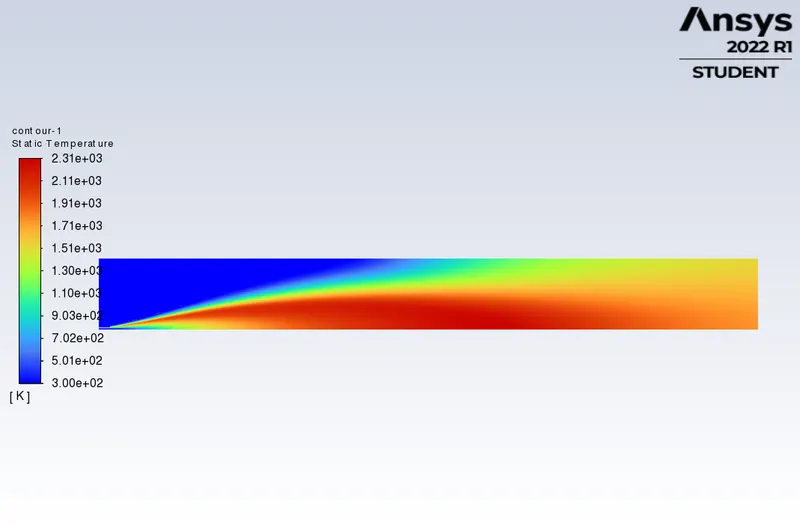
B. Temperature contour
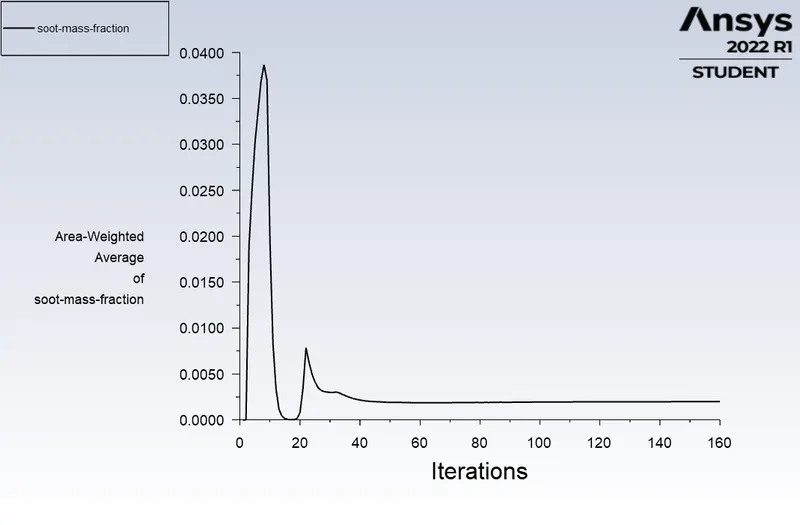
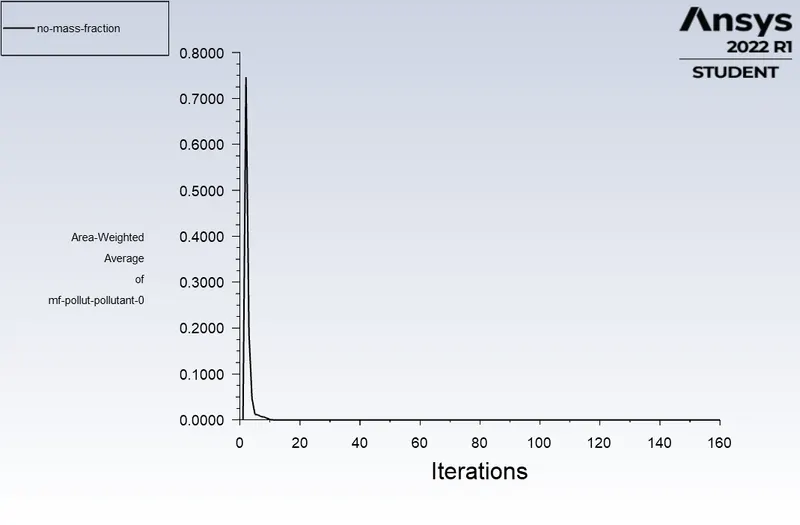
C. Reports
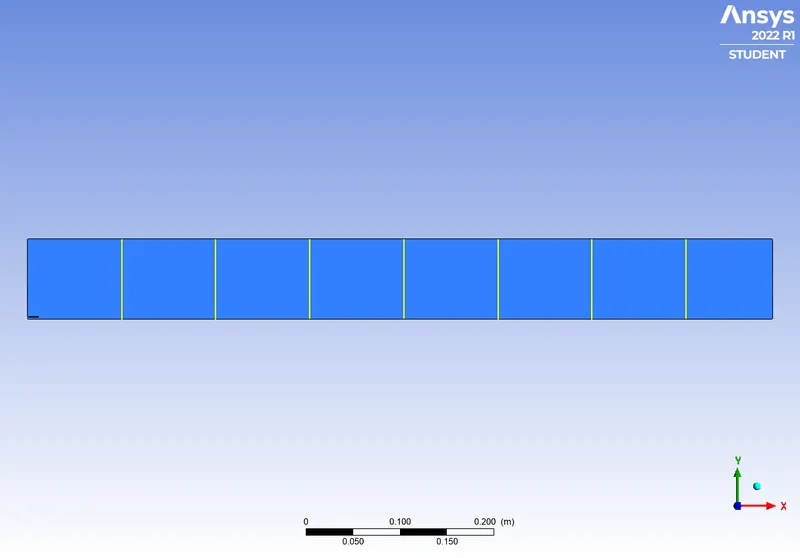
Line probes location
D. Mass fraction of CH4
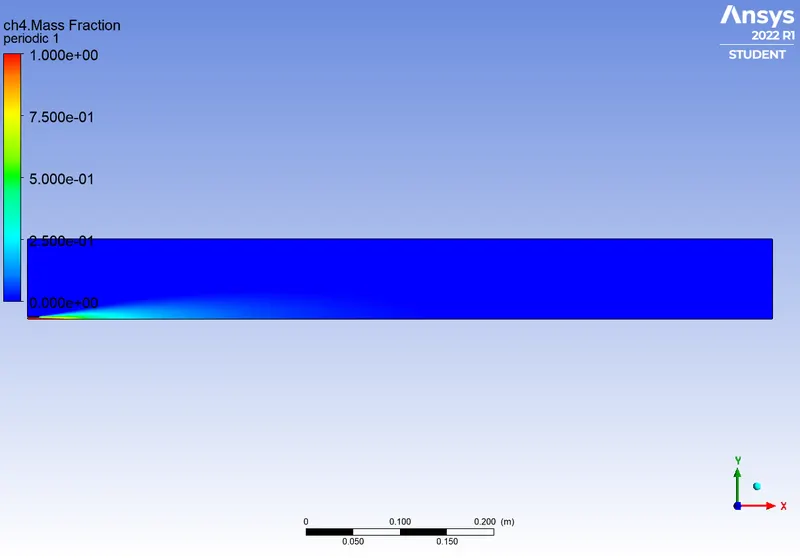
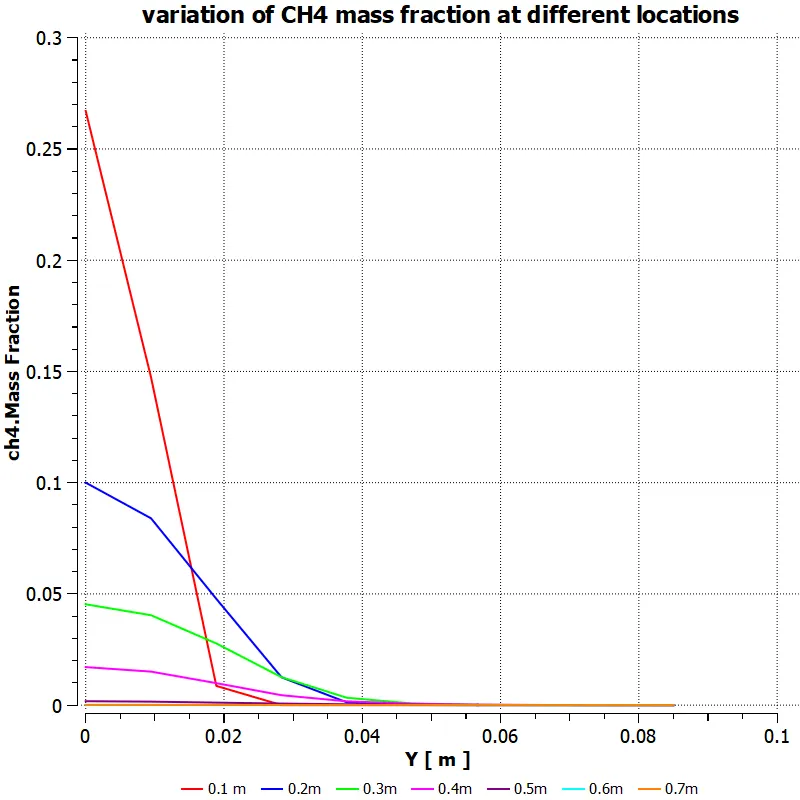
E. Mass fraction of O2
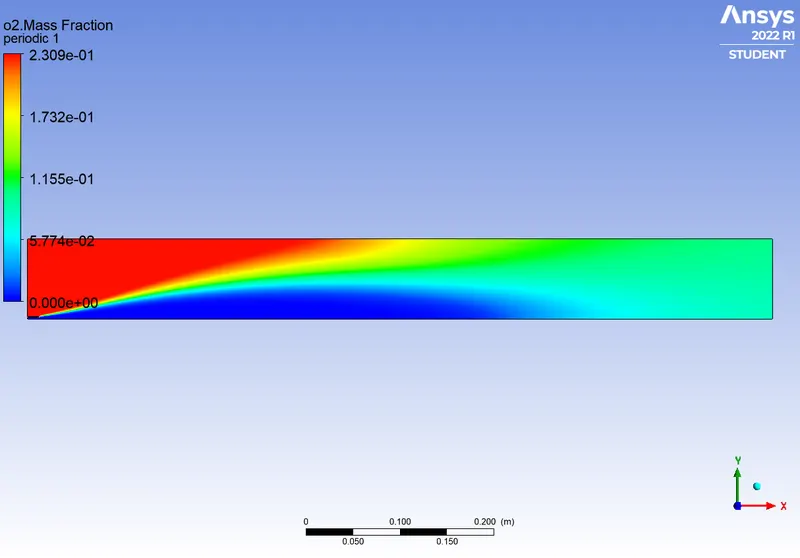
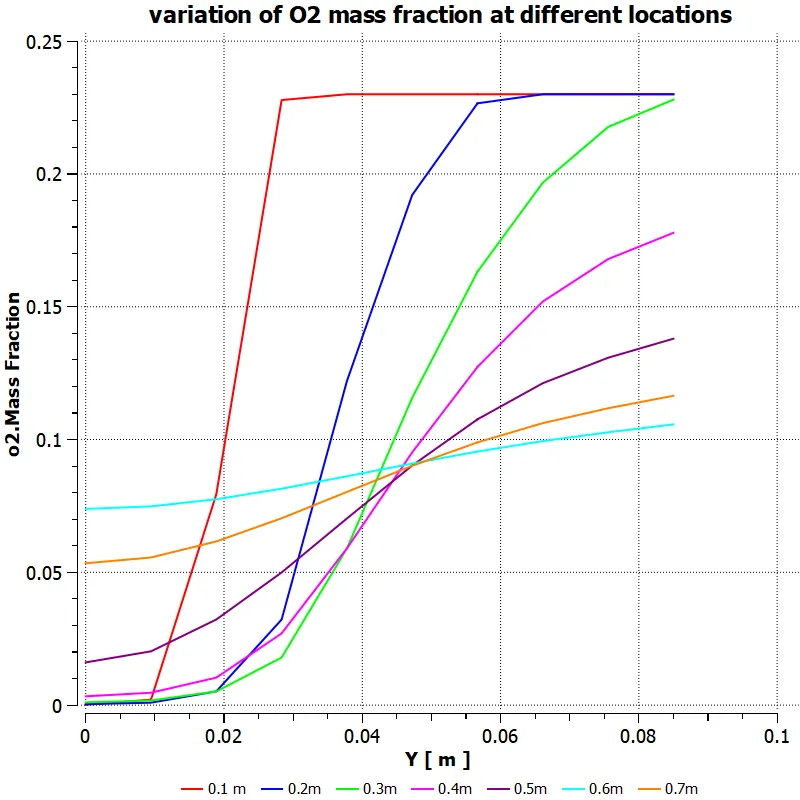
F. Mass fraction of N2
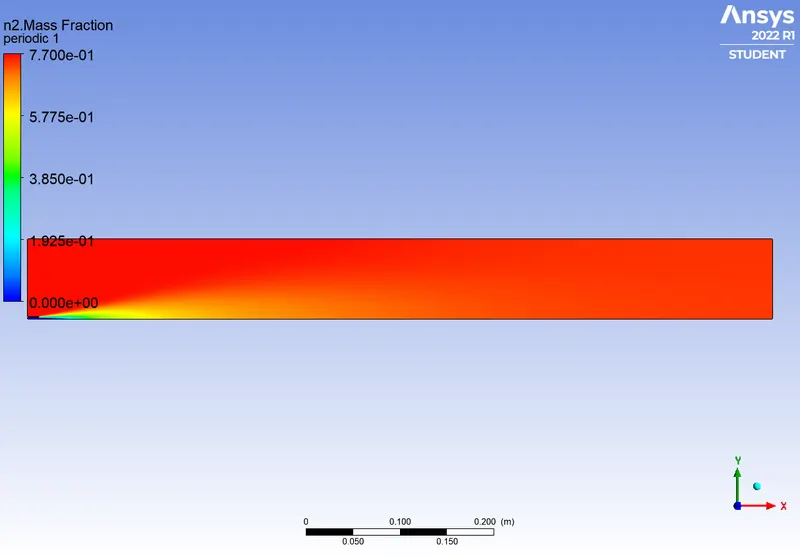
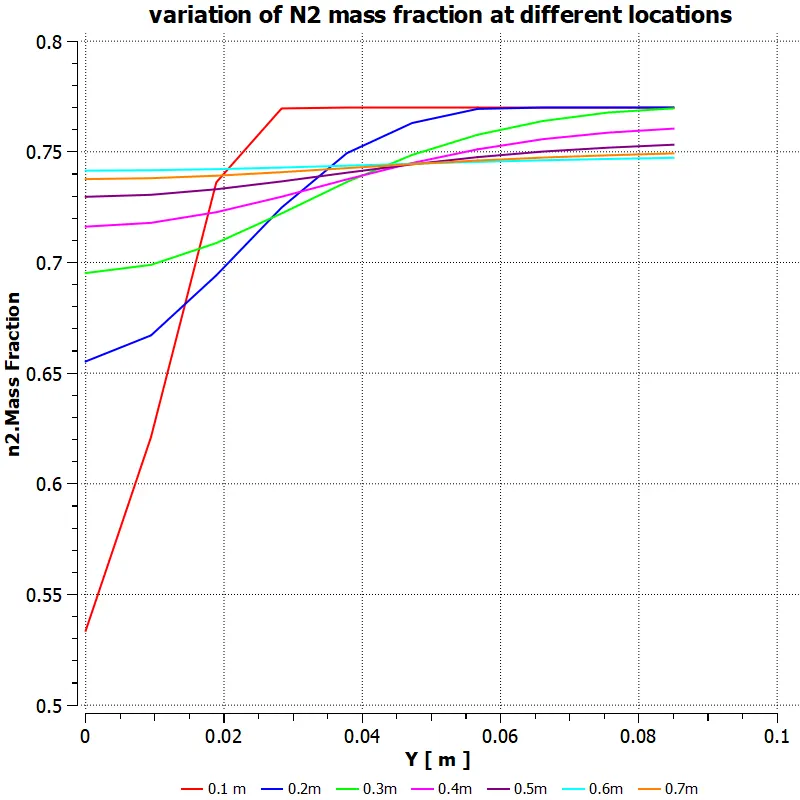
G. Mass fraction of CO2
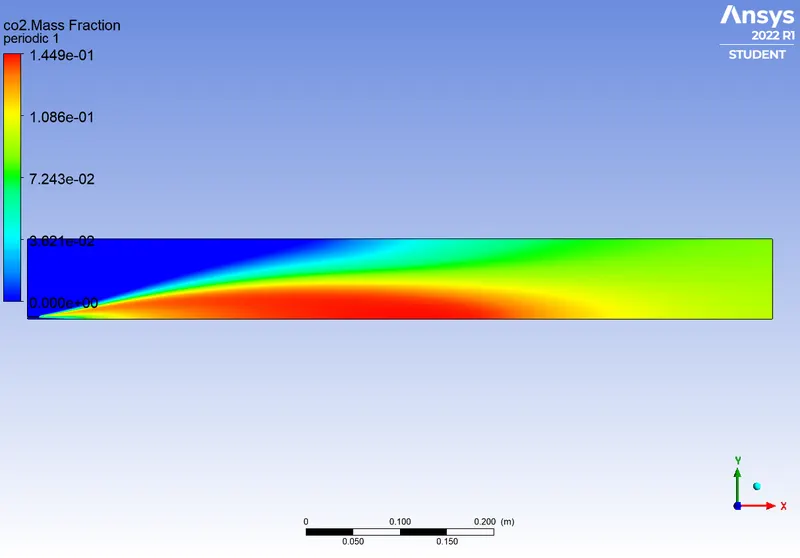
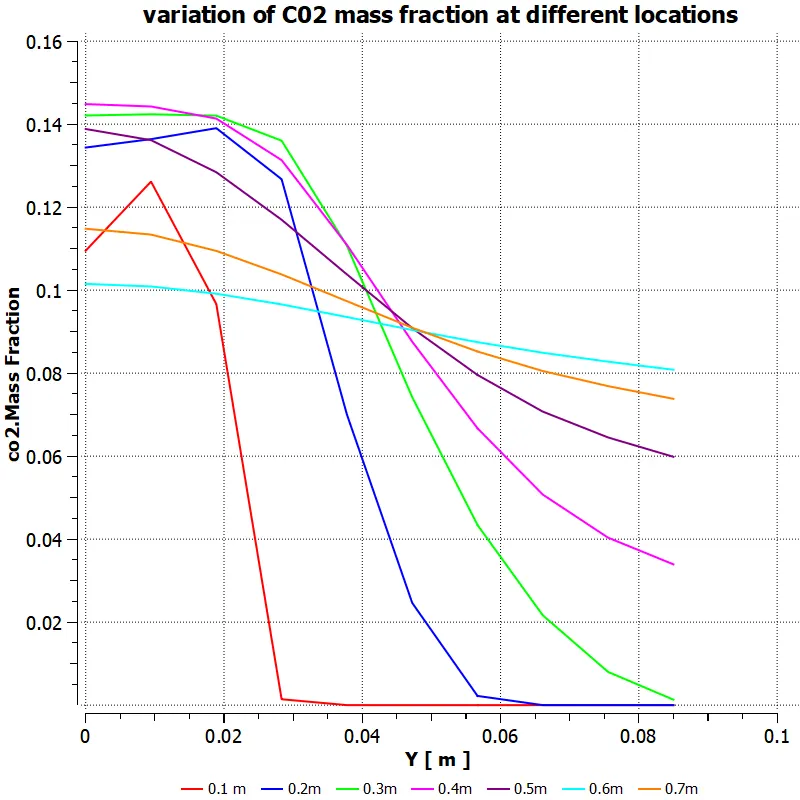
H. Mass fraction of H2O
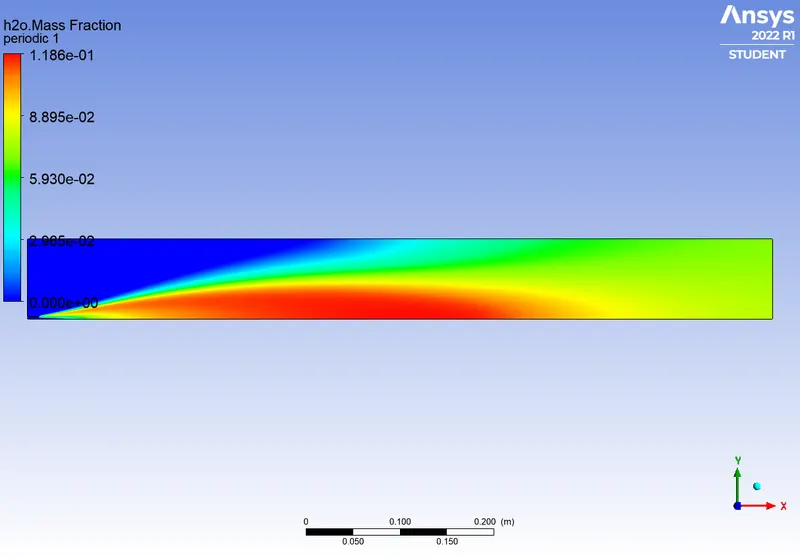
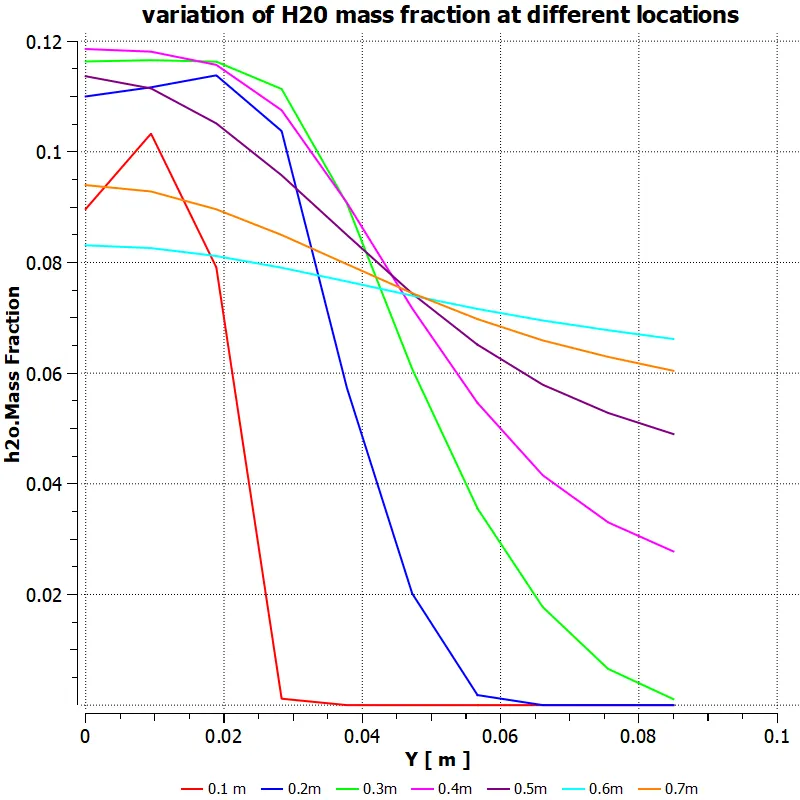
I. Mass fraction of NOx pollutant
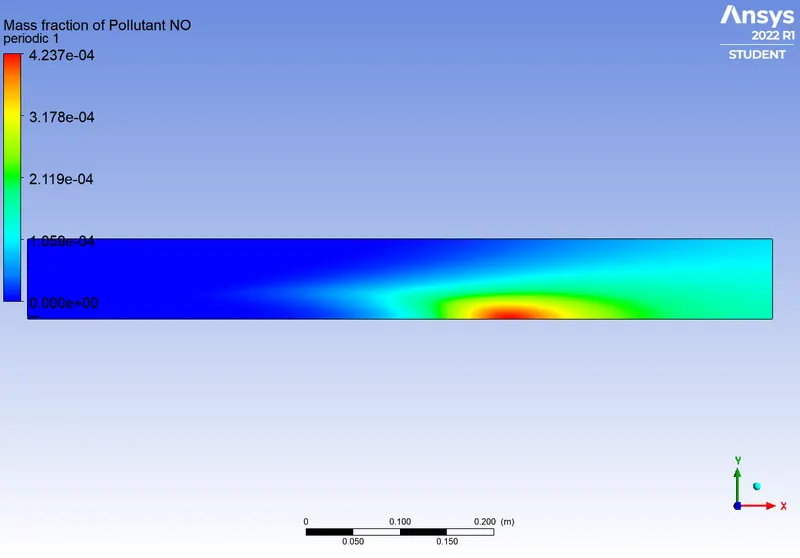
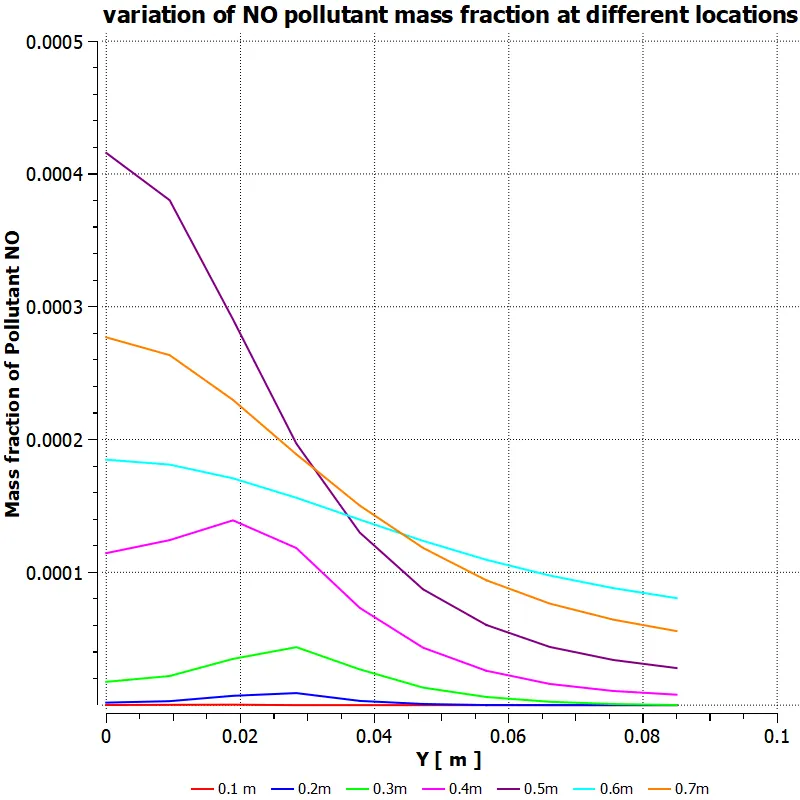
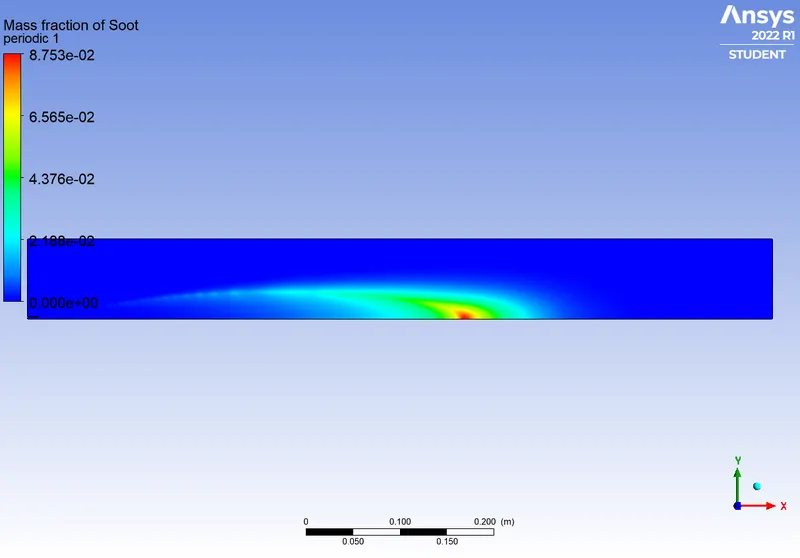
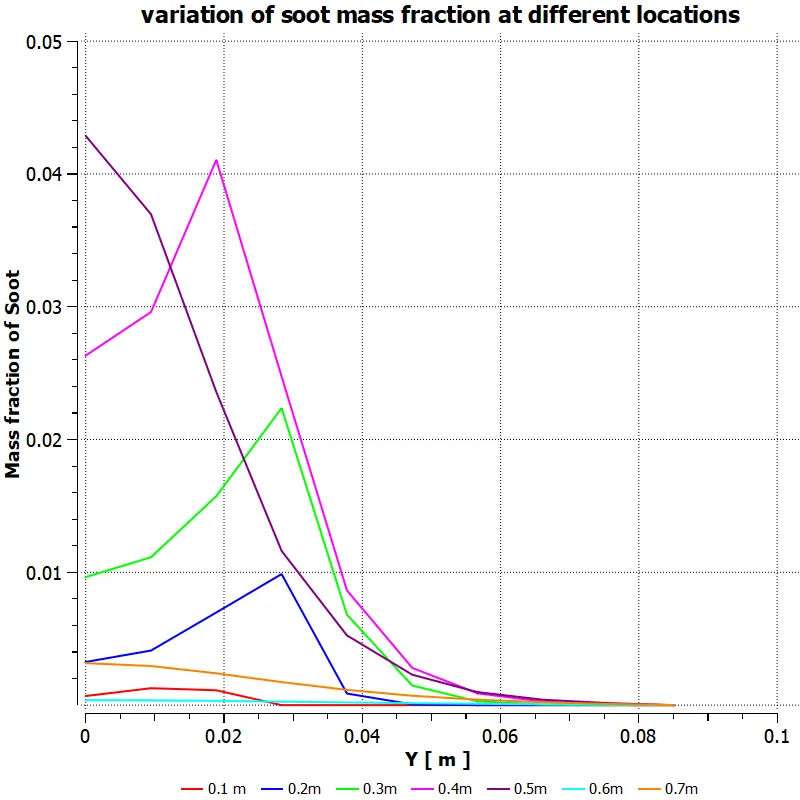
J. Mass fraction of soot
------------------------------------------------------------------------------------------------------------------------------------------------------------------------------------------------------------------------------------------------------------
PART-2
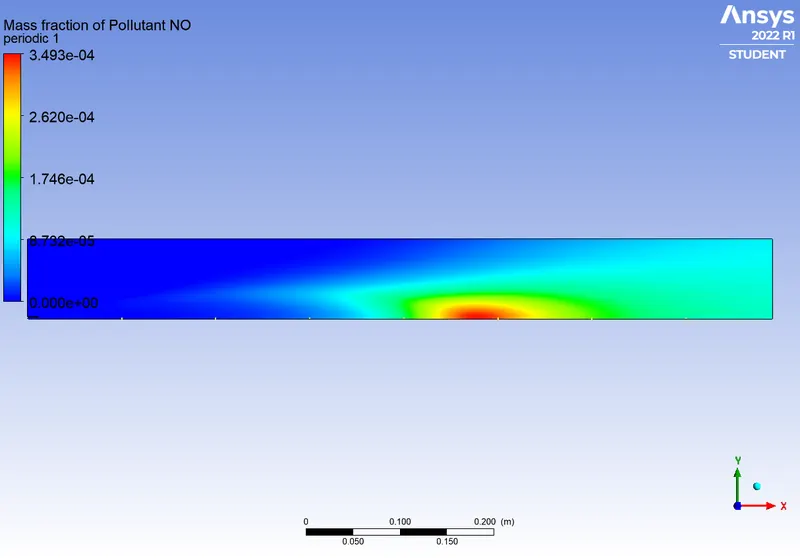
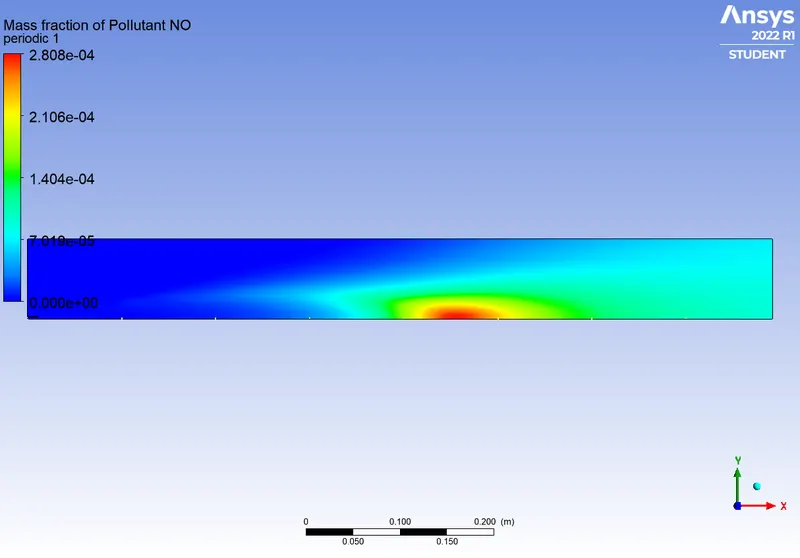
A. mass fraction of NOx pollutants
case-1 : 95% methane and 5% water
case-2 : 90% methane and 10% water
case-3 : 85% methane and 15% water
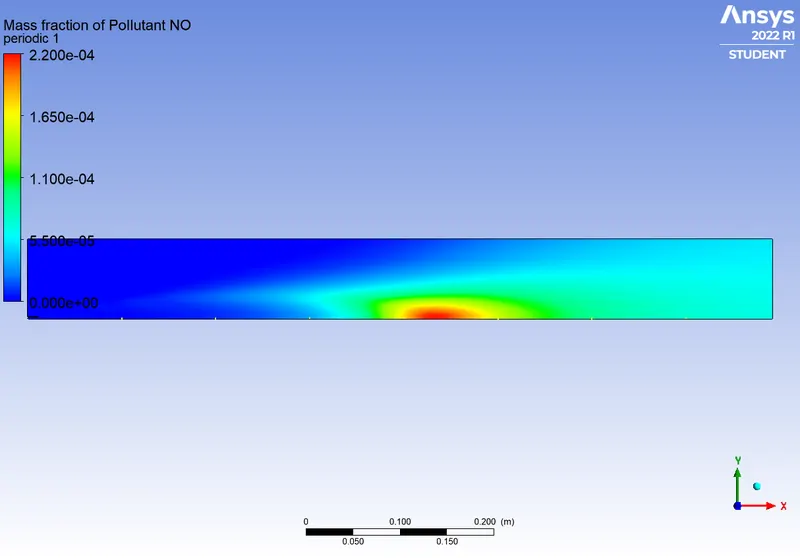
case-4 : 80% methane and 20% water
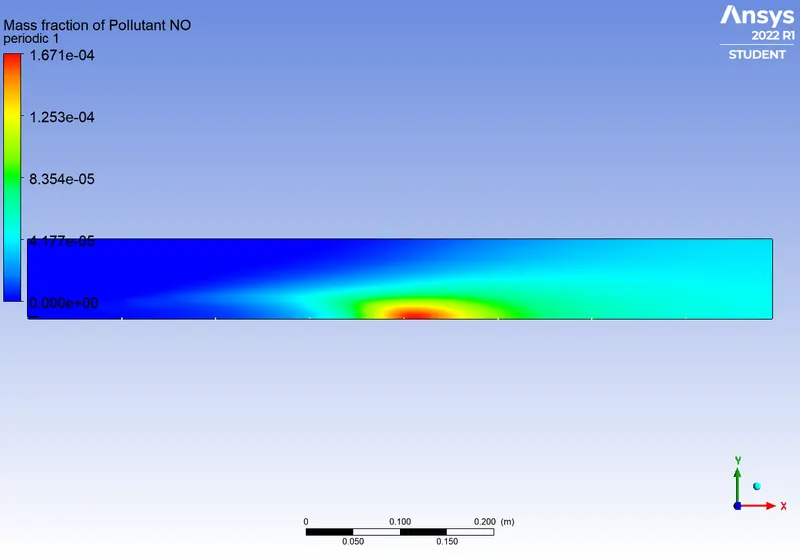
case-5 : 75% methane and 25% water
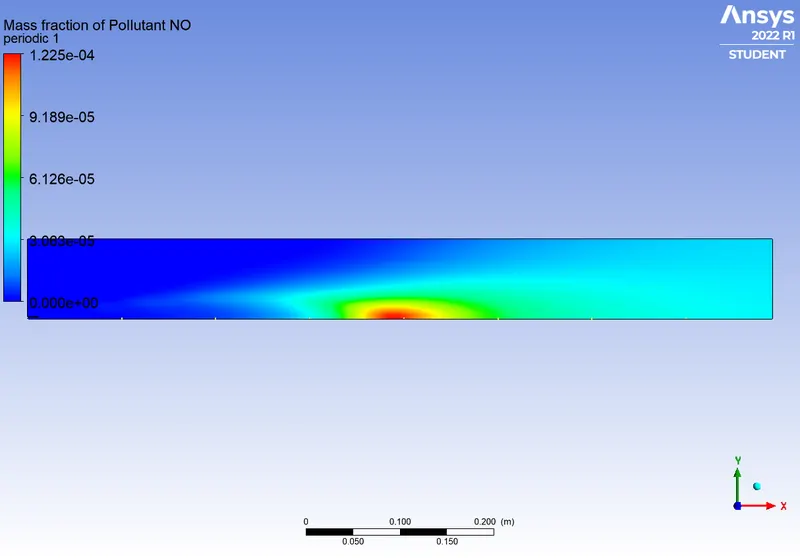
case-6 : 70% methane and 30% water
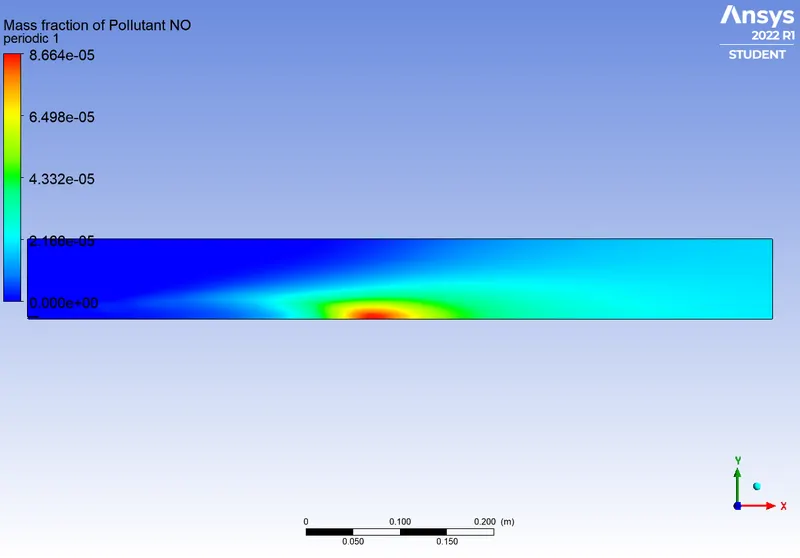
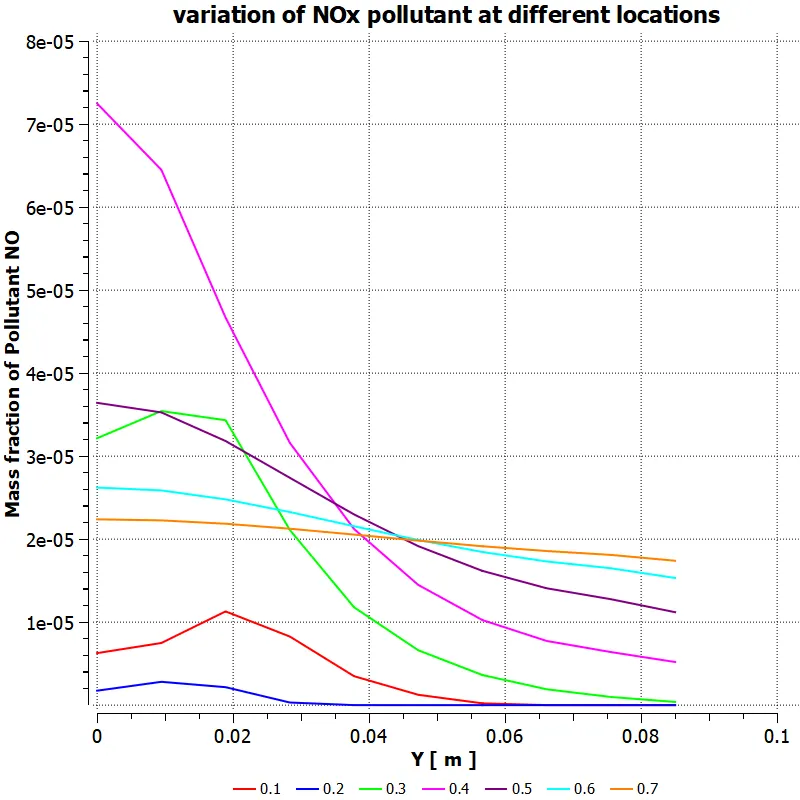
B. Variation of NO mass fraction at different locations
case-1 : 95% methane and 5% water
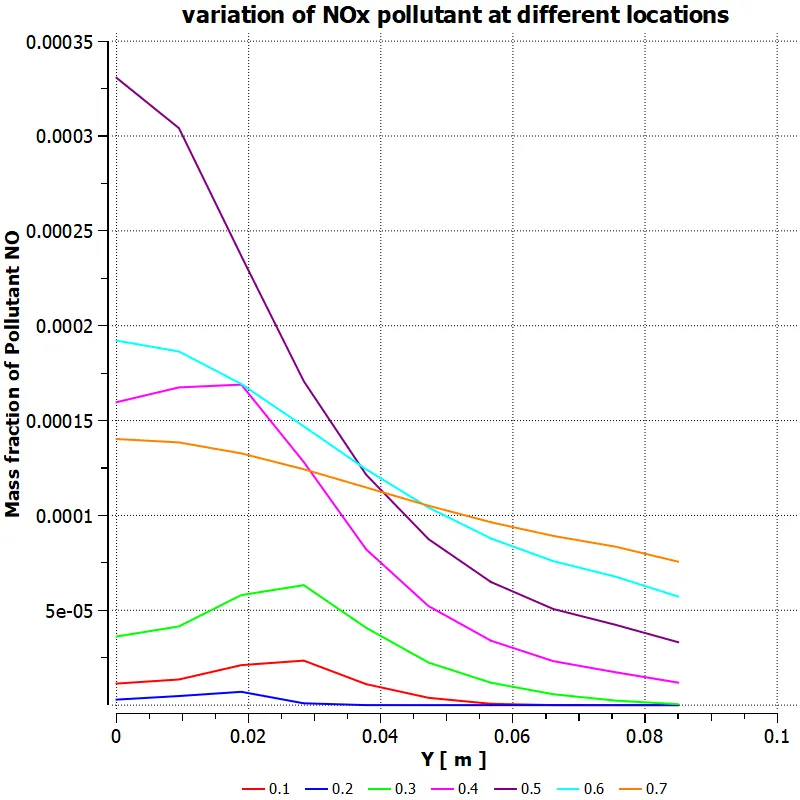
case-2 : 90% methane and 10% water
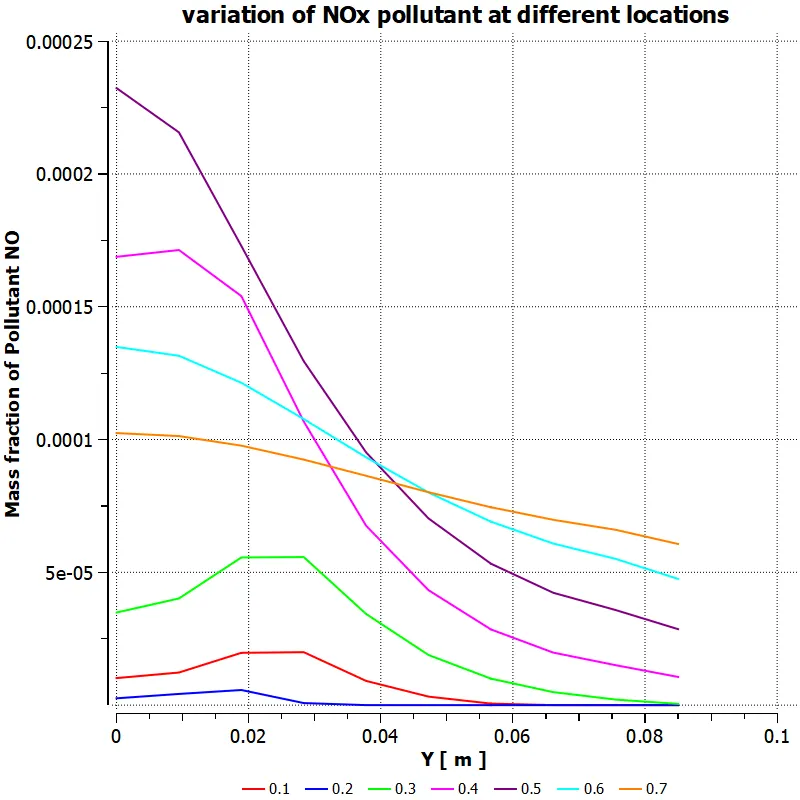
case-3 : 85% methane and 15% water
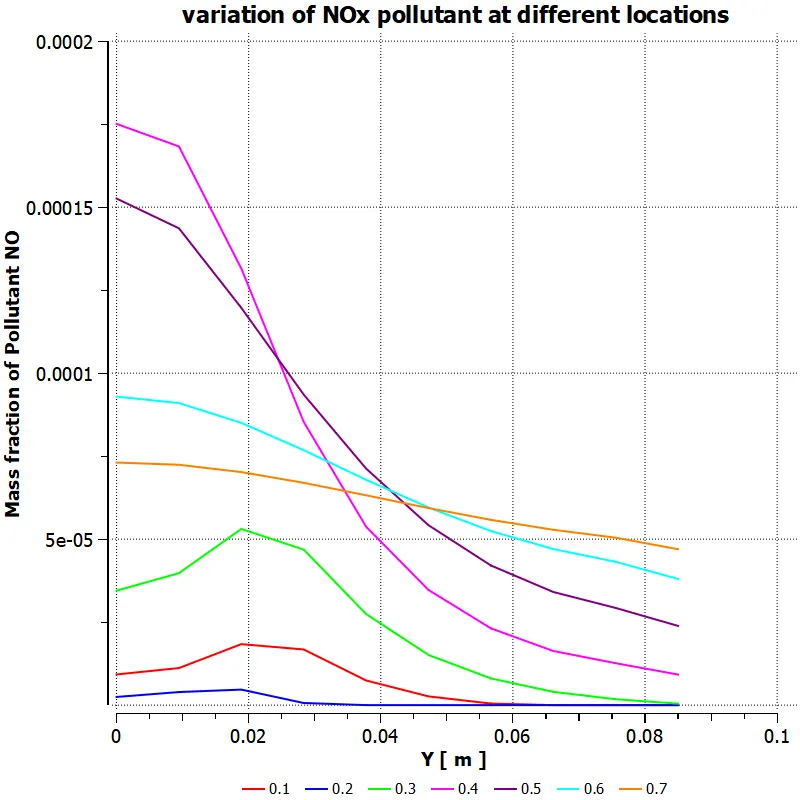
case-4 : 80% methane and 20% water
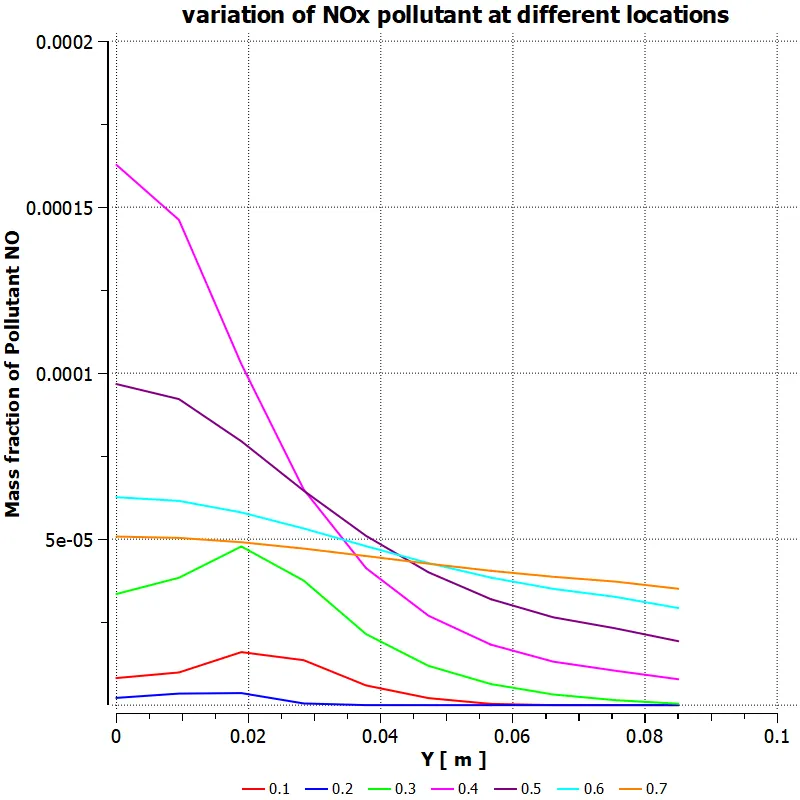
case-5 : 75% methane and 25% water
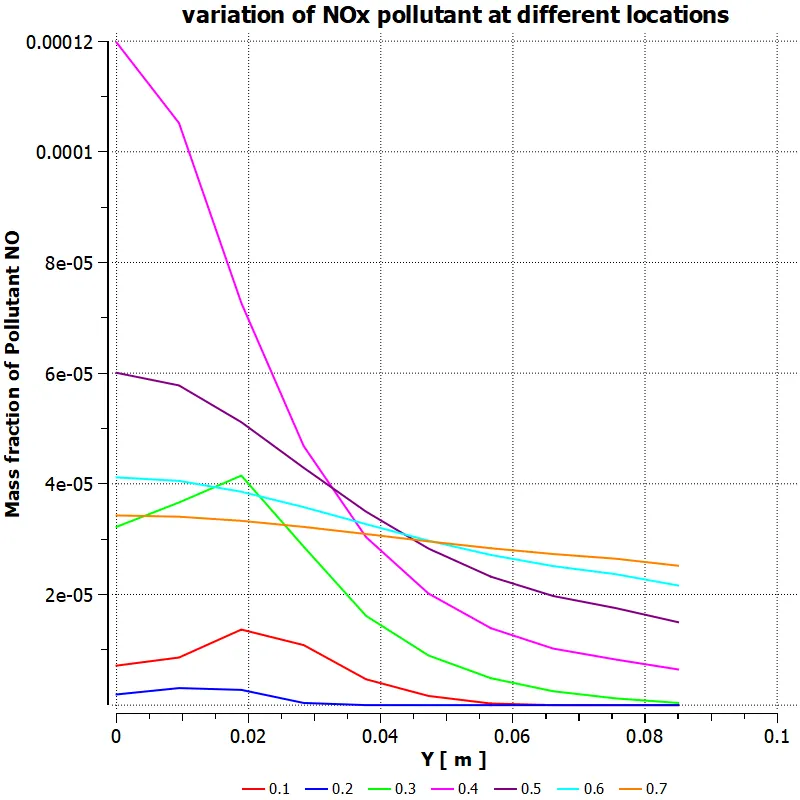
case-6 : 70% methane and 30% water
C. mass fraction of soot
case-1 : 95% methane and 5% water
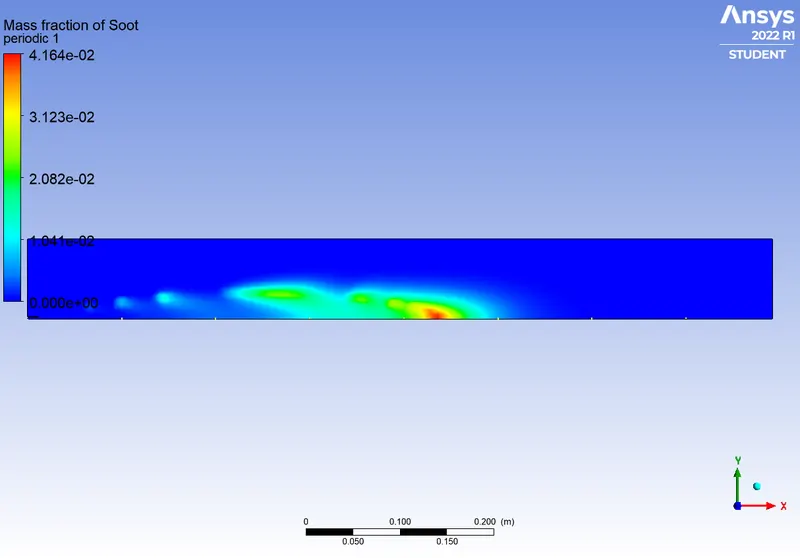
case-2 : 90% methane and 10% water
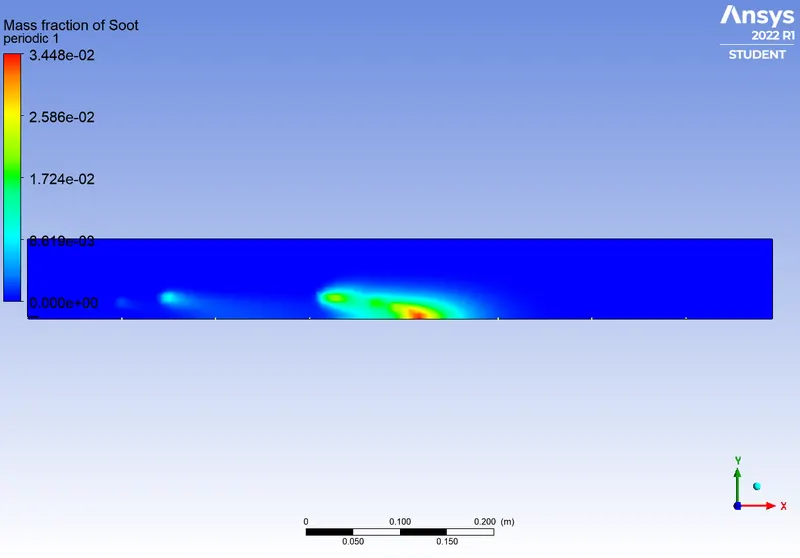
case-3 : 85% methane and 15% water
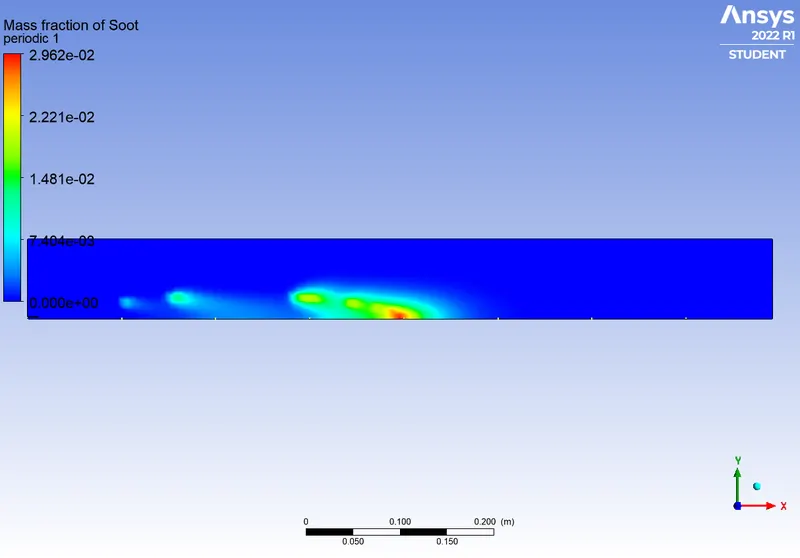
case-4 : 80% methane and 20% water
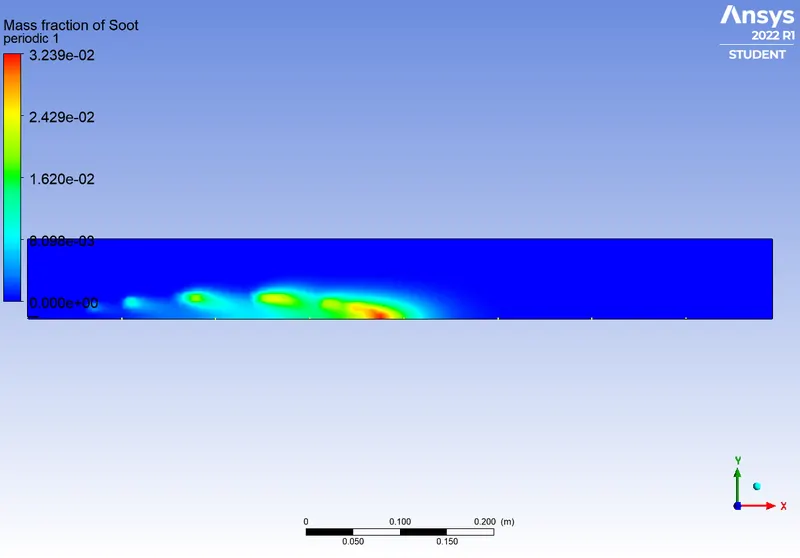
case-5 : 75% methane and 25% water
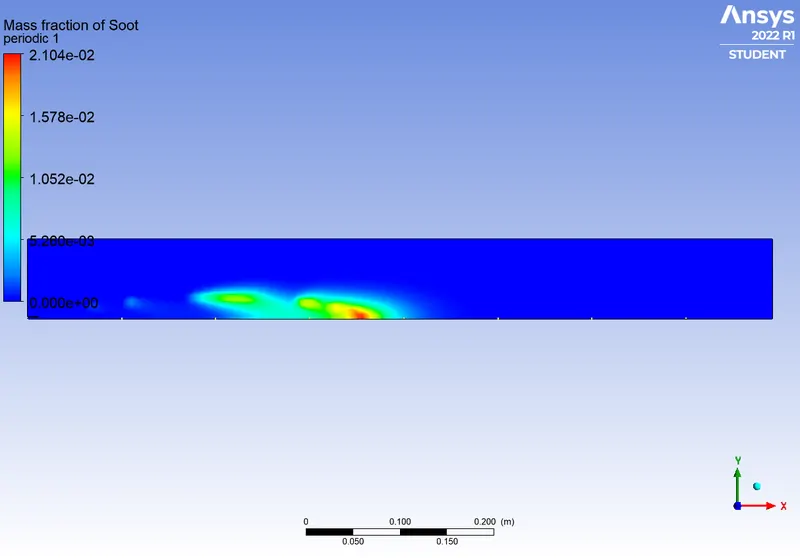
case-6 : 70% methane and 30% water
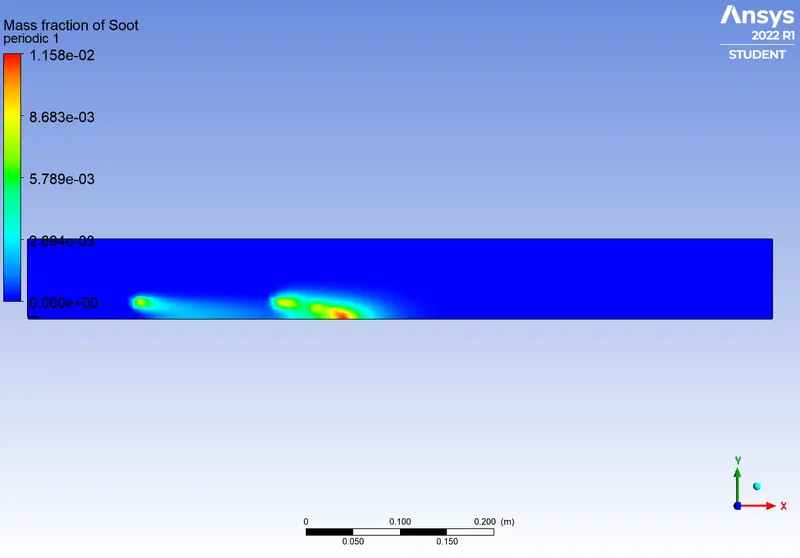
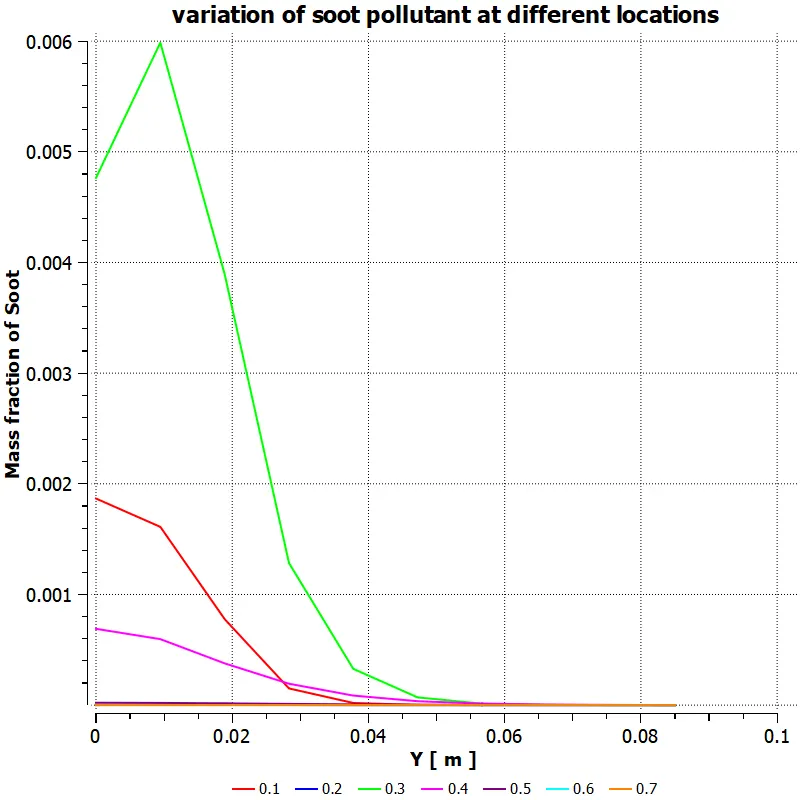
D. Variation of soot mass fraction at different locations
case-1 : 95% methane and 5% water
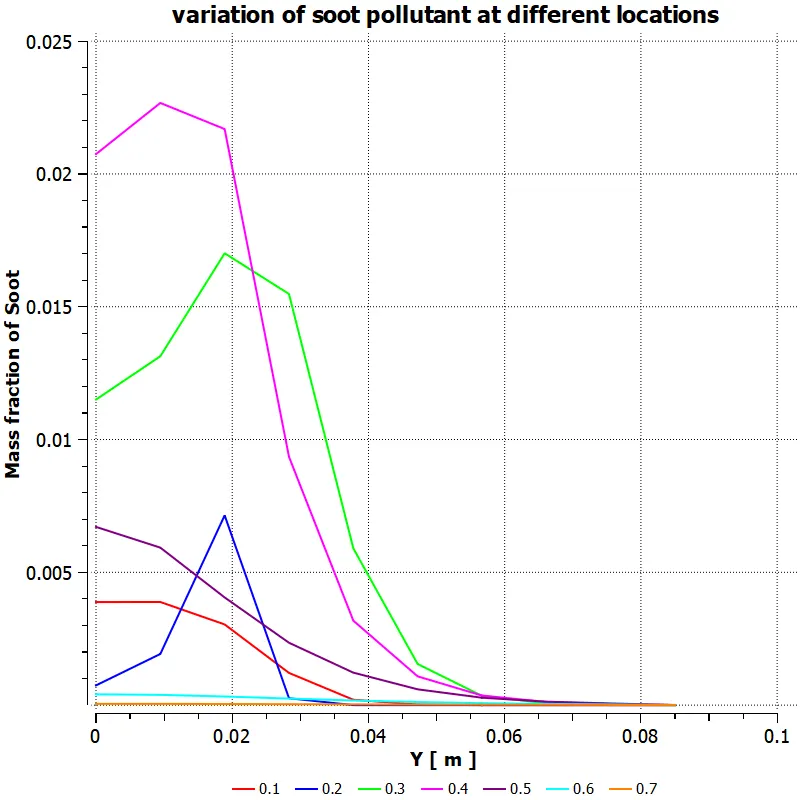
case-2 : 90% methane and 10% water
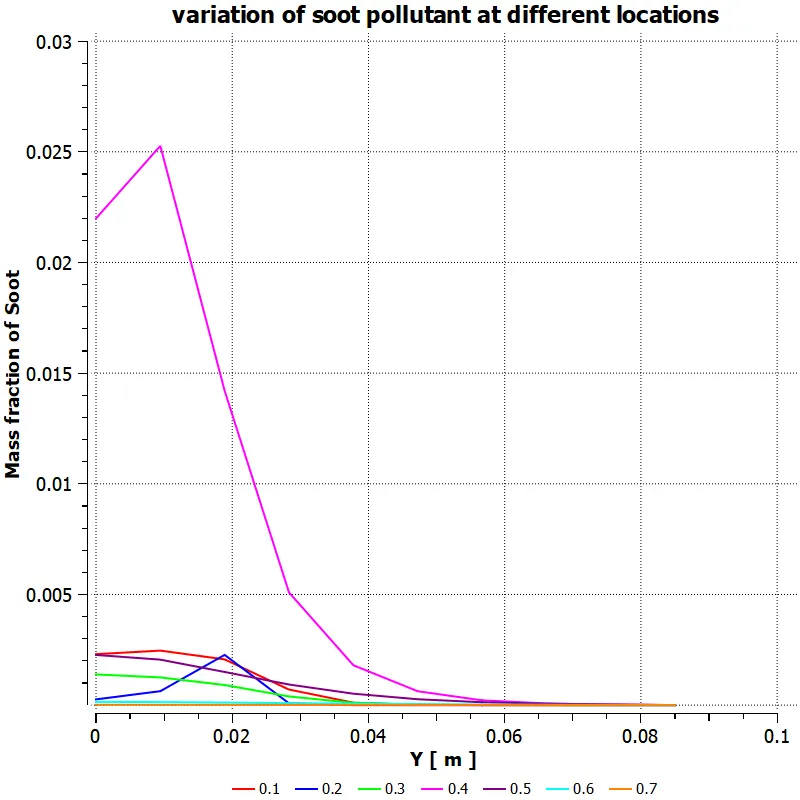
case-3 : 85% methane and 15% water
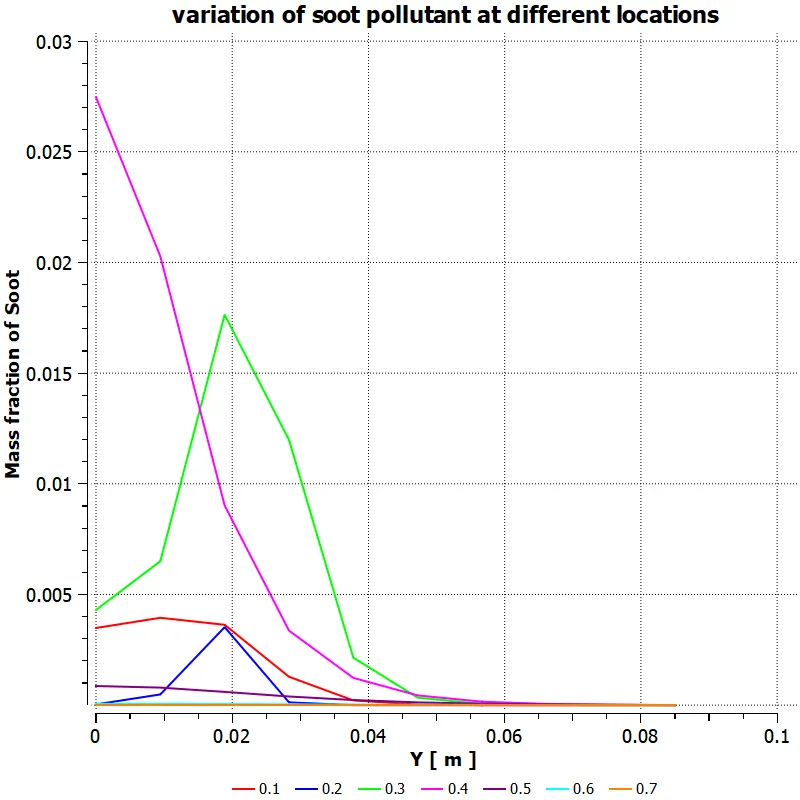
case-4 : 80% methane and 20% water
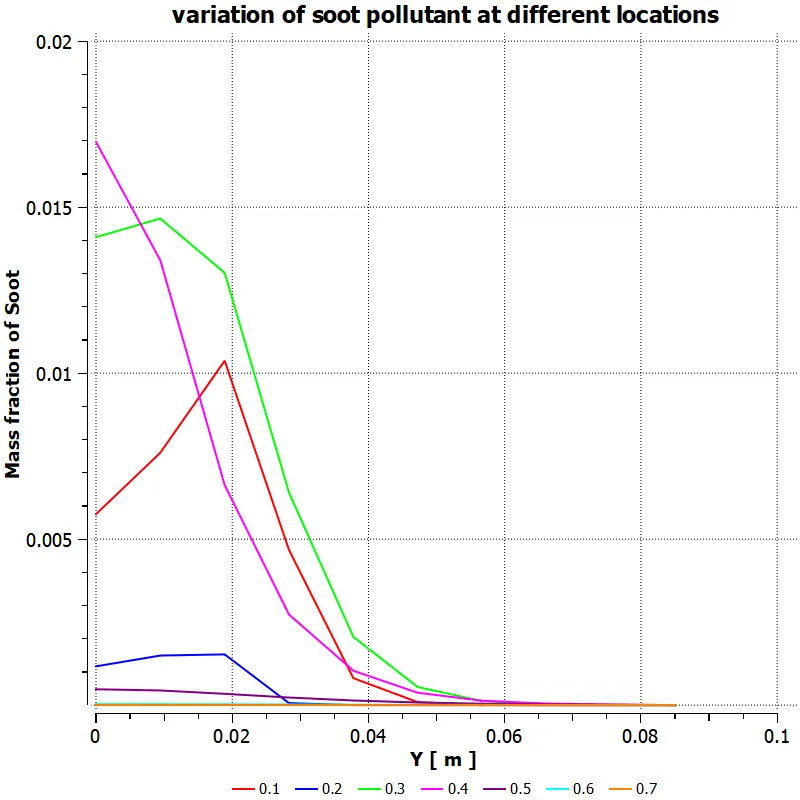
case-5 : 75% methane and 25% water
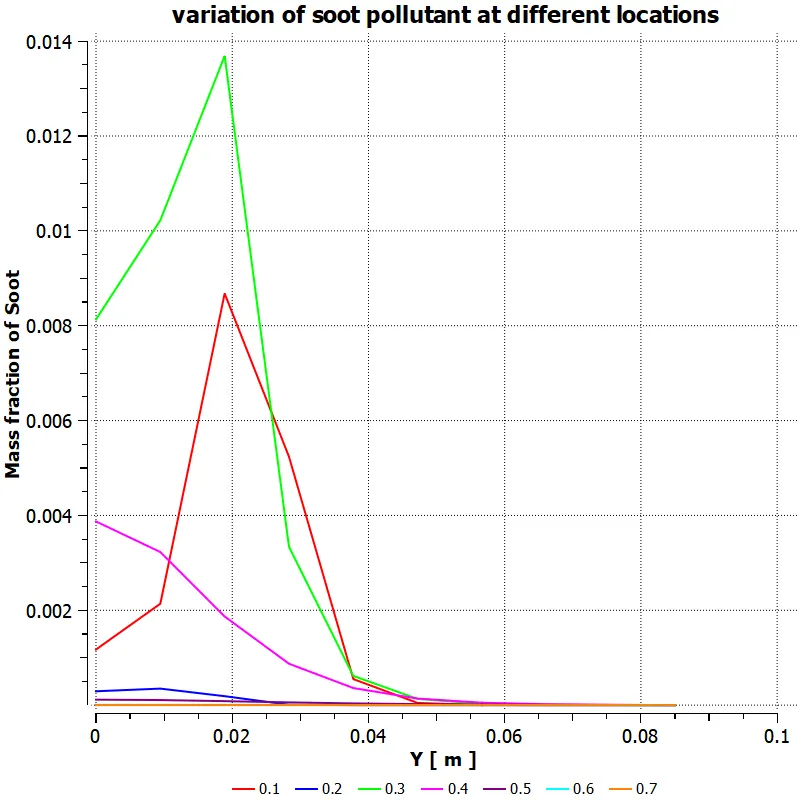
case-6 : 70% methane and 30% water
Mass Fractions of different species in part-2 reaction:
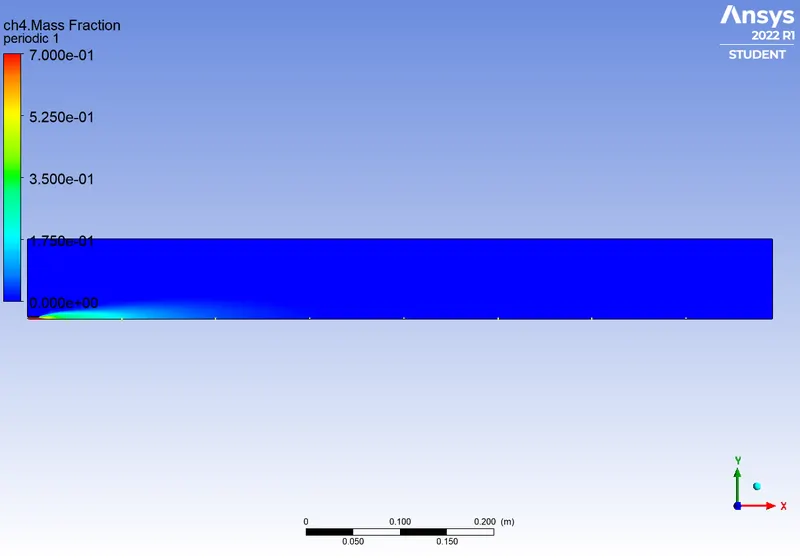
CH4 mass fraction contour
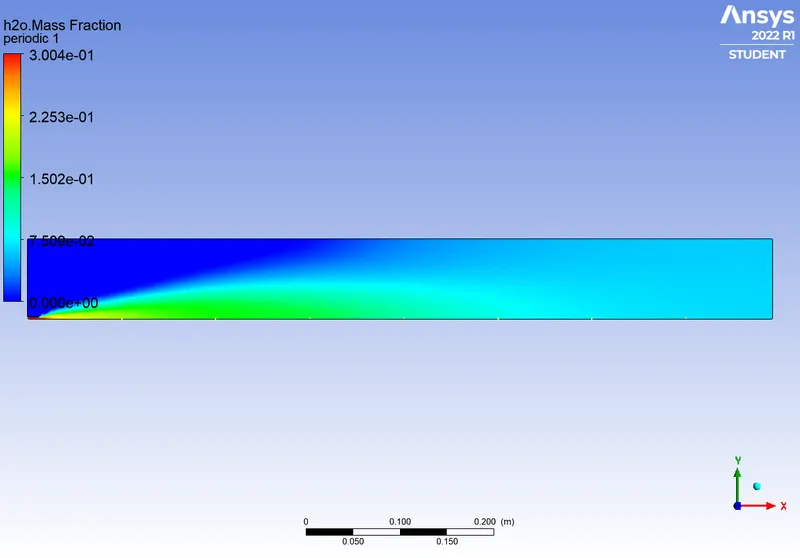
H20 Mass fraction contour
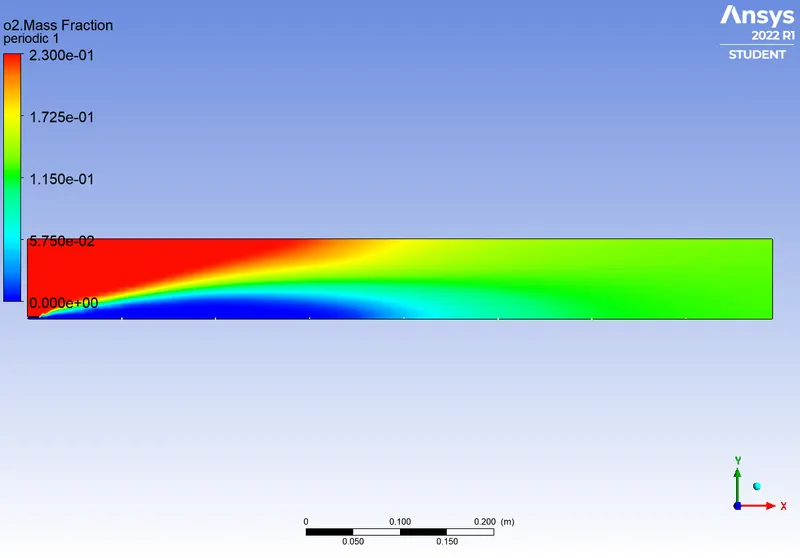
O2 mass fraction contour
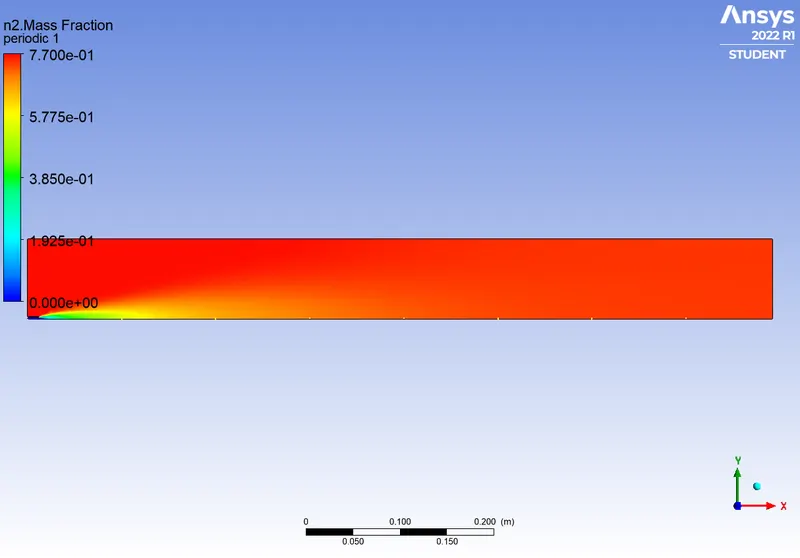
N2 mass fraction contour
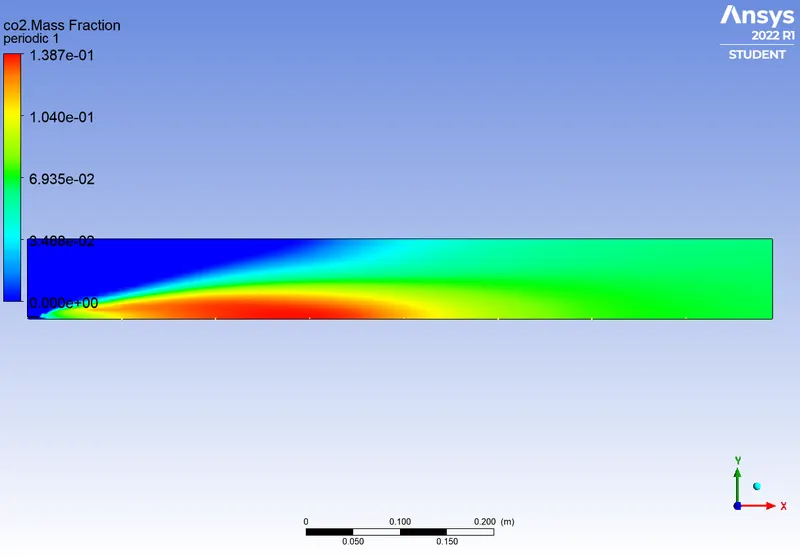
CO2 mass fraction contour
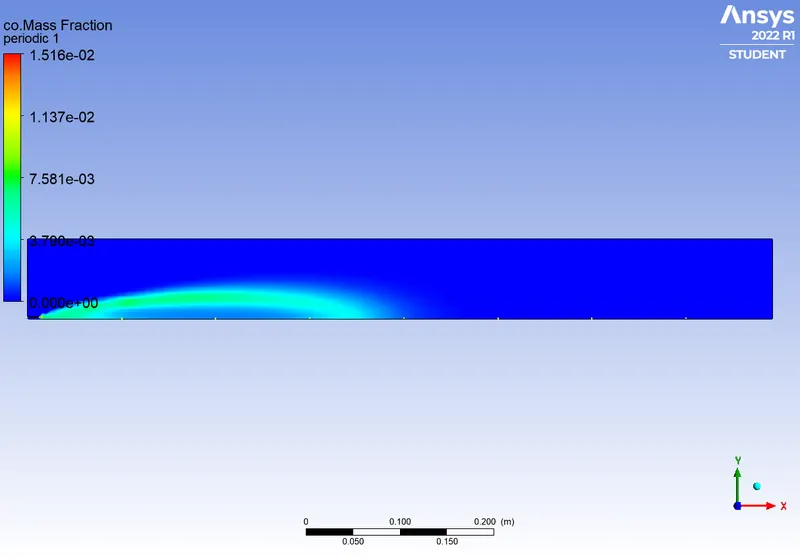
CO mass fraction contour
Observation and Conclusion:
| CH4 % | water % | NOx mass fraction | soot mass fraction | avg temp | |
| part1 | 100 | 0 | 5.19E-05 | 0.002001 | 671.8862 |
| part 2 | |||||
| case1 | 95 | 5 | 4.89E-05 | 0.000989 | 679.8436 |
| case2 | 90 | 10 | 3.88E-05 | 0.000417 | 672.7713 |
| case3 | 85 | 15 | 2.98E-05 | 0.00041 | 665.0647 |
| case4 | 80 | 20 | 2.21E-05 | 0.00056 | 656.676 |
| case5 | 75 | 25 | 1.59E-05 | 0.000268 | 647.5399 |
| case6 | 70 | 30 | 1.10E-05 | 9.04E-05 | 637.6715 |
1. From the contours of different species, we can observe the reactants ( CH4, O2, N2) entering through different inlets, reacting and forming products ( H2O, N2 , CO2 , NOx ,soot).
2. When water content is added to the fuel gradually, the NOx pollutant and soot formation decreases as well as the temperature decreases.