Week 10 - Simulating Combustion of Natural Gas.
Natural gas is one of the major combustion fuels used throughout the country. It is mainly used to generate industrial and utility electric power, produce industrial process steam and heat, and heat residential and commercial space. Natural gas consists of a high percentage of methane (generally above 85 percent) and varying amounts of ethane, propane, butane, and inerts (typically nitrogen, carbon dioxide, and helium).
The emissions from natural gas-fired boilers and furnaces include nitrogen oxides (NOx), carbon monoxide (CO), and carbon dioxide (CO2), methane (CH4), and nitrous oxide (N2O), volatile organic compounds (VOCs), trace amounts of sulfur dioxide (SO2), and particulate matter (PM).
CH4[g] + 2 O2[g] -> CO2[g] + 2 H2O[g] + energy
Nitrogen Oxides
The principal mechanism of NOx formation in natural gas combustion is thermal NOx. The thermal NOx mechanism occurs through the thermal dissociation and subsequent reaction of nitrogen (N2) and oxygen (O2) molecules in the combustion air. The second mechanism of NOx formation, called prompt NOx, occurs through early reactions of nitrogen molecules in the combustion air and hydrocarbon radicals from the fuel.
Soot formation
Soot is a solid very similar to graphite, but it is initially formed from gaseous hydrocarbons. Experimental evidence indicates that it transitions from a gas to a liquid before it becomes a solid.
The Moss-Brookes-Hall model solves for two additional transport equations for soot mass fraction and normalized radical nuclei concentration.
`del/(delt)(rho*Y_(so ot)) + grad.(rho*vecv*Y_(so ot)) = grad*(mu_t/sigma_(so ot)*gradY_(so ot)) + (dM)/(dt)`
`del/(delt)(rho*b_(n uc)) + grad.(rho*vecv*b_(n uc)) = grad*(mu_t/sigma_(n uc)*gradb_(n uc)) + (dN)/(dt)`
The source term for soot mass concentration accounts for the different mechanisms of nucleation (source), surface growth (source) and oxidation (sink). The instantaneous production rate of soot particles considers nucleation from gas phase (source) and coagulation in the free molecular regime (sink).
Objectives for this project
- Simulate combustion of natural gas on the combustor model.
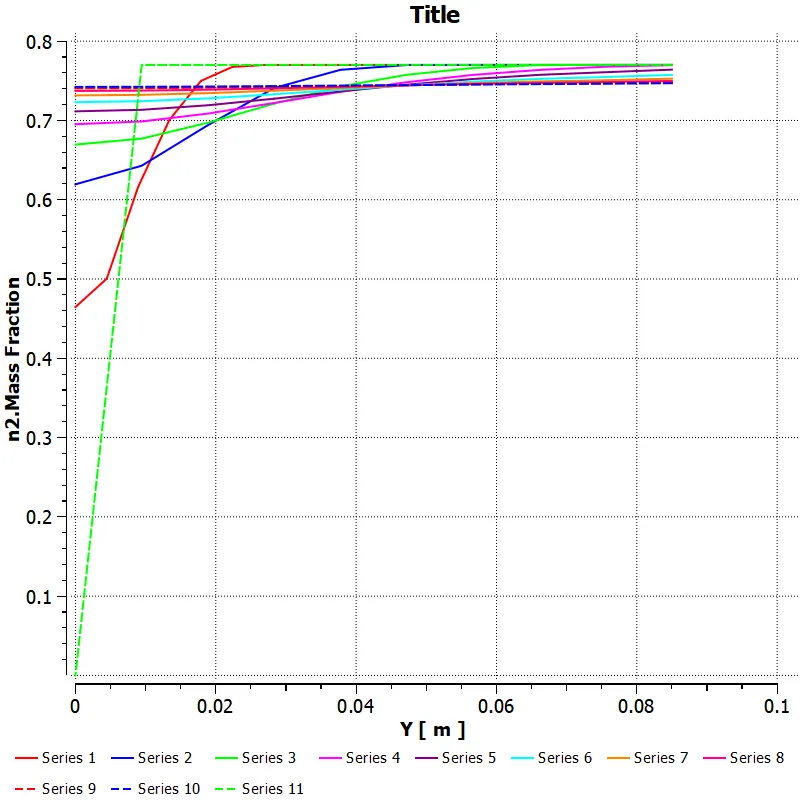
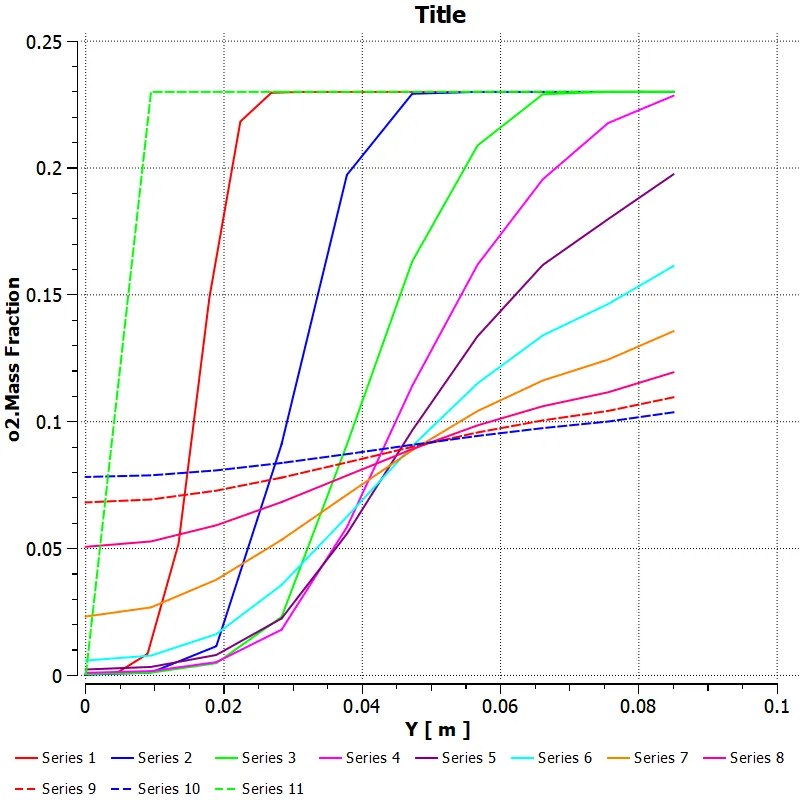
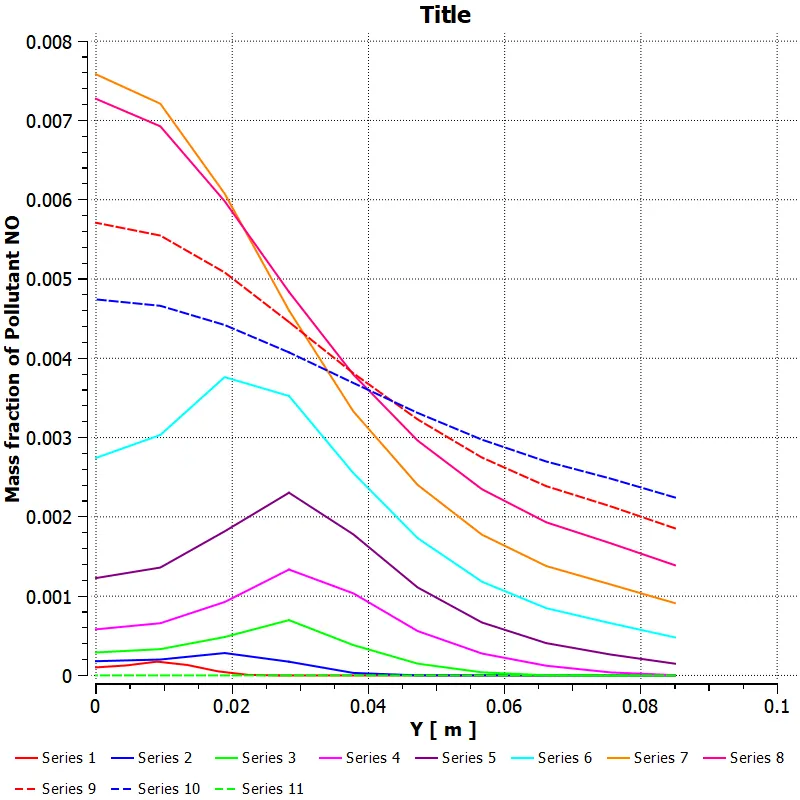
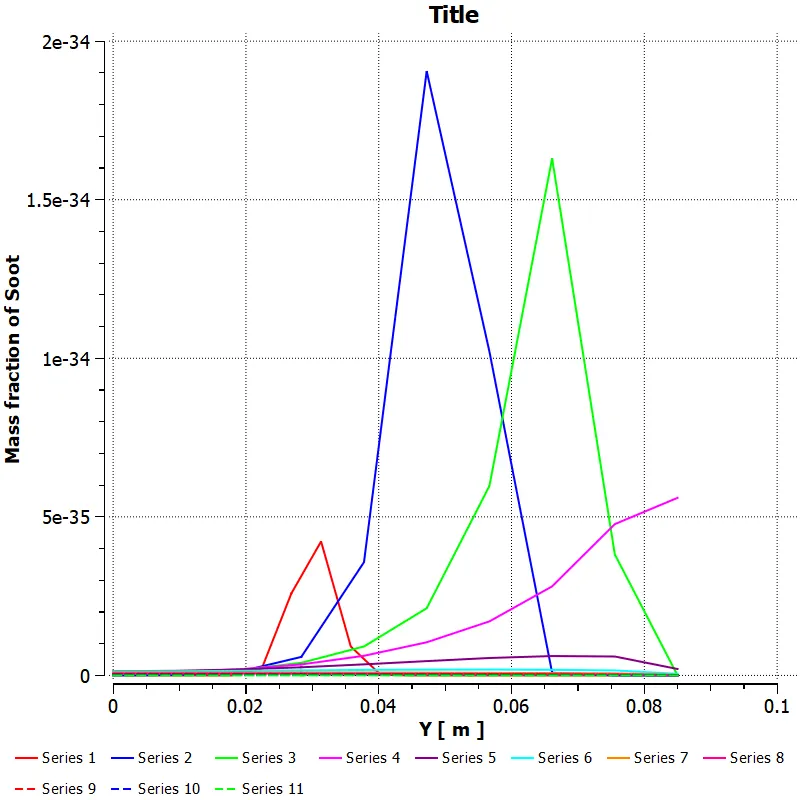
- Plot the variation of mass fraction of the different species such as CO2, H2O, CH4, N2, O2, NOx emissions & soot formation in the simulation at different locations of the combustor.
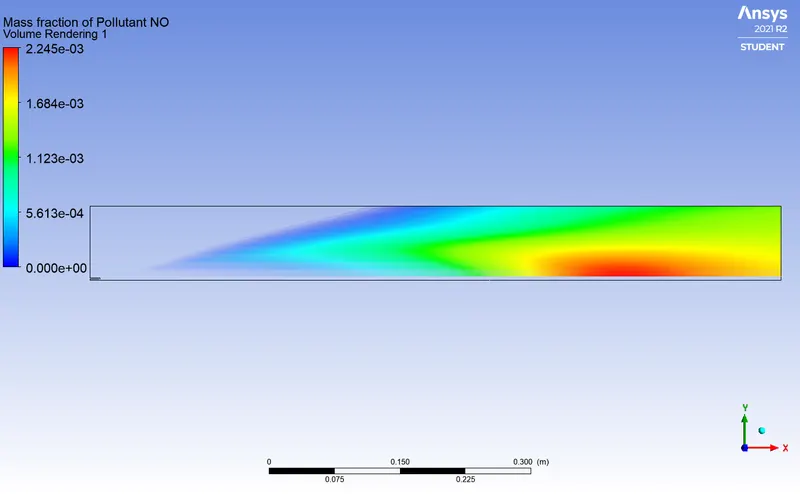
- Observe the effect of adding water in the fuel on NOx and soot formation.
COMBUSTOR MODEL AND GEOMETRY
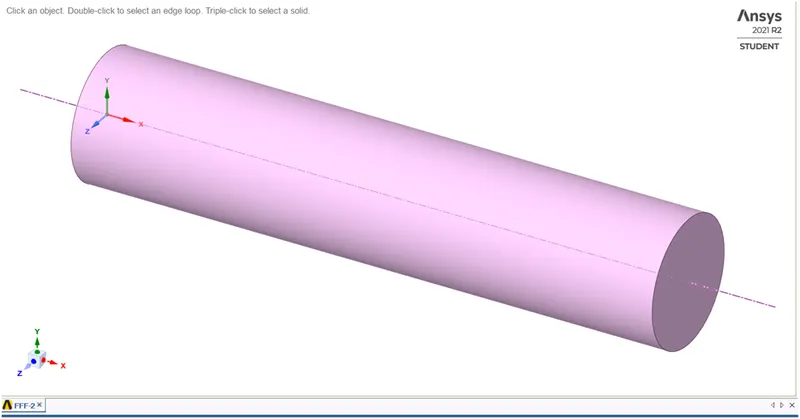
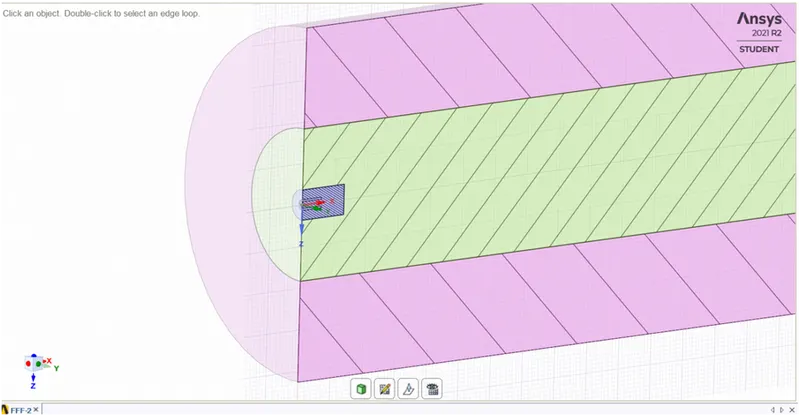
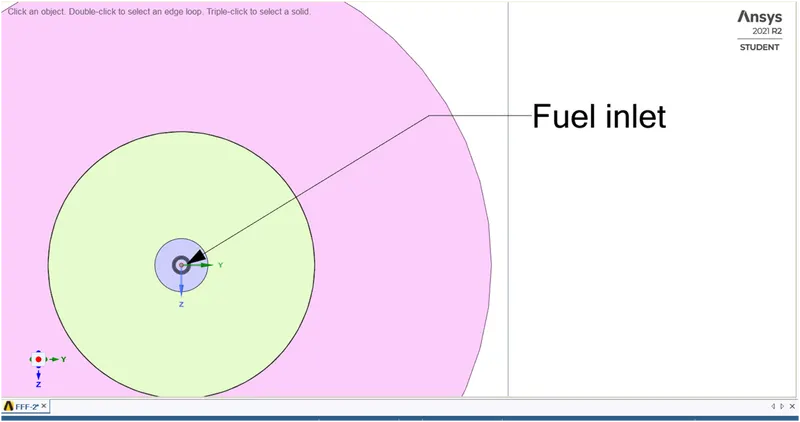
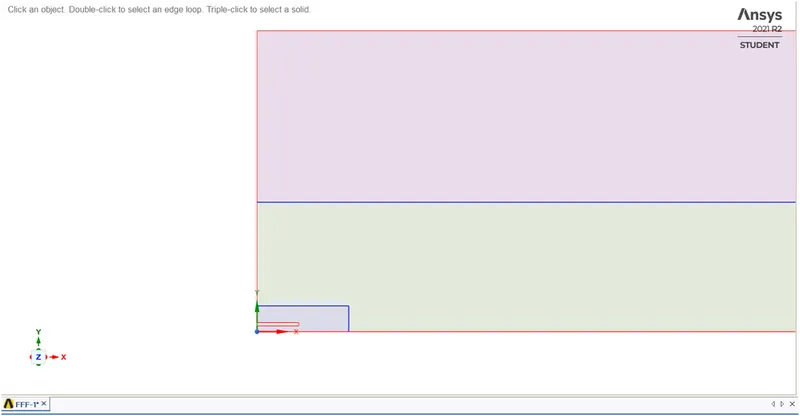
The simulation is to be run for a 2D plane surface, so the projection of the model along the Y-axis is extracted. Only half of the projected plane is used as the simulation is symmetric about the X-axis.
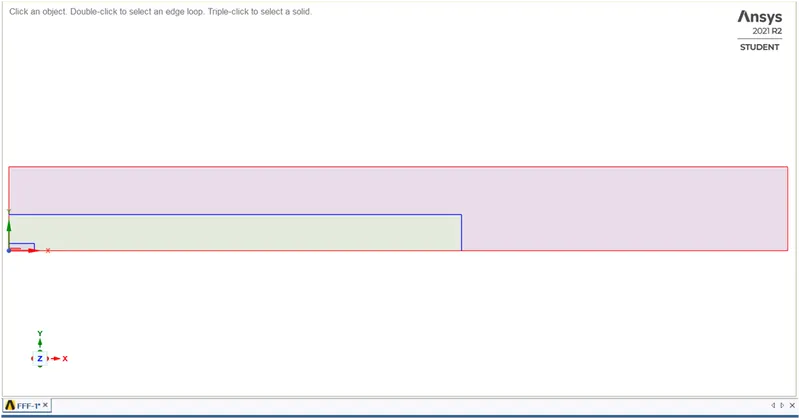
Share topology is enabled to ensure conformal meshing throughout the sections.
MESH
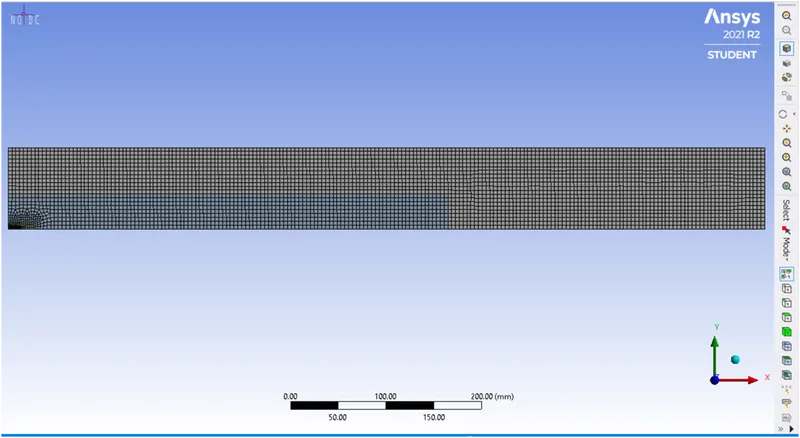
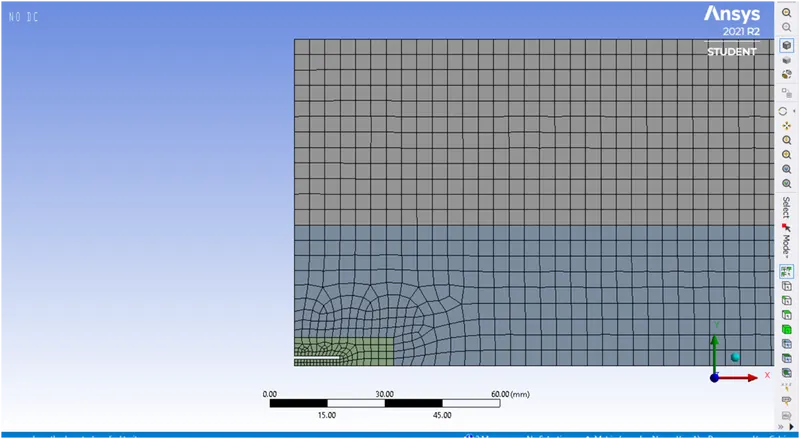
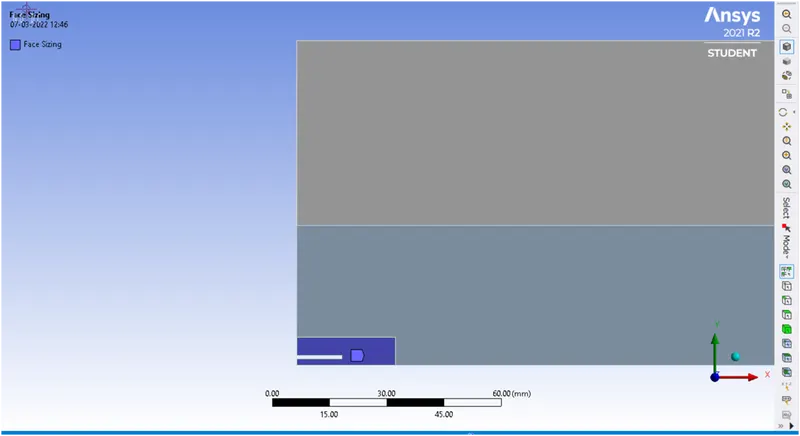
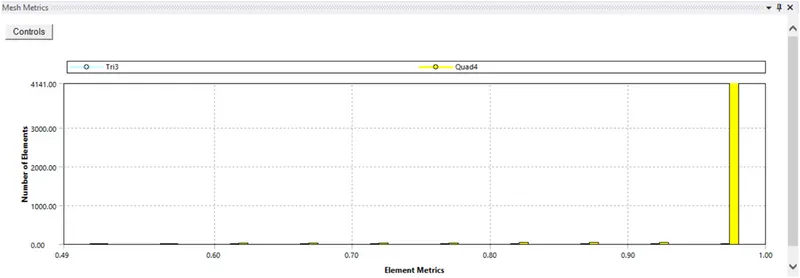
'Face sizing’ is enabled for the highlighted part with an element size of 2 mm. Capture proximity is enabled with 2 cells across the gap. The element quality metric shows maximum elements close to a perfect square.
SOLVER REQUIREMENTS
Combustion process involves turbulent characteristics such as vortex formation, swirls, eddies etc. To model these, the k-epsilon turbulence model is chosen.
The species model accounts for the transport of the reactants & products involved in the reaction. The reaction is volumetric which is based upon the volume occupied by the reactants & products.
The Eddy dissipation model for the turbulence-chemistry interaction uses the rate of dissipation of eddies containing reactants & products to calculate the reaction rate.
For NOx, both thermal & prompt NOx pathways are enabled.
RESULTS
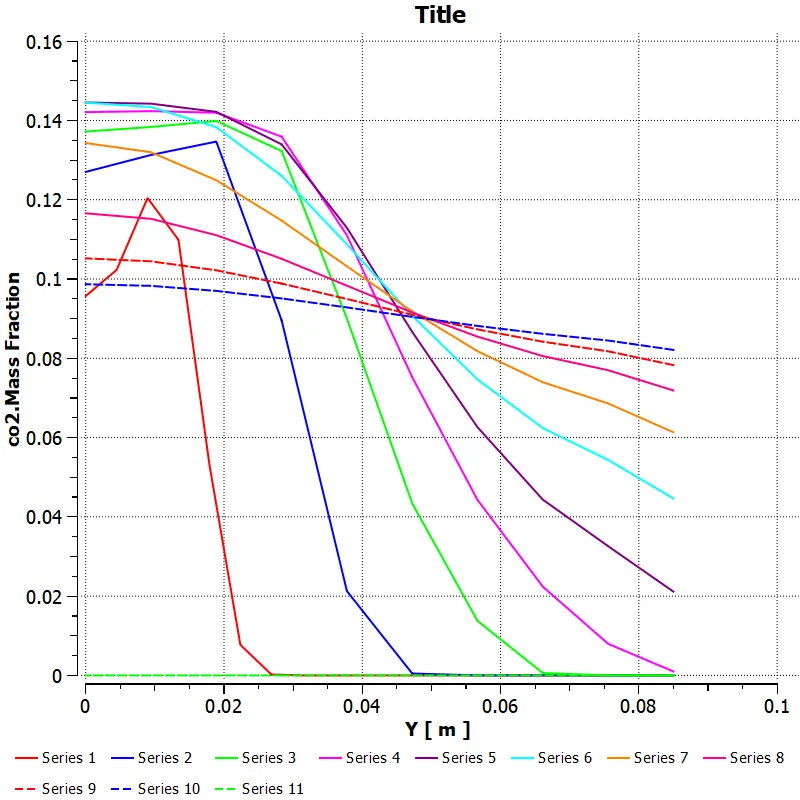
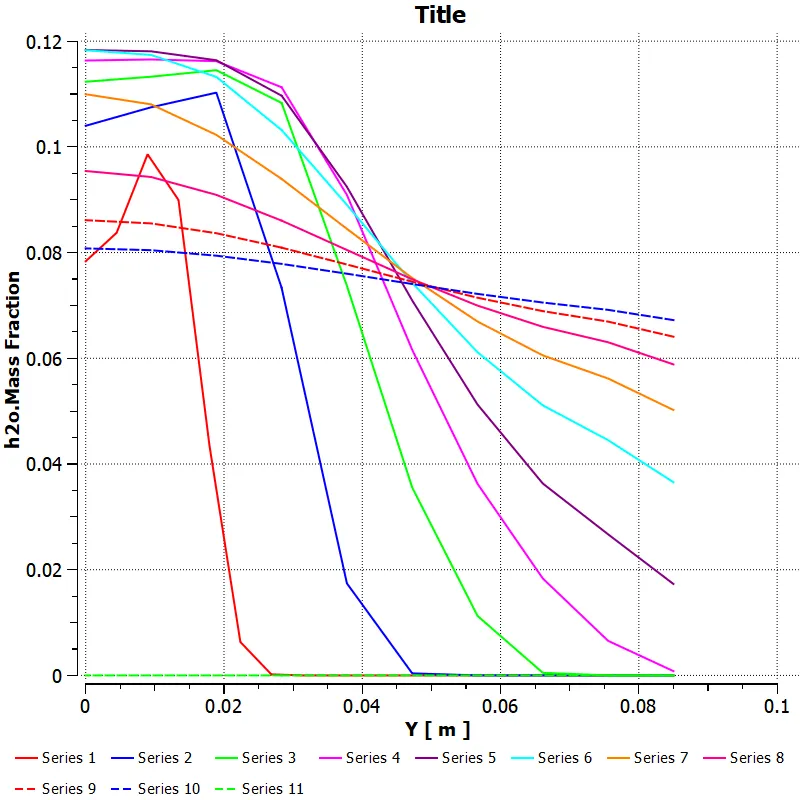
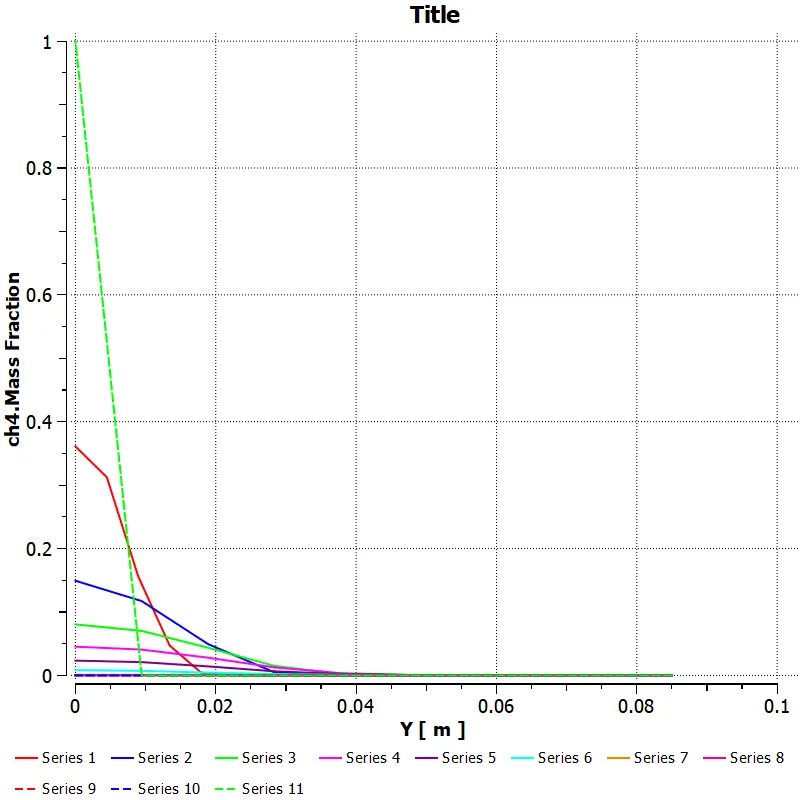
Part 1] The variation of the mass fraction of the species is plotted at different locations of the combustor.
CO2
H2O
CH4
N2
O2
NOx
Soot
INFERENCES
Both CO2 & H2O are initially concentrated near the fuel inlet in small amounts. In the central part of the combustor, a significant amount is present; they occupy almost 50% of the width of the combustor. Their mass fractions decay further down the length of the combustor.
As CH4 is injected in the fuel-inlet, it reacts instantaneously and doesn’t appear in other locations.
N2 is present throughout the length of the combustor. While O2 is present in significant amounts at the entrance, it decays further as it reacts with the fuel (CH4).
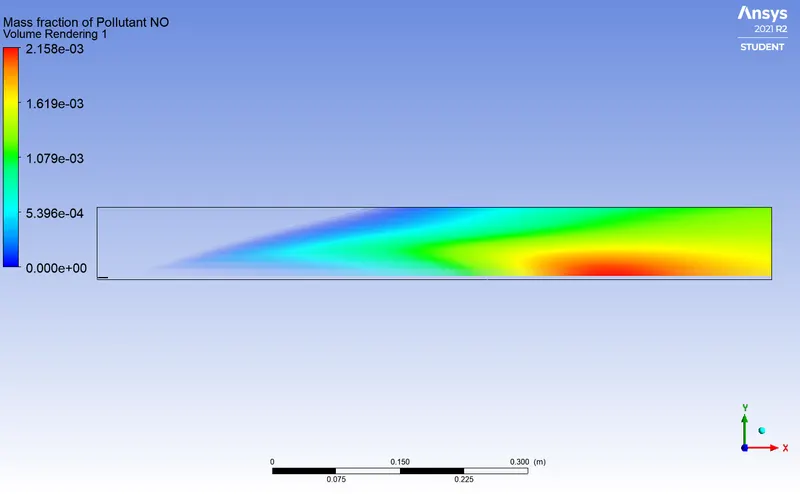
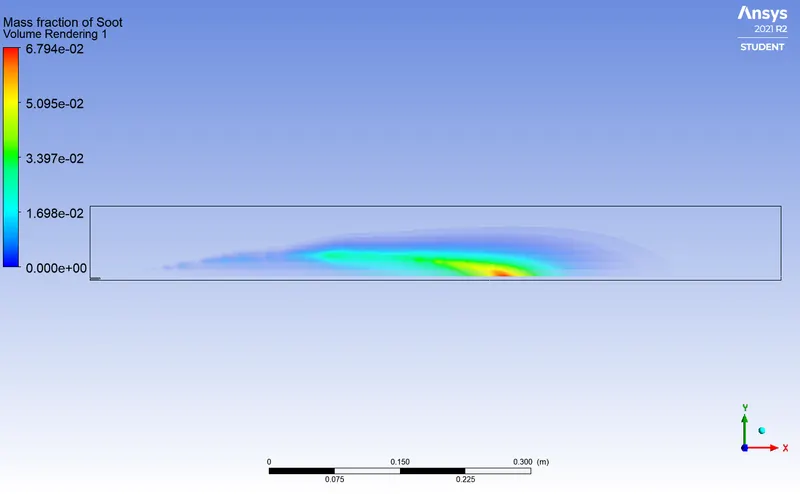
NOx starts appearing in regions where the flame temperature is the highest and its mass fraction is maximum near the outlet. Soot appears in the regions nearer to the inlet in small amounts.
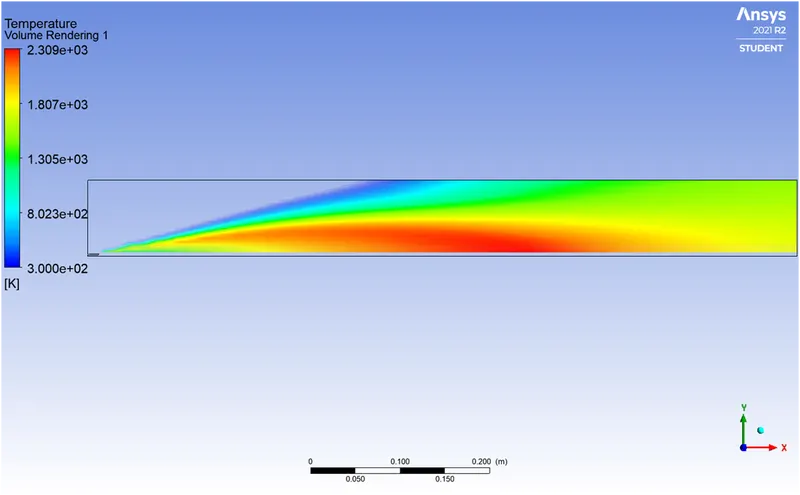
Part 2] The effect of adding water in the fuel from 5% to 30% by mole on the NOx and soot formation.
NOx
5% 10%
15% 20%
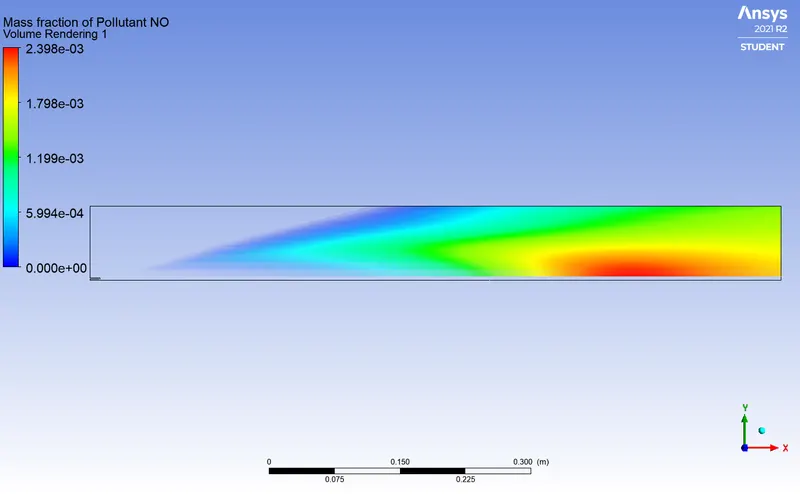
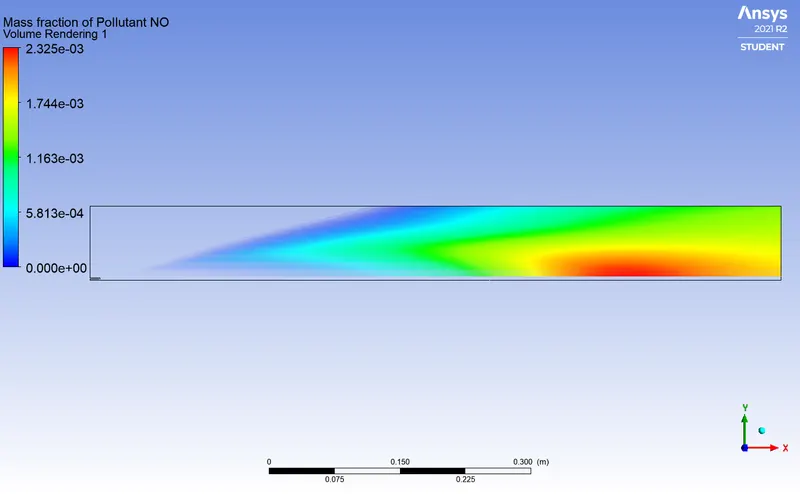
25% 30%
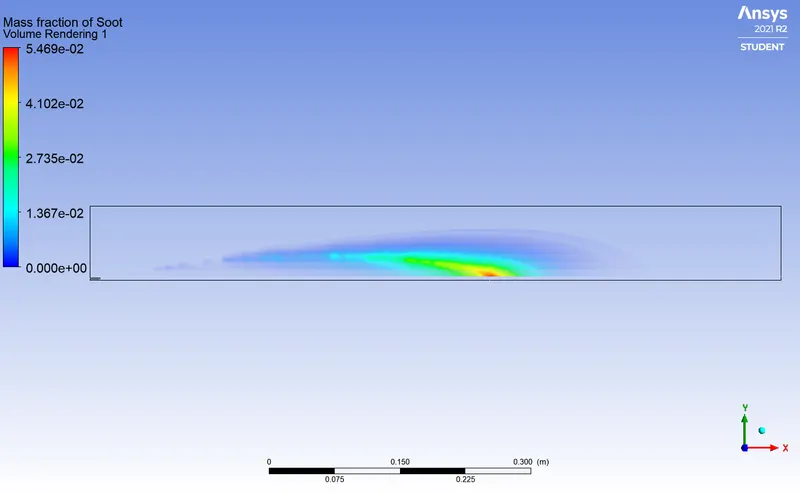
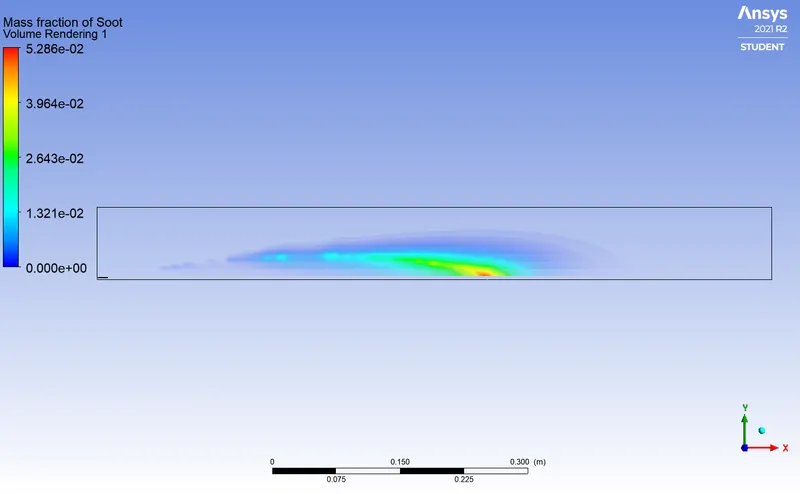
Soot
5% 10%
15% 20%
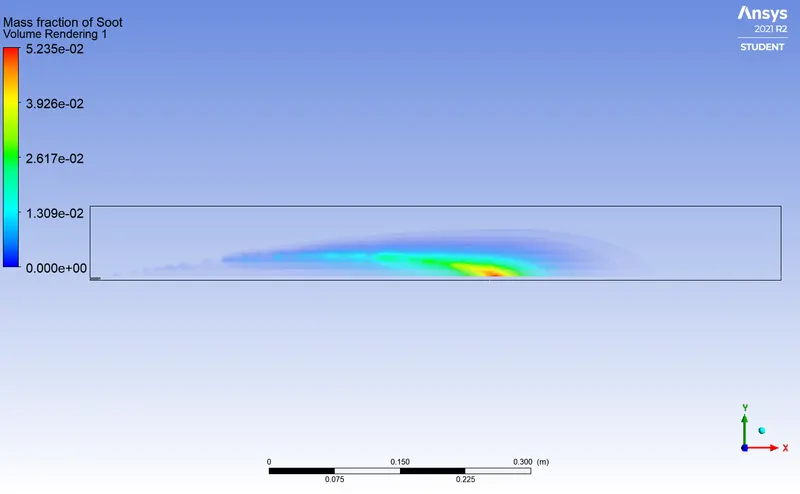
25% 30%
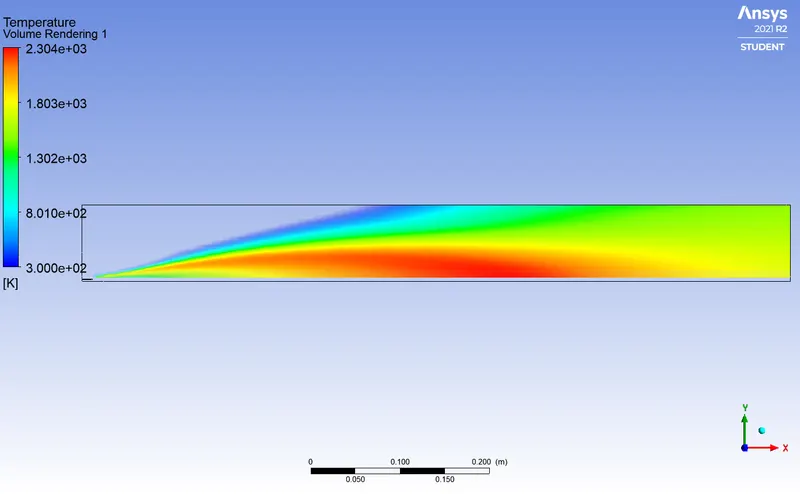
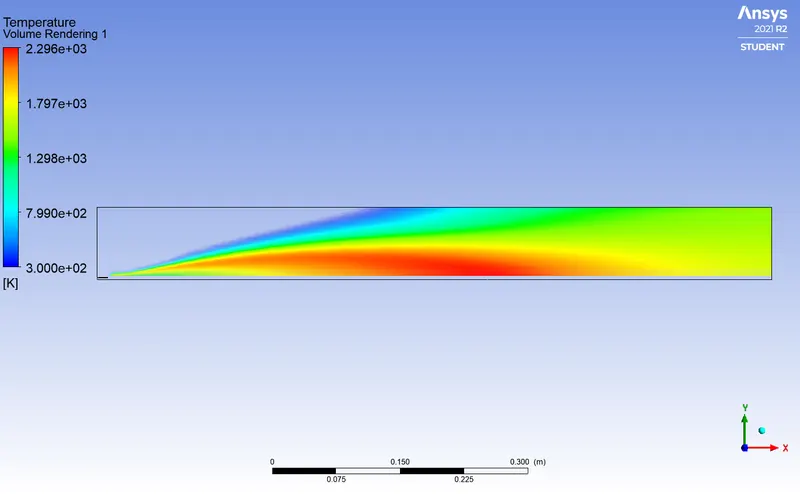
Temperature
10% 30%
INFERENCES
- Addition of water reduces NOx via a thermal effect. However, the maximum temperature attained by the flame also reduces.
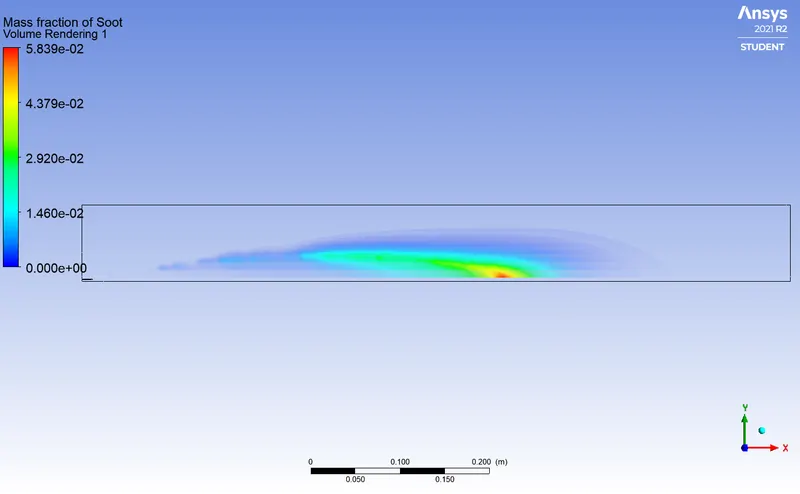
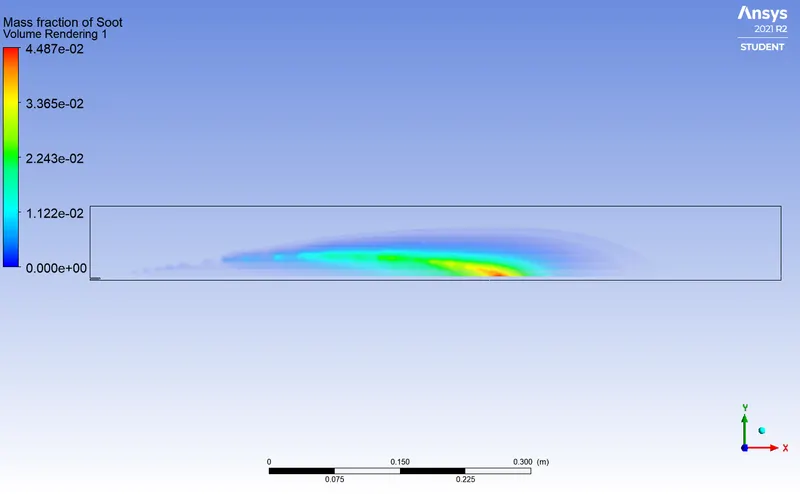
- The mass fraction of soot is also reduced.
- As the percentage of water added is increased, the zone containing the highest mass fraction of NOx shifts towards the inlet side. A similar effect is observed in case of soot formation.