Simulating Combustion of Natural Gas in Ambient Air in Ansys Fluent.
I. Aim: To perform combustion simulation of Natural gas (methane) with atmospheric air in a combustion chamber.
II Introduction:
Combustion or burning is a high-temperature exothermic redox chemical reaction between a fuel (the reductant) and an oxidant, usually, atmospheric oxygen, that produces oxidized, often gaseous products, in a mixture termed as smoke. Combustion does not always result in fire, because a flame is only visible when substances undergoing combustion vapourize, but when it does, a flame is a characteristic indicator of the reaction. While the activation energy must be overcome to initiate combustion (e.g., using a lit match to light a fire), the heat from a flame may provide enough energy to make the reaction self-sustaining [1].
Combustion is often a complicated sequence of elementary radical reactions. Combustion of an organic fuel (hydrocarbons) in air is always exothermic because the double bond in O2 is much weaker than other double bonds or pairs of single bonds, and therefore the formation of the stronger bonds in the combustion products CO2 and H2O results in the release of energy.
The bond energies in the fuel play only a minor role, since they are similar to those in the combustion products; e.g., the sum of the bond energies of methane (CH4) is nearly the same as that of CO2. The heat of combustion is approximately −418 kJ per mole of O2 used up in the combustion reaction, and can be estimated from the elemental composition of the fuel [1].
Uncatalyzed combustion in air requires relatively high temperatures. Complete combustion is stoichiometric combustion of the fuel, where there is no remaining fuel, and ideally, no residual oxidant. Thermodynamically, the chemical equilibrium of combustion in air is overwhelmingly on the side of the products. However, complete combustion is almost impossible to achieve, since the chemical equilibrium is not necessarily reached, or may contain unburnt products such as carbon monoxide (CO), hydrogen, and even Carbon (soot or ash). Thus, the produced smoke is usually toxic and contains unburned or partially oxidized products. Any combustion at high temperatures in atmospheric air, which is 78 percent nitrogen, will also create small amounts of several nitrogen oxides (NOx). Since the combustion of nitrogen is thermodynamically favored at high, but not low temperatures. Since burning is rarely clean, fuel gas cleaning or catalytic converters may be required by law [1].
Types of combustion:
1. Complete combustion [2]:
Complete combustion occurs in an unlimited supply of air, oxygen in particular. Also, complete combustion is also known as clean combustion. Here the hydrocarbon will burn out completely with the oxygen and leave only two byproducts, water, and carbon dioxide. It is also known as stoichiometric combustion.
Ex: Complete combustion of Methane in Air
The chemical equation for stoichiometric combustion of methane - CH4 - with air can be expressed as:
CH4 + 2(O2 + 3.76 N2) -> CO2 + 2 H2O + 7.52 N2
2. Incomplete Combustion:
Incomplete combustion takes place when the air is in limited supply. And as opposed to complete combustion it is otherwise known as dirty combustion. Due to lack of oxygen, the fuel will not react completely. This, in turn, produces carbon monoxide and soot instead of carbon dioxide.
3. Rapid Combustion:
Rapid energy needs external heat energy for the reaction to occur. The combustion produces a large amount of heat and light energy and does so rapidly. The combustion will carry on as long as the fuel is available.
4. Spontaneous Combustion:
As the name suggests the combustion occurs spontaneously. This means that it requires no external energy for the combustion to start. It happens due to self-heating. A substance with low-ignition temperatures gets heated and this heat is unable to escape. The temperature rises above the ignition point and in the presence of sufficient oxygen combustion will happen. The reaction of alkali metals with water is an example.
In this project combustion of natural gas (Methane-CH4) is atmospheric oxygen is simulated and the combustion products are analyzed. Further, water is added to the fuel (methane) in value of 5% to 30% by molar basis to the fuel to check the effect on Nox and soot formation in the products.
II. Objectives:
1. Perform a combustion simulation on the combustor model and plot the variation of the mass fraction of the different species in the simulation using line probes at different locations along the domain length.
2. Add water content in the fuel from 5% to 30% by mole and observe the effect of it on the results (NOx and soot). Provide necessary contours and plots.
IV: Solving & Modelling approach:
2D axisymmetric CFD analysis is carried out in Ansys Fluent using species transport model to simulate the combustion of CH4 in ambient air (predominantly O2).
V: Pre-processing and solver setting:
The first step in a CFD analysis is preprocessing. This includes preparing the geometry/ computational domain, discretization of the domain (meshing), assigning material properties, boundary conditions, solver setup.
1. Geometry/Domain:
A 3D solid geometry of the typical combustion chamber with nozzle (fuel inlet) is created into SpaceClaim as shown in below figure:
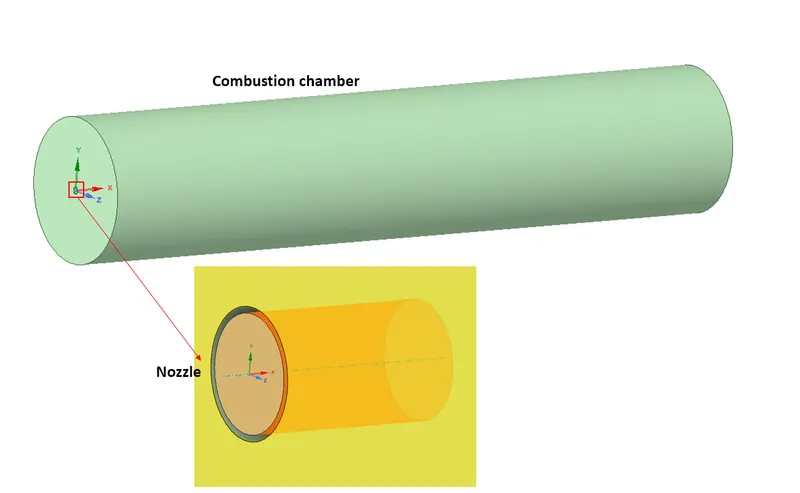
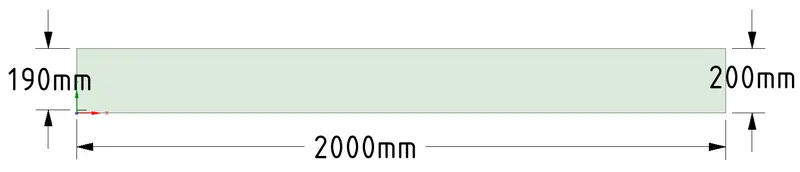
Since, the geometry is axisymmetrical in nature, it would be reasonable to do axisymmetric analysis, which will reduce the computational time. Hence the domain is sliced into a 2D surface body which is symmetric about the theta direction. The extracted 2D surface and the domain details are shown in figure below:

2. Domain discretization /Meshing:
The 2D fluid domain is discretized into a finite number of control volumes using the Ansys meshing component. A 2D quadrilateral mesh is created for the fluid domain with a global element size of 5 mm and setting proximity option to yes to accurately capture the geometry. Rest all settings are ANSYS meshing defaults.
| Property | Measure |
| Global element size | 5 mm |
| Capture proximity | yes |
| Cell count | 16058 |
| Average Element quality | 0.99 |
| Min. Orthogonal quality | 0.81 |
The generated mesh is shown below:

The boundary zones are also created using named selection option:
| Boundary | Zone name |
| Air Inlet | AIR-INLET |
| Fuel inlet (nozzle) | METHANE-INLET |
| Outlet | OUTLET |
| Axis | AXIS |
3. Solver setup:
The 2D AXISYMMETRIC analysis is performed on the discretized domain(meshed model) in Ansys Fluent CFD software. A double-precision parallel solver with 4 cores is used. The double-precision solver uses 64-bit precision, which reduces the round-off error in the results. The solver setup details are given below:
| Solver type | Steady-state pressure-based solver with axisymmetric option |
| Turbulence model | Standard k-`epsilon`model with standard wall functions |
| Species model (Combustion) | Species transport |
| Fluid domain | Air (default Ansys fluent properties) |
| Pressure - Velocity Coupling | Coupled |
| Residual Monitors Criteria | 1E-03 for all the governing equations |
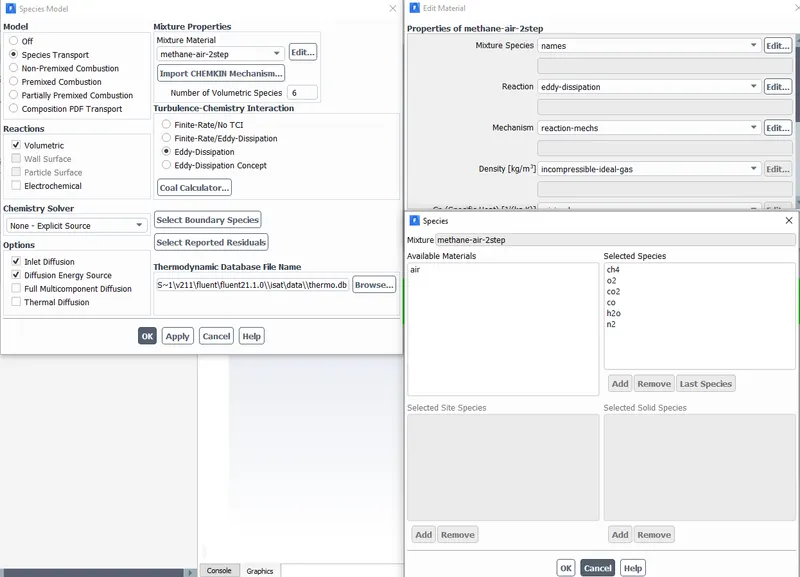
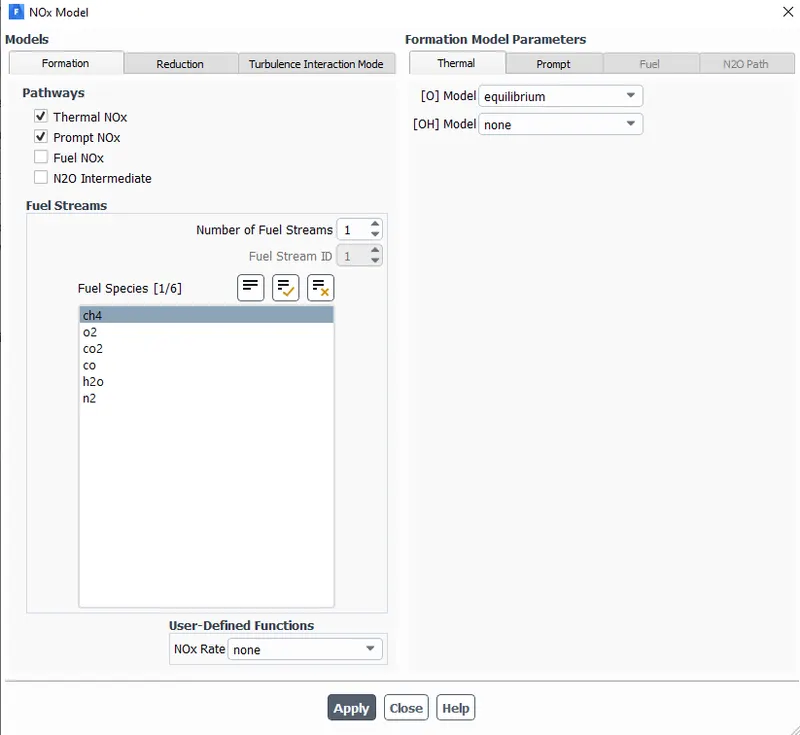
The combustion model , Nox and soot modelling settings are given below:
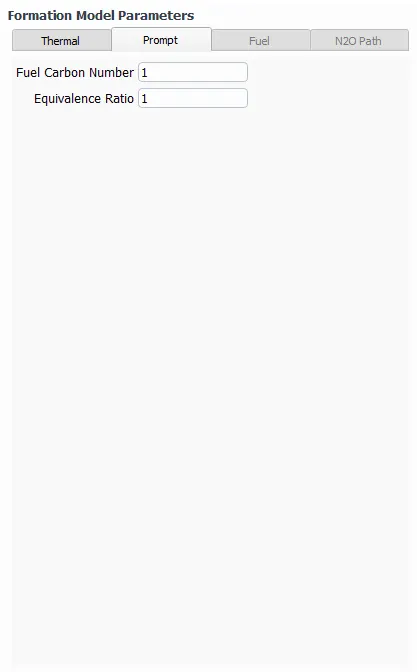
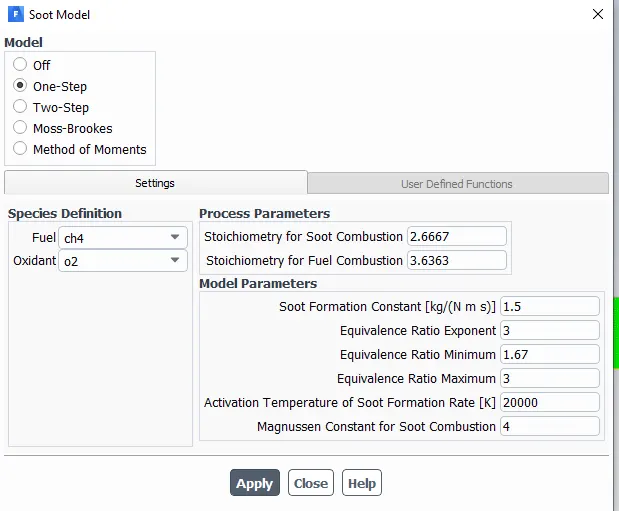
4. Boundary Conditions:
| BC | Type | Velocity (m/s) | Pressure (Pa) | Thermal (K) | Species |
| AIR-INLET | Velocity inlet | 0.5 | N/A | 300 | O2 mass fraction= 0.23 |
| METHANE-INLET | Velocity inlet | 80 | N/A | 300 | CH4 mass fraction= 1 |
| OUTLET | Pressure | N/A | 0 (gauze) | 300 | - |
All the turbulence and wall conditions are Ansys-Fluent defaults. The species mass fraction of O2 is only defined in Air-inlet since N2 is inert and doesnt involve in combustion.
VI Solution:
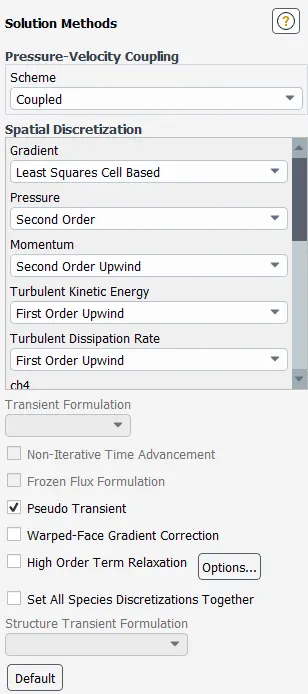
The spatial discretization for all the species is set to second-order upwind.
The solution is initialized with standard initialization with computing from the inlet. The solution is run for 500 iterations.
VII Results:
The 2d-axisymmetric analyses of combustion of natural gas (CH4) in ambient air is carried in this analysis. The parameters of interest are maximum temperature, mass fraction of products like CO2, O2, Nox, and Soot at the outlet of the combustion chamber. The results are discussed below:
1. Temperature variation in Combustion chamber:
The combustion process in the chamber due to chemical reaction between the fuel(CH4) and oxidizer (air) is shown in terms of temperature variations in the chamber as shown in the animation below:
It can be seen from the animation, that at the initiation of the combustion there is an instant variation of temperatures at different places of the domain. The maximum temperature zone at the start of combustion is near to the nozzle and then it moves towards the wall side where there is enough oxygen. The maximum temperature attained in the chamber is around 2250 K. The temperature at the outlet reaches a steady value of around 1700 K.
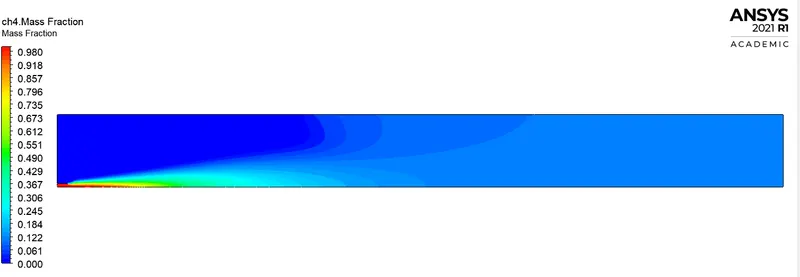
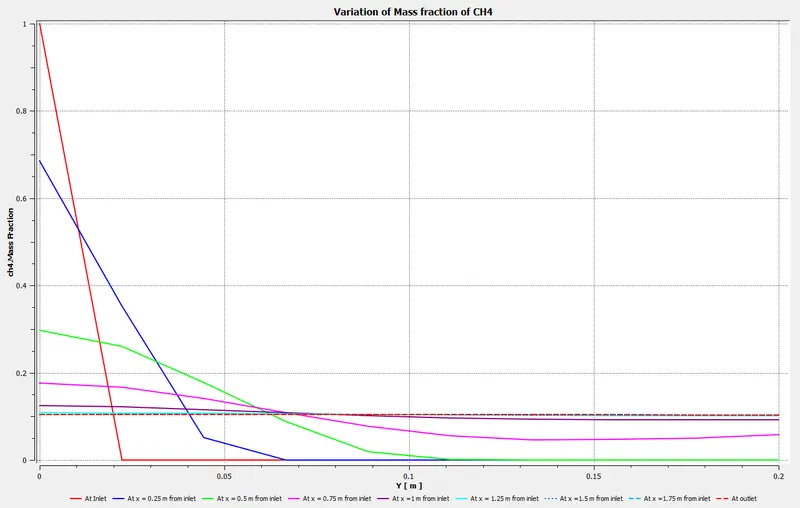
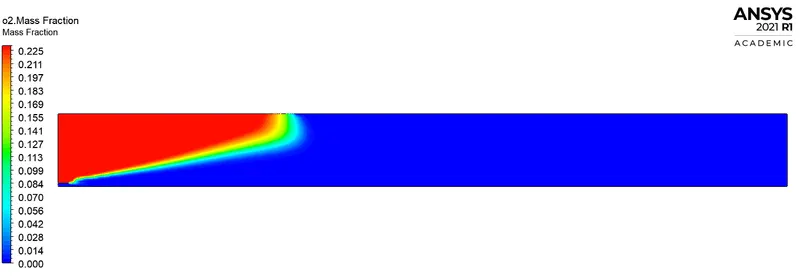
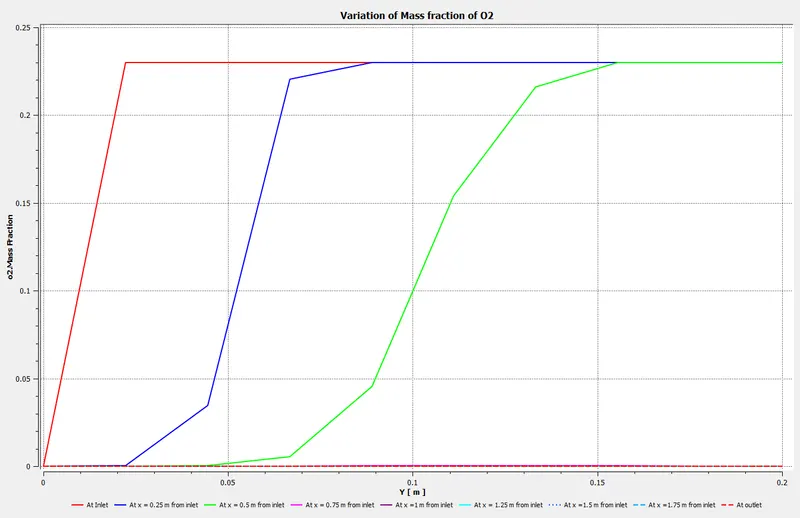
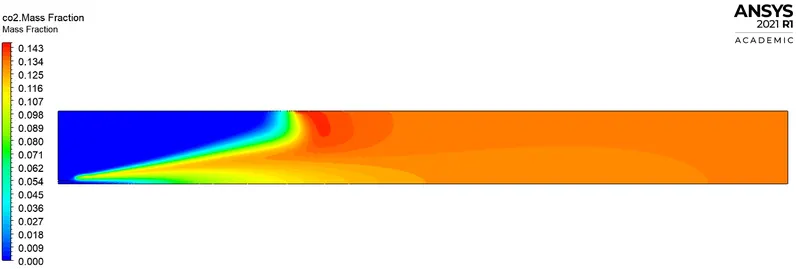
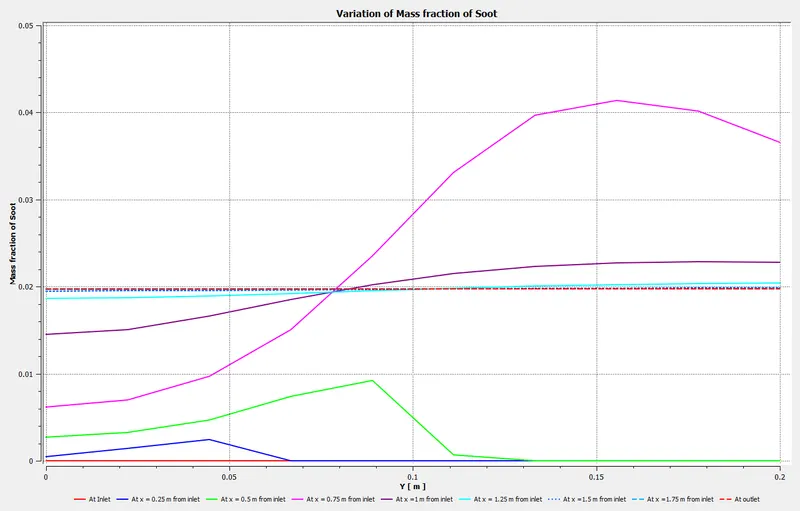
The variation of the mass fractions of the various species and Temperature at different parts of the combustion chamber are shown in the below contour and line plots.
1. Methane (CH4):
2. Oxygen (O2):
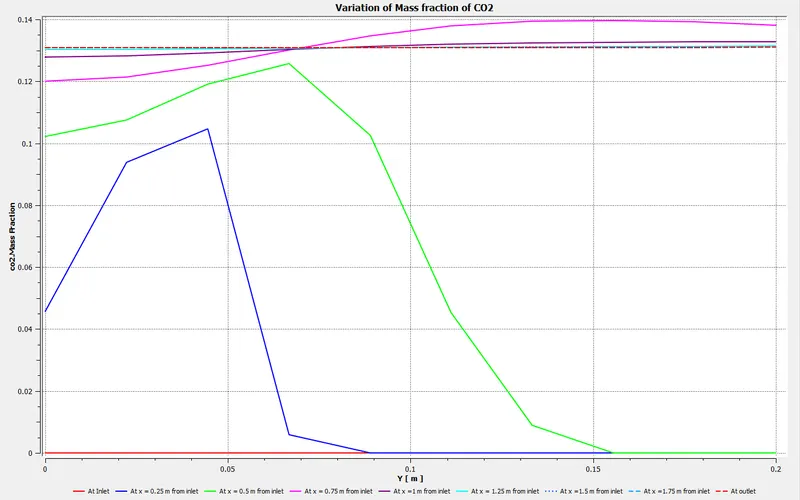
3. Carbon-Dioxide (CO2):
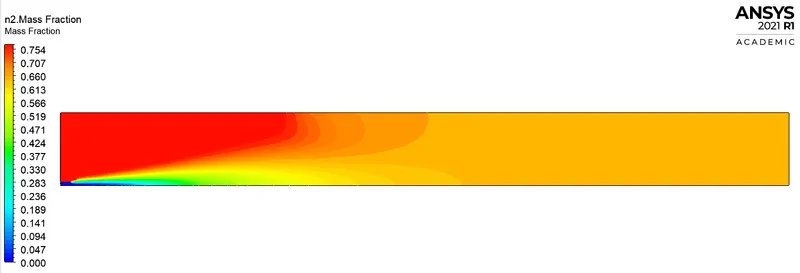
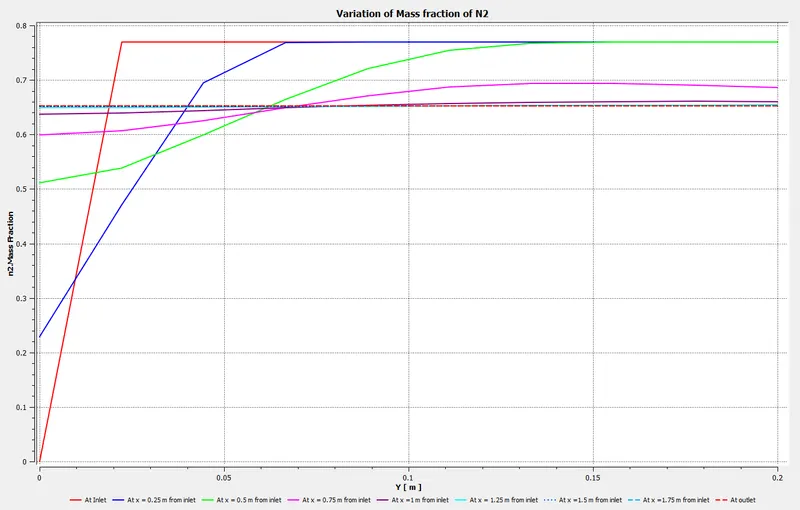
4. Nitrogen (N2):
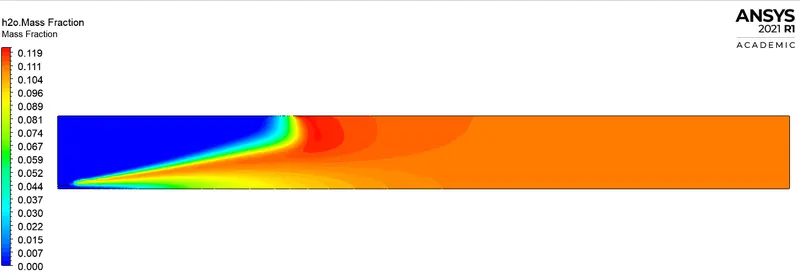
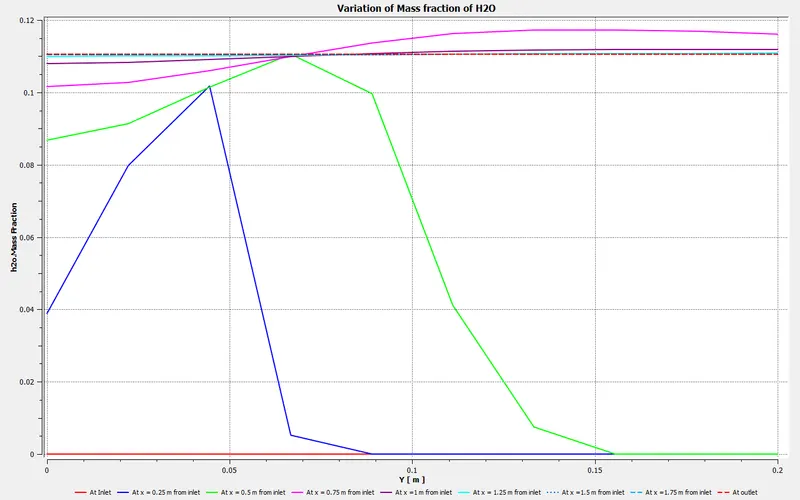
5. Water (H2O):
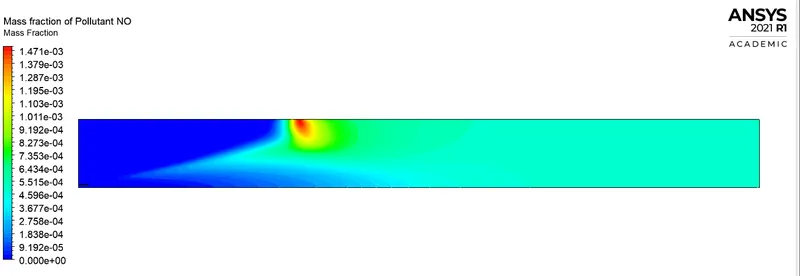
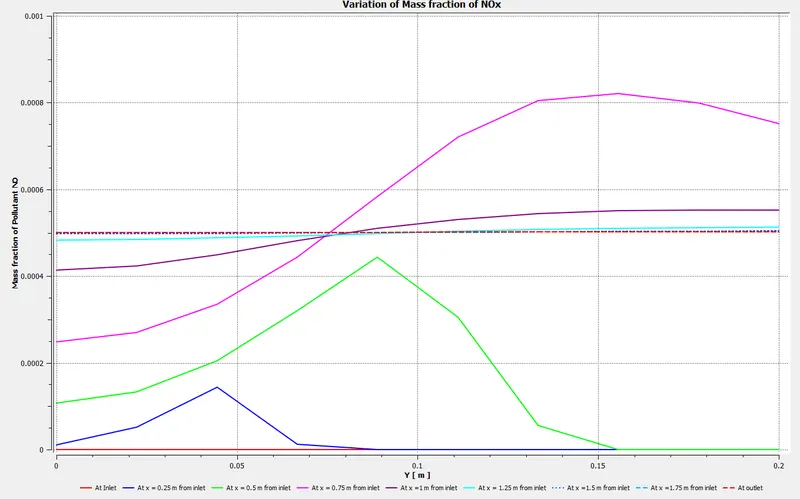
6. Nitric -Oxides (NOx):
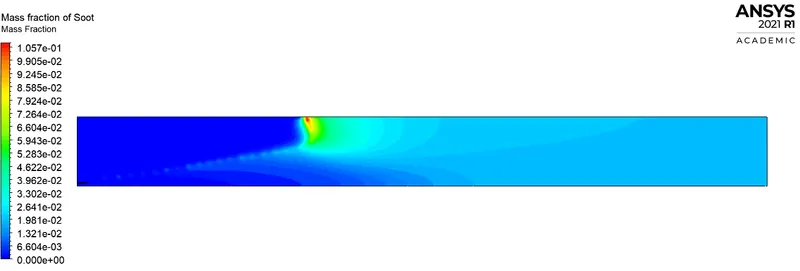
7. Soot:
8. Temperature:
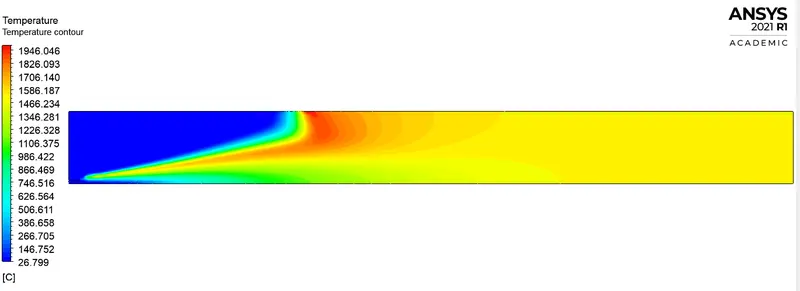
It can be seen from the above plots and contours, that NOx and soot which are pollutant and non-environment friendly products of the combustion are formed in the chamber. Also, the maximum percentage of these products is formed at the high-temperature regions of the chamber, indicating high temperatures aid in NOx and soot formation.
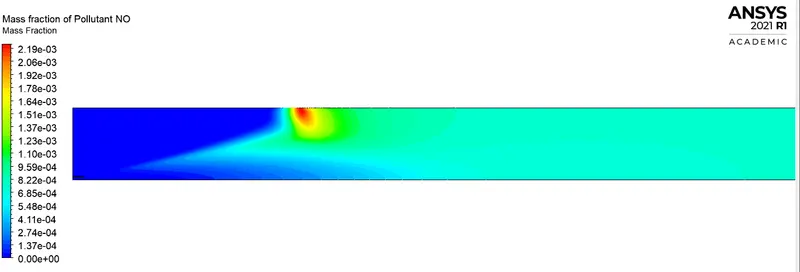
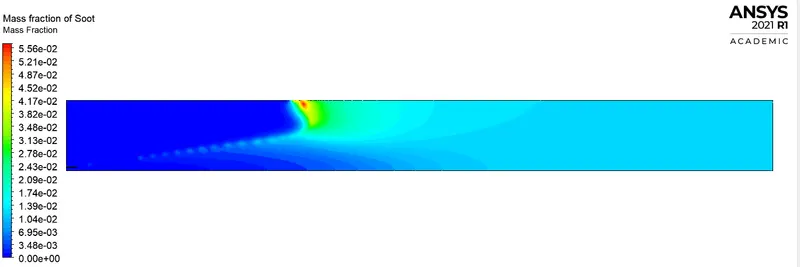
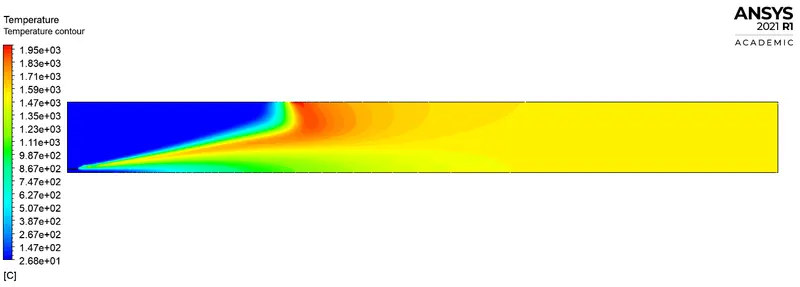
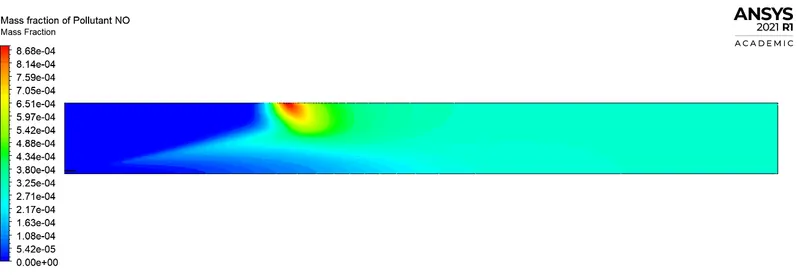
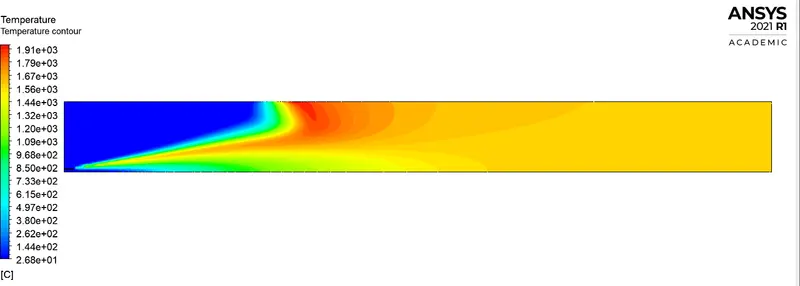
Many historical combustion studies indicated that the addition of water to fuel may decrease the pollutants formation in the products. Hence to study the effect of water in reducing NOx and soot content in the combustion products, parametric analysis is conducted with the addition of water to fule in the range of 5-30% by mole basis and the results are given below:
Addition of 5% H2O in CH4 :
NOx:
Soot:
Temperature:
Addition of 30% H2O in CH4 :
NOx:
Soot:
Temperature:
The below table shows the comparison of the effect of Water content in fuel on combustion products and temperature.
| Inlet Fuel Content (by mole fraction) | Temp at Outlet (K) | Outlet Mass fraction of Species | |||||||
| CH4 | H2O | CH4 | CO2 | H20 | O2 | N2 | Nox | Soot | |
| 1.00 | 0.00 | 1795.68 | 0.103861 | 0.130965 | 0.110487 | 3.05E-15 | 0.652146 | 5.01E-04 | 1.97E-02 |
| 0.95 | 0.05 | 1806.16 | 0.096101 | 0.130708 | 0.119006 | 2.44E-15 | 0.6515 | 7.31E-04 | 1.60E-02 |
| 0.90 | 0.10 | 1817.19 | 0.0883879 | 0.130729 | 0.127432 | 2.51E-15 | 0.650923 | 4.42E-04 | 1.67E-02 |
| 0.85 | 0.15 | 1828.33 | 0.0806826 | 0.130679 | 0.135863 | 2.97E-15 | 0.650313 | 4.11E-04 | 1.52E-02 |
| 0.80 | 0.20 | 1839.74 | 0.0729947 | 0.130654 | 0.14427 | 3.28E-13 | 0.649703 | 3.77E-04 | 1.48E-02 |
| 0.75 | 0.25 | 1851.41 | 0.065323 | 0.130642 | 0.15265 | 1.01E-12 | 0.649094 | 3.36E-04 | 1.20E-02 |
| 0.70 | 0.30 | 1863.32 | 0.05766 | 0.130646 | 0.161027 | 3.03E-12 | 0.648485 | 2.91E-04 | 1.25E-02 |
The following plots show the effect of Water content in fuel on combustion:
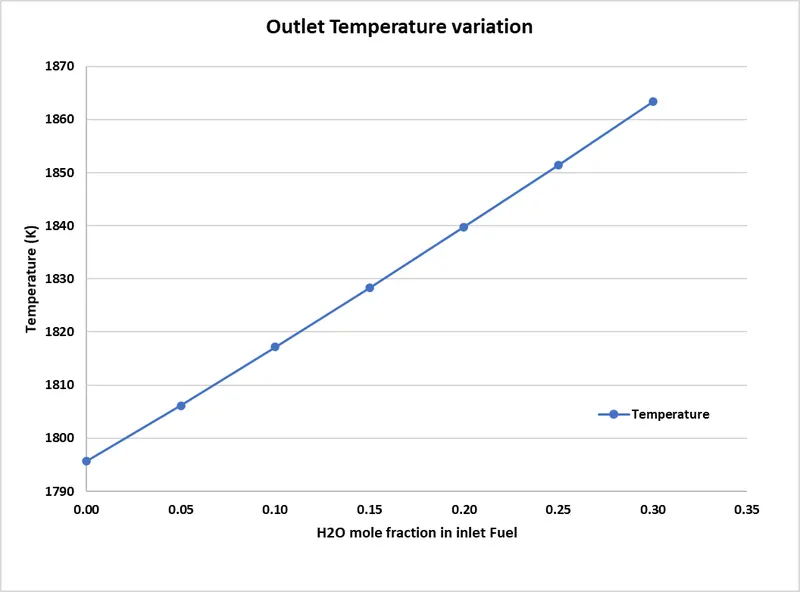
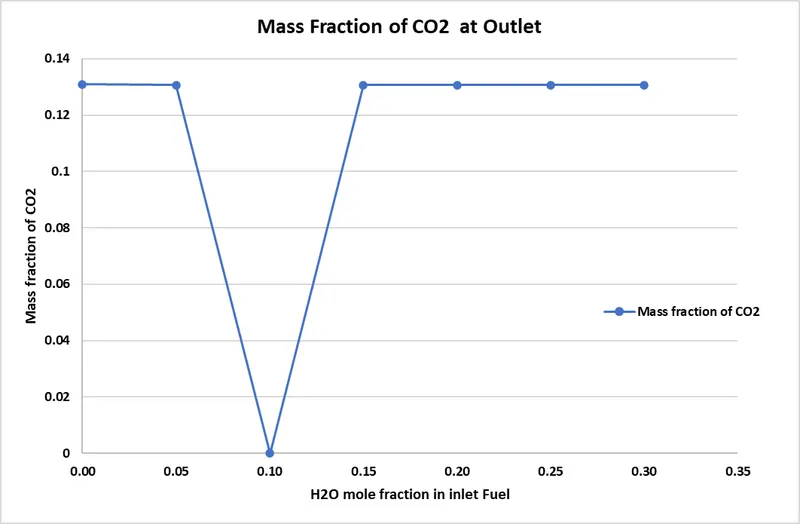
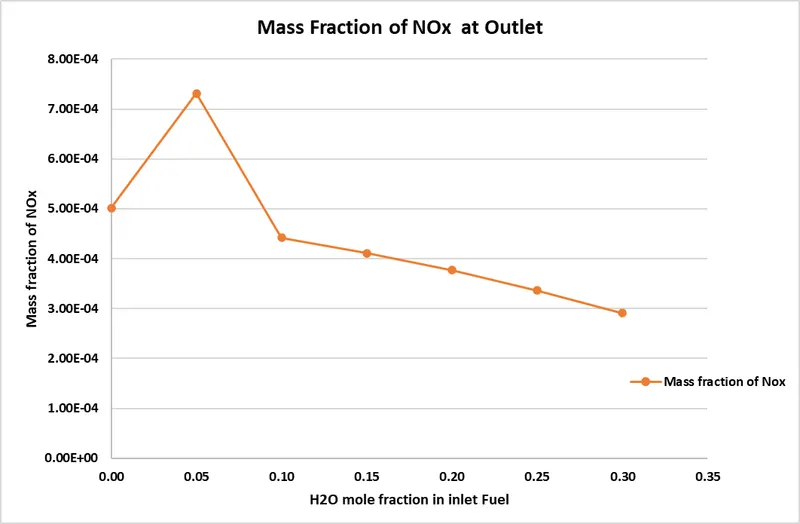
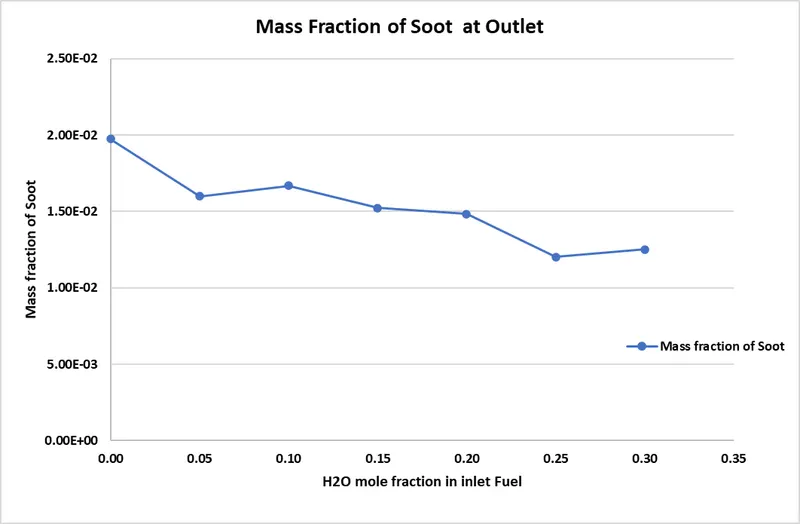
It can be seen from the above plots the NOx and soot mass fraction in the outlet is reduced as water is added to the fuel. But the temperature value increased as the water content is increased in fuel. Also, there is not much variation in CO2 as water is added to the fuel.
Conclusion:
In this project simulation of natural gas (Methane) in ambient air is analyzed using the species transport model of Ansys Fluent. It has been observed that NOx and soot are produced in the combustion process, which are pollutants. Further parametric analyses is carried to see the effect of water content in fuel on NOx and soot production. It is observed that the addition of water in fuel (CH4) reduces the formation of NOx and Soot in the products leading to a reduction in pollution.
References:
1. https://en.wikipedia.org/wiki/Combustion
2. https://www.toppr.com/guides/chemistry/combustion-and-flame/introduction-and-types-of-combustion/