Simulating Combustion of Natural Gas.
Simulating Combustion of Natural Gas
INTRODUCTION:-
Combustion, or burning, is a high-temperature exothermic redox chemical reaction between a fuel (the reductant) and an oxidant, usually, atmospheric oxygen, that produces oxidized, often gaseous products, in a mixture termed as smoke. Combustion does not always result in fire, because a flame is only visible when substances undergoing combustion vapourize, but when it does, a flame is a characteristic indicator of the reaction. While the activation energy must be overcome to initiate combustion (e.g., using a lit match to light a fire), the heat from a flame may provide enough energy to make the reaction self-sustaining.
Combustion is often a complicated sequence of elementary radical reactions. Solid fuels, such as wood and coal, first undergo endothermic pyrolysis to produce gaseous fuels whose combustion then supplies the heat required to produce more of them. Combustion is often hot enough that incandescent light in the form of either glowing or a flame is produced. A simple example can be seen in the combustion of hydrogen and oxygen into water vapor, a reaction commonly used to fuel rocket engines. This reaction releases 242 kJ/mol of heat and reduces the enthalpy accordingly (at constant temperature and pressure):
- 2H2(g) + O2(g) → 2H2O(g)
Combustion of an organic fuel in air is always exothermic because the double bond in O2 is much weaker than other double bonds or pairs of single bonds, and therefore the formation of the stronger bonds in the combustion products CO2 and H2O results in the release of energy.[2] The bond energies in the fuel play only a minor role since they are similar to those in the combustion products; e.g., the sum of the bond energies of CH4 is nearly the same as that of CO2. The heat of combustion is approximately −418 kJ per mole of O2 used up in the combustion reaction and can be estimated from the elemental composition of the fuel.
CH4(g) + 2 O2(g) → CO2(g) + 2 H2O(g)
Types of combustion models:
1. Based on combustion:
Non-Premixed Combustion: In non -premixed combustion fuel and oxidizer enter the reaction zone in separate streams and are not mixed before combustion.Whereas in premixed combustion reactants are mixed with the oxidizer at the molecular level before burning or combustion takes place.
- Examples: Diesel Internal Combustion Engines and pool fires. This is applied only for turbulent flows by using a pressure-based solver.
a) Premixed Combustion: This type of combustion happens when fuel and oxidizer are mixed before burning. They are mixed at the molecular level. Here the flame front propagates into the unburnt reactions as the combustion takes place.
- Examples: Gas Leak combustion explosions, premixed gas-turbine combustors.
Pressure based solver is used and is applicable for turbulent flows and subsonic flows. These types of flames are called detonations or deflagrations or explosions, where the combustible mixture is ignited by a heat source behind a shock wave. The Premixed combustion model cannot be used along with the NOx pollutant model and soot model turned on, whereas the partially premixed model can be used along with the pollutant model turned on. Only inert particles can be used for simulation by the premixed combustion model, not the discrete phase particles.
b) Partially premixed combustion:
Here fuel and oxidizer are primarily mixed before combustion. They are the premixed flames with non-uniform fuel-oxidizer mixtures. It is a model combustion process intended to be used in Internal combustion engines of motorized vehicles and other automobiles. Its high specific power, high fuel efficiency, and low exhaust pollution made it a promising technology. These premixed flames involve premixed jets discharging into the atmosphere, lean premixed combustors with cooling air jets, or diffusion pilot flames. To compute the concentrations of individual species, a partially premixed combustion model is used. This is applicable for turbulent flows by the use of a pressure-based solver.
2. Based on Phases:
a) Fluid phase: Combustion happens when fuel is in the fluid phase.
b) Volumetric phase/gas phase: It is for gas-phase reactions. The reaction rates are defined on a volumetric basis.
c) Wall surface: For gas-phase reactions, the reaction rate is defined on a volumetric basis. Here combustion happens on a wall or boundary. For surface reactions, the rate of adsorption and desorption is governed by both chemical kinetics and the diffusion process. When the volumetric is enabled, wall surface reactions create sources and sinks of species in the gas phase enabling the calc of wall surface reaction kinetics. They are also applied to the reacting surface.
d) Particle surface: Combustion happens over surfaces involving a multi-phase particle surface reaction mechanism. This is applied by using the volumetric turned on.
Soot and NOx
Part I
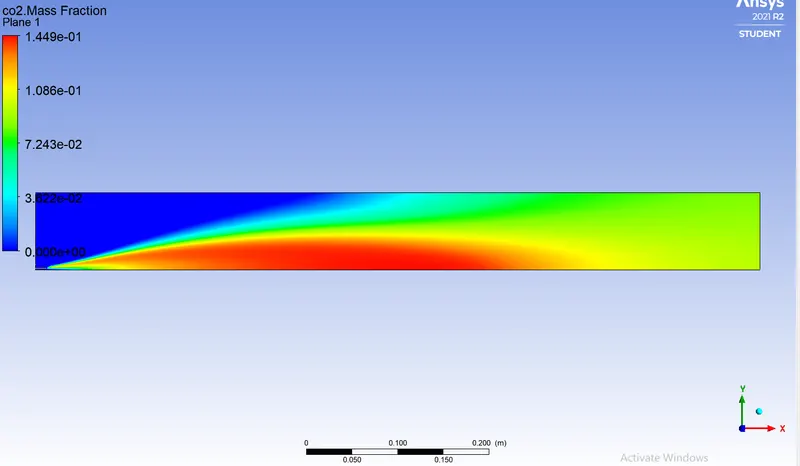
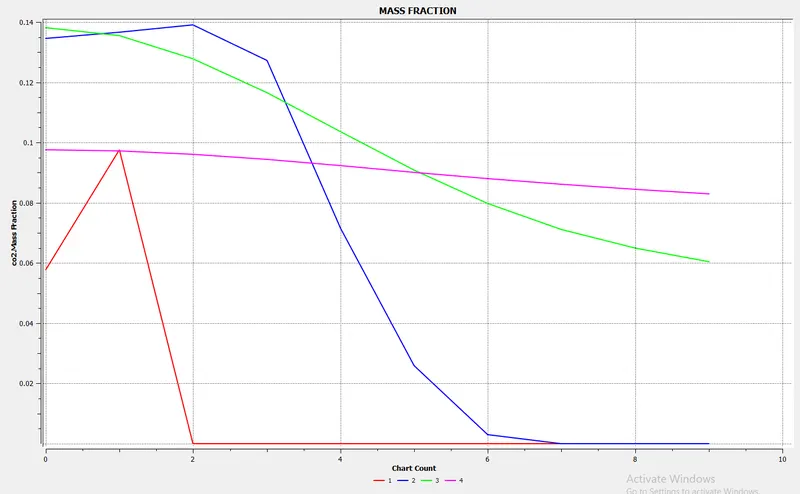
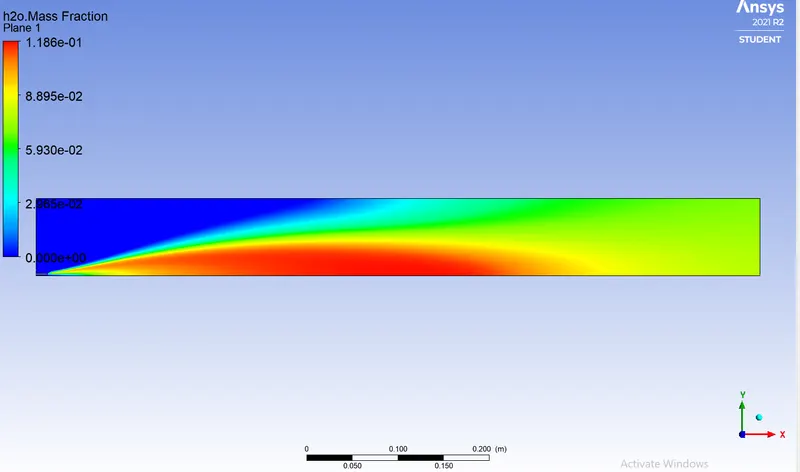
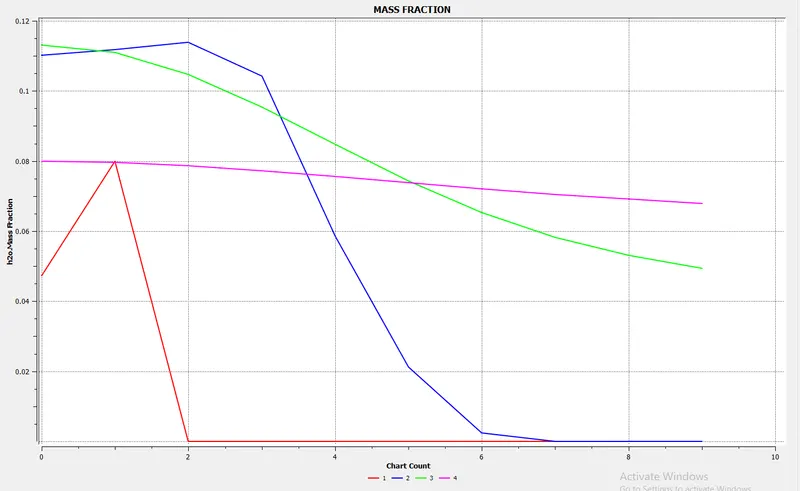
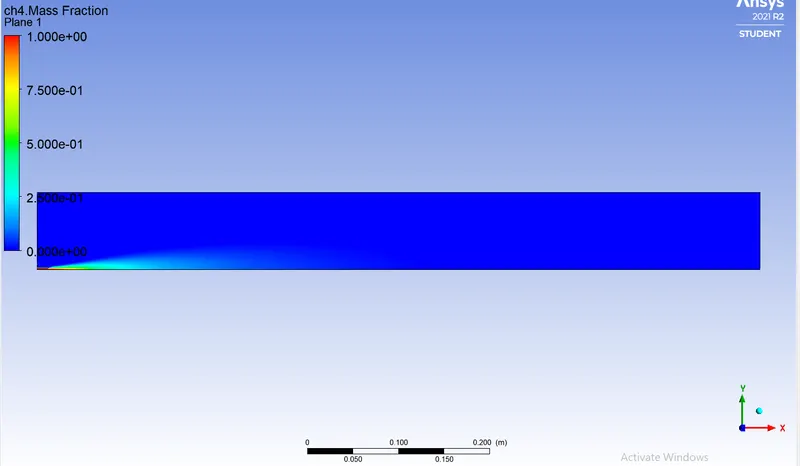
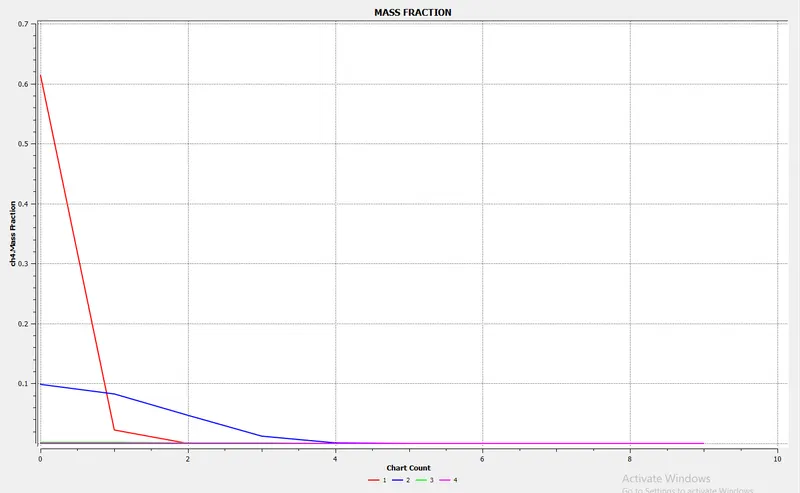
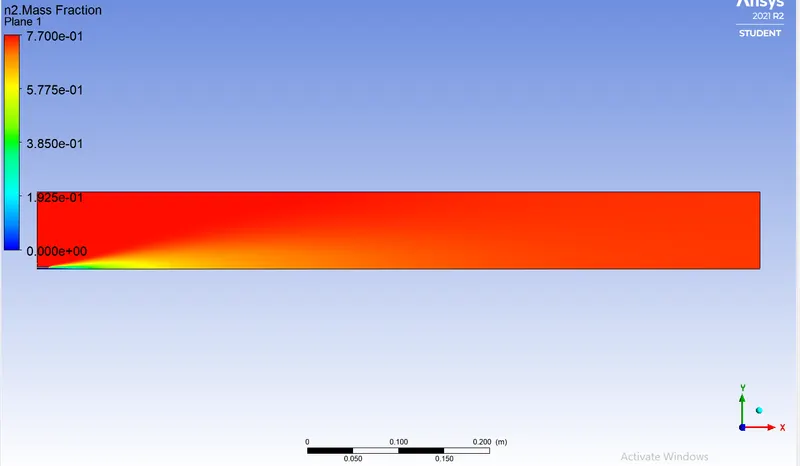
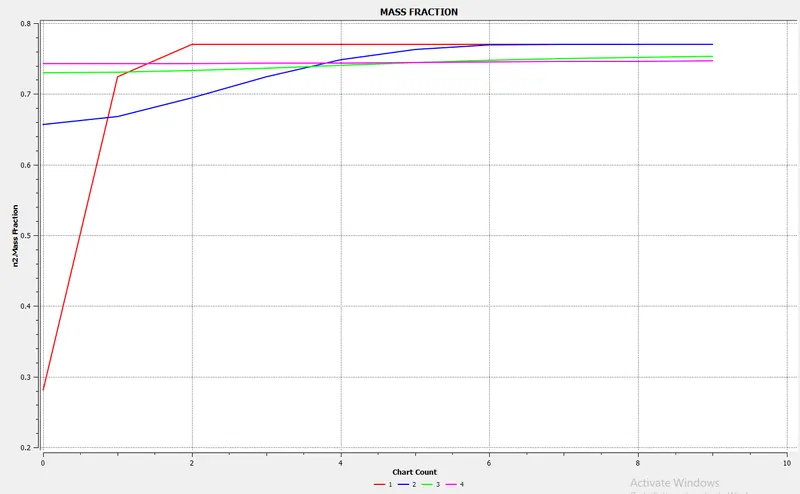
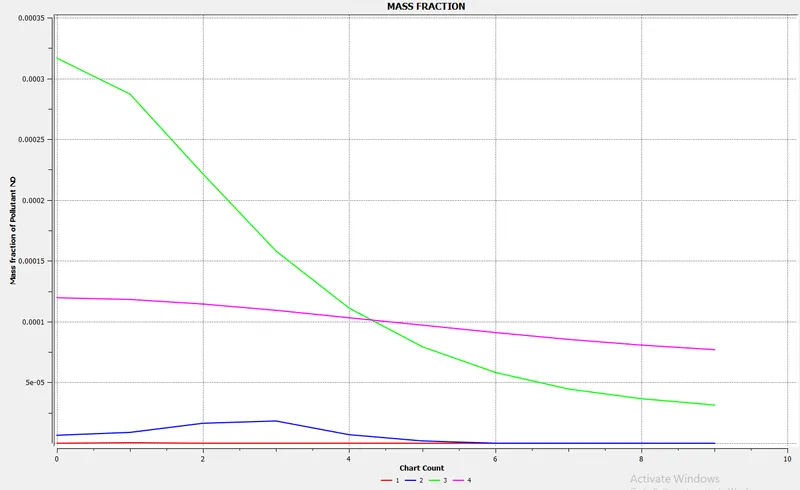
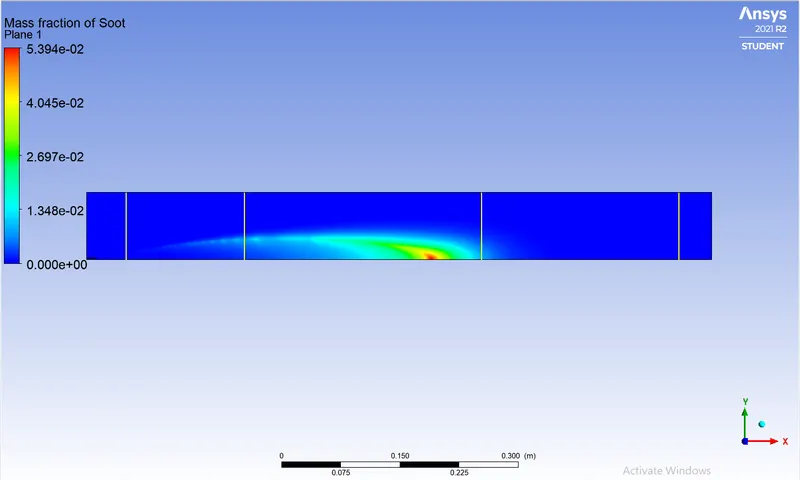
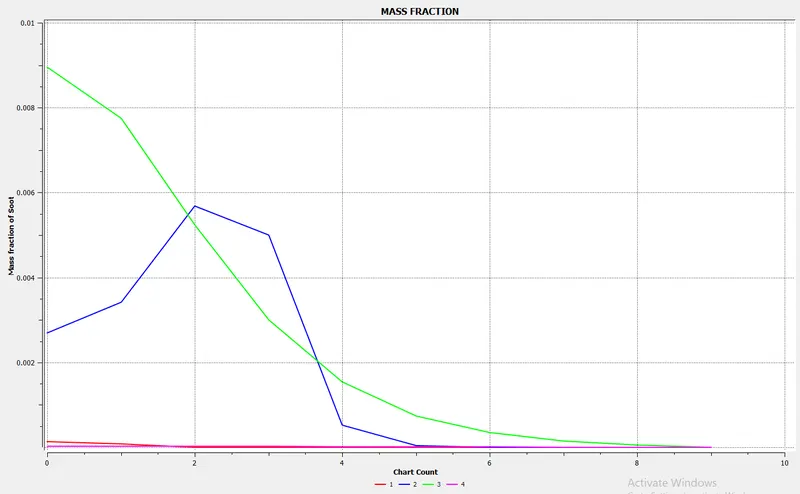
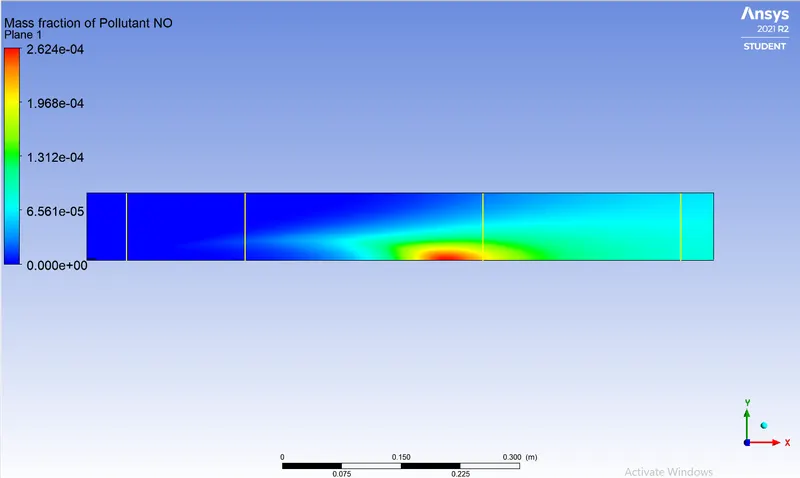
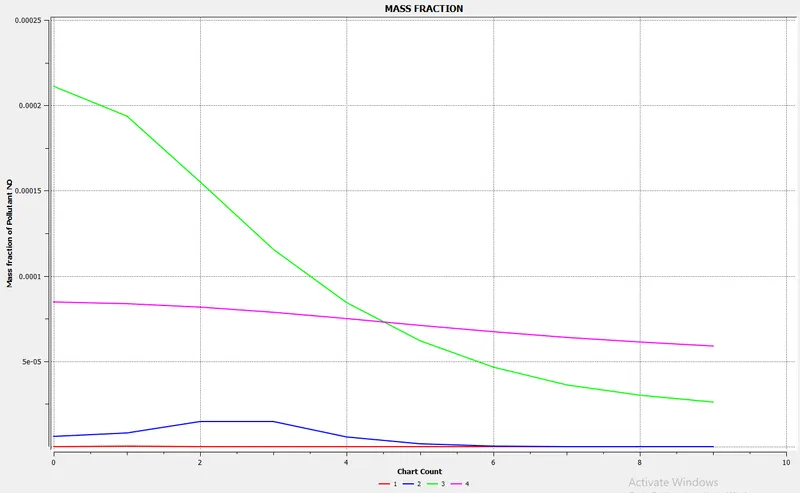
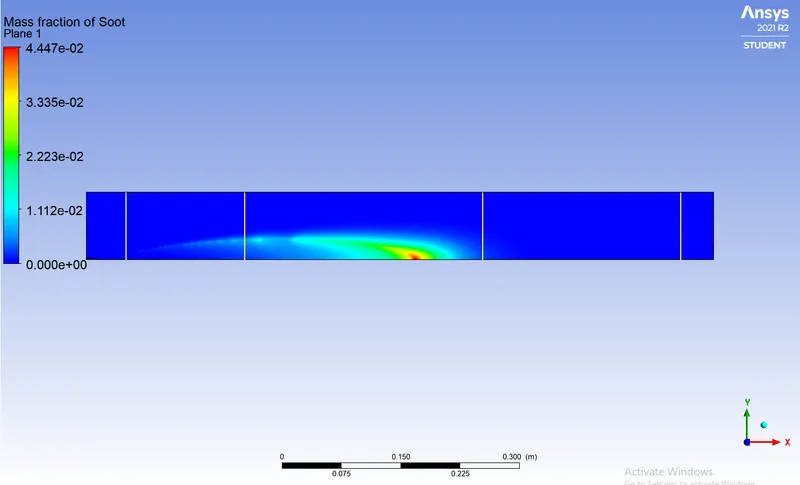
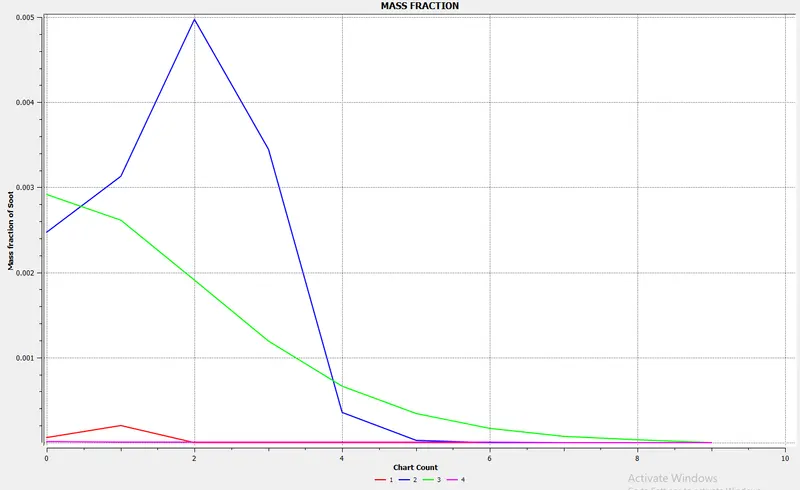
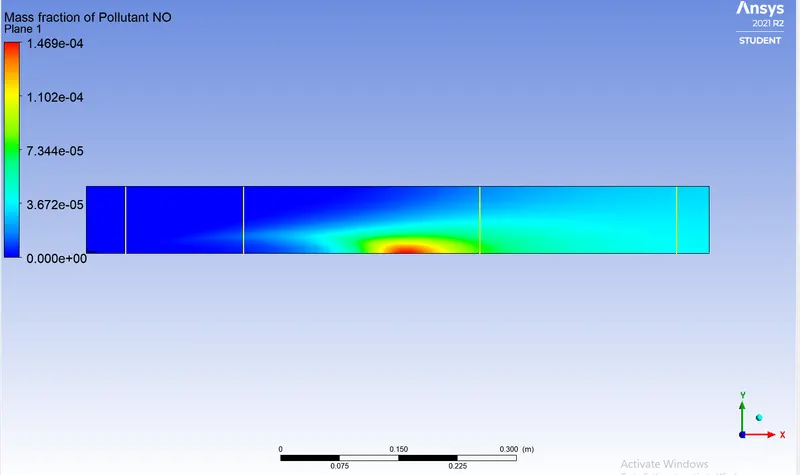
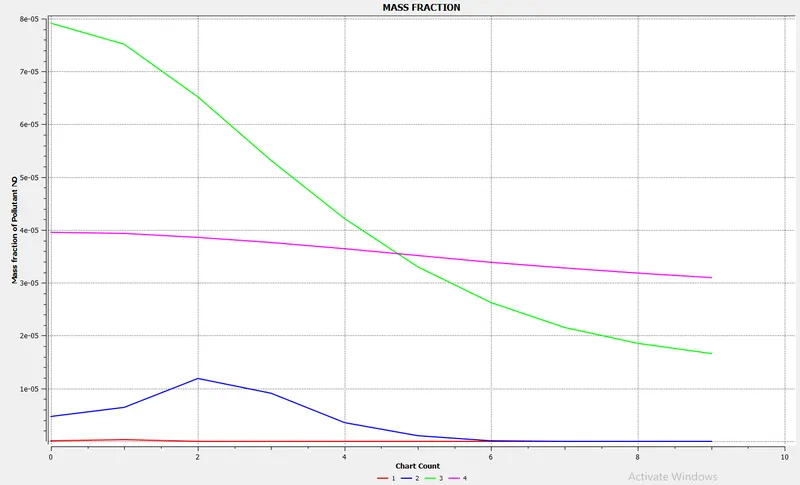
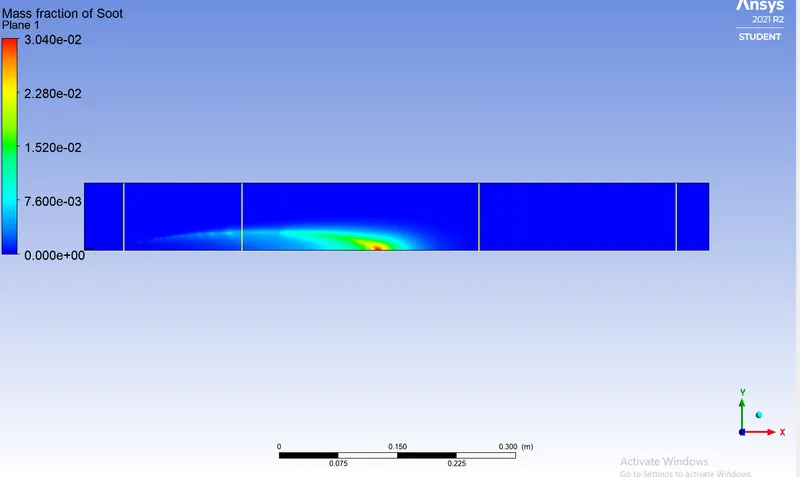
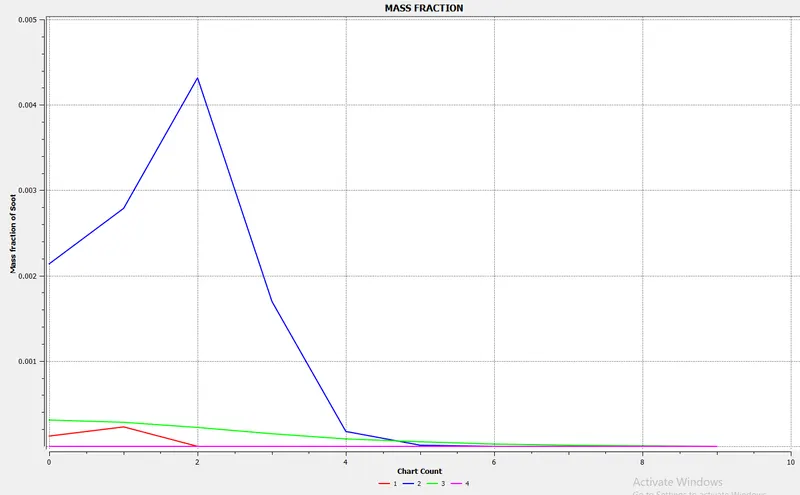
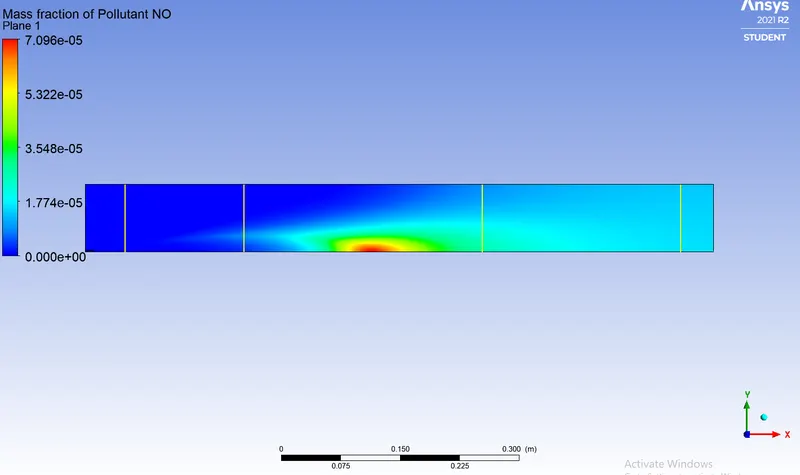
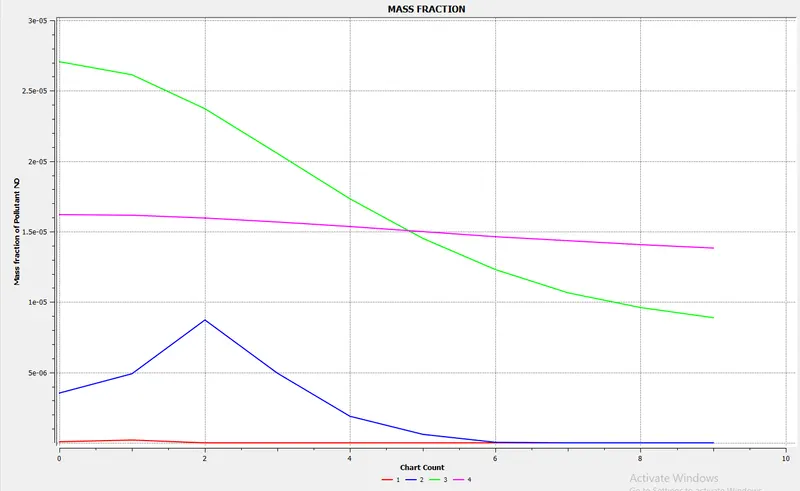
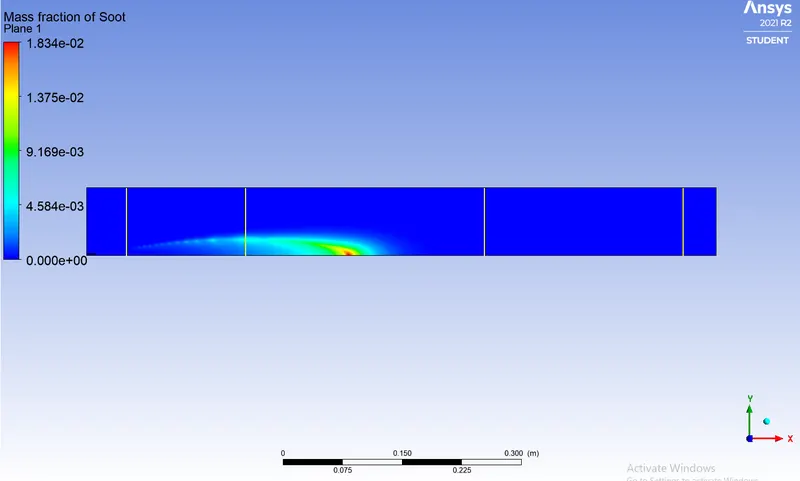
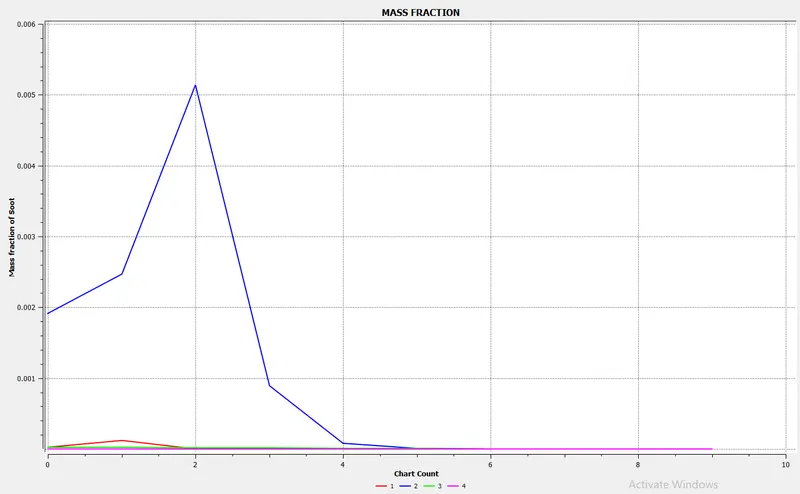
Perform a combustion simulation on the combustor model and plot the variation of the mass fraction of the different species in the simulation using line probes at different locations of the combustor as shown in Fig. You need to plot for CO2, H2O, CH4, N2, O2, NOx emissions & Soot formation.
Part II
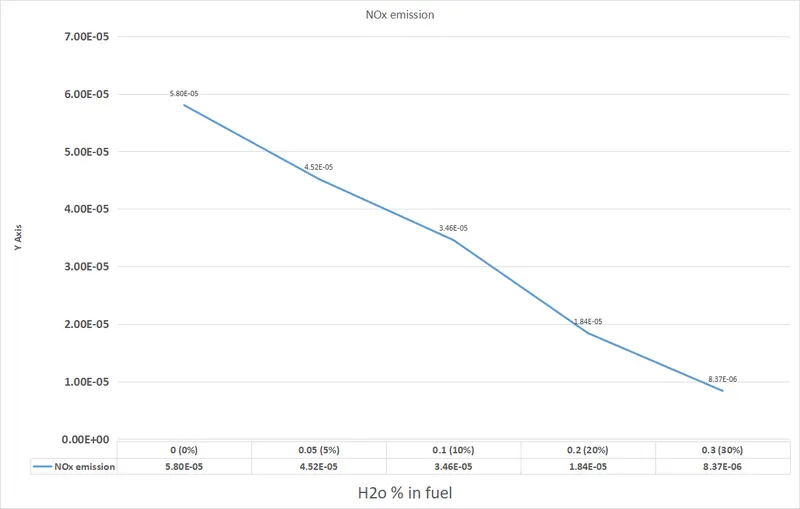
In this part, you need to add the water content in the fuel from 5% to 30% by mole and observe the effect of it on the results. It is necessary to provide line plots and contours to prove your claim.
Part I
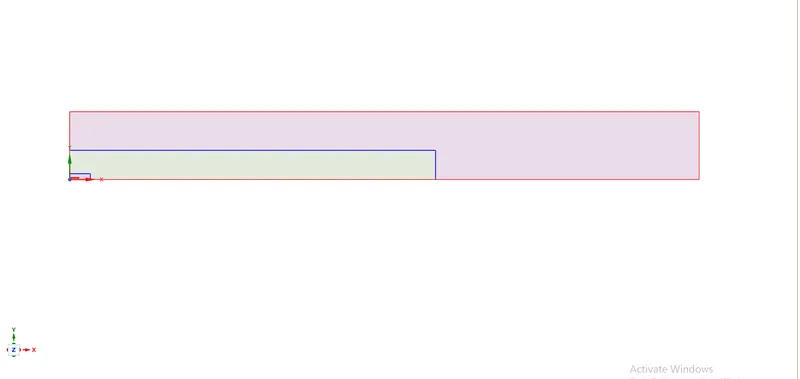
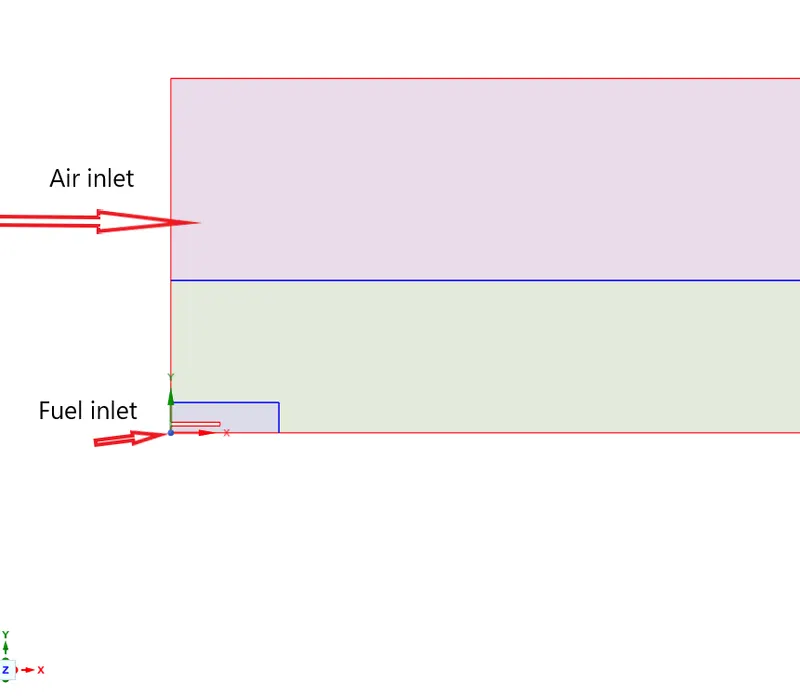
GEOMETRY:-
MESHING:-
Element size 1 mm
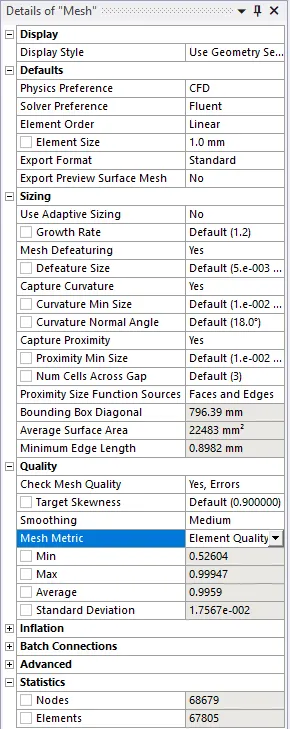
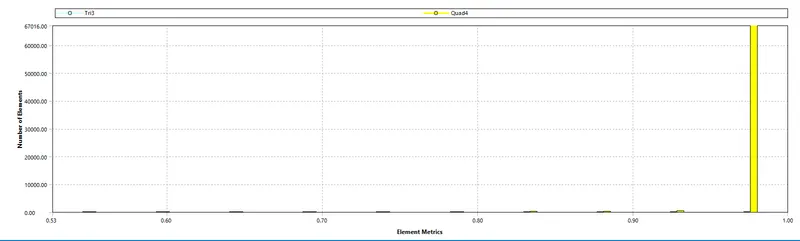
Mesh metrics
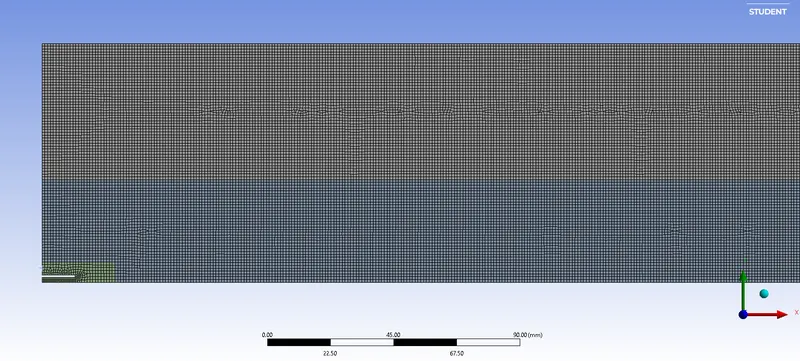
MESH
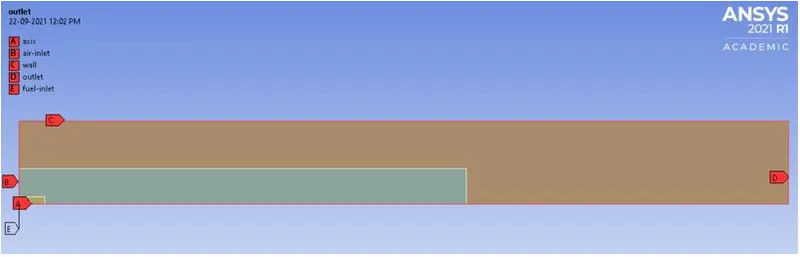
NAMED SELECTIONS
SETUP:-
Solver- Pressure based
Steady-state Simulation
2D-Planar Axisymmetric
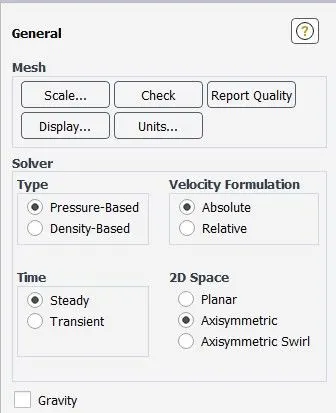
Viscous Turbulence model- K epsilon -> Standard -> Standard wall functions
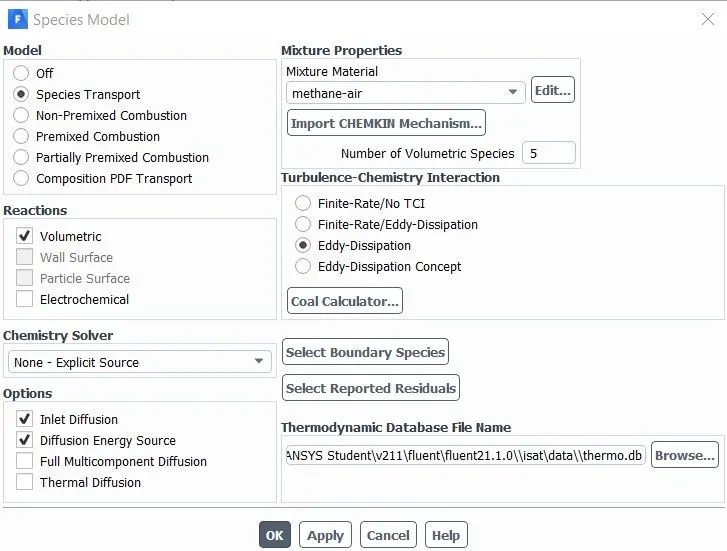
Species Model Turned ON
Species:
The Species Model dialog box allows you to set parameters related to the calculation of species transport and combustion.
Species Transport - enables the calculation of multi-species transport (either non-reacting or reacting, depending on the selection for Reactions).
Reactions - contains options related to the modeling of reacting flow.
Volumetric - enables the calculation of reacting flow using the finite-rate formulation.
Inlet Diffusion - includes the diffusion flux of species at the inlet.
Diffusion Energy Source - includes the effect of enthalpy transport due to species diffusion in the energy equation.
Mixture material - Methane-air 2 step is used as it allows the addition of water in fuel or air
NOX and Soot model is turned ON:
NOx Model:
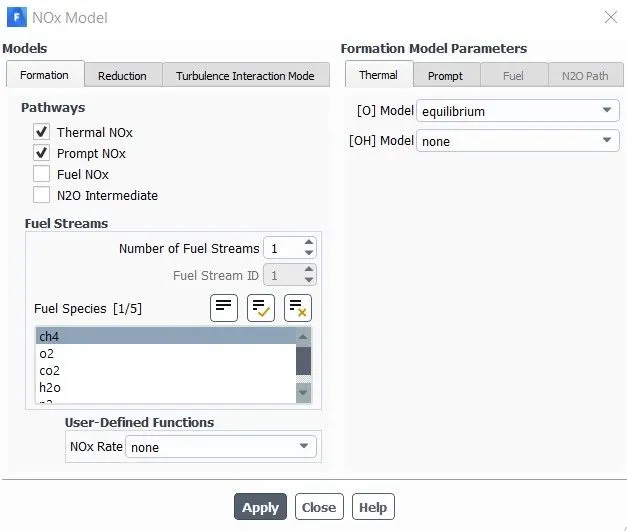
Mainly consists of Nitric oxide (NO), Nitrogen peroxide (NO2), and Nitrous oxide (N20) to a smaller extent Thermal, Prompt, Fuel, and N20 intermediate mechanisms are available.
Thermal NOx - It is formed when nitrogen and oxygen in the combustion air combine with one another at high temperatures in a flame.
Prompt NOx - Forms from the rapid reaction of atmospheric nitrogen with hydrocarbon radicals.
Fuel NOx - It is formed by the reaction of nitrogen bound in the fuel with oxygen in the combustion air. It is rarely a problem with gaseous fuels.
In our case, we will activate Thermal and prompt NOx, as there is no nitrogen in input fuel as is Methane CH4.
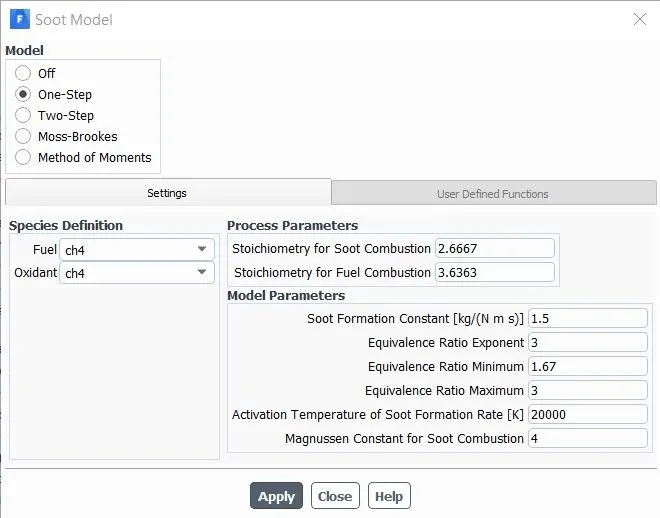
Soot Model
A One-Step Soot Model is used.
Boundary conditions:
For Part-I, as there is no addition of Water h2O, the Air inlet will have a velocity of 0.5 m/s with a thermal temperature of 300 k with species of 0.23 mass fraction of O2. For the Fuel inlet, velocity is 80 m/s with thermal temperature 300 k and species of 1 mass fraction of ch4.
- Air-inlet: Velocity = 0.5 m/s, T = 300 K, Mass fraction of O2 = 0.23
- Fuel-inlet: Velocity = 80 m/s, T = 300 K, Mass fraction of CH4 = 1.
- Outlet: Pressure Outlet, Guage pressure = 0.
- Walls: Wall (No-slip wall)
For Part-II, there is an addition of water in terms of 5, 15, 25, and 30% in fuel. so all the above conditions remains same with only change in fuel inlet species with 0.05 , 0.15 , 0.25 , 0.3 mass fraction of h2O with ch4 of mass fraction 0.95 , 0.85 , 0.75 , 0.7 respectively. Air inlet species remain the same with a 0.23 mass fraction of O2.
- Air-inlet: Velocity = 0.5 m/s, T = 300 K, Mass fraction of O2 = 0.23
- Fuel-inlet: Velocity = 80 m/s, T = 300 K,
Adding the water content in the fuel for 5, 10, 20, and 30%
- Mass fraction of CH4 = 0.95, 0.8, 0.7
- Mass fraction of H2O = 0.05, 0.15, 0.25, 0.3
Solving the above simulation using the parametric study approach
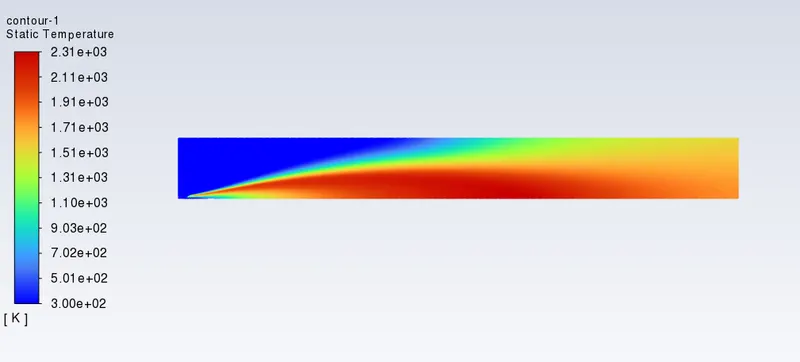
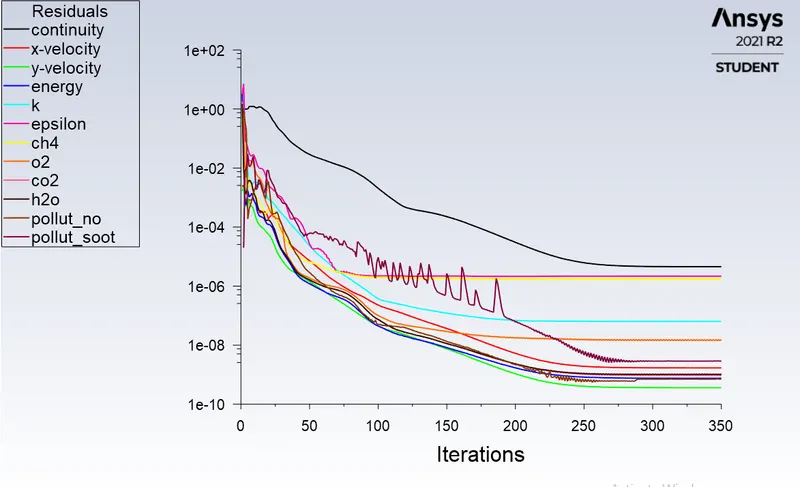
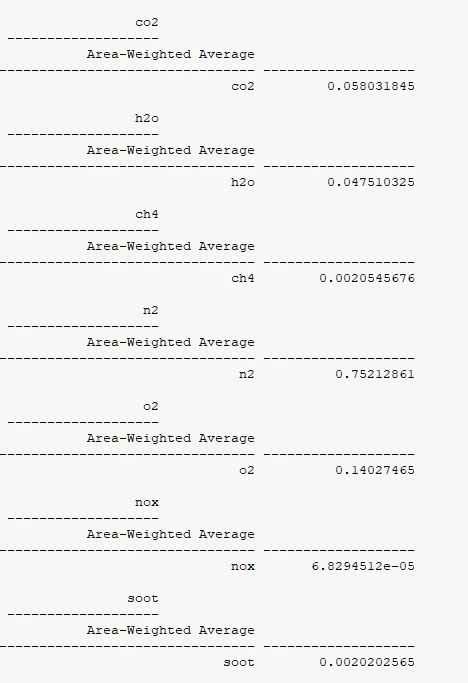
RESULTS:-
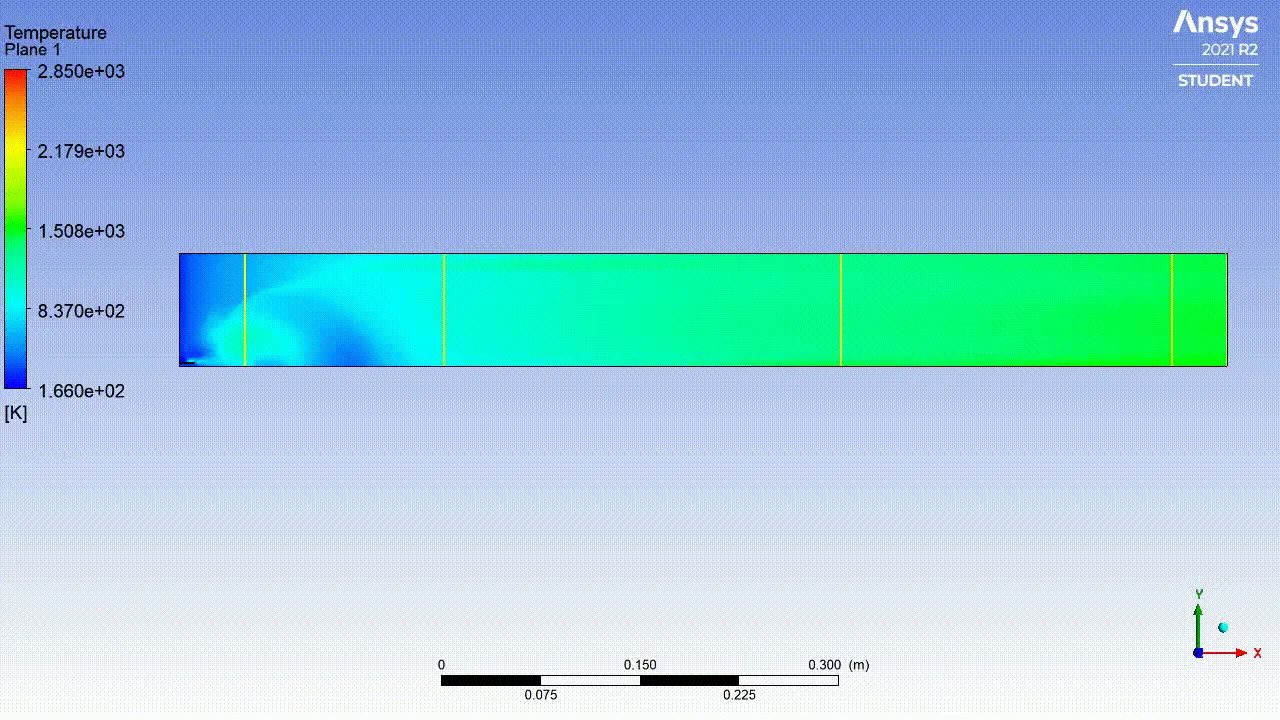
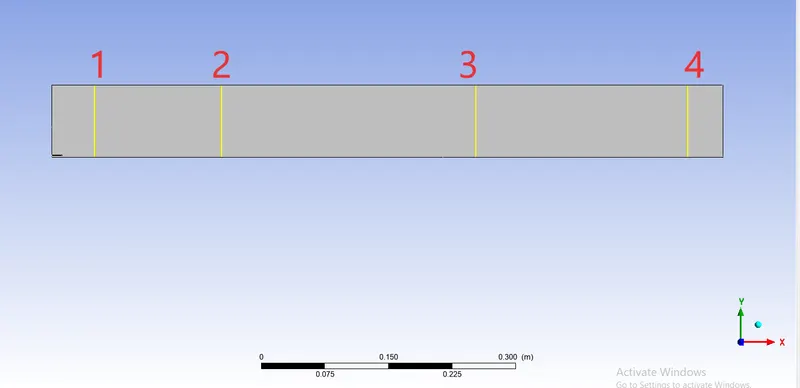
Line probes 1, 2, 3, and 4
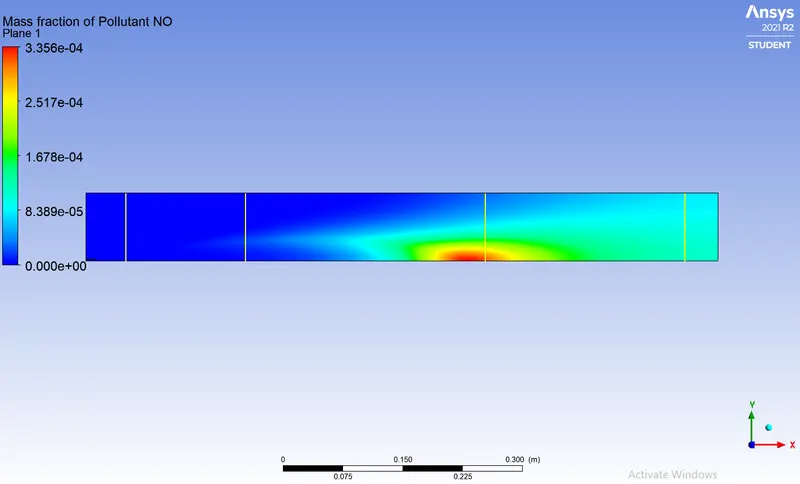
Plotting the variation of the mass fraction of the different species of CO2, H2O, CH4, N2, O2, NOx emissions & Soot formation at different locations of the combustor
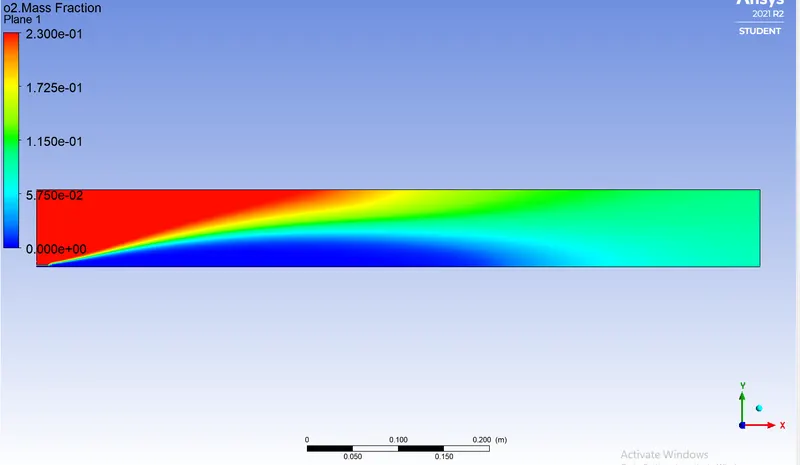
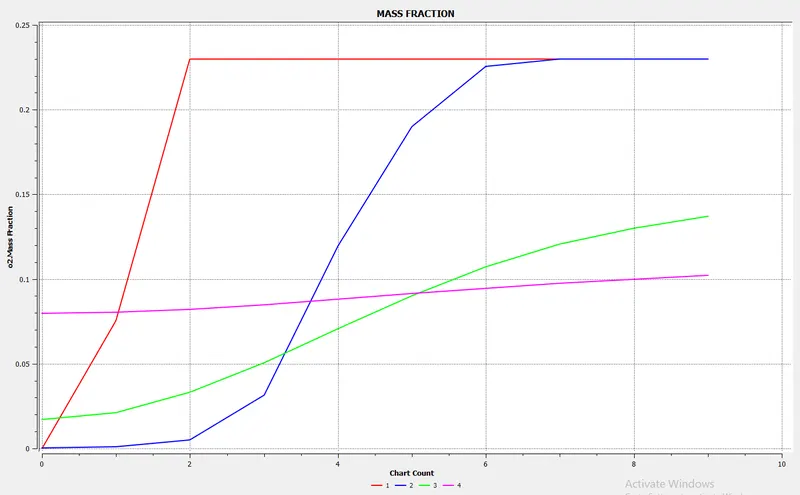
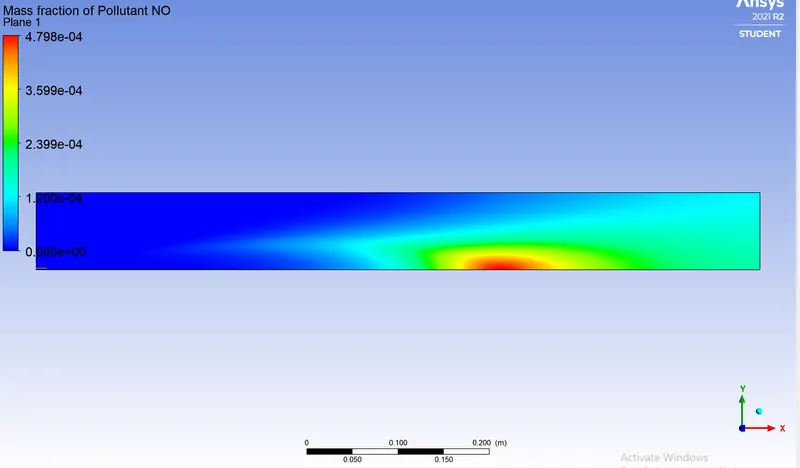
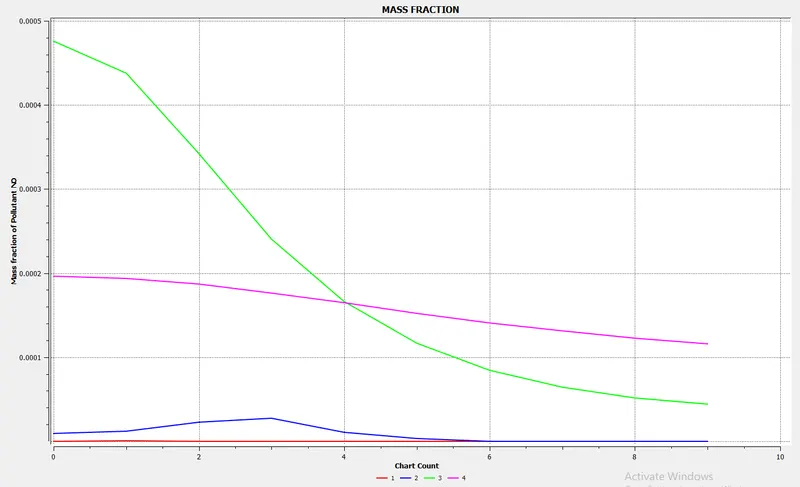
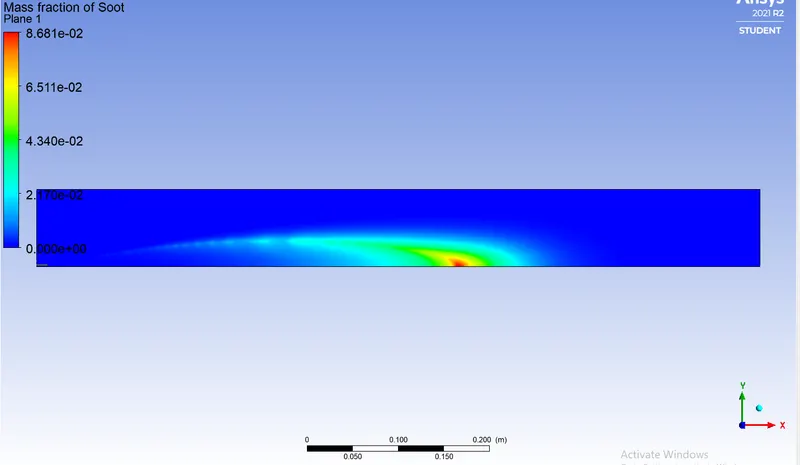
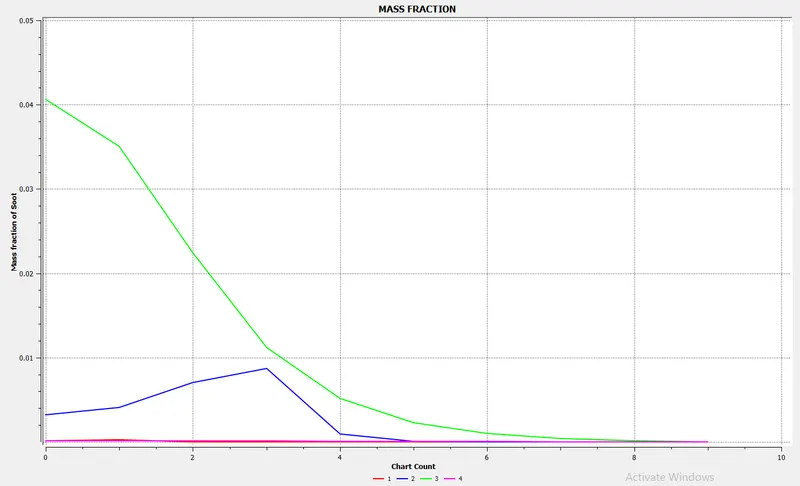
Part II
As you must have observed from the above simulation, the Nox and soot are getting formed at the outlet of the combustor. Such formation has harmful effects on the environment and humans. The stringent government norms also demand the least formation of Nox and soot and to satisfy those requirements, you need to check the effect of adding the water in the fuel.
RESULTS:-
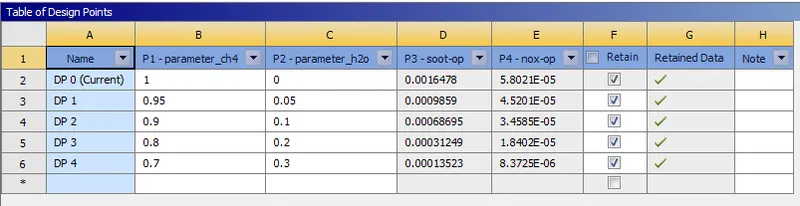
using the parametric study approach
5% of water in the fuel inlet
10% of water in the fuel inlet
20% of water in the fuel inlet
30% of water in the fuel inlet
OBSERVATION:-
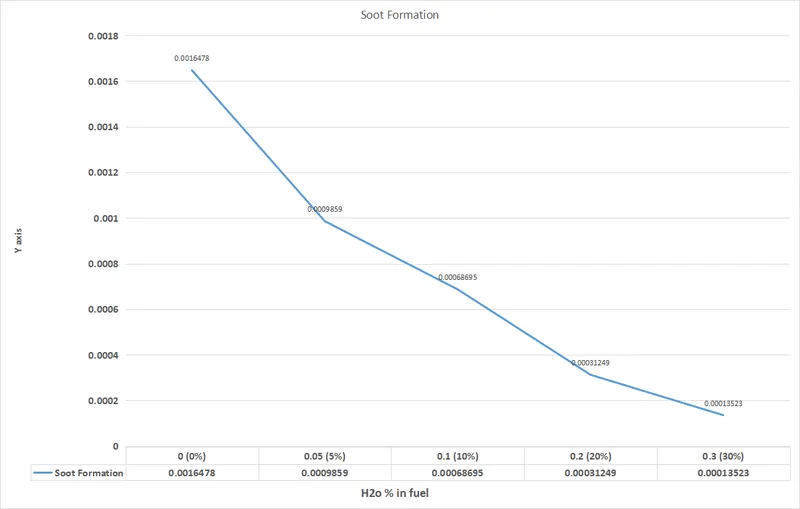
As we can see the decrease in NOx emission and the soot formation with an increase in water percentage in fuel
NOx Emission
Soot Formation
Water Addition to Gasoline-Effect on Combustion, Emissions, Performance, and Knock 820314
REF:-https://www.sae.org/publications/technical-papers/content/690018/?src=820314
CONCLUSION:-
After simulating both the parts, there are a few conclusions that can be drawn out. The parts consist of different setups with the first being without the addition of H2O in Fuel and the second being with the different proportion of water in fuel from 5% to 30%.
- As can be observed from the first part of a simulation, the pollutant NOx and soot are getting formed at the outlet of the combustor as can be seen in the graphs and table above. Such formation has harmful effects on the environment and humans. The stringent government norms also demand the least formation of Nox and soot and to satisfy those requirements, it needs to check the effect of adding the water in the fuel.
- From graphical representations, we can see that in the second part, the value of the mass fraction of NOx decreases with an increase in addition to water (H2O) in Fuel, which is great according to government norms with a reduction of NOx formation.
- We can also observe that the mass fraction of soot reduces with an increase in the addition of water. Thus we can conclude that Combustion simulation is performed successfully.