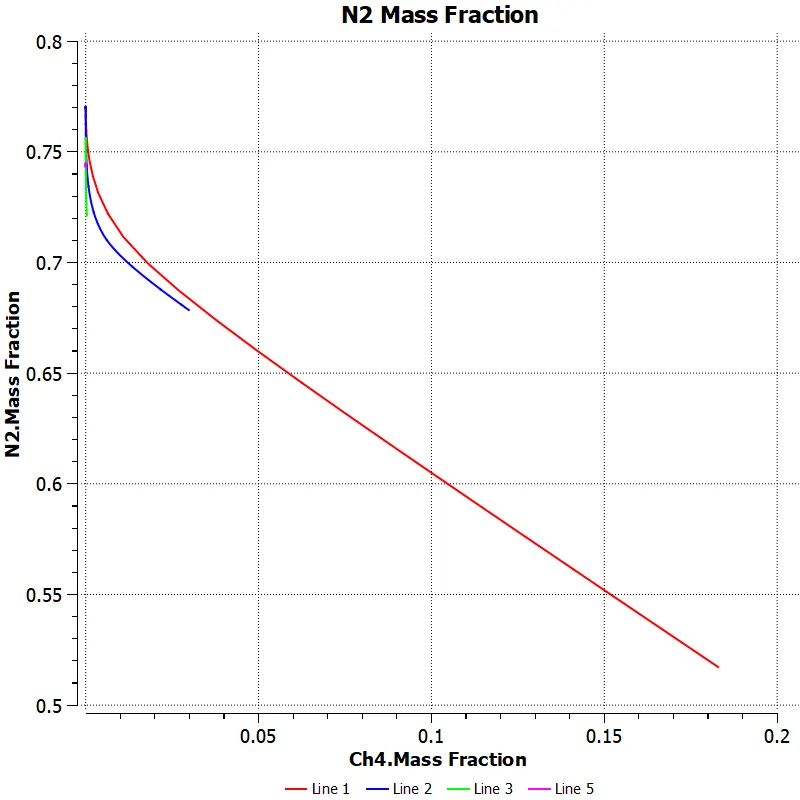
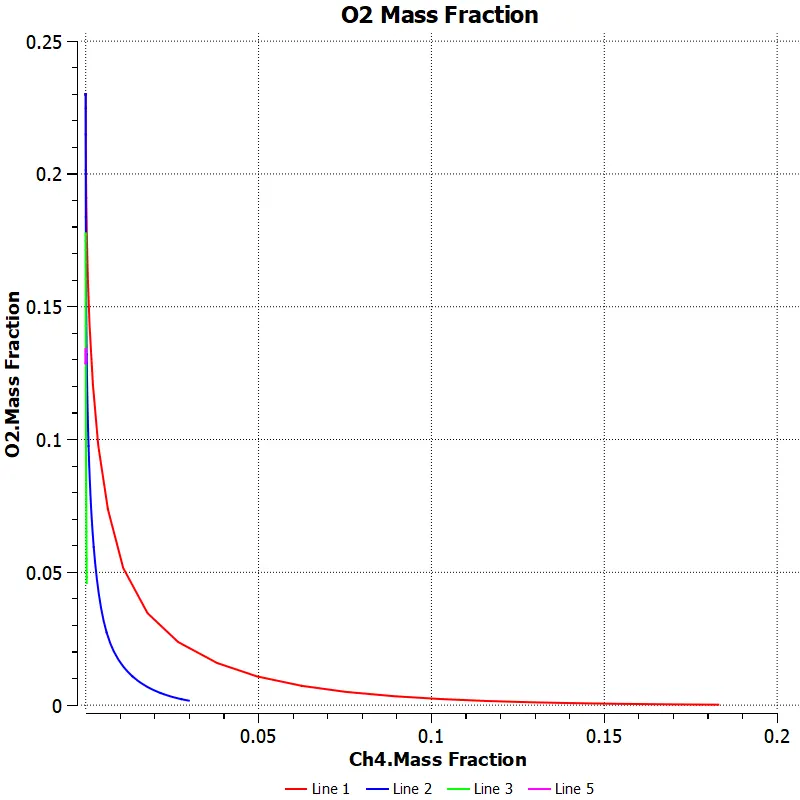
Week 10 - Simulating Combustion of Natural Gas.
Aim: To perform a combustion simulation on a combustor model and to plot the variation of mass fraction of the different species.
Theory: Combustion is a process in which the fuel is oxidized and a large amount of chemically bound energy is released. This energy heats the products and combustion of fuel such as methane with air leads to a flame temperature of around 1900 °C (2173 K). In the combustion of methane and air, the main products are carbon dioxide and water. However, the formation of these products is very complex and hundreds of different species such as H, O, OH, CH, CH3, etc are intermediated in the combustion process. Besides carbon dioxide and water, a large number of pollutants are formed as, for instance, nitrogen oxides, carbon
monoxide and soot particles. The efficiency of the combustion process depends on several parameters, such as oxygen supply, temperature history, and mixing properties.
Solving & Modelling approach :
Geometry
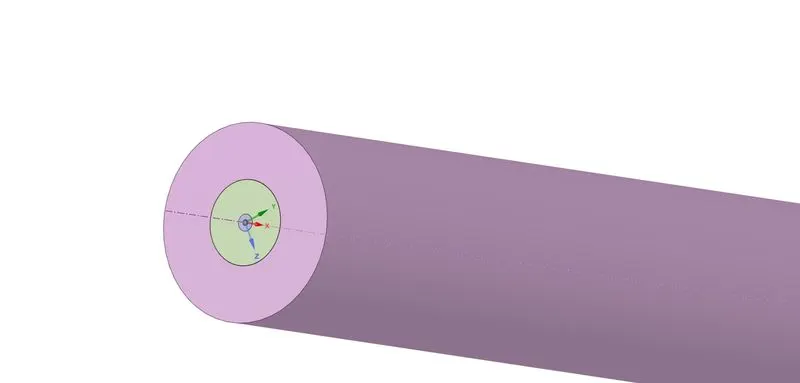
After Modification

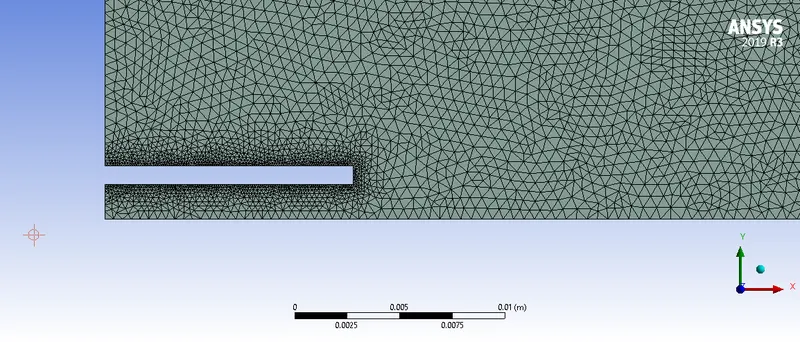
Mesh
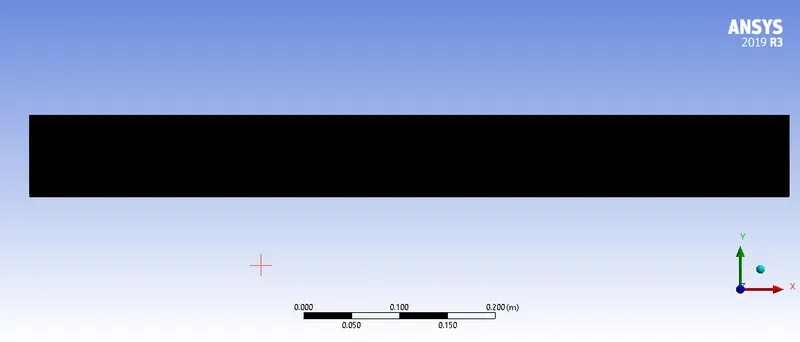
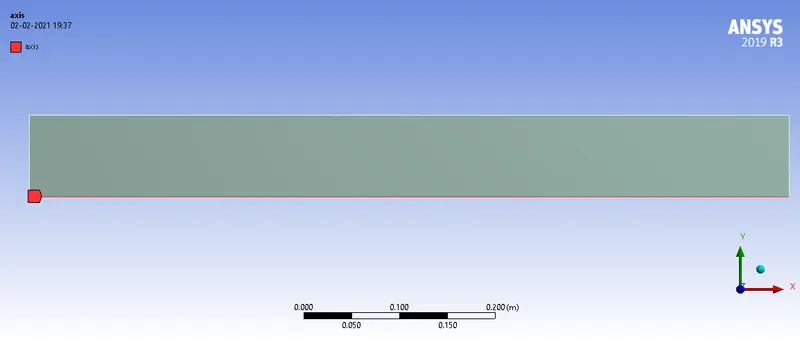
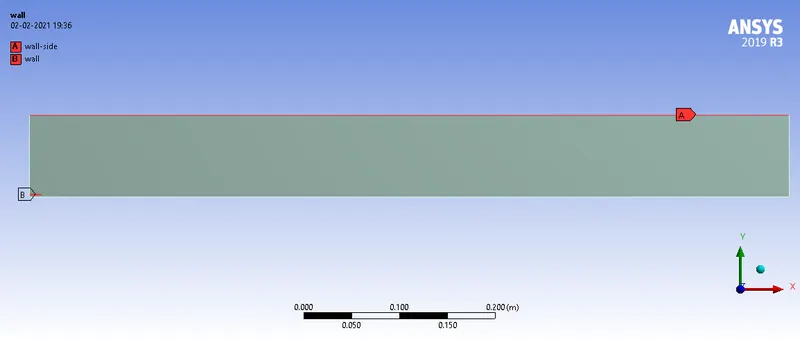
Boundary Condition
Results :
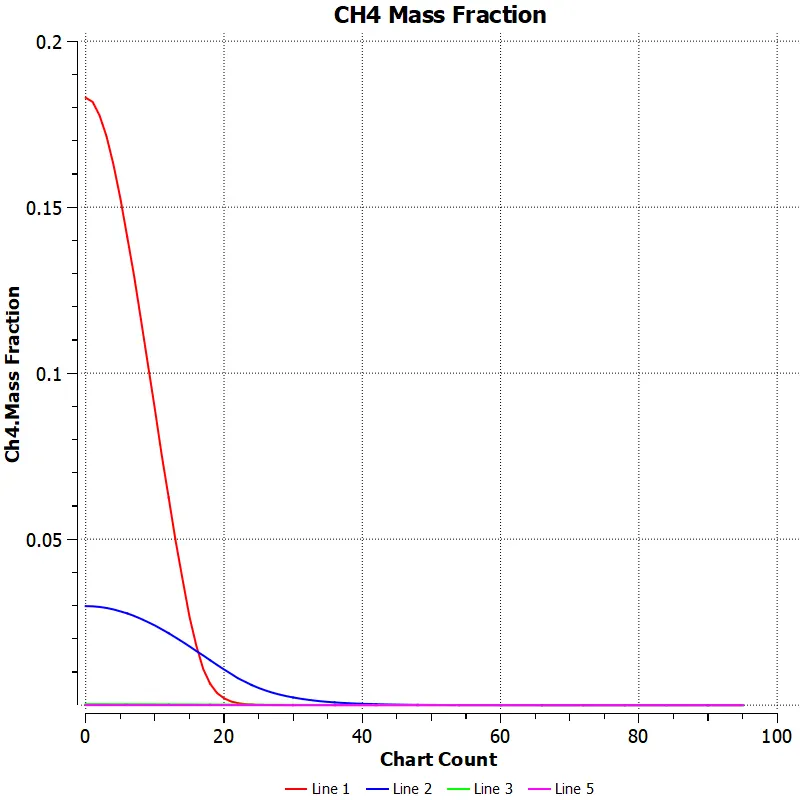
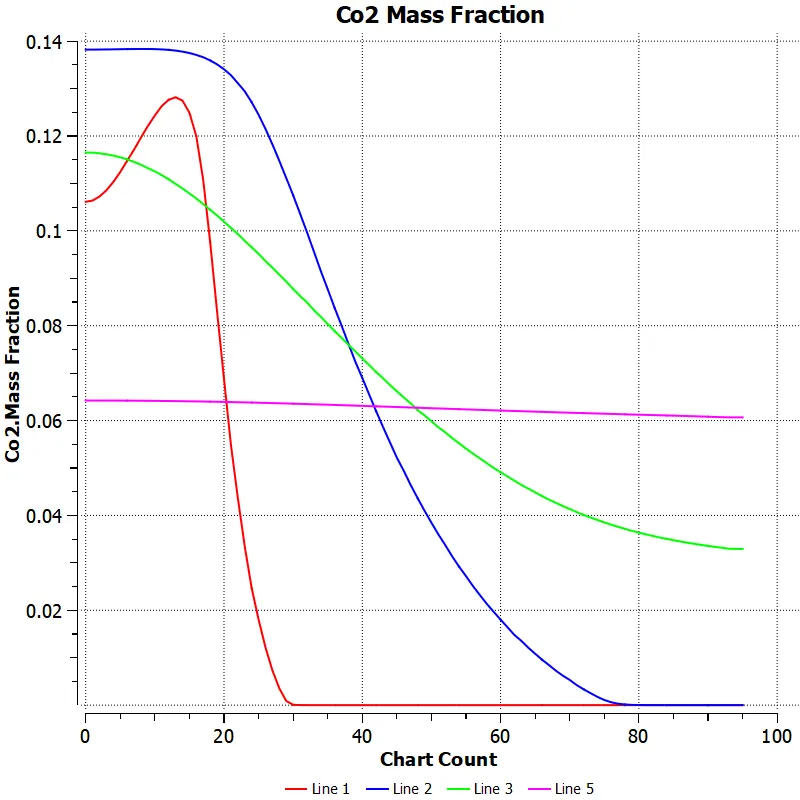
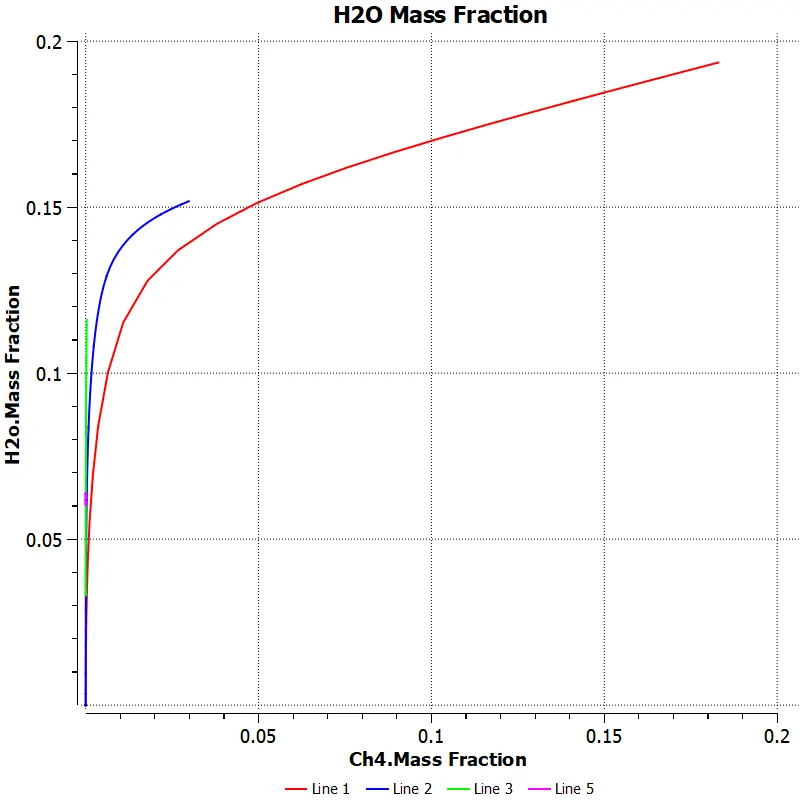
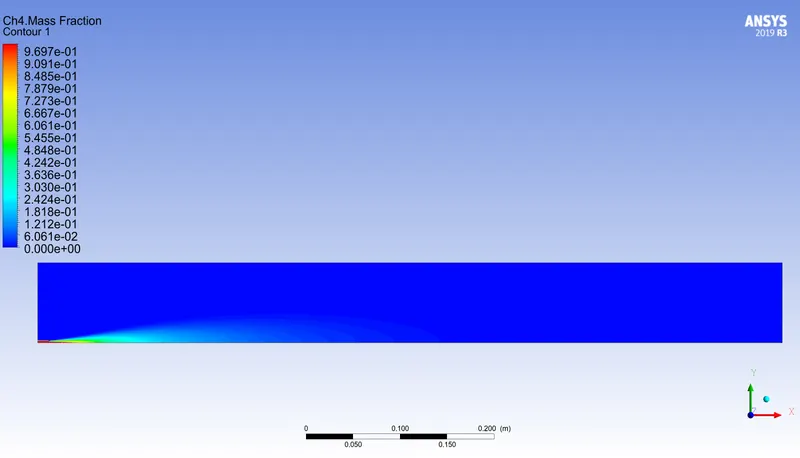
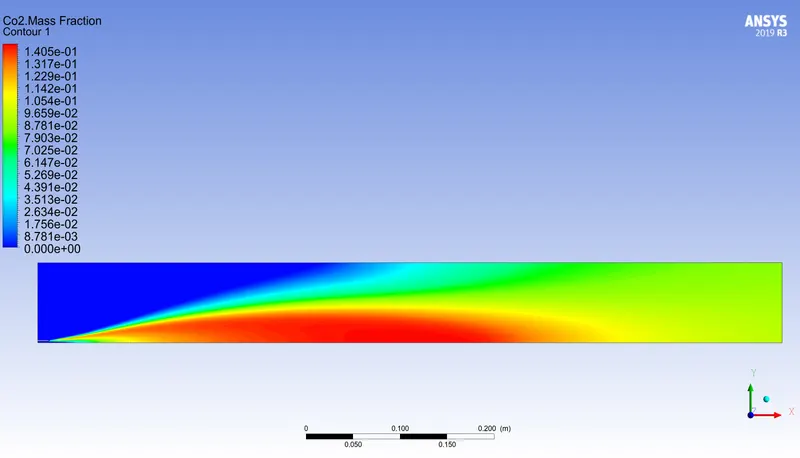
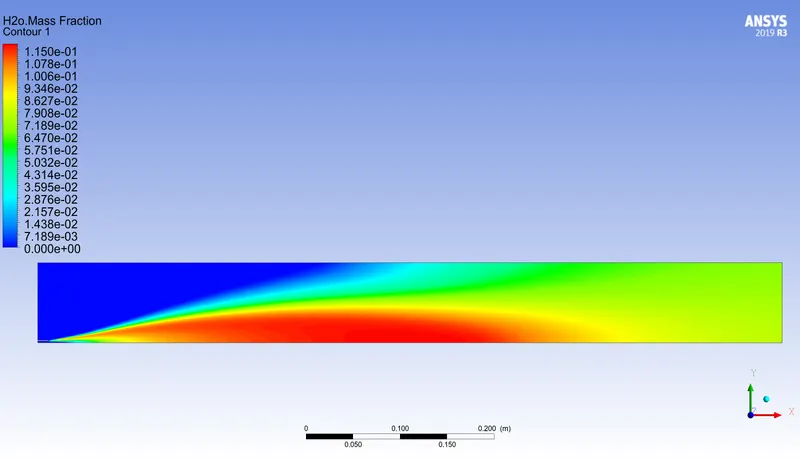
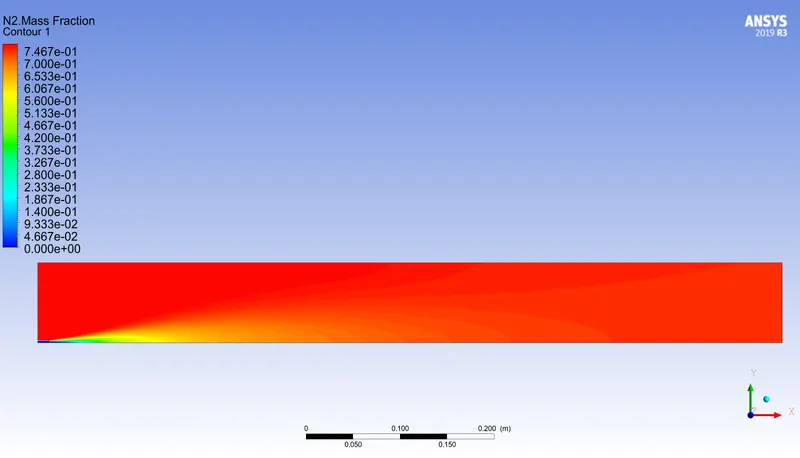
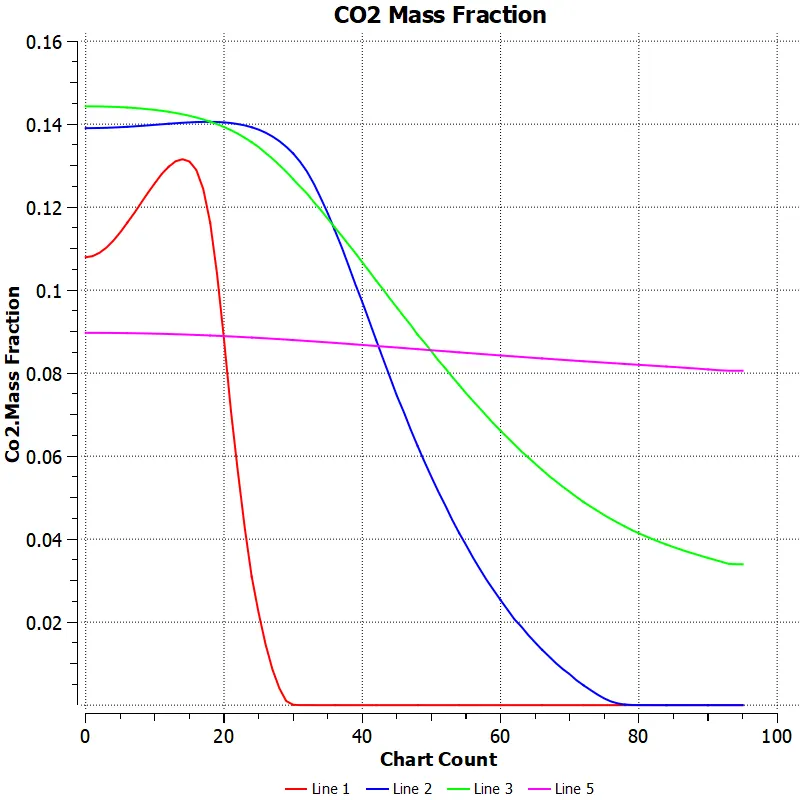
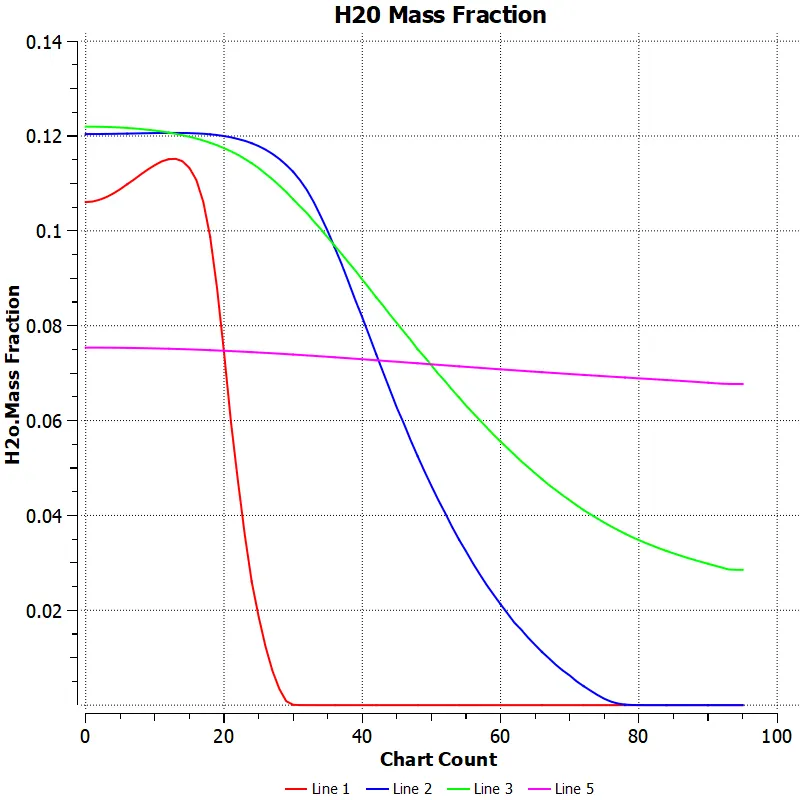
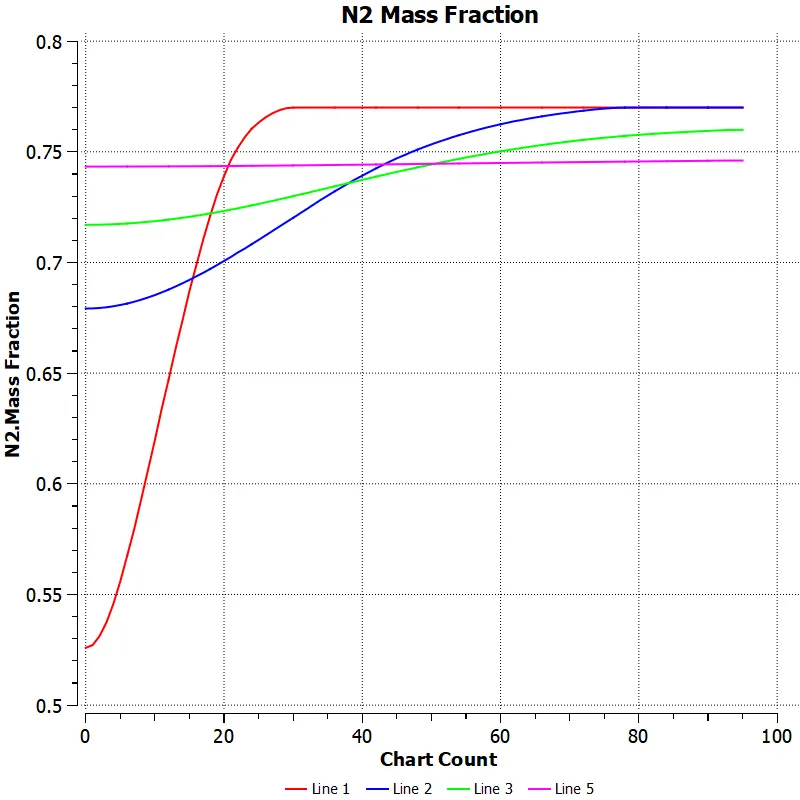
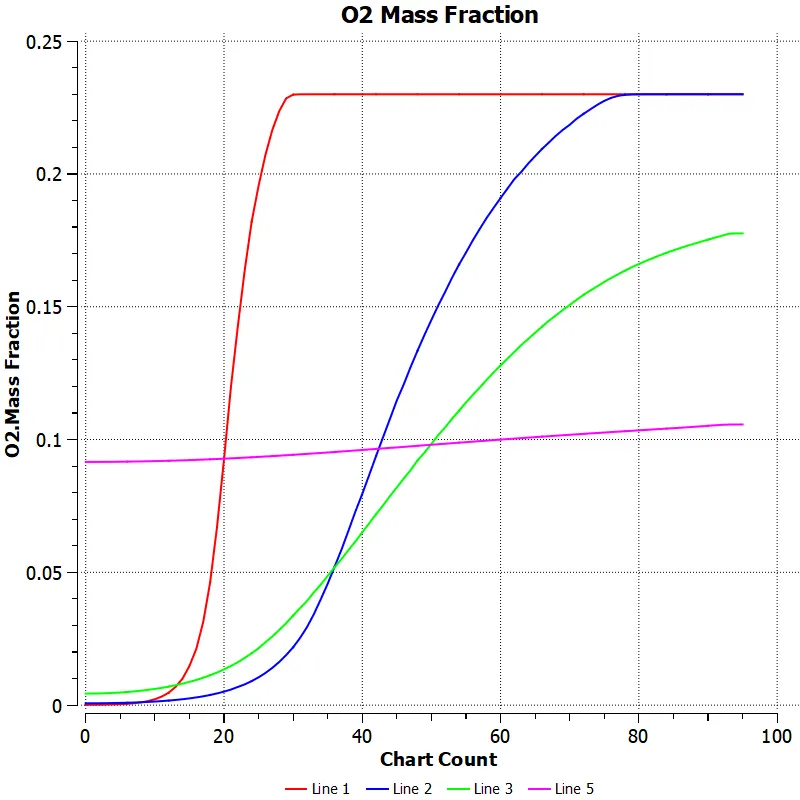
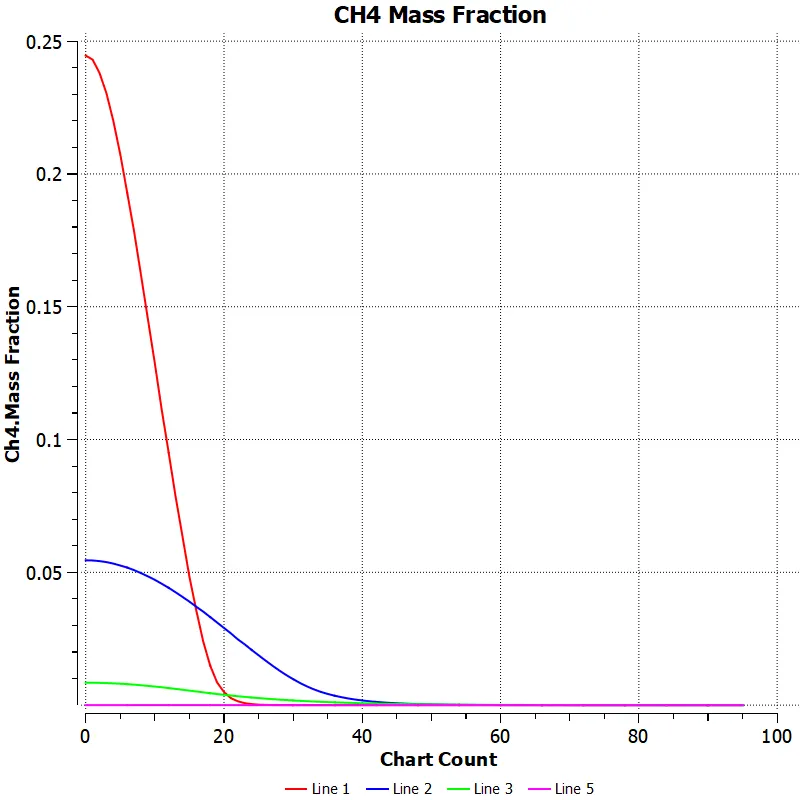
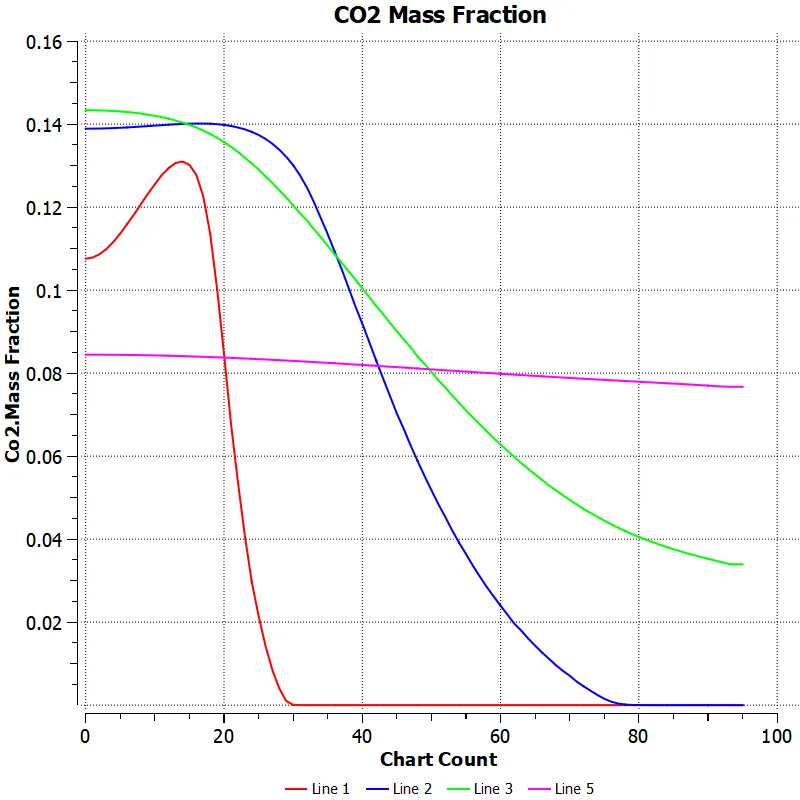
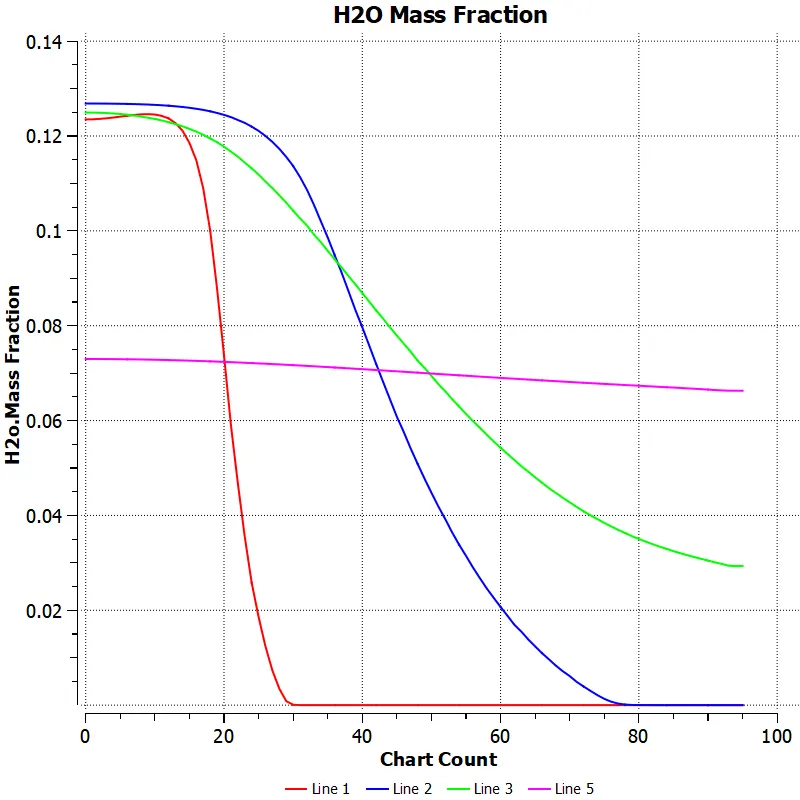
Part 1: Perform a combustion simulation on the combuster model and plot the variation of the mass fraction of the different species in the simulation using line probes at different locations of the combuster.
The simulation is set up as steady-state, pressure-based with absolute formation. The energy is enabled and standard k-epsilon viscous mode is selected. In the species model, the species transport is selected with volumetric reaction. The inlet diffusion and diffusion energy source is enabled.
The mixture material used is methane-air And the Turbulence chemistry interaction is set to eddy dissipation.
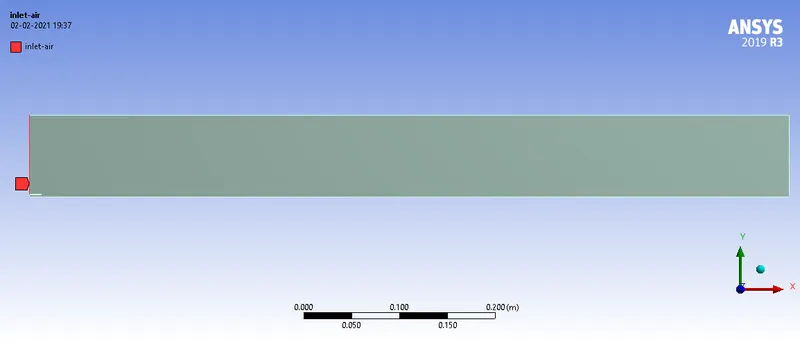
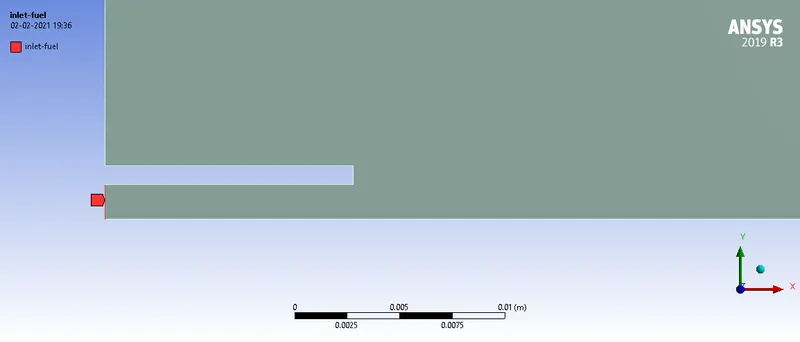
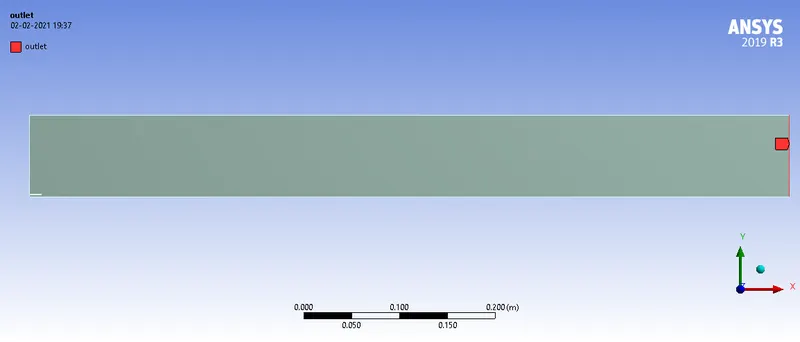
The Boundary conditions are set as:-
Air inlet - velocity = 0.5m/s ; Temperature = 300k; Species : O2=0.23
Fuel inlet - velocity = 80m/s; Temperature = 300k; Species : Ch4 = 1
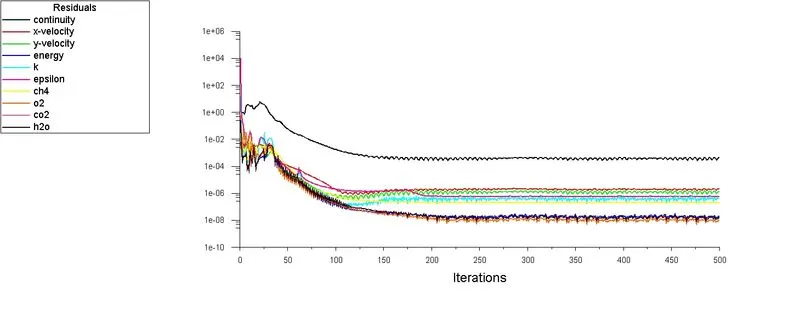
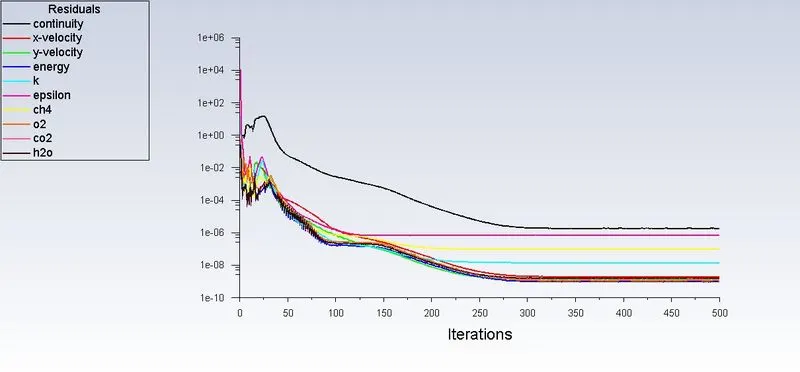
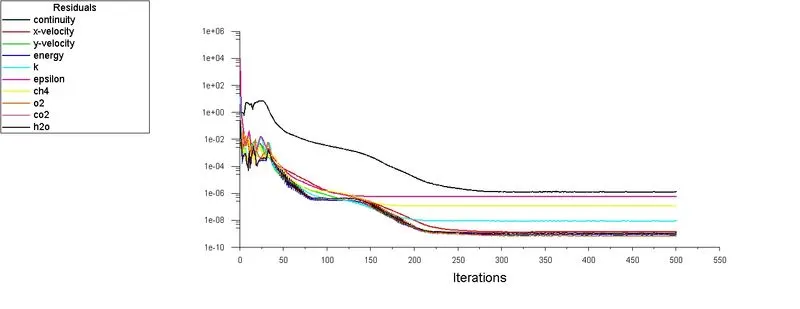
Residual
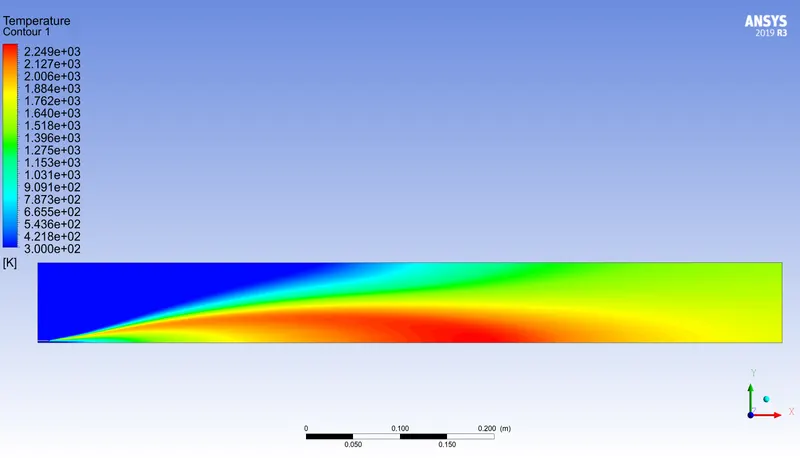
Contour
Temperature
CH4
CO2
H2O
N2
O2
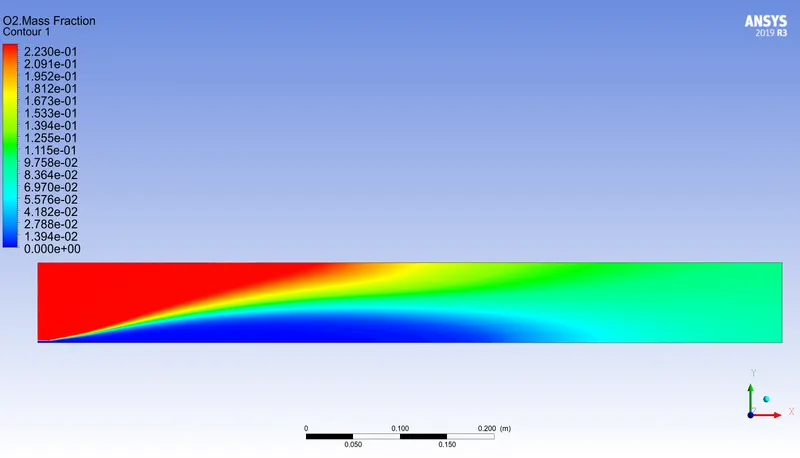
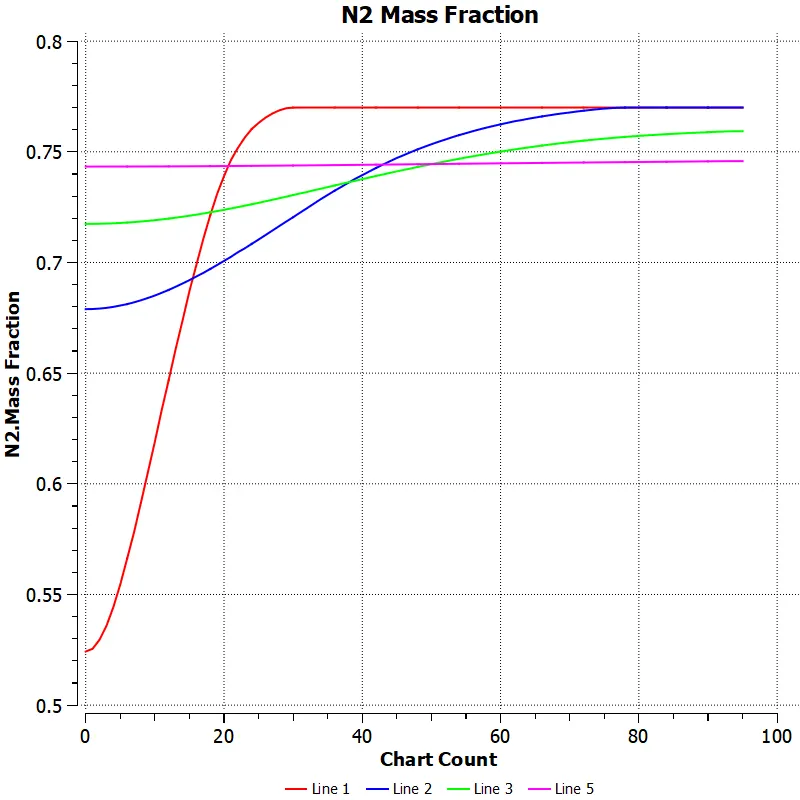
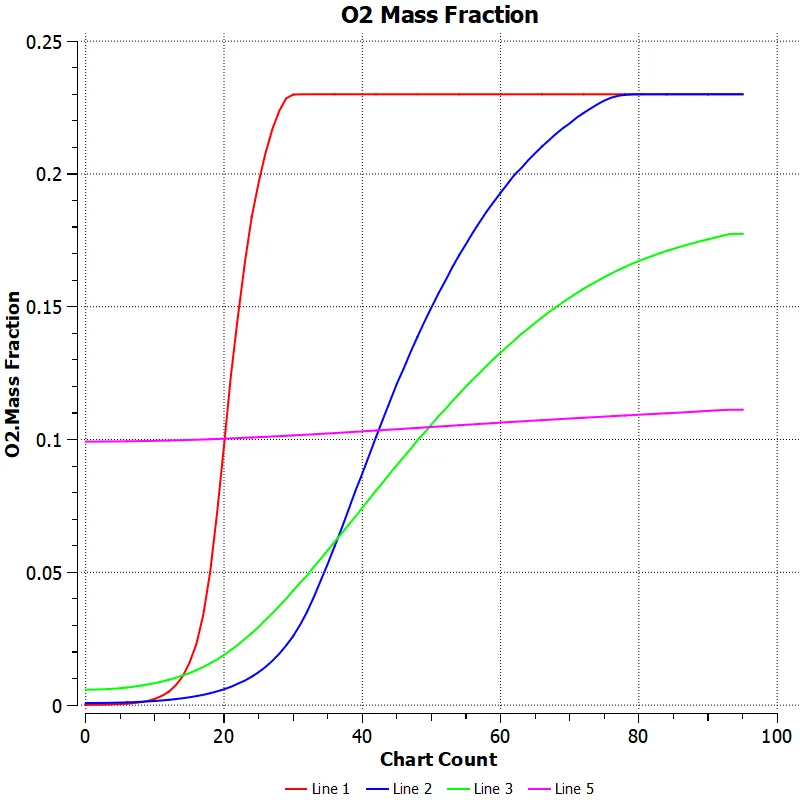
Graphs
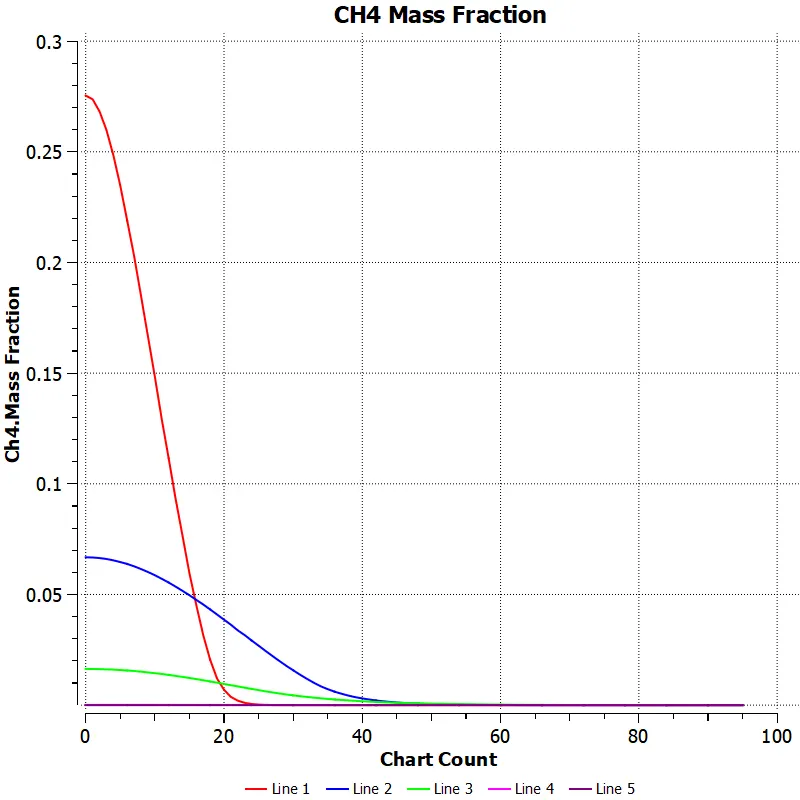
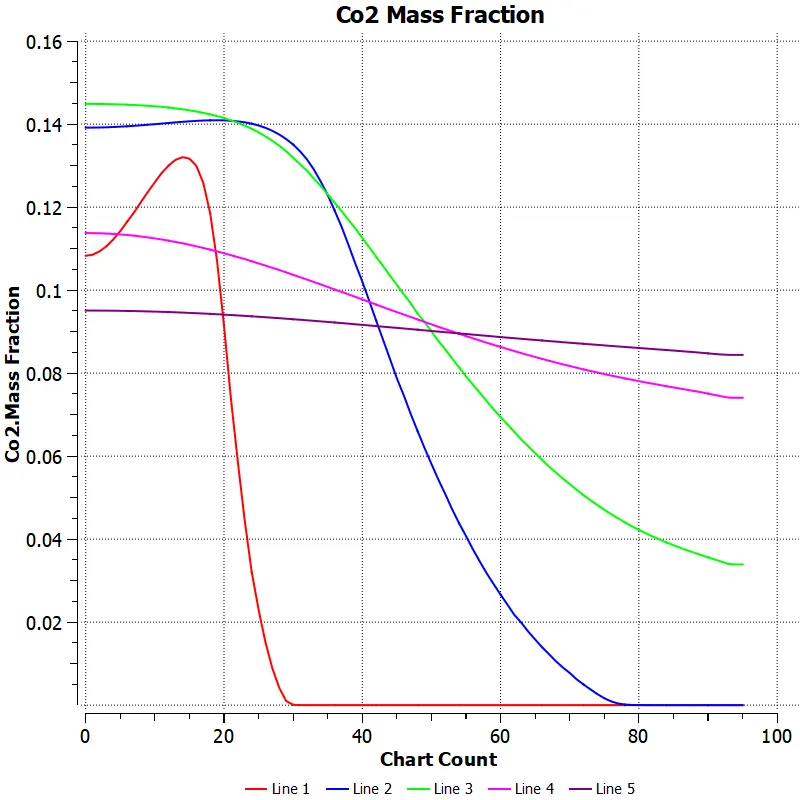
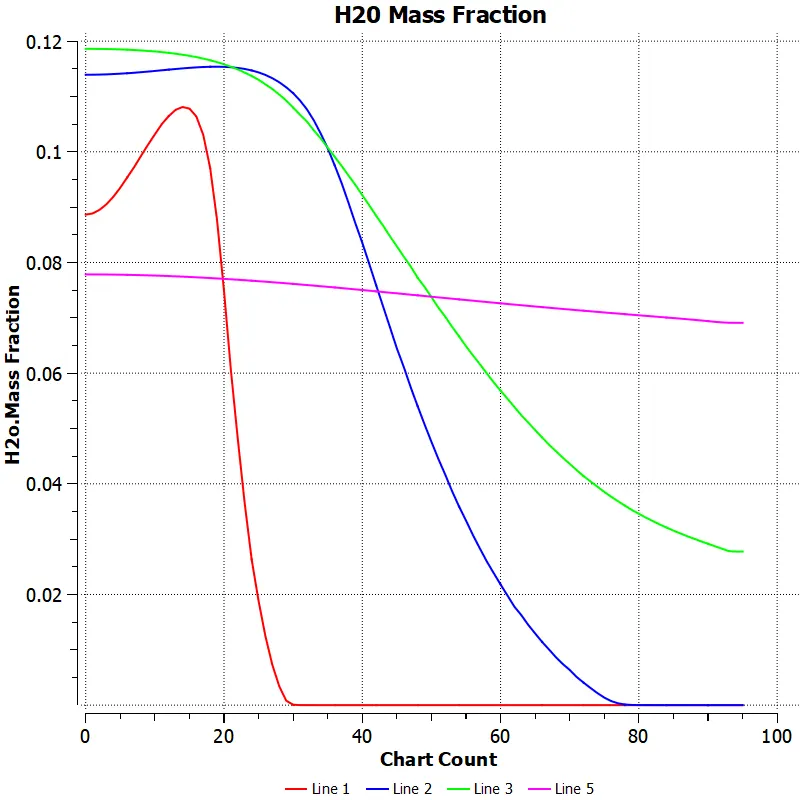
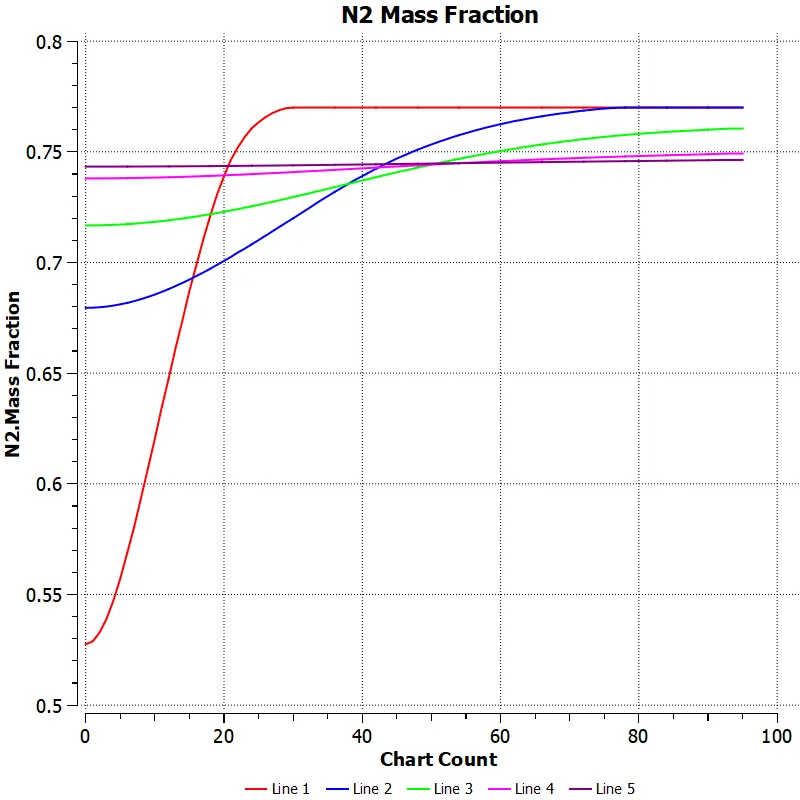
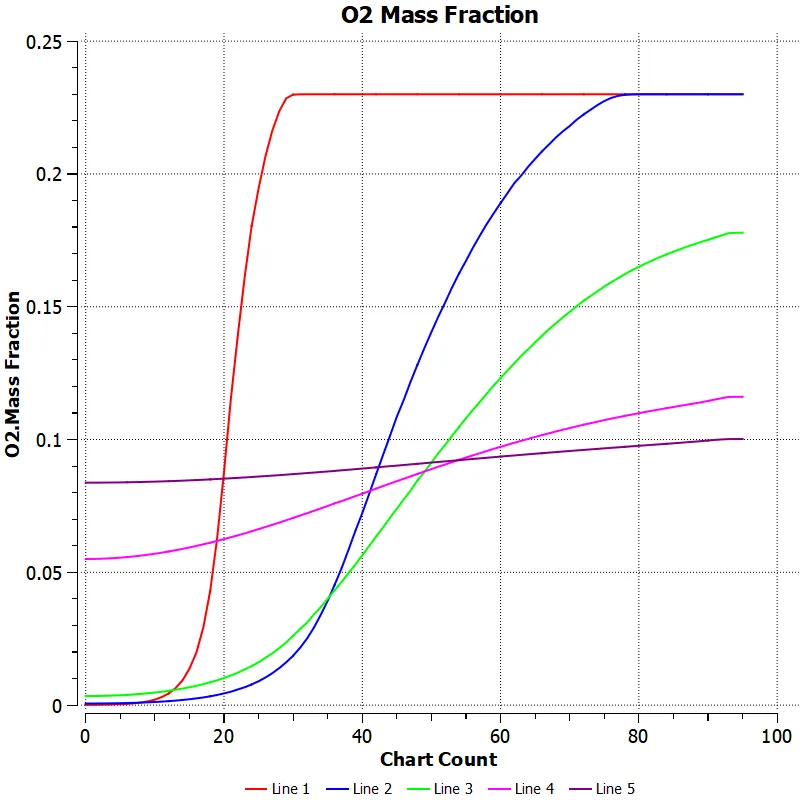
Part - II
H2O - fraction 5 %
Residual
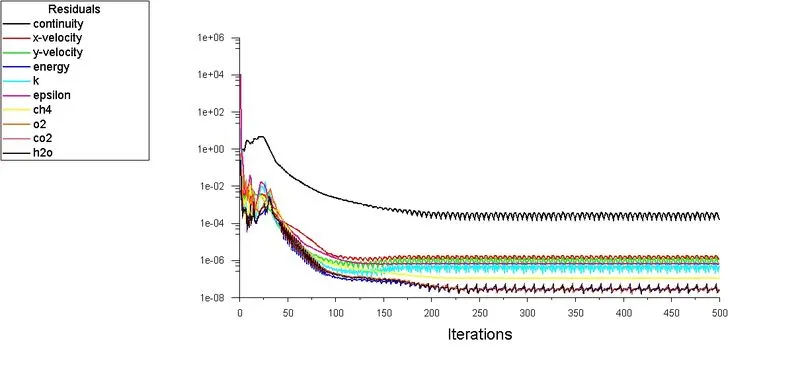
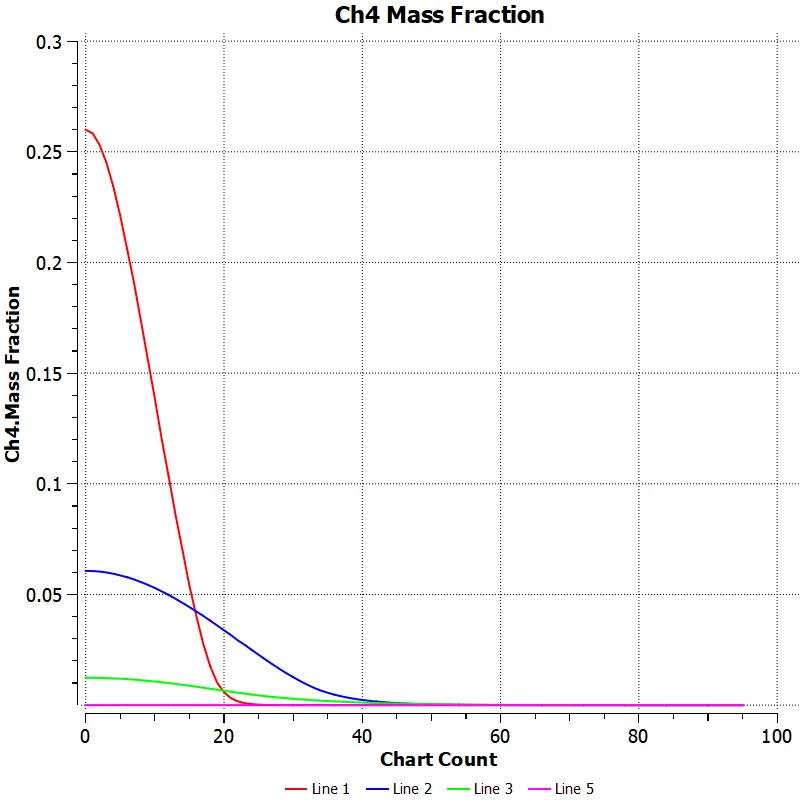
H2O - fraction - 10%
H20 - fraction - 30%
Residual