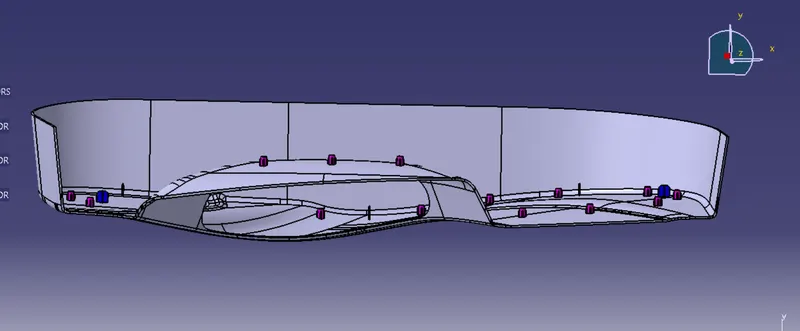
Week 10 - Challenge 3 - Door Trim Lower with Engineering Features
AIM: To create the Door Trim Lower Plastic component through the given Class-A surface. To begin with, the tooling axis for the given Class-A Surface should be created meeting the requirements of the draft angle and at the end perform the Draft analysis on the model and to create the Heat Stakes and the locators considering the design rules mentioned.
Class A Surface
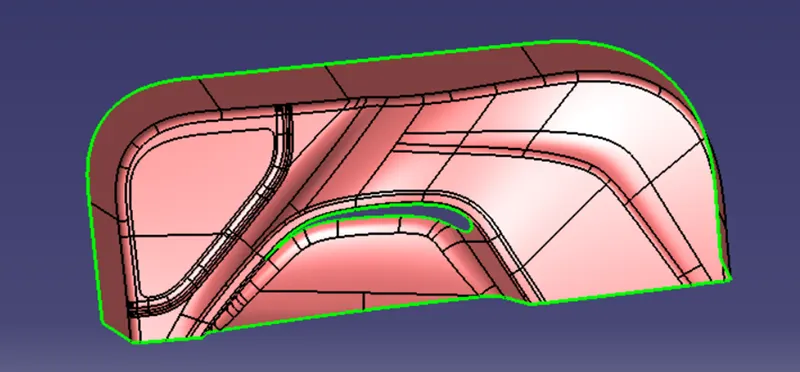
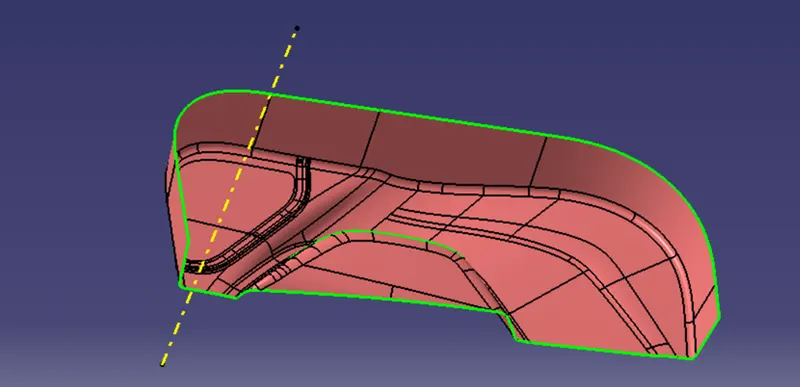
Tooling Axis:
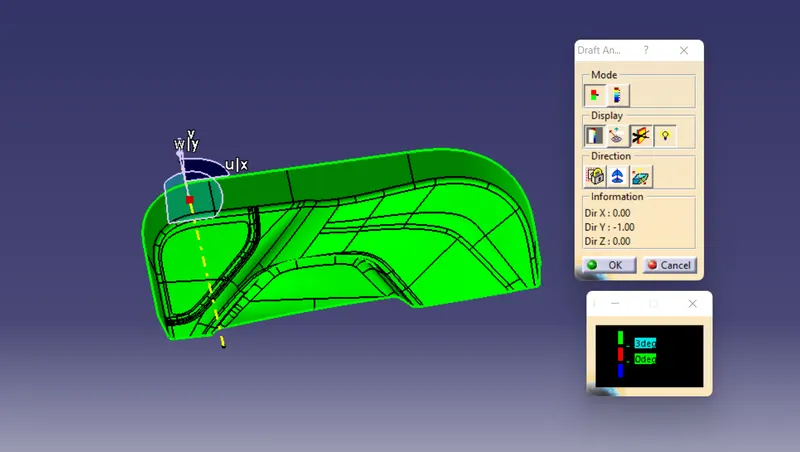
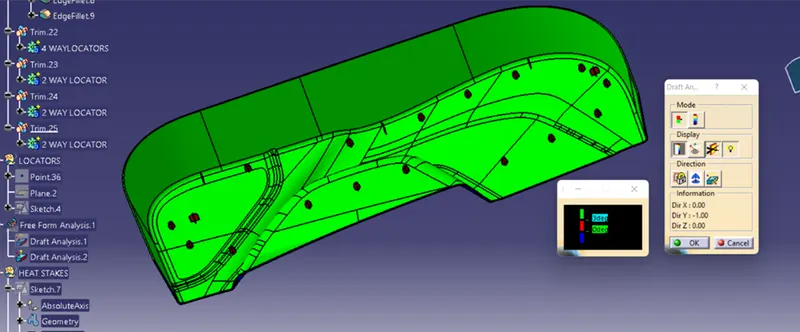
Draft Analysis of Class A Surface at draft angle of 3 degree.
Creation of Class B Surface
Class B is created by taking offset of class A in distance of 2.5mm. So, there I got some of the surfaces were having patches and not having the closed surface. Firstly, I have removed the fillet of the surface by taking different extract and by using Multiple Extract, Boundary, Extrapolate, Trim, Join, multi-section Command removed all the patches and used Edge fillet command for the fillets and successfully got the class B surface.
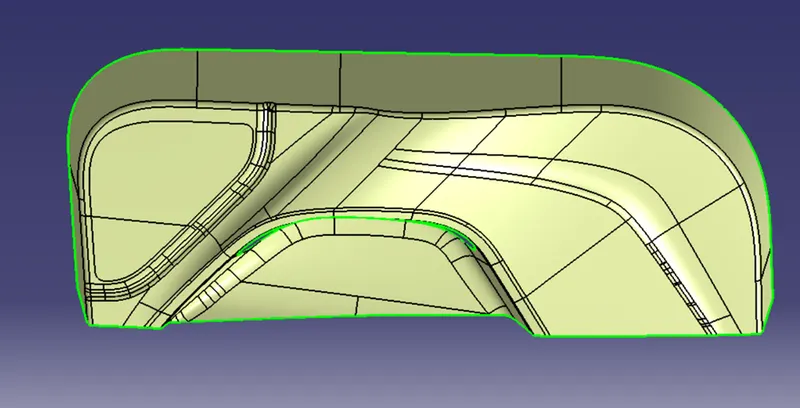
C- Surface
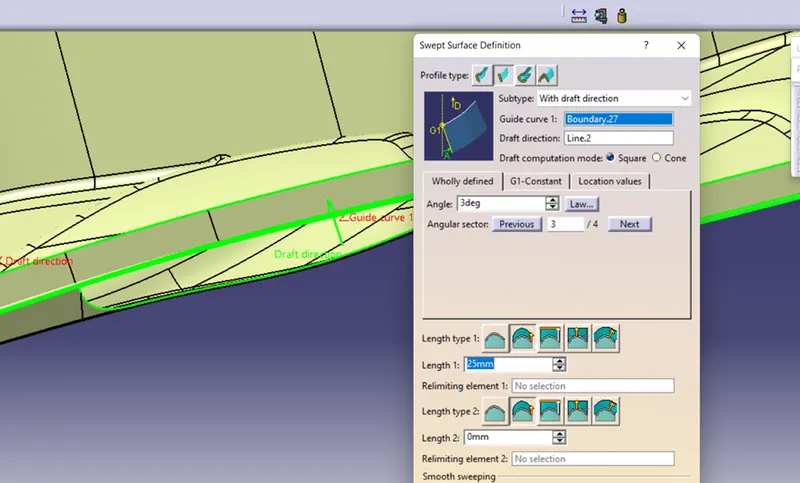
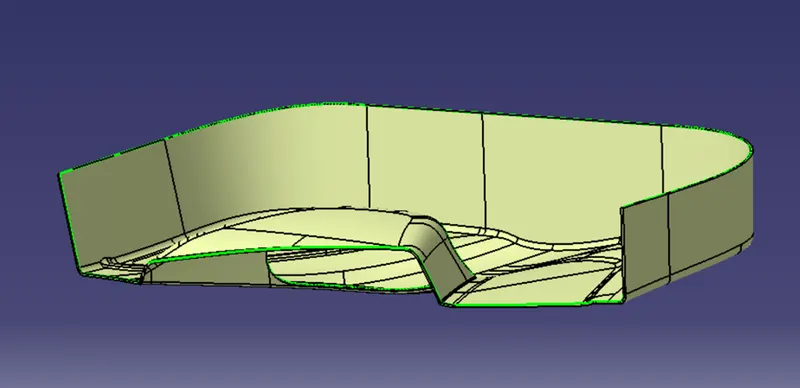
C Surface is created by taking boundary at the edge of A Surface and by using sweep command > Profile Type> Line > Guide Curve- Boundary > Draft Direction- Tooling Axis> Draft Angle- 3 degree and repeated the same in all edges and by using Extrapolate, Trim, Multi-section and Join finally got the closed part body of door trim.
Final Closed Surface
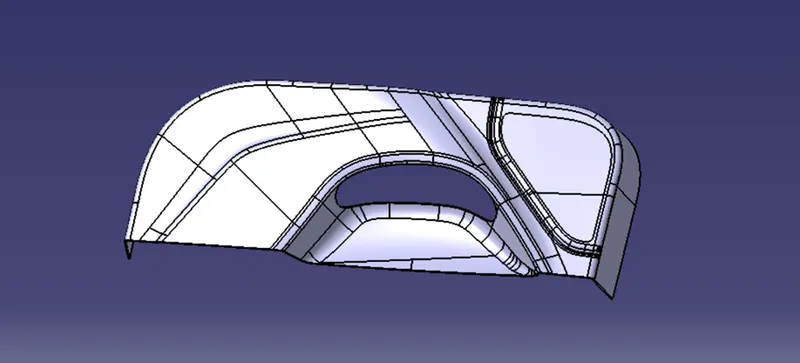
Final Closed Part Body
Creation of Locators and Heat Stakes
3-2-1 Principle:
Locating Process: In order to completely specify the position in space of a three-dimensional object (such as the cube that’s shown), we refer to six coordinates with total 12 degrees of freedom.
- Translational position along the X-axis
- Translational position along the Y-axis
- Translational position along the Z-axis
- Rotational position about the X-axis
- Rotational position about the Y-axis
- Rotational position about the Z-axis
These six coordinates are known as the six degrees of freedom of a three-dimensional object. As the double-headed arrows indicate, the translational and rotational positions can vary in either direction with respect to each of the three axes. To completely prevent movement, all six degrees of freedom must be restricted.
4-Way Locators:
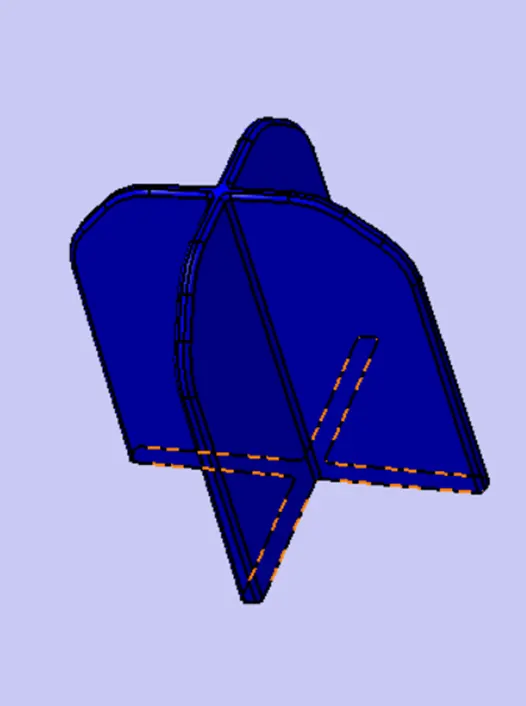
These are the locators which arrests the 4 degrees of freedom by four ribs junctional together. These are of following type especially used for mold designs. A round locating pin located concentrically in a hole is a common application of a 4-way pin, and helps to further secure the piece. 4-way mean we prevent movement at 2 axes (+X, -X, +Y and -Y) on the plane. Generally, you have cylindrical pin on the fixture and circular hole at workpiece part.
Height of locator =Wall thickness * 5
=2.5*5
= 12.5 mm
The height of Locators should be greater than heat stake. As locators connects first while the assembly is done. So height of locators are taken as 14.5 from base and for heat stake 12.5.
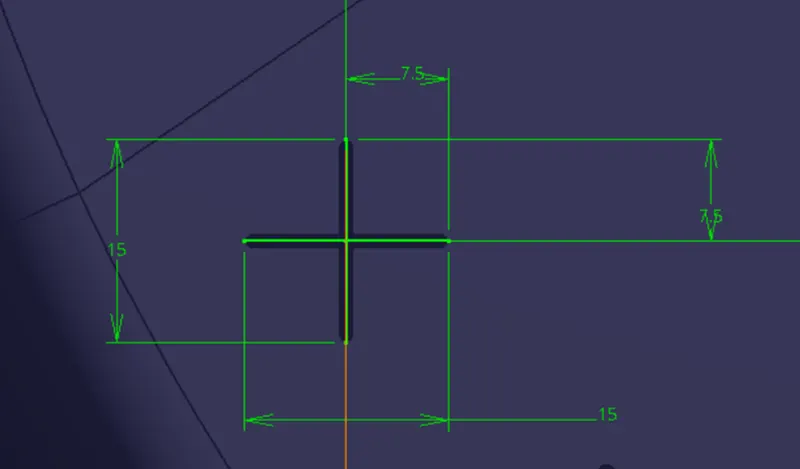
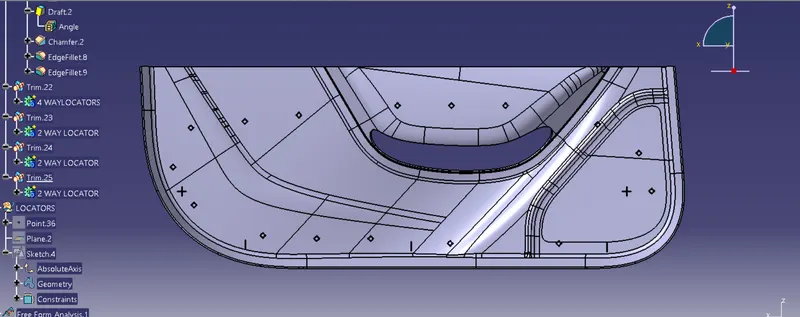
Locators are 4-way locators. The locators will follow the rib design guidelines and will be given a minimum draft of 0.5 degrees and a minimum fillet of 0.2mm and an entry chamfer of 3mm. This entry chamfer is given so that the locators can mate with the other part easily.
2-Way Locators:
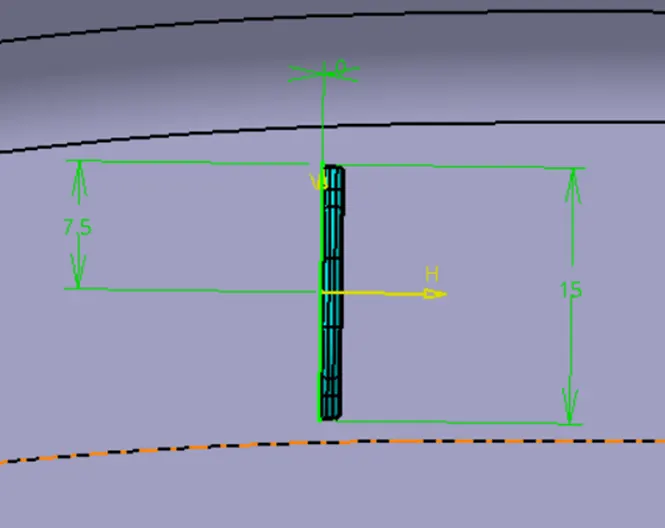
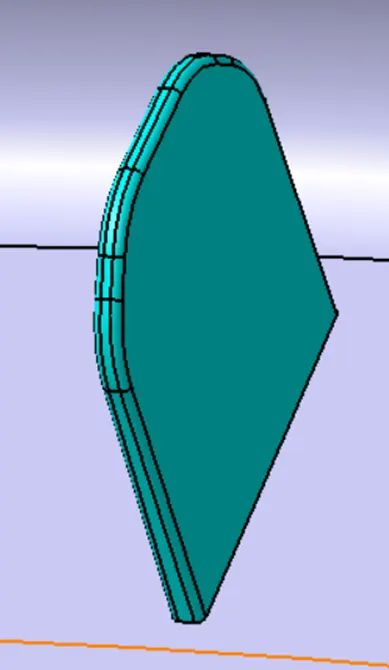
These are the locators which arrests 2 degrees of freedom by a single rib. A 2-way locating pin restricts motion along 1 axis (or 2 degrees of Freedom), like a round pin in a slot. Likewise, a 4-way pin restricts 4 degrees of freedom along 2 axis.
Heat staking:
Heat Staking is a pulsed-heat process to join two or more parts out of which one at least is made of plastic. The process is to deform the plastic material using heat and force at a set process time. The bond is made by partially de-forming the plastic part in order to fix the other. Heat Staking makes it easy to bond metal to plastic and is commonly used in high volume/ low-cost applications such as automotive, IT and consumer appliances.
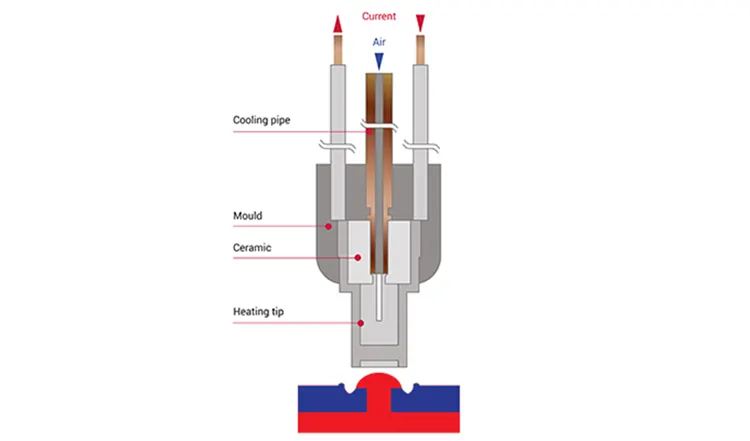
HEAT STAKE:
These heat stakes will enter the mating component and using a heat staking machine these heat stakes are melted and cooled. When cooled this will get hardened and the two components will stick together. Thus, all degrees of freedom are arrested.
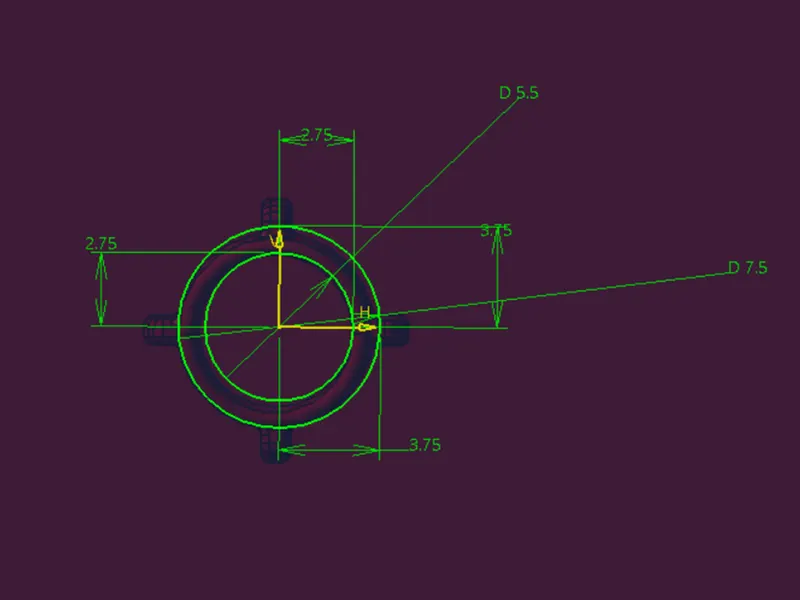
Then, the ribs are created by following the rib design rules.
Now we will see how the plastic part is fixed onto the other plastic part. The door applique is fixed on to the door surface with the help of locators and heat stakes. Every component in space has 12 degrees of freedom. So, these locators and heat stakes restrict all these degrees of freedom.
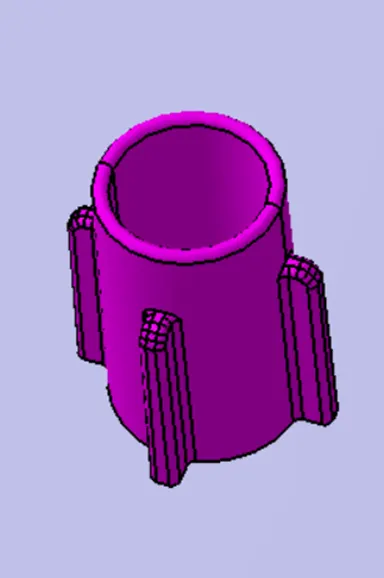
Heat staking Benefits:
- Similar and dissimilar materials may be joined: metal to metal, plastic to plastic, metal to plastic
- Accurate control operating within a small process window
- Local heating resulting in no damage to surrounding materials
- Processing of glass-filled materials
- No mechanical vibration
- Many heat-stake shapes possible through custom designed tools
Industry Applications
Automotive: Reliable solution for interior parts, welding bumpers, tail light assemblies, dashboards & many more parts
Textile: Creates durable seals without the need for glues, clips and yarns in product designs
Appliances: Component welding for large or small household appliances
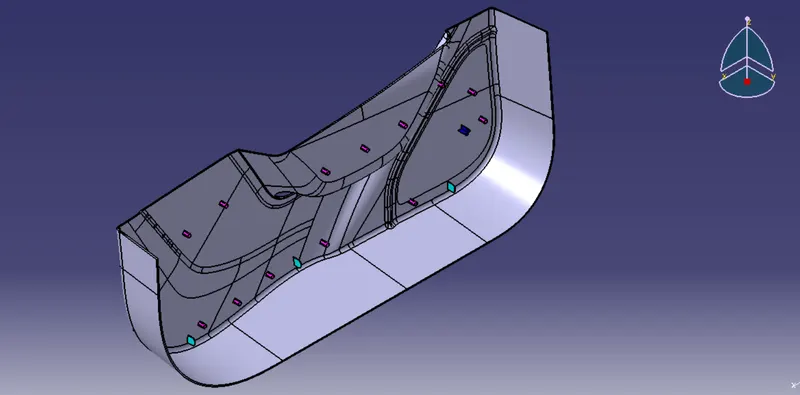
Final Model with its Locator and Heat stake
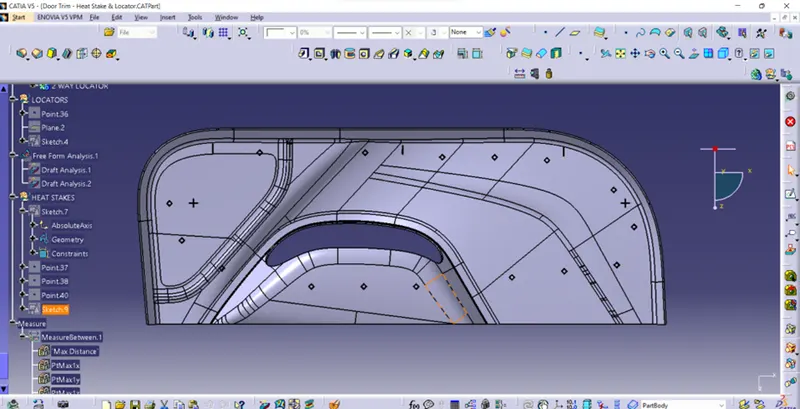
Draft Analysis by 3 degrees
VIEWS
Isometric View
Front View
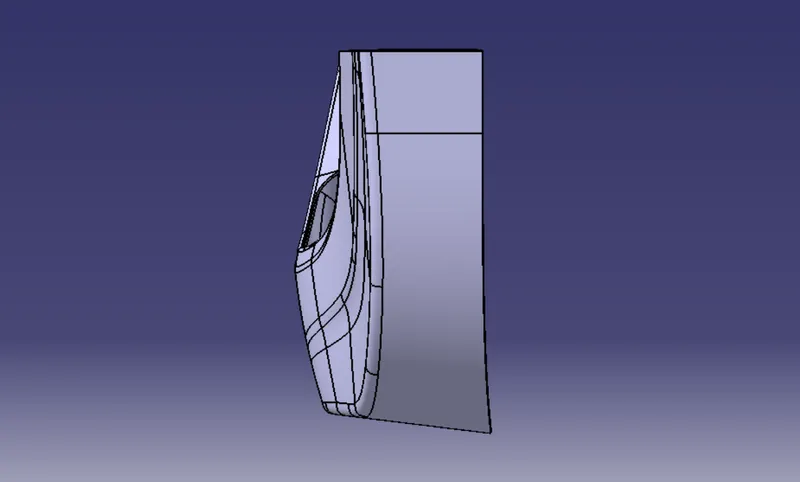
Side View
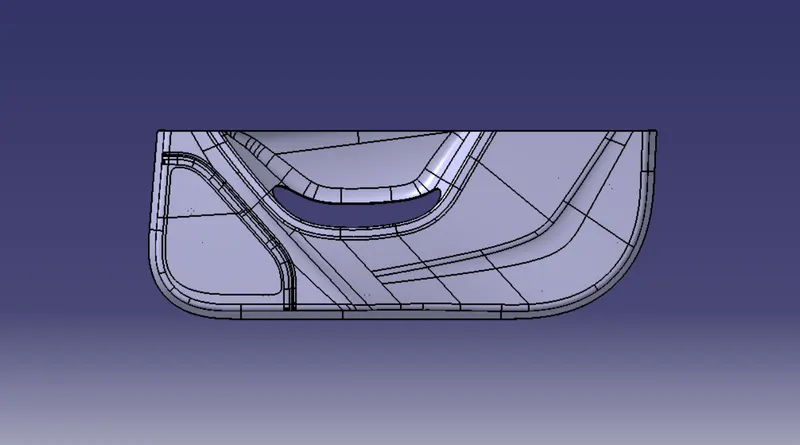
Top View