Week 10 Bullet penetrating a Bucket Challenge
1. Objective
We will need to simulate a bullet penetrating into a bucket. We have 3 different non-linear materials for the bucket and then analyze their behavior for the same velocity of the bullet. Moreover, we have to apply to conditions for bullet.
2. Case setup and execution
I have selected copper alloy NL, titanium alloy NL and magnesium alloy NL as the 3 different non-linear materials.
Case 1
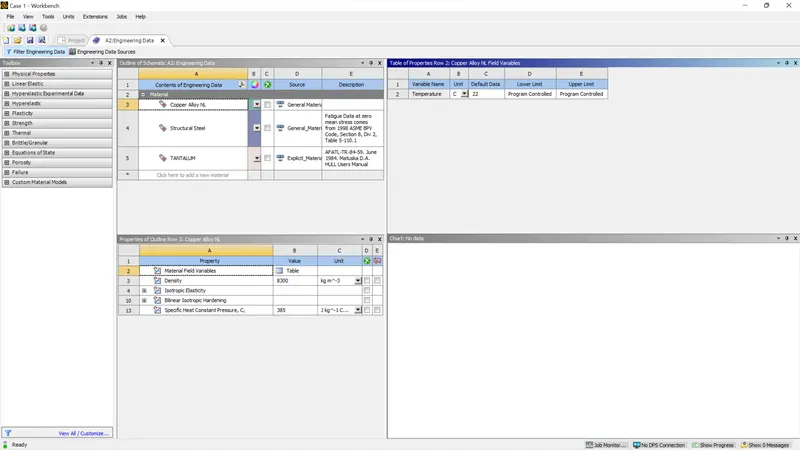
We select general non-linear (Copper alloy NL) and explicit materials (Tantalum) from the engineering data sources
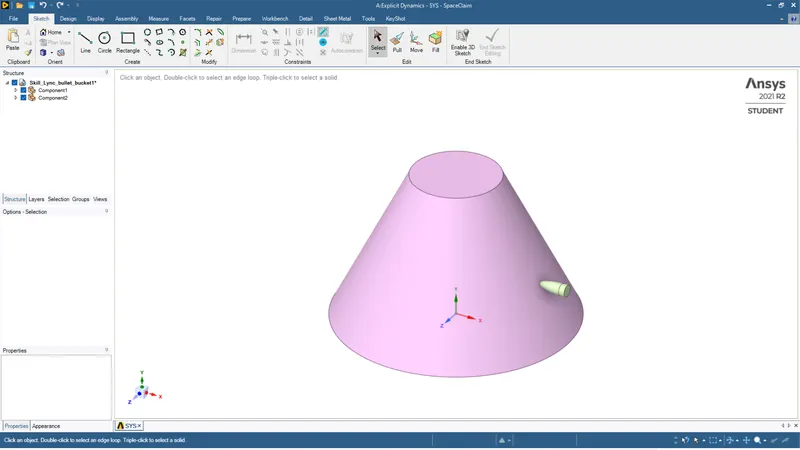
Import CAD geometry file and open using SpaceClaim to check for any abnormalities in the model
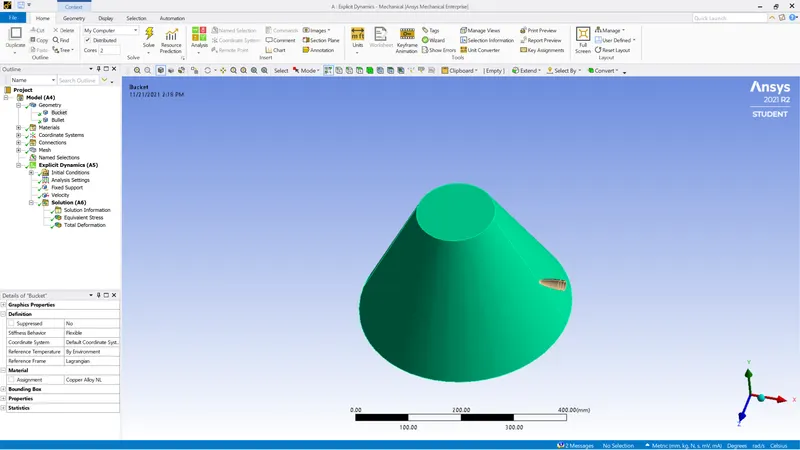
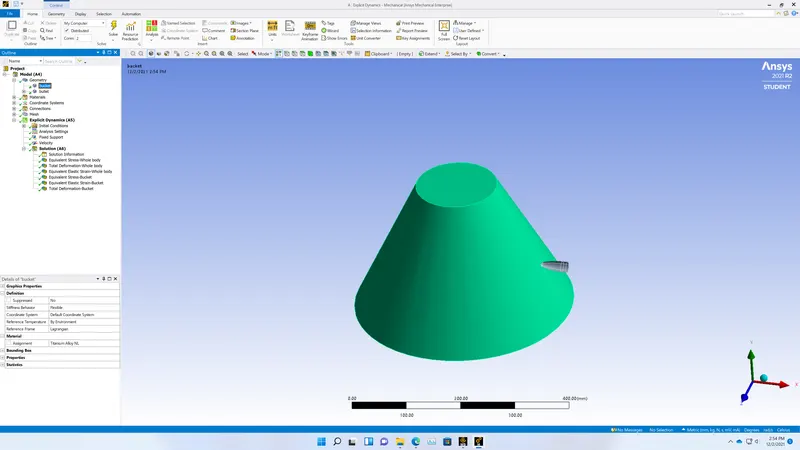
We rename default parts in the model as bullet and Bucket. Assign Copper alloy NL Tantalum materials to Bucket and bullet
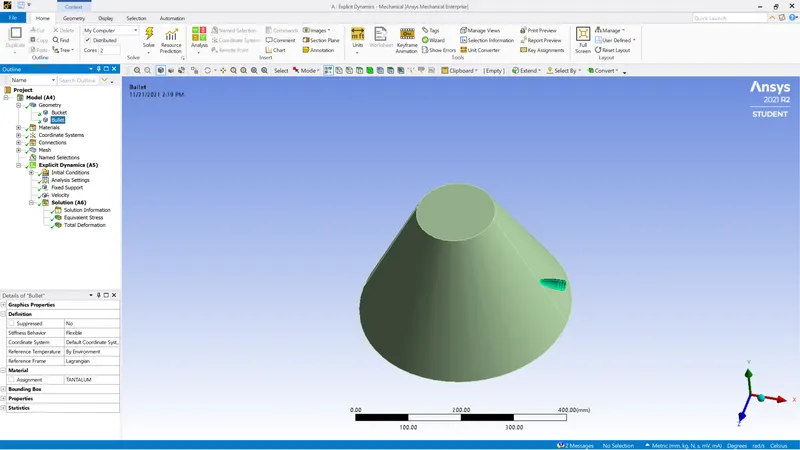
Change the behavior of bullet to rigid instead of flexible as we are analyzing its impact on the bucket
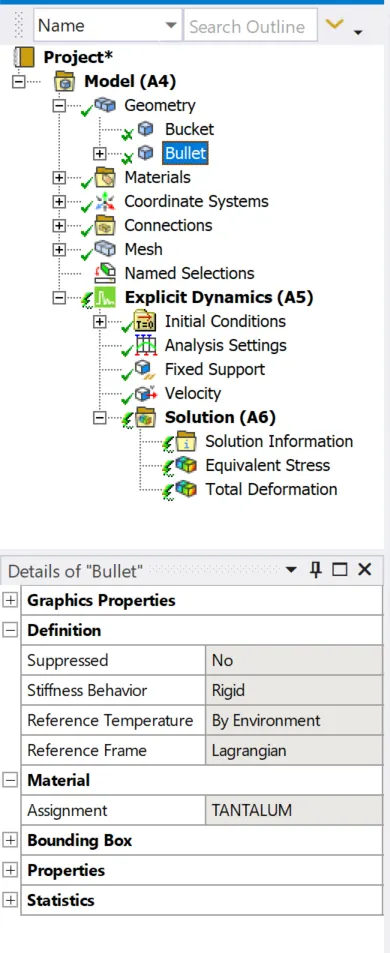
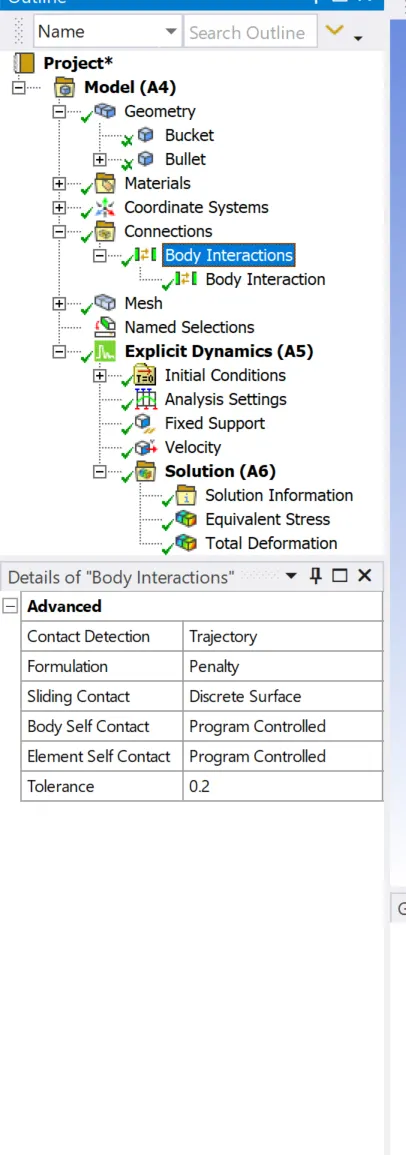
Remove any default contacts created by ANSYS and keep only body interactions active
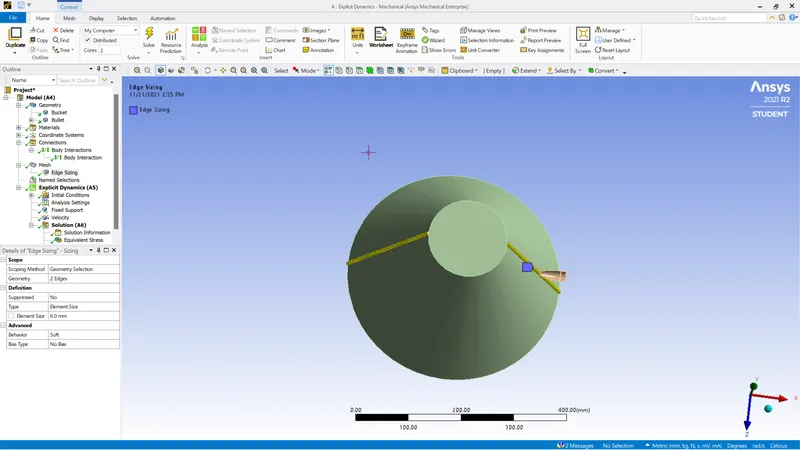
Assign an edge sizing mesh of 6mm to 2 edges of the bucket as the bullet will make initial contact at one of the edges.
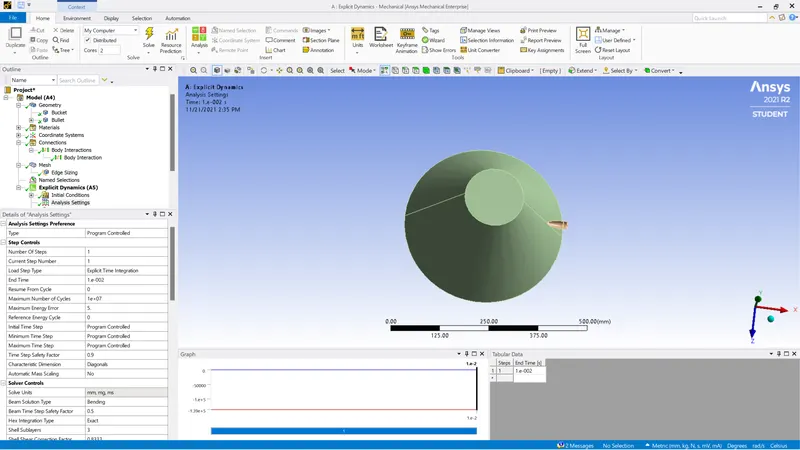
In analysis, settings keep the end time as 1e-2s and maximum energy error as 5. The default settings will be unchanged
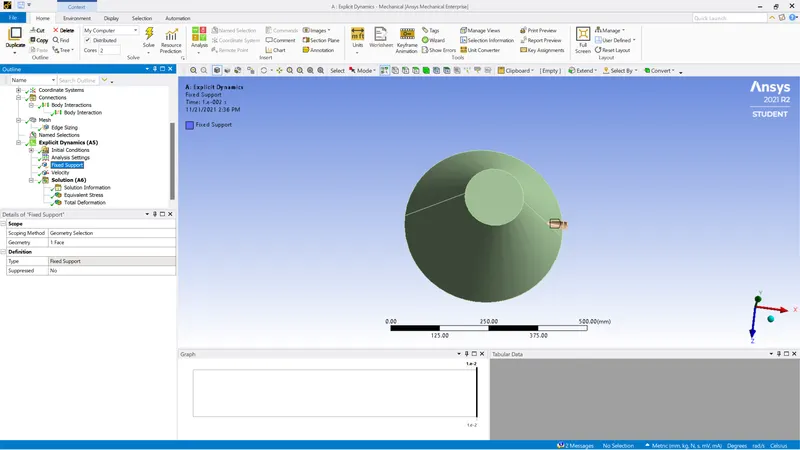
Apply fixed support to the bottom face of a bucket to restrict it from any motion while the bullet penetrates
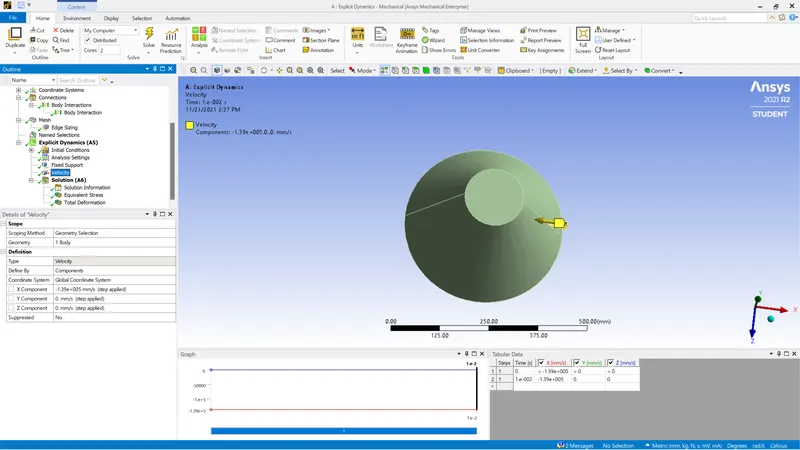
Apply a velocity of -1.39e5 mm/s in the negative X-direction w.r.t to Global X-direction
Case 2
Change the material of the bucket to titanium alloy NL. Rest all steps will be the same as in Case 1
Case 3
Change the material of the bucket to magnesium alloy NL. Rest all steps will be the same as in Case 1
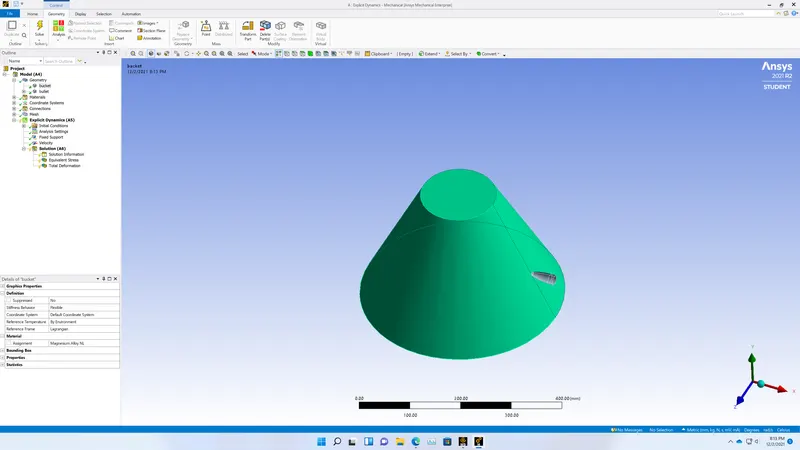
In this case, I have included 2 scenarios, one is where the velocity of the bullet is the same as mentioned above and the other case is where I have increased it to -2e5 mm/s. The Magnesium alloy NL has a high strength to weight ratio. In order for the bullet to penetrate through the bucket, it needs to have a high velocity.
3. Results of case 1
Equivalent elastic stress of whole-body
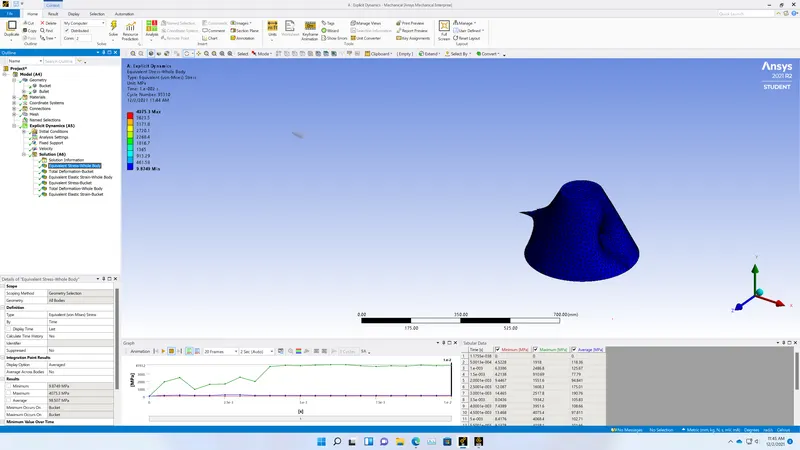
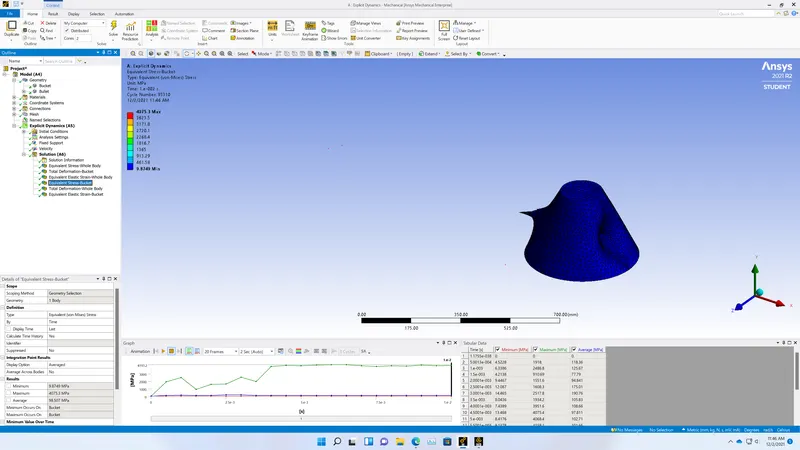
Equivalent elastic stress - Bucket
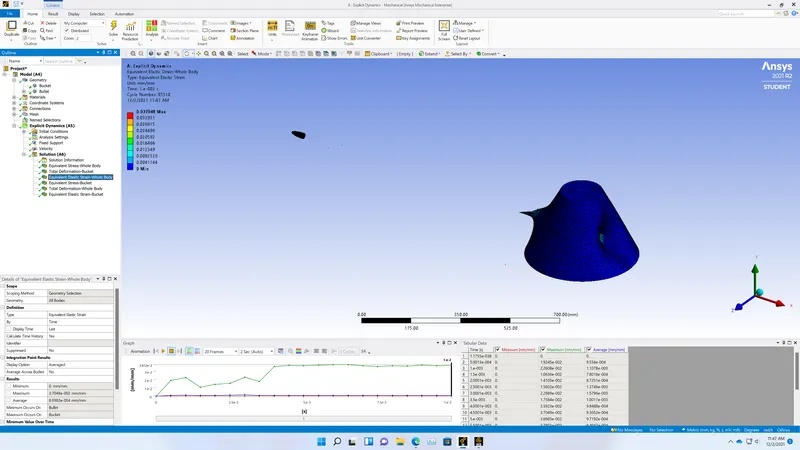
Equivalent elastic strain whole body
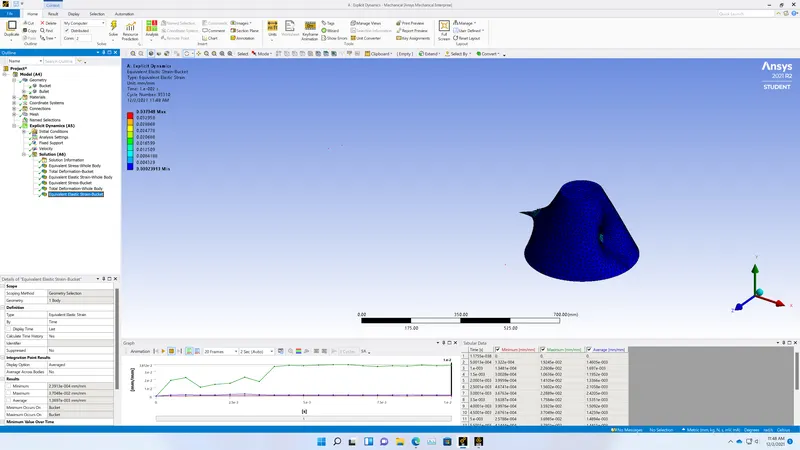
Equivalent elastic strain - Bucket
Total deformation of all bodies
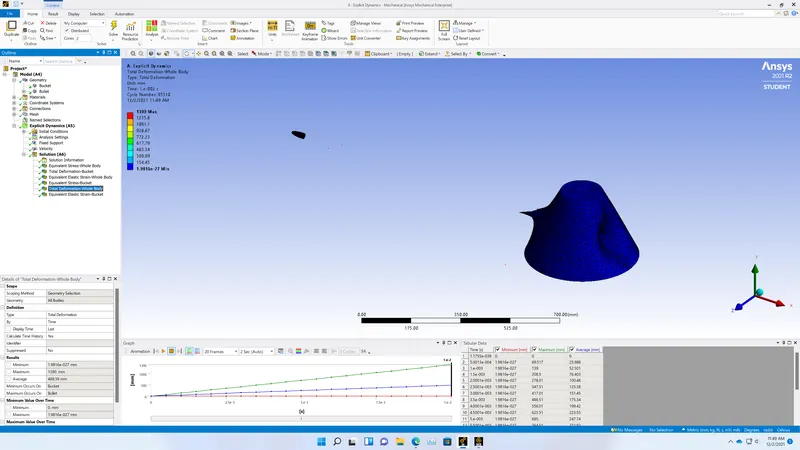
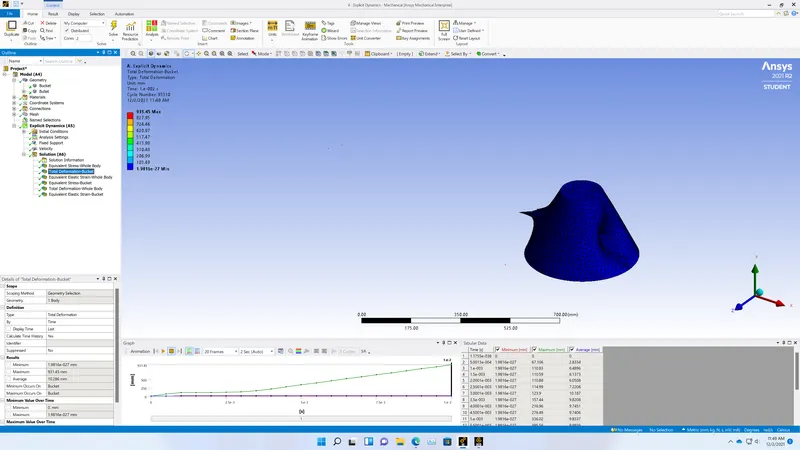
Total deformation of bucket
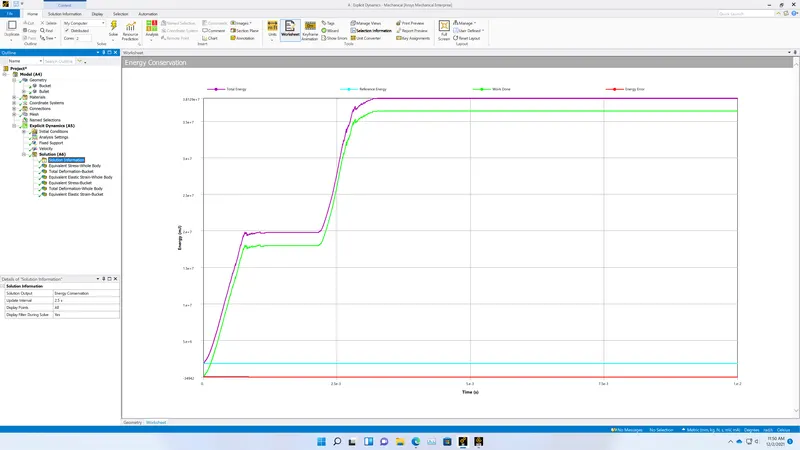
Energy conservation
4. Results of case 2
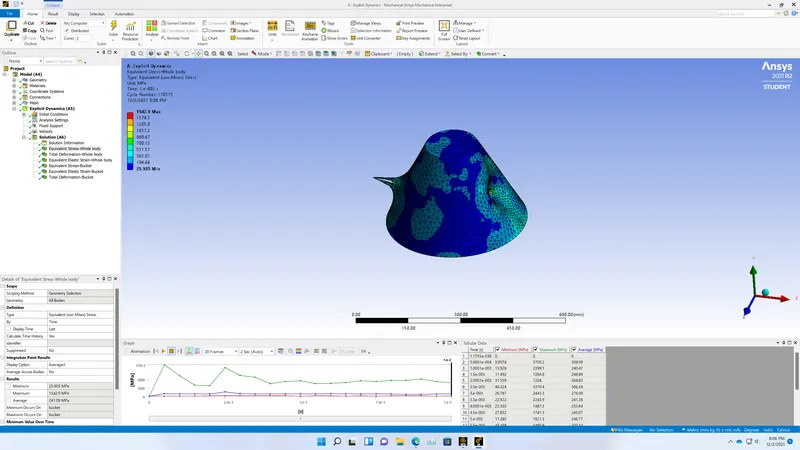
Equivalent elastic stress whole body
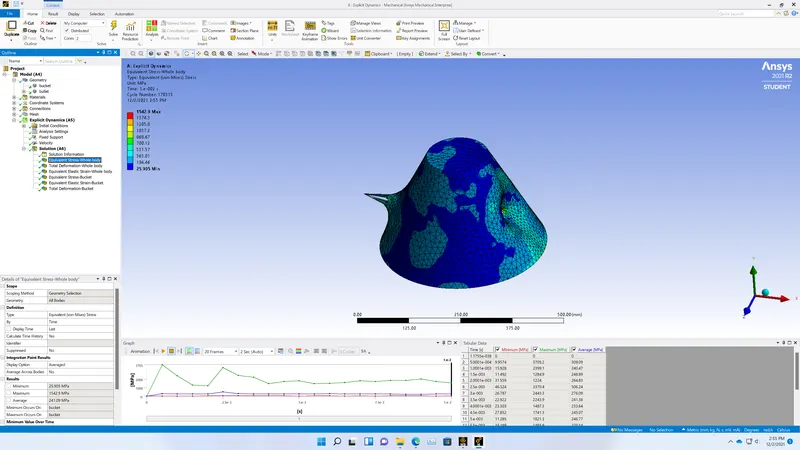
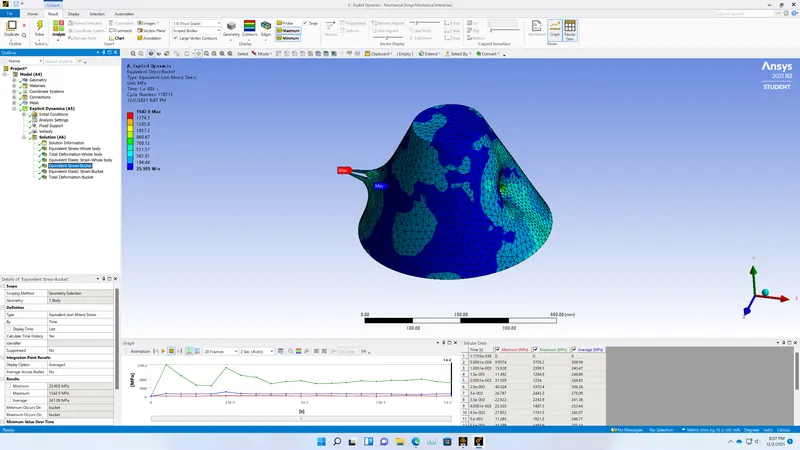
Equivalent elastic stress bucket
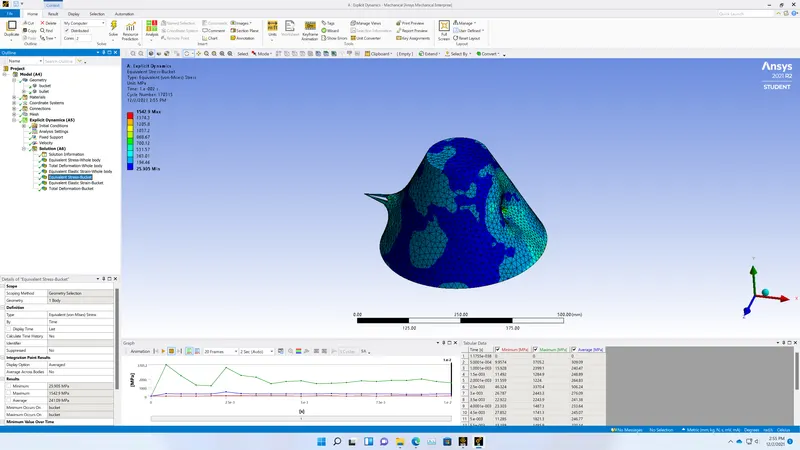
Equivalent elastic strain whole body
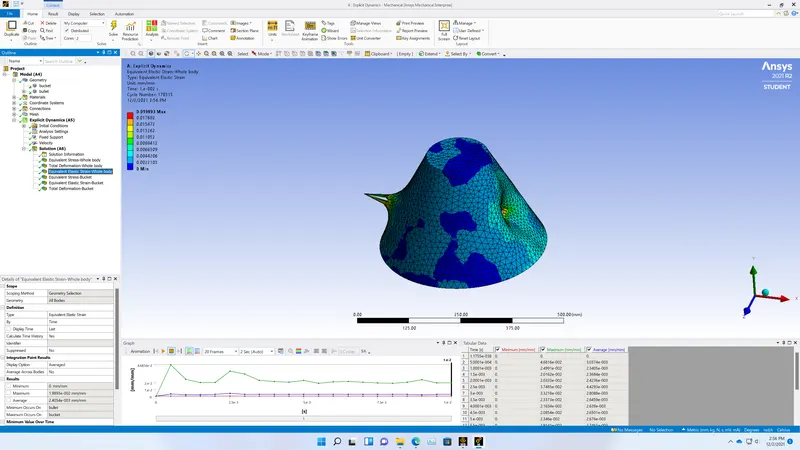
Equivalent elastic strain bucket
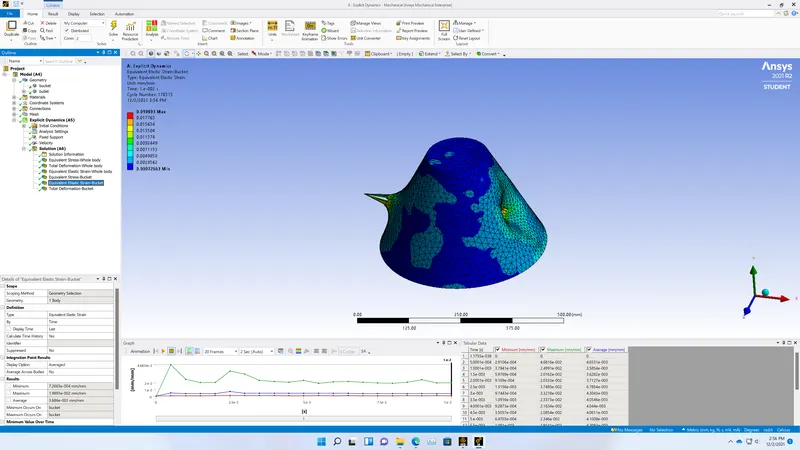
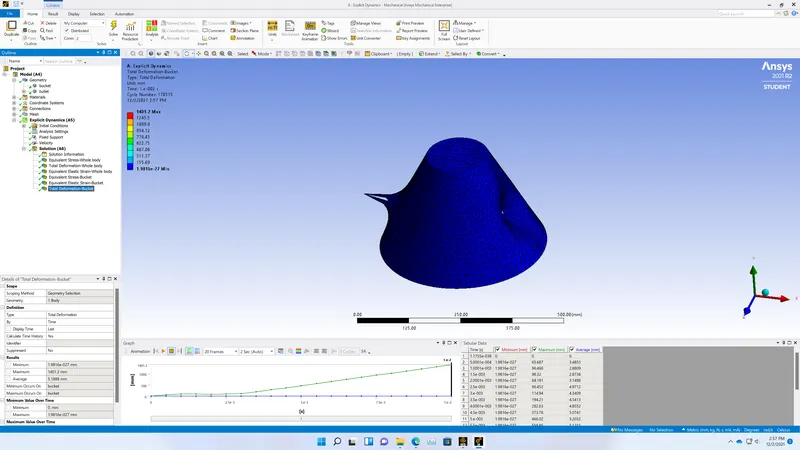
Total deformation of whole-body
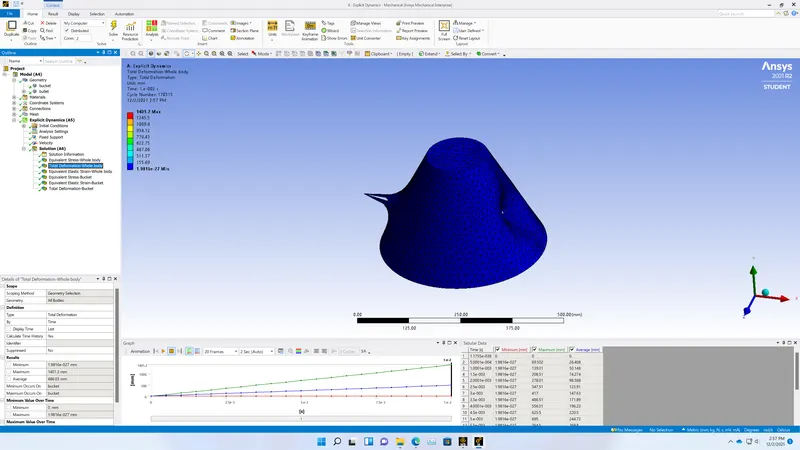
Total deformation of bucket
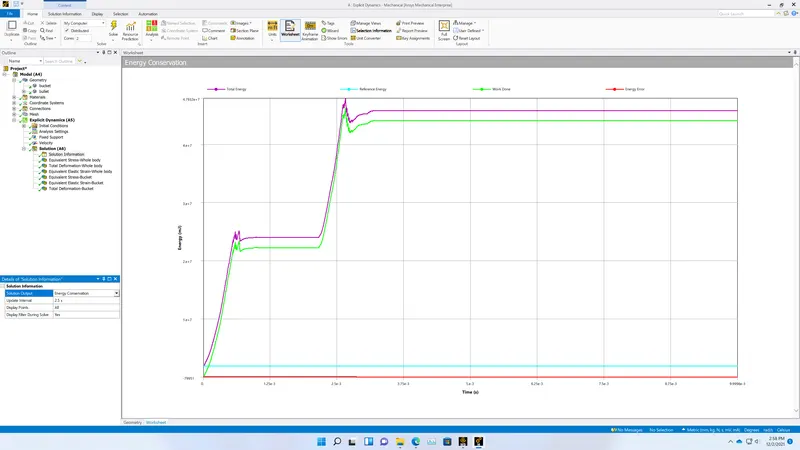
Energy conservation
5. Results of case 3
Equivalent elastic stress whole body
Equivalent elastic stress bucket
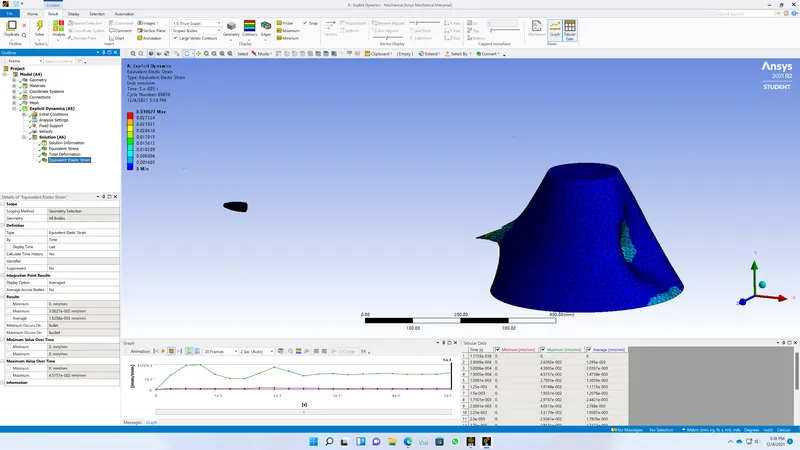
Equivalent elastic strain whole body
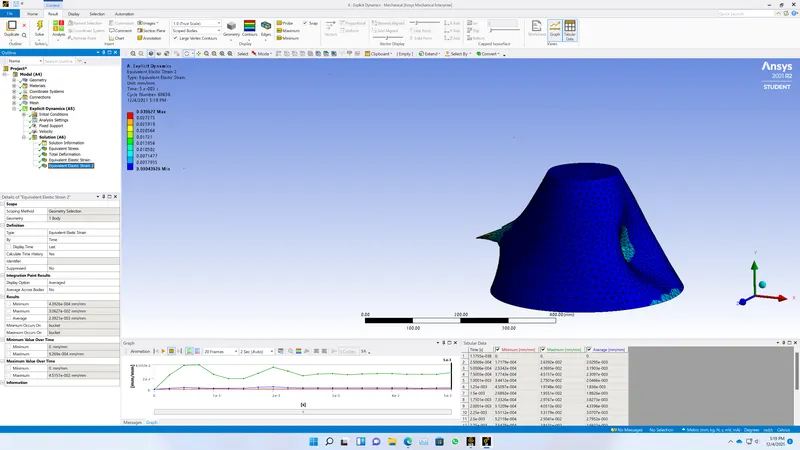
Equivalent elastic strain bucket
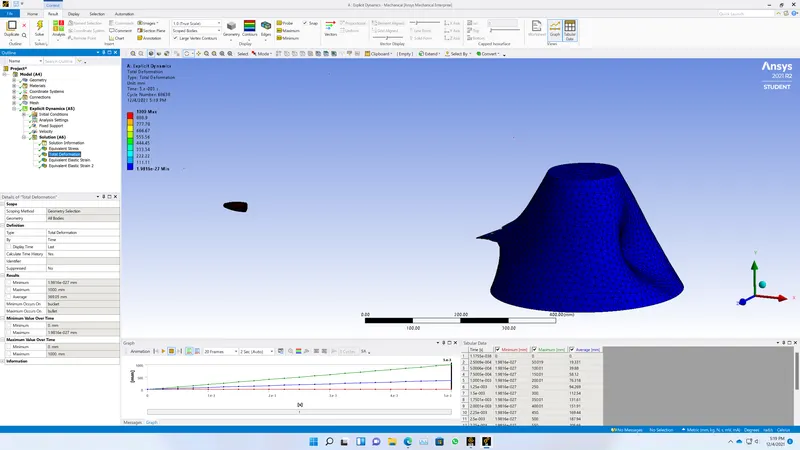
Total deformation of bucket
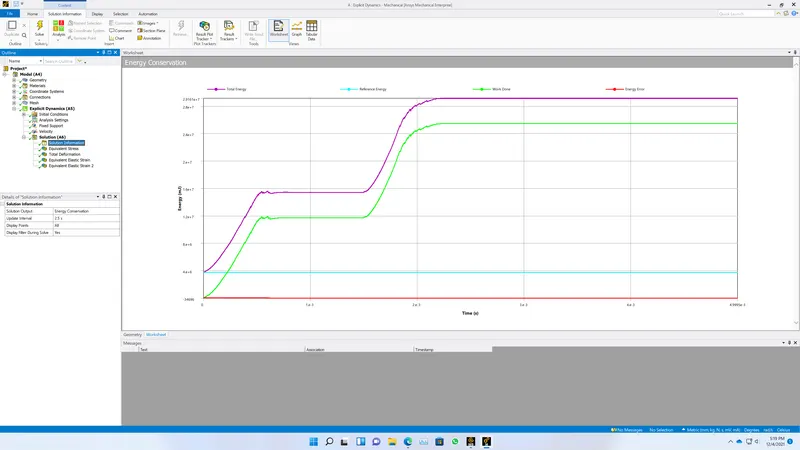
Energy conservation
6. Results, conclusion and report presentation
Case 1
| Equivalent stress (whole body and bucket) | 4075.3 MPa |
| Equivalent strain (whole body and bucket) | 0.037048 |
| Total deformation (whole body and bucket) | 1390, 931.45 mm |
Case 2
| Equivalent stress | 1542.9 MPa |
| Equivalent strain | 0.019893 |
| Total deformation | 1401.2 mm |
Case 3
| Equivalent stress | 1352.2 MPa |
| Equivalent strain | 0.030627 |
| Total deformation | 1000 mm |
Conclusion:
Case 1 has maximum equivalent stress compared to cases 2 and 3. But total deformation in case 2 is slightly higher than in case 1. There has been increased stress concentration in regions where the bullet enters and exits the bucket.
7. Simulation files
Files are attached