Week 10 Bullet penetrating a Bucket Challenge
Objective:
The objective of this challenge is to simulate the action of a bullet hitting a bucket and penetrating it. This is an explicit dynamic simulation however, the materials for the bucket are supposed to be non-linear. For this simulation, the materials chosen for the bucket were Alluminium alloy (NL), Copper alloy (NL) and structural steel (NL).
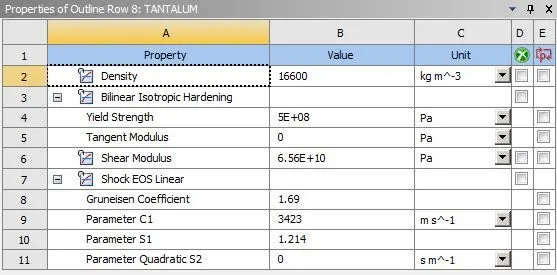
The bullet speed is 139 m/s as given in the video and is considered as a rigid material. The material assignedf to the bullet is tantalum as discussed in the lecture. Explicit dynamic simulation has to be carried out for all three matrerial cases and supporting animation files need to be uploaded.
Preprocessing for the analysis:
1. Geometry creation
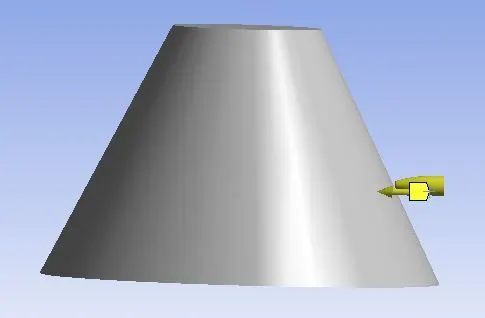
The model required for this challenge was obtained from the one given in the problem. The model is checked in modeler or spaceclaim for any irregularities in the model.
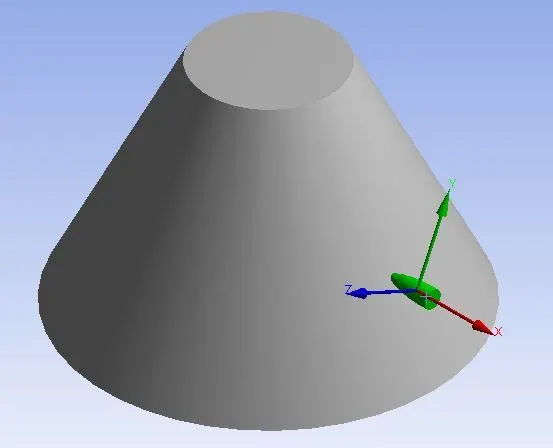
The bullet is assigned a rigid behavior since we are only going to stud effects of its penetration in the bucket and not the bullet itself.
2. Material selection
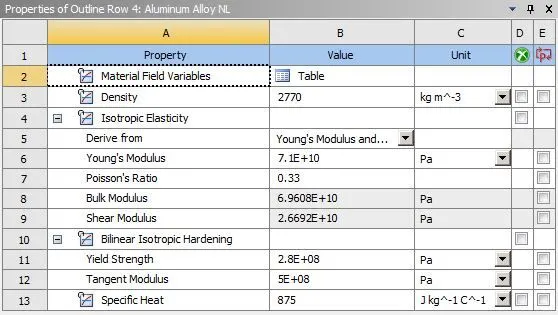
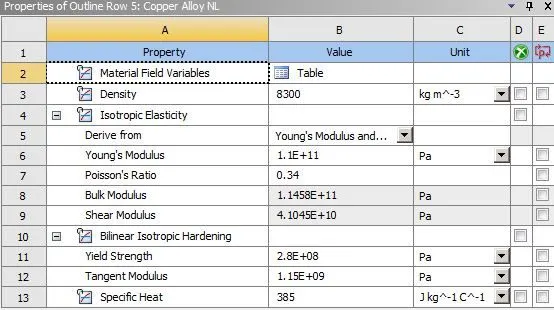
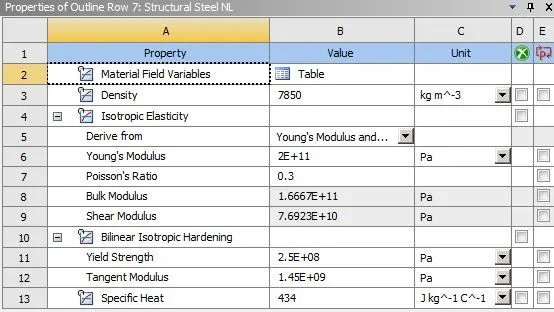
As mentioned above, 3 different non-linear materials were selected as marterials for bucket viz., Aluminium alloy (NL), Copper alloy (NL) and structural steel (NL). For the bullet, tantalum is the material chosen as descussed in the lecture. The properties for these materials are given below,
3. Connections:
Any contacts that might have generated by default have to be deleted as we are not studying motion between the two bodies in this simulation.
The body interaction tool defines the relation between bullet and the bucket.
4. Meshing
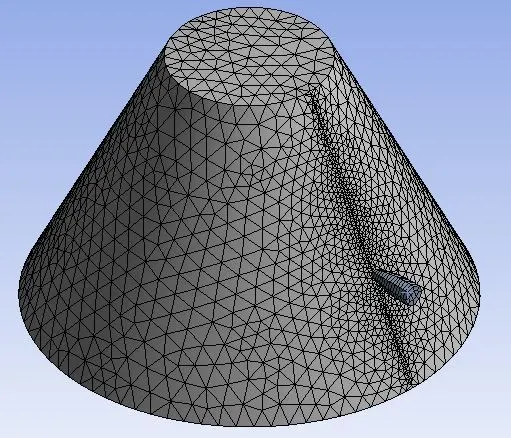
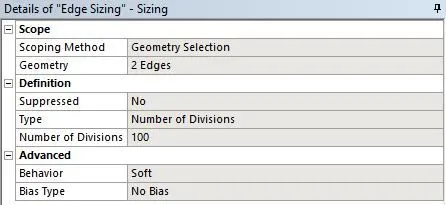
An edge sizing element is inserted in the model and the two side edges of the bucket are selected. Although it was instructed in the lecture to use 6 mm element size as the critera for meshing of the bucket, a no. of divisions approach was followed in this simulation where the line edge was divided into 100 elements for aluminium bucket. The element size approach was followed in cu alloy and structural steel (NL) material.
5. Analysis settings
This analysis will be executed in one step only insce it will take a lot of computing power to execute multiple steps in explicit method. Explicit method of analysis is used only for simulating effects of short term events. An end timestep of 0.01 is used and the rest of the conditions are left the unchanged.
The maximum, minimum and initial tine step are set to program controlled option as the steps must be lower than the courant number and the courant number changes for eahc particle with the mesh. It is compolicated to calculate the corant number and the software can calculate it hence, the time steps are set to "program controlled".
6. Loads and boundary conditions
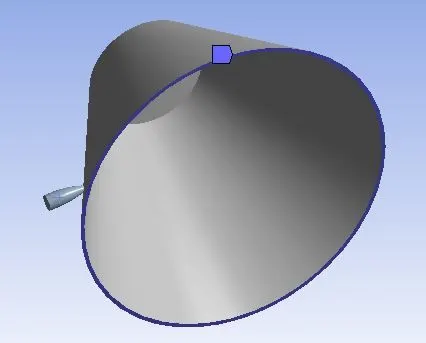
The bucket needs to remain steadily while the bullet penetrates it, hence a fixed support condition is applied to one of the faces of the bucket. A velocity load of 139 m/s is applied to the bullet to simulate the penetration.
Solution and postprocessing:
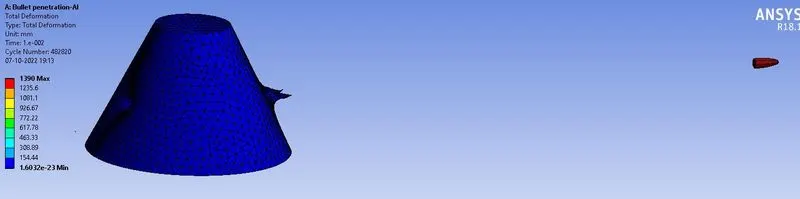
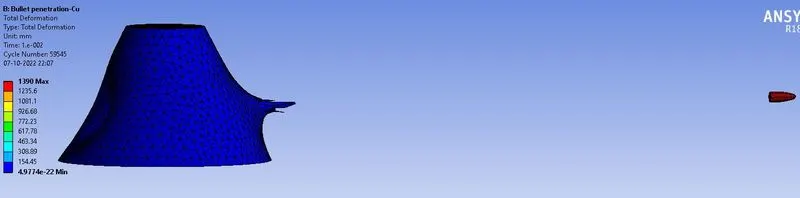
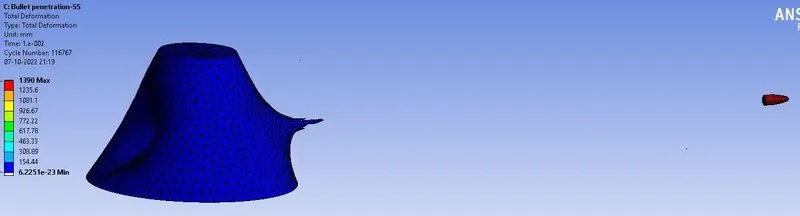
1. Total Deformation
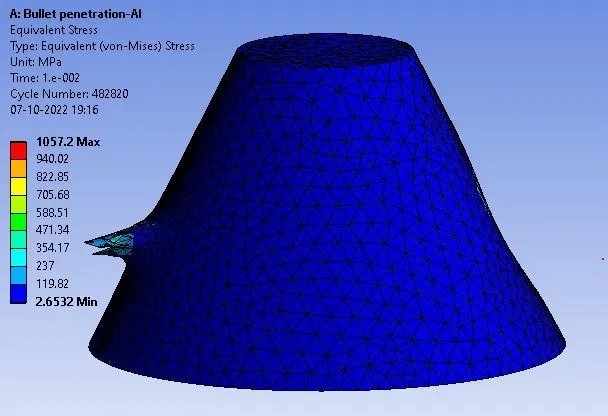
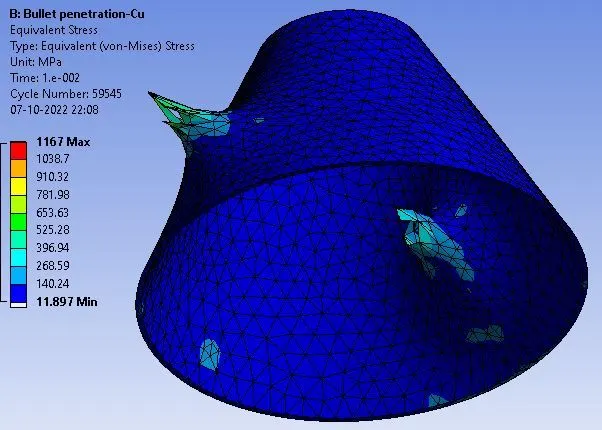
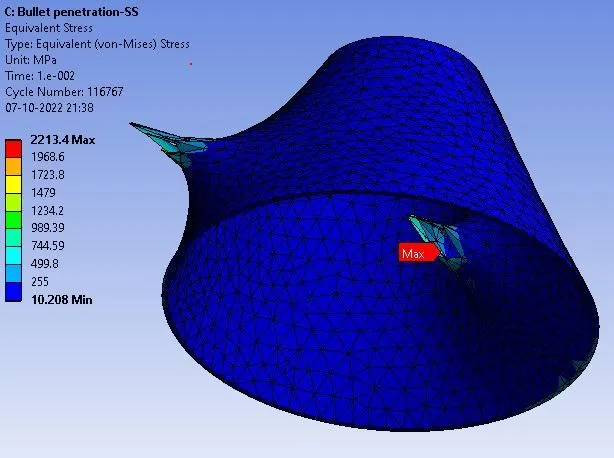
2. Equivalent Stress
Results:
| Total Deformation (mm) | Equivalent stress (MPa) | |||
| Min. | Max. | Min. | Max. | |
| Alluminium alloy | 1.60e-23 | 1390 | 2.635 | 1057.2 |
| Copper alloy | 4.98e-22 | 1390 | 11.897 | 1167 |
| Structural steel | 6.23e-23 | 1390 | 10.2 | 2213.4 |
- Based on stress avalues, max stress is experienced by structural steel followed by copper alloy and least by alluminium alloy.
- Max deformation is same in all the materials since that is a defined input.