Week 10 Bullet penetrating a Bucket Challenge
Aim-
For this project, we will have to simulate a bullet penetrating into a bucket. We will use 3 different non linear materials for the bucket and analyse their behaviour for the same velocity of bullet. Apply the conditions for bullet as mentioned in the video itself & to upload animation files to show the behaviour in the three cases.
Procedure-
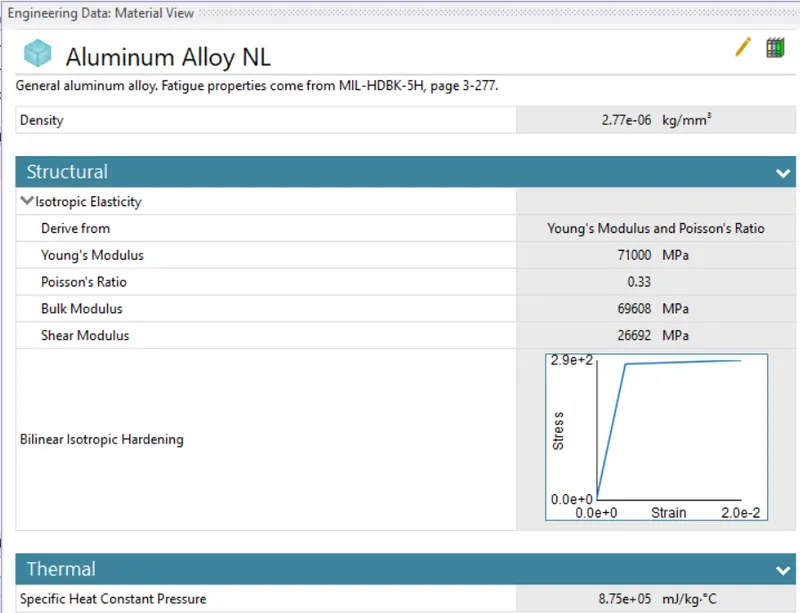
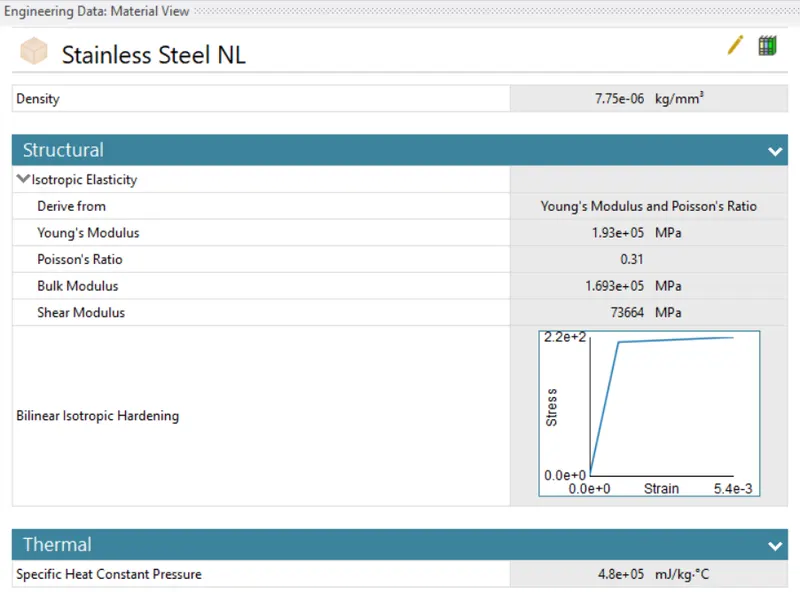
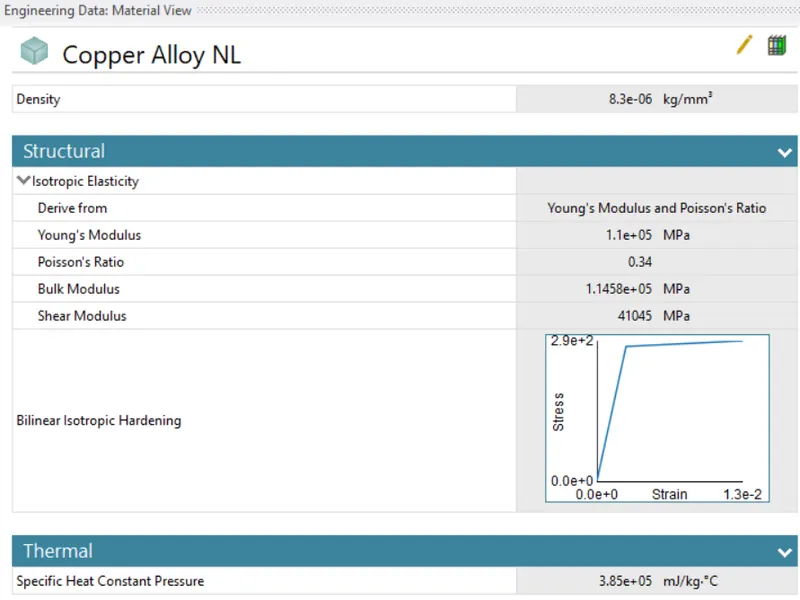
- Here no non-linear material has been not specified to us, so we will use the materials as follow for bucket,
1. aluminium Alloy NL-
2. Stainless Steel NL-
3. Copper Alloy NL-
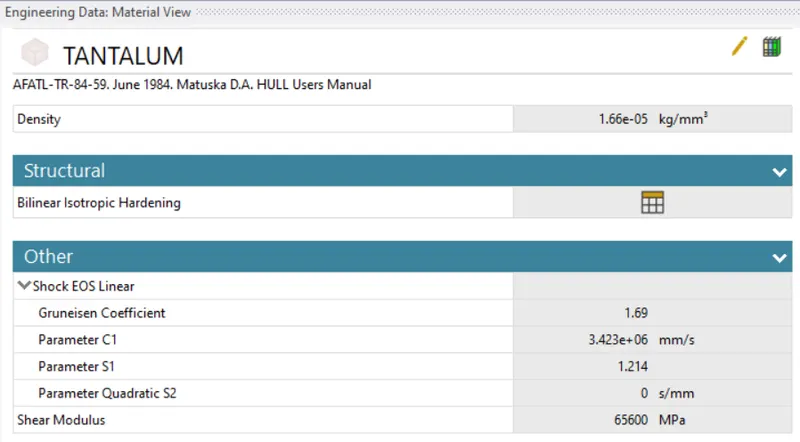
- For bullet we will use tantalum material.
- Now we have to import the model for that right click on the geometry tab and hit import>>then select the file from saved location and hit ok.
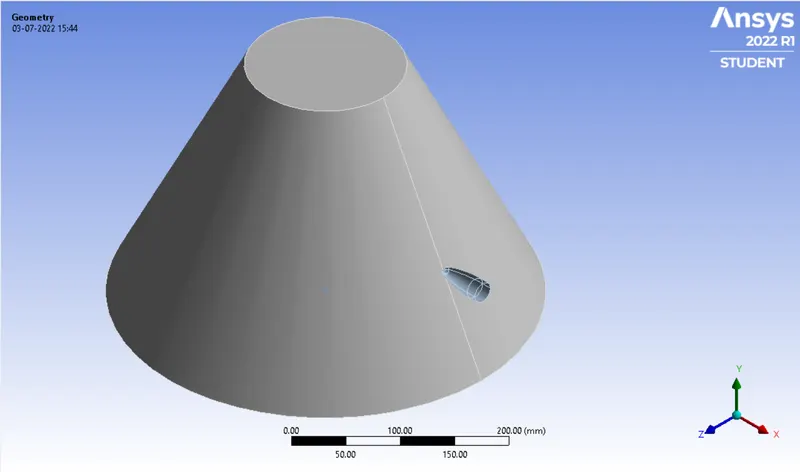
- For case-1 we will use aluminium alloy NL and for bullet we will assign tantalum material and keep its behavior as rigid.
Connections-
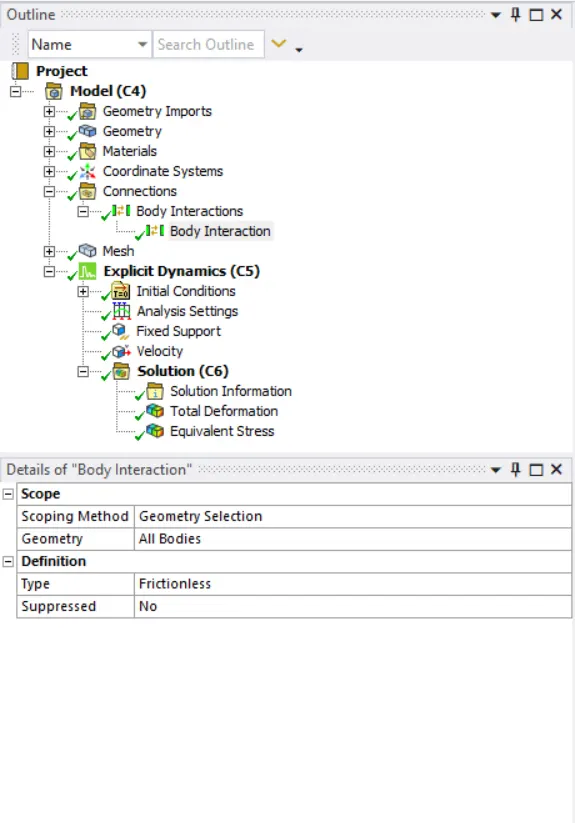
- Here we dont define ady contact as it is not required so we will delete the existing contacts and keep body interactions.
Mesh-
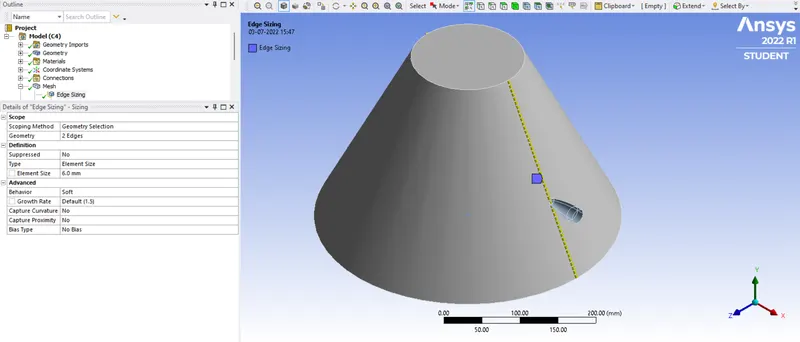
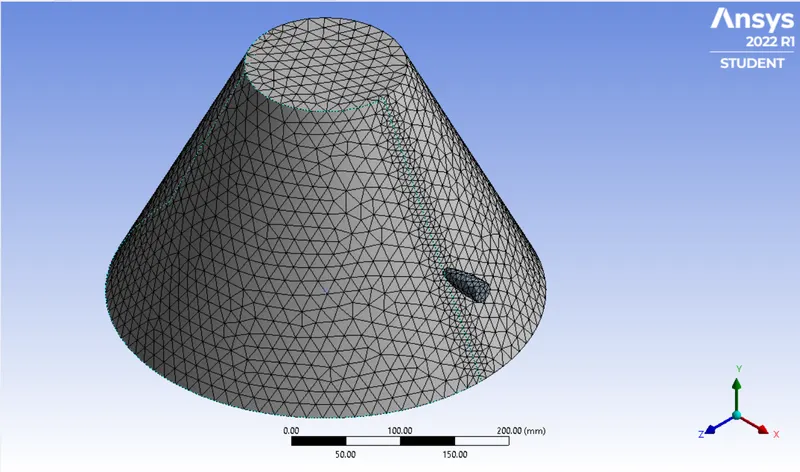
- Now we have to create edges mesh for bucket , to generate mesh, mesh>>insert>>sizing>>select two edges of bucket and in type select the element size as 6.
- Now we have to create size mesh for bullet, to generate mesh, mesh>>insert>>sizing>>select the bullet as whole body and give mesh size as 6mm.
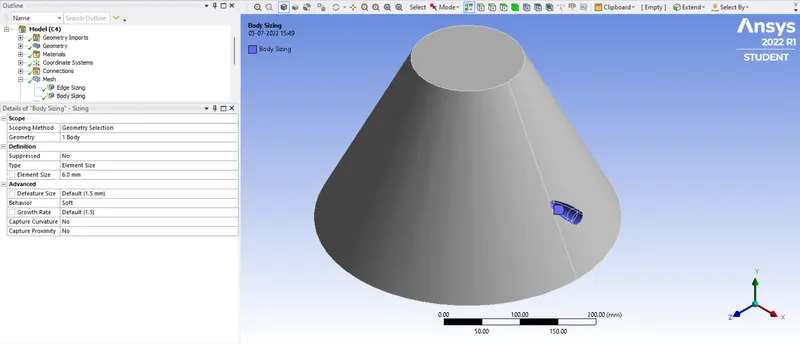
- Change default element size as 15 for global mesh and generate mesh.
Analysis Setting-
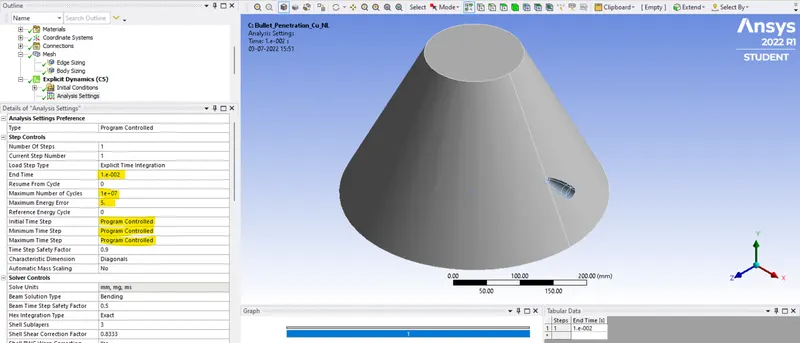
- Here we will give time step as 1e-2 and max. energy error as 5 refer below snap.
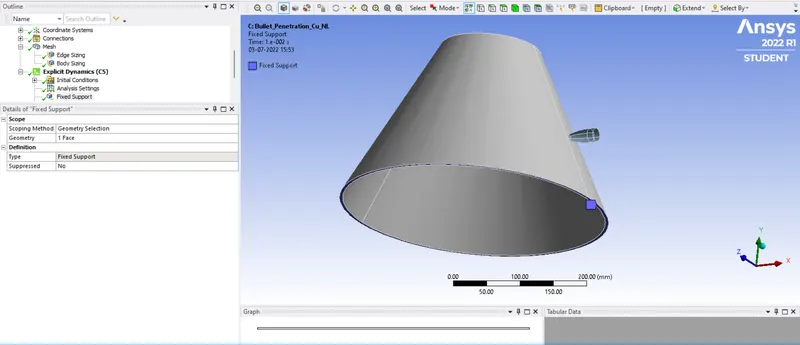
- As bucket is not going to move we will fix it at bottom.
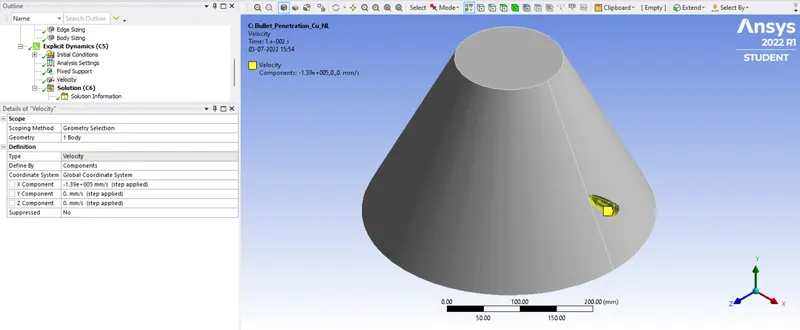
- Now insert a velocity boundry condition to bullet, we will give velocity as 139000mm/s to negative X-direction.
Solution Setting-
- Here we have to define total deformation, to do so right click solution>>insert>>deformation>>Total.
- Now for stress right click on the solution>>insert>>stresses>>equivalent (von-Mises).
Results-
Total Deformation-
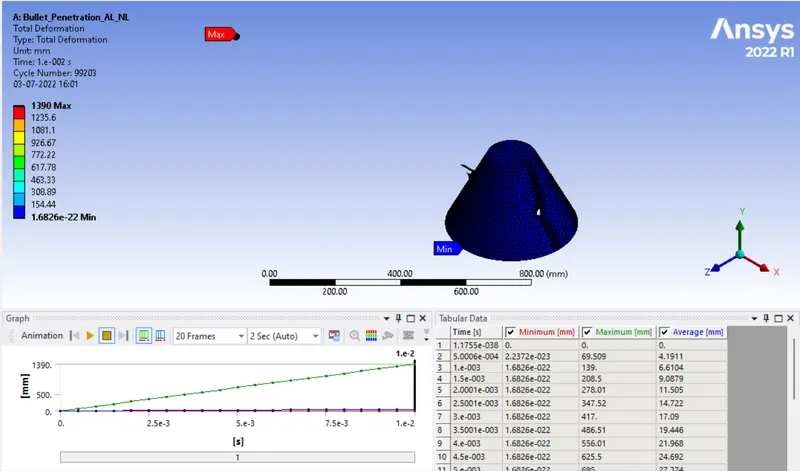
Case-1-Aluminium Alloy NL-
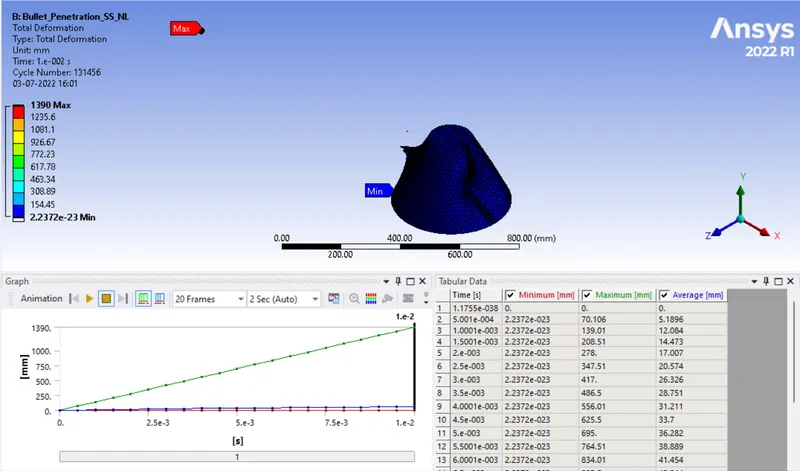
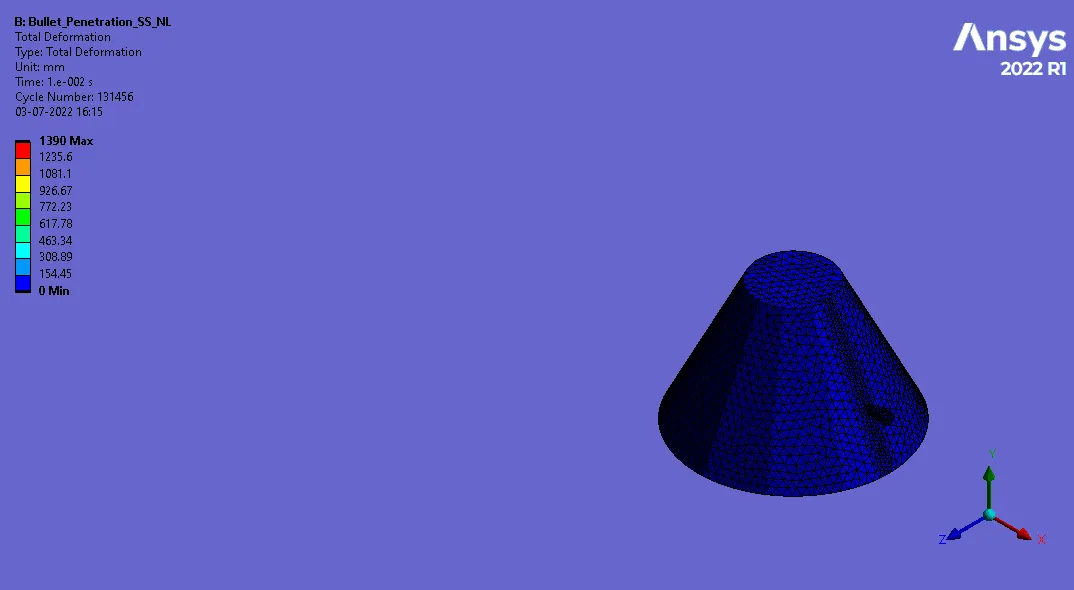
Case-2-Stainless Steel NL-
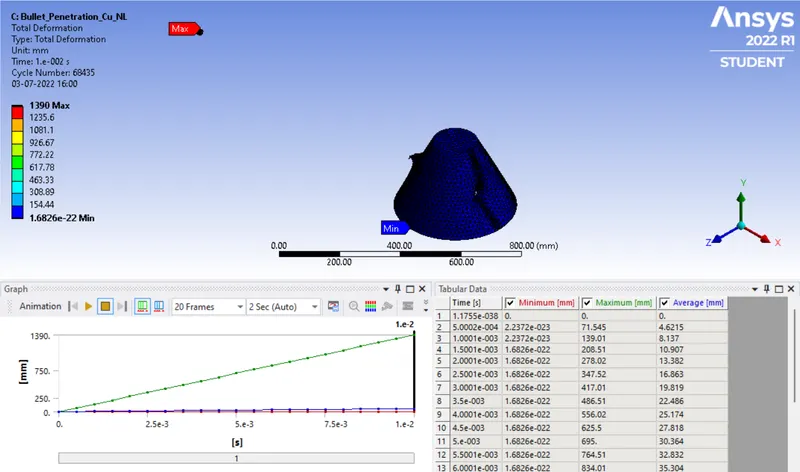
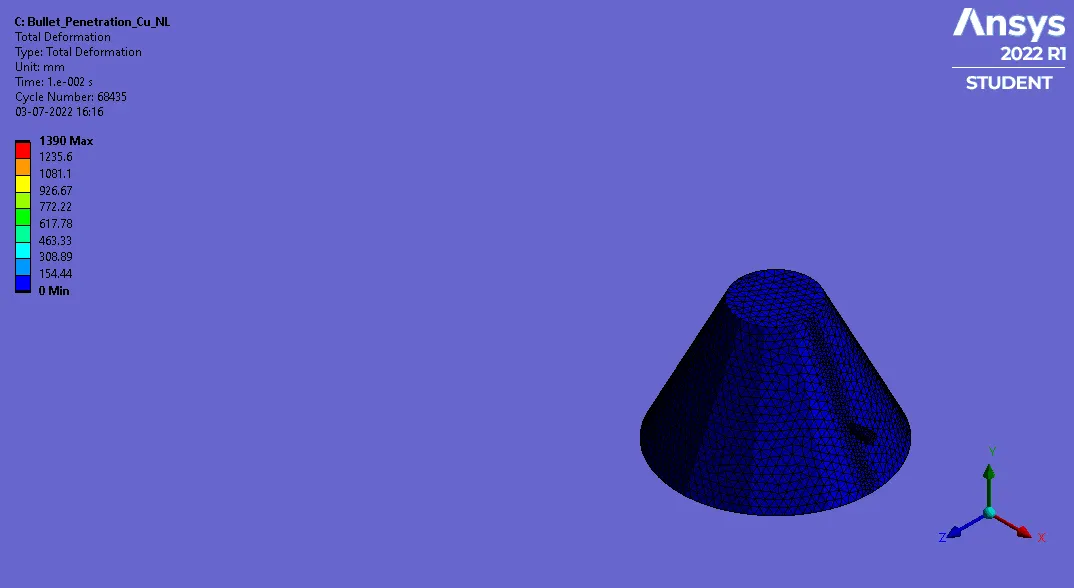
Case-3-Copper Alloy NL-
Equivalent Stress-
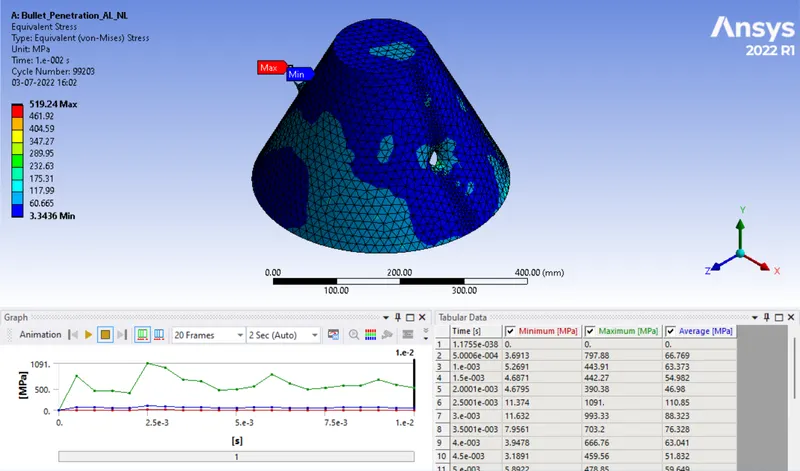
Case-1-Aluminium Alloy NL-
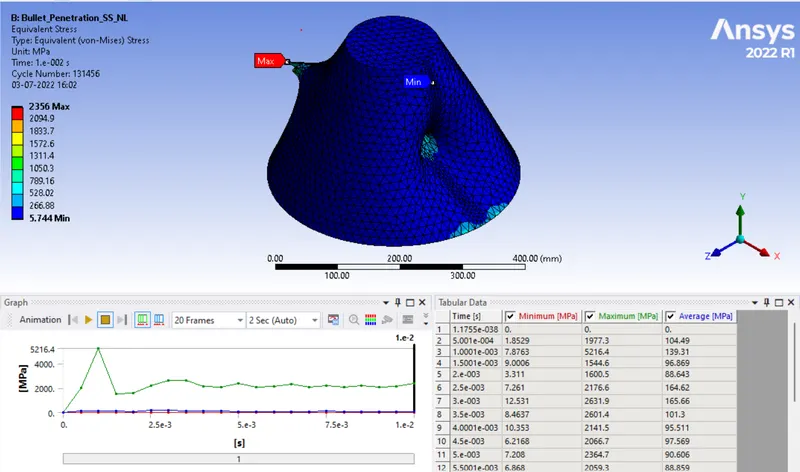
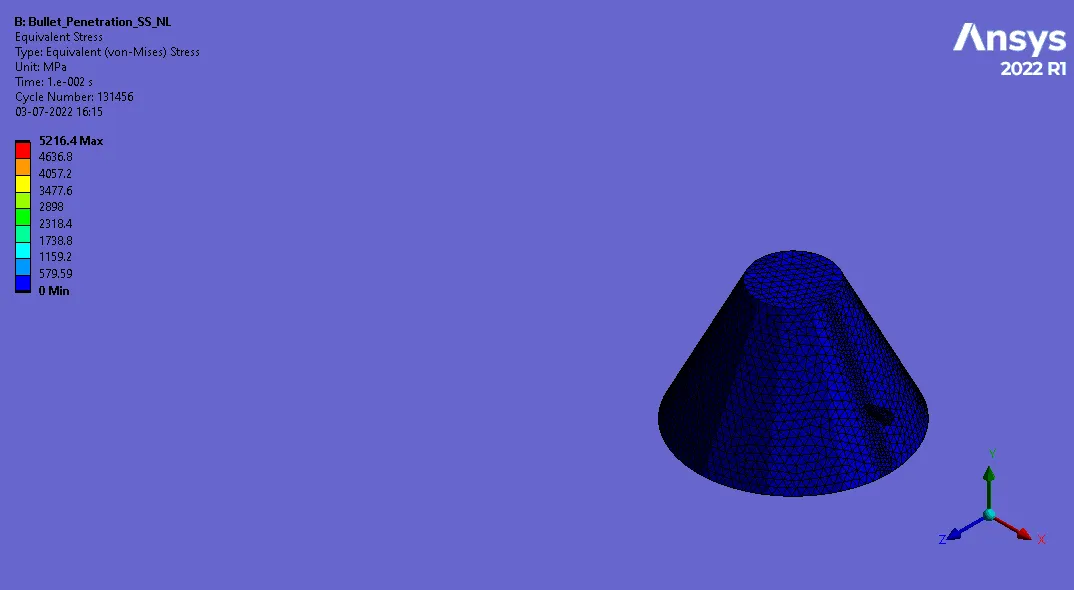
Case-2-Stainless Steel NL-
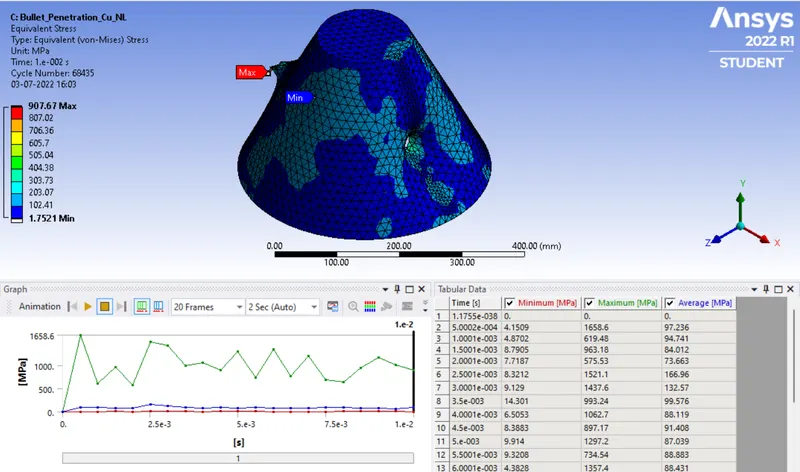
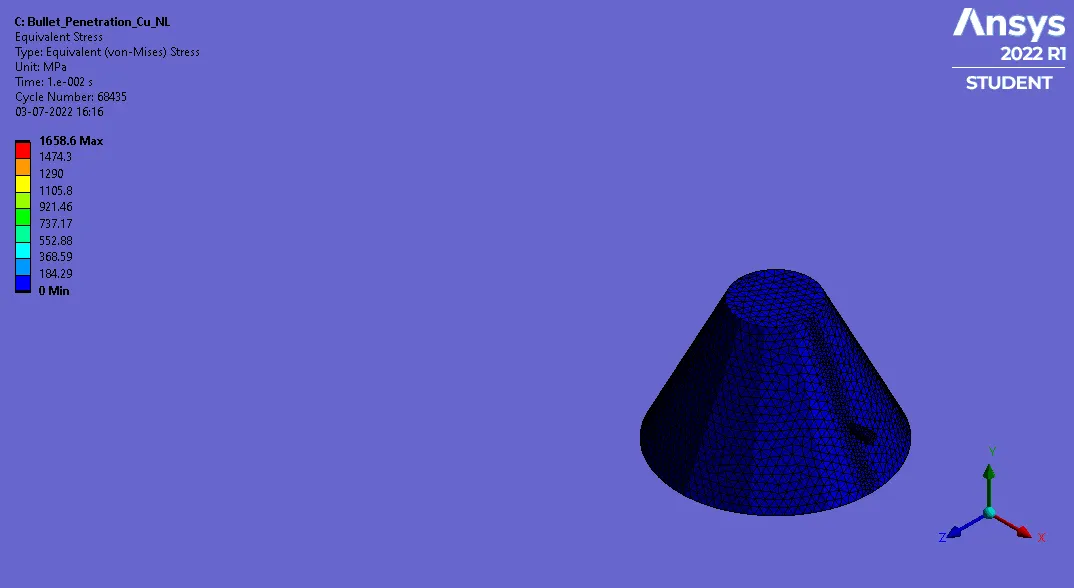
Case-3-Copper Alloy NL-
Result Comaprision-
|
Cases |
Total Deformation (mm) |
Equivalent Stress (MPa) |
||
|
Min. |
Max. |
Min. |
Max. |
|
|
Case-1 |
1.6826e-22 |
1390 |
3.345 |
519.24 |
|
Case-2 |
2.2372e-23 |
1390 |
5.744 |
2356 |
|
Case-3 |
1.6826e-22 |
1390 |
1.7521 |
907.67 |
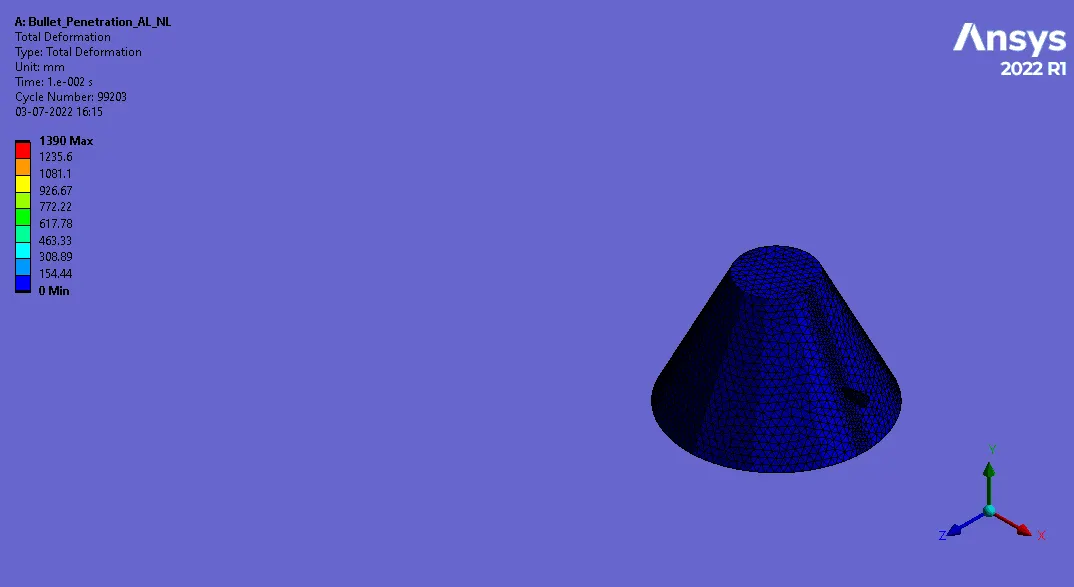
- From above table we can say that the total deforamtion is almost same in every case.
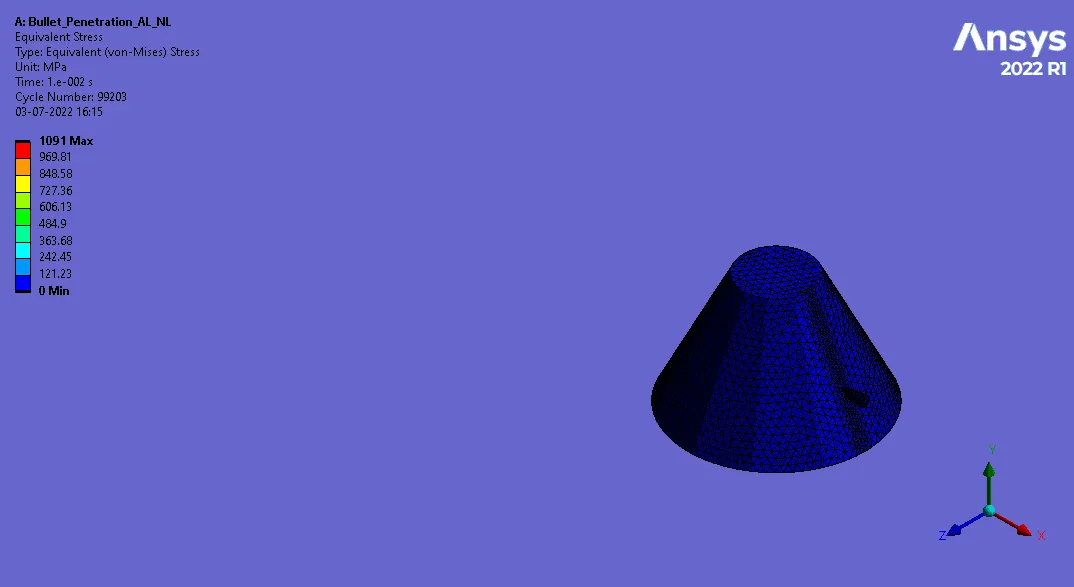
- But for stress consideration aluminium generates min stress value as compared to others, while stainless steel will be inducing higest stress.
Animated Results-
Case-1
Total Deformation-
Equivalent Stress-
Case-2
Total Deformation-
Equivalent Stress-
Case-3
Total Deformation-
Equivalent Stress-
Conclusion-
- From above analysis we have learnt that the material having high strength and impact resistence is best material for bullet penetration study, here stainless steel material had high young's modulus which resulted into high amount of stress generation to penetrate.
- So based upon type of application in armoured industries we use type of material, in general kevlar is the most commonly used material as armour for protection against bullets used in hand guns because of its impact resistance, high strength and low weight. These properties make Kevlar an ideal material to be used in bullet-proof as compared to other materials.
- In our case it was stainless steel material came out to be best suited material.