Week 10- Assembly Workbench
Quick Return Mechanism
A quick return mechanism is a common principle on shaper and slotter machines. This principle helps to change circular motion into reciprocating motion which in return moves the ram forward and backward.
In the shaper and slotter machine, a quick return motion mechanism converts circular motion into reciprocating motion, allowing the slider to move forward and backward. The cutting process occurs in the forward motion, but there is no corresponding cutting in the reverse direction. A quick return mechanism is a device that generates a reciprocating motion in which the return stroke takes less time than the forward stroke. It uses a system of links with three turning pairs and a sliding pair to be driven by a circular motion source (usually a motor of some sort). With an offset crank, a quick-return mechanism is a subclass of a slider-crank linkage.
Machines with quick return mechanisms can be found all over the engineering industry. Below are the applications of a quick return mechanism.
- Shaper
- Screw press
- Power-driven saw
- Mechanical actuator
- revolver mechanisms
- rotary combustion internal engine
- air compressor
- mechanical cutter.
The following are the key components of a quick return mechanism:
- Crank: The crank is attached to the pinion wheel or motor and rotates at a constant angle.
- Slider and Slotted Bar: The slider pivots at the crank’s end. This slider is free to move within the slotter bar. This component is responsible for converting the crank’s circular motion into the slotted bar’s oscillating action.
- Connecting rod: The connecting rod’s job is to transform the slotted bar’s oscillating action into reciprocating motion.
- Ram: The ram reciprocates along the stroke line in a horizontal direction.
Design of Quick Return Mechanism
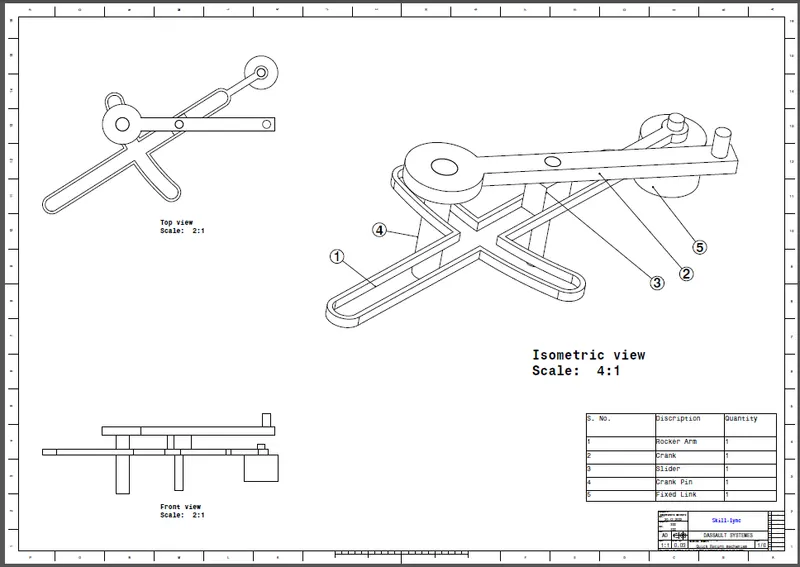
The following are the main components of the mechanism:-
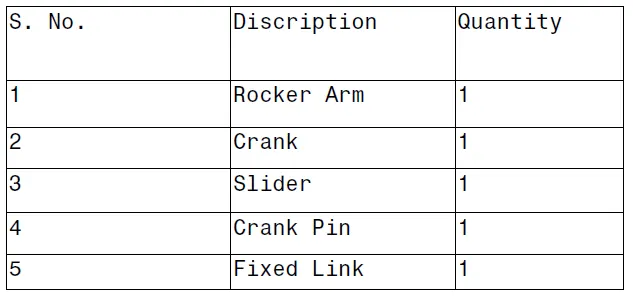
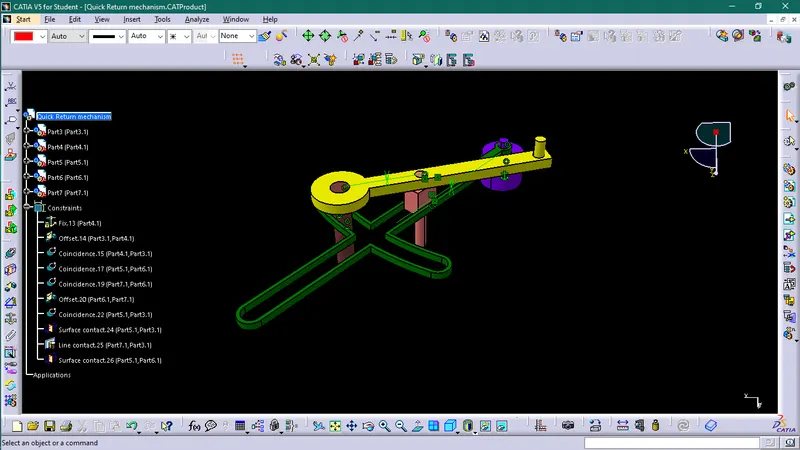
To make an assembly of the quick return mechanism first we have to create each component separately and then save it in the same folder for convenience.
Rocker Arm
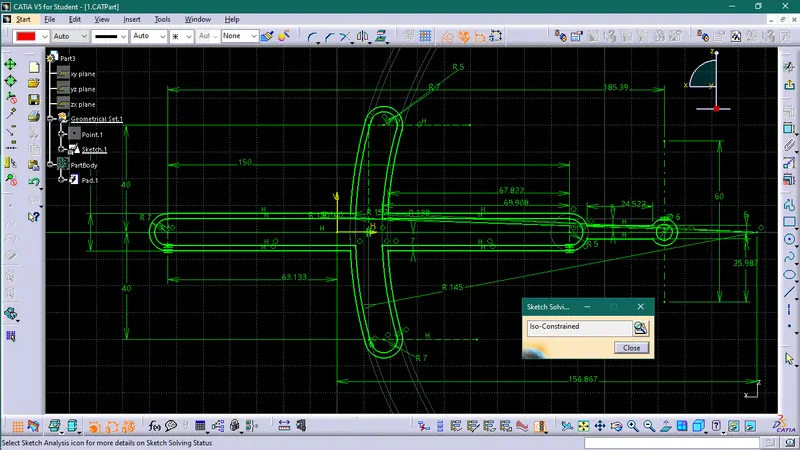
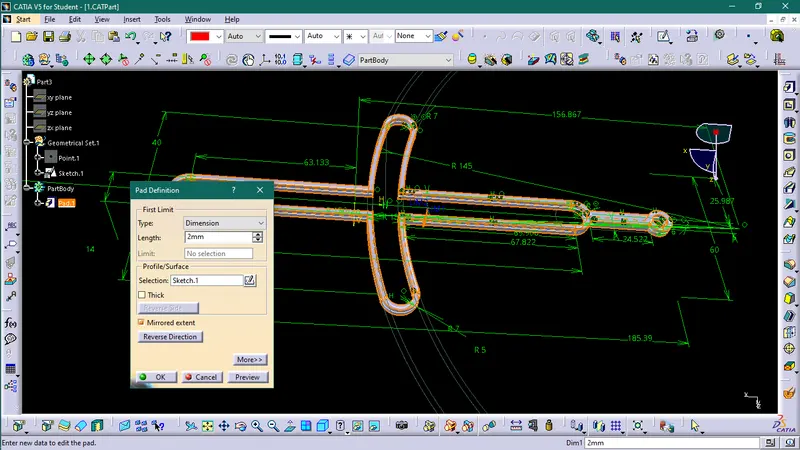
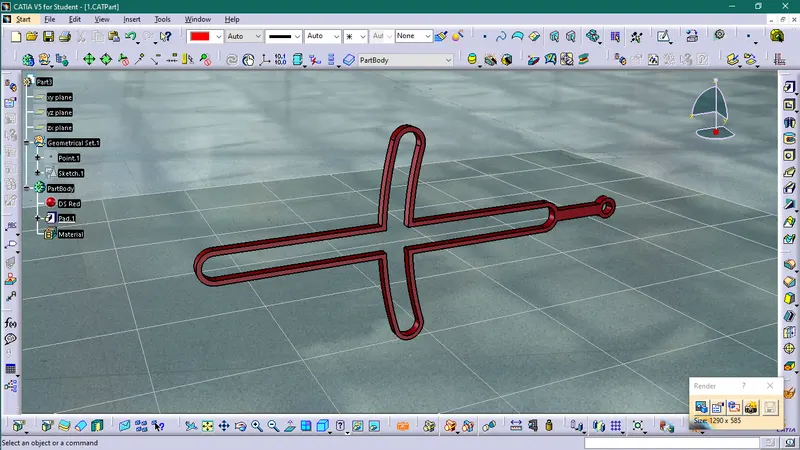
Crank
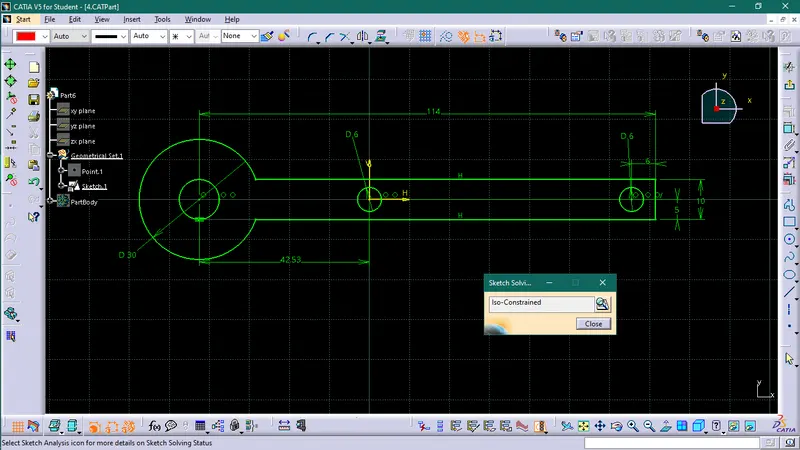
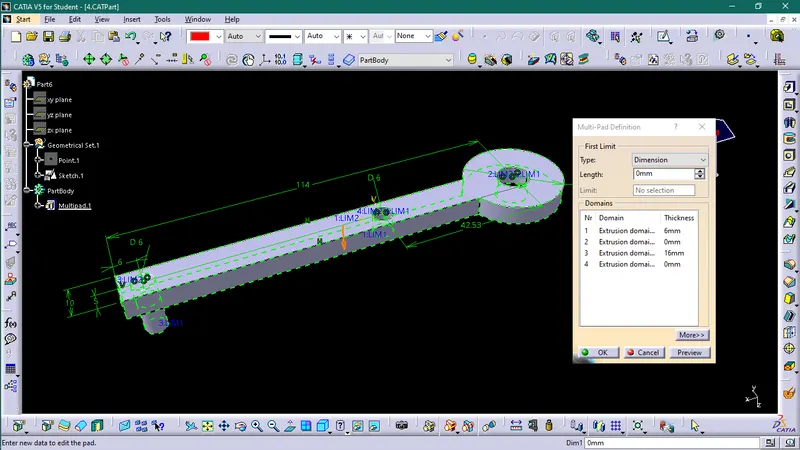
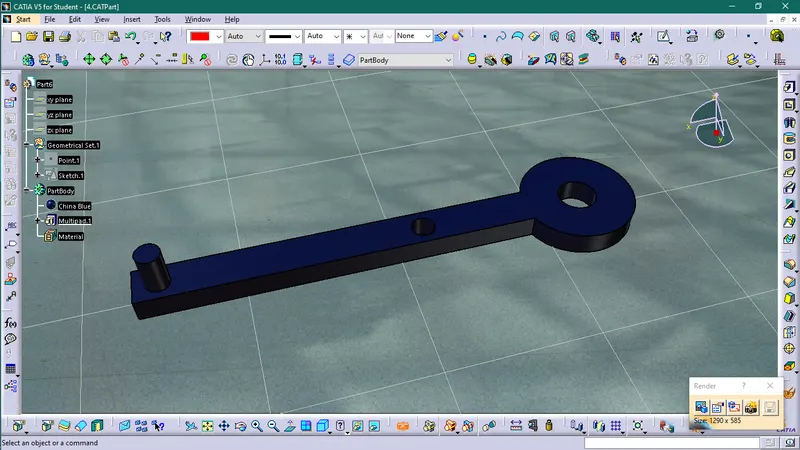
Slider
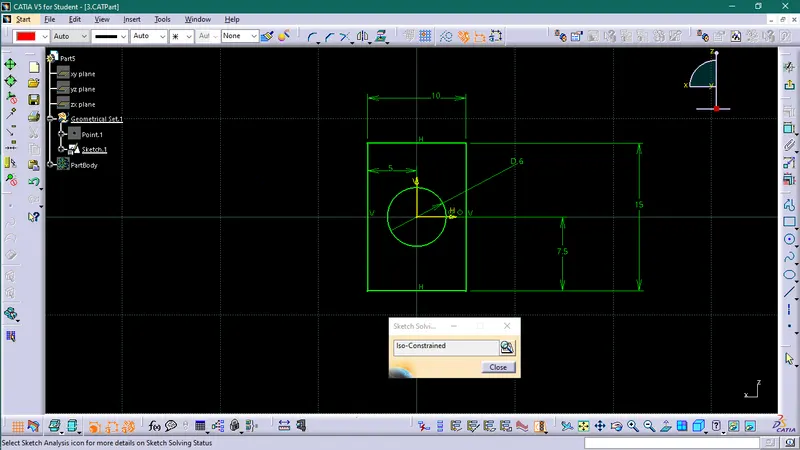
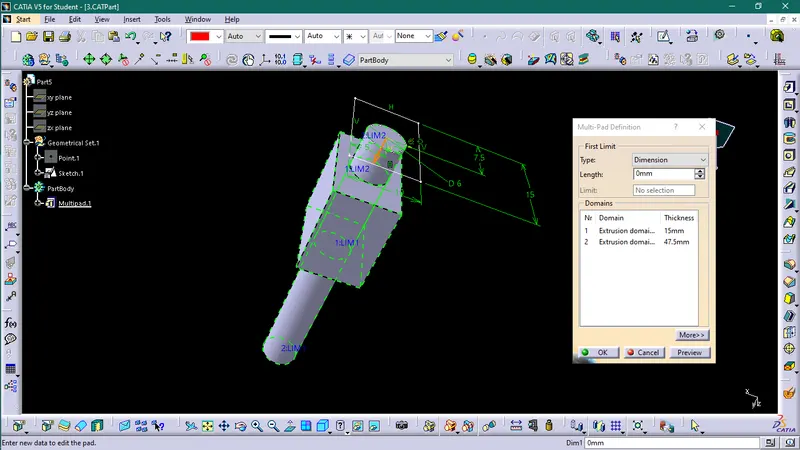
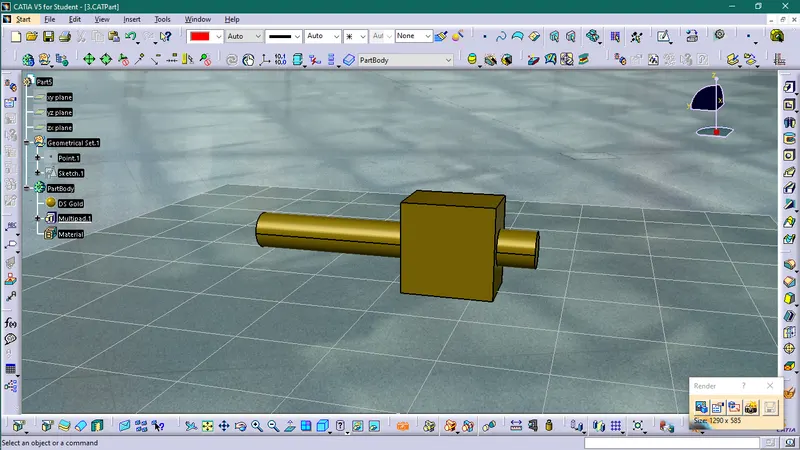
Crank Pin
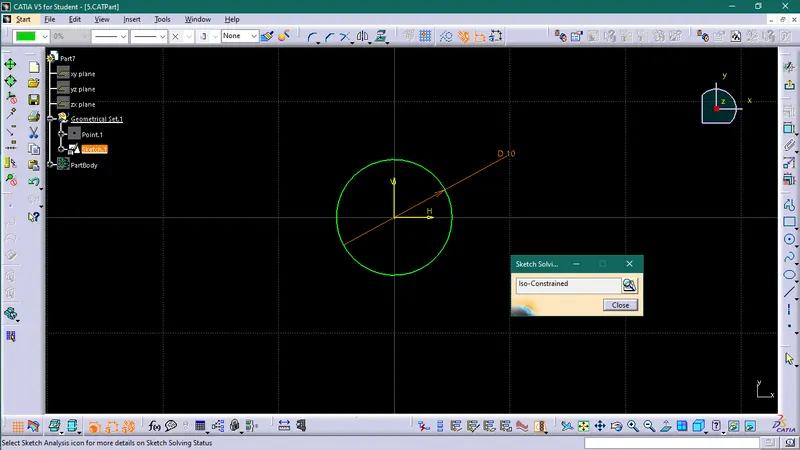
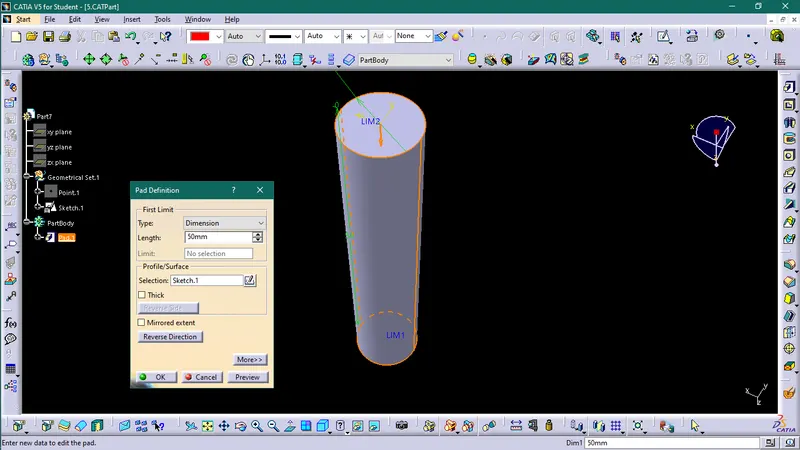
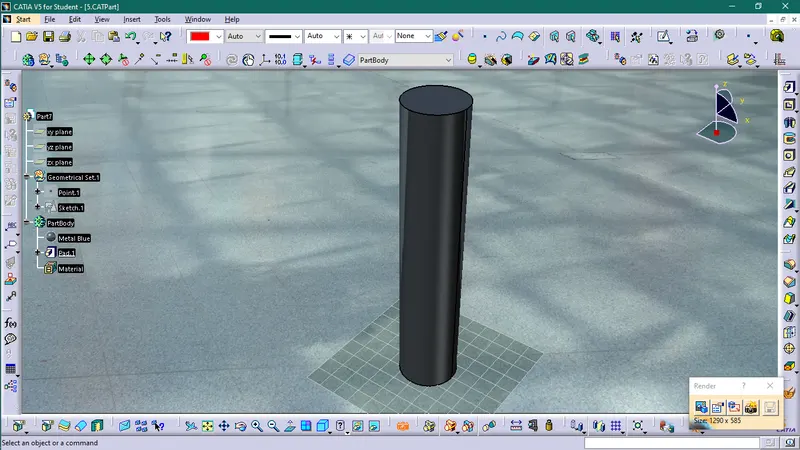
Fixed Link
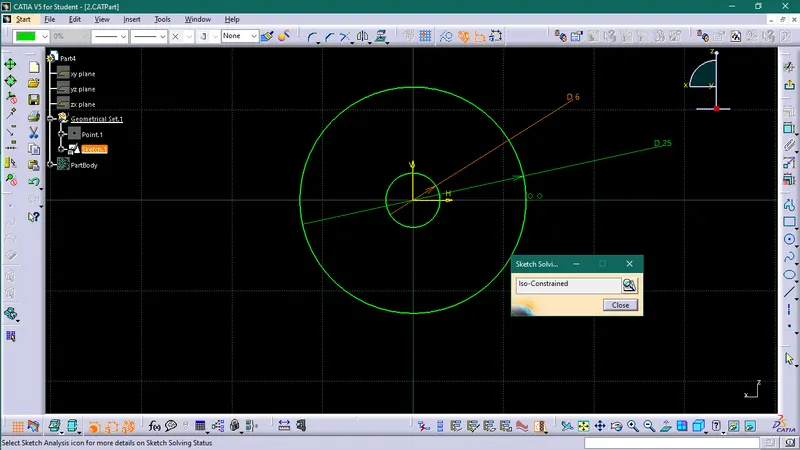
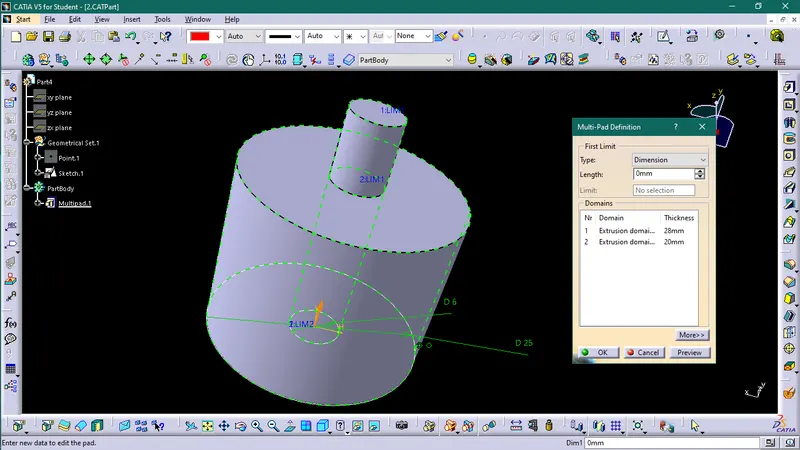
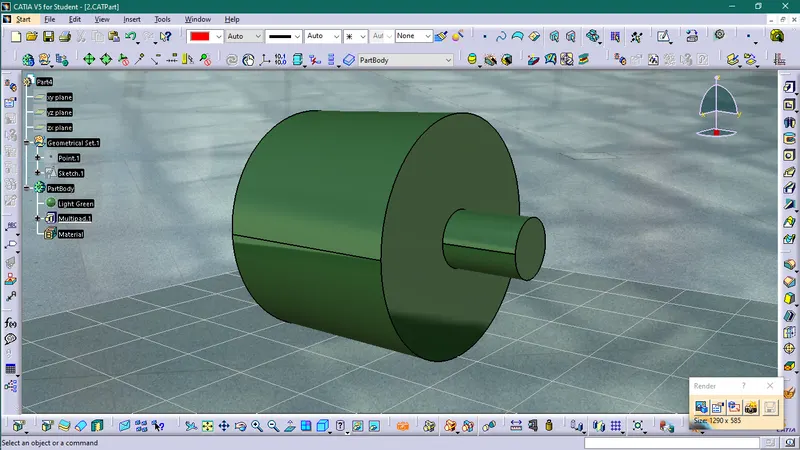
Assembly
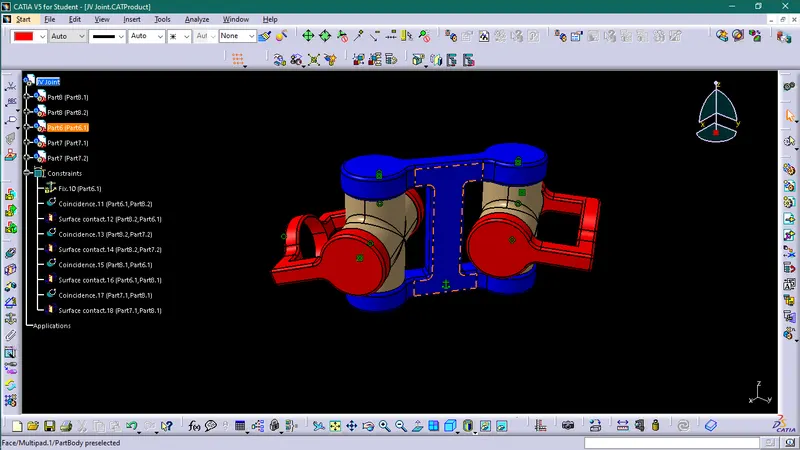
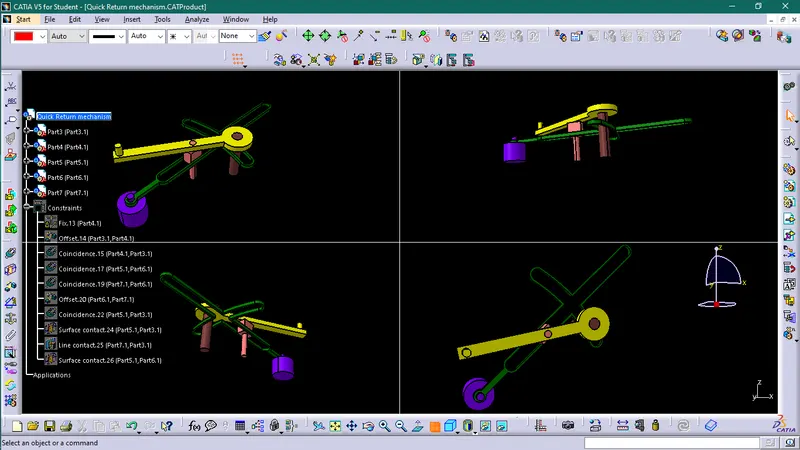
Now we can assemble these components by inserting them in the assembly workbench and then we provide a necessary constraints on it to restrict its degree of freedom.
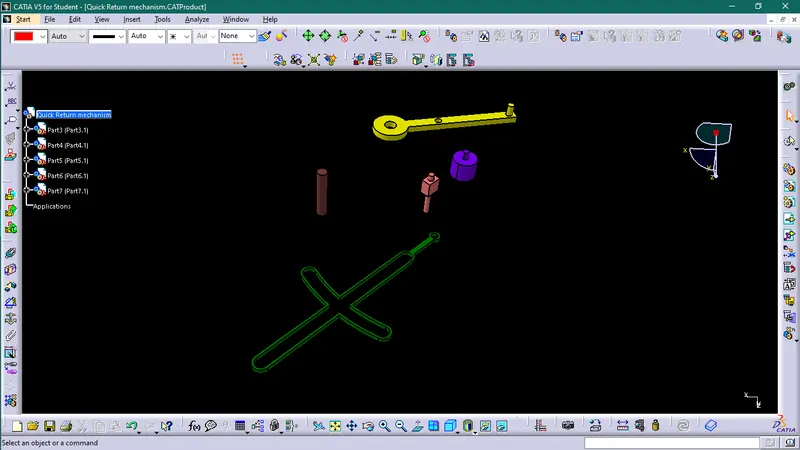
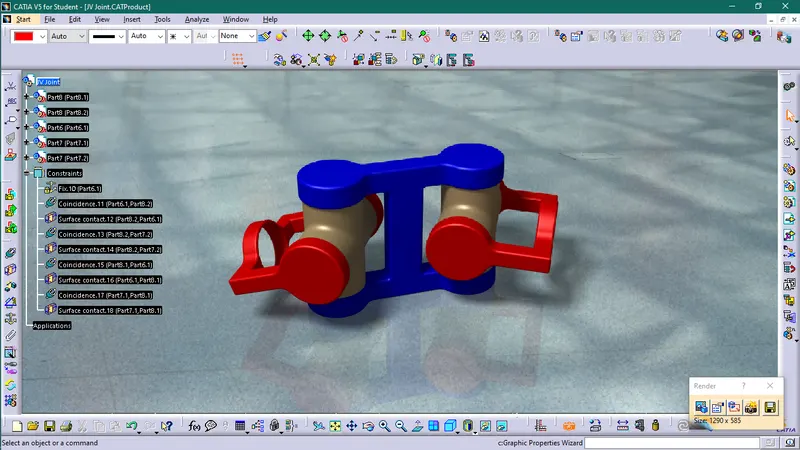
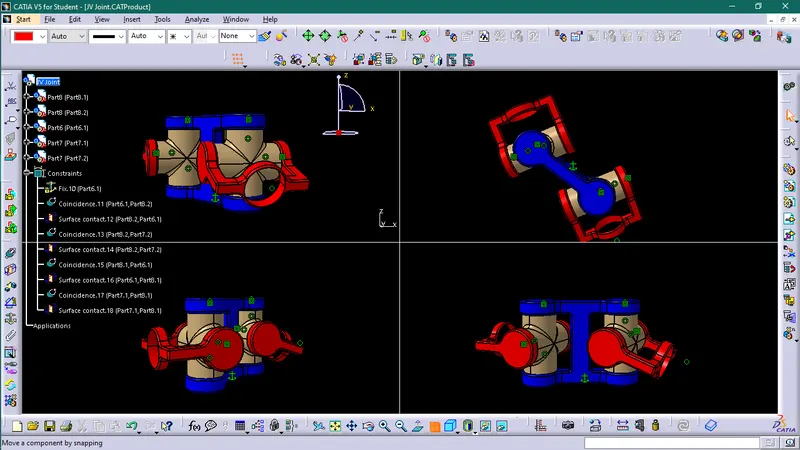
CV Joint
Constant velocity (CV) joints are mechanical power transmission components that provide rotational power at various angles. They provide the same output velocity in relation to the input velocity, independent of the angle they are operated at. This contrasts with most other joints, which may provide a different output velocity at sharper angles even with the same input velocity.
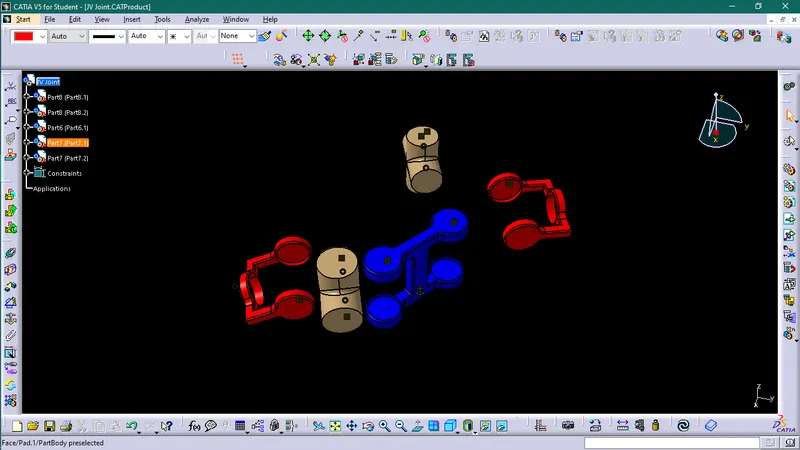
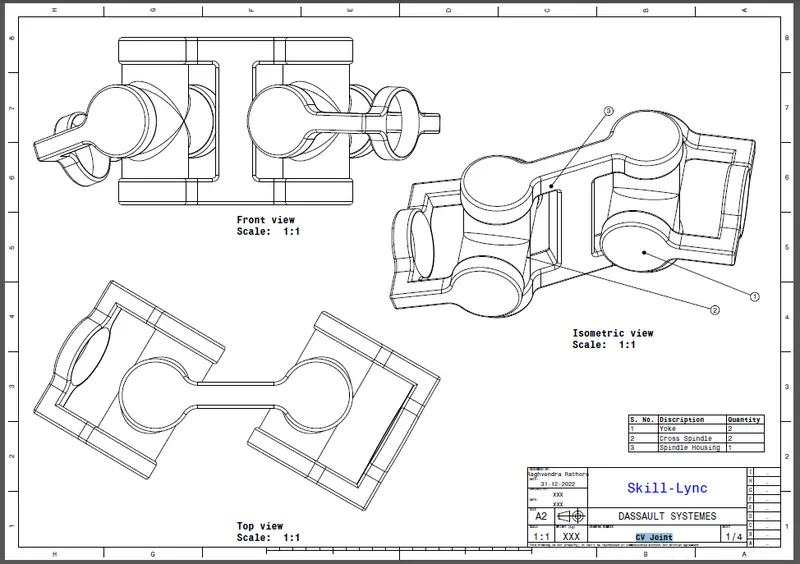
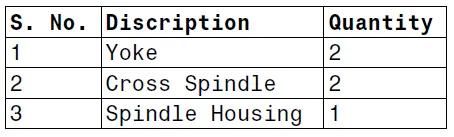
The following are the important Components:-
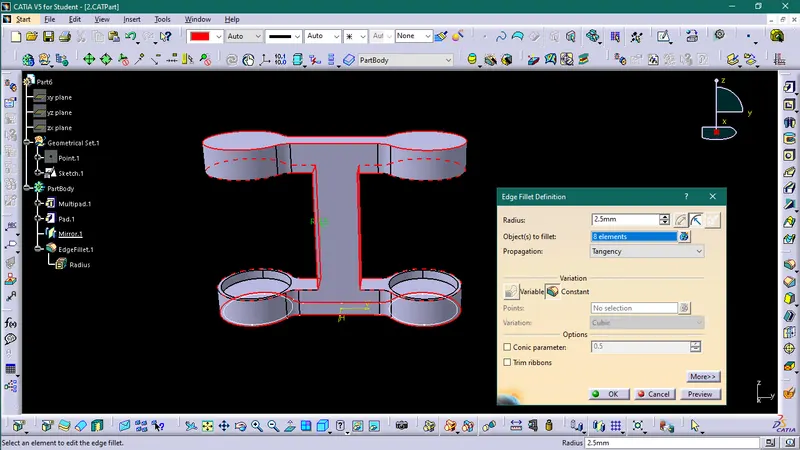
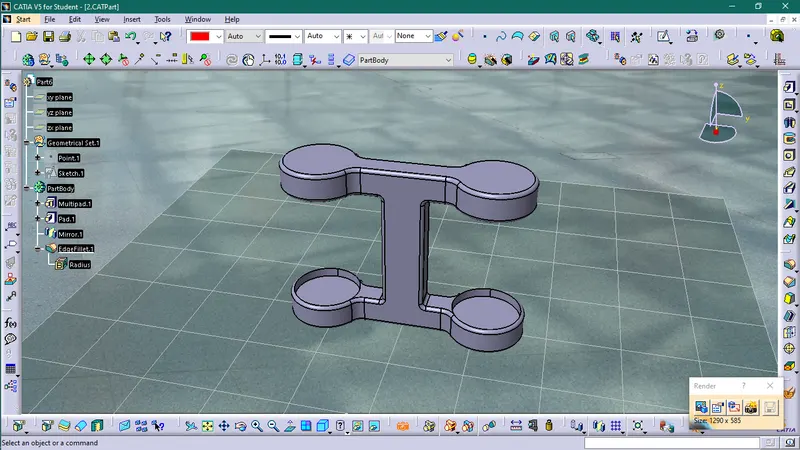
Yoke
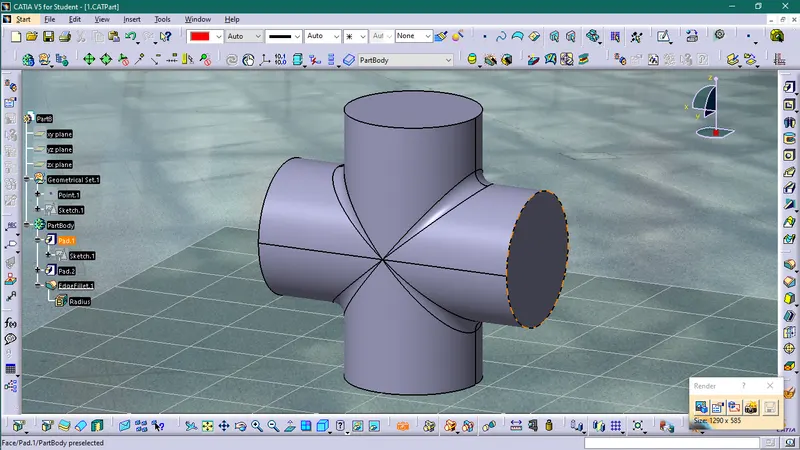
Cross Spindle
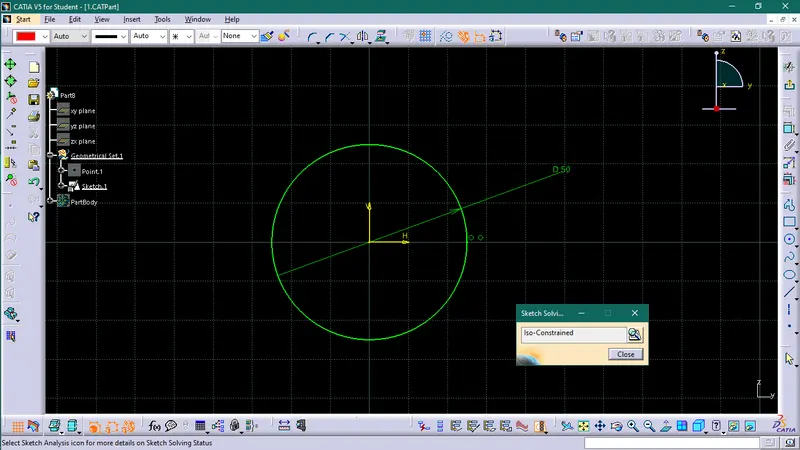
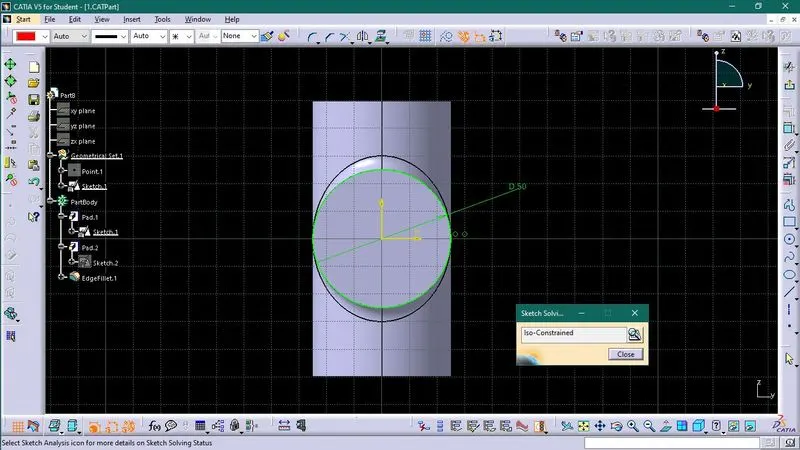
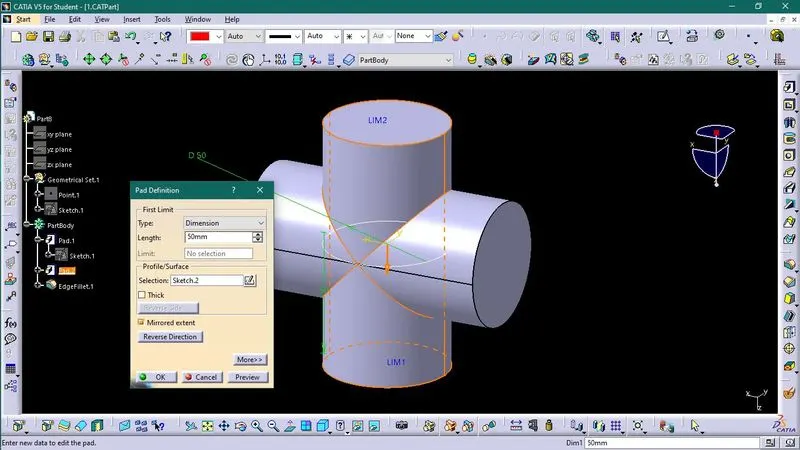
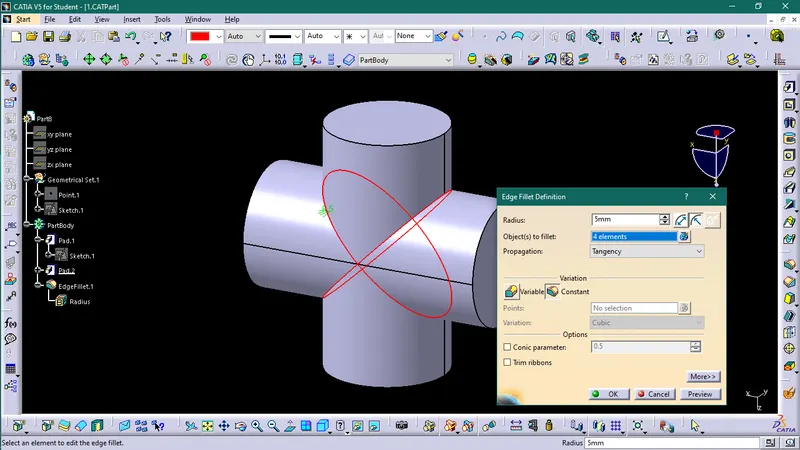
Spindle Housing