Week 1 Understanding Different Battery Chemistry
1& 2 Solution:
| Battery Type | Anode Material | Anode Reaction | Cathode Material | Cathode Reaction | Electrolyte |
|---|---|---|---|---|---|
| LCO | Graphite | LiC6 → Li+ + e- + C6 | LiCoO2 | Li1-xCoO2 + xLi+ + xe- → Li1-xCoO2 | LiPF6 in organic solvents |
| LMO | Graphite | LiC6 → Li+ + e- + C6 | LiMn2O4 | Li1-xMn2O4 + xLi+ + xe- → Li1-xMn2O4 | LiPF6 in organic solvents |
| NCA | Graphite | LiC6 → Li+ + e- + C6 | LiNiCoAlO2 | Li1-xNi1-yCoyAlyO2 + xLi+ + xe- → Li1-xNi1-yCoyAlyO2 | LiPF6 in organic solvents |
| NMC | Graphite | LiC6 → Li+ + e- + C6 | LiNiMnCoO2 | Li1-xNi1-yMnyCoxO2 + xLi+ + xe- → Li1-xNi1-yMnyCoxO2 | LiPF6 in organic solvents |
| LFP | Carbon | Li+ + FePO4 + e- → LiFePO4 | LiFePO4 | Li1-xFePO4 + xLi+ + xe- → Li1-xFePO4 | LiPF6 in organic solvents |
| LTO | Carbon | Li+ + TiO2 + e- → Li4Ti5O12 | LiCoO2 | Li1-xCoO2 + xLi+ + xe- → Li1-xCoO2 | LiPF6 in organic solvents |
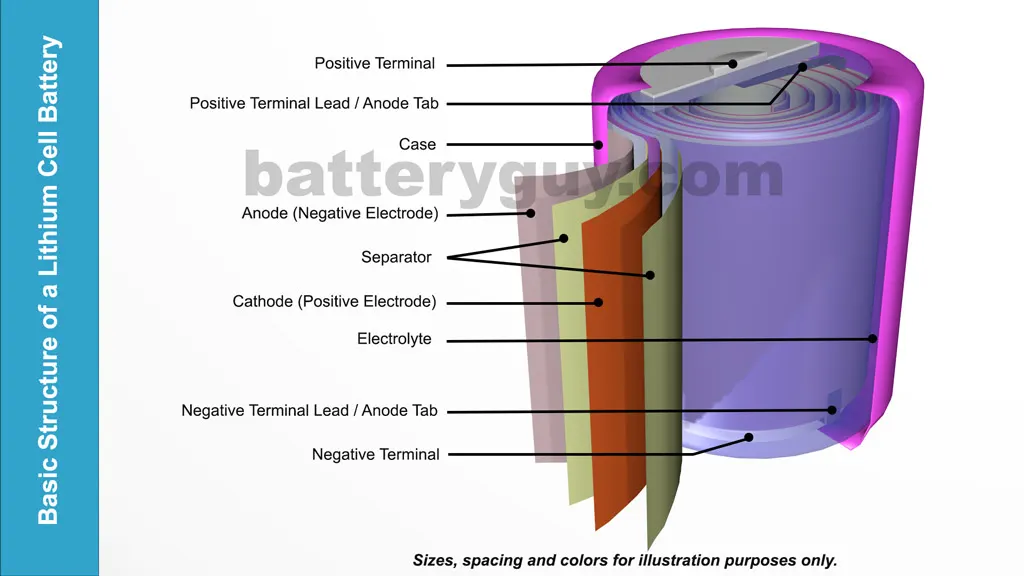
Lithium-ion batteries are composed of a positive electrode (cathode), negative electrode (anode), electrolyte, and separator. During the charging and discharging process, lithium ions (Li+) are transported between the cathode and anode through the electrolyte. The materials and chemical reactions occurring at the anode and cathode of six types of lithium-ion cells are presented in the table above.
Lithium Cobalt Oxide (LCO) batteries are commonly used in portable electronics due to their high energy density. The cathode is made of lithium cobalt oxide (LiCoO2), and the anode is typically graphite. During charging, lithium ions are extracted from the cathode and inserted into the anode, causing the graphite to become lithium-intercalated graphite (LiC6). The reverse occurs during discharging.
Lithium Manganese Oxide (LMO) batteries have a higher thermal stability and safety compared to LCO batteries. The cathode is made of lithium manganese oxide (LiMn2O4), and the anode is typically graphite. During charging, lithium ions are extracted from the cathode and inserted into the anode, causing the graphite to become lithium-intercalated graphite (LiC6). The reverse occurs during discharging.
Lithium Nickel Cobalt Aluminum Oxide (NCA) batteries have a high energy density and long cycle life. The cathode is made of lithium nickel cobalt aluminum oxide (Li1-x(NiCoAl)O2), and the anode is typically graphite. During charging, lithium ions are extracted from the cathode and inserted into the anode, causing the graphite to become lithium-intercalated graphite.
Battery Details:
LMO (Lithium Manganese Oxide) Battery:
- In LMO batteries, the cathode is made of a layered spinel structure consisting of lithium ions and manganese and oxygen atoms. During the charging process, lithium ions are extracted from the cathode and move through the electrolyte towards the anode, while manganese and oxygen atoms remain in the cathode structure. This process is reversed during the discharge process, where lithium ions move back to the cathode, recombining with manganese and oxygen atoms to form LiMn2O4 and release energy.
- One of the benefits of LMO batteries is their high power density, which refers to the amount of power that can be delivered per unit of battery weight or volume. This high power density makes LMO batteries an excellent choice for applications that require rapid discharge and recharge rates, such as power tools and electric bicycles.
- Another advantage of LMO batteries is their excellent thermal stability, which refers to their ability to withstand high temperatures without experiencing thermal runaway or other safety hazards. This makes LMO batteries a safe and reliable choice for applications where overheating could be a potential issue, such as electric vehicles.
- However, LMO batteries also have some limitations. One of the major limitations is their lower energy density compared to other types of lithium-ion batteries, which means that they have a lower amount of energy that can be stored per unit of weight or volume. This limits their range and endurance in applications such as electric vehicles, where longer range and higher energy capacity are desirable.
- Overall, LMO batteries offer high power density and excellent thermal stability, making them a reliable and safe choice for applications that require high power output. However, their lower energy density may limit their use in applications that require longer range and higher energy capacity.
LCO (Lithium Cobalt Oxide) Battery:
- LCO batteries consist of three main components: the anode, cathode, and electrolyte. The anode in LCO batteries is typically made of graphite, which acts as a host for lithium ions. The cathode is made of lithium cobalt oxide, which is a layered oxide material. The electrolyte is a lithium salt dissolved in an organic solvent, typically LiPF6 in organic solvents.
- During the charging process of an LCO battery, lithium ions move from the cathode to the anode, while electrons flow in the opposite direction. The cathode reaction in LCO batteries is a reversible intercalation process where lithium ions are inserted and extracted from the crystal structure of LiCoO2. The reaction can be represented as follows:
- LiCoO2 + xLi+ + xe- → Li1-xCoO2
- During the discharge process, the movement of lithium ions is reversed, and they move from the anode to the cathode. As lithium ions move from the anode to the cathode, the cathode reaction is again a reversible intercalation process, releasing energy and producing a flow of electrons that can be used to power an external device. The overall reaction can be represented as:
- LiC6 + Li1-xCoO2 → Li1-xCoO2 + xLi+ + xe-
- The energy density of LCO batteries is relatively high, around 150-200 Wh/kg, which makes them ideal for portable electronic devices that require a high energy density. However, LCO batteries have some drawbacks, such as being prone to thermal runaway and having a relatively short cycle life.
- Thermal runaway occurs when the temperature of the battery rises rapidly due to an exothermic reaction inside the battery, which can lead to a fire or explosion. LCO batteries are more prone to thermal runaway than other types of lithium-ion batteries, such as NMC (Lithium Nickel Manganese Cobalt Oxide) or LFP (Lithium Iron Phosphate) batteries. This is because the cobalt in the cathode is more reactive than other metals used in cathodes, and the formation of oxygen gas during charging can lead to the formation of hot spots inside the battery.
- The cycle life of LCO batteries is also relatively short, around 300-500 cycles, compared to other types of lithium-ion batteries. This is due to the degradation of the cathode material over time, which results in a decrease in the capacity and performance of the battery. The degradation is accelerated at high temperatures and high states of charge, which makes it important to operate LCO batteries within their recommended operating conditions.
- Overall, LCO batteries are widely used in various applications due to their high energy density and excellent performance. They are ideal for portable electronic devices, where a high energy density is required. However, they are prone to thermal runaway and have a relatively short cycle life, which makes it important to operate them within their recommended operating conditions.
NCA (Lithium Nickel Cobalt Aluminum Oxide) battery:
NCA (Lithium Nickel Cobalt Aluminum Oxide) is a type of cathode material used in lithium-ion batteries, and it is widely used in electric vehicles and other high-performance applications due to its high energy density, high specific capacity, and long cycle life.
NCA is a layered oxide material consisting of nickel, cobalt, aluminum, and oxygen. The material has a crystal structure similar to LiCoO2, which is commonly used in consumer electronics applications. The primary difference between NCA and LiCoO2 is the substitution of some of the cobalt ions with nickel and aluminum ions.
In NCA batteries, graphite is typically used as the anode material. During charging, lithium ions are extracted from the graphite anode and migrate through the electrolyte to the cathode, where they react with the NCA material. The cathode reaction involves the reversible intercalation of lithium ions into the crystal structure of the NCA material.
The NCA cathode has a high voltage plateau of around 4.1-4.3 volts, which allows for high energy density. However, this also makes the battery more susceptible to thermal runaway and other safety issues, which is why NCA batteries require careful monitoring and thermal management.
NCA batteries have several advantages over other lithium-ion batteries. They have a high energy density, which allows for longer range and better performance in electric vehicles. They also have a high specific capacity, meaning that they can store more energy per unit of weight or volume than other batteries. NCA batteries also have a long cycle life, meaning that they can be charged and discharged many times before losing capacity.
However, NCA batteries also have some drawbacks. They are more expensive to produce than other types of lithium-ion batteries, which can limit their use in some applications. They are also more sensitive to high temperatures, which can cause them to degrade more quickly. Finally, NCA batteries have a lower rate capability than some other types of batteries, which can limit their use in high-power applications.
NMC (Lithium Nickel Manganese Cobalt Oxide) Battery:
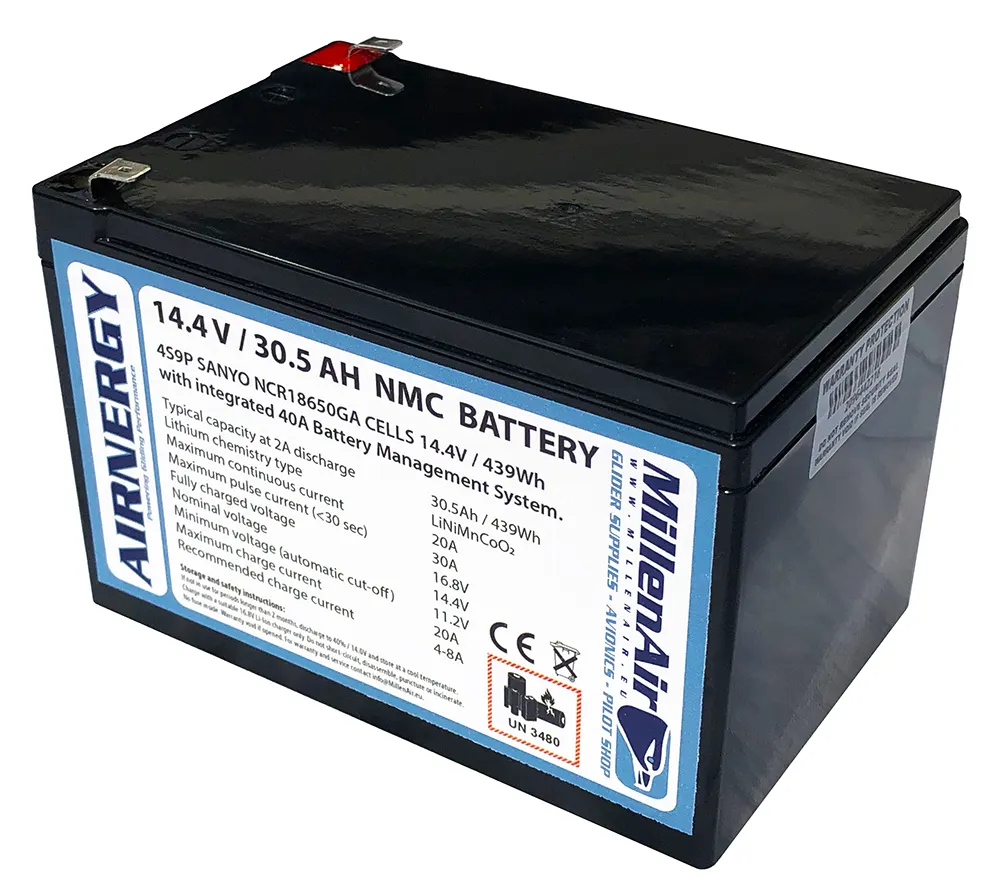
NMC (Lithium Nickel Manganese Cobalt Oxide) battery is a type of lithium-ion battery that is widely used in various applications, including electric vehicles, power tools, and energy storage systems. It is a mixed metal oxide cathode material that has a general formula of LiNi_xMn_yCo_zO_2, where x, y, and z denote the relative amount of each metal in the cathode.
NMC batteries are known for their high specific energy and power density, which means they can store a large amount of energy in a relatively small and lightweight package. They have a nominal voltage of 3.7 volts per cell and can operate at a wide range of temperatures, making them suitable for use in different environments.
One of the significant advantages of NMC batteries is their excellent thermal stability, which makes them safer and less prone to overheating and thermal runaway compared to other lithium-ion battery chemistries. This is because NMC cathode materials have a lower self-heating rate and are less susceptible to thermal decomposition and oxygen release.
However, NMC batteries have a relatively shorter lifespan compared to other types of batteries like LiFePO4, lead-acid, or sodium-nickel-chloride. They typically last for around 1000 charge/discharge cycles before needing to be replaced. Moreover, NMC batteries are more expensive to manufacture than some other battery types, such as LFP (Lithium Iron Phosphate) batteries.
In summary, NMC batteries offer a good balance between energy density, power density, safety, and cost-effectiveness. They are widely used in many applications and are likely to play an essential role in the future of electric transportation and renewable energy storage systems.
LFP (Lithium Iron Phosphate) Battery:
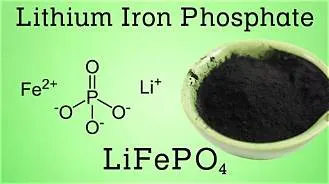
LFP stands for Lithium Iron Phosphate, which is a type of lithium-ion battery that uses iron phosphate as the cathode material. LFP batteries are known for their high energy density, long cycle life, and excellent thermal stability. They are commonly used in electric vehicles, energy storage systems, and backup power applications.
One of the main advantages of LFP batteries is their long cycle life. They can last for thousands of charge and discharge cycles without significant degradation, making them a popular choice for applications that require reliable, long-lasting energy storage. In addition, LFP batteries are less prone to thermal runaway and other safety issues compared to other types of lithium-ion batteries.
LFP batteries also have a relatively flat discharge curve, which means they can deliver a relatively constant voltage throughout their discharge cycle. This makes them a good choice for applications that require a stable source of power, such as electric vehicles.
However, LFP batteries also have some disadvantages. One of the main disadvantages is their relatively low energy density compared to other types of lithium-ion batteries. This means that LFP batteries may be larger and heavier for a given energy storage capacity, which can be a disadvantage in some applications.
Overall, LFP batteries are a reliable and safe option for a wide range of applications that require long cycle life and stable power delivery.
LTO (Lithium Titanate Oxide) Battery:
LTO stands for Lithium Titanate Oxide, and it is a type of rechargeable lithium-ion battery that uses LTO as its anode material. LTO batteries are known for their high power and long cycle life, making them suitable for various applications such as electric vehicles, stationary storage, and industrial systems.
One of the key advantages of LTO batteries is their fast charging capability. Due to their low resistance, LTO batteries can be charged at very high rates, which means they can be recharged quickly, often within 10-20 minutes. Additionally, LTO batteries can also tolerate extreme temperatures, making them ideal for use in harsh environments.
The anode material of LTO batteries is made of lithium titanate, which has a very stable structure and does not undergo significant expansion or contraction during charging and discharging cycles. This stability helps to reduce the risk of thermal runaway and prolongs the life of the battery.
However, LTO batteries have a lower energy density compared to other lithium-ion batteries, such as NMC or LFP batteries. This means that for a given weight or volume, an LTO battery will store less energy than other types of batteries. As a result, LTO batteries are generally larger and heavier than other lithium-ion batteries with the same energy capacity.
In summary, LTO batteries are known for their high power, long cycle life, fast charging capability, and ability to tolerate extreme temperatures. While they may have lower energy density compared to other types of lithium-ion batteries, their stability and safety make them a good choice for applications where safety and reliability are critical.
Battery structure Comaparison
| Type of Lithium-ion battery | Specific Energy (Wh/kg) | Specific Power (W/kg) | Power Density (W/L) | Life Span | Performance | Cost | Safety | Benefits over other types |
|---|---|---|---|---|---|---|---|---|
| LCO (Lithium Cobalt Oxide) | 150-200 | 150-200 | 250-340 | 2-3 years | High energy density, high capacity | Expensive, risk of thermal runaway and fire | Moderate safety, requires strict monitoring and control | High energy density, long cycle life, low self-discharge rate |
| LMO (Lithium Manganese Oxide) | 100-150 | 150-200 | 250-340 | 3-5 years | High power, good thermal stability | Moderately expensive, limited capacity | Good safety, lower risk of thermal runaway and fire | High power, good thermal stability |
| NCA (Lithium Nickel Cobalt Aluminum Oxide) | 180-200 | 150-200 | 300-400 | 2-3 years | High energy density, high capacity | Expensive, risk of thermal runaway and fire | Moderate safety, requires strict monitoring and control | High energy density, long cycle life |
| NMC (Lithium Nickel Manganese Cobalt Oxide) | 150-250 | 150-200 | 250-400 | 3-5 years | High energy density, high capacity, good cycle life | Moderately expensive, low thermal stability | Good safety, lower risk of thermal runaway and fire | High energy density, long cycle life, improved thermal stability |
| LFP (Lithium Iron Phosphate) | 90-120 | 60-120 | 100-200 | 5-7 years | Good thermal stability, longer cycle life | Inexpensive, lower capacity | Excellent safety, lower risk of thermal runaway and fire | Good thermal stability, longer cycle life |
| LTO (Lithium Titanate Oxide) | 70-90 | 100-150 | 100-200 | 10+ years | Excellent cycle life, good thermal stability | Expensive, lower energy density | Excellent safety, lower risk of thermal runaway and fire | Excellent cycle life, good thermal stability |
Detailed Comparison Table:
| Lithium Ion Battery Type | Construction | Working | Properties | Specifications | Advantages | Disadvantages |
|---|---|---|---|---|---|---|
| LCO (Lithium Cobalt Oxide) | Cathode: Cobalt oxide, Anode: Graphite | Uses intercalation mechanism for charging/discharging | High energy density, good cycle life | Capacity range: 100-1500mAh | High energy density, low self-discharge rate | Relatively low thermal stability, high cost, safety concerns |
| LMO (Lithium Manganese Oxide) | Cathode: Manganese oxide, Anode: Graphite | Uses intercalation mechanism for charging/discharging | High power density, good cycle life | Capacity range: 100-2500mAh | Low cost, good thermal stability | Lower energy density than LCO, lower voltage range |
| NCA (Lithium Nickel Cobalt Aluminum Oxide) | Cathode: Nickel-cobalt-aluminum oxide, Anode: Graphite | Uses intercalation mechanism for charging/discharging | High energy density, good cycle life | Capacity range: 200-3000mAh | High energy density, good thermal stability | High cost, safety concerns, low power density |
| NMC (Lithium Nickel Manganese Cobalt Oxide) | Cathode: Nickel-manganese-cobalt oxide, Anode: Graphite | Uses intercalation mechanism for charging/discharging | High energy and power density, good cycle life | Capacity range: 100-3500mAh | High energy and power density, good thermal stability | Higher cost than LFP, safety concerns |
| LFP (Lithium Iron Phosphate) | Cathode: Iron phosphate, Anode: Graphite | Uses intercalation mechanism for charging/discharging | Good safety profile, long cycle life | Capacity range: 50-1000mAh | Good thermal stability, low cost | Lower energy and power density than other types |
| LTO (Lithium Titanate Oxide) | Cathode: Lithium titanate oxide, Anode: Carbon | Uses lithium-ion insertion mechanism for charging/discharging | High power density, good cycle life | Capacity range: 50-2000mAh | Fast charging and discharging, good thermal stability | Lower energy density than other types, higher cost |
Conclusion:
The choice of lithium ion battery depends on the application's specific requirements, such as energy density, power density, cycle life, safety, and cost. LCO, NCA, and NMC offer high energy density, while LMO and LFP provide better safety profiles. LTO batteries offer fast charging and discharging capabilities, but they have lower energy density.
In general, NMC and LFP are the most commonly used lithium ion batteries for electric vehicles, while LCO is suitable for applications that require high energy density, such as laptops and smartphones. LMO batteries are commonly used in power tools due to their high power density and low cost.
Ultimately, the selection of a lithium-ion battery type depends on balancing the application's specific requirements, including energy density, power density, cycle life, safety, and cost.