Week 1 Understanding Different Battery Chemistry
Aim:
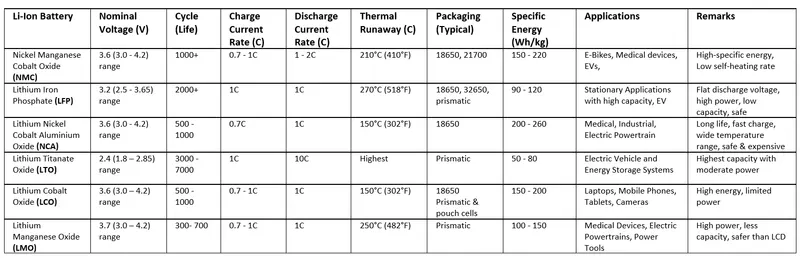
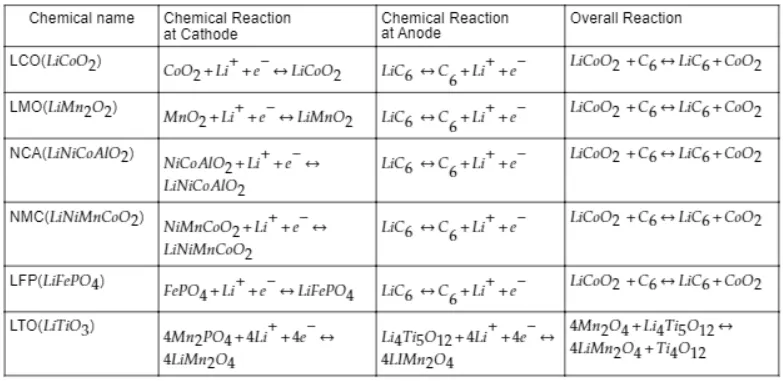
1. To prepare a table that includes materials & chemical reactions occurring at the anode and cathode of LCO, LMO, NCA, NMC, LFP, and LTO types of lithium-ion cells and give a detailed explanation of it.
2. To compare the differences between each type of Li-ion battery based on their characteristics.
Solution:
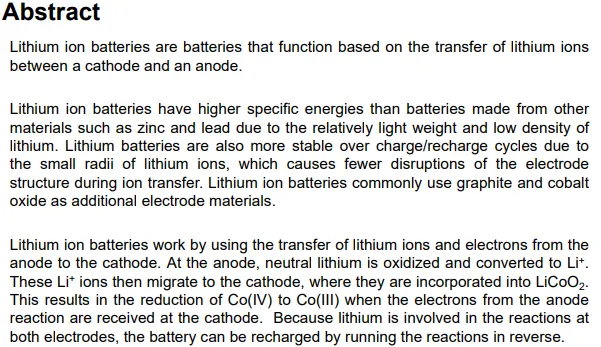
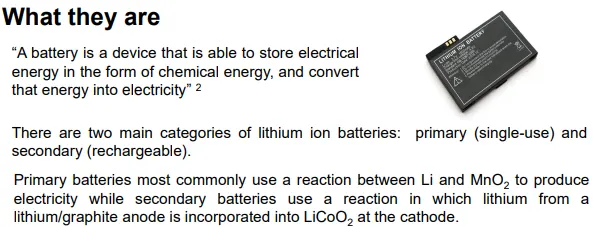
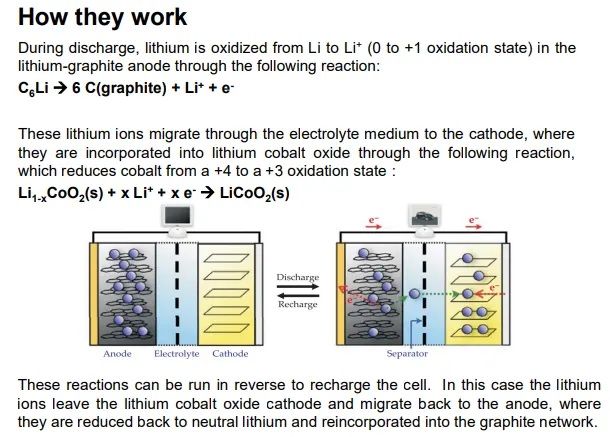
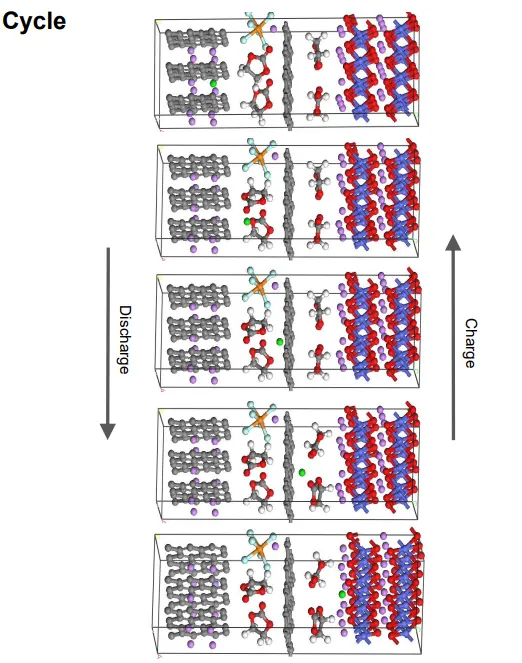
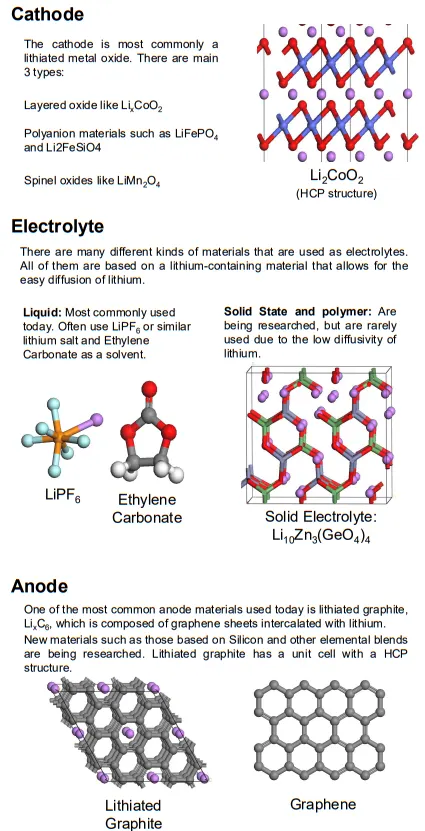
Table of LCO, LMO, NCA, NMC, LFP, and LTO types of lithium-ion cells:
Chemical Reactions of lithium-ion cells:
Following are the Structures of Lithium-Ion batteries:
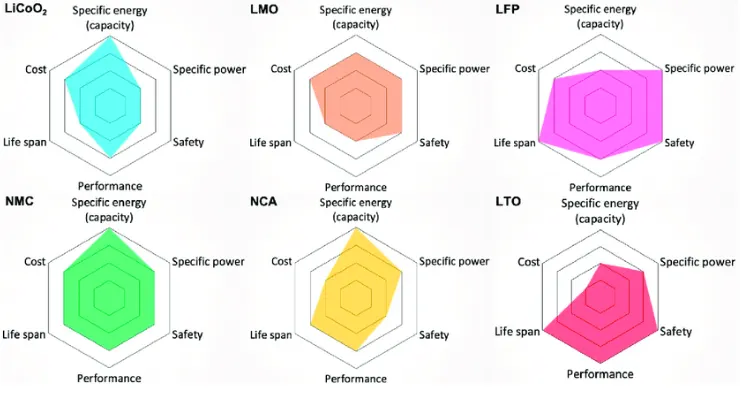
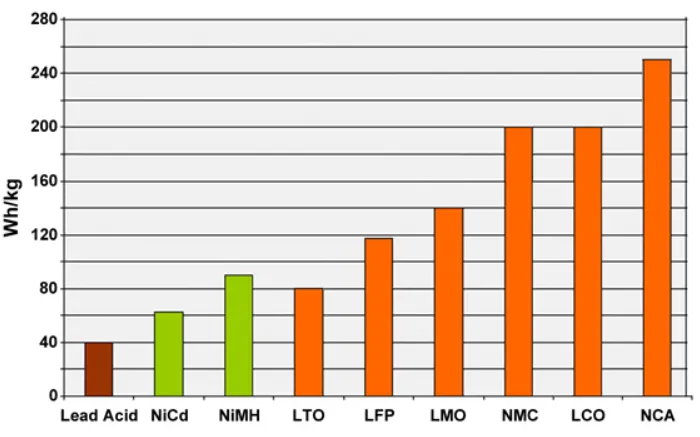
The below figure compares the specific energy of lead-, and nickel- and lithium-based systems. While Li-aluminum (NCA) is the clear winner by storing more capacity than other systems, this only applies to specific energy. In terms of specific power and thermal stability, Li-manganese (LMO) and Li-phosphate (LFP) are superior. Li-titanate (LTO) may have low capacity but this chemistry outlives most other batteries in terms of life span and also has the best cold temperature performance. Moving towards the electric powertrain, safety, and cycle life will gain dominance over overcapacity. (LCO stands for Li-cobalt, the original Li-ion.)
Conclusion: In this study, we learned the different battery technologies and their characteristics. We also learned the chemical reactions of the different batteries at their anode and cathode.
References: How Lithium cells work Electrochemistry of lithium-ion cells