Week 1 Understanding Different Battery Chemistry
# Question:1
| Battery | Material | Cathode Reaction | Anode Reaction |
| LCO | LiCoO2 | CoO2+Li+e-⇔LiCoO2 | LiC6⇔C6+Li+e- |
| LMO | LiMnO4 | MnO2+Li+e-⇔LiMnO2 | LiC6⇔C6+Li+e- |
| LFP | LiFePO4 | FePO4+Li+e-⇔LiFePO4 | LiC6⇔C6+Li+e- |
| NMC | LiNiMnCoO2 | NiMnCoO2+Li+e-⇔LiNiMnCoo2 | LiC6⇔C6+Li+e- |
| NCA | LiNiCoAlO2 | NiCoAlO2+Li+e-⇔LiNiCoAlO2 | LiC6⇔C6+Li+e- |
| LTO | LiTiO12 | MnO2+Li+e-⇔LiTiO12 | Li4Ti5-O12⇔Ti5O12+4Li+4e- |
- Battery consist of following components:
Anode: It is a Negative polarity electrode. Made up of Graphite or Hard carbon.
Cathode: It is a positiv polarity electrodeand made up of lithium oxide.
Seperator: A Seperator is needed as an insukating barrier between the anode and cathode and prevents internal short circuit.
Electrolyte: The electrolyte used is salt of lithium dissolved in an organic solvaent.
Current collector: Current collector is a copper foil at the graphite electrode and aluminium foil at lithium oxide electrode to receive electrons.
During charging:
The lithium atoms is sepereted from its metal oxide structure. The Li-ions moves to the anode through electrolyte and electrons flows through the external circuit and reaches the graphite structure.
During Discharging:
The Li-ios moves back and combine with metal oxide structure. The electrons flows from graphite layer through the load back to metal oxide.
:2
1.LCO:
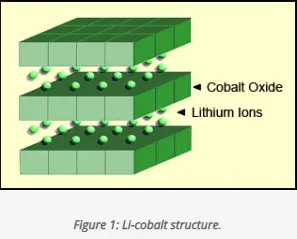
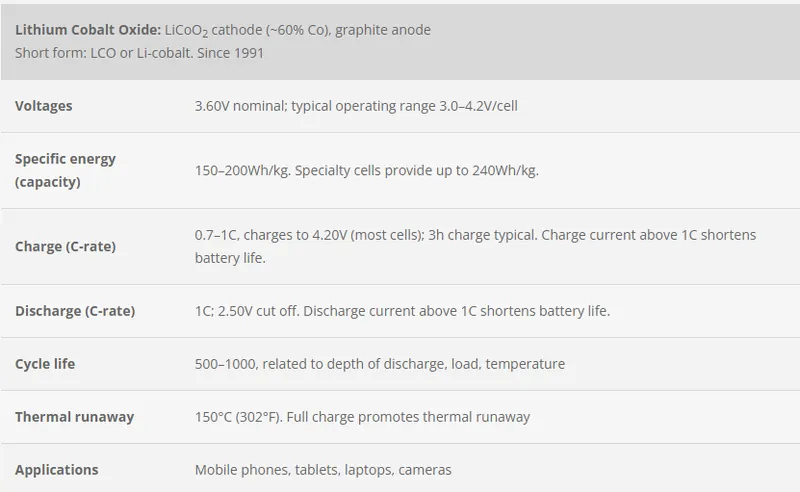
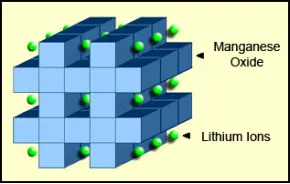
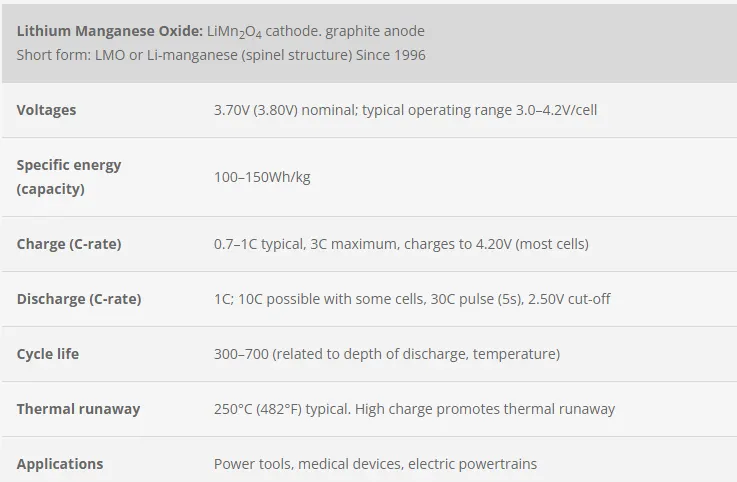
2.LMO:
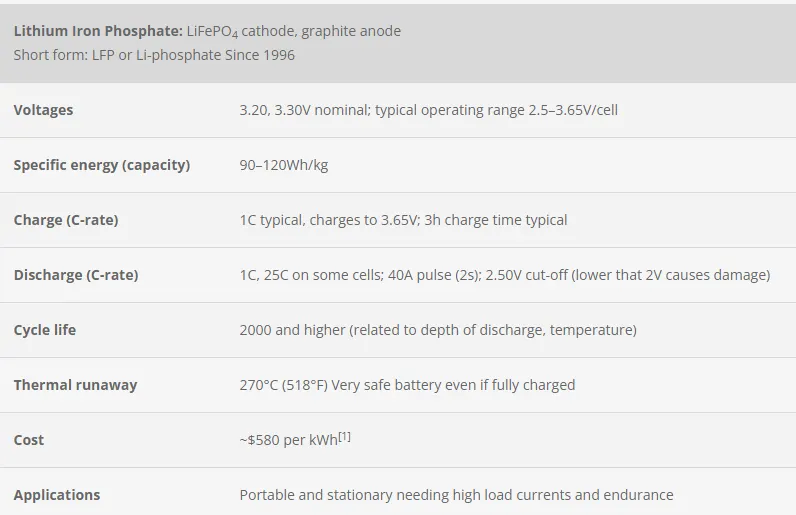
3. LFP:
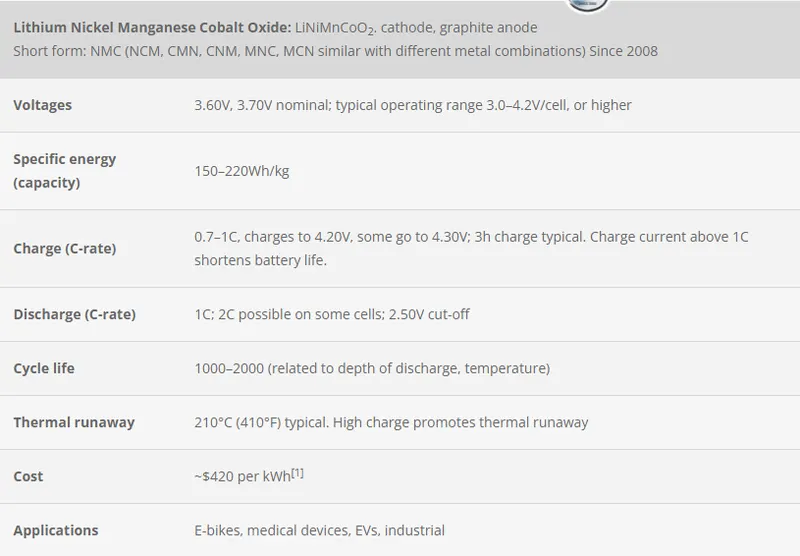
4. NMC:
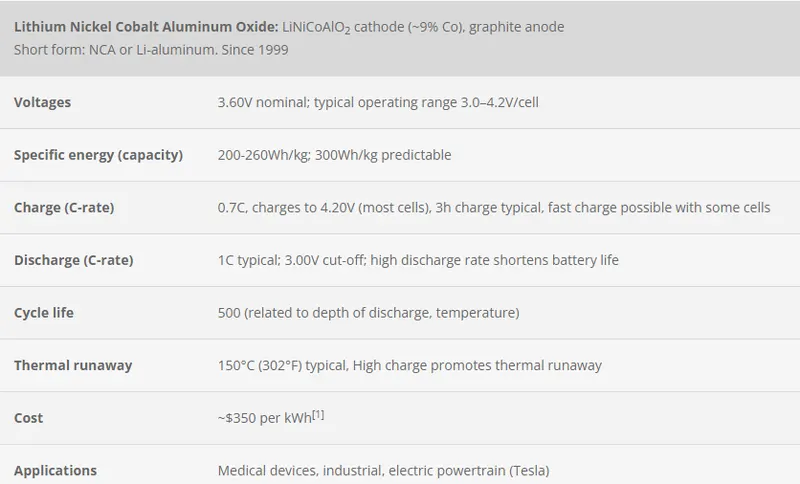
5.NCA:
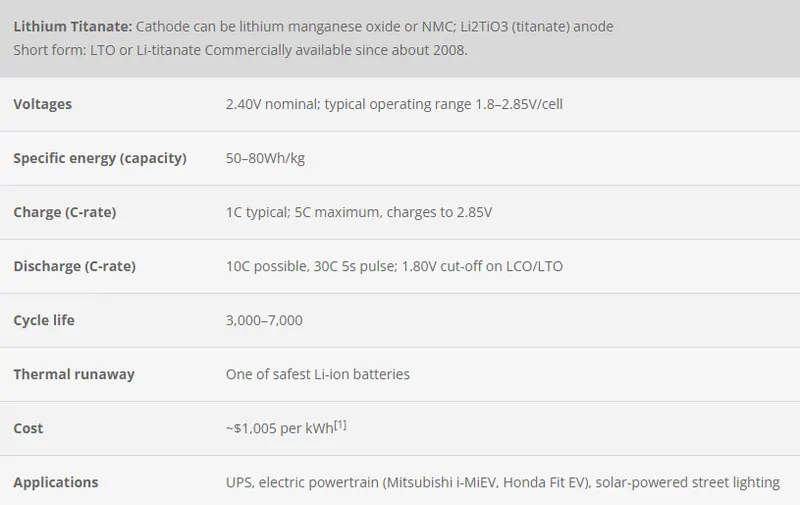
6.LTO: