Project
- Aim: To carry out system level simulation of an all-terrain vehicle using simulink.
- Objective: To prepare a technical report on BAJA ATV explaining model properties for following:
- Without using lookup table.
- Using lookup table.
# Part 1:
#Without using lookup table:
- Without Dashboard:
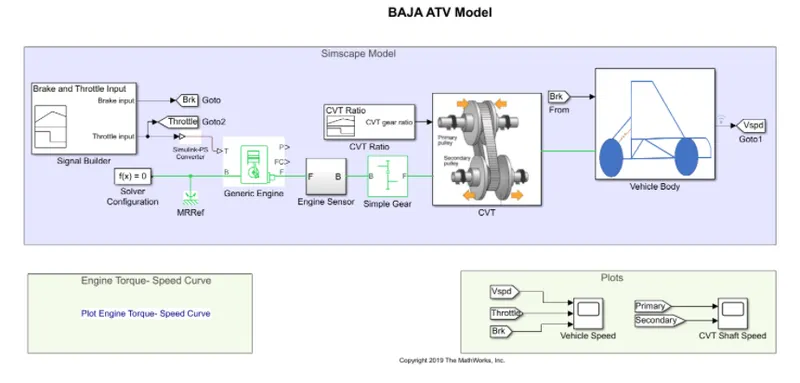
- Blocks used in model:
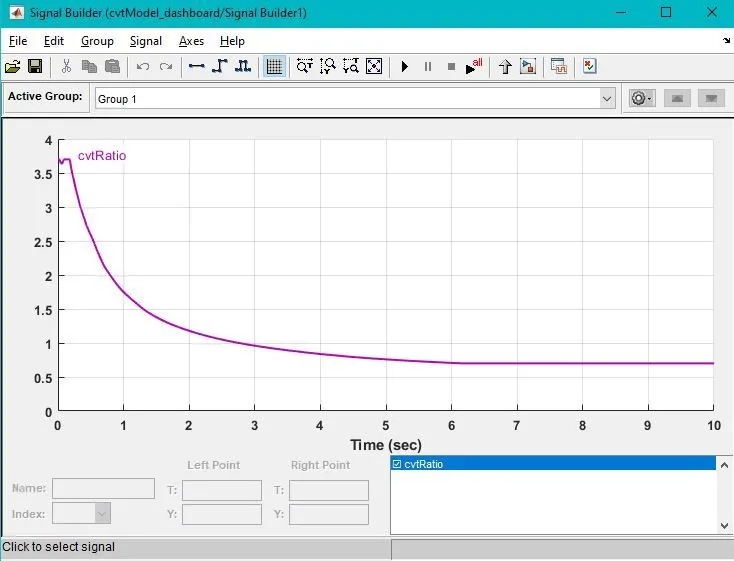
- Signal Builder Block: Signal builder allows you to create interchangeable groups of piecewise linear signal sources and use them in the model.
- Generic Engine: Generic Engine block represents a general internal combustion engine. This block is a suitable generic engine for spark-ignition and disel.
-Ideal Rotatinal Motion Sensor:

- The ideal rotational motion sensor block represents an ideal mechanical rotational motion sensor, that is, a device that converts an across variable measured between two mechanical rotational nodes into a control signal proportional to an angular velocity or angle. you can specify the initial position as a block parameter. The sensor is ideal since it does not account for inertia, friction, delays, energy consumption, and so on.
- Continuously Variable Transmission:
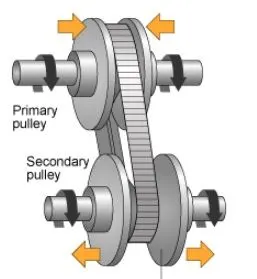
- A continuosly variable transmission is an automatic transmission that can chnage seamlessly through a continuous range of gear ratios. This contrasts with other transmission that provide a limited number of gear ratios in fixed steps.
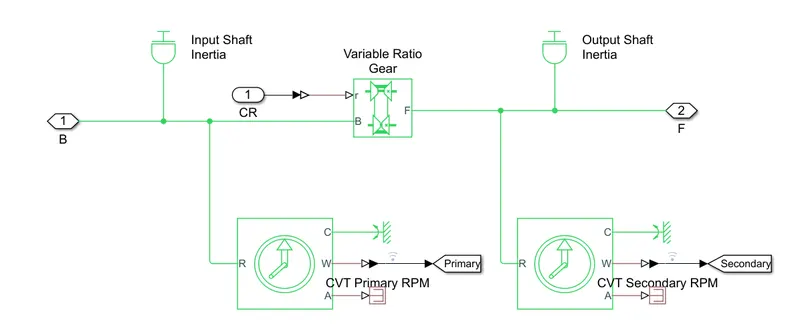
-CVT Subsytem:
- Simple Gear:
Represents a fixed ratio or gearbox. No inertia or compliance is modeled in this block. You can optionally include gear meshing and viscous bearing losses.
- Variable Ratio Transmission:
Represents a variable ratio gearbox such as implemented by mechanical belt CVT, electric, or hydraulic transmission. The physical signal input defines the ratio of input to output angular shaft velocities.
- Inertia: The block represents an ideal mechanical rotational inertia. The block has one mechanical rotational conserving port. The block positive direction is from its port to reference point.
- Vehicle Body:
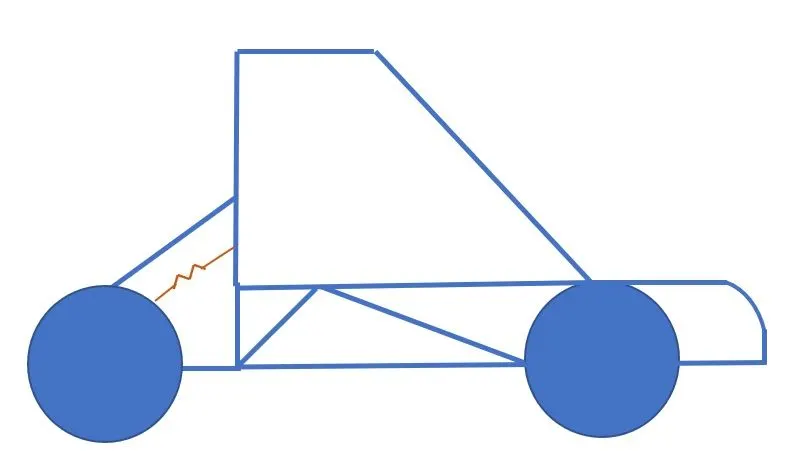
- Represents a two-axel vehicle body in logitudinal motion. The block accounts for body mass, aerodynamic drag, road incline, and weight distribution between axels due to acceleration and road profile.The vehicle can have a same or different number of wheel on each axle. Optionally include pitch and suspension dynamics or additional variable mass and inertia.The vehicle does not move vertically relative to the ground.
- Vehicle Body Subsystem:
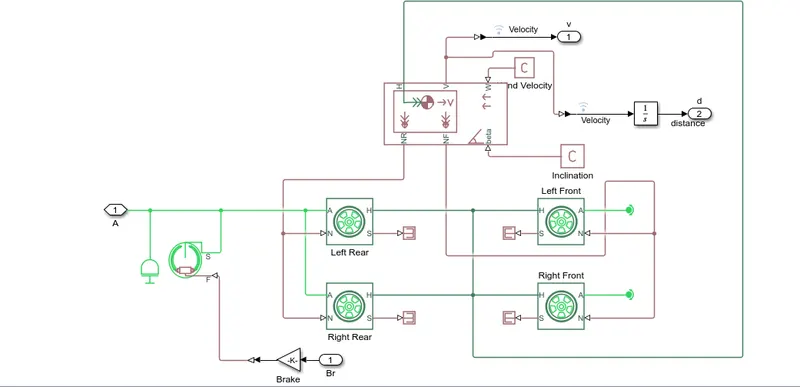
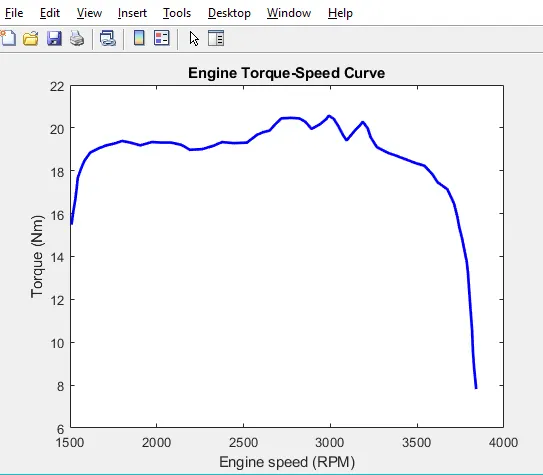
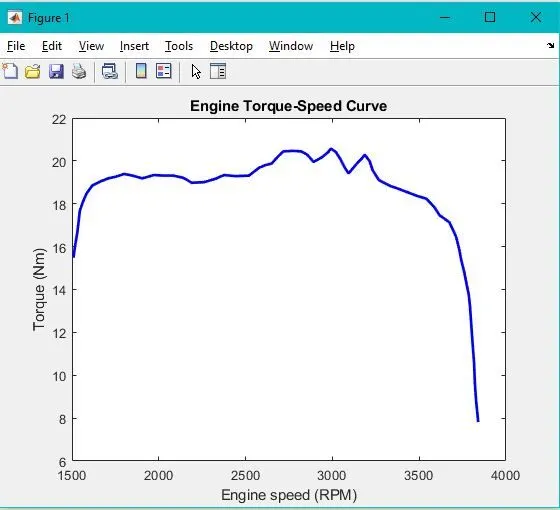
- Torque vs Speed characteristics:
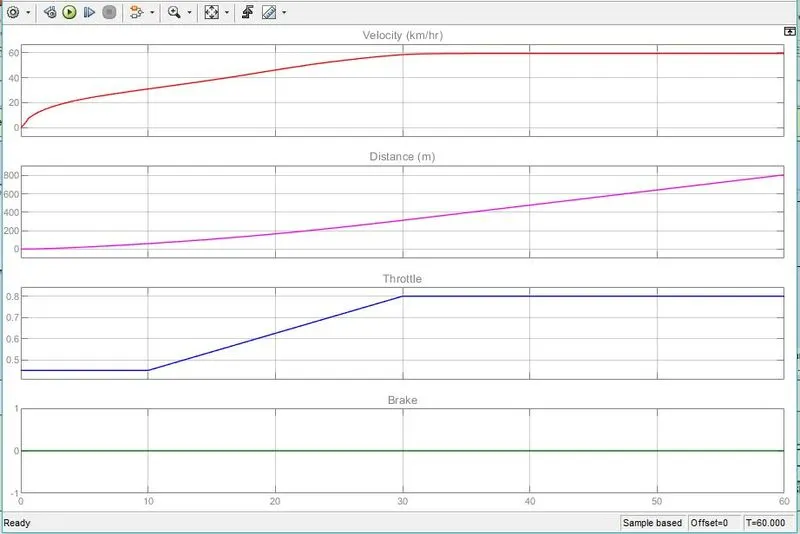
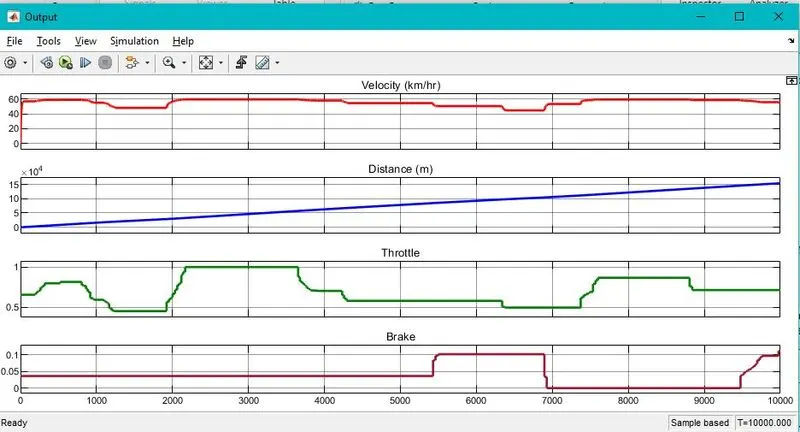
- Scope Output:
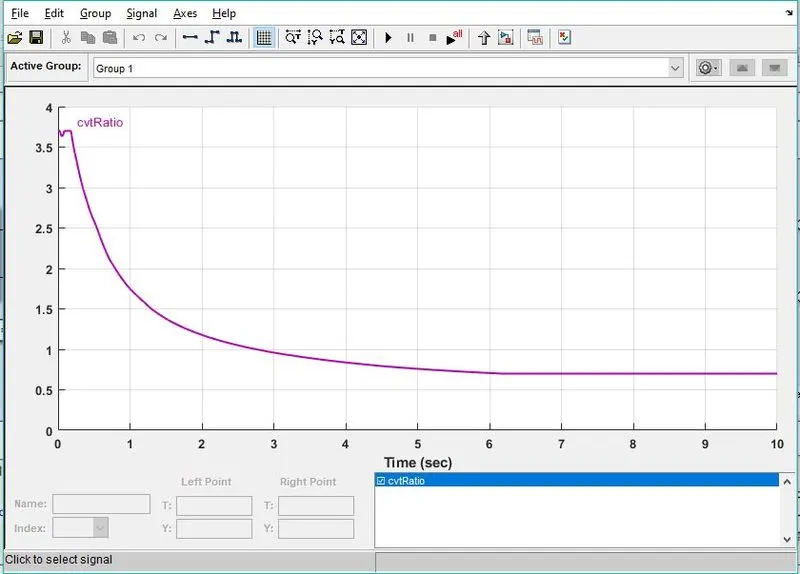
- CVT Ratio:
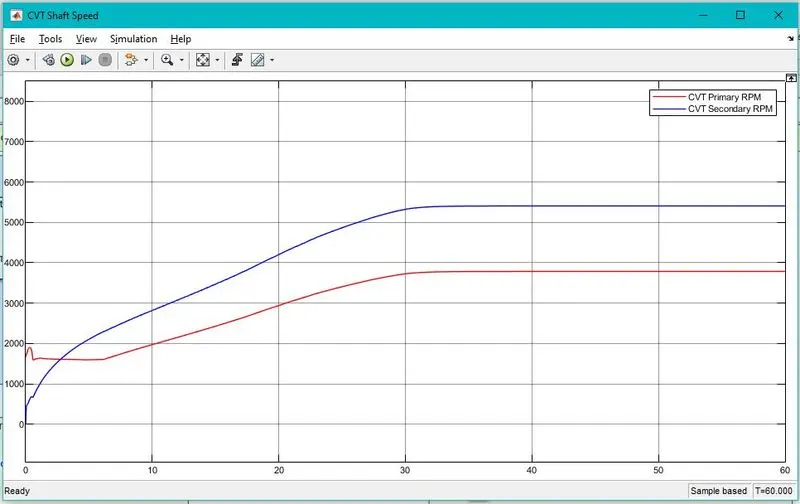
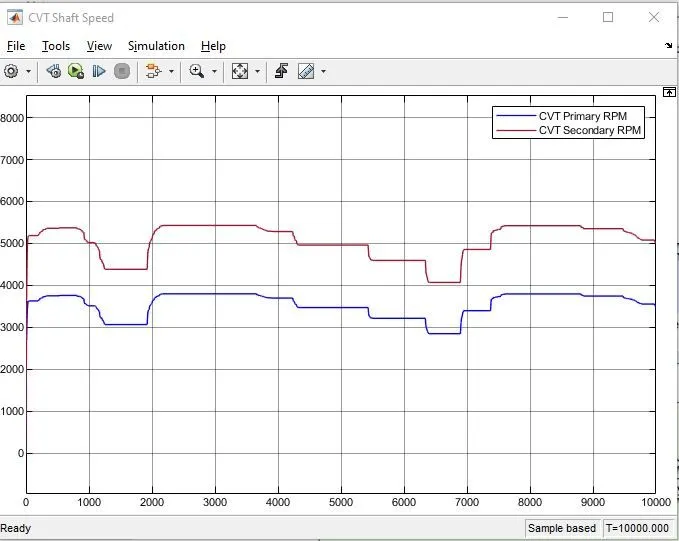
- CVT Shaft Speed:
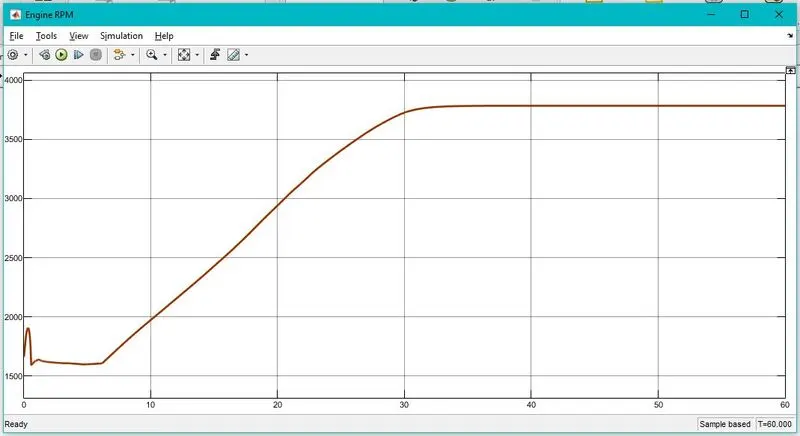
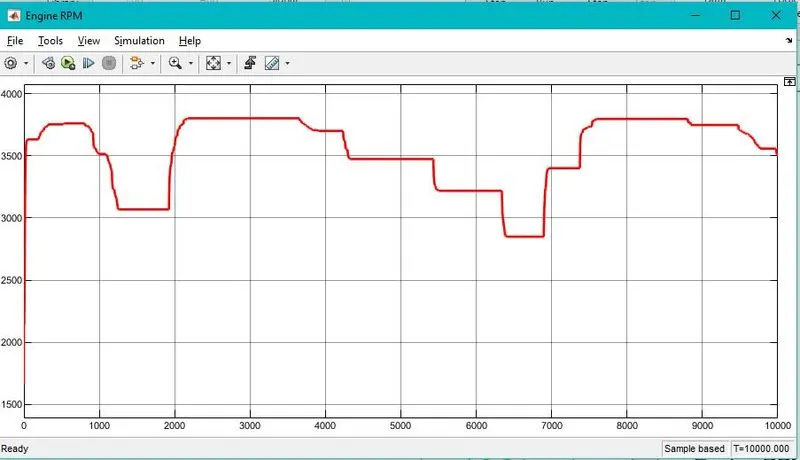
- Engine Speed:
# With Dashboard: The block in the dashboard library help you control and visualize your model during simulation and while simulation is paused.
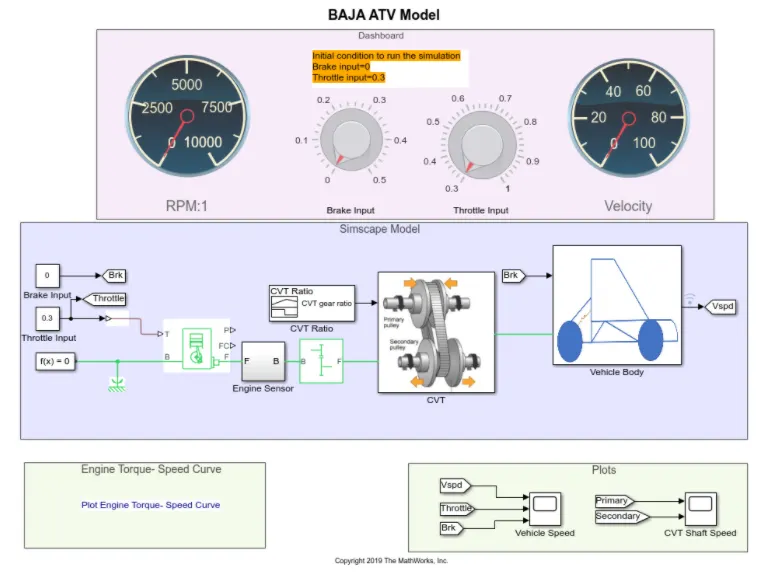
- Simulink Model:
- CVT Ratio:
- Engine Torque Speed Curve:
- Engine RPM:
- Scope output:
- Shaft Speed:
# Using Lookup Table:
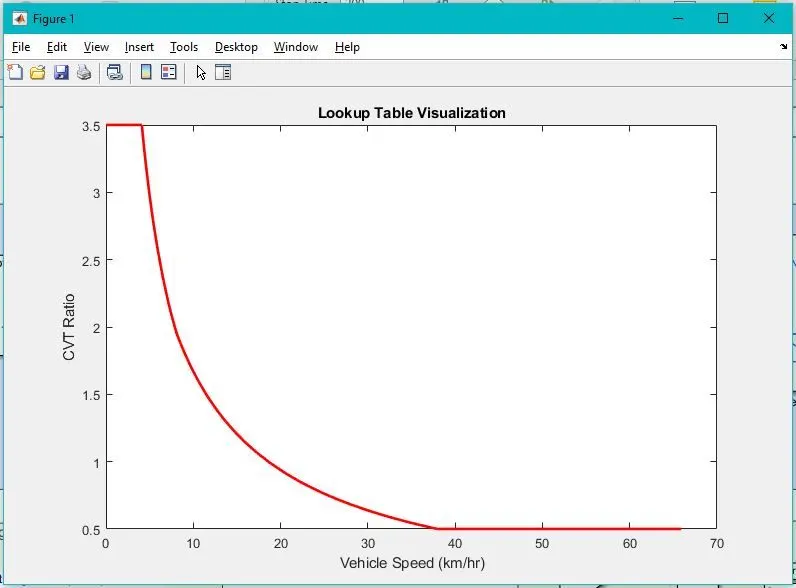
- Lookup Table: A lookup table uses a array of data to map input values to output values, approximating a mathematical function.
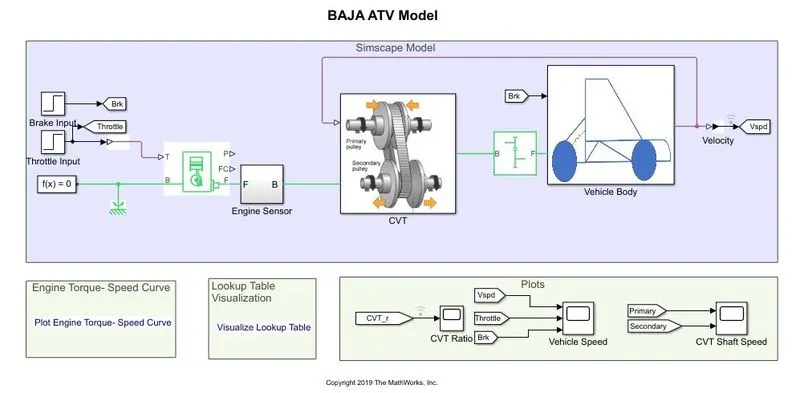
- Simulink Model:
- Lookup Table: