Week 1 Understanding Different Battery Chemistry
LITHIUM ION BATTERY
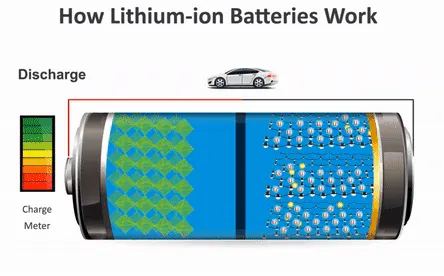
A Lithum Ion battery is a type of rechargeable battery composed of cells in which lithium ions move from the negative electrodes through an electrolyte to the positive electrodes during discharge and back when charging .Li ion cells use an intercalsated lithium compound as the material at the positive electrode and typically graphite at the negative electrode.
Li ion battery have a high energy density no memory effect and low self disharge .Cells can be manufactured to either prioritize energy or power density they can however be a safety hazard since they contain flammable electrolyte and if damaged or incorrectly charged can be lead to explosions and fires.
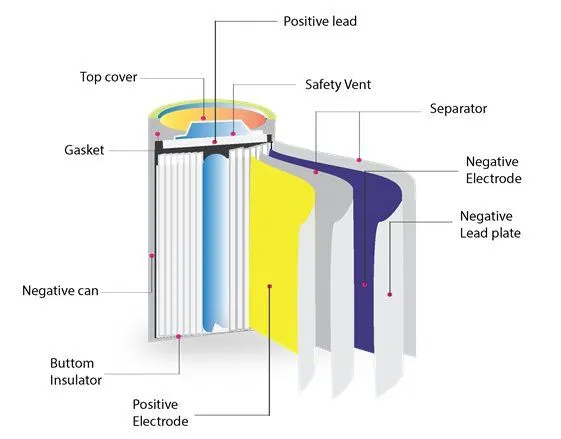
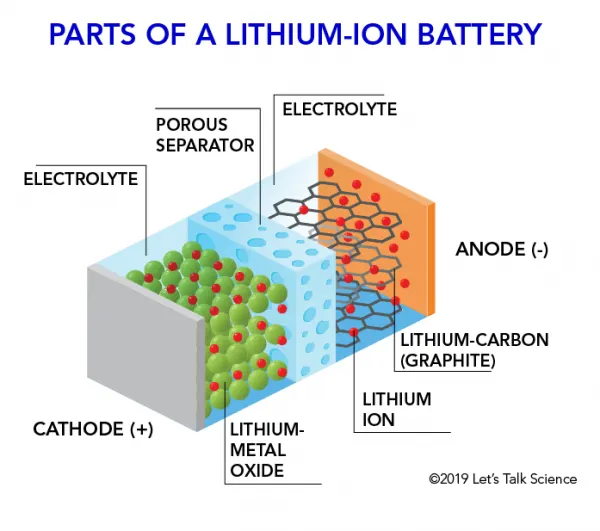
A battery is made up of an anode, cathode, separator, electrolyte and two current collectors . The anod eand cathode store the lithium . The electrolyte carries positively charged lithium ions from the anode to the cathode and vice versa through the separator . The movement of the lithium ions creates free electrons in the anode which creates free electrons in the anode which creates a charge at the positive current collector .The electrical current then flows from the current collector through a device being powered to the negative current collector .The separator blocks the flow of electrons inside the battery.
While the battery is discharging providing an electric current the anode releases lithium ions to the cathode ,generating a flow of electrons from the oneside to the other . When plugging in the device the opposite happens Lithium ions are released by the cathode and received by the anode
ANODE
- Graphite
- Hard Carbon
- Lithium Titanate
- Tin
- Silicon
CATHODE
- LCO Lithium Cobalt Oxide LiCoO2
- LFD Lithium Iron Phosphate LiFePO4
- LMO Lithium manganese oxide LiMn204
- NMC Lithium Nickel Manganese Cobalt oxide LiMiMnCoO2
- NCA Lithium Nickel Cobalt Aluminium oxide LiNiCoAlO2
- LTO Lithium Titanium Oxide LiTiO3
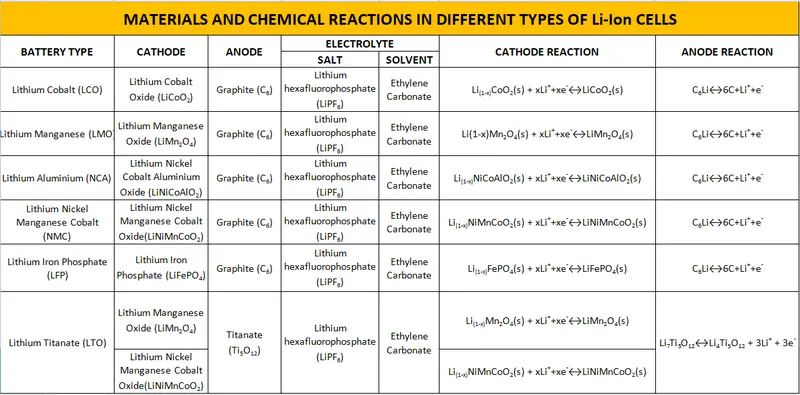
CHEMICAL REACTION TAKES PLACE IN ANODE AND CATHODE
2. CHARACTERSTICS OF TYPES OF LI-ION BATTERIES
LITHIUM COBALT OXIDE (LiCoO2)
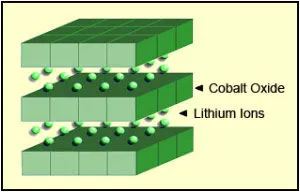
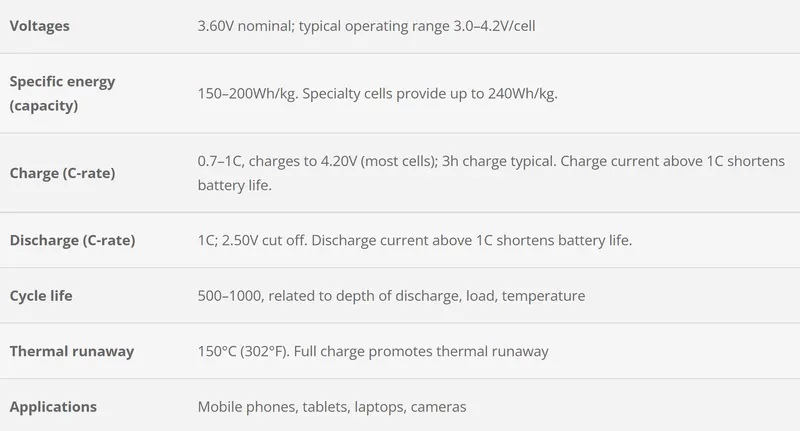
Its high specific energy makes Li Cobalt the popular choice for the mobile phones laptops and igital camersa. This battery consists of a cobalt oxide cathode and a graphite carbon carbon anode . The cathode has a layered structure and during discharge , lithium ions move from the anode to the cathode. The flow reverses on charge . The drawback of Li cobalt is a relatively short life span low thermal stability and limited load capablities
The drawbak of Li cobalt is a relatively short life span low thermal stability and limited load capablities .Like other cobalt blended Li ion Li cobalt has a graphite anod ethat limits the cycle by a changing solid electrolyte interface thickening on the anode and lithium plating while fast charging and charging at low temperature never system include nickel maganase aluminium to improve longevity loading capabilites and cost.
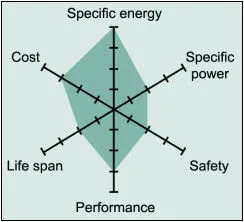
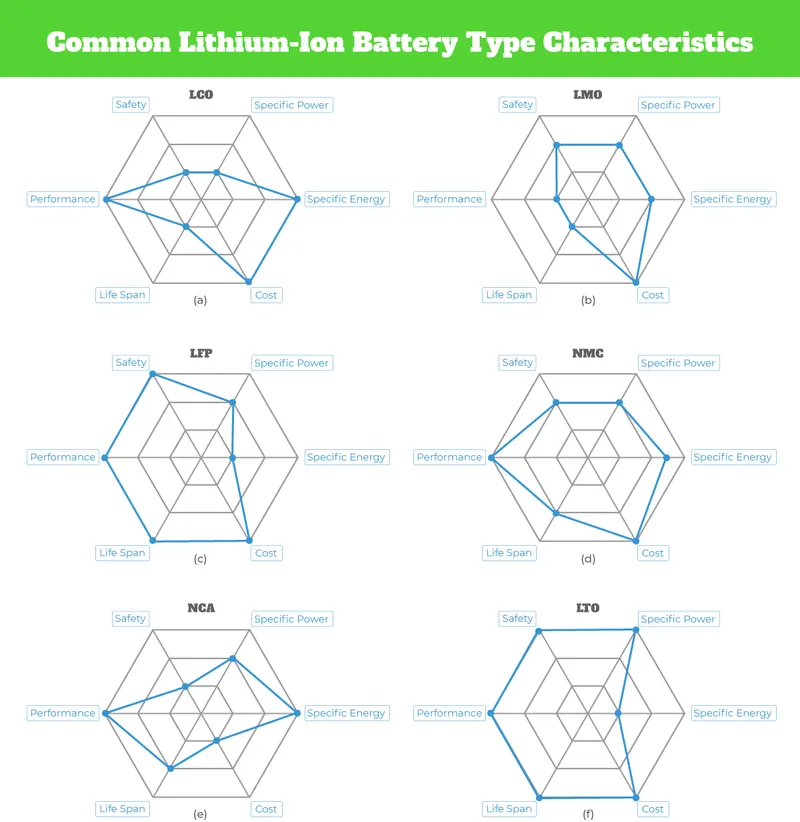
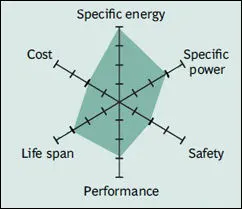
The hexagonal spider graphc summarizes the performance of Li cobalt in terms of specific energy or capacity that relates to runtime specific power or the ability to deliver high current safety performance at hot and cold temperatures life span reflecting cycle and longevity and cost
The Li cobalt is losing favor to Li manganese but especially NMC and NCA because of the high cost of a cobalt and improved performance by blending with other active cathode materials.
LITHIUM MANGANESE OXIDE (Li Mn2 O4)
Li ion with manganese spinel was first published in the matrials research bulletin .The architecture forms a three dimensional spinel structure that improves ion flow on the electrode which results in lower internal resistance and improved current handling .A future advantages of a spinel is high thermal stability and enhanced safety but the cycle and life and limited.
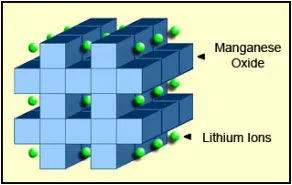
Formation of three dimensional crystalline framework on the cathode of a Li manganese battery . This spinel structure which usually composed of diamond shapes connected into a lattice appears after intial formation.
Li Manganese has a capacity that is roughly one third lower than Li cobalt Design flexibility allows engineer to maximize the battery for either optimal longevity , maximum load current or high capacity
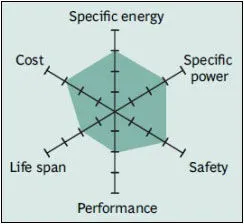
The characterstics appear marginal but never designs have improved in terms of specific power safety and life span Pure Li manganese battery are no longer common today they only be used for special applications.
These three active metals as well as the silicon enchancement can conveniently be chosen to enhance the specific energy power or longevity . While consumer battery go for high cpacity industrial application require battery system that have good loading capablities deliver a long life and provide safe and dependable service.
LITHIUM NICKEL MANGANESE COBALT OXIDE (Li Ni Mn Co O2)
One of the most successful Li ion system is a cathiode combination of nickel manganese cobalt .The secret of NMC lies in combining nickel and manganese An analogy of this is table salt in which the main ingredients sodium and chloide are toxic on thier own but mixing them serves as seasing salt and food preserver .Nickel is known for its high specific energy but poor stability manganese has a the benifit of forming a spinel structure to achieve low internal resistance but offers a low specific energy Combining the metals enhances each other strength.
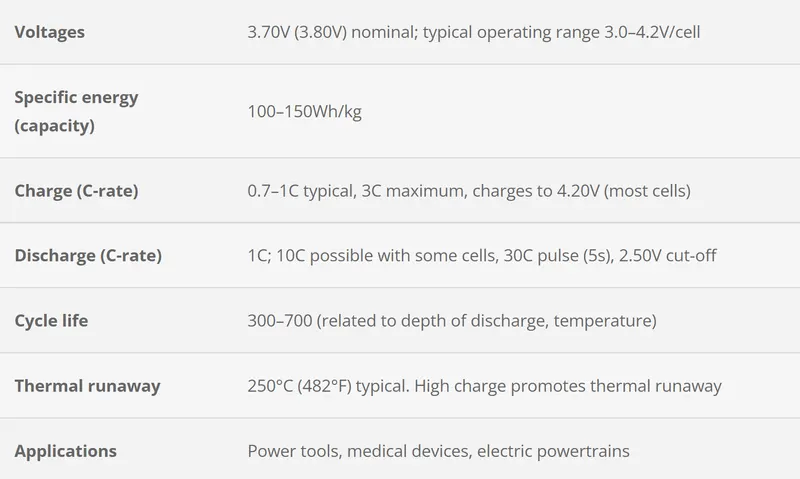
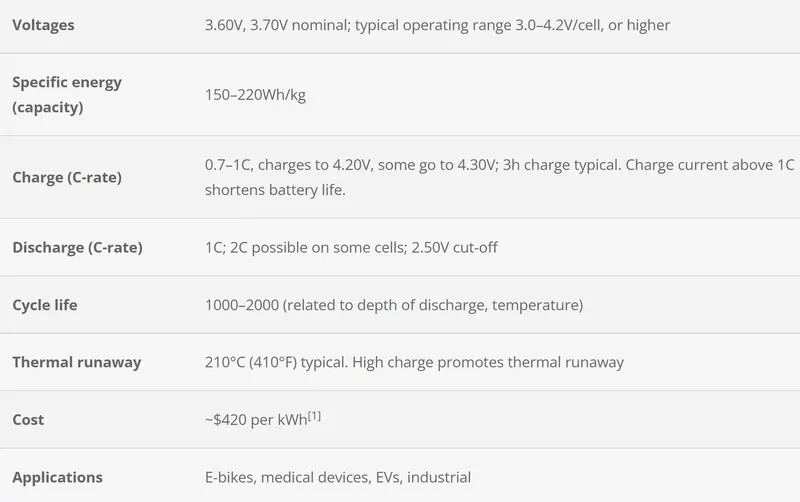
NMC is the battery of choice for power tools ebikes and other electric power trains . The cathode combination is typically one third nickel , one third manganese and one third cabalt also knowm as 1-1-1. This offers a unique blend that aslo lowers that raw material cost due to reduced cabalt content.Another successful combination is NCM with 5 parts nickel 3 parts cobalt and 2 parts manganese (5-3-2).Other combination using various amounts of cathode materials are possible.
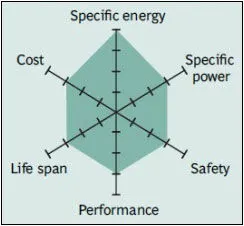
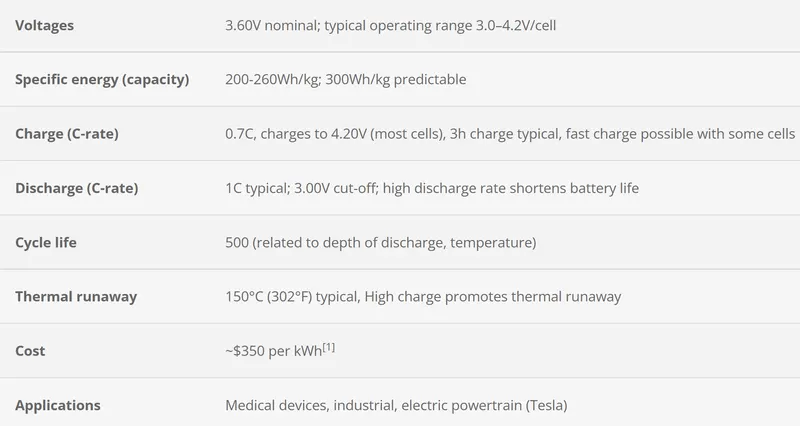
New electrolyte and additives enable charging to 4.4v/cell and higher to boost capacity . There is a move towars NMC blended LI ion as system can be built economically and it and it achieves a good performance . The three active materials of nickel manganese and cobalt can easily be blended to suit a wide range of applications for automotive and energy storage system that need frequent cycling . The NMC family is growing in its diversity.
LITHIUM IRON PHOSPHATE (Li Fe PO4)
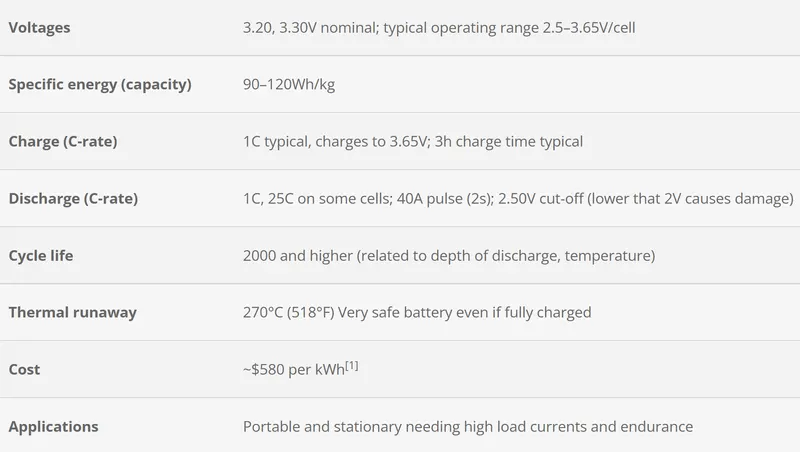
Li phosphate is more tolerant to full charge conditions and is less stressed than other lithium ion system if kept at high voltage for a prolonged time .As a trade off lower nominal voltage of 3.2v/cell reduces the specific energy below hat of cobalt blended lithium ion .With most battery cold temperature reduces performance and elevated storage temperature shortens the service life and Li phosphate is no exception .Li Phosphate has a higher self discharge than other Li ion other Li ion batteries which can cause balancing issues with aging . This canbe mitigated by buying high quality cells and using sophiscated control electronics both of cost of pack
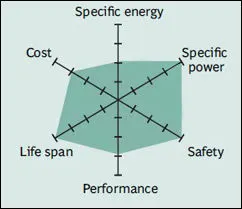
With four Li phosphate cells in series each cell tops at 3.60v which is the correct full charge voltage .At this point the charge should be disconnected but the topping charge continues while driving Li phosphate is tolerate to some overcharge however eeping the vlatge at 14.40v for a prolonged time as most vehicles do on a lead acid replacement with a regular vehicle charging system .Cold emperature also reduces performance of Li ion and this could affect the cranking ability in the extreme cases.
LITHIUM NICKEL COBALT ALUMINIUM OXIDE (Li Ni Co AL O2)
Lithium nickel cobalt aluminum oxide battery shares similarities with NMC by offering high specific energy reasonably good specific power and long loife span .Less flattering and safety and cost.
LITHIUM TITANATE (Li ZT iO3)
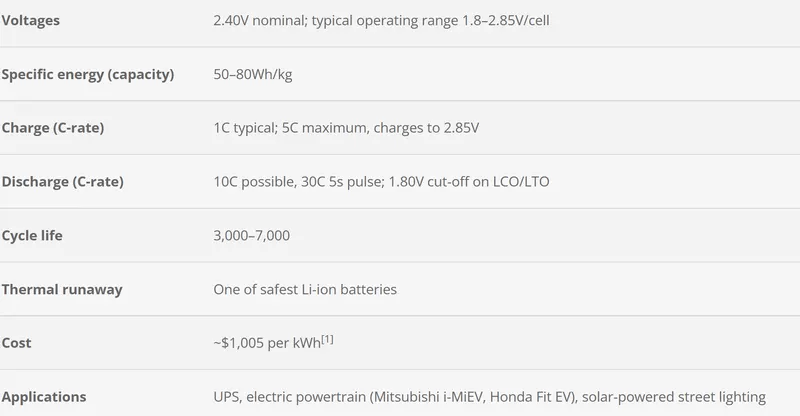
Li titanate replaces the graphite in the anode of a typical lithium ion battery and the material forms into s spinel structure . The cathode can be lithium manganese oxide .Li titanate has a nominal cell voltage of 2.40v can be fast charged and delivers a high discharged current of 10c or 1 times the rated capacity.
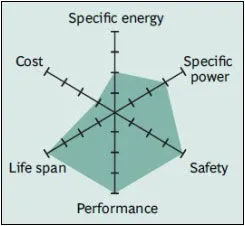
LTO has advantages over the conventional cobalt blended Li ion with graphite anode by attaining zero strain property no Sei film formation and no lithium plating when fast charging and charging at low temperature . Thermal stability under high temperature is also better than Li ion system The battery is expensive at only 65wh/kg the specific energy is low .