Week 1 Understanding Different Battery Chemistry
1.
aim: to Prepare a table which includes materials & chemical reactions occurring at the anode and cathode of LCO, LMO, NCA, NMC, LFP and LTO type of lithium ion cells.Give your detailed explanation on it
explaination:
battery:A battery is a device that stores chemical energy, and converts it to electricity. This is known as electrochemistry and the system that underpins a battery is called an electrochemical cell. A battery can be made up of one or several electrochemical cells.
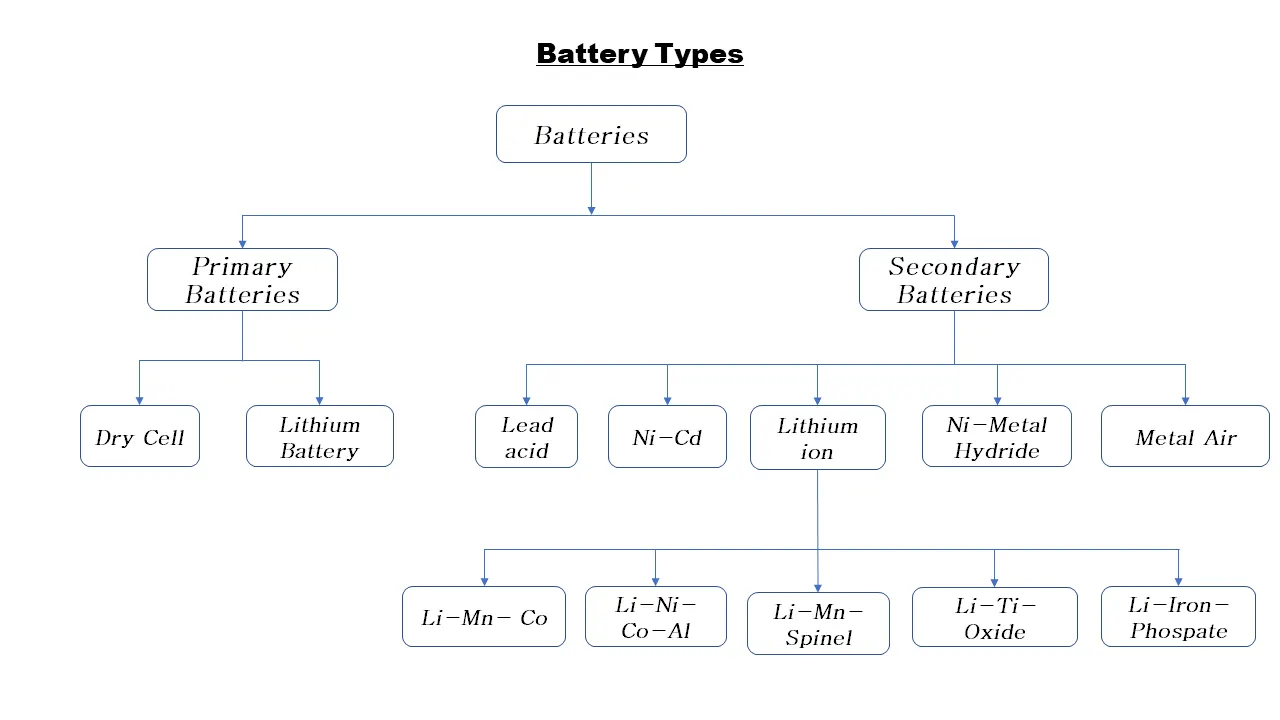
types of batteries:
working lithium ion cells:
A lithium-ion battery is a type of rechargeable battery that is charged and discharged by lithium ions moving between the negative (anode) and positive (cathode) electrodes. (Generally, batteries that can be charged and discharged repeatedly are called secondary batteries, whereas disposable batteries are called primary batteries.)
Because lithium-ion batteries are suitable for storing high-capacity power, they are used in a wide range of applications, including consumer electronics such as smartphones and PCs, industrial robots, production equipment and automobiles
lithium-ion battery is composed of 1) the anode and the cathode
2) a separator between the two electrodes;
3) an electrolyte that fills the remaining space of the battery.
The anode and cathode are capable of storing lithium ions. Energy is stored and released as lithium ions travel between these electrodes through the electrolyte.
charging:
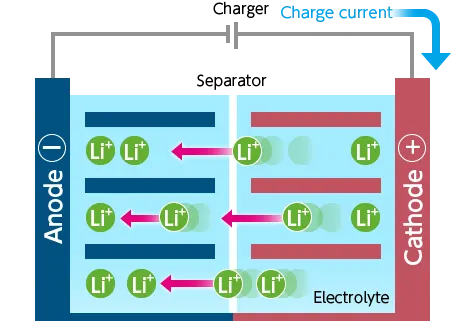
1. the charger passes current to the battery
2. lithium ions moves from cathode to anode through the electrolyte
3.the battery is charged by a potential difference between the two electrodes
discharging:
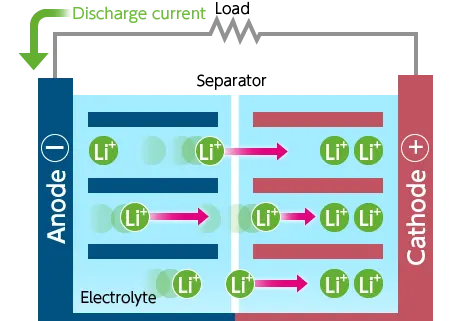
1. a discharge circuit is formed between cathode and anode
2 . lithium ions stored in the anode moves towards cathode
3 .energy is used
types of lithium ion batteries:
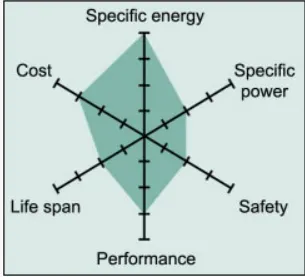
1.Lithium Cobalt Oxide(LiCoO2) — LCO
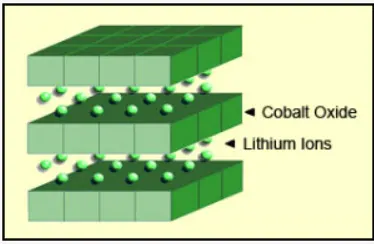
The battery consists of a cobalt oxide cathode and a graphite carbon anode.
The cathode has a layered structure and during discharge, lithium ions move from the anode to the cathode.
The flow reverses on charge.
The drawback of Li-cobalt is a relatively short life span, low thermal stability and limited load capabilities
2.Lithium Manganese Oxide (LiMn2O4) — LMO
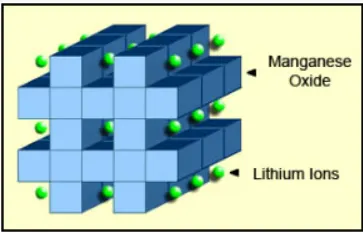
Li-ion cell with lithium manganese oxide as cathode material.
The architecture forms a three-dimensional spinel structure that improves ion flow on the electrode, which results in lower internal resistance and improved current handling.
A further advantage of spinel is high thermal stability and enhanced safety, but the cycle and calendar life are limited.
Low internal cell resistance enables fast charging and high-current discharging.
In an 18650 package, Li-manganese can be discharged at currents of 20–30A with moderate heat buildup.
It is also possible to apply one-second load pulses of up to 50A
3.Lithium Nickel Manganese Cobalt Oxide (LiNiMnCoO2) — NMC
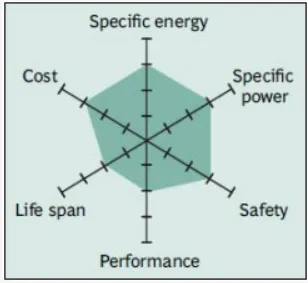
Li-ion systems is a cathode combination of nickel-manganese-cobalt (NMC).
The secret of NMC lies in combining nickel and manganese. An analogy of this is table salt in which the main ingredients, sodium and chloride, are toxic on their own but mixing them serves as seasoning salt and food preserver.
Nickel is known for its high specific energy but poor stability; manganese has the benefit of forming a spinel structure to achieve low internal resistance but offers a low specific energy.
Combining the metals enhances each other strengths.
Battery manufacturers move away from cobalt systems toward nickel cathodes because of the high cost of cobalt. Nickel-based systems have higher energy density, lower cost, and longer cycle life than the cobalt-based cells but they have a slightly lower voltage.
4.Lithium Iron Phosphate(LiFePO4) — LFP
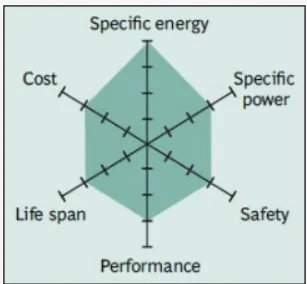
phosphate as cathode material for rechargeable lithium batteries. Li-phosphate offers good electrochemical performance with low resistance.
This is made possible with nano-scale phosphate cathode material.
The key benefits are high current rating and long cycle life, besides good thermal stability, enhanced safety and tolerance if abused.
Li-phosphate is often used to replace the lead acid starter battery. Four cells in series produce 12.80V, a similar voltage to six 2V lead acid cells in series.
Vehicles charge lead acid to 14.40V (2.40V/cell) and maintain a topping charge.
Topping charge is applied to maintain full charge level and prevent sulfation on lead acid batteries.
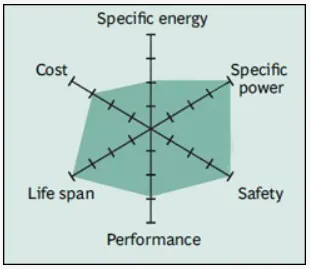
5.Lithium Nickel Cobalt Aluminum Oxide (LiNiCoAlO2) — NCA
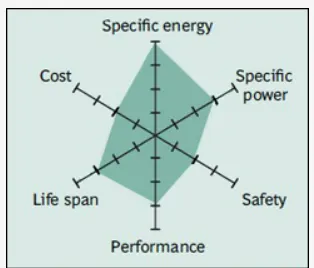
Lithium nickel cobalt aluminum oxide battery, or NCA, has been around since 1999 for special applications.
It shares similarities with NMC by offering high specific energy, reasonably good specific power and a long life span.
Less flattering are safety and cost.
NCA is a further development of lithium nickel oxide; adding aluminum gives the chemistry greater stability.
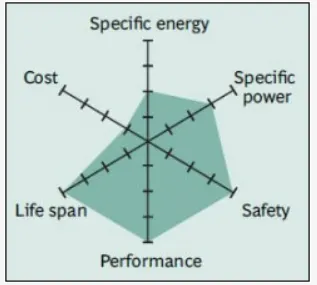
6.Lithium Titanate (Li2TiO3) — LTO
Batteries with lithium titanate anodes have been known since the 1980s.
Li-titanate replaces the graphite in the anode of a typical lithium-ion battery and the material forms into a spinel structure.
The cathode can be lithium manganese oxide or NMC.
Li-titanate has a nominal cell voltage of 2.40V, can be fast charged and delivers a high discharge current of 10C, or 10 times the rated capacity.
The cycle count is said to be higher than that of a regular Li-ion. Li-titanate is safe, has excellent low-temperature discharge characteristics and obtains a capacity of 80 percent at –30°C (–22°F).
comparison table:
| cell type | cathode | anode | electrolyte | seperator | reactions | applications |
| LCO | graphite | lithium cobalt oxide | ethylene carbonate salt +Li | polyolefin | Li1-xCoO2(s)+xLi+ +xe- ---> LiCoO2(s) | mobile phone batteries |
| LMO | Lithium manganese oxide | graphite carbon | methyl carbonate salt +Li | polyolefin | Mn2+ + 2LiC6 --> Mn + 2Li+ + graphite | power tools, medical devices |
| NCA | nickel,cobalt and aluminium rod | graphite carbon | propylene carbonate salt +Li | polyolefin | Li(1-x)NiO2 -->(2-x)Li(1-x)/(2-x)Ni/(2-x)O + x/2 O2 | industrial, electric power trains |
| NMC | nickel,cobalt and manganese rod | lithium metal graphite | methyl carbonate salt +Li | polyolefin | Li(x)MO2(s) --> Li+ + Li(1-x)MO2 (s) + e- | e-bikes,medical devices |
| LFP | lithium iron and phosphate rod | graphite carbon | propylene carbonate salt +Li | polyolefin |
LiFePO4 <----->FePO4 +Li+ + e- |
portable and stationary needing high load currents |
| LTO | nickel,cobalt and manganese rod | lithium titanium oxide | propylene carbonate salt +Li | polyolefin | Li4 Ti5 O12 +3Li+ +3e- -----> Li7 Ti5 O12 | ups,electric power trains,solar power street lighting |