Week 1 Understanding Different Battery Chemistry
1.Prepare a table which includes materials & chemical reactions occurring at the anode and
cathode of LCO, LMO, NCA, NMC, LFP and LTO type of lithium ion cells.Give your detailed explanation on it
2.Compare the differences between each type of Li+ion batteries based on their characteristics
Solution:
“A battery is a device that is able to store electrical energy in the form of chemical energy, and convert that energy into electricity”.
Chemical reactions occurring at the anode and
cathode of LCO, LMO, NCA, NMC, LFP and LTO type of lithium ion cells:
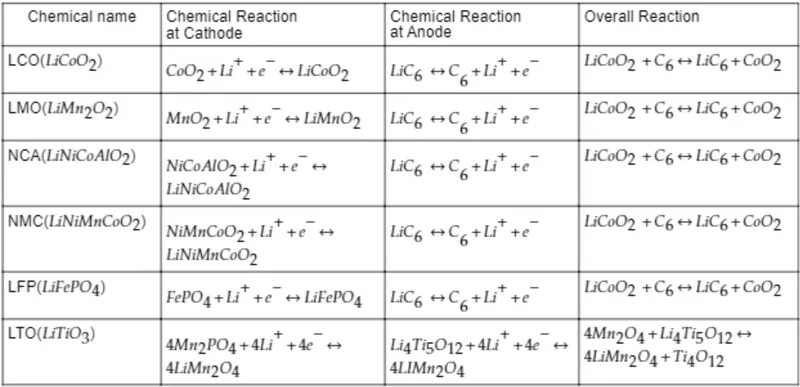
- Working of LCO:(Lithium cobalt battery).
During discharge, lithium is oxidized from Li to Li+ (0 to +1 oxidation state) in the lithium-graphite anode through the following reaction:
C6Li → 6 C(graphite) + Li+ + e-
These lithium ions migrate through the electrolyte medium to the cathode, where they are incorporated into lithium cobalt oxide through
the following reaction, which reduces cobalt from a +4 to a +3 oxidation state :
Li1-xCoO2(s) + x Li+ + x e- → LiCoO2(s)
Characteristics:
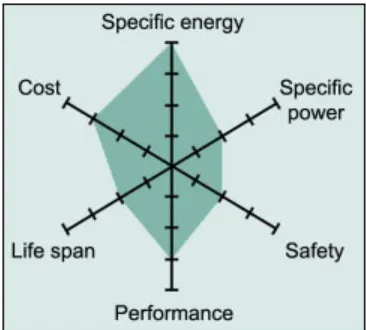
- LMO working:
The layered manganese oxide Li2MnO2 is structurally related to Li2MnO3 and LiCoO2 with similar transition metal oxide layers separated
by a layer containing two lithium cations occupying the available two tetrahedral sites in the lattice rather the one octahedral site.
The material is typically made by low voltage lithiation of the parent compound, direct lithiation using liquid ammonia, or via use of an organic
lithiating reagent. Stability on cycling has been demonstrated in symmetric cells although due to Mn(II) formation and dissolution cycling
degradation is expected. Stabilization of the structure using dopants and substitutions to decrease the amount of reduced manganese cations has been a
successful route to extending the cycle life of these lithium rich reduced phases.
These layered manganese oxide layers are so rich in lithium.
Characteristics:
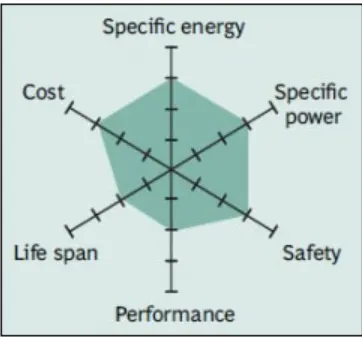
- Lithium Nickel-Cobalt-Aluminum Oxide (NCA) is used as the cathode material for lithium ion batteries, and is mainly used in electric automobiles.
The battery industry calls this an “NCA battery” and they've been around—and made by Panasonic—for many years.
Typically, lithium-ion NCA batteries use a combination of 80% nickel, 15% cobalt and 5% aluminum.
Characteristics:
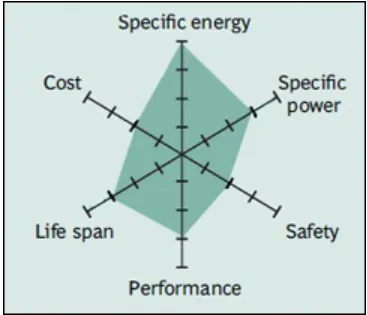
- Lithium-Nickel-Manganese-Cobalt-Oxide
(LiNiMnCoO2), abbreviated as NMC, has become the go-to cathode powder to develop
batteries for power tools, e-bikes and other electric powertrains. ... While NMC powder can refer to a variety of blends, the formula
typically consists of 33% nickel, 33% manganese and 33% cobalt.
Characteristics:
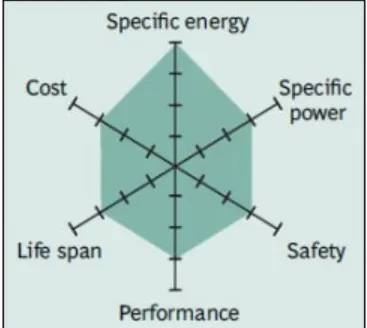
- LFP -- Lithium iron phosphate batteries (LiFePO4 or LFP):
A lithium iron phosphate (LFP) battery is a type of lithium-ion battery that is capable of charging and discharging
at high speeds compared to other types of batteries. It is a rechargeable battery consisting of LiFePO4 as its cathode material;
hence the name. Lithium iron phosphate batteries have several distinctive features, including:
- Better power density
- Low discharge rate
- Flat discharge curve
- Less heating
- Higher number of charge cycles
- Increased safety
Characteristics:
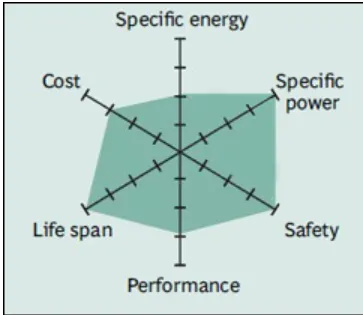
LTI Batteries:
LTO batteries are lithium titanate (Li2TiO3) or li-titanate batteries, which is a class of battery that is used in a growing number
of applications. They are high power batteries, so they are perfect for use in the fast charging stations.
Advantages and disadvantages of LTO batteries
Characteristics:
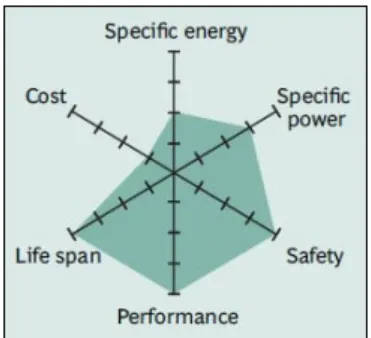
The main advantages of the LTO batteries are:
- Excellent low temperature discharge characteristics
- Zero strain property, no formation of SEI film nor lithium plating when charging at low temperature or fast charging
- Long life time
- Fast charge capability and wide temperature range
- Among the safest types of Li-ion batteries
The main disadvantages of the LTO batteries are:
- High cost
- Lower inherent voltage or lower energy density
|
LCO Lithium cobalt oxide |
LMO Lithium manganese oxide |
NMC Lithium Nickel Manganese Cobalt Oxide |
LFP Lithium Iron Phosphate |
NCA Lithium Nickel Cobalt Alumunium Oxide |
LTO Lithium Titanium Oxide |
|
| CHEMICAL FORMULA | LiCoO2 | LiMn2O2 | LiNiMnCoO2 | LiFePO4 | LiNiCoAlO2 | Li2TiO3 |
| Anode Material | Graphite Carbon | Graphite Carbon | Graphite Carbon | Graphite Carbon | Graphite Carbon | Lithium Titanium Oxide |
| Cathode Material | Lithium Cobalt oxide | Lithium Manganese Oxide | Lithium Manganese Cobalt Oxide | Lithium Iron Phosphate | Lithium Nickel Cobalt Alumunium Oxide | Lithium Manganese Oxide |
| Electrolyte | Lithium salt in an organic solvent | Lithium halide dissolved in an organic solvent | Lithium salt in an organic solvent | Lithium salt in an organic solvent | Lithium salt in an organic solvent | Lithium salt in an organic solvent |
| Nominal voltage | 3.6 V | 3.7 - 3.8 V | 3.6 - 3.7 V | 3.2 - 3.3 V | 3.6 V | 2.4 V |
| Typical Operating voltage range per cell | 3 - 4.2 V | 3 - 4.2 V | 3 - 4.2 V | 2.5 - 3.65 V | 3 - 4.2 V | 1.8 - 2.85 V |
| Cost | Expensive | Expensive | $ 420 per KWh | $ 580 per KWh | $ 350 per KWh | $ 1005 per KWh |
| Application |
Mobile Phones, tablets, Laptops, cameras |
Power tools, medical devices, electric powertrains | medical devices, E-Bikes, EV's , industrial tools | Aviation Products, Power tools, Automotive Hybrid systems, PHEV conversions | Industrial Tools, medical devices, EV's | UPS, Electric Powertrain |