Week 1 Understanding Different Battery Chemistry
AIM:
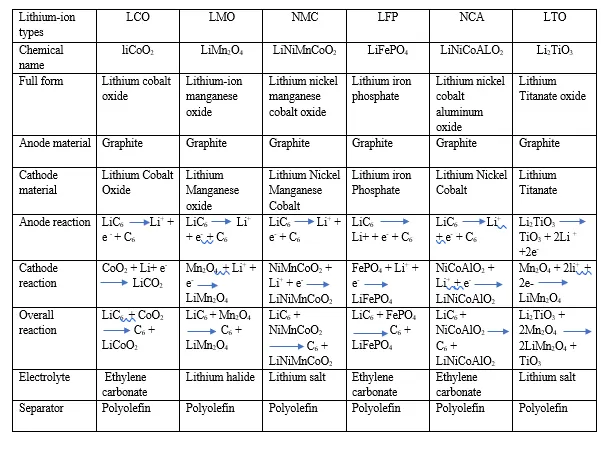
Prepare a table which includes materials and chemical reactions occurring at the anode and cathode of LCO, LMO, NMC, LFP and LTO type of lithium-ion cells. Give your detailed explanation on it
Compare the differences between each type of li+ion batteries based on their characteristics.
- Prepare a table which includes materials and chemical reactions occurring at the anode and cathode of LCO, LMO, NMC, LFP and LTO type of lithium-ion cells. Give your detailed explanation on it
Battery is a device that stores chemical energy and converts into electrical energy. A battery is made up of one or more electrochemical cells with external connections for powering electrical devices such as flashlight, mobile phones and electric cars. When the battery is supplying electric power, the positive terminal is cathode and negative terminal is anode. The chemical reactions in a battery involve the flow of electrons from one electrode to another via an external circuit. The flow of electrons implies that there is flow of electric current that can be used to do work. To balance the flow of electrons charged ions also flow through the electrolyte solution which is in contact with both the electrodes. Depending upon the electrodes and electrolytes different chemical reactions are produced that affects how the battery works, how much energy it can store and its voltage. The difference in potential difference between the electrodes indicates the force with which the electrons will travel between the two electrodes. This is also known as electrochemical potential which determines the cells voltage. Greater the difference greater will be the electrochemical potential and higher the voltage will be.
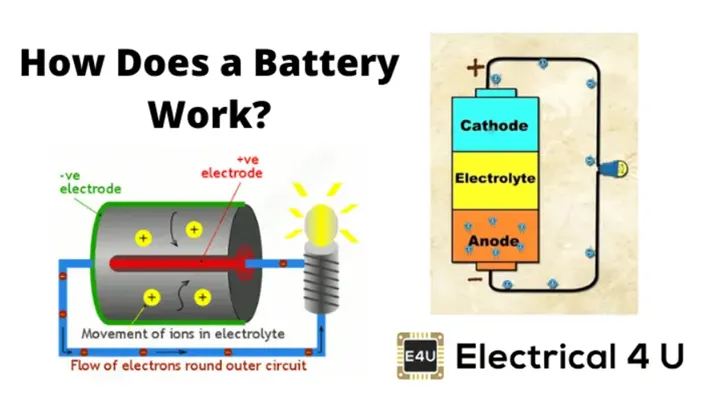
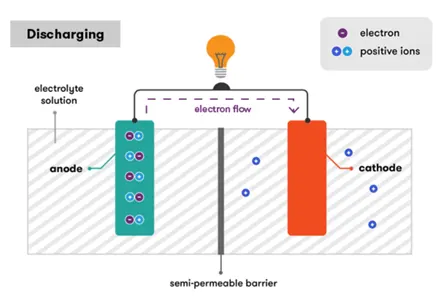
During discharging the negative electrode gives up electrons to the external circuit a process by which the electrode gets oxidized and oxidization involves loss of electrons which makes the electrode positively charged.
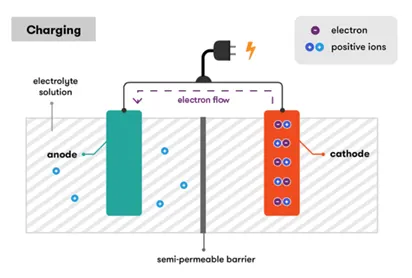
During charging the negative electrode accepts electrons from the external circuit and is reduced and reduction involves the gain of electrons and the electrode becomes more negatively charged.
Thus, the chemical process that occur in an electrochemical cell are known as reduction - oxidation (Redox) reactions.
Batteries can be classified into two main categories:
- Primary batteries (non – rechargeable batteries)
- Secondary batteries (Rechargeable batteries)
- PRIMARY BATTERIES (NON- RECHARGEABLE BATTERIES)
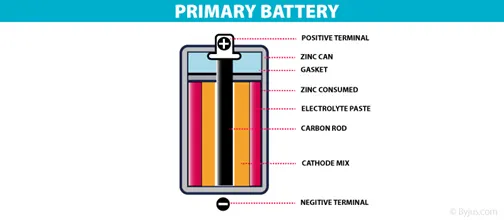
Primary batteries that cannot be recharged after one use and have to discarded after discharge. These are known as one – time batteries. These primary cells use electrolyte that are contained within absorbent material and are termed as dry cells. These batteries are used in household appliances such as torches, clocks and cameras etc.
- SECONDARY BATTERIES (RECHARGEABLE BATTERIES)
Secondary batteries can be recharged again after use by passing current through the electrodes in the apposite direction which is from the negative terminal to positive terminal.
Example: lead storage battery that is used in automobiles. They are also used in smartphones, industrial robots and PC’s
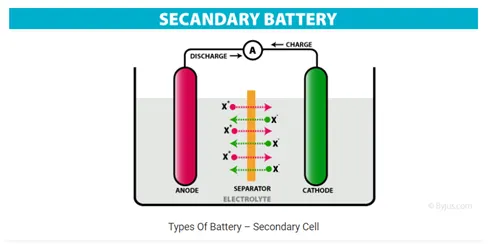
LITHIUM -ION BATTERY
Lithium-ion battery is a type of rechargeable battery that is charged and discharged by lithium ions that move between negative and positive electrodes. These batteries can be charged and discharged repeatedly. Lithium-ion batteries are suited for storing high-capacity power and are used in many applications which include consumer electronics such as smartphones, PCs industrial robots and automobiles. Lithium-ion cell is a good electrochemical cell because of its large electrode potential which is -3.04V which results in high operating voltage.
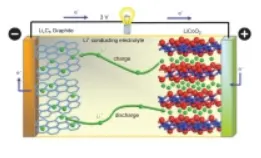
In an automotive application these lithium-ion batteries consist of thousands of individual cells which are packaged together so as to provide the required voltage power and energy. These individual cells are mounted into number of modules which are then assembled together into a complete battery pack.
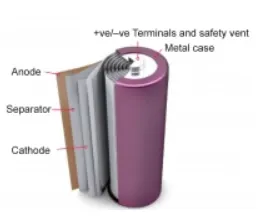
The battery consists of anode, cathode, separator, electrolyte and two current collectors. The electrolyte carries positively charged ions from anode to cathode and also from cathode to anode through the separator. The movement of the lithium ions creates free electrons in the anode which creates a charge at the positive current collector. The electrical current then flows from the current collector through a device which is being powered such as cell phone, computer etc. to the negative current collector. The flow of electrons inside the battery is blocked by the separator. When the battery is discharging and provides an electric current the anode releases lithium ions to the cathode which generates the flow of electrons from one electrode to the other. When the device is plugged the opposite happens which is that the ions are released by the cathode and received by the anode.
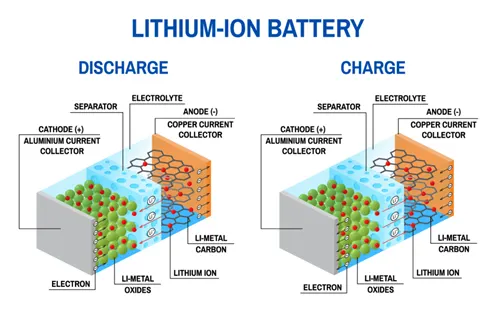
TYPES OF LITHIUM -ION BATTERIES
- Lithium Cobalt Oxide – (liCoO2)
- Lithium-ion Manganese Oxide – (LiMn2O4)
- Lithium Nickel Manganese Cobalt Oxide – ( LiNiMnCoO2)
- Lithium iron Phosphate – (LiFePO4)
- Lithium Nickel Cobalt Aluminum Oxide – (LiNiCoALO2)
- Lithium Titanate Oxide – (Li2TiO3 )
- LITHIUM COBALT OXIDE – (liCoO2)
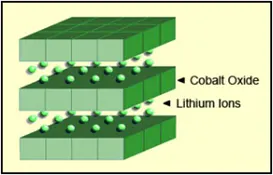
Lithium cobalt oxide battery has very high specific energy which makes it widely used for electronic appliances such as mobile phones, laptops and digital cameras. This battery consists of cobalt oxide as the cathode and graphite carbon as anode. The cathode has a layered structure and during discharge lithium ions move from anode to cathode. During charging the flow of lithium-ion reverses which is from cathode to anode.
ADVANTAGES
- High specific energy
- Process performance is excellent
DISADVANTAGES
- Cost is very high
- Life span is very short, low thermal stability and limited load capabilities
- LITHIUM ION MAGANESE OXIDE – (LiMn2O4)
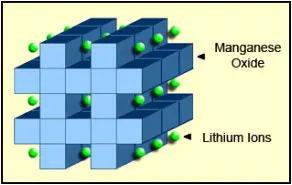
A three – dimensional spinel structure is created which helps the flow of ions on the electrode which results in lower internal resistance and improves in current handling. Spinel helps in providing low resistance and has more moderate specific energy than cobalt. Lithium-ion manganese can be discharged at currents of 20-30A with moderate increase in temperature. A continuous high load at this current would result in increase in temperature as the cell temperature cannot exceed 80°C. Lithium-ion manganese oxide is used in various application as medical instruments and also in hybrid and electric vehicles.
ADVANTAGES
- High thermal stability and enhanced safety.
- Lower internal cell resistance helps in fast charging and high current discharging.
DISADAVNATAGES
- Lower life cycle.
- Moderate performance.
- LITHIUM NICKEL MAGANESE COBALT OXIDE - (LiNiMnCoO2)
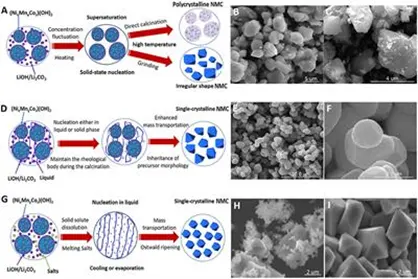
Lithium nickel manganese cobalt oxide include a cathode which is made up of nickel, manganese and cobalt. These types of batteries have a specific energy which is why it is used to power tools and powertrains for vehicles. Nickel is known for high specific energy and poor stability. Manganese helps in performing a spinel structure so as to achieve low internal resistance and offers low specific energy. Combining of these metals increases each other strengths. Nickel based systems have high energy density and longer life as compared to cobalt based systems and have a lower voltage.
ADVANTAGES
- High power and energy densities with thermal stability.
- This type of battery is preferred over electric vehicles due to very low self-heating rate.
DISADVANTAGES
- Lower voltage as compared to cobalt systems
- When silicon is added to graphite has the downside of making the anode grow and shrink through charging and discharging, leading to mechanical instability of the cell.
- LITHIUM IRON PHOSPAHTE – (LiFePO4)
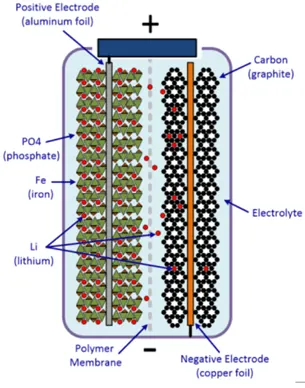
Lithium iron phosphate uses lithium iron phosphate as cathode as it has good electrochemical performance with low resistance because of nano – scale phosphate cathode material. Lithium iron phosphate is often replaced by lead acid batteries as it has moderate specific energy, low tolerance and drastically reduced the life cycle. These batteries are used in electric motorcycles and also in applications that require long lifecycle and significant safety. Cold temperatures reduce the performance of lithium ion and this could affect in cracking ability in extreme condition.
ADVANTAGES
- High specific power and provides a high level of safety
- It has a high lifespan and comes at a low cost
DISADVANTAGES
- High energy density causes the battery to be unstable. It heats up faster during charging which results in increase in temperature.
- The battery is unable to charge at temperatures below freezing.
- LITHIUM NICKEL COBALT ALUMINIUM OXIDE – (LiNiCoALO2)
These types of batteries are also known NCA which have a very low voltage and better safety characteristics compared to lithium cobalt oxide battery. These batteries perform well in terms of power density, energy density and lifetime. It is used in various applications such as medical devices and electric powertrain. These batteries are not common in the consumer industry but holds a lot of promise for the automotive industry.
ADVANATGES
- Long life span
- High specific energy
- Good specific power
DISADVANTAGES
- High cost as compared to other lithium-ion batteries
- Less safe as compared to other lithium-ion batteries as they require extra safety measures and circuits for use in electric cars.
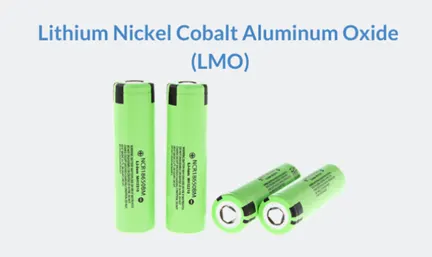
- LITHIUM TITANATE OXIDE – (Li2TiO3)
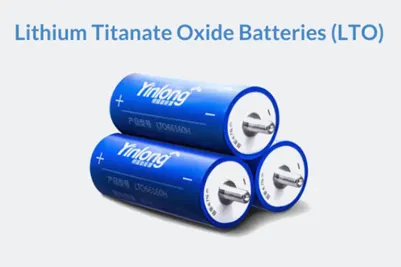
Lithium titanate oxide is type of rechargeable battery which has the advantage of fast charging. Lithium titanate is also referred to as LTO using lithium titanate nanocrystals on the anode surface instead of carbon. These LTO battery cells release ions repeatedly for recharging and rapidly for high current. LTO has advantages over conventional cobalt – blended lithium ion with graphite anode as it has no solid electrolyte interface formation, no lithium plating when fast charging and charging at low temperature. It is used in electric powertrains and solar powered street lighting.
ADVANTAGES
- High thermal stability
- Fast charging capability and wider temperature range
- Excellent low temperature discharge capabilities.
DISADVANTAGES
- Lower energy density
- High cost
DIFFERERNT TYPES OF LITHIUM-ION BATTERIES
- Compare the differences between each type of li+ion batteries based on their characteristics.
TYPES OF LITHIUM -ION BATTERIES
- Lithium Cobalt Oxide – (liCoO2)
- Lithium-ion Manganese Oxide – (LiMn2O4)
- Lithium Nickel Manganese Cobalt Oxide – ( LiNiMnCoO2)
- Lithium iron Phosphate – (LiFePO4)
- Lithium Nickel Cobalt Aluminum Oxide – (LiNiCoALO2)
- Lithium Titanate oxide – (Li2TiO3 )
- LITHIUM COBALT OXIDE – (liCoO2)
- VOLTAGES - 3.60V nominal, operating range (3.0- 4.2V/ cell)
- SPECIFIC ENERGY - 150- 200Wh/kg. cells provide up to 240Wh/kg
- CHARGE (C- RATE) - 0.7 – 1C, most cells charges to 4.20V, 3h charging time. charge current above 1C reduces battery life.
- DISCHARGE (C- RATE) - 1C, cut off voltage is 2.50V. Discharge current above 1C reduces battery life.
- CYCLE LIFE - 500 – 1000, related to depth of discharge, load, temperature
- THERMAL RUNAWAY - 150° C full charge results in thermal runaway.
- APPLICATIONS – mobile phones, tablets, laptops and cameras
- COMMENTS - specific energy is high. limited specific power. Cobalt is expensive and serves as energy cell.
- LITHIUM ION MAGANESE OXIDE – (LiMn2O4)
- VOLTAGES – 3.70 V (3.80V) nominal, operating range 3.0- 4.2V/ cell
- SPECIFIC ENERGY – 100 – 150Wh/kg
- CHARGE (C- RATE) – 0.7 – 1C, 3C maximum, most cells charges to 4.20V
- DISCHARGE (C- RATE) – 1C, 10C possible with some cells, 30C pulse (5s), CUT – OFF voltage is 2.50V
- CYCLE LIFE – 300 – 700 (related to depth of discharge and temperature)
- THERMAL RUNAWAY – 250° C high charge results in increase in temperature
- APPLICATIONS – medical devices, electric powertrains and power tools
- COMMENTS - High power and less capacity
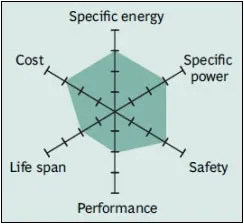
- LITHIUM NICKEL MANGANESE COBALT OXIDE –( LiNiMnCoO2 )
- VOLTAGES – 3.60V, 3.70V nominal, operating range 3.0- 4.2 V/ cell or higher
- SPECIFIC ENERGY – 150 – 220Wh/kg
- CHARGE (C- RATE) – 0.7 – 1C, charges to 4.20V and can even go up to 4.30V, charging – 3 hours and
charge current above 1C reduces battery life.
- DISCHARGE (C- RATE) – 1C, cut – off voltage is 2.50V, 2C possible on some cells
- CYCLE LIFE – 1000 – 2000 (related to depth of discharge and temperature)
- THERMAL RUNAWAY – 210° C high charge results in increase in temperature.
- COST - approximately $ 420 per KWH.
- APPLICATIONS – electric bikes,medical devices, electric vehicles
- COMMENTS - Provides high capacity and high power. Serves as hybrid cell.
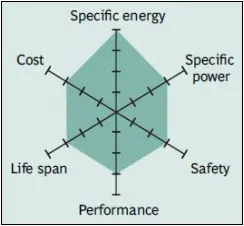
- LITHIUM IRON PHOSPHATE - (LiFePO4)
- VOLTAGES – 3.20V, 3.30V nominal, operating range 2.5 – 3.65 V/ cell.
- SPECIFIC ENERGY – 90 – 120Wh/kg
- CHARGE (C- RATE) – 1C typical, charges to 3.65V charge time about 3 hours
- DISCHARGE (C- RATE) – 1C, cut – off voltage is 2.50V lower than 2V causes damage, 25C on some cells and 40A pulse (2s)
- CYCLE LIFE – higher than 2000 (related to depth of discharge and temperature)
- THERMAL RUNAWAY – 270° C safe battery even if fully charged
- COST - approximately $ 580per KWH
- APPLICATIONS – It is portable and stationary needing high load current and endurance
- COMMENTS - Safest lithium-ion battery, very flat voltage discharge curve but low capacity and elevated self – discharge.
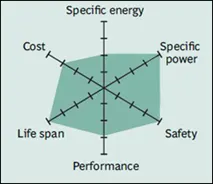
- LITHIUM NICKEL COBALT ALUMINIUM OXIDE – (LiNiCoALO2)
- VOLTAGES – 3.60V nominal, operating range 3.0 – 4.2 V/ cell
- SPECIFIC ENERGY – approximately about 200- 260 Wh/kg / 300Wh/kg
- CHARGE (C- RATE) – 0.7C, most cells charges to 4.20V, charging about 3 hours and some cells have the possibility of fast charging
- DISCHARGE (C- RATE) – 1C, cut – off voltage is 3.0V , high discharge rate reduces battery life
- CYCLE LIFE – 500 (related to depth of discharge and temperature)
- THERMAL RUNAWAY – 150° C high charge results in increase in temperature
- COST - approximately $ 350per KWH
- APPLICATIONS – electric powertrain (tesla), medical devices
- COMMENTS - it is similar to lithium cobalt and serves as energy cell
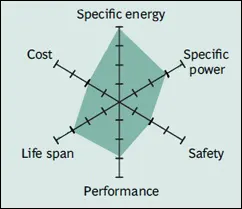
- LITHIUM TITANATE OXIDE – (Li2TiO3)
- VOLTAGES – 2.40V nominal, operating range 1.8 – 2.85 V/ cell
- SPECIFIC ENERGY – 50-80 Wh/kg
- CHARGE (C- RATE) – 1C typical, 5C maximum, charges up to 2.85V
- DISCHARGE (C- RATE) – 10C possible, cut off voltage is 1.80V and 30C 5s pulse
- CYCLE LIFE – 3000 - 7000
- THERMAL RUNAWAY – it is regarded as one of the safest lithium-ion batteries
- COST - approximately $ 1005 per KWH
- APPLICATIONS – uninterrupted power supply, electric powertrain and solar powered street lighting
- COMMENTS - longer life, fast charging, wider temperature range, low specific energy and expensive.
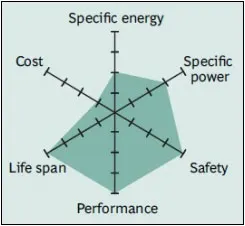
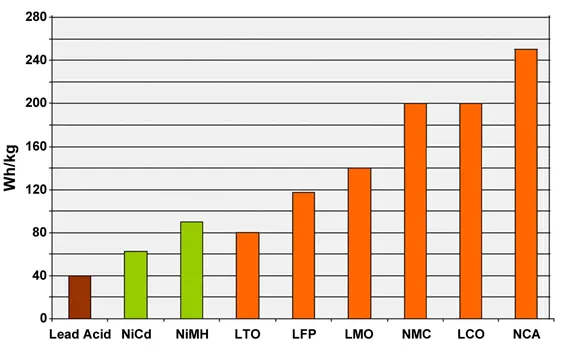
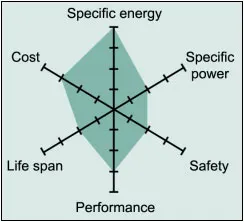
The above graph indicates the specific energy of lead, nickel and lithium-based systems and it is also observed that lithium nickel cobalt aluminum oxide has more capacity than other systems. In regards to specific power and thermal stability. Lithium-ion manganese oxide and Lithium-ion phosphate are superior. Lithium titanate oxide have low capacity but this chemistry of the battery overcomes other batteries in regards to life span and also has the best cold temperature performance.