Week 1 Understanding Different Battery Chemistry
Week-1 Challenge – Understanding different Battery Chemistry
Questions:
1.Prepare a table that includes materials & chemical reactions occurring at the anode and cathode of LCO, LMO, NCA, NMC, LFP, and LTO type of lithium-ion cells. Give your detailed explanation of it.
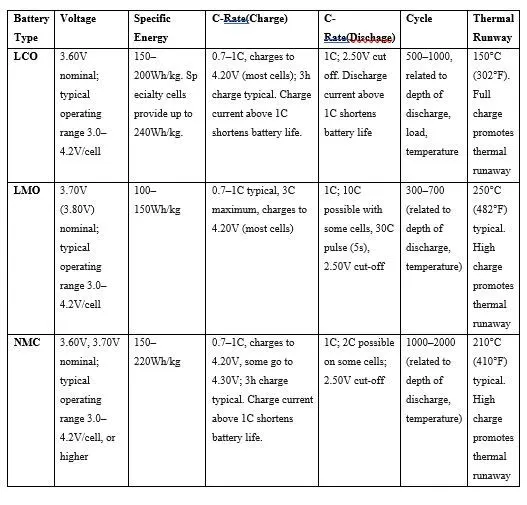
2.Compare the differences between each type of Li+ion batteries based on their characteristics.
Question -1. Prepare a table that includes materials & chemical reactions occurring at the anode and cathode of LCO, LMO, NCA, NMC, LFP, and LTO type of lithium-ion cells. Give your detailed explanation of it.
Explanation:
In general, Li-ion batteries can be characterized as energy storage systems that rely on insertion reactions from both electrodes where lithium ions act as the charge carrier. Given this broad definition, there are several different cell chemistries that make up the Li-ion battery family. Most Li-ion batteries use a negative electrode principally made from carbon (e.g., graphite) or lithium titanate (Li4Ti5O12), with some novel materials under development, namely, Li metal and Li(Si) alloys. The electrolyte used varies based on the choice of electrode materials, but is typically composed of a mixture of lithium salts (e.g., LiPF6) and an organic solvent (e.g., diethyl carbonate) to allow for ion transfer—these components will be discussed in more detail below. A separating membrane is used to allow lithium ions to pass between the electrodes while preventing an internal short circuit.
This arrangement is shown conceptually in Figure 1, with the transport aspects of the battery when operating as an energy source (i.e., a galvanic device) illustrated—the electrons travel from the negative electrode to the positive electrode while simultaneously the Li+ ions travel from the negative electrode through the electrolyte to the positive electrode to maintain electroneutrality. When the system is operated in charge mode (i.e., as an electrolytic device) the electron current and Li+ ion flow is reversed.
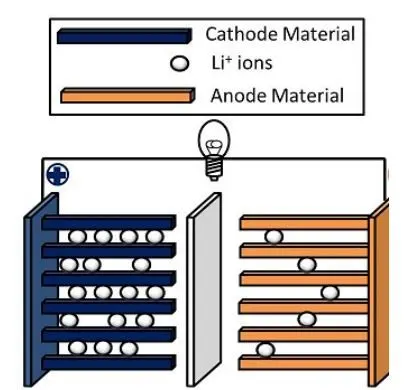
Fig.1 Schematic of a lithium-ion battery
Chemical reactions occurring at anode and cathode of lithium-ion batteries:
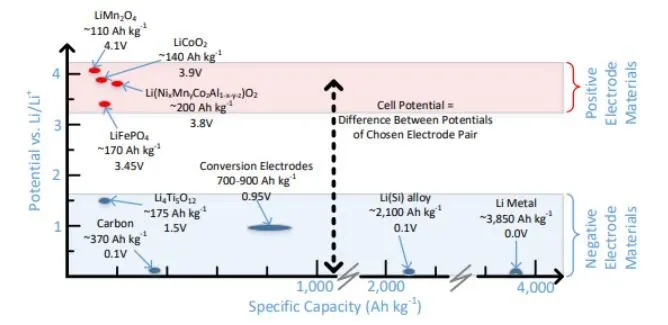
Fig.2 Specific capacity Vs Potential energy
1.Positive Electrode:
The positive electrode is typically a metal oxide. The electrolyte is a lithium salt in an organic solvent. The electrochemical roles of the electrodes reverse between anode and cathode, depending on the direction of current flow through the cell.
Self-discharge rate: 0.35% to 2.5% per month.
Nominal cell voltage: 3.6 / 3.7 / 3.8 / 3.85 V, LiF.
Energy density: 250–693 W·h/L (0.90–2.43 MJ/L)
Charge/discharge efficiency: 80–90%
2.Negative Electrode:
Generally, the negative electrode of a conventional lithium-ion cell is made from carbon. The positive electrode is typically a metal oxide. The electrolyte is a lithium salt in an organic solvent.
Charge/discharge efficiency: 80–90%
Self-discharge rate: 0.35% to 2.5% per month.
Nominal cell voltage: 3.6 / 3.7 / 3.8 / 3.85 V, LiF.
3.Separator:
One of the most critically important cell components to ensure cell safety is the separator, a thin porous membrane that physically separates the anode and cathode. The primary function of the separator is to prevent physical contact between the anode and cathode while facilitating ion transport in the cell.
4.Current Collector:
Whether they come in the form of cylinders or pouches, lithium-ion batteries have two current collectors, one for each electrode. They distribute current flowing in or out of the electrode and account for from 15% to as much as 50% of the weight of some high-power or ultrathin batteries.
5.Electrolyte:
An electrolyte could be viewed as the inert component in the battery, and it must demonstrate stability against both cathode and anode surfaces. During operation, the electrolyte should undergo no net chemical changes of the battery, and all Faradaic processes are expected to occur within the electrodes.
Battery type and differences of electrode material and chemical reactions:
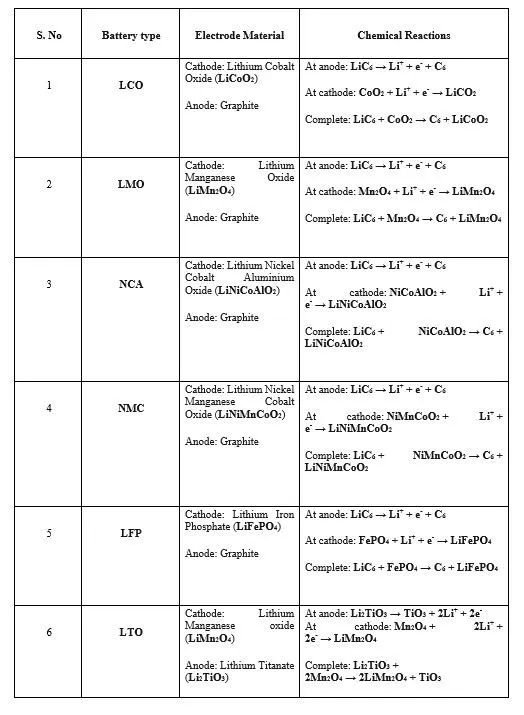
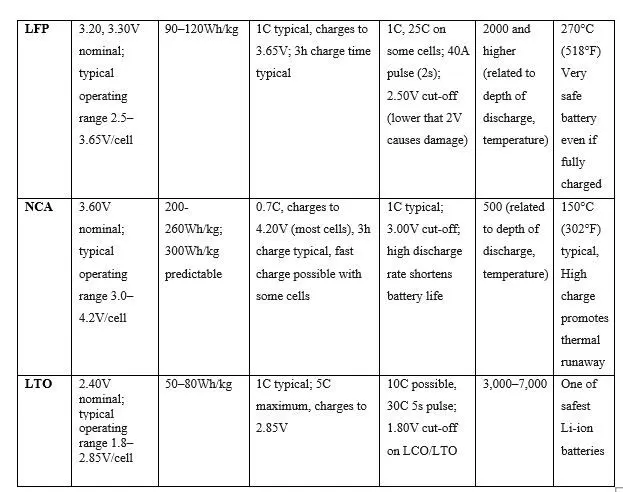
Question: 2. Compare the differences between each type of Li+ion batteries based on their characteristics.
Explanation:
Conclusion:
Thus, the battery materials and chemical reactions as been tabled, and each type of lithium-ion battery characteristics as studied and differentiated.
References:
1.https://byjus.com/free-ias-prep/lithium-ion-batteries/
2.https://www.sciencedirect.com/topics/chemistry/lithium-ion-battery