Week 1 Understanding Different Battery Chemistry
1.Prepare a table which includes materials & chemical reactions occurring at the anode and cathode of LCO, LMO, NCA, NMC, LFP and LTO type of lithium ion cells.Give your detailed explanation on it
2.Compare the differences between each type of Li+ion batteries based on their characteristics
ANSWERS
1.To Prepare a table which includes materials & chemical reactions occurring at the anode and cathode of LCO, LMO, NCA, NMC, LFP and LTO type of lithium ion cells.
Li-ion battery
A lithium-ion battery or Li-ion battery is a type of rechargeable battery. Lithium-ion batteries are commonly used for portable electronics and electric vehicles and are growing in popularity for military and aerospace applications. A prototype Li-ion battery was developed by Akira Yoshino in 1985, based on earlier research by John Goodenough, M. Stanley Whittingham, Rachid Yazami and Koichi Mizushima during the 1970s–1980s, and then a commercial Li-ion battery was developed by a Sony and Asahi Kasei team led by Yoshio Nishi in 1991.
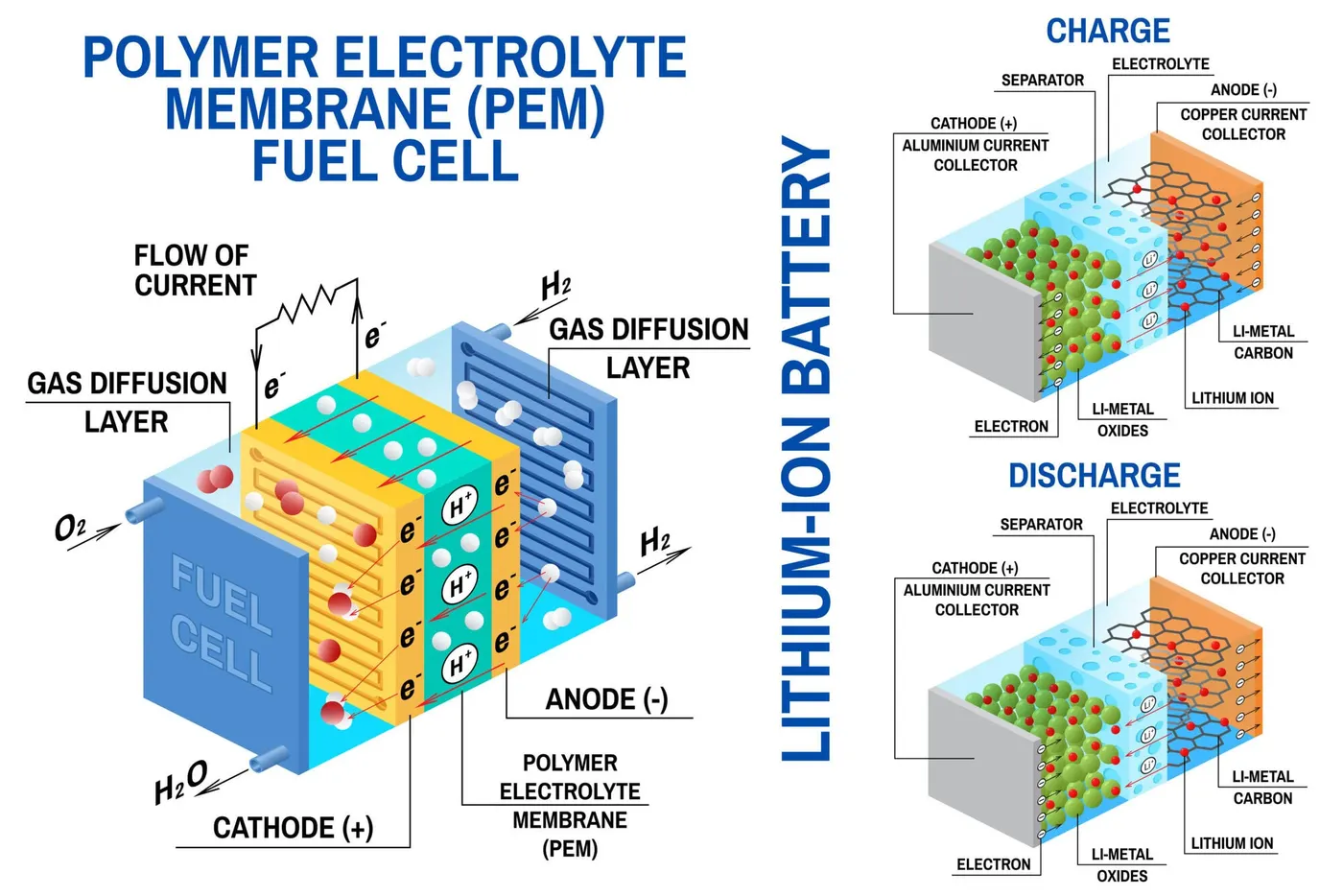
In the batteries, lithium ions move from the negative electrode through an electrolyte to the positive electrode during discharge, and back when charging. Li-ion batteries use an intercalated lithium compound as the material at the positive electrode and typically graphite at the negative electrode. The batteries have a high energy density, no memory effect and low self-discharge. They can however be a safety hazard since they contain flammable electrolytes, and if damaged or incorrectly charged can lead to explosions and fires. Samsung was forced to recall Galaxy Note 7 handsets following lithium-ion fires, and there have been several incidents involving batteries on Boeing 787s.
Chemistry, performance, cost and safety characteristics vary across types of lithium-ion batteries. Handheld electronics mostly use lithium polymer batteries (with a polymer gel as electrolyte), a lithium cobalt oxide (LiCoO2) cathode material, and a graphite anode, which together offer a high energy density. Lithium iron phosphate (LiFePO4), lithium manganese oxide (LiMn2O4 spinel, or Li2MnO3-based lithium rich layered materials (LMR-NMC)), and lithium nickel manganese cobalt oxide (LiNiMnCoO2 or NMC) may offer longer lives and may have better rate capability. Such batteries are widely used for electric tools, medical equipment, and other roles. NMC and its derivatives are widely used in electric vehicles.
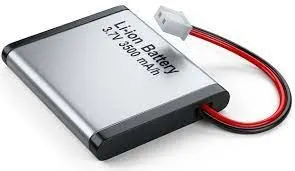
Li-ion batteries have an unmatchable combination of high energy and power density, making it the technology of choice for portable electronics, power tools, and hybrid/full electric vehicles . If electric vehicles (EVs) replace the majority of gasoline powered transportation, Li-ion batteries will significantly reduce greenhouse gas emissions . The high energy efficiency of Li-ion batteries may also allow their use in various electric grid applications, including improving the quality of energy harvested from wind, solar, geo-thermal and other renewable sources, thus contributing to their more widespread use and building an energy-sustainable economy. Therefore Li-ion batteries are of intense interest from both industry and government funding agencies, and research in this field has abounded in the recent years.
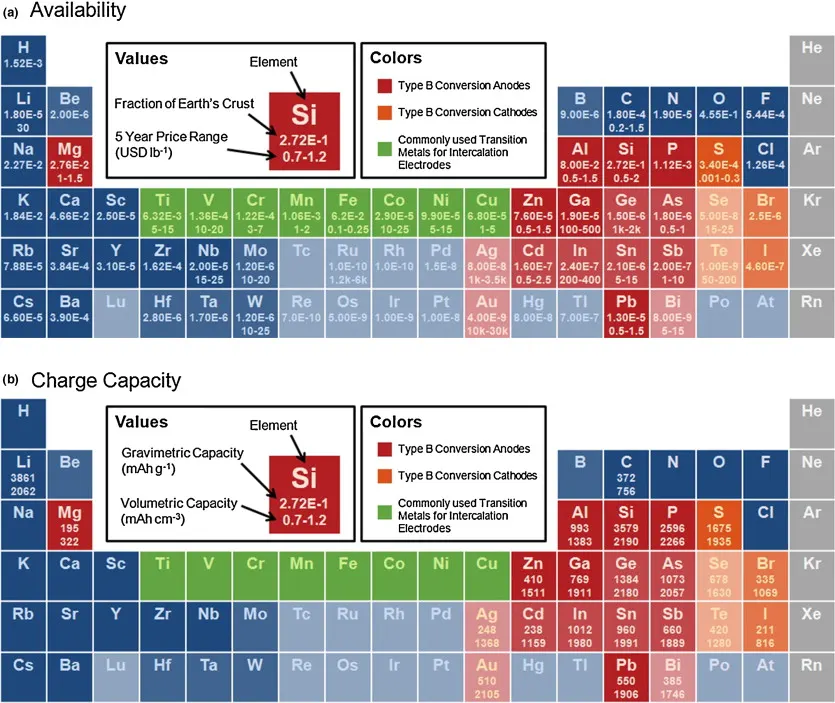
Yet looking to the future, there are many who doubt that Li-ion batteries will be able to power the world's needs for portable energy storage in the long run. For some applications (such as transportation and grid) Li-ion batteries are costly at present, and a shortage of Li and some of the transition metals currently used in Li-ion batteries may one day become an issue . At the same time, Li-ion batteries have certain fundamental advantages over other chemistries. Firstly, Li has the lowest reduction potential of any element, allowing Li based batteries to have the highest possible cell potential. Also, Li is the third lightest element and has one of the smallest ionic radii of any single charged ion. These factors allow Li-based batteries to have high gravimetric and volumetric capacity and power density. Finally, although multivalent cations allow for higher charge capacity per ion, the additional charge significantly reduces their mobility. Given that ionic diffusion in the solid electrodes is often the rate-limiting factor for battery power performance, this presents an enormous hurdle for the development of such alternative chemistries.
A significant shortage of Li is unlikely in the near future . Similar claims have been made about peak oil, but have yet to materialize as world oil reserves and resources continue to grow with rising prices and the development of exploration and mining technologies. In terms of absolute quantities, the amount of Li available on the Earth's crust is sufficient to power a global fleet of automobiles . Rising prices though, can be problematic for Li-ion batteries because cost is the major factor inhibiting its expansion into renewable energy applications. Even so, Li is not a major factor in the cost of Li-ion batteries at present. Li is used in the cathode and electrolyte, which make up only a small portion of the overall cost Within these components the cost of processing and the cost of cobalt in cathodes are the major contributing factors . Given its fundamental advantages, Li-ion batteries will in all likelihood continue to dominate portable electrochemical energy storage for many years to come.
Since Li-ion batteries are the first choice source of portable electrochemical energy storage, improving their cost and performance can greatly expand their applications and enable new technologies which depend on energy storage. A great volume of research in Li-ion batteries has thus far been in electrode materials. Electrodes with higher rate capability, higher charge capacity, and (for cathodes) sufficiently high voltage can improve the energy and power densities of Li batteries and make them smaller and cheaper. However, this is only true assuming that the material itself is not too expensive or rare.
fig. a shows the wholesale price of various metals and the abundance of elements as a fraction of the Earth's crust . Although the electrodes are not fabricated from pure metal ingots, the prices illustrate the relative differences. Mn is clearly much cheaper than Co, explaining the cost difference in the cathode materials made from these two metals. The abundance of elements represents a limitation on the availability of the element. While true availability also depends on supply and demand, this chart shows advantages of some elements. For example, P and S are much more abundant than the more conductive elements in Groups V and VI, respectively. Finally, the theoretical specific and volumetric capacities of the elements which undergo conversion reactions with Li are shown in fig.1b.
Types of Li-ion batteries
Lithium Cobalt Oxide has a high specific energy as compared to the other batteries which makes it the preferred choice for laptops and mobile phones. It also has a low cost and a moderate performance. However, it is highly unfavourable in all the other aspects when compared to the other lithium-ion batteries. It has a low specific power, low safety, and a low lifespan.
Lithium Manganese Oxide has a moderate specific power, moderate specific energy, and a moderate level of safety when compared to the other types of lithium-ion batteries. It has the added advantage of a low cost. The downsides are its low performance and low lifespan. It is usually used in medical devices and power tools.
Lithium Nickel Manganese Cobalt Oxide has two major advantages as compared to the other batteries. The first one is its high specific energy which makes it desirable in electric powertrains, electric vehicles and electric bikes. The other is its low cost. It is moderate in terms of specific power, safety, lifespan and performance when compared to the other lithium-ion batteries. It can be optimised to either have a high specific power or a high specific energy.
Lithium Iron Phosphate only has one major disadvantage when compared to other types of lithium-ion batteries and that is its low specific energy. Other than that, it has a moderate to high rating in all the other characteristics. It has high specific power, offers a high level of safety, has a high lifespan and comes at a low cost. The performance of this battery is also moderate. It is often employed in electric motorcycles and other applications that require a long lifespan and high level of safety.
Lithium Nickel Cobalt Aluminum Oxide only offers one strong advantage and that is a high specific energy. Apart from this, it doesn’t really offer much as compared to the five other batteries. It provides a low level of safety as compared to the other batteries. It is also pretty moderate in the rest of the characteristics like performance, cost, specific power and lifespan. Its high specific energy and moderate lifespan makes it a good candidate for electric powertrains.
Lithium Titanate offers high safety, high performance and a high lifespan which are very important features every battery should have. Its specific energy is low compared to the five other lithium-ion batteries but it compensates for this with a moderate specific power. The only major disadvantage of lithium titanate as compared to the other lithium-ion batteries is its extremely high cost. Another important feature of this battery worthy of mention is its remarkably fast recharge time. It can be used for storing solar energy and creating smart grids.
Much work is still being done on lithium ion batteries in various laboratories. Lithium vanadium phosphate (LVP) battery is a proposed type of lithium-ion battery that uses a vanadium phosphate in the cathode. It has already made its way into the Subaru prototype G4e, doubling energy density.
Materials & chemical reactions occurring at the anode and cathode of LCO, LMO, NCA, NMC, LFP and LTO type of lithium ion cells

2..Compare the differences between each type of Li+ion batteries based on their characteristics
Lithium-ion batteries are used in most aspects of our everyday lives. Most devices like smartphones and laptops cannot operate without these batteries. Lithium-ion batteries have also become very important in the field of electromobility as it is now the battery of choice in most electric vehicles. Its high specific energy gives it an advantage over other batteries.
There are different types of lithium-ion batteries and the main difference between them lies in their cathode materials. Different kinds of lithium-ion batteries offer different features, with trade-offs between specific power, specific energy, safety, lifespan, cost, and performance.
The six lithium-ion battery types that we will be comparing are Lithium Cobalt Oxide, Lithium Manganese Oxide, Lithium Nickel Manganese Cobalt Oxide, Lithium Iron Phosphate, Lithium Nickel Cobalt Aluminum Oxide, and Lithium Titanate. Firstly, an understanding of the key terms below will allow for a simpler and easier comparison.
Specific energy: This defines the battery capacity in weight (Wh/kg). The capacity relates to the runtime. Products requiring long runtimes at moderate load are optimized for high specific energy.
Specific power: It's the ability to deliver high current and indicates loading capability. Batteries for power tools are made for high specific power and come with reduced specific energy.
A high specific power usually comes with a reduced specific energy and vice versa. The pouring of a bottled water in a glass is a perfect analogy of the relationship between specific power and specific energy.The water in the bottle can be thought of as specific energy. Pouring the water at a slow rate doesn’t provide enough force (low specific power) but the water lasts longer in the bottle (high specific energy). On the other hand, if we pour the water out at a faster rate it provides a greater impact (high specific power). However, the water wouldn’t last very long in the bottle ( low specific energy).
Performance: This measures how well the battery works over a wide range of temperature. Most batteries are sensitive to heat and cold and require climate control. Heat reduces the life, and cold lowers the performance temporarily.
Lifespan: This reflects cycle life and longevity and is related to factors such as temperature, depth of discharge and load. Hot climates accelerate capacity loss. Cobalt blended lithium ion also usually have a graphite anode that limits the cycle life.
Safety: This relates to factors such as the thermal stability of the materials used in the batteries. The materials should have the ability to sustain high temperatures before becoming unstable. Instability can lead to thermal runaway in which flaming gases are vented. Fully charging the battery and keeping it beyond the designated age reduces safety.
Cost: Demand for electric vehicles has generally been lower than anticipated and this is mainly due to the cost of lithium-ion batteries. Hence cost is a huge factor when selecting the type of lithium-ion battery.
Now that we have an understanding of the major battery characteristics, we will use them as the basis for the comparison of our six types of lithium-ion batteries. The characteristics are rated as either high, moderate or low where H, M and L stand for high, moderate and low respectively. It is important to note that the six types of lithium-ion batteries are compared relative to one another. The table below provides a simple comparison of the six lithium-ion battery types.
| Lithium-ion battery Types | SP | SE | SF | LS | CS | PF |
|---|---|---|---|---|---|---|
|
Lithium Cobalt Oxide |
L |
H |
L |
L |
L |
M |
|
Lithium Manganese Oxide |
M |
M |
M |
L |
L |
L |
|
Lithium Nickel Manganese Cobalt Oxide |
M |
H |
M |
M |
L |
M |
|
Lithium Iron Phosphate |
H |
L |
H |
H |
L |
M |
|
Lithium Nickel Cobalt Aluminum Oxide |
M |
H |
L |
M |
M |
M |
|
Lithium Titanate |
M |
L |
H |
H |
H |
H |
- SP stands for specific power
- SE stands for specific energy
- SF stands for safety
- LS stands for lifespan
- CS stands for cost
- PF stands for performance
- L stands for low
- M stands for moderate
- H stands for high