Stress Concentration on a Plate with hole
AIM :
To perform static structural analysis to determine the stress concentration on a plate with and without holes.
GIVEN :
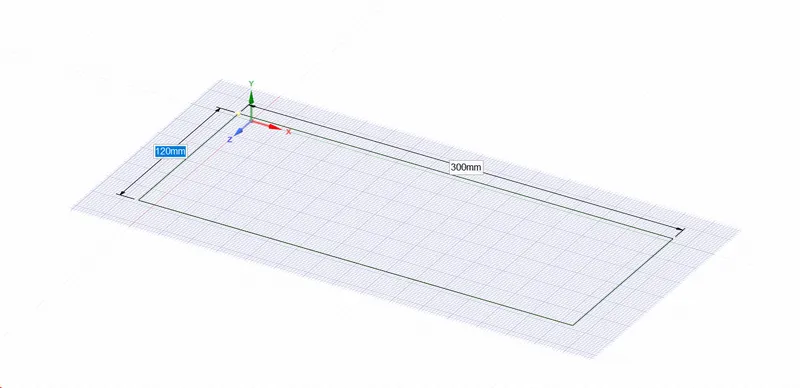
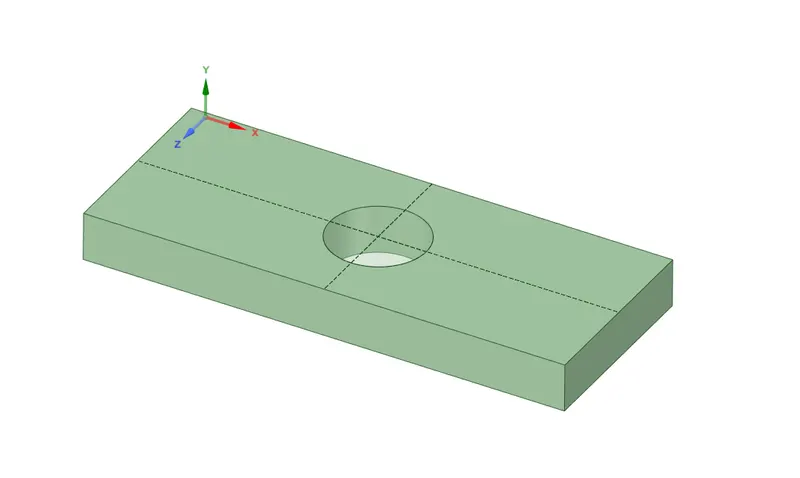
For Case 1 :
Length=300mm
Height=120mm
Thickness=30mm
Circular Hole at the center:
Diameter=60mm
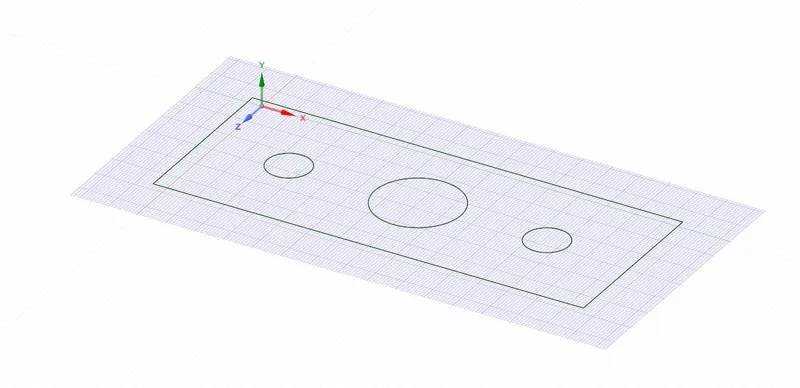
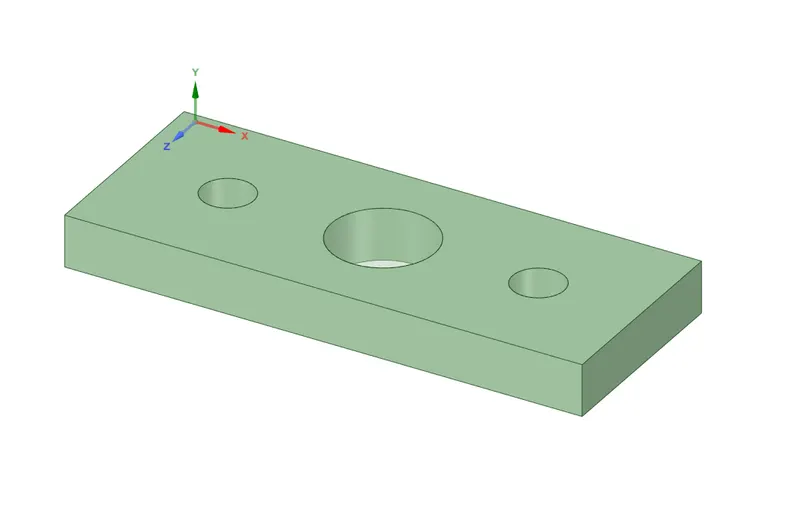
For Case 2 :
Length=300mm
Height=120mm
Thickness=30mm
Circular Hole at the center:
Diameter=60mm
Smaller holes 90mm away with Dia. = 30mm
PROCEDURE :
- Insert the material as Structural steel in the engineering data.
- The above solids are designed with the appropriate dimensions.
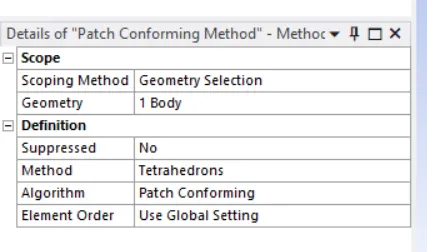
- In the modelling tab, we mesh the geometry with element size of 3mm and method for solving as tetrahedron element type and the mesh is generated from right click drop box
- Meshing of CASE 1 and CASE 2 :
CASE 1 :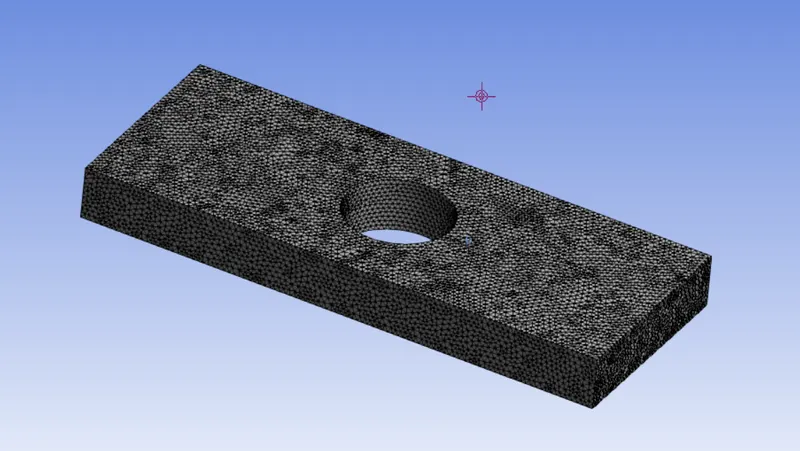
CASE 2 :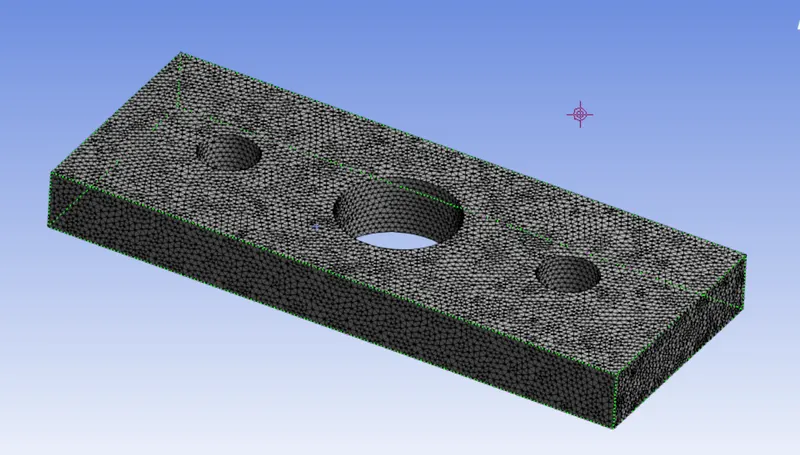
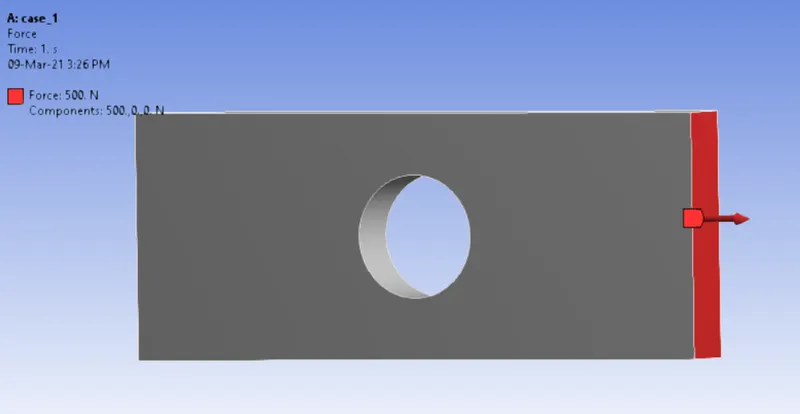
- Now defind the Fixed support at one end and 500N of Force at the other end :
CASE 1 :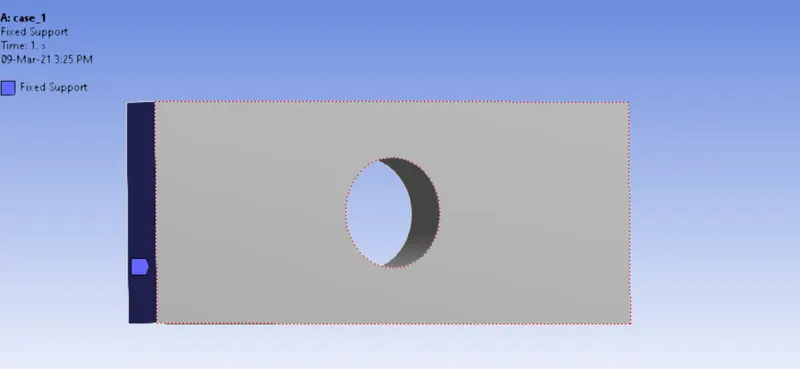
CASE 2 :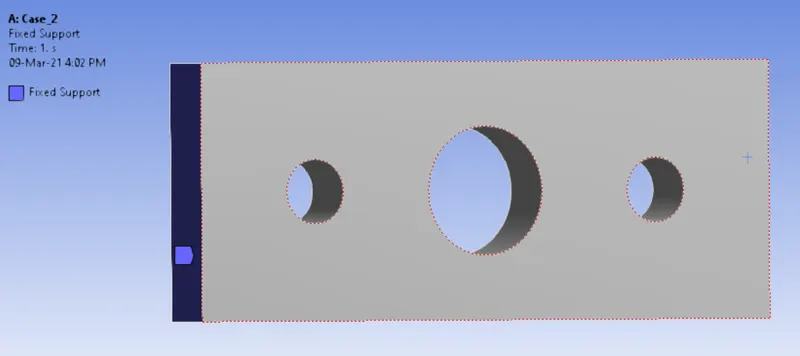
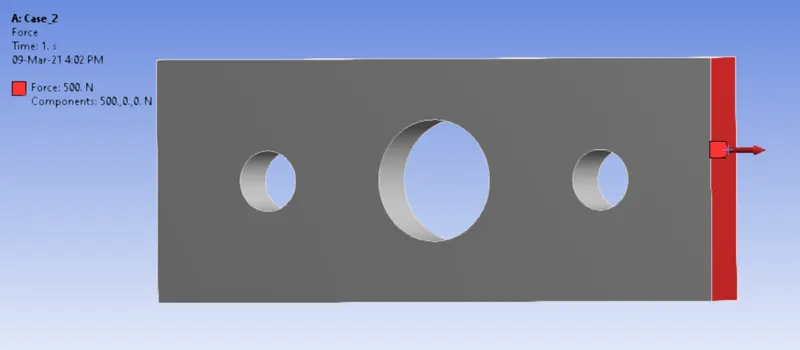
- Solving it for Total Deformation and Equivalent stress we get the following results :
TOTAL DEFORMATION :
CASE 1 :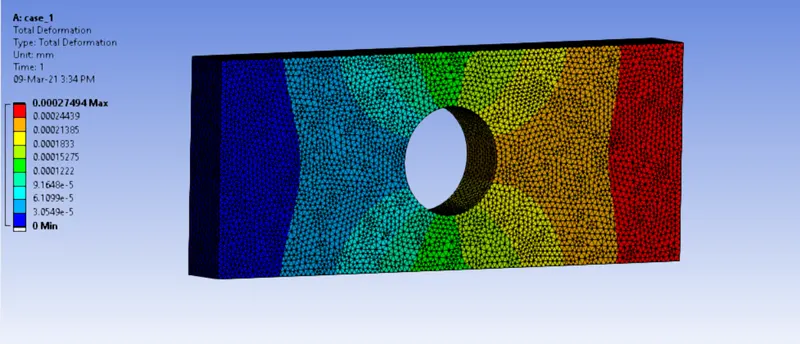
CASE 2 :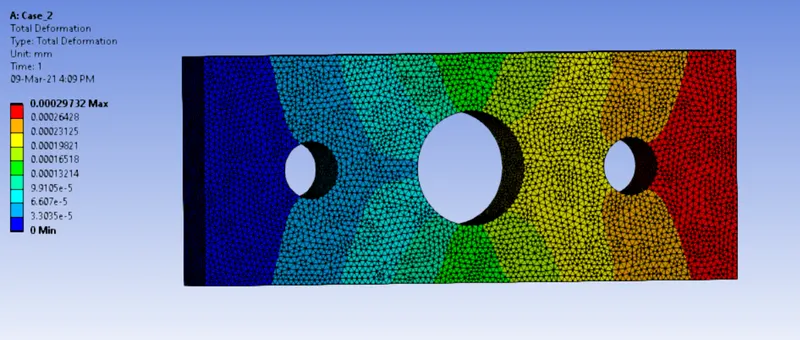
EQUIVALENT STRESS :
CASE 1 :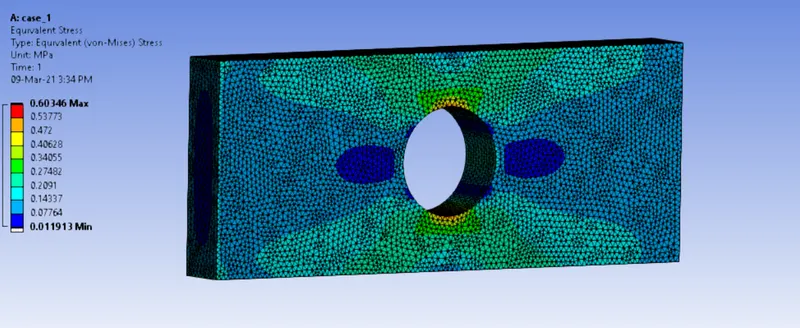
CASE 2 :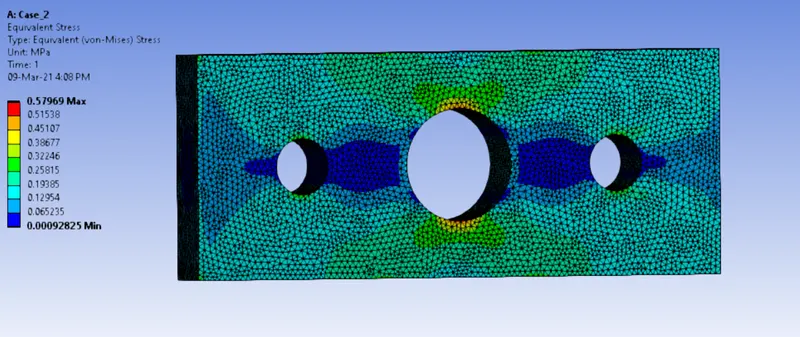
RESULT :
| ONE HOLE | THREE HOLES | |
| Total Deformation (MAX)(mm) | 0.00027494 | 0.00029732 |
| Total Deformation(MIN)(mm) | 0 | 0 |
| Equivalent Stress(MAX)(MPa) | 0.60346 | 0.57969 |
| Equivalent Stress(MIN)(MPa) | 0.011913 | 0.00092825 |
From analysis point of view, we can choose the plate with three holes because the abount of stress induced on the solid is less compared with the plate with one hole. And also there is neglegible difference between the total deformation of one hole vs three hole plate.
From manufacturing point of view, we can choose the plate with one hole because if we consider the plate with three holes, the production cost will be higher due to the no. of holes in them.