Week 1 Stress Concentration on a Plate with hole
Stress Concentration on a Plate with hole
AIM:
- To perform Static Structural Analysis to determine the stress concentration on a plate with holes.
OBJECTIVE:
- Design a plate with a hole model. (Case 1)
- Design a plate with three holes of different diameter. (Case 2)
- Determining the maximum deformation and stress developed in both models.
- Comparing the result of two cases and deciding which cases to select on analysis and manufacturing point of view.
CONCEPT:
- The stress at the edge of a hole, or at a notch root, has a higher value than the remote stress.
- This phenomenon is called stress concentration.
Given Data
# Case 1
Design a plate with a hole model similar to what we worked in the class, but with increased thickness.
Determine the maximum deformation and stress developed in the model.
Plate dimensions:
Length=300mm
Height=120mm
Thickness=30mm
Circular Hole at the center:
Diameter=60mm
# Case 2
Smaller holes 90mm away from the center:
Diameter=30mm
Boundary Conditions:
Plate fixed at left face.
Load of 500N on the right face.
PROCEDURE:
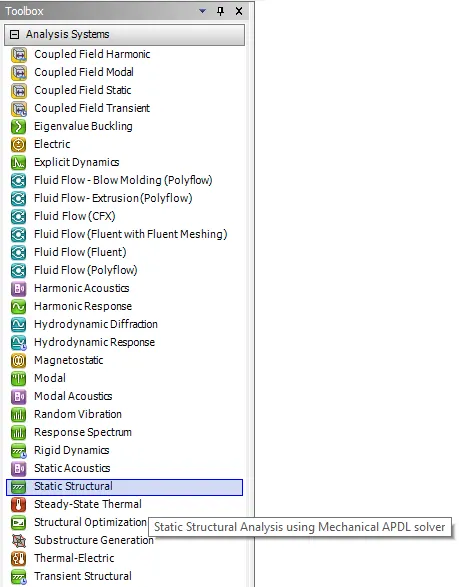
- For both cases, We use Static Structural tool in the analysis system tool box to Define the geometry and other input parameters for the same.
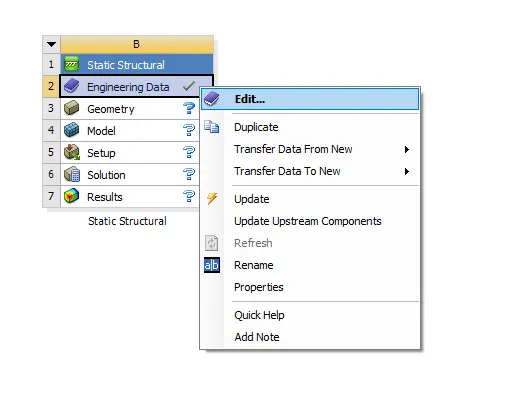
- In the engineering data, We can Input the material and its properties. (e.g. Structural steel, is a default One)
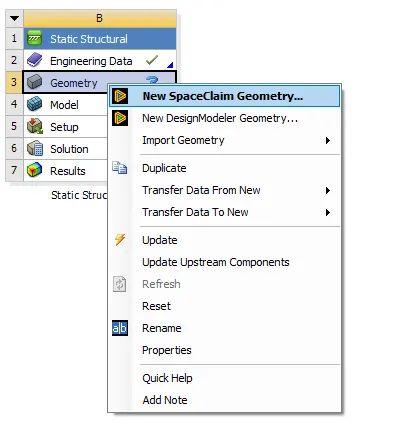
- To design the model with given Dimensions, spaceclaim is used in the geometry tab. For case 1 and case 2 is given below pictures.
Defining the given dimensions for the geometry
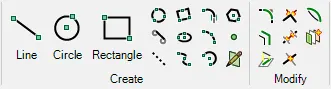
- We can use the given data to Draw the diagram in SpaceClaim page, using the options Line, Circle, Rectangle etc...
# Case 1
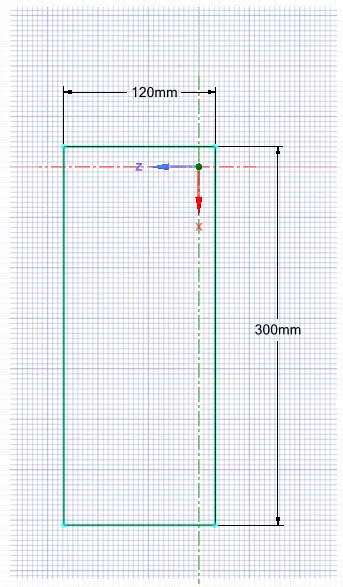
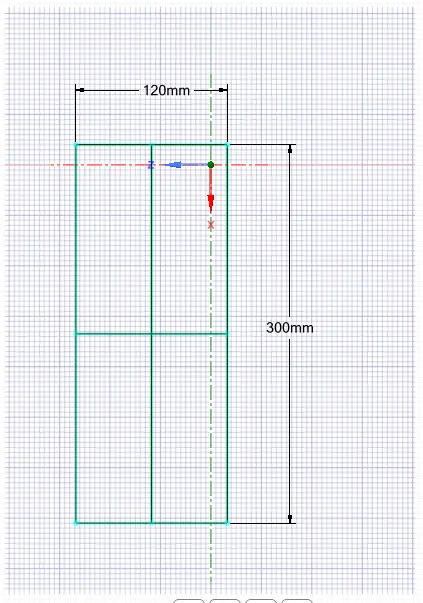
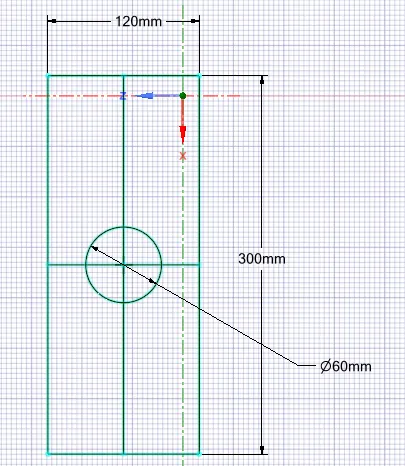
# Case 2
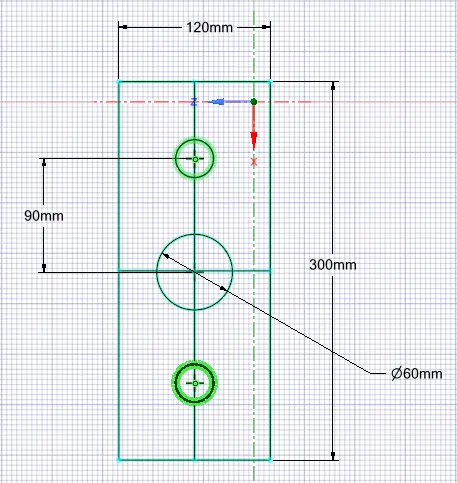
figure - Created Geometry as per the given Data
Extruding the geometry to Three Dimensional geometry
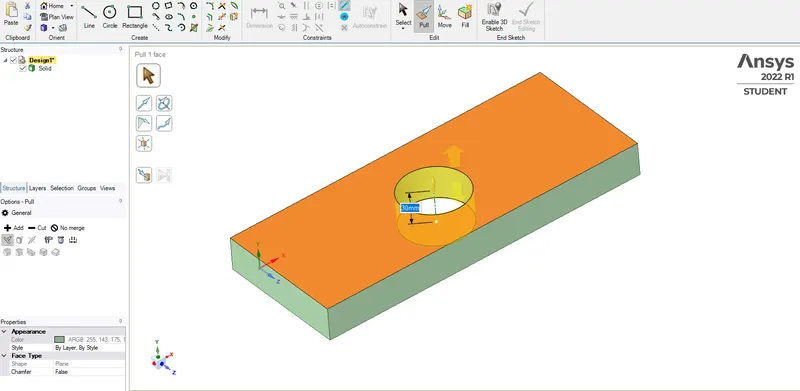
- After completing the Required geometry we can extrude it using the option 'Pull'
# Case 1
# Case 2
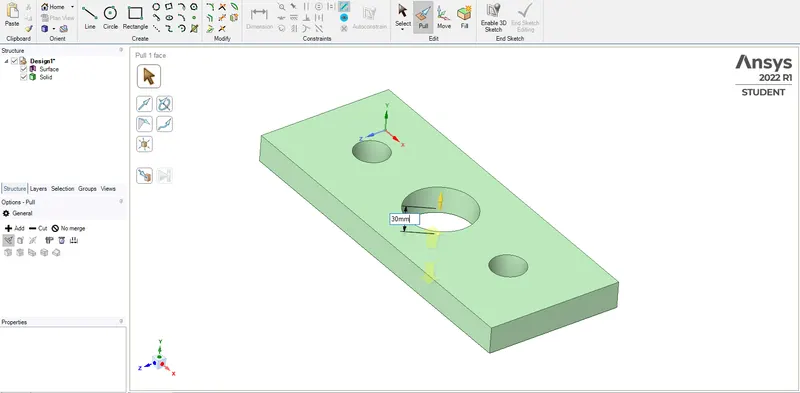
figure - Solids Created
Working on Ansys Mechanical Enterprises Tab
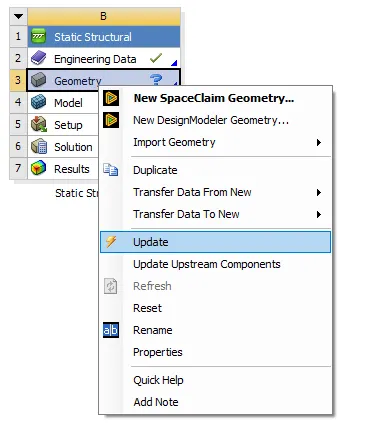
- After updating the Geometry we created in SpaceClaim tab, we can move to the 'Solver Deck'
SETTING UP THE BOUDRY CONDITIONS, MESHING AND SOLUTION REQUIREMENTS:
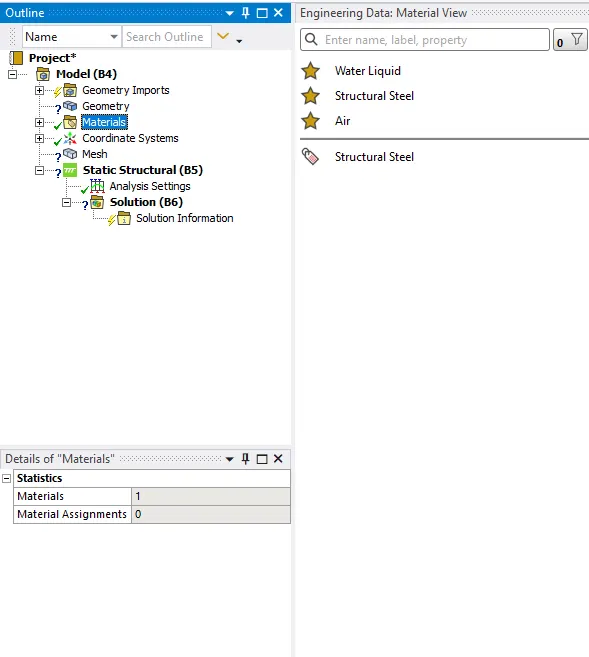
- Here the Material is Structural steel, which is shown in the above Image
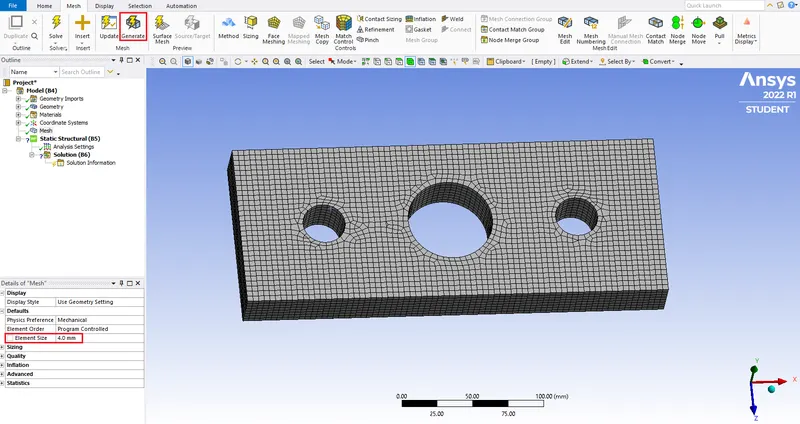
- In the above image we can see after setting up the required Meshing element size --> Click on the Generate button
- The meshing is done with Quad Elements, this will be changable.
Now, to define the boundary conditions, we specify the faces for the fixed support and load
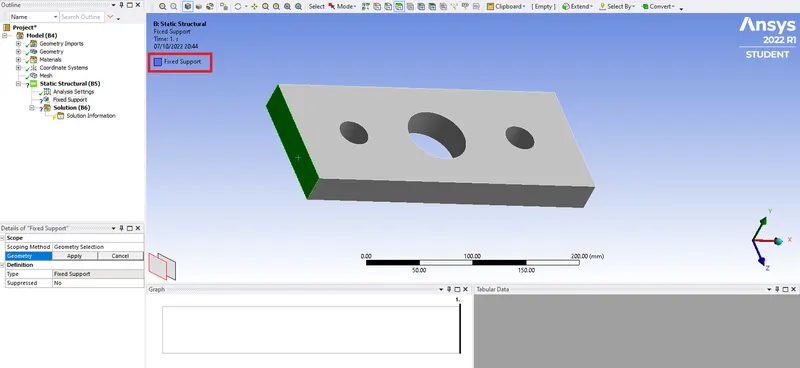
- The Fix the Left end as per the given data, Select the side we need to fix --> click apply
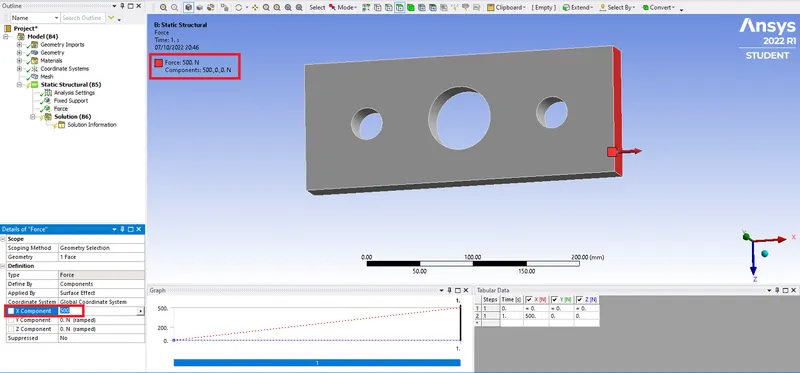
- Like wise the Second step is Load apply on the Righ end as per the given data, Select the side we need to apply the tensile load --> x direction --> 500N Applied
- We can see it in the above pictures.
Selecting the type of solution and solving it for Total deformation and Equivalent stress for results
# Case 1
Total Deformation
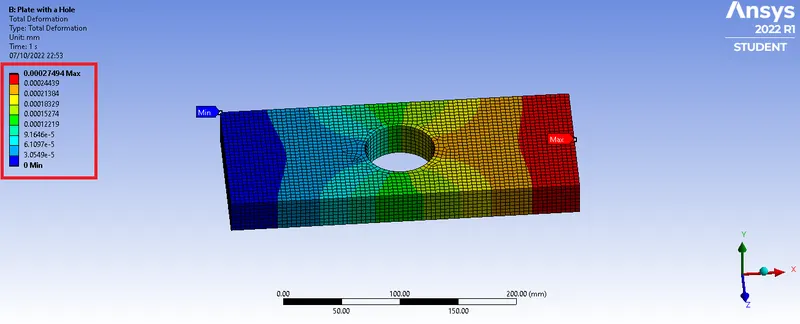
Equivalent stress
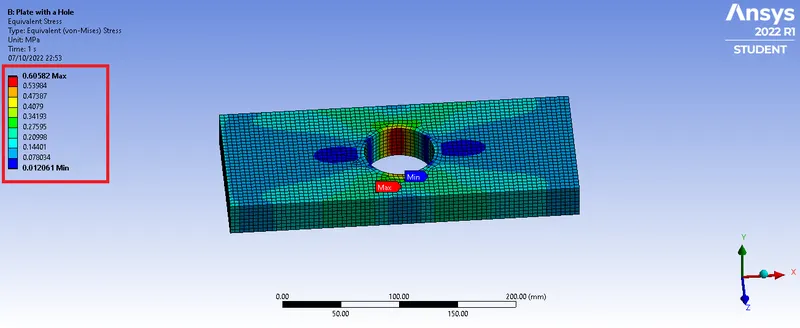
# Case 2
Total Deformation
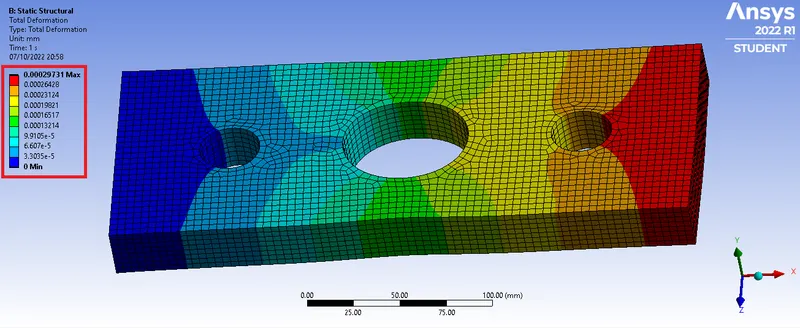
Equivalent stress
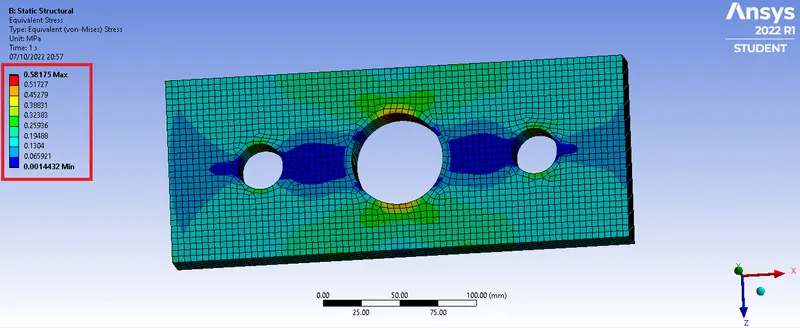
FINAL RESULT:
| S.No | Solution | Plate with a hole(Case 1) | Plate with three hole(Case 2) |
| 1. | Total deformation(Maximum) | 2.7494e-004 mm | 2.9731e-004 mm |
| 2. | Total deformation(Minimum) | 0 | 0 |
| 3. | Equivalent stress(Maximum) | 0.60582 MPa | 0.58175 MPa |
| 4. | Equivalent stress(Minimum) | 1.4868e-002 MPa | 1.4432e-003 MPa |
CONCLUSION:
- From the results above, we can conlcude that the plate with a hole has less deformation than the plate with three hole.
- Stress level in plate with a hole has is higher than the plate with three holes.
- From analysis point of view, we can say that choosing plate with one hole because if we compare the stresses for both cases its minimal level. We can also choose plate with three holes, which is computationally inexpensive at the cost of result which we produced.
- From manufacturing point of view, we can choose plate with one hole because it has less number of holes which in turn causes less work for applicaton, thus resulting in saving total production cost.