Analysis on Spur Gear with Different Materials (ANSYS Workbench)
Aim :
To perform various analysis on a spur gear and conclude a better material based on the analysis. The analysis is done on three materials i.e., Cast Iron(ductile), Cast Steel and Cast Bronze. The static structural analysis is done to find out the Equivalent Stress, Total Deformation and Stress Intensity.
FILE : Spur_Gear
Introduction :
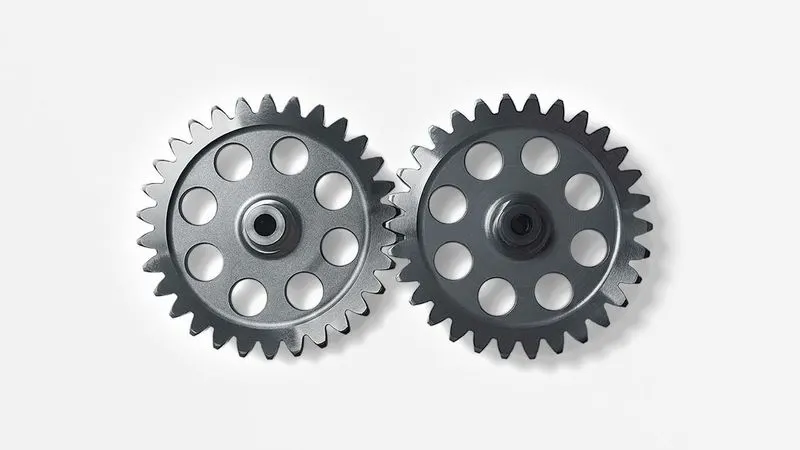
Spur gears are a type of cylindrical gear, with shafts that are parallel and coplanar, and teeth that are straight and oriented parallel to the shafts. They’re arguably the simplest and most common type of gear – easy to manufacture and suitable for a wide range of applications. The teeth of a spur gear have an involute profile and mesh one tooth at a time. The involute form means that spur gears only produce radial forces (no axial forces), but the method of tooth meshing causes high stress on the gear teeth and high noise production. Because of this, spur gears are typically used for lower speed applications, although they can be used at almost any speed.
Procedure :
- Import the STP file and assign engineering data to it. Here in this project, we find the Equivalent Stress, Total deformation and Stress Intensity of
CASE 1 : CAST IRON (DUCTILE)
CASE 2 : CAST STEEL
CASE 3 : CAST BRONZE - For every case we have to solve individually and obtain the data. Also, some of the outputs are saved as animation for easy understanding.
- We open the model in Mechanical Workshop and assign left and right gear accordingly.
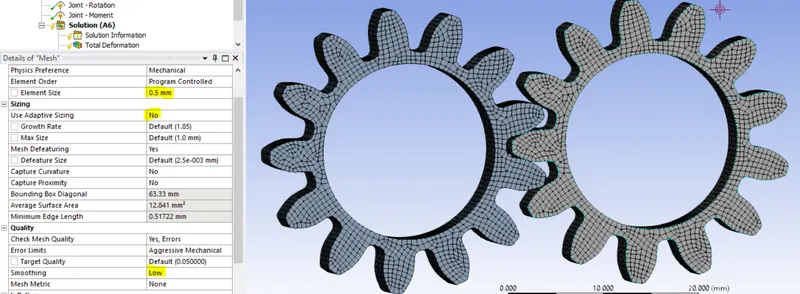
- Then meshing criteria was given as below :
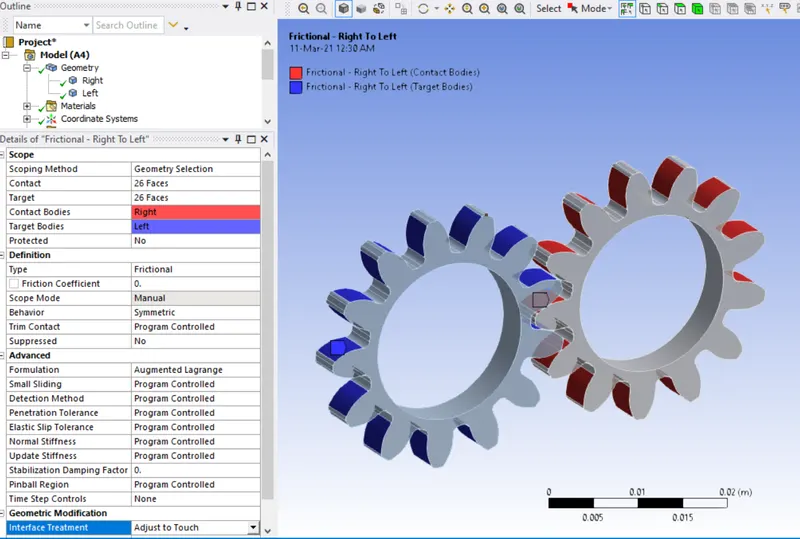
- Frictional Contacts was given with contact and target selected manually consisting of 26 faces. Also, the Interface Treatment was changed to Adjust to Touch
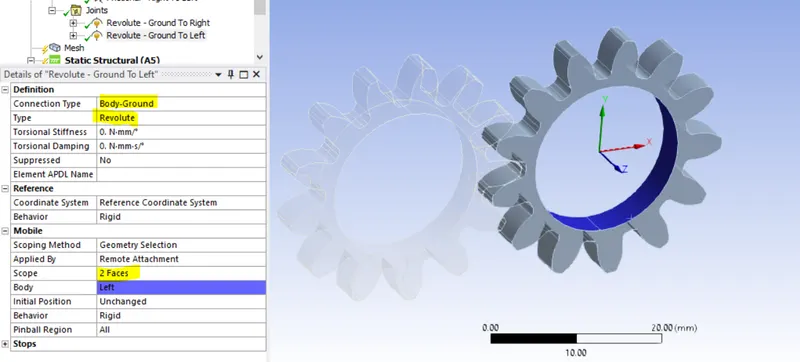
- Under Joints, Body-Ground joint with type as Revolute by selecting inner faces as the scope of the model :
- Before the analysis the Static Structural analysis settings one gear was set as rotational with tabular rotation inserted and the other gear was set as moment with clockwise moment given in tabular form :
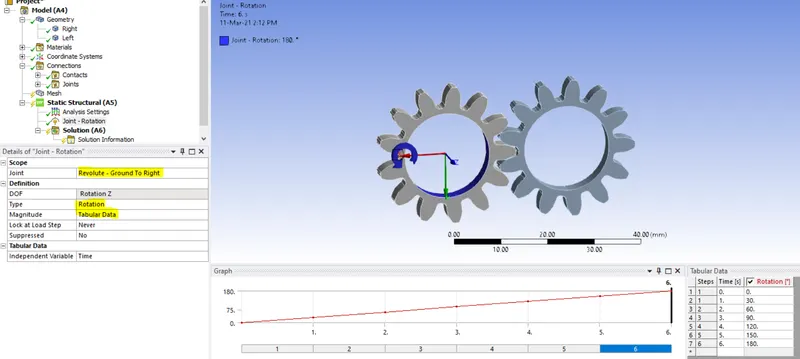
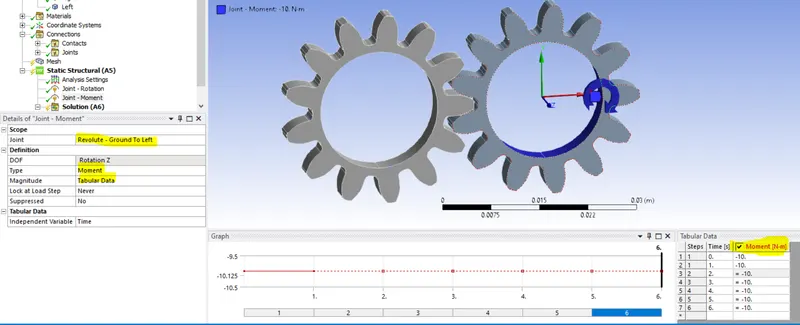
- And finally the Solver was started and the below results where obtained.
Output :
Case 1 : Cast Iron (Ductile)
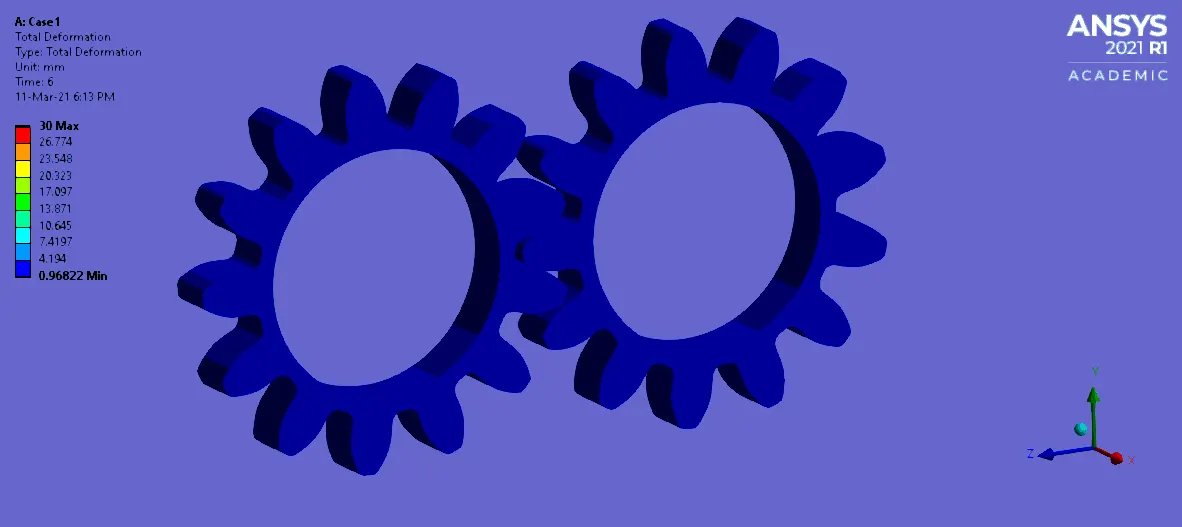
| Total Deformation | 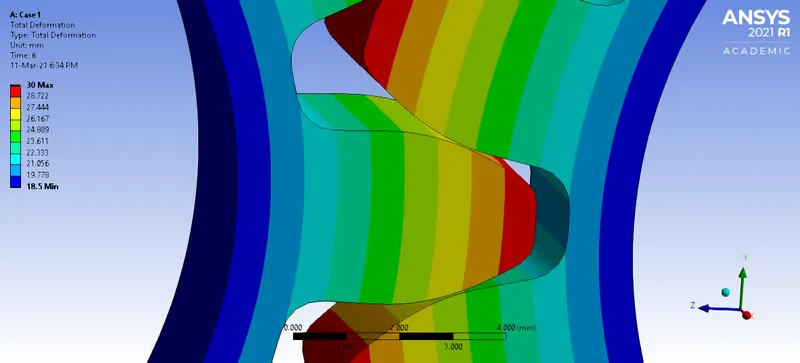 |
 |
|
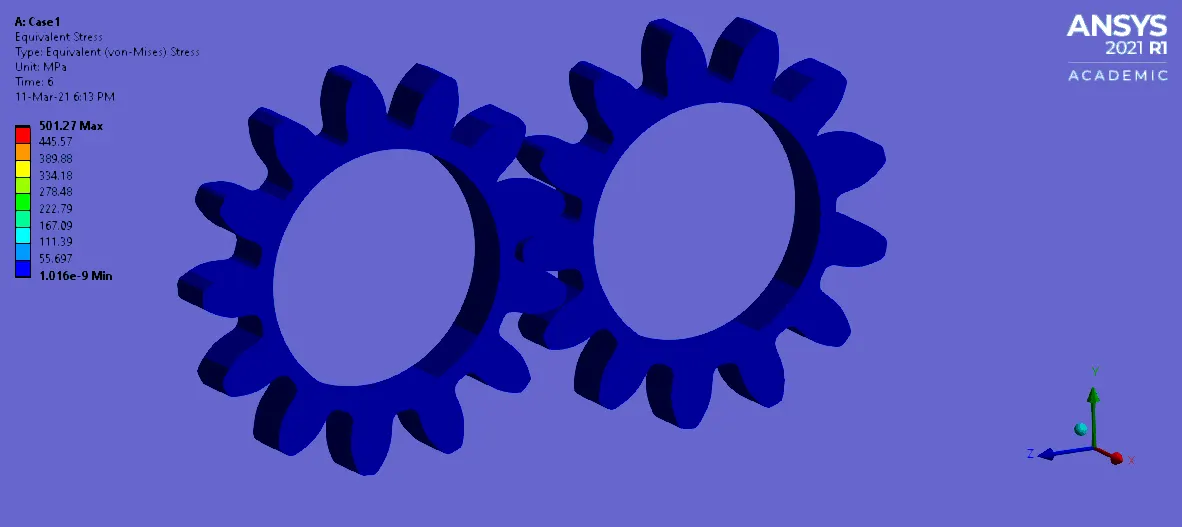
| Equivalent Stress | 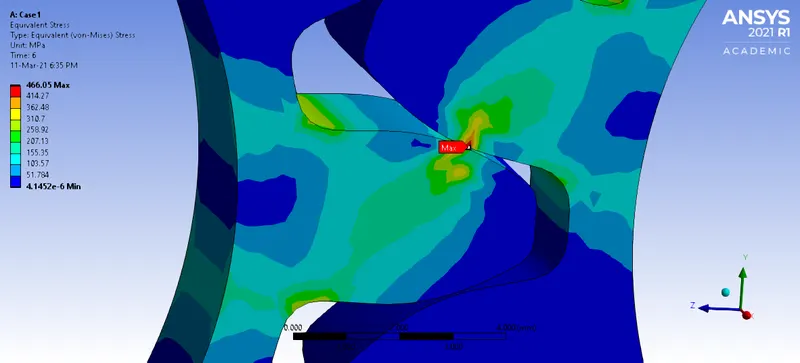 |
 |
|
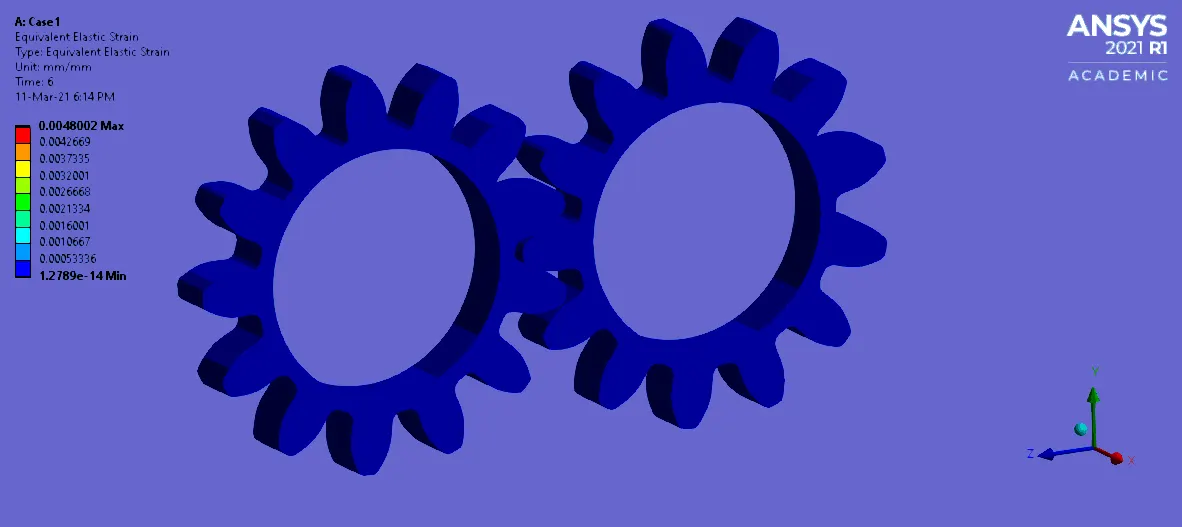
| Equivalent Elastic Strain | 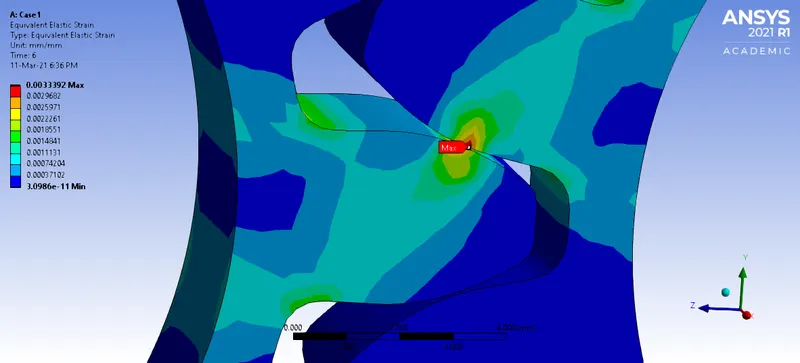 |
 |
|
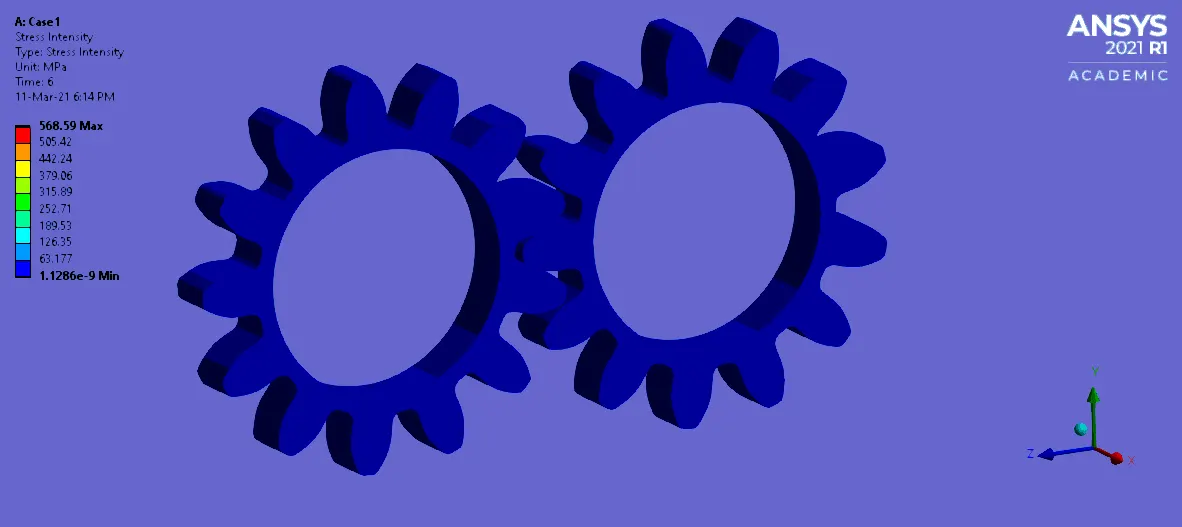
| Stress Intensity | 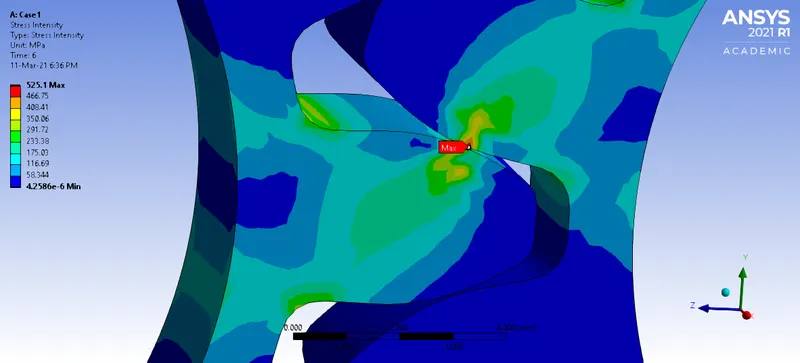 |
 |
Case 2 : Cast Steel
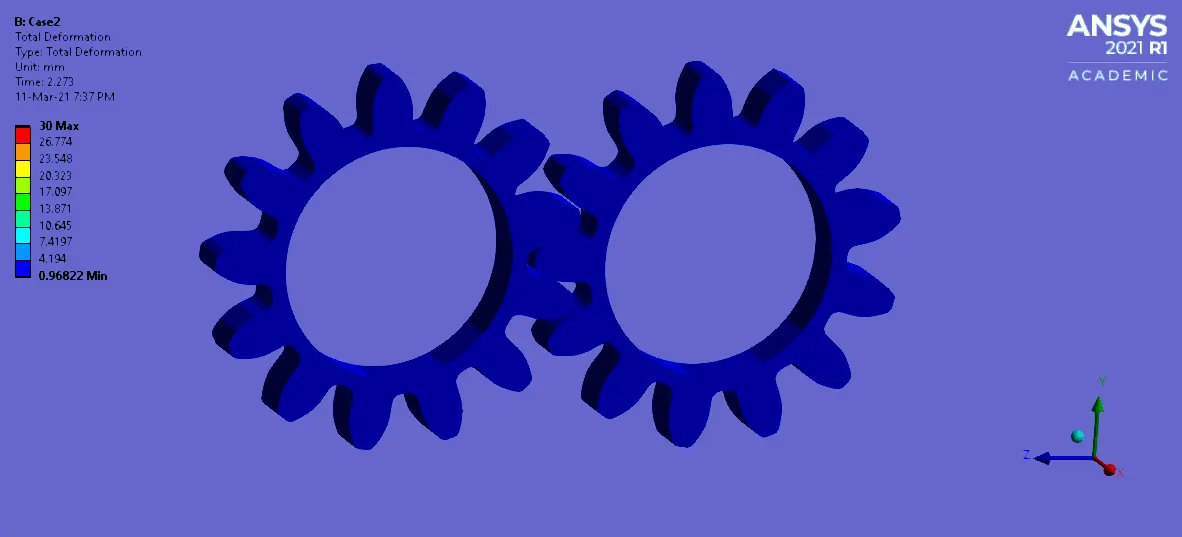
| Total Deformation | 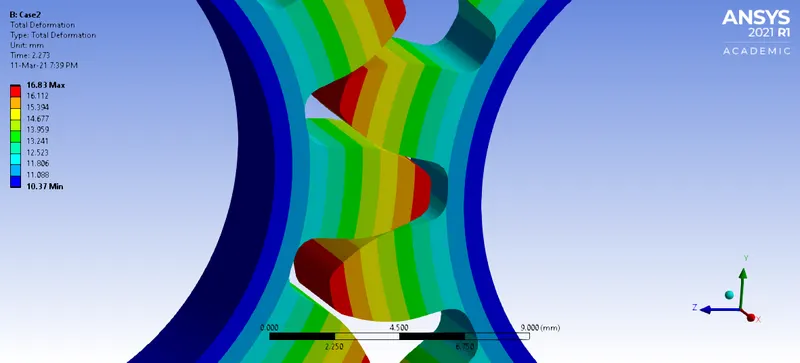 |
 |
|
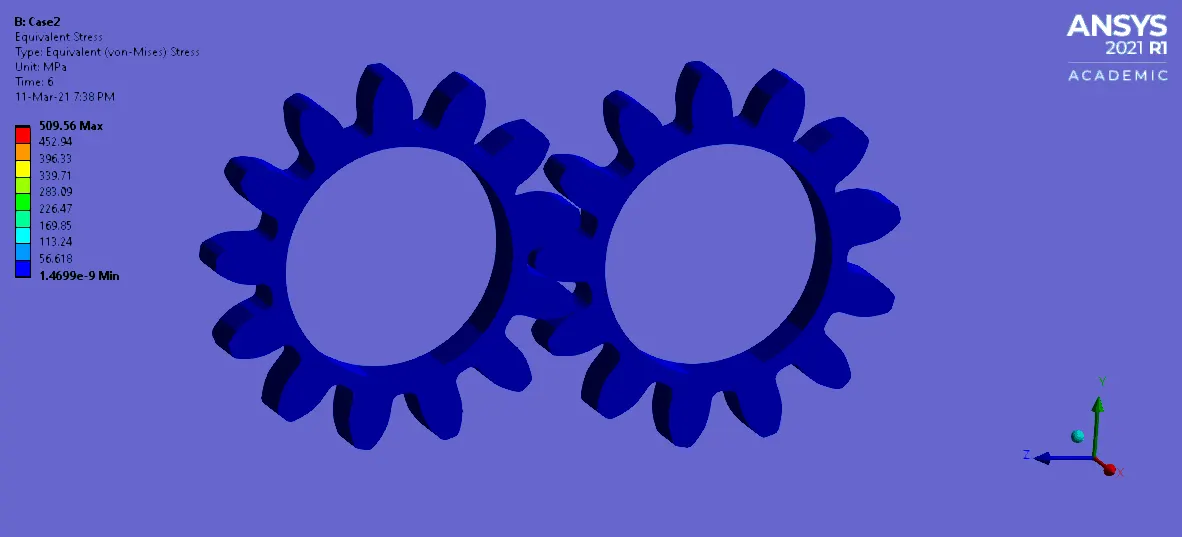
| Equivalent Stress | 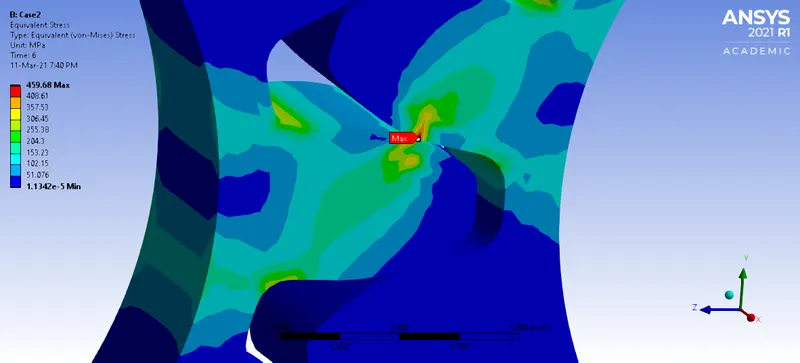 |
 |
|
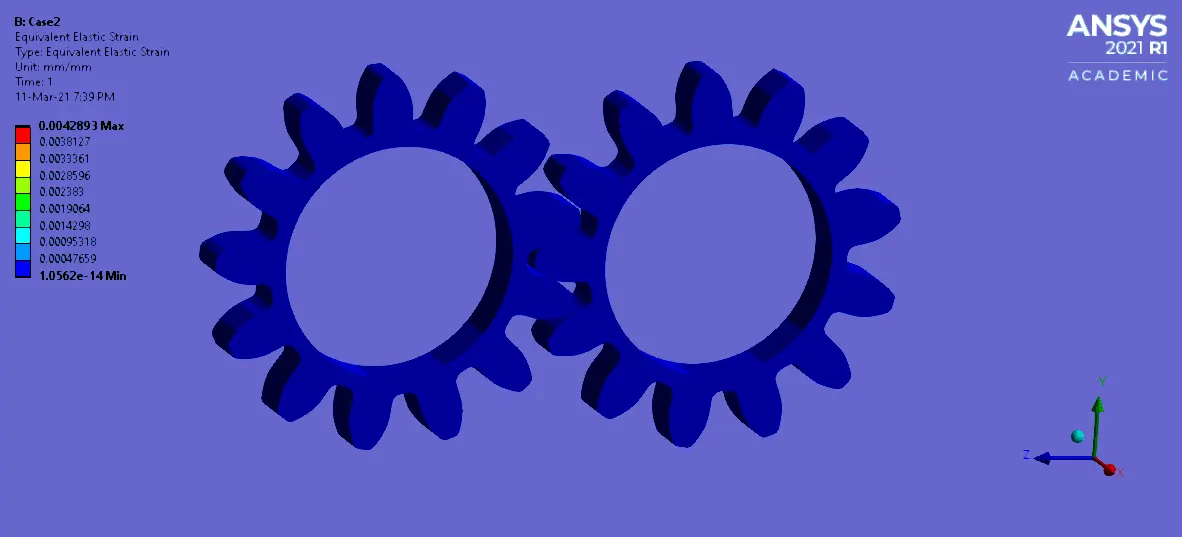
| Equivalent Elastic Strain | 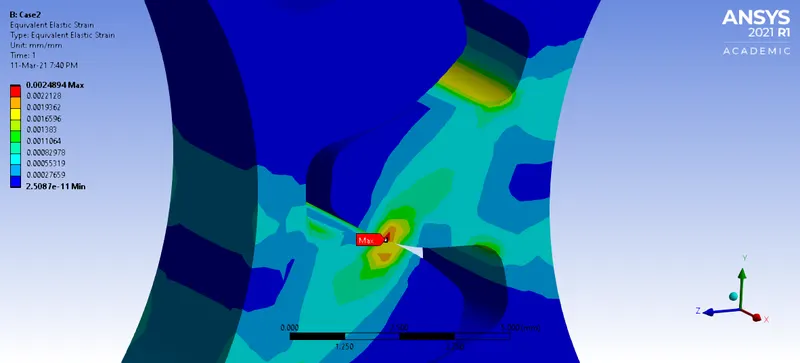 |
 |
|
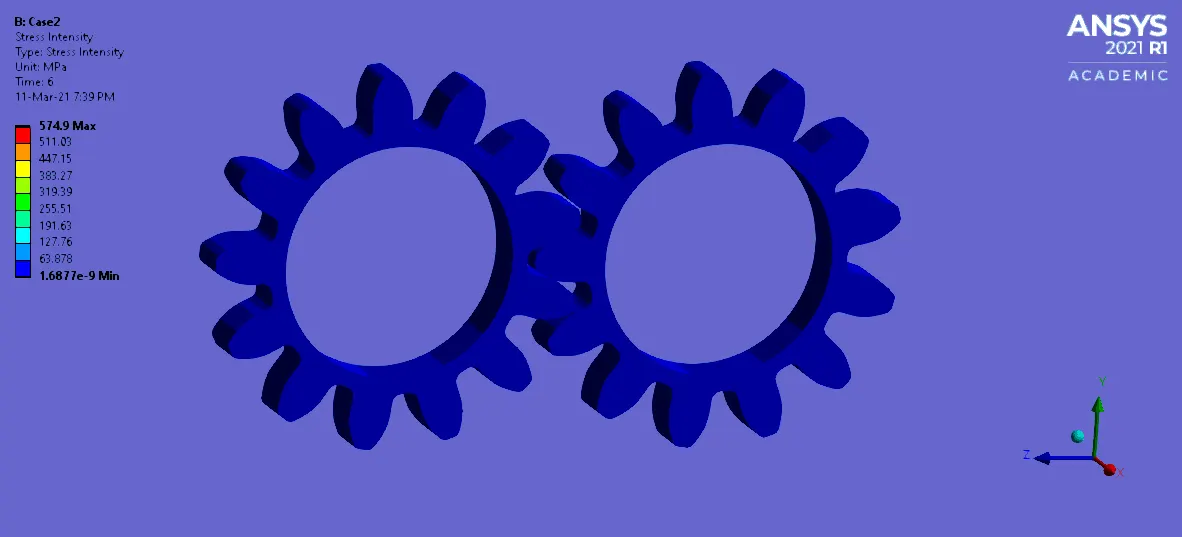
| Stress Intensity | 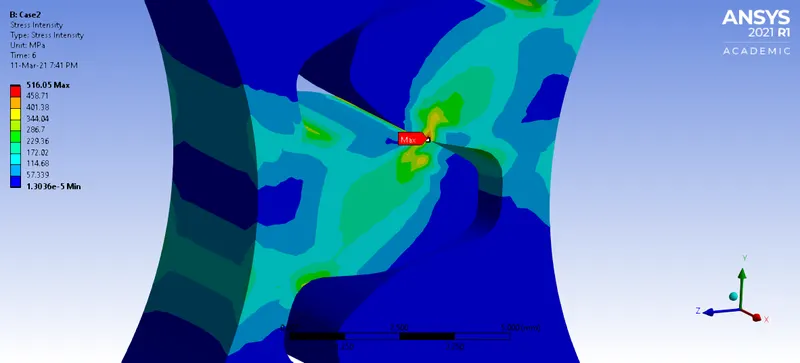 |
 |
Case 3 : Cast Bronze
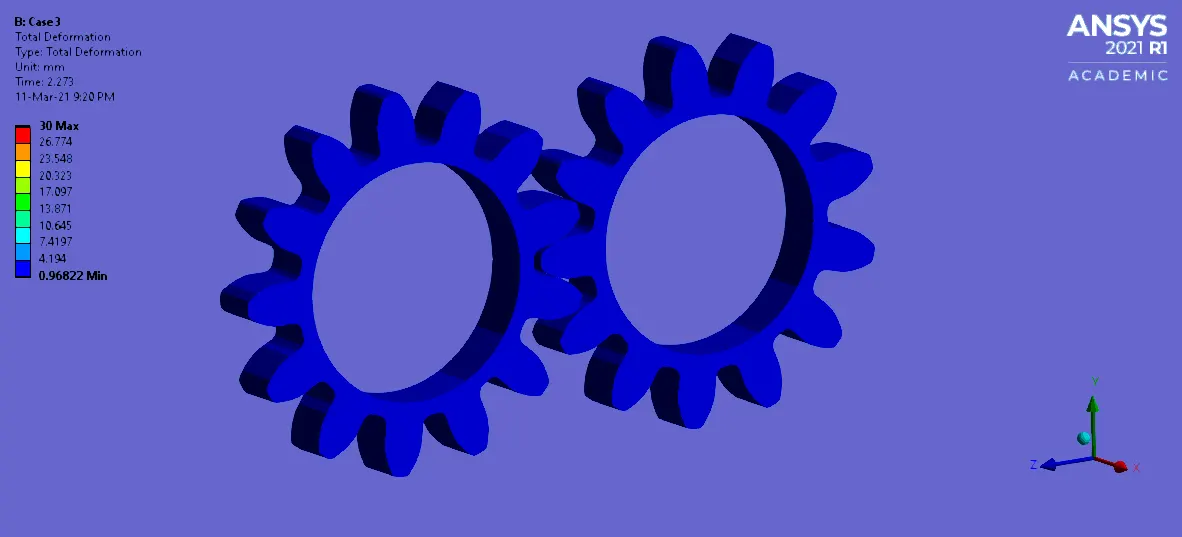
| Total Deformation | 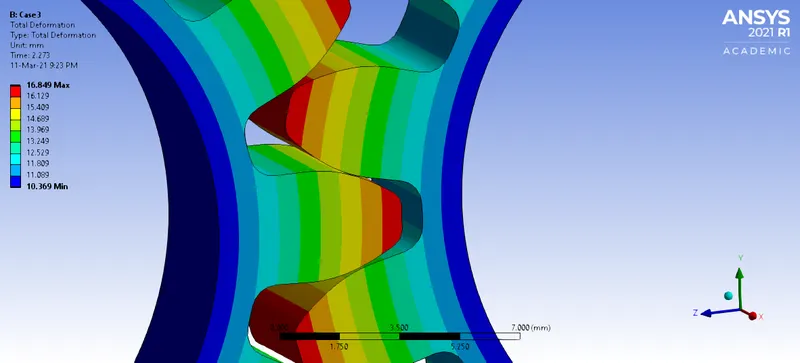 |
 |
|
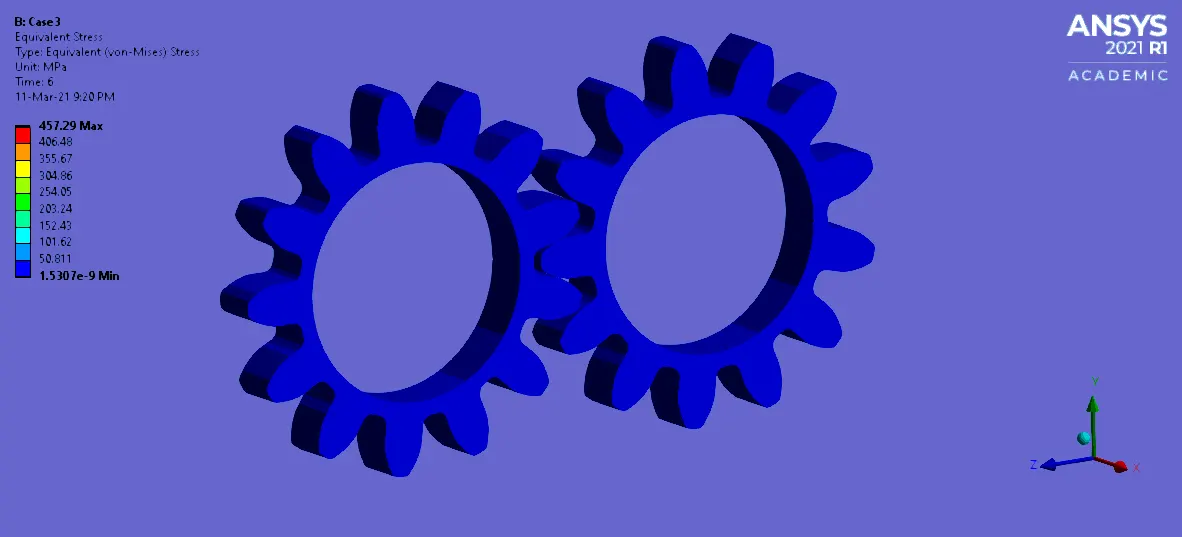
| Equivalent Stress | 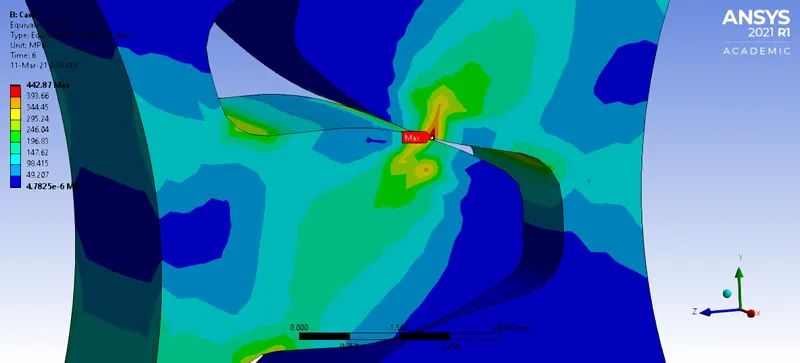 |
 |
|
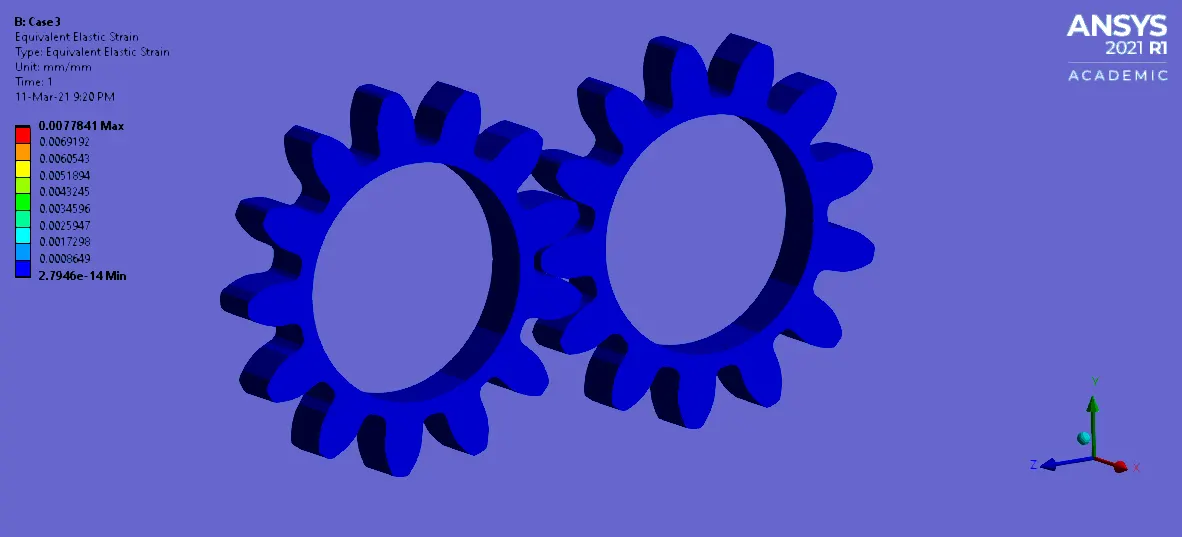
| Equivalent Elastic Strain | 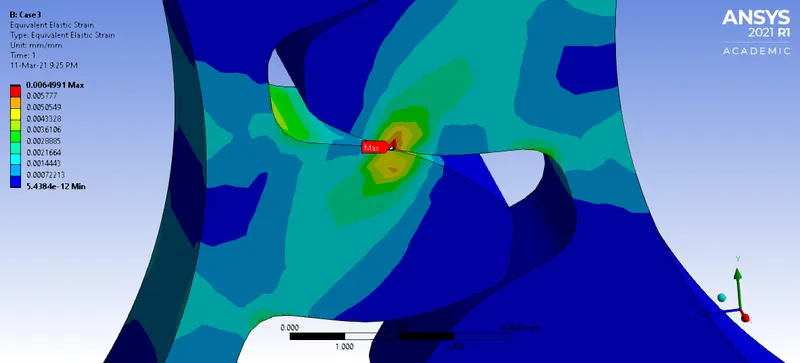 |
 |
|
| Stress Intensity | 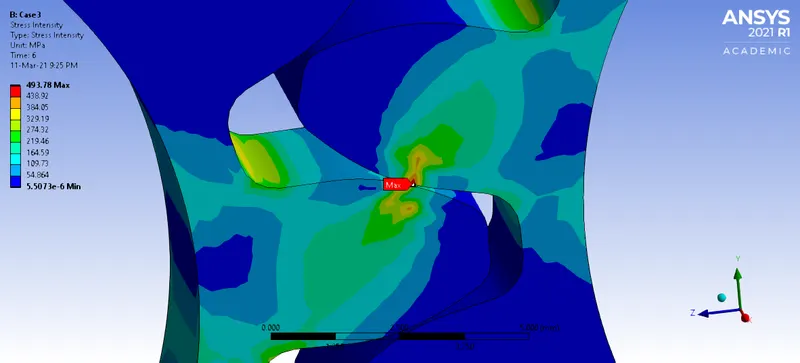 |
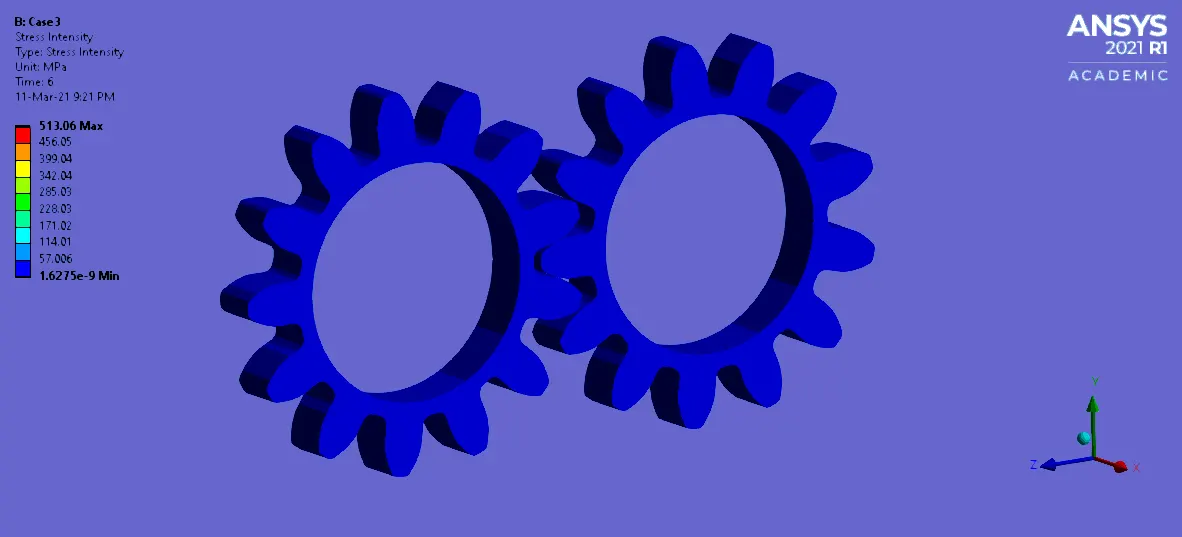 |
Pressure at the Contact Surfaces :
| Case 1 :Cast Iron(Ductile) | 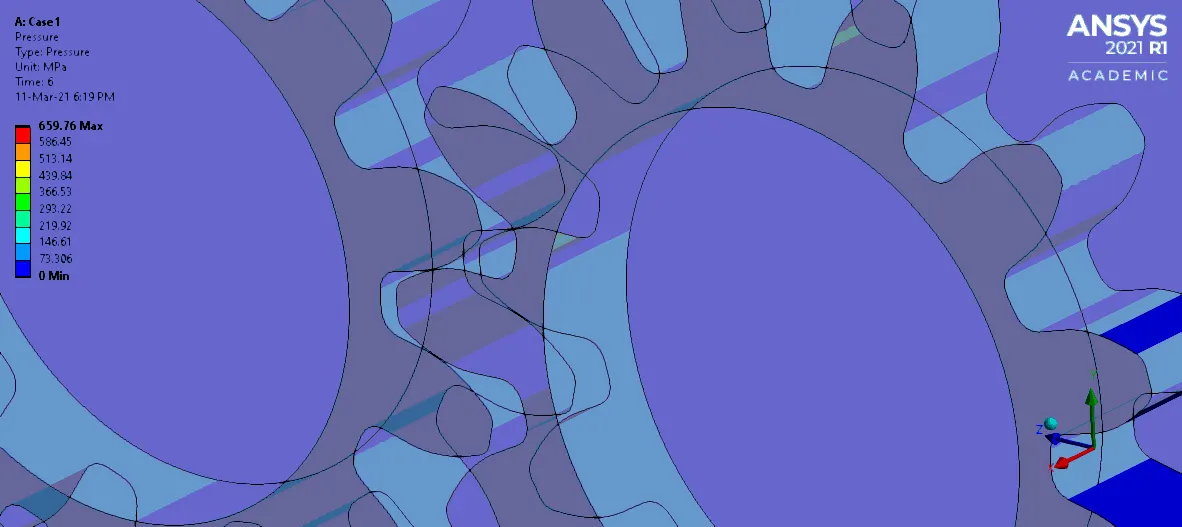 |
| Case 2 :Cast Steel | 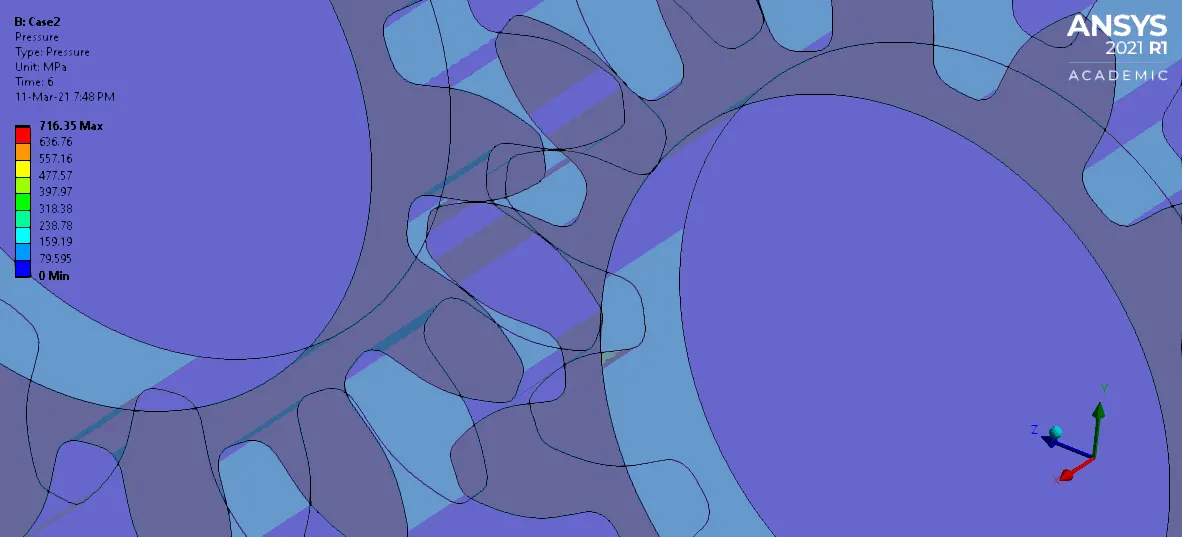 |
| Case 3: Cast Bronze | 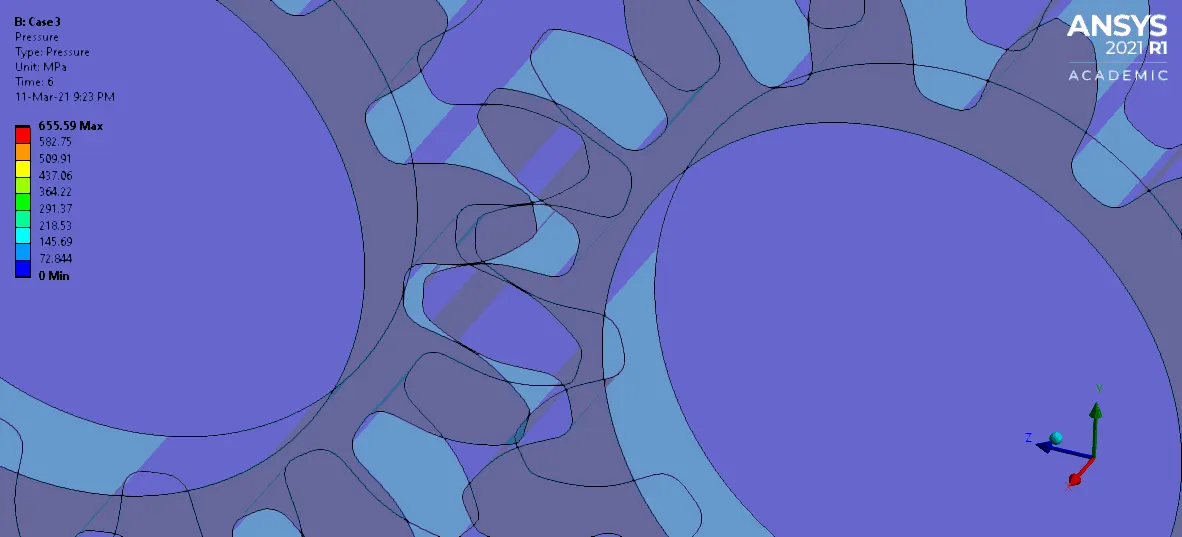 |
Result :
| Material | Total Deformation(mm) | Max Equivalent Stress(MPa) | Max Stress Intensity(MPa) |
| Cast Iron (Ductile) | 30 | 466.05 | 525.1 |
| Cast Steel | 30 | 459.68 | 516.05 |
| Cast Bronze | 30 | 442.87 | 493.78 |
The Stress Intensity factor is fracture mechanics is used to predict the stress state near the tip of a crack or notch caused by a remote load or residual stress. Essentially it gives the stress variation in cracks or notch or tip of the material.
Conclusion :
From the above result, it is seen that Cast Iron fails more quickly that the other three materials since it has the highest stress intensity of them all. It also has the highest Equivalent Stress.