Week 1 Spur Gear Challenge
AIM:
Perform Advanced Structural Analysis on spur gear using ANSYS Workbench with three different materials.
OBJECTIVE:
*Run Simulation on spur gear with changing the materials and compare the required results (i.e Equivalent Stress, Total deformtion, Stress intenity) among them.
*The Materials used in this simulation are:
- cast iron
- cast steel
- cast bronze.
GIVEN CAD MODEL:
*Spur gears are a type of cylindrical gear, with shafts that are parallel and coplanar, and teeth that are straight and oriented parallel to the shafts. They’re arguably the simplest and most common type of gear – easy to manufacture and suitable for a wide range of applications.
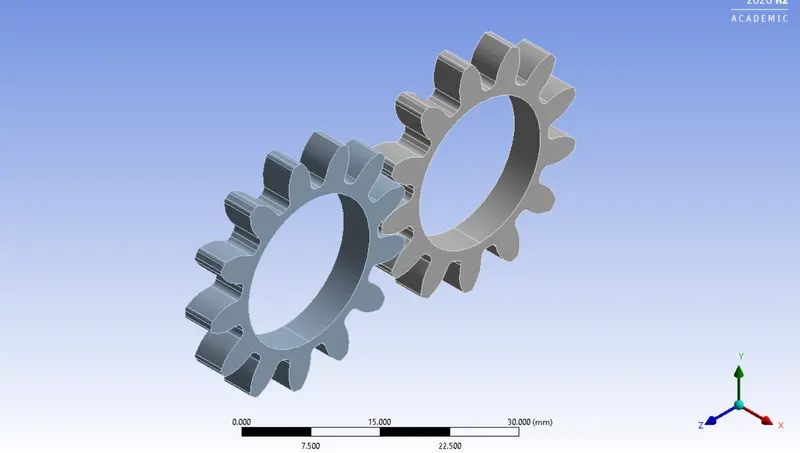
Spur gear Fig (1)
*Spur gears can be made from metals such as steel or brass, or from plastics such as nylon or polycarbonate.
*Gears made of plastic produce less noise, but at the expense of strength and loading capability.
*Unlike other gear types, spur gears don’t experience high losses due to slippage, so they generally have high transmission efficiency. Multiple spur gears can be used in series to achieve large reduction ratios.
*Spur gears are generally seen as best for applications that require speed reduction and torque multiplication, such as ball mills and crushing equipment.
PROCEDURE:
STRESS INTENSITY:-
*Stress intensity factor is one of the most fundamental and useful parameter in all of fracture mechanics.
*It discribes the stress state at a crack tip is related to the rate of growth and is ues to establish the failure criteria due to fracture.
*The stress intensity factor 'K' is commonly expressed in terms of the applied streses.
*In general the stress intensity factor depends on the applied stress, crack size, and the geometry.
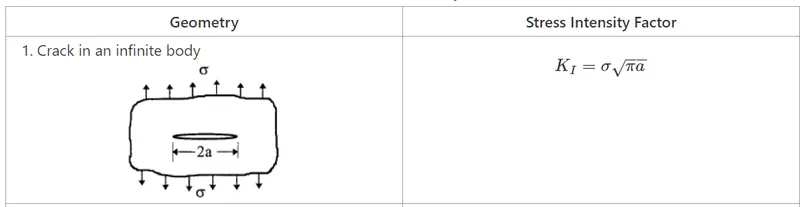
Table (1).
*In above table 'a' is half width of the crack.
CASE-1: CAST IRON
*Use cast Iron is the material for spur gear and perform the simulation to find Deformation, Equivalent stress, stress integrity.
MATERIAL PROPERTIES OF CAST IRON:
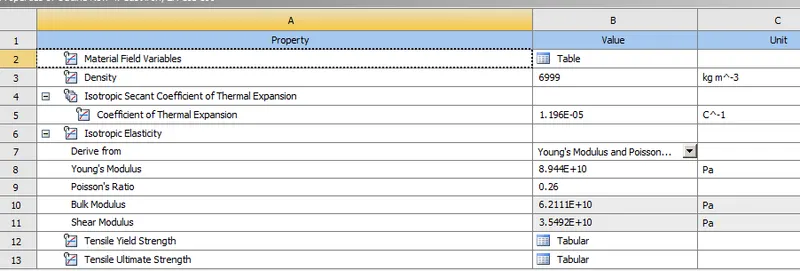
Fig(2).
EQUIVALENT STRESS:
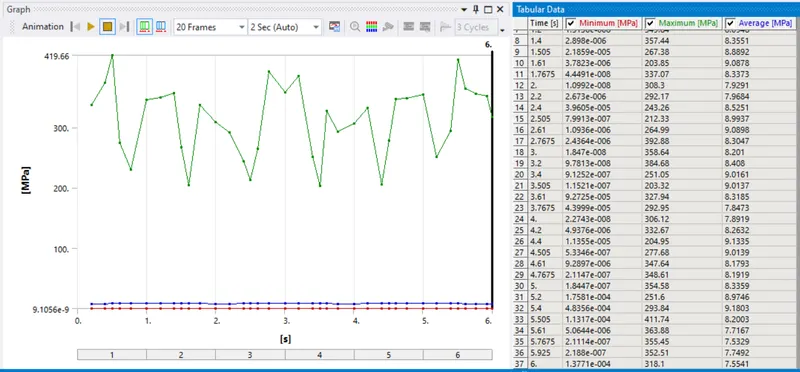
Max:318.1 (Mpa) and Min : 13E-5
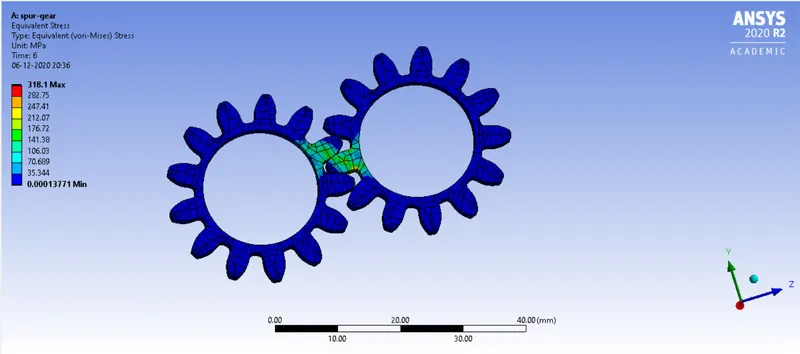
Fig(3).
*Equivalent stress vs Time Graph and its tabular data shown in Fig(4).
Fig(4).
TOTAL DEFORMATION:
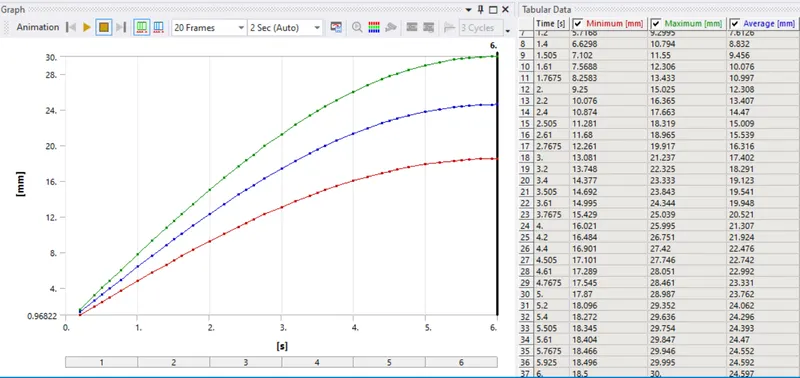
Max :30(mm) and Min: 18.5(mm).
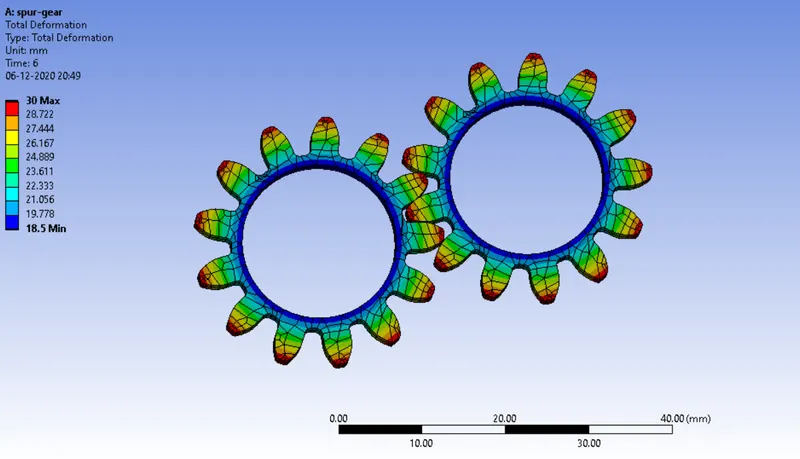
Deformation Fig(5).
*Deformtion vs Time Graph and its tabular data shown in Fig(6).
Fig(6).
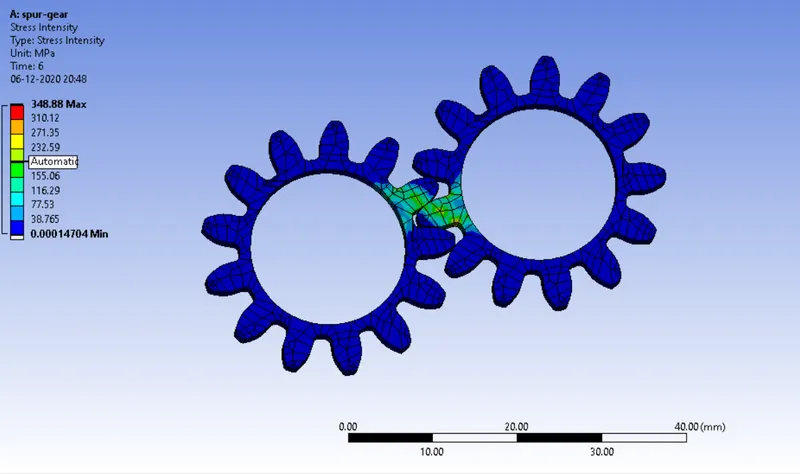
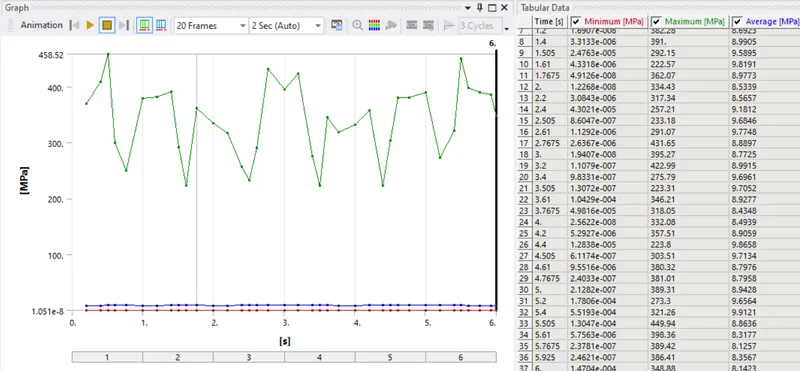
STRESS INTENSITY:
Max:348.88 (Mpa) and Min:14E-5
Fig(7).
*Stress intensity vs Time Graph and its tabular data shown in Fig(8).
Fig(8).
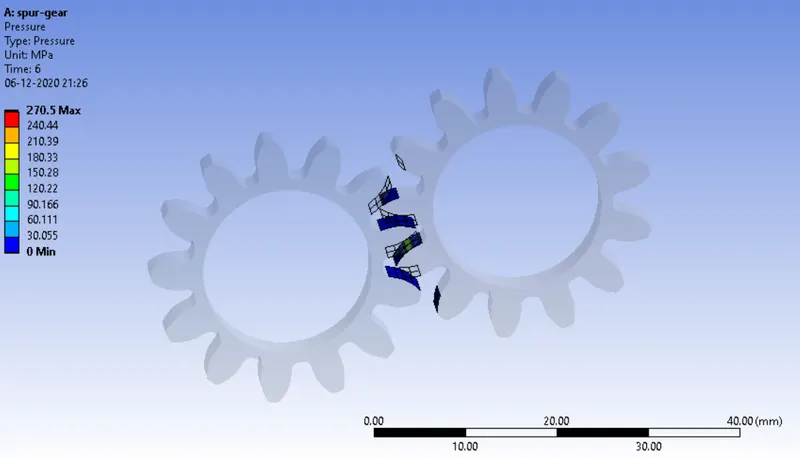
PRESURE:
Max:270 (Mpa) and Min:0 (Mpa).
Fig(9).
CASE-2: CAST STEEL
*Use cast steel is the material and perform the same analysis and the results.
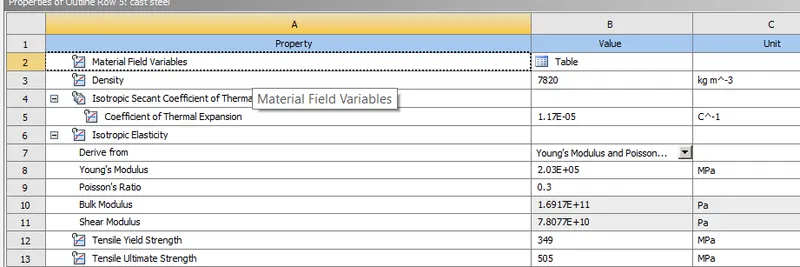
MATERIAL PROPERTIES OF CAST STEEL:
Fig(10).
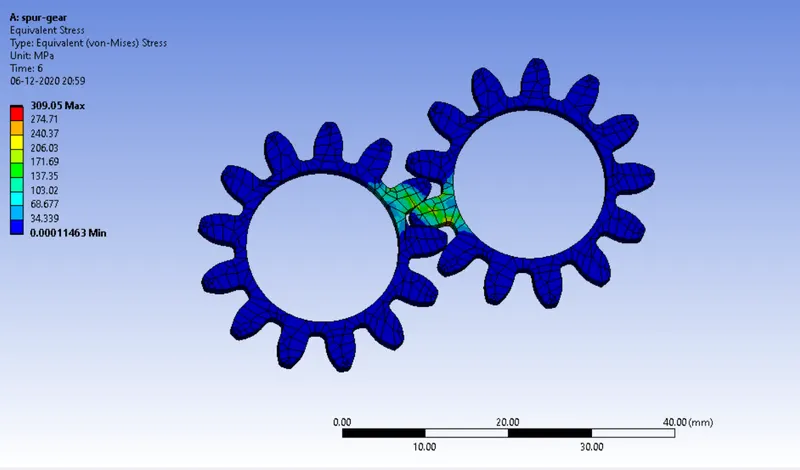
EQUIVALENT STRESS:
Max:309.05 (Mpa) and Min : 11E-5
Fig(11).
*Equivalent stress vs Time Graph and its tabular data shown in Fig(12).
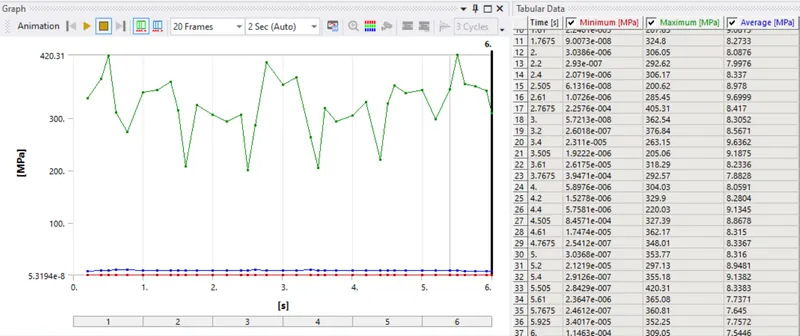
Fig(12).
TOTAL DEFORMATION:
Max :30(mm) and Min: 18.5(mm).
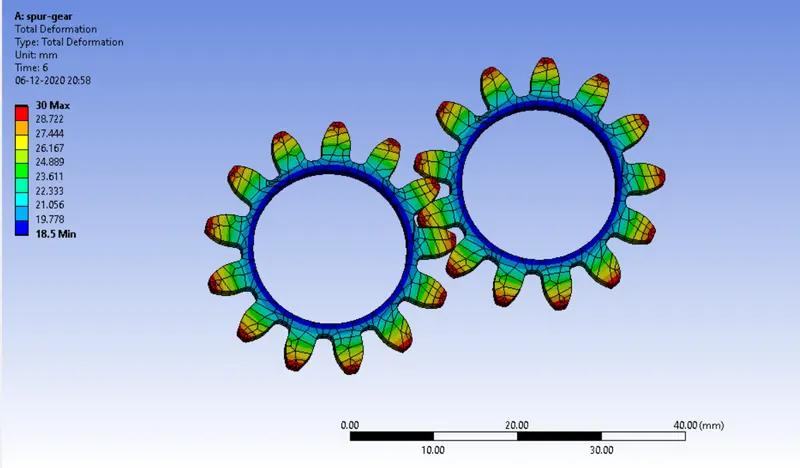
Fig(13).
*Deformtion vs Time Graph and its tabular data shown in Fig(14).
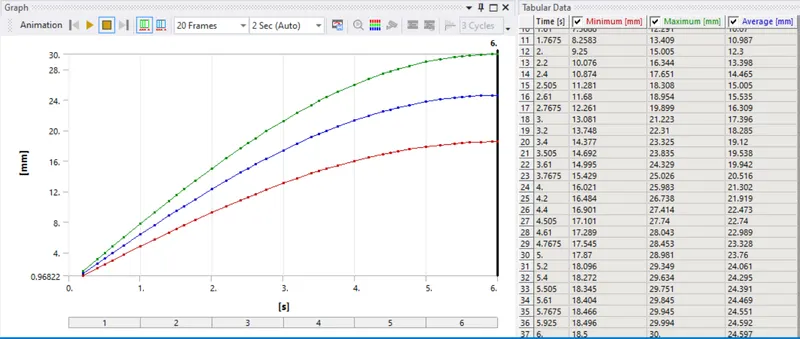
Fig(14).
STRESS INTENSITY:
Max:342.34 (Mpa) and Min:12E-5
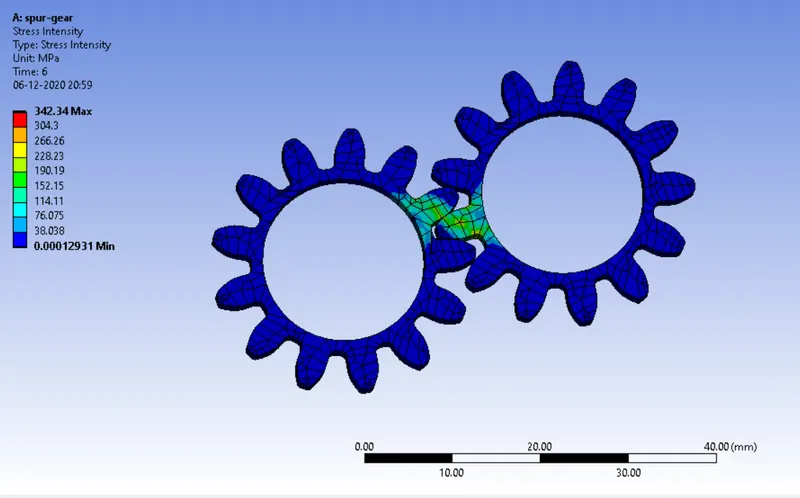
Fig(15).
*Stress intensity vs Time Graph and its tabular data shown in Fig(16).
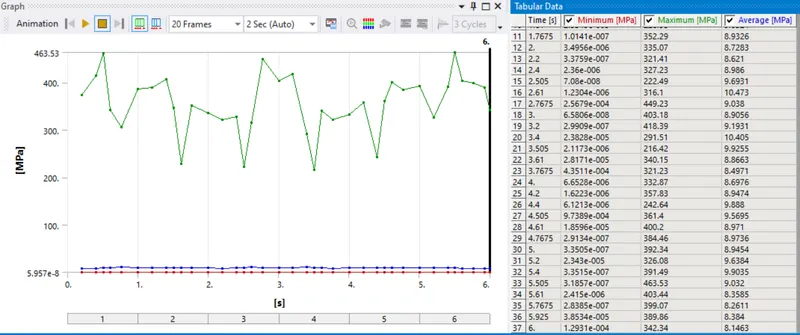
Fig(16).
PRESURE:
Max:326 (Mpa) and Min:0 (Mpa).
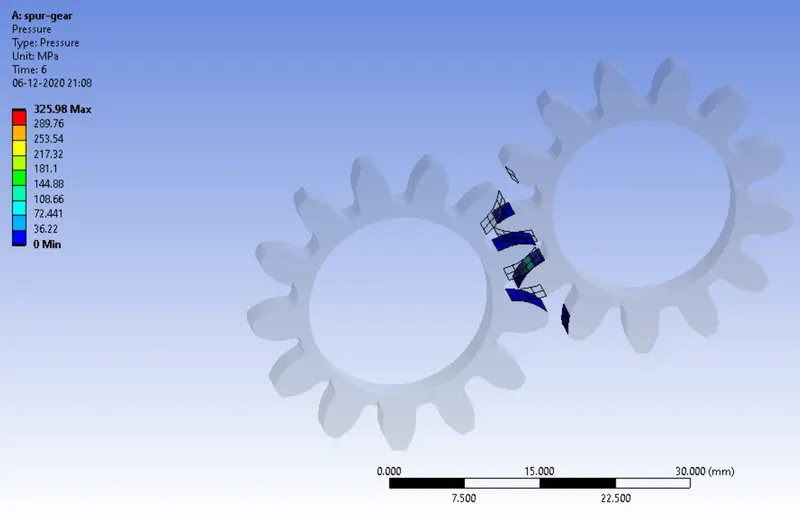
Fig(17).
CASE-3: CAST BRONZE
*Use cast bronze is the material and perform the same analysis and the results.
MATERIAL PROPERTIES OF CAST BRONZE:
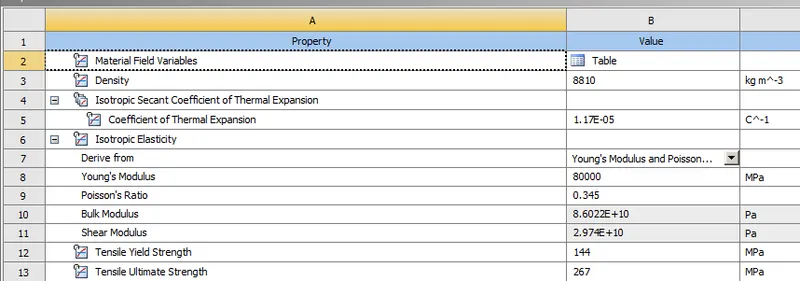
Fig(18).
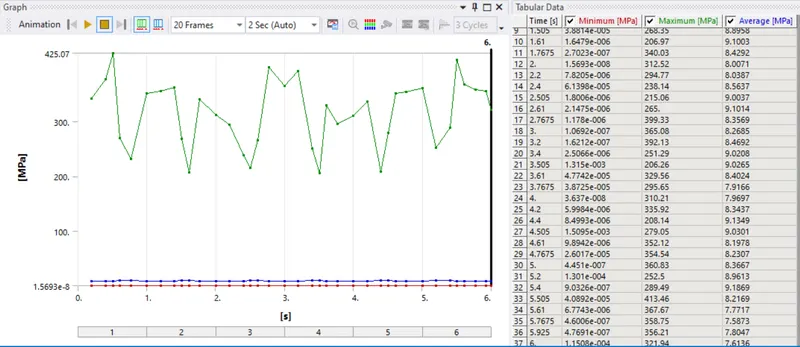
EQUIVALENT STRESS:
Max:321.94 (Mpa) and Min : 11E-5
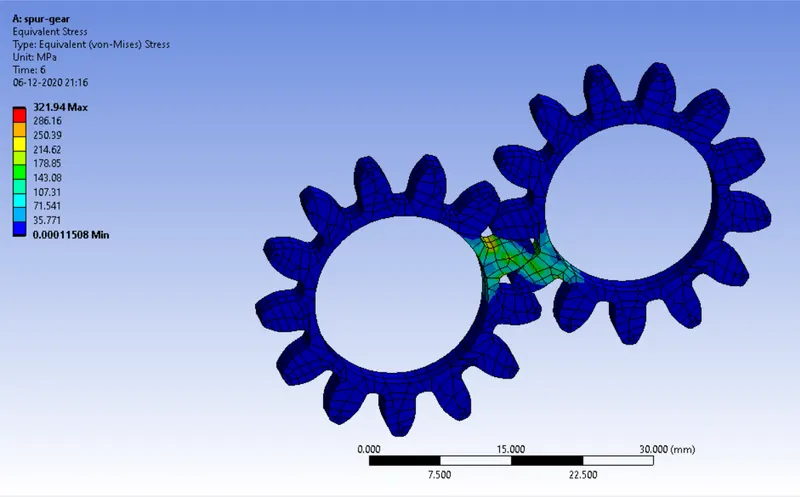
Fig(19).
*Equivalent stress vs Time Graph and its tabular data shown in Fig(20).
Fig(20).
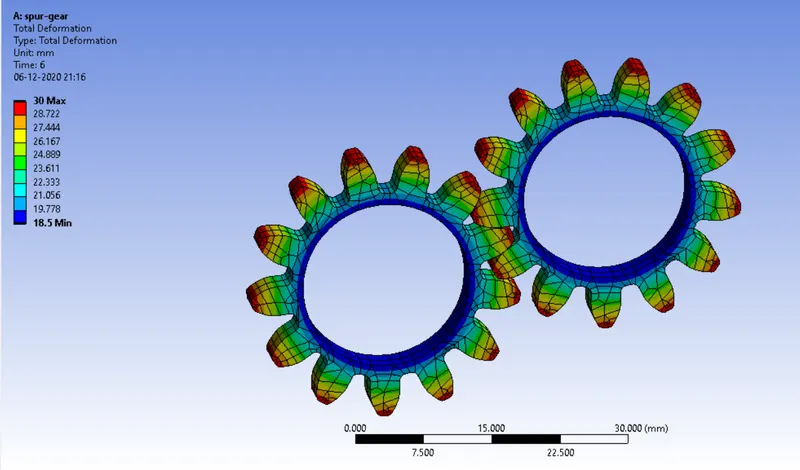
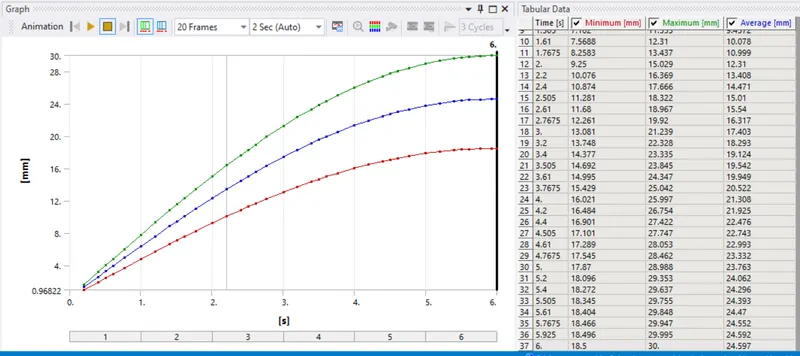
TOTAL DEFORMATION:
Max :30(mm) and Min: 18.5(mm).
Fig(21).
*Deformtion vs Time Graph and its tabular data shown in Fig(22).
Fig(22).
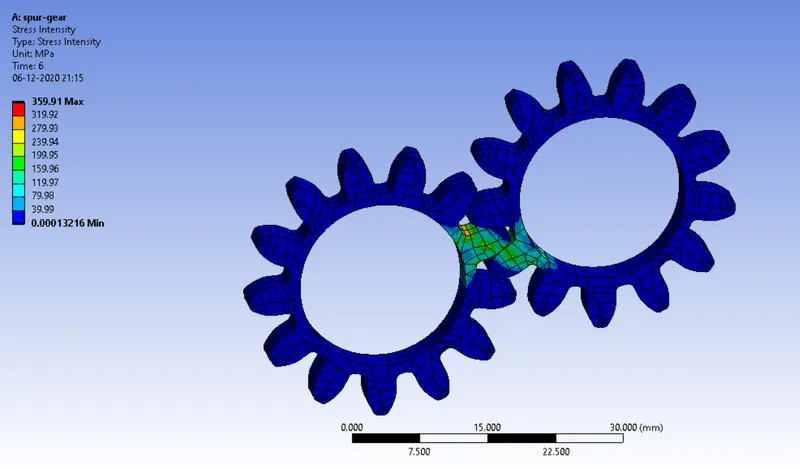
STRESS INTENSITY:
Max:359.91 (Mpa) and Min:13E-5
Fig(23).
*Stress intensity vs Time Graph and its tabular data shown in Fig(24).
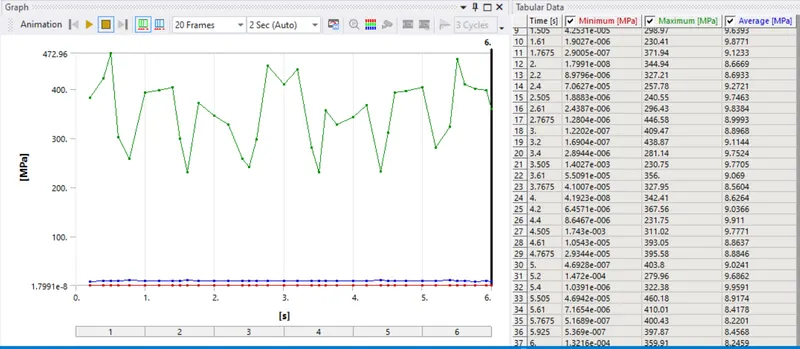
Fig(24).
PRESURE:
Max:267.26 (Mpa) and Min:0 (Mpa).
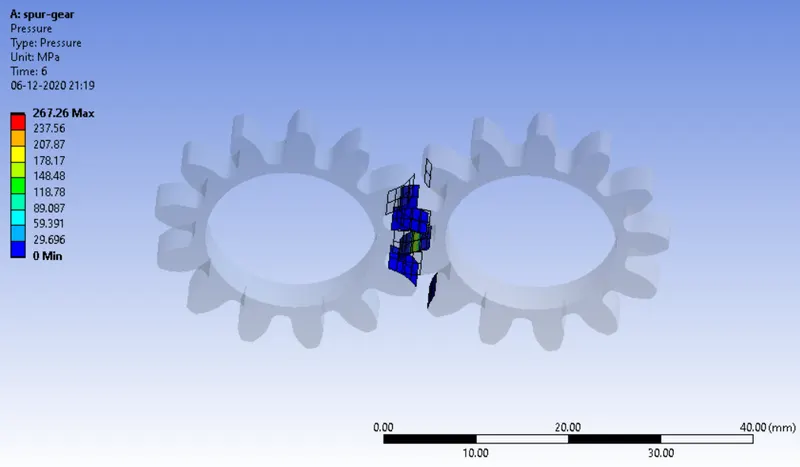
Fig(25).
RESULTS:
Comparision Of Three Materials Of Gear:
Sl.No Material Equivalent stress(Mpa) Total Deformation (mm) Stress Intensity (Mpa).
Max.= 318.1 Max.=30 Max.=348.88
1. CAST IRON
Min.=13E-5 Min.=18.5 Min.=14E-5
Max.= 309.05 Max.=30 Max.=342.34
2. CAST STEEL
Min.=11E-5 Min.=18.5 Min.=12E-5
Max.= 321.94 Max.=30 Max.=351.91
3. CAST BRONZE
Min.=11E-5 Min.=18.5 Min.=13E-5
CONCLUSION:
*Based on the analysis I prefer 'CAST STEEl' material for manufacturing because it has less Equivalent stress at the function of time and it also has less Stress Intensity where the crack initiation is started.