Week 1- Mixing Tee
Given,
Hot inlet temperature = 36°C
Cold inlet temperature = 19°C
Velocity of hot fluid at inlet = 3 m/s
Momentum ratios are 2 and 4
Momentum ratio = Vel. at cold inlet/Vel. at hot inlet
Therefore, for momentum ratio of 2, vel. at cold inlet = 6 m/s
for momentum ratio of 4, vel. at hot inlet = 12 m/s.
Case 1: Short Mixing Tee
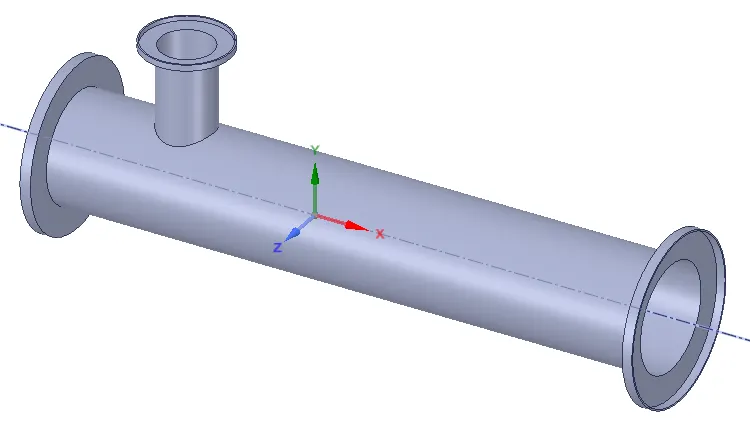
After volume extraction by selecting wetted surfaces,
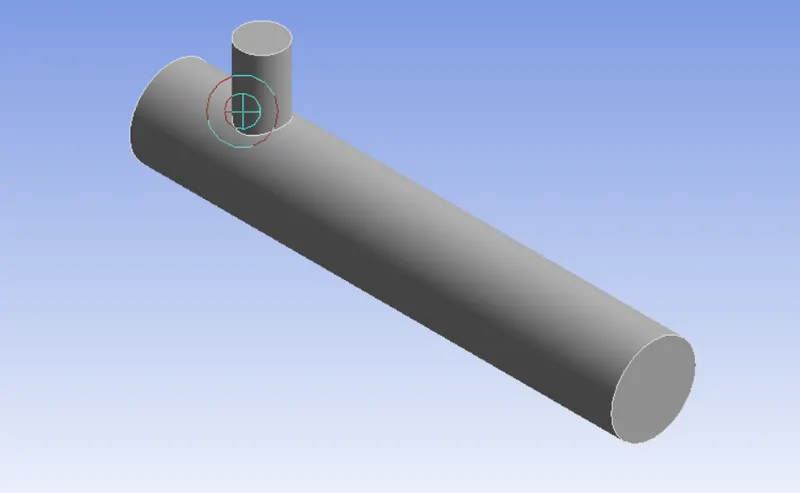
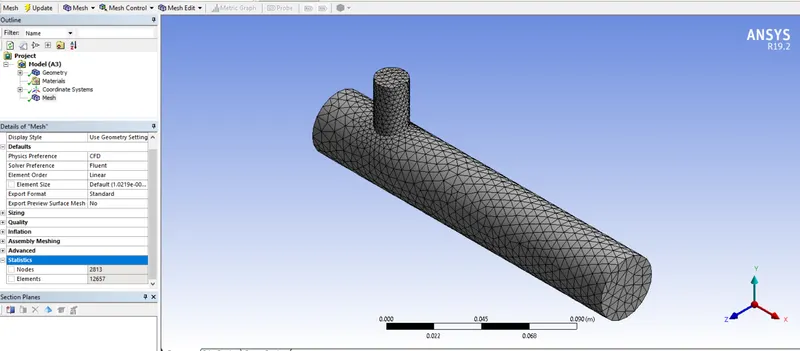
Mesh Generation:
A tetrahedral mesh is generated with total no. of elements as 12657.
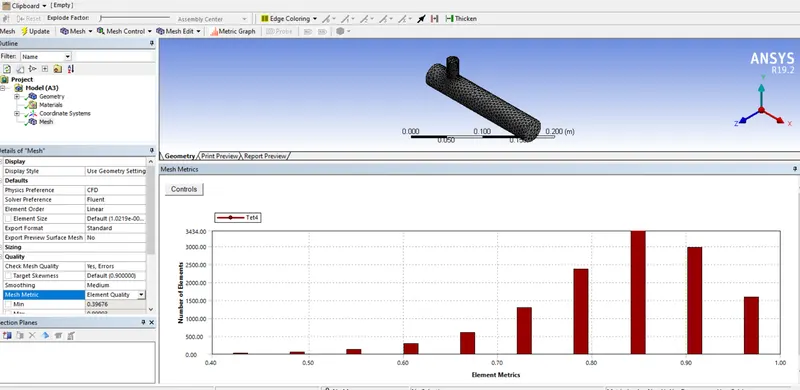
Also, the mesh quality is checked and found to be more than 40%.
Next, the surfaces are labelled as
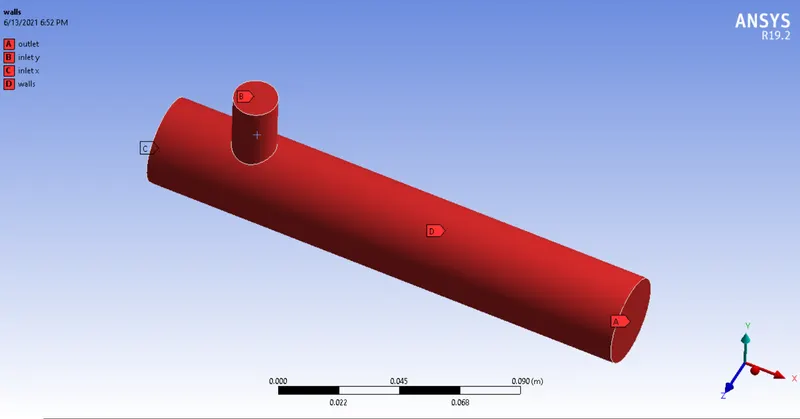
Setup:
A steady state pressure based solver is used. As temperatures are also required, energy equation is also selected.
The simualtion is run for two viscous models.
k-epsilon model

k-omega SST model
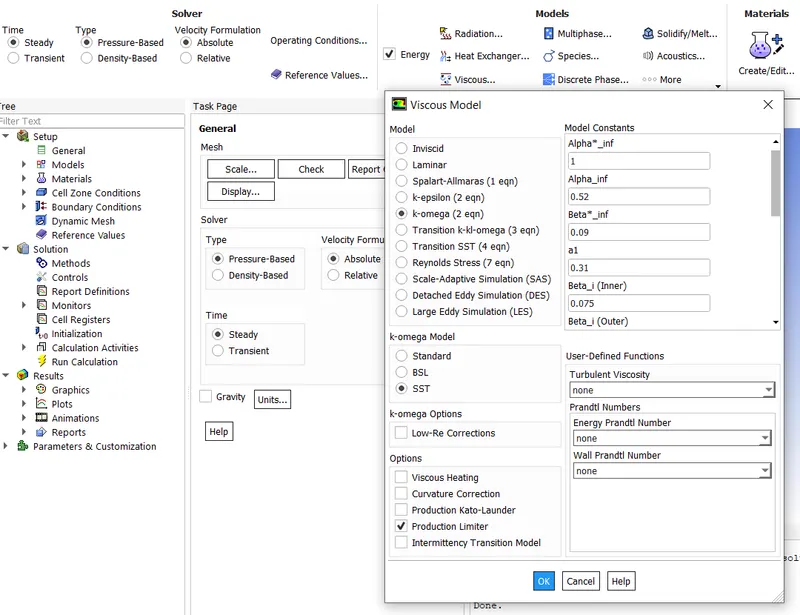
Air is taken as the fluid flow material.
Boundary conditions -
At the inlet x, velocity and temperature of air are given as 3 m/s and 36°C repectively.
At the inlet y, velocity of air is given as
v = 6 m/s for momentum ratio of 2
v = 12 m/s for momentum ratio of 4
Temperature is 19°C.
At the outlet, pressure is provided as Gauge pressure of 0 (atmospheric pressure = 1 atm).
At the walls, no slip condition and stationary wall condition is provided.
Results:
(i) For Momentum ratio = 2
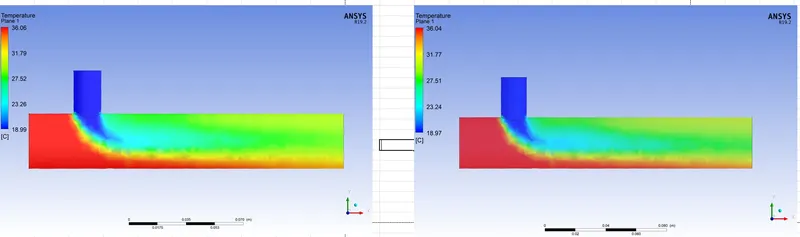
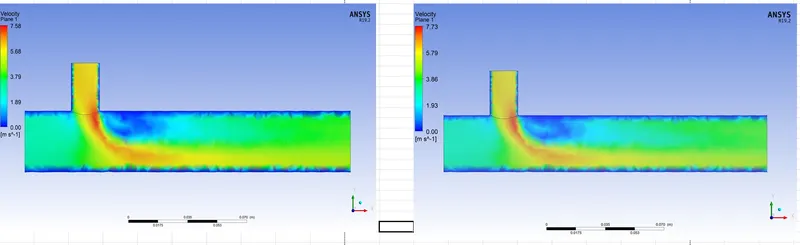
(a) k-epsilon turbulence model: (b) k-w SST model:
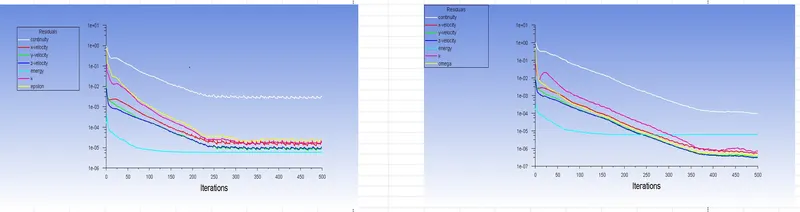
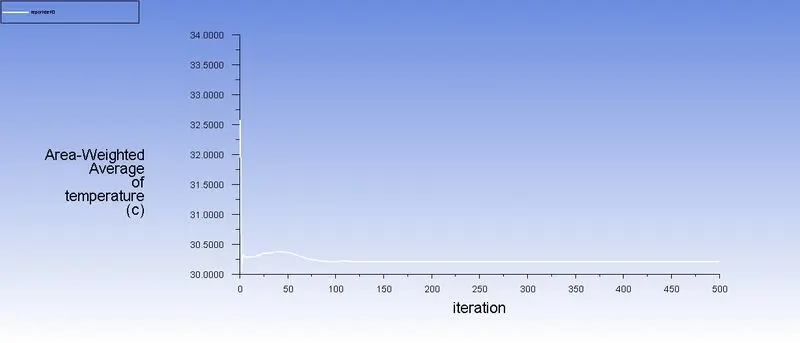
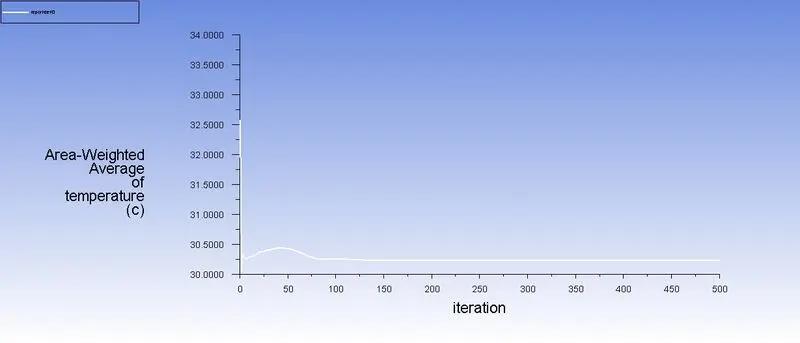
No. of iterations for convergence:
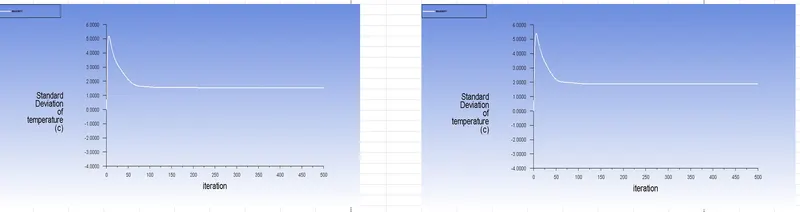
Std. deviation of temperature:
Area weighted avg. of temperature:
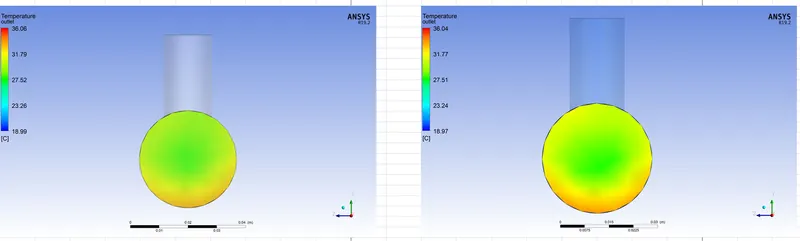
Temperature contour at outlet:
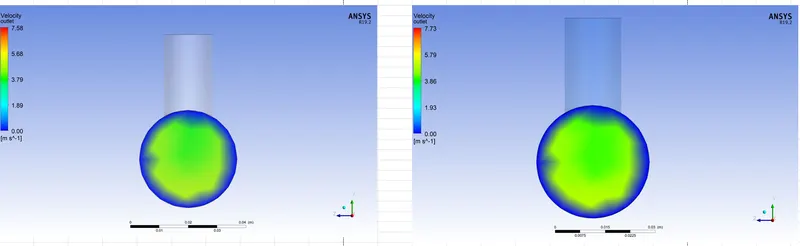
Velocity contour at outlet:
Temperature contour at mid-plane:
Velocity contour at mid-plane:
(ii) For Momentum ratio = 4
(a) k-epsilon turbulence model: (b) k-w SST model:
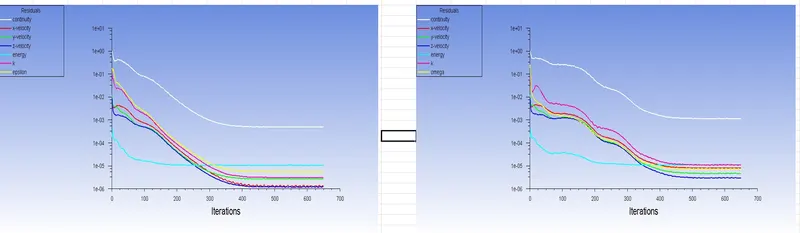
No. of iterations for convergence:
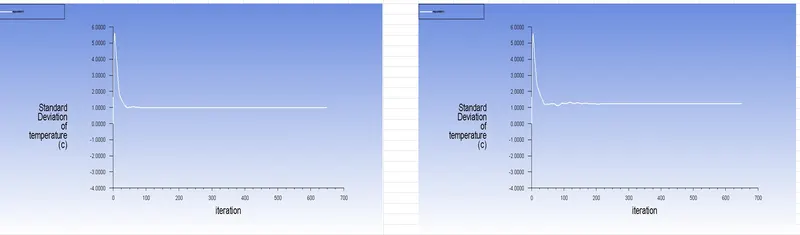
Std. deviation of temperature:
Area weighted avg. of temperature:
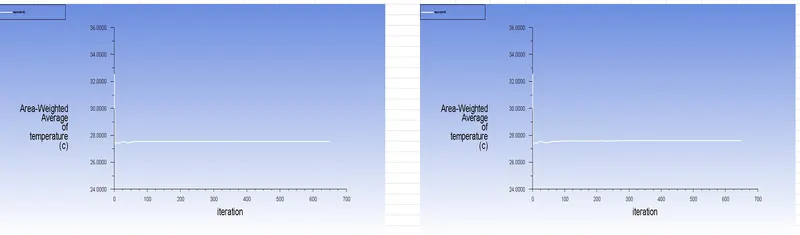
Temperature contour at outlet:
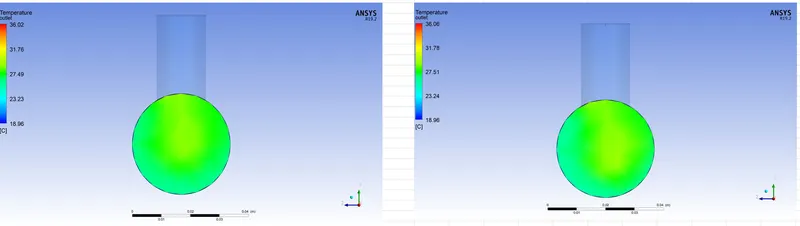
Velocity contour at outlet:
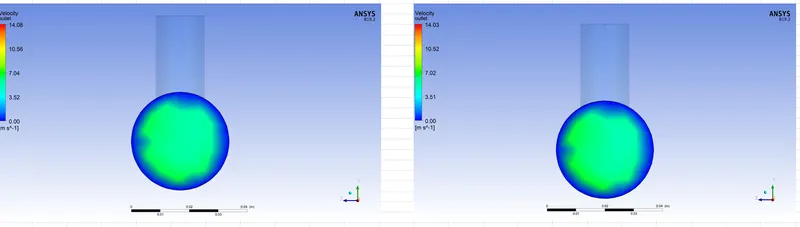
Temperature contour at mid plane:
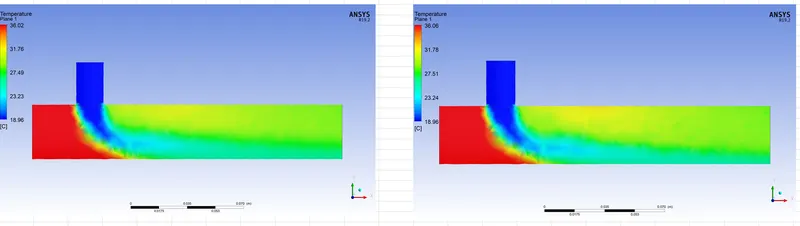
Velocity contour at mid plane:
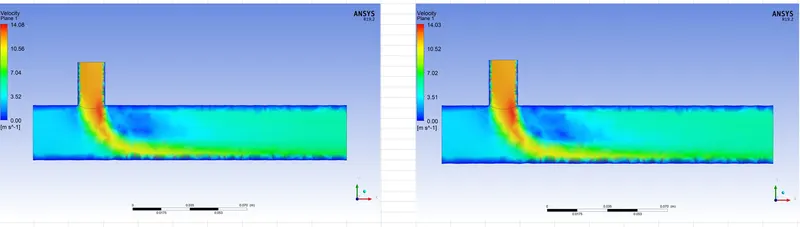
From the above plots, it can be observed that std. deviation is less for k-epsilon compared to k-w SST. Less std. deviation means the difference between temp. at various places at the outlet and the mean temperature is less. It indicates of better mixing.
Also, governing equations converge quickly in less iterations in k-epsilon model compared to k-w SST. That means steady state is achieved quickly using k-epsilon model.
But the avg. temperature predicted by both the models is almost same (30.25°C for momentum ratio 2 and 27.5°C for momentum ratio 4).
Now, case 2 which is of long tee pipe is analysed with k-epsilon model.
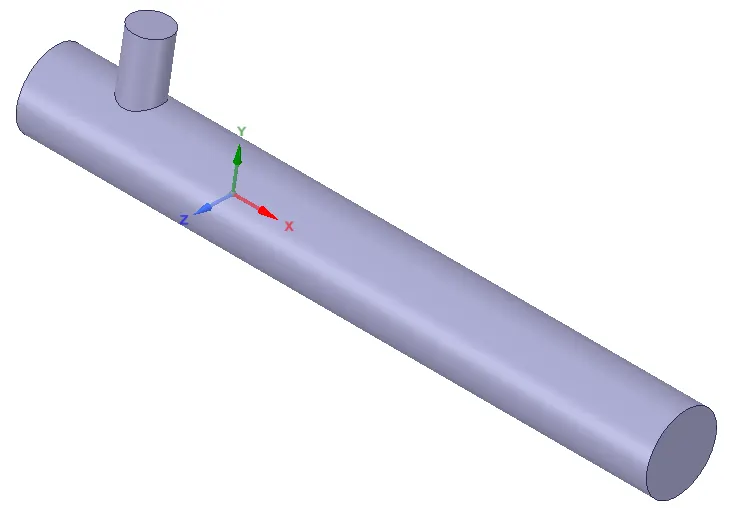
Case 2: Long Mixing Tee
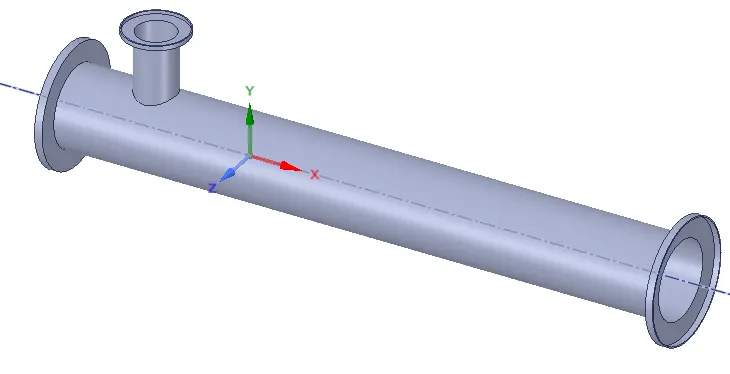
After volume extract by slecting wetted surafces,
Mesh Generation:
A tetrahedral mesh is generated with total no. of elements as 15571
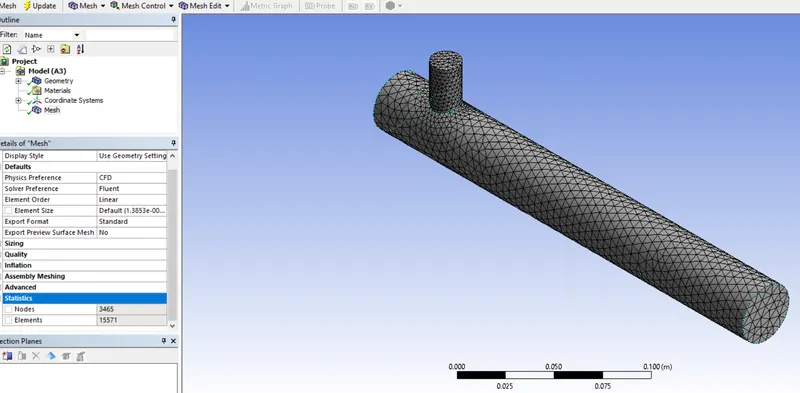
Also, the mesh quality is checked and found to be more than 29%.
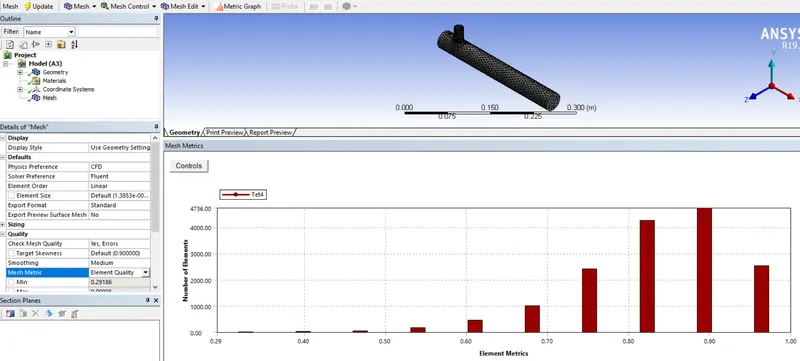
Next the surafces are labelled as done in the case 1.
Setup:
A steady state pressure based solver is used. As temperatures are also required, energy equation is also selected.
k-epsilon model with the same settings as in case 1 is used.
Air is taken as the fluid flow material.
Boundary conditions -
At the inlet x, velocity and temperature of air are given as 3 m/s and 36°C repectively.
At the inlet y, velocity of air is given as
v = 6 m/s for momentum ratio of 2
v = 12 m/s for momentum ratio of 4
Temperature is 19°C.
At the outlet, pressure is provided as Gauge pressure of 0 (atmospheric pressure = 1 atm).
At the walls, no slip condition and stationary wall condition is provided.
Results:
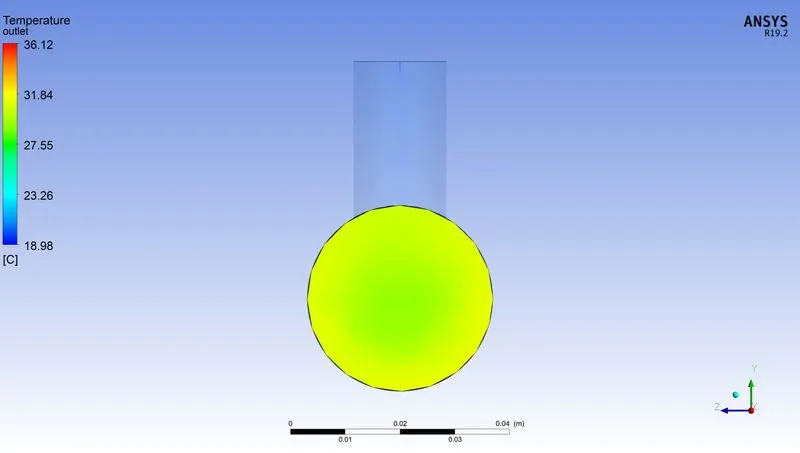
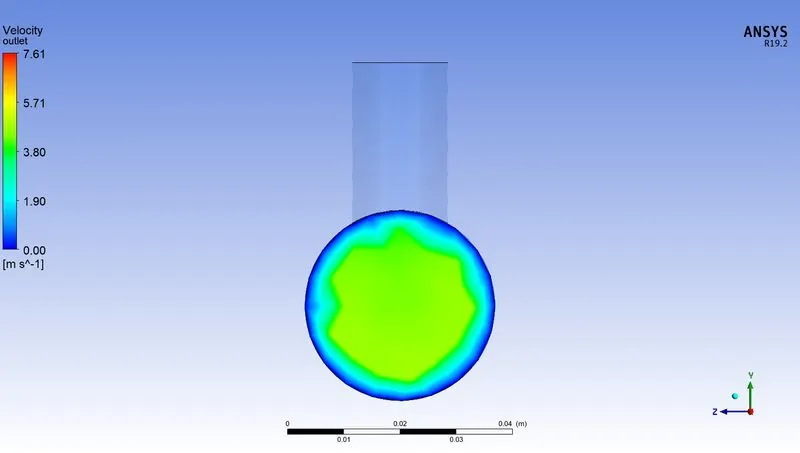
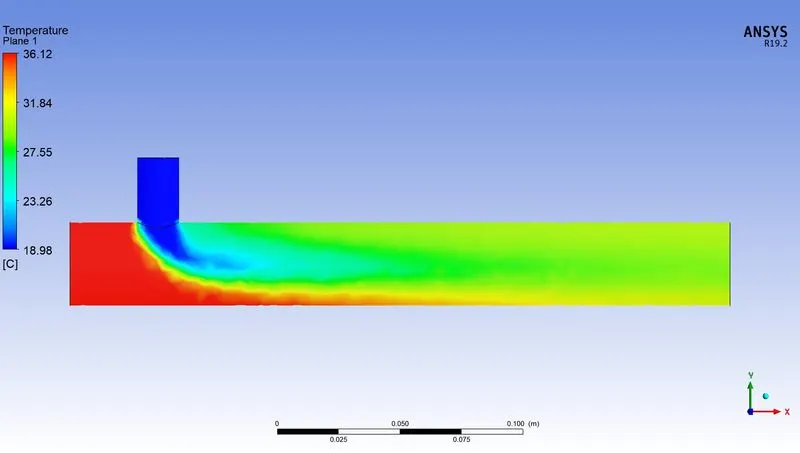
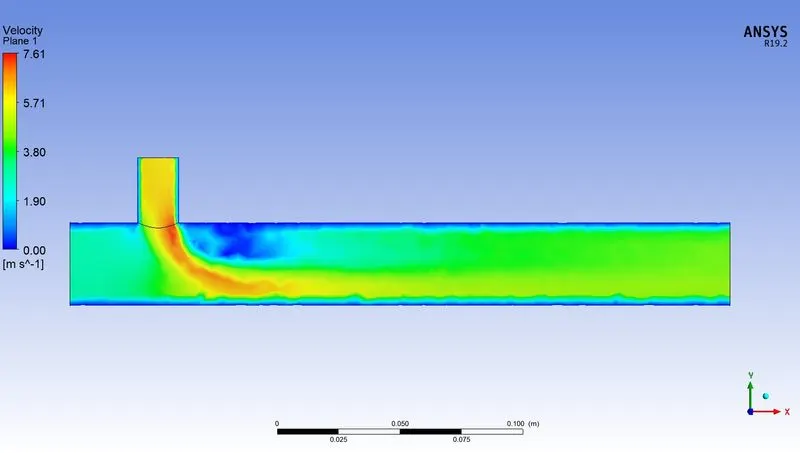
(i) For momentum ratio = 2
No. of iterations for convergence:
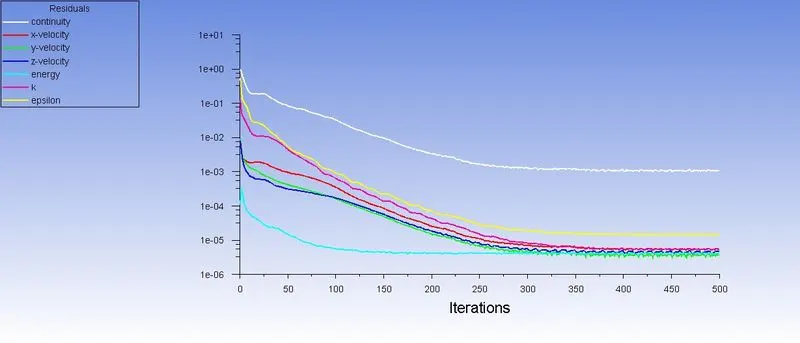
Std. deviation of temperature:
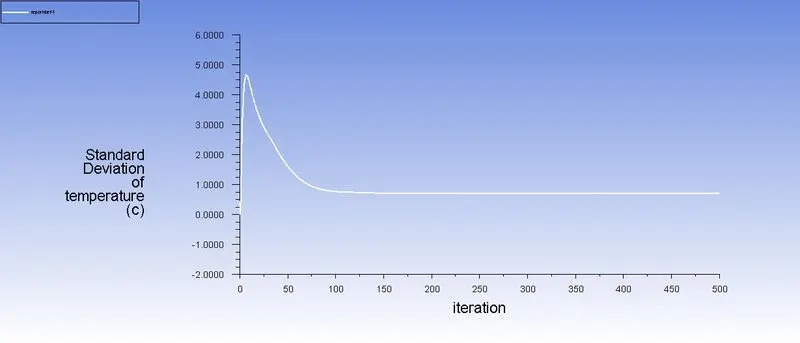
Area weighted avg. tempaerature:
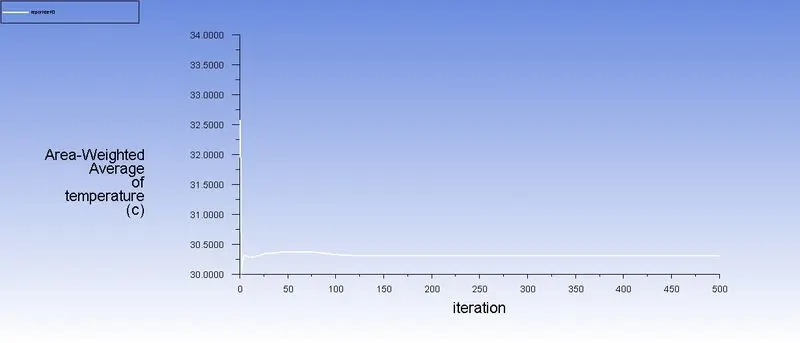
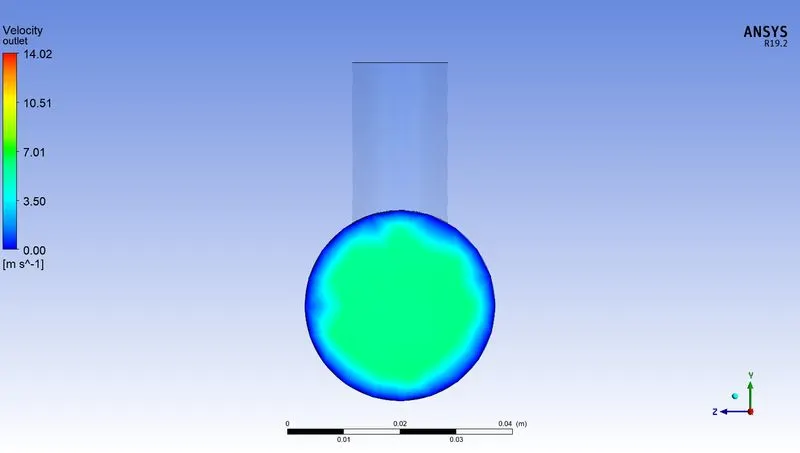
Temp. contour at outlet:
Vel. contour at outlet:
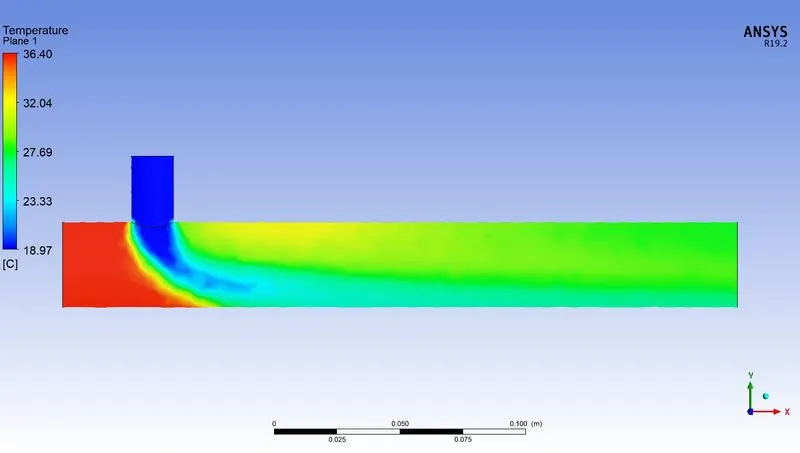
Temp. contour at mid-plane:
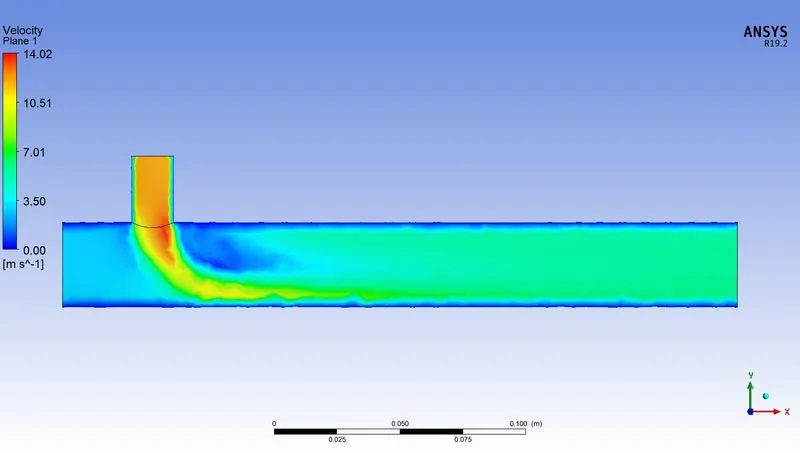
Vel. contour at mid-plane:
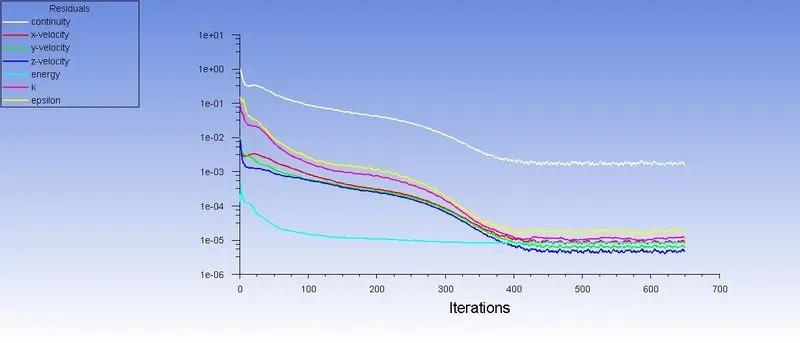
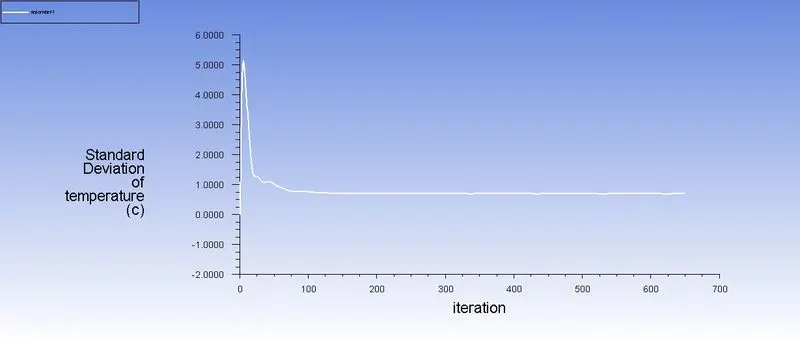
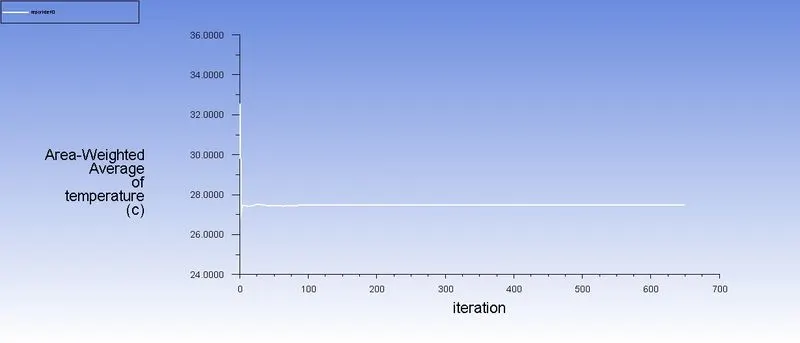
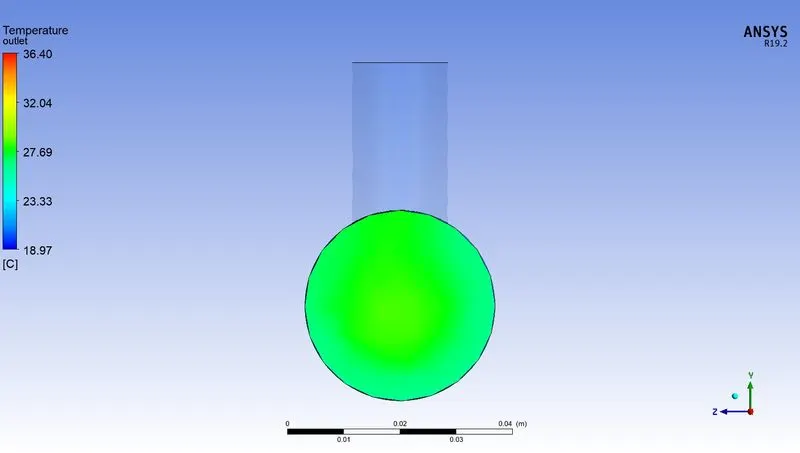
(ii) For momentum ratio = 4
No. of iterations for convergence:
Std. deviation of temperature:
Area weighted avg. tempaerature:
Temp. contour at outlet:
Vel. contour at outlet:
Temp. contour at mid-plane:
Vel. contour at mid-plane:
| Momentum ratio = 2 | Case 1 (k- epsilon) | Case 1 (k-w SST) | Case 2 (k-epsilon) |
| Cell count | 12657 | 12657 | 15571 |
| Avg. temperature | 30.25 | 30.25 | 30.25 |
| No. of iterations for convergence | 300 | 450 | 350 |
| Std. deviation | 1.5 | 1.9 | 0.8 |
| Momentum ratio = 4 | Case 1 (k- epsilon) | Case 1 (k-w SST) | Case 2 (k-epsilon) |
| Cell count | 12657 | 12657 | 15571 |
| Avg. temperature | 27.5 | 27.5 | 27.5 |
| No. of iterations for convergence | 450 | 525 | 475 |
| Std. deviation | 0.95 | 1.1 | 0.8 |
Effect of length and momentum ratio:
Reference formula-
`T_(mix) = (m_(hot)*T_(hot) + m_(cold)*T_(cold))/(m_(hot)+m_(cold)`
Assume `m_(hot) = m_(cold) = 1`
Therefore, `T_(mix) = (36+19)/2 = 27.5°C`
From the above data, it can be observed that the average temperature is same for a particular momentum ratio irrespective of length of pipe.
But the standard deviation is varying. Std. deviation is less for long pipe which indicates that temperature at every point in the outlet is close to avg. temp.. This indicates of good uniform mixing of hot and cold fluids. Therefore, it can be concluded that mixing effectiveness is better for longer pipes.
Also, the avg. temp. is less for higher momentum ratio and same as that of mixing temp. calculated from the formula. Avg. temp. is a function of mixing effectiveness. If the mixing is good, temp. would be lesser. As the fluids are travelling with higher velocity, heat transfer (energy transfer) through conduction will be more resulting in lesser avg. temperatures. From this, it can be said that higher momentum ratios yield better mixing.
Avg. temp. is same for short and long pipes for high momemtum ratio but the std. deviation is more than that of long pipe. It indicates that short pipe does not provide good mixing compared to that of long pipe.
So, in order to attain good mixing, higher momentum ratios in longer pipes are effective.
Mesh Independent Study:
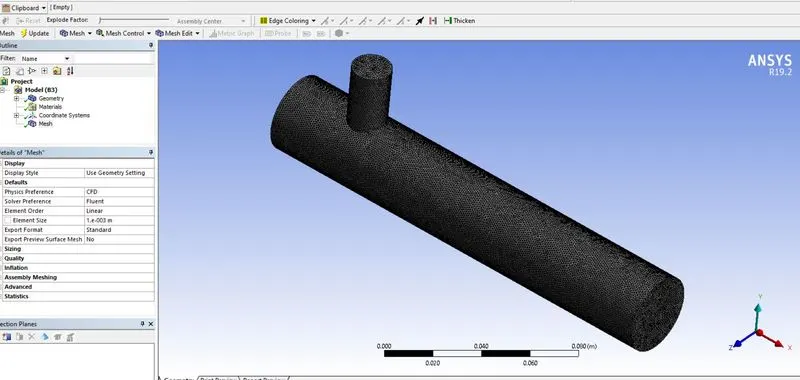
Short pipe with momentum ratio = 2 with k-epsilon model is taken for mesh independence study.
| Normal study | Mesh Independence study | |
| Element size | `1.02*e^(-2) m` | `1*e^(-3) m` |
| No. of elements | 12657 | 579227 |
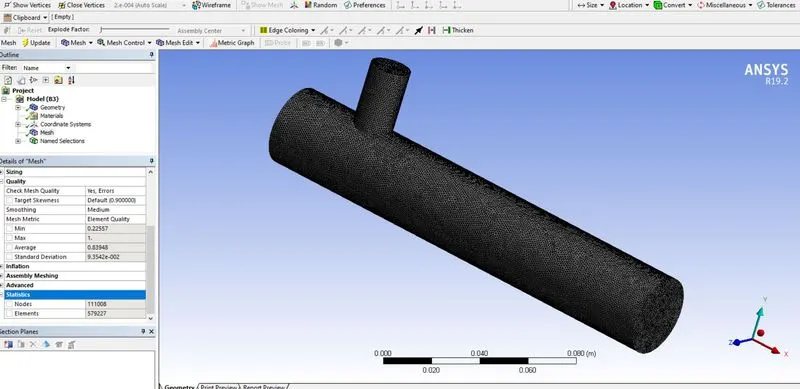
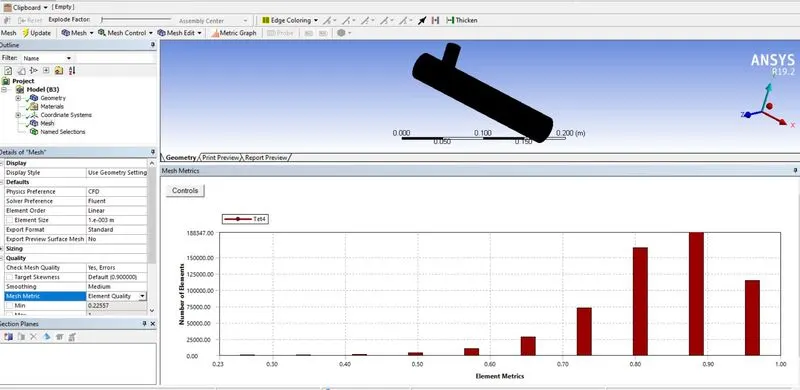
The mesh quality is more than 23%.
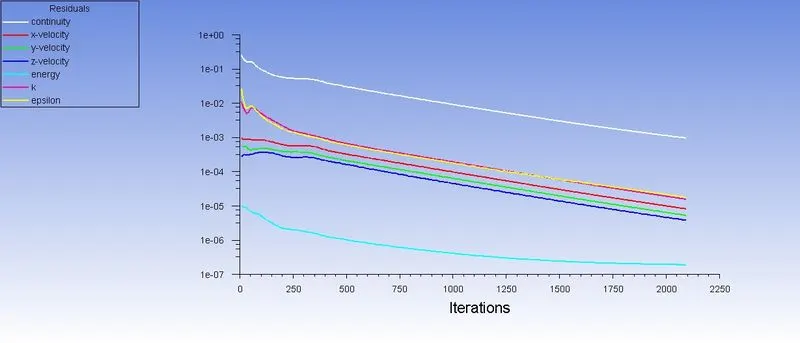
The simulation has achieved convergence after 2000 iterations.
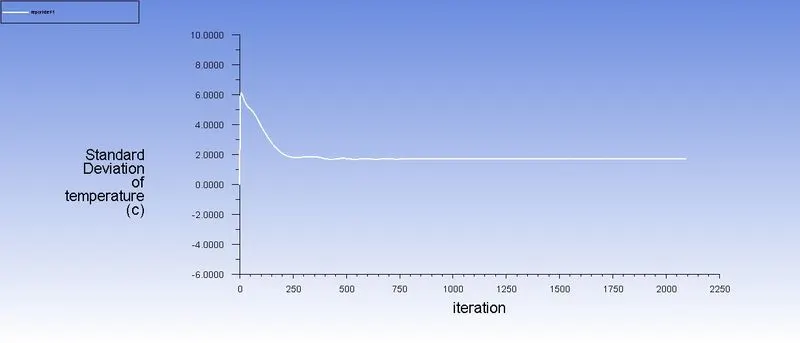
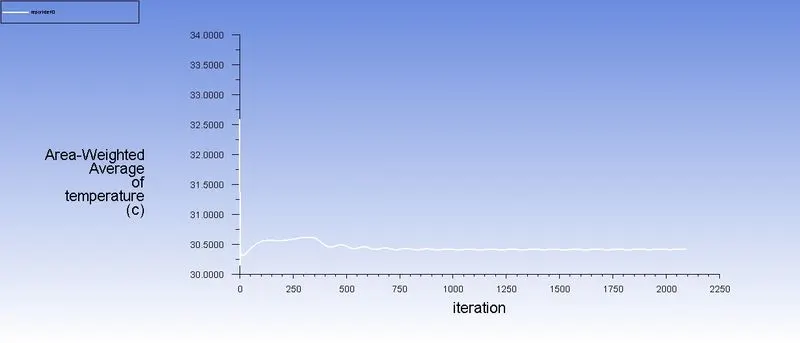
From the above plots, it is observed the avg. temeprature obtained is approx. 30.25°C which is same as that obtained from normal study. Also, the std. deviation is higher than that in normal study.
So, it can be concluded that the setup has mesh independence in the normal study.