Week 1- Mixing Tee
Mixing problems, such as the design and scale-up of a mixer and quantification of mixing, have been traditionally tackled by developing empirical design equations mainly due to the complexity of the fluid dynamics of mixing. Although this approach has proven to be satisfactory for many applications, it is rather limited because it neglects the complexity of flow in most mixing applications.
Applications where pipeline mixing with tees is used include low viscosity mixing such as wastewater treatment and blending of some oils (injection of additives) and petrochemical
products. Other applications include blending of fuel gas, and mixing of feed streams for catalytic reactors. A tee is formed by two pipe sections joined at a right angle to each other.
One stream passes straight through the tee while the other enters perpendicularly at one sideas shown in Figure 1. This flow arrangement is known as the side-tee.
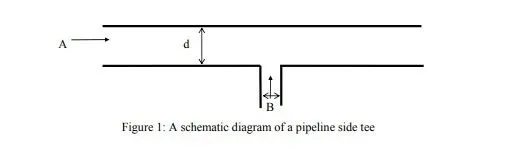
The given challenge completely relates with thereal life problem of the mixing tee problem. But this whole project is done on software with two different models.
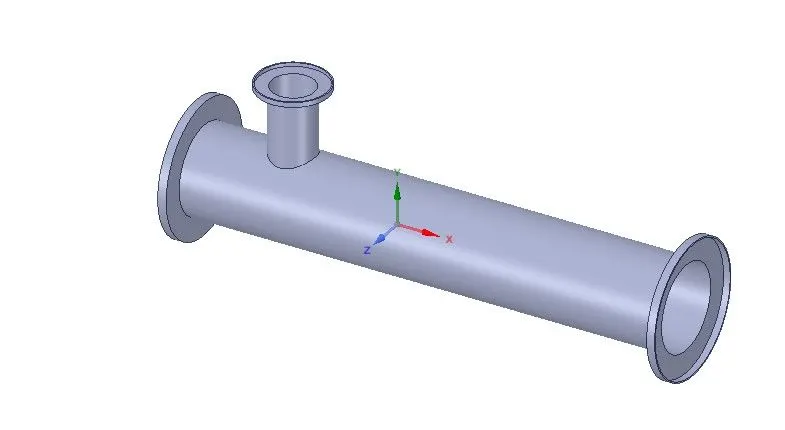
As seen from the figure above there are two such models used for this simulation.
1. Short Tee- Total Length = 0.1924 m
Hot inlet diameter(inlet along X) = 0.0339 m
Cold inlet diameter(inlet along Y) = 0.017 m
1. Long Tee- Total Length = 0.2683 m
Hot inlet diameter(inlet along X) = 0.0339 m
Cold inlet diameter(inlet along Y) = 0.017 m
The different conditions for solving the given problem are-
- Case 1
- Short mixing tee with a hot inlet velocity of 3m/s.
- Momentum ratio of 2, 4.
- Case 2
- Long mixing tee with a hot inlet velocity of 3m/s.
- Momentum ratio of 2, 4.
The whole steps of the above said problem is solved using Ansys-Fluent :
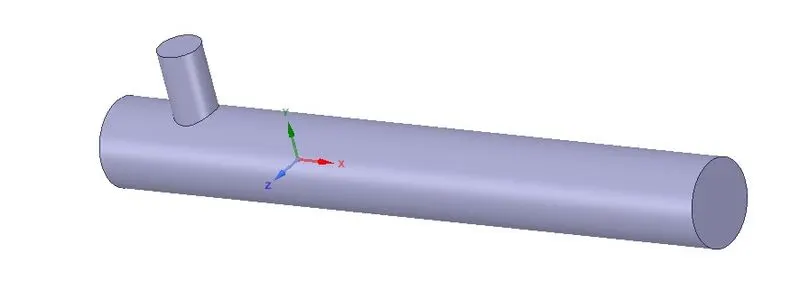
1. The Solidworks file is uploaded in space claim. Volume extract is made and the resulting file is like-
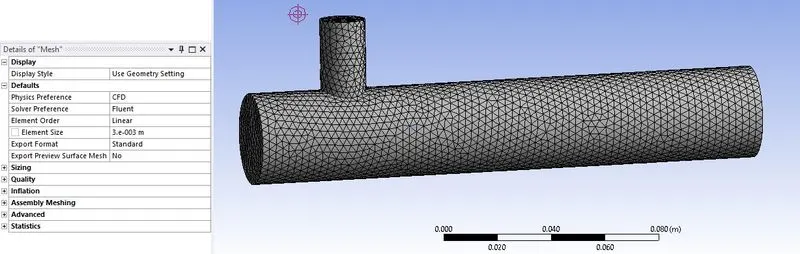
2. Meshing the file (Here the short tee is used to mesh)-
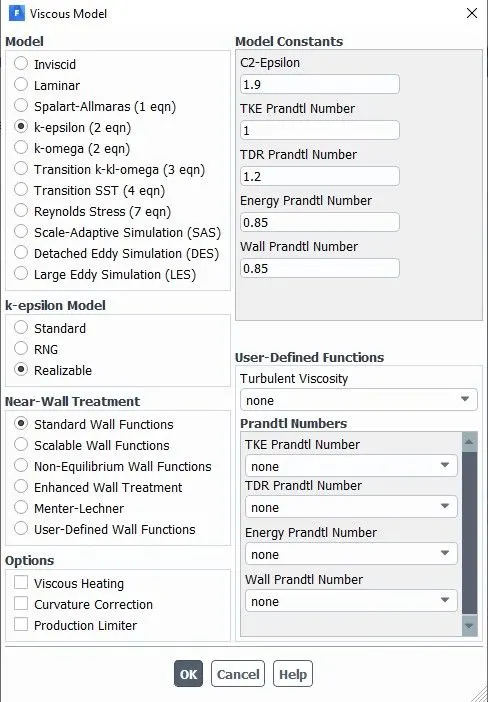
3. Model definition whether it is K-epsilon or K-omega.
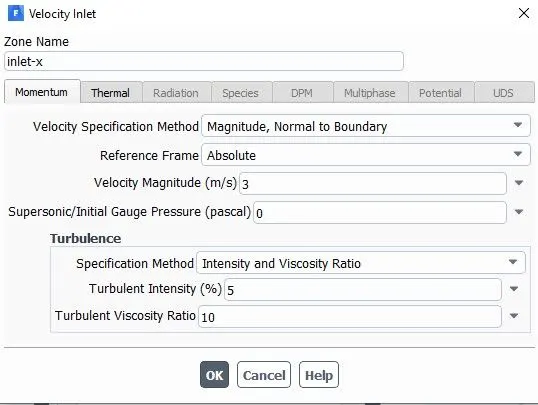
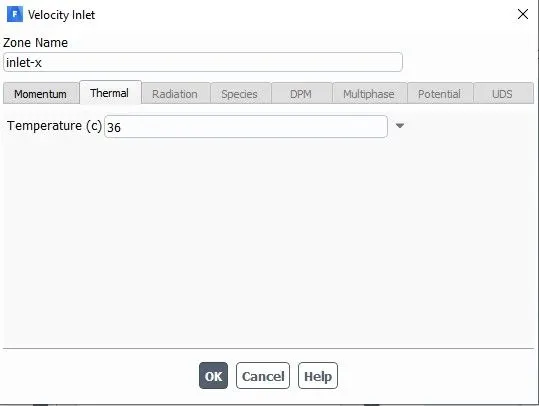
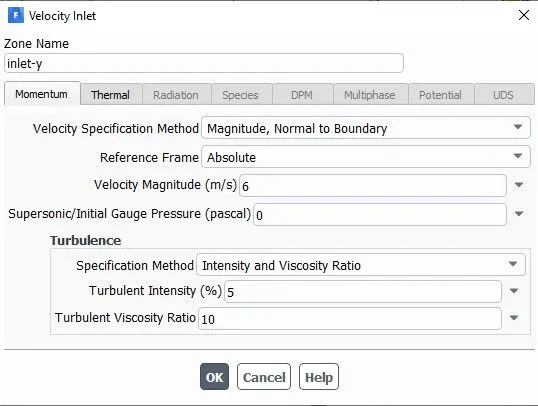
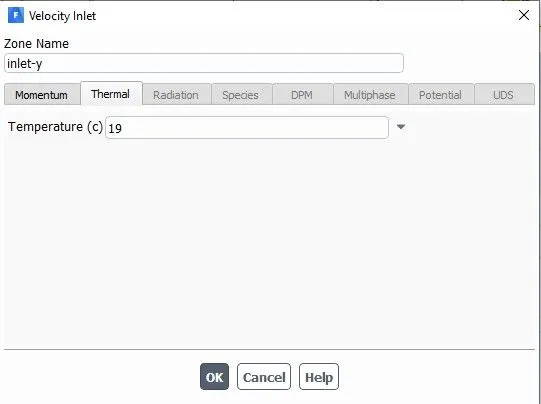
4. Providing inlet vaalues at both the inlets.
For Inlet X:
For Inlet Y:
5.
5. Results are then post processed.
Selecting the model to be used in Ansys-Fluent (K-epsilon or K-Omega):
Initially the problem is solved analytically for the short tee with momentum ratio of 2 as-
`T_(mixture) = (T_(hot) * m_(hot)+T_(cold) * m_(cold))/(m_(hot)+m_(cold))`
m = rho * Area* Velocity
m(hot) = 0.033075 kg/s
m(cold) = 0.00147 kg/s
T(mixture) = 35.2 deg. cel.
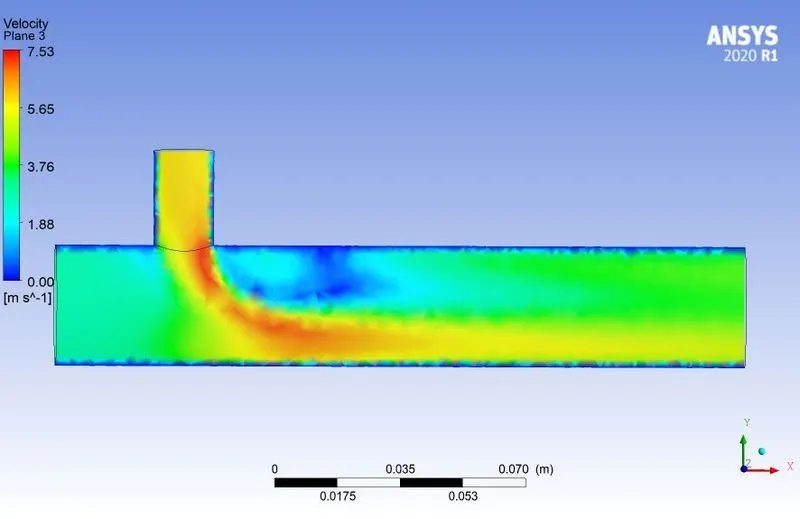
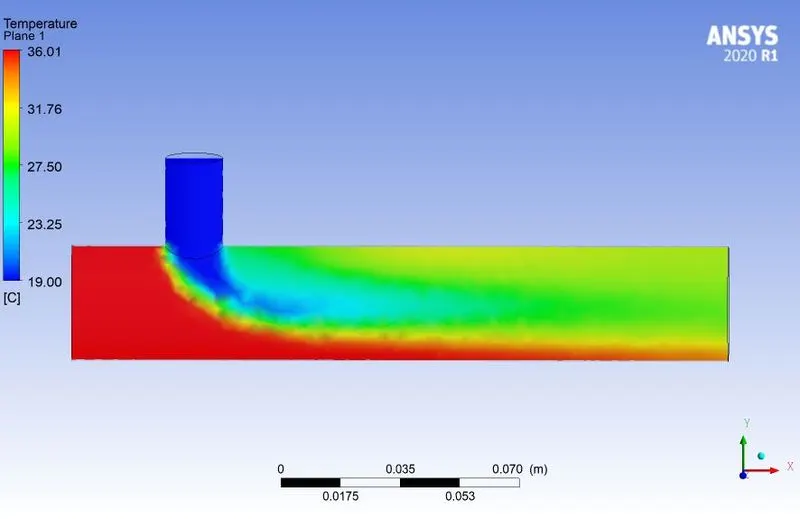
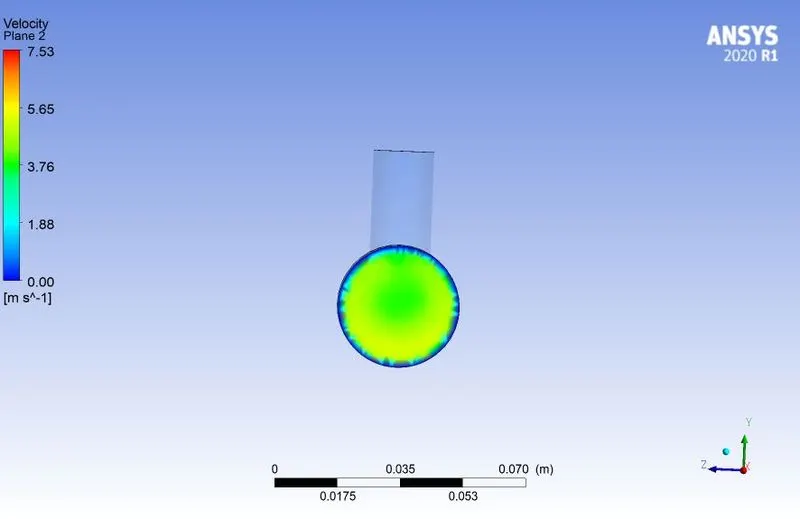
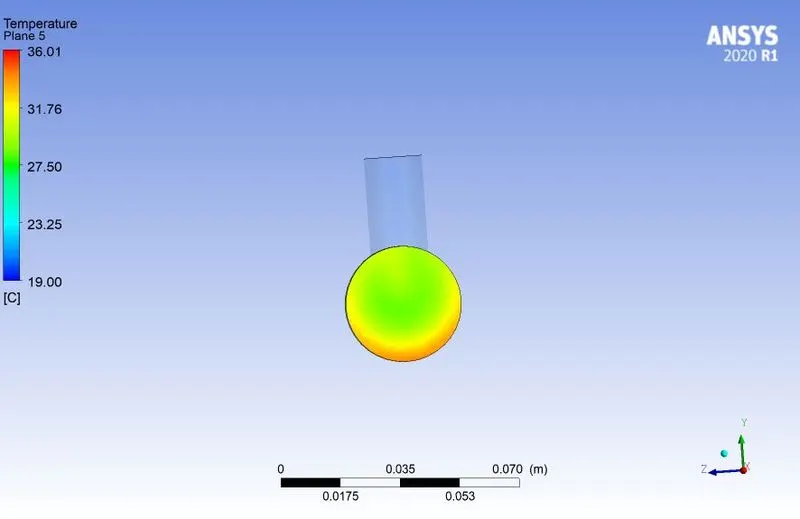
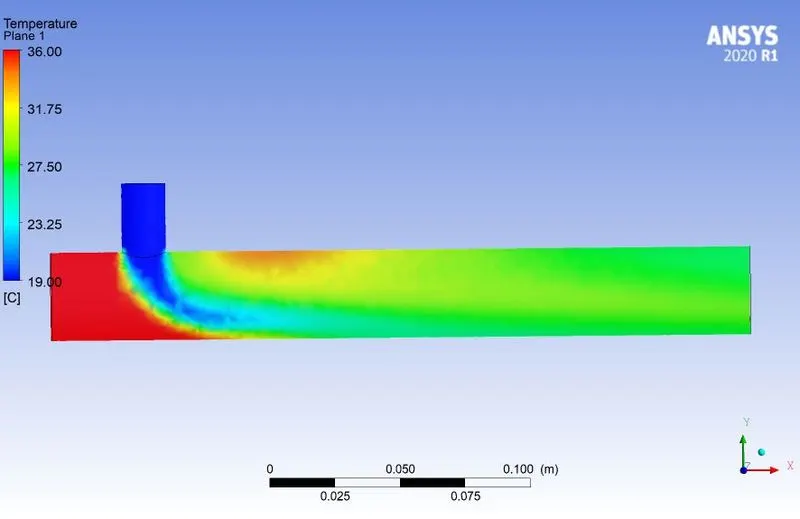
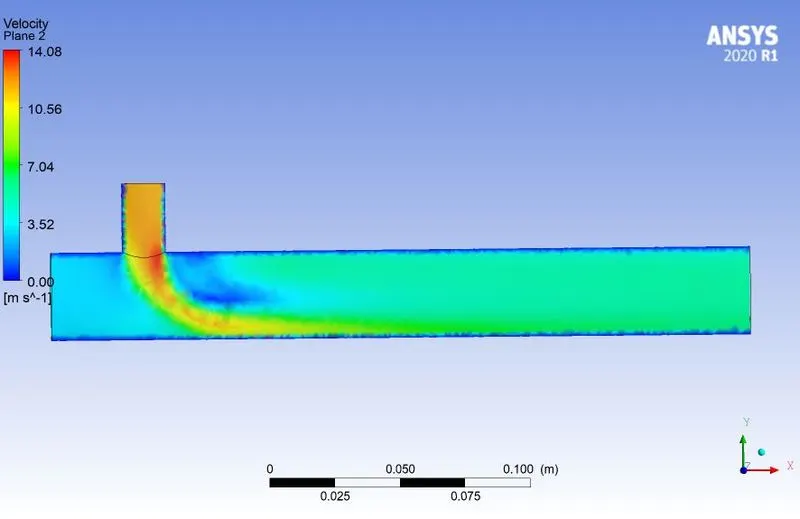
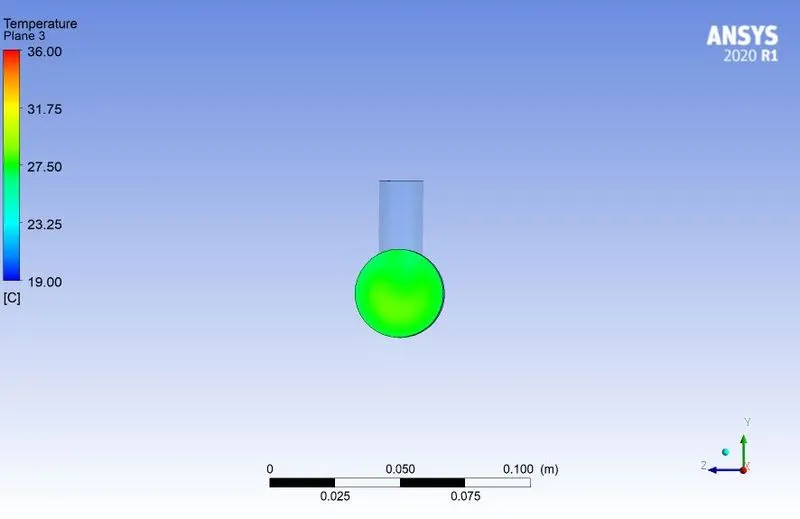
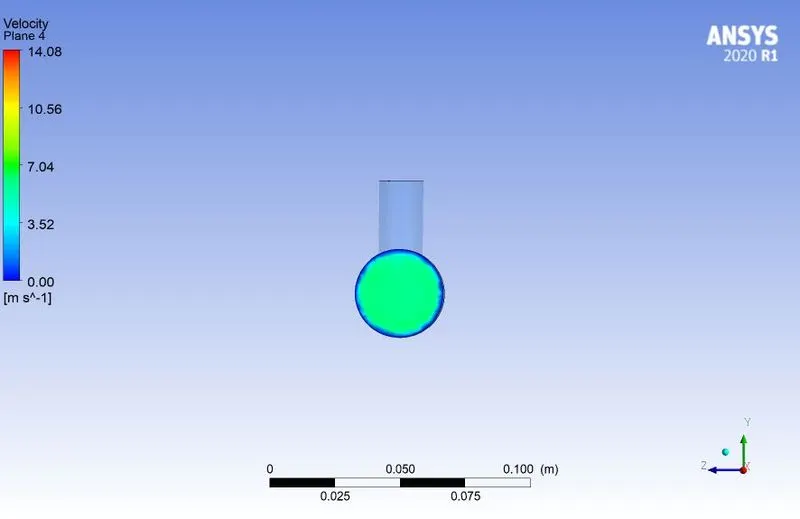
The problem is now solved in using Ansys-Fluent and the results are shown as below:
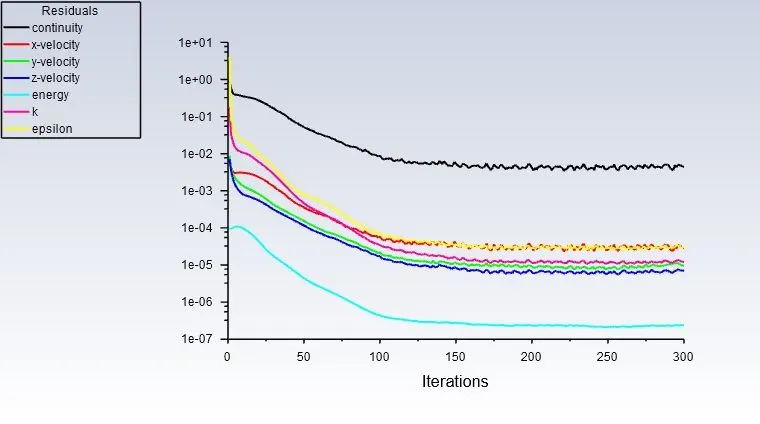
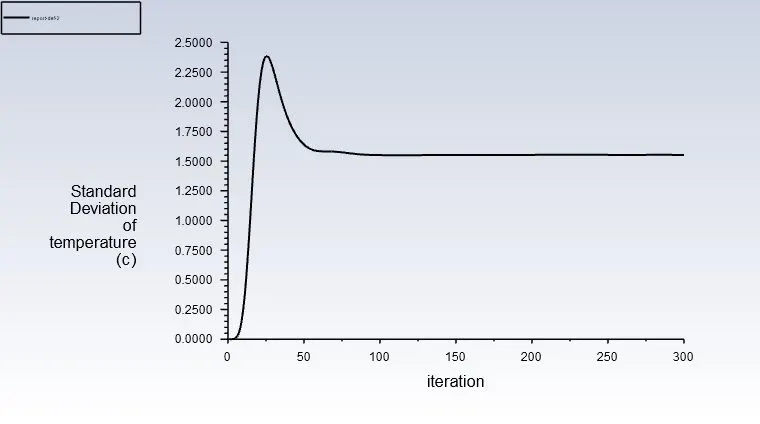
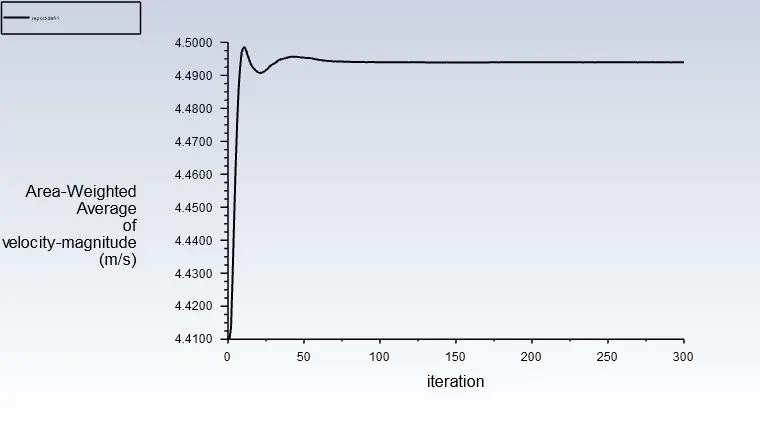
1. K-epsilon model for short Tee of momentum ratio 2
1. K-omega model for short Tee of momentum ratio 2
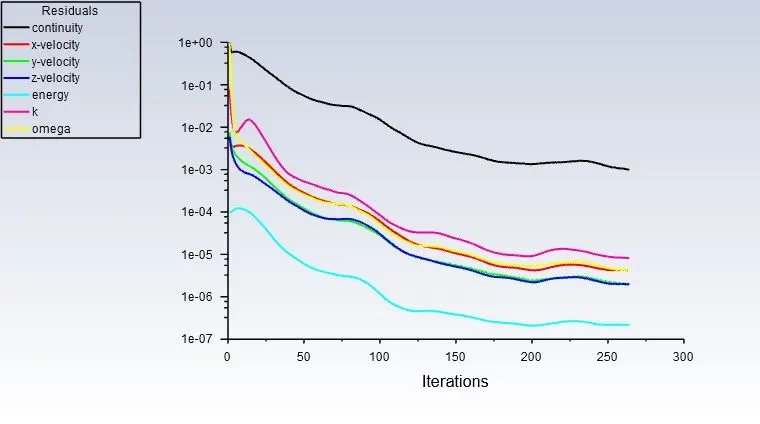
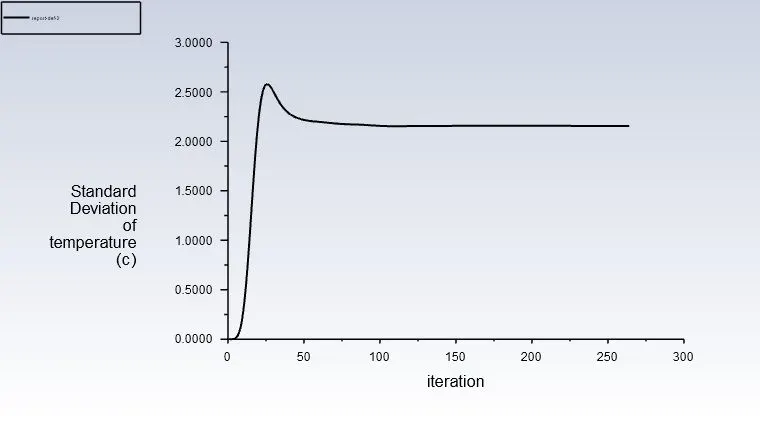
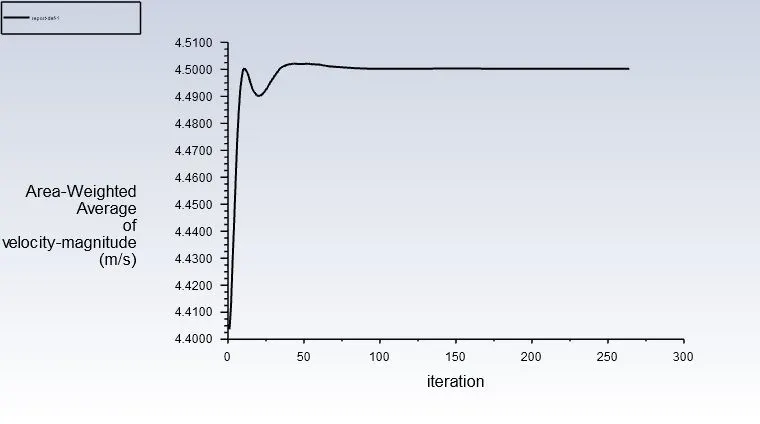
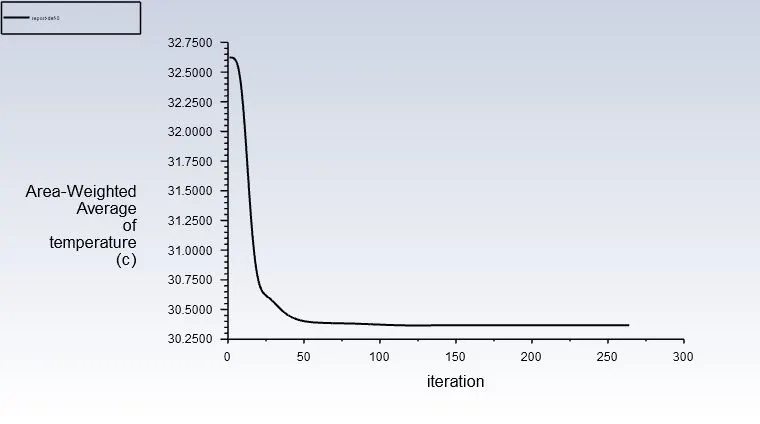
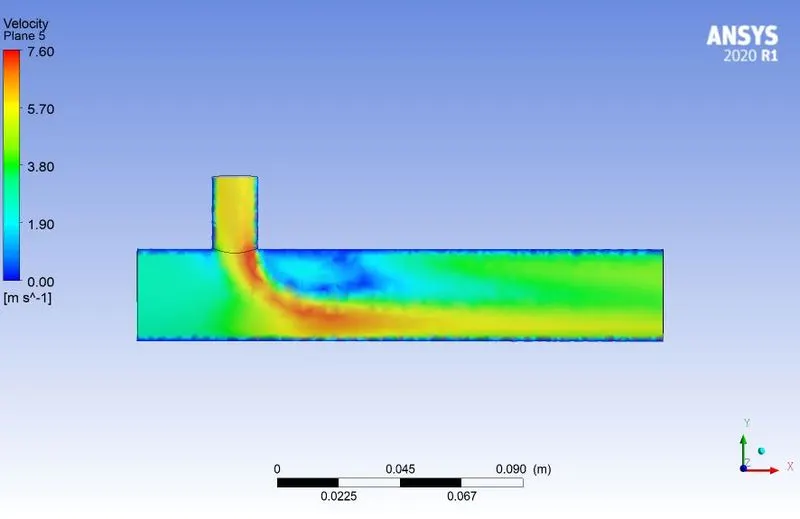
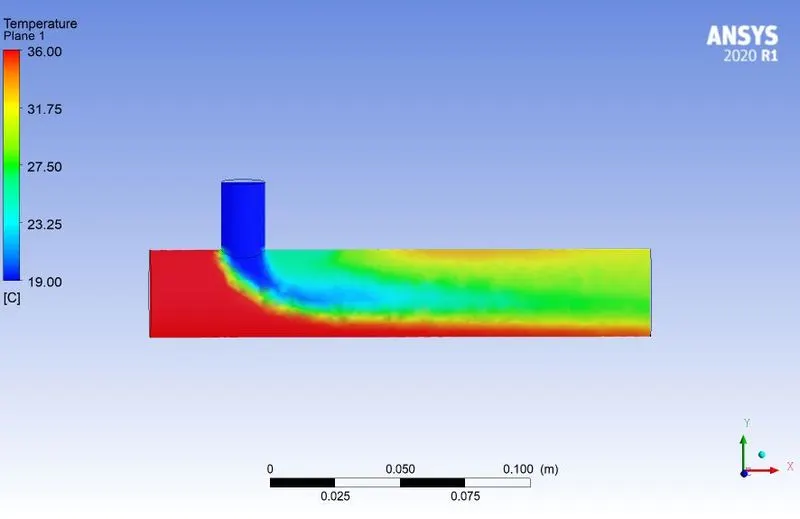
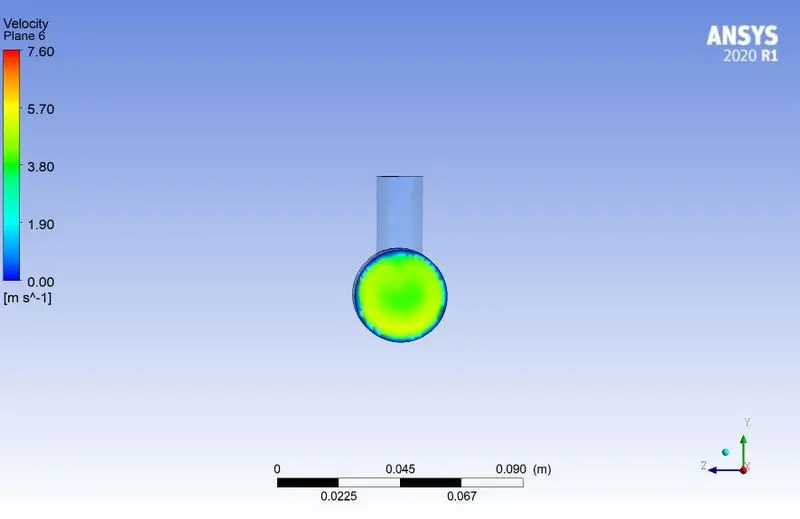
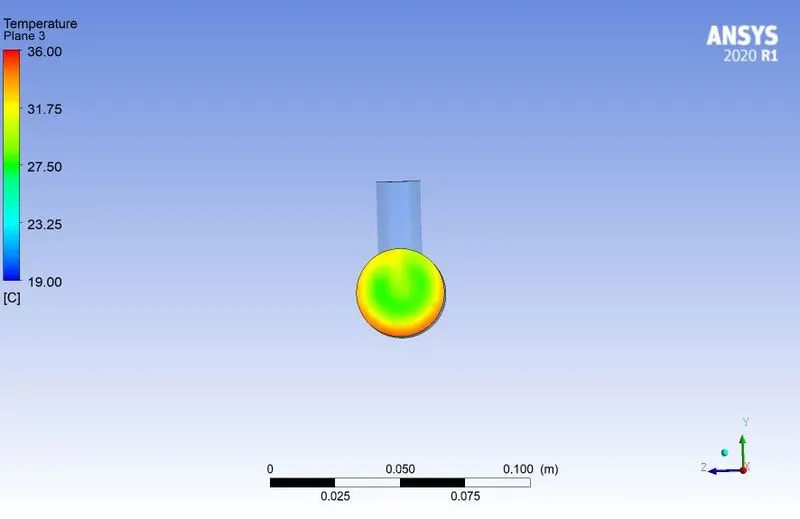
The Above software results for the two models can be compared as:
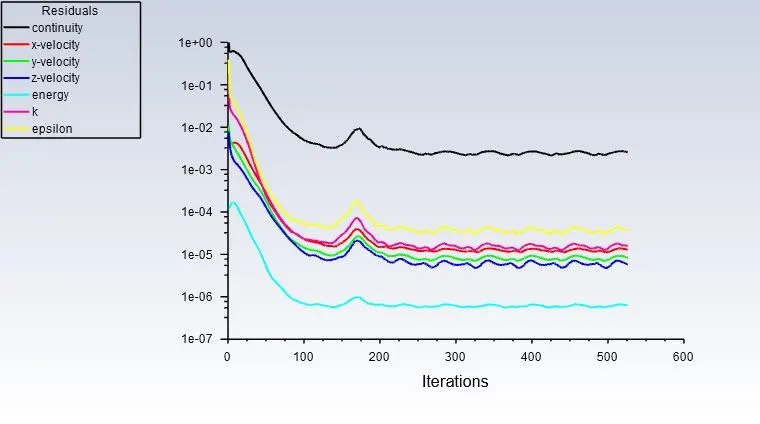
1. The Residuals in K-omega model seems not have atained a convergence level as the residuals in K-epsilon model they achieve convergence.
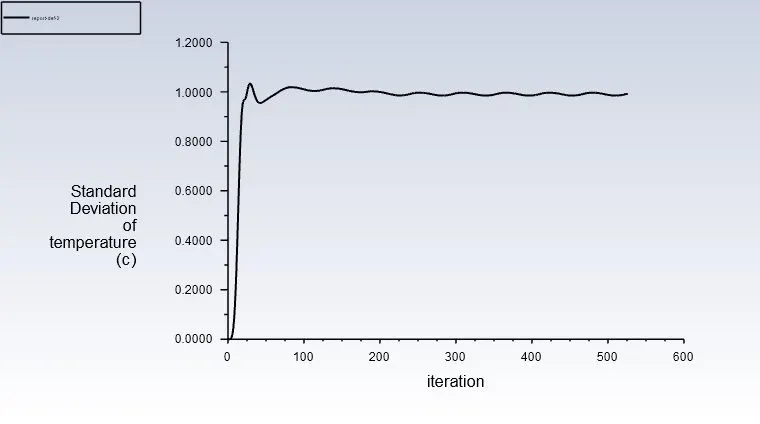
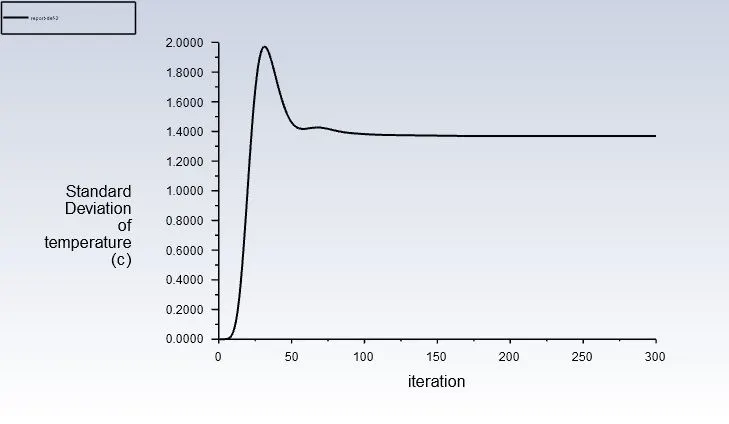
2. The value of standard deviation is lower in K-epsion model.
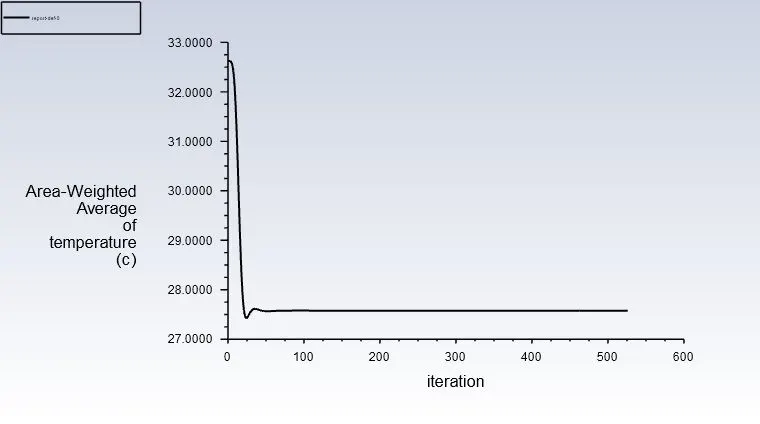
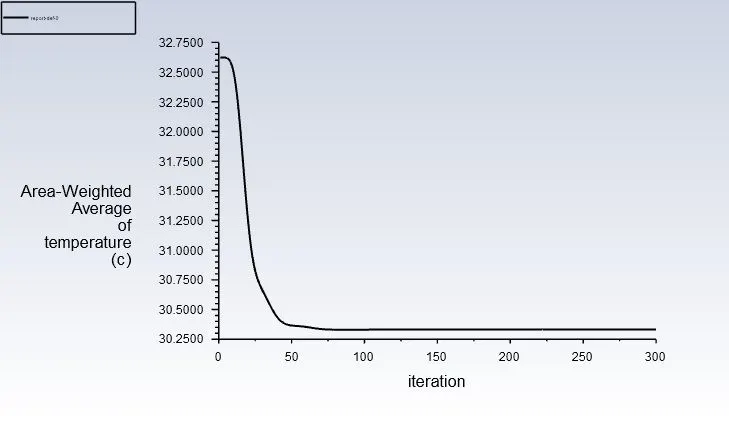
3 The value of output Temperatures are-
| AnaLytical result | K-epsilon Model | K-omega Model |
| 35.2 | 30.27 | 30.30 |
The values in the temperature outlets are not at much difference.
From the above pounts we choose K-epsilon as our best suited model for the rest of cases.
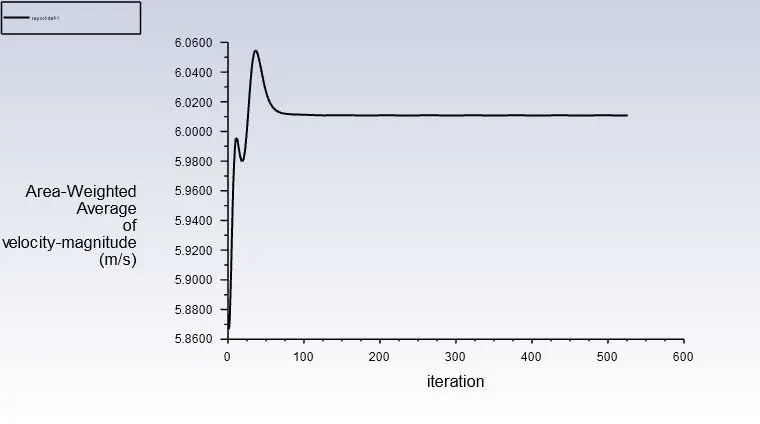
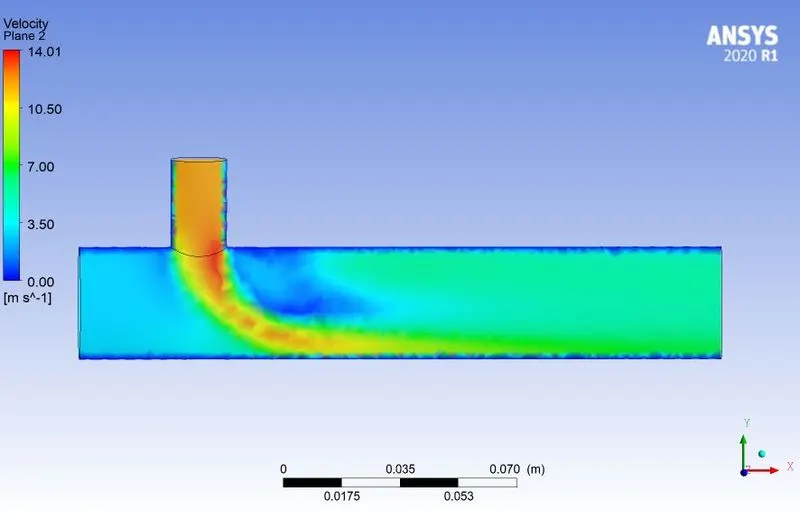
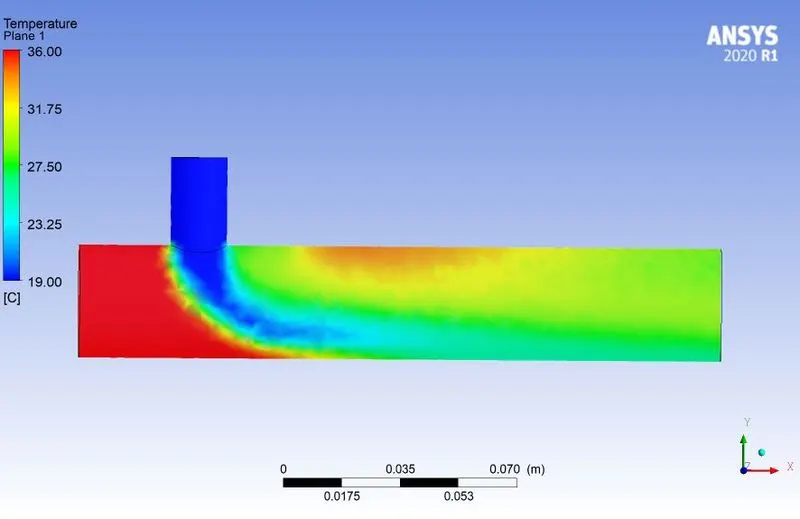
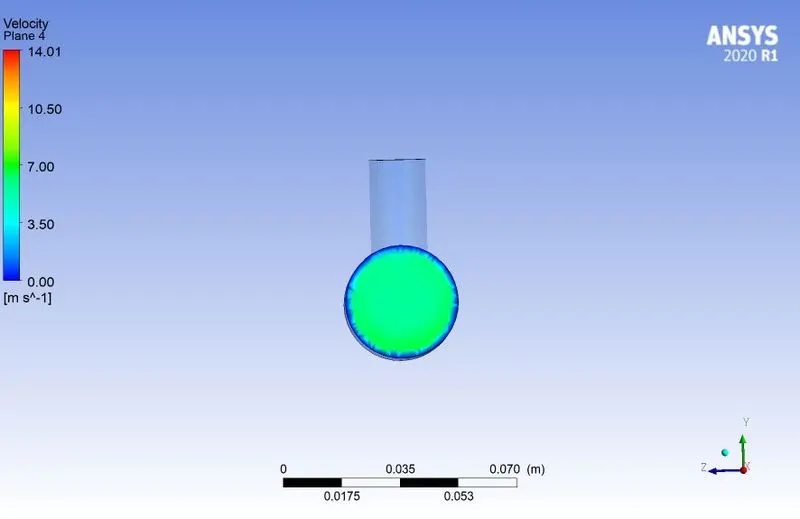
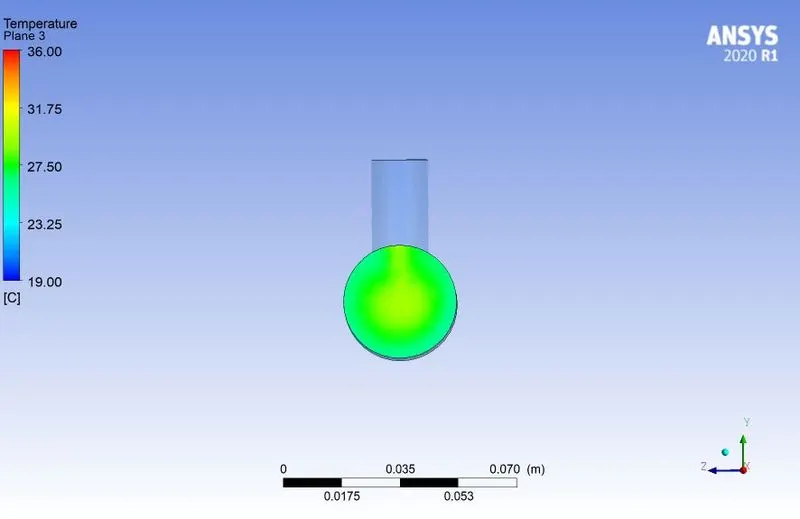
- Short Tee with momentum ratio 4
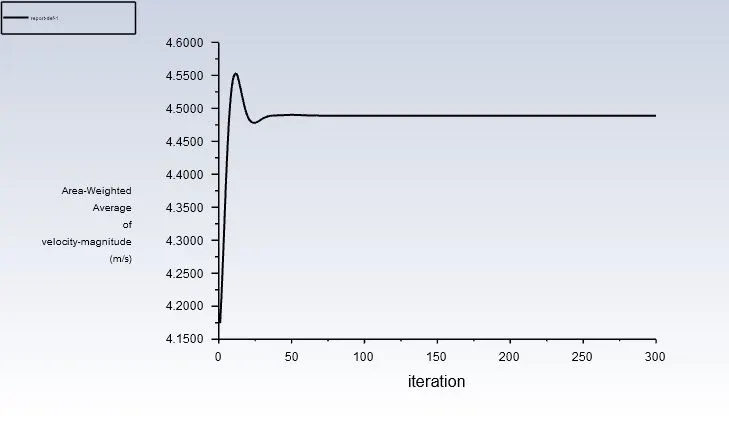
we get te results as:
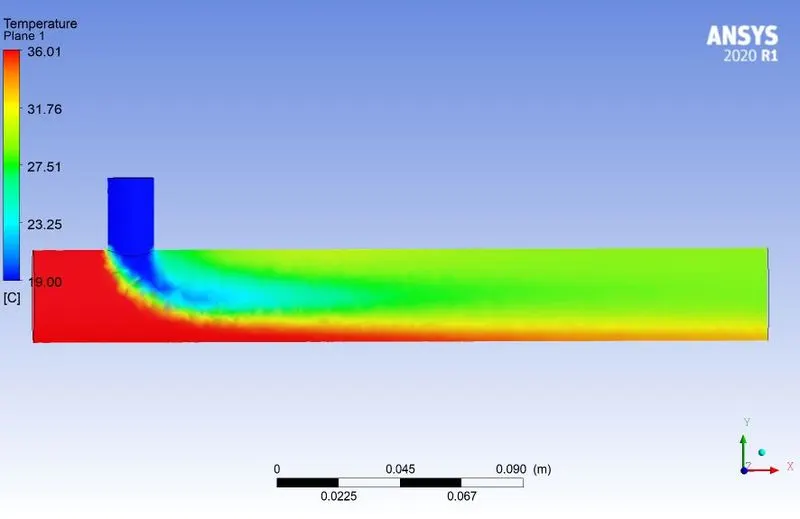
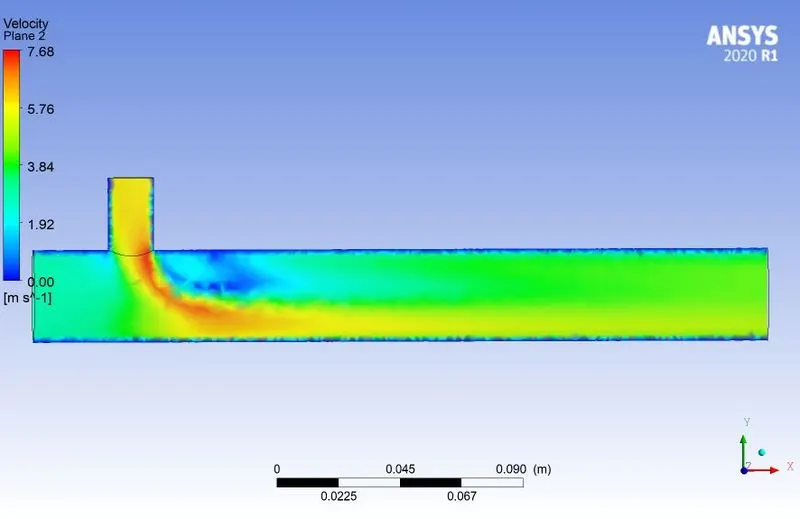
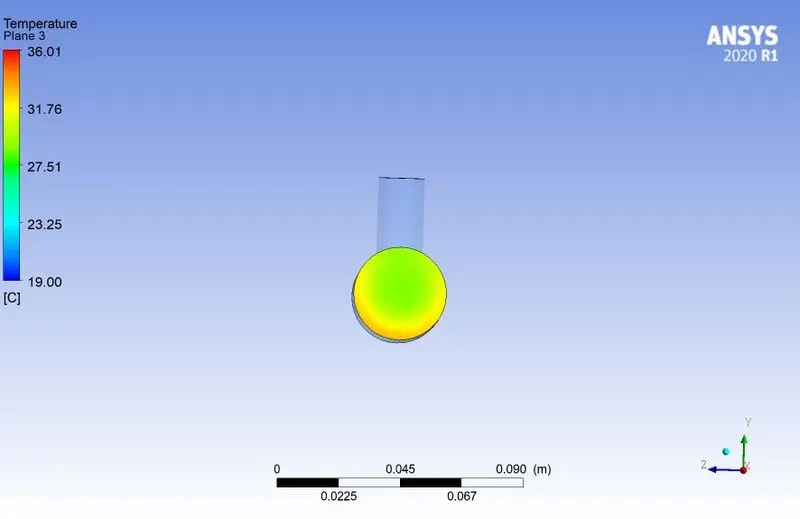
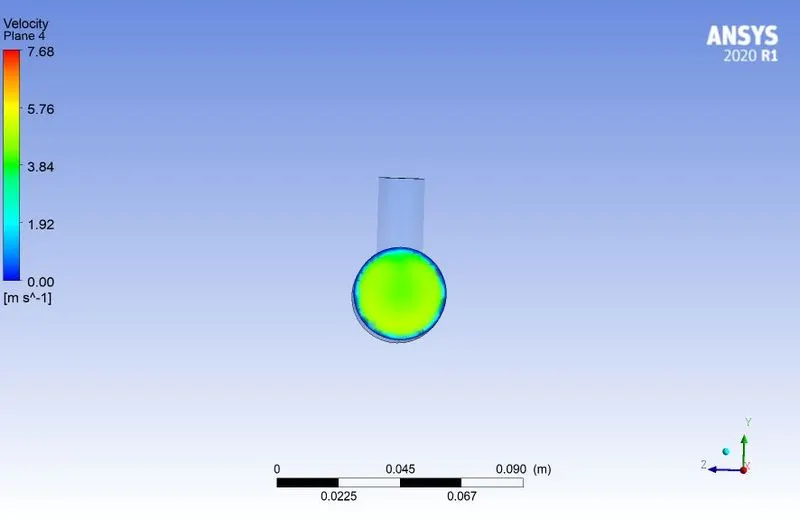
- Long Tee with momentum ratio 2
we get te results as:
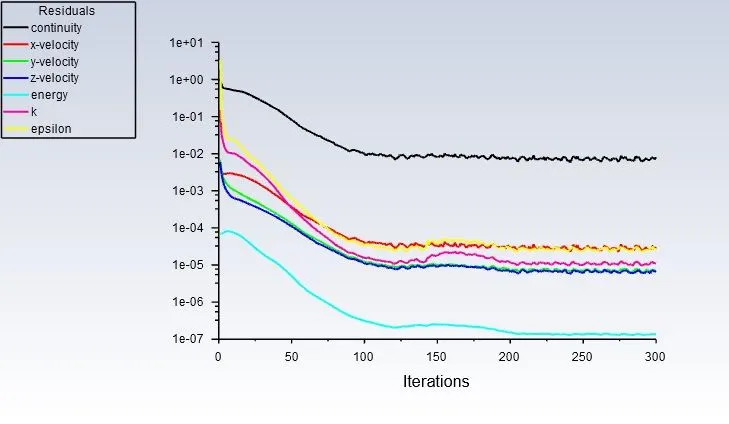
- Long Tee with momentum ratio 4
we get te results as:
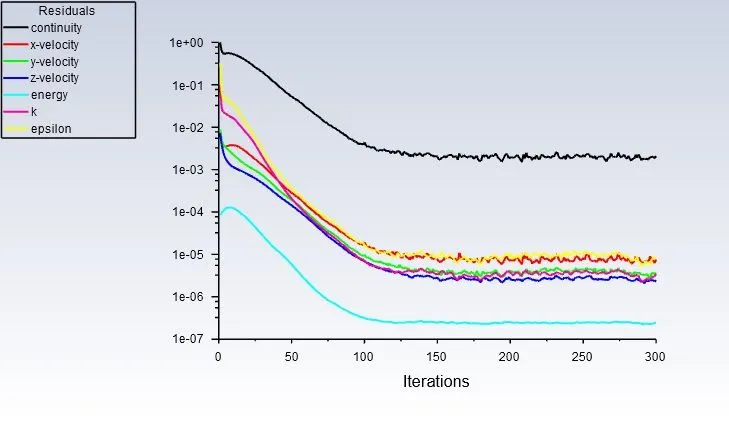
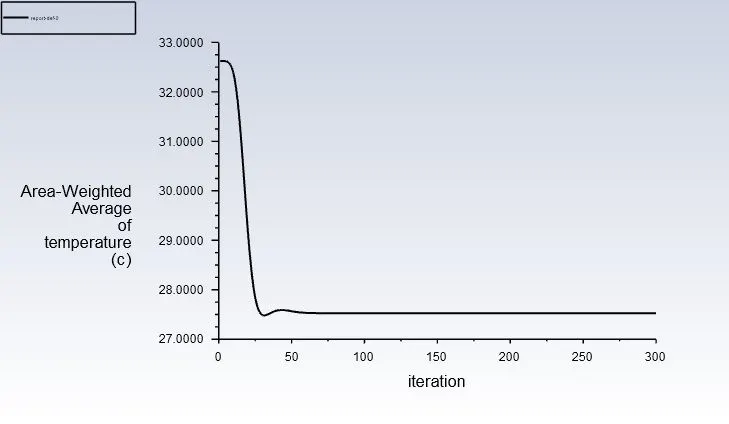
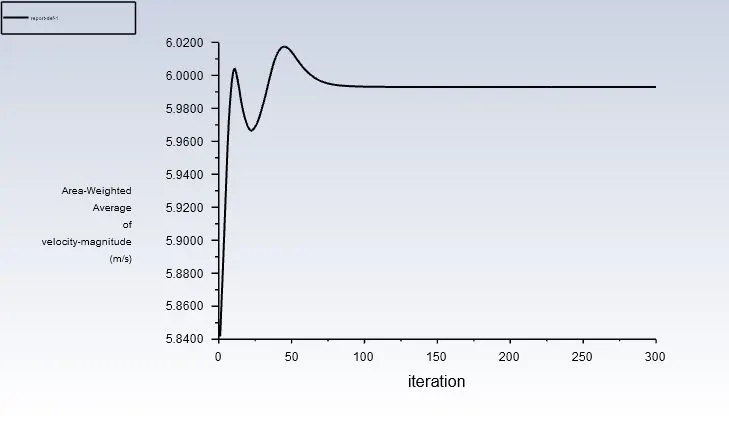
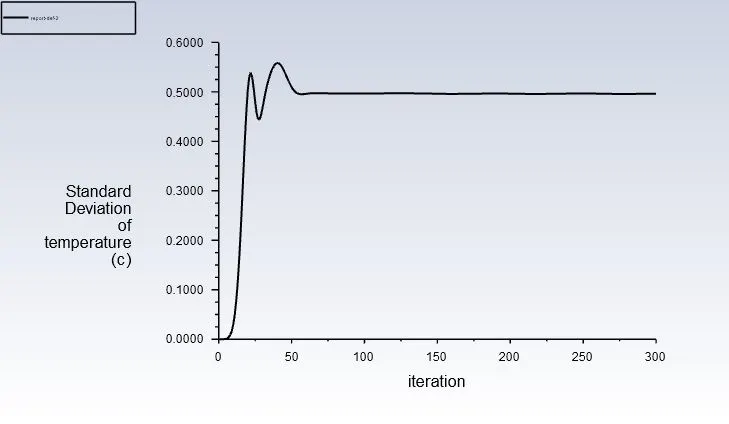
| Short Tee (Momentum ratio 2) | Short Tee (Momentum ratio 4) | Long Tee (Momentum ratio 2) | Long Tee (Momentum ratio 4) | |
|
Cell count |
39769 | 39769 | 11672 | 11672 |
|
Average outlet temperature |
30.27 | 27.5 | 30.275 | 27.26 |
|
Number of iterations for convergence |
120 | 220 | 200 | 130 |
Now Mesh independent study is carried out on Longer Tee with momentum ratio of 2. Results obtained are as follow:
| Outlet average temperature | Outlet average Velocity | |
| 3 mm mesh | 28.715 | 4.334 |
| 7 mm mesh | 28.866 | 4.371 |
| 10 mm mesh | 28.838 | 4.37035 |
The error in above results lies within the acceptance range, hence we can say that our porblem is mesh independent.
Also It can be observed that the length of Tee does not much effects on the mixing but the momentum ratio plays the significant role in determining the outlet temperature.