Week 1- Mixing Tee
AIM:
To perform and analyze the steady-state simulation of mixing Tee of two different lengths (Short Pipe & Long Pipe) with two different momentum ratios.
GIVEN DATA:
- Hot inlet Velocity - 3 m/s
- Hot inlet Temperature - 36oC
- Cold inlet Temperature - 19oC
- Momentum Ratio - 2 & 4 (Short & Long)
SOLVING AND MODELING:
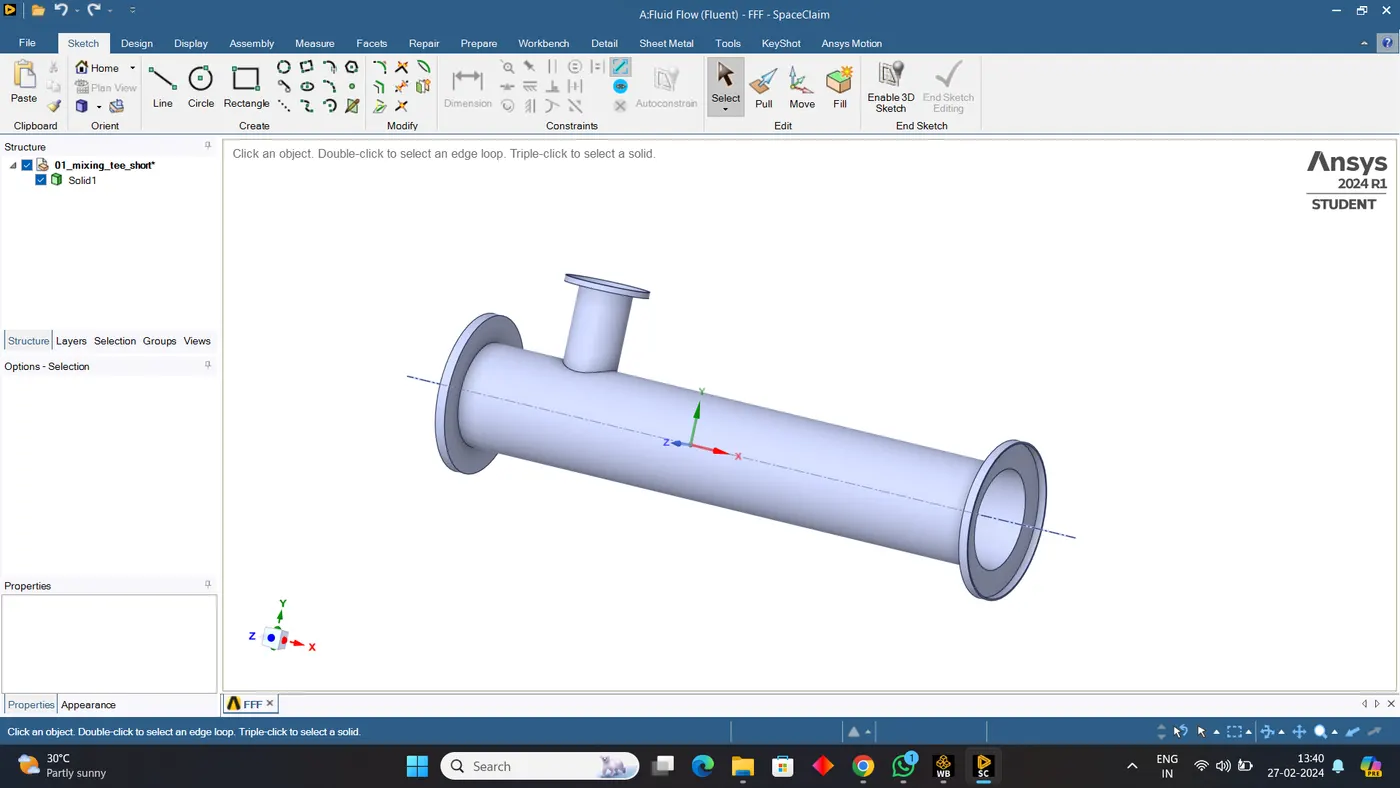
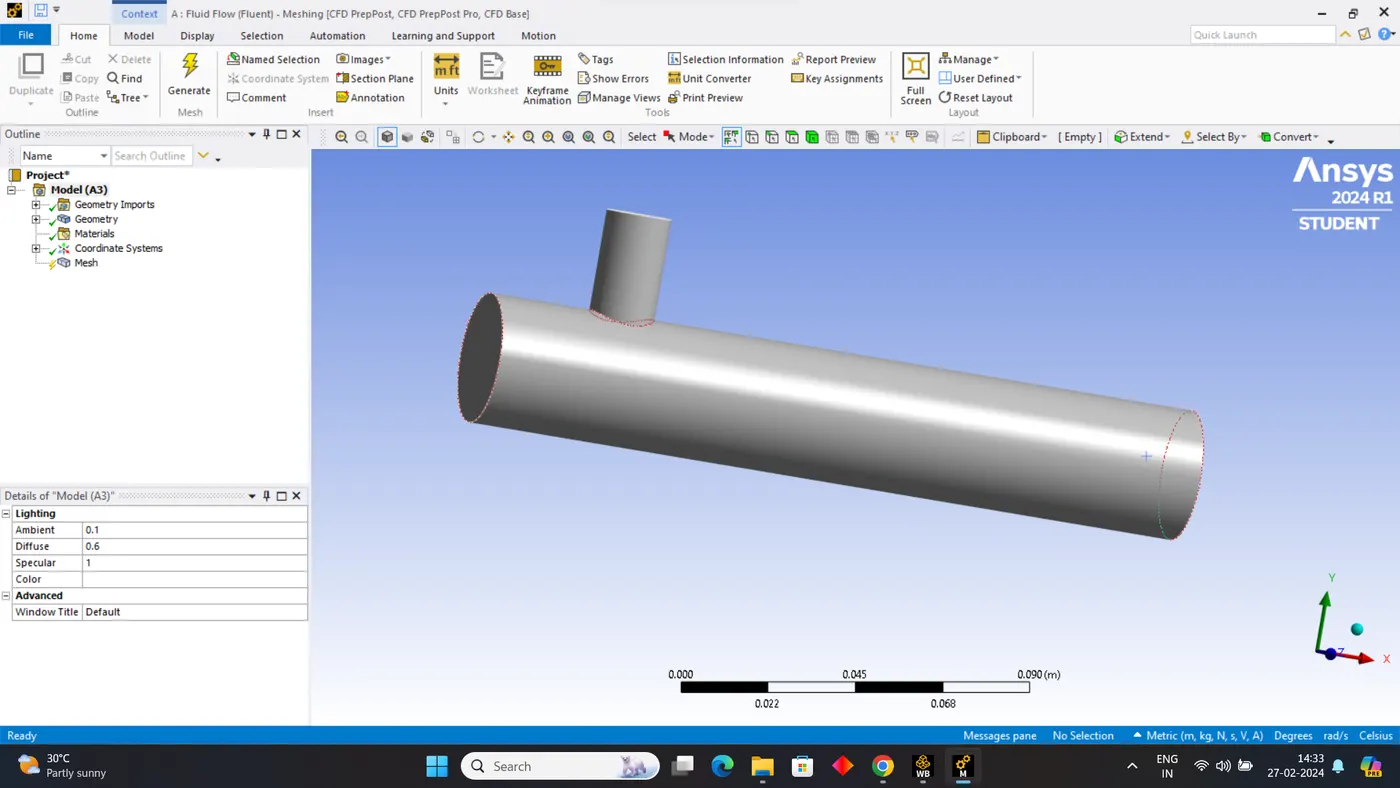
- Open the SpaceClaim in the Geometry and then import the case setup of the model.
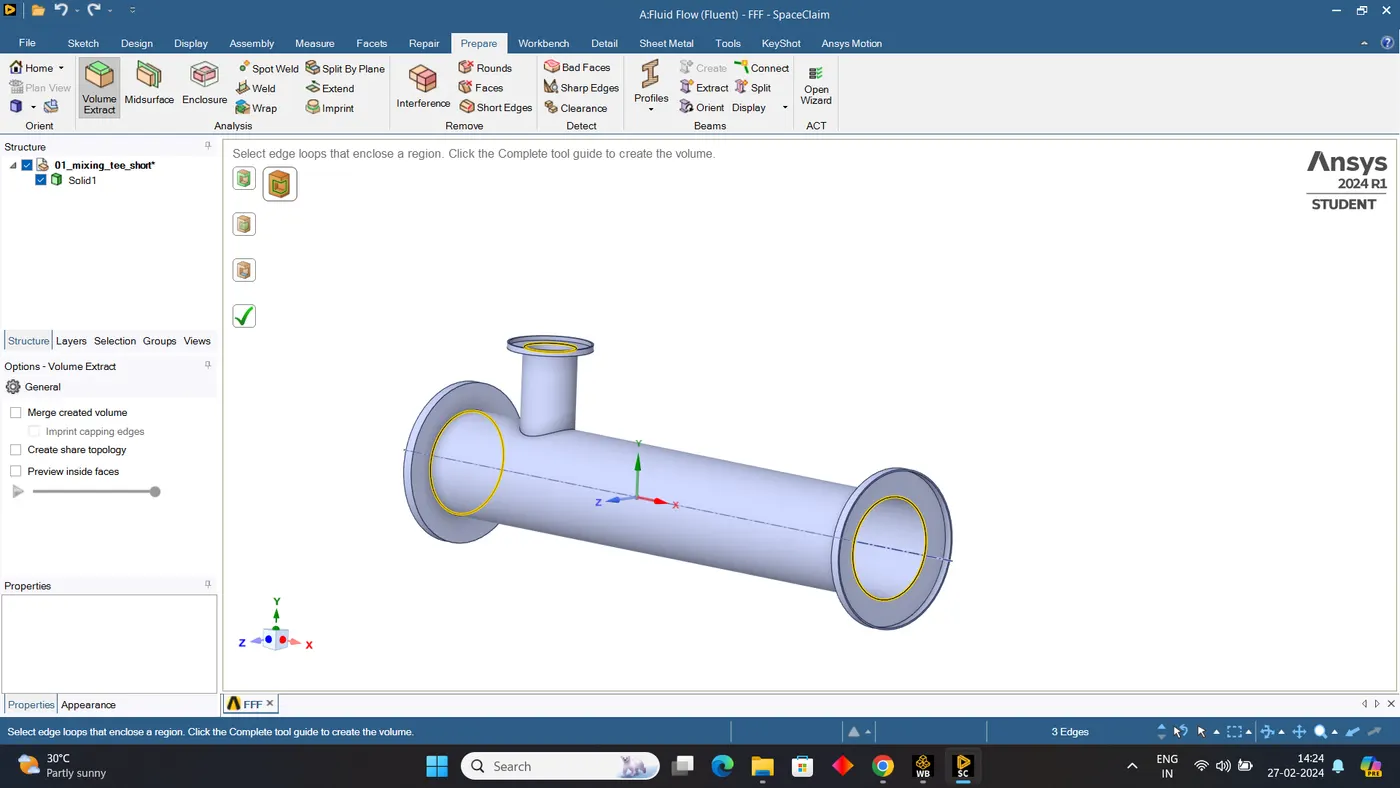
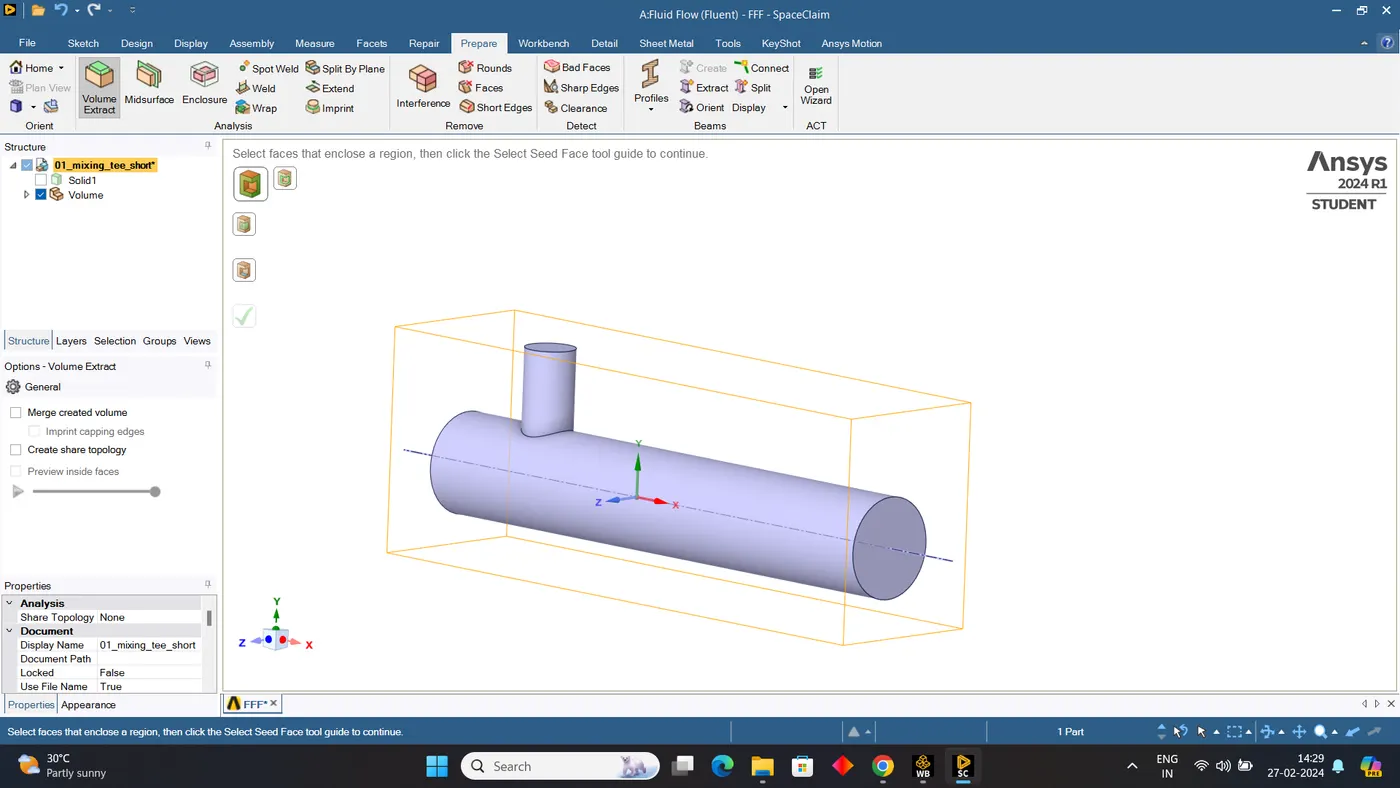
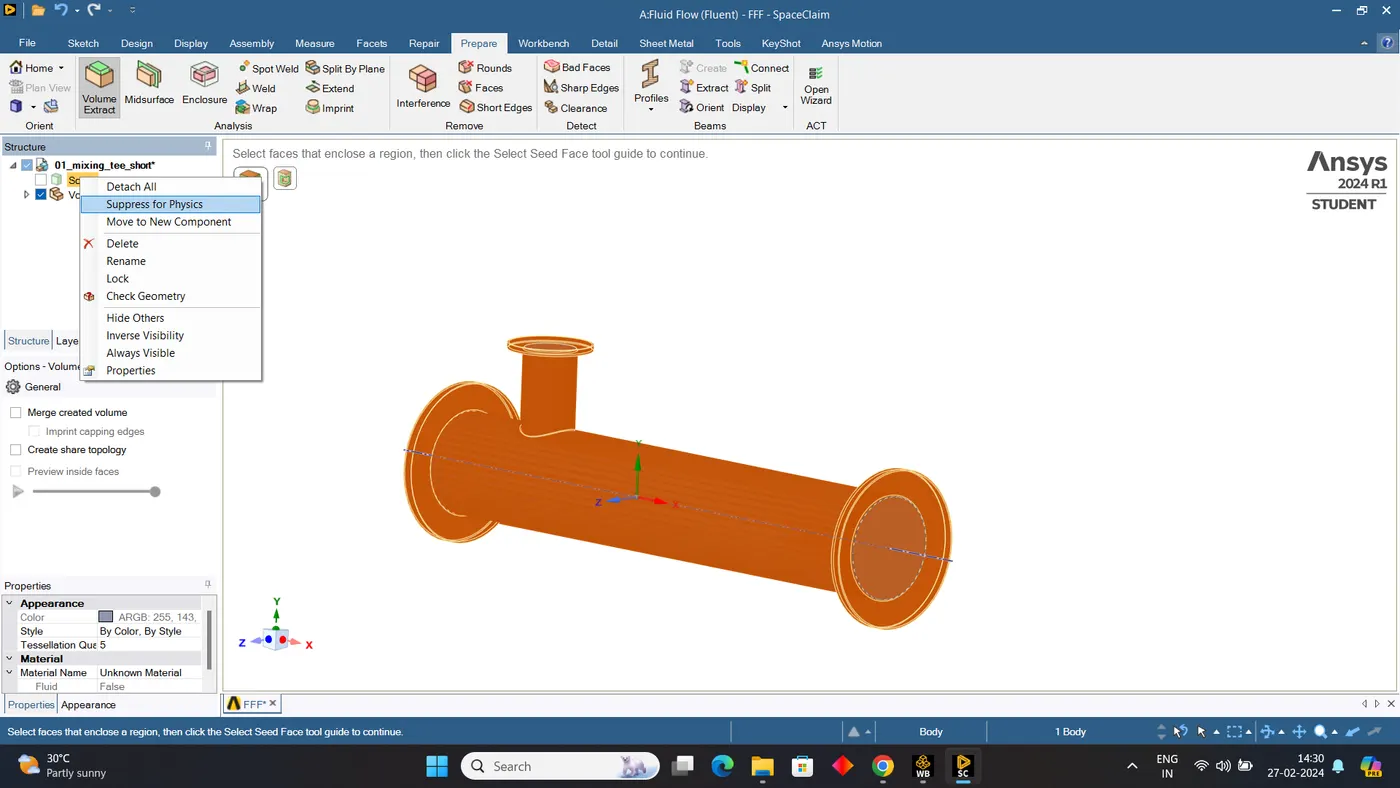
- Select the Edges using the Prepare ---> Volume Extract ----> Select the Edges for the fluid volume.
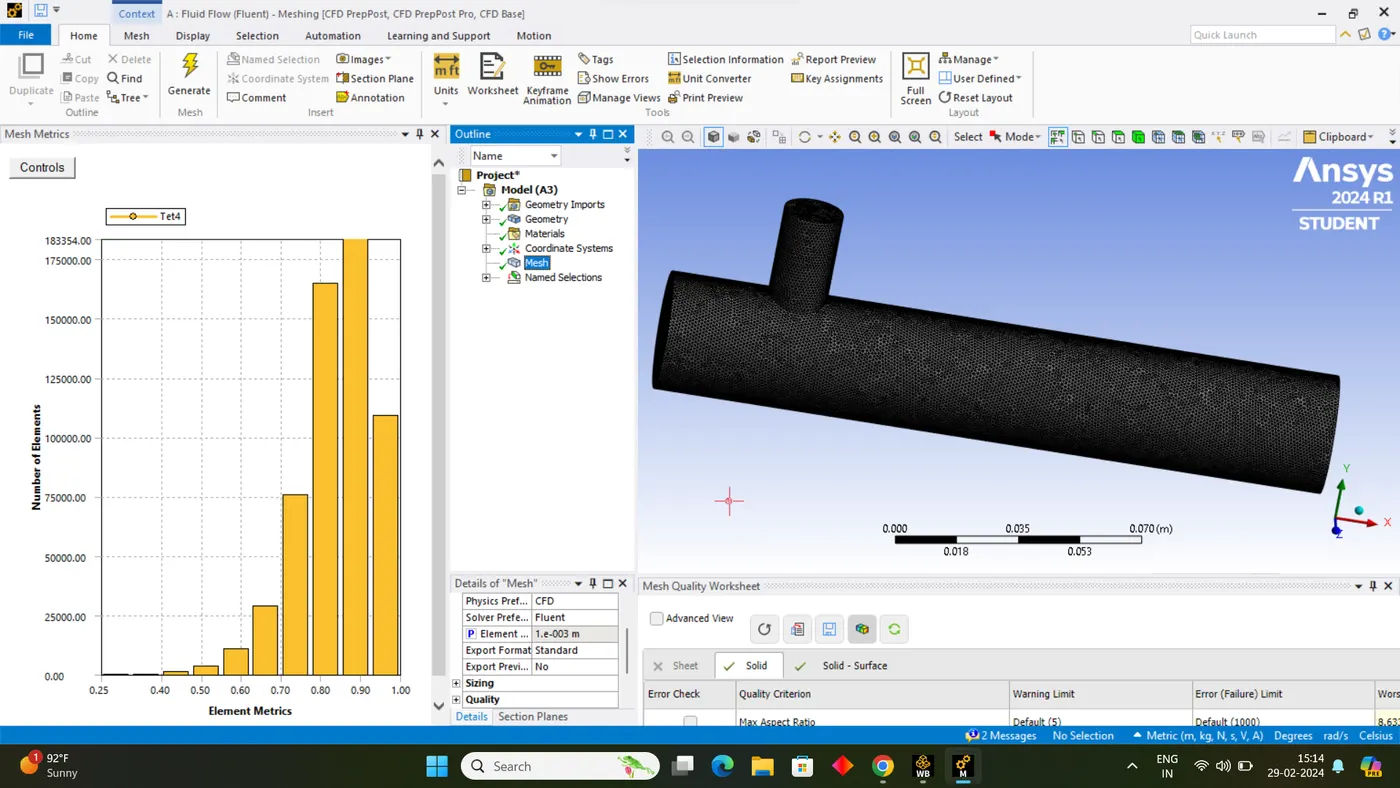
MESHING:
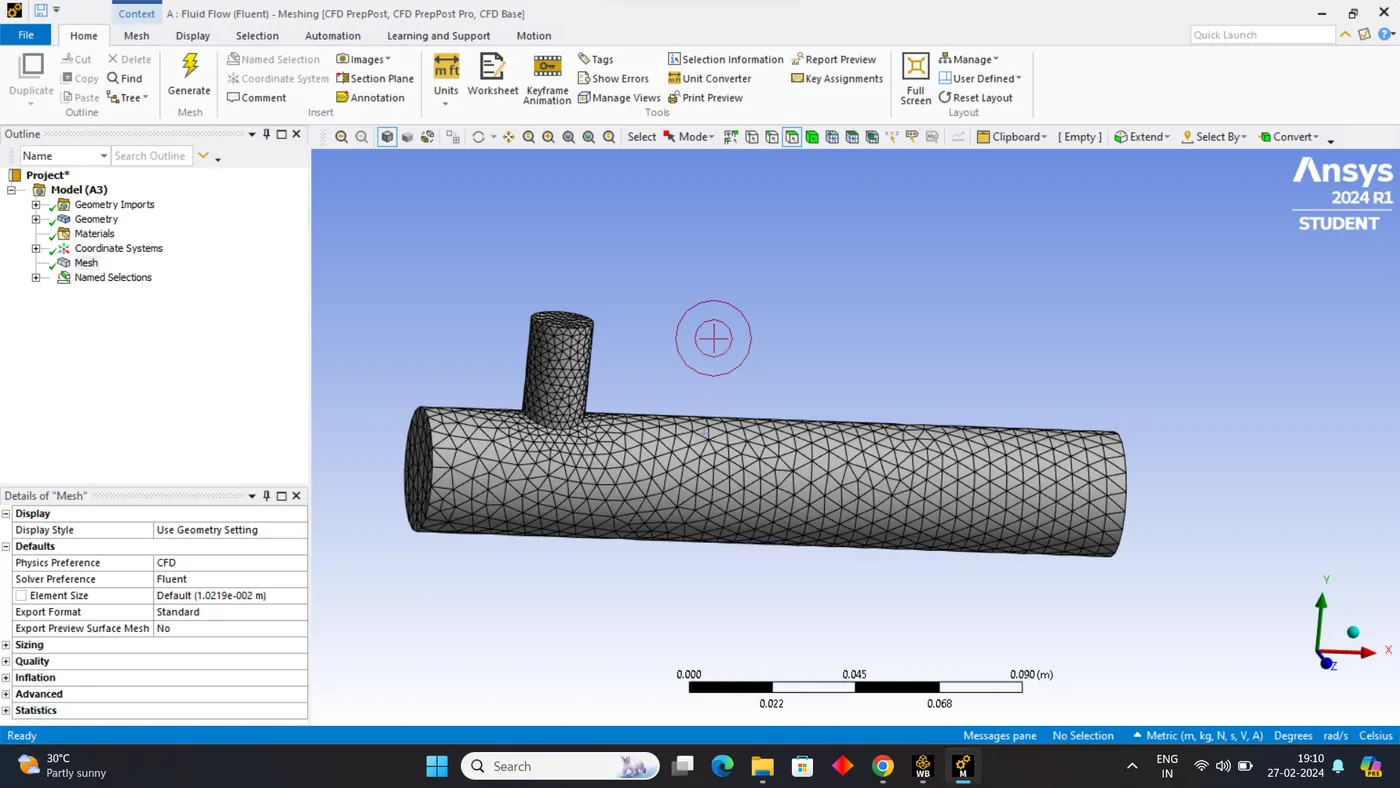
- Using the Face (Ctrl + F) option select the faces and N to name the face i.e. input x, input y, outlet, and Wall.
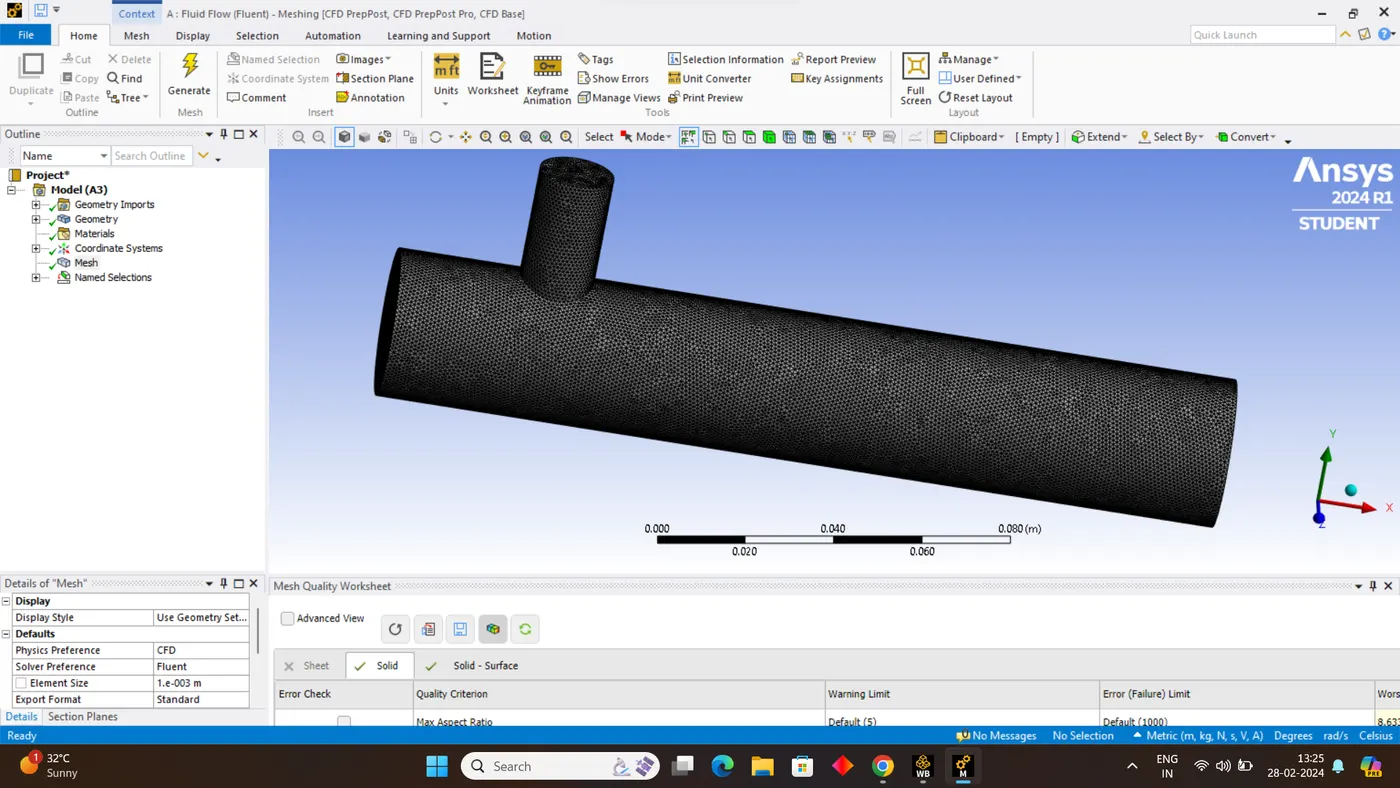
- Go to Mesh right-click and generate Mesh.
- Element Size - 0.001 has been increased to get accurate results.
POST-PROCESSING:
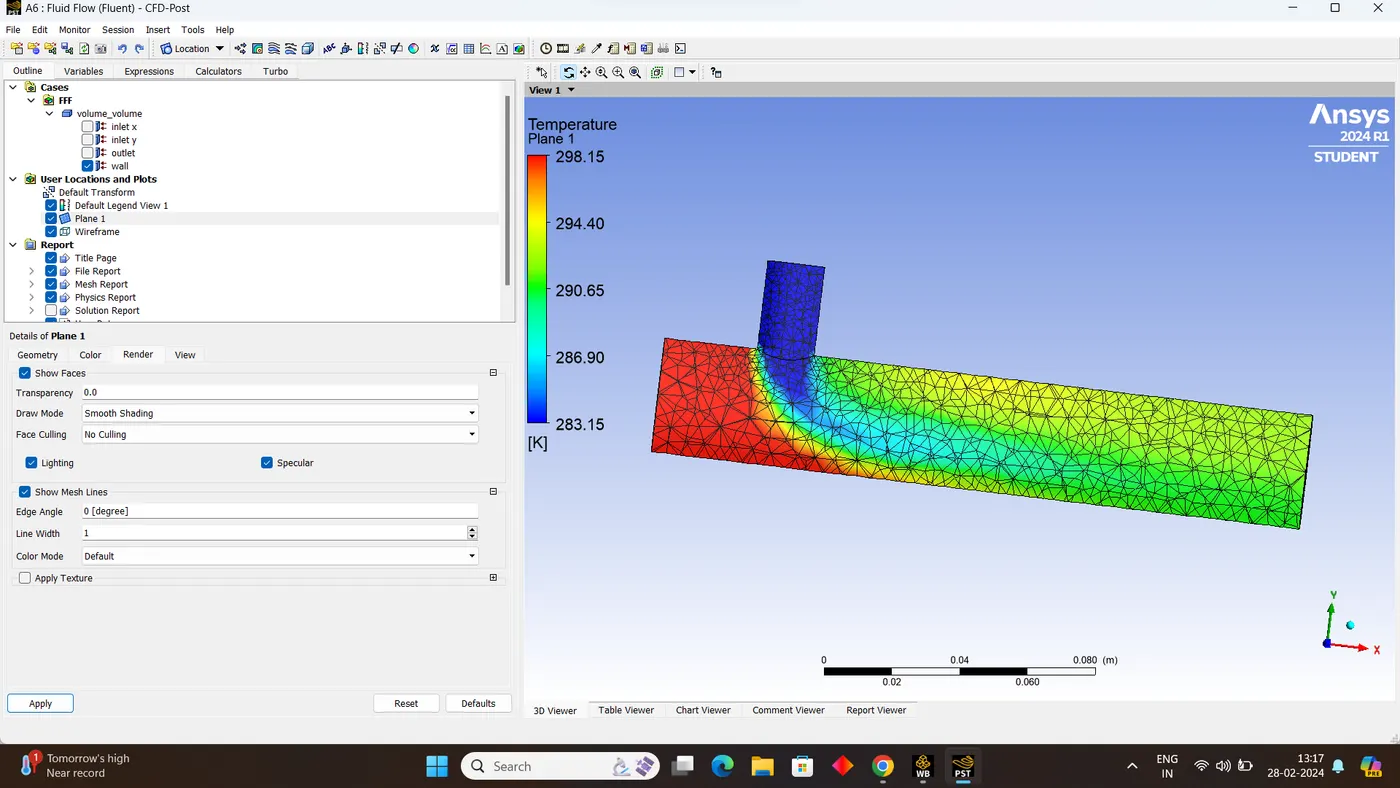
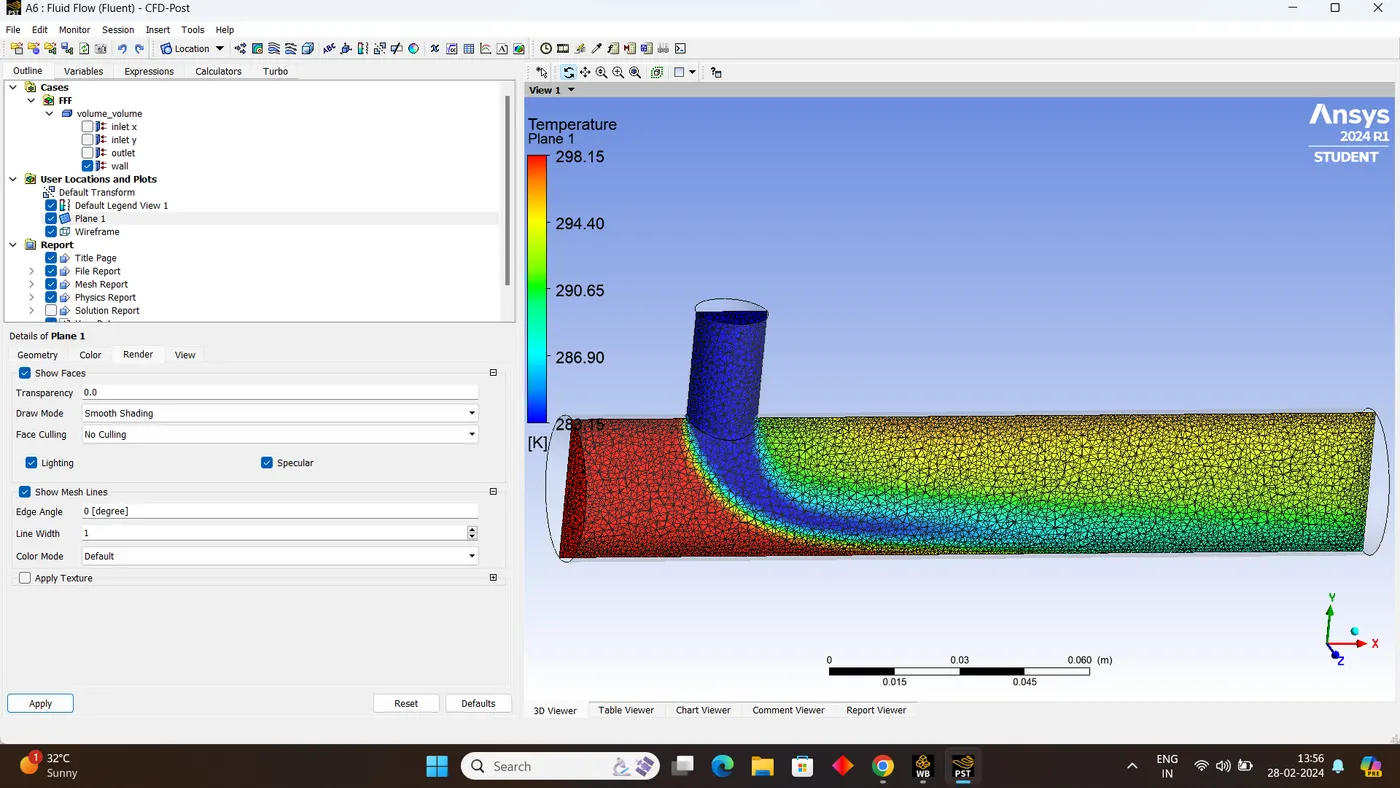
- In ANSYS Work bench ---> Results the post-processing window will open the volume to visible.
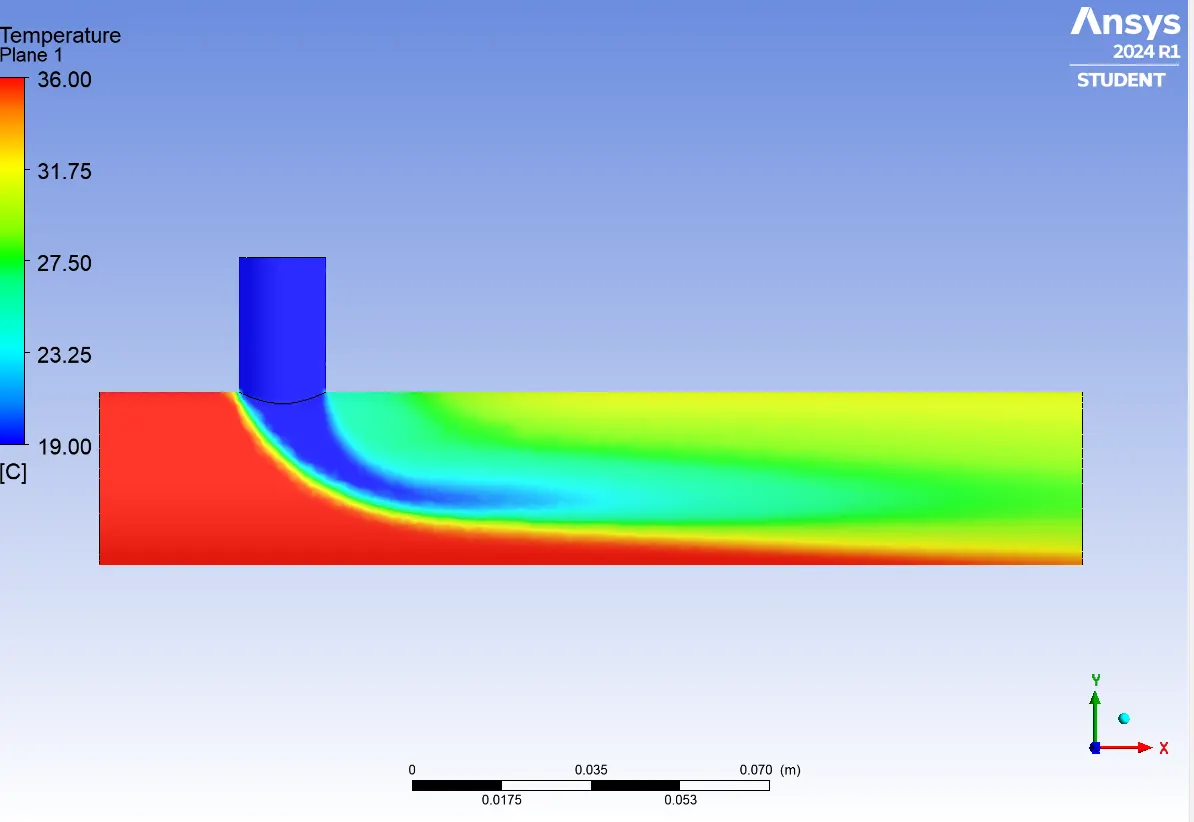
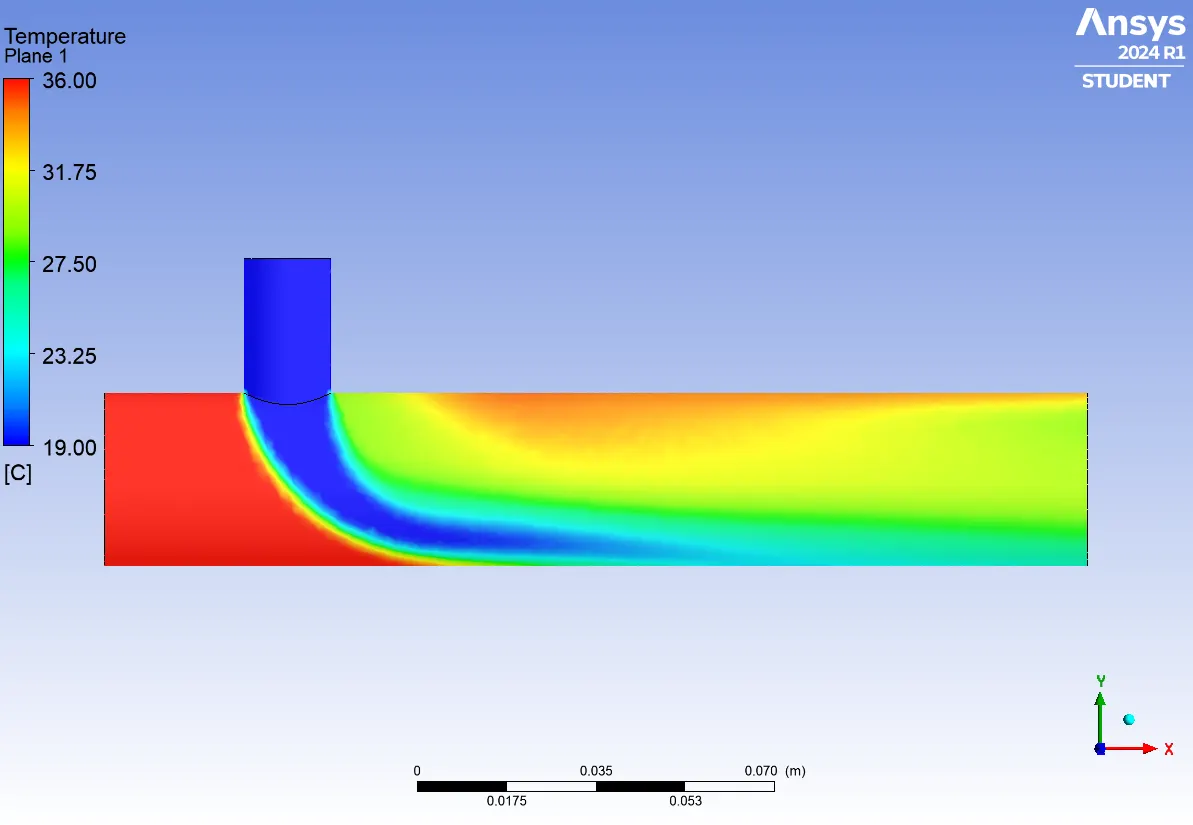
- Insert ---> Location ----> Plane ----> XY Plane. --->Color---> Variable---> Temperature ---> Set the Minimum and Maximum temperature.
- To get the color for the temperature difference go to the wall double click and render option to make it transparency.
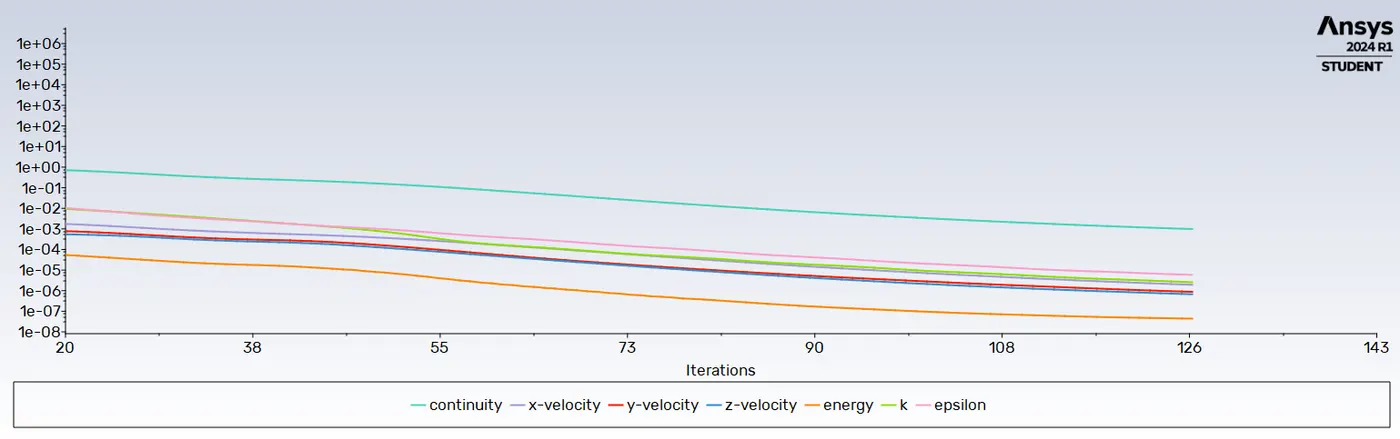
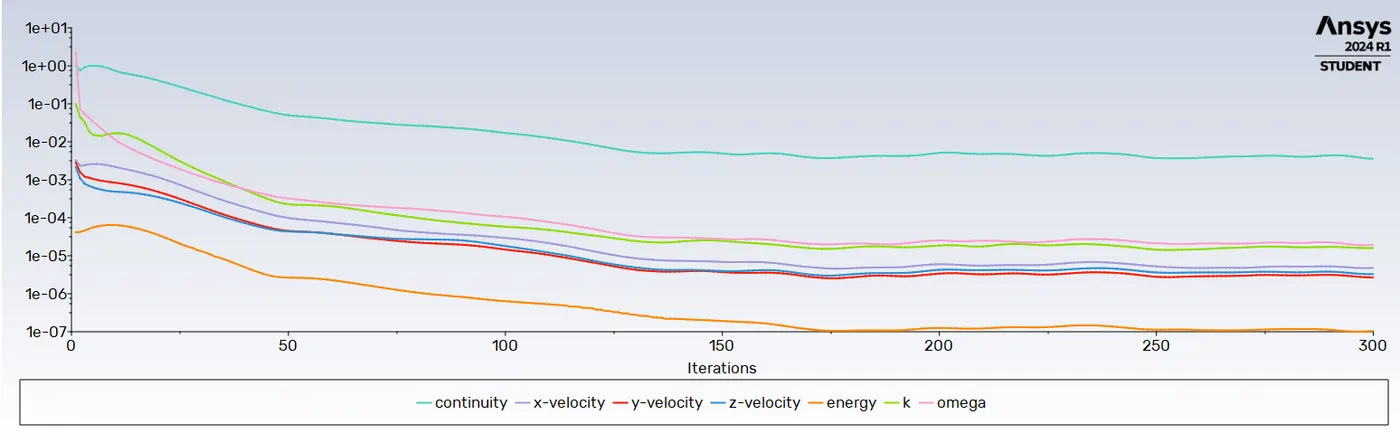
Use the Standard k-ε model when:
- Dealing with industrial applications with moderate computational resources.
- The flow does not involve strong adverse pressure gradients or swirling flows.
- General accuracy is acceptable, and computational efficiency is a priority.
Use the SST k-ω model when:
- Accuracy near walls and in adverse pressure gradient regions is crucial.
- Simulating complex flows with strong streamline curvature, rotation, or swirling motions.
- Computational cost is a secondary concern compared to accuracy.
CASE:1
SHORT PIPE
MOMENTUM RATIO-2
MOMENTUM RATIO-4
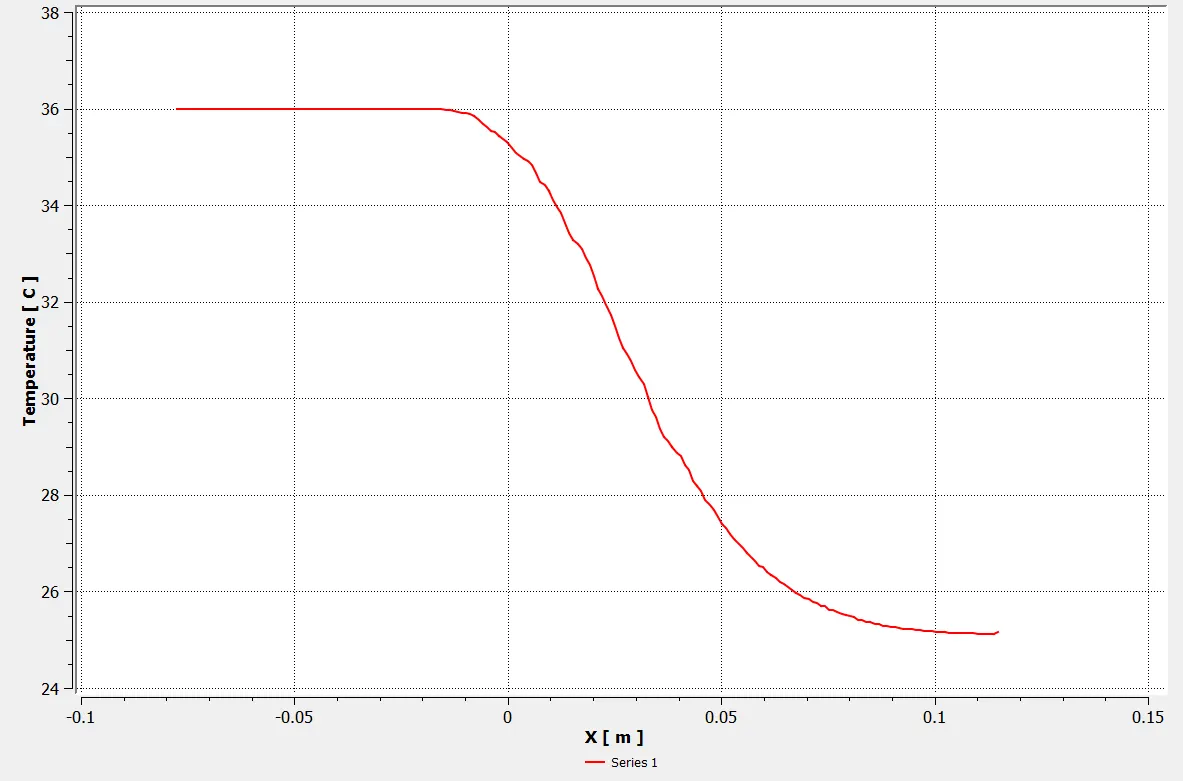
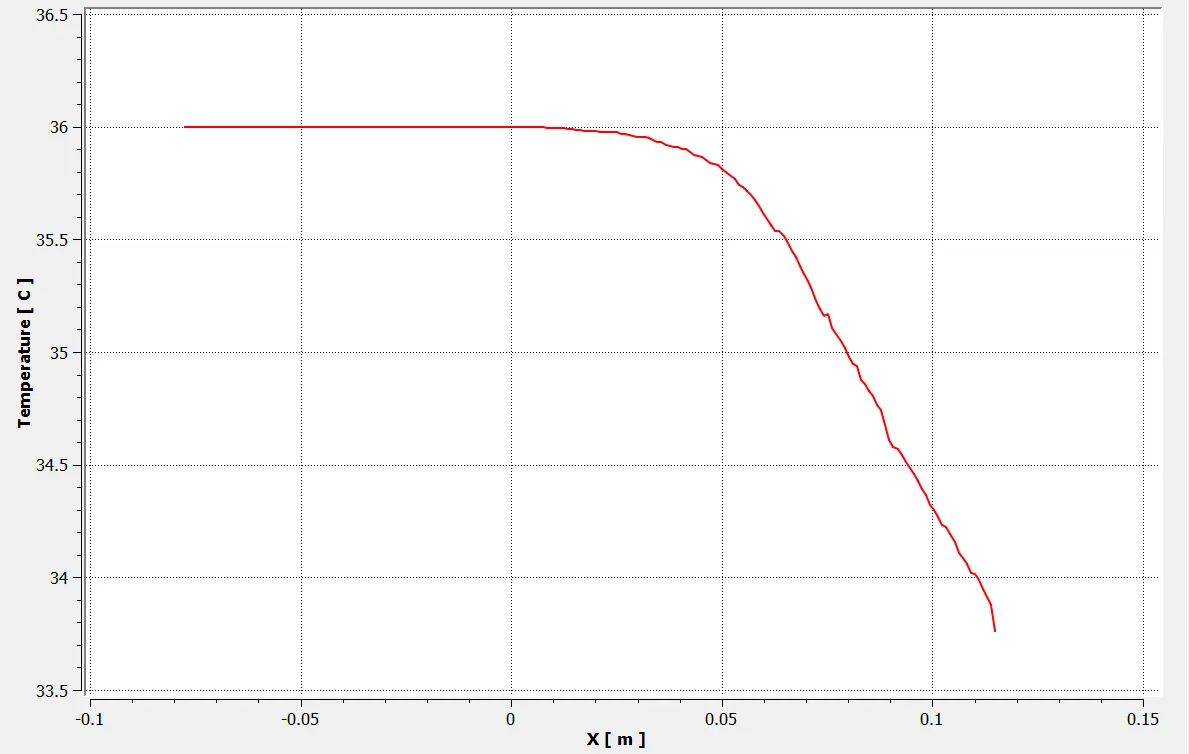
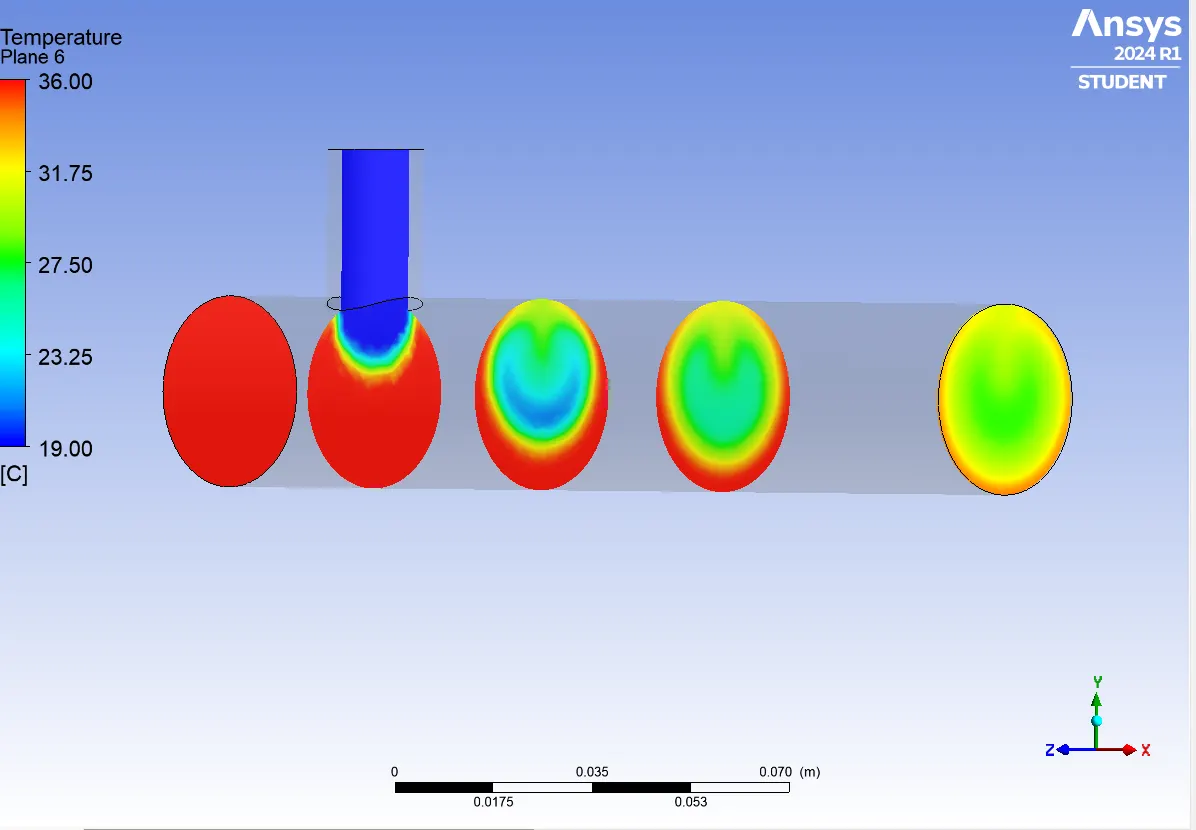
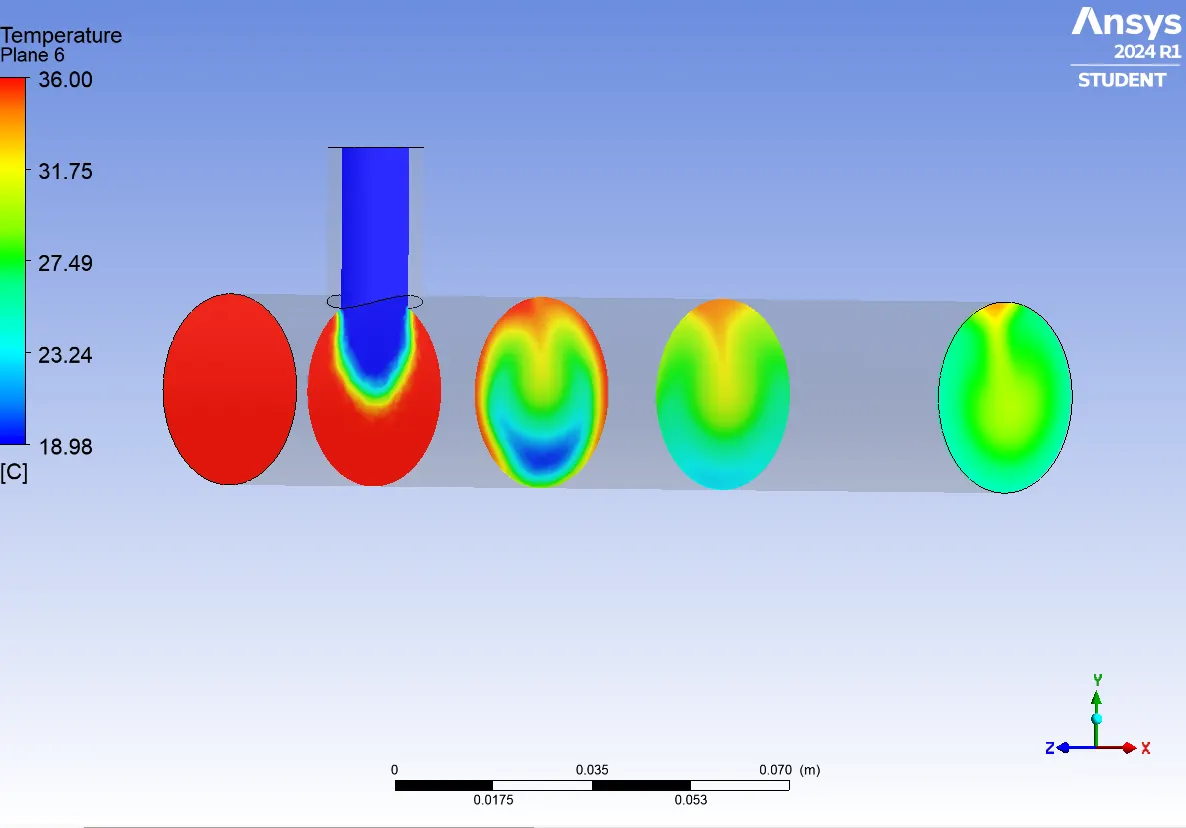
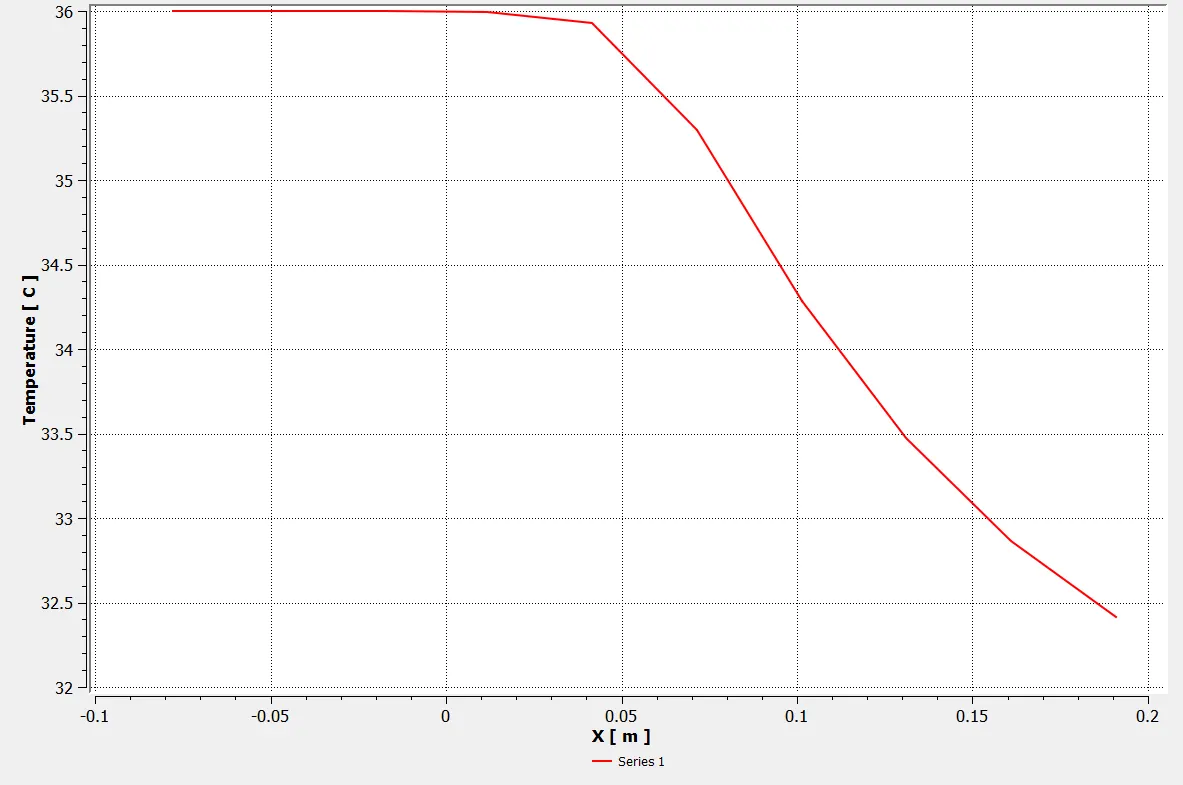
TEMPERATURE:
Momentum Ratio - 2 Momentum Ratio - 4
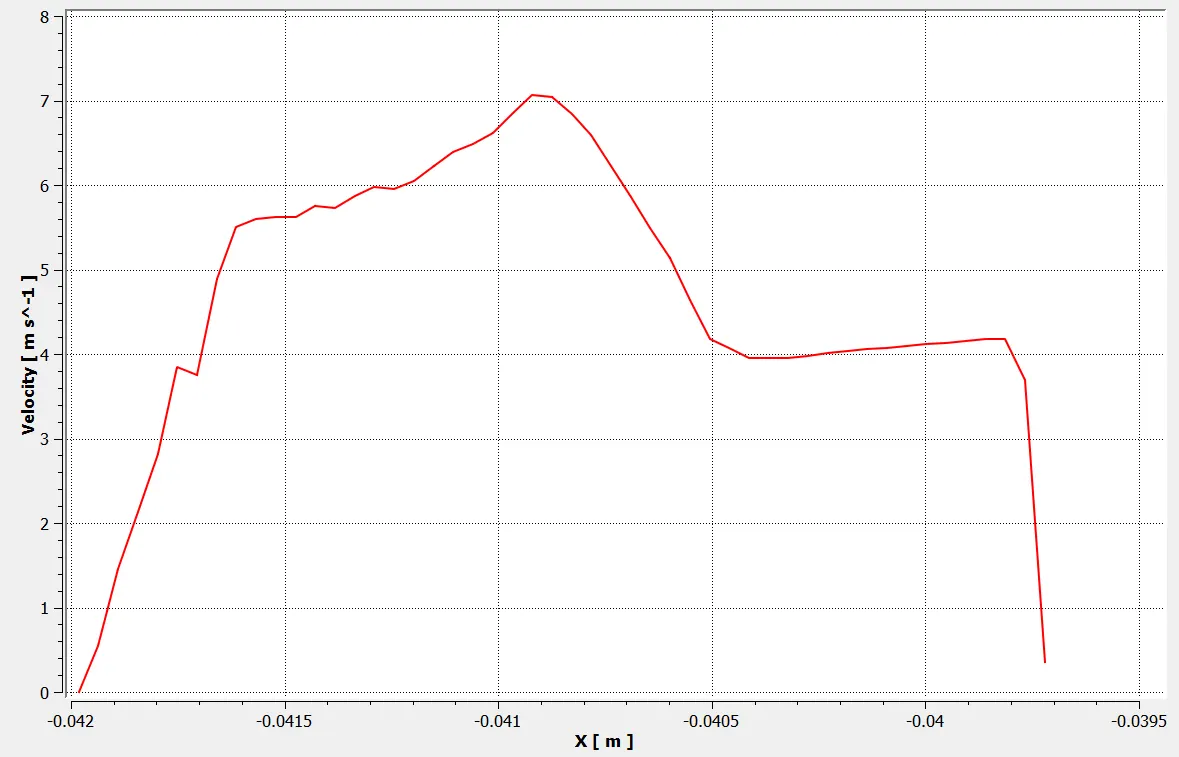
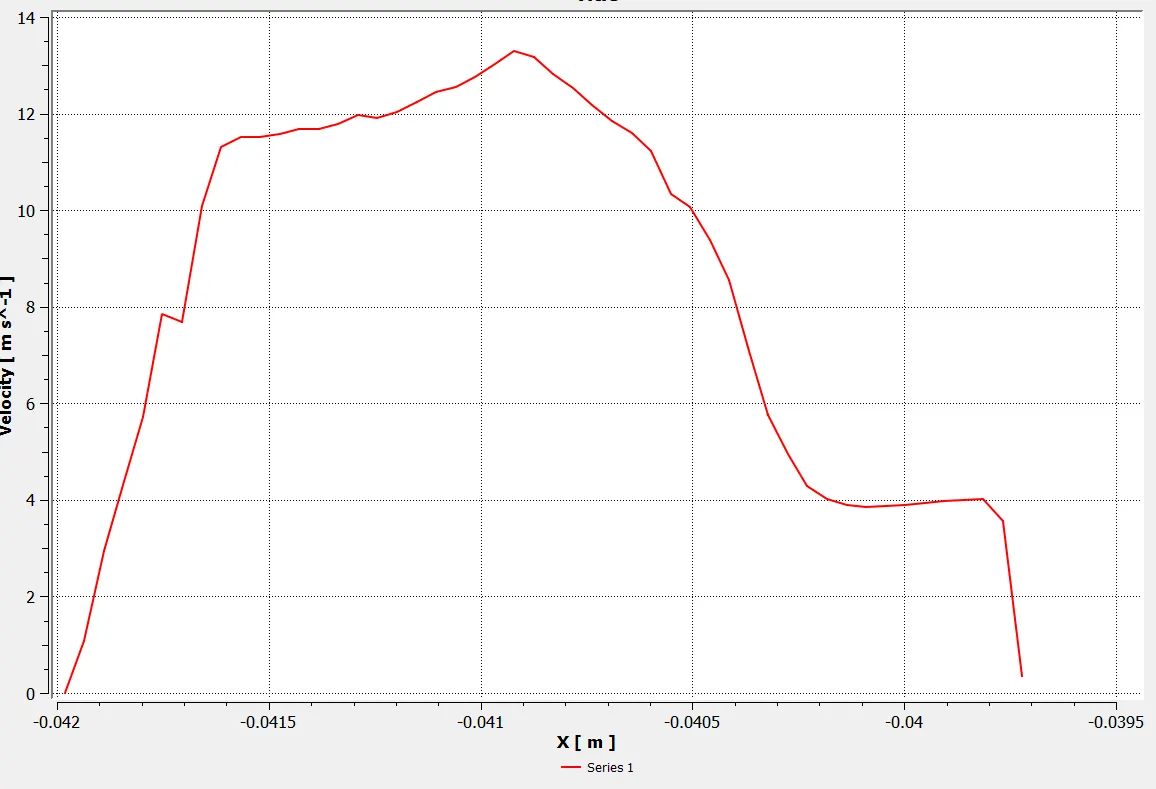
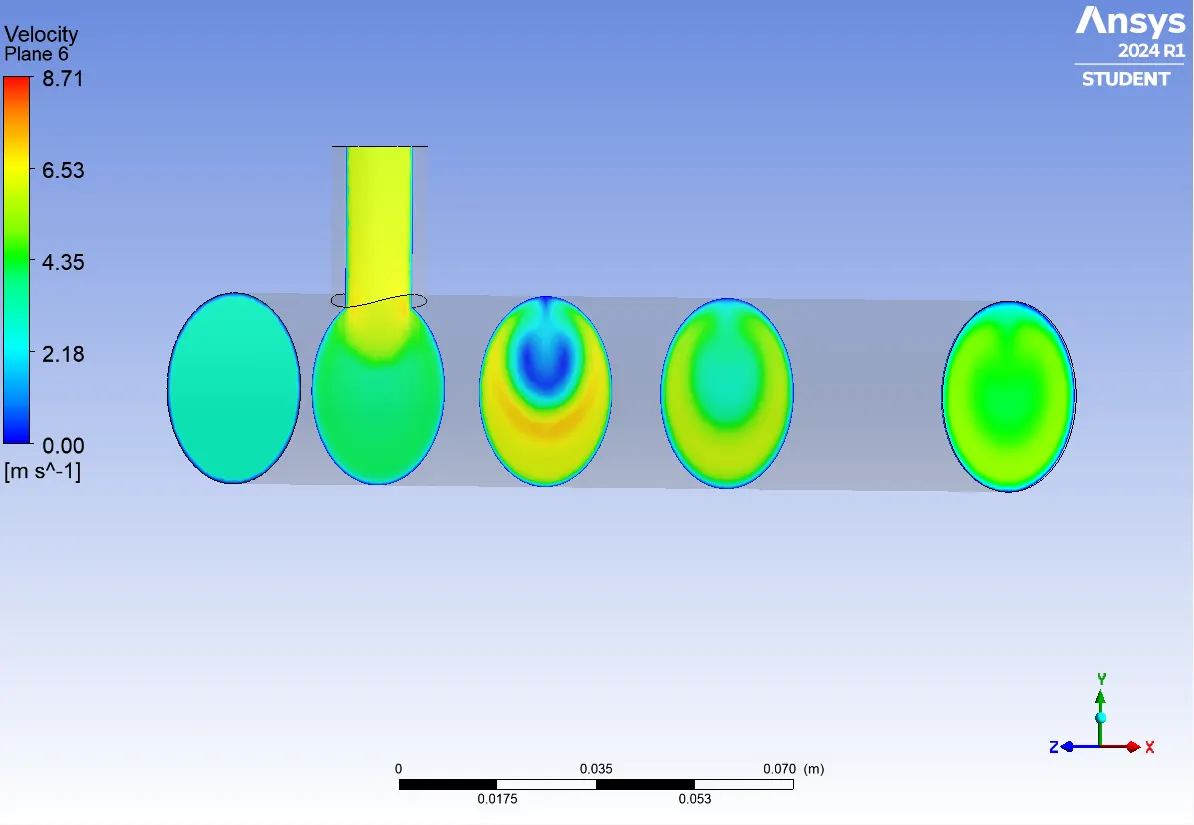
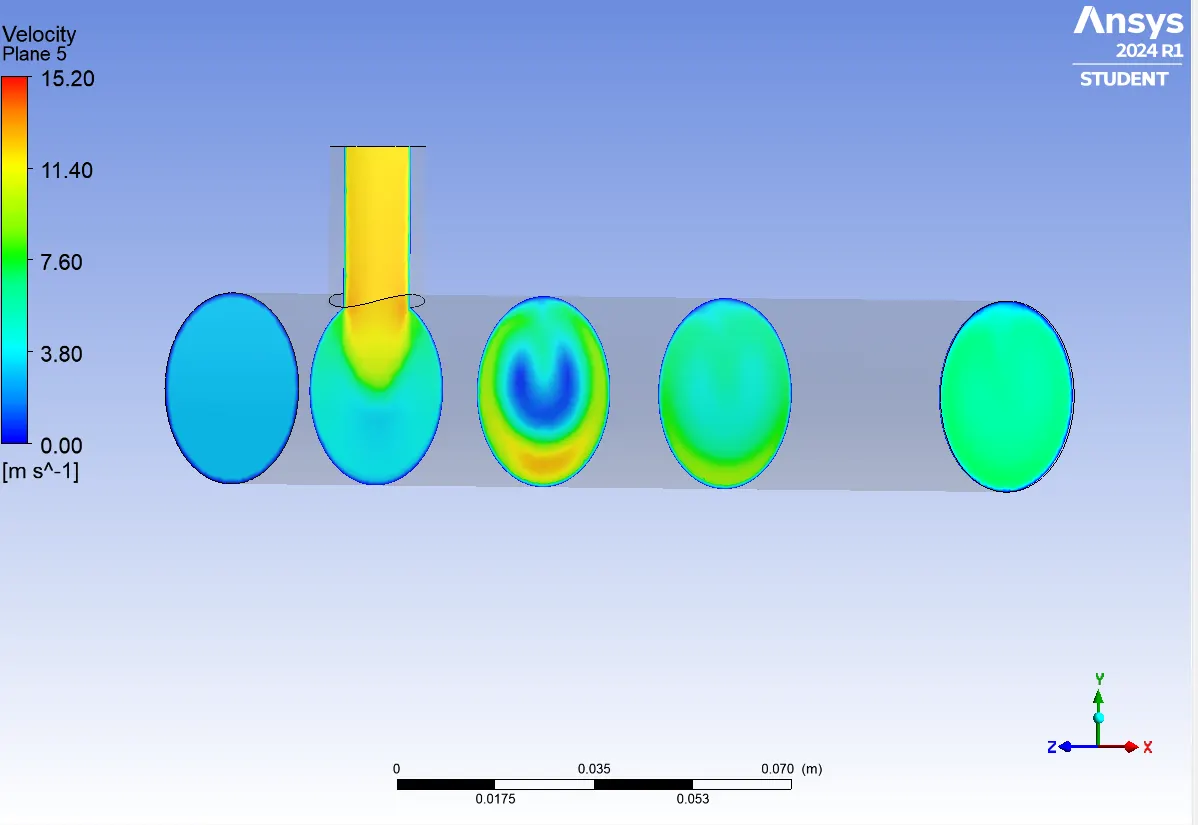
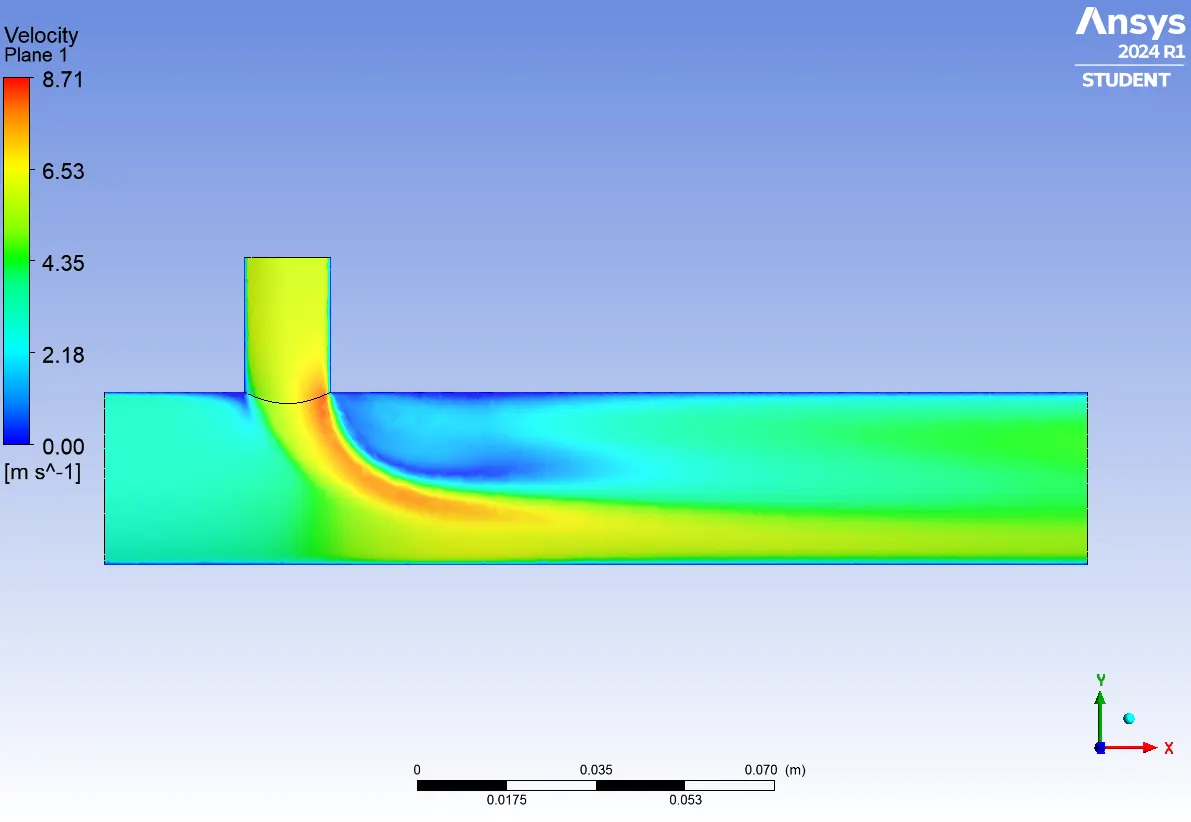
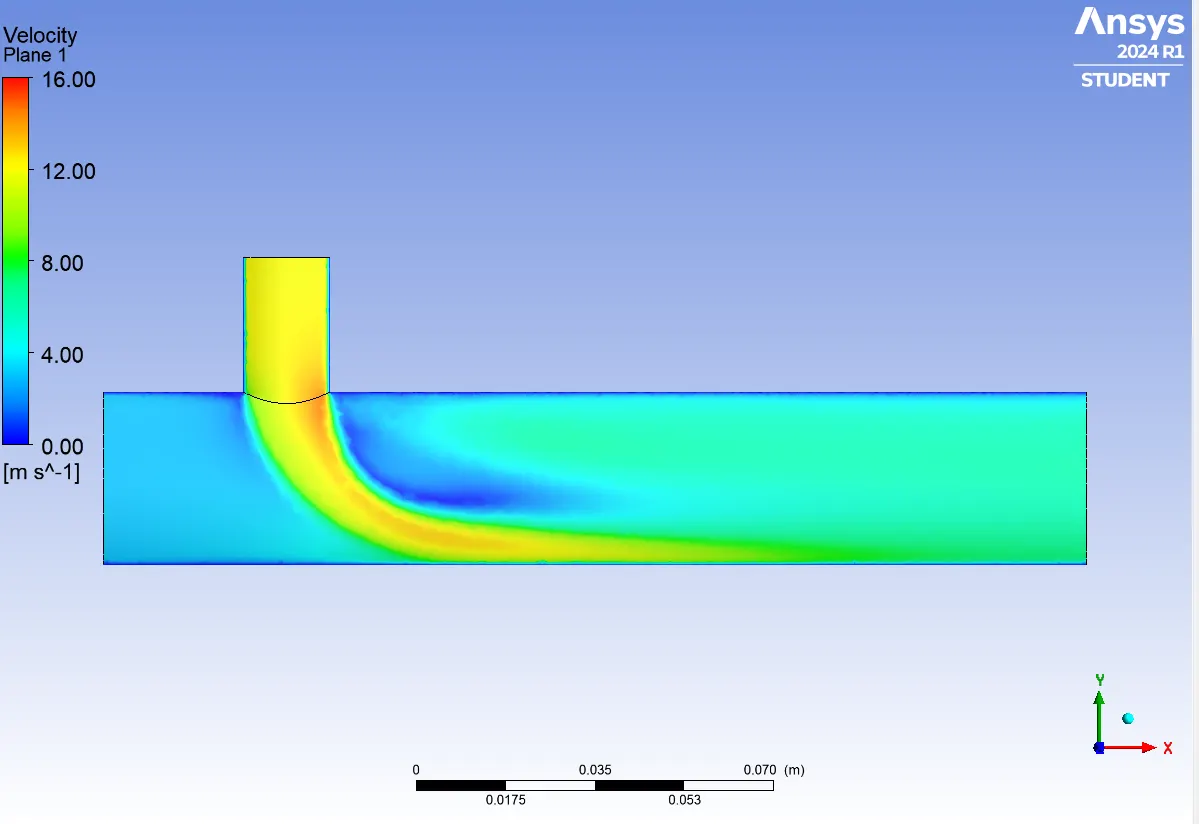
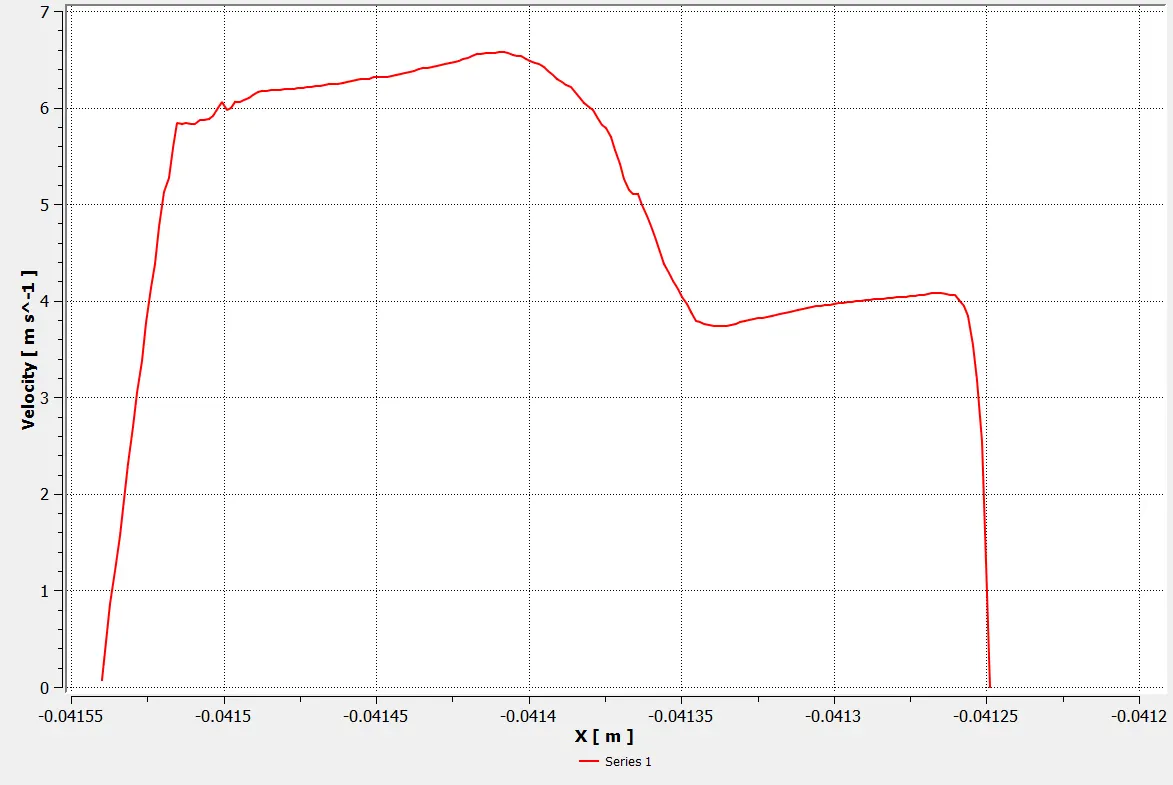
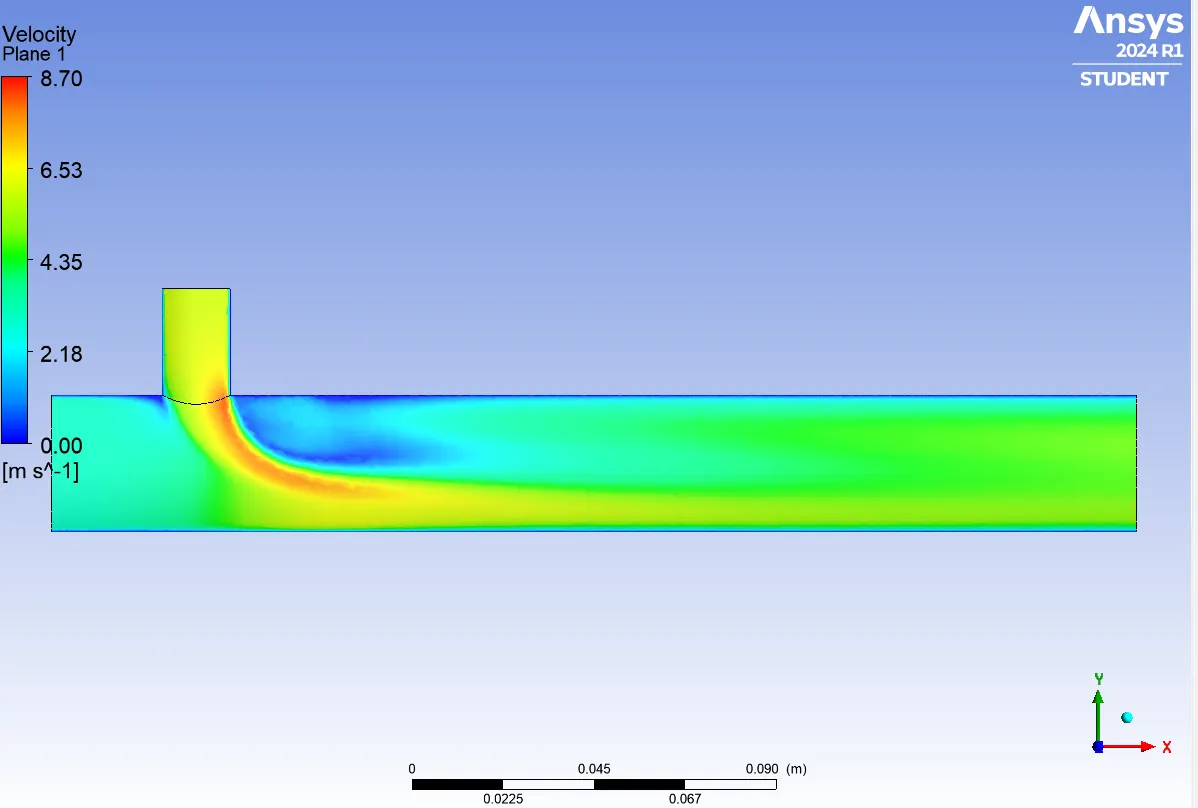
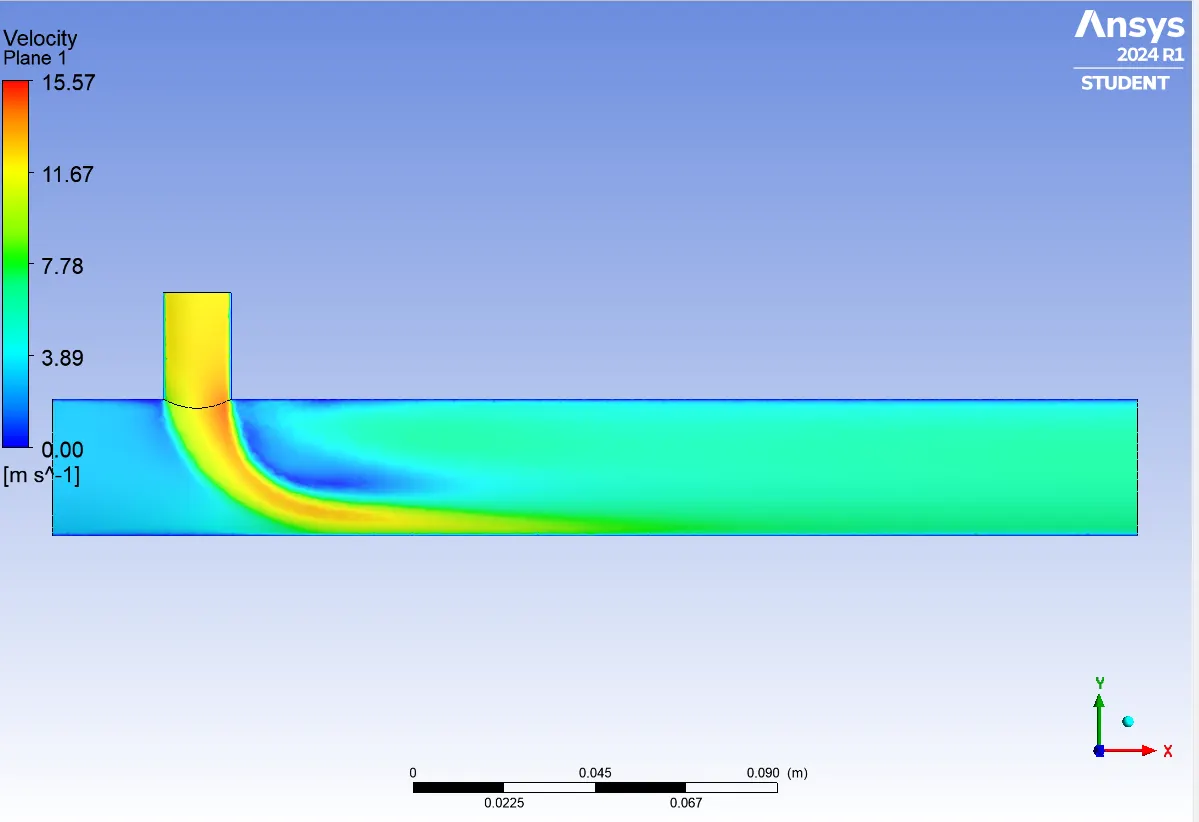
VELOCITY:
Momentum Ratio - 2 Momentum Ratio - 4
CASE:2
LONG PIPE
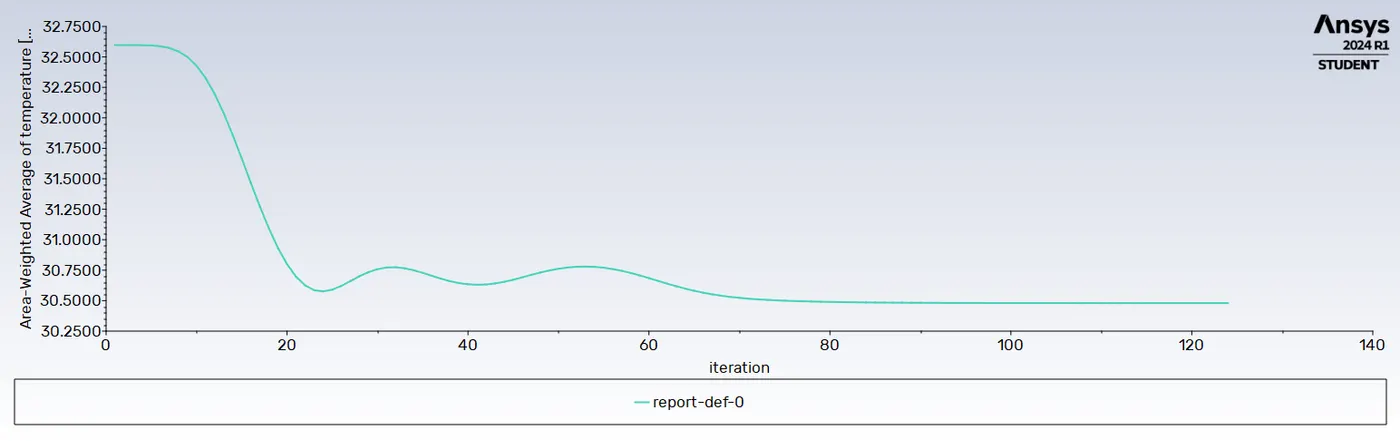
MOMENTUM RATIO-2
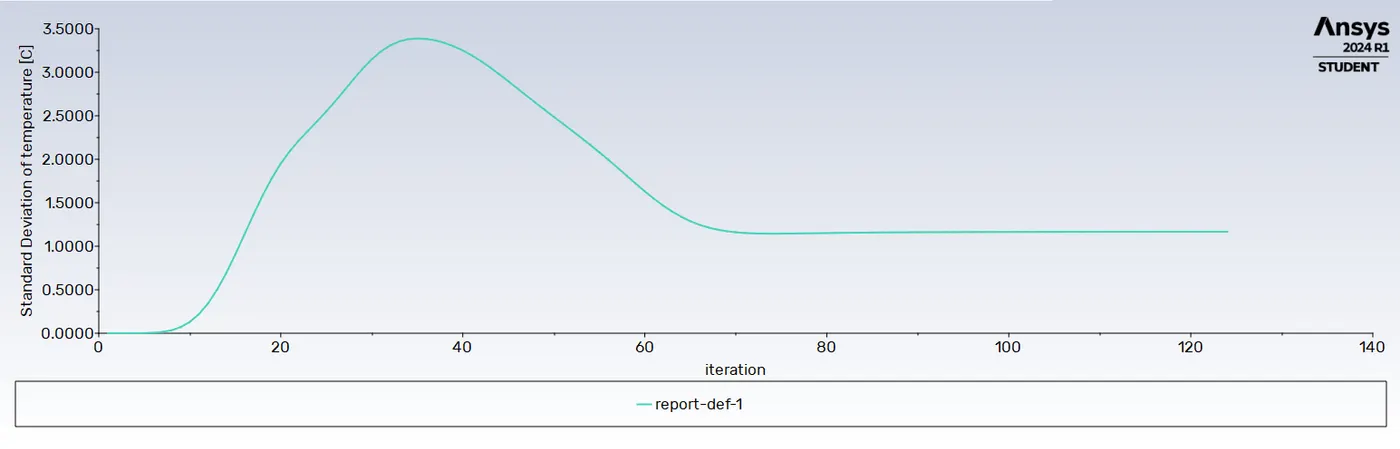
MOMENTUM RATIO-4
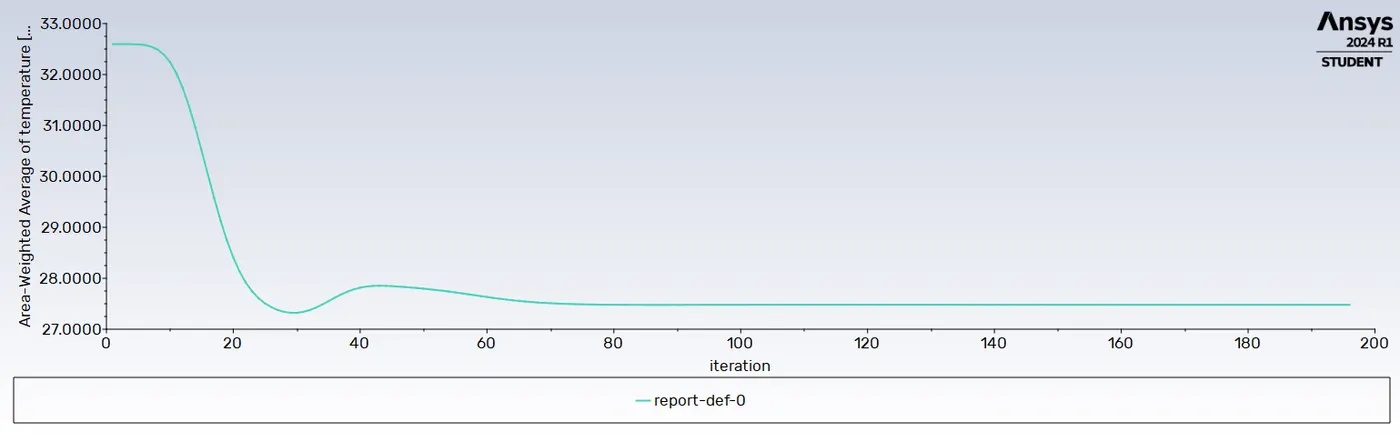
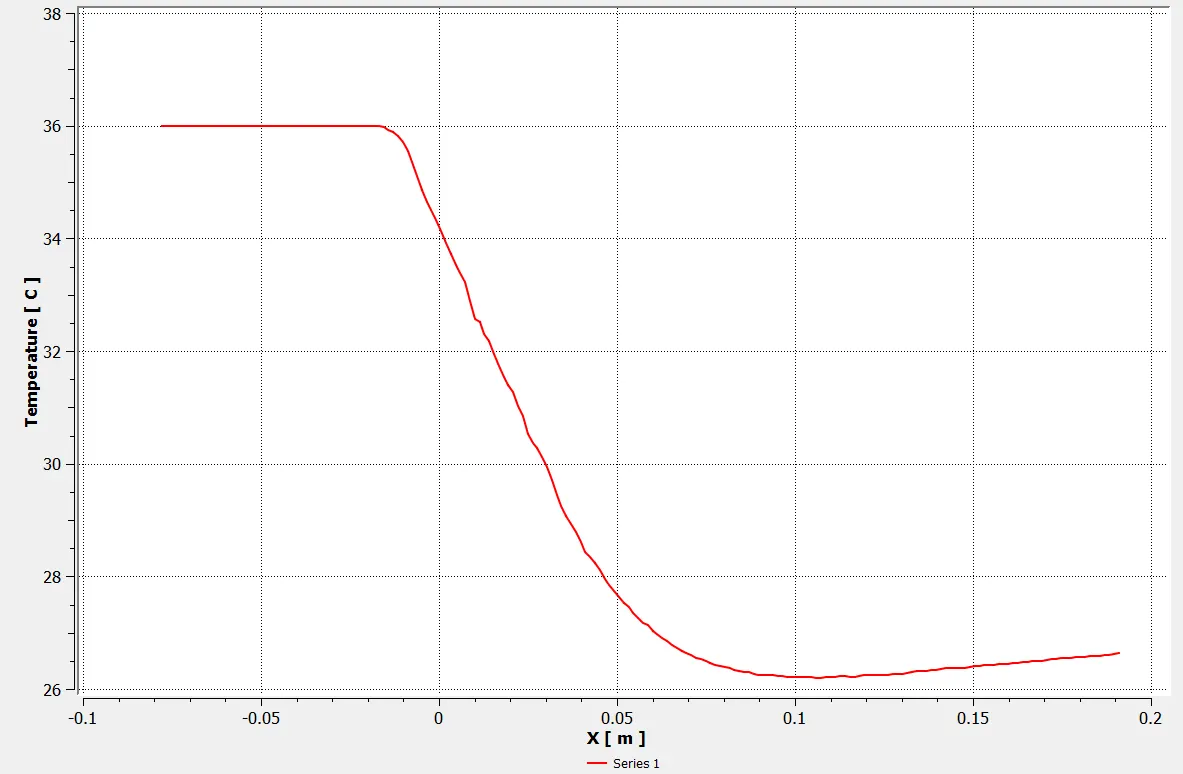
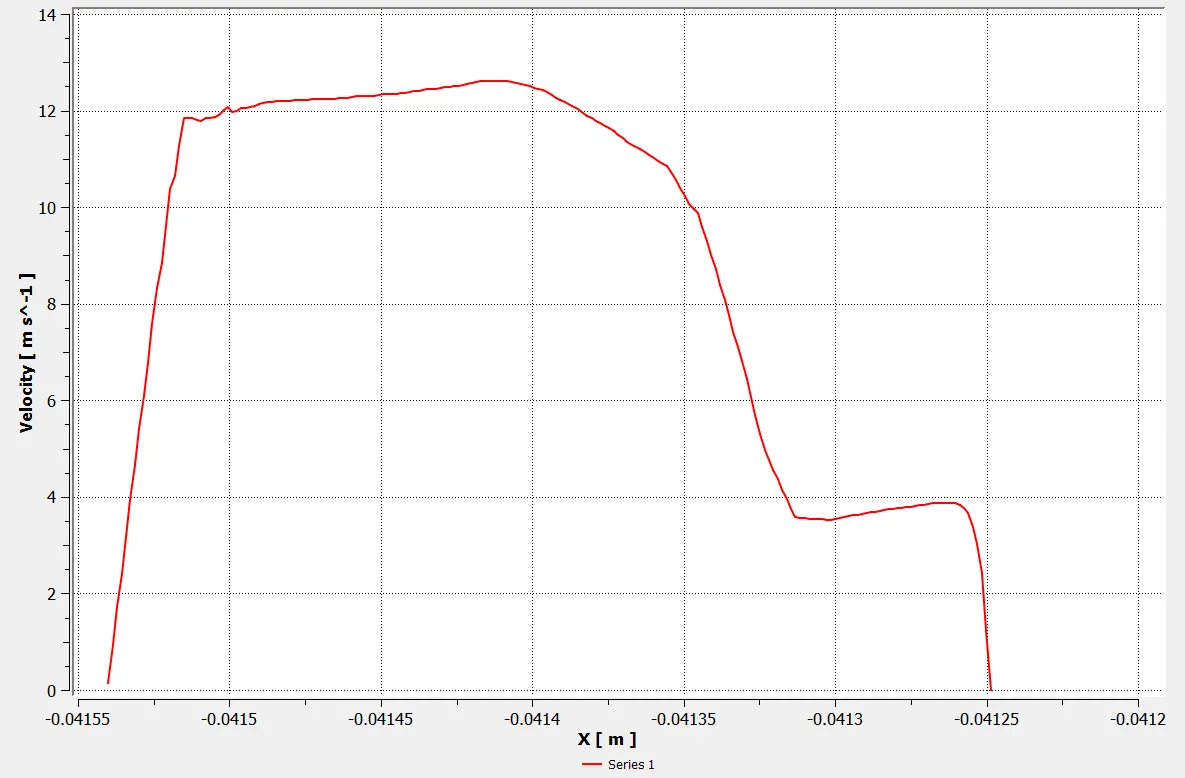
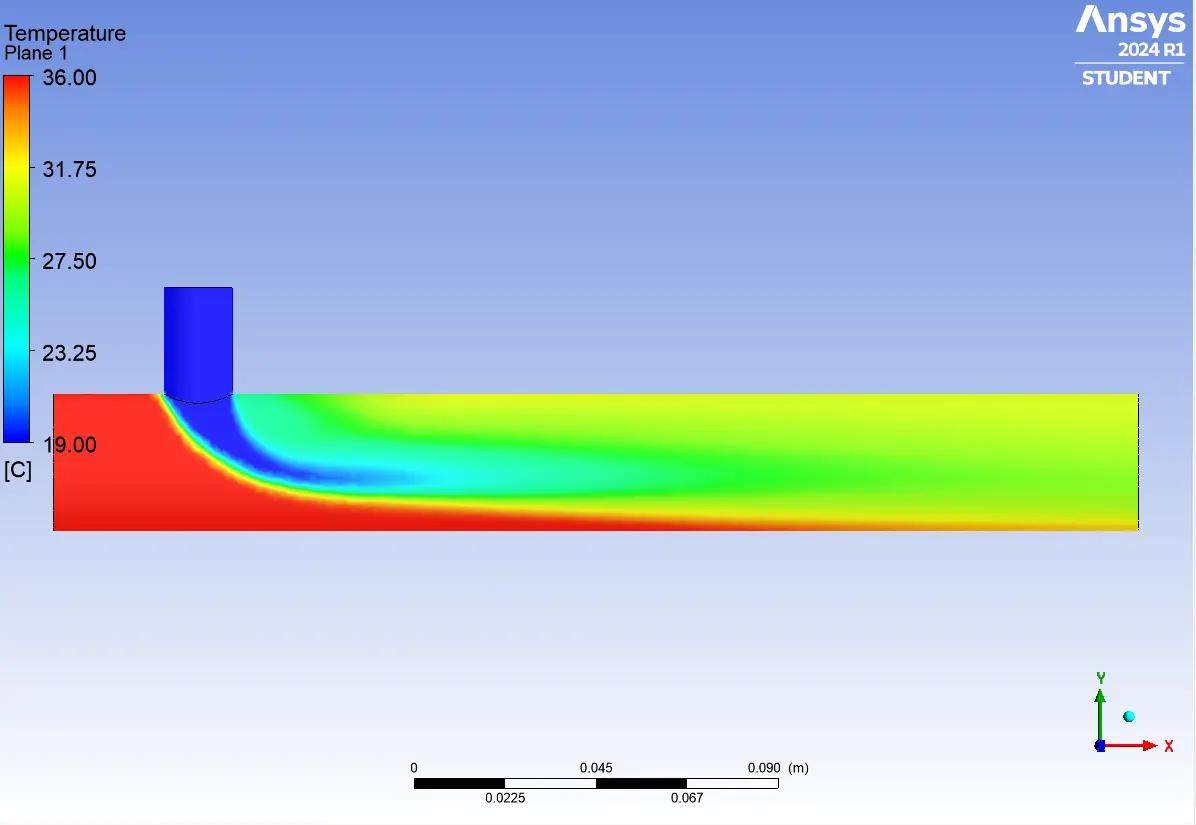
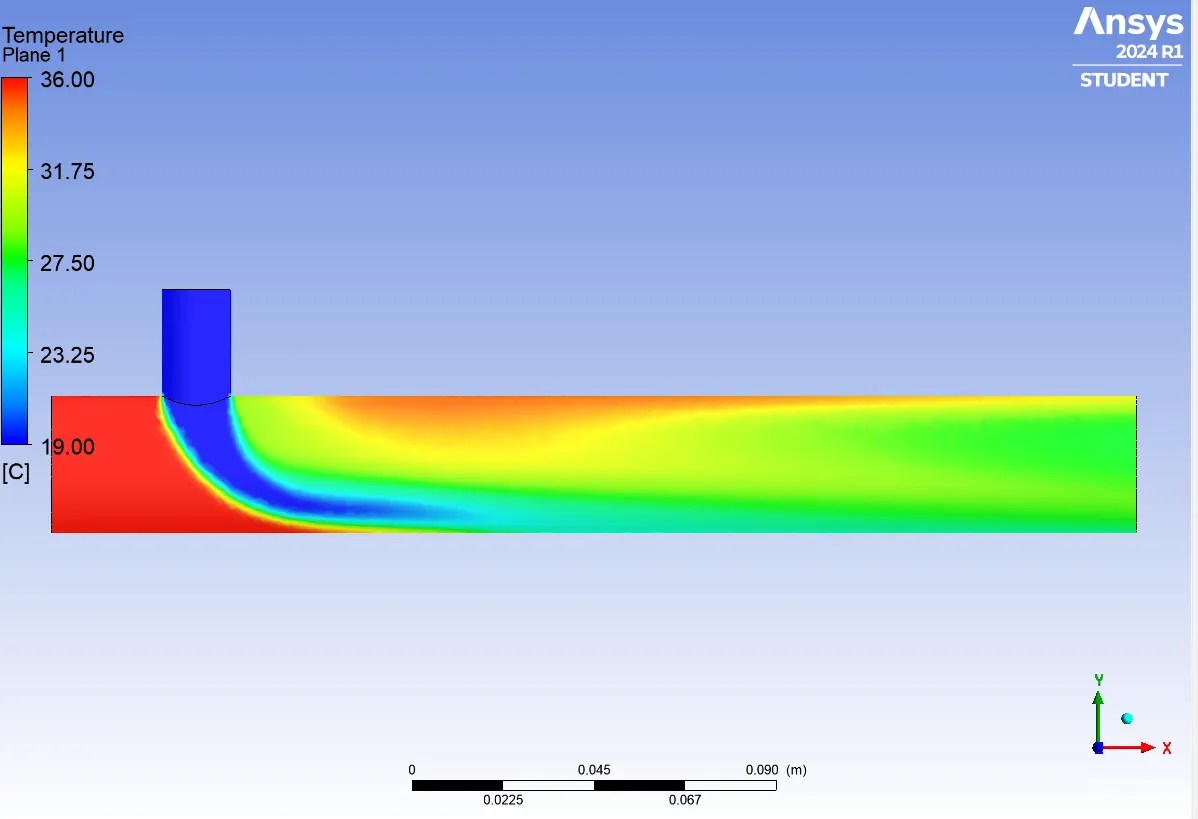
TEMPERATURE:
Momentum Ratio - 2 Momentum Ratio - 4
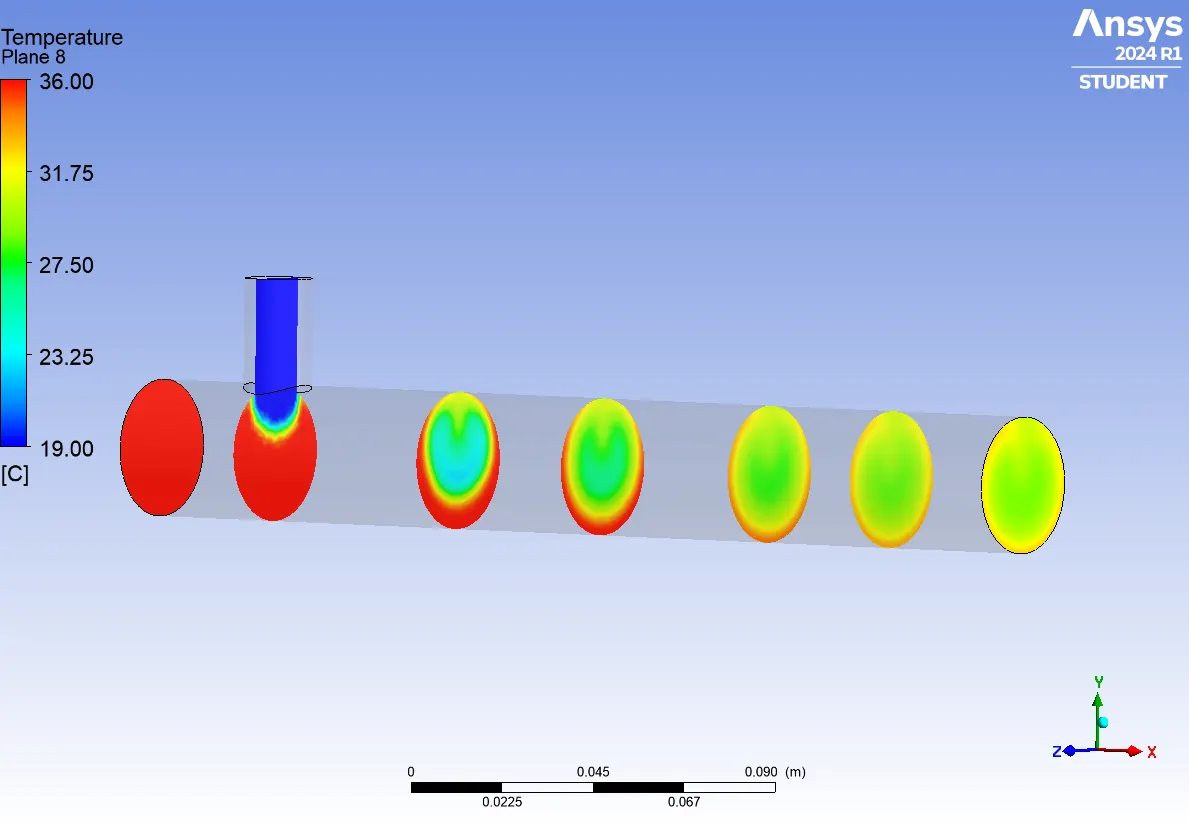
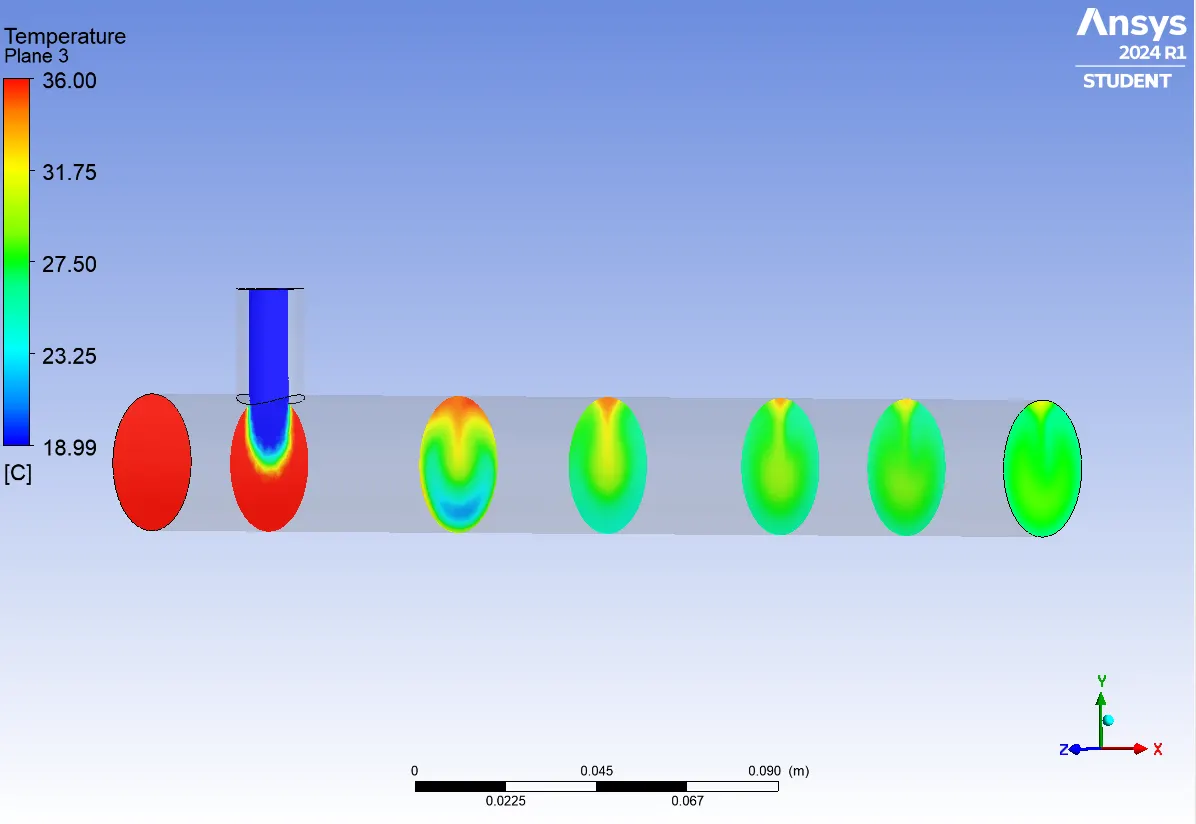
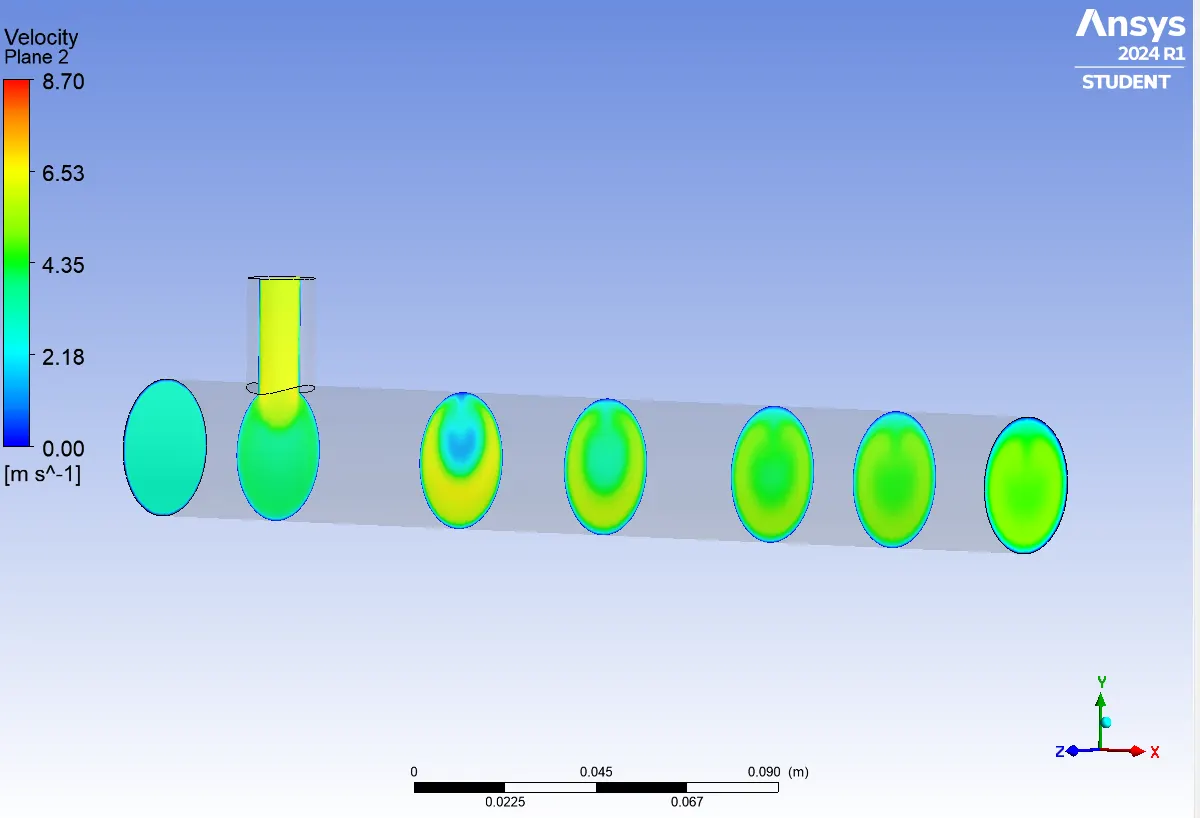
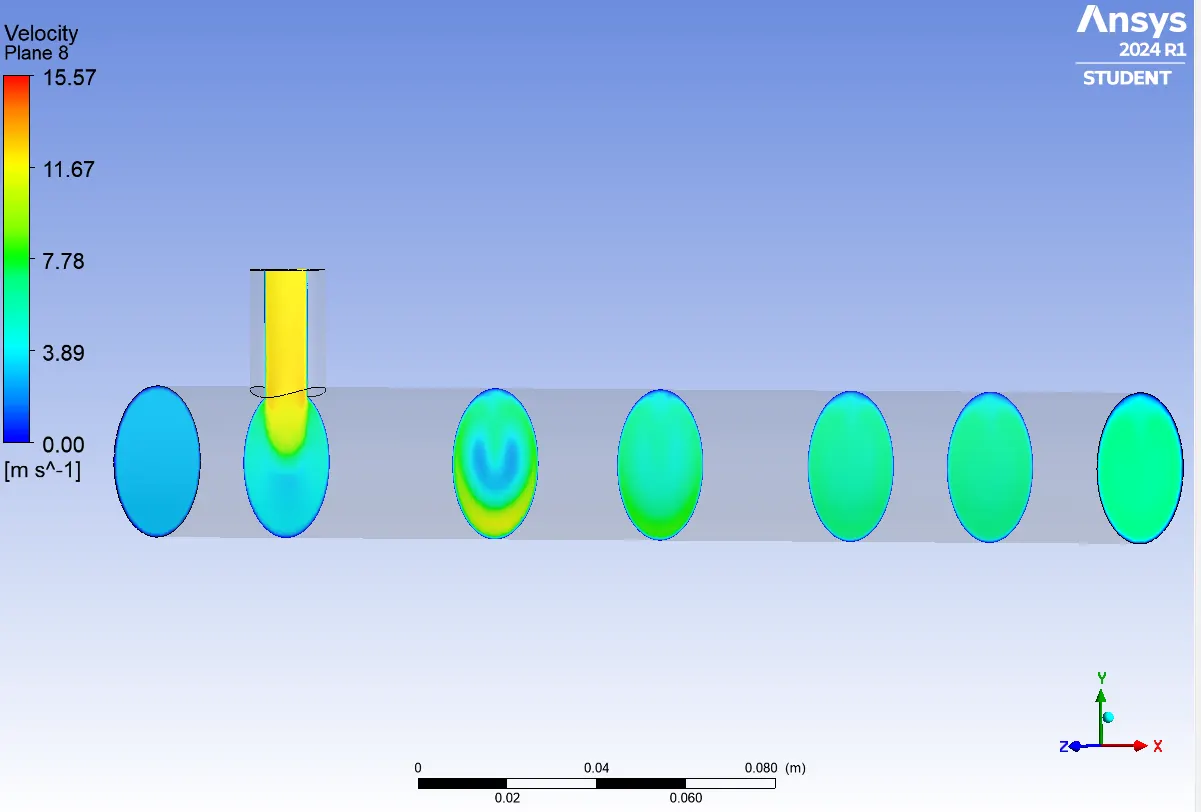
VELOCITY:
Momentum Ratio - 2 Momentum Ratio - 4
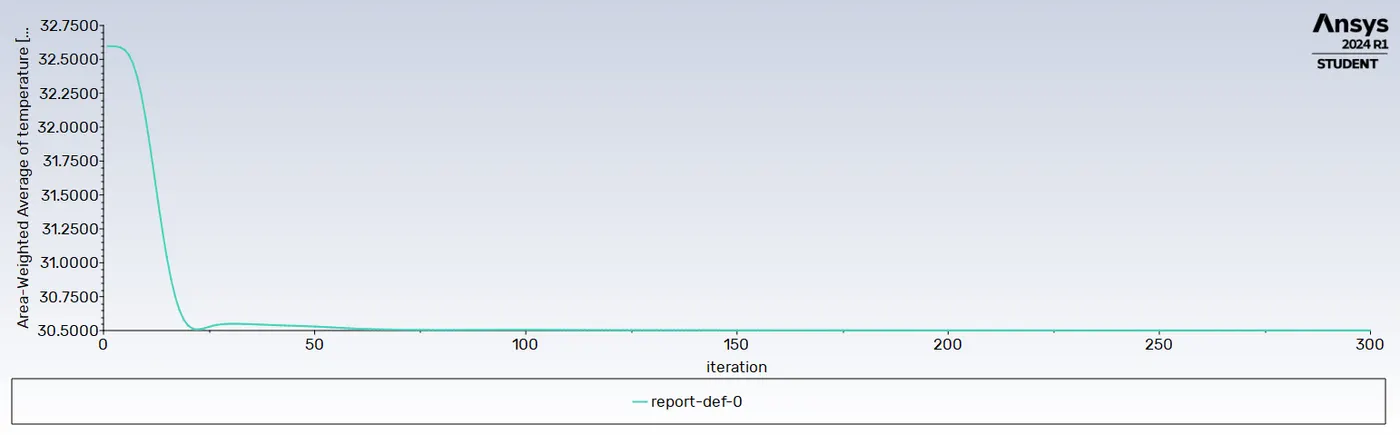
| SLNO | PIPE TYPE | MOMENTUM RATIO | CELL COUNT | AVERAGE OUTLET TEMPERATURE | ITERATIONS |
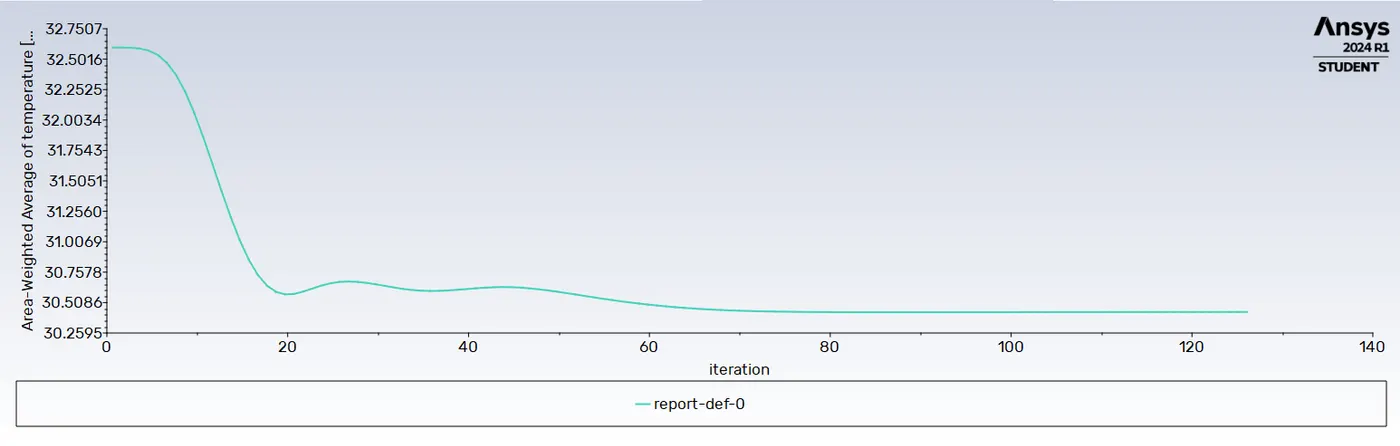
| 1 | Short | 2 | 576658 | 30.43 | 126 |
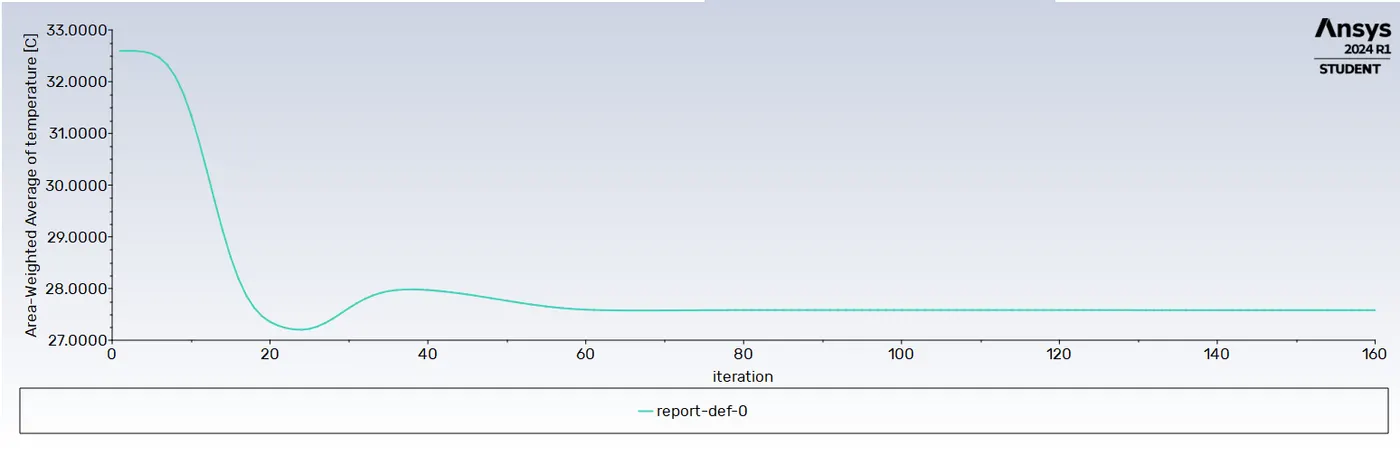
| 2 | Short | 4 | 576658 | 27.58 | 160 |
| 3 | Long | 2 | 765172 | 30.48 | 124 |
| 4 | Long | 4 | 765172 | 27.47 | 196 |
RESULTS:
Turbulence Models:
- Results from Realizable K-Epsilon and K Omega SST turbulence models yield similar average temperatures.
- However, the K Omega SST model requires more time and iterations for convergence.
Momentum Ratio and Outlet Temperature:
- A higher momentum ratio (4 in this case) leads to a significant drop in outlet temperature due to the influence of high-velocity cold air.
- Indicates that higher momentum ratios result in more efficient mixing.
Effect of Pipe Length:
- Short tee and long tee pipes show almost similar results for a momentum ratio of 4.
- Suggests that the length of the pipe doesn't significantly affect the efficiency of the pipe.
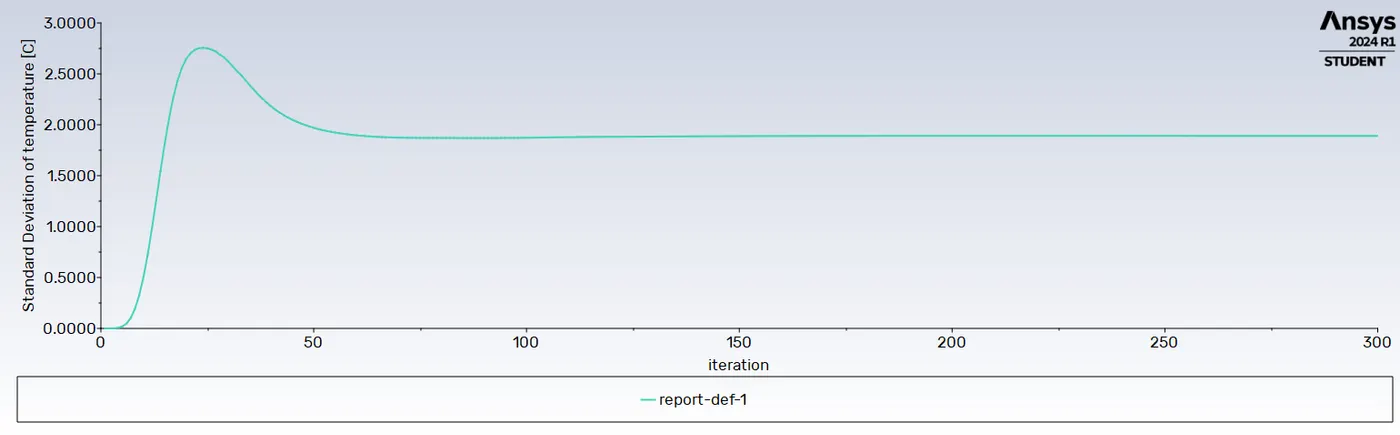
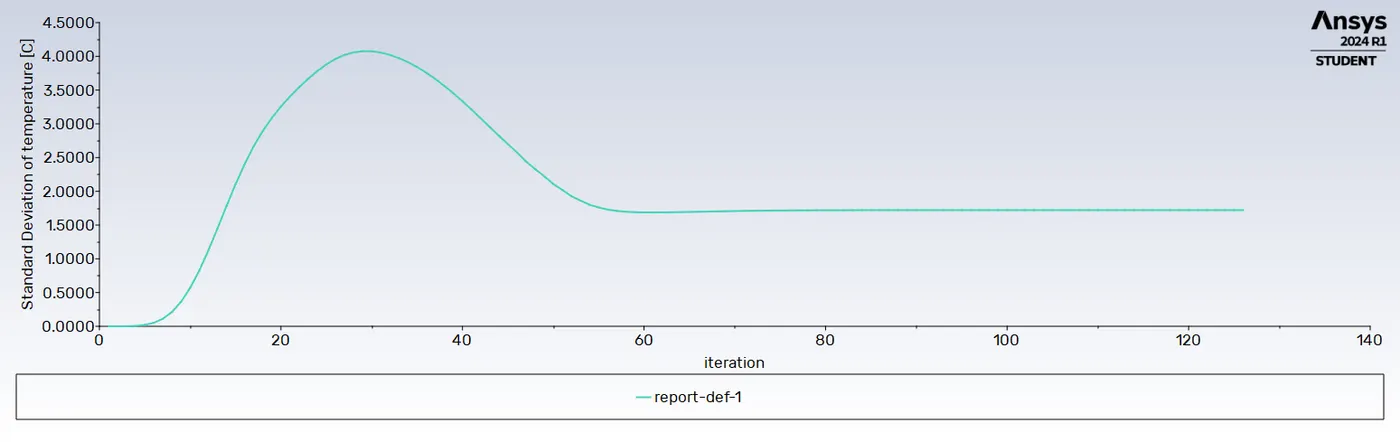
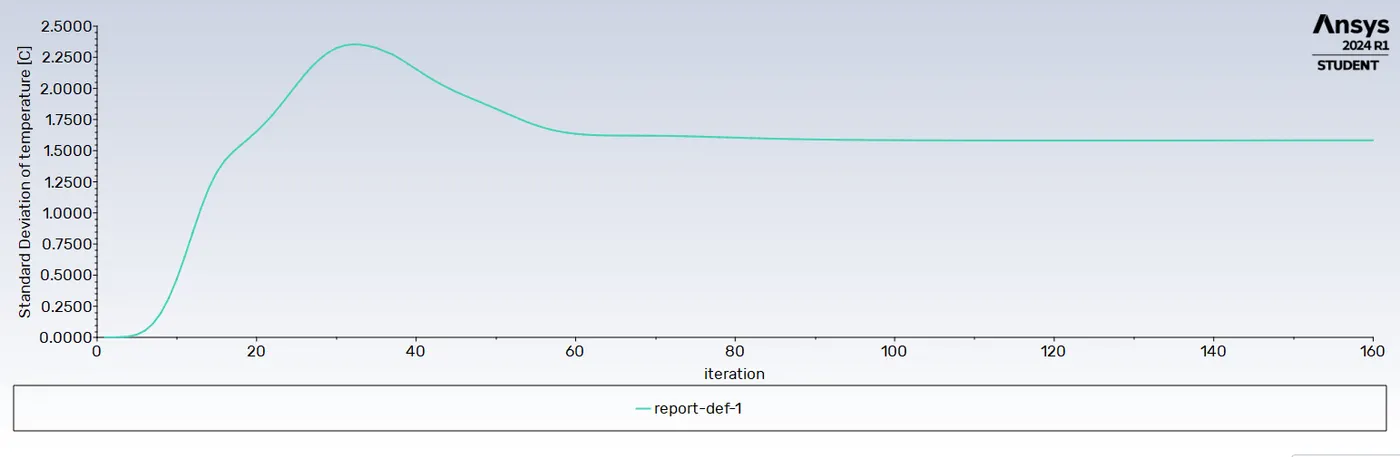
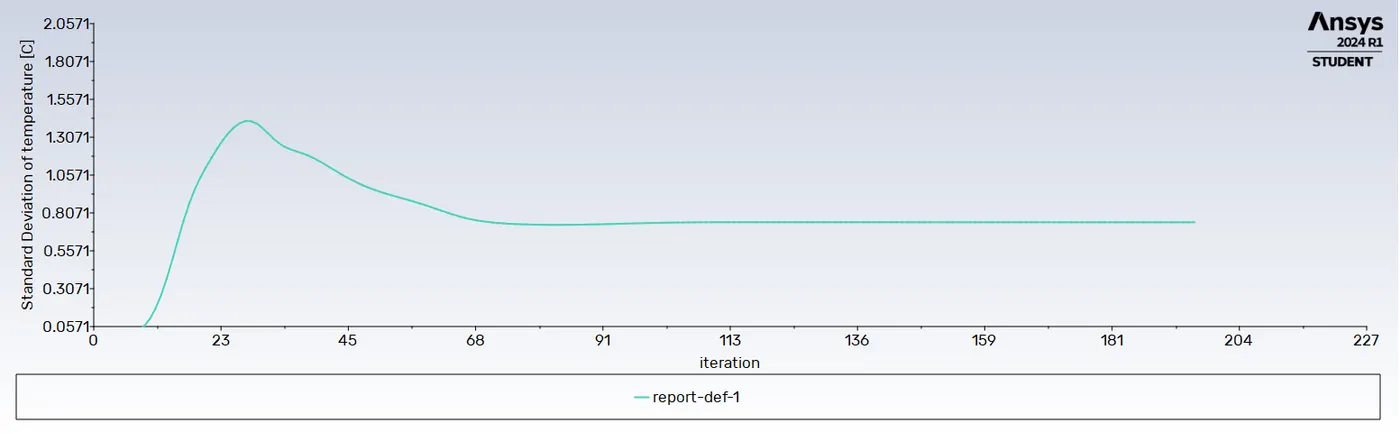
Standard Deviation:
- Long tee pipes have a lower standard deviation compared to short tee pipes.
- Increasing the inlet cold air velocity for short pipes can improve mixing efficiency.
Velocity and Mixing:
- Increasing velocity improves turbulent mixing.
- The majority of mixing is attributed to higher velocity, with additional mixing occurring along the length of the pipe due to diffusion.
Analytical vs. Numerical Outlet Temperature:
- Not much difference was observed between analytical and numerical outlet temperatures.