Week 1- Mixing Tee
AIM:
To compare the solving models of k epsilon and k omega and find the best solution for the given cases of both long and short tee models with different momentum ratios 2 and 4.
SOLUTION:
From the results of Long Tee with a momentum ratio of 4 of both solving methods, k- epsilon shows promising results from my point of view because the instabilities in temperature difference are more in the k- omega model.
Figure 1: Long tee model for both solvers k epsilon and k-omega respectively
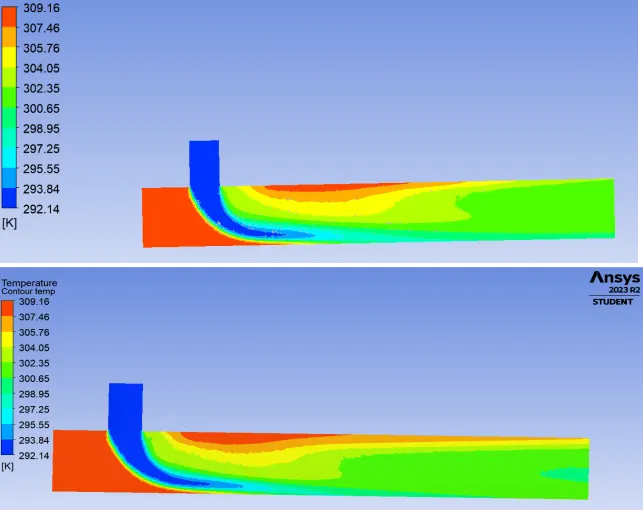
From the observed results, the K-epsilon model is followed for further momentum ratios and working models.
GEOMETRY:
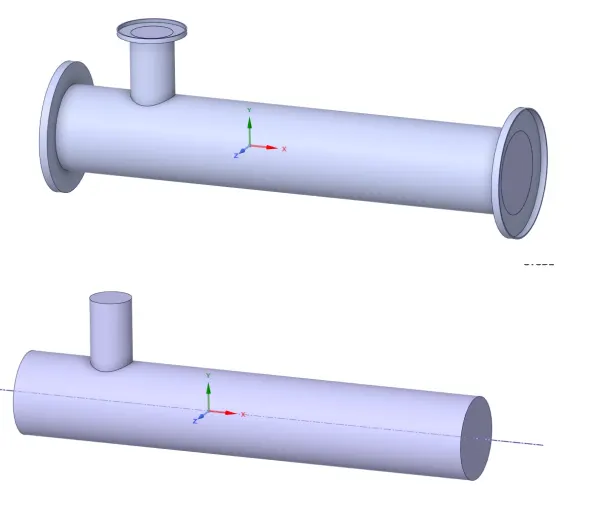
- SpaceClaim from the Geometry in the workbench panel.
- Import the respective file.
- The procedure followed for both models is the same.
- Our consideration lies only in the fluid flow, not in its interaction.
- Volume is extracted where the flow happens from the parent body.
- Prepare-----volume extraction-----select edges.
- Suppressing physics is very important; otherwise, it would be in the further analysis.
- Closing the spaceclaim automatically saves the file.
Figure 2: SpaceClaim figures, which are common to both Solvers.
MESH:
- Clicking mesh loads the respective file from SpaceClaim
- Generate the model file with ANSYS default mesh.
- Fine the mesh and get accurate results during the analysis
- Elemental quality must be checked and ensured not below 5%
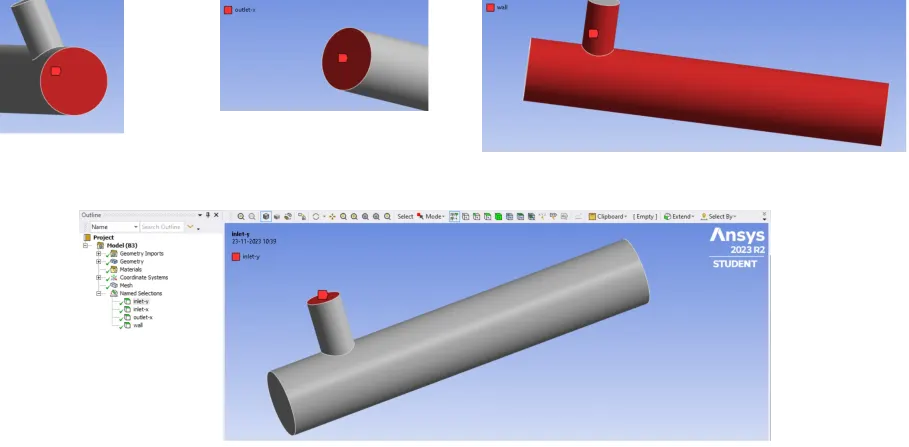
- Name the sections that are very useful for setting up boundary conditions.
- Close and move forward to the Setup and Solution part.
Figure 3: Meshing of the models.
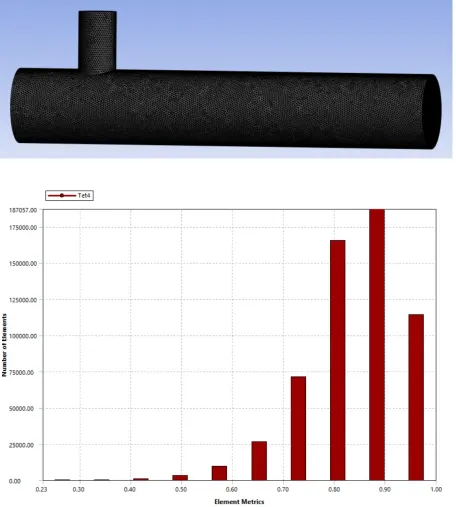
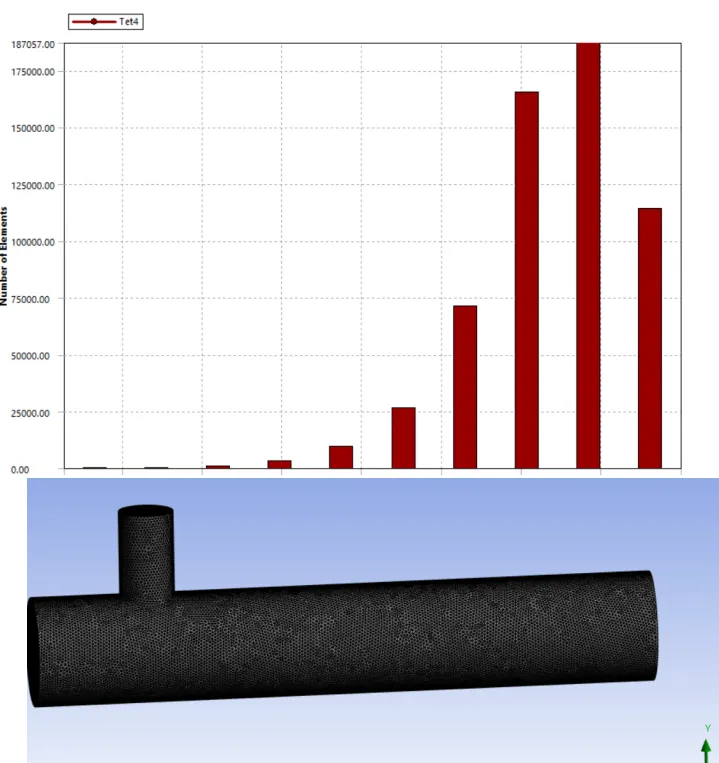
Figure 4: Naming sections.
Setup and Solution :
- Check the mesh quality in the ANSYS fluent. Once the check is done, move to the next step.
- Setting up physics like energy on, steady, material as air, pressure-based and setting the boundaries.
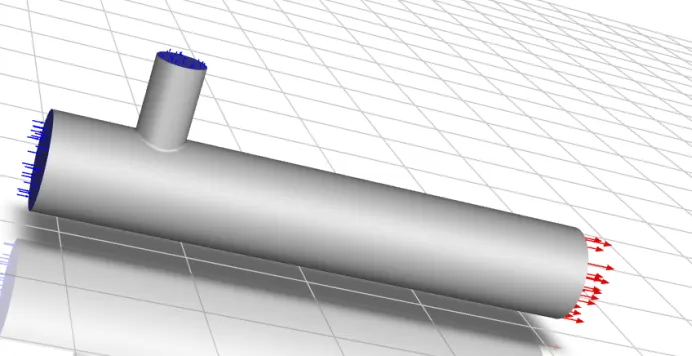
- Boundaries should be a special concern because we have different velocity conditions and the same thermal conditions.
- Once the boundary checks are done, create a report.
- Reports like area-weighted average and standard deviation for the temperature at the outlet.
- Those sections must include a plot option for the respective values.
- Initialise the Hybrid mode and make the iterations until the solution converges.
Figure 5: Pictures of the above process are included.
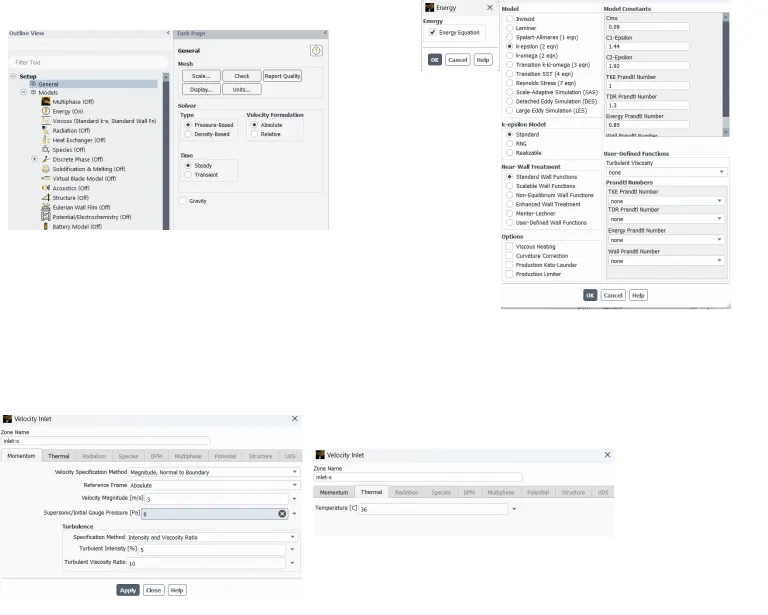
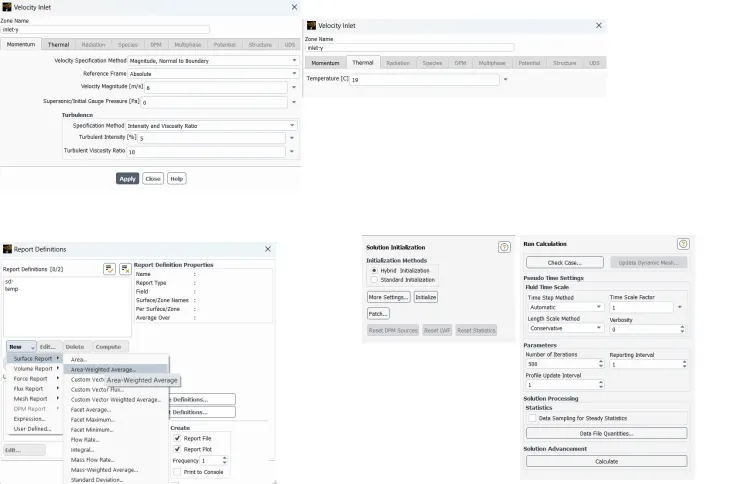
Figure 6: Solutions from the plots of MR 2 and 4 short tee, respectively.
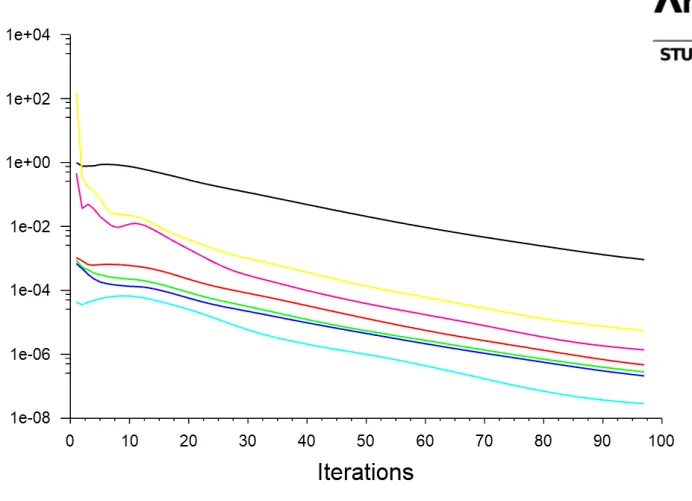
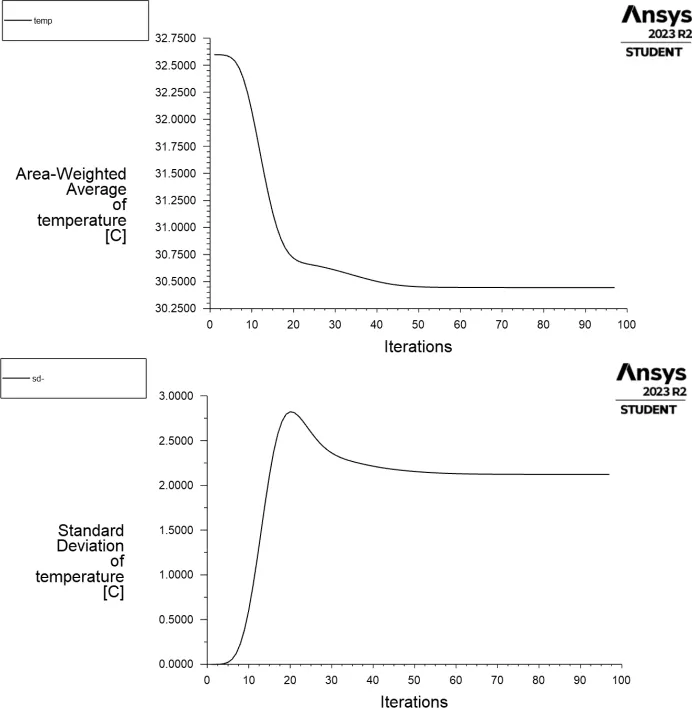
For MR 4;
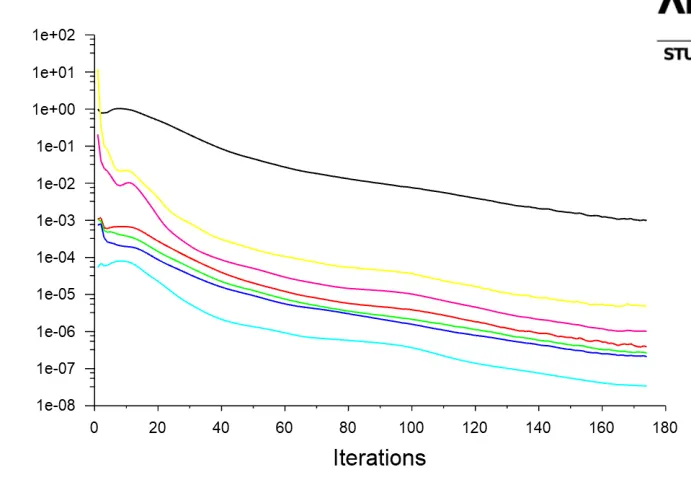
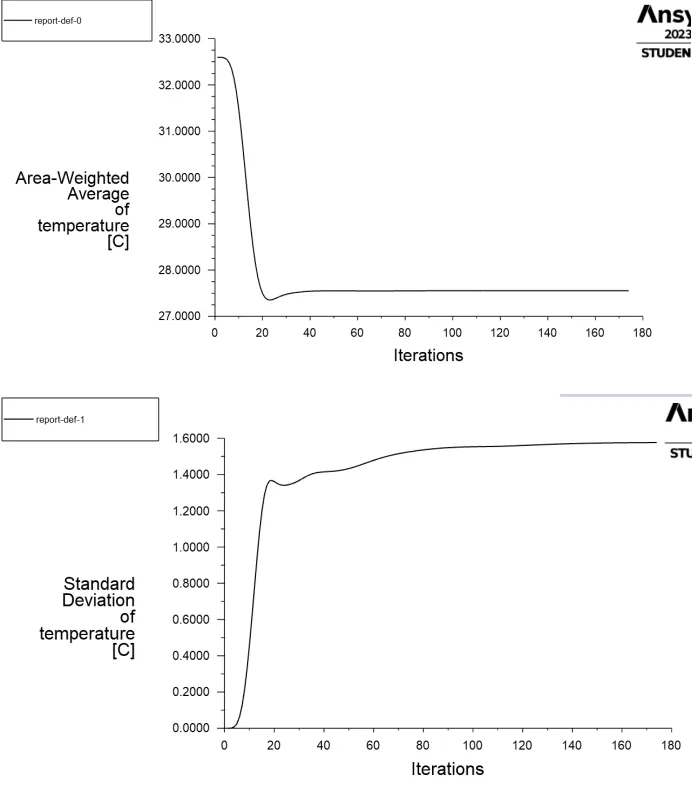
Figure 7: For Long tee for same MR 2 and 4 are as follows.
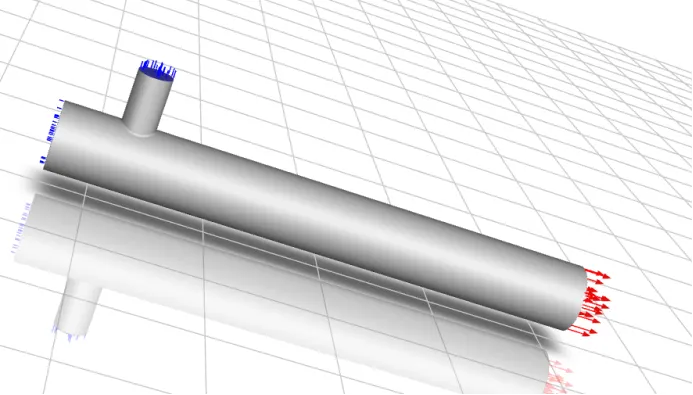
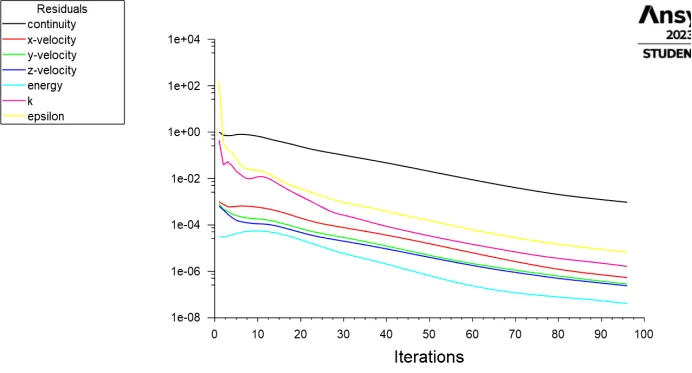
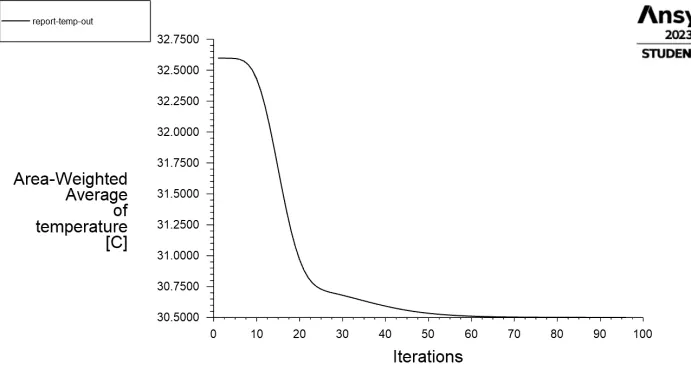
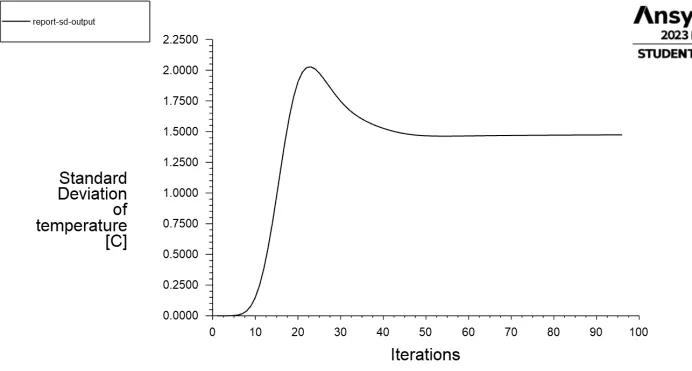
for MR 4;
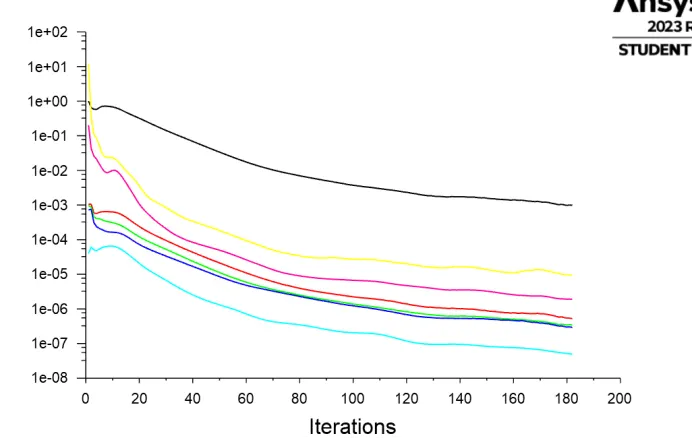
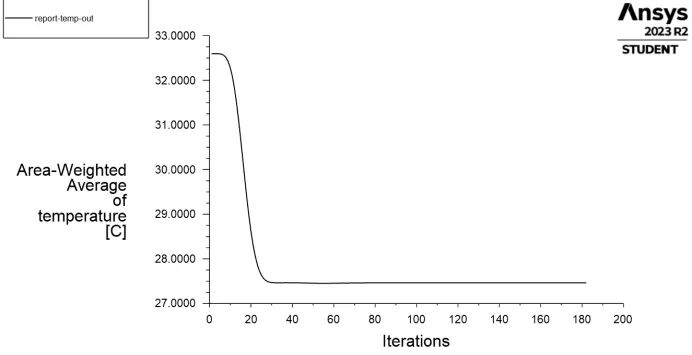
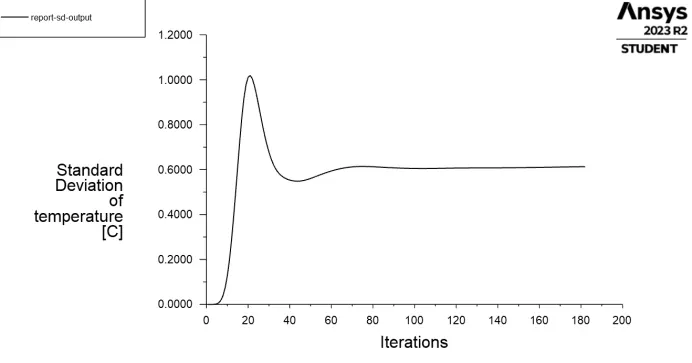
Results:
- By placing a location plane on the XY axis of the section, the different contours and vectors for given results can be obtained.
- In legend, the values can be changed to fixed and reduced to the size, showing cleaner results than in exponentials.
Figure 8: Plots of different contours like velocity, pressure, temperature and vectors for both short and long tee cases with the respective MRs 2 and 4.
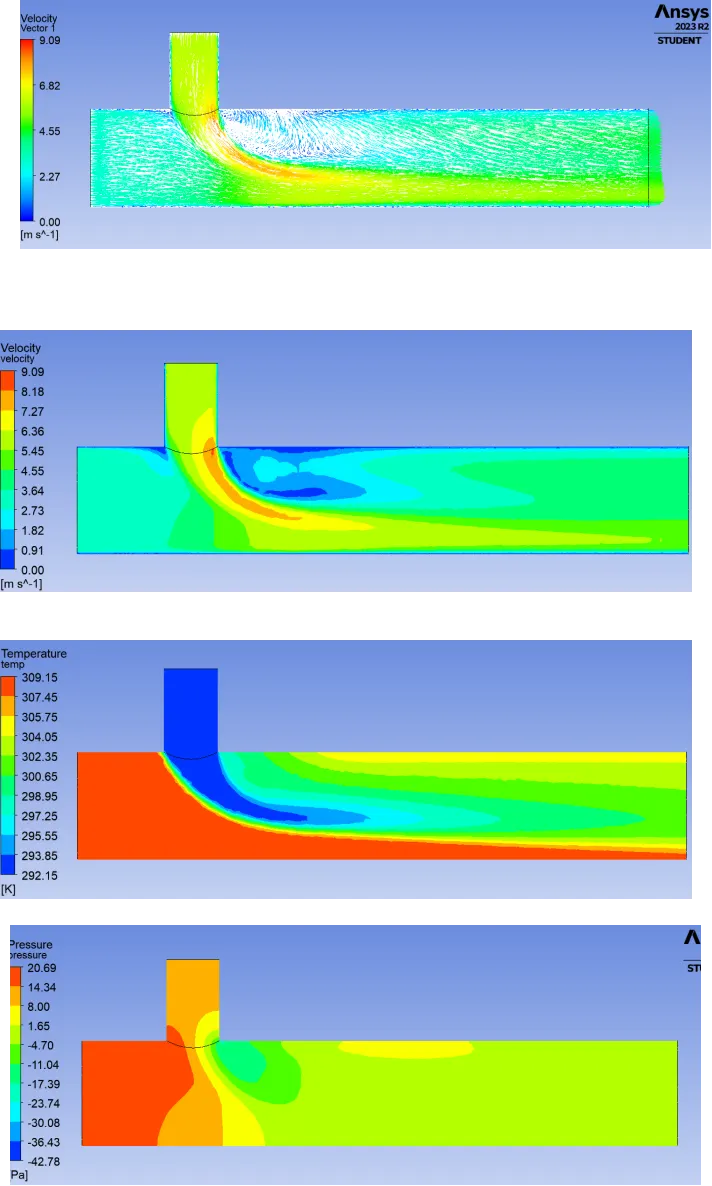
short tee for MR 4,
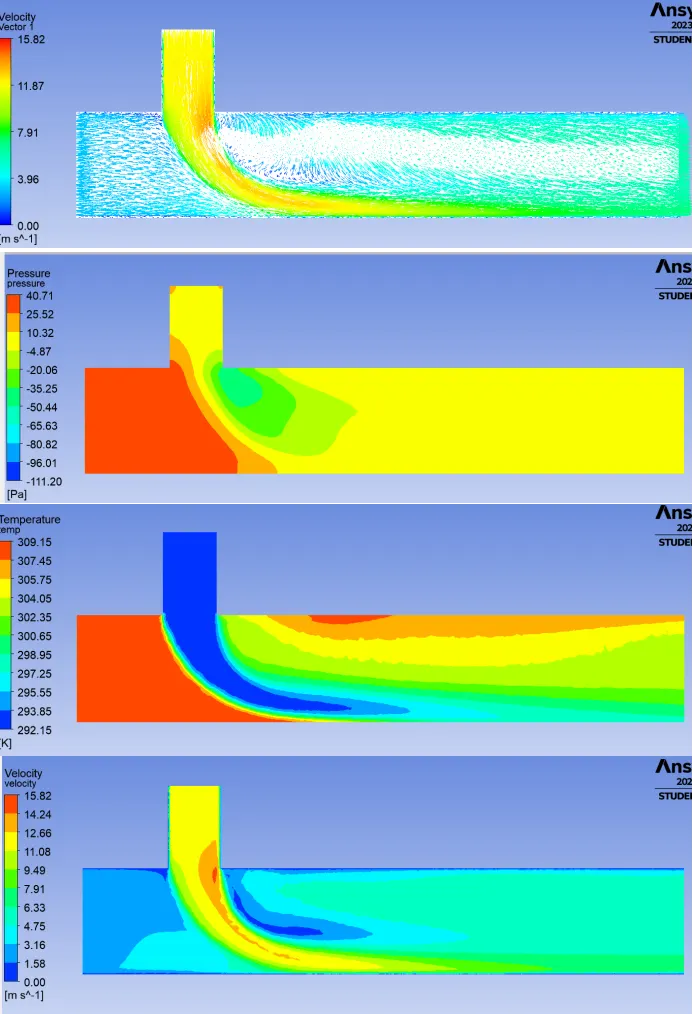
Long tee's for MR 2 and 4,
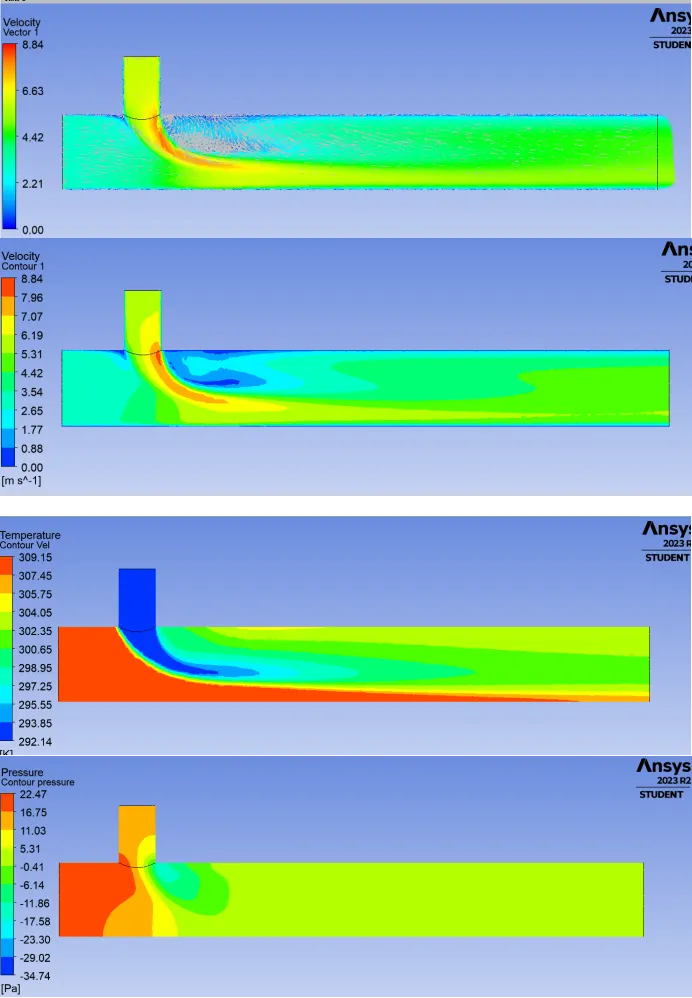
for MR 4,
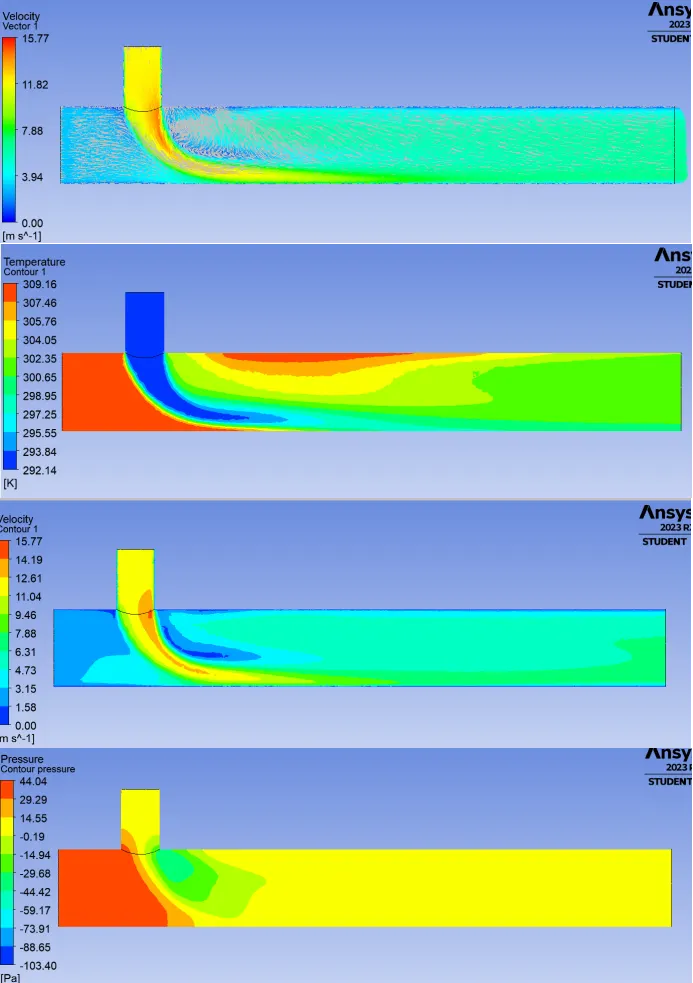
Result:
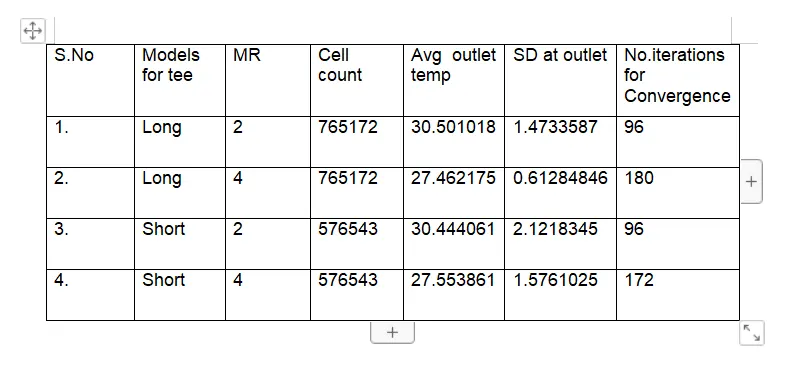
- A high momentum ratio has always had an impact on mixing
- length of the pipe doesn't play a major role in mixing than the velocity, but it also matters
- here, a shorter with MR seems to be good but longer pipe with larger velocity makes sense.
Table: