Week 1- Mixing Tee
Aim: To perform steady state simulation for given two models ie., long T and short T. In which two air inlets with hot air 36'C and cold air 19'C perpendicular to each other.
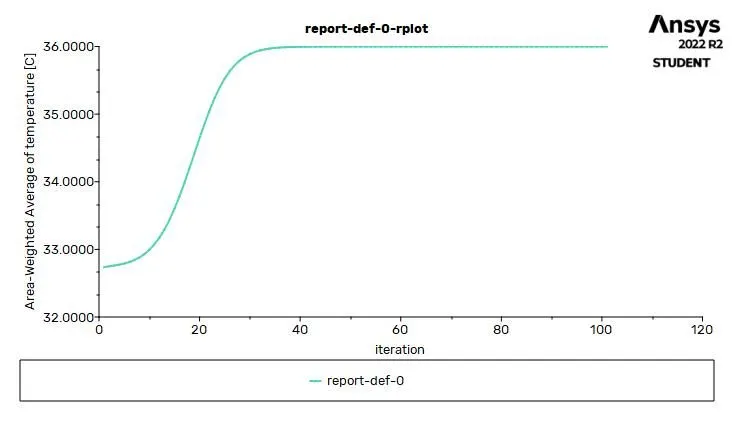
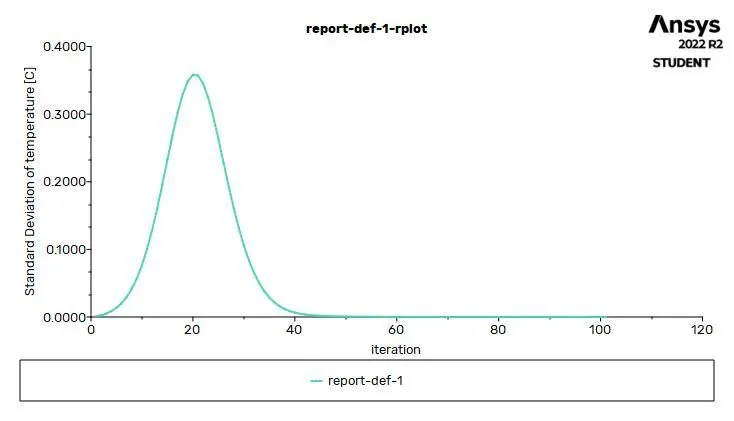
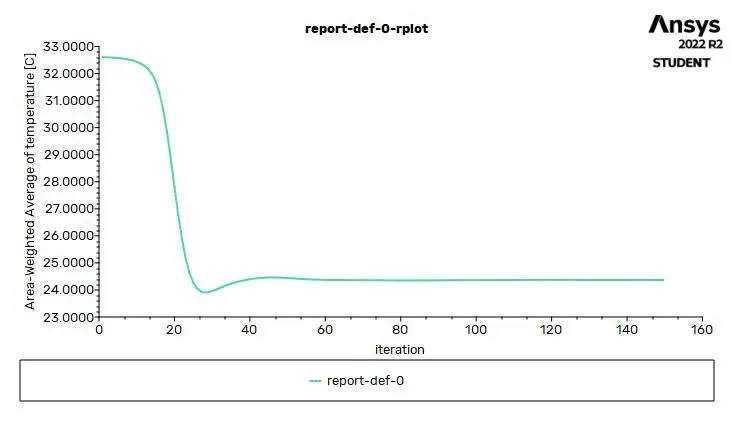
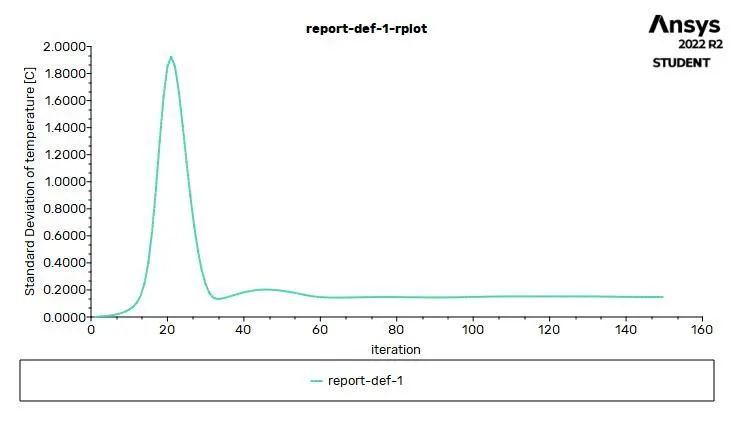
Aim to find out effective mixing velocity, suitable model and avg temperature at the oulet. And also to obtain plots for standard deviation, avg weighted temperture at oulet.
Flow through Mixing Tee
Introduction: Mixing Tee is used to control the outlet temperature based on our requirement. ie., to obtain a desired temp of air by controlling flow velocity of both cold air and hot air.
in this particular challenge we are given with two models one is short and another is long, given data: hot air inlet = 36'C ; cold air inlet= 19'C.
Theory: Given model has two air inlet and one air outlet, our target is to find out which model is effective and which flow velocity is better to get desired oulet temp. Problem is solved by considering inside volume (wet volume) for the flow of fluid (ie., air in this condition). By meshing the wet volume we can discrete the model into several tetrahedral parts to attain more accuracy in results, and to simulate the flow by giving boundry conditions.
Importance in Practical Applications: The given model has real life applications in Air conditioning for any particular room or any cold storage warehouses. Air temperature inside any room can be controlled using flow velocity of hot air and cold air through a Mixing T.
Approach to solve the problem:
- Given model is first opened in space claim and wet volume is extracted.
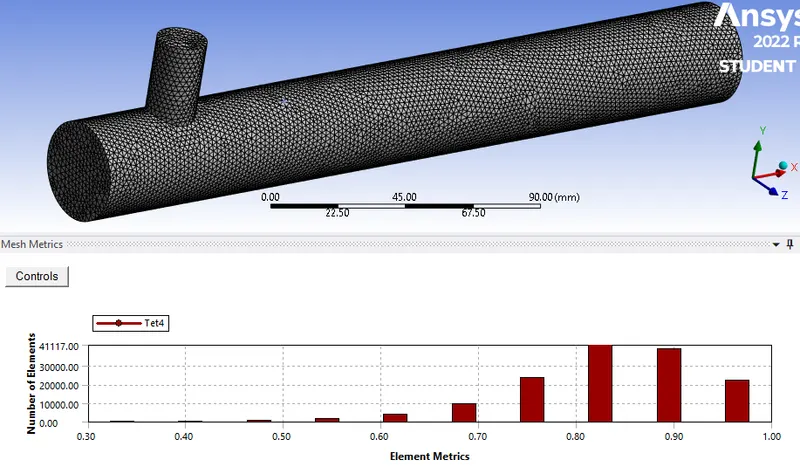
- Wet volume is then meshed in meshing interrface by giving element size as 2mm.
- After meshing taking the model to ansys fluent.
- In ansys fluent giving boundry conditions for given model for both inlets
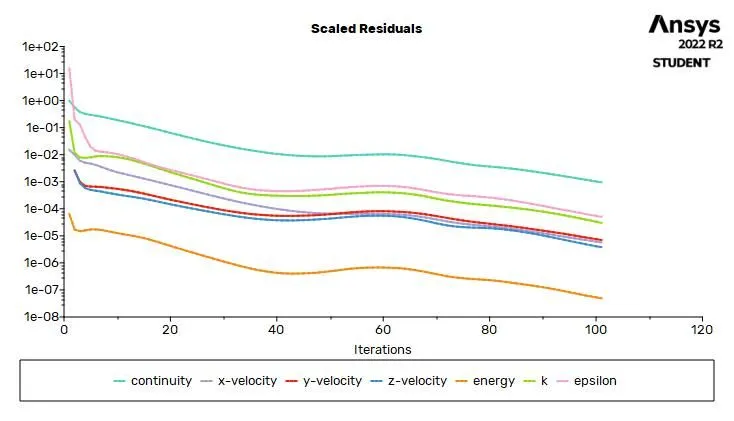
- After giving boundry conditions, setting required reports and polts.
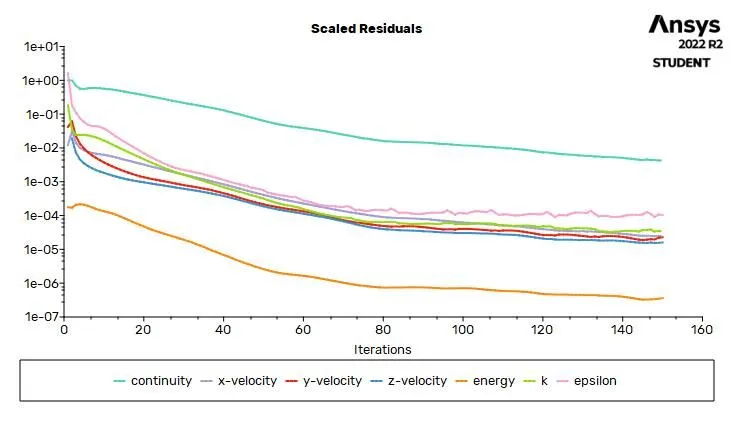
- Initializing the model and running the equation 150 iterations.
- After getting plots for residuals,SD, and avg weighted temperature uploading the model to CFD post.
- In CFD post a plane is created to in xy plane to observe temperature differences.
- observing temperature at oulet end
Pre- processing:
A) SHORT Tee
- Volume extraction.
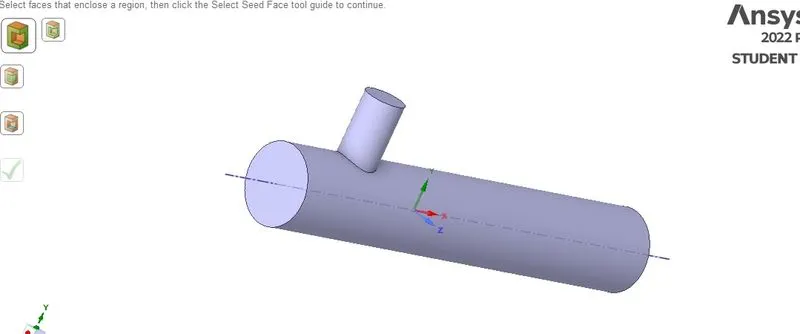
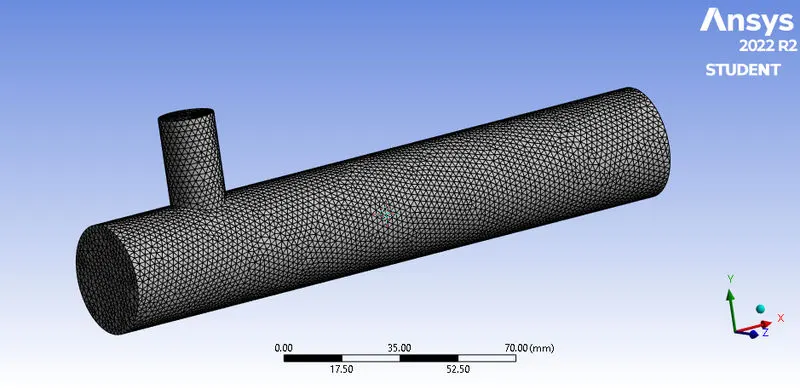
- Meshing: Considering 2mm element size. cell count obtained : 106523
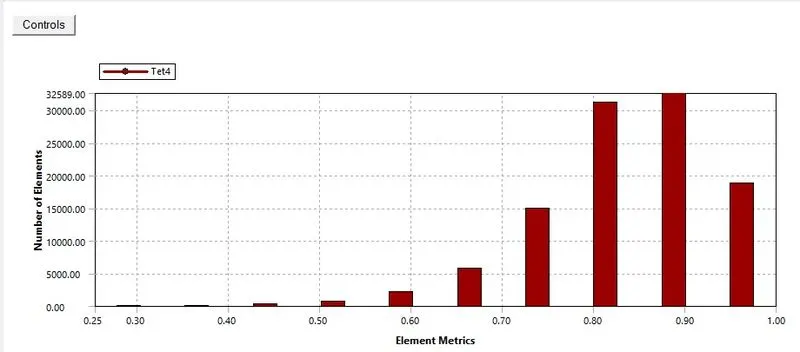
- element matrics.
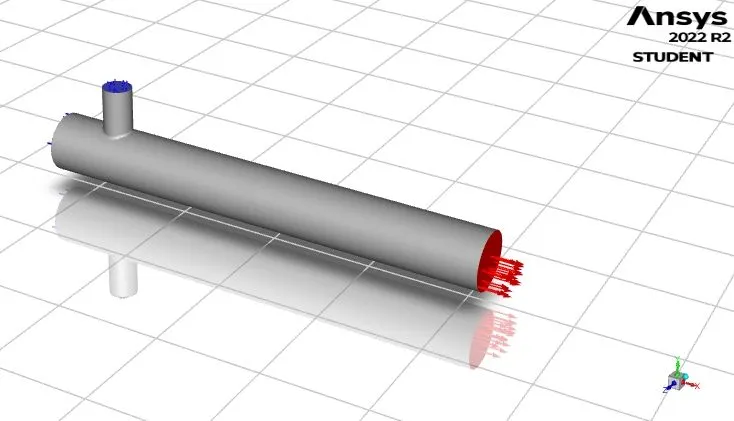
B) LONG Tee
- Volume extraction:
- meshing: element size 2mm. Cell count obtained: 140811. & element matrices.
Post-processing:
A)SHORT T:
a)case 1:
Hot air inlet at 36'C.
Cold air inlet at 19'C.
cold air inlet velocity 6m/s.
hot air inlet velocity 3m/s.
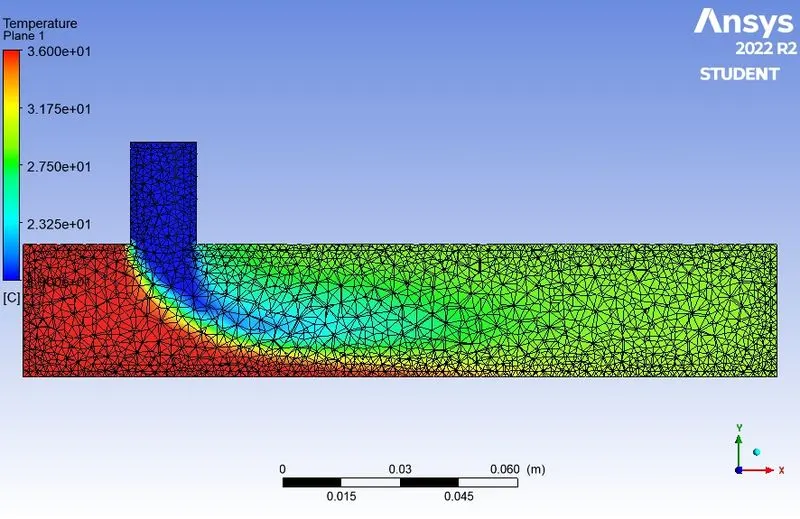
b)Case 2:
Hot air inlet at 36'C.
Cold air inlet at 19'C.
cold air inlet velocity 12m/s.
hot air inlet velocity 3m/s.
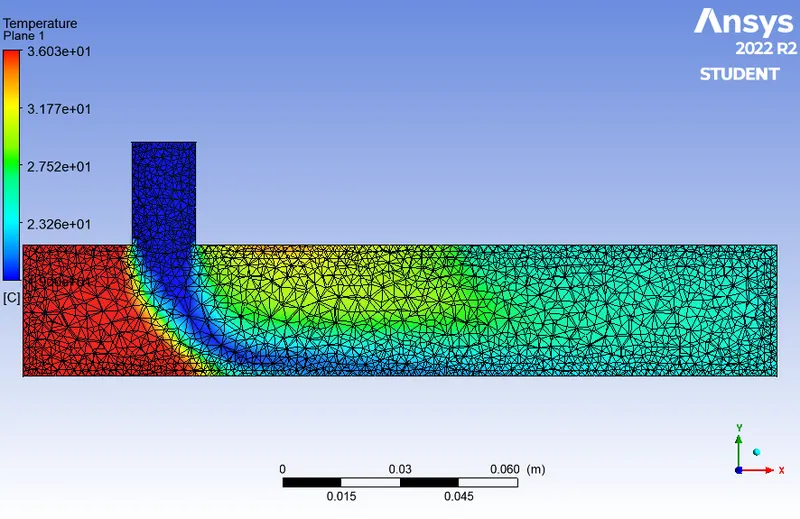
)LONG T:
a)case 1:
Hot air inlet at 36'C.
Cold air inlet at 19'C.
cold air inlet velocity 6m/s.
hot air inlet velocity 3m/s.
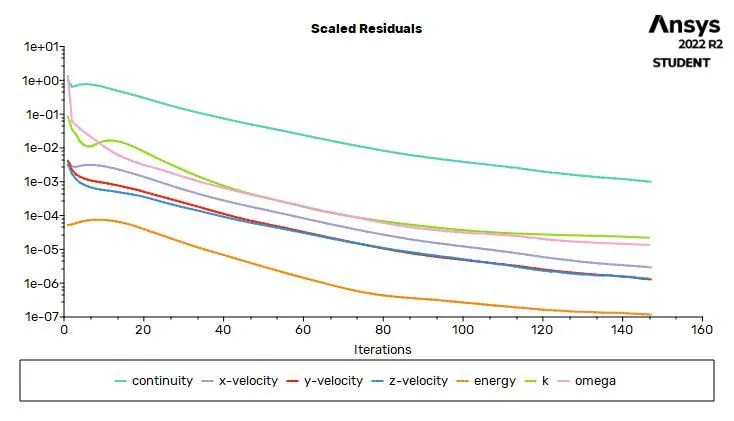
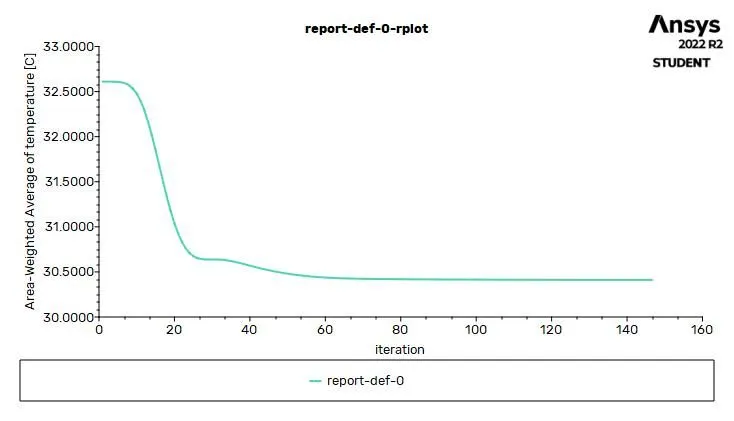
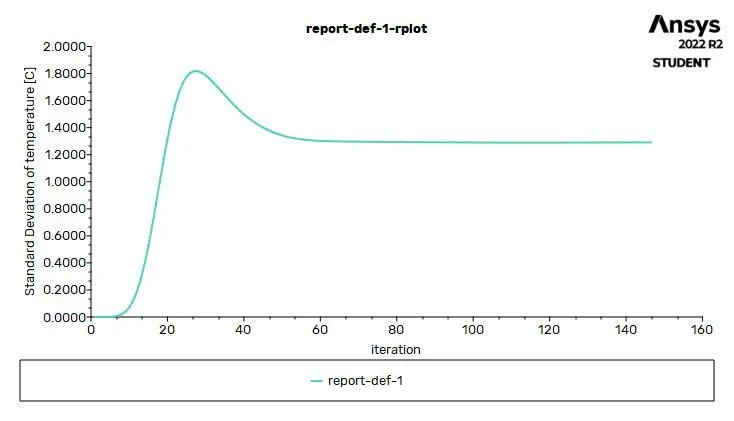
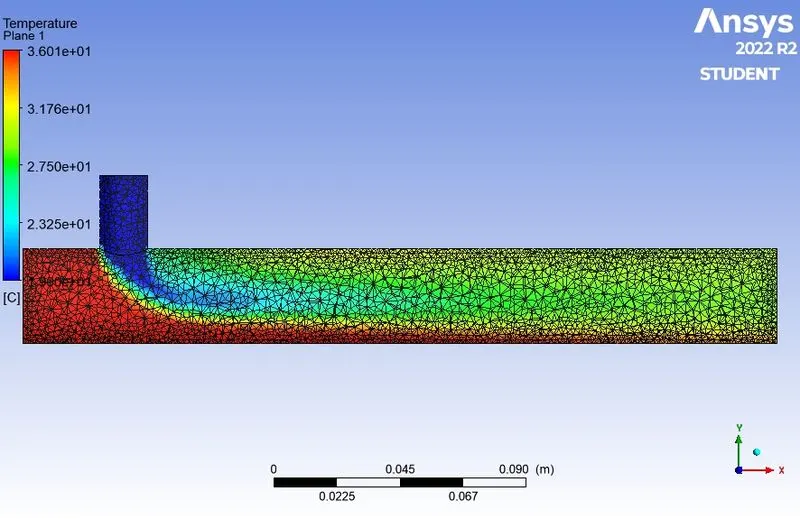
a)case 2:
Hot air inlet at 36'C.
Cold air inlet at 19'C.
cold air inlet velocity 12m/s.
hot air inlet velocity 3m/s.
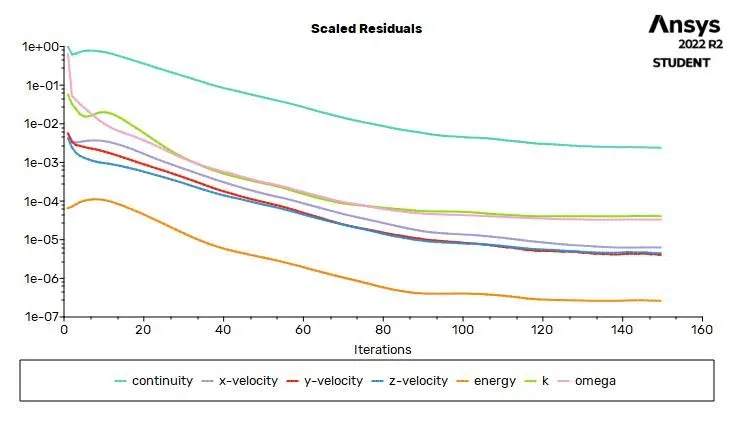
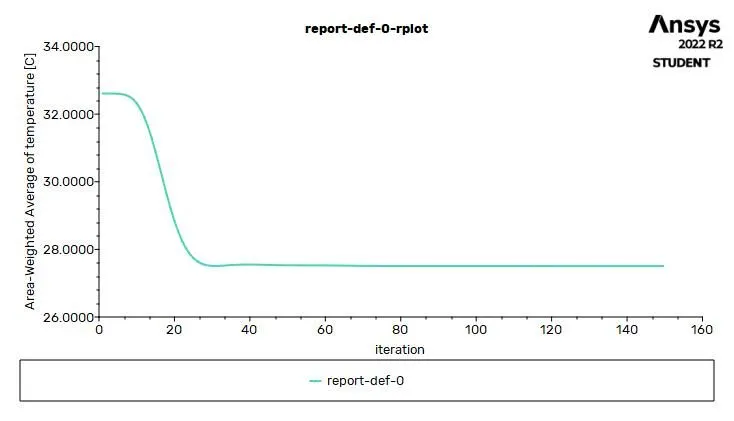
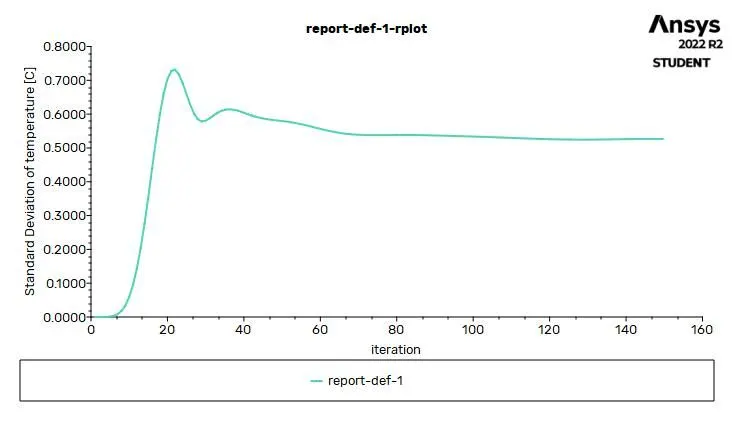
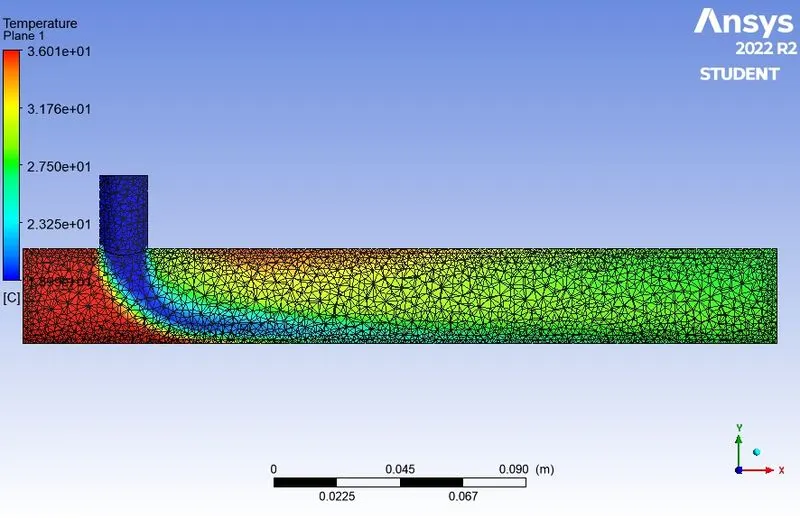
Results:
Required simulation has been done on given models and given boundry conditions, below are results
For short T
Case 1 : avg outlet temp = 36'C
Case 2 : avg outlet temp = 24.5'C
For Long T
case 1 : avg outlet temp = 30'C
case 2 : avg outlet temp = 27'C
Conclusion:
Considering above results we can understand that short T is more efficient than long T. and case 2 is more effective in both conditions.