Week 1- Mixing Tee
Aim:In this challenge, we have two versions of the mixing tee.That is One of them is longer than the other.
our job is to set up steady-state simulations to compare the mixing effectiveness when hot inlet temperature is 360C & the Cold inlet is at 190C.
Use the k-epsilon and k-omega SST model for the first case and based on your judgment use the more suitable model for further cases. Giving the reason for choosing a suitable model is compulsory.
- Case 1
- Short mixing tee with a hot inlet velocity of 3m/s.
- Momentum ratio of 2, 4.
- Case 2
- Long mixing tee with a hot inlet velocity of 3m/s.
- Momentum ratio of 2, 4.
Momentum ratio = velocity at cold inlet / velocity at hot inlet
Theory:
Mixing tee: Mixing tee is a flow control device, in which it contain two inputs and one output, the main function of this mixing tee is mixing the two different flows with each other.
steps involve in the mixing tee is shown below:
- geometry
- meshing
- setup
- solution
- result
analysing the mixing tee flow for short arm
case 1:
- Short mixing tee with a hot inlet velocity of 3m/s.
- Momentum ratio of 2
- hot inlet temperature is 360C
- the Cold inlet is at 190C.
- cold inlet velocity of 6m/s.
1) Geometry : Here we have to import the geometry into Ansys Workbench.
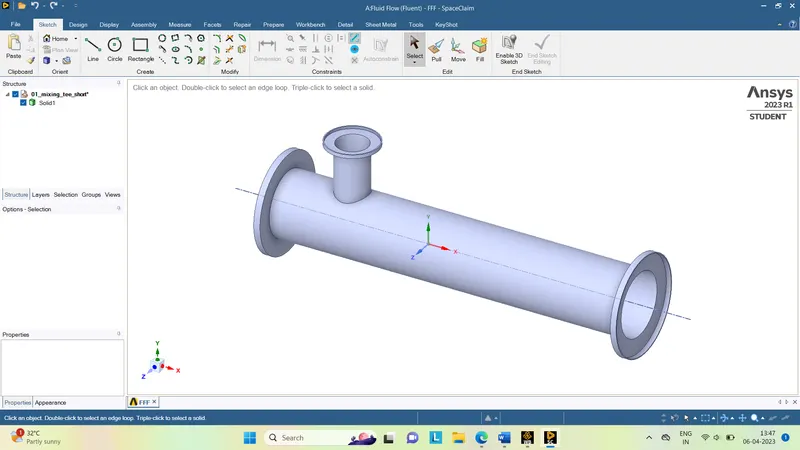
After importing the geometry we have to extract the volumes and have to supress them.
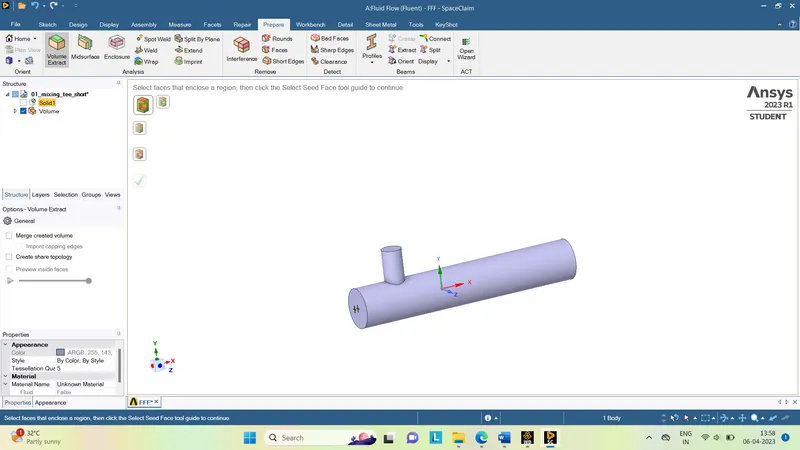
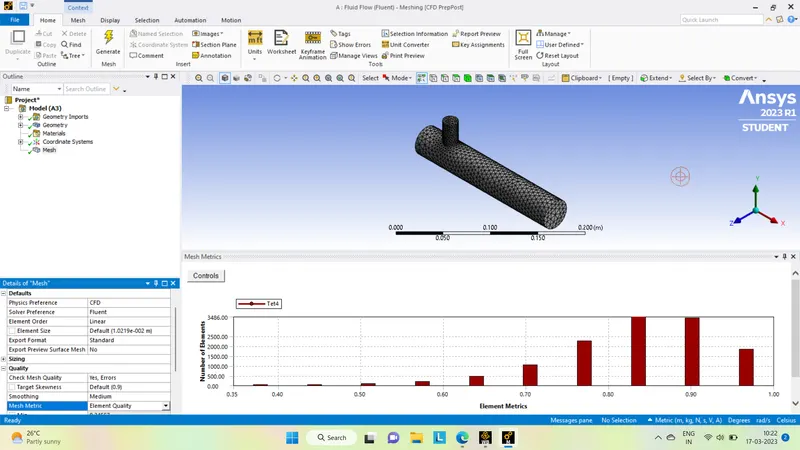
2) Meshing : It is the process of dividing the part of the model into number of elements or small parts . After meshing we have to give the names for the respective parts of the body.
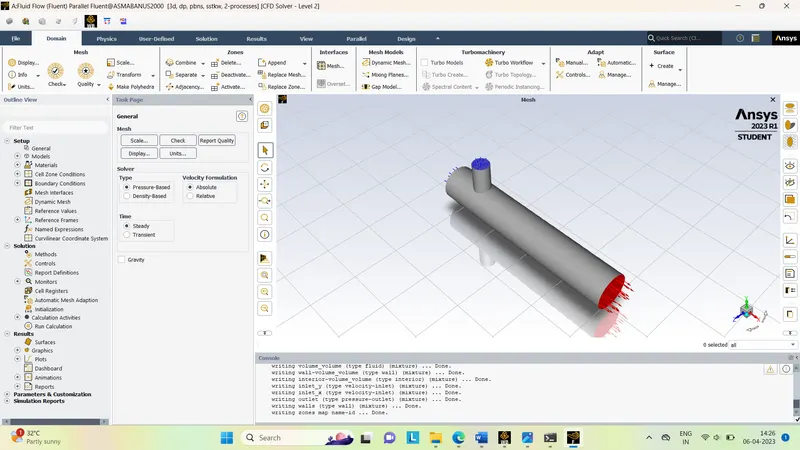
3) Setup : Here we are setting up the domains of the given model such as
- Domain: 1) It has steady state
2) presure based solver
- material : 1) Air-fluid
2)Aluminium
- model: k-epsilon>reliabel>standard wall function
- cell zone: air-fluid-volume
- boundry conditions: 1) hot inlet velocity of 3m/s.
2)cold inlet velocity of 6m/s.
- initialising: 1)hybrid-initialising
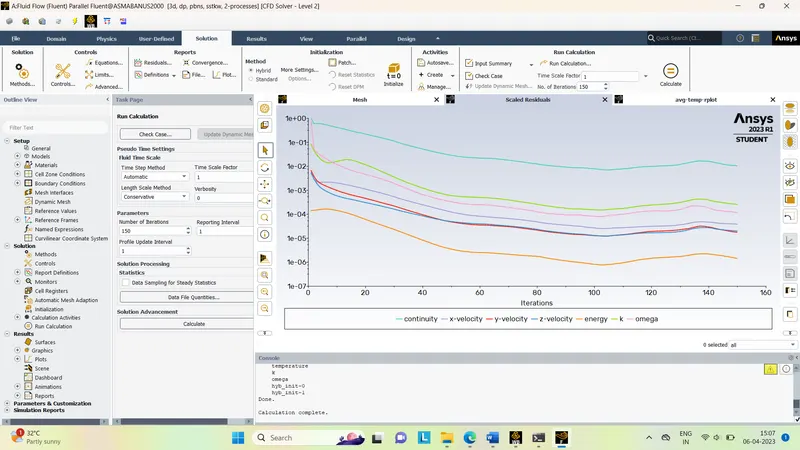
solutions:
Residual: for 150 iterations
case 2:
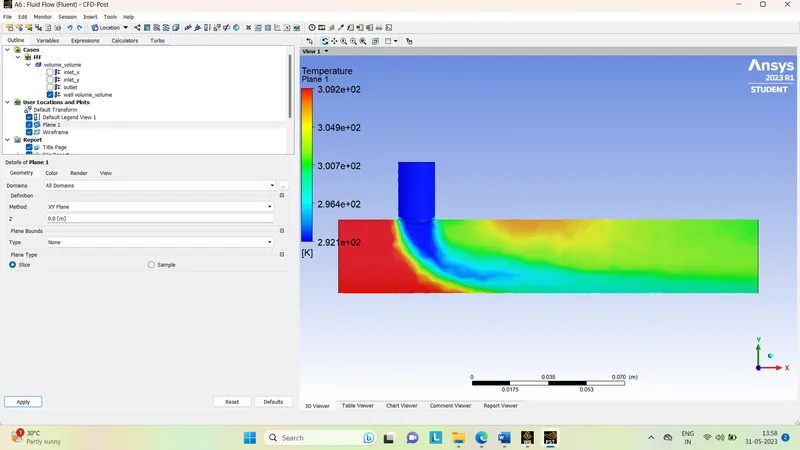
- Short mixing tee with a hot inlet velocity of 3m/s.
- Momentum ratio of 2
- hot inlet temperature is 360C
- the Cold inlet is at 190C.
- cold inlet velocity of 12m/s
1) geometry: same as the above one
2)meshing:It is also same as the above geometry
3) setup:
- Domain: 1) steady state
2) presure based solver
- material : 1) Air-fluid
- model: k-epsilon>reliable>standard wall function
- cell zone: air-fluid-volume
- boundry conditions: 1) hot inlet velocity of 3m/s.
2)cold inlet velocity of 12m/s.
- initializing: 1)hybrid-initialising
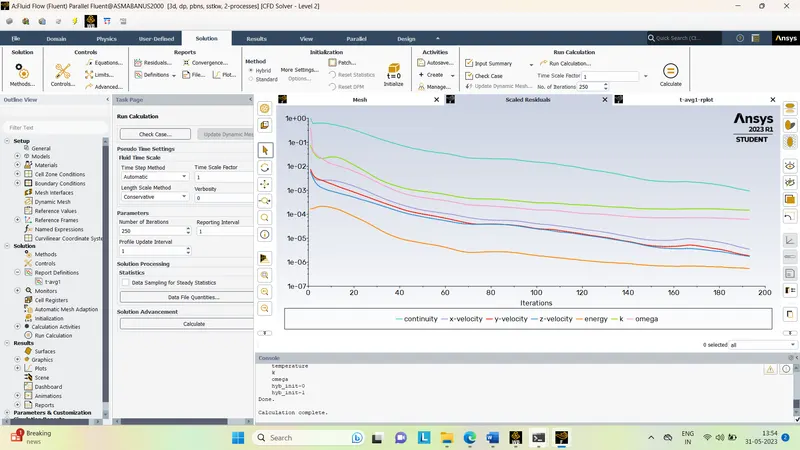
solutions:
Residual: for 250 iterations
Temperature:
Analysing the mixing tee flow for long arm
case 1:
- Long mixing tee with a hot inlet velocity of 3m/s.
- Momentum ratio of 2
- hot inlet temperature is 360C
- the Cold inlet is at 190C.
- cold inlet velocity of 6m/s.
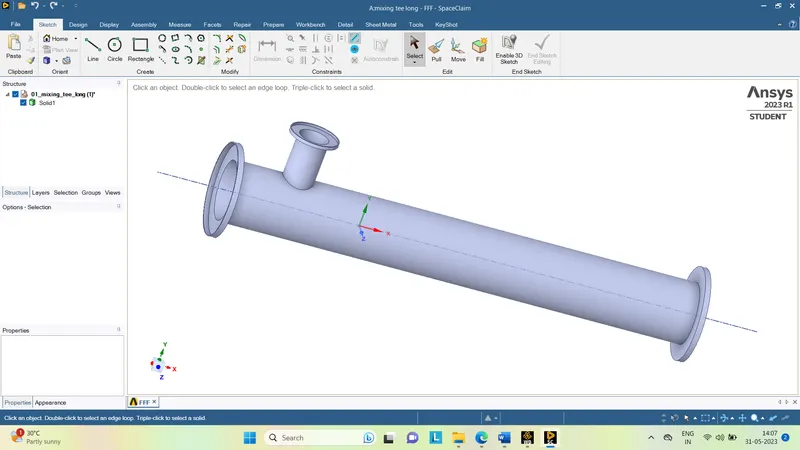
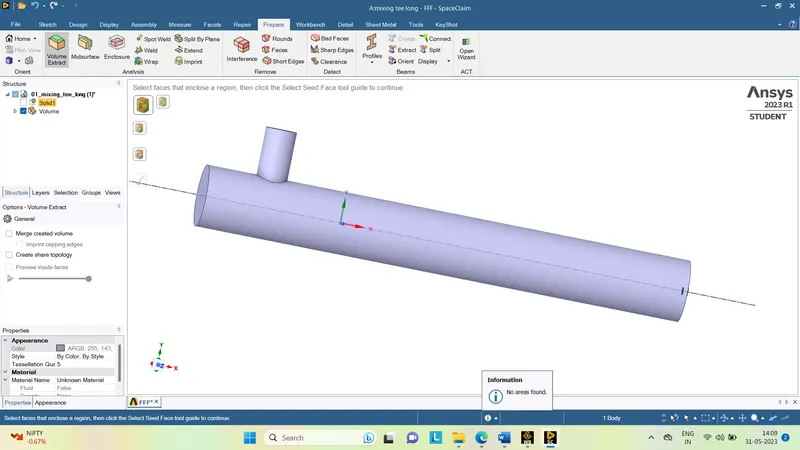
1) Geometry:
- We have to import the geometry in Ansys, extract the volume and suppress the physics.
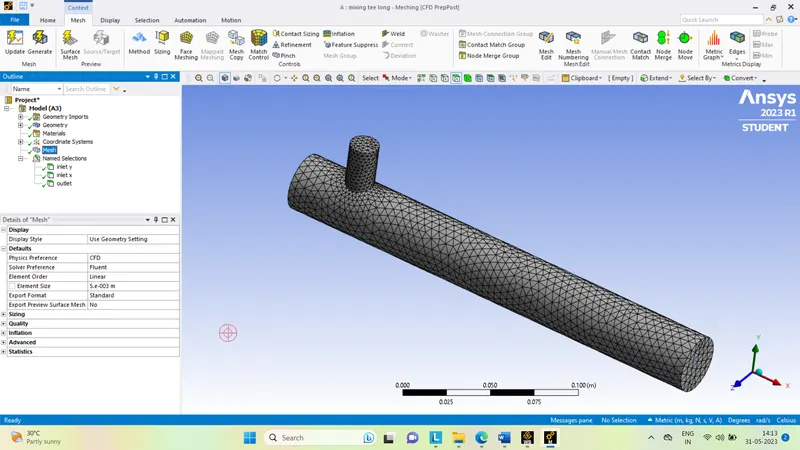
2) Meshing:
Meshing is nothing but a continous diving a geometric shape into an elements.
3) setup:
- Domain: 1) steady state
2) presure based solver
- material : 1) Air-fluid
2)aluminium
- model: k-epsilon>reliable>standard wall function
- cell zone: air-fluid-volume
- boundry conditions: 1) hot inlet velocity of 3m/s.
2)cold inlet velocity of 6m/s.
- initialising: 1)hybrid-initialising
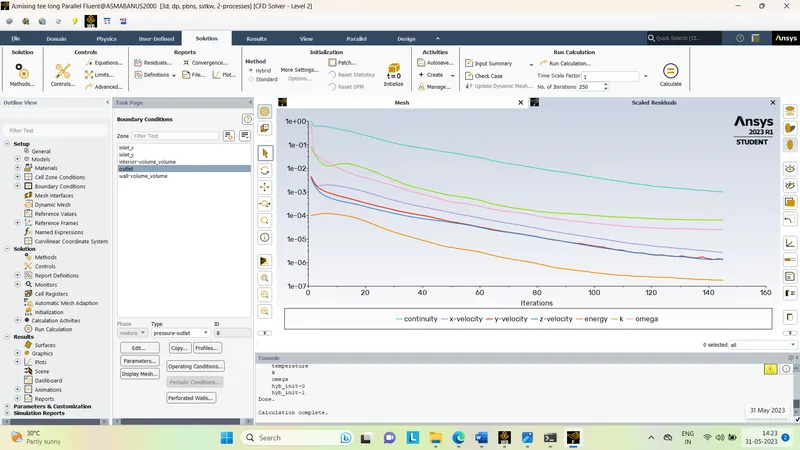
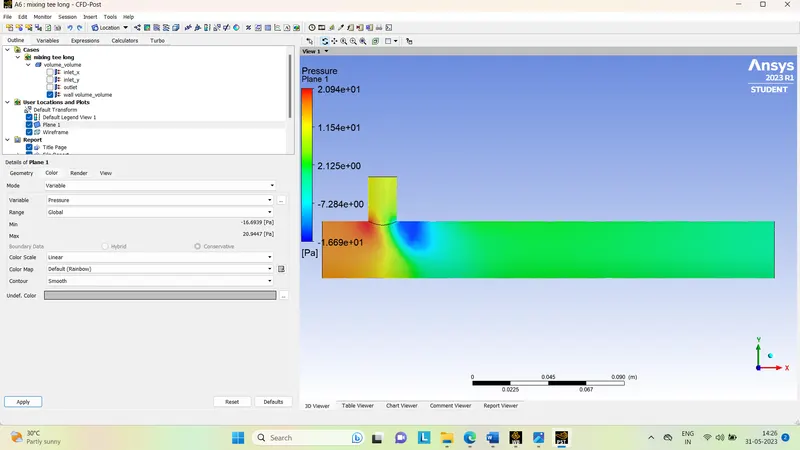
solutions:
Residual: for 250 iterations
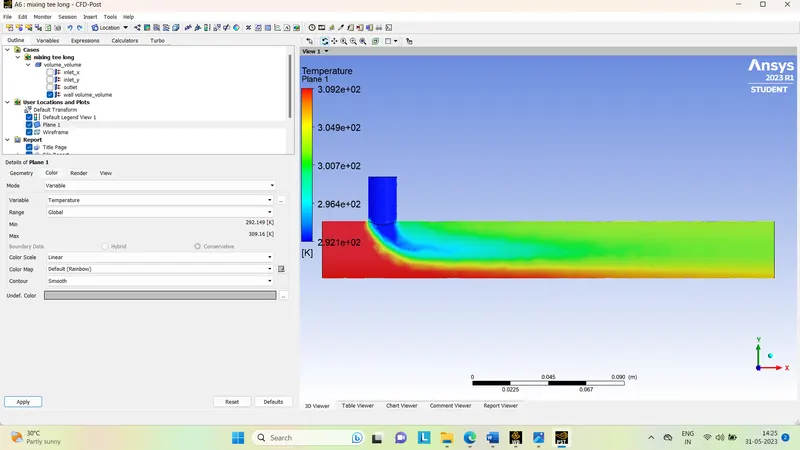
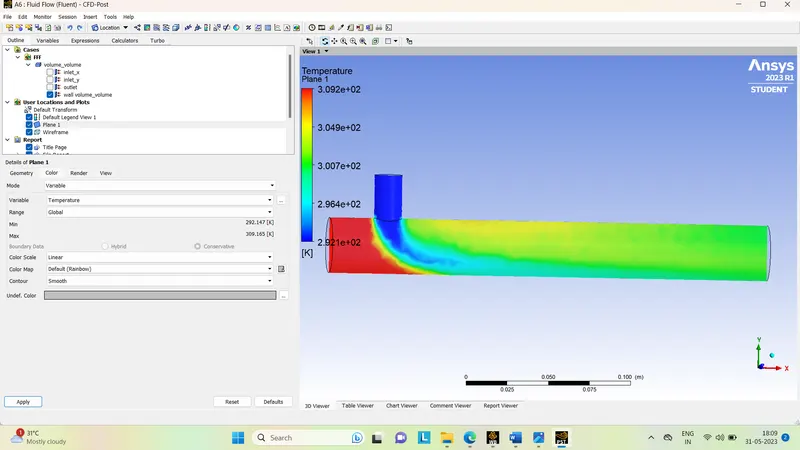
Temperature:
Pressure:
case 2:
- Long mixing tee with a hot inlet velocity of 3m/s.
- Momentum ratio of 2
- hot inlet temperature is 360C
- the Cold inlet is at 190C.
- cold inlet velocity of 12m/s
1) geometry: same as the above
2)meshing: meshing is also same as the above
3) setup:
- Domain: 1) steady state
2) presure based solver
- material : 1) Air-fluid
2)aluminium
- model: k-epsilon>reliable>standard wall function
- cell zone: air-fluid-volume
- boundry conditions: 1) hot inlet velocity of 3m/s.
2)cold inlet velocity of 12m/s.
- initialising: 1)hybrid-initialising
solutions:
Residual: for 250 iterations
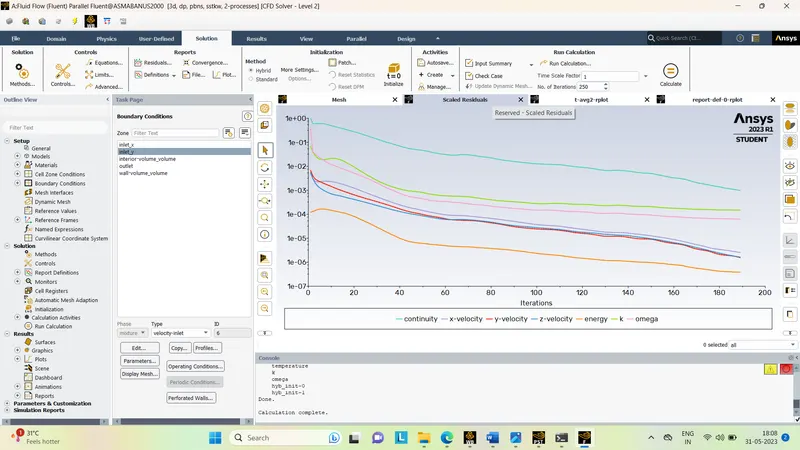
Temperature:
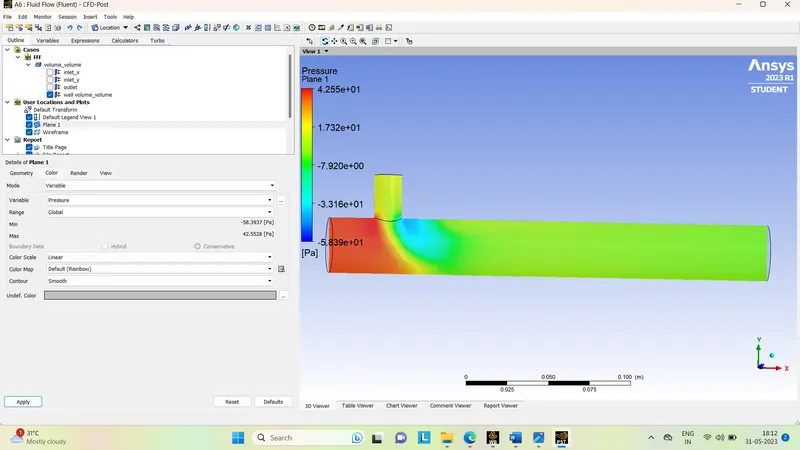
Pressure:
Conclusion :
While we doing the anlysis for short arm length first we have the condition for momentum is 1:2 ratio, that means that the velocity of mixing the flows is very less so here it give less efficiency but when we compare the same case with the long arm then the efficiency of short arm is less than the long arm. Similarly, when the momentum ration is increased by 1:4 ratio at that time the velocity of the mixing of both flows are very high so, it will give more efficiency. At the end if we increase the velocity at cold inlet the efficiency is more.