Week 1- Mixing Tee
Aim: To setup and created two versions of mixing Tee (long and short) with different conditions.
Objective: Our objective is to set up steady-state simulations to compare the mixing effectiveness when hot inlet temperature is 360C & the Cold inlet is at 190C. Use the k-epsilon and k-omega SST model for the first case and based on the judgment use the more suitable model for further cases.
Case 1
Short mixing tee with a hot inlet velocity of 3m/s.
Momentum ratio of 2, 4.
Case 2
Long mixing tee with a hot inlet velocity of 3m/s.
Momentum ratio of 2, 4.
Momentum ratio = velocity at cold inlet / velocity at hot inlet
Procedure:
To do the procedure by following steps:
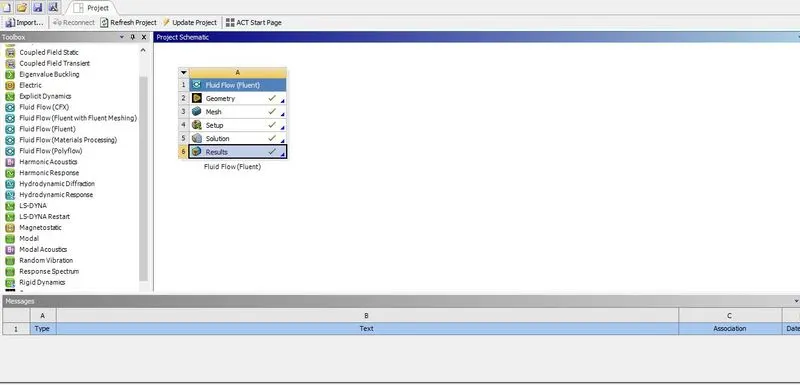
Work flow of the model:
Step 1: Geometry setup
Step 2: Mesh
Step 3: Setup the model
Step 4: Solution
Step 5: Results
Mixing Tee: Mixing Tees uses a specifically engineered internal geometry to efficiently mix two fluid streams into one combined stream. It is widely used to predict accurately of the mixing behavior including velocity, concentration and temperature fields.
Step 1: Geometry setup
Initially open the Ansys workbench
Select Fluid flow (fluent) in analysis system
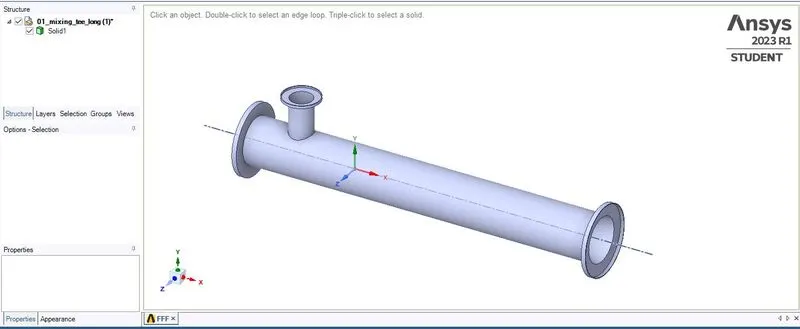
Goto Geometry-->open New space claim geometry
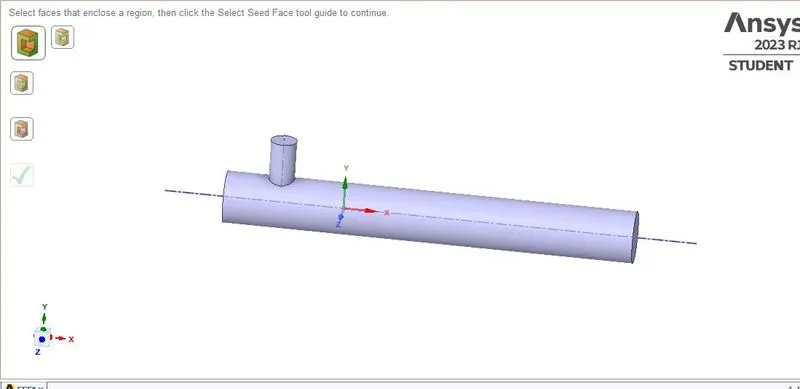
To perform fluid flow analysis in the geometry we use volume extraction by selecting prepare--->Volume extract--->Edges
Select the edges of the inlet and outlet part and select select yes mark
Then deselect the solid model and select suppressed for physics from the fluid model to create mesh at the particular volume
Step 2: Mesh generation
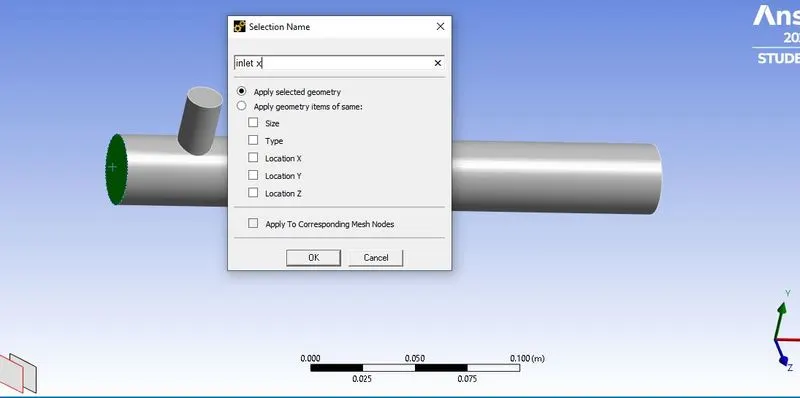
Initally assign the name of the faces by selecting ctrl +F; select the particular face and then press N
Mention the inlet x,y, outlet and walls separately to perform meshing.
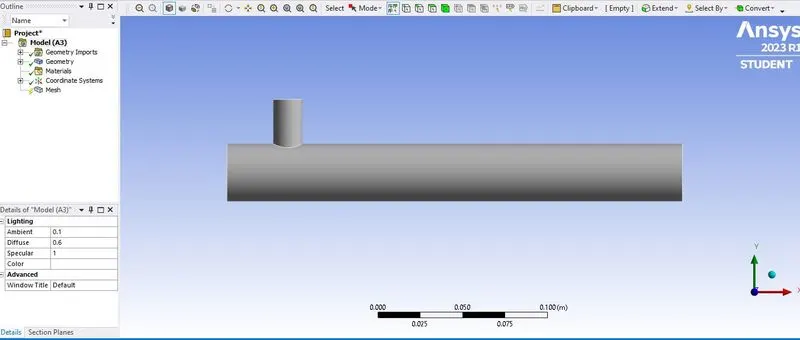
Then seelct mesh----> generate mesh; the mesh will be generate by default mesh size
If we check the mesh quality click quality--> element metrics
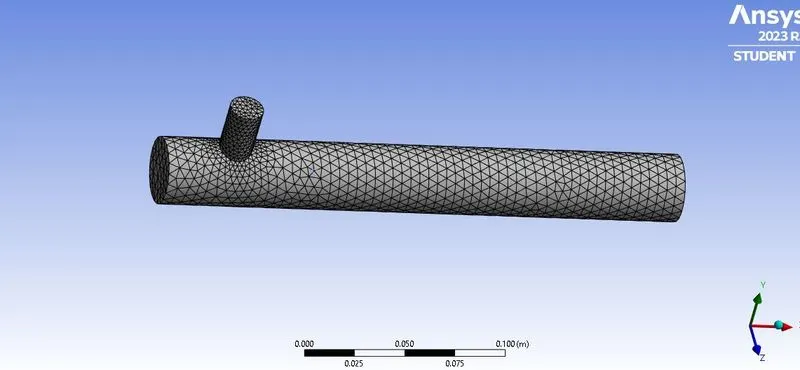
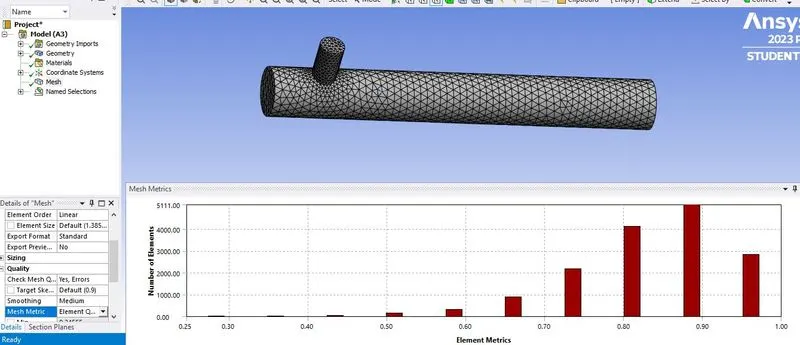
Step 3: Setup the model
Primarily setup the units of the model
Select the solver, material, boundaries, solving conditions as per the given data
Case 1:
Short mixing tee with a hot inlet velocity of 3m/s.
Momentum ratio of 2, 4.
|
Setup |
K-epsilon |
K-omega |
|
Solver |
Pressure based |
Pressure based |
|
Time |
Steady |
Steady |
|
Velocity formulation |
Absolute |
Absolute |
|
Viscous |
K-Epsilon (standard) |
K-Omega (SST) |
|
Add material |
Air |
Air |
|
Cell zones |
Air |
Air |
|
Boundaries |
Inlet-x Velocity 3m/s Thermal-36oC Inlet-y Velocity 6m/s Thermal-19oC Outlet Pressure 0 |
|
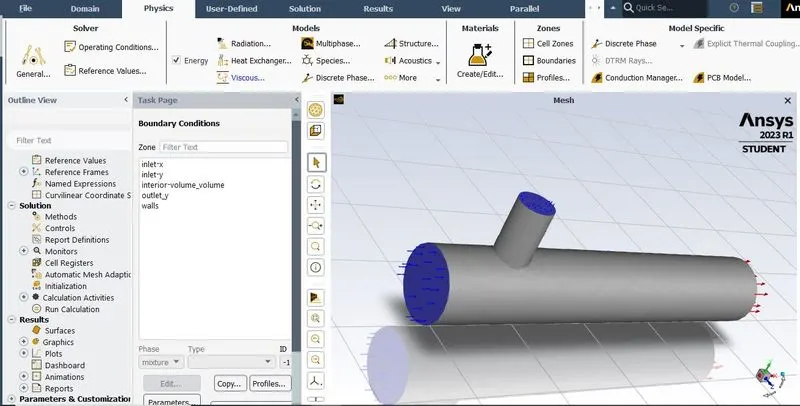
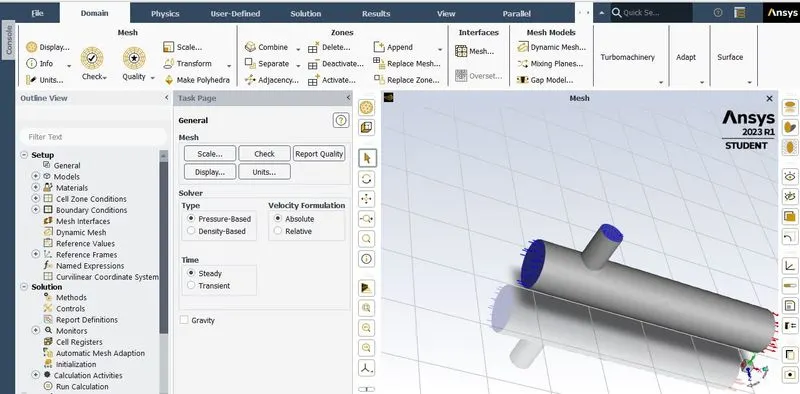
Step 4: Solving
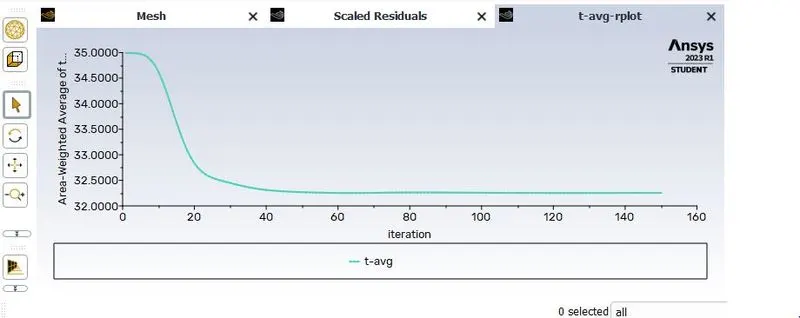
In order to solve the model select definitions--->new--> surface report---> area weighted avg
Mention the name as T avg--> temp as static temperature-->ok
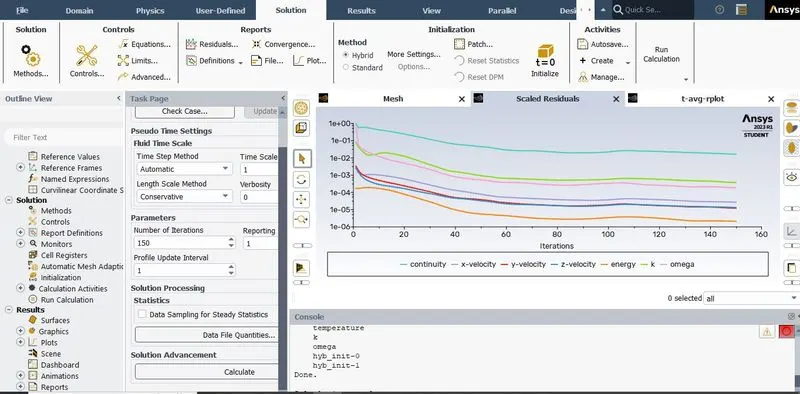
In initialization select the hybrid initialization
Run calculation--> Iteration 150--> Calculate
Step 5: Results
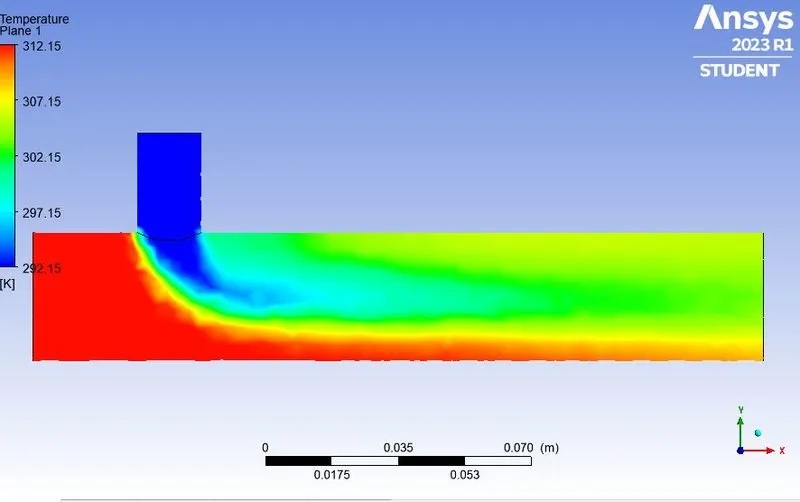
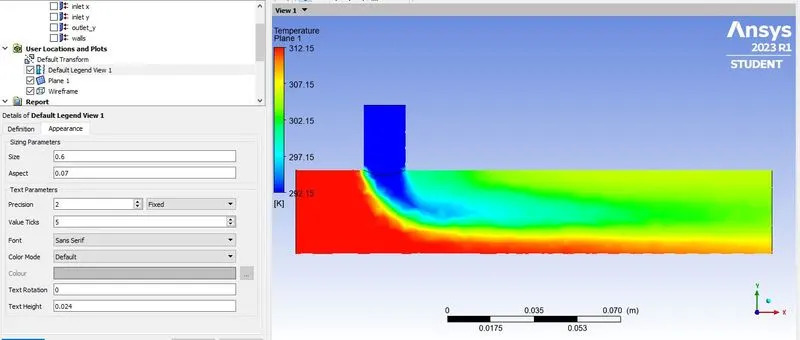
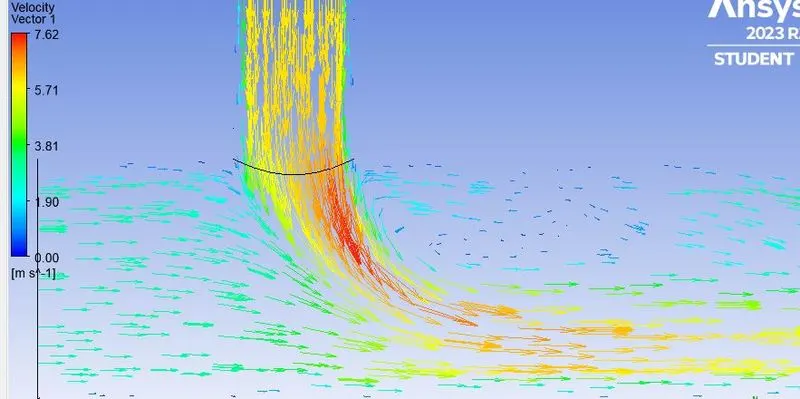
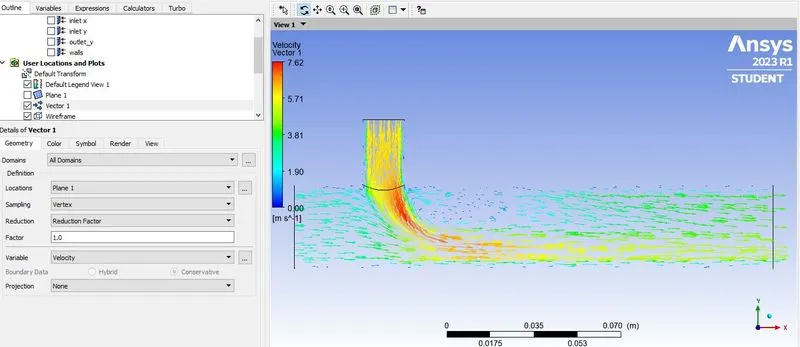
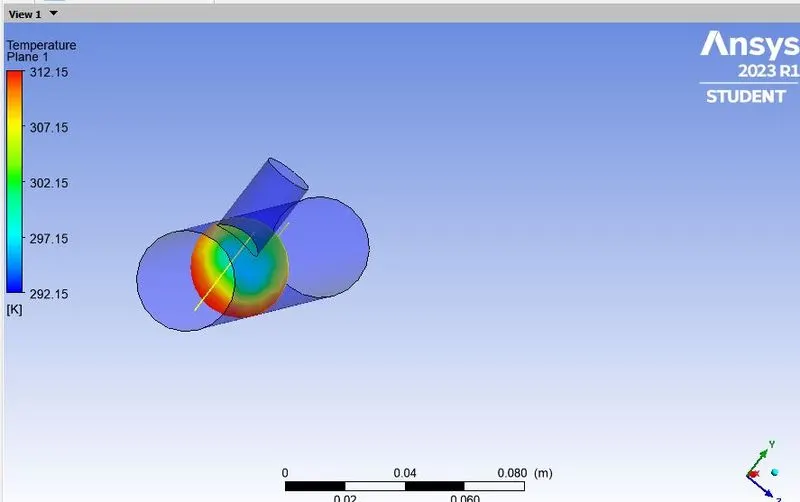
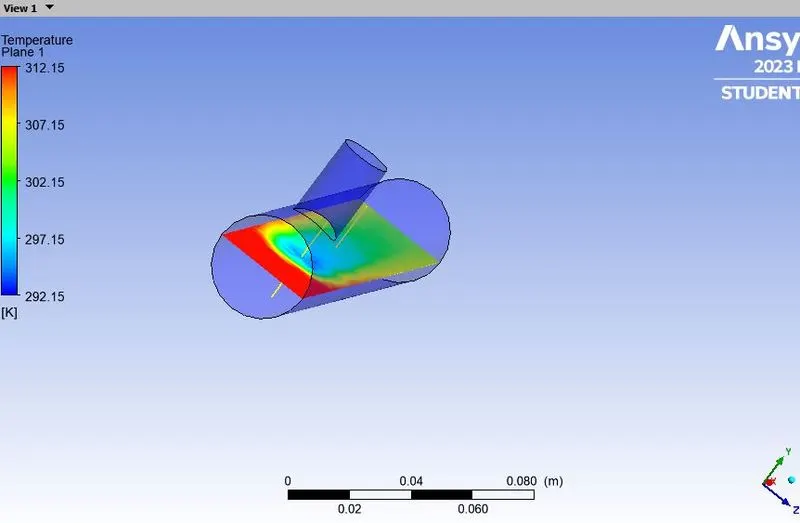
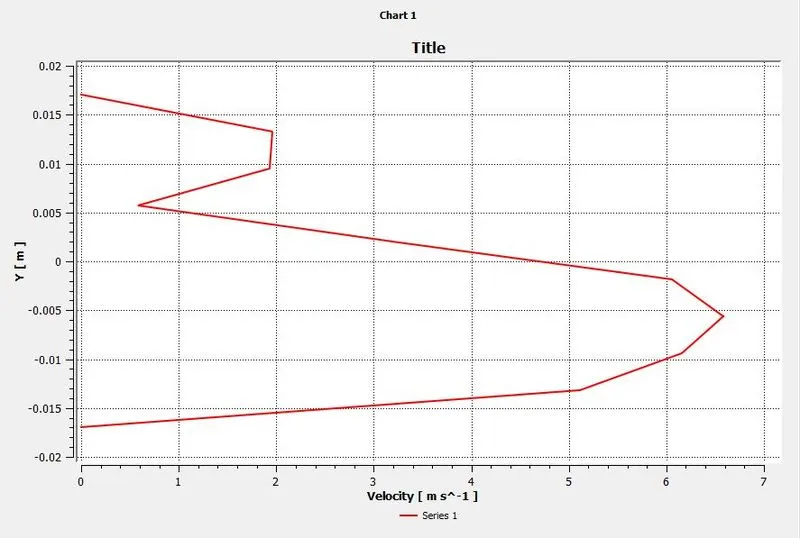
To check the results of temperature, velocity variations; select the variables in locations--> plane--> select temperature/velocity--ok
The result will be shown
Check the plots of the temperature and velocity
Final results:
For both K-epsilon and K-omega creates nearly the similar results
To increase the tee size will not show any difference in outlet temperature but short Tee takes less convergence time that long tee