Week 1- Mixing Tee
Aim:
In this challenge, we have two versions of the mixing tee. One of them is longer than the other.
Our job is set to set up steady-state simulations to compare the mixing effictiveness when hot inlet temperature is 36 degree celsius and the cold inlet is at 19 degree celsius.
Use the k-epsilon and k-omega SST model for the first case and based on your judgement use the more suitable model for the further cases. Giving the reason for choosing a suitable model is compulsory.
- Case1
- Short mixing tee with a hot inlet velocity of 3m/s.
- Momentum ratio 2,4
Case 2
- Long mixing tee with a hot inlet velocity of 3m/s.
- Momentum ratio of 2,4.
- Momentum ratio = velocity at cold inlet/ velocity at hot inlet
Theory
Mixing tee: mixing tee is a flow control device, in which it contain two inputs and one output, the main function of this mixing tee the two different flows with each other.
Steps invalue in the mixing tee shown below:
- Geomentry
- Meshing
- Setup
- Solution
- Result
Short Mixing tee
Case1:
- Short mixing tee with inlet velocity of 3m/s.
- Momentum ratio 2.
- Hot inlet temperature is at 36C.
- The cold inlet is at 19C.
- Cold inlet velocity of 6m/s.
- Geomentry:
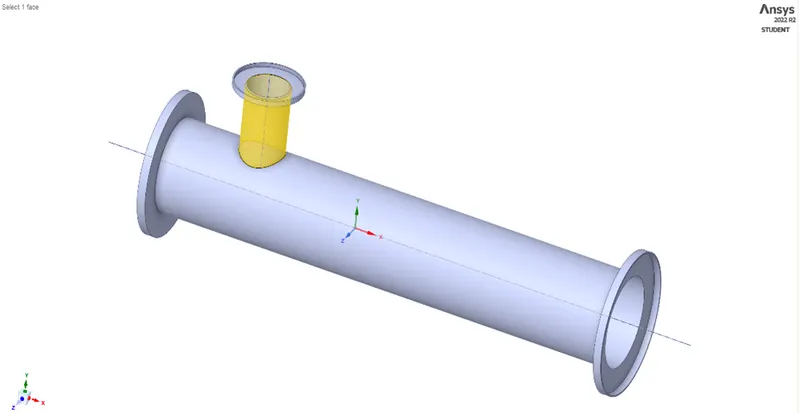
- Extract volume:
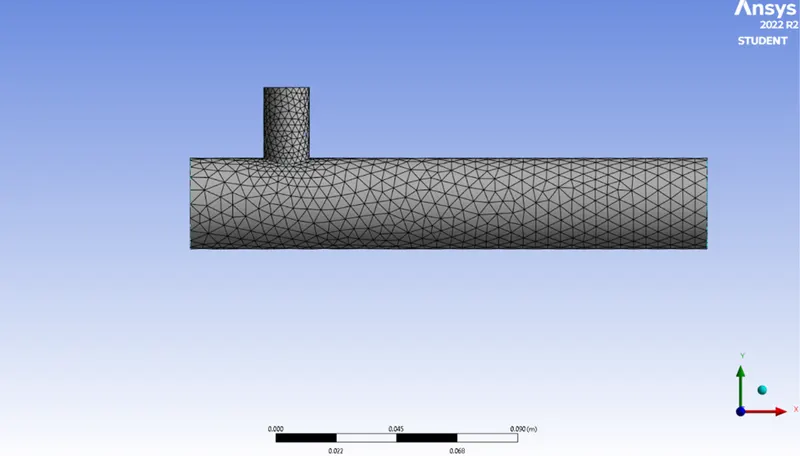
Supressing physics: this command is used to extract the solid part of the model.
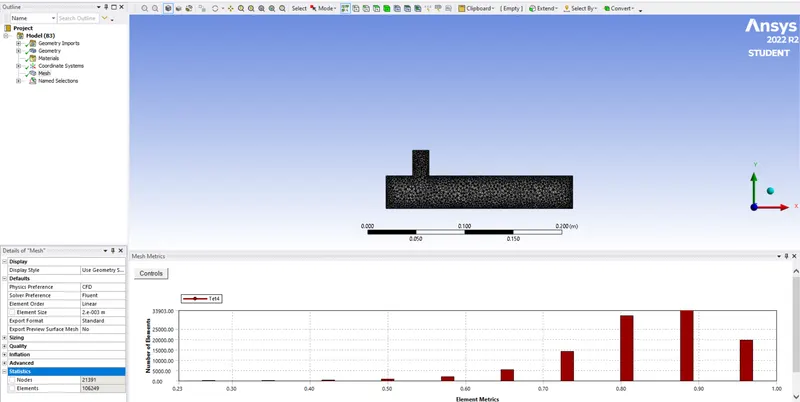
- Meshing: Meshing is nothing but the deviding the model into small pieces and the distance between points is 0.002.
After the completion of meshing we have to give the names for each and every face.
Number of node: 21391
Elements:106249
- Setup:
- Domain: 1) steady state
2) pressure based solver.
- Material: 1) Air-fluid
2) Alluminium
- Model: k-epsilon>reliabef>standard wall function
- Cell zone: air – fluid-volume
- Boundry conditions: 1) hot inlet velocity of 3m/s.
2) cold inlet velocity of 6m/s.
Initializing: 1)hybrid
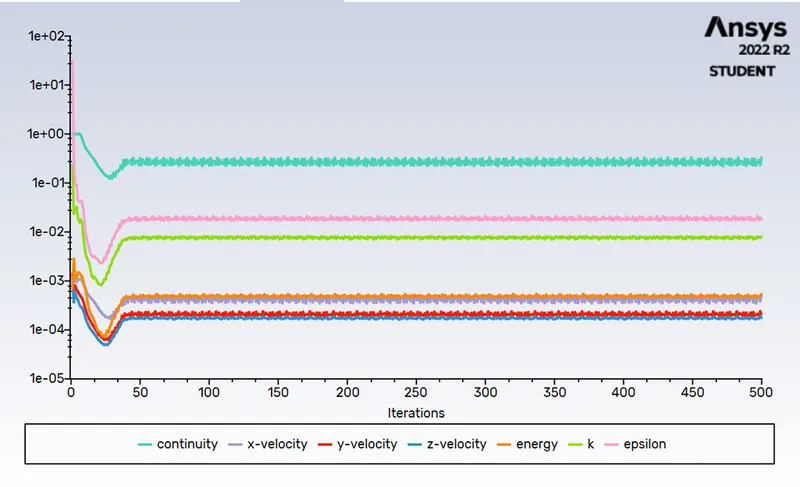
Solution: 500 iterations
K-epsilon
Residuals plot:
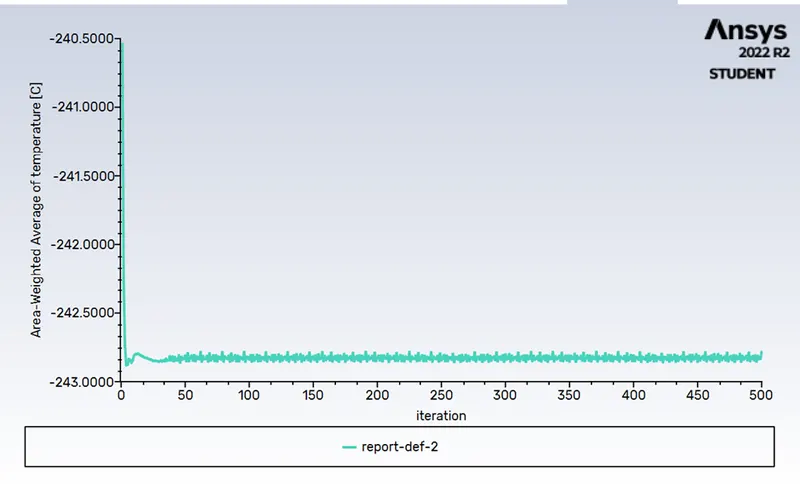
Area weighted average:
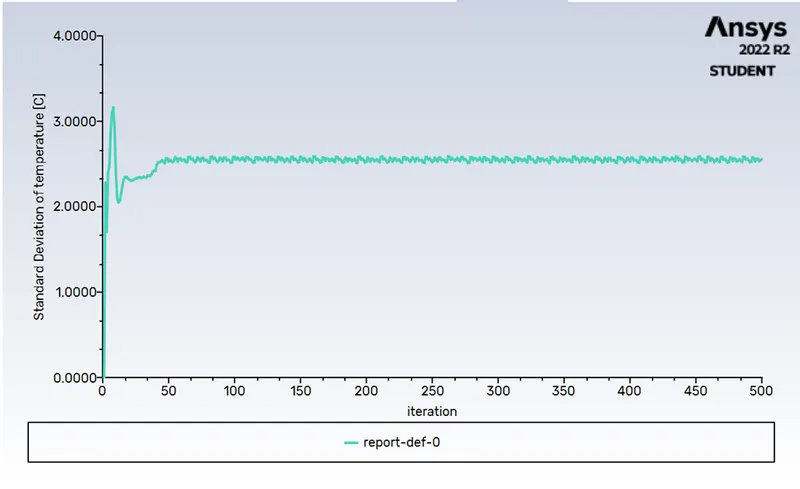
Standard deviation temperature:
Contour plot:
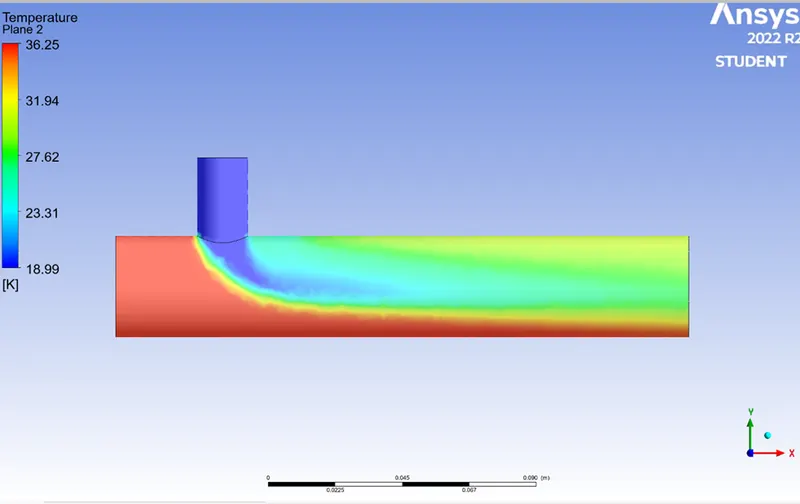
Temprature plot:
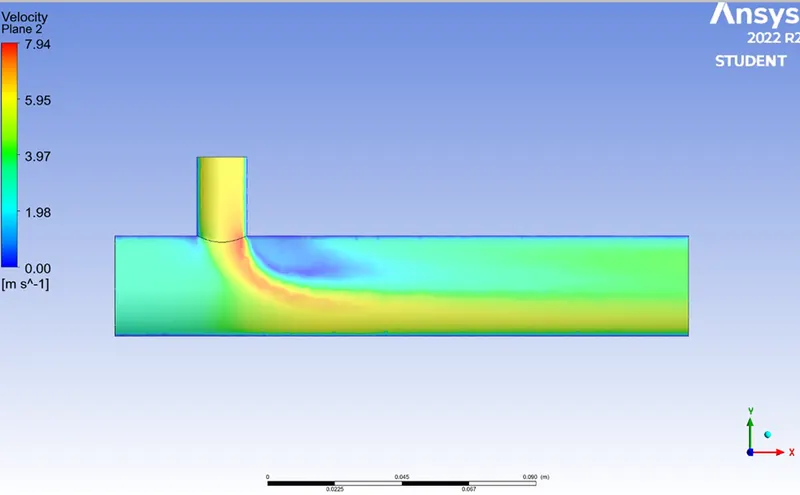
Velocity contour:
K-Omega
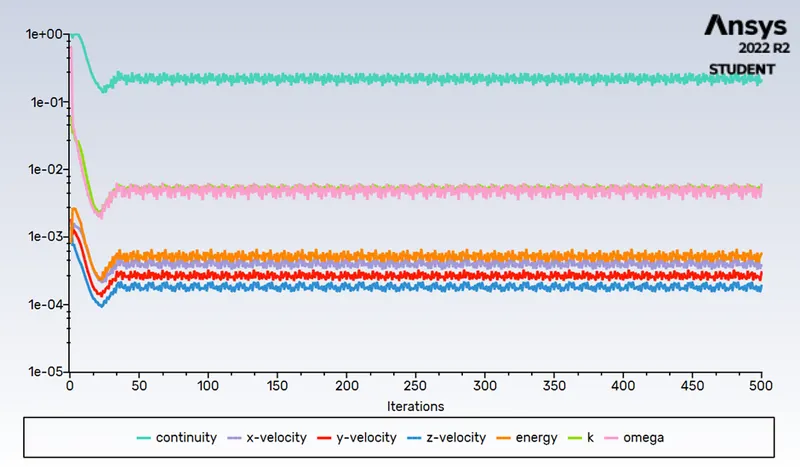
Residuals plot:
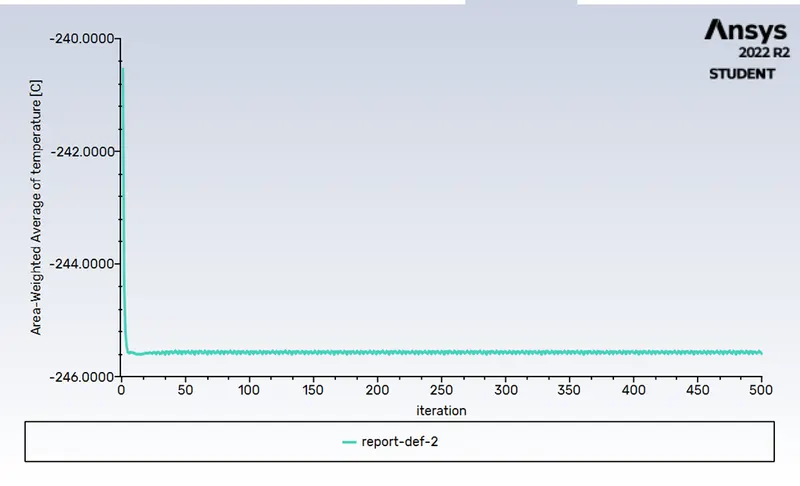
Area weighted average:
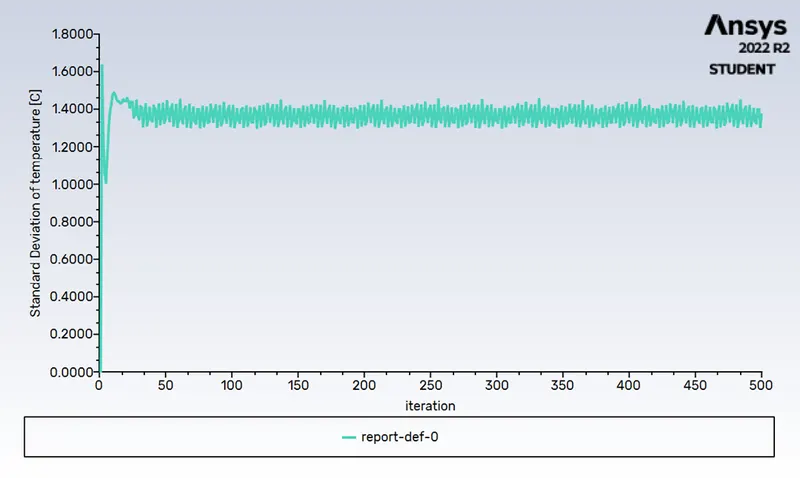
Standard deviation:
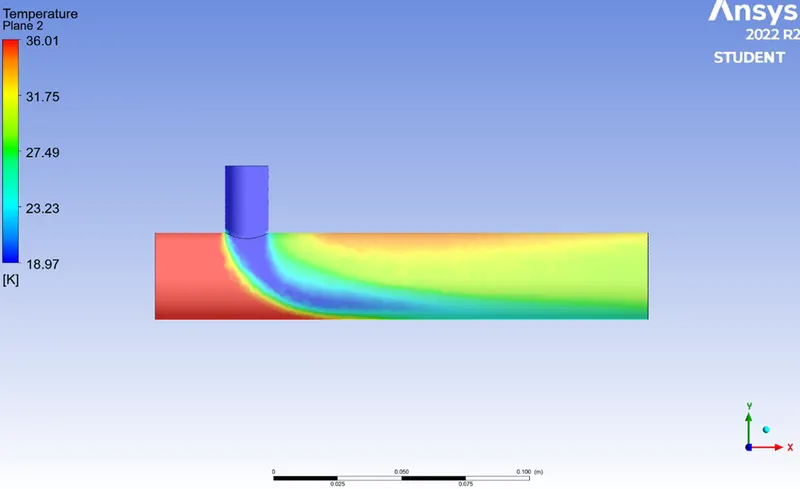
Contour plot:
Temprature plot:
Velocity contour:
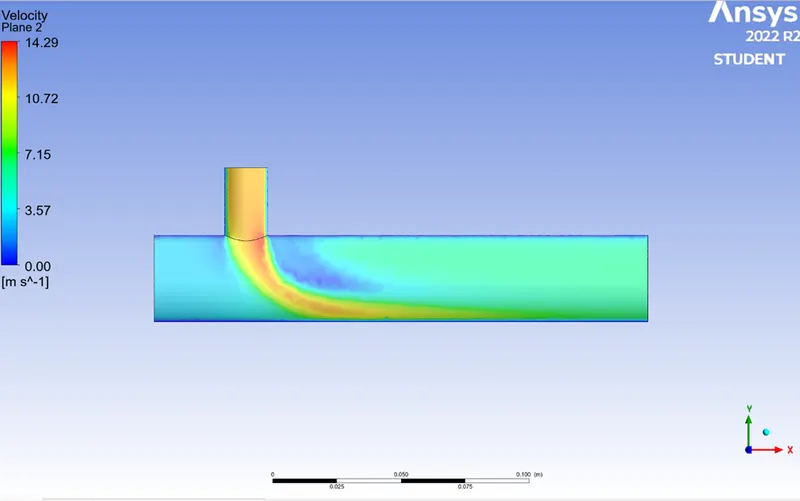
Conclusion:
Average outlet temperature:
By comparing the both model we got the same results.
Iterations to converge :
No.of iterations taken to converge is less for realizable k-epsilon model than k-omega SST model.
Standard deviation:
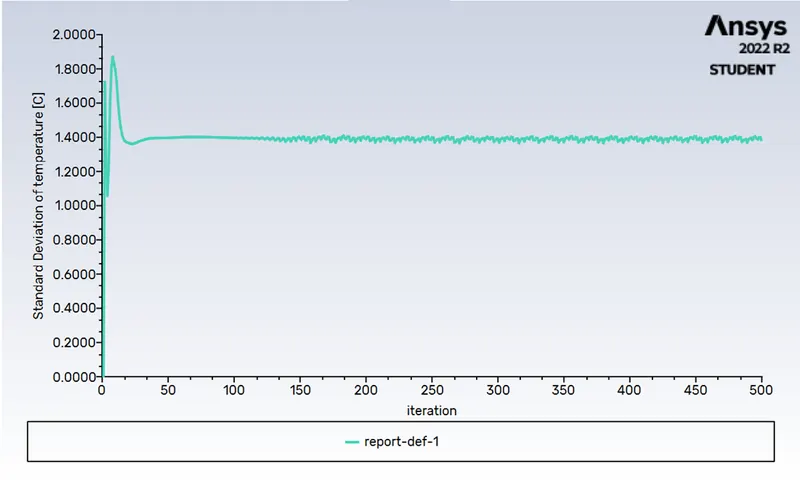
The standard deviation of k-epsilon model is less than k-omega SST model.
So based on above observations the k-epsilon turbulence model is predicting the results accurately in less no. of iterations. so we can use realisable k-epsilon model for case2.
Long tee:
Geomentry setup:
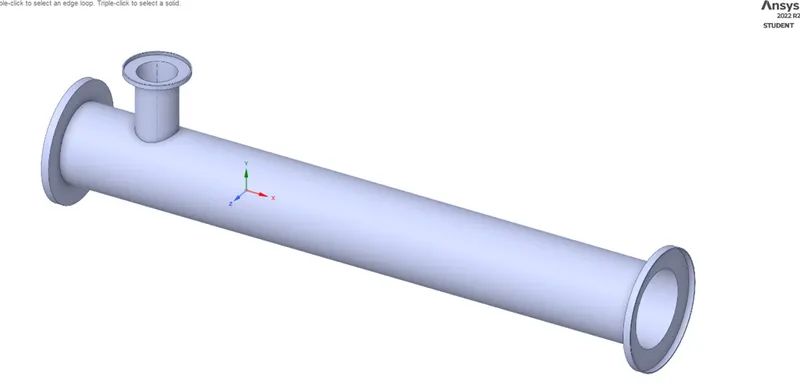
Extracting volume
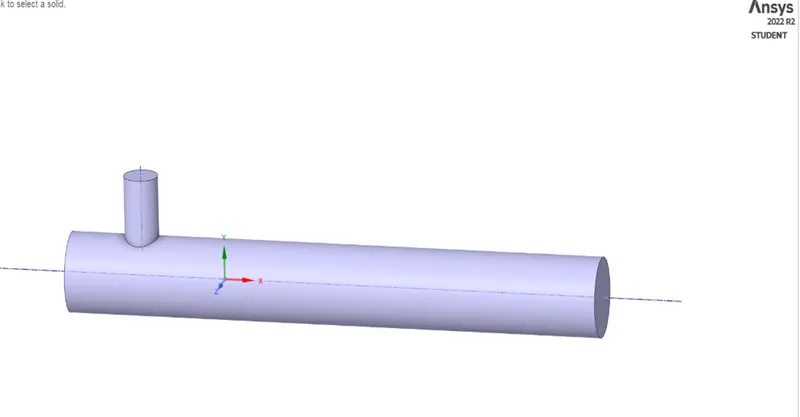
Supressing physics: this command is used to hide the solid part of the model.
Mesh generation:
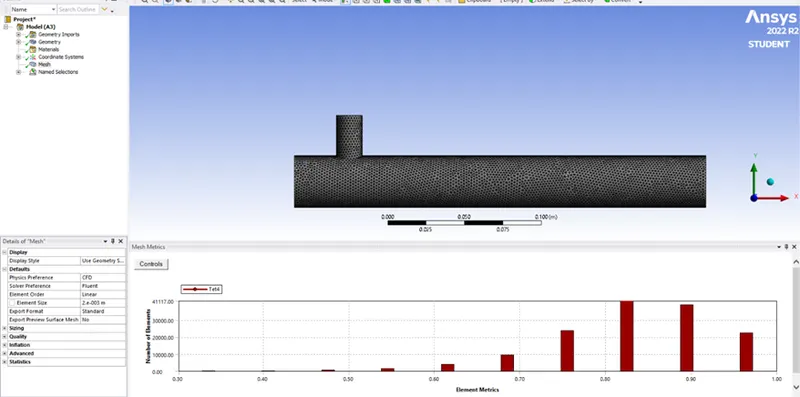
The element quality should be less than 5%. In our case minimum mesh quality is 30%, so we can move ahead.
Setup and Solution:
Case2:
Long mixing tee with a hot inlet velocity of 3m/s.
Momentum ratio 2,4.
Case2.1
Long mixing tee with a hot inlet velocity of 3m/s.
Momentum ratio 2.
SETUP Long tee(MR=2 and hot inlet velocity m/s)
K-epsilon
Solver type Pressure based
Velocity formulation Absolute
Time steady
Viscous model Realizable k-epsilon with standard wall function.
Material Air
Cell zones fluid type : air
Inlet_x (velocity inlet)
Velocity magnitude 3m/s
Temprature – 36 c
Boundaries Inlet_y(velocity inlet)
velocity magnitude 6m/s.
Temprature – 19 c.
Outlet (pressure outlet)
Gauge pressure - 0pa
Walls – walls
The hybrid schemes used for initialization and the no. of iterations are setup and then click on calculate option.
RESULTS:
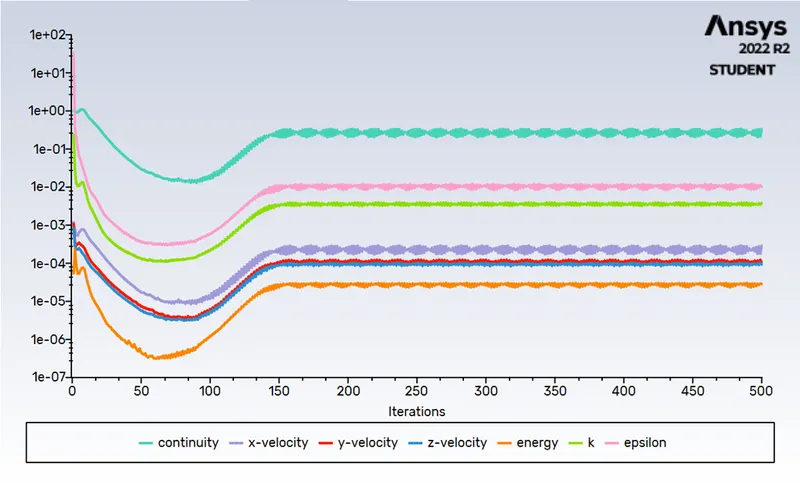
RESIDUALS PLOT:
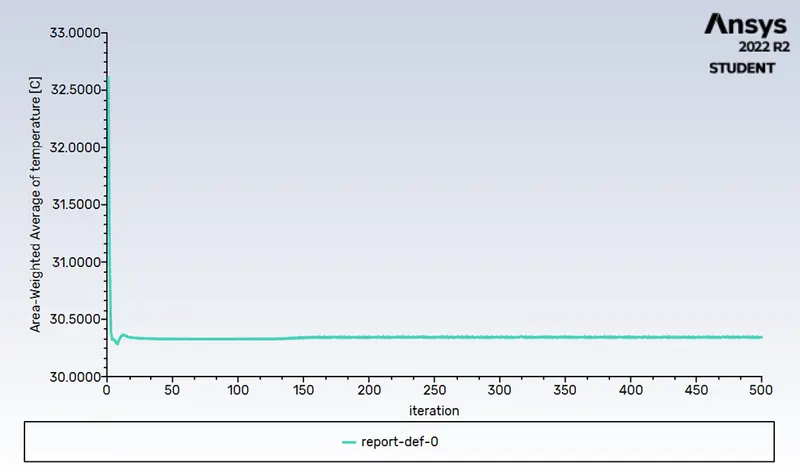
Area weighted average:
Standard deviation:
CONTOUR PLOT:
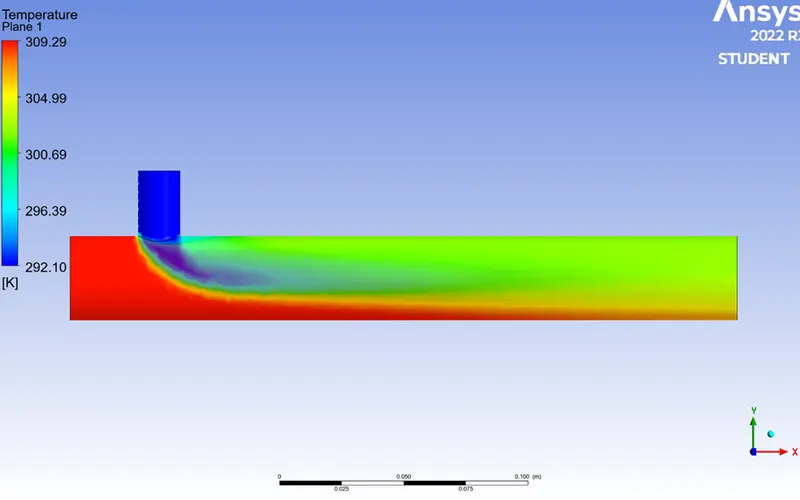
Temprature plot:
Velocity contour:
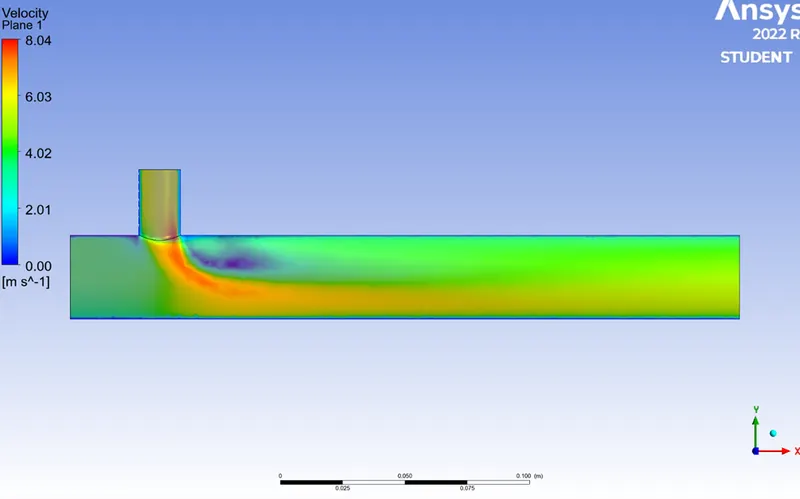
Average outlet temperature:
Irrespective of length of the mixing tee, the average outlet temperature on both cases are quite same.
Momentum ratio:
As momentum ratio increases, the velocity of cold inlet fluid increases and due to high relative velocity between the fluid it experiences higher turbulence and therefore the outlet fluid temperature decreases.
By obtaining the better mixing the velocity of cold air is important. by increasing the cold fluid velocity the outlet temperature gets reduced.
No.of iterations:
The longer tee makes more time to converge than short tee.
Conclusion:
Higher the momentum ratio, higher will be the mixing efficiency of tee joint.
Increasing the length of the pipe dosen’t serve the purpose of mixing efficiency. So, it is efficient to use short pipe.