Week 1- Mixing Tee
Aim/ Objective
The study of mixing of fluid which is at different temperatures and velocities, by using the ANSYS fluent and plot the different results and comparision.
There are two models of mixing tee. one is short length and other is long length mixing tee.
In this challenge we will study the what output temperature we get when two different temperatures fluid at different different velocities are mixed with each other. And also we will study what is the effect of length of mixing tee on output temperature.
Basically this type of study is important in the air conditioning and heating applications where we required a specific temperature as a output.
There are two cases and we will start by first case.
- Short mixing tee with a hot inlet velocity of 3m/s. and Momentum ratio of 2.4.
Steps for solving:
a) Open the ANSYS workbench and drag the ANSYS fluent in project schematic.

b) open the spaceclaim and load the model in spaceclaim and extract the required volume from the model.
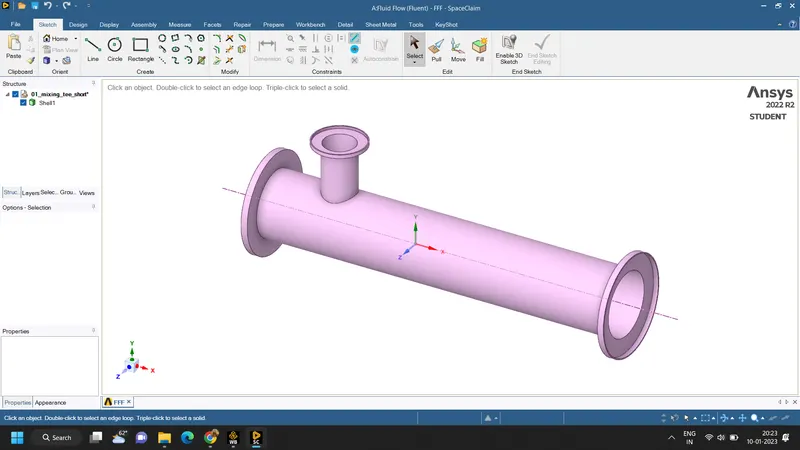
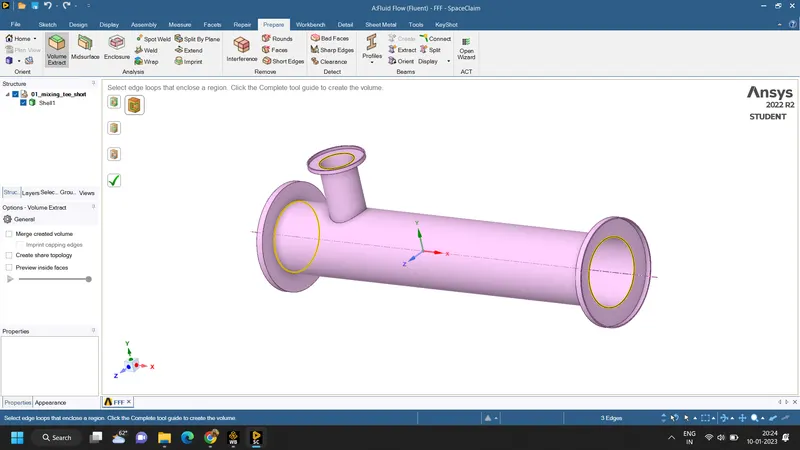
As we interested in fluid flowing inside the pipes so we supress the solid model so it can not be loaded for meshing.
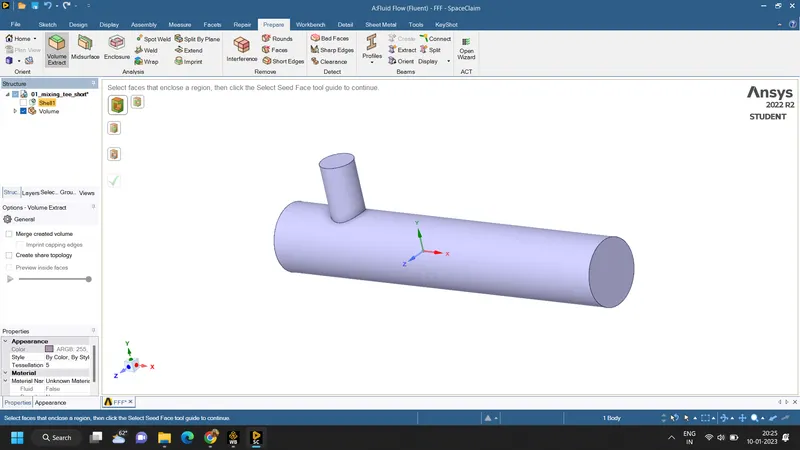
c) Next step is to close the spaceclaim and open the mesh GUI and assign the name to the perticalar face.
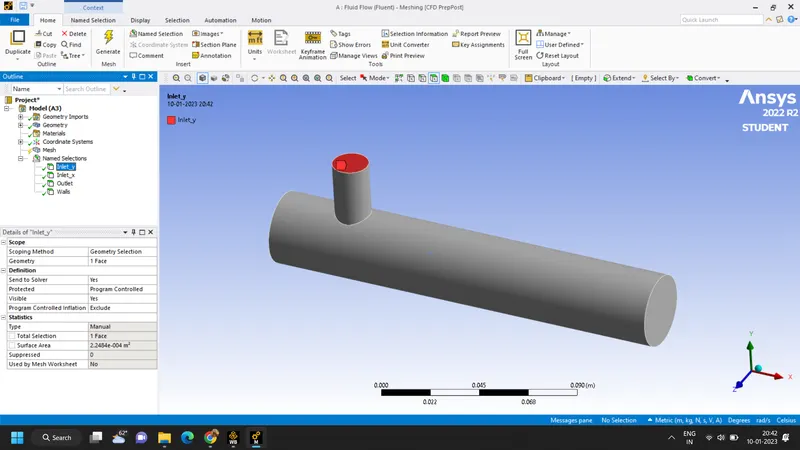
After that by right click on mesh and use option generate mesh and ANSYS aumatically done the meshing on the model
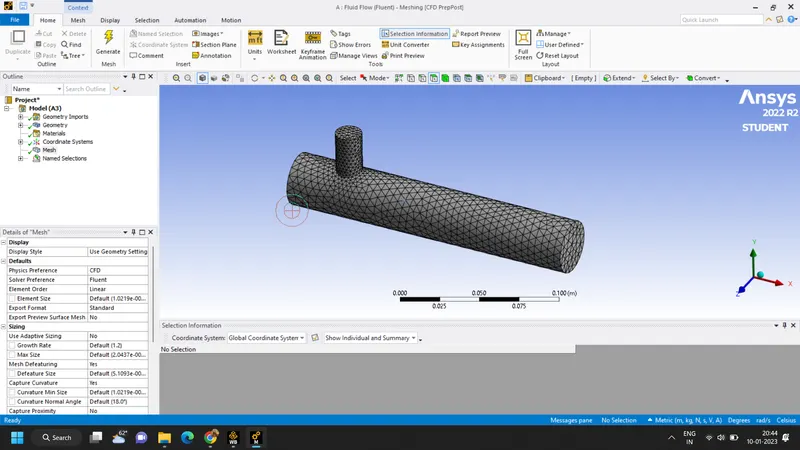
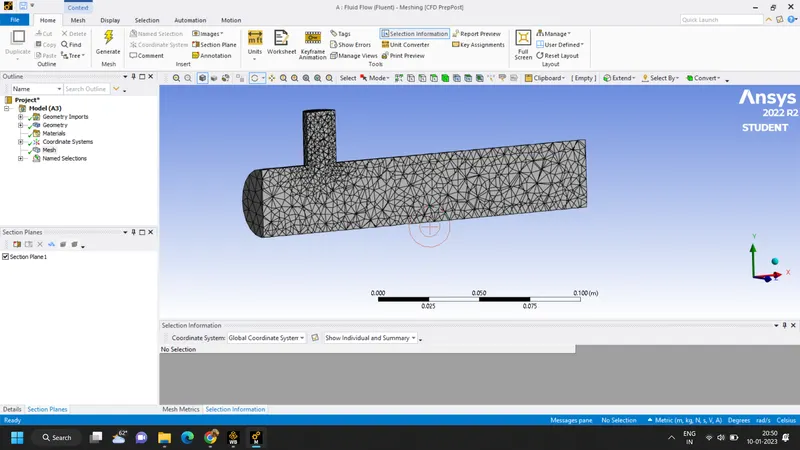
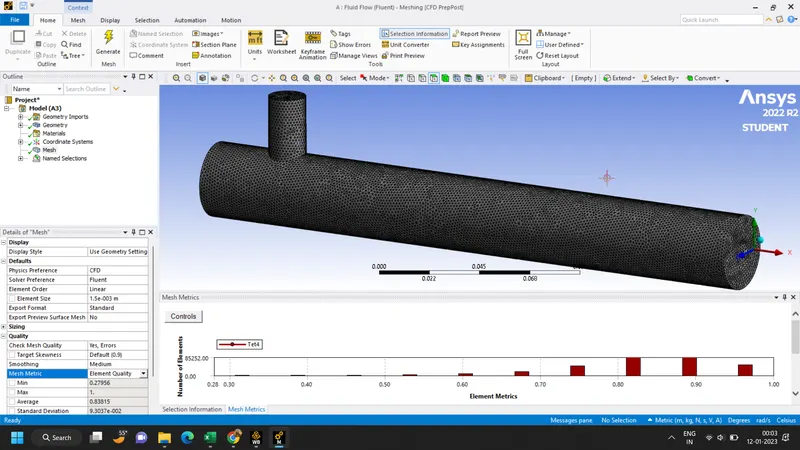
We chech the quality of mesh. As the quality of mesh is the most important part in the meshing. the final result accuracy is depends on the quality of mesh. There are different quality criteria for meshing, eg. Skewness, Aspect ratio, warp angle etc.
all these having acceptance criteria and mesh value should be within that range, then only we can say the mesh is having good quality.
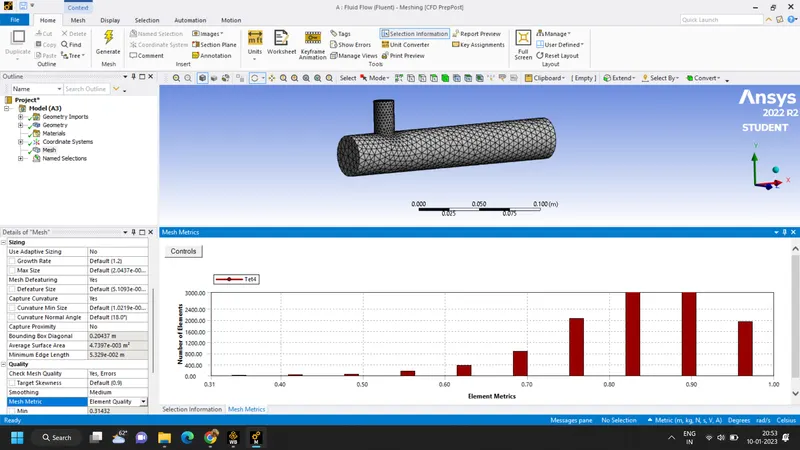
The element quality should not be less than the 5%.
For this model we take the element size is 0.002 m
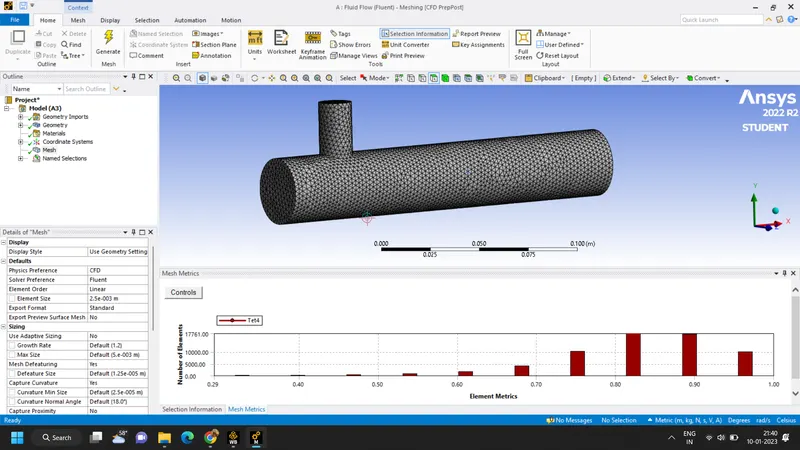
Next step we close the mesh part and update it on workbench.
and open the fluent setup.
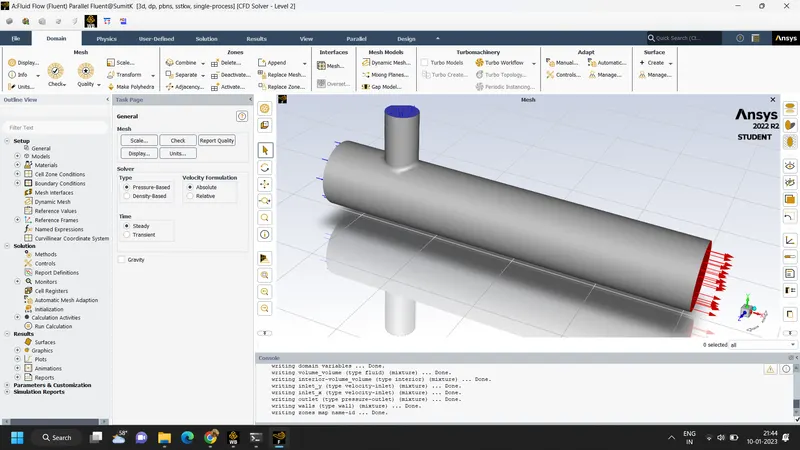
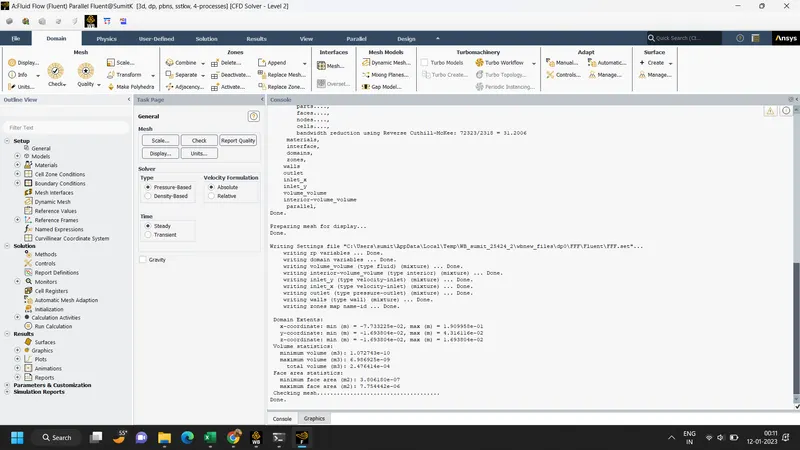
Next step is to perform mesh check.
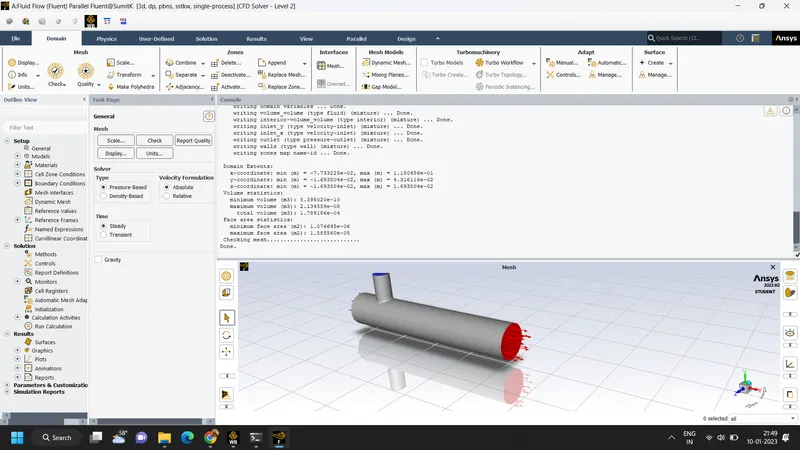
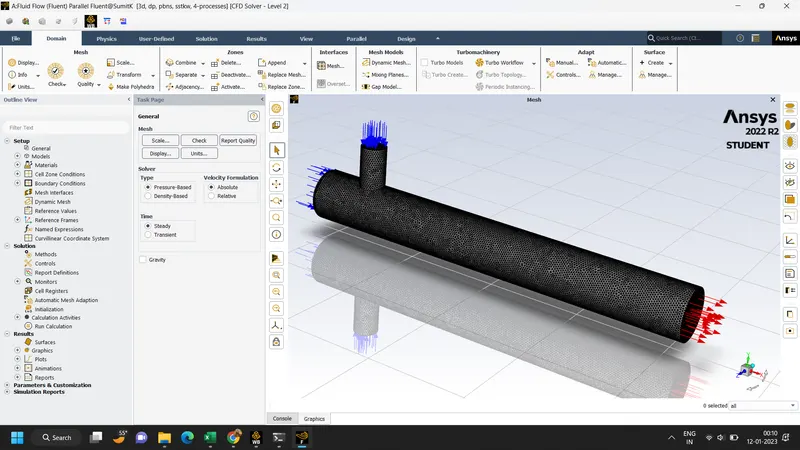
Next we set the physics i.e state state and pressure based sover.
again we more consern about the temperature, so we enable energy model also.
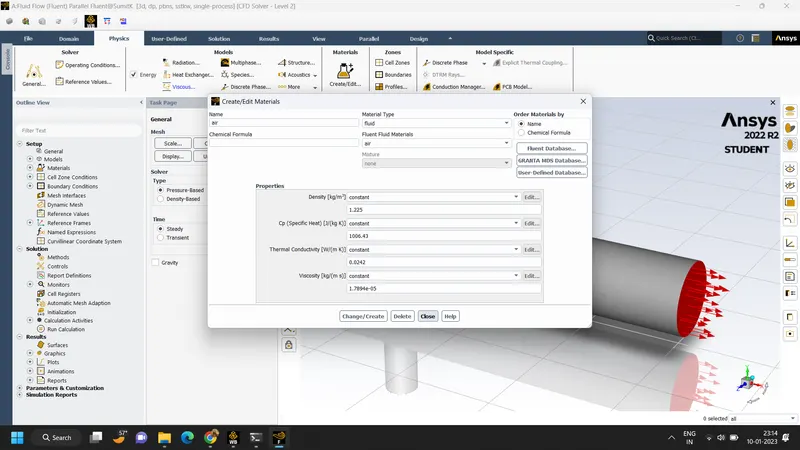
Next we select the fluid material as air
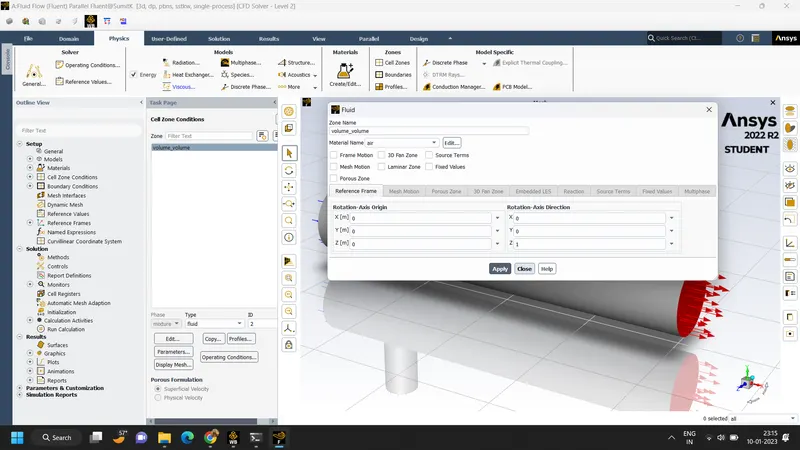
Next we set cell zone
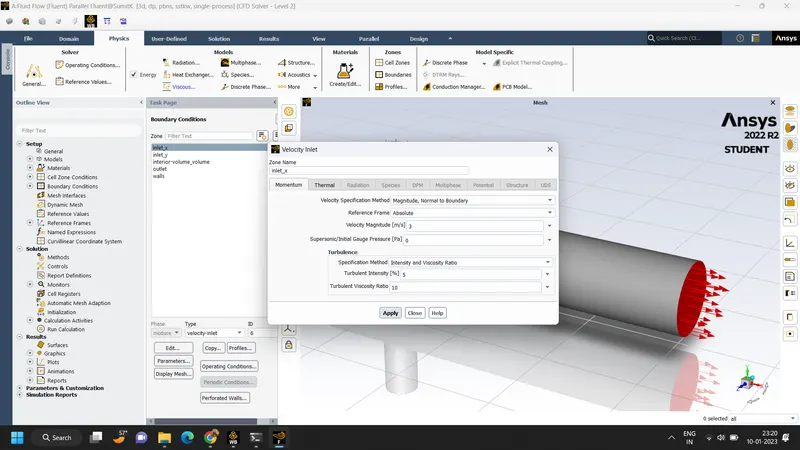
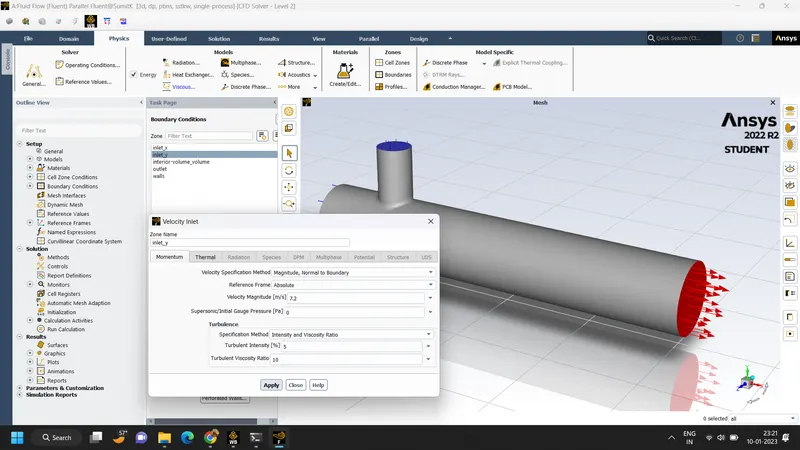
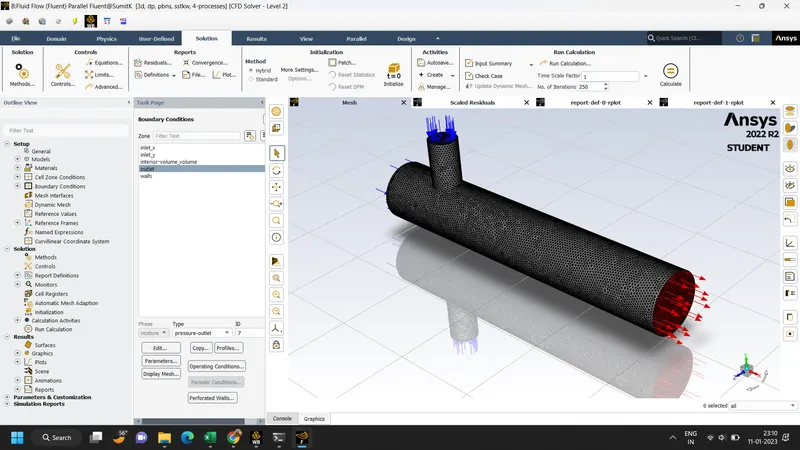
Next we set the boundary conditions as follows
Hot inlet temperature 360C
cold Inlet temperature 19 0C
Hot Inlet velocity 3 m/s
cold inlet velocity 7.2 m/s
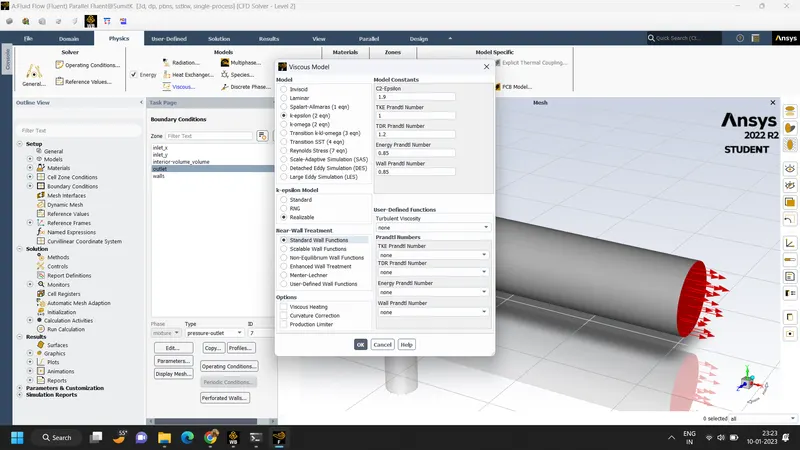
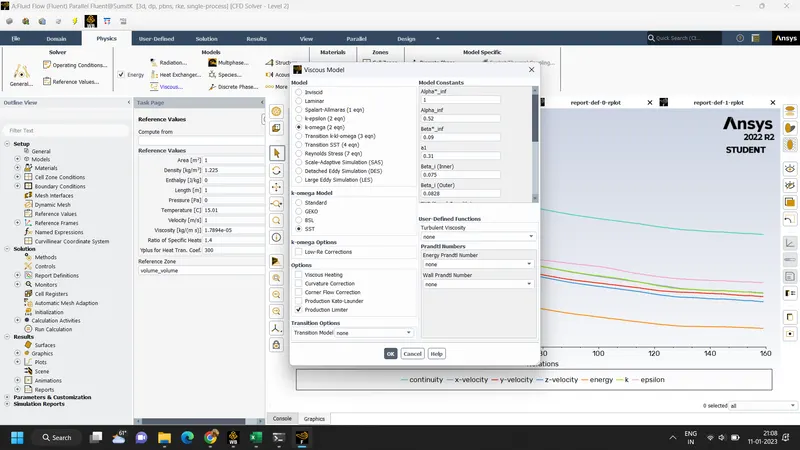
and for first case we use k-epsilon and k-omega SST model.
first we use k-epsilon model
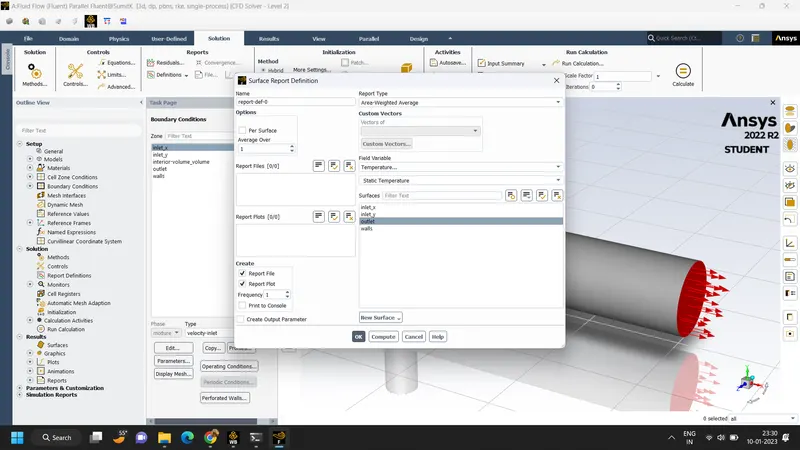
Next we set for solutions definations
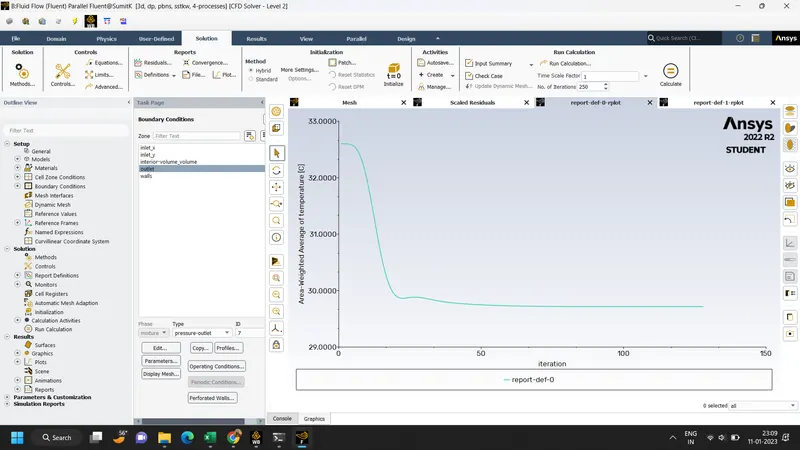
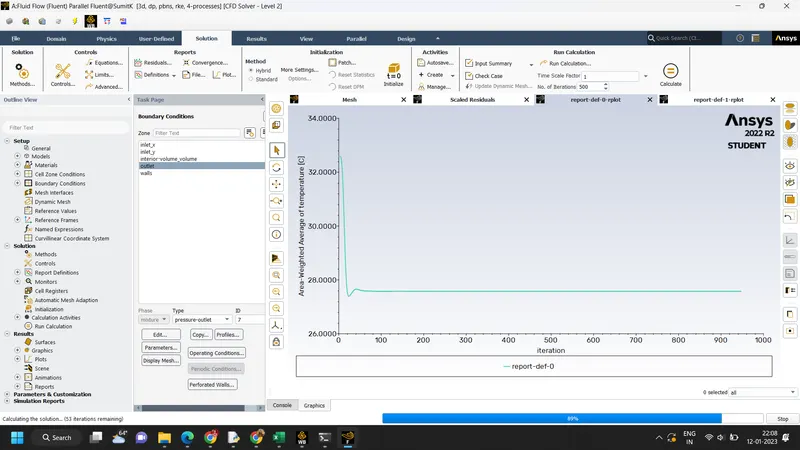
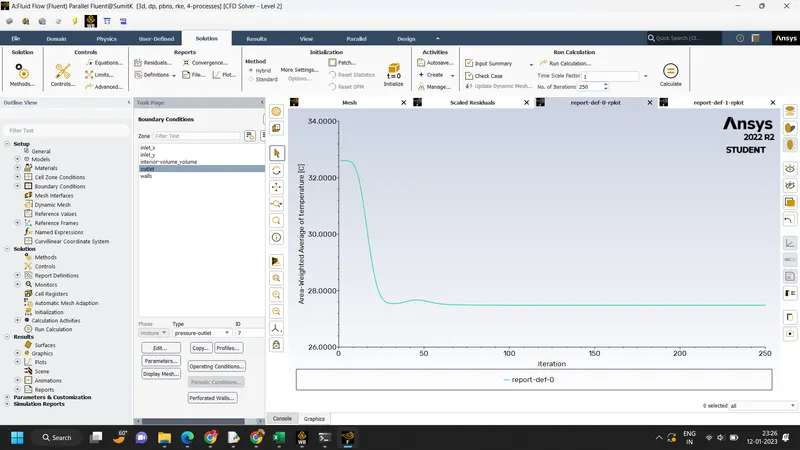
we want avarage value of temperature at outlet
Next step is initialization
we initialize the solver and initialization completed in 10 iterations.
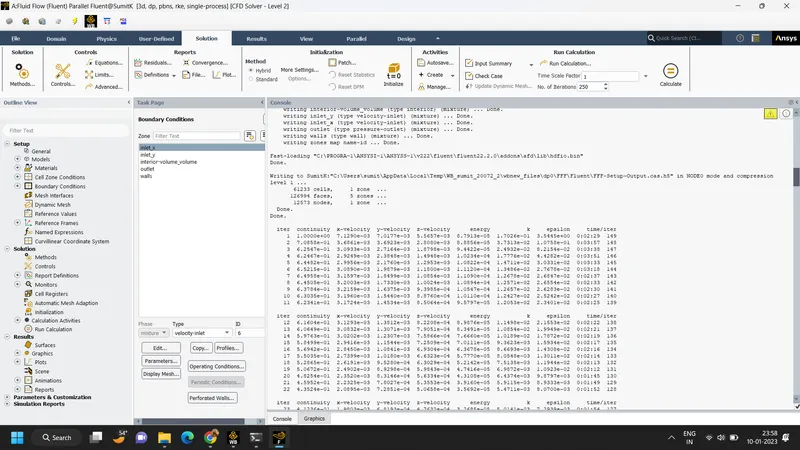
next we calculate the model for set equations.
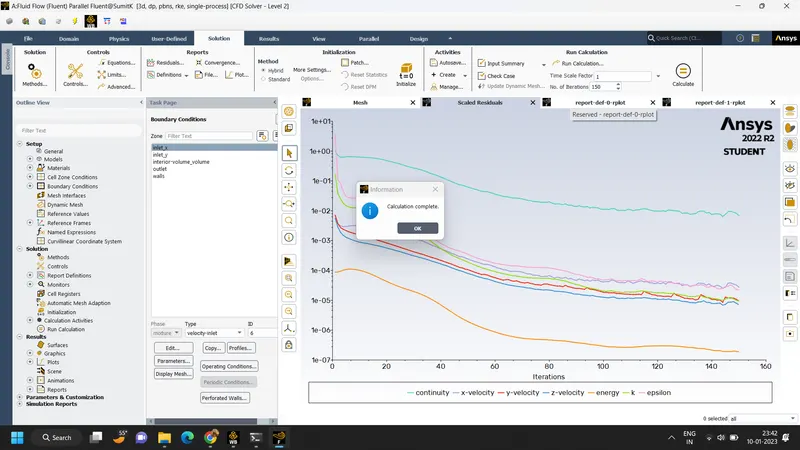
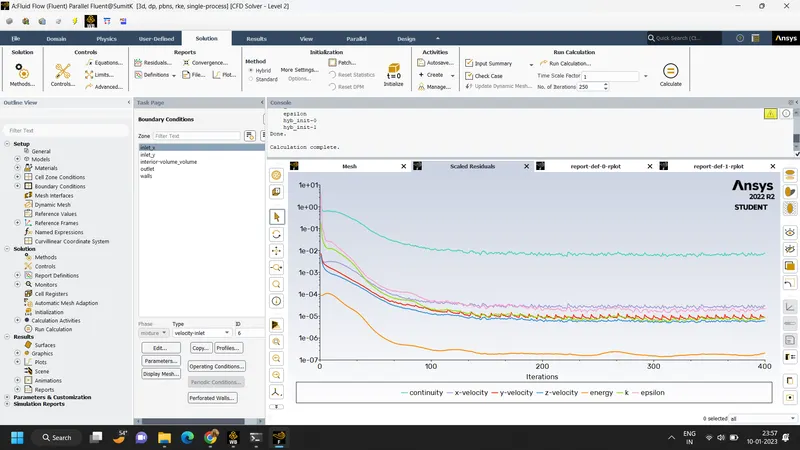
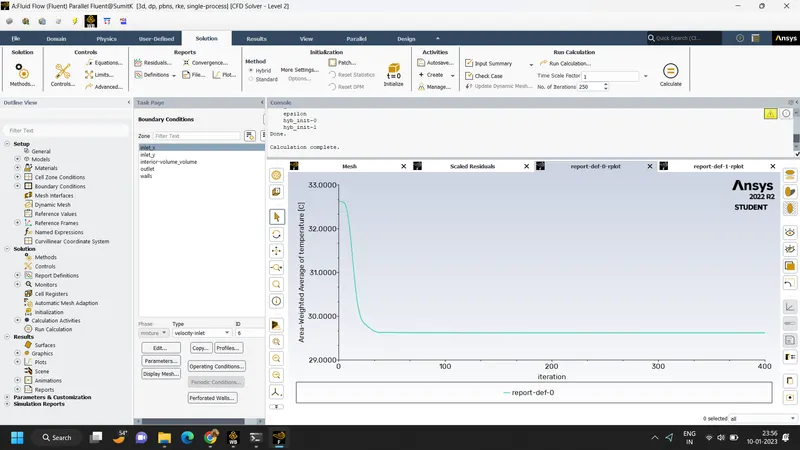
Next step we go to the results by closing the solution

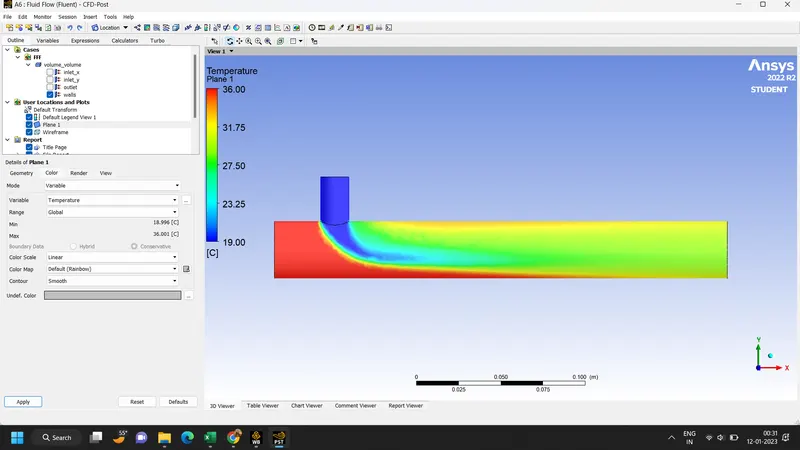
Temperature plot.
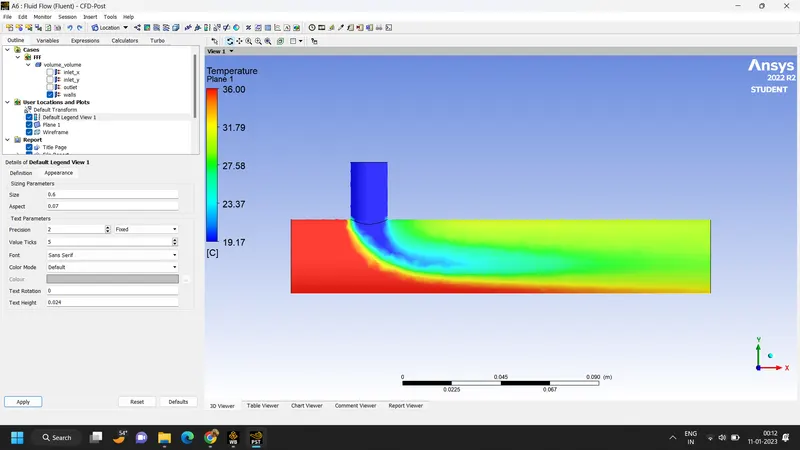
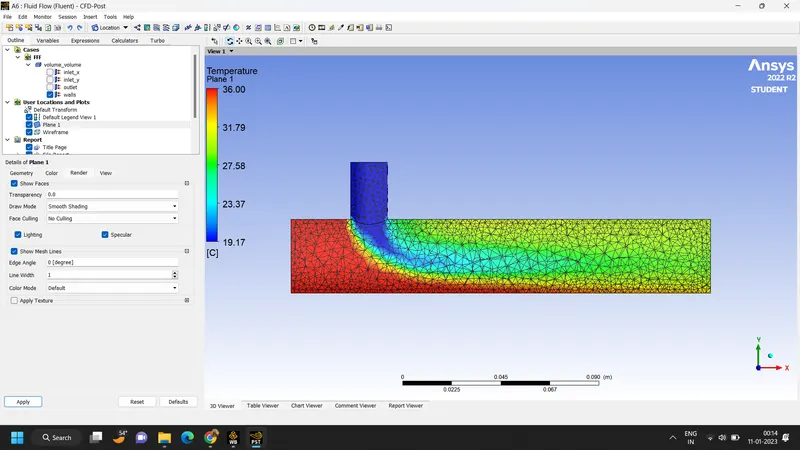
Average temp=27.7 0C
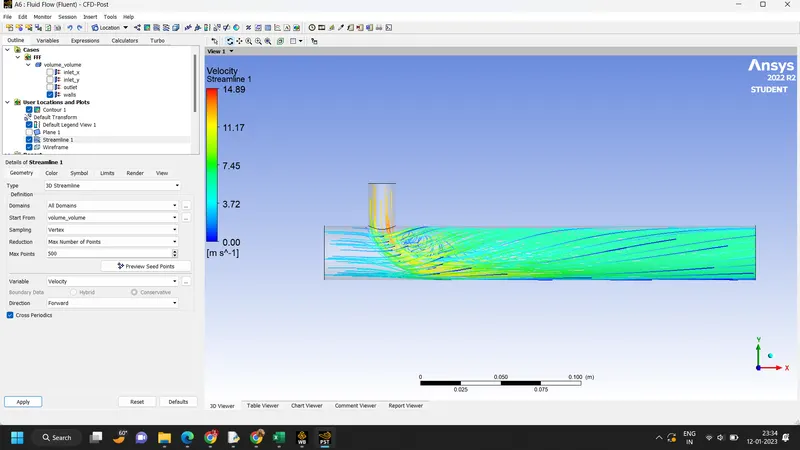
Velocity plot
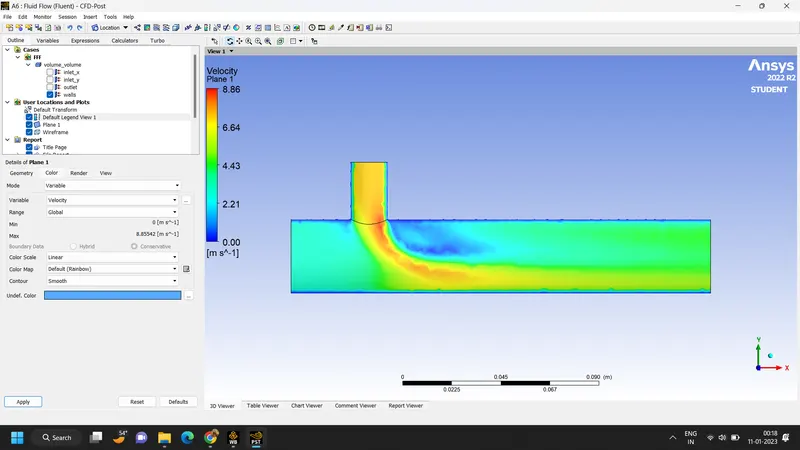
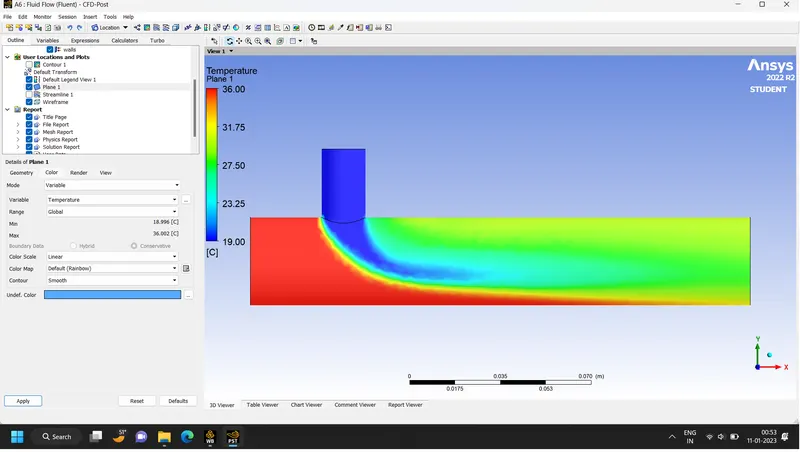
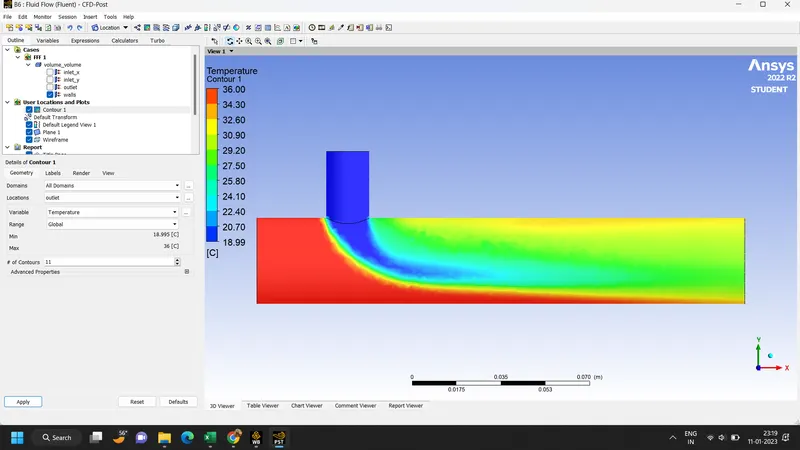
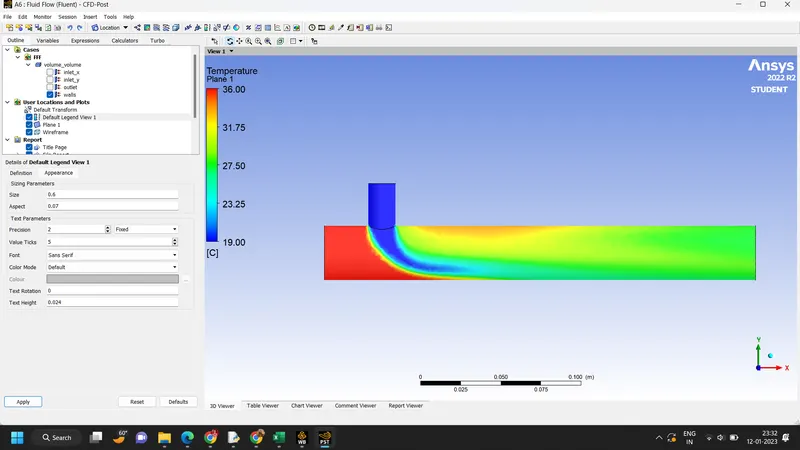
Temperature contour
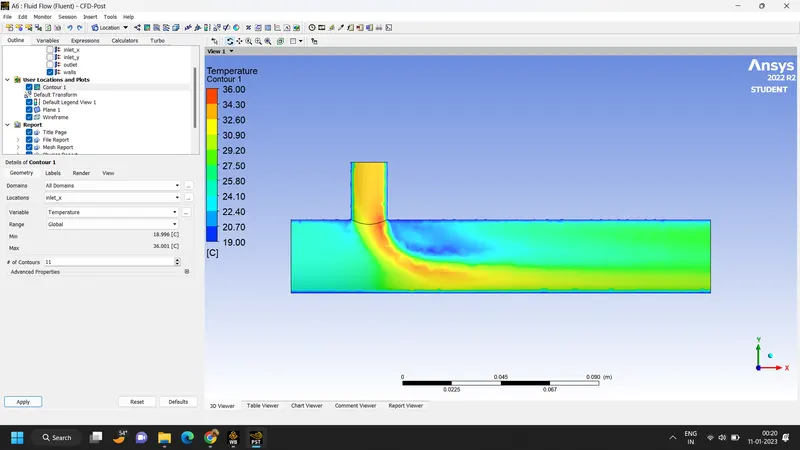
Velocity contour
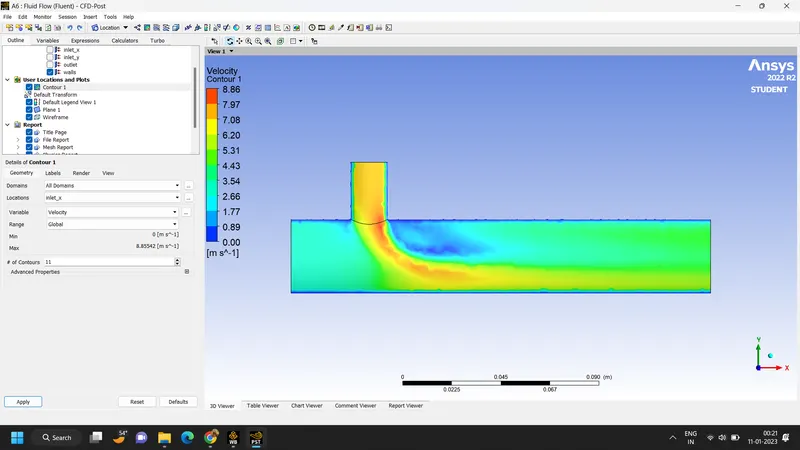
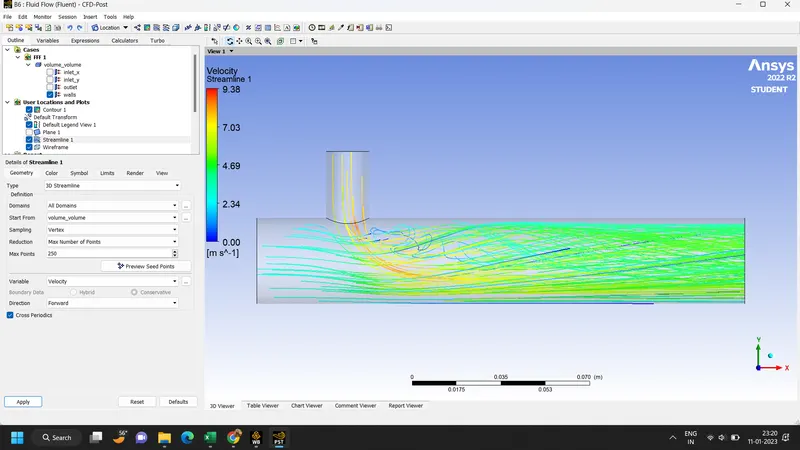
Velocity line plot
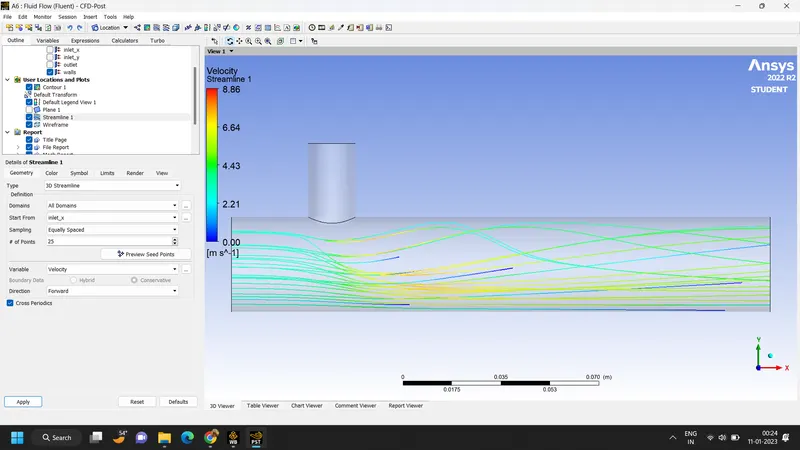
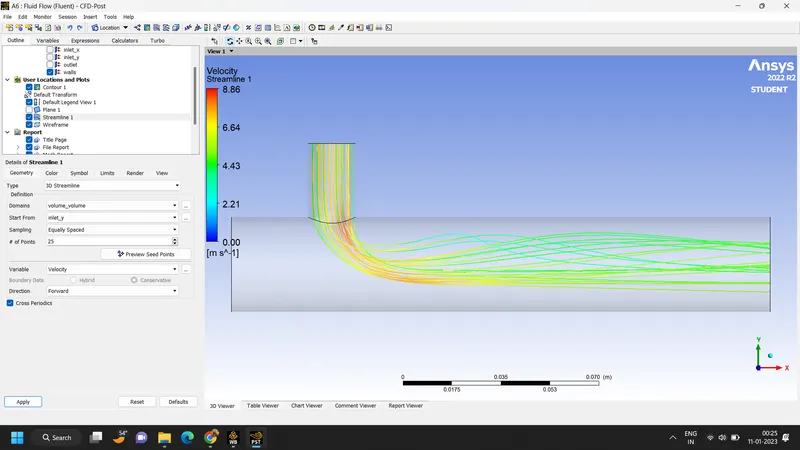
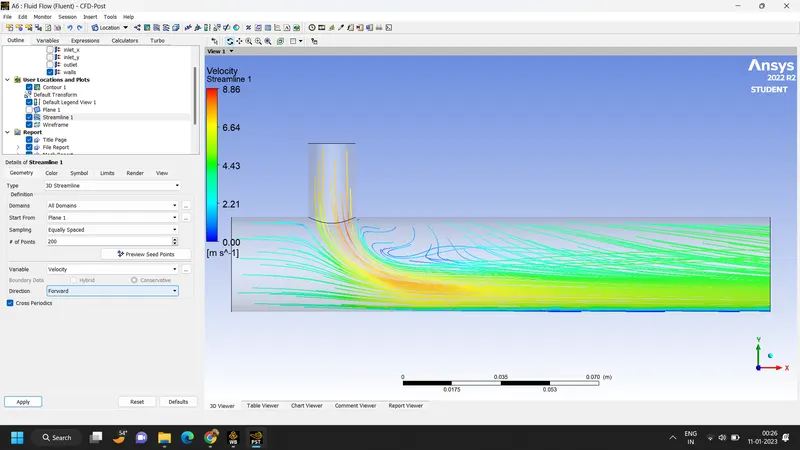
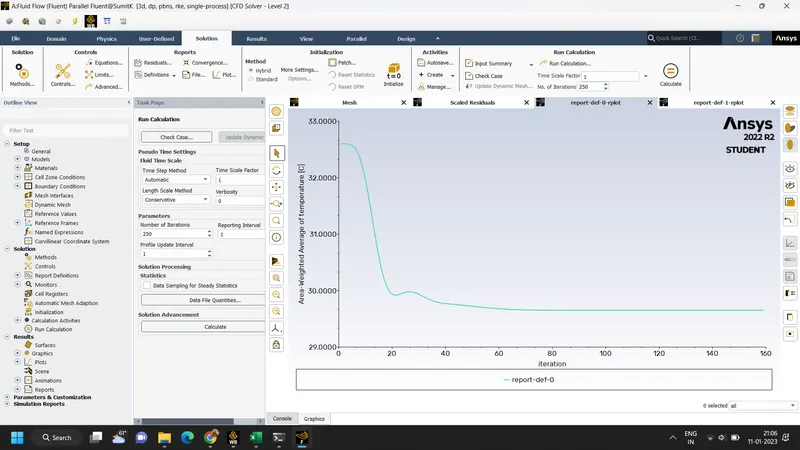
The solution we get is not converged so we can increase the no. of iteration.
Instead i tried to change the mesh element length.
Mesh length is 0.0015 m
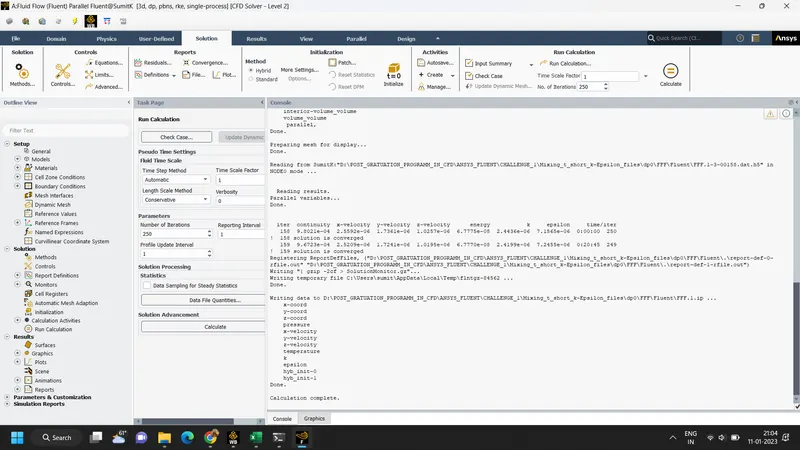
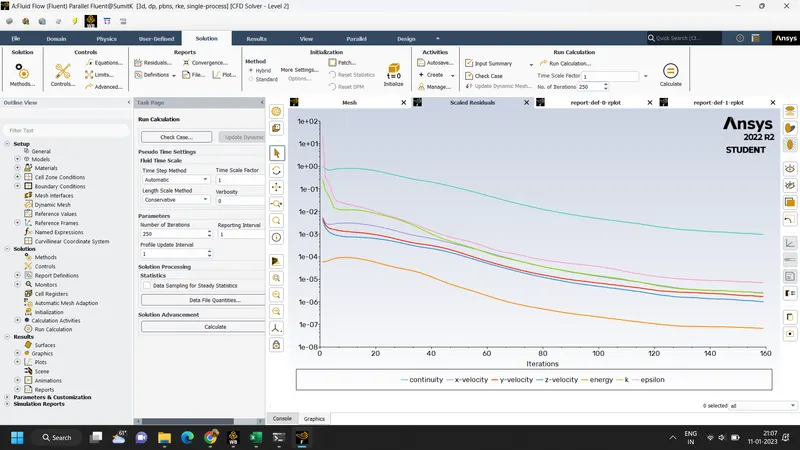
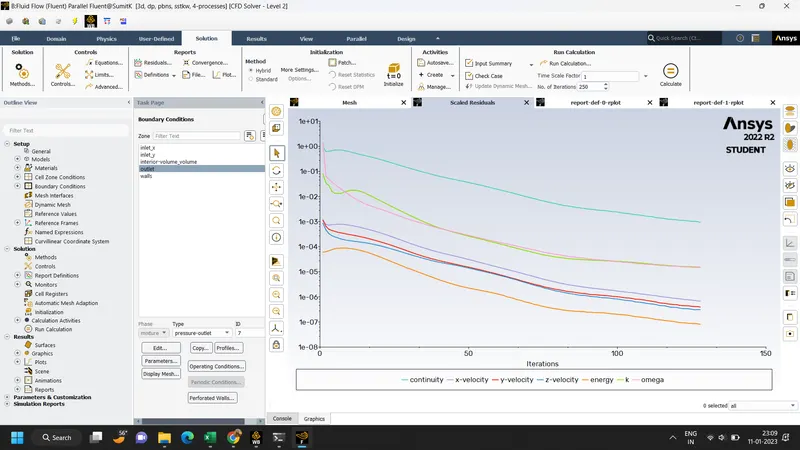
Solution is converged in 159 iterations.
Now we change the Model to K-omega and try to solve the equations
We keep the same meshing parameters for K-Omega model.
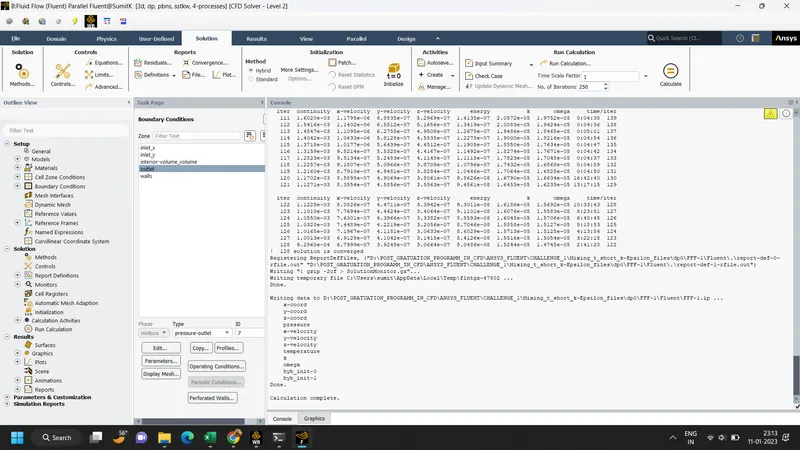
Solution is converged in 129 iterations.
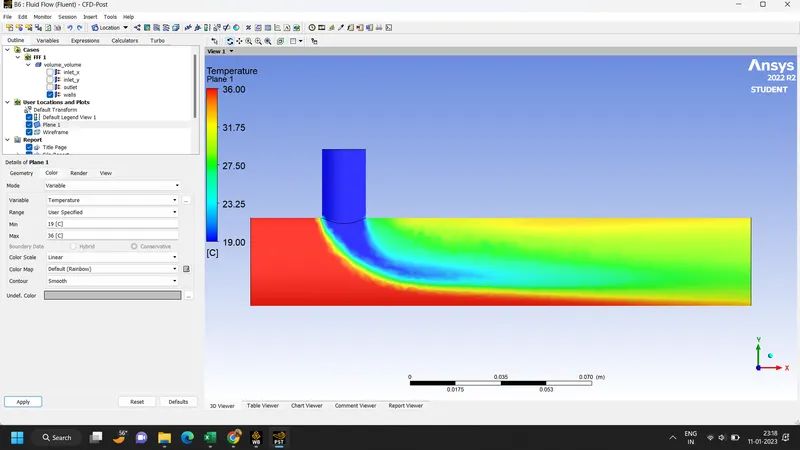
Temperature contour
Velocity Streamline
Now we are going for second case i.e long Mixing tee.
a) We extract the volume and supress the solid geometry for meshing purpose.
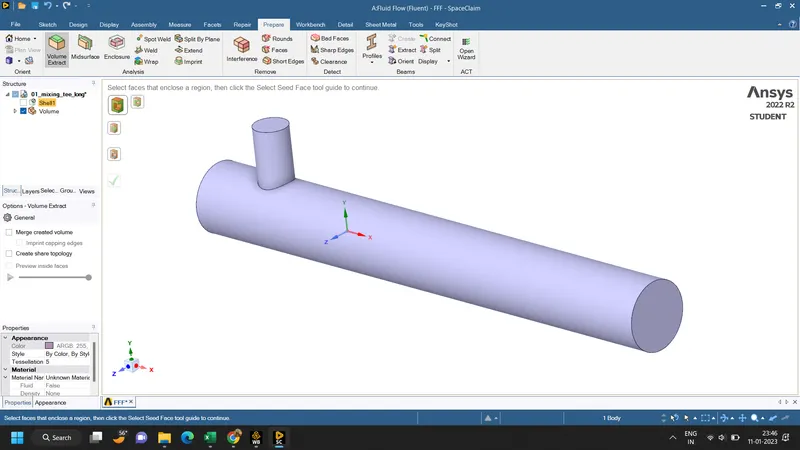
Next step is generating mesh
Mesh length is 0.0015 m
Next step is setting the physics and sover
Checking the mesh
Now we use k-omega sst model for solving the equation

After solution initialization we go for run the calculation by 250 iterations
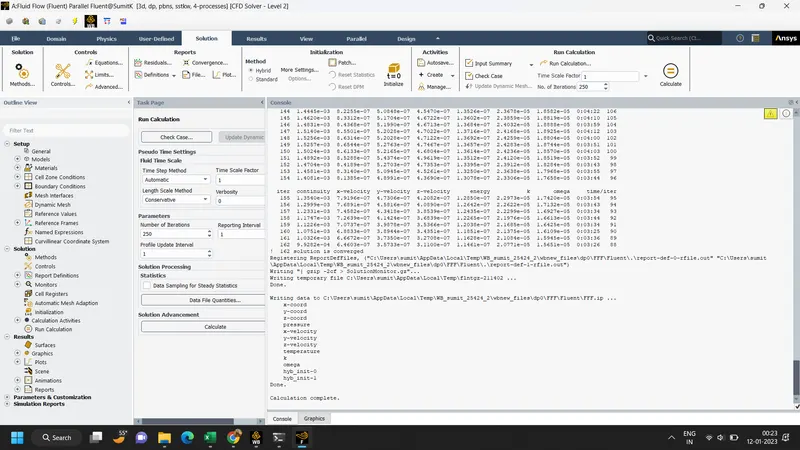
Solution is converged at 162 iterations
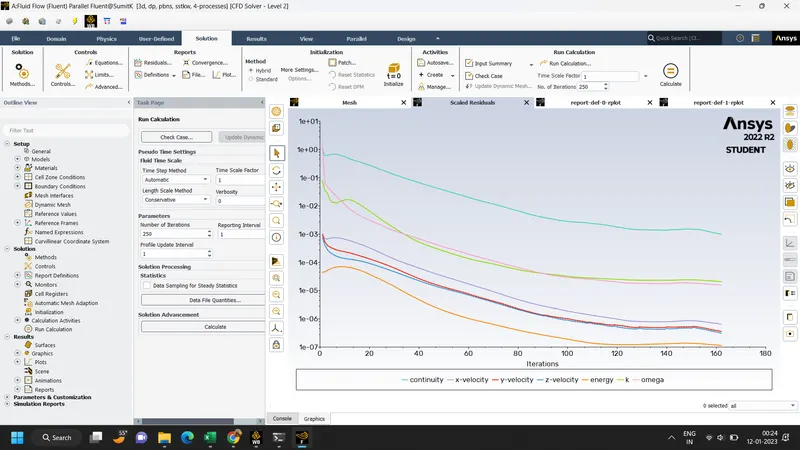
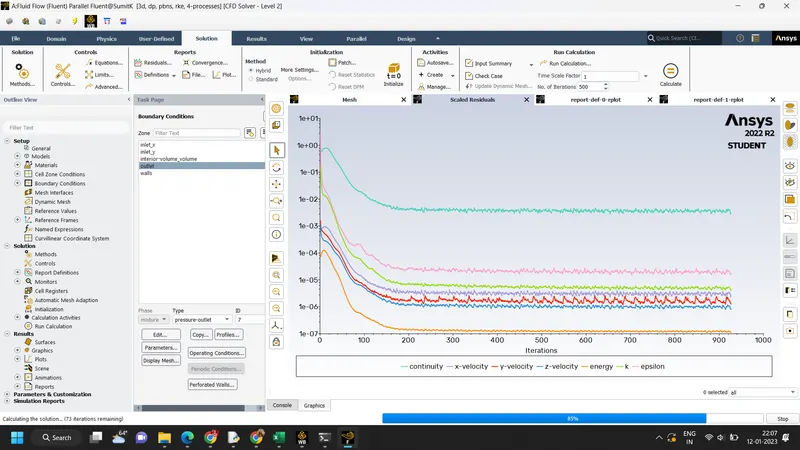
When we see the residual plot it shows some decline in nature.
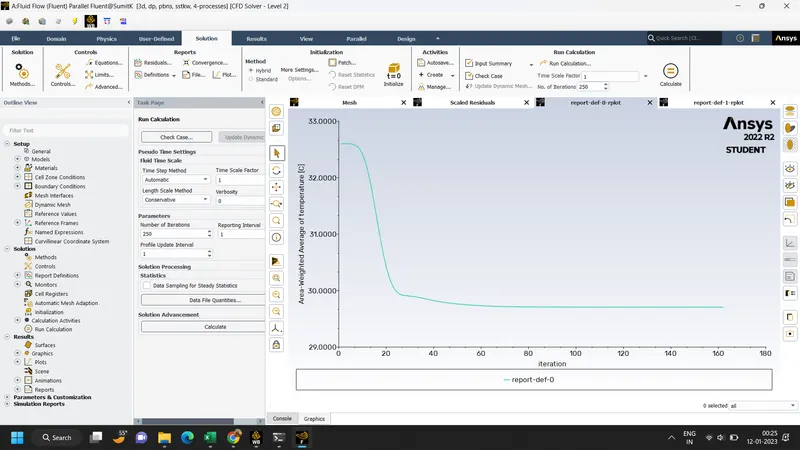
Temperature plot
CFD post
Pressure plot
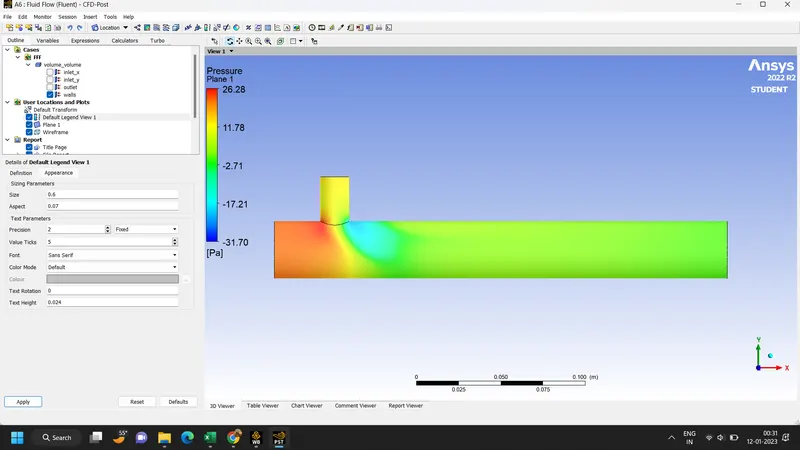
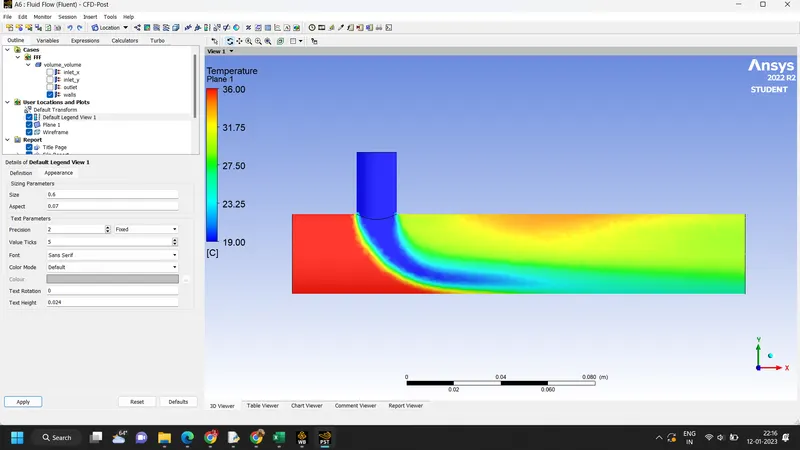
Temperature plot
| Model | Solving Method | Cell Count | Average Temperature | No. of iteration for convergence | momentum ratio |
| Short Mixing Tee | K-Epsilon | 213011 | 29.66 0C | 159 | 2.4 |
| K-Omega | 213300 | 29.7 | 128 | 2.4 | |
| Long Mixing Tee | K-Omega | 289705 | 29.7 | 162 | 2.4 |
Now we are solving both the cases by considering following inputs.
Case-1
a) Hot inlet temperature 30 0C
b) Hot inlet velocity 3 m/s
c) Cold inlet temperature 19 0C
d) momentum ratio 2
e) k-Omega SST model/K-epsilon model
and we get the following results.
| Model | Solving Method | Cell Count | Average Temperature | No. of iteration for convergence | momentum ratio |
| Short Mixing Tee | K-Omega | 213300 | 30.42 | 750 not converged | 2 |
| Long Mixing Tee | K-Epsilon | 289705 | 30.41 | 134 | 2 |
Case-2
a) Hot inlet temperature 30 0C
b) Hot inlet velocity 3 m/s
c) Cold inlet temperature 19 0C
d) momentum ratio 4
e) K-epsilon model
Short Mixing tee
Long mixing tee
| Model | Solving Method | Cell Count | Average Temperature | No. of iteration for convergence | momentum ratio |
| Short Mixing Tee | K-Epsilon | 213300 | 27.55 | 1000 not converged | 4 |
| Long Mixing Tee | K-Epsilon | 289705 | 27.47 | 250 not converged | 4 |
Conclusion:
We study the different model i.e k-Epsilon, And K-omega SST Model for short and long mixing tee.
By this study we can conclude that the momentum ratio has a major impact on mixing of fluids at different temperature. we mixed the air at 36 0C and another stream temp. is 19 0C when the momentum ratio is less then the outlet temperature we get is more than higher momentum ratio.
Again in long length mixing tee the the air is well mixed and get uniform temperature as compare to short length mixing tee.
Google Drive link:-
https://drive.google.com/file/d/1KTlgq2Ew5SZNGfWhJF-GaSbvGFH9eL-1/view?usp=sharing