Week 1- Mixing Tee
MIXING TEE https://drive.google.com/drive/folders/1f9udDWsMUyC2G5NS6loMoZikNbq2rLyi?usp=share_link
Aim;
To do simulation of the hot and cold air mixing in short and long mixing tee with different velocity.
Introduction;
A mixing tee is a two pipe joining right angle to each other.It has two inlets through one pipe cold air will come in a velocity and hot air will come through the other inlet with velocity for mixing together.
Theory;
While mixing of fluid with different temperature and velocity a large temperature gradient is created along the length of the pipe.
This temperature fluctuations will cause cylic thermal stresses and subsequent fatigue cause the cracking of the pipe walls.So it's important to analyse the 1.temperature fluctuation regions of the pipe 2.magnitude of the temperature fluctuation 3.thermal fatigue.
This analysis will helps in many industrial applications like nuclear power plant,petro chemical industries,water treatment plants etc.
Solving & modelling approach;
Here we have two cases,
case 1 have short length & case 2 have longer length this two model have different length ,temperature & velocity .each mixing tees has two inlets and one outlets.
The momentum ratio for this type tee is the ratio of velocity at cold inlet to velocity at hot inlet.
* Momentum Ratio = Velocity at cold inlet / Velocity at hot inlet.
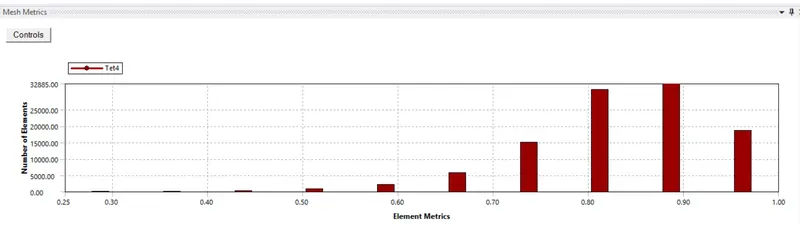
Simulation of this 2 cases was simulated using Ansys Fluent .Here we will use the K epsilon and K omega SST model . The geometry we will be doing simulation is the inner volume of the geometry .Mesh the model with required quality criteria .Material type using fluid and fluent fluid material as air.
Analyse the area weight average and standard deviation with respect to temperature.
Pre-processing and solving setting;
Geometry;
Case 1 and case 2 geometry where opened in the space claim and the volume of the 2 geometry where extracted using volume extract .
The short mixing tee has short duct pipe length than long mixing tee.
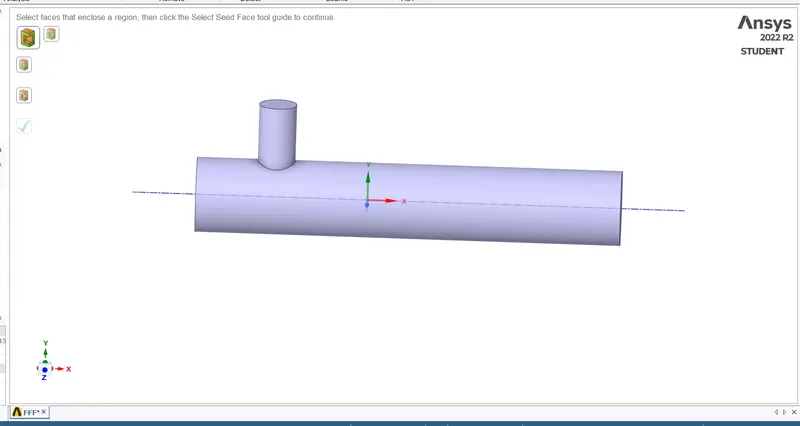 case 1
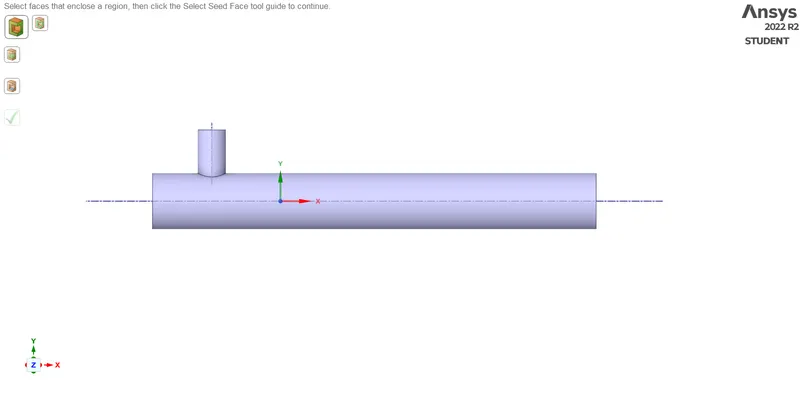 case 2
Meshing ;
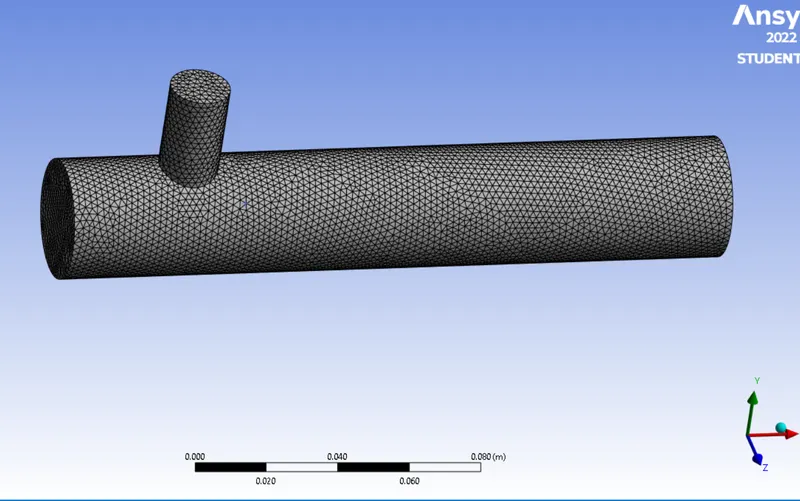
Once the required volume is extracted meshing of both tees is done. Tetrahedral element with size of 0.002m is used for the both . The short one has 106167 elements and long one has 140811.
Assign name for the tees Inlet-Y, Inlet-X Outlet-X and walls inorder to apply boundary conditions.
Boundary Conditions:
| Parameters | Case 1 | Case 2 |
| Geometry | short mixing tee | long mixing tee |
| Velocity at inlet-Y | 6 ms | 12 ms |
| Velocity at inlet-X | 3ms | 3 ms |
| Momentum ratio | 2 | 4 |
Give temperature 19oC for cold inlet and 36oC for hot inlets.
Outlet is set as pressure outlet , outlet pressure is setup in '0' pascal.
Viscous model is given as K-Epsilon (2 eqn) model as realizable and standard wall fuction.
Intialize the flow and give 300 iterations.
Create a plane surface inside volume in XY-plane inorder to demonstrate the simulations with colour variable temperature.
Results;
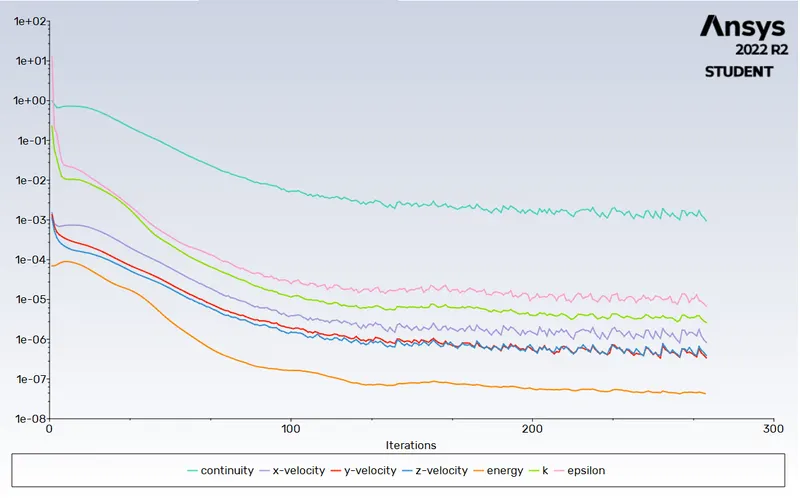
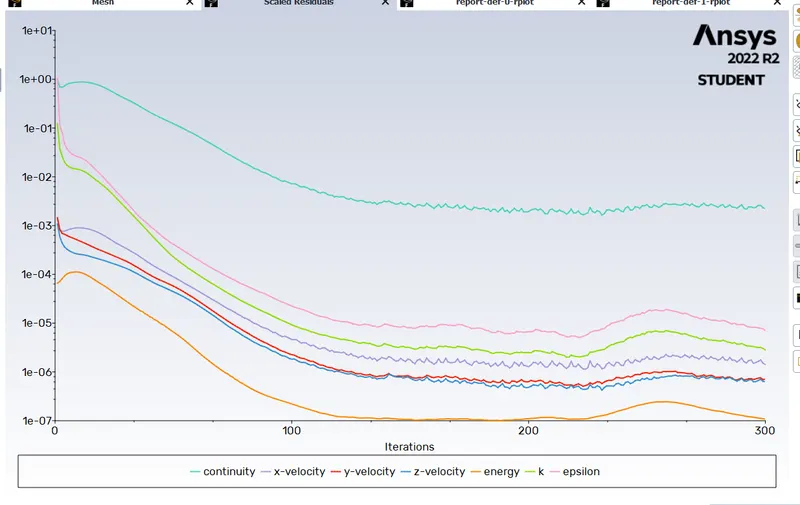
case 1; short tee case 2; long tee
Here we have given 300 iterations for both models the area weighted average and standard deviations of the temperature at the outlet is also monitored.
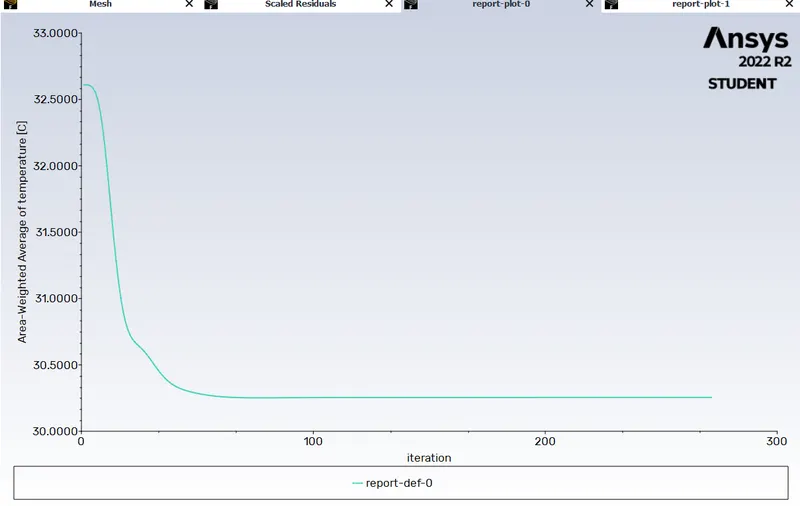
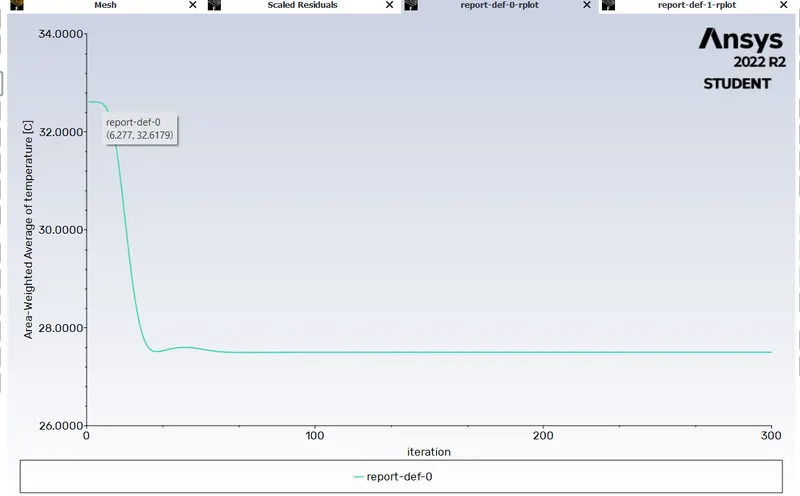
Area weighted average of temperature shows the average values of temperature at outlet .Average temperature for case 1 is 30.3oC and case 2 is 27oC.
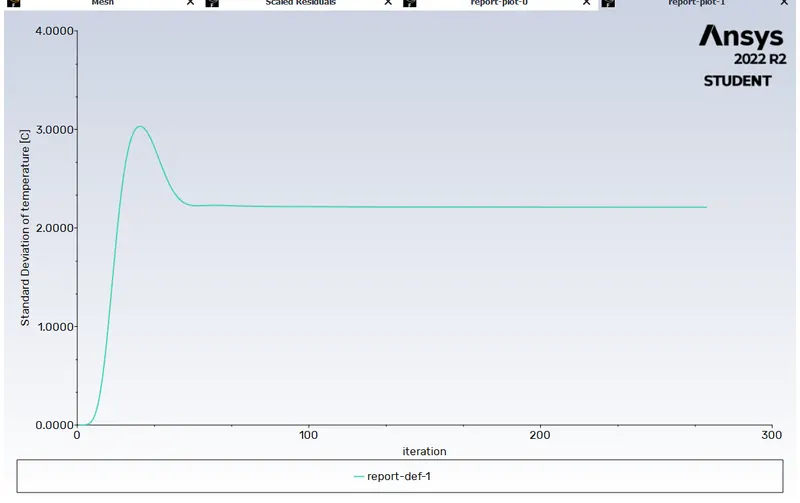
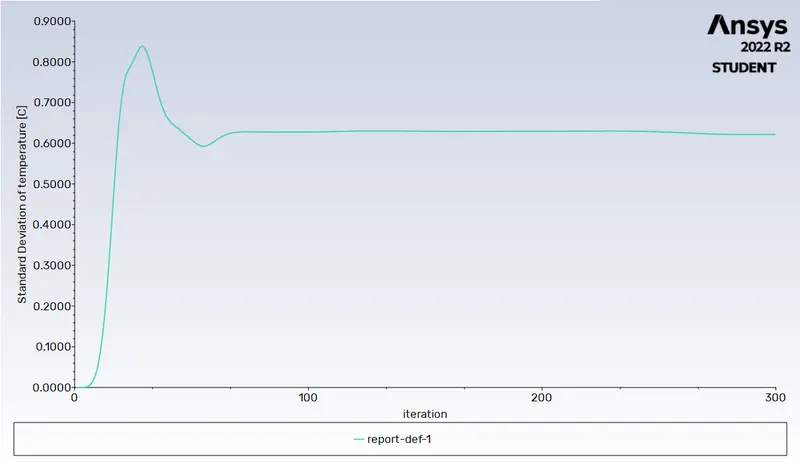
Case-1 Case-2
Standard deviation shows the deviation of temperature at outlet average temperature for case 1 & case 2.
Post processing is neccessary for analysis of the output results;
Contour plots of temperature with variable colour which provide a visual for actual process.
When comparing case 1 and case 2;
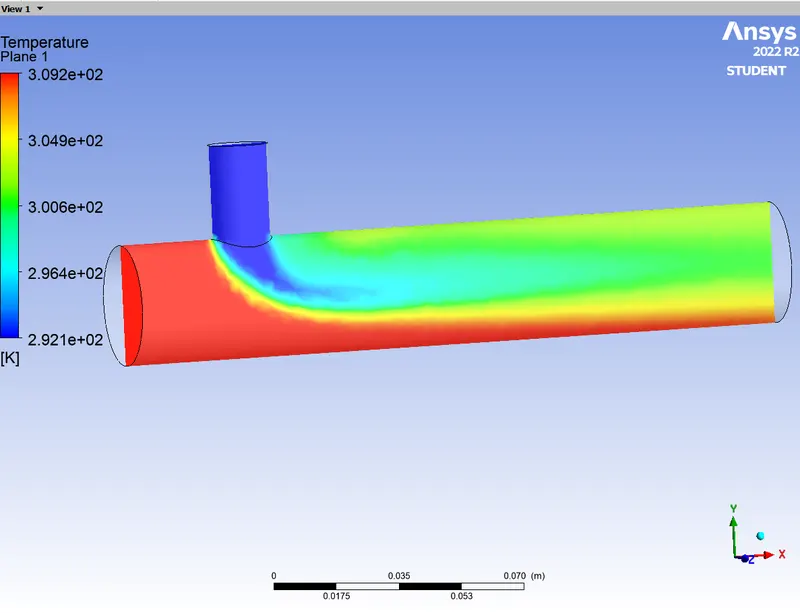 Case-1;Short tee
In case 1 the hot air from the inlet-X 36oC with 3 ms is mixing with colder air from inlet-Y at 19oC with velocity 6 ms is diffusing together and when it reaches the temperature drops to 30.3 oC.
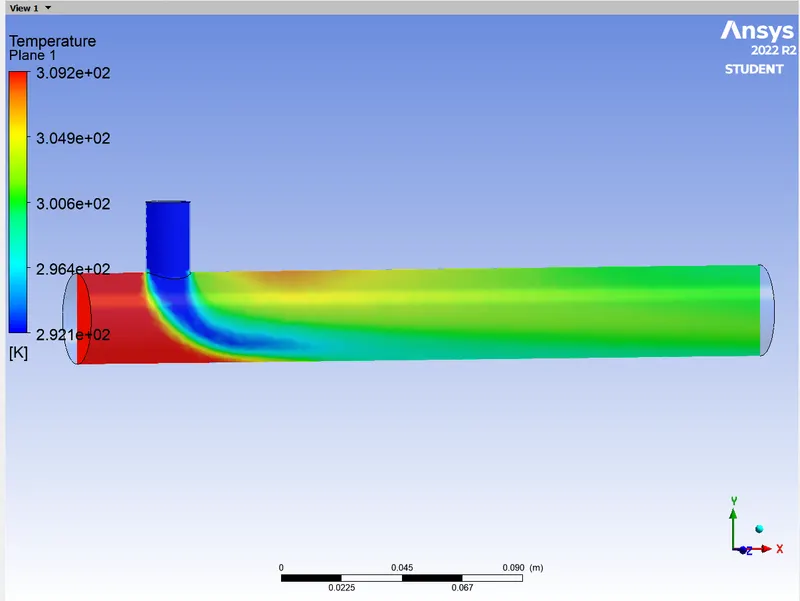 case-2;Long Tee
In case 2 the inlet-Y velocity is double the rate of case-1 inlet-Y velocity so the mixing is more efficient and temperature drops at outlet -X is 27 oC .
| cell count | average outlet temperature | number of iteration for convergence | |
| Case 1 | 106167 | 30.3oC | 60 |
| Case 2 | 140811 | 27oC | 75 |
Conclusion;
When we look into the standard deviation of case 1 and case 2.
The deviation of temperature in case 1 is 3oC and it dropped to 2.5 and remain constant but in case 2 temperature deviated upto 8.5 oC but drops to 5.8 oC remain constant.
Case 2 is longer than Case 1.
So the temperature won't get decrease significantly decrease with increase of the length of the pipe,it will only drops by increasing the velocity of the cold air.
https://drive.google.com/drive/folders/1f9udDWsMUyC2G5NS6loMoZikNbq2rLyi?usp=share_link