Week 1- Mixing Tee
Aim :- Our job is to set up steady-state simulations to compare the mixing effectiveness when hot inlet temperature is 360C & the Cold inlet is at 190C.
OBJECTIVE:-
- Case 1
- Short mixing tee with a hot inlet velocity of 3m/s.
- Momentum ratio of 2, 4.
- Case 2
- Long mixing tee with a hot inlet velocity of 3m/s.
- Momentum ratio of 2, 4.
PROCEDURE AND RESULTS:-
- Case 1
- Short mixing tee with a hot inlet velocity of 3m/s.
- Momentum ratio of 2, 4
In case 1 we are doing two different sub-cases one being the velocity of cold air 6m/s and another being 12m/s
Geometry:-
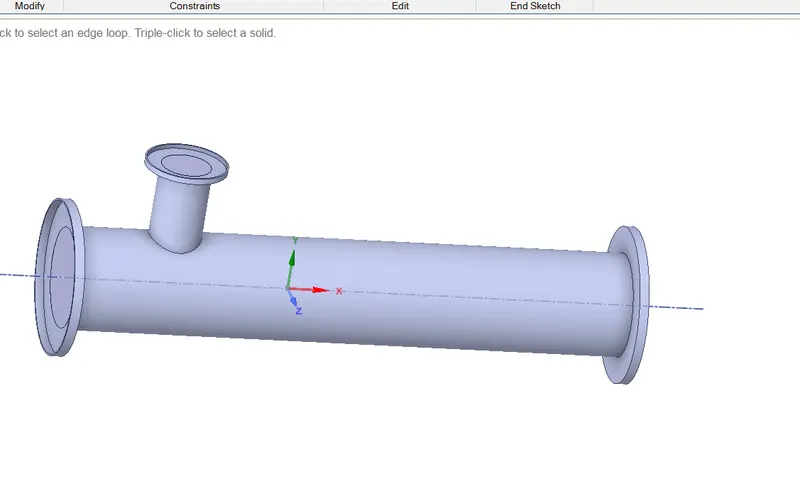
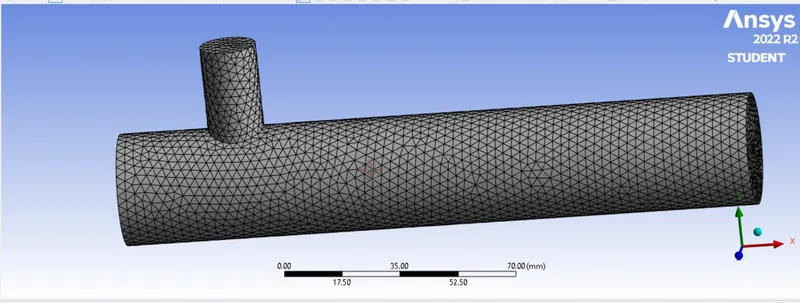
Meshing:-

After creating the Mesh file, we name the geometry for the further use
1. Inlet x (inlet where the hot air come from)
2. Inlet y (inlet where the cold air come from)
3. The walls
4. Outlet
After updating the mesh file we go to the solution part.
Setup:-
for setup physics use energy models with k-epsilon,k-omega SST viscous model, boundry conditions for both models are same as-
momentum ratio 2
velocity inlet x = 3 m/s, temperature = 36c
velocity inlet y = 6 m/s, temperature = 19c
and for momentum ratio 4
velocity inlet x = 3 m/s, temperature = 36c
velocity inlet y = 12 m/s, temperature = 19c
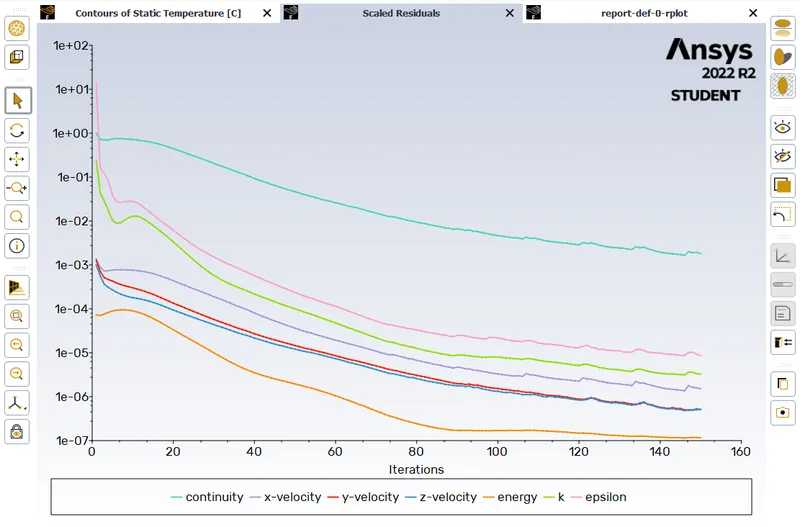
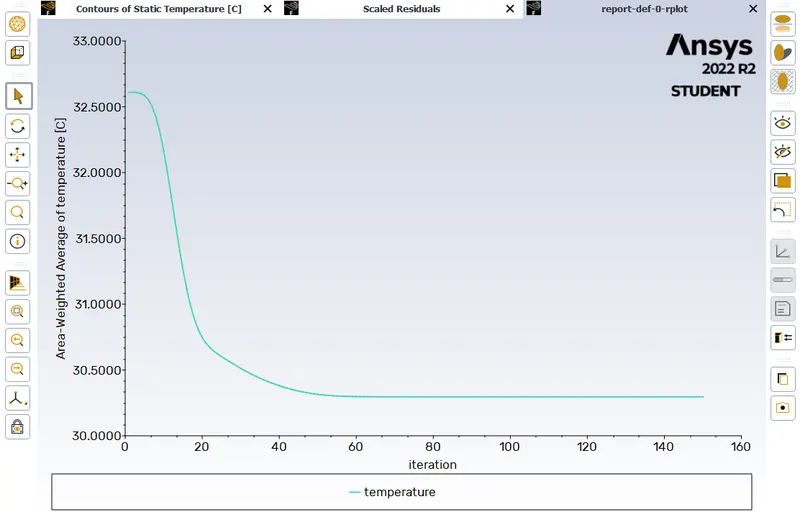
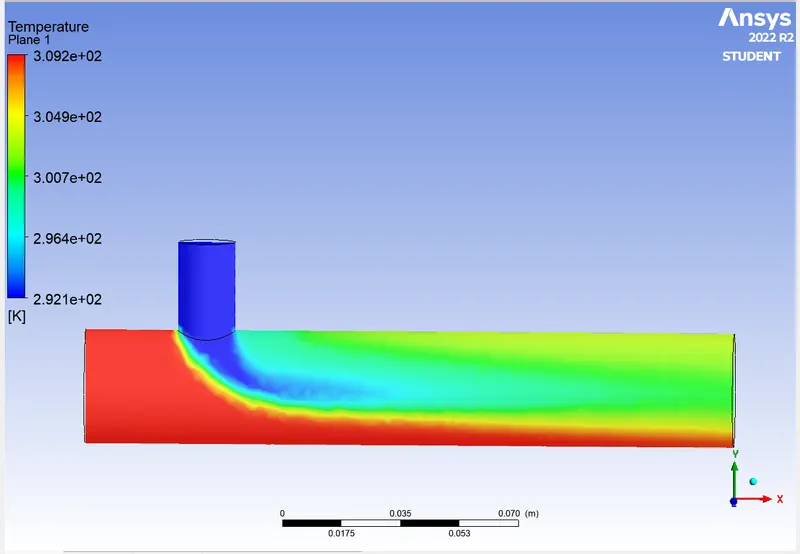
k-epsilon:- ( when momentum ratio 2)
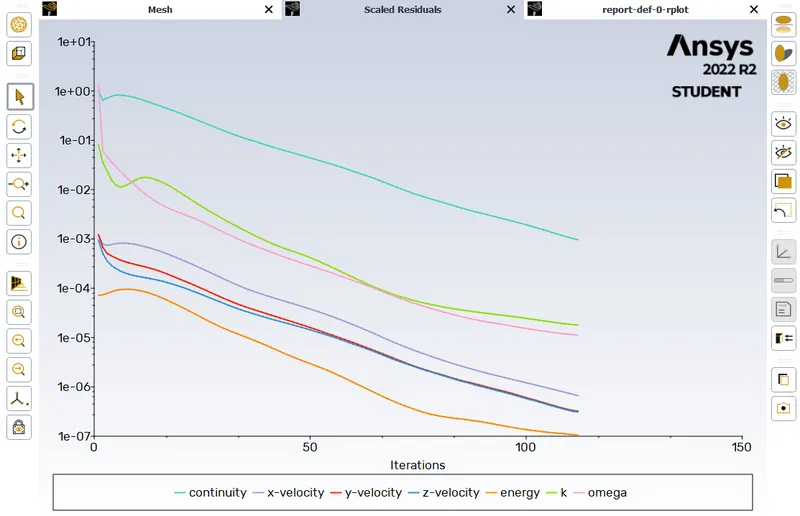
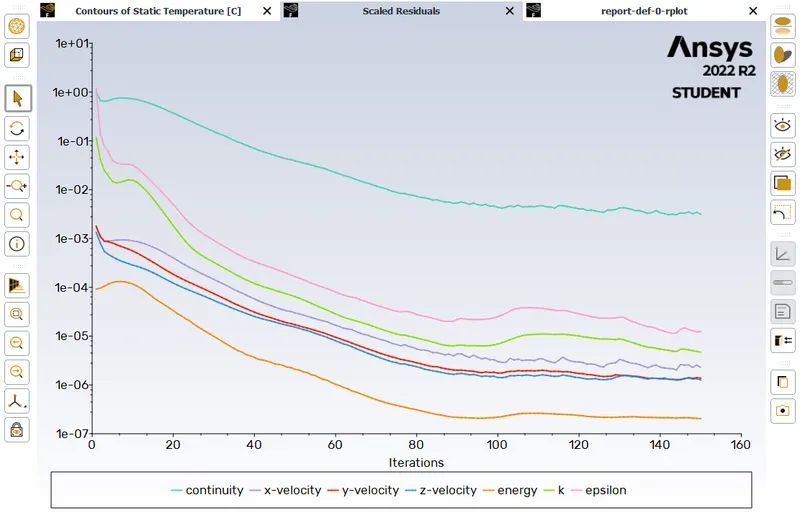
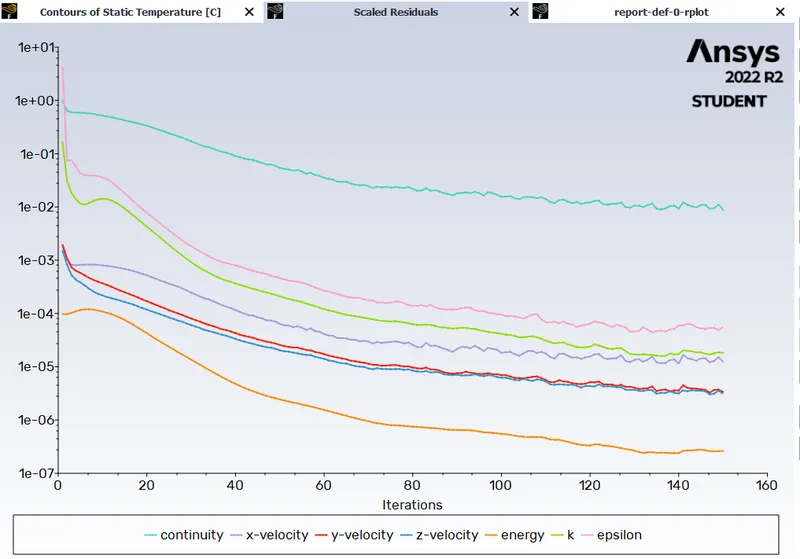
residuals plots
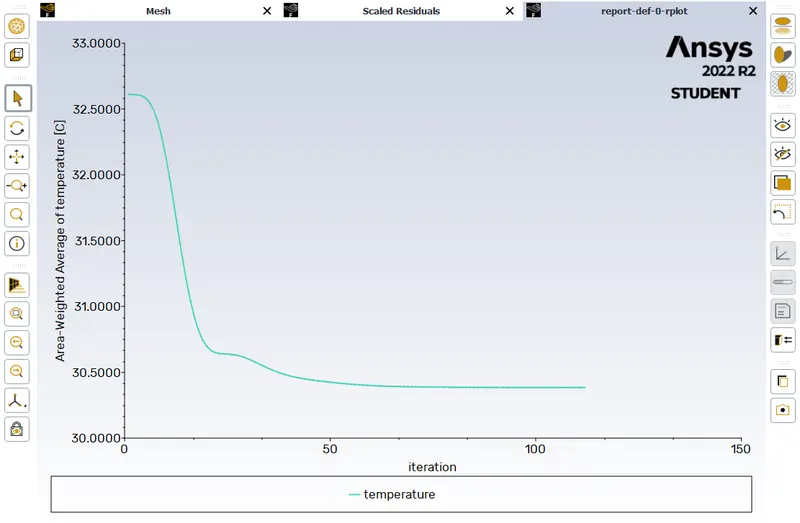
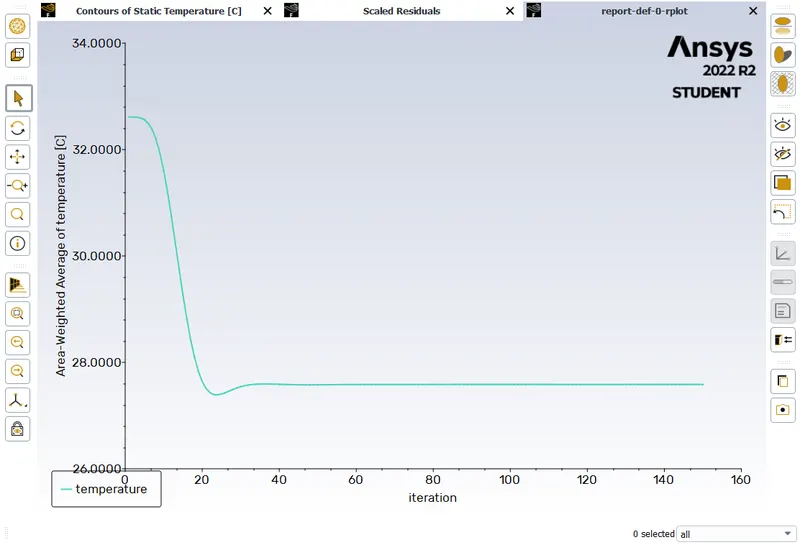
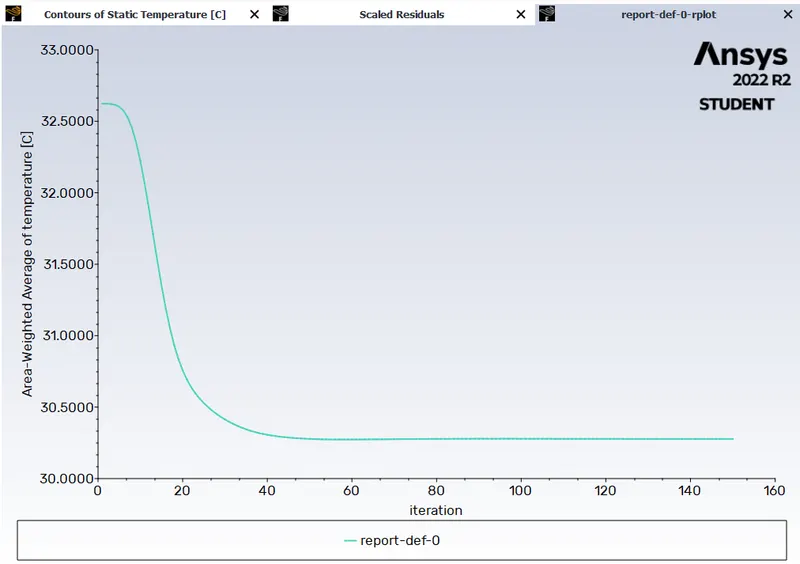
Area weighted average:-
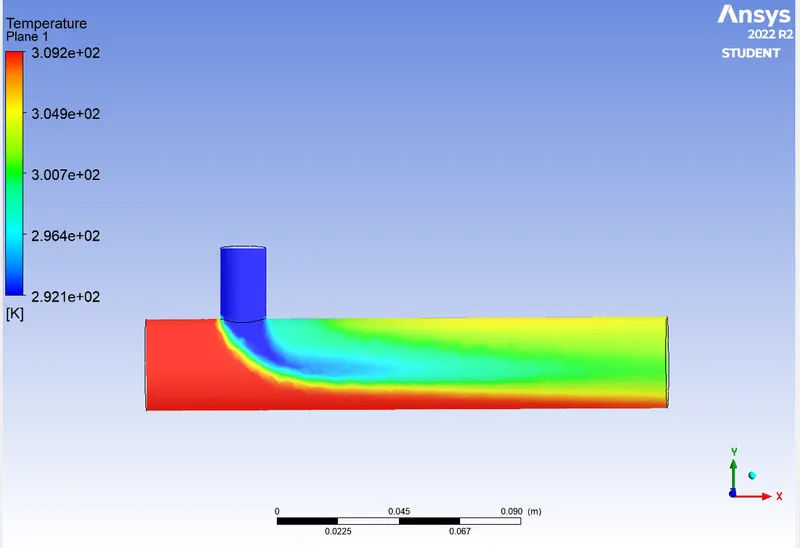
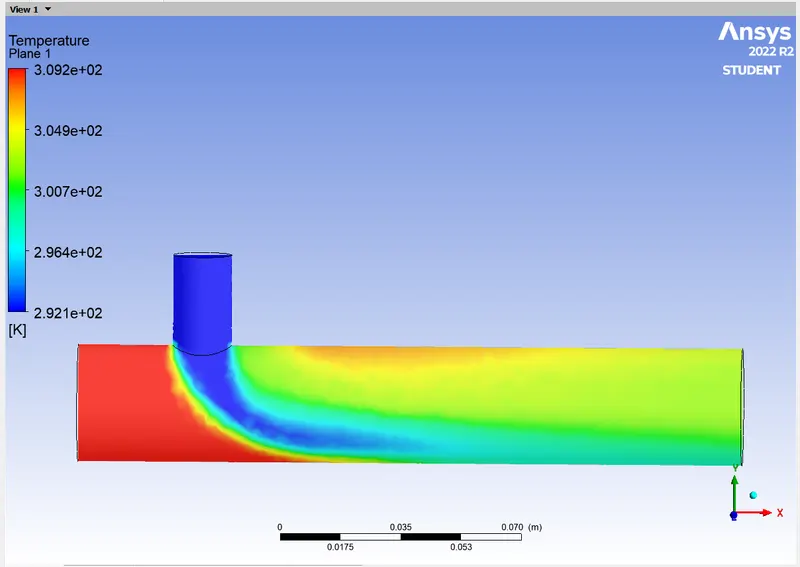
temperature contour :-
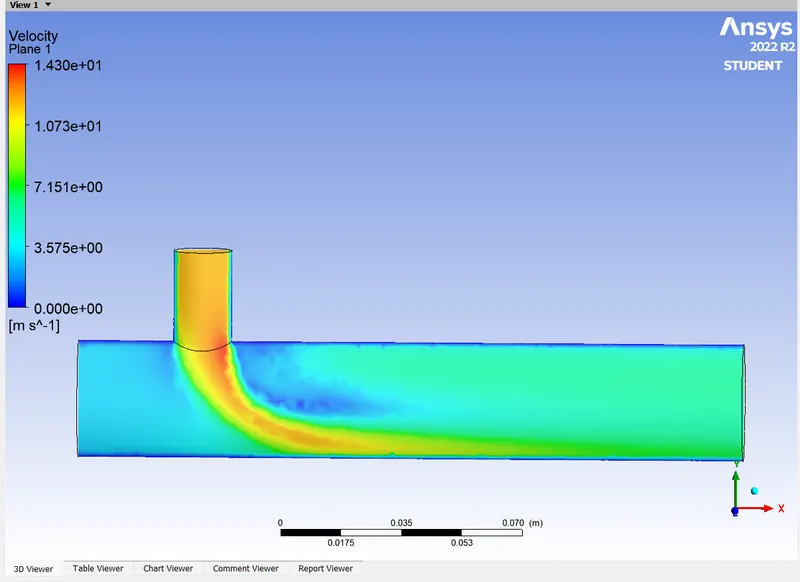
velocity contour :-
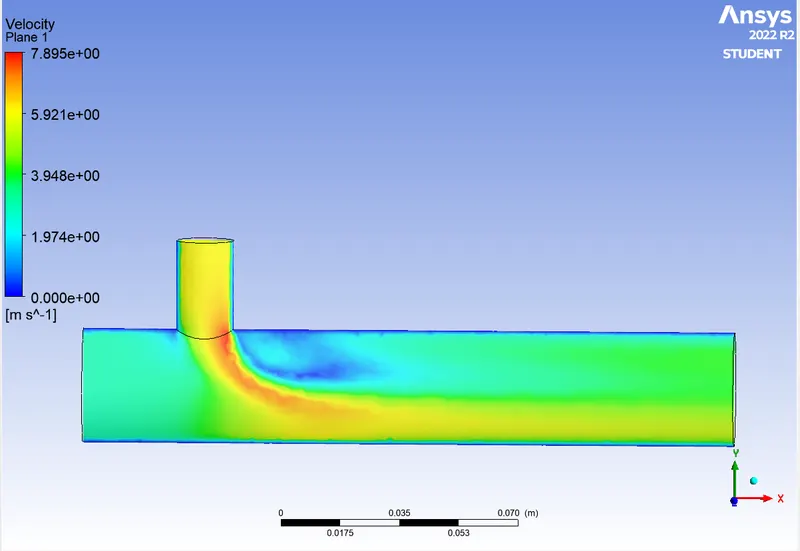
K-omega SST :- (when MR 2)
Area weighted average at outlet:-
Temperature contour :-
Velocity contour :-
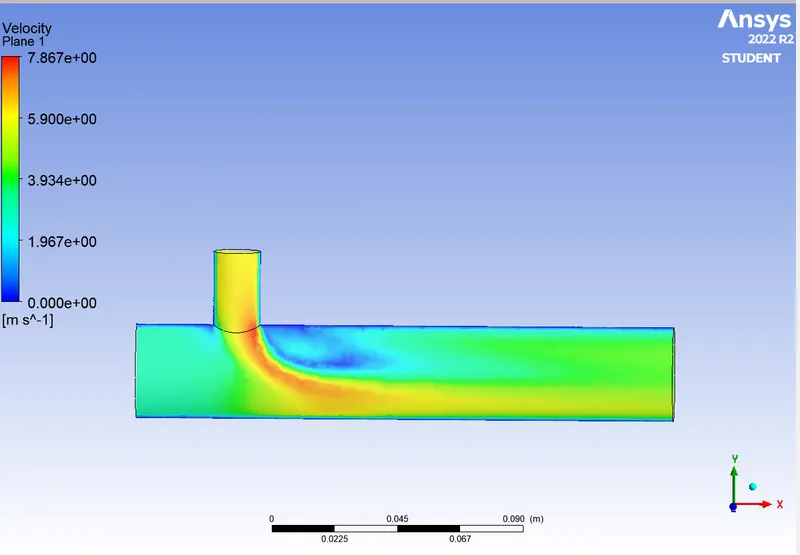
k-epsilon:- ( when momentum ratio 4):-
Area weighted average at outlet:-
Temperature contour:-
Velocity contour:-
case 2 :- mesh size 3 mm
for setup physics use energy models with k-epsilon, boundry conditions for-
momentum ratio 2
velocity inlet x = 3 m/s, temperature = 36c
velocity inlet y = 6 m/s, temperature = 19c
and for momentum ratio 4
velocity inlet x = 3 m/s, temperature = 36c
velocity inlet y = 12 m/s, temperature = 19c
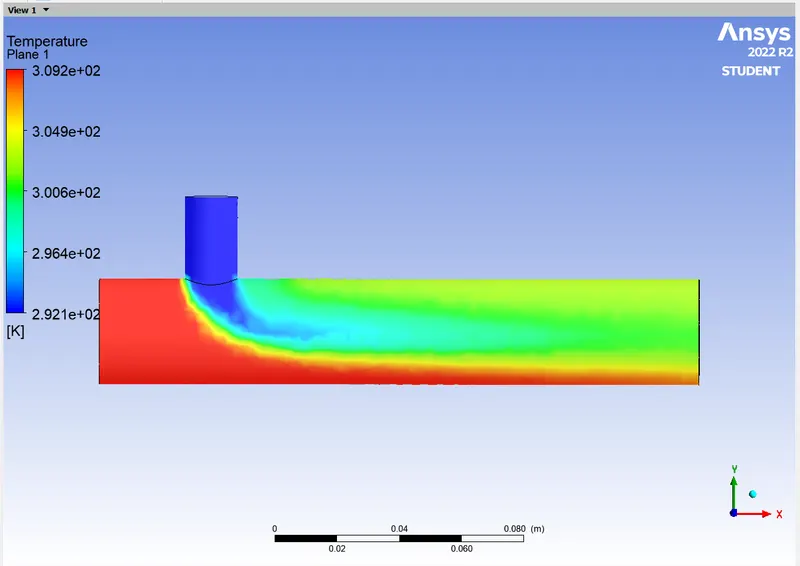
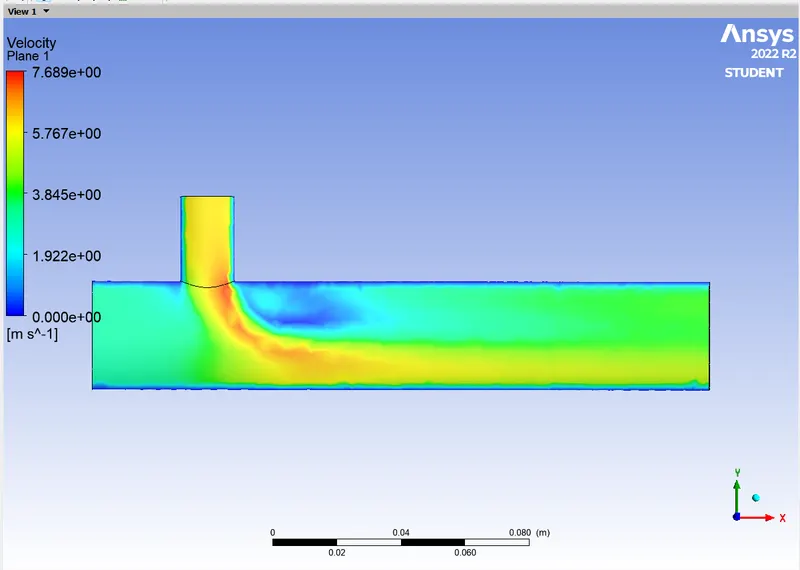
k epsilon:- (when MR 2)
Area weighted average at outlet:-
Temperature contour :-
Velocity contour :-
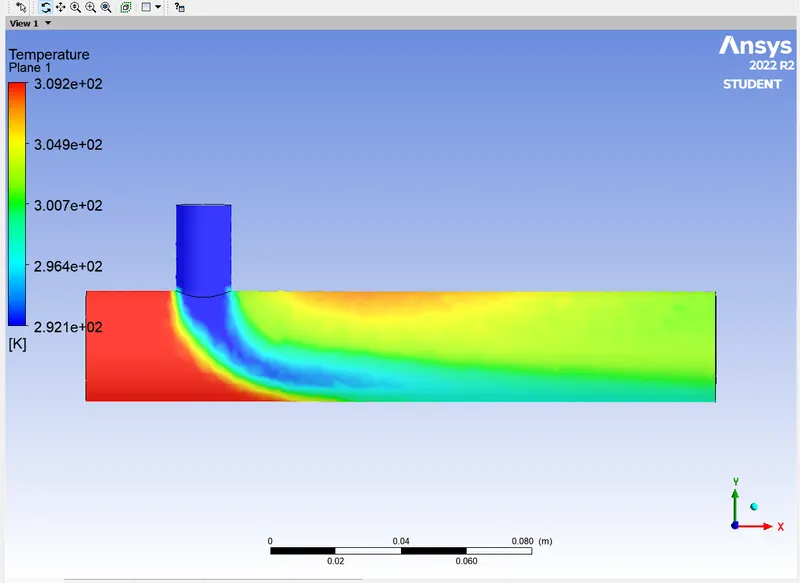
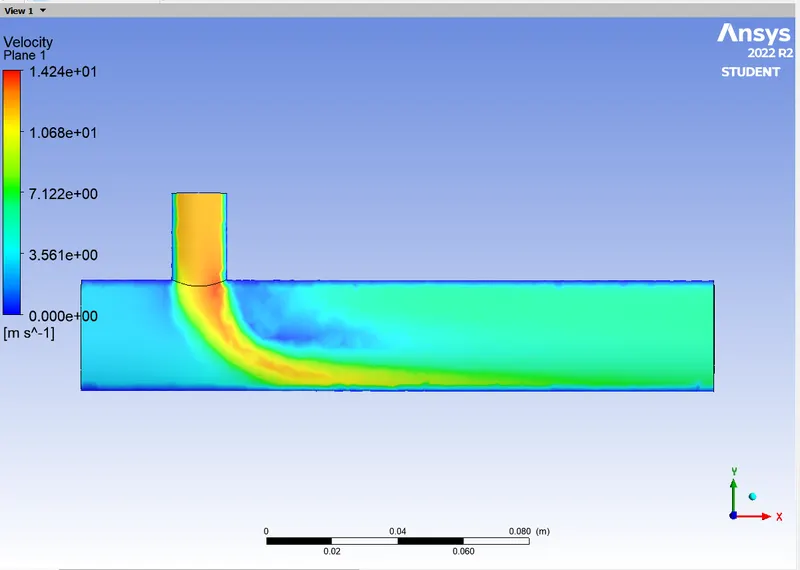
K- epsilon:- (when MR 4)
Temperature contour_
Velocity contour :-
Conclusion:-
In both cases of K-epsilon snd k-omega, k-epsilon has better results as we see in the residual plot these converge faster compared to k-omega and as the length of the pipe increases the mixing has a lot of time and increases the temperature losing its main objective.