Week 1- Mixing Tee
Aim:
To evaluate the mixing performance of a short and long mixing tee for various momentum ratios.
Mixing Tee:
A mixing tee is a tool used in a variety of chemical diffusion and mixing processes as well as in products like air conditioners to mix return and fresh air. Three scenarios with varied momentum ratios were subjected to steady state simulations for a mixing tee of short and long length, and mixing effectiveness was noted.
Procedure:
The ratio of the velocities at the cold and hot inlets is known as the momentum ratio.
Case Setup:
SpaceClaim's CAD cleanup and pre-processing.
The flow volume field from the CAD model is extracted using SpaceClaim when the model is imported.
Mesh
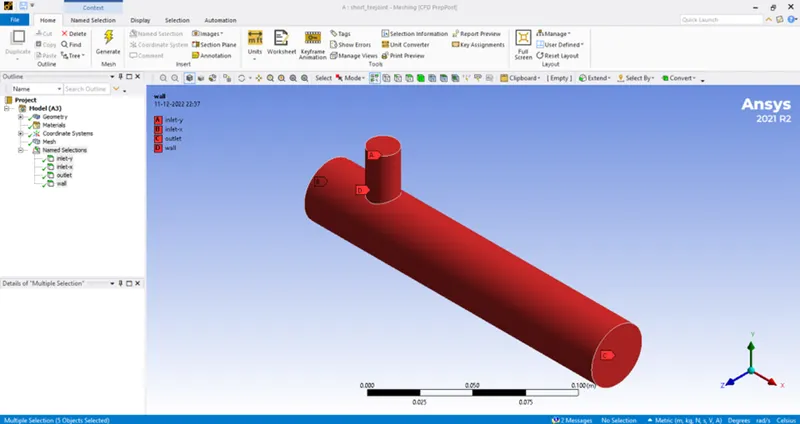
In this step, the boundary names are used, and a mesh is created.
Setup
Different boundary conditions, such as inlet and outlet boundary conditions, are applied in this section. To solve the turbulent mixing of air, turbulence models like K-epsilon or K-omega are put up. In this section, the number of iterations is determined.
CFD-Post
This component carries out post-processing, where several contours are made up to visualise the simulation-run properties (such as temperature, velocity, etc.).
Case 1
- Short mixing tee with a hot inlet velocity of 3m/s.
- Momentum ratio of 2, 4.
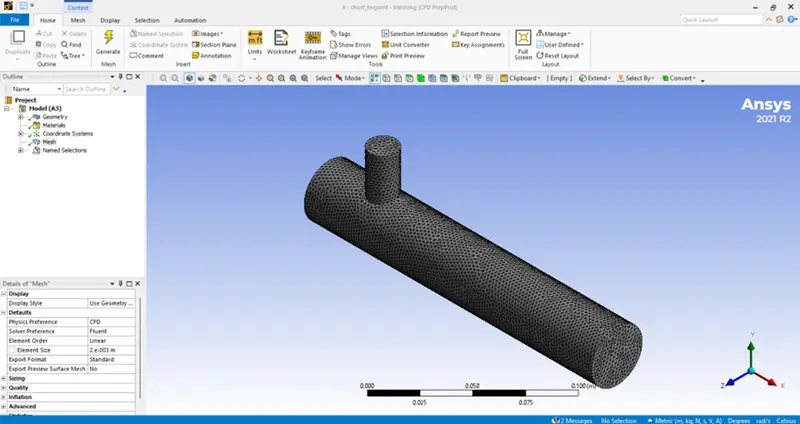
- Mesh size of 0.002 m.
K-epsilon model- The momentum ratio for 2
Geometry
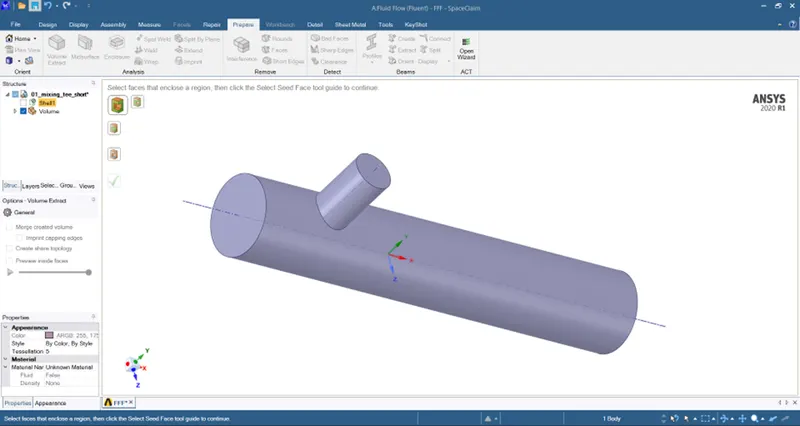
Mesh
Named selection (Initial Condition)
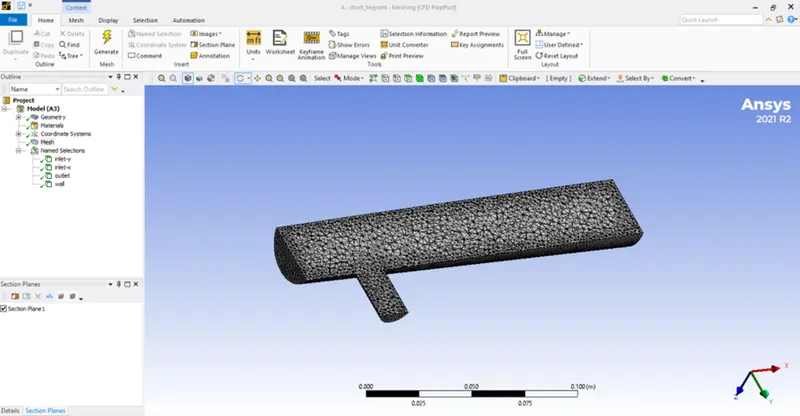
Sectional plane cut view:
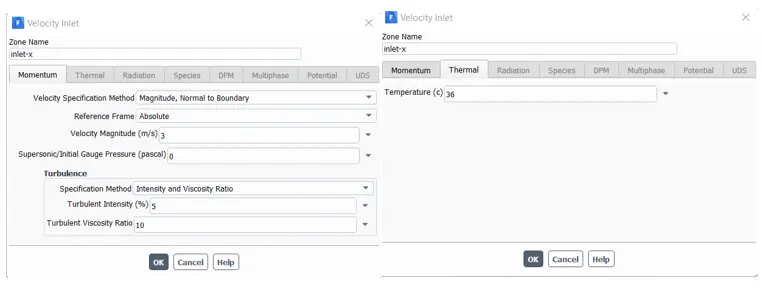
Parameters
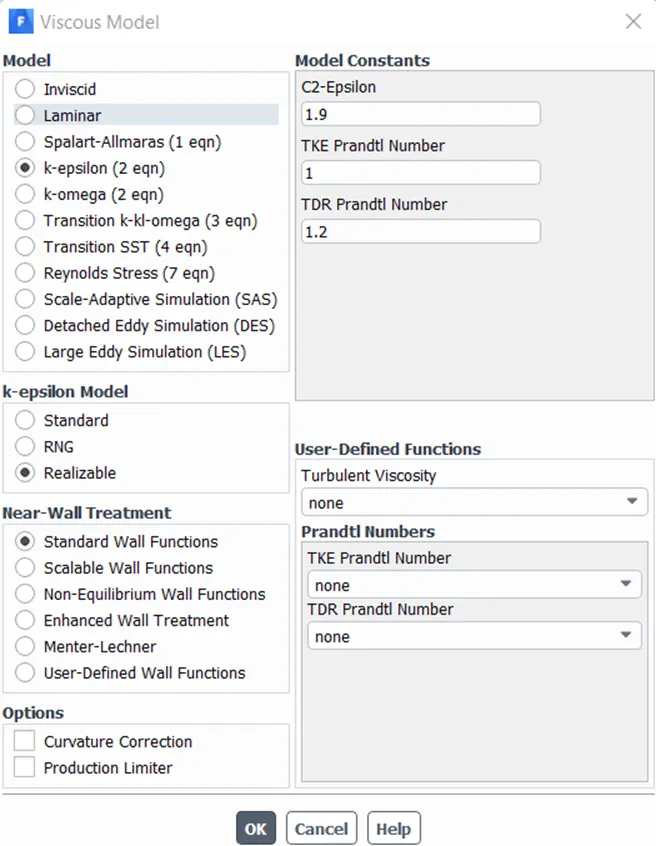


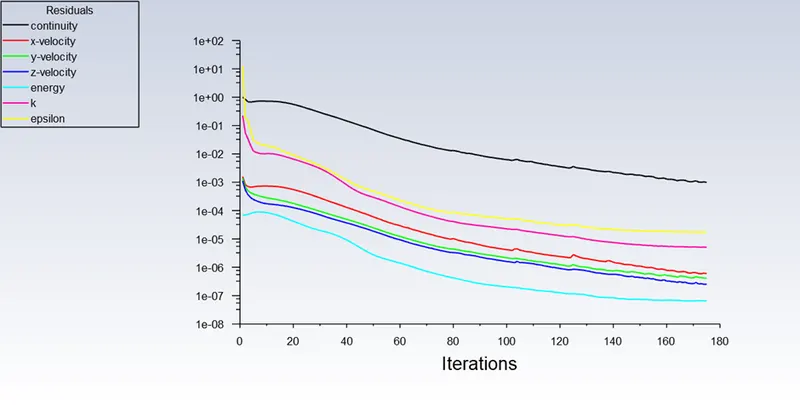
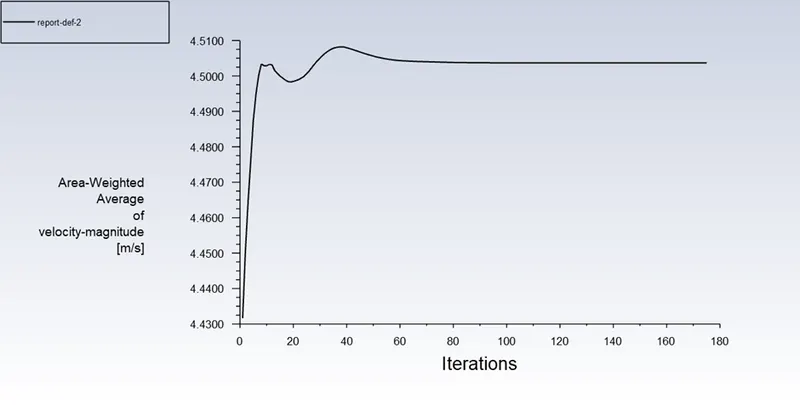
Residual plot:
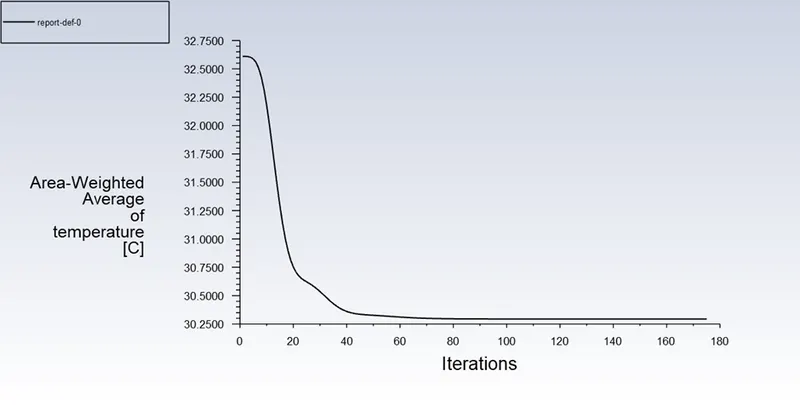
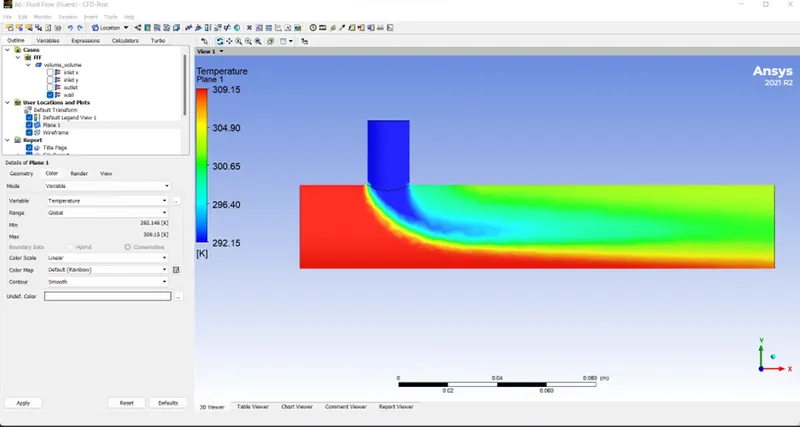
Temperature
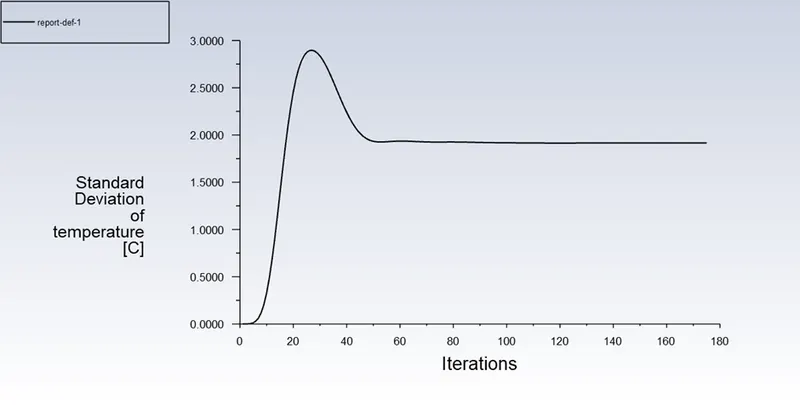
Standard deviation
Velocity
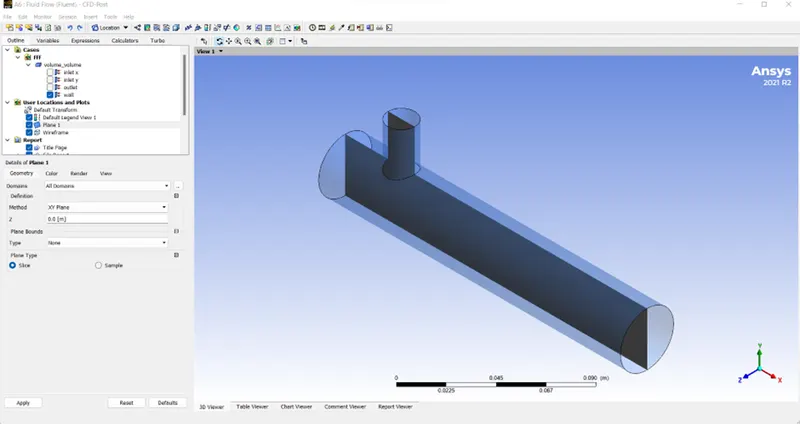
Plane creation
Temperature contour
K-epsilon model- The momentum ratio for 4
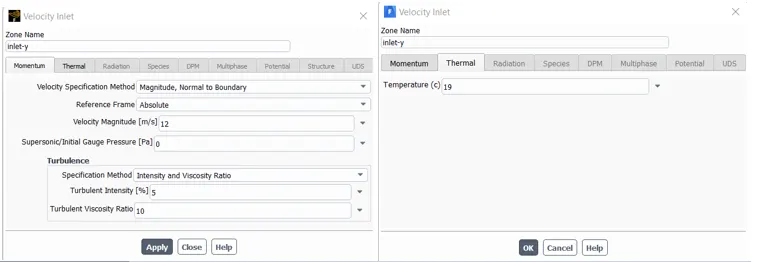
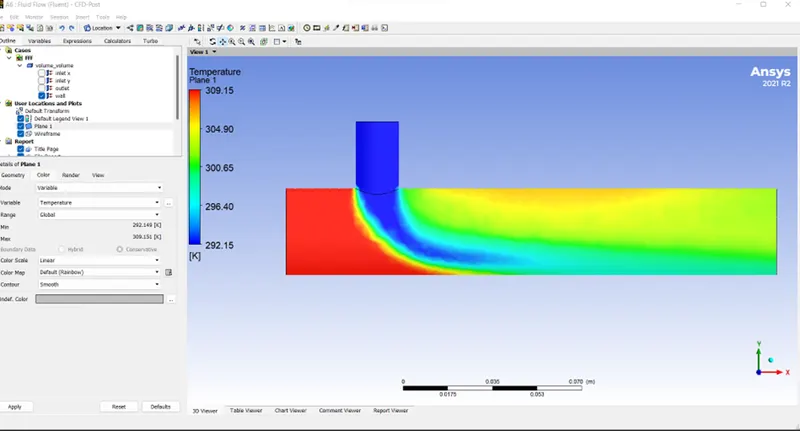
K-omega (Turbulence model's impact)
This experiment made use of the Short TEE K-omega- SST model. As the Short tee mesh image is visualised, the mesh stays the same. The momentum ratio is 2, the inflow velocity is 3 m/s and mesh size of 0.002 m.
k-omega SST- The molecular ratio for 2
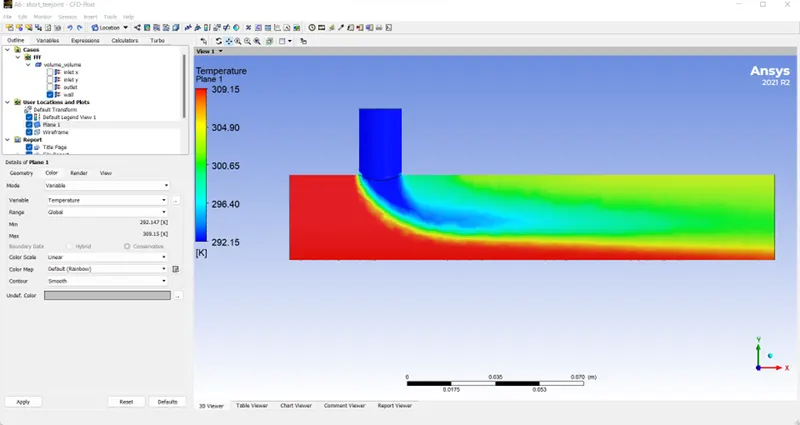
k-omega SST- The molecular ratio for 4
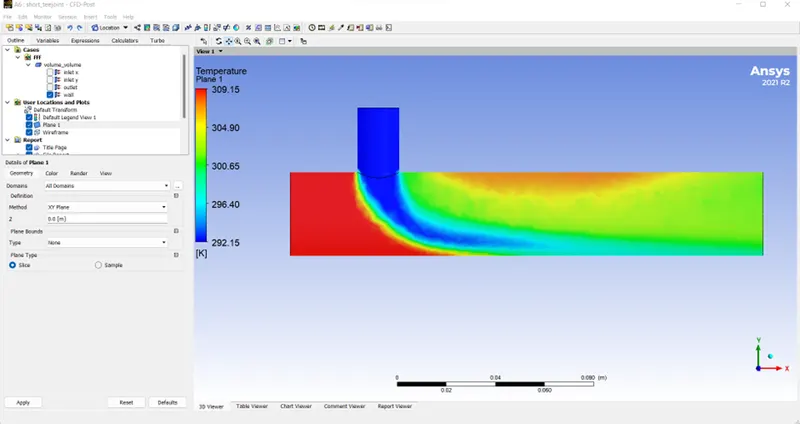
Case 2
- Long mixing tee with a hot inlet velocity of 3m/s.
- Momentum ratio of 2, 4.
- Mesh size of 0.002 m.
K-epsilon model- The momentum ratio for 2
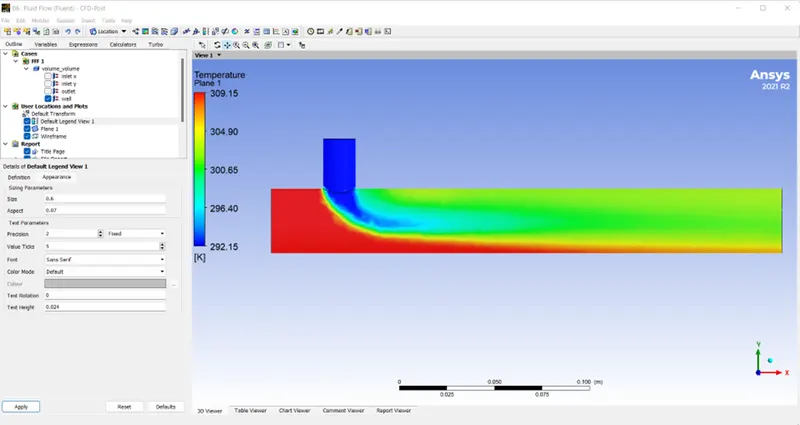
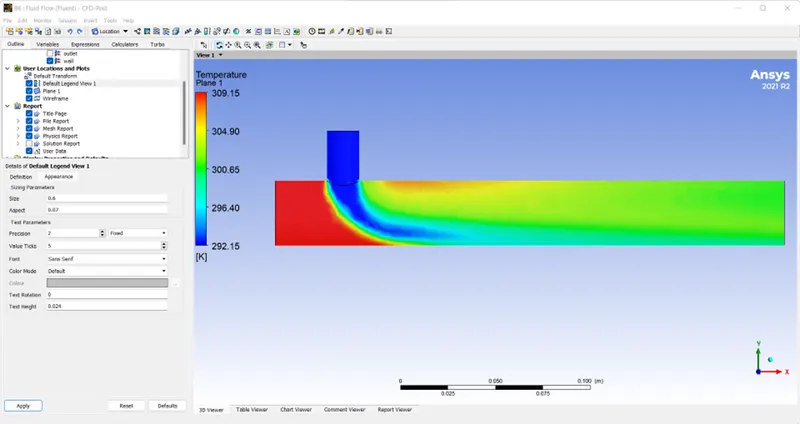
K-epsilon model- The momentum ratio for 4
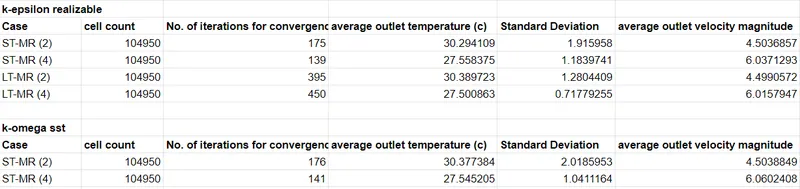
Comparison of cases:
Case 3 :
- Case 3 as the best solution and results for mixing TEE joint by comparison of case 1 and case 2.
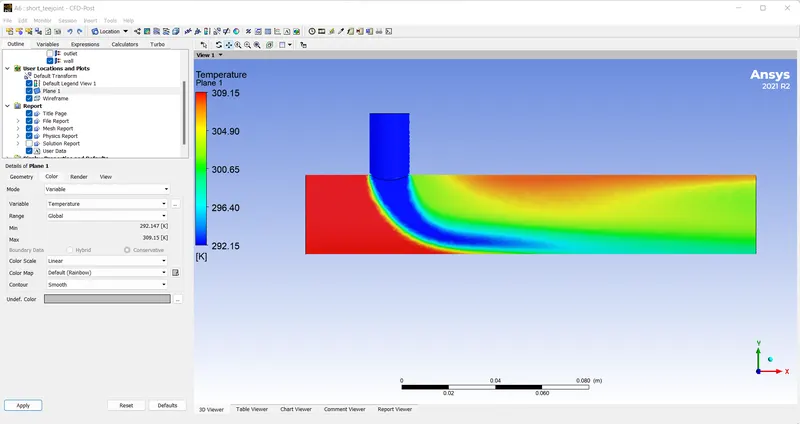
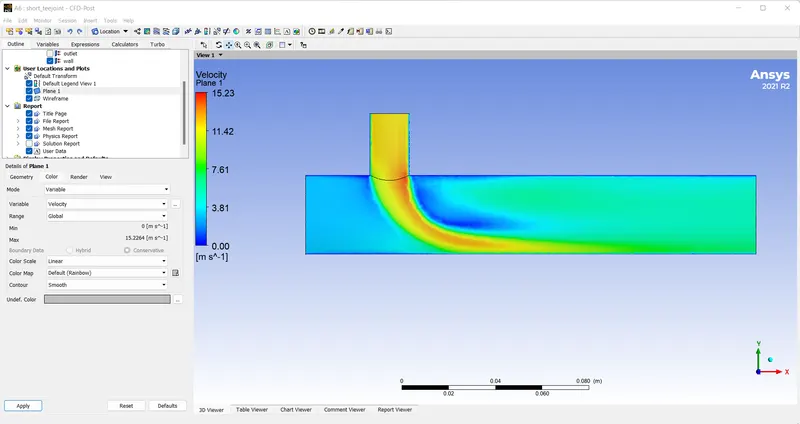
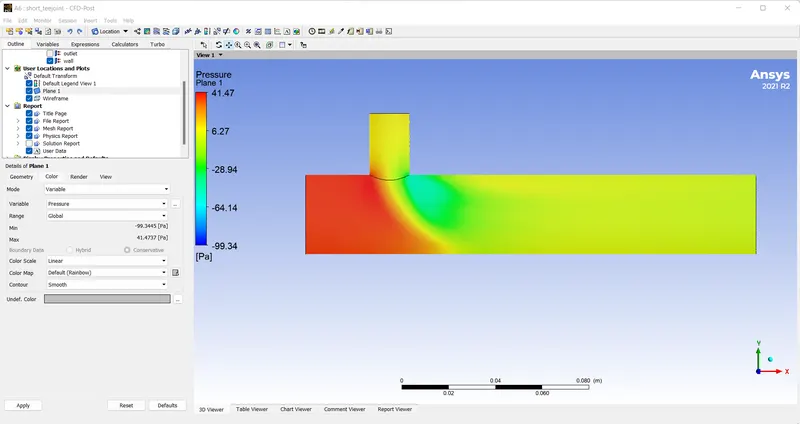
- Short TEE joint (K-epsilon realizable model with momentum ratio of 4).
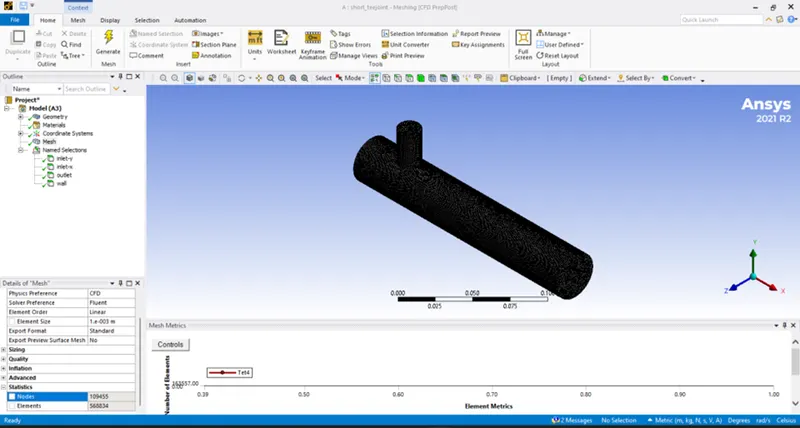
- Fine mesh- Mesh size of 0.001 m.
- No. of elements: 568834.
- No. of nodes: 109455.
Mesh
Solution and results:

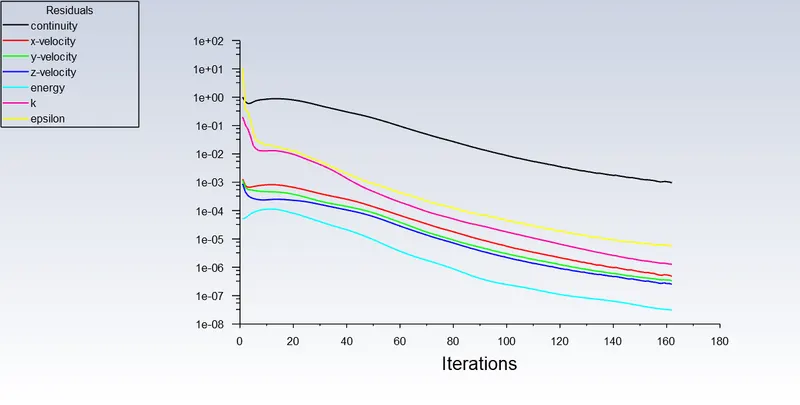
Residual plot
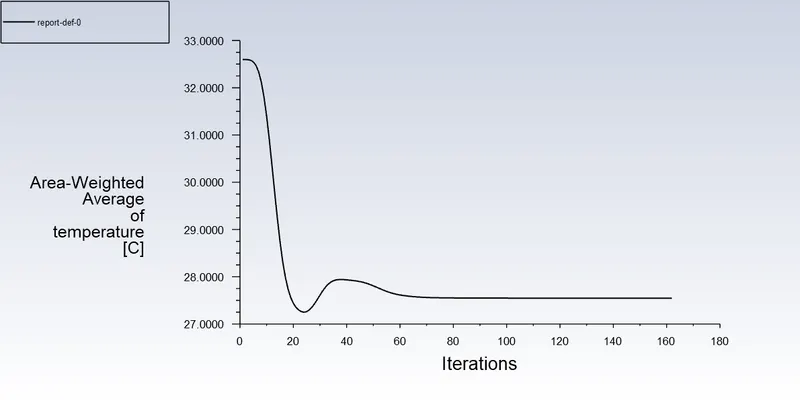
Temperature
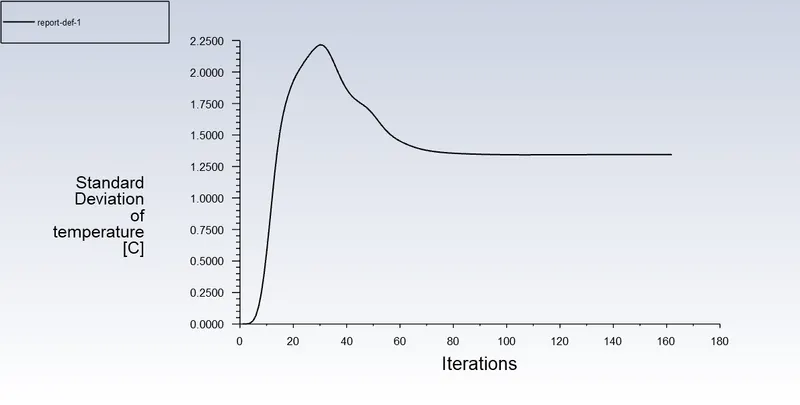
Standard deviation
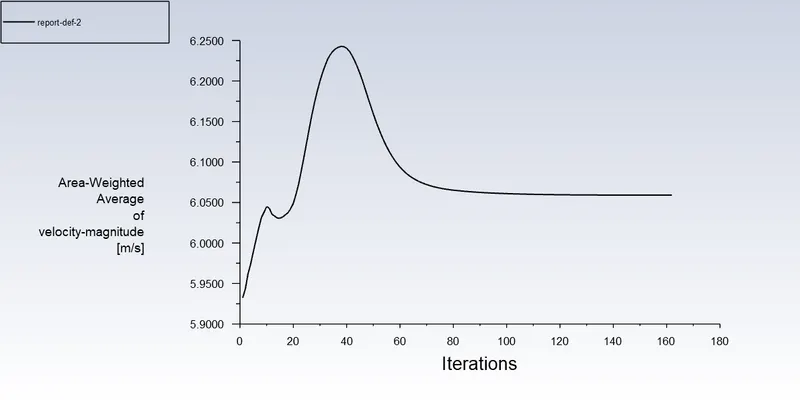
Velocity
Temperature contour
Velocity contour
Pressure contour
Conclusion:
- The outlet temperature of the combined air shows that the mixing efficiency increases with increasing momentum ratio. The primary factor affecting the outlet conditions is the velocity of the cold fluid.
- The temperature of mixed fluid becomes uniformly distributed due to the turbulent condition of the flow at a short length from the mixing junction, as shown from case 1 and case 2 temperature and velocity results, hence the length of the mixing tee has no visible impact on the output conditions.