Week 1- Mixing Tee
Aim
Analysis of Mixing Tee model for the given two cases:
- Case 1
- Short mixing tee with a hot inlet velocity of 3m/s.
- Momentum ratio of 2, 4.
- Case 2
- Long mixing tee with a hot inlet velocity of 3m/s.
- Momentum ratio of 2, 4.
Finding Velocity and temperature contour plots on the cut planes along and across the pipe.
To Find Velocity and temperature line plots along and across the length of the pipe.
To Perform Mesh independent study for any one case.
To Discuss the effect of length and momentum ratio on results.
Introduction
Turbulent mixing of fluid of different temperature in T-junction geometries became of significant importance in the field of nuclear reactor safety, since it can lead to highly transient temperature fluctuations at the adjacent pipe walls, cyclic thermal stresses in the pipe walls and consequently to thermal fatigue and failure of the pipeline. Thermal striping and mixing, in general, is however challenging to predict by using common CFD simulation and turbulence modeling approaches.
Solving and modelling approach
The work flow for this Mixing Tee problem:
- Pre-processing
- Solving
- Post-processing
Ansys workbench is used to solve fluid flow in mixing tee problem using fluent solver.
First the geometry is imported into the ansys workbench using spaceclaim.
Geometry
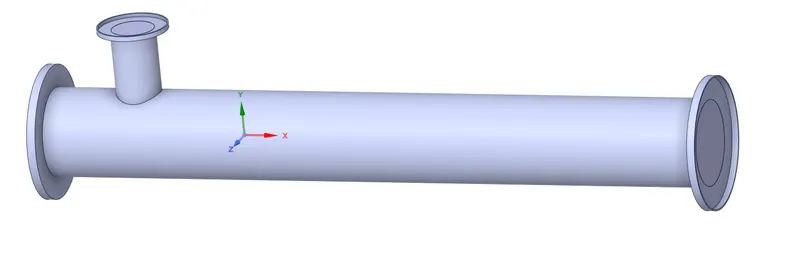
After which the working fluid volume alone is extracted.
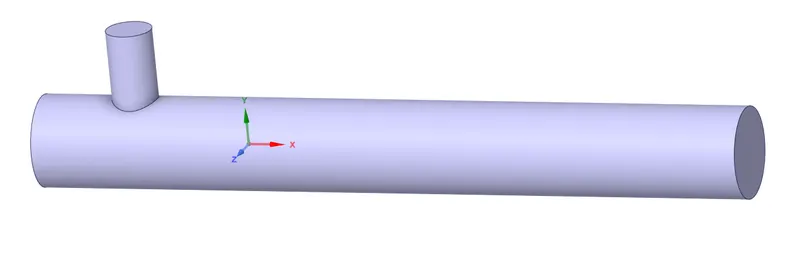
Above is the fluid volume extracted from the orginal geometry using extract tool.
Meshing
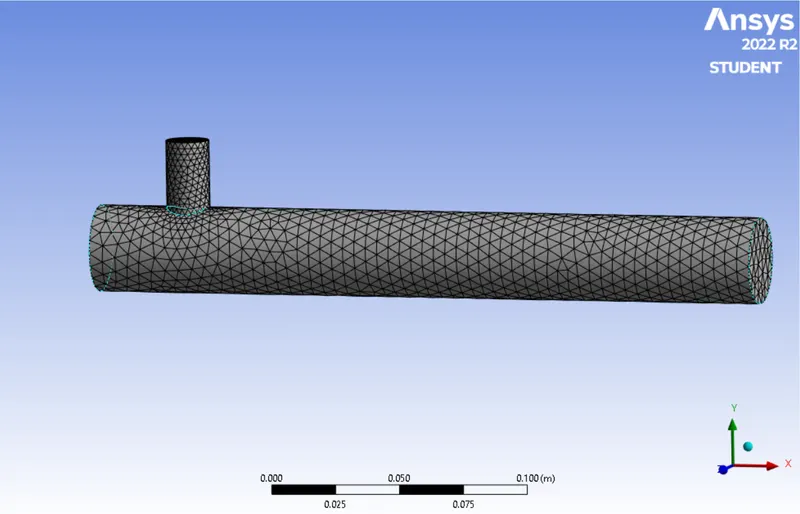
Meshing is the important process. Here the volumetric mesh with tetrahedral elements is used to generate mesh.
The steady state pressure based solver is used.
The viscous model with k-omega SST model is choosen.
Material type is fluid and fluent fluid material is air.
There are two inlet boundary conditions and one outlet. First inlet is entry of hot air and the second inlet is cold air.
Two cases are considered one is short mixing tee and other is long mixing tee with the momentum ratio of 2 and 4.
Momentum ratio is calculated by,
Momentum ratio = velocity at cold inlet / velocity at hot inlet.
Results
K-Omega Model:
Case : 1 Short Mixing Tee
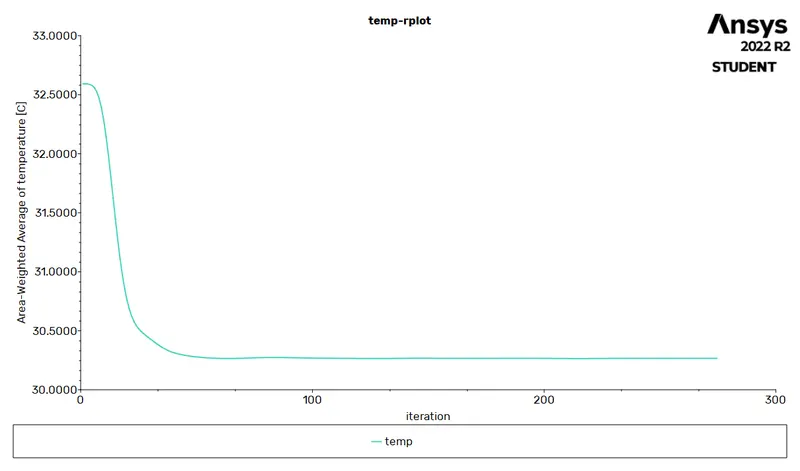
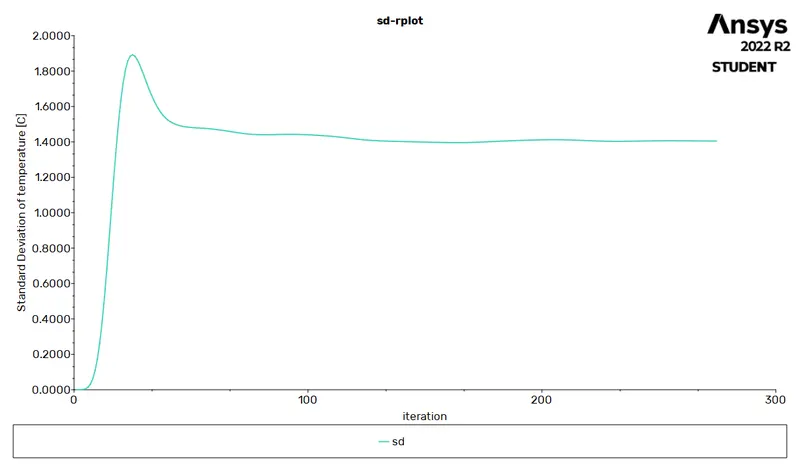
Momentum Ratio 2 :
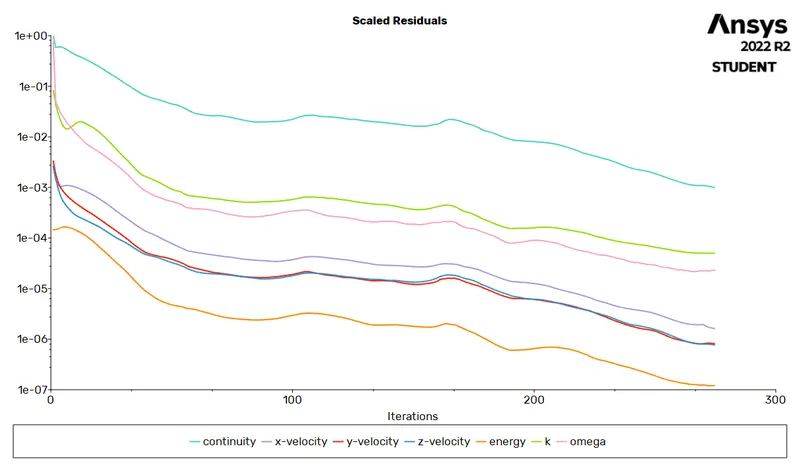
Residual
Area Weighted Average of Temperature
Standard Deviation of Temperature
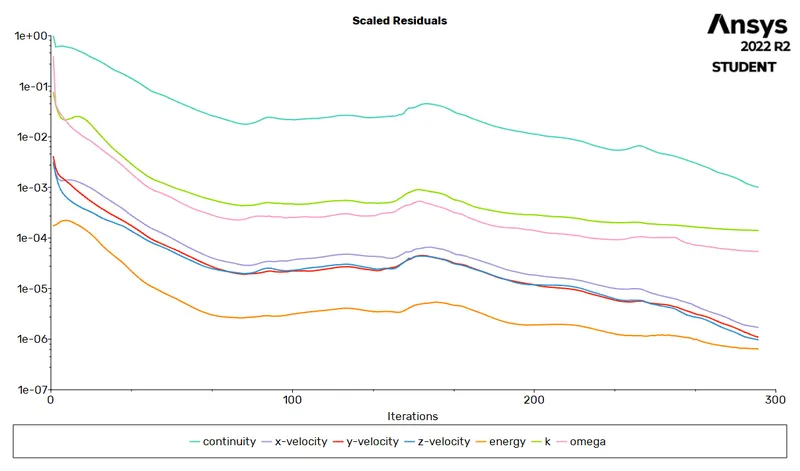
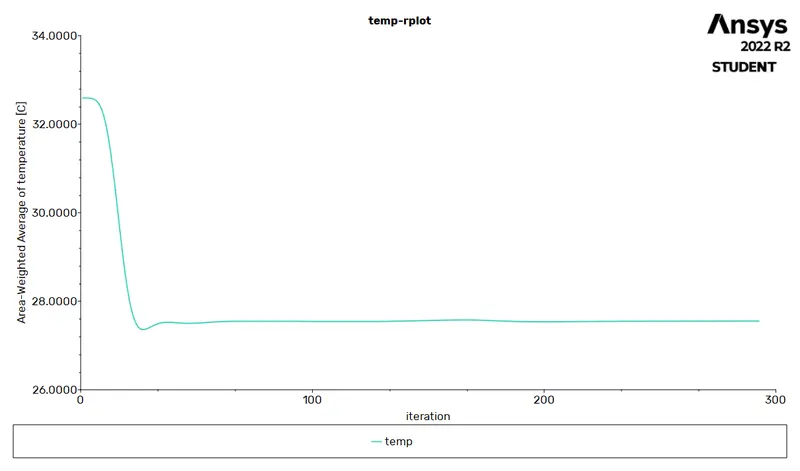
Momentum Ratio 4 :
Residual
Area Weighted Average of Temperature
Standard Deviation of Temperature
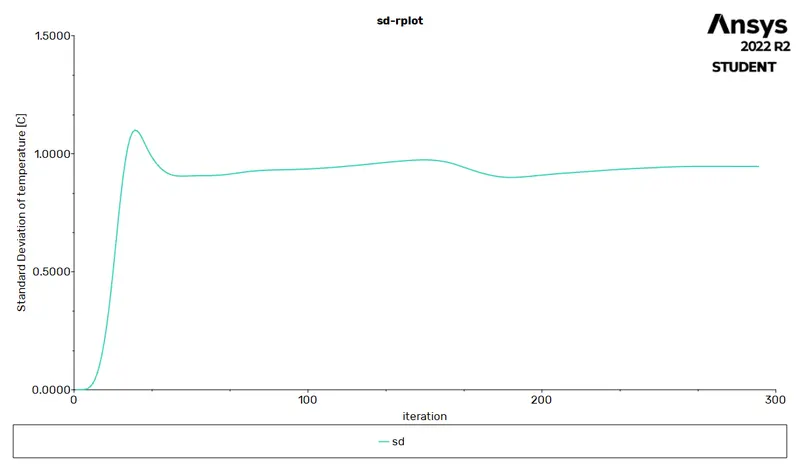
Case : 2 Long Mixing Tee
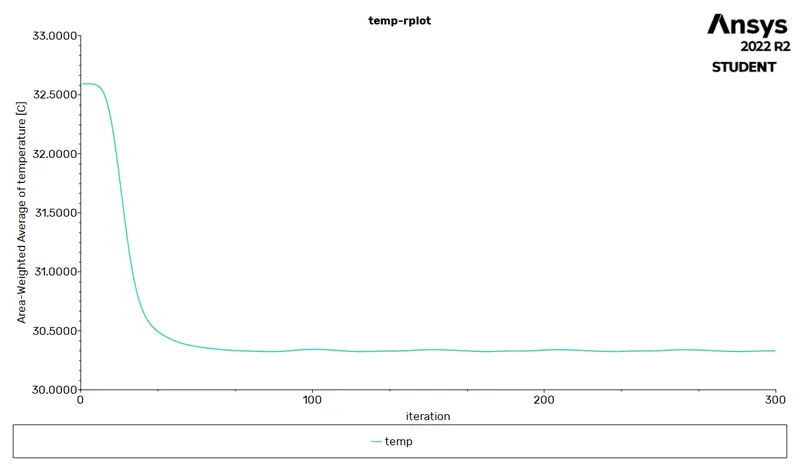
Momentum Ratio 2 :
Residual
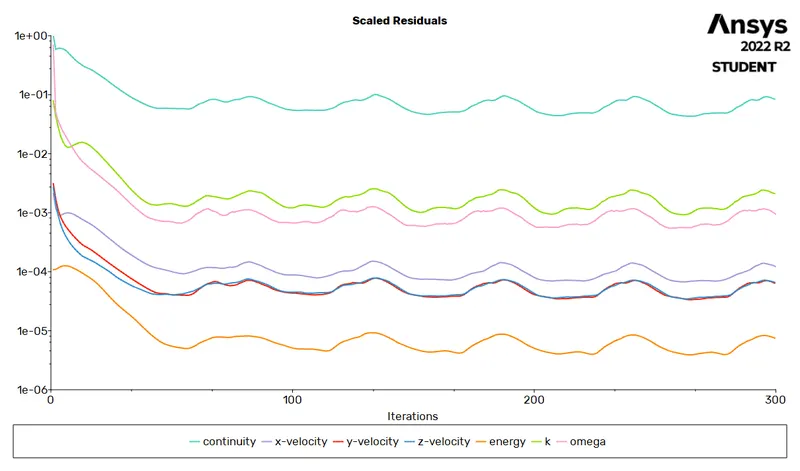
Area Weighted Average of Temperature
Standard Deviation of Temperature
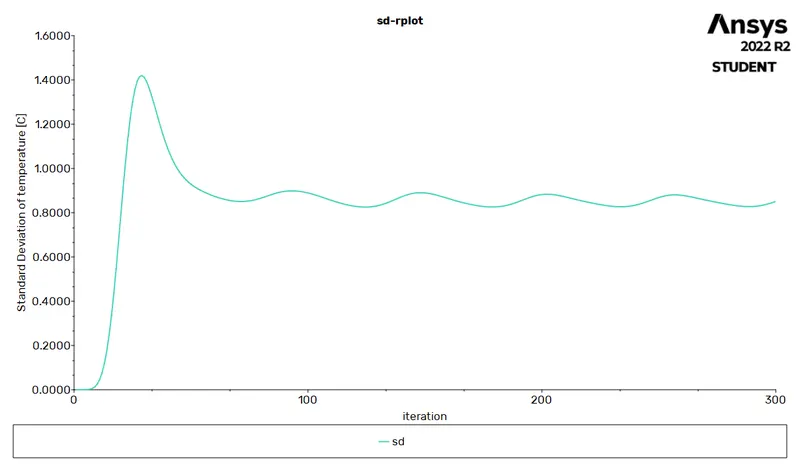
Momentum Ratio 4 :
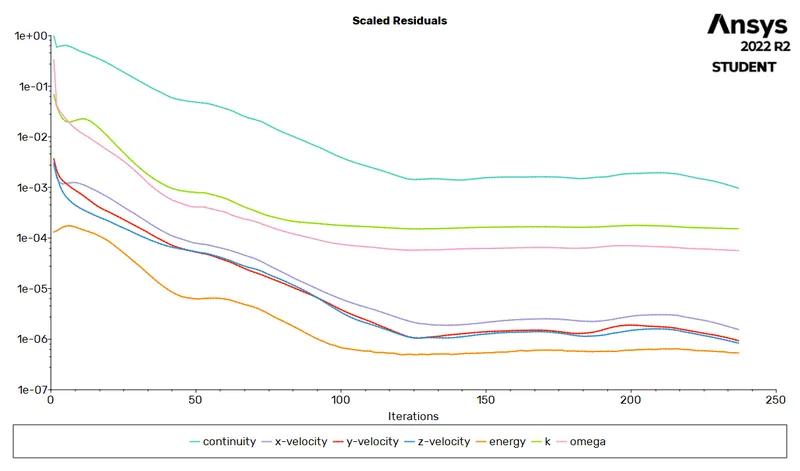
Residual
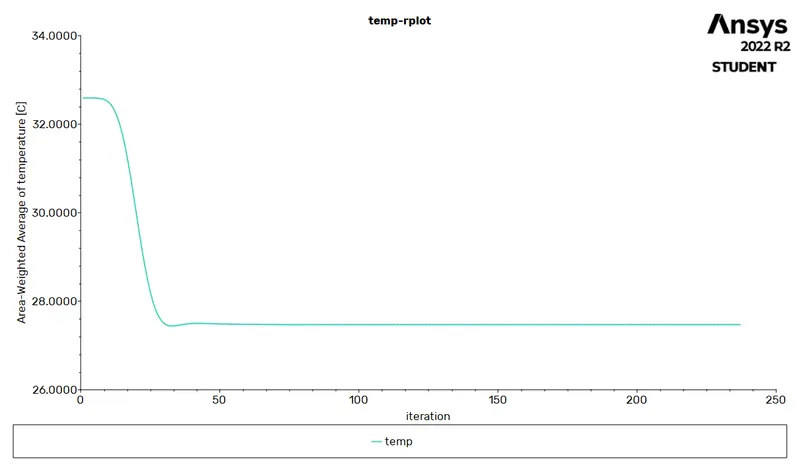
Area Weighted Average of Temperature
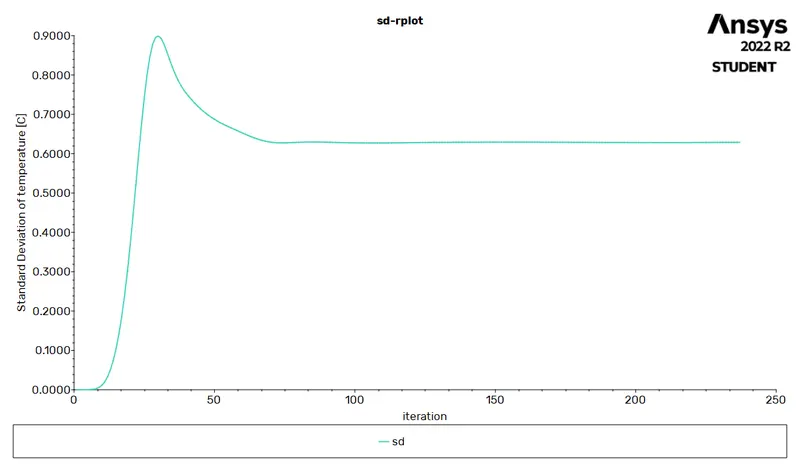
Standard Deviation of Temperature
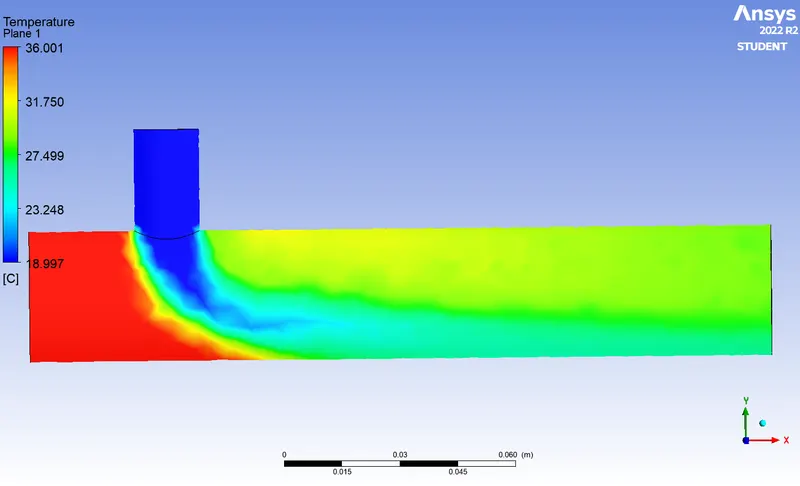
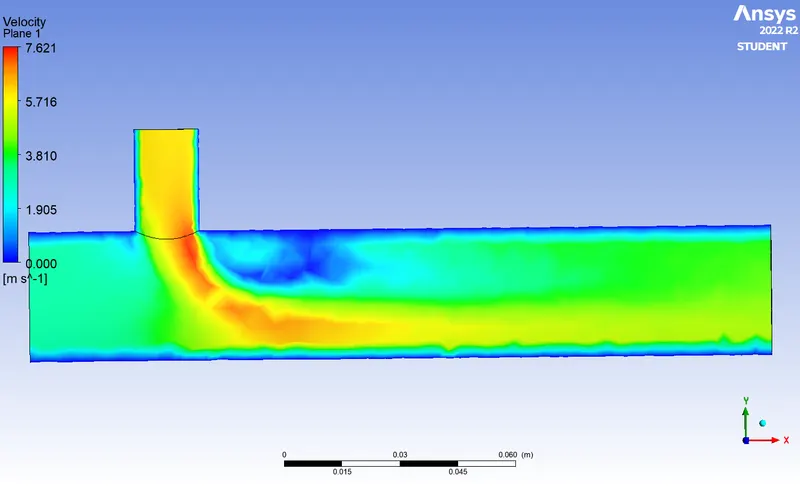
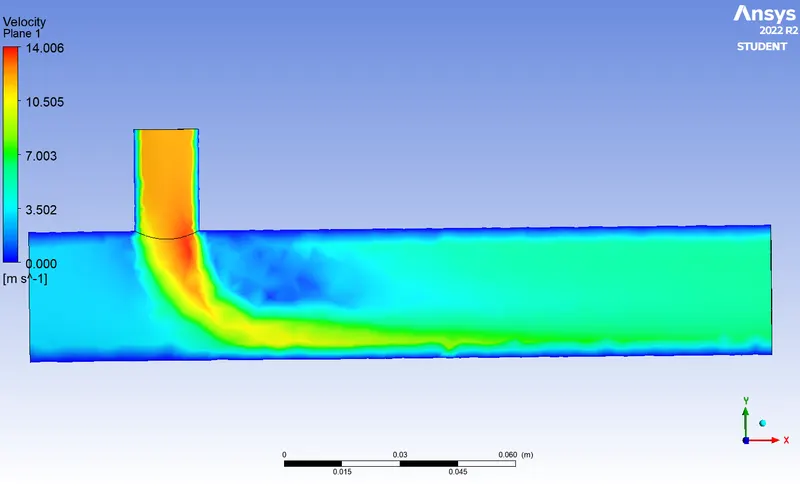
Case: 1
Short Mixing Tee with a hot inlet velocity of 3 m/s
a) Temperature Contour Plot - Momentum Ratio 2
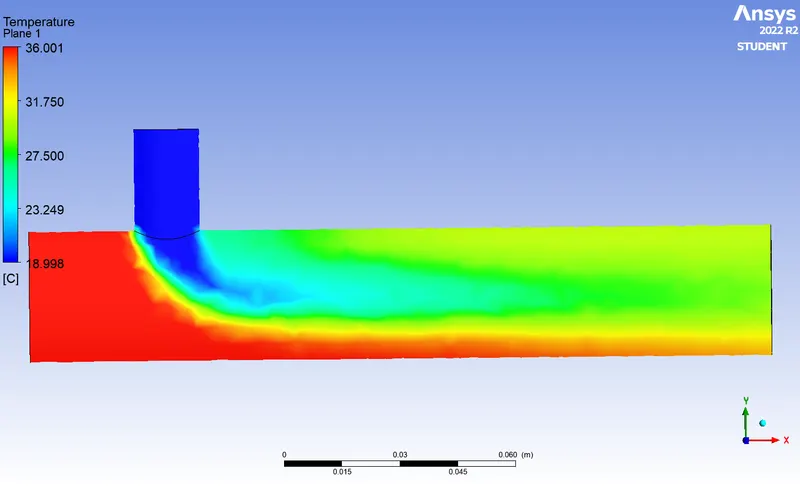
b) Temperature Contour Plot - Momentum Ratio 4
c) Velocity Contour Plot - Momentum Ratio 2
d) Velocity Contour Plot - Momentum Ratio 4
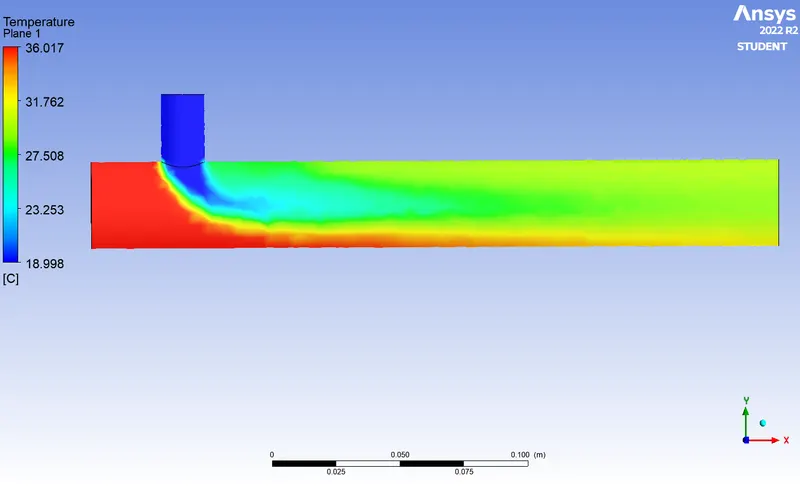
Case: 2
Long Mixing Tee with a hot inlet velocity of 3 m/s
a) Temperature Contour Plot - Momentum Ratio 2
b) Temperature Contour Plot - Momentum Ratio 4
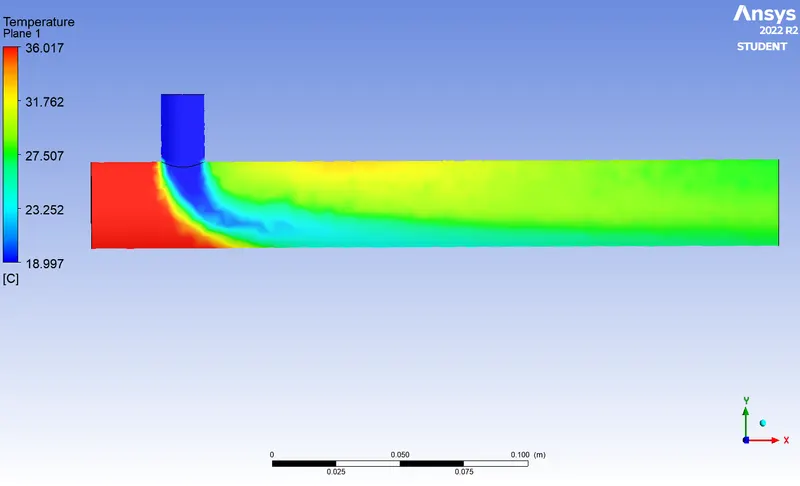
c) Velocity Contour Plot - Momentum Ratio 2
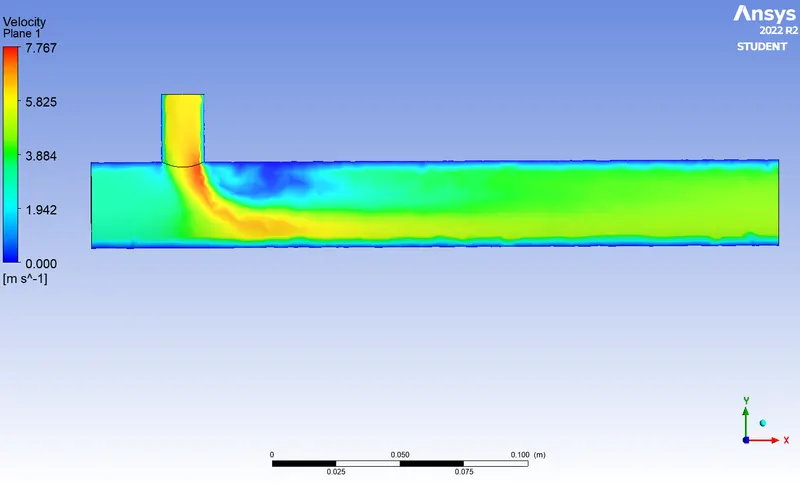
d) Velocity Contour Plot - Momentum Ratio 4
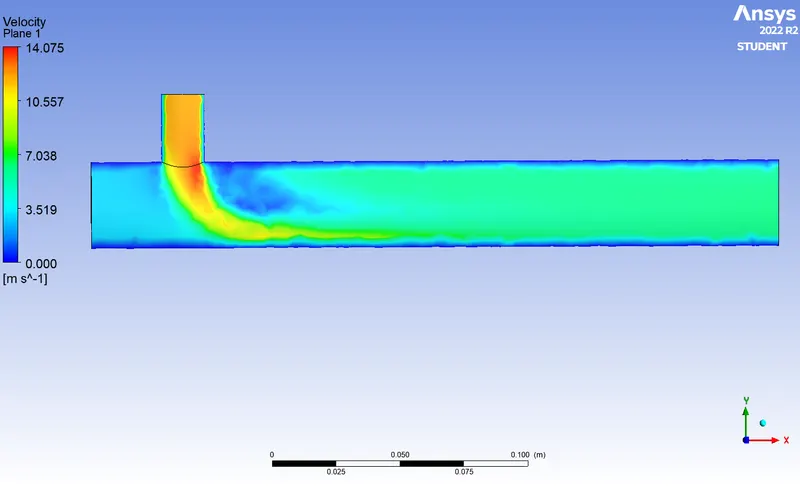
Case: 1
Short Mixing Tee with a hot inlet velocity of 3 m/s
a) Temperature Line Plot - Momentum Ratio 2
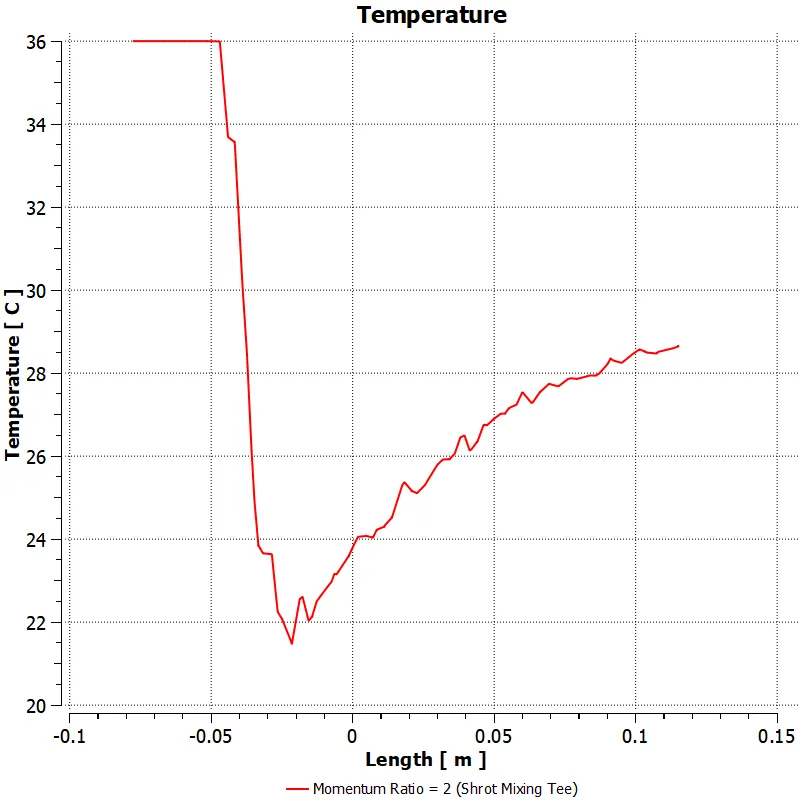
b) Temperature Line Plot - Momentum Ratio 4
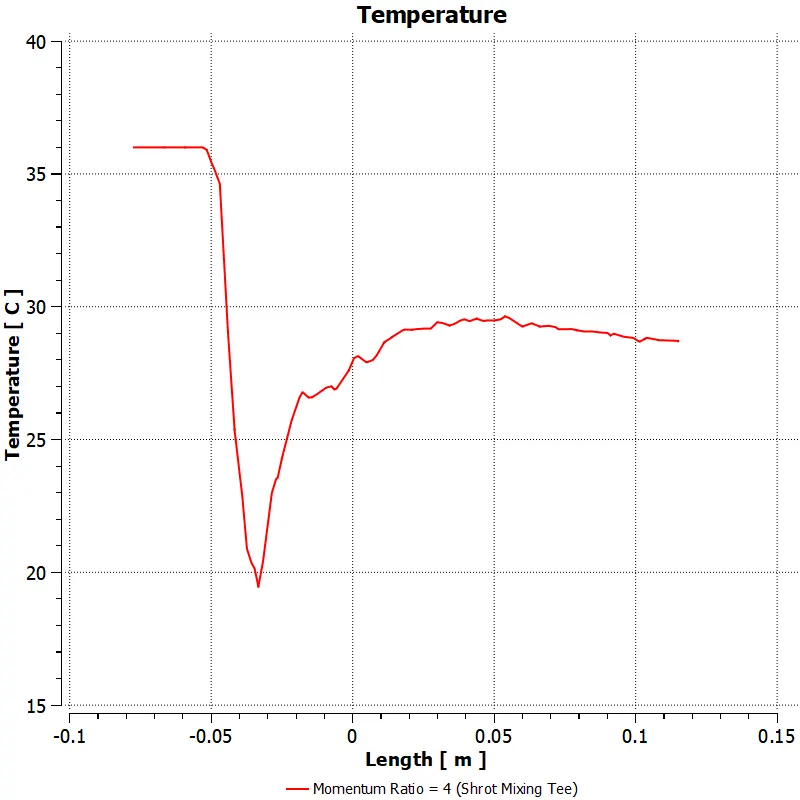
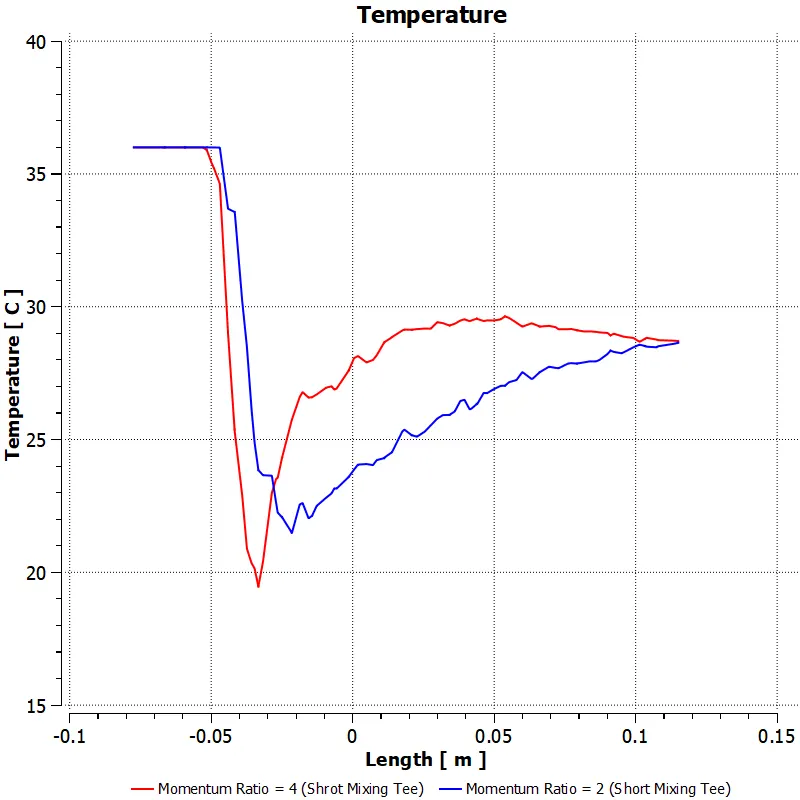
It is observed that the sudden decrease in teperature occurs due to injuction of cold air and after mixing its temperature increases gradually.
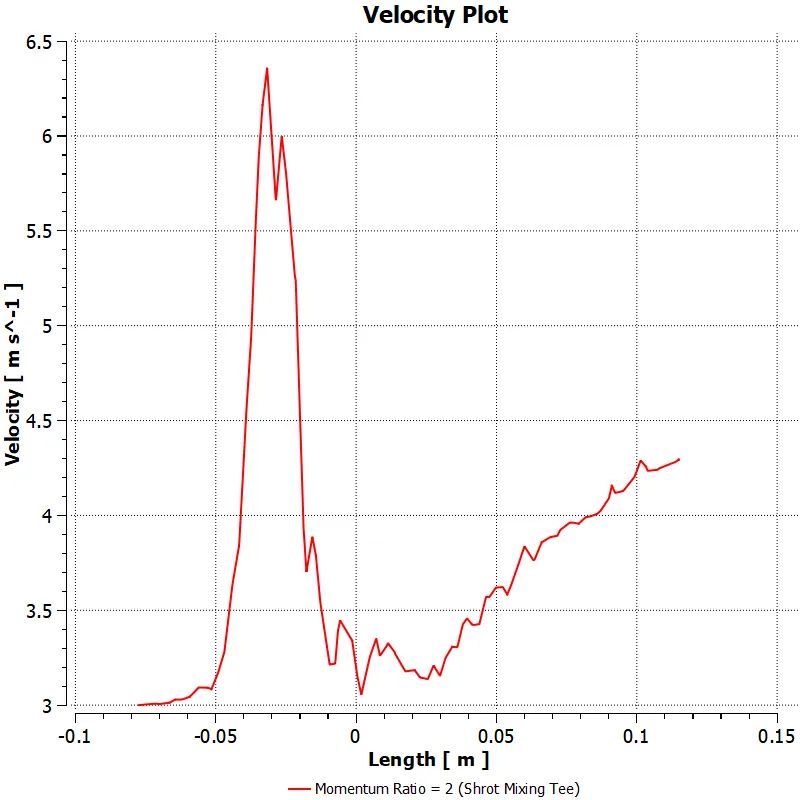
c) Velocity Line Plot - Momentum Ratio 2
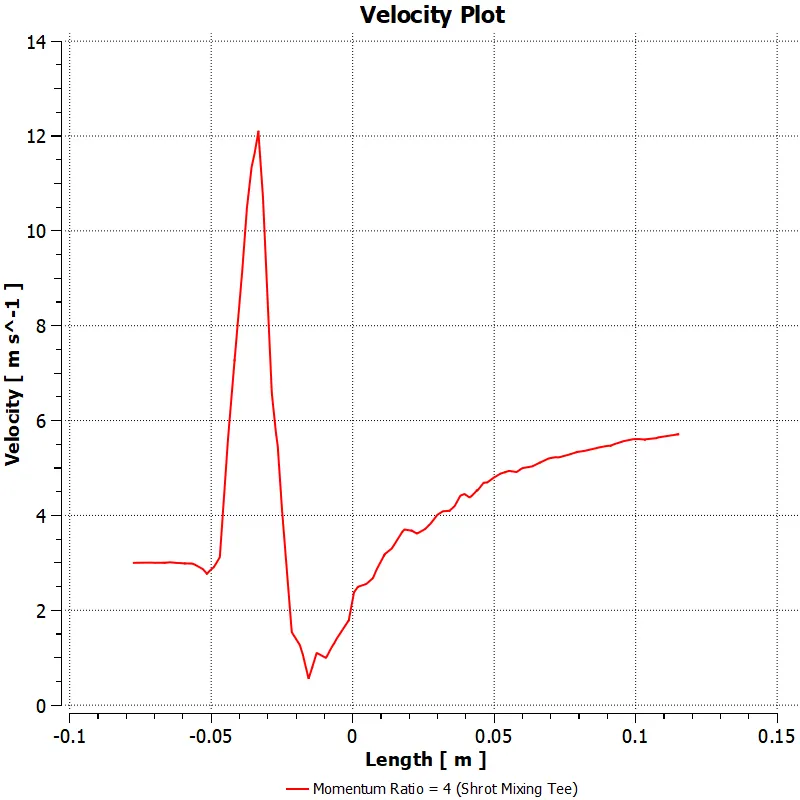
d) Velocity Line Plot - Momentum Ratio 4
Case: 2
Long Mixing Tee with a hot inlet velocity of 3 m/s
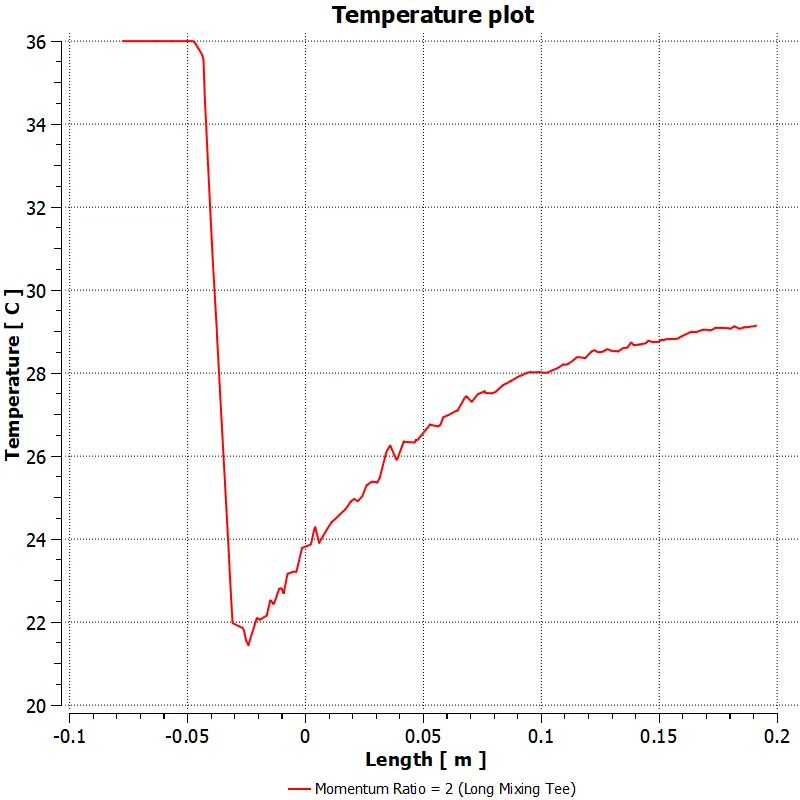
a) Temperature Line Plot - Momentum Ratio 2
b) Temperature Line Plot - Momentum Ratio 4
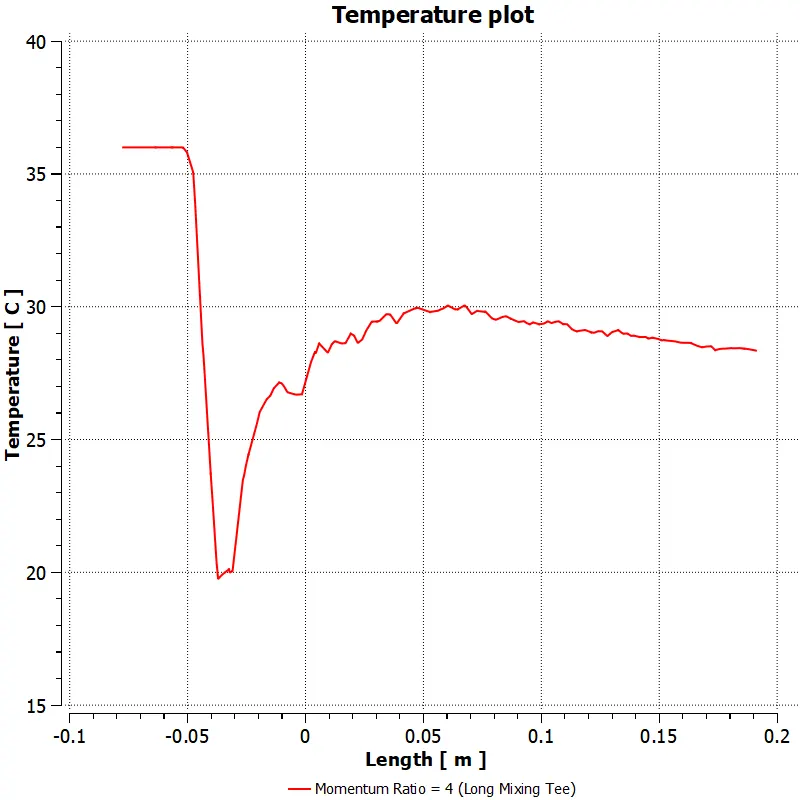
c) Velocity Line Plot - Momentum Ratio 2
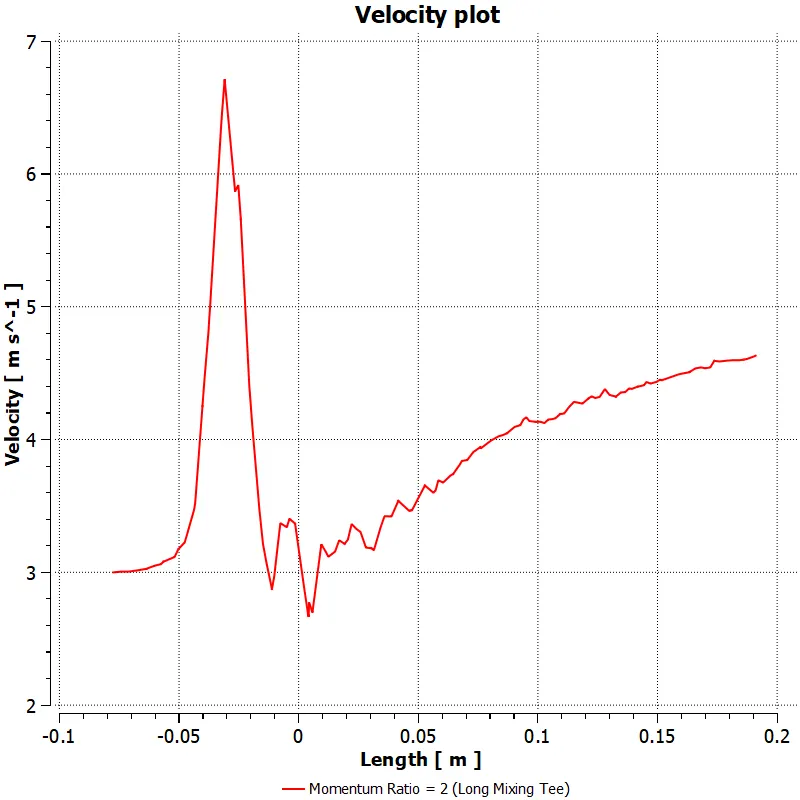
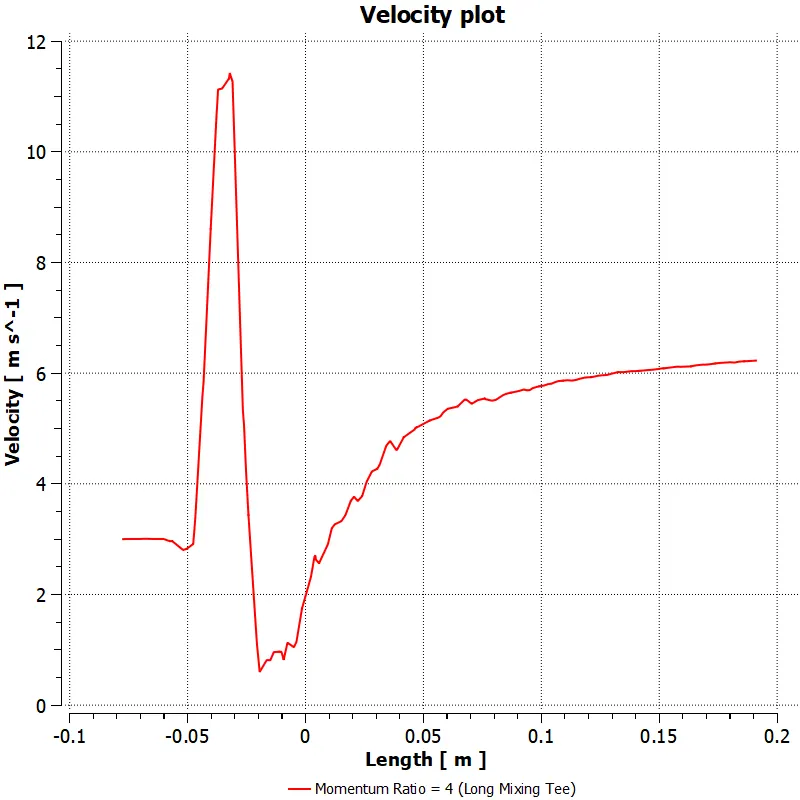
d) Temperature Line Plot - Momentum Ratio 4
Temperature Line Plot Comparison for Short Tee Having Momentum Ratio 2 and 4
Temperature Line Plot Comparison for Long Tee Having Momentum Ratio 2 and 4
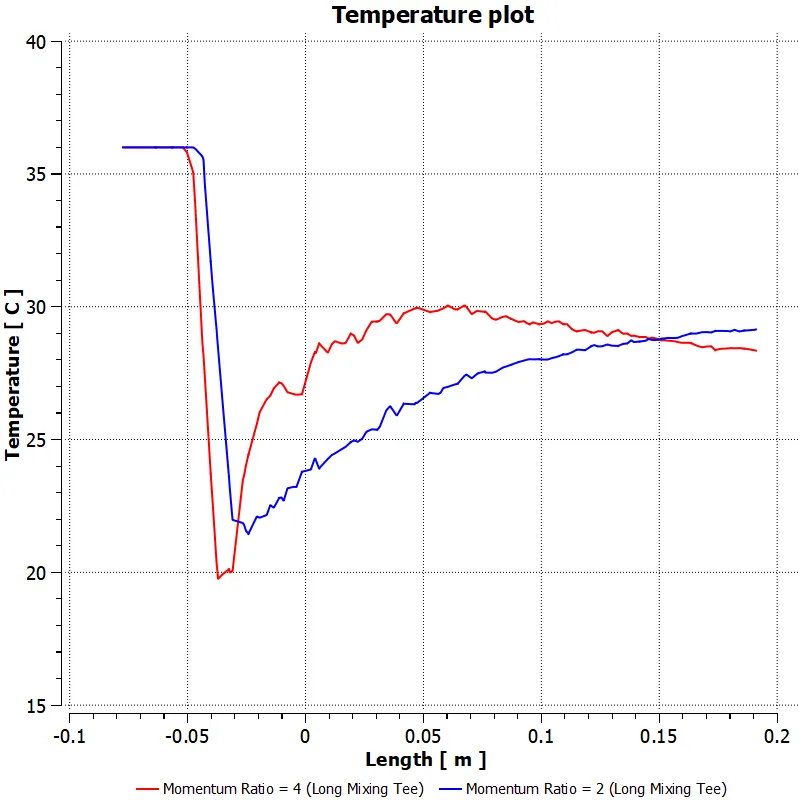
It is observed that long mixing tee with momentum ratio 4 has reduced the temperature more compared with momentum ratio 2.
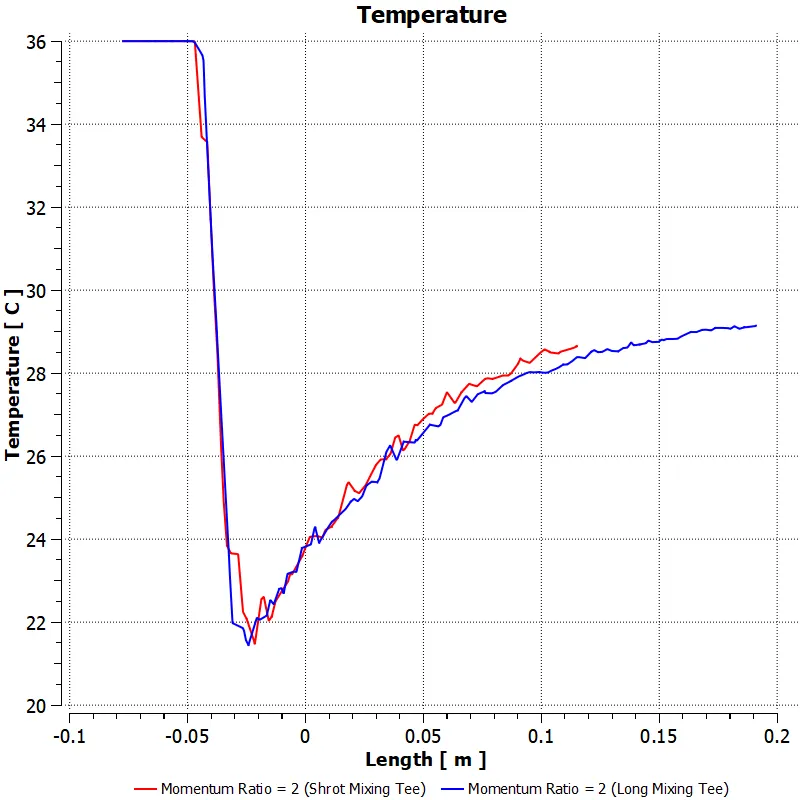
Temperature Line Plot Comparision for Short Tee and Long Tee With Momentum Ratio 2
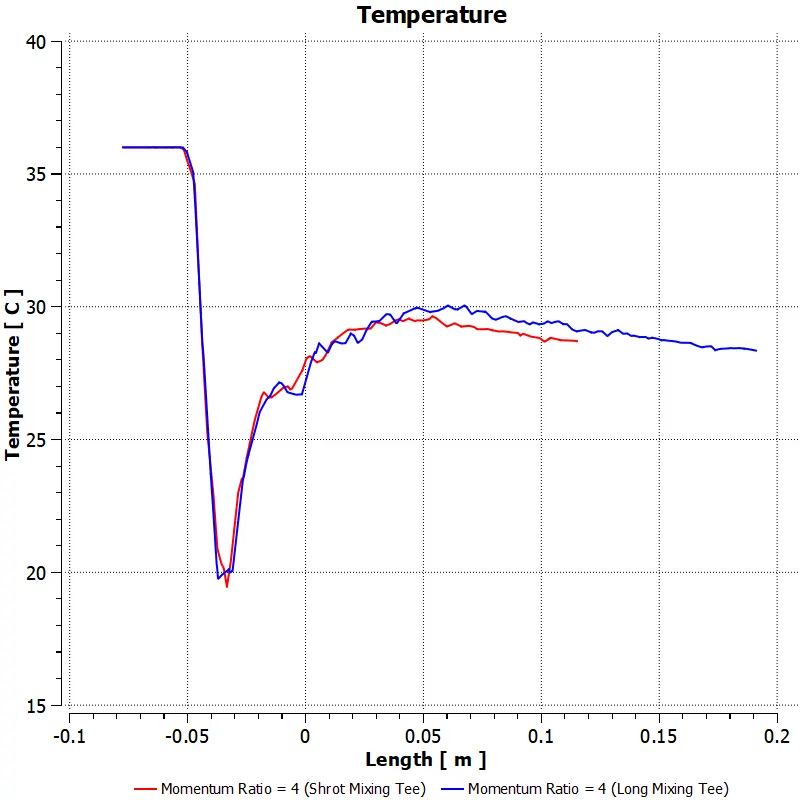
Temperature Line Plot Comparision for Short Tee and Long Tee With Momentum Ratio 4
Conclusion
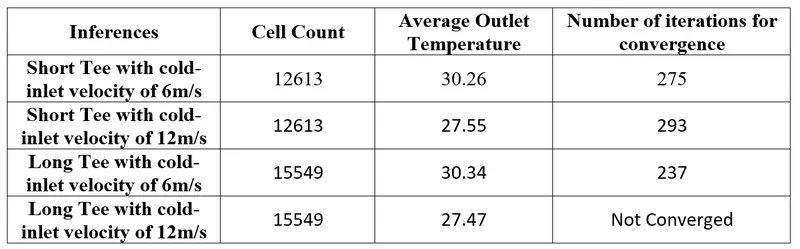
It is observed that lesser the standard deviation is said to have less outlet temperature.
The cold inlet velocity which is having 12 m/s (momentum ratio of 4) has reduced the outlet temperature more compared with cold inlet velocity having 6 m/s (momentum raatio 2).