Week 1- Mixing Tee
AIM:- To perform of steady-state simulations to compare the mixing effectiveness when the hot inlet temperature is 360C & the Cold inlet is at 190C creating two versions of the mixing tee.
Objective:- we have take two temperatures.
1. Hot inlet temperature = 360C
2. cold inlet temperature = 190C.
3. Use the k-epsilon and k-omega and sst for all cases for the more suitable results.
In this challenge we have perform the two cases
[a]. case_1:- short mixing tee with a hot inlet velocity of 3m/s and momentum ratio = 2,4
[b]. case_2:- long mixing tee with a hot inlet velocity 3m/s and momentun ratio = 2,4.
CALCULATIONS:-
MOmentum ratio = velocity at cold inlet/velocity at hot inlet
For short tee :-
momentum ratio = velocity at cold inlet/ velocity at hot inlet
2 = x/3
x = 6[velocity at cold inlet]
For momentum ratio = 4
momentum ratio = velocity at cold inlet/ velocity at hot inlet
4 = x/3
x = 12 [ velocity at cold inlet].
FOR LONG TEE:-
momentum ratio = velocity at cold inlet/ velocity at hot inlet
2 = x/3
x = 6[velocity at cold inlet]
For momentum ratio = 4
momentum ratio = velocity at cold inlet/ velocity at hot inlet
4 = x/3
x = 12 [ velocity at cold inlet].
[A]. Velocity at hot inlet = 3m/s [both cases].
[B]. velocity at cold inet = [6m/s,12m/s both cases].
- Cell count
- Average outlet temperature
- Number of iterations for convergence
- Velocity and temperature contour plots on the cut planes along and across the pipe.
- Velocity and temperature line plots along and across the length of the pipe.
- Perform Mesh independent study for any one case.
- Discuss the effect of length and momentum ratio on results.
CASE:-1
SHORT MIXING TEE:- The short mixing tee with a hot inlet velocity 3m/s and momentum ratio = 2,4.
In first case we have taken momentum ratio 2 and tempertures taken 36 and 19 and velocities 3,6
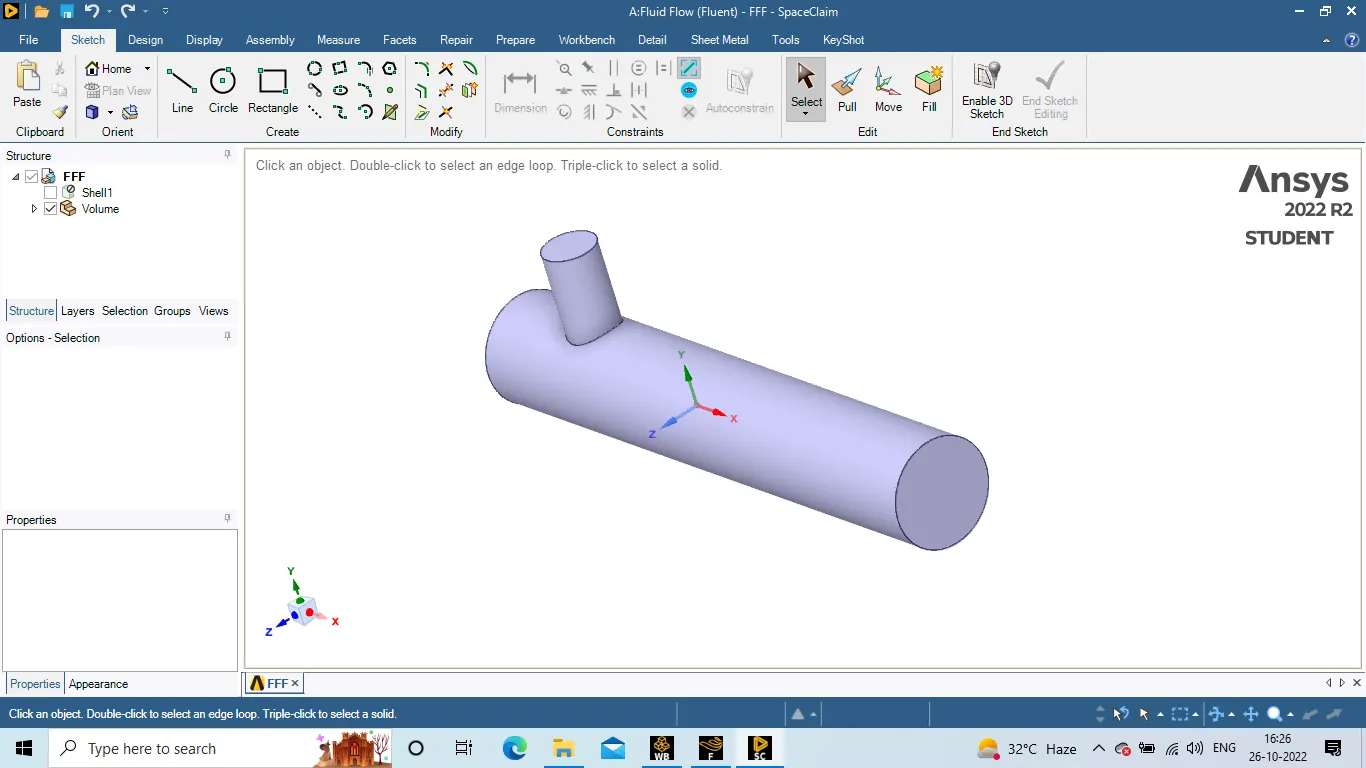
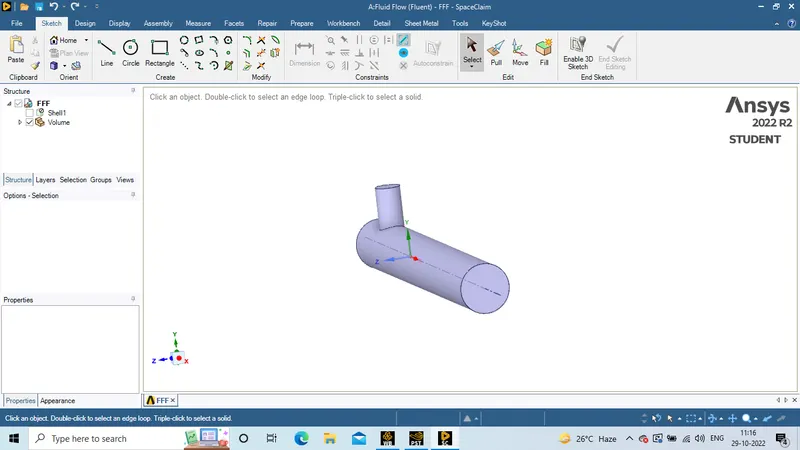
GEMOETRY SECTION:- In geometry section we have import the short tee design model and extract the volumes and supress the shell section.
GEOMETRY MODEL:-
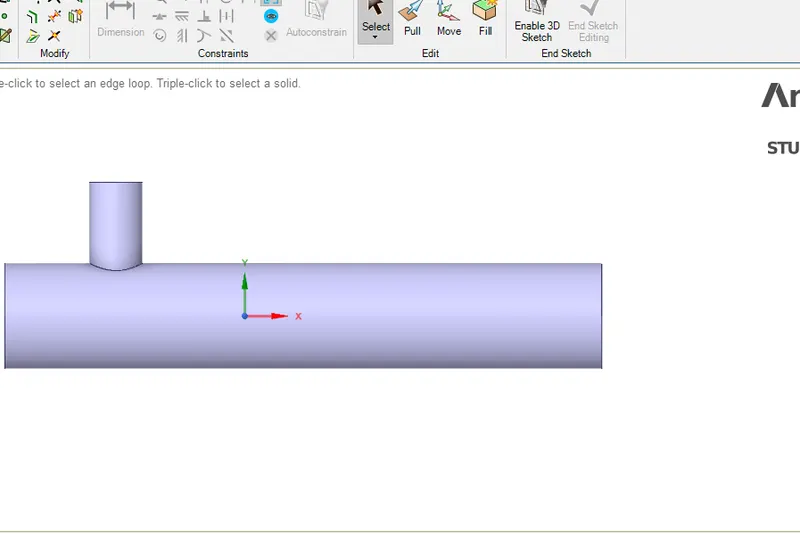
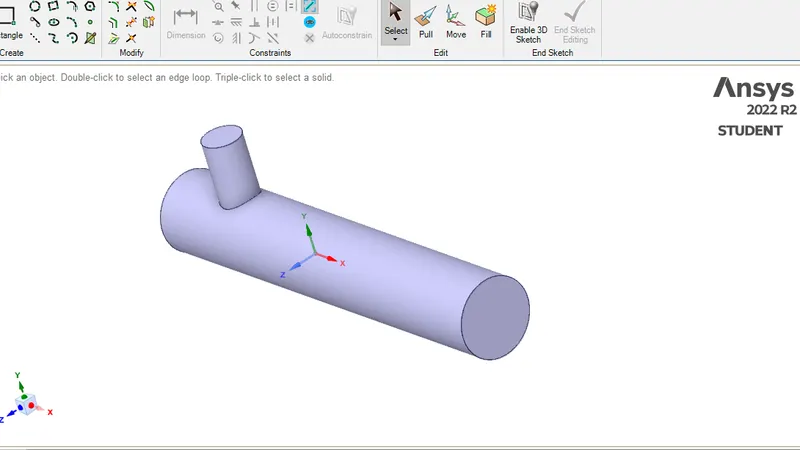
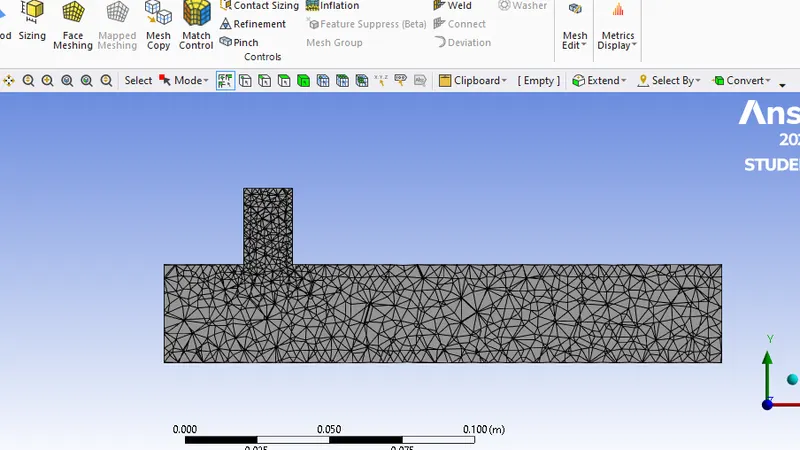
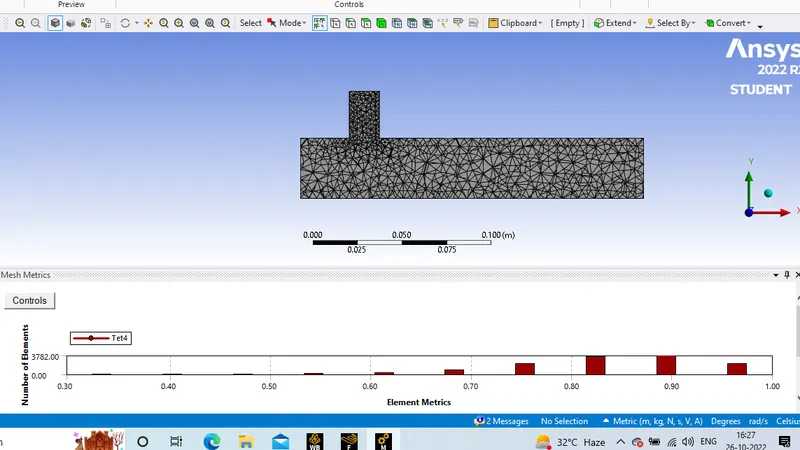
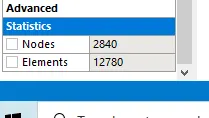
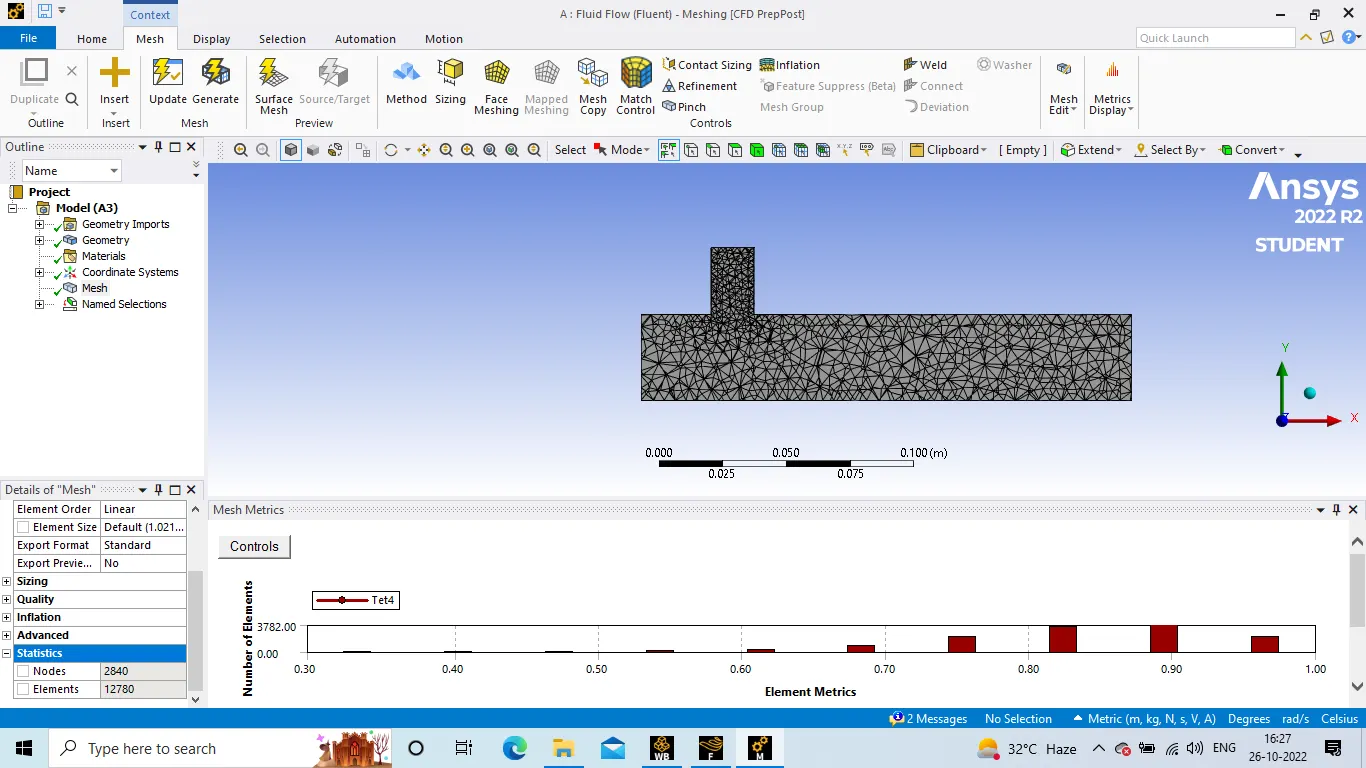
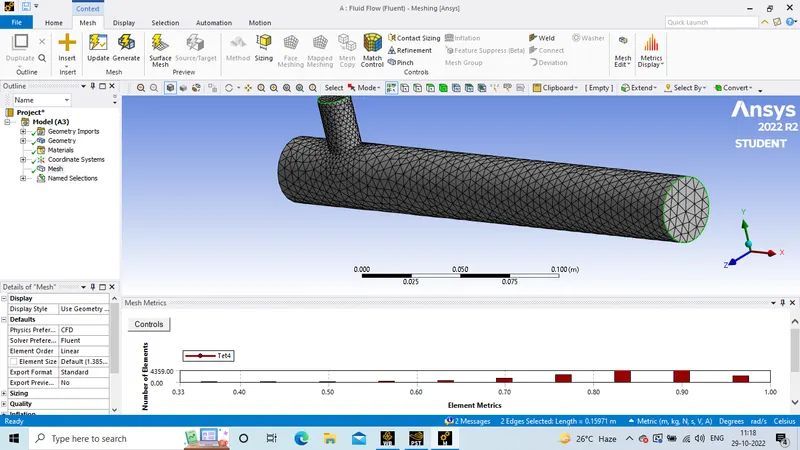
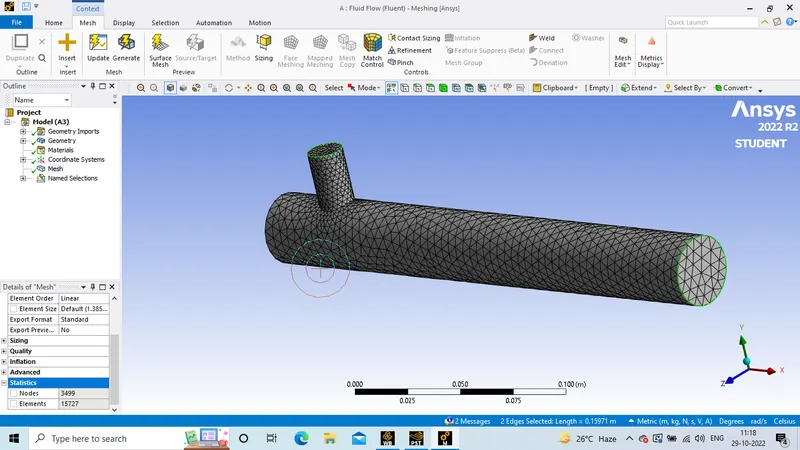
MESHING:- In meshing we have given the named selections inlet-x , inlet-y , cold inlet and walls and also generate the mesh section and find the mesh quality nodes and elements.
MESH MODEL:-
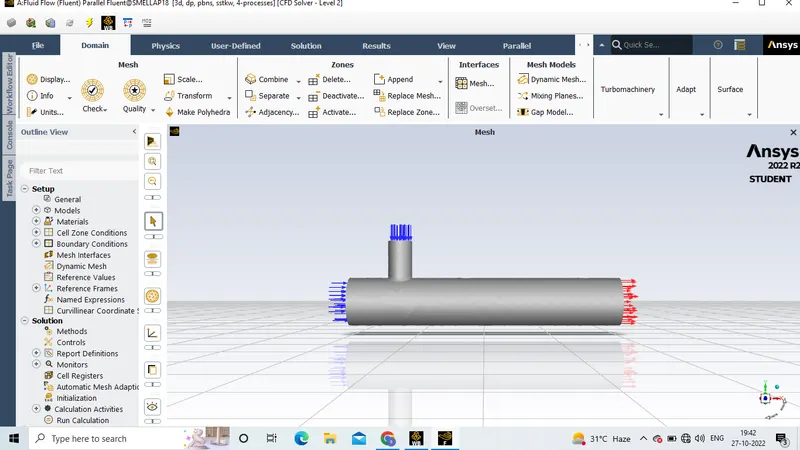
SET UP :-
1. K-EPSILON
2. SOLVER - PRESSURE BASED
3. VELOCITY FORMULATION - ABSOLUTE.
4. Time- steady state
5. viscous model - k-epsilon
6. cell zones - AIR
7. boundary conditions:- velocity maginitude = 3,3 [for both cases].x- inlet
velocity magnitude = 6 inlet-y
8. tem = 36,19 [for both cases].
set up:-
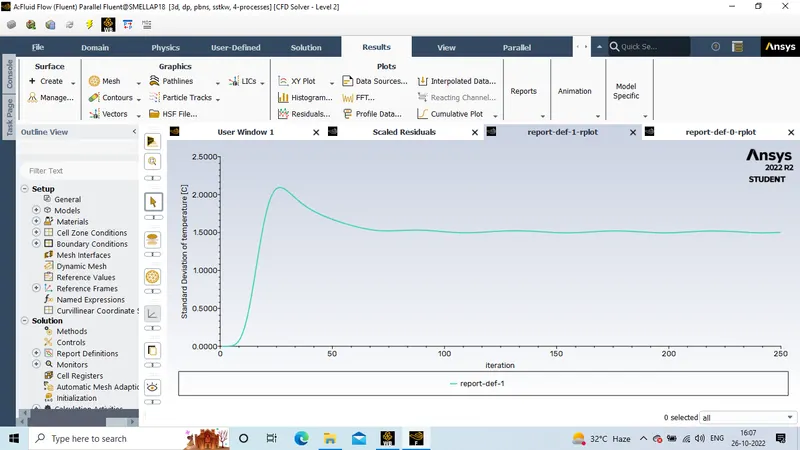
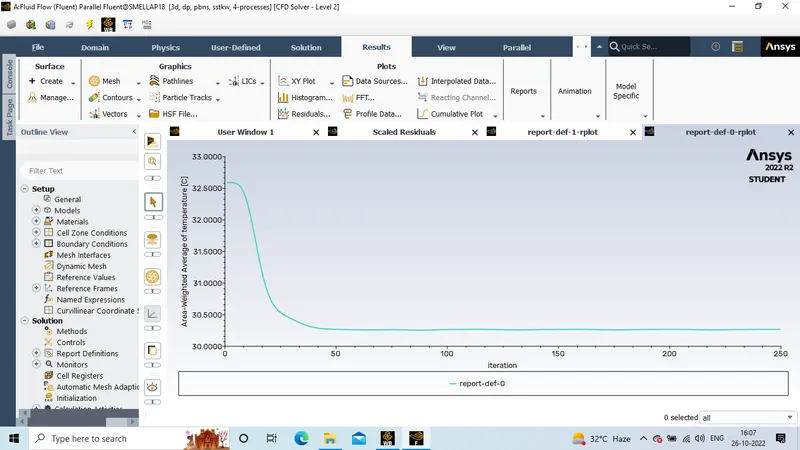
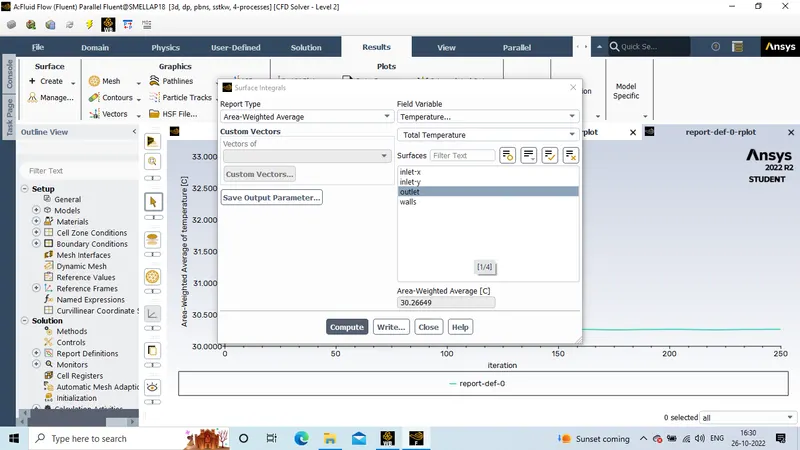
TEMEPATURE PLOT:-
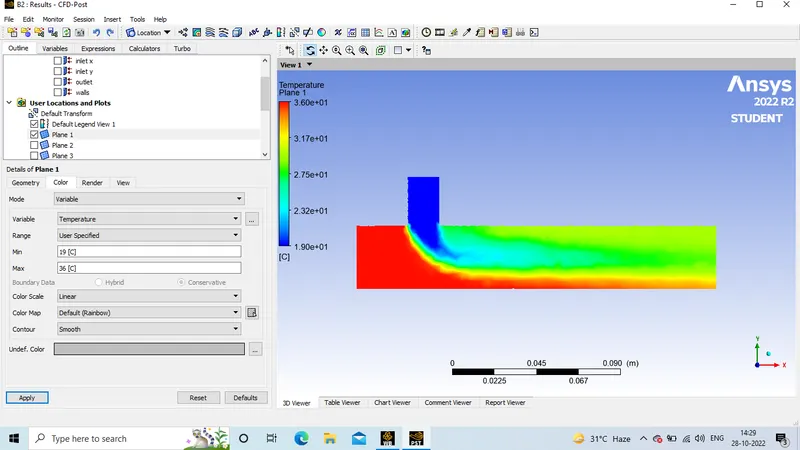
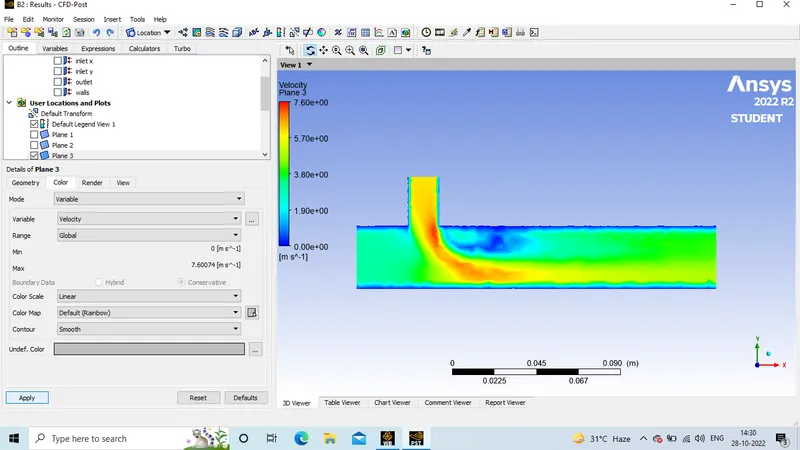
[a]. cell count:- nodes = 2840 , elements = 12780
[b]. Average temperature = 30.26[c].
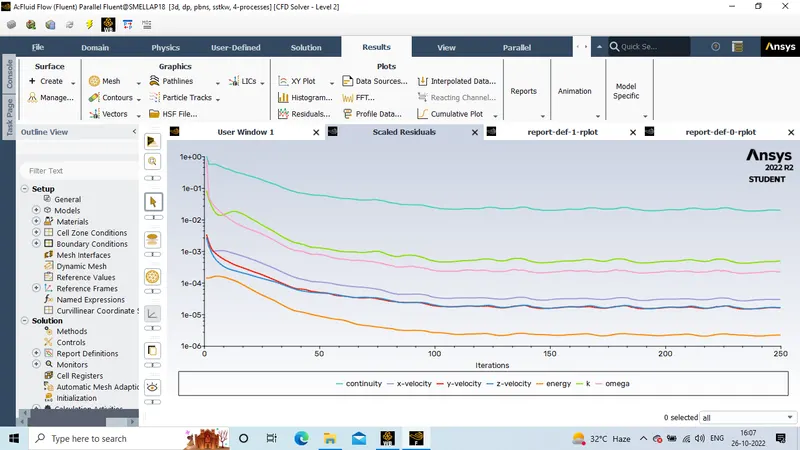
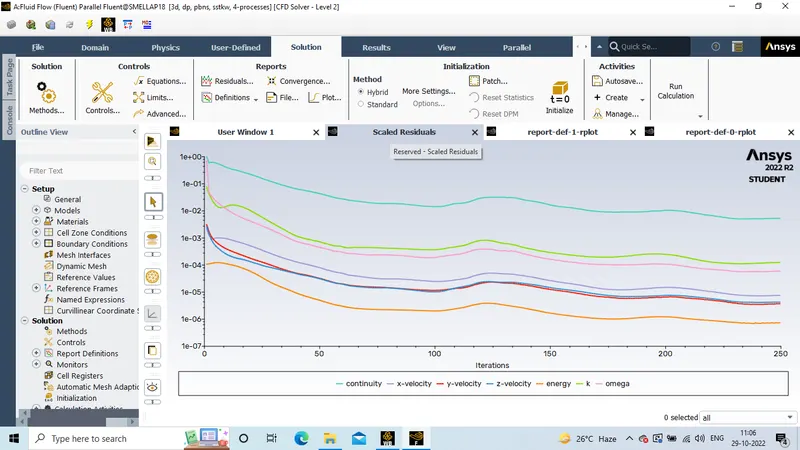
[c] no of ietarions = 150.
case_2:- for momentum ratio =4
gemoetry section:-
meshing:-
setup:-
SET UP :-
1. K-EPSILON
2. SOLVER - PRESSURE BASED
3. VELOCITY FORMULATION - ABSOLUTE.
4. Time- steady state
5. viscous model - k-epsilon
6. cell zones - AIR
7. boundary conditions:- velocity maginitude = 3,3 [for both cases].x - inlet.
velocity magnitude = 12 y- inlet
8. tem = 36,19 [for both cases].
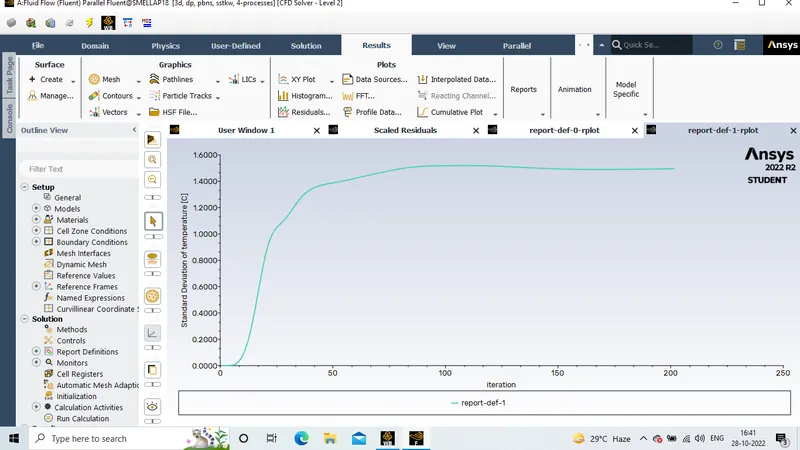
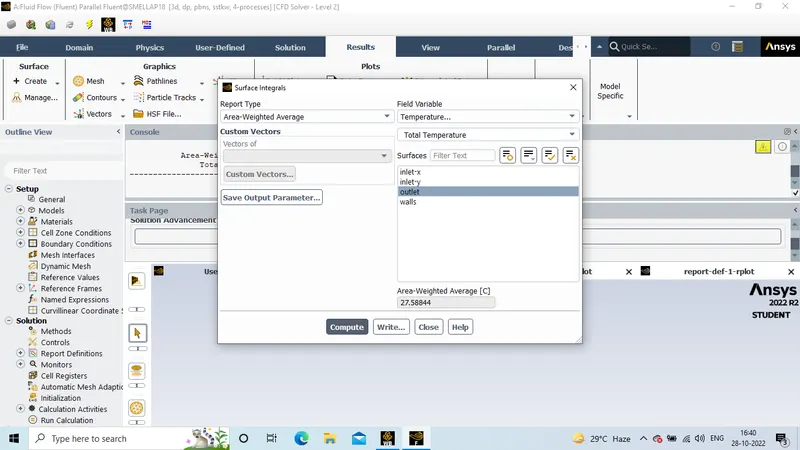
solution reports:-
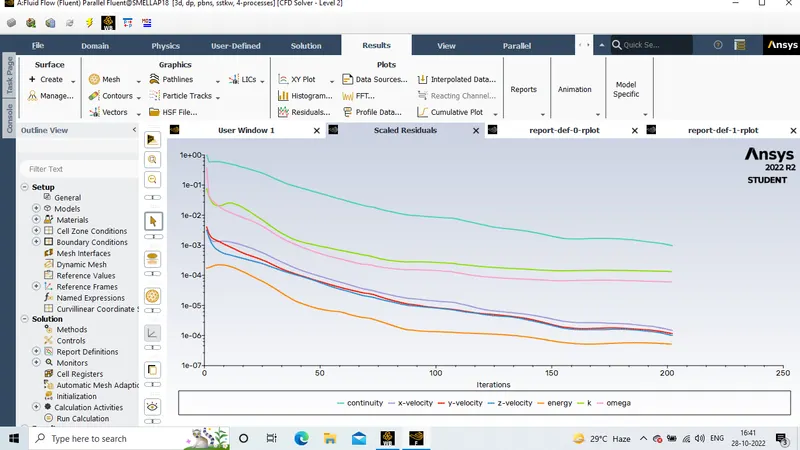
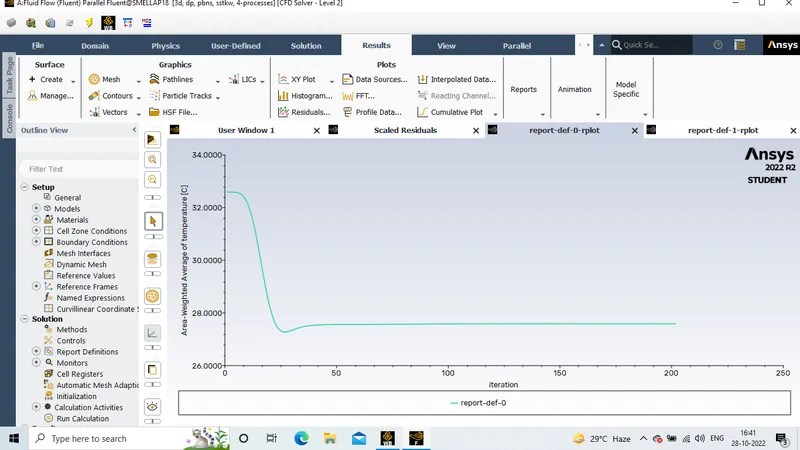
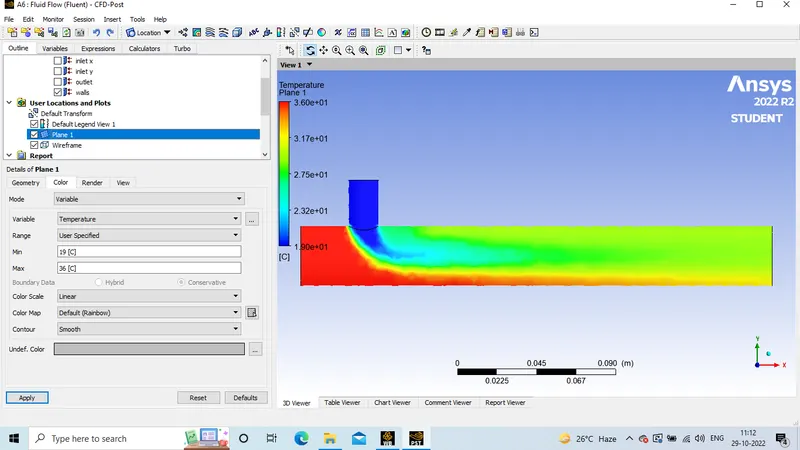
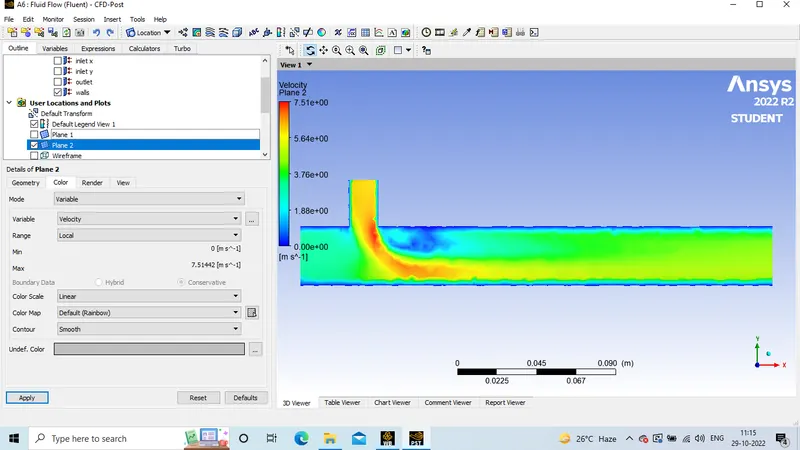
TEMPERATURE AND VELOCITY PLOTS:-
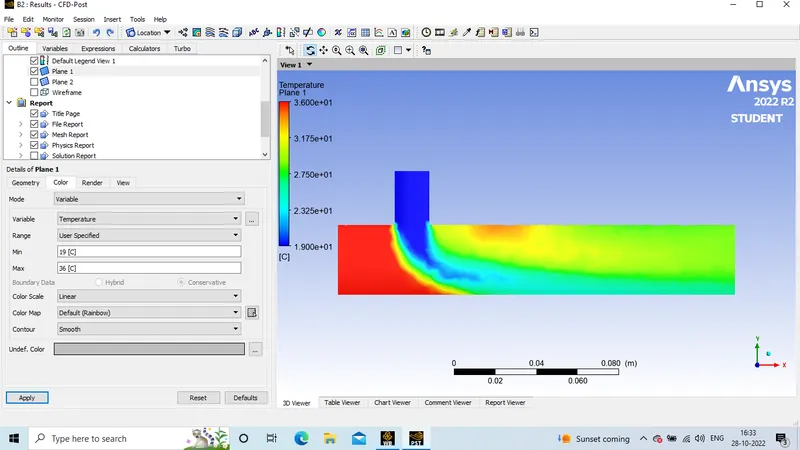
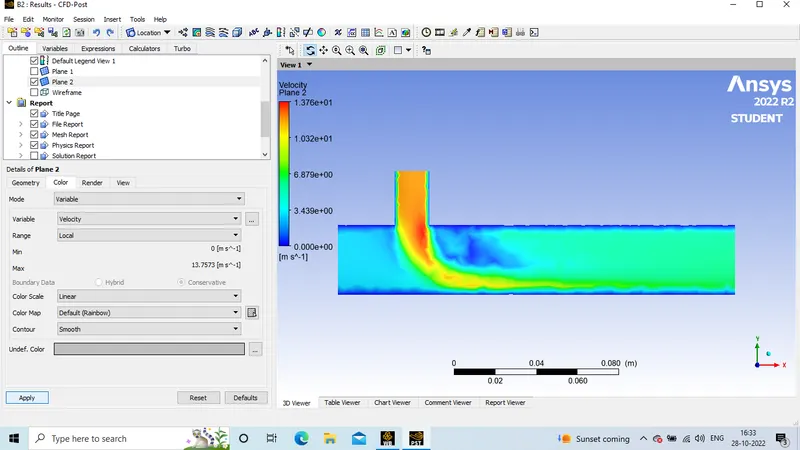
[A]. CELL COUNT = 2840, E-127890
[B]. AVERAGE TEMPERATURE = 27.5.
[C]. NO OF ITERATIONS = 140
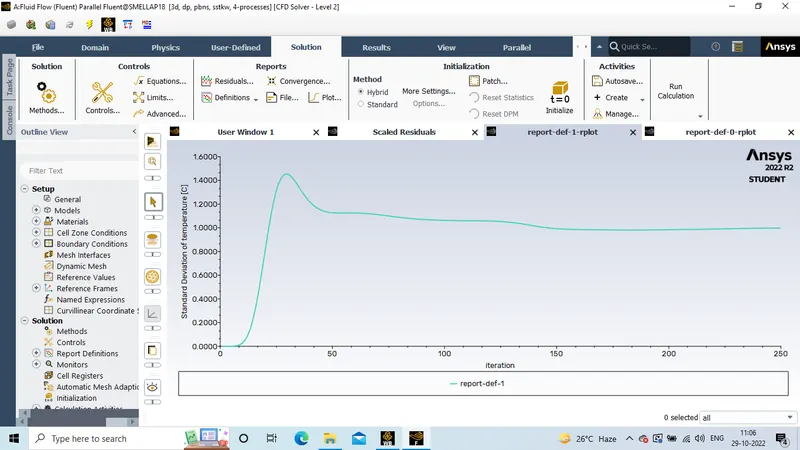
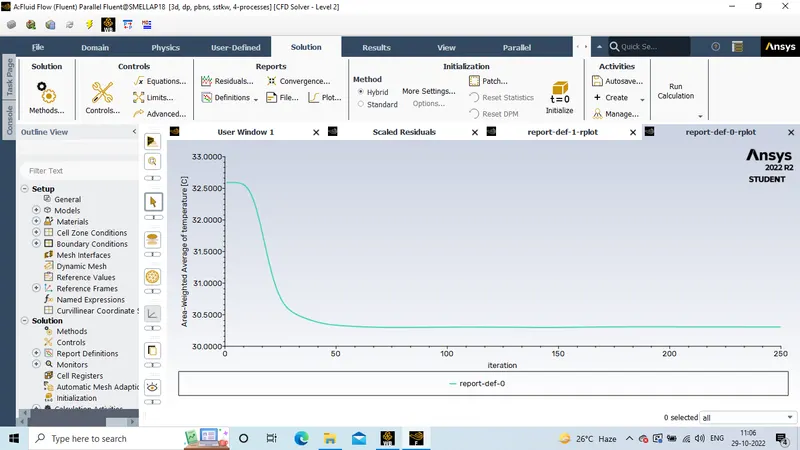
FOR LONG TEE M =2:-
SET UP:-
FOR M= 4:-
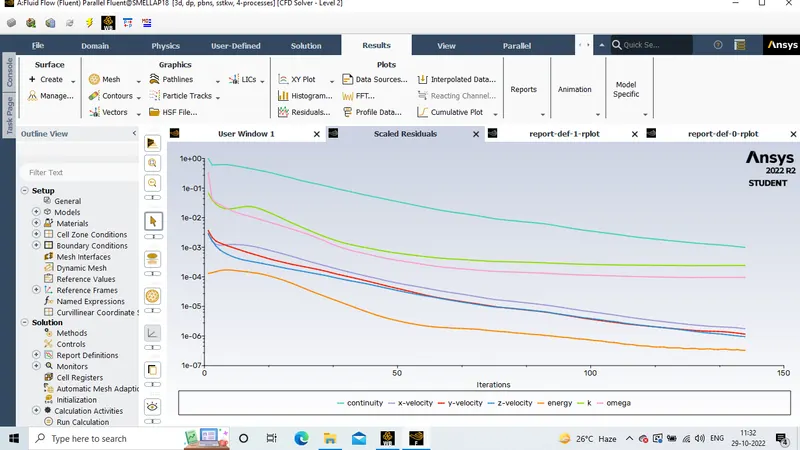
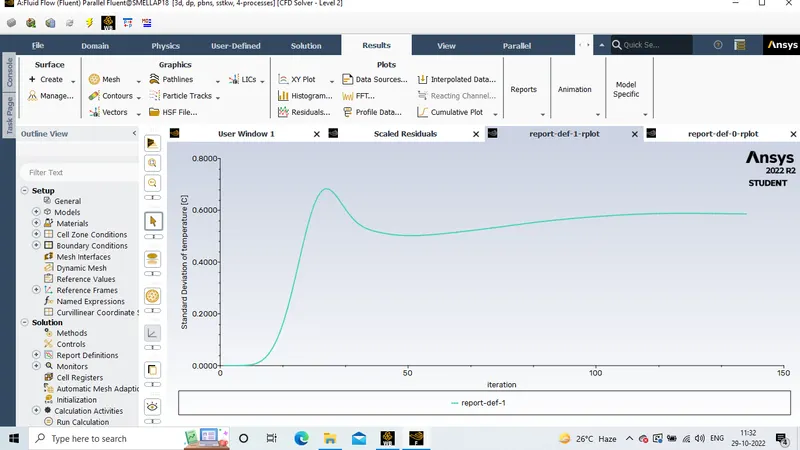
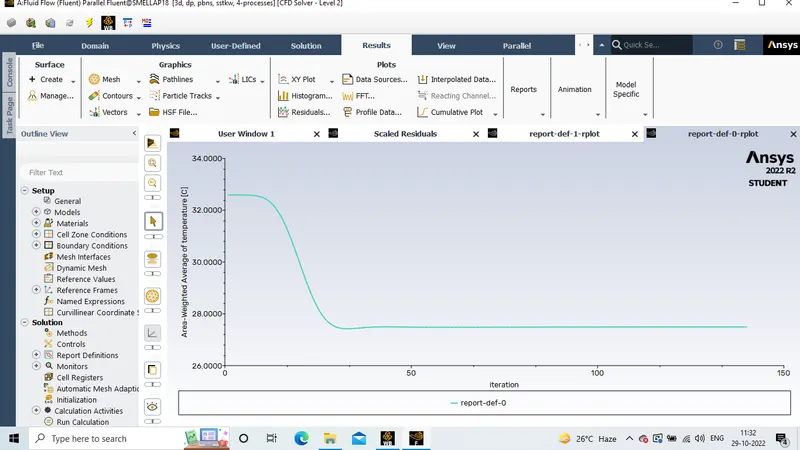
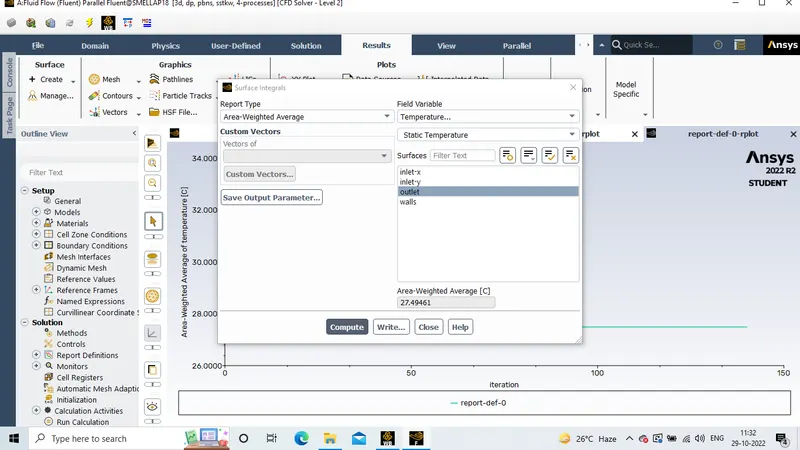
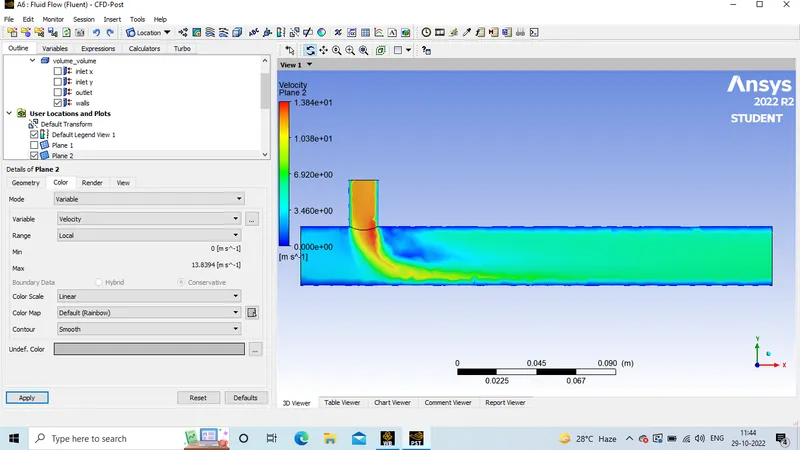
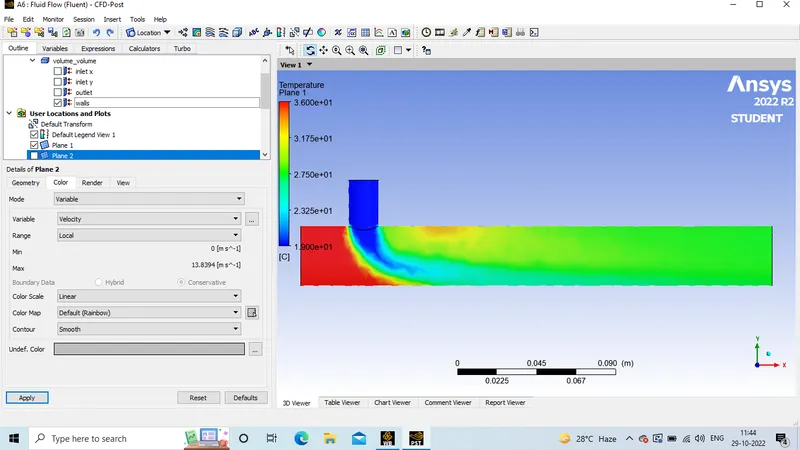
FOR m =2 , average temperature = 30, iterations = 170
for m =4 , average temerature = 27.4. iterations = 130
Conclusion:-
1. the length of the pipe increases the mixing has a lot of time and increases the temperature losing its main objective.
2. meshng has improved for both cases.
3. k-epsilon and k-omega are give better results for both cases