Week 1- Mixing Tee
Aim-To perform a steady state simulation on the two set of T joint i.e, short T and long T. where the entering hot fluid Temperature is 360C and velocity is 3 m/s and the Cold fluid temperature is 190C and velocity varies with respect the momentum ratio.
Objective-
Create a two versions of steady state simulation to compare the mixing effectiveness of the hot and cold fluid in the two respective T joints i.e, small and long. And also monitor is the length of the surface plays any role in the effectiveness of mixing the fluid.
Case-1
- Short mixing Tee with a hot fluid velocity-3m/s
- Momentum ratio of 2,4
So, velocity of cold fluid, we get
Vc1-3*2 = 6m/s
Vc2- 4*3 = 12m/s
Case -2
- Long mixing Tee with hot fluid velocity- 3m/s
- Momentum ratio of 2,4
So, velocity of cold fluid, we get
Vc1 - 3*2 = 6m/s
Vc2 – 4*3 = 12m/s
- Start Ansys workbench and select the Fluid flow(fluent) domain from the left side Drawer menu. then you been greeted by this standalone box as shown below:
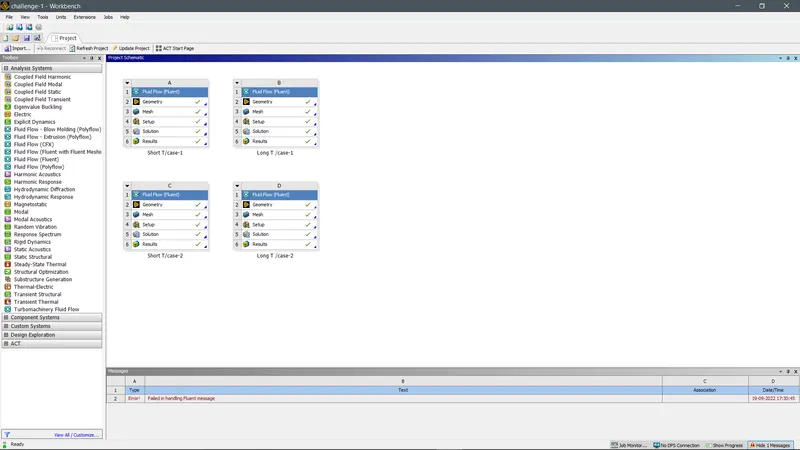
- Arrange all the standalone dialogue boxes one by one after performing each simulation.
Short Tee joint
- Import Geometry of the Short Tee Joint and extract the Fluid volume from the geometry.
- Then suppress the solid geometry using the option-suppress for physics. so the solid geometry would not be considered by the mess domain.
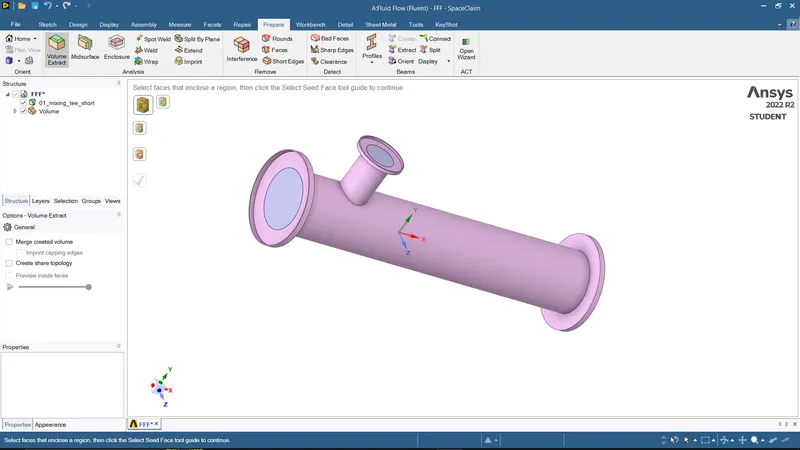
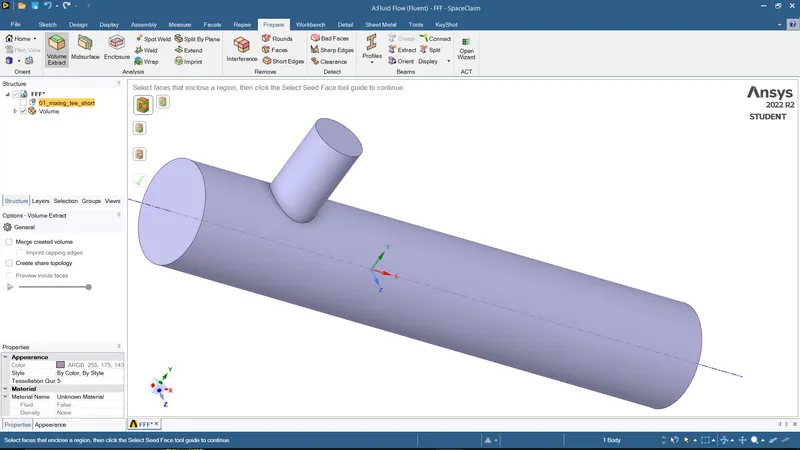
- Then perform a mesh operation on the mesh window.
- And also name the faces as inlet-x,inlet-y,outlet-x,walls.
- so while performing a steady state simulation it would be easy to identify inlet and outlet ports.
- After this set the element size to 5mm for decent mesh generation.
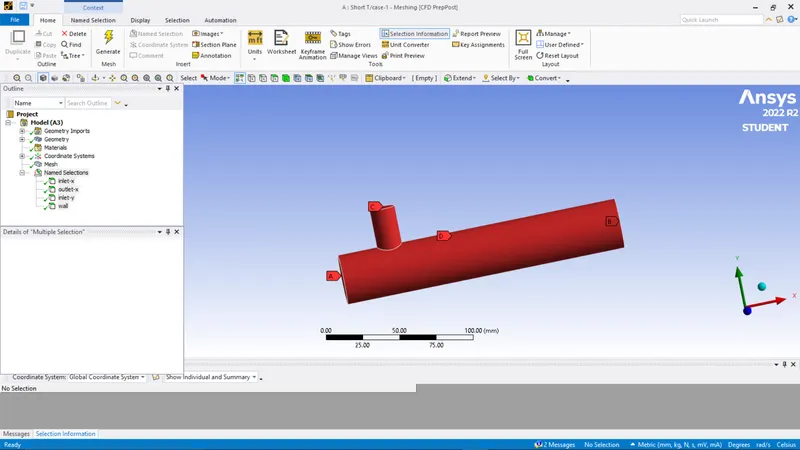
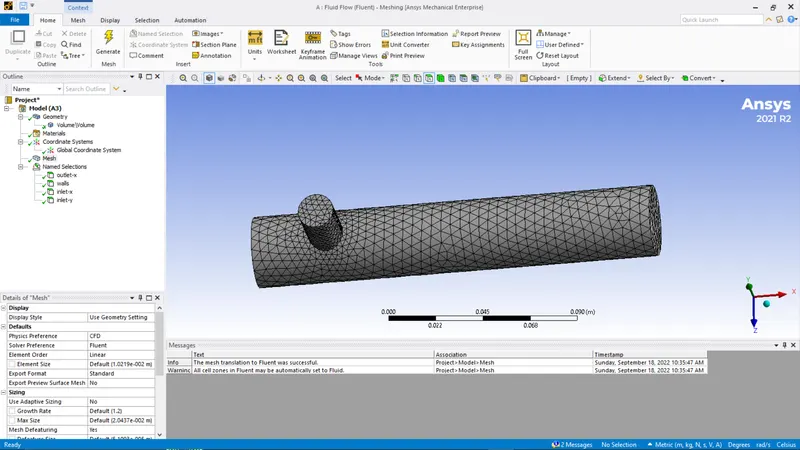
- after updating the mesh next access the setup window, this is the window where all the numerical simulation is been done.
- all the boundary conditions is been defined for the simulation.
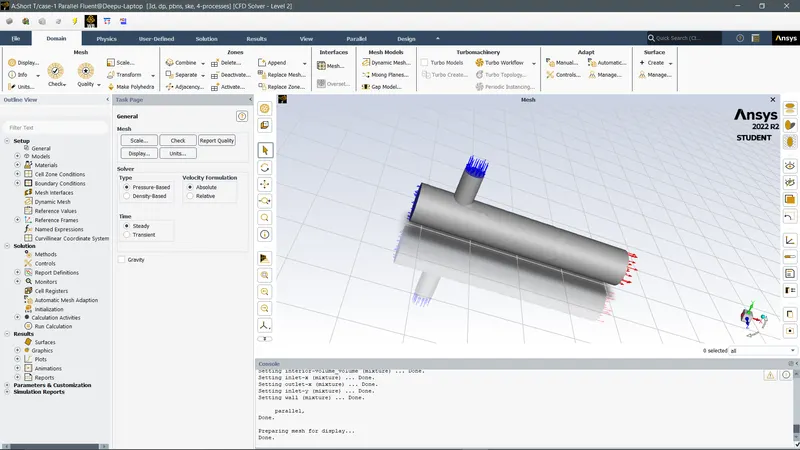
Case-1
Inlet velocity- 3m/s(hot fluid(360C))
Moment ratio-2m/s
so by equating the hot fluid and momentum ratio we get-
inlet velocity(Y)(cold fluid(190C))=6m/s
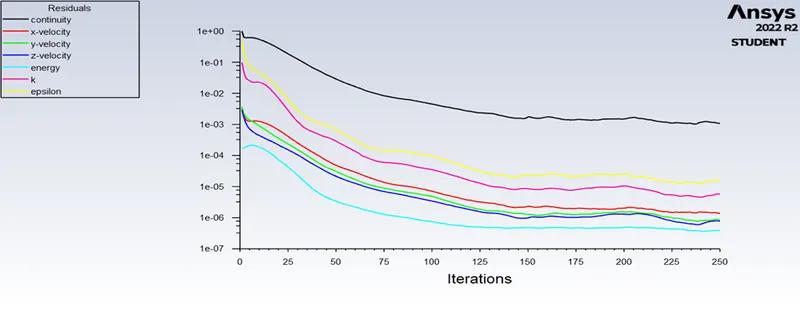
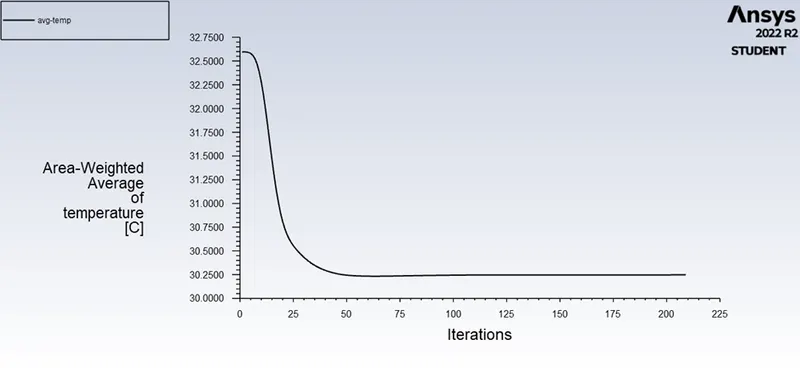
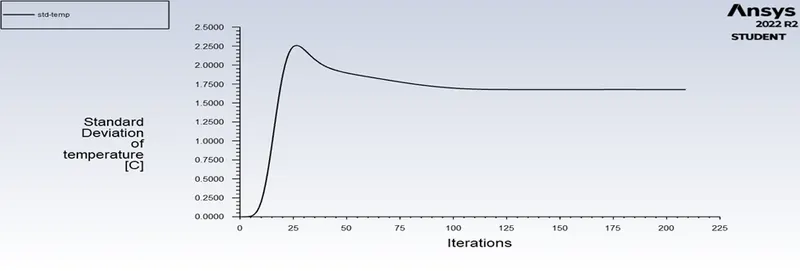
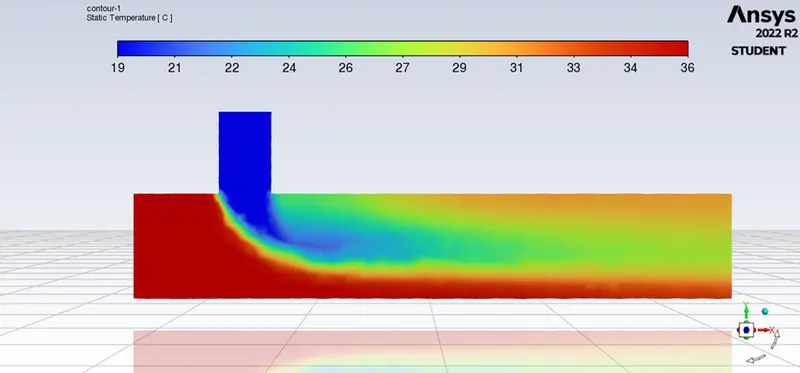
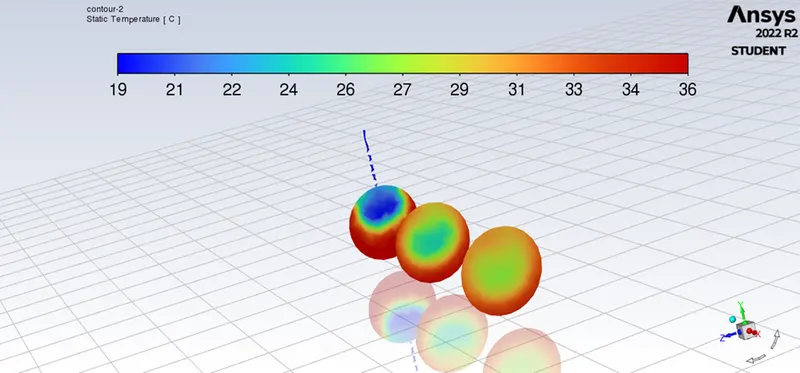
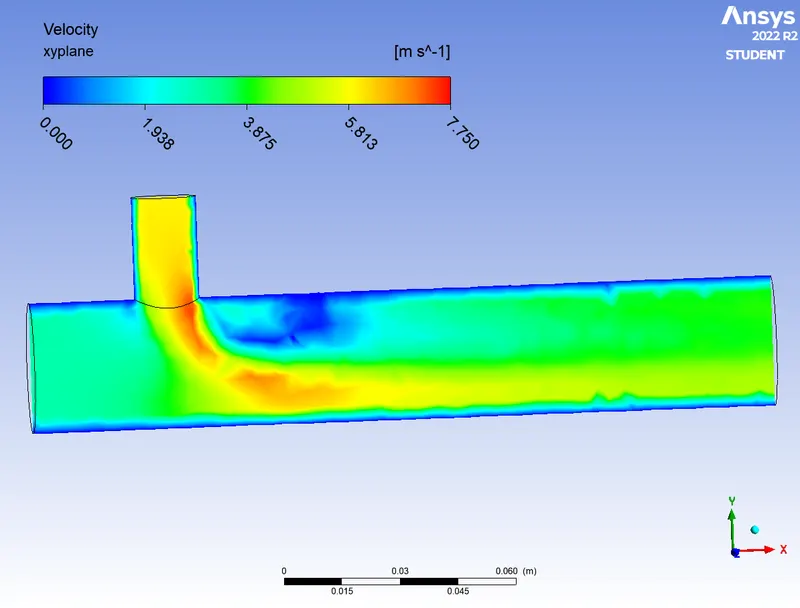
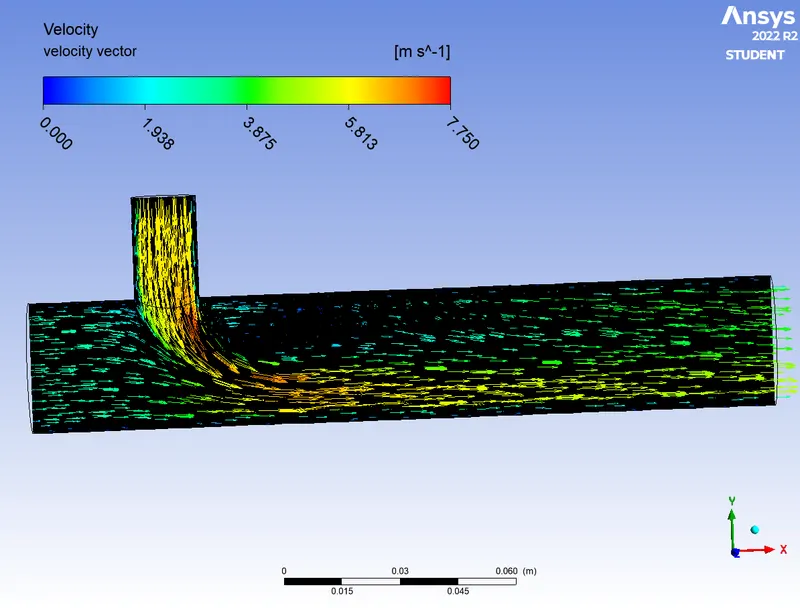
The output after 225 iterations for the Short Tee simulating conditions where the Momentum ratio=2 is-
Temp outlet-x = 30.240C
Standard deviation temperature of outlet-x =1.6760C
Case-2
Inlet velocity- 3m/s(hot fluid(360C))
Moment ratio-4m/s
so by equating the hot fluid and momentum ratio we get-
inlet velocity(Y)(cold fluid(190C))=12m/s
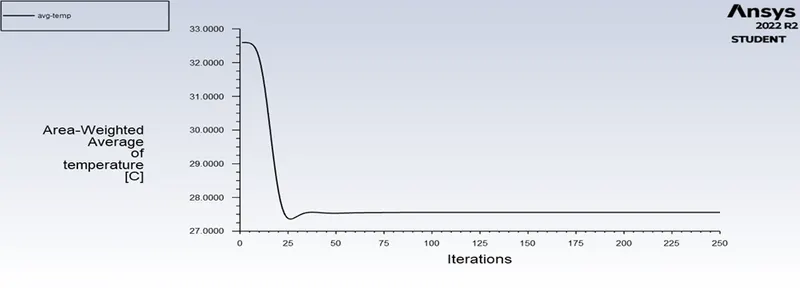
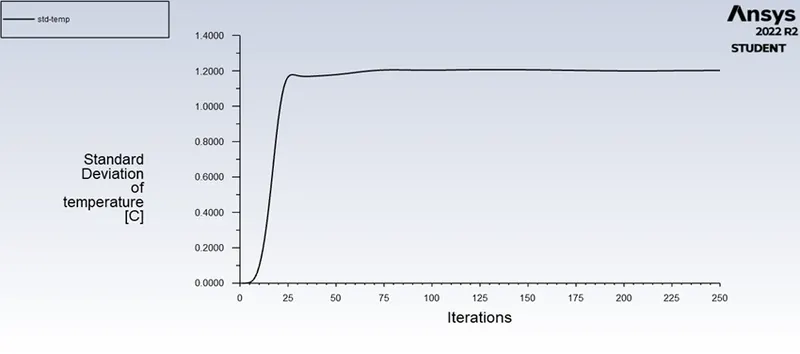
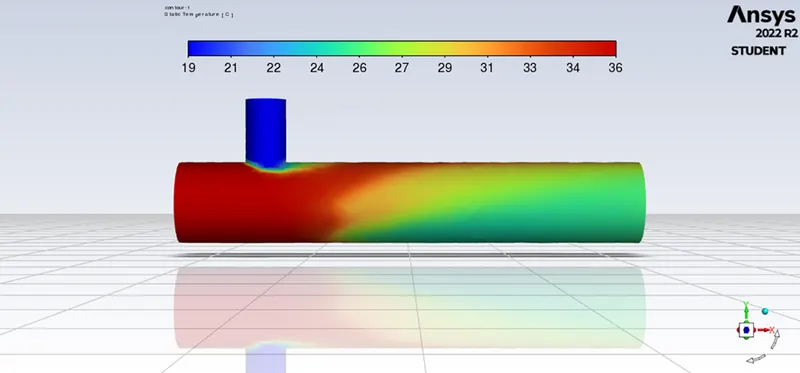
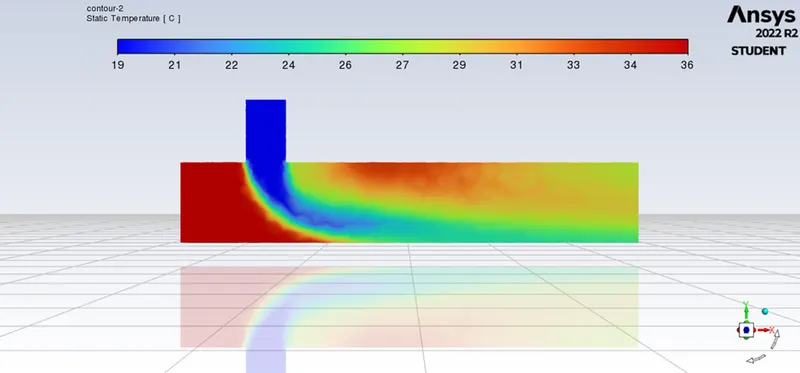
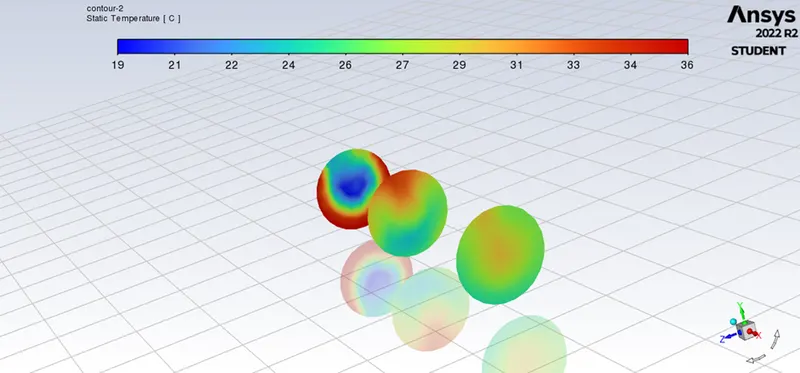
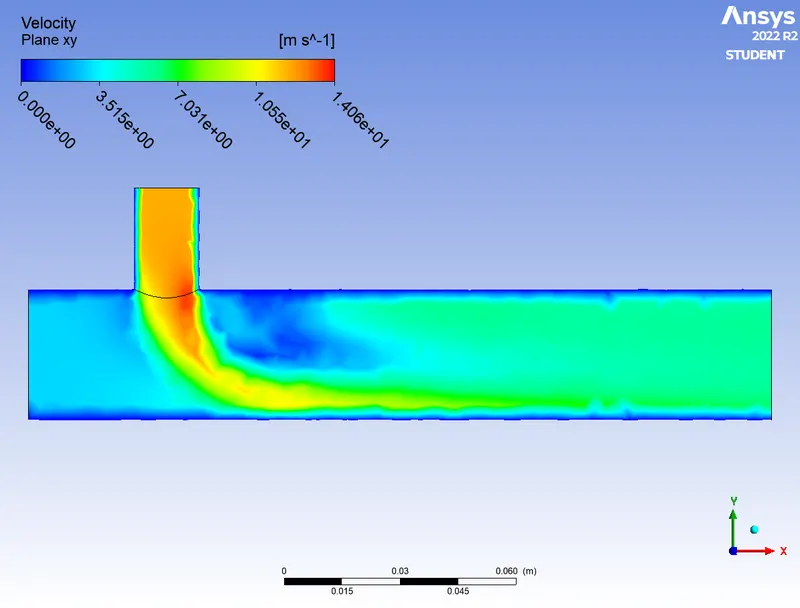
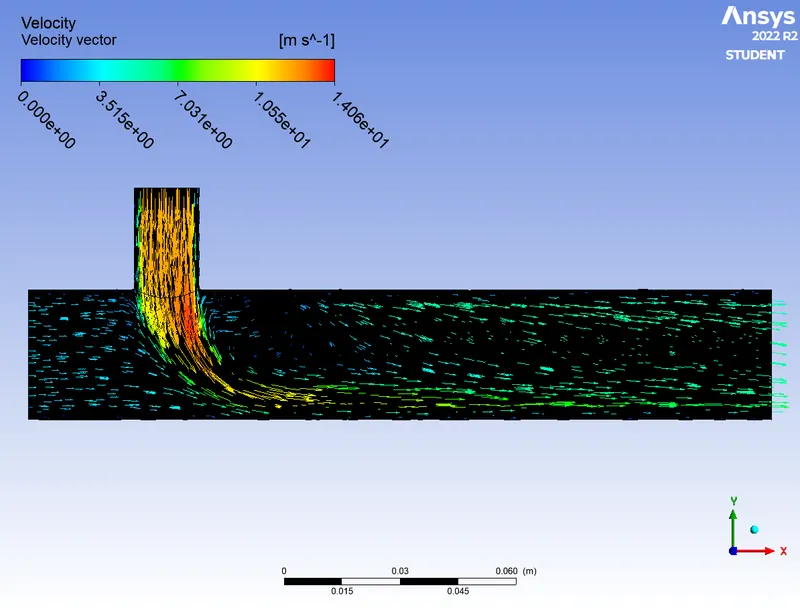
The outputs after 250 iterations for the Short Tee simulating conditions where the Momentum ratio=4 is-
Temp outlet-x = 27.550C
Standard deviation temperature of outlet-x =1.2010C
Long Tee Joint
Same Steps to import the geometry and perform all the operations as with the Short Tee joint case.
Case-1
Inlet velocity- 3m/s(hot fluid(360C))
Moment ratio-2m/s
so by equating the hot fluid and momentum ratio we get-
inlet velocity(Y)(cold fluid(190C))=6m/s
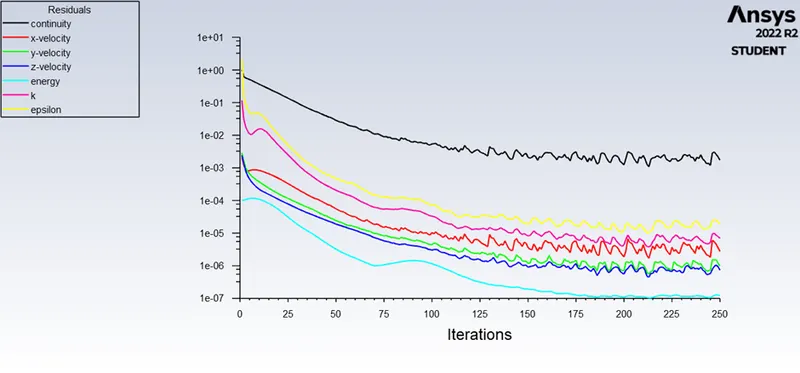
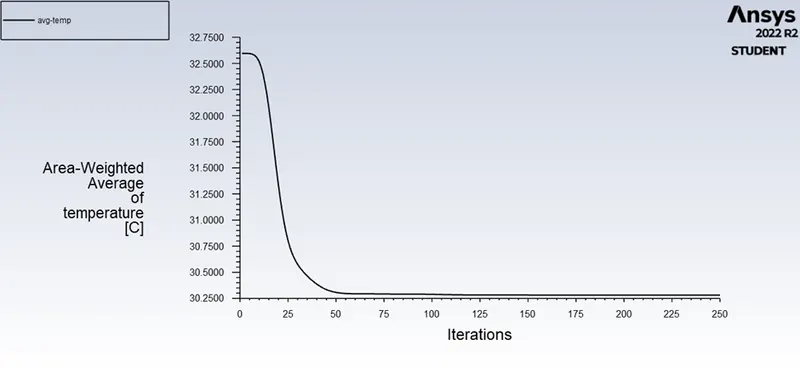
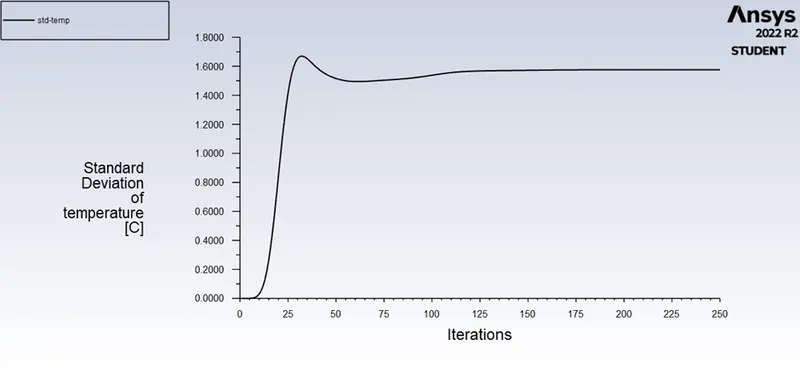
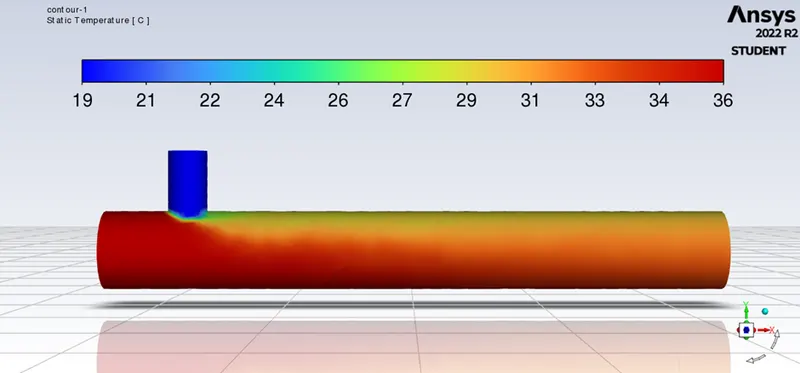
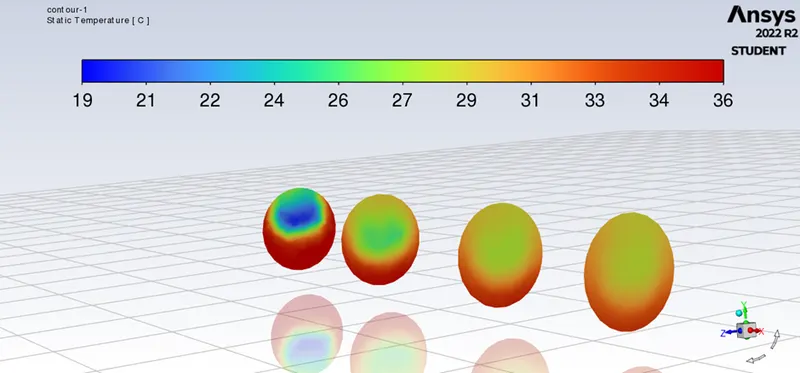
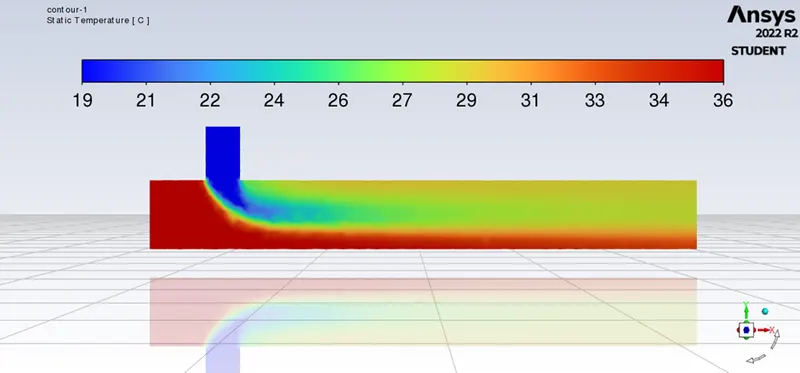
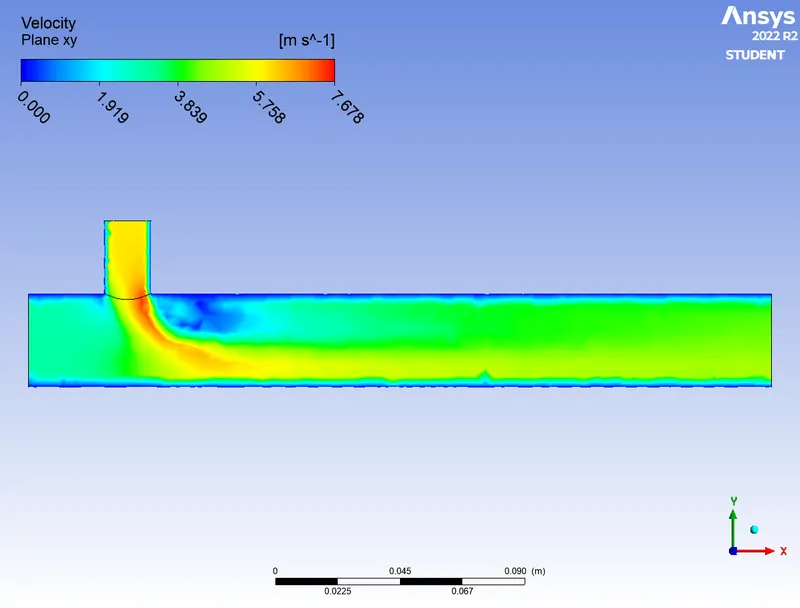
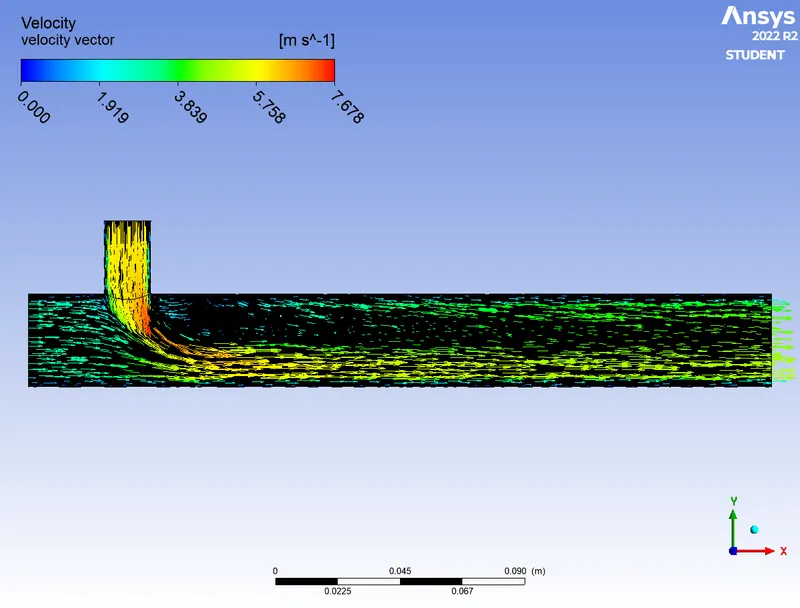
The outputs after 250 iterations for the Long Tee simulating conditions where the Momentum ratio=2 is-
Temp outlet-x = 30.280C
Standard deviation temperature of outlet-x =1.5760C
Case2
Inlet velocity- 3m/s(hot fluid(360C))
Moment ratio-4m/s
so by equating the hot fluid and momentum ratio we get-
inlet velocity(Y)(cold fluid(190C))=12m/s
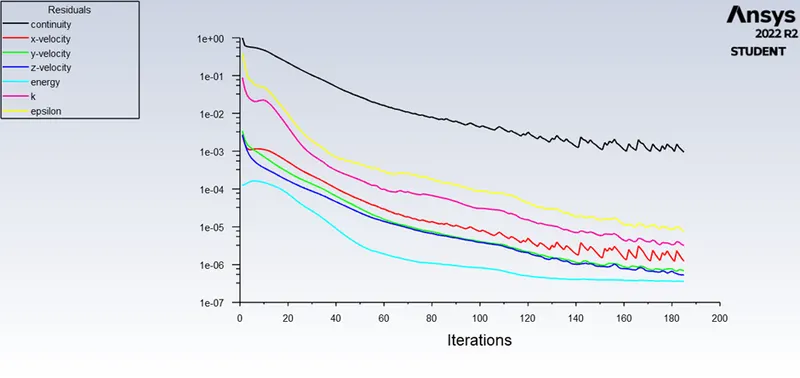
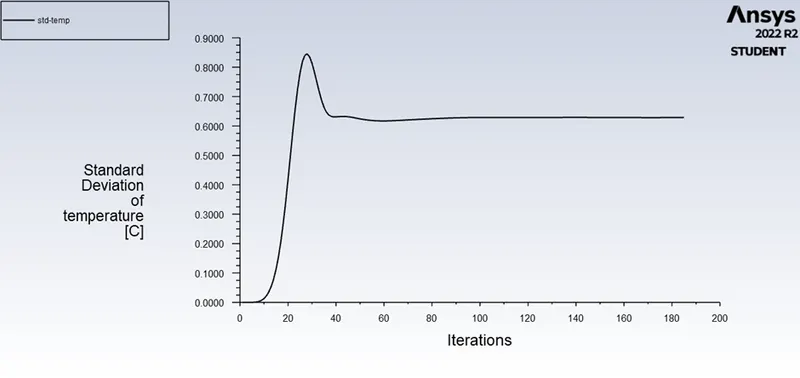
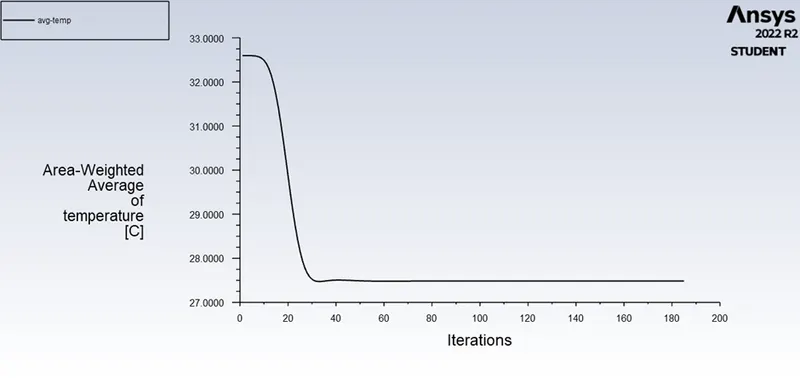
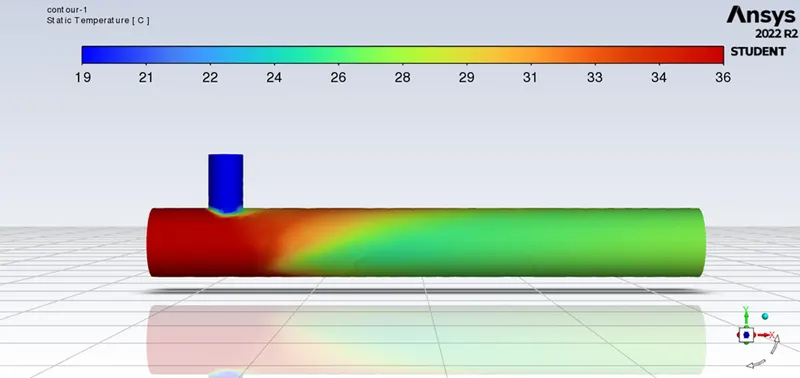
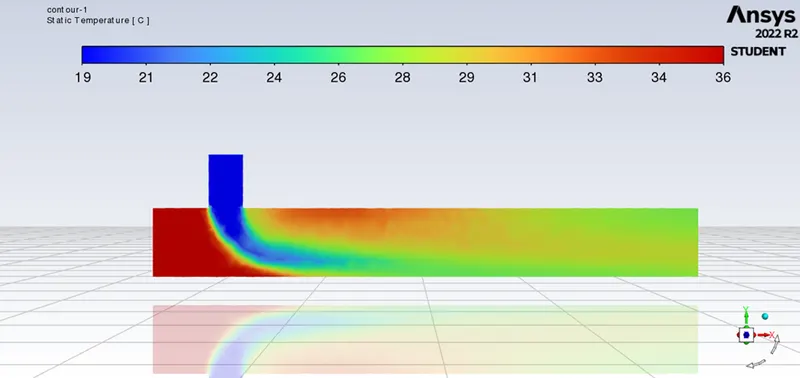
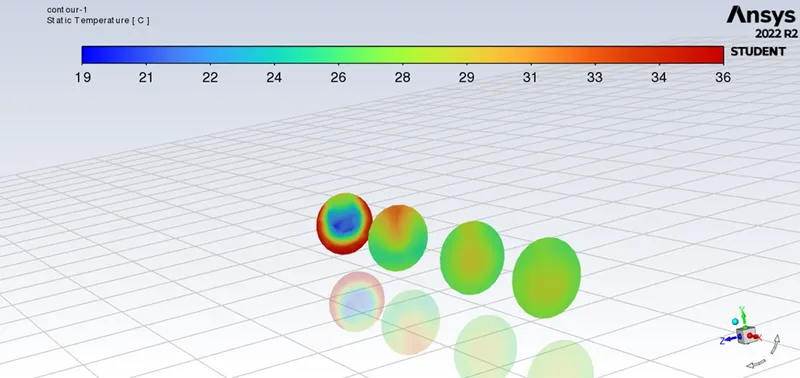
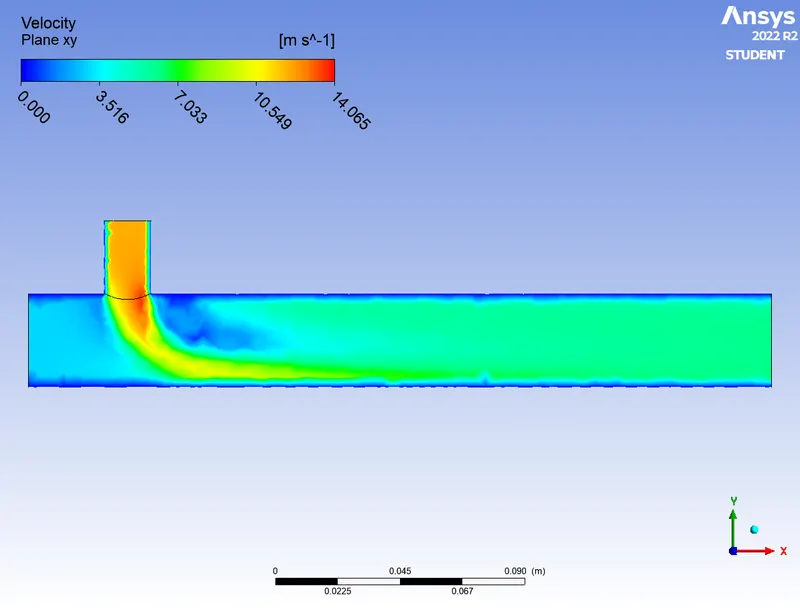
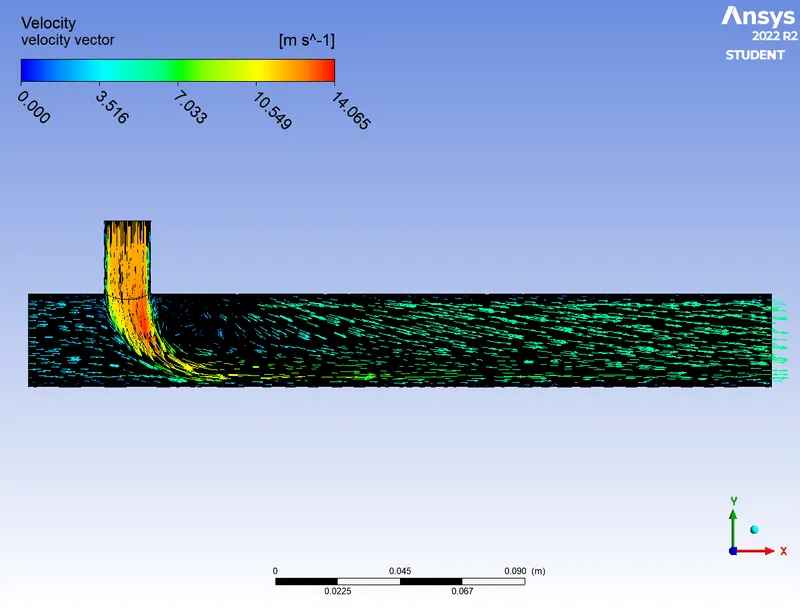
The outputs after 250 iterations for the Long Tee simulating conditions where the Momentum ratio=4 is-
Temp outlet-x = 30.280C
Standard deviation temperature of outlet-x =1.5760C
Conclusion-
By evaluating the value occurring on the different conditions mentioned below table-
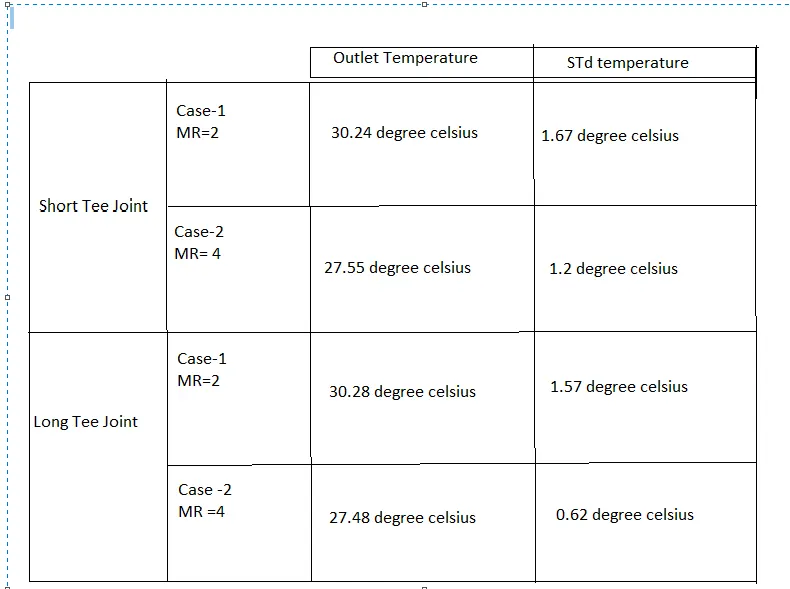
we can conclude that velocity plays a vital role in the efficiency of the mixing of two fluids of different temperatures irreverent to the size of the medium. Because the outlet temperature of the Short Tee and the Long Tee at MR=2 does occur same and similar case is been identified with the MR=4.
We can also state that by doubling the velocity of the mixing fluid gives a better result in the simulation.
And as the length of the pipe increases the mixing has lot of time and increases the temperature losing its main objective.